A design that looks clean at 4 cm on paper can turn into an unreadable smudge at that same size on a finger within five years. Most small tattoo ideas you’ll find online are photo galleries: hundreds of pretty designs with zero information about which ones survive at small scale, where to put them, and which spots will betray you faster than you’d expect. This guide is the filter. If you already have a rough idea of what you want, what you actually need to know is whether it’ll hold up, which placement suits your lifestyle, and the mistakes that turn a crisp little tattoo into a blur.
✓ Pros
- Lower pain on recommended placements (outer forearm, upper arm, ankle)
- One short session for simple designs
- Easier to conceal for workplace flexibility
- Lower cost than large pieces
- Scales up later (can anchor a sleeve)
✗ Cons
- High-friction spots (fingers, feet) fade and blur faster
- Micro-detail at tiny scale has nowhere to go as skin ages
- Behind-the-ear and finger placements hurt more than their size suggests
- Fine-line work at very small scales carries higher blurring risk over time, especially on high-friction or high-movement spots
- Long script wraps awkwardly on small canvases like the inner wrist
What “Small” Actually Means in Tattoo Terms
A small tattoo is generally palm-size or smaller: roughly 2 to 8 cm on the longest side, with anything below about 2 to 3 cm classed as “micro” or “tiny.” That distinction matters because the size floor changes what a design can actually do. Simple symbols and single words need at least 2 to 3 cm to stay legible over time. Detailed florals or portraits need considerably more room, or the detail collapses.
There’s a proportion rule worth keeping in mind: a design reads best when it occupies roughly one-third of the limb segment it sits on. A wrist tattoo that spans the full width of your wrist reads very differently from one that sits centered with skin around it. The centered version usually looks more intentional and ages more gracefully.
“Small” is also relative to the body zone. A 4 cm symbol looks compact on a forearm and oversized behind the ear. Fine-line and micro styles have tighter size floors than bold or traditional work, because thin lines have less contrast to lose before they disappear. Keep that in mind when someone tells you a design “will totally work” at 2 cm; it depends entirely on the style and the line weight.
Design Options by Style
The best small tattoo ideas organize by style, not by a flat list of motifs, because the style you choose determines whether the piece stays sharp at small scale. Here’s how the main styles behave when you shrink them down.
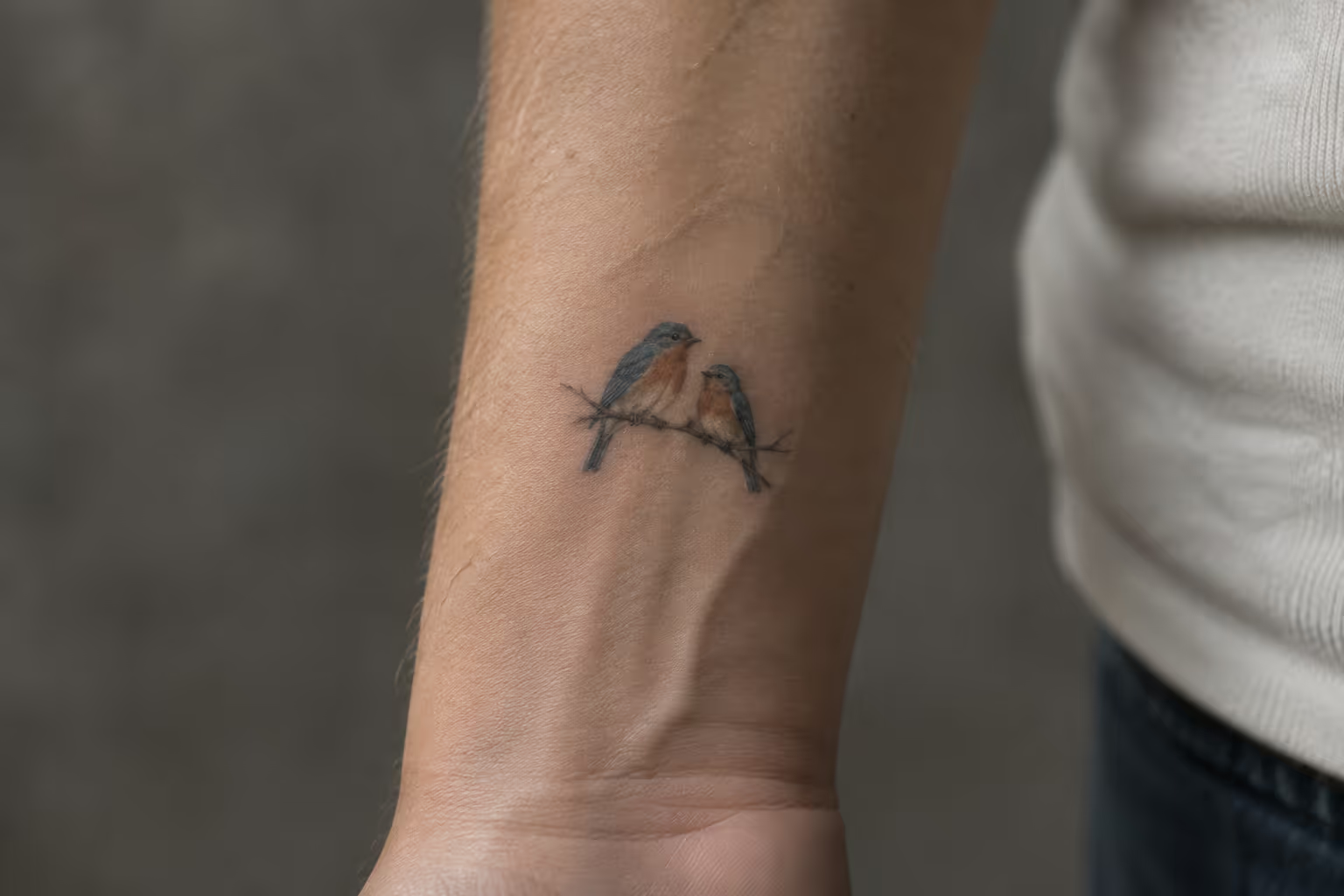
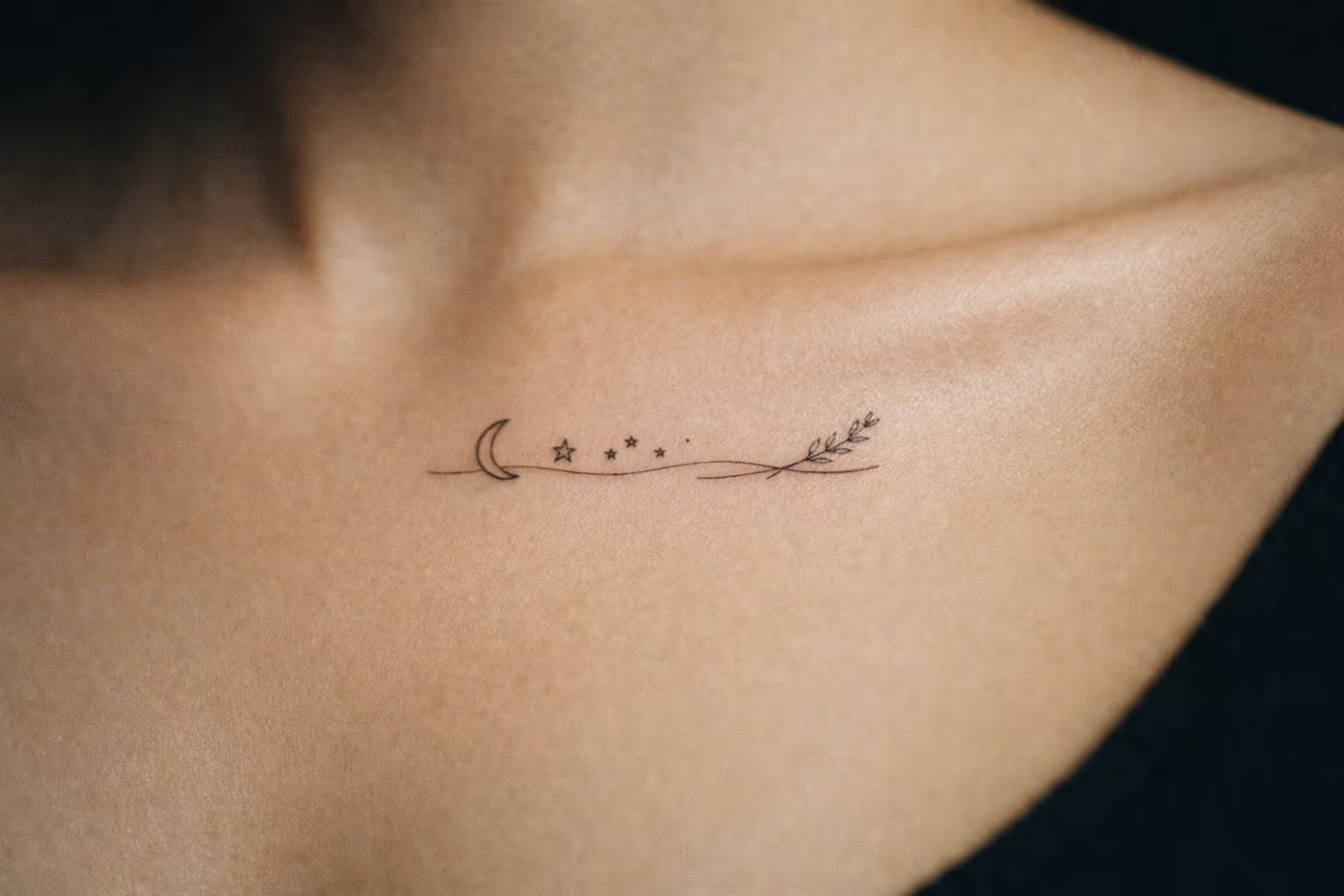
Fine line and minimalist is the dominant request in most studios right now (1). Thin florals, single-stem flowers, delicate moons, and minimal icons are all suited to the wrist, inner forearm, and behind the ear. The caveat: lines under about 1 mm soften within 5 to 10 years, so plan for a touch-up or size up slightly from your instinct.
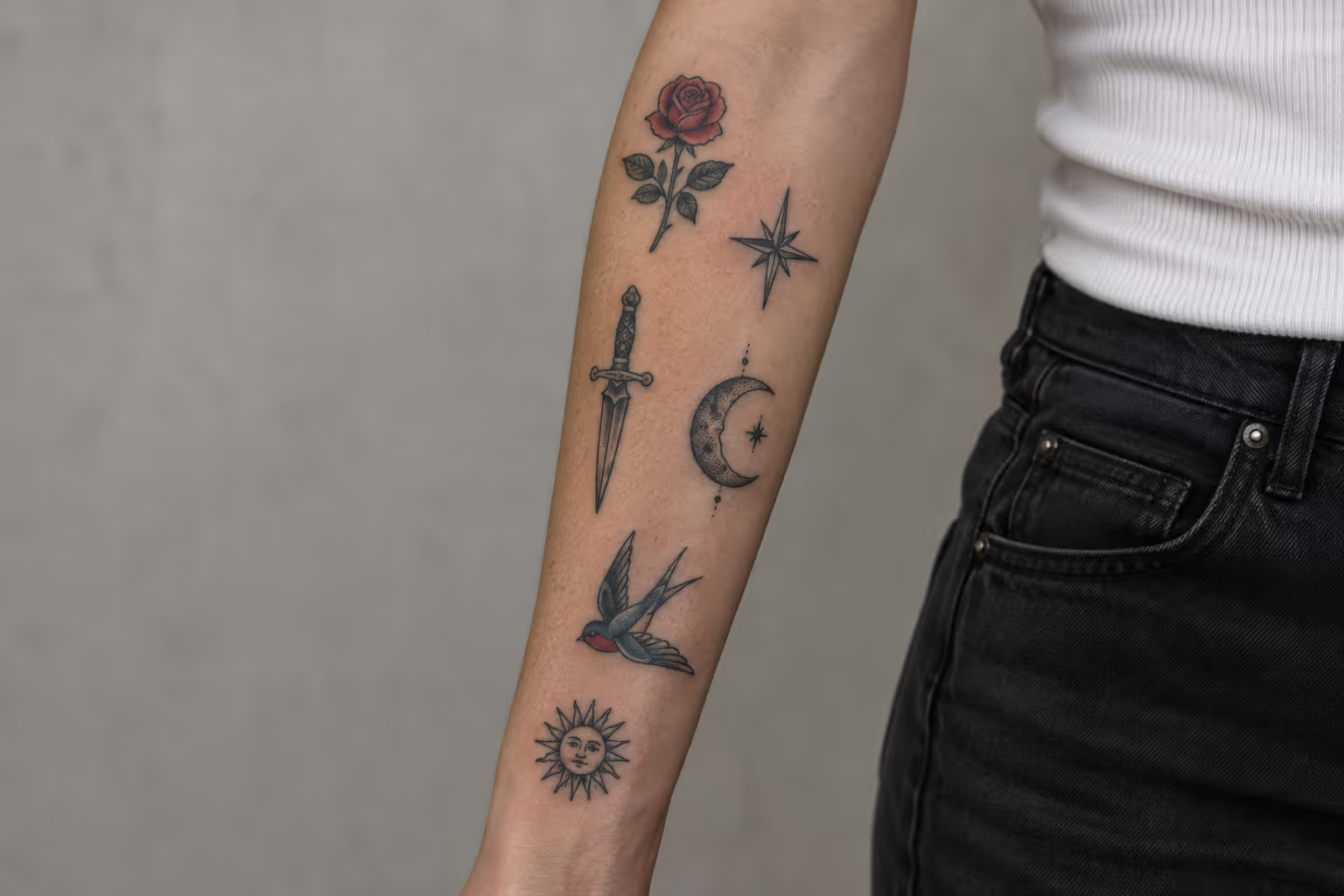
Bold and American traditional at small scale relies on two hallmarks: thick black outlines and a limited palette. Those thick outlines hold contrast as skin ages, which is why traditional work outlasts fine line by years. A 1.5-inch (4 cm) traditional heart still reads crisply at 20 years. Best on the outer forearm, upper arm, and calf. The common pitfall when it’s done badly: outlines too thin to earn the “bold” label, which defeats the whole point of the style.
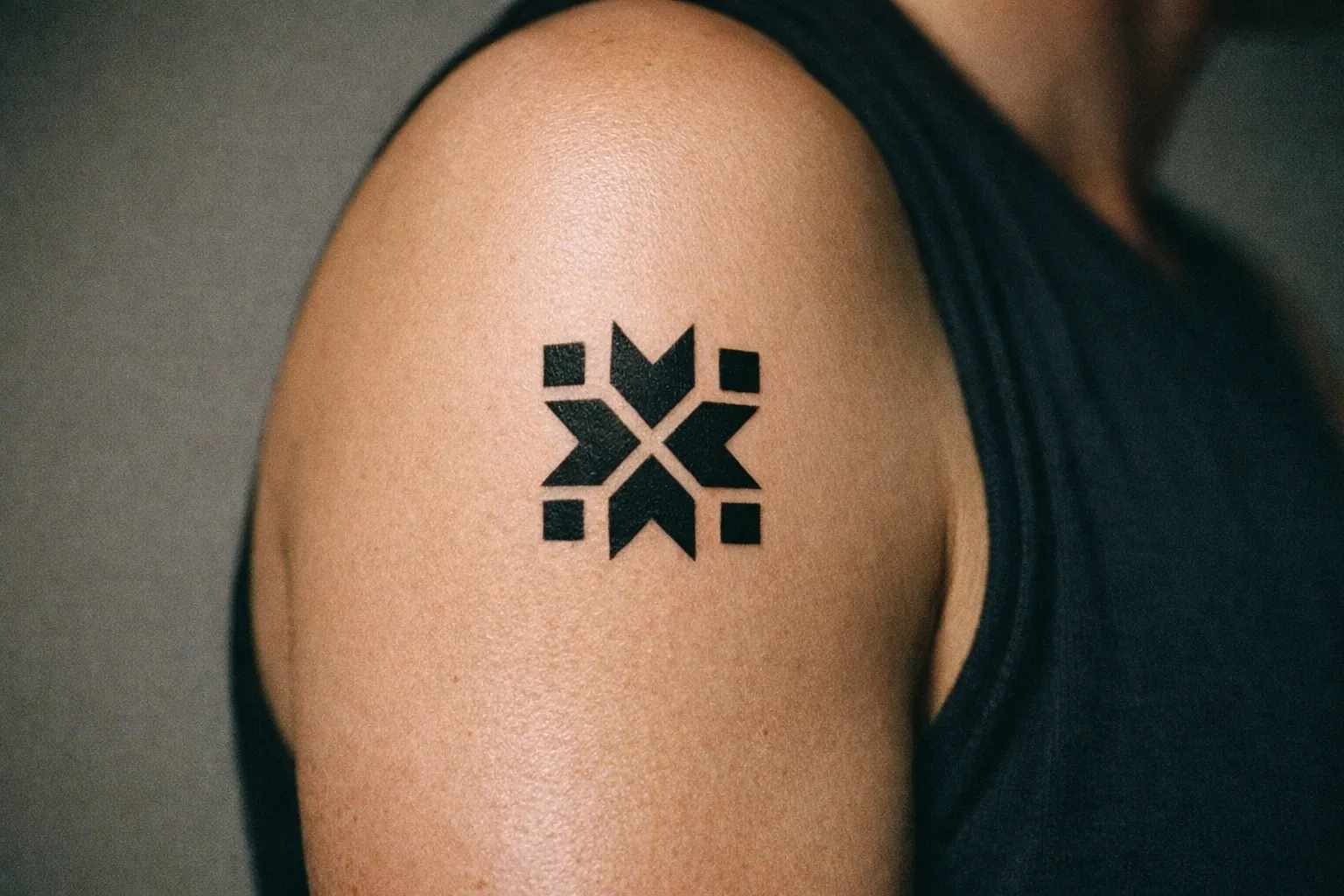
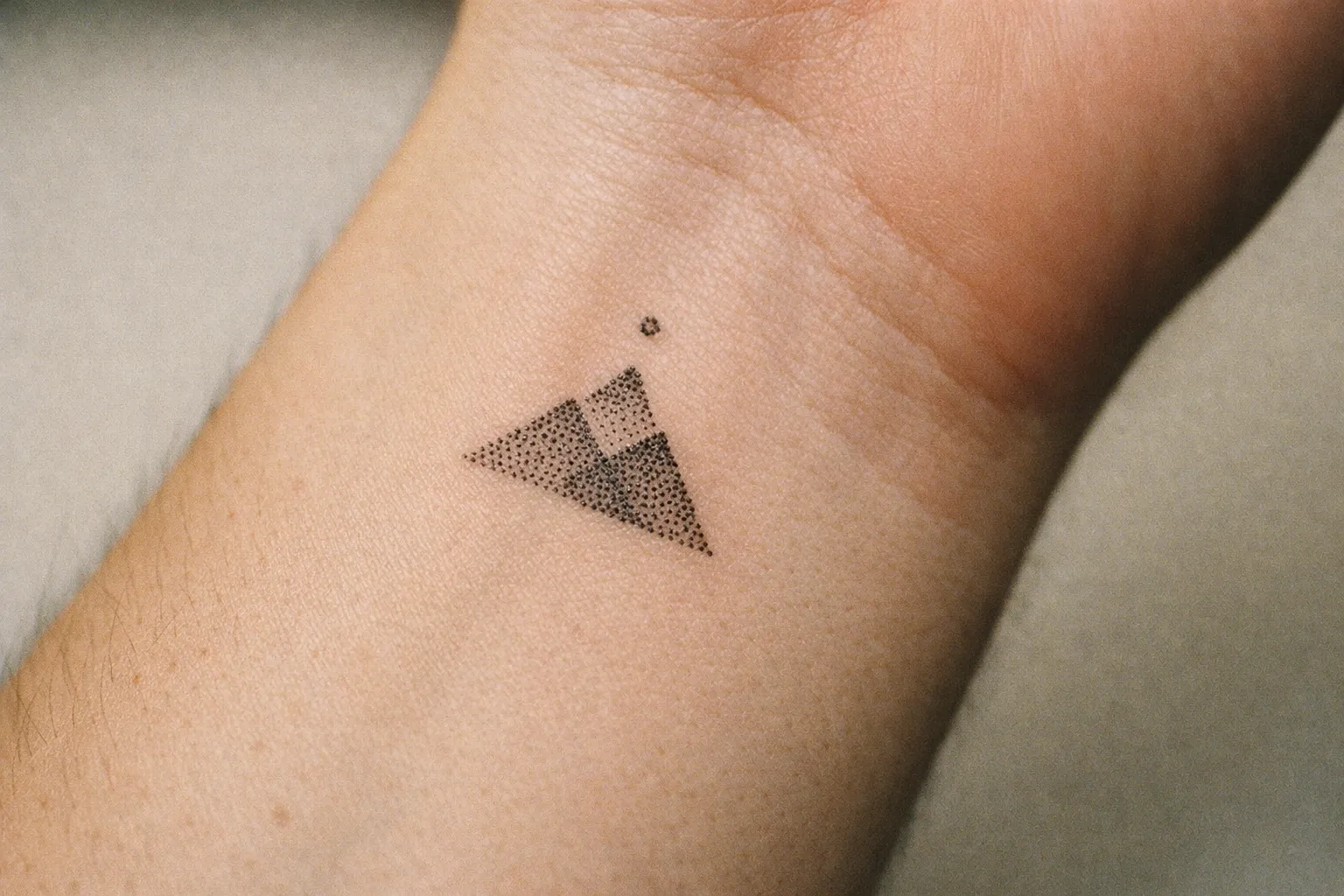
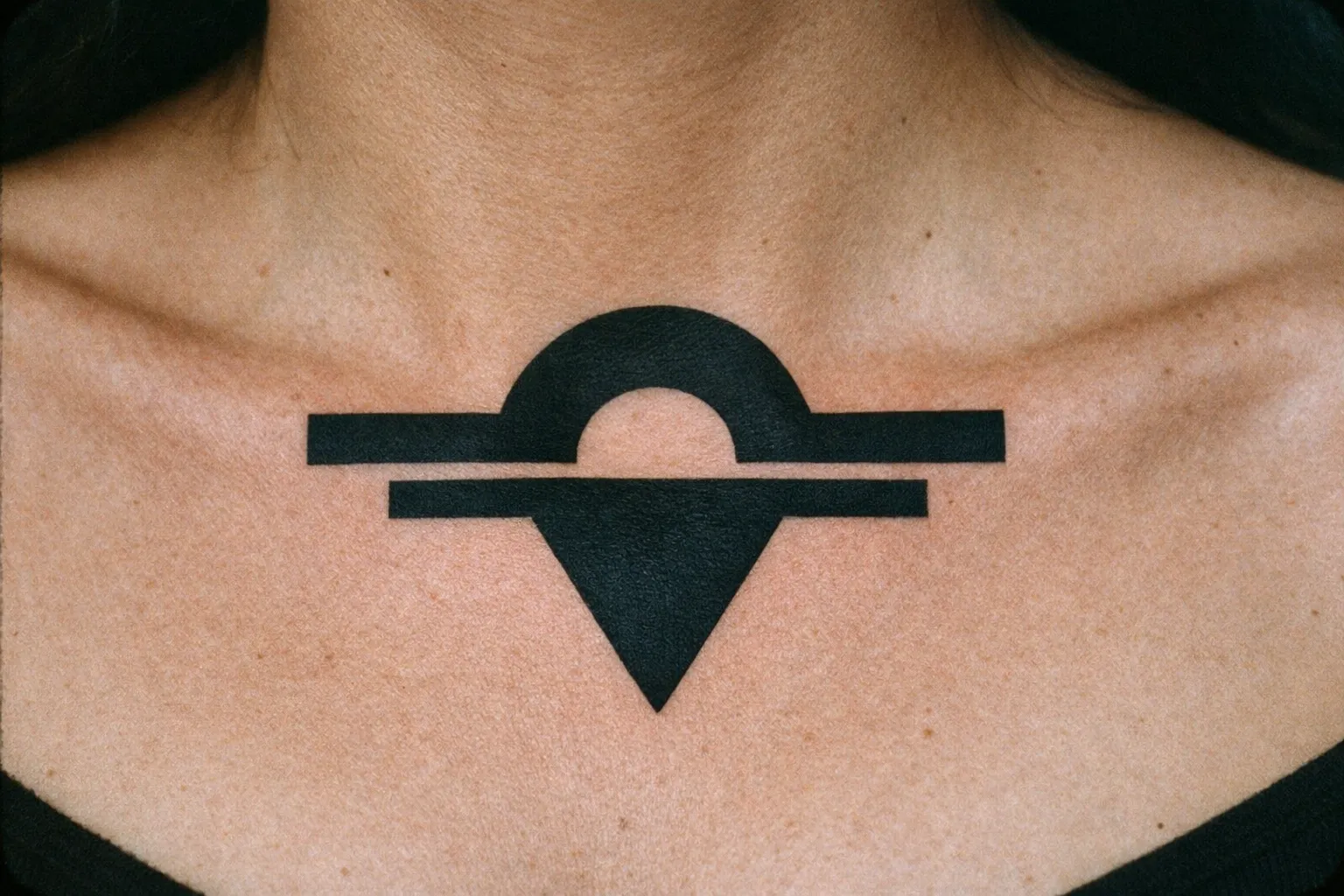
Blackwork and geometric designs, including dotwork symbols, small mandalas, and simple geometric shapes, stay sharp on flat, stable surfaces like the outer forearm and upper arm. Avoid curved joints, which distort the symmetry as they move. Dotwork holds up well at small scale as long as you don’t pack too many dots into under 2 cm; crowd them and they merge into a blob.
Script and word tattoos are where “small” bites hardest, because ink spread closes up thin strokes first. Standard script needs a letter height of about ½ inch (12-13 mm) to stay legible as it ages, ornate script about 1 inch (25 mm), while bold block lettering holds down to about ¼ inch (6 mm). On the wrist, where the canvas is tight, the same floors apply: keep it to bold script or block, never fine-line cursive, and to a word short enough to fit at those heights. Single words work on the wrist; anything over one word wants the inner forearm’s flatter, longer canvas.
Micro and single-needle is the highest-risk category for longevity. It looks stunning fresh, but hairline work on fingers or high-movement spots smudges early. Reserve it for low-movement, low-friction placements.
Cute Small Tattoos That Actually Age Well
The “cute” category is a starting point for most people: hearts, stars, moons, single-stem flowers, small animal silhouettes like a cat, bird, or a butterfly with simplified wings. These read cleanly at small scale if you commit to bold enough linework.
Here’s the honest part: bold outlines on these motifs outlast fine-line versions by years. A fine-line heart at 2 cm looks delicate today and blurs into a pink smudge later; the same heart with a solid black outline holds its shape for a decade-plus. The size sweet spot for symbols and small animals is 1.5 to 3 inches (4 to 8 cm). Go smaller and you’re gambling on your skin’s aging behavior.
If you love the fine-line look, don’t fight it; just accept the trade-off, choose a low-friction spot, and budget for a touch-up around year five to ten.
Tiny Tattoo Ideas for Specific Spots
Some tiny tattoo ideas are defined by where they go more than what they are.
Behind the ear: symbols under 2 cm, such as an infinity sign, small star, or single letter. Be warned, it’s surprisingly painful. Thin skin over bone plus dense nerves means first-timers expecting a mild experience get caught off guard. I’ve had clients sit through forearm work without flinching and then go pale behind the ear. The canvas is small; the nerves are not.
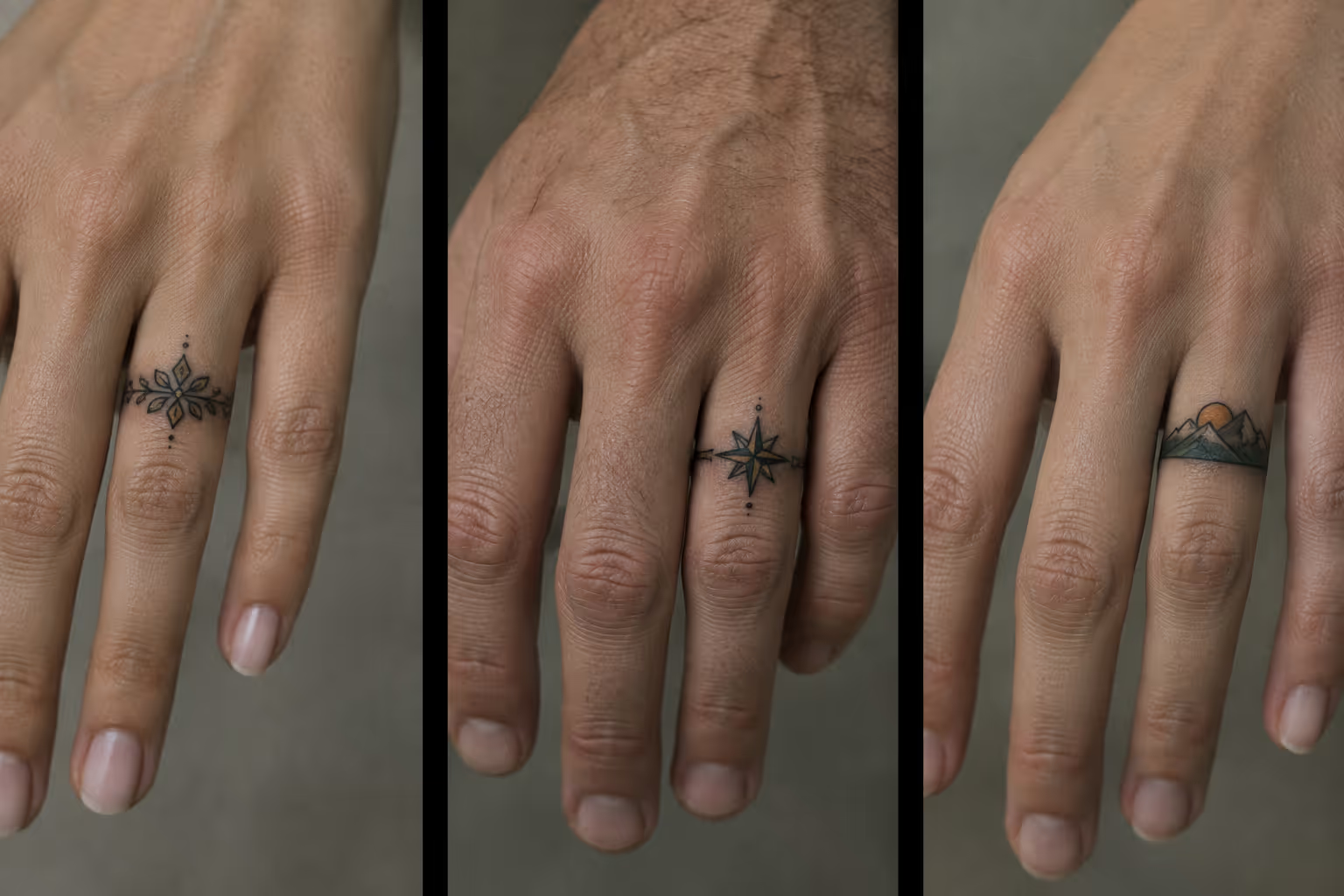
Finger: ring-style bands, small symbols. Bold black linework holds better than color or fine line, but expect faster fading regardless of what you choose; constant washing and friction wear it down.
Ankle: anklet-style wraps, small florals, minimal animals. One of the better spots for longevity among the “tiny” placements, since the skin moves less than fingers.
Where to Put It: Placement Logic That Actually Holds Up
Placement comes down to three things: daily visibility (do you want to see it every day?), workplace flexibility (does it need to hide?), and aging (do you want it crisp in 10-plus years?). Get clear on which of those matters most before you pick a spot, because they pull in different directions.
The best aging zones are the outer forearm, outer upper arm, calf, outer thigh, upper back, and chest. Skin moves less there, holds detail better, and sees lower friction. If longevity is your priority, start here: these are the placements you can’t really mess up.
Jewelry-like visible placements frame a small tattoo like an accessory: inner wrist as a bracelet, collarbone or sternum as a necklace, ankle as an anklet, finger as a ring. It’s a genuinely useful way to think about placement rather than just picking a random patch of skin.
For workplace flexibility, the upper arm, rib or side, upper back, and thigh or hip all hide easily under standard office clothing. If your dress code is conservative, plan concealment before you book, not after.
On pain: the outer forearm and outer upper arm are significantly more comfortable than the ribs or sternum (4). Behind the ear surprises people: it’s a small canvas that hurts more than its size implies.
Discreet Placements: Hidden Until You Choose to Show
Behind the ear, rib or side, upper back, thigh or hip, and the inner upper arm all keep a tattoo out of view until you decide to reveal it. These suit anyone with a conservative dress code, or anyone who wants the tattoo to feel personal rather than public.
Two caveats: the rib and side are high-pain zones, noticeably more intense than the forearm, and behind the ear heals in a tricky spot thanks to hair, sweat, and earring friction.
Visible Placements: Worn Like Jewelry
The inner wrist, outer forearm, ankle, and collarbone are the spots you’ll see constantly. The collarbone and sternum are among the most requested for small meaningful designs despite sitting in the upper pain range. The forearm is the most forgiving overall: lower pain, ages well, and it shows in short sleeves or hides under long ones.
If you want one placement that does everything reasonably well, that’s it.
Popular Motifs and Placements for Women’s Small Tattoos
Small tattoos for women in 2025 and 2026 cluster around a recognizable set of motifs: hearts, moons, florals (single-stem rose, daisy, lavender), butterflies, script words, sun-and-moon combinations, and minimal line art. Fine-line florals, botanical sprigs, and delicate moons are among the most requested for the wrist, inner forearm, and collarbone.
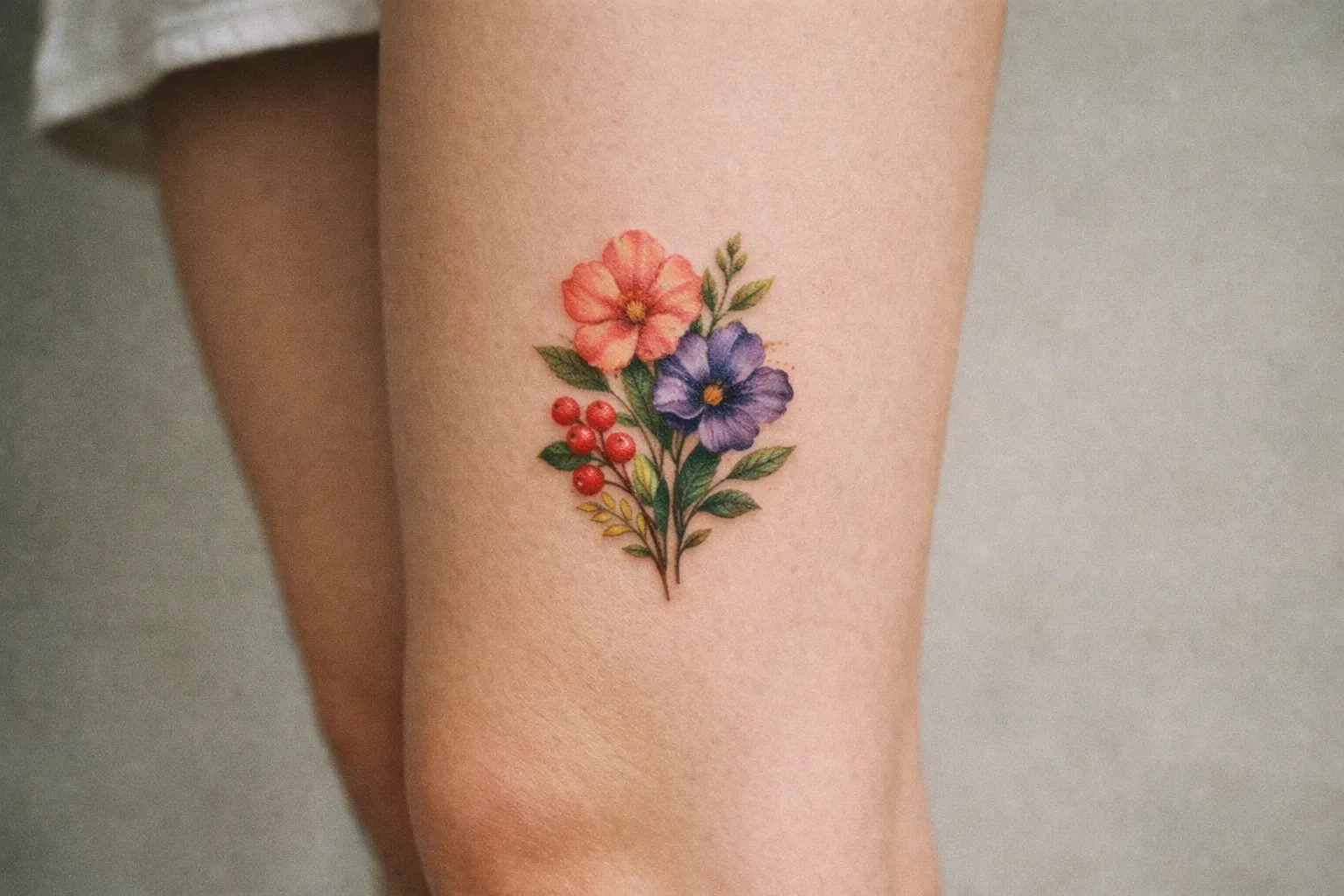
The jewelry framing does real work here. Treat the wrist as a bracelet, the sternum or collarbone as a necklace, the ankle as an anklet, and a finger as a ring: it gives you a placement logic instead of just an aesthetic.
A few specifics worth planning around.
Moon phases as a horizontal strip work well on the collarbone or inner forearm at 3 to 6 cm wide. Each phase needs enough space to read distinctly; cram five phases into 2 cm and they blur together.
Butterflies are a trap at small scale. Fine-line versions under 4 cm lose wing detail within 5 to 10 years. Simplified wings with bolder outlines age better: accept a little less delicacy for a lot more longevity.
Script on the wrist versus the inner forearm: single words work on the wrist; anything longer than two words needs the inner forearm’s flatter, longer canvas. Standard script letters need to stay around 12-13 mm tall to remain readable long-term; if the wrist can’t fit that, switch to bold script or block rather than shrinking a fine cursive.
The collarbone and sternum sit in the upper pain range because the skin is thin and close to bone. Worth knowing before you book a “small, easy” floral there.
Compact Designs That Work: Small Tattoos for Men
Small tattoo ideas for men translate best when the motif reads as intentional rather than incidental at a compact size. Motifs that work: roman numerals, initials, small animal silhouettes (lion, eagle, wolf in simplified form), geometric shapes, anchors, compass roses, and small daggers.
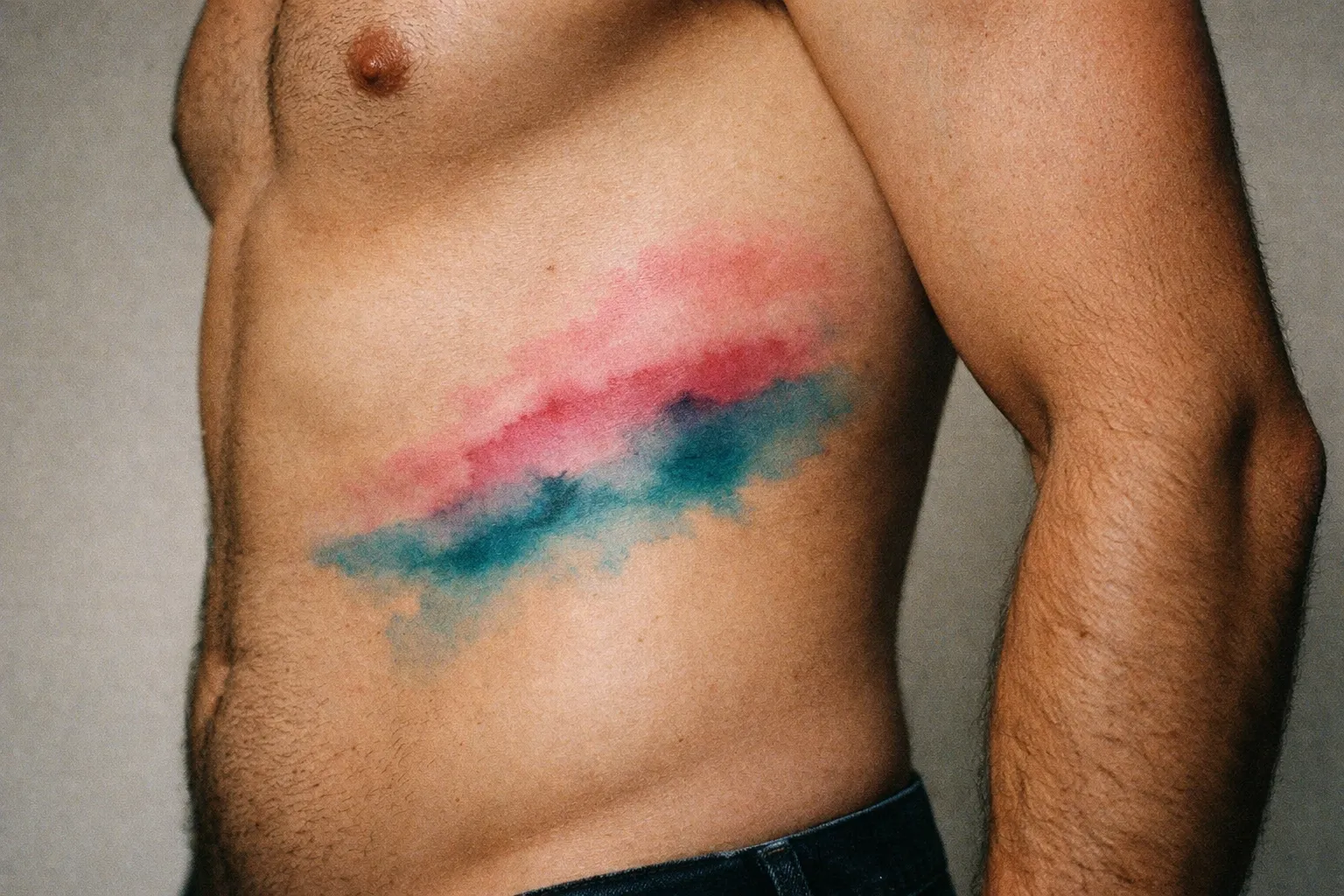
Placement preferences run toward the outer forearm, bicep, chest, and calf, all of which age well and suit those motifs. The outer forearm and upper arm sit in the low-pain band, and the calf is another low-friction option that holds compact blackwork well.
Line weight matters more here than most guides admit. Bold blackwork and American traditional outlines at small scale read more intentionally than ultra-fine single-needle work, which can look faint and unfinished on a small piece. Go bold and the design carries.
Two specifics. Roman numerals and dates work at 2 to 5 cm tall on the inner forearm or collarbone; keep letter height above about 6 mm (¼ inch) or the numerals blur into each other. Chest placement for a single symbol or initials centered over the sternum ages well and hides easily, but the sternum sits in a moderate-to-high pain zone: a small design there feels more intense than the same piece on your outer arm.
Small Meaningful Tattoos: Symbols That Carry Weight Without Taking Up Space
Small meaningful tattoos work when a personal reference compresses cleanly into a compact, readable symbol. The meaning does the heavy lifting, so the design doesn’t have to be large.
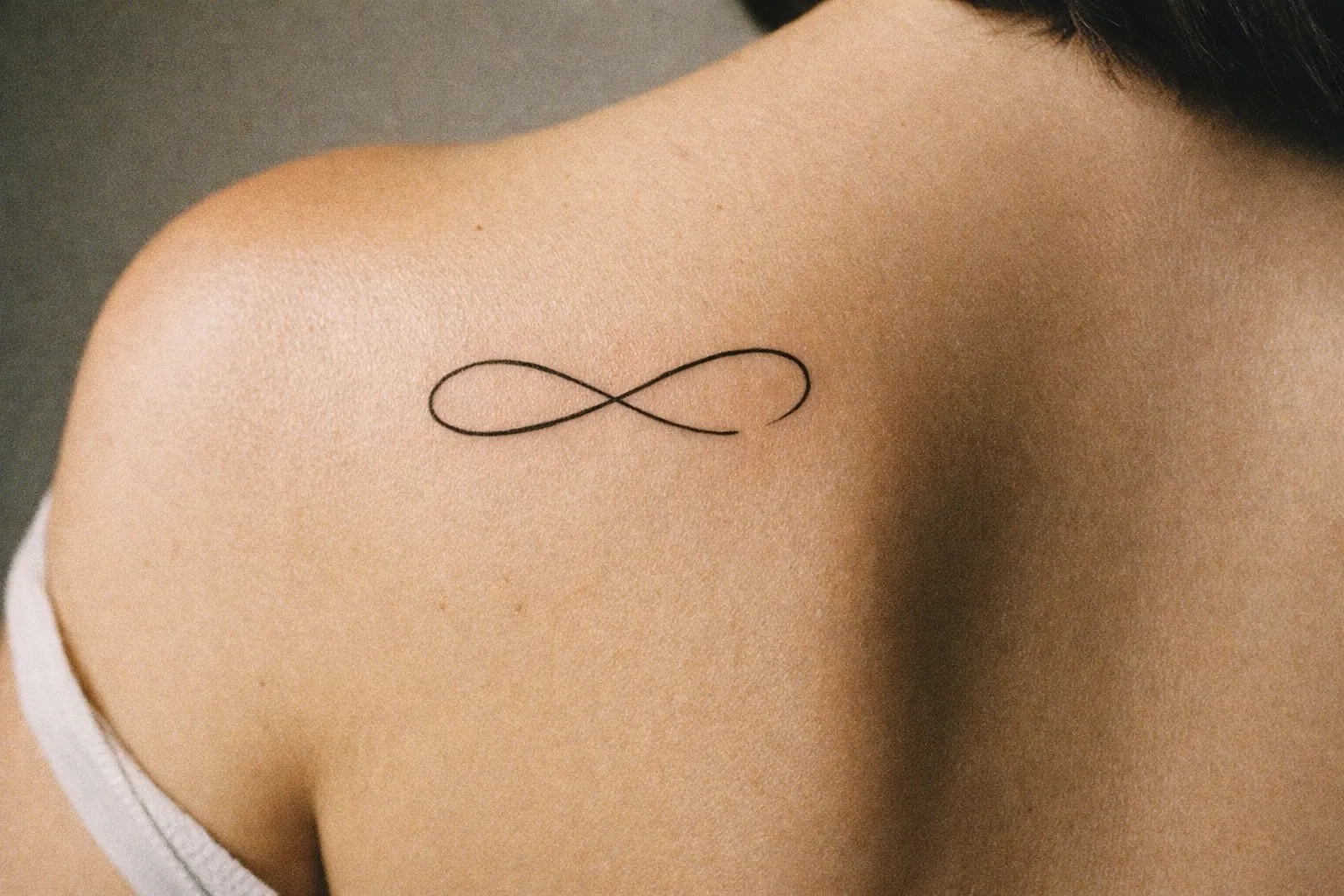
Roman numerals and dates, such as a birth year, an anniversary, or a number that matters to you like “222,” stay compact and age well in bold fonts. Plan for 2 to 5 cm on the inner forearm or collarbone.
Single-word mantras like “energy,” “keep going,” or “be brave” go on the neck, wrist, or inner forearm. Choose a simple sans-serif or clean block serif at a letter height of about 6 mm (¼ inch) or more, and give any script at least 12-13 mm: fussy fonts close up and blur at small sizes. The neck and wrist are moderate-to-high pain zones and move a lot, which affects both comfort and longevity.
Symbolic designs with loaded meaning are worth a note on origin. Anchors read as stability, infinity signs as continuity, and the unalome is a Buddhist symbol representing the path to enlightenment; it’s worth knowing its cultural root rather than treating it as a generic squiggle. The Deathly Hallows is a clean pop-culture reference that reads well at small scale. Sun-and-moon pairings carry a balance theme across several traditions.
Paw prints, birth flowers, and zodiac glyphs are highly personal and stay readable at 2 to 4 cm, as long as they’re simplified into a silhouette or minimal icon rather than dense micro-detail.
The question to bring to your consult: “Can this be simplified into a silhouette or minimal icon that holds at [X] cm?” Experienced artists do this routinely. It’s the single most useful thing you can ask.
Size Limits by Style: What Actually Stays Readable Long-Term
Size limits vary by style because line weight, not just overall dimensions, determines whether a small tattoo stays readable over time.
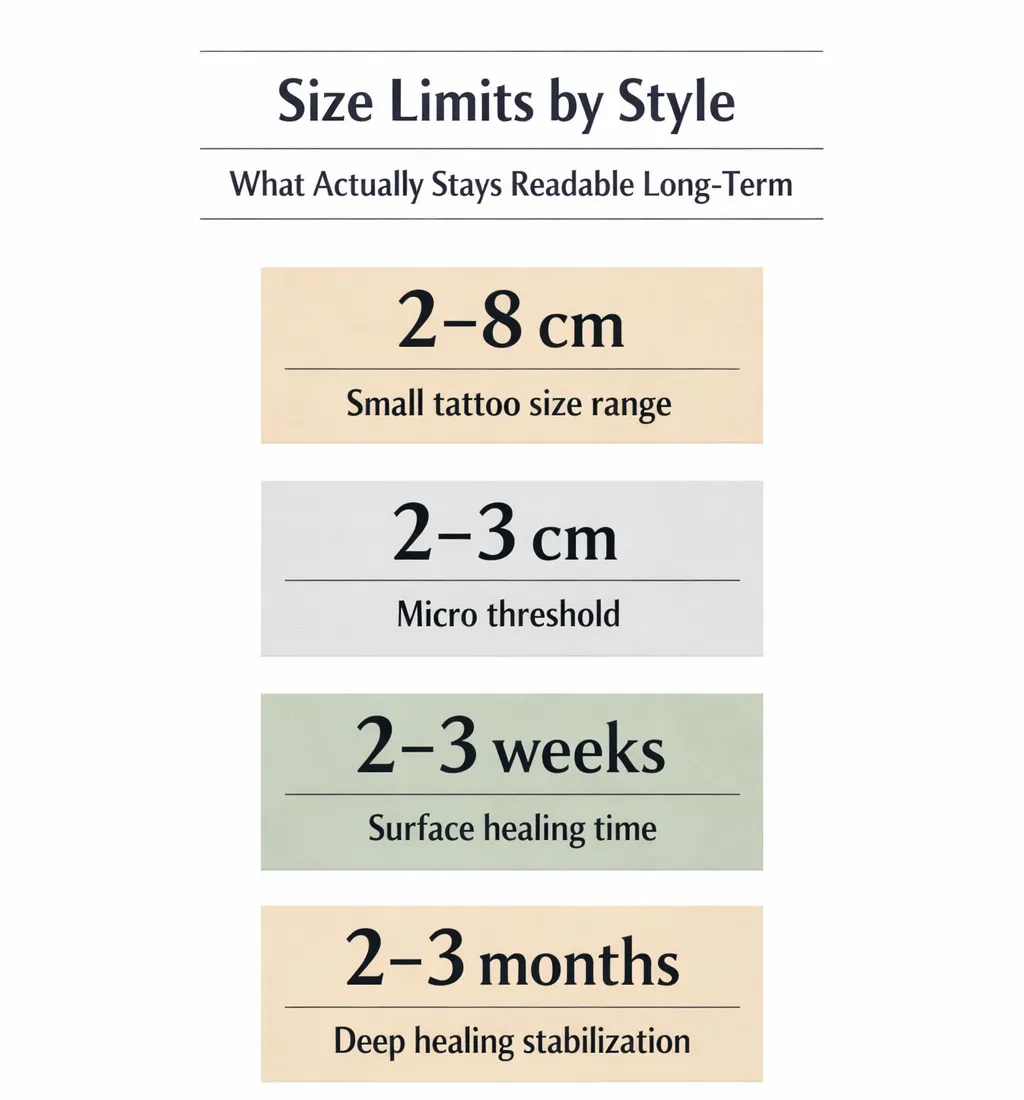 Small tattoos stay legible at 2-8 cm, surface healing 2-3 weeks and deep healing 2-3 months.
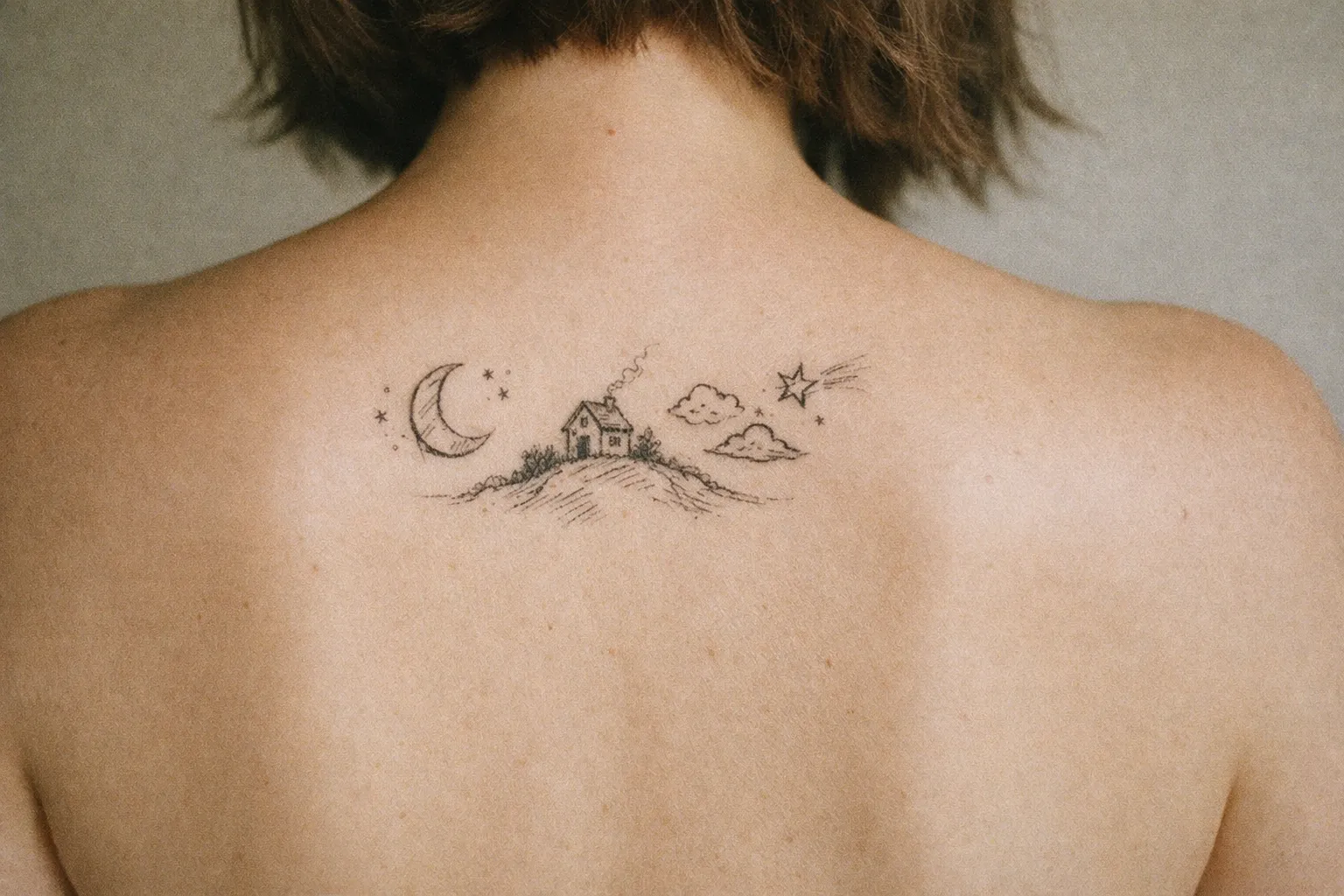
Fine line needs a minimum of 2 to 3 cm for simple symbols; florals and portraits need more. Lines under about 1 mm soften within 5 to 10 years, so plan for a touch-up or go slightly larger from the start.
Bold and American traditional can go smaller because thick outlines hold contrast: a 1.5-inch (4 cm) traditional heart reads cleanly for decades.
Blackwork and geometric holds better than fine line at small scale, but don’t pack too many dots into under 2 cm or they merge.
Script is the strictest category: standard script needs about ½ inch (12-13 mm) of letter height and ornate script about 1 inch (25 mm), while bold block lettering holds down to about ¼ inch (6 mm). Below those floors the letters blur together. Simple fonts outlast elaborate scripts every time at small sizes.
Micro and single-needle is the highest-risk category. It looks sharp fresh, but hairline work under 1.5 cm on high-movement or high-friction spots like fingers and feet smudges within 2 to 5 years. Keep it to low-movement, low-friction placements like the outer forearm and upper arm.
Here’s a quick reference by style.
Size Limits by Style for Small Tattoos
| Fine line / minimalist | Bold / American traditional | Blackwork / geometric | Script / lettering | Micro / single-needle | |
|---|---|---|---|---|---|
| Minimum Readable Size | 2-3 cm (simple symbols) | 1.5 in / 4 cm | 2 cm (simple shapes) | 12-13 mm letter height (standard script); 6 mm for bold block | 1.5-2 cm on stable skin only |
| Best Placements | Inner forearm, wrist, collarbone | Outer forearm, upper arm, calf | Outer forearm, upper arm, upper back | Inner forearm, collarbone | Outer forearm, upper arm |
| Aging Risk | Lines soften in 5-10 yrs without touch-up | Holds well: thick outlines maintain contrast | Dotwork holds; avoid over-packing under 2 cm | Simple fonts outlast elaborate scripts | High risk on fingers/feet: smudges in 2-5 yrs |
Predictable Errors That Ruin a Crisp Little Tattoo
Most ruined small tattoos come down to a handful of predictable errors.
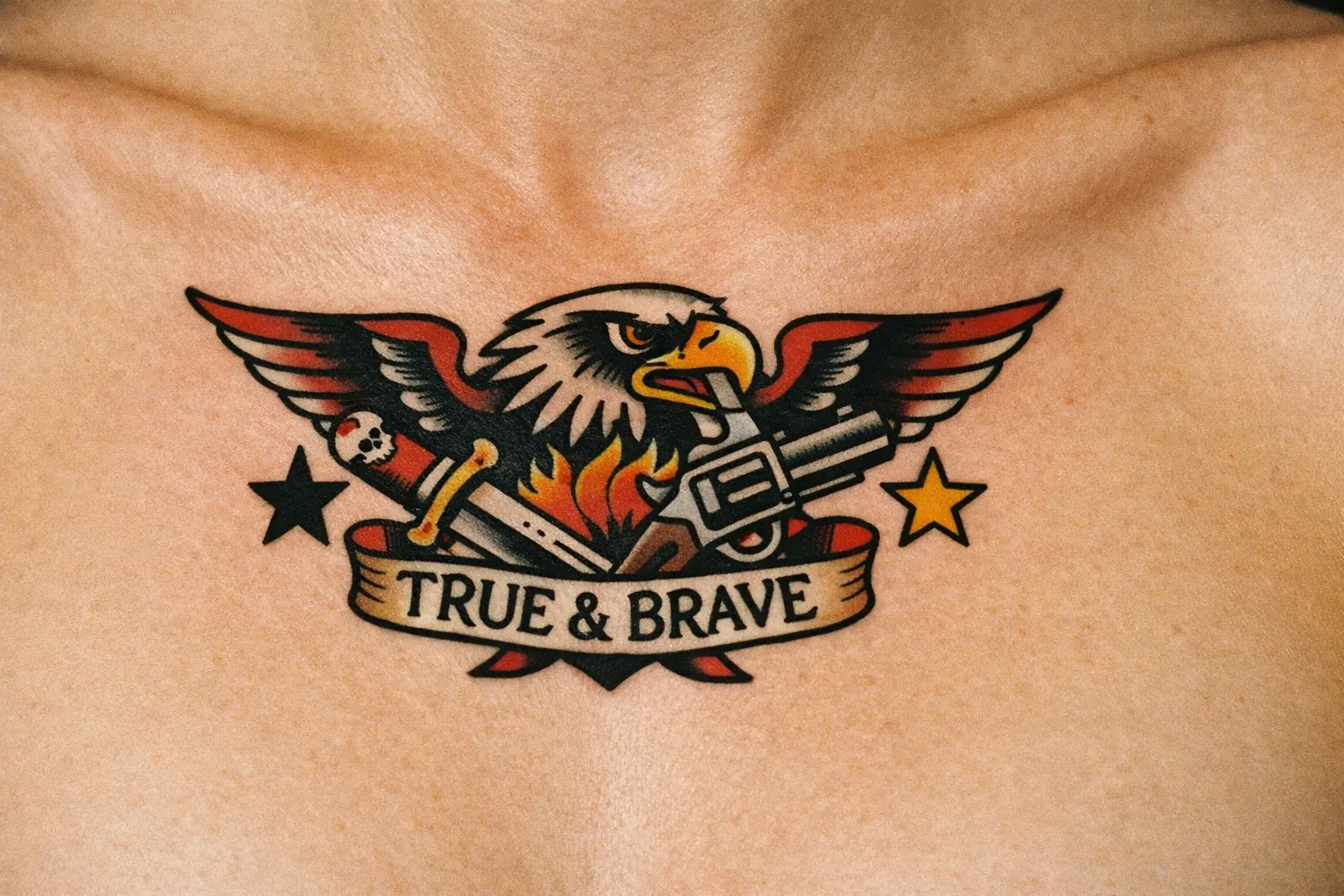
Too much detail in too small a space. This is the most common one. Detail packed into a tight area has nowhere to go when the skin ages: it blurs and merges. The fix is to simplify to a silhouette or a clean icon before booking.
Choosing high-friction spots for micro designs. Fingers, feet, and high-movement areas accelerate fading. A tiny tattoo on a finger that looks perfect at week three can look patchy by year two.
Overly long text on tiny canvases. Long script wraps awkwardly on the inner wrist. Move anything over one word to the inner forearm, which gives you a flatter, longer run of skin.
Ignoring aging behavior. Focusing only on the fresh look and not the 10-year look is how people end up disappointed. The outer forearm, upper arm, calf, outer thigh, and upper back are the zones that hold detail long-term.
Underestimating pain in “tiny” spots. Behind the ear is a surprisingly painful placement: thin skin over bone and dense nerves. So is anything on the ribs or sternum. Small does not mean painless.
Not matching placement to lifestyle. Visible tattoos on the hands or neck can clash with certain dress codes. Sort out concealment before you book, not after.
Healing and Aftercare for Small Tattoos
Small tattoos heal on the same timeline as larger ones. The surface layer (epidermis) heals in about 2 to 3 weeks, while the deeper dermis typically settles over the next 2 to 3 months. Size doesn’t shorten the process.
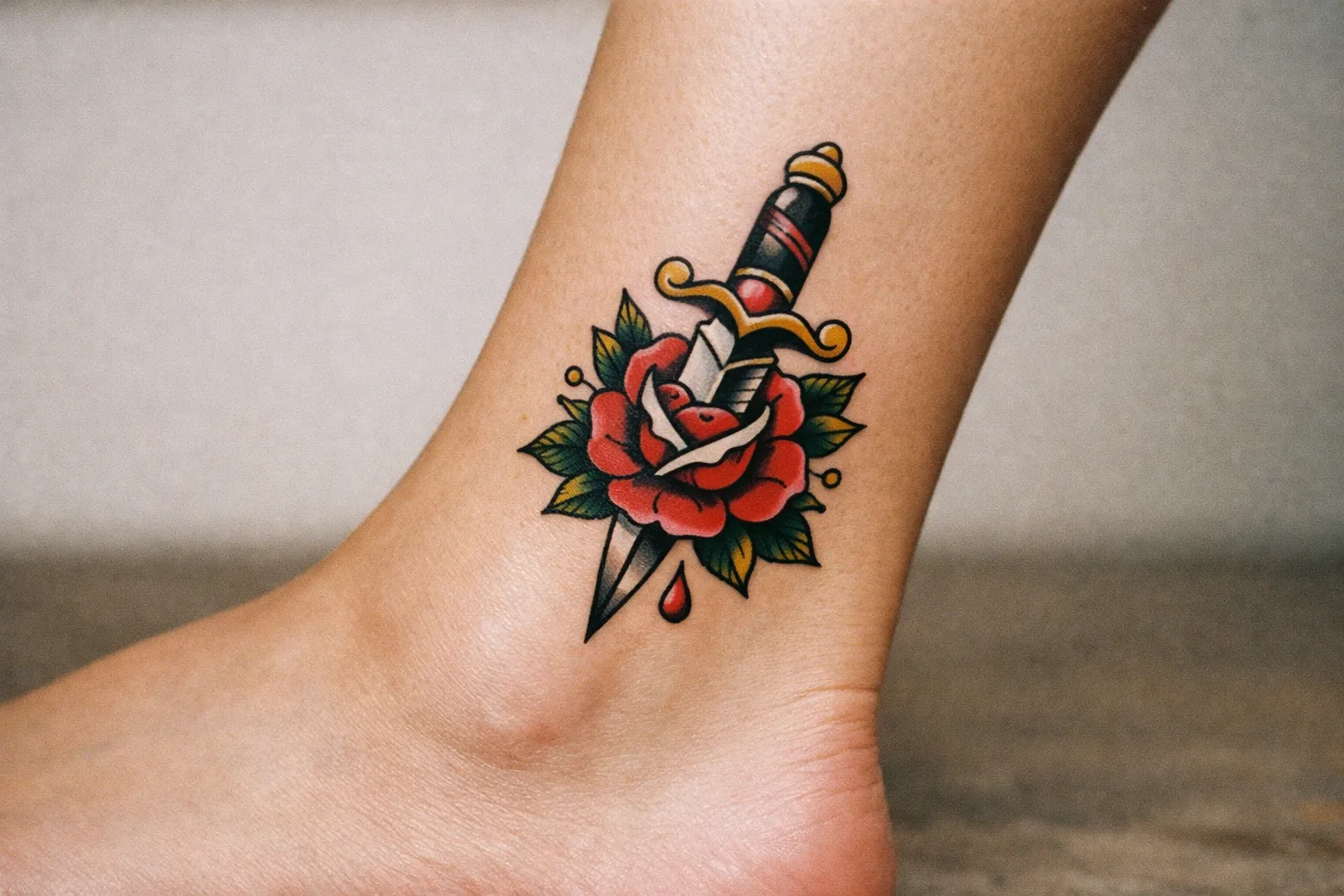
- Days 1-3: Clean gently with a fragrance-free soap and apply a thin layer of fragrance-free moisturizer. Expect redness and minor swelling.
- Week 1: No picking, no soaking (baths, pools, ocean), no direct sun. The tattoo will start to peel; don’t pull the flakes.
- Weeks 2-4: The surface heals and peeling resolves. The color may look dull, which is normal. Keep moisturizing and stay out of prolonged sun.
- Month 2-3: The deeper layers fully settle and the healed result is visible. Assess whether you need a touch-up, which is common for fine-line and micro work.
Friction-minimizing placement matters for healing, not just longevity. High-friction spots like fingers, feet, and the inner wrist need extra care and are more likely to need touch-ups. Behind the ear is its own challenge: hair, sweat, and earring friction complicate healing, so keep the area clean and skip earrings near the tattoo while it settles.
The single biggest factor in keeping a small tattoo crisp at 10-plus years is sun protection. A broad-spectrum, water-resistant SPF 30 or higher on healed tattooed skin, reapplied at least every two hours outdoors, is the standard advice. On exposed placements like the forearm, wrist, and collarbone, daily SPF is what separates a sharp tattoo at 50 from a faded one at 40.
Trending Small Tattoo Designs in 2026
Fine-line minimalism continues to dominate small tattoo trends in 2026, alongside jewelry-inspired placements and blackwork micro symbols.
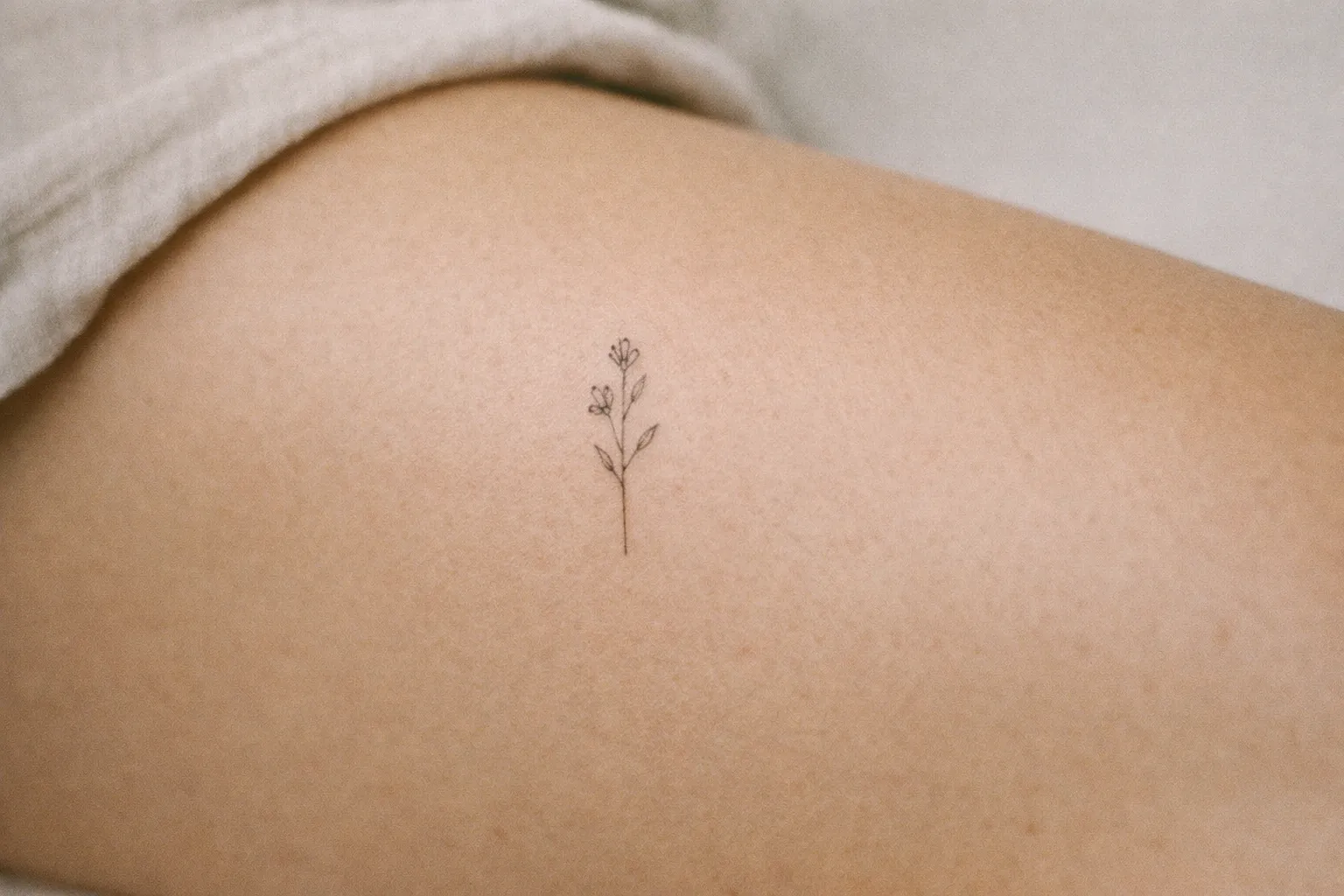
Fine-line minimalism, with delicate florals, thin outlines, and subtle symbols, is the aesthetic that’s been growing since 2022 and shows no sign of slowing (5). Tiny tattoo content carries millions of hashtags and rising Pinterest interest, which gives you a sense of the demand.
Micro placements on fingers and behind the ear stay popular, but more artists now pair them with honest caveats about fading: a healthy shift toward realistic expectations.
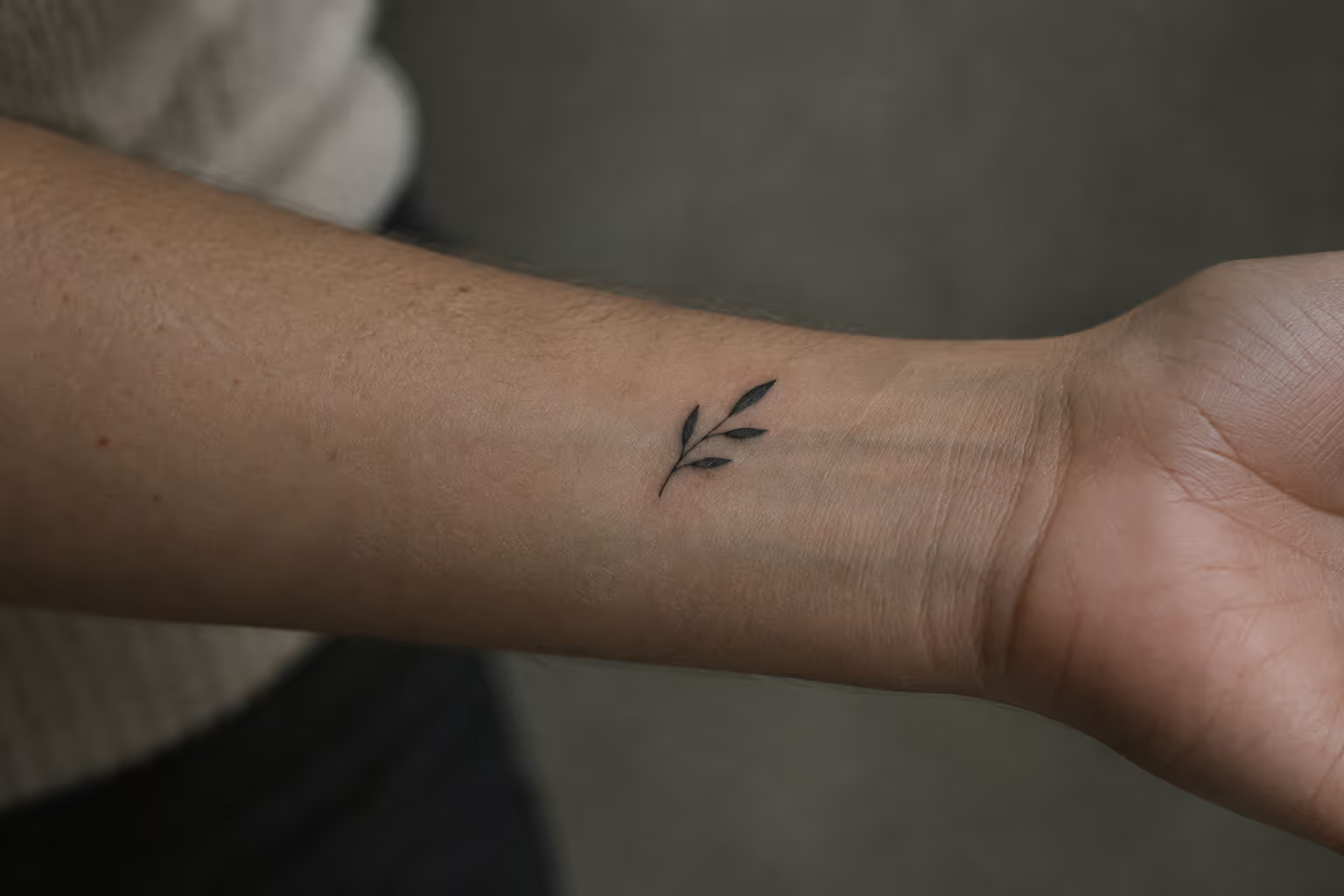
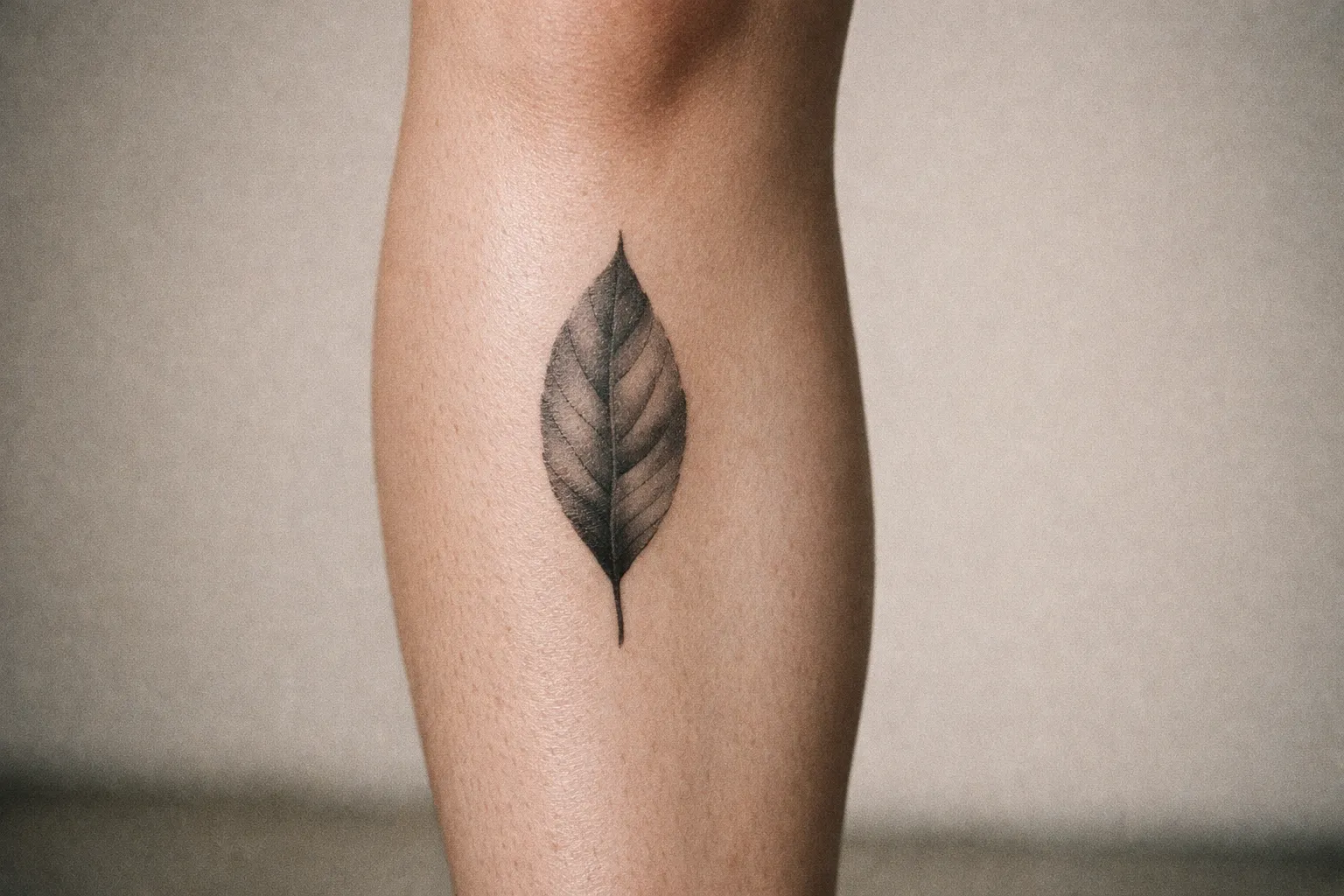
A few specific trends worth noting. Angel numbers and numerology (“222,” “111”) stay compact, personal, and age well in bold fonts. Botanical fine line, including single-stem lavender, small fern fronds, and minimal leaf sprigs, works best at 3 to 5 cm on the inner forearm or collarbone. Blackwork micro symbols, such as small moons, suns, and stars in solid black, age better than their fine-line equivalents; a 2 cm solid black crescent holds its shape for decades. And jewelry-inspired placements are explicitly trending, with artists designing wrist-as-bracelet and ankle-as-anklet pieces to mimic delicate chain jewelry.
Frequently Asked Questions
- What is the best small tattoo to get?
- For longevity, a bold-outline symbol, such as a simple heart, star, moon, or small animal silhouette, at 1.5-3 inches (4-8 cm) on outer forearm or upper arm holds detail for 10+ years.
- Where is the best spot for a small tattoo?
- Outer forearm and upper arm offer lower pain, good aging, and easy concealment. Ankle and upper back work for discreet tattoos. Avoid fingers and feet for crispness.
- What are the top tattoo trends for 2026?
- Fine-line minimalism, botanical designs, blackwork micro symbols, and jewelry-inspired placements lead trends. Angel number tattoos remain popular with realistic aging advice.
- What are some simple tattoos that look good?
- Single-outline hearts, stars, moons, small animal silhouettes, and one-word scripts in clean fonts age well. Simplicity and bold enough linework keep details readable.
- Do small tattoos hurt less than large ones?
- Pain depends on placement, not size. Tiny tattoos behind the ear hurt more than medium ones on the outer forearm. Outer forearm, upper arm, and calf are lowest-pain zones.
- How long do small tattoos take to heal?
- Healing takes 2-3 weeks for the surface layer, with the deeper dermis settling over the next 2-3 months. Small size doesn't shorten the timeline. High-friction spots often need longer care and touch-ups.
- Can I get a small tattoo on my finger?
- Yes, but finger tattoos fade faster due to friction and washing. Bold black linework lasts better. Expect touch-ups within years. Inner wrist or ankle offer better longevity.
What to Lock In Before You Book
Three decisions matter before you book, and none of them is the design itself; if this is your first tattoo, a tattoo for beginners guide can help you frame all three.
First, pick a placement that matches your lifestyle and your aging expectations: the outer forearm and upper arm are the safest starting points, low pain and forgiving over time. Second, if you’re going fine line, size up slightly from your instinct; the minimum readable size is larger than most people expect, and lines under about 1 mm soften within 5 to 10 years. Third, ask your artist to show you healed examples of similar work at the size you’re considering, not just fresh photos. Healed is the only version that tells the truth.
One honest caveat to close on: the design matters less than the placement and the artist’s healed portfolio. A simple 2-inch blackwork symbol on the outer forearm will outlast an intricate micro-floral on a finger by a decade.