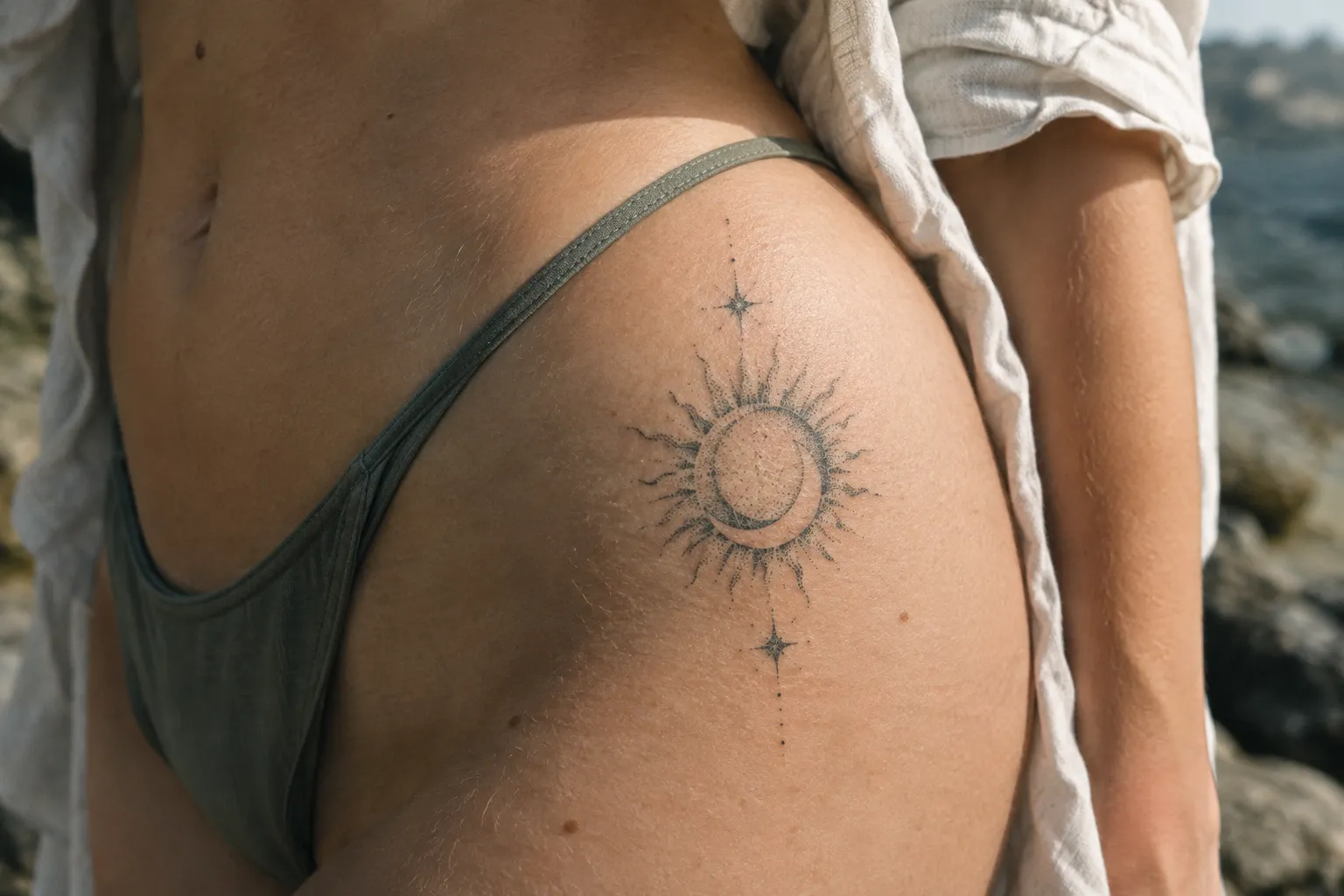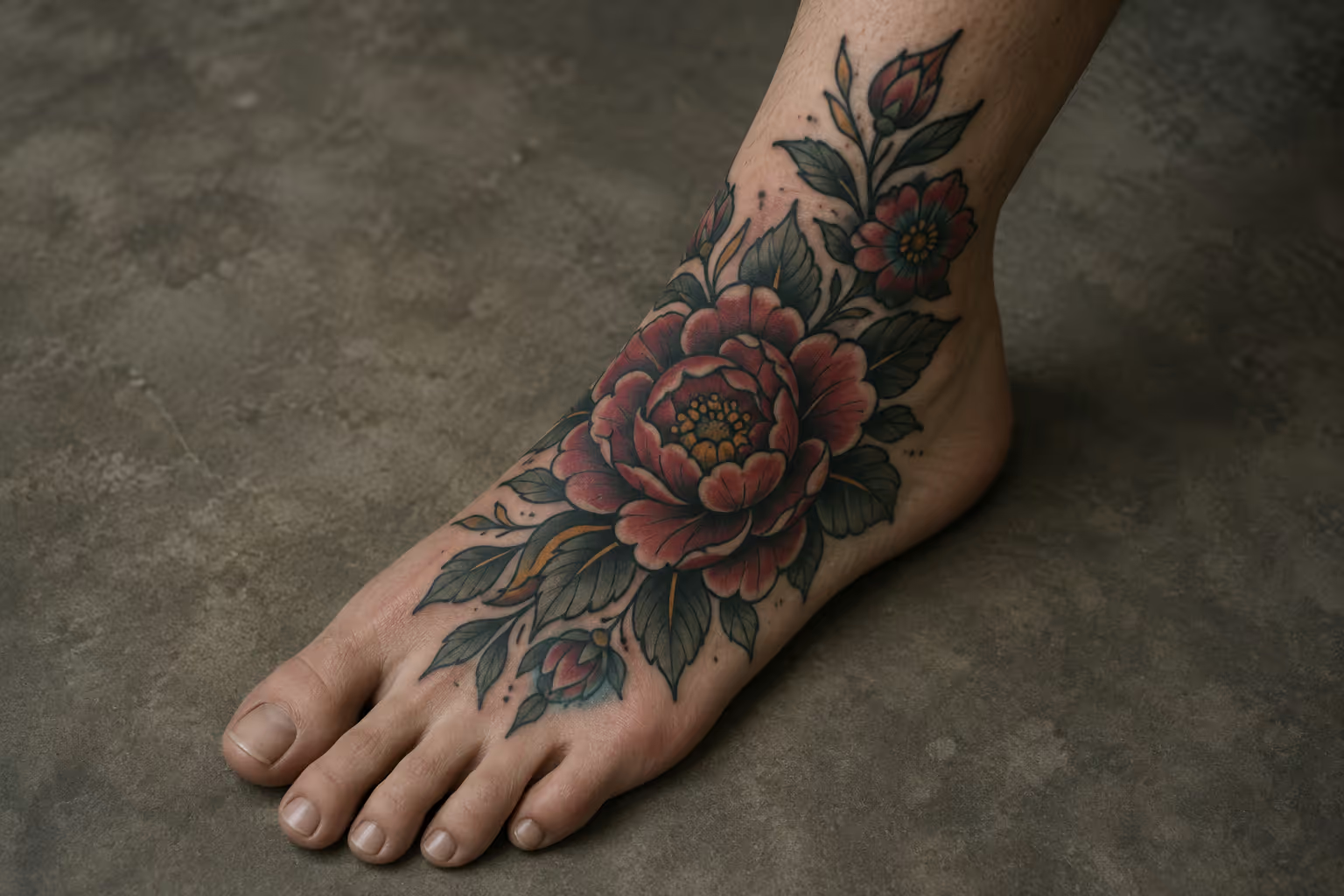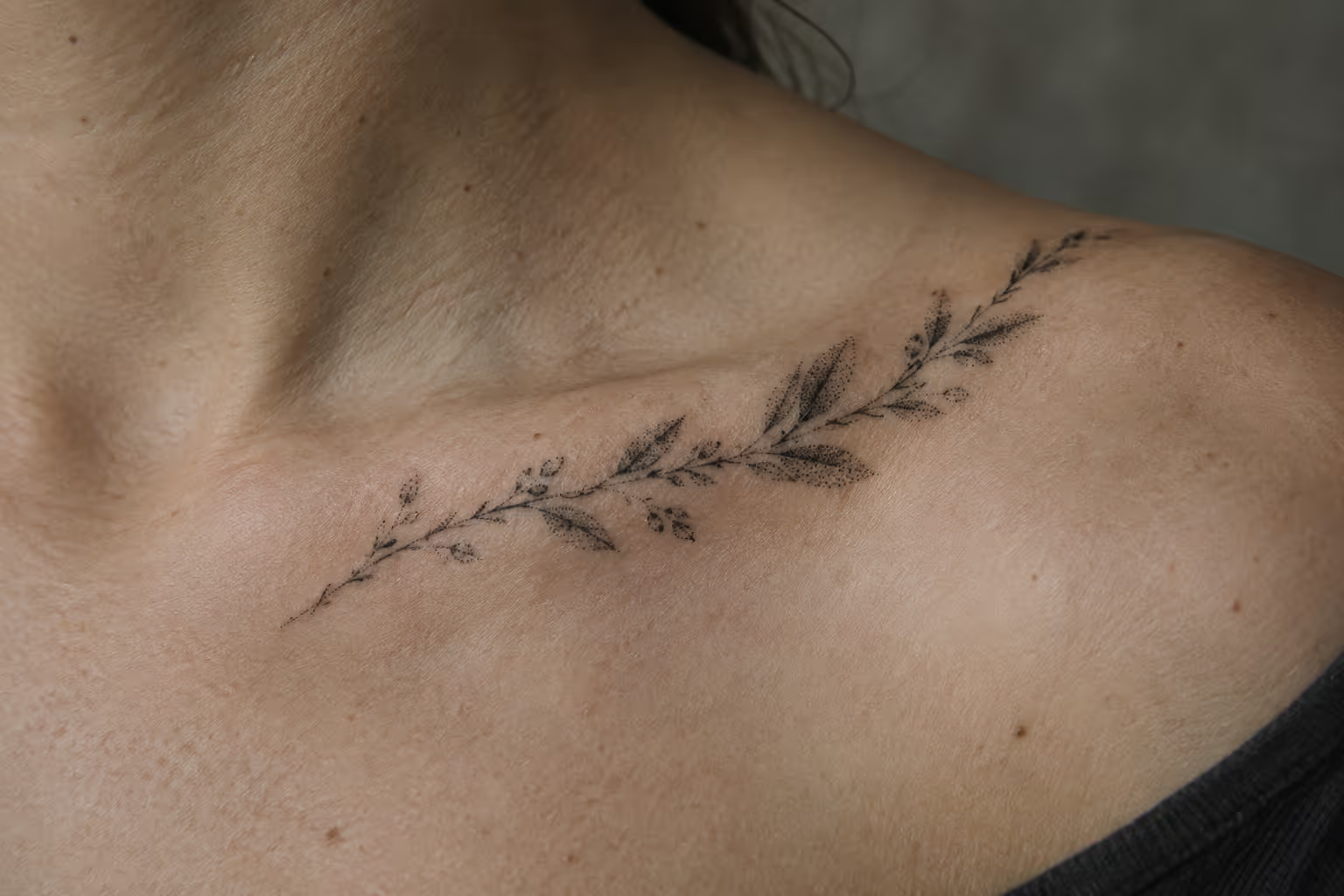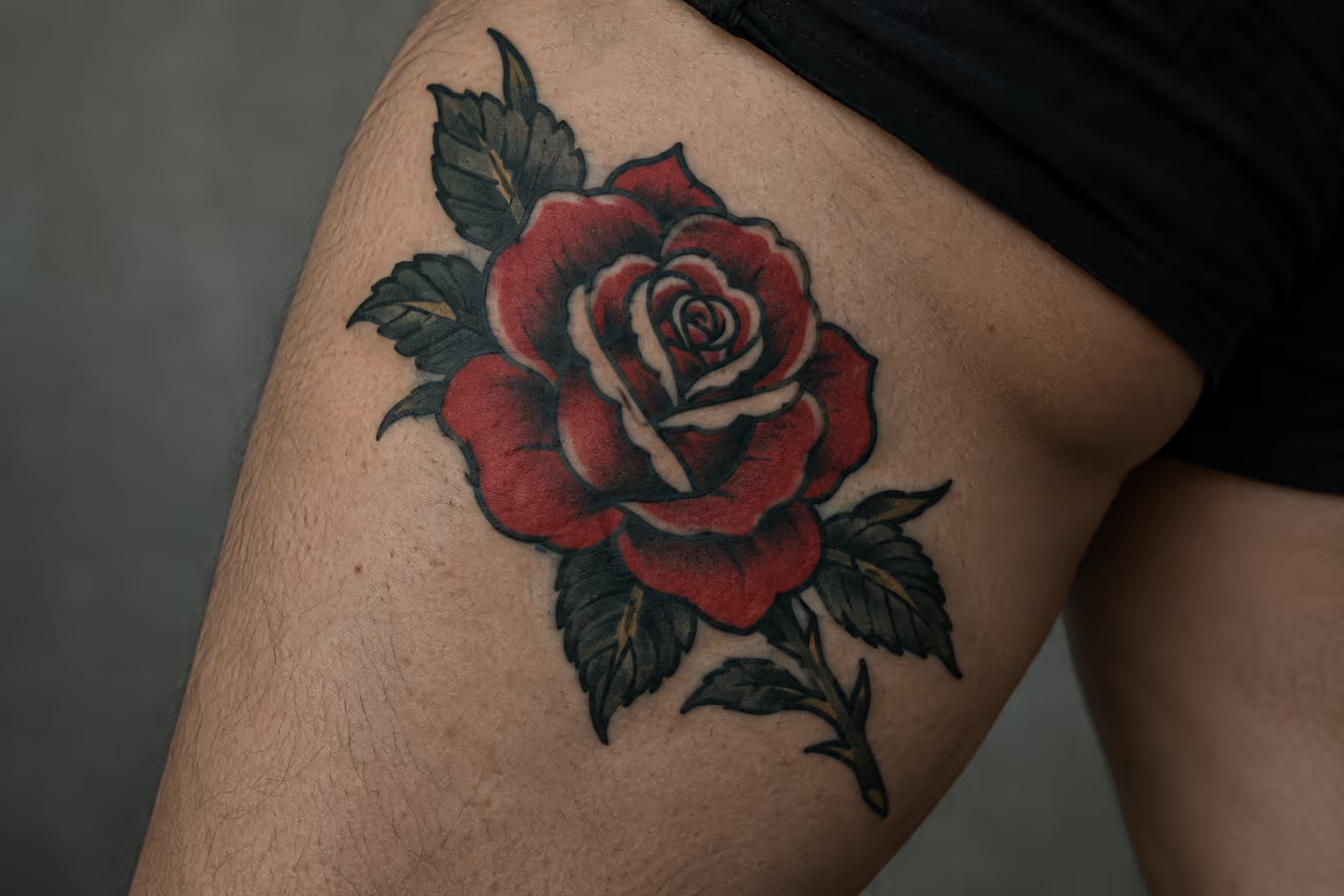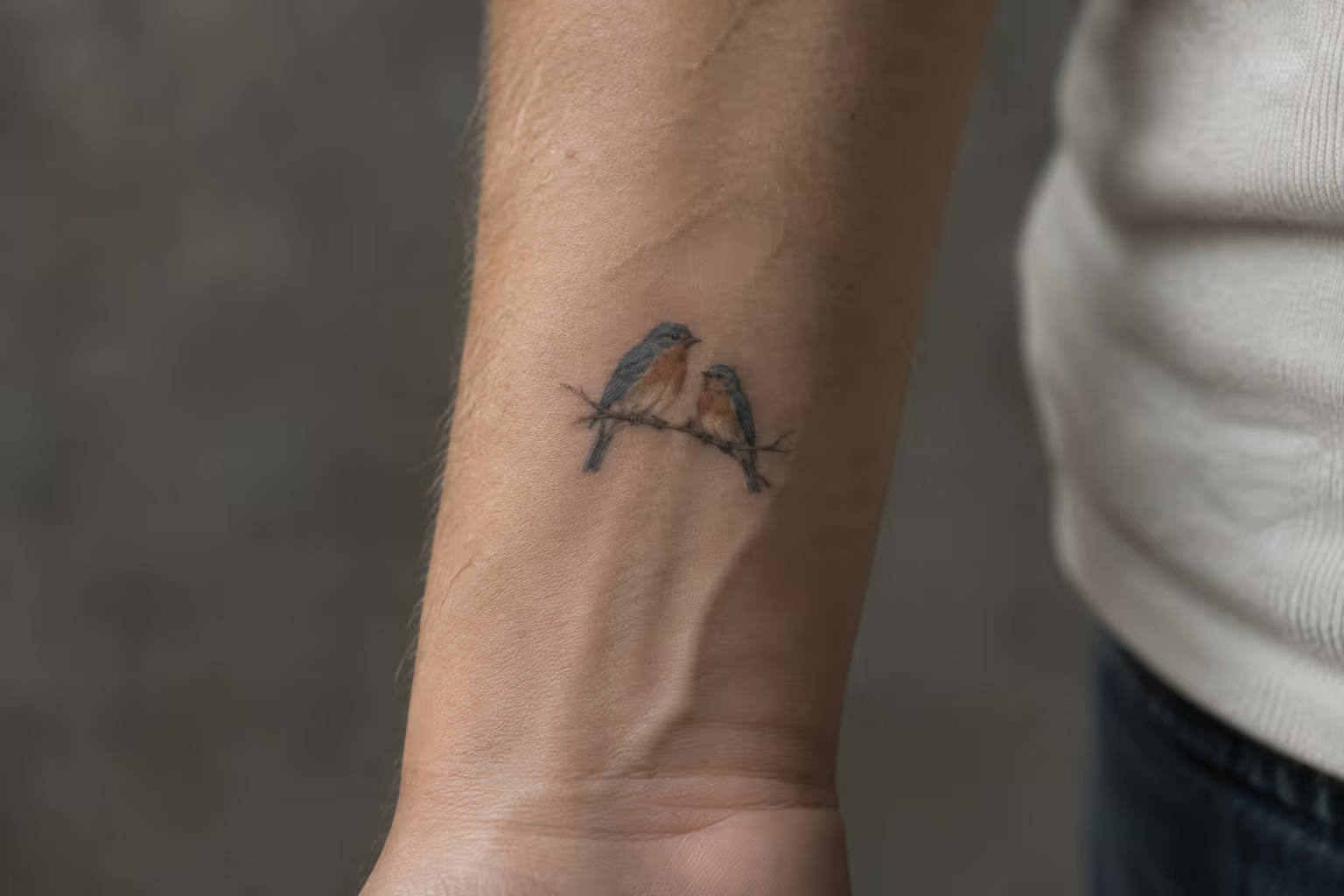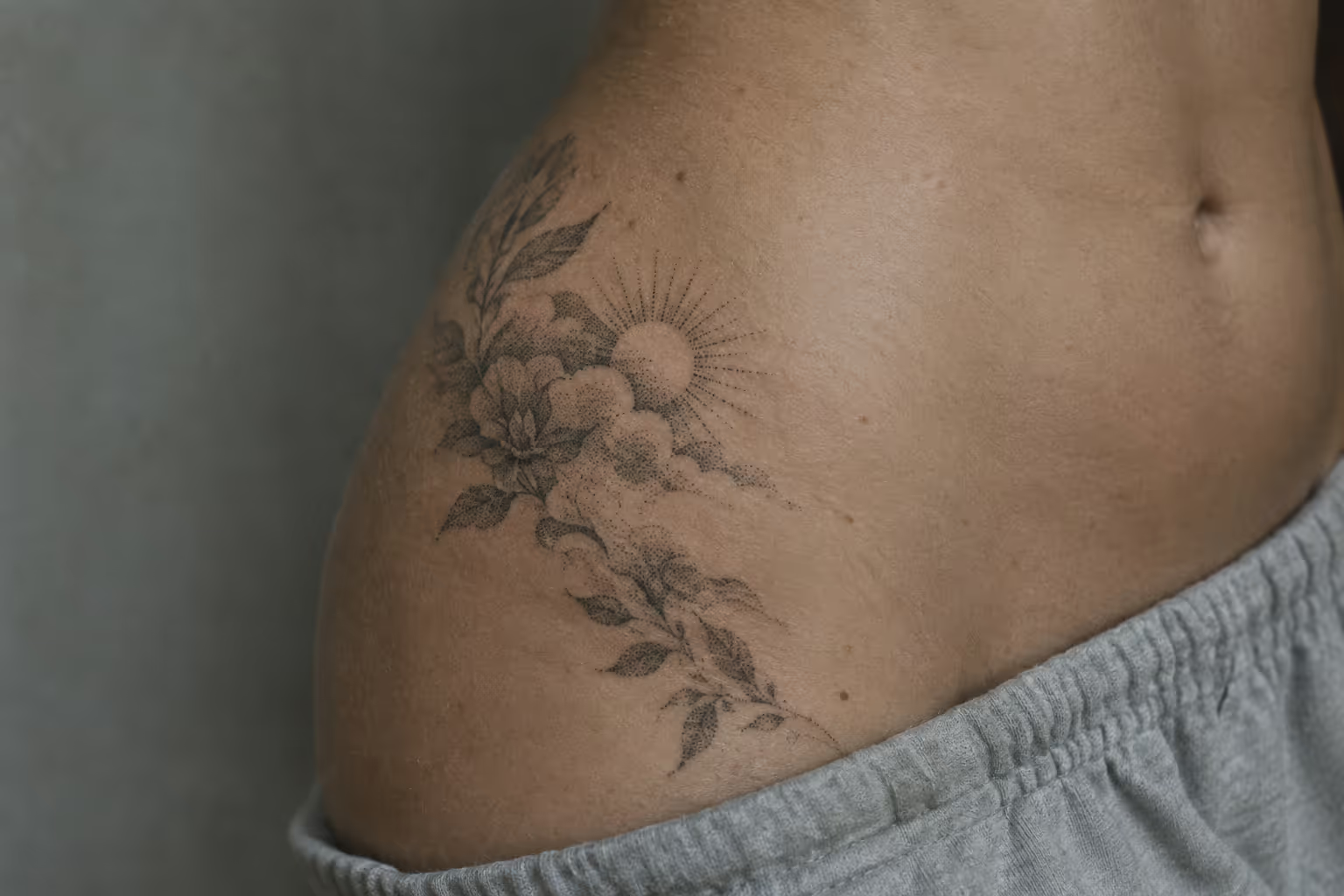
A front hip bone tattoo and an outer side hip tattoo sit only inches apart, but they differ sharply in pain, canvas size and how easily clothing hides them. Calling either one a “hip tattoo” skips that gap. The bony front point suits a small, discreet motif. The fleshier side gives you room for a flowing piece and usually hurts less. Pick the exact sub-zone first and the design, size and healing plan follow from it.
✓ Pros
- One placement can be planned around your usual waistband instead of forcing a wardrobe change.
- The side hip leaves room to extend a motif toward the thigh if the design needs more breathing space.
✗ Cons
- A curved surface can make a design look different standing than it does on a flat stencil.
- Placement choices can limit how much fine detail remains readable as the skin shifts.
The hip has three practical strengths. Its curve suits flowing designs, high-waisted clothing hides most of it, and the side hip is comfortable enough for a first-timer. It also has three drawbacks. The front hip bone hurts more, waistbands rub fresh ink, and a flat design can distort once it wraps over the curve.
Hip Tattoo Placement: Front Hip Bone vs. Side Hip
The hip is not one surface. One placement guide maps six sub-zones, among them the bony front hip bone, the fleshier outer side hip and the hip-to-thigh transition that curves down into the upper thigh (2). The sections below compare the first two. For how the hip stacks up against other body areas on pain, visibility and aging, see the tattoo placement guide.
Front hip bone (anterior superior iliac spine)
The front hip bone is the bony point of the pelvis you can feel at the front of your hips, called the anterior superior iliac spine (2). Skin sits close to the bone here, so the canvas is narrow and three-dimensional. This placement shows above low-rise waistbands.
Outer side hip and the curve toward the thigh
A side hip tattoo sits on the fleshier area between waist and thigh, with more soft tissue and room for larger compositions (2). A design can continue down the curve onto the upper thigh. Because the surface bends, body mapping matters. A composition drawn to follow the contour fits more naturally than a flat drawing laid across the curve (2).
Before you book, walk through these checks with your artist.
How to check a hip tattoo placement before booking
Use the stencil and your everyday clothing to confirm the tattoo's exact position and orientation before the session.
- 1
Choose the sub-zone
Decide whether the design belongs on the front hip bone, outer side hip, or the curve toward the upper thigh.
- 2
Mark your clothing lines
Show your artist where your regular waistbands and underwear sit so the placement can be checked against them.
- 3
Map the stencil to the curve
Ask the artist to orient the design to the hip's contour rather than laying it flat across the surface.
- 4
Check it standing
Stand naturally and review the stencil from more than one angle; have it adjusted until it follows your shape.
Pain Differences Between the Front Hip Bone and Side Hip
Hip tattoo pain depends on the sub-zone. One placement guide rates the bony front hip bone well above the fleshier outer side hip, so the hip has no single pain rating (2). Don’t treat “hip tattoo pain” as one level: the sub-zone you pick matters as much as deciding to get a hip tattoo at all.
The reason is anatomy. Over the front hip bone, there is little soft tissue between needle and bone, so the vibration is more pronounced and the pressure feels sharper (2). The outer side hip has more soft tissue to absorb it. On a relative scale, front hip bone > outer side hip, and the outer side hip runs closer to an outer forearm than to the ribcage. On the bone, shorter sessions with planned breaks work better than pushing through (2).
Why the side hip suits a first tattoo
The guide describes the outer side hip as a reasonable first placement. It advises against starting on the front hip bone if you have no reference for your own pain tolerance (2). If pain is your main concern, it says to ask for the side hip when you book (2). Save the front hip bone for a later tattoo, once you know how you sit through linework.
Design Ideas by Zone: Small Front Motifs to Larger Side Hip Pieces
The best hip tattoo ideas follow the canvas size of each zone. Small motifs suit the narrow front hip bone, and larger compositions suit the roomier outer side hip (2).
Front hip bone: small florals, script, single motifs
Small florals, short script and single motifs suit the front hip bone (2). One design gallery puts front hip tattoos at 2 to 6 inches (about 5-15 cm) (3). Treat that as one page’s range, not a rule. For lettering, keep standard script at a letter height of at least 12 mm (1/2 in). Fine or ornate script needs about 25 mm (1 in), and block letters need at least 6 mm (1/4 in). Hairline script smaller than that blurs as it heals over a curved, flexing area.
Side hip: florals, animals, mandalas and wraps
The side hip has room for larger florals, animals such as a tiger, ornamental work and mandalas (2). A floral or botanical piece can run down the curve. A design can also wrap around the hip bone instead of sitting flat, and the guide says this helps the composition move with your body (2).
The mandala comes from Hindu and Buddhist traditions, where it can represent the universe and is used as an aid to meditation (6). On the hip it is often chosen for its symmetry, and the curve of the side hip suits its circular flow (3). Know which reading you mean before you commit.
Concealment and Visibility: What Clothing Hides and What It Shows
How well clothing hides a hip piece depends on the sub-zone you choose, not only on whether you wear high-waisted pieces. High-waisted clothing conceals most hip placements, while low-rise waistbands can reveal the front hip bone (2).
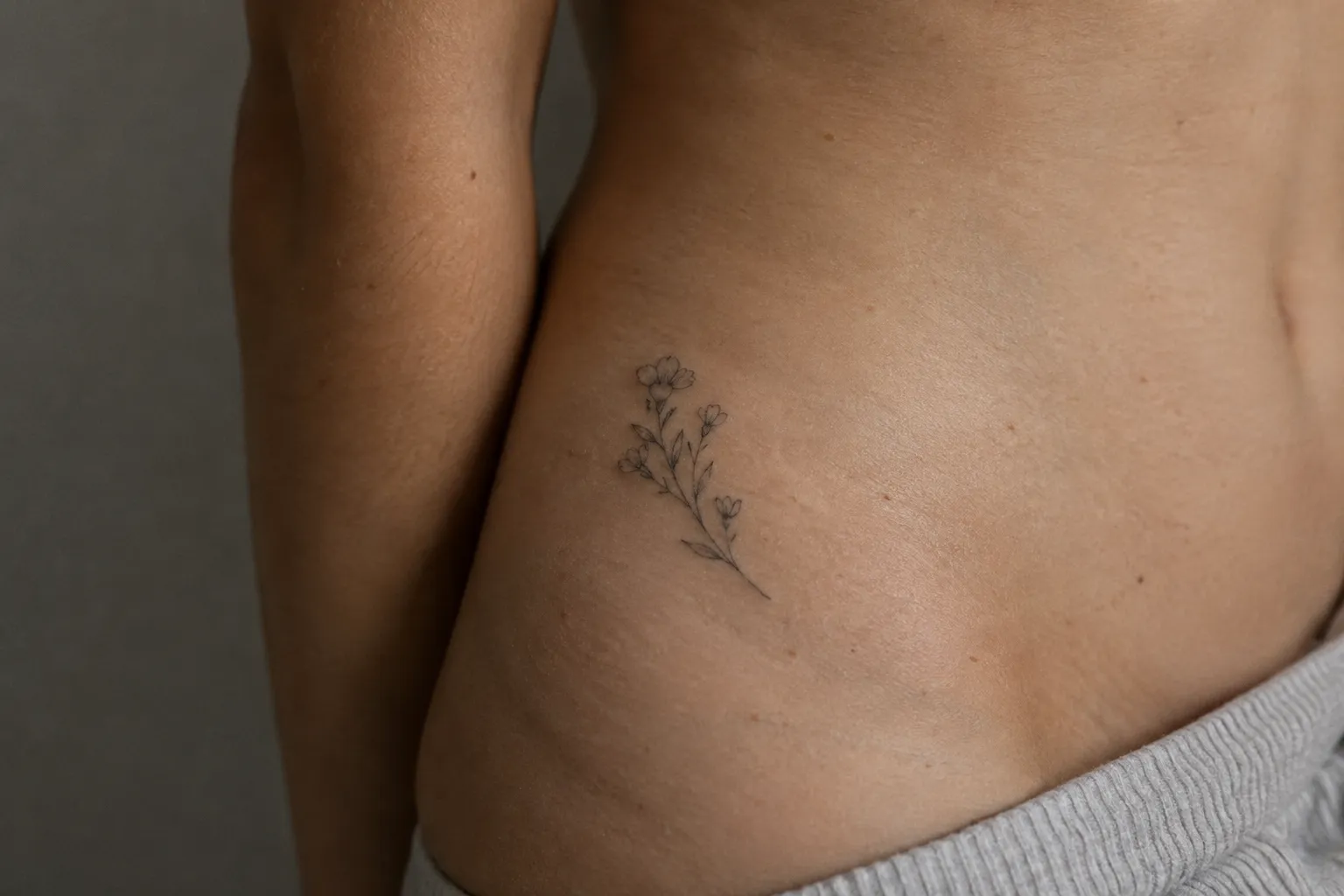
Swimwear follows the same logic. High-waisted swimwear hides most placements. High-cut bikini bottoms can expose both the side hip and the hip bone (2). If you want the piece hidden at work but visible at the beach, the front hip bone with mid-rise trousers is the more flexible spot. If you want it hidden almost everywhere, keep it lower on the side hip and check it against your highest-cut swimsuit before the stencil goes on.
Stretching With Weight Change and Long-Term Fading
A hip design holds up through normal weight shifts. Healthline reports that minor weight fluctuations are unlikely to alter a tattoo’s appearance, but it also lists the hips among the areas where most pregnancy weight gain and stretch marks occur (4).
Weight changes, stretch marks and loose skin
Tattoos move with the skin. Stretch marks and loose skin affect how the ink looks more than ordinary weight change does. Rapid, significant changes have more effect than gradual ones (4). Designs whose lines follow the hip’s curve adapt to these changes more gracefully than flat compositions (2).
Healing, then sun care to prevent fading
Healing comes first. Expect this rough timeline:
- Day 1-3: Clean daily with lukewarm sterile water and fragrance-free, alcohol-free soap (1). Wear loose, soft-waisted clothing so waistbands don’t rub the fresh tattoo (2).
- Week 1: Keep washing gently, and apply a water-based moisturizer several times a day (1). Choose low-slung or loose bottoms that sit clear of the tattoo.
- Week 2-4: Peeling and itching usually come in week 2, and the surface looks healed around weeks 3-4, as in our tattoo aftercare timeline. The deeper layers keep healing for up to a year (1). If the skin feels dry, the AAD suggests a water-based lotion or cream (5).
Once the tattoo has healed, UV becomes the main threat, because UV light can fade some inks (5). The AAD advises a broad-spectrum, water-resistant SPF 30 or higher. Apply it 15 minutes before going outside, and reapply at least every 2 hours (5). Skip tanning beds and sunlamps (5), and use sun-protective clothing for long beach days. See a board-certified dermatologist if the tattooed skin reacts or changes (5).
Frequently Asked Questions
- Is the hip a painful tattoo?
- The front hip bone is usually more painful than the outer side hip because it has less padding; on the bone, shorter sessions with planned breaks work better than one long sitting.
- What's the least painful spot to get a tattoo?
- The outer thigh is often a gentler choice than a bony hip placement; pain varies by person, so compare locations rather than relying on one universal ranking.
- What is the most feminine spot for a tattoo?
- No body placement is inherently feminine; a design's styling and scale create that impression more than the anatomy of the spot.
- Are hip tattoos a good choice for a first tattoo?
- The outer side hip can suit a first tattoo if you want a larger, concealable area; choose a small testable design before committing to a long session.
- Do hip tattoos stretch with weight change?
- Ordinary gradual weight changes usually leave a hip tattoo recognizable; rapid skin expansion or stretch marks can disrupt fine detail and line spacing.
- Is a single-side hip tattoo easier to conceal than a hip-to-hip design?
- A single-side piece is easier to cover selectively; a design crossing the lower belly can appear above waistbands on either side when you move.
Before You Book: Waistband Check and Sun Routine
The front hip bone and the outer side hip are two separate decisions. The front hip bone means more pain, a small canvas and visibility above low-rise waistbands. The side hip gives you more room, a gentler session and easier concealment. Show your artist exactly where your waistbands and swimwear sit, and approve the stencil only once it follows your curve while you stand. After the piece heals, apply SPF 30 or higher every time it sees sun, and reapply at least every 2 hours.