Most tattoo aftercare problems don’t come from neglect - they come from doing too much. Over-moisturizing suffocates healing skin, and picking at the flakes pulls pigment out with them; between those two, well-meaning people cause most of the damage. Good care is mostly restraint and timing, and it changes as the skin does. Here’s the wash schedule, when to swap products, and the red flags that mean stop.
The tattoo aftercare healing stages, week by week
Healing a tattoo requires proper tattoo aftercare throughout the different stages. It’s not a single event but a sequence where the right care changes as the skin changes. Knowing the tattoo healing stages keeps you from over-doing one phase - slathering ointment on a tattoo that’s done weeping - or under-doing another, like letting the peeling phase dry out completely.
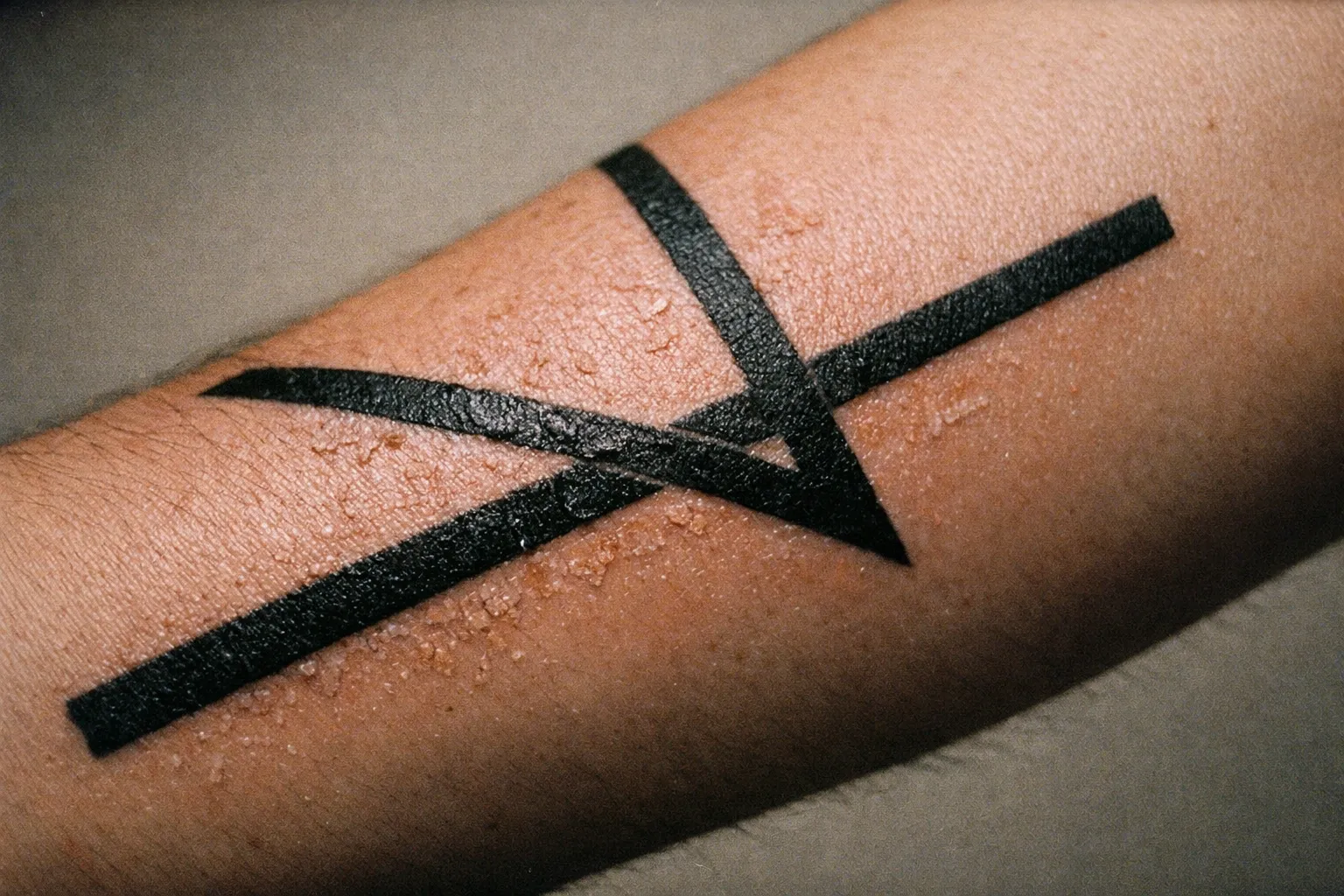
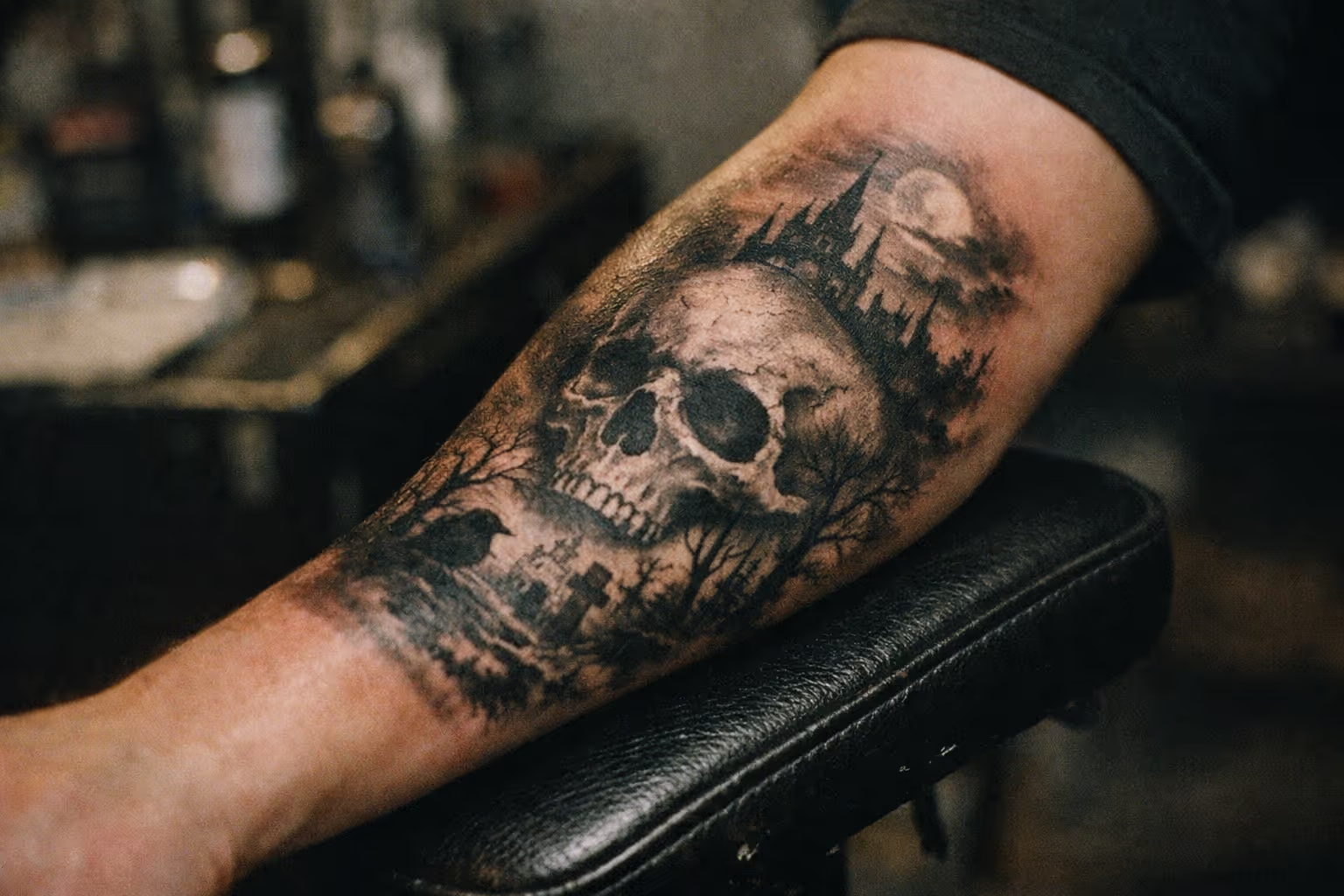
Day 1-3: Open wound, weeping phase. The tattoo is leaking plasma, lymph fluid, and a little ink. It feels warm, looks slightly swollen, and may bruise around the edges - especially on the ribcage, sternum, or behind the knee where skin is thin. This is when you wash most often and apply the thinnest moisture. For a tattoo in this phase, a 3-5 inch piece on the inner forearm is a good example where you can see these effects clearly. Day 4-7: Tight, shiny, starting to flake. The wound surface dries down. Small soft scabs form where the needle worked hardest - usually over heavy black or dense saturation. The tattoo can look duller during this stretch. That’s a thin layer of healing skin sitting over the pigment, not lost color.
Week 2: Peeling and itching. Skin sheds like a sunburn, often in colored flakes that look alarming but are normal (2). This is the highest-risk window for picking. Don’t.
Week 3-4: Looks healed on the surface, still healing underneath. The epidermis has closed. The deeper dermis is still remodeling - which is why submersion, hard sun, and friction-heavy clothing still matter through about week four.
Week 4-6 and beyond: The tattoo looks settled, while the deeper skin keeps remodeling for a few months. Some artists do a free touch-up at this point if a small section healed light. After six weeks, normal skin care resumes - with sunscreen as the one permanent addition.
Care tips for a “second skin” or adhesive style bandage
Second-skin bandages - Saniderm, Recovery Derm Shield, Tegaderm-style adhesives - are now standard for many studios. They’re a transparent, breathable film that seals the wound under a thin layer of plasma, essentially a controlled scab. The European Academy of Dermatology and Venereology says this style can stay on for 24 hours or even several days as long as it remains comfortable and isn’t leaking (3).
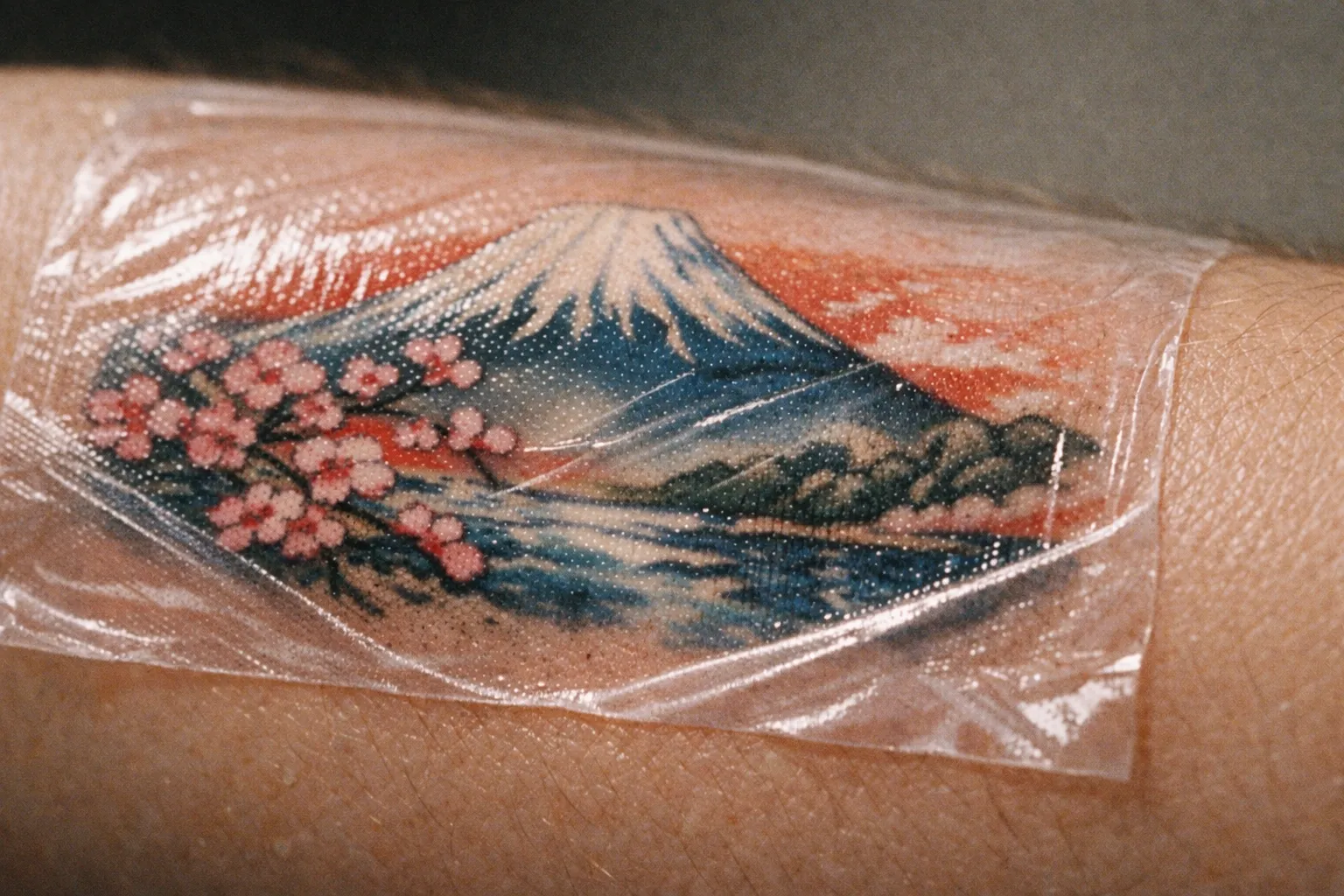
How to handle one:
- Leave the first bandage on as long as your artist instructed - usually 24 hours, sometimes up to 3-5 days for the second application.
- Check for leaks. If plasma escapes the seal, bacteria can get in. A leaking bandage needs to come off and be replaced, or transitioned to open-air care.
- Remove in the shower. Warm water loosens the adhesive. Peel slowly, in the direction of hair growth, pulling the film back on itself - don’t yank it perpendicular to the skin.
- Expect a goopy mess underneath. That’s accumulated plasma and ink, not infection. Wash it off with lukewarm water and a fragrance-free soap.
- If adhesive residue remains, warm soapy water breaks it down. Don’t scrub with anything abrasive.
Some artists apply a second piece of second skin after the first comes off. Follow what they told you - protocols vary by studio and by how your skin reacted.
Care advice for a “traditional” style bandage
Plastic wrap or a basic absorbent bandage is the older approach and still common, especially for larger pieces where adhesive films don’t conform well. The timing is faster:
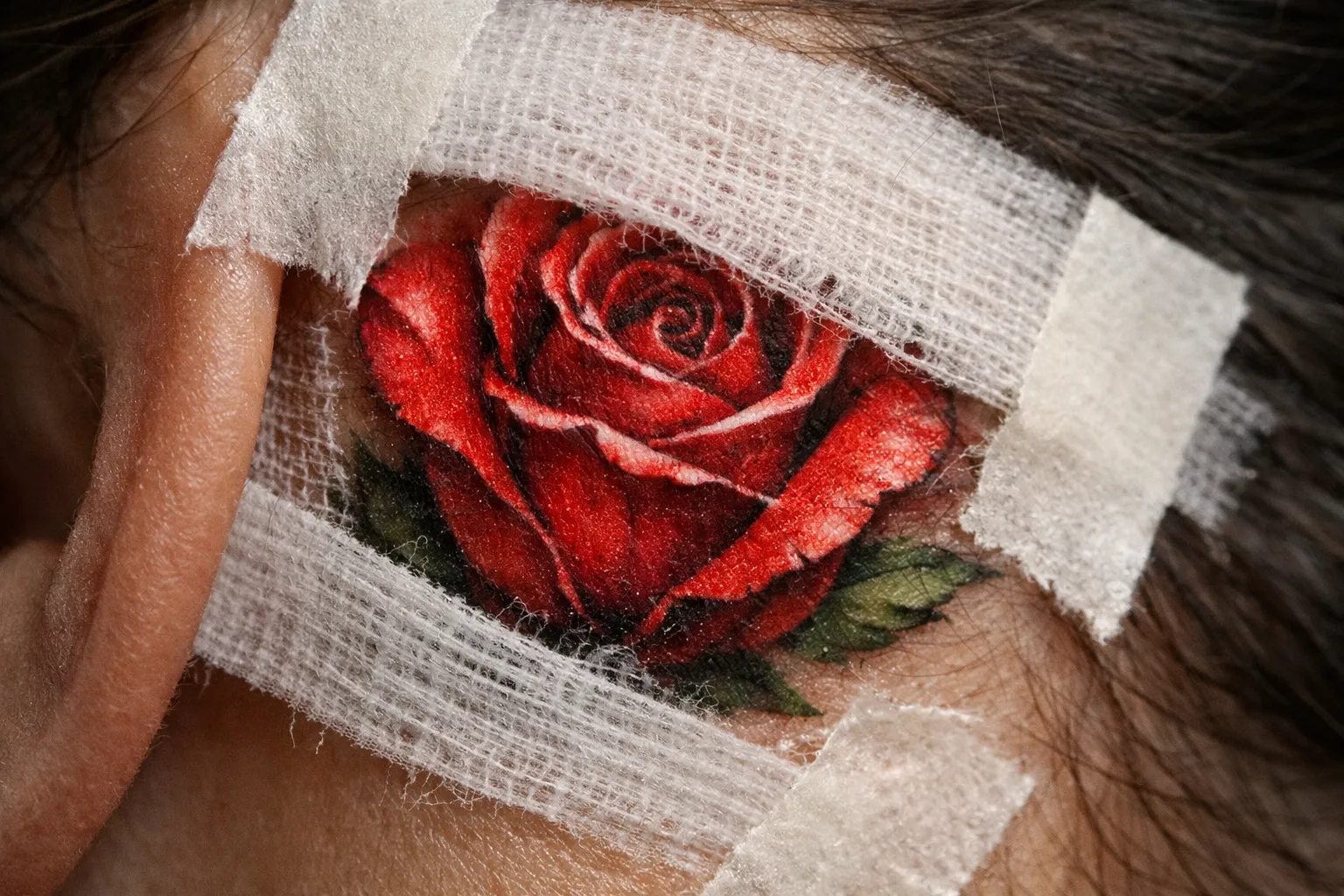
- Remove the bandage after 3-6 hours. One studio guide says 3-4 hours and explicitly says not to re-bandage; another puts the window at 4-6 hours for adhesive pads (1).
- Wash immediately. Whatever is sitting on the tattoo - ointment residue, plasma, ink, sweat - needs to come off before it dries down.
- Do not re-wrap unless your artist specifically told you to. That’s usually only the case for areas under tight clothing or for sleeping the first night.
Traditional bandages are simpler but require more diligence in the first 48 hours because the wound is exposed sooner.
After bandages: how to clean a new tattoo properly
Once the bandage is off - by either method - the core routine is the same. This is the how to clean a new tattoo part, and it’s where most people either overcomplicate it or skip steps entirely.
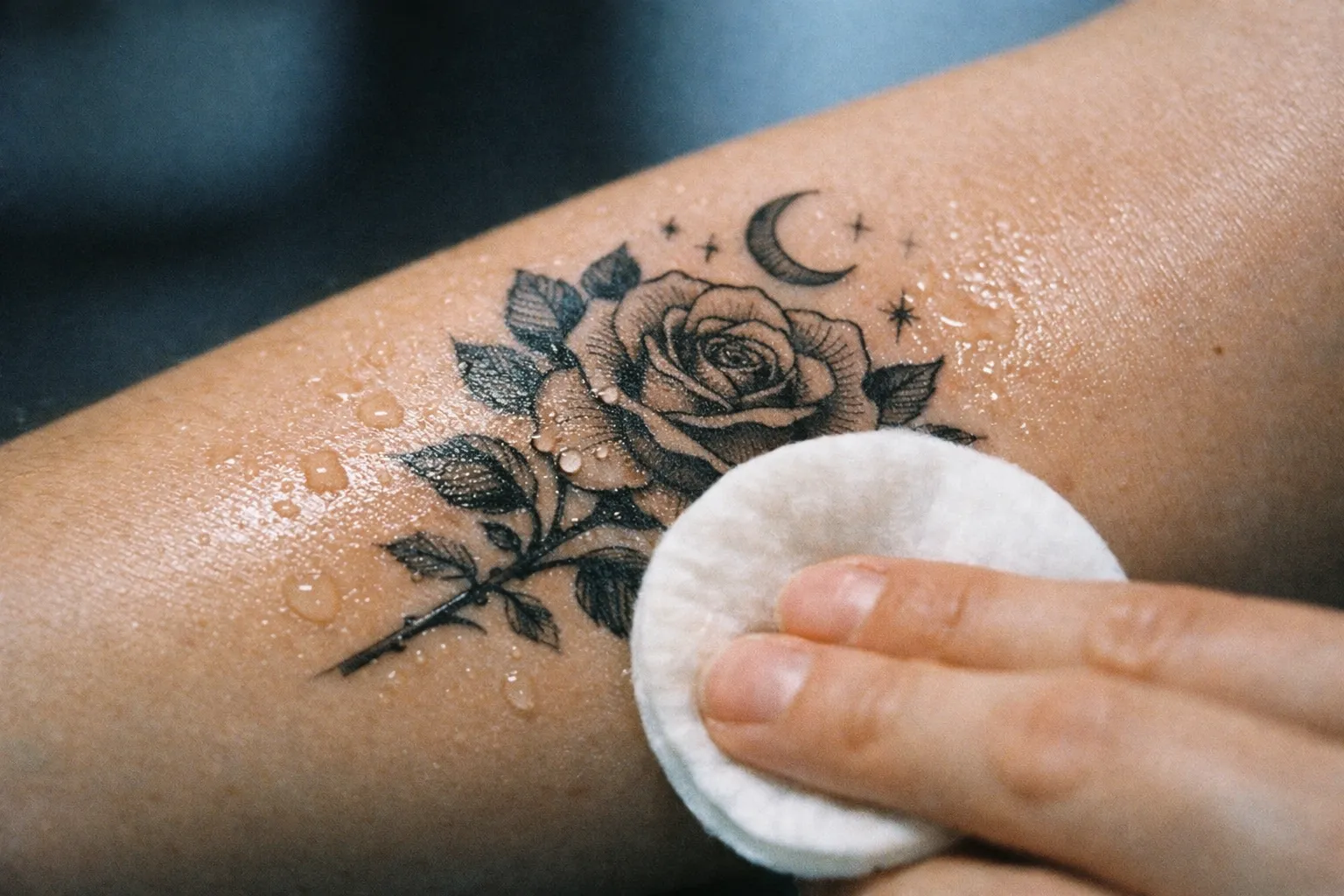
The wash:
- Wash your hands first. Fresh tattoos are open wounds; treat them that way.
- Run lukewarm water over the tattoo - never hot. Hot water opens pores and can pull pigment.
- Lather a fragrance-free soap between your hands. Apply with fingertips only - no washcloths, no loofahs, nothing abrasive (1). The EADV guide is explicit about this (3).
- Wash gently for 30 seconds. The goal is to remove plasma, dried blood, and excess ink - not to scrub the tattoo.
- Rinse thoroughly. Soap residue irritates healing skin.
- Pat dry with a clean paper towel or let it air dry. EADV specifically allows kitchen paper for this and says do not wipe or rub dry (3).
How often: Two to four times daily for the first week, then taper as the tattoo stops weeping (6). High-sweat days or dirty-environment work shifts may need an extra wash.
Moisturize: Once dry, apply a thin layer of ointment or fragrance-free lotion. The target is a slight shine, not a wet coating (4). If you can see the ointment sitting on top of the skin, it’s too much. Too much moisture suffocates the wound and slows healing.
For the first 2-3 days, EADV recommends a light film of ointment 2-3 times daily. Many studios then suggest switching to a fragrance-free lotion around day 3 when peeling begins (4).
Choosing the right tattoo aftercare products
The product market is noisy. Filter it down to three categories and you’ve got everything you need.
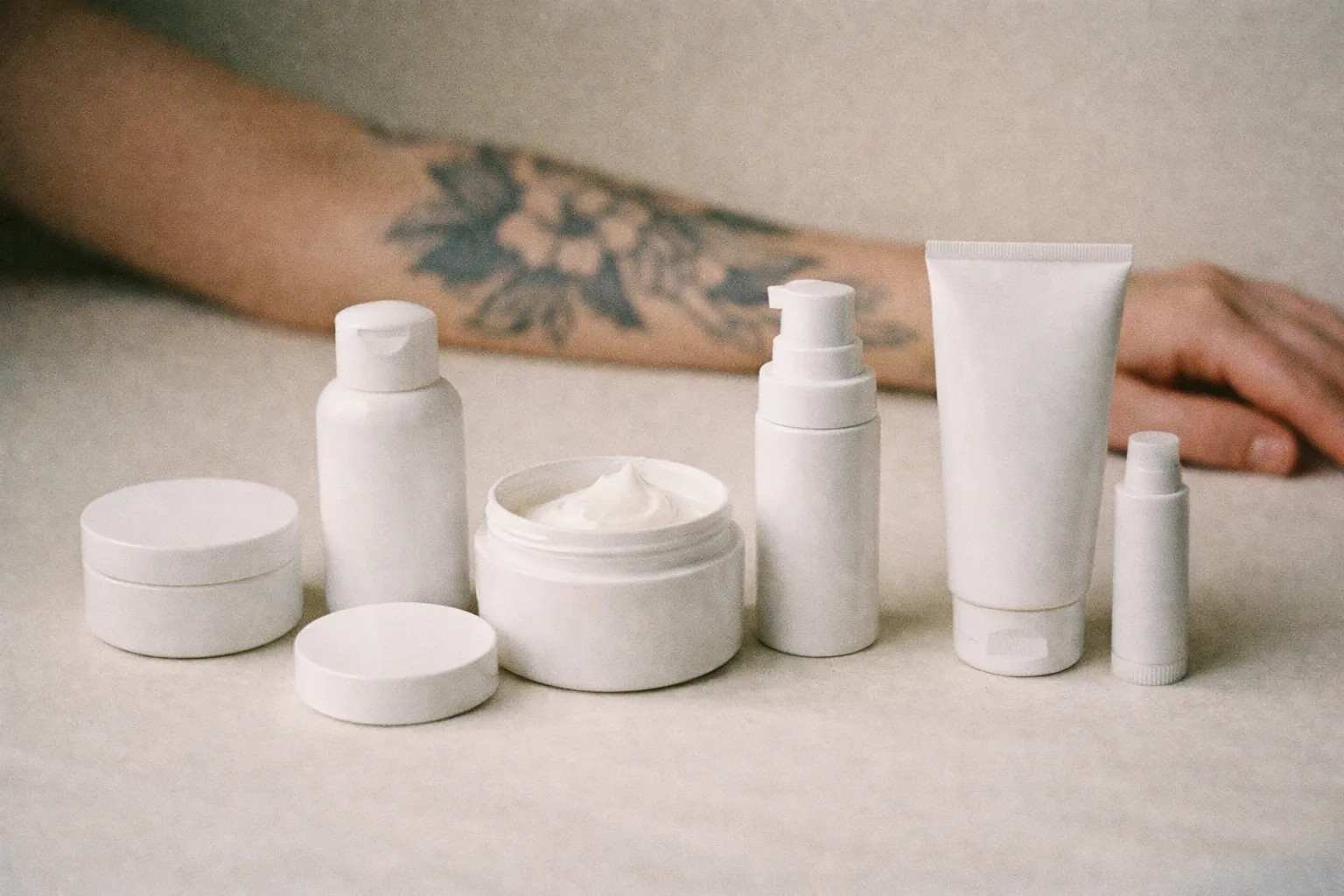
Fragrance-free soap
The brand matters less than the formulation. You want fragrance-free, dye-free, and sulfate-light. Options that meet the bar:
- Dr. Bronner’s Baby Unscented Pure-Castile Soap - concentrated, so dilute it heavily.
- Cetaphil Gentle Skin Cleanser - drugstore standard, well-tolerated.
- Dove Sensitive Skin Beauty Bar - fragrance-free version only.
- Mad Rabbit Gentle Cleansing Tattoo Wash - a tattoo-specific option if you want a purpose-built product (7).
Skip anything labeled “exfoliating,” “antibacterial” with added fragrance, or “natural” if the ingredients list still includes essential oils. Tea tree, lavender, and citrus oils irritate healing skin. I’ve seen more than a few clients come back with contact dermatitis from “natural” soaps that had no business being near a fresh tattoo.
Tattoo aftercare cream and ointment options
For the first 2-3 days, an occlusive ointment helps lock in just enough moisture without the wound drying out. Then transition to a lighter lotion.
Ointments (days 1-3):
- Aquaphor Healing Ointment - the most-used product in the industry, petrolatum-based, breathable enough to work despite being heavy.
- A&D Ointment - older but still recommended by some artists.
- Hustle Butter Deluxe - shea/coconut/mango butter blend, lighter than Aquaphor, popular for sensitive skin.
Lotions (day 3 onward):
- Lubriderm Daily Moisture Fragrance Free - neutral, no fragrance, widely available.
- Cetaphil Moisturizing Lotion - same fragrance-free standard.
- Curel Ultra Healing - fragrance-free, good for the itchy peeling phase.
The single most important filter is fragrance-free (5). Brand wars matter less than reading the back of the bottle.
SPF for long-term tattoo care
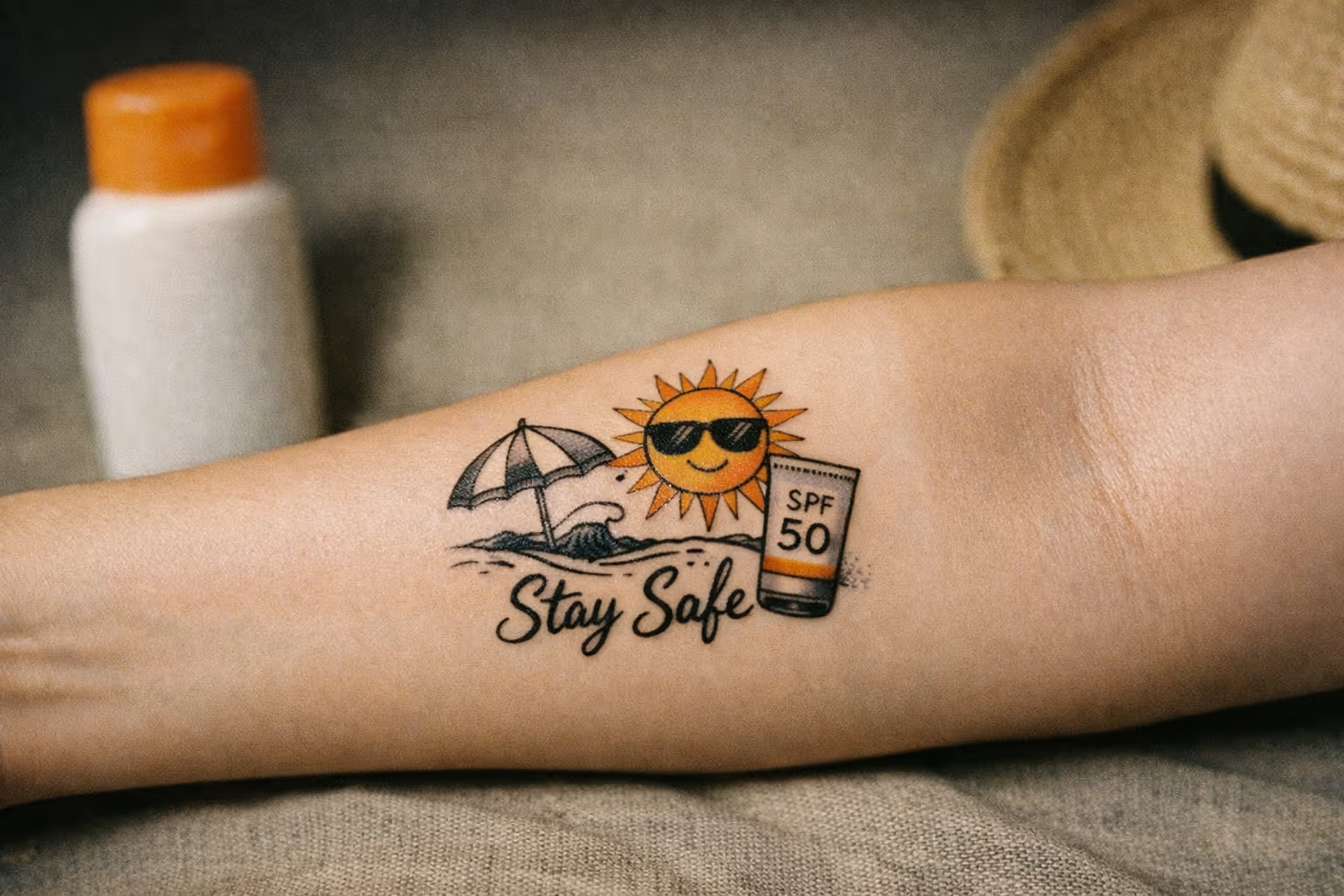
Once healed, sunscreen is the single most effective thing you can do to preserve line clarity and color saturation. Use SPF 30 or higher on tattooed skin any time it’s exposed (1). Mineral sunscreens - zinc oxide, titanium dioxide - tend to be gentler on still-sensitive skin in the weeks just after healing. For a deeper look at protecting your ink from UV damage, tattoo sun protection is worth reading before your first sunny day out.
Why some tattoo artists advise caution with Aquaphor
This question comes up constantly, and the answer is more nuanced than the internet makes it sound: most artists don’t say avoid it - they say don’t overdo it. Aquaphor is petrolatum-based and occlusive. Used in a thin film for the first 2-3 days, it does exactly what it should: keeps the wound from drying out while letting it breathe. Slathered on thick, used for two weeks straight, applied to skin that’s already done weeping - that’s where it causes problems.
Common complaints when Aquaphor is misused:
- Clogged pores and small whiteheads around the tattoo, because the skin can’t breathe through a heavy occlusive layer.
- Pigment lift, when too much moisture macerates the healing wound and ink leaks out with weeping plasma.
- Slowed scab resolution, because softened scabs catch on clothing and tear.
If you use Aquaphor: thin film, 2-3 days max, then switch to a fragrance-free lotion (4). If your skin reacts to petrolatum, Hustle Butter or a plain fragrance-free lotion from day one works fine.
How to care for tattoo scabs during peeling
Around day 4-7, the wound surface dries into thin, flexible scabs and the skin starts to flake. This is the make-or-break window for color retention. Proper tattoo scab care is mostly restraint.
Do:
- Keep moisturizing with a thin layer of fragrance-free lotion 2-3 times daily.
- Let flakes fall off in the shower naturally.
- Tap or gently slap the tattoo if it itches - never scratch.
- Wear loose clothing over the area to reduce friction.
Don’t:
- Pick at scabs or peel loose flakes. Pulling a scab off prematurely pulls pigment with it, leaving patchy spots that may need a touch-up.
- Soak the tattoo to “soften” scabs off faster.
- Apply more ointment thinking it will speed peeling - it won’t.
The peeling phase usually lasts 5-10 days. Color may look faded or milky underneath - that’s the new layer of skin sitting over the ink, not lost pigment. Full clarity returns by week 3-4.
Tattoo aftercare during the first 30 days and beyond
Most aftercare guides drop off at day 14. The next two weeks matter just as much for the final result.
Days 15-21: The surface is closed but the deeper skin is still remodeling. Stop the dedicated aftercare routine and resume normal skin care - but keep the tattoo out of pools, hot tubs, oceans, and saunas. EADV and multiple studio guides put the swim restriction at 2-3 weeks minimum, with some saying wait until all scabs are gone (1)(7). This applies especially to tattoos sized 5-7 inches on the upper arm or calf, where movement and moisture can affect deeper healing.
Days 22-30: You can usually swim, soak, and exercise normally. Sun is still the variable to watch - avoid direct sun for the first 4-6 weeks, then commit to SPF 30+ permanently when the tattoo is exposed (7).
Beyond 30 days: The tattoo is healed but pigment behavior continues for several months. Lines may sharpen slightly as fine scab edges fully resolve. If a section healed light or patchy, this is when most artists offer a free touch-up - book it between weeks 6 and 12.
Long-term, the things that age a tattoo badly are predictable:
- UV exposure. The biggest factor by far. Sunscreen extends the life of a tattoo by years.
- Weight fluctuation. Major changes stretch and distort the skin canvas.
- Friction. Wristwatches over wrist tattoos, bra straps over chest pieces, jeans waistbands over hip ink - all cause gradual softening of fine lines.
- Smoking. Affects skin elasticity and healing capacity broadly.
I’ve watched a forearm sleeve go from crisp to muddy in under five years on a client who refused to wear sunscreen. The linework was solid. The sun did the damage. It’s not a scare tactic - it’s just how UV degrades pigment in the dermis.
Quick daily routine for tattoo aftercare instructions
If you want the whole thing on one card, this is the practical tattoo aftercare instructions version:
Days 1-3:
- Remove bandage per artist’s timing (3-6 hours traditional, 24+ hours second skin).
- Wash 2-4 times daily with lukewarm water and fragrance-free soap, fingertips only.
- Pat dry with clean paper towel or air dry.
- Apply thin film of ointment (Aquaphor, Hustle Butter, A&D) - slight shine, not wet.
Days 4-14:
- Wash 1-2 times daily.
- Switch from ointment to fragrance-free lotion (Lubriderm, Cetaphil, Curel).
- Moisturize 2-3 times daily or whenever the tattoo feels tight.
- Do not pick, scratch, or peel.
- Wear loose clothing over the area.
- No swimming, soaking, saunas, or direct sun.
Days 15-30:
- Resume normal skin care.
- Swimming and exercise generally fine after week 3.
- Continue avoiding direct sun for 4-6 weeks total.
- Apply SPF 30+ once cleared for sun exposure.
Daily Tattoo Aftercare Routine
30 daysStep-by-step care instructions for the first 30 days after getting a tattoo.
- 1
Days 1-3: Initial wound care
Remove bandage as instructed (3-6 hours for traditional, 24+ hours for second skin). Wash 2-4 times daily with lukewarm water and fragrance-free soap using fingertips only. Pat dry with a clean paper towel or air dry. Apply a thin film of ointment like Aquaphor, Hustle Butter, or A&D to maintain slight shine without wetness.
- 2
Days 4-14: Peeling and moisturizing
Wash 1-2 times daily. Switch from ointment to fragrance-free lotion such as Lubriderm, Cetaphil, or Curel. Moisturize 2-3 times daily or when the tattoo feels tight. Avoid picking, scratching, or peeling flakes. Wear loose clothing and avoid swimming, soaking, saunas, and direct sun.
- 3
Days 15-30: Healing completion and sun protection
Resume normal skin care routines. Swimming and exercise are generally fine after week 3. Continue avoiding direct sun exposure for 4-6 weeks total. Apply SPF 30 or higher sunscreen on the tattoo when exposed to sunlight.
Complications during the tattoo healing process
Most tattoos heal without drama. The ones that don’t usually fit into a small set of patterns - and knowing the difference between normal healing and a real problem saves a trip to urgent care or, worse, a ruined tattoo.
Normal during healing:
- Mild redness around the tattoo for 3-5 days.
- Warmth and slight swelling, especially on ribcage, ankle, or hand tattoos.
- Plasma weeping for 24-48 hours.
- Itching during the peeling phase.
- Color appearing faded under the peeling layer.
Signs of infection (see a doctor):
- Redness that spreads outward and worsens after day 5.
- Yellow or green pus (different from clear or slightly bloody plasma).
- Fever, chills, or feeling generally unwell.
- Increasing pain after the first few days, when it should be decreasing.
- Hot, hard, swollen skin around the tattoo.
EADV explicitly notes that antibiotic creams are not needed for normal healing and should only be used if a doctor evaluates an actual infected tattoo (3). Over-applying triple antibiotic ointment on a healthy tattoo can cause contact dermatitis that looks like infection but isn’t. Clients come in convinced they have an infected tattoo when it’s actually a reaction to the Neosporin they’ve been piling on for a week.
Allergic reaction: Some pigments - most often red, occasionally yellow - can trigger reactions weeks or even months after the tattoo is “healed.” Symptoms include raised, itchy areas only over the colored sections. A dermatologist can prescribe a topical steroid; severe cases may require laser removal of the offending pigment.
Blowouts: Blurry edges where ink spread under the skin during application. These are an artist execution issue, not an aftercare failure, and they show up in the first few days. There’s no aftercare fix for a tattoo blowout - a touch-up or cover-up is the only recourse.
Over-moisturization symptoms: Whiteheads or small bumps around the tattoo, slowed healing, ink that looks like it’s “weeping” past day three. Cut back on the ointment frequency and switch to a lighter lotion.
Frequently asked questions
Frequently Asked Questions
- What is the proper aftercare for a new tattoo?
- Remove the bandage per your artist's timing - typically 3-6 hours for plastic wrap, 24+ hours for a second-skin adhesive. Wash 2-4 times daily with lukewarm water and a fragrance-free soap, using fingertips only. No washcloths. Pat dry with a clean paper towel. For the first 2-3 days, apply a thin film of ointment such as Aquaphor or Hustle Butter; from day 3 onward, switch to a fragrance-free lotion. Avoid swimming, soaking, and saunas for at least 2-3 weeks, and direct sun for 4-6 weeks. Don't pick scabs or peel flakes during the second week (3).
- Why do tattoo artists say not to use Aquaphor?
- Most don't say avoid it - they say don't overuse it. Aquaphor is petrolatum-based and works well as a thin film for the first 2-3 days when the wound needs occlusive moisture. Problems start when people apply thick layers, use it for the full two weeks, or keep going after the tattoo stops weeping. Heavy use can clog pores, soften scabs into pigment loss, and slow healing. Use a thin layer for 2-3 days, then switch to a fragrance-free lotion. If your skin doesn't tolerate petrolatum, skip it entirely and use Hustle Butter or a plain lotion from day one.
- How long until a tattoo is fully healed?
- The surface heals in 2-3 weeks. The deeper skin keeps settling for a few months, so most artists wait until the six-week mark to schedule touch-ups if needed.
- Can I work out with a new tattoo?
- Light movement is fine after 48 hours. Sweating heavily, stretching the skin under the tattoo, or rubbing it against gym equipment should wait at least a week - longer for friction-heavy placements like ribs, inner bicep, or back of the knee. Pool workouts are out until week 3 minimum (7).
Keep it simple, keep it consistent
Tattoo aftercare is simple in principle and genuinely easy to get wrong in practice. Treat the tattoo as an open wound for the first week, switch to gentle skin care for the second, and respect the sun and water restrictions through the first month. Use fragrance-free products. Don’t overdo the ointment. Don’t pick. Book the touch-up if you need one. For placement, this routine works well for a 4-6 inch tattoo on the forearm or calf, where skin movement and exposure are moderate and healing is straightforward.
The artist did the skilled part. The next month is on you, and how well you do it shows up permanently in the line clarity and color saturation you’ll be looking at for the next several decades.