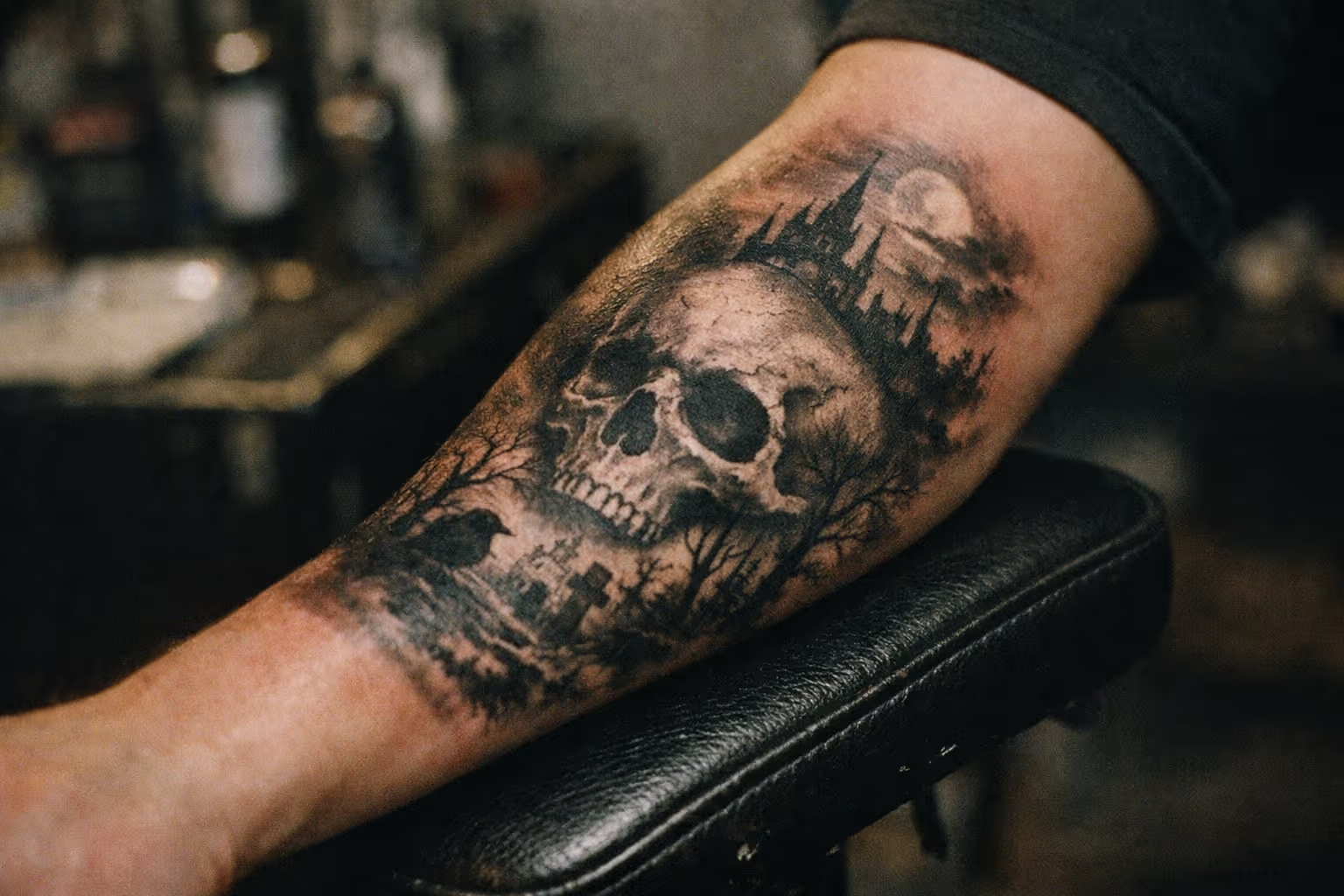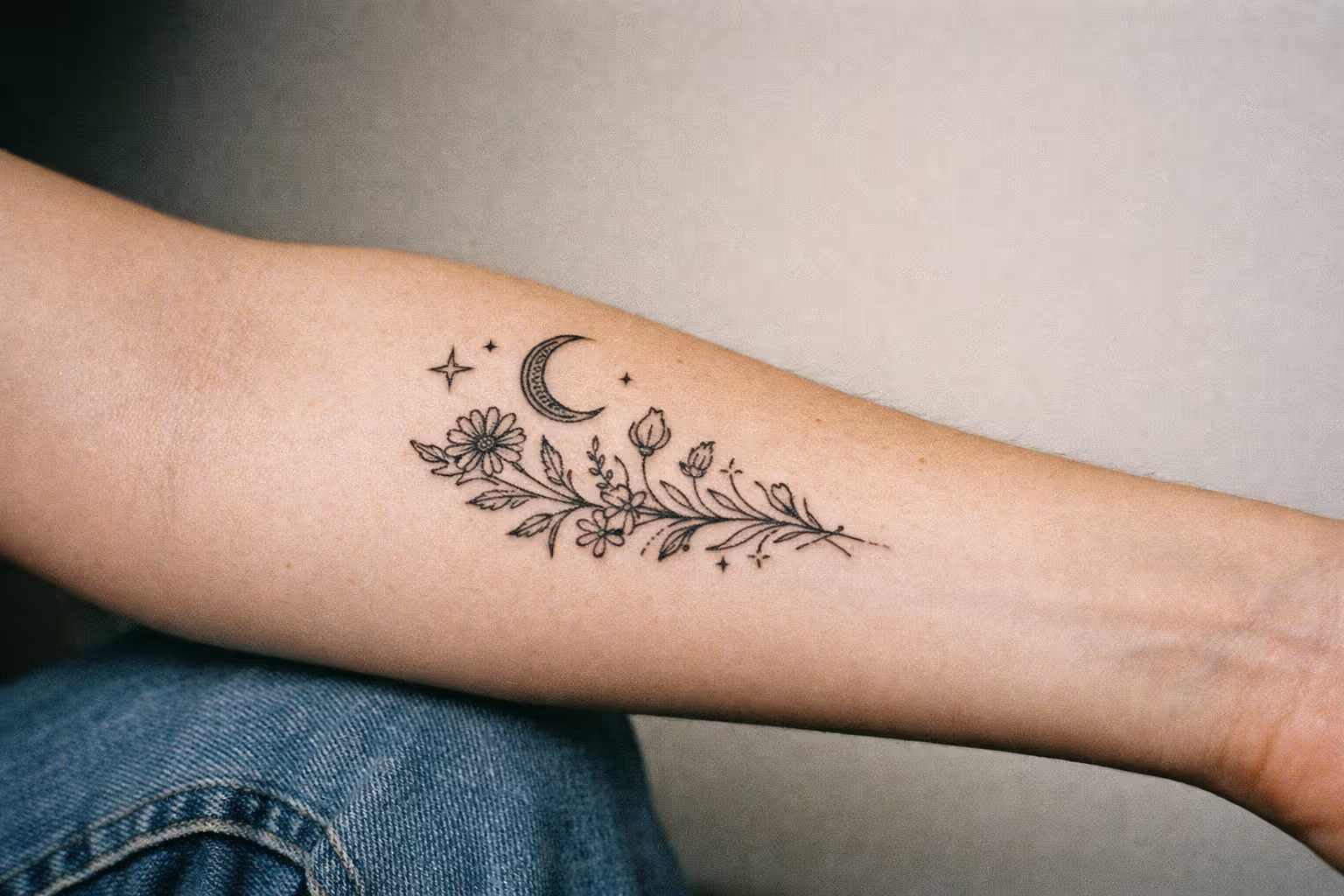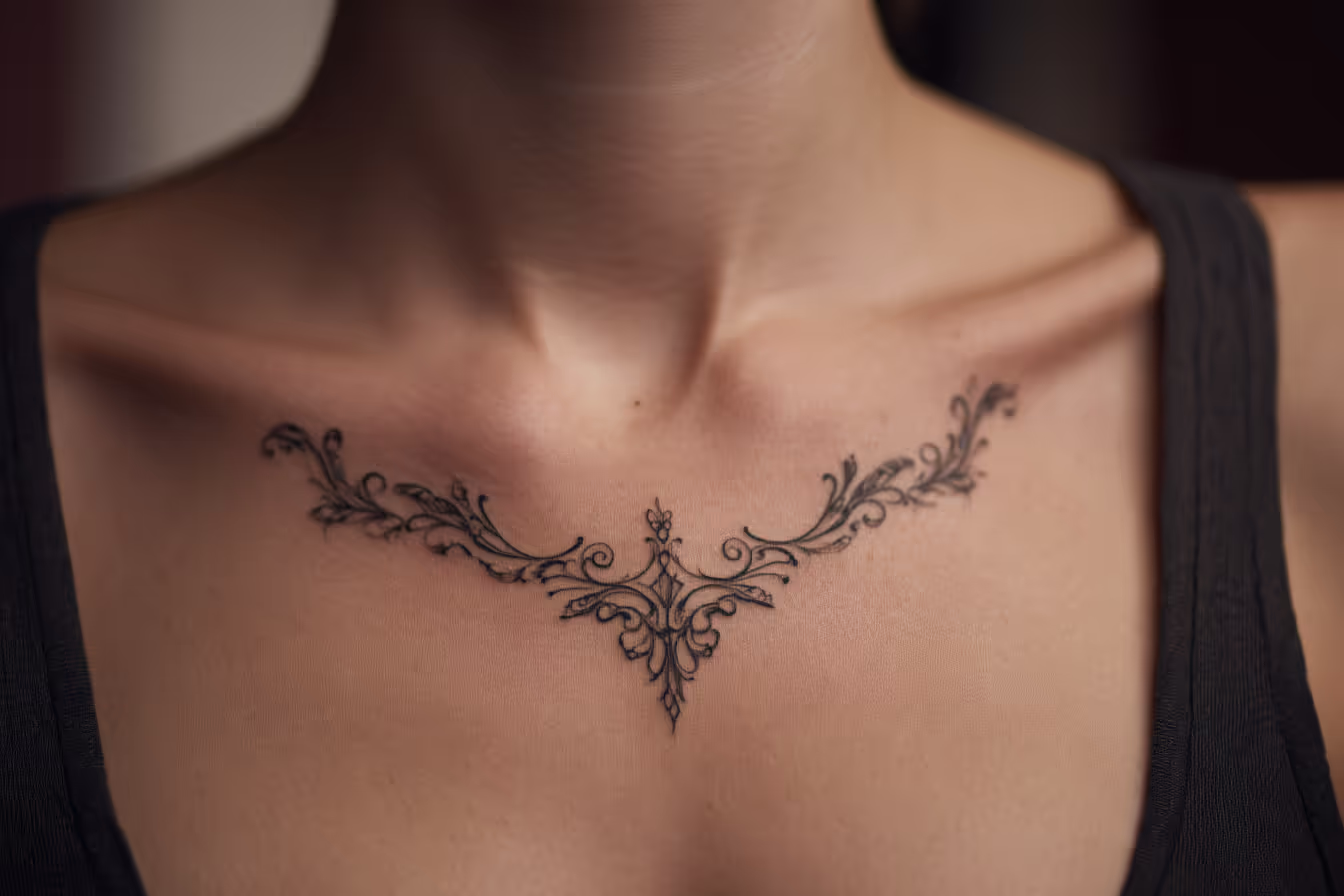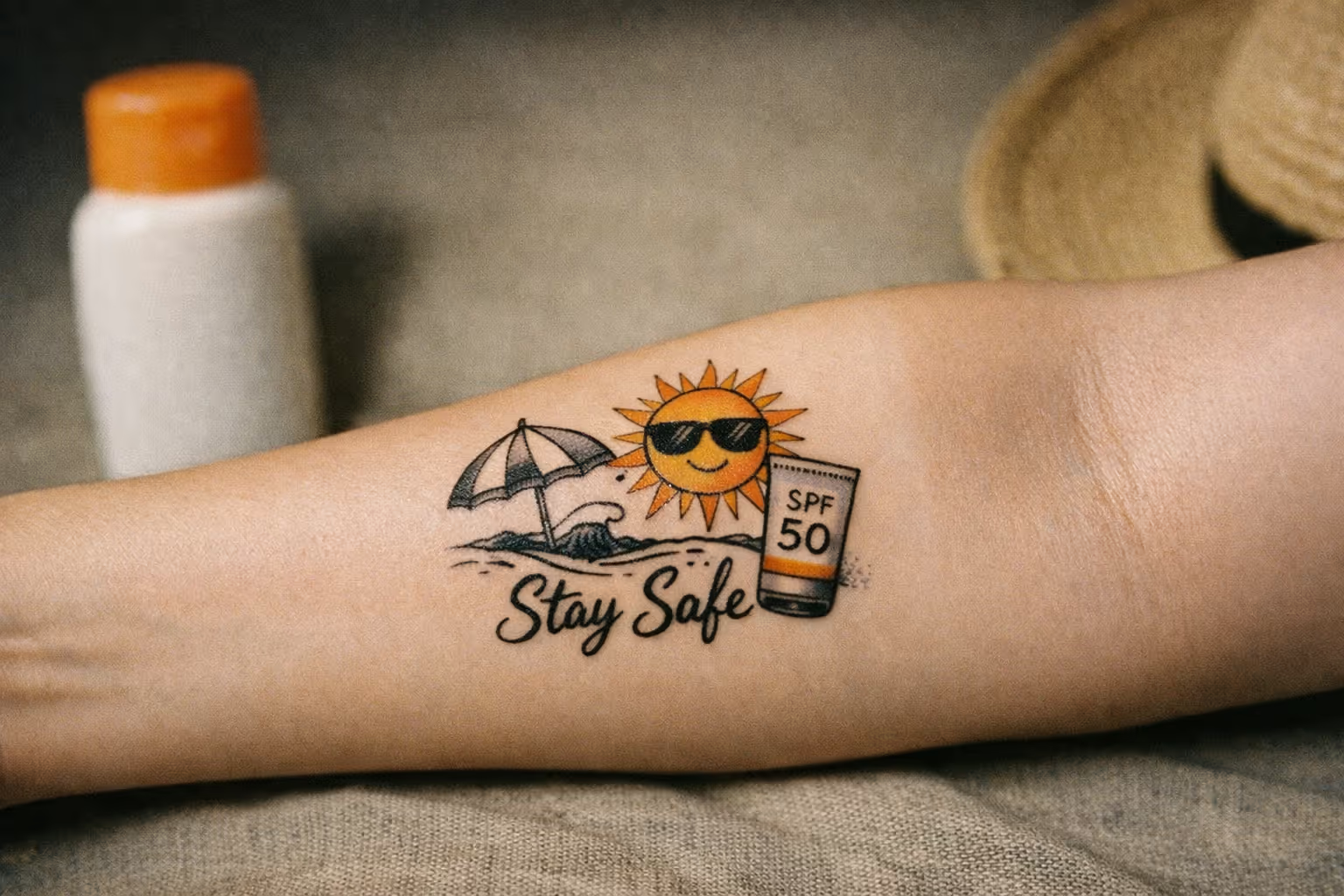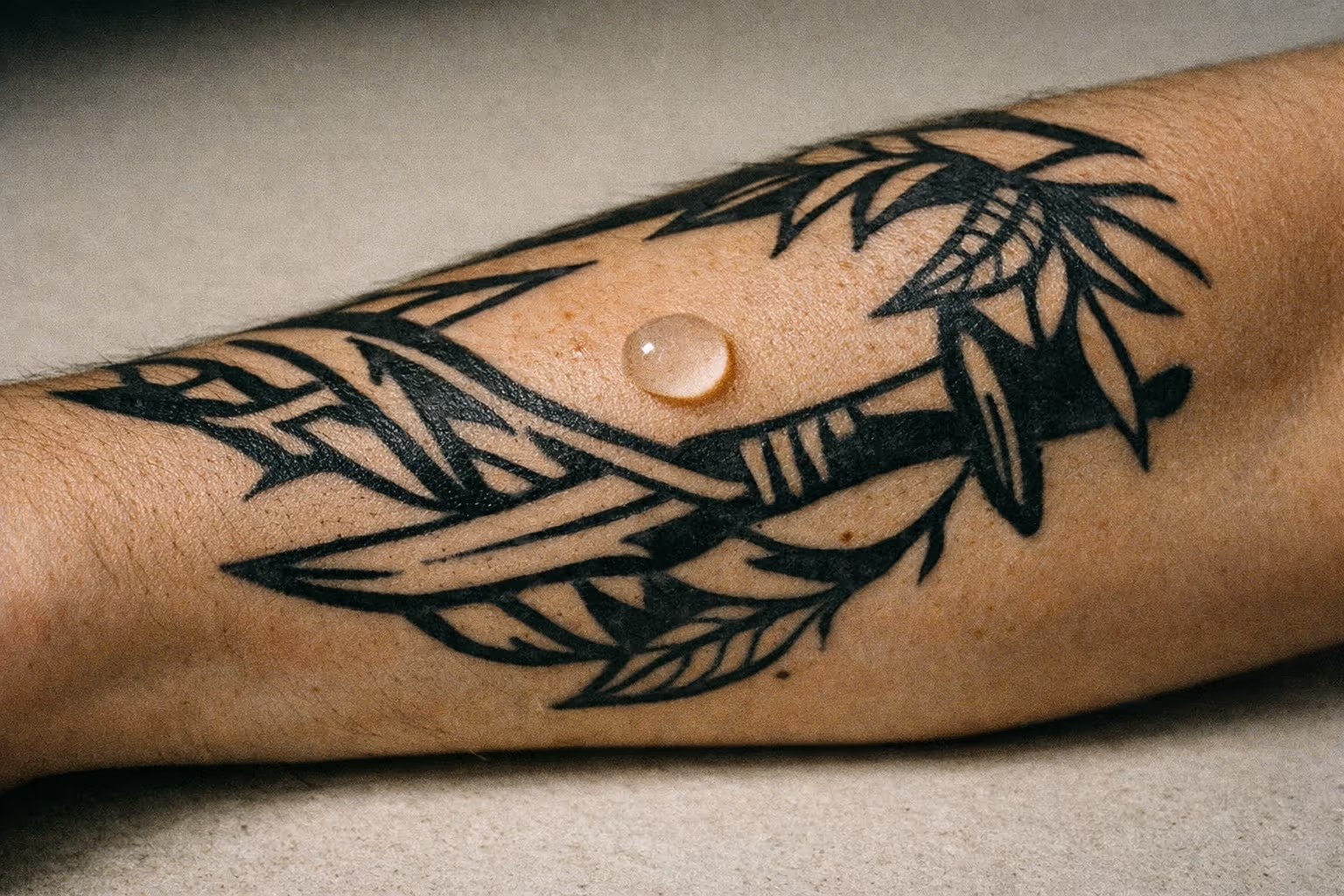
Two things people get wrong about a fragrance free lotion for tattoo: when to start it, and what “fragrance free” actually means on the label. You don’t reach for lotion right away - wait 24-72 hours, until the weeping stops, then apply thin layers twice a day. And “unscented” isn’t the same as fragrance-free; unscented products often contain masking fragrance that can irritate fresh ink. Here’s what to use, when, and how to read the label so you don’t undo your own healing.
The Essential Role of Fragrance Free Lotion for Tattoo and Tattoo Lotions in Aftercare
What Sets Tattoo Lotions Apart
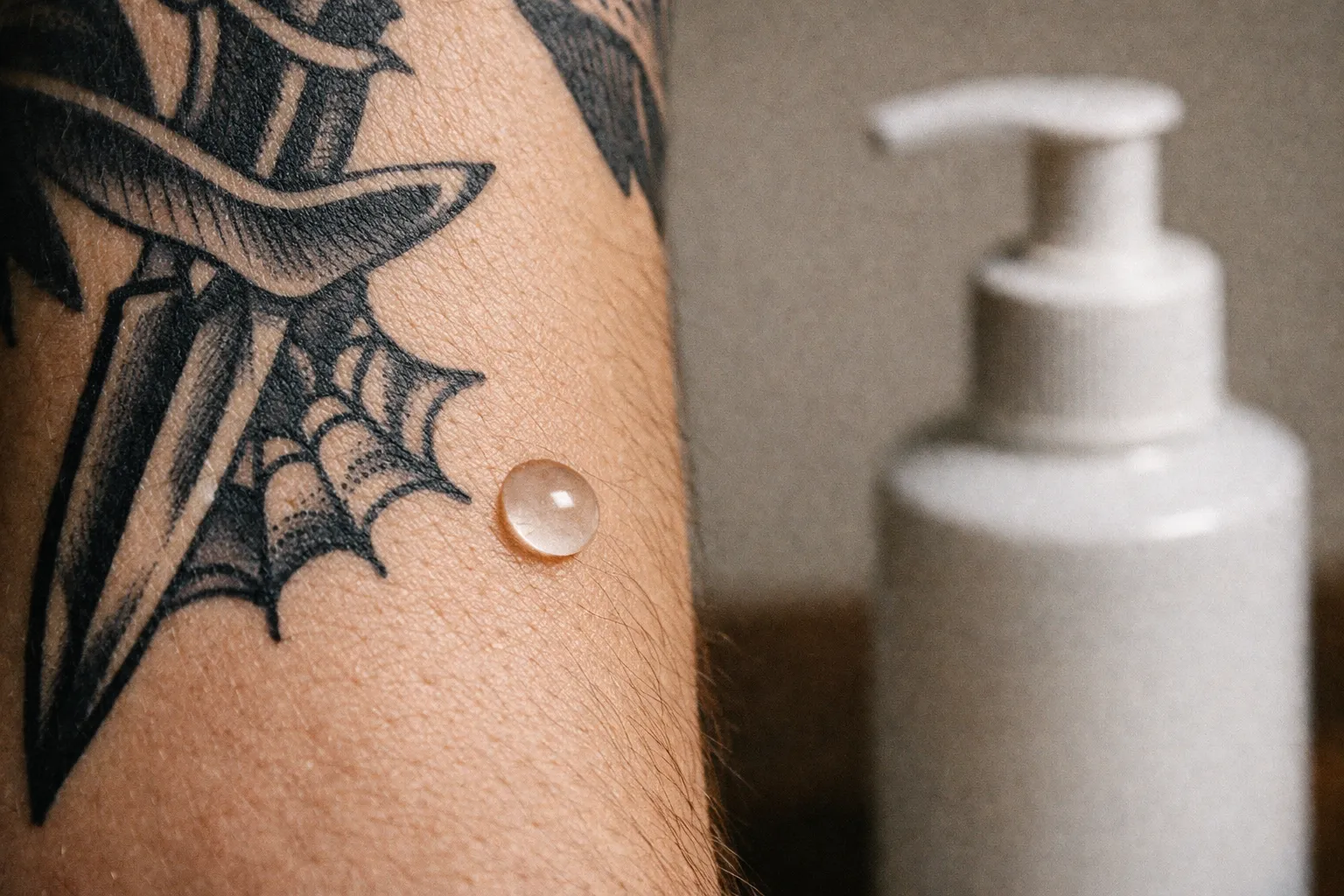
Tattoo lotions are not your average moisturizers. A fragrance free lotion for tattoo aftercare is especially important because it soothes, heals, and protects new ink without irritating sensitive skin. Unlike regular body lotion that might cause discomfort or slow down healing, tattoo aftercare lotion is designed with skin recovery in mind.
This means they often contain ingredients like shea butter and aloe vera, which help keep the tattooed area hydrated without clogging pores or fading the ink. Moreover, many tattoo enthusiasts prefer using products free from harsh chemicals and fragrances that can lead to irritation or allergic reactions on sensitive skin.
To put it simply: while you could technically slather any old lotion on your new art piece; if you want it to heal properly and look vibrant for years to come, picking out a proper tattoo aftercare lotion is crucial.
Nourishing Your Skin
Your skin goes through quite an ordeal during the tattooing process - think tiny needles puncturing your skin up to 3000 times per minute. This trauma needs tender loving care afterward for optimal healing. That’s where lotion for tattoo healing steps in as an MVP by providing much-needed moisture back into the battered tissue.
Moisturizing a new tattoo is recommended, but the “more is better” mindset backfires. What you’re aiming for is a thin, breathable layer that stops cracking and tightness - without leaving the tattoo shiny-wet for hours.
Not only does this practice prevent heavy scabbing (which can take away bits of color along with it), but keeping the area properly moisturized also supports smoother peeling and less irritation.
One update that matters: most tattoos look “healed” on the surface faster than they’re actually done. The outer layer often settles in about 2-4 weeks, but deeper remodeling can continue for 3-6 months, so daily moisturizing stays useful even after the flaking ends.
✓ Pros
- Specially formulated to support healing without irritating fresh tattoos
- Helps maintain ink saturation by preventing heavy scabbing and cracking
- Often fragrance-free and free of harsh chemicals to reduce allergic reactions
- Supports longer-term skin barrier repair beyond surface healing
✗ Cons
- Over-application can cause clogged pores or soggy healing
- Some natural products may contain irritating essential oils or be too heavy
- Incorrect timing (too early or too late) can hinder healing
Choosing the Best Lotion Options for Your New Tattoo
When your skin feels tight or parched after getting a new tattoo, it’s a sign you’re ready for a moisturizer - but not just any lotion will do. You want something that acts like a calm, boring support product. No perfume. No “cooling” additives. No exfoliating acids.
When you compare the best lotions for tattoos, remember you’re choosing for healing now, and long-term color later.
Natural and Organic Options
Natural and organic options can work well, but “natural” doesn’t automatically mean “safe for fresh tattoos.”
- If a balm is loaded with essential oils (lavender, tea tree, citrus), that’s still fragrance - common irritation triggers on compromised skin.
- If it’s heavy like a waxy salve, it can trap heat and sweat - especially on the inner bicep or back of the knee, where friction and moisture are already high.
If you like the natural route, look for simple formulas where the “natural” part is primarily emollients (like shea) and barrier helpers - not a cocktail of scented oils.
Recommended Products by Experts (updated for 2024-2025 pricing)
Here are practical options that come up repeatedly in studios, plus what they’re good at. Prices are typical US ranges from 2024-2025 availability.
Tattoo-specific options (pay more, get purpose-built textures):
- H2Ocean Ocean Care Tattoo Aftercare Skin Moisturizing Cream (unscented): usually around $15/tube (4). Good if you want a thicker cream that still spreads thin.
- Mad Rabbit Daily Tattoo Lotion (fragrance free): commonly $20-$25 for about 8-10 oz (2). Good if you want a lighter “daily lotion” feel that doesn’t leave you greasy.
Drugstore “boring but effective” options (what a lot of artists actually use at home):
- Lubriderm Fragrance-Free Daily Moisture: often $8-$12 for 16 oz and specifically calls out fragrance-free use in tattoo aftercare guidance.
- Eucerin Advanced Repair (fragrance free): usually $10-$18 depending on size; strong for very dry skin.
- CeraVe Daily Moisturizing Lotion (fragrance free version): usually $12-$18; great if your skin likes ceramides.
- Aveeno Daily Moisturizing Lotion (fragrance free version): usually $10-$15; good if you want a simple, low-drama moisturizer.
If you’re trying to budget realistically: one 16 oz bottle of a fragrance-free lotion is often enough for 1-2 medium tattoos through healing and then some (based on typical usage patterns in aftercare guides).
When to Start Using Lotion on Tattoo: Timing and Tips
You’re not trying to moisturize an open wound while it’s still leaking plasma. The key is understanding the phase shift.
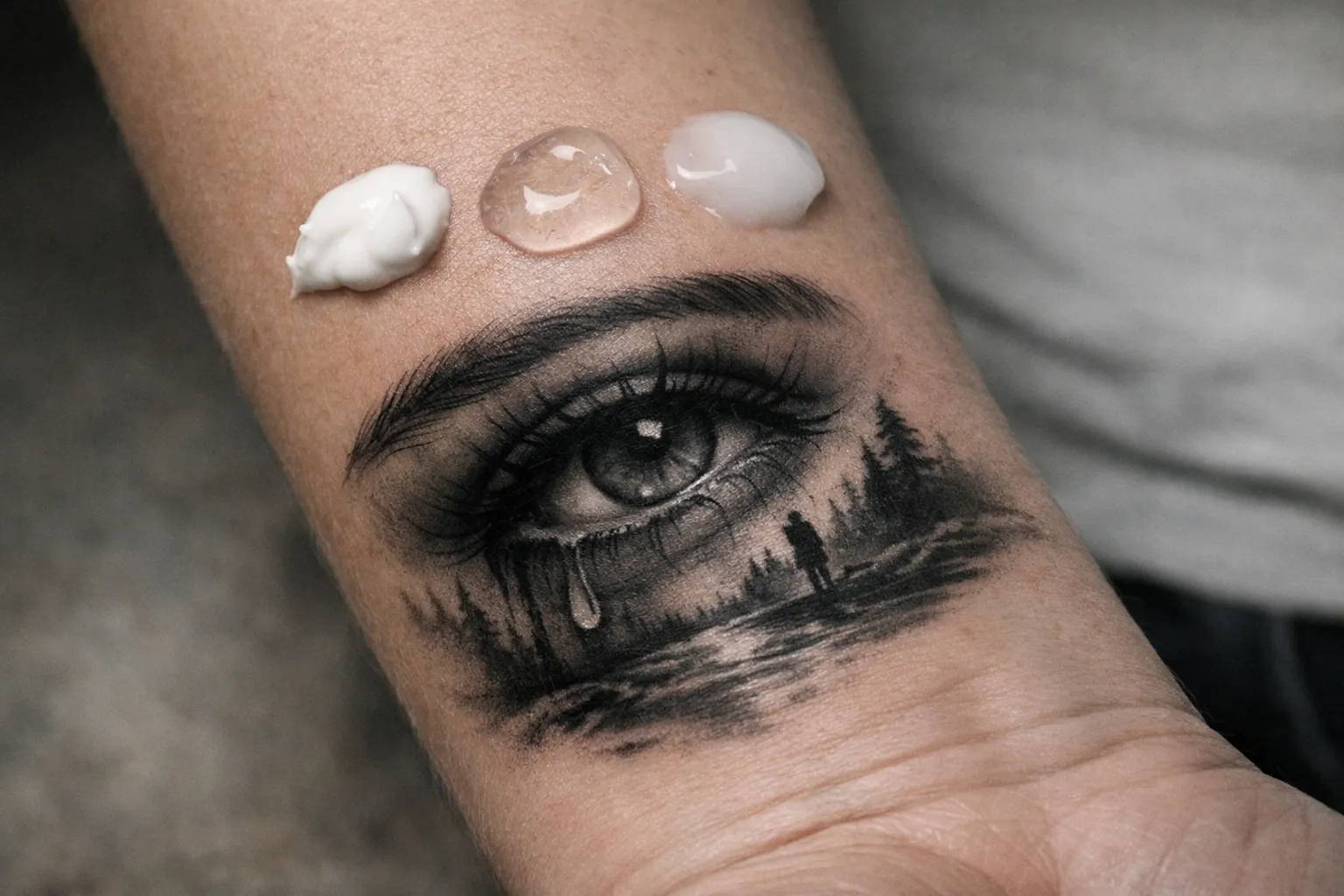
Most studios advise when to start using lotion on tattoo like this: start a light, fragrance-free lotion after the initial weeping/oozy phase ends, typically 24-72 hours after your session - once it’s no longer wet and a thin film has formed. If your artist used a medical adhesive film and told you to keep it on for multiple days, follow that plan - don’t peel it early just to start lotion.
A simple way to self-check:
- If the tattoo still looks shiny-wet or feels tacky with fluid, wait (clean it, let it breathe).
- If it looks dull/dry and starts feeling tight, you’re ready for a thin layer of lotion.
Lubriderm’s tattoo aftercare guidance specifically recommends fragrance free moisturizing lotion as part of aftercare (3). That tracks with what most artists see in real life: fragrance is one of the easiest ways to turn “normal healing itch” into “angry rash.”
Step-by-Step Guide to Applying Lotion on Tattoos
This is where most people mess up - not by choosing the wrong product, but by using the right product the wrong way.
Selecting the Right Lotion
For a fresh tattoo, your “must haves” are:
- Fragrance free
- Alcohol free (avoid denatured alcohol that can sting and dry you out)
- Simple ingredient list, no actives
This is where unscented lotion for tattoo gets tricky: “unscented” can still contain masking fragrance. If you’re allergy-prone, prioritize bottles labeled fragrance free rather than “unscented”.
Applying The Lotion Correctly
Use less than you think.
How to Apply Lotion on a New Tattoo
10 minutesFollow these steps to moisturize your tattoo properly without overdoing it.
- 1
Wash your hands
Clean hands prevent introducing bacteria to your fresh tattoo.
- 2
Gently wash the tattoo
Use lukewarm water and a mild, unscented cleanser to clean the area.
- 3
Pat dry
Use a clean paper towel to pat the tattoo dry - avoid rubbing to prevent irritation.
- 4
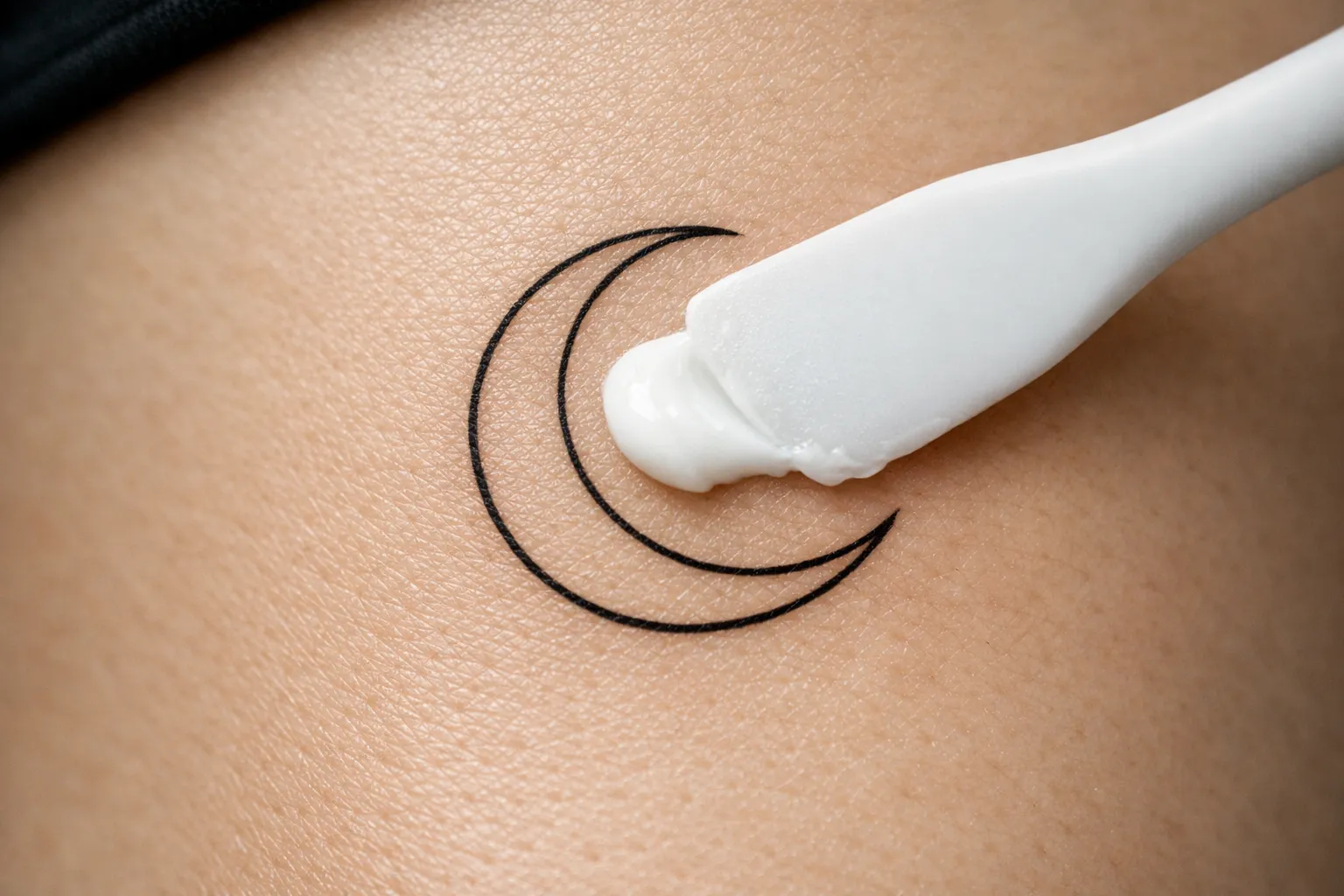
Apply lotion sparingly
Use a pea-sized amount for 2-4 in (5-10 cm) tattoos, a dime-sized amount for 6-10 in (15-25 cm) tattoos, and scale accordingly for larger pieces.
- 5
Spread gently until absorbed
Aim for a soft-satin finish, not glossy or wet-looking.
Frequency: many aftercare guides land at 2x/day, increasing to 3-4x/day if the tattoo feels tight or dry, as long as you’re not leaving it over-moisturized.
If your tattoo is under clothing, let the lotion absorb for a minute before dressing to reduce rubbing and “product smear.” On high-friction placements (like ribcage under a bra band or ankle under socks), a lighter lotion or foam often behaves better than a heavy cream.
How a Tattoo Heals
Understanding the Natural Healing Process vs. Using Tattoo Lotions
Fresh tattoos heal in layers.
- Days 1-3: inflammation + sealing. You may see redness and mild swelling. Some tattoos weep plasma.
- Days 4-14: peeling and flaking. This is where most people panic and over-lotion.
- Weeks 2-4: surface settles. The tattoo looks more “normal,” but can still be shiny or slightly dull in spots.
- Months 1-6: deeper remodeling continues (your skin is still reorganizing under the surface).
Most tattoos are surface-healed around 2-4 weeks, but the deeper skin can continue remodeling for 3-6 months. That’s why daily moisturizing stays useful even after the “peeling stage” ends - especially on high-movement placements like elbows and knees where micro-cracking can happen.
Nourishing Your Skin with The Right Products
A tattoo lotion should support three things:
- Water retention (humectants like glycerin)
- Softening (emollients like shea/jojoba)
- Barrier repair (ceramides, panthenol)
And it should do it without adding irritants. That’s the whole point of using a tattoo moisturizer instead of whatever was on sale.
Addressing Common Concerns with New Tattoos
Can I Use Cerave on My New Tattoo?
Yes - if it’s a fragrance-free option and you apply it thin. CeraVe’s appeal is barrier support (ceramides) and hydration, which is exactly what healing skin needs. The main mistake is overapplying and keeping the tattoo too wet.
If your tattoo gets little clogged bumps, back off frequency and switch to a lighter layer.
Is Aquaphor Good for New Tattoos?
Aquaphor can be useful early on, but it’s not the “forever” product for most people.
- Good for: very early dryness or protecting the tattoo from cracking in the first couple of days.
- Not good for: thick, repeated layers for a full week - this is how you end up with soggy healing and clogged pores.
A lot of artists prefer an ointment briefly, then transition to lotion as peeling starts. That keeps things breathable.
What If My Tattoo Gets Infected?
If you see spreading redness, increasing heat, thick yellow/green discharge, fever, or pain that’s getting worse instead of better - treat it like a medical issue, not an aftercare “oops.”
- Stop experimenting with products.
- Keep it clean.
- Contact your tattooer and get medical advice quickly.
Infection risk is one reason fragrance-free, gentle aftercare matters in the first place (and why over-moisturizing can backfire by trapping bacteria).
Ocean Care Tattoo Cream
Ocean Care Tattoo Cream is H2Ocean’s unscented cream-style moisturizer designed for tattoo aftercare (4). The cream format is useful if:
- Your skin runs dry (especially in winter).
- Your tattoo is on a crack-prone area like hands, knuckles, elbows, or shins.
- You want a thicker product but still intend to apply it thinly.
Realistic cost: around $15 per tube in 2024-2025 pricing (4).
How I’d use it in a routine:
- Transition into it once the tattoo is no longer weeping (often day 2-3).
- Apply 2x/day, bumping to 3x/day only if the tattoo feels tight.
If you’re oily or acne-prone (back/chest), you may prefer a lighter lotion or foam instead.
Ocean Foam Tattoo Aftercare
Ocean Foam Tattoo Aftercare is another H2Ocean product, and foam textures solve a real problem: people hate greasy aftercare.
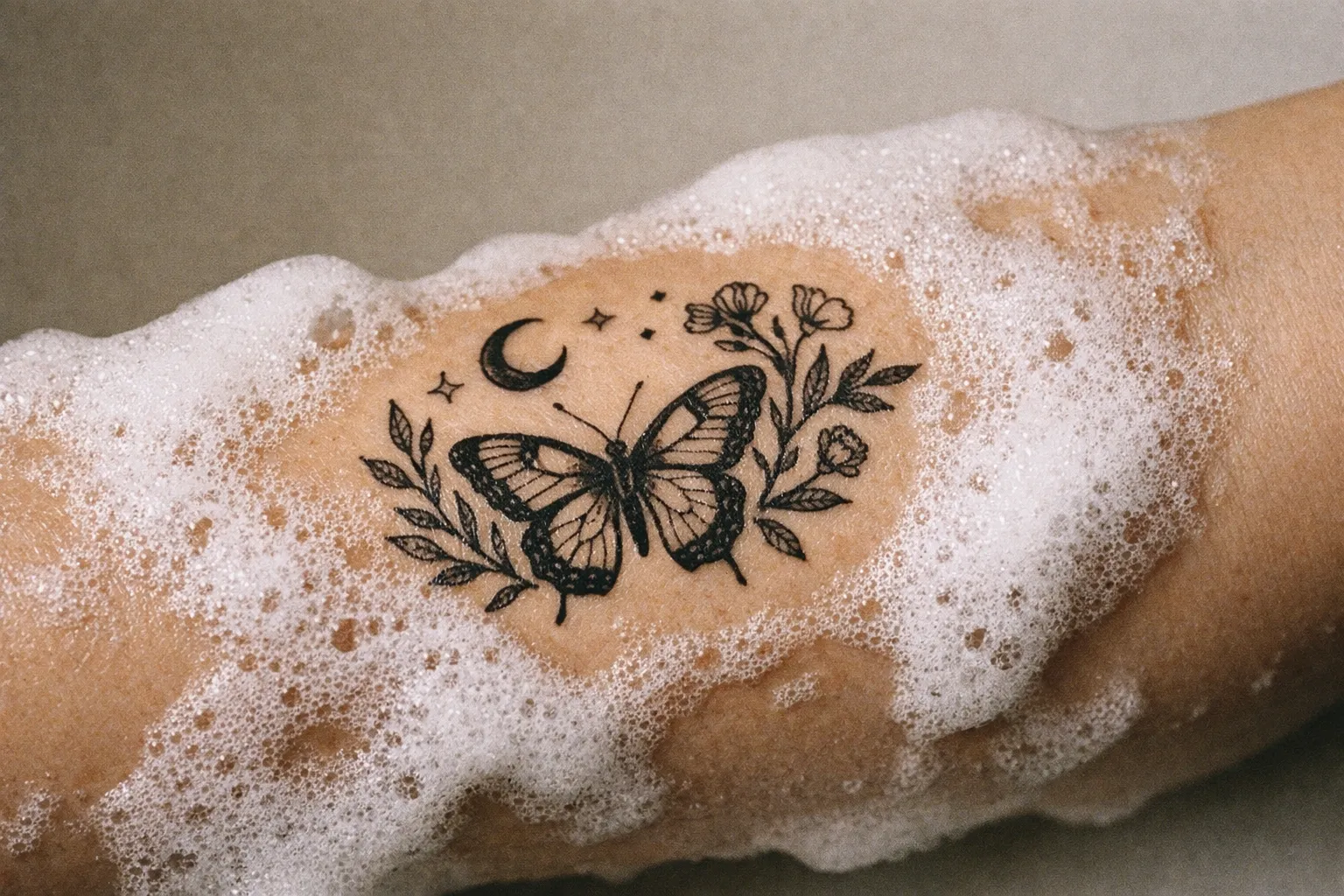
Foam aftercare makes sense when:
- The tattoo is in a sweaty area (upper back, chest).
- You have body hair and hate product clumping.
- Clothing friction is unavoidable (work uniform, sports gear).
Pricing commonly lands around $12-$18, depending on size and retailer.
Foam isn’t “better” than lotion; it’s just a different delivery system. If you’re the type to overapply cream, foam can force you into a thinner layer - which is a win.
Extreme Tattoo Care Kit (and when kits actually make sense)
An “extreme” kit is usually a bundle: cleanser + foam + cream meant to cover the whole 0-4 week healing window. H2Ocean’s kits typically land around $25-$40 for a multi-week supply (4).
When a kit is worth it:
- You’re healing a large piece (half sleeve, full sleeve, back).
- You’re traveling right after your appointment and want a simple system.
- You’ve had irritation issues before and want to reduce variables.
When a kit is not necessary:
- You got a small 2-3 in (5-7.5 cm) minimalist tattoo on the outer forearm and you can reliably use a basic fragrance-free wash + lotion.
- You already own a fragrance-free lotion your skin tolerates well.
A neutral, practical approach: kits are convenience and consistency. They aren’t magic.
Ingredients to Look for in Aftercare Lotions (and what to avoid)
This is the part most “best lotion” lists skip, but it’s the difference between calm healing and itchy chaos.
Ingredients that play well with fresh tattoos
Look for some combination of:
- Glycerin (humectant: pulls water into the skin)
- Panthenol (pro-vitamin B5) (barrier support, soothing)
- Hyaluronic acid (hydration without grease)
- Ceramides (barrier repair - great for flaky healing)
- Shea butter / jojoba oil (emollients for softness)
- Aloe vera / chamomile (soothing for irritation-prone skin)
The best results usually come from a “combo” formula: humectant + emollient + barrier ingredients, not just one heavy occlusive.
Ingredients to avoid (especially in weeks 1-2)
Avoid:
- Added fragrance/parfum (common contact allergen)
- Denatured alcohol (stings and dries)
- Retinoids
- Strong acids (AHA/BHA), exfoliating scrubs
- Menthol/camphor “cooling” products
- Heavy petroleum jelly layered thick (thin is one thing; thick is suffocating)
Also: don’t get tricked by labels. “Unscented” can still have masking fragrance - fragrance free is the clearer label if you’re healing a new tattoo.
Best Practices for Using Aftercare Lotions (phase-by-phase)
This is the clean, repeatable routine I want you to follow. No heroics.
Days 1-3: keep it clean, don’t drown it
- Wash 1-3x/day with a mild, unscented cleanser.
- Pat dry.
- If you’re using an ointment or foam early: apply very thinly.
- If it’s still weeping, don’t switch to lotion yet.
Overdoing product here can trap fluid and bacteria and cause bumps.
Days 4-14: peeling stage (the “I want to pick it” stage)
This is where lotion for new tattoo use becomes daily-driver. Whether you’re healing a bold wolf tattoo or a delicate floral piece, the same rules apply: thin layers, no picking, and consistent hydration.
- Start/continue fragrance-free lotion 2x/day (up to 3-4x if tight/dry).
- Keep layers thin.
- Do not pick flakes. If a flake comes off while washing, fine. If you’re “helping,” you’re pulling pigment.
Weeks 2-4: looks healed, still vulnerable
- Continue moisturizing daily.
- If the tattoo is in the sun, cover it with sun-protective clothing - don’t start sunscreen until the surface is healed (commonly after the 2-4 week window) (3).
Month 2 and beyond: maintenance that actually preserves saturation
- Moisturize after showers.
- Use sunscreen on exposed tattoos once healed (SPF guidance is a big part of fading prevention) (3).
And one hygiene note that matters: pumps and tubes are cleaner than open tubs. Don’t share aftercare products during the first couple of weeks.
Tattoo aftercare products you need: creams, clothes, and more
Lotion is one piece of the system. If you want the simplest “buy list” that still covers the real world, here it is.
The basics (most people should have these)
- Unscented wash (antibacterial or gentle cleanser; your tattooer’s preference matters) (3)
- Fragrance-free lotion (your daily tattoo moisturizer) (3)
- Clean paper towels (reduce lint + reduce contamination)
Helpful extras (depends on placement and lifestyle)
- Loose, breathable clothing (cotton/bamboo) for the first week
Tight synthetics + a peeling tattoo = irritation. - Sun-protective clothing for exposed placements (forearm, calf) until healed (3)
- SPF 30-50 broad-spectrum sunscreen once healed for long-term color protection
If your tattoo is on a high-friction zone (like sternum, waistline, ankle), clothing choice can matter as much as product choice.
When can you get a tattoo touched up? After initial healing vs several years
Touch-ups are normal. Timing is the part you can’t rush.
Touch-up after the first session (fixing small holidays)
Most artists prefer to assess a touch-up once the tattoo is fully healed, usually around 6-8 weeks post-session. That gives the skin time to settle and the ink time to show what actually stayed.
If you touch up too early, you’re tattooing skin that hasn’t finished rebuilding - more irritation, more risk of patchy healing.
Touch-ups years later (refreshing fade)
Long-term refresh timing depends on:
- Sun exposure (biggest factor)
- Color choices (some pigments fade faster)
- Placement (hands/feet fade faster than upper arm)
- Skin care habits (SPF + moisturizer)
A common real-world window for “refresh” work is every 5-10 years, especially for color-heavy pieces or constantly exposed placements. Designs with fine linework - like a dragonfly tattoo or a detailed lotus flower tattoo - tend to show fading sooner and benefit most from consistent SPF and moisturizing habits.
Frequently Asked Questions
- Can I use a lotion labeled 'unscented' instead of 'fragrance free'?
- Unscented lotions can still contain masking fragrances that may irritate fresh tattoos. For sensitive or healing skin, always prioritize products labeled 'fragrance free' to avoid hidden irritants.
- Is it okay to switch lotions mid-healing if my skin reacts?
- Yes, but switch cautiously. If irritation or clogged bumps develop, try a lighter lotion or reduce application frequency. Avoid switching products too frequently to prevent additional skin stress.
- Can I apply sunscreen on my tattoo before it's fully healed?
- No. Sunscreen should only be applied after the tattoo's surface is fully healed, typically after 2-4 weeks. Before then, use sun-protective clothing to shield the tattoo from UV damage.
- Are tattoo aftercare kits worth the extra cost?
- Kits are convenient for large or complex tattoos, travel, or sensitive skin that needs consistent care. For small tattoos or if you already have a trusted fragrance-free lotion, kits may be unnecessary.
- How do I know if I'm over-moisturizing my tattoo?
- Signs include a constantly wet or shiny appearance, clogged bumps, or prolonged peeling. If this happens, reduce lotion frequency and apply thinner layers.
- Can I use ointments like Aquaphor throughout the entire healing process?
- Ointments are best for the very early phase to prevent cracking but shouldn't be used thickly or for extended periods, as they can suffocate the skin and clog pores.