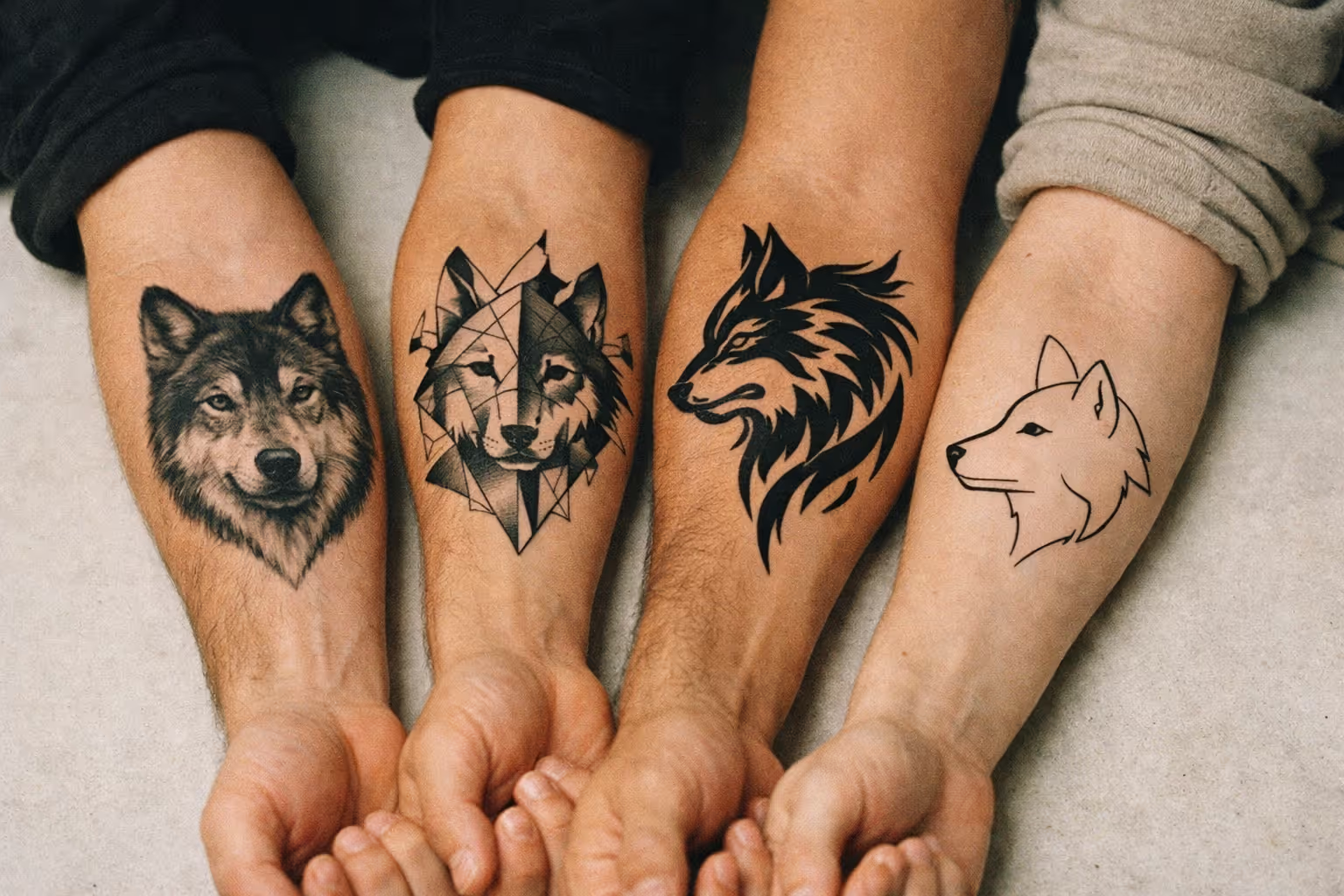
Most wolf tattoos don’t fail on meaning - they fail on size. A wolf’s face is all fine gradient and subtle fur detail, and under about 5 cm that detail muddies into a grey smear within 3-5 years. The symbolism is steady and well understood; it’s the execution that trips people up. Here’s the wolf tattoo meaning worth knowing, and the style and placement calls that keep the animal recognizable a decade on.
What Does the Wolf Tattoo Meaning Actually Mean?
The wolf tattoo meaning comes down to a short list of traits that have stayed consistent across cultures: strength, loyalty, family, independence, and intuition (1)(3). What changes is how you draw it. A snarling traditional wolf reads completely differently from a fine-line geometric one, even if the intent behind both is identical. This guide covers what wolves actually symbolize, the most-requested wolf Tattoo Designs - tribal, geometric, fine line - realistic pricing, placement, and the practical stuff most articles skip, like how detail size affects how your tattoo ages.
Strip away the Pinterest aesthetics and the wolf tattoo meaning lands on a fairly tight cluster:
- Strength and survival - wolves are apex predators that thrive in hostile environments.
- Loyalty and family - packs are tightly bonded; members hunt, raise pups, and defend territory together (3).
- Independence - the “lone wolf” reading, popular but slightly mythologized. Most lone wolves in nature are dispersers looking for a new pack, not stoic loners.
- Intuition and guidance - strong in Native American traditions, where wolves are often regarded as spirit guides and pathfinders (2).
- Freedom and wildness - the howling-at-the-moon archetype.
- Death and rebirth - present in Norse mythology (Fenrir) and some Indigenous belief systems.
The meaning shifts with the design. A wolf with a closed mouth and soft eyes reads as guide/protector. A snarling wolf with bared teeth reads as aggression/defense. A wolf paired with the moon leans mystical/intuitive. A pack scene reads as family before anything else. Decide what you want it to say before you pick the style - the visual cues do most of the talking, and I’ve seen clients regret the snarl when they actually wanted the guide.
Why Wolves Work as Tattoo Subjects
Wolves occupy a strange space in the human imagination: predator and protector, threat and guide. That tension is what makes them such workable tattoo subjects - you can lean the design toward either pole without it feeling forced.
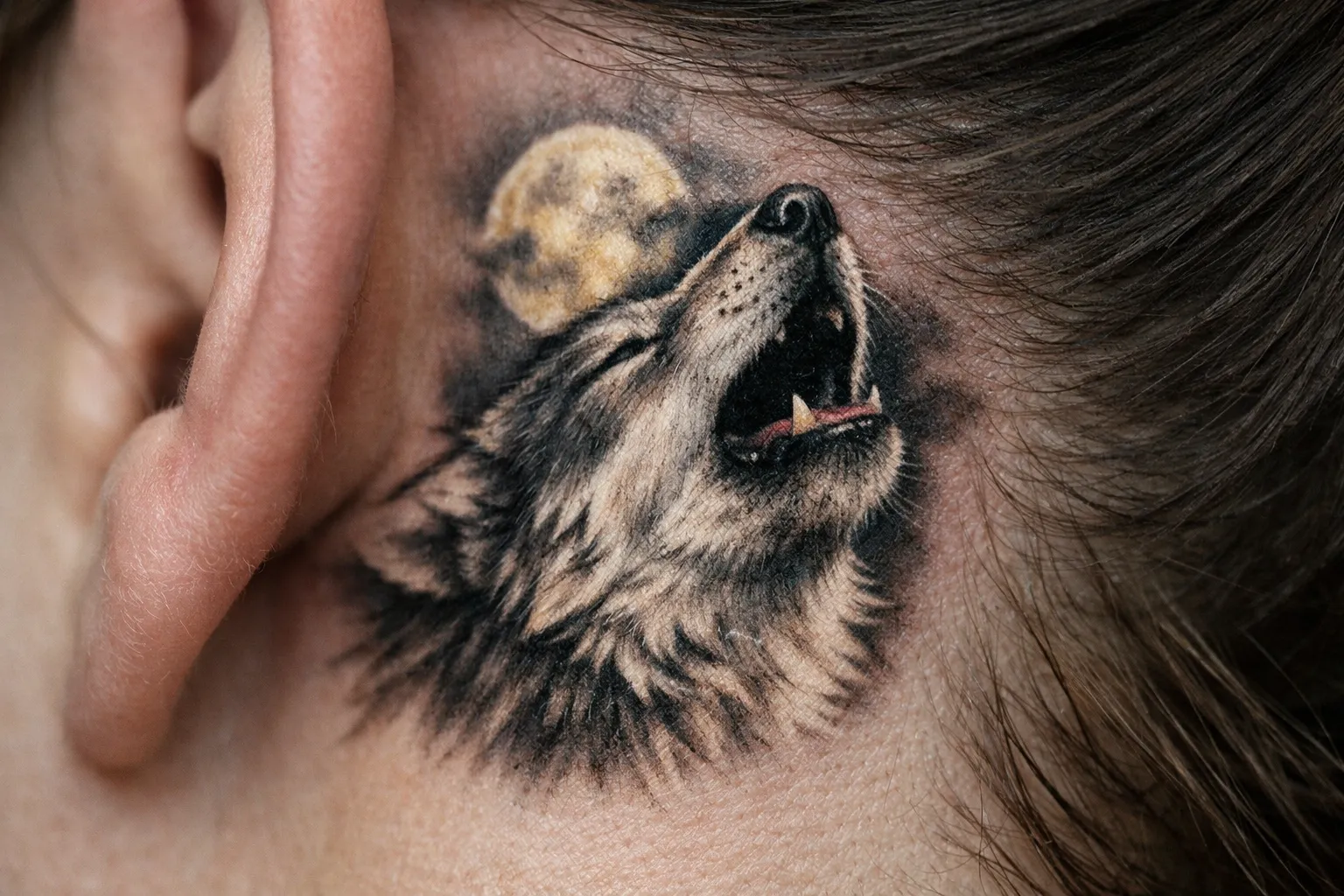
Biologically, wolves cooperate with a complexity that mirrors human social structures. The alpha-pair model has been heavily revised in the last decade (most wild packs are simply parents and offspring), but the underlying signal - coordinated group survival - is what people respond to when they choose a pack tattoo.
Mythologically, wolves appear as creators, destroyers, and messengers across continents. That breadth means almost any personal narrative can find a wolf story to anchor it, which is exactly why the motif refuses to go out of style.
✓ Pros
- Symbolizes a wide range of traits from strength to spiritual guidance
- Versatile design options from minimalist to detailed realism
- Strong cultural and mythological roots worldwide
✗ Cons
- Cultural appropriation risks with tribal and Indigenous designs
- Small or overly detailed tattoos age poorly
- Misinterpretation of symbolism if design choices are unclear
Cultural Significance Around the World
The meaning of a wolf changes depending on where the symbol came from. If you’re attaching cultural weight to your tattoo, know which tradition you’re pulling from.
Native American traditions. Many tribes - Pawnee, Cherokee, Lakota among them - regard wolves as spirit guides, teachers, and pathfinders (2). Wolves represent loyalty to family and the importance of communal survival. The key caveat: specific regalia, headdresses, and ceremonial imagery belong to specific nations. A non-Indigenous wearer copying a tribe-specific design is appropriation, not homage.
Japanese (ōkami). In Shinto folklore, wolves were considered kami messengers and guardians of crops, travelers, and mountains (1). The Japanese wolf tattoo tradition leans toward protective, often divine, imagery - closer to a guardian spirit than a wild predator.
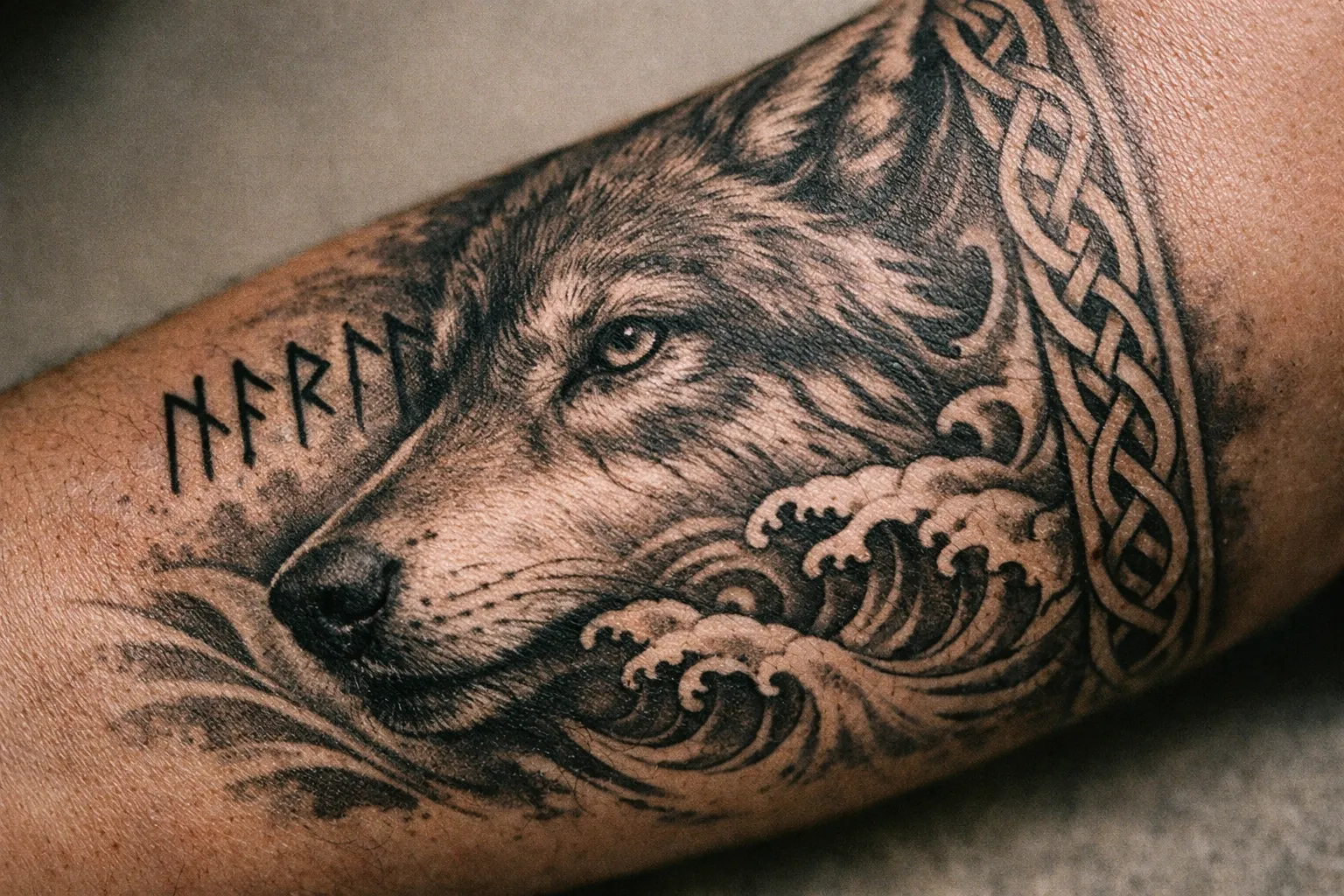
Norse and European. Norse mythology gives us Fenrir (the wolf who kills Odin at Ragnarök) and Geri and Freki (Odin’s companion wolves). The reading here is more dual - power, fate, and chaos alongside loyalty. European folk tales tilt darker, casting wolves as threats, which is why traditional Western wolf tattoos often emphasize teeth and snarl (4). For more on Norse symbolism, see Viking Tattoo.
Celtic. Wolves appear as protectors of forests and guides through the underworld - less commonly tattooed, but worth knowing if you’re after that lineage.
In modern Western tattoo culture, most of these meanings have flattened into “strength + loyalty + freedom.” That’s not wrong, just incomplete. If you want the deeper reading, pick a tradition and commit to it visually.
Popular Wolf Tattoo Designs You Should Know
These are the variations you’ll see again and again in studio portfolios. Each one has a different visual weight and a different ideal placement.
Lone Wolf Tattoo
A single wolf, often on a ridge or against a minimal background. Reads as self-reliance and independence. Works well on the outer forearm, calf, or shoulder blade at 4-6 inches (10-15 cm). Honest caveat: the “lone wolf” idea is more cultural shorthand than wolf biology - pick it because the message fits you, not because it’s accurate ecology.
Wolf Pack Tattoo
Multiple wolves, usually 3-5, often arranged in a landscape. Reads as family, teamwork, protection. Needs real estate - minimum 6-8 inches (15-20 cm) across. Best on the chest, back, ribs, or upper thigh. Common pitfall: cramming a pack into a small forearm panel turns the wolves into blobs within five years. I’ve seen it happen more than once, and it’s a hard fix.
Howling Wolf Tattoo
The classic silhouette against a moon. Reads as freedom, wildness, call to community. Versatile - works at 3 inches as a minimalist piece or as the centerpiece of a half-sleeve. The silhouette is forgiving on aging because there’s no fine detail to blur.
Wolf and Moon Tattoo
Mystical reading - cycles, intuition, the unconscious. Often combined with phases of the moon or a starfield. Sits well on the forearm, sternum, or back. 5-7 inches gives you room for the moon details without crowding the wolf.
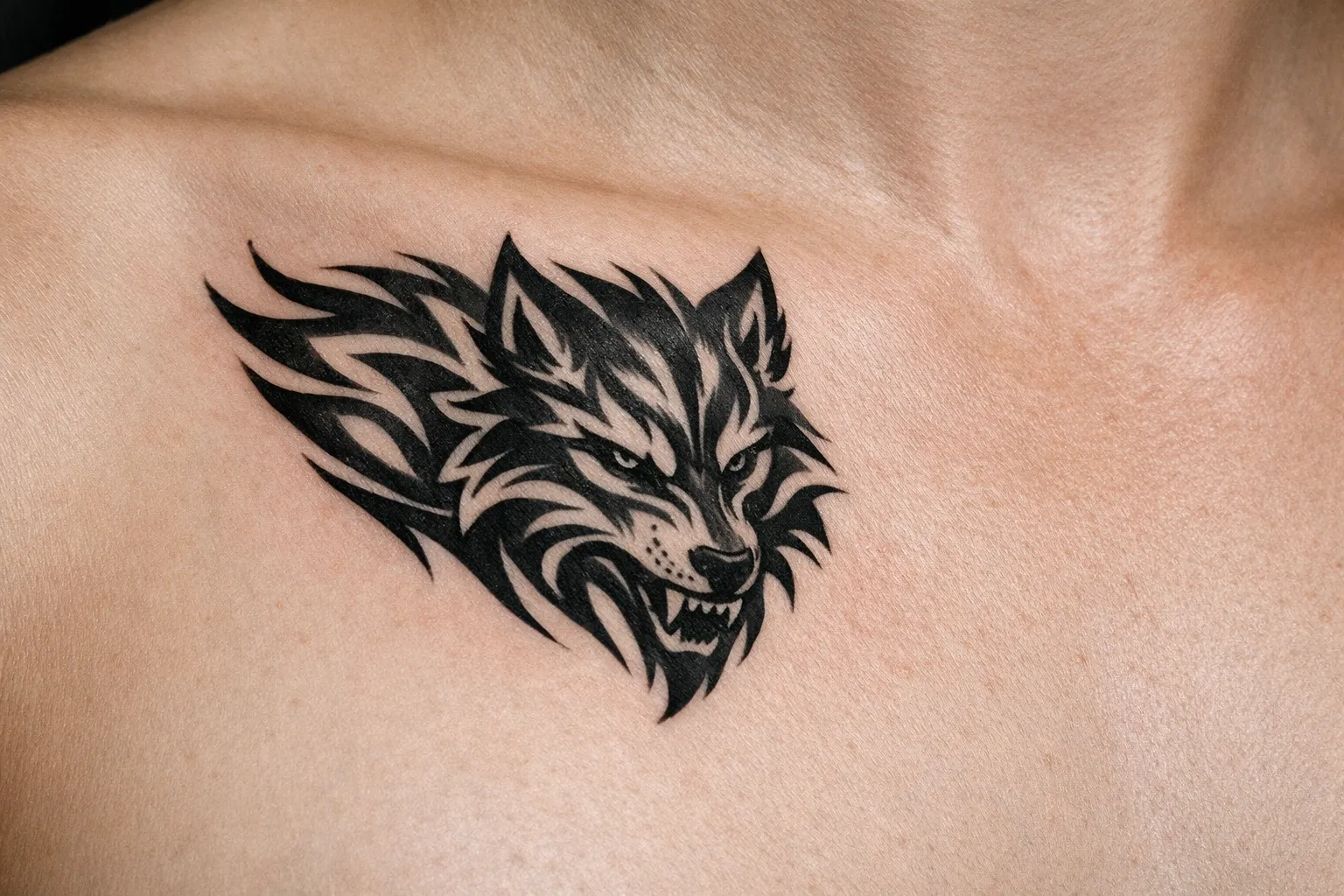
Tribal Wolf Tattoo Style and Its Nuances
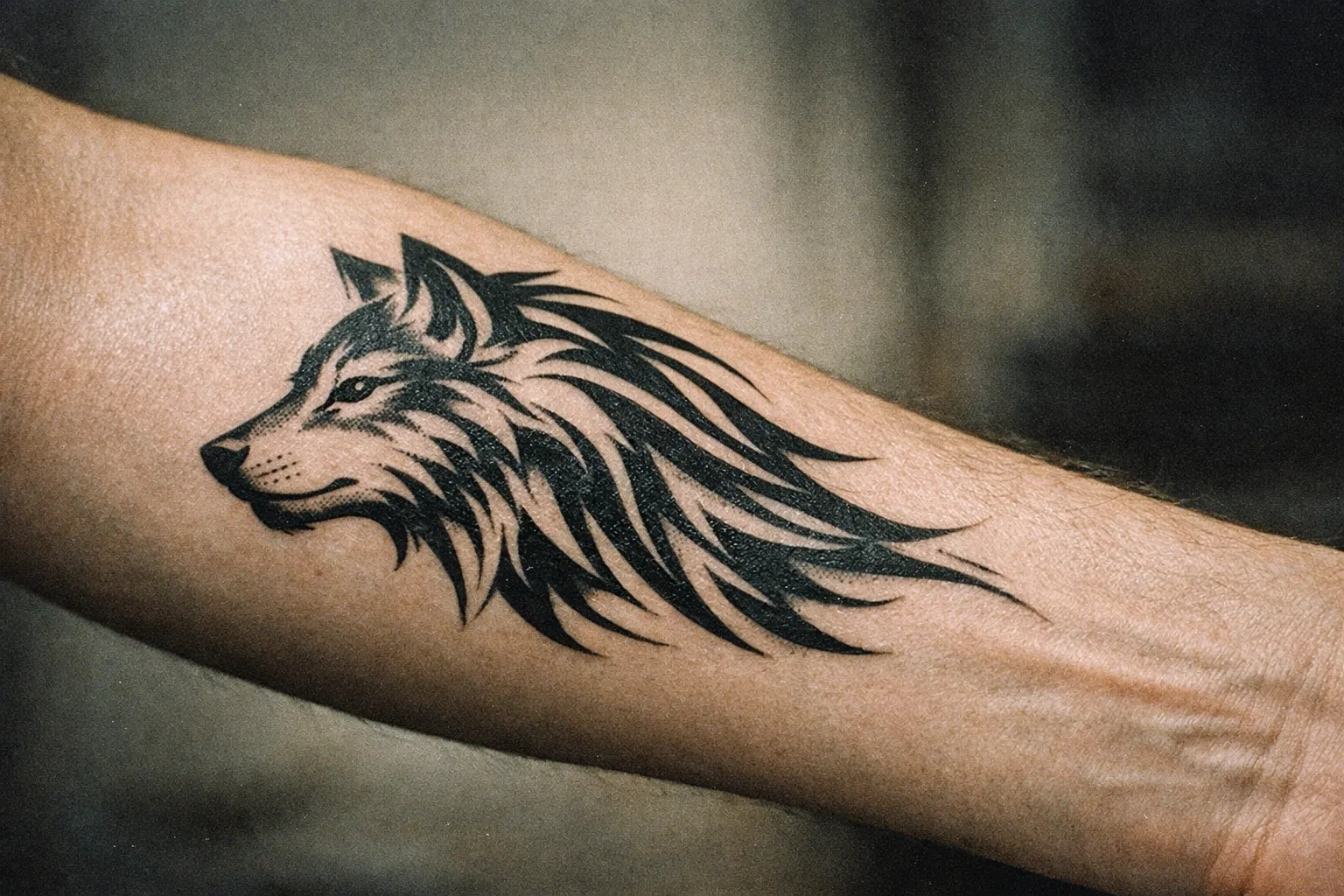
Bold black patterns, often inspired by Polynesian, Haida, or generic neo-tribal styles. Reads as strength and family bond in modern Western tattoo culture (1). Two hallmarks done well: thick saturated black and intentional negative space. Common pitfall: artists who treat tribal as decoration rather than form-following design, ending up with patterns that don’t follow the wolf’s anatomy. Ages excellently because there’s no fine line to fade. Cultural note: avoid copying a specific cultural tradition (Haida, Maori) unless you have a tie to it - work with your artist on a non-tribe-specific graphic style instead.
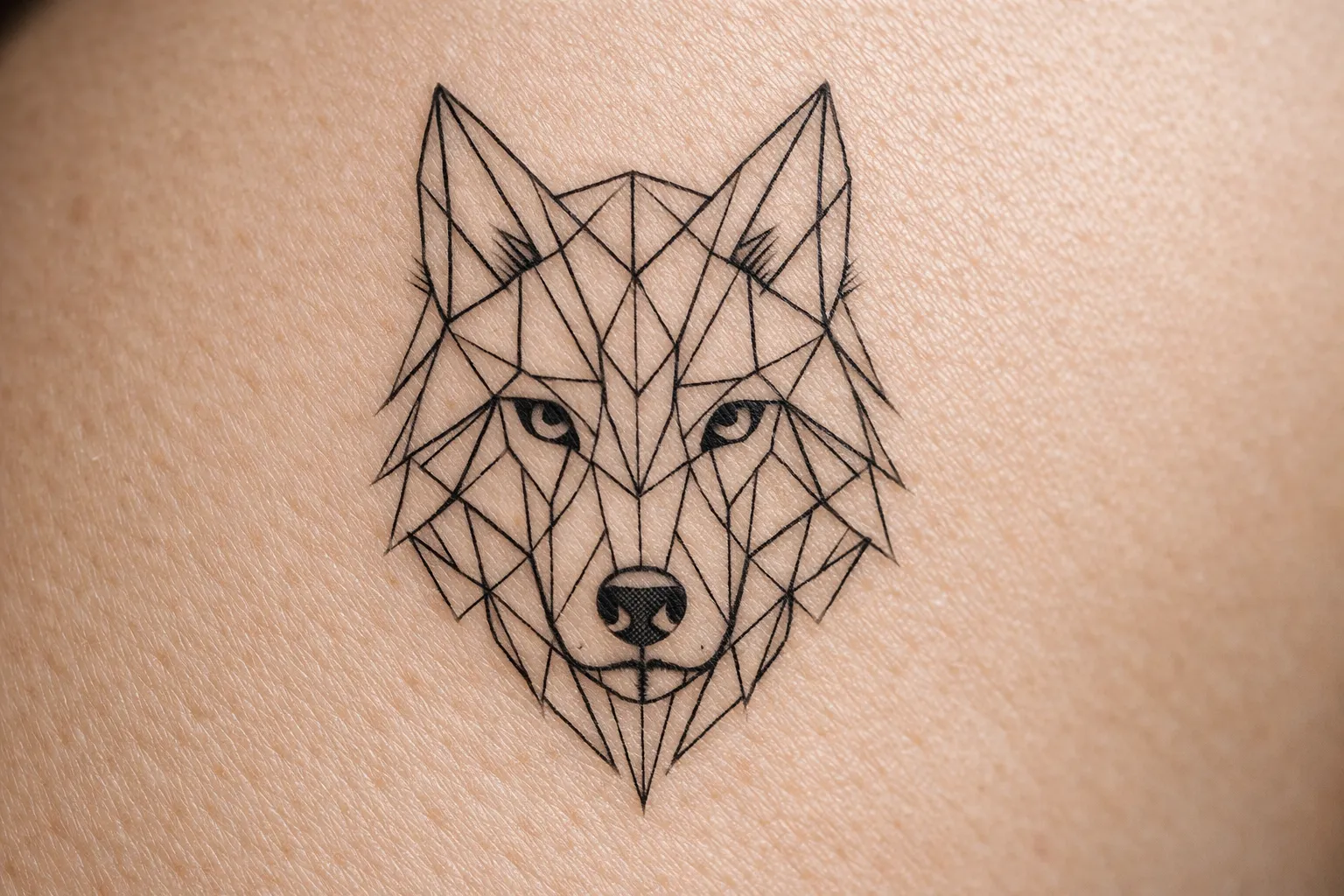
Geometric Wolf Tattoo and Its Technical Details
Polygonal facets, dotwork shading, sometimes a split-face design (half realistic, half geometric). Reads as modern, analytical, balance of wild and structured. Hallmarks: clean straight lines and symmetrical or deliberately asymmetrical facet patterns. Common pitfall: a geometric wolf tattoo only works if the linework is razor-clean - wobble in those lines will be obvious forever. Sits well on the forearm, thigh, or upper arm at 5-8 inches.
Mandala Wolf
Wolf head or face integrated with mandala patterns. Reads as inner growth, spiritual evolution (1). Best as a circular composition on the upper back, chest, or thigh. Needs 6 inches minimum for the mandala detail to read clearly.
Wolf Skull Tattoo
A wolf with a skull element - sometimes a skull mask, sometimes the wolf rendered as a skull. Reads as death and rebirth, mortality, ferocity. Common in neo-traditional and blackwork styles.
Wolf Paw Tattoo
Simple, minimalist, often used as a small symbol of connection to wolves or to mark something that happened. Sits well at 1.5-3 inches on the wrist, ankle, or behind the ear.
Wolf Dreamcatcher Tattoo
Wolf integrated with a dreamcatcher. Same cultural caveat as tribal designs - dreamcatchers come from Ojibwe tradition, and a respectful approach matters. If you want the aesthetic without the appropriation, talk to your artist about alternatives.
Wolf Eyes Tattoo
A close-up of just the eyes. Highly effective when done well, brutal when done poorly. Needs 4-6 inches minimum to capture detail, best on the forearm or upper arm. The eyes carry the entire piece, so book an artist whose portfolio shows clean, expressive animal eyes specifically.
Tribal Wolf Tattoo - A Closer Look
The tribal wolf Tattoo deserves its own breakdown because it’s where most cultural missteps happen. Modern “tribal” in Western shops usually means bold black graphic patterns inspired by Polynesian, Maori, or Pacific Northwest Indigenous art, but loosened from the specific cultural meanings those patterns carry.
If you want the bold-black aesthetic without appropriating a living tradition:
- Ask your artist for neo-tribal or blackwork graphic instead of a specific cultural style.
- Skip headdresses, specific tribe-identified patterns, and ceremonial imagery you don’t have a tie to.
- Focus on patterns that follow the wolf’s anatomy - facial structure, fur direction, muscle flow - rather than overlaid decoration.
Done well, a tribal wolf has two technical hallmarks: solid black saturation with no patchy areas, and deliberate negative space that defines the wolf’s features. The common pitfall I keep seeing is artists who outline a wolf and then fill random tribal swirls inside - the result looks like a coloring book, not a designed piece. Tribal designs age well, often better than detailed realism, which is part of why they remain popular.
Wolf Forearm Tattoo - Why It’s the Most Requested Placement
The wolf forearm Tattoo is the single most searched placement, and there’s a practical reason: the forearm is flat, visible, and large enough for a detailed wolf head without going onto curves that distort the design.
Sizing on the forearm:
- Inner forearm: 4-6 inches (10-15 cm) works well; the skin is softer, slightly more painful.
- Outer forearm: 5-7 inches; flatter canvas, less pain.
- Full forearm wrap or half-sleeve: 8-12 inches; allows for a wolf-and-landscape scene.
Body flow tip: orient the wolf’s snout toward your hand (outward strength) or toward your elbow (introspection, facing the heart). Most experienced artists will ask this. If they don’t, raise it yourself.
Pain on the forearm sits in the lower-middle range - significantly less than ribs, sternum, or inner bicep, more than the outer thigh or shoulder cap. A 3-5 hour session is doable for most first-timers.
Small Wolf Tattoo - Where Minimalist Works and Where It Fails
Small wolf tattoos (2-6 cm) have surged with the fine-line trend, and they suit first-timers and anyone who needs a discreet piece. But size dictates style. You cannot shrink a realistic wolf face below about 5 cm and expect it to hold up.
What works small:
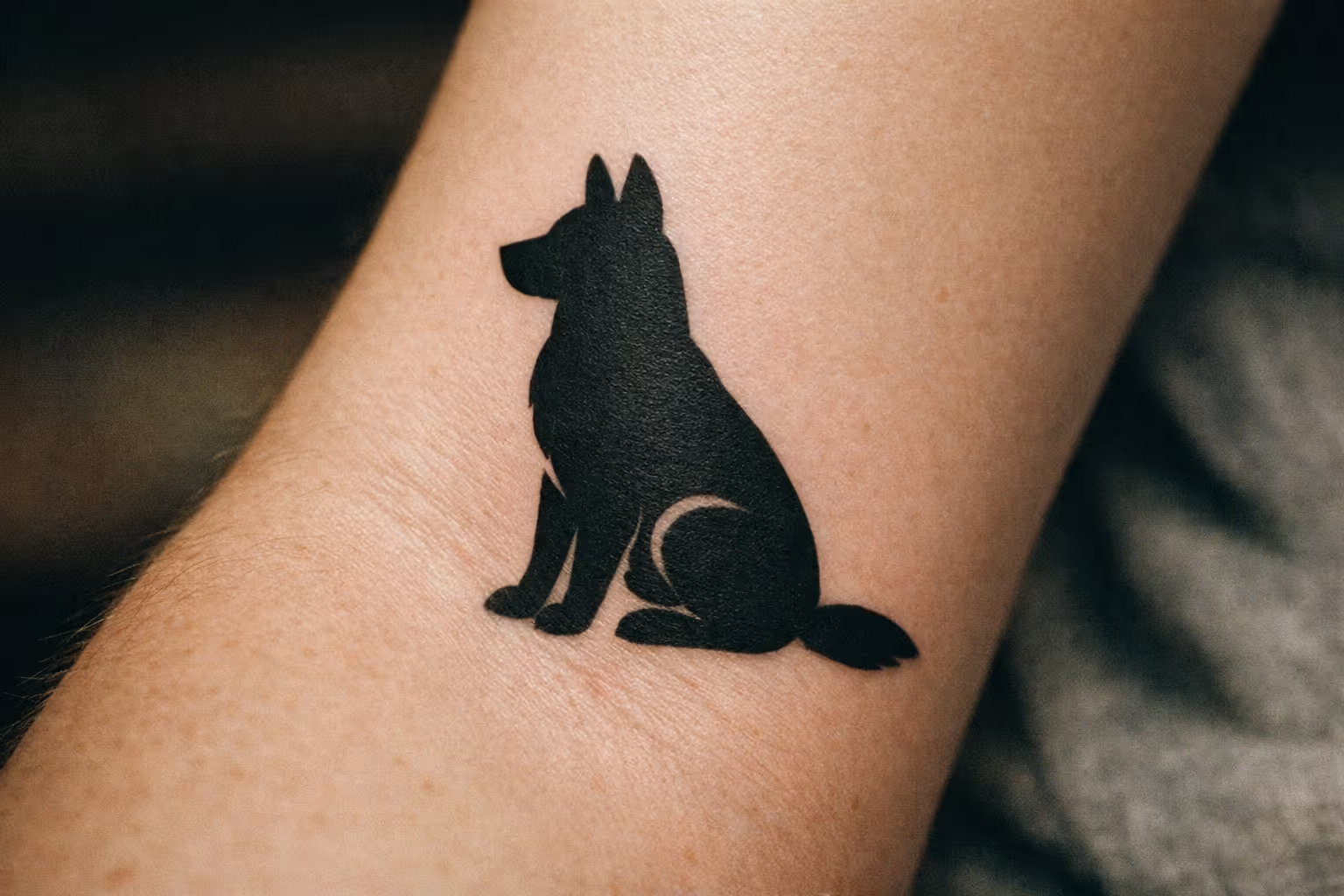
- Wolf silhouette - solid black, no internal detail.
- Single-line wolf - continuous-line drawing, very on-trend.
- Wolf paw print - clean and instantly readable.
- Geometric wolf head at 4-5 cm - only if the artist works clean.
What fails small:
- Realistic wolf faces under 5 cm - fur detail blurs within 3-5 years.
- Wolf packs - multiple subjects need real estate.
- Heavy shading - needs space to gradient properly.
Good placements for small wolf tattoos: behind the ear, inner wrist, ankle, back of the neck, sternum, finger. Expect to pay $80-$250 in US studios for a small piece, single session, 1-2 hours.
Geometric Wolf Tattoo - Designing It So It Ages Well
The geometric wolf Tattoo has been one of the most-saved designs on tattoo Pinterest since around 2022, and the split-face version - half realistic, half geometric - is its signature variation.
What makes a geometric wolf work technically:
- Crisp straight lines - any wobble shows forever. Book an artist whose portfolio shows clean geometric work specifically.
- Intentional facet pattern - facets should follow the wolf’s actual anatomy, not just decorate the surface.
- Limited palette - most geometric wolves work in black and grey with an optional single accent color.
The common pitfall: artists who add geometric shapes as overlay rather than as structure. A real geometric wolf is built from the geometry. A bad one has geometry stamped on top, and you can tell immediately.
Sizing: 5-8 inches is the sweet spot. Smaller than 5 inches and the facets compress; larger than 8 and you’ll want extra detail to fill the space.
Wolf Tattoo for Men - What’s Popular and Why
The wolf Tattoo for men category leans toward bolder, larger, more aggressive designs - though the gender split has narrowed significantly in the past five years.
Common requests from male clients:
- Snarling wolf head on the forearm or upper arm at 5-7 inches.
- Wolf pack scenes on the chest or back.
- Viking/Norse wolf - Fenrir, Geri and Freki - often paired with runes or Yggdrasil. See also Viking Tattoo.
- Tribal or blackwork wolf on the upper arm or shoulder.
- Wolf half-sleeve combining wolf, forest, and moon.
Placement preferences trend toward chest, back, shoulder, and upper arm - areas with mass that hold larger, denser designs. Pain comparison: sternum and ribs hurt significantly more than upper arm or outer shoulder, so plan session length accordingly.
One honest note: the “alpha wolf” framing that drives a lot of male wolf tattoo demand has been quietly debunked by the same researcher who introduced it. If that matters to you, lean toward the pack-loyalty or guide-spirit reading instead.
Choosing the Right Wolf Tattoo
Walk through these before you book:
- Pick your meaning first. Loyalty, independence, guidance, family, freedom - narrow it to one or two so the design has focus.
- Match style to meaning. Realism for emotional weight, geometric for modern/analytical, fine line for delicate/discreet, traditional for bold and graphic, tribal for high-contrast impact.
- Pick placement based on size and visibility. Forearm is the safest default for medium designs. Chest, back, and thigh for larger scenes. Wrist, ankle, behind the ear for small pieces.
- Bring 3-5 reference images to your consultation, plus 3-4 words describing what you want it to express (2). Let the artist combine them into something custom - don’t ask for a copy.
- Confirm size at consultation. If your artist says “this needs to be bigger to age well,” listen. Cramming detail into too-small a space is the number one regret driver.
- Check the artist’s portfolio for your specific style. Someone great at black-and-grey realism may not be the right pick for geometric linework, and vice versa.
What a Wolf Tattoo Actually Costs
US studio pricing in 2024-2025 ranges roughly as follows:
- small wolf Tattoo (2-3 in, fine line or simple silhouette): $80-$200 in mid-tier shops; up to $250+ in NYC, LA, London.
- Medium forearm wolf (4-7 in, shaded or geometric): $250-$600.
- Large wolf piece (chest, back, or pack scene at 8-12+ in): $600-$1,500+, often spread across 2-3 sessions of 3-4 hours.
Hourly rates from animal-realism specialists in major cities run $150-$300/hour. Popular artists have 2-6 month waiting lists, especially for large work - book early if you want a specific portfolio name.
Time investment:
- Small fine-line wolf: 1-2 hours.
- Mid-sized detailed forearm wolf: 3-5 hours.
- Full chest or back scene: 6-12+ hours, split across multiple sessions.
Caring for Your Wolf Tattoo
Aftercare determines whether your wolf still looks like a wolf in ten years. The fine detail in eyes, fur, and geometric lines is what fades fastest if you skip steps.
Day 1-3: Keep the bandage on for the time your artist specifies - usually 2-24 hours, longer for second-skin wraps. Wash gently with fragrance-free antibacterial soap twice a day. Pat dry, never rub. Apply a thin layer of fragrance-free moisturizer or healing balm. Expect oozing and redness; this is normal.
Week 1: Continue gentle washing and light moisturizing. Skin starts to tighten. Avoid soaking - no baths, no swimming, no saunas. No direct sun.
Week 2-4: The peeling and itching phase. Do not pick, scratch, or peel - this is where ink loss happens. Keep moisturizing. The tattoo may look dull or cloudy as the top layer heals over; this clears up by week 4-6. For more on this phase, see Peeling Tattoo.
Long term: Sun-protective clothing and SPF 30-50 sunscreen on the tattoo every time it sees daylight. UV is the number one cause of fading. Light colors in wolf eyes or fur highlights - white, pale blue - can fade 30-50% within 2-3 years without consistent SPF.
Wolf-specific aftercare notes:
- Fine-line and geometric pieces are the most vulnerable to fading and blur - be extra strict with SPF and avoid stretching the area (heavy weightlifting, rapid weight changes).
- Realistic shaded wolves can scab heavily - let scabs fall off naturally or you’ll lose detail.
- Color wolves (watercolor, neo-traditional) need touch-ups every 5-10 years to keep saturation; pure black-and-grey ages best.
Is It Okay to Get a Wolf Tattoo?
Yes, in nearly every Western social context. Wolves are not associated with hate symbols, gang affiliation, or extremist iconography in mainstream tattoo culture. You won’t face the kind of scrutiny that comes with, say, certain numeric tattoos or specific runes.
The two areas where “okay” gets nuanced:
Cultural sensitivity. If you’re drawn to Native American, Maori, or Haida-inspired wolf designs and you’re not from that culture, work with your artist on a non-tribe-specific alternative. The aesthetic you want - bold black, graphic, animal-as-spirit - is achievable without copying sacred imagery.
Professional visibility. A wolf on your forearm is fine in most workplaces in 2025. A wolf on your neck, hands, or face still carries professional cost in many industries. Plan placement accordingly.
The Norse/Fenrir wolf has been adopted by some far-right groups in specific stylized forms, particularly when paired with certain runes. If you’re going for a Viking aesthetic, make sure your artist isn’t pulling from imagery that’s been co-opted - most reputable artists are aware of this and will steer you clear. For more on Viking symbolism, see Viking Tattoo.
What Does a Wolf Symbolize?
Condensed answer: power, loyalty, family, freedom, intuition, survival, and spiritual guidance, with a darker side of danger, predatory instinct, and wildness (1)(3). Which traits surface in your specific tattoo depends entirely on the design choices - expression, posture, what you pair it with, and the style you choose.
What Does a Line Down Your Chin Mean?
This one comes up in wolf-tattoo searches but isn’t actually wolf-related. A vertical line tattoo down the chin is a traditional facial marking in several Indigenous traditions - most notably Inuit (kakiniit/tunniit) and Māori (moko kauae) - where it carries specific cultural and ancestral meaning tied to lineage, status, and rites of passage. These markings belong to those cultures and are not appropriate for outsiders to wear.
In modern Western fine-line aesthetics, chin lines occasionally appear as purely decorative facial tattoos, but they carry no standard wolf-tattoo symbolism. If you saw the question paired with wolf content, it’s a search result coincidence, not a connection.
Wolf Tattoos vs Lion and Snake Tattoos
If you’re choosing between power animals, the symbolic differences matter:
- Wolf: loyalty, family, intuition, freedom. Pack-oriented.
- Lion: royalty, courage, dominance, pride. Solitary or small-group oriented.
- Snake: transformation, rebirth, danger, temptation. Cyclical (shedding skin).
A wolf-and-snake pairing reads as instinct vs intellect, or wild vs cunning. A wolf-and-lion combination is less common and can feel redundant - two power predators - unless you’re representing a specific duality. If you want a full power-animal sleeve, keep the style consistent: all realism, all geometric, all blackwork. Mix styles and the piece reads like a sticker collection. For more on snake symbolism, see Snake Tattoo Meaning: Symbolism, Designs, Placement.
Before You Book
The biggest regret driver with wolf tattoos isn’t the design choice - it’s sizing. Too small for the detail, blurred fur within five years. The second biggest is copying a Pinterest pin verbatim. Bring references, but commission a custom piece so your wolf isn’t on three other people in your city.
Pick the meaning first, the style second, the placement third, and the artist last - only after you’ve vetted their portfolio for your specific style. A great realism artist is not automatically a great geometric artist. Book the consultation, listen to their sizing advice, and plan for proper aftercare, especially SPF. That’s what determines whether your wolf still looks like a wolf in a decade.
Frequently Asked Questions
- Can I get a tribal wolf tattoo without cultural appropriation?
- Yes, by working with your artist to create a neo-tribal or blackwork graphic style that doesn't copy specific cultural patterns or ceremonial imagery.
- What size should a wolf tattoo be to age well?
- Medium to large sizes (4 inches and above) work best; small realistic faces under 5 cm tend to blur and lose detail within a few years.
- Is the lone wolf tattoo biologically accurate?
- Not really; lone wolves are usually dispersers seeking new packs, so the 'lone wolf' symbolism is more cultural shorthand than ecological fact.
- How painful is a wolf tattoo on the forearm compared to other placements?
- Forearm pain is moderate - less painful than ribs or sternum but more than outer thigh or shoulder cap.
- Are wolf tattoos associated with any hate or extremist symbols?
- No, wolves are not linked to hate symbols in mainstream tattoo culture, but some Norse wolf imagery has been co-opted by far-right groups, so be cautious with Viking designs.
- Can I get a wolf tattoo on my face or neck and still keep professional acceptance?
- Wolf tattoos on visible areas like the neck or hands may carry professional costs in many industries; forearm placements are generally safer.
- What aftercare is critical for fine-line and geometric wolf tattoos?
- Strict sun protection with SPF and avoiding stretching the tattoo area are essential to prevent fading and blurring.