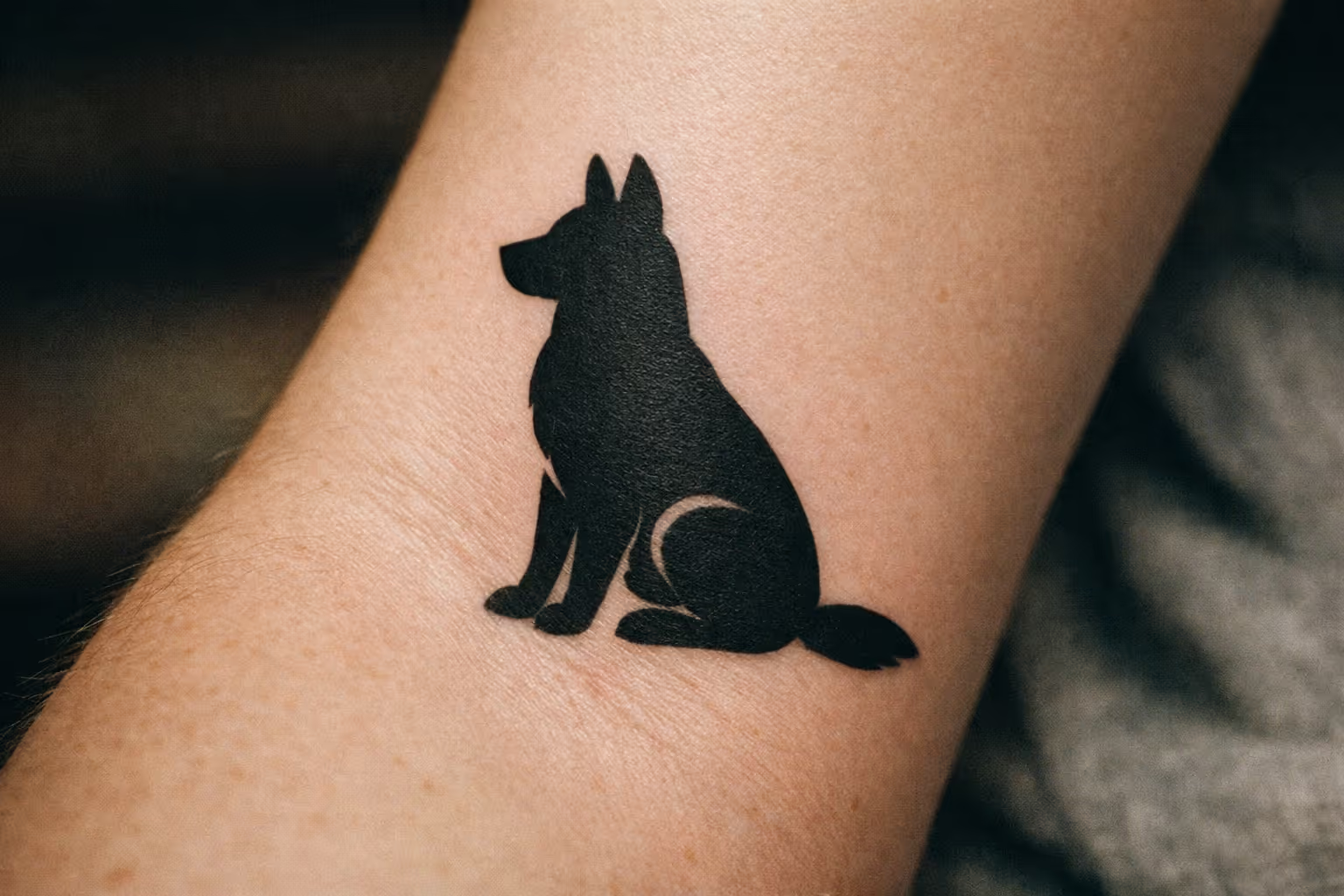
A dog tattoo is rarely the regret - the bond doesn’t fade - but one thing catches people off guard: the budget. $500 buys a solid mid-size piece, not the hyper-real full portrait you pictured. Here’s what a dog tattoo really costs, where it ages best, and which styles hold past ten years.
What a Dog Tattoo Actually Means
A dog tattoo is one of the few pieces of body art most people don’t second-guess years later. The bond is the bond, and it tends to stay. What changes is how you execute it - the style, the placement, the size, and how honest the design is to the actual dog you’re commemorating.
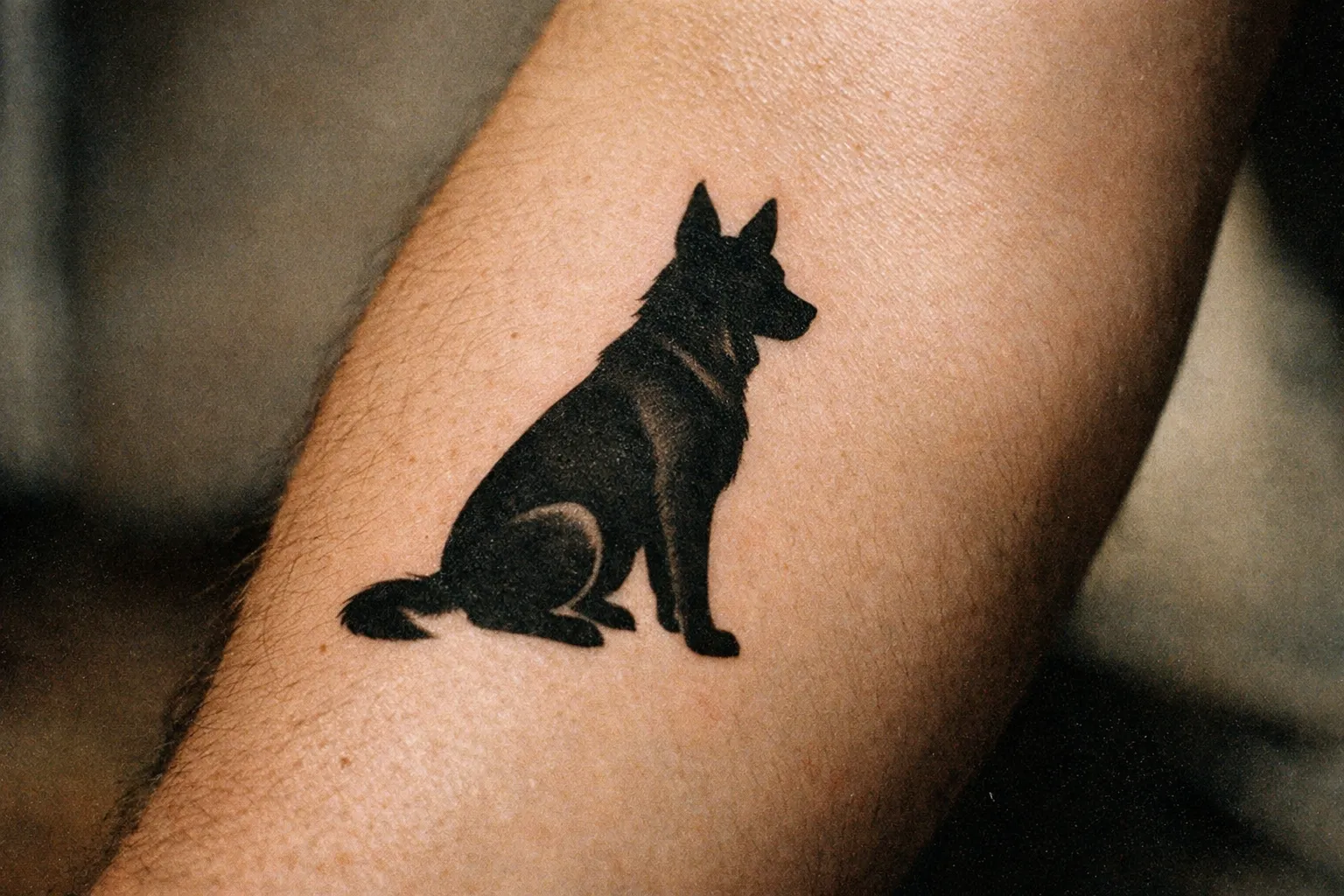
This guide is the practical version. Real prices, real sizes in inches, real aftercare timelines, and straight answers on the cultural questions people keep asking. We’ll cover dog tattoo meaning across cultures, the foo dog tattoo (which isn’t a dog at all), the dog paw tattoo in all its variations, and the memorial dog tattoo - the one most readers actually came here for. We’ll also get into what a $500 budget really buys you and why your vet may have already put a small green line on your dog’s belly.
✓ Pros
- Strong cultural and personal symbolism with varied meanings
- Wide range of styles and sizes to fit different budgets and placements
- Detailed aftercare guidance included
✗ Cons
- Some designs (like foo dogs) require cultural understanding to avoid misrepresentation
- Small detailed tattoos on high-friction areas age poorly
Dog Tattoo Meaning Across Traditions
The meaning shifts depending on which tradition you pull from, so don’t let anyone sell you a single “official” reading.
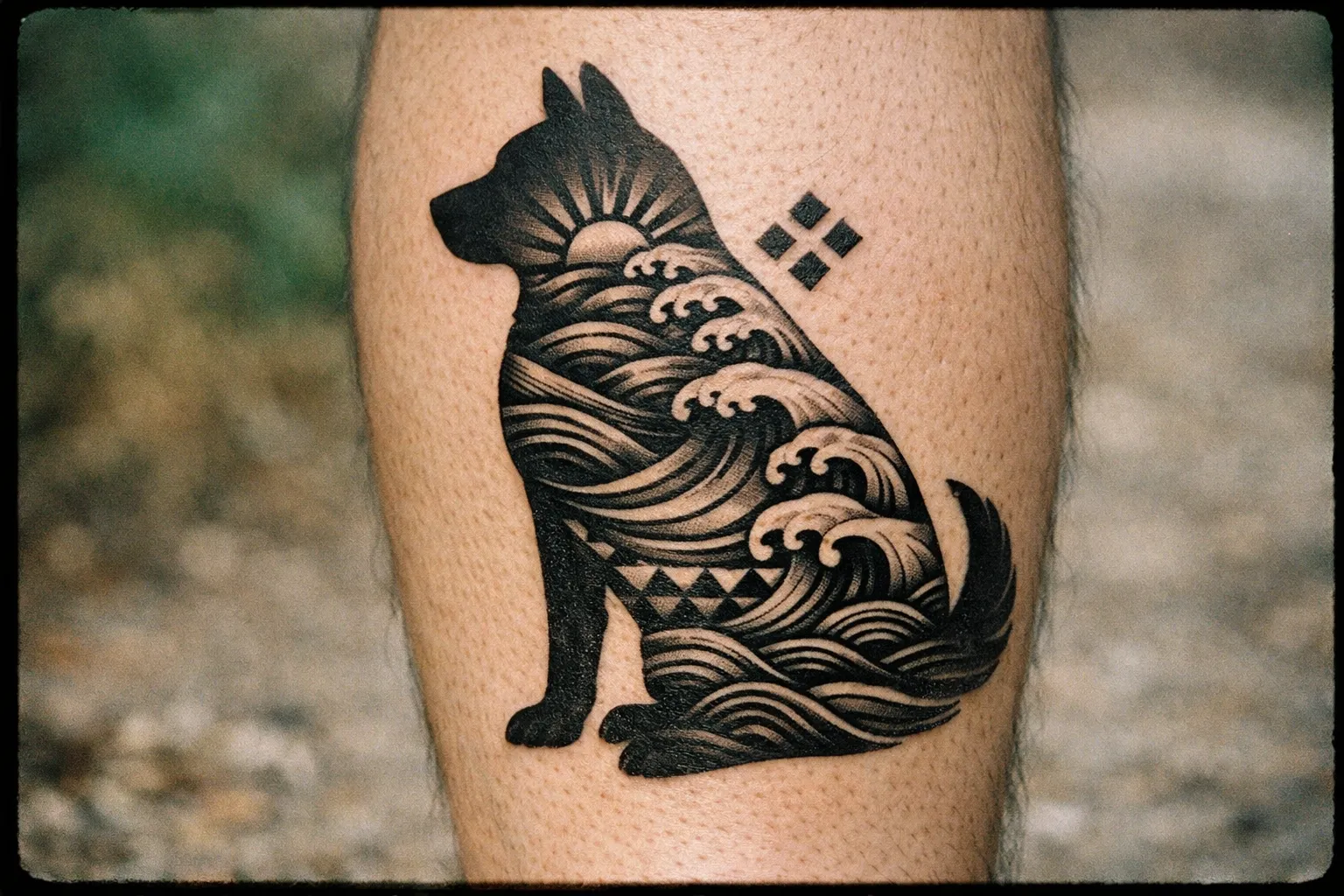
In European folk symbolism, dogs read as loyalty, guardianship, and fidelity - the reason medieval tomb effigies often placed a dog at the feet of the deceased. In Ancient Egypt, Anubis (jackal-headed, but functionally a canid) guided souls through the afterlife. In Norse mythology, Garmr guards the gates of Hel. Across those traditions you get the same throughline: the dog as the figure who stays.
In modern Western tattoo culture, dog tattoo meaning has narrowed mostly to two things: a tribute to a specific living dog, or a memorial to one who’s died. The mythological reading still exists, but if you walk into a studio and ask for “a dog tattoo,” nine out of ten artists will assume you mean your own dog.
A few specific motifs and what they signal in modern practice:
- Paw print - presence, the mark a dog left on your life. Often paired with a name or date.
- Silhouette of a specific breed - quiet acknowledgment without a full portrait.
- Dog with wings or halo - memorial, almost always.
- Dog with collar tag visible - personalization; the tag number or name does the heavy lifting.
- Foo dog / shishi - protection, not loyalty (more on this below).
If you want the meaning to be specific, build it from a specific detail of your dog - a split nose color, a notched ear, a favorite toy. Generic symbolism reads as generic ink.
The Foo Dog - and Why It Isn’t a Dog
This trips people up constantly. A foo dog tattoo doesn’t depict a dog. The “foo dog” - also called Fu dog, shi, shishi, or komainu depending on region - is a guardian lion from East Asian tradition, used at temple and palace entrances since roughly the Han Dynasty (around 200 BCE)(2).
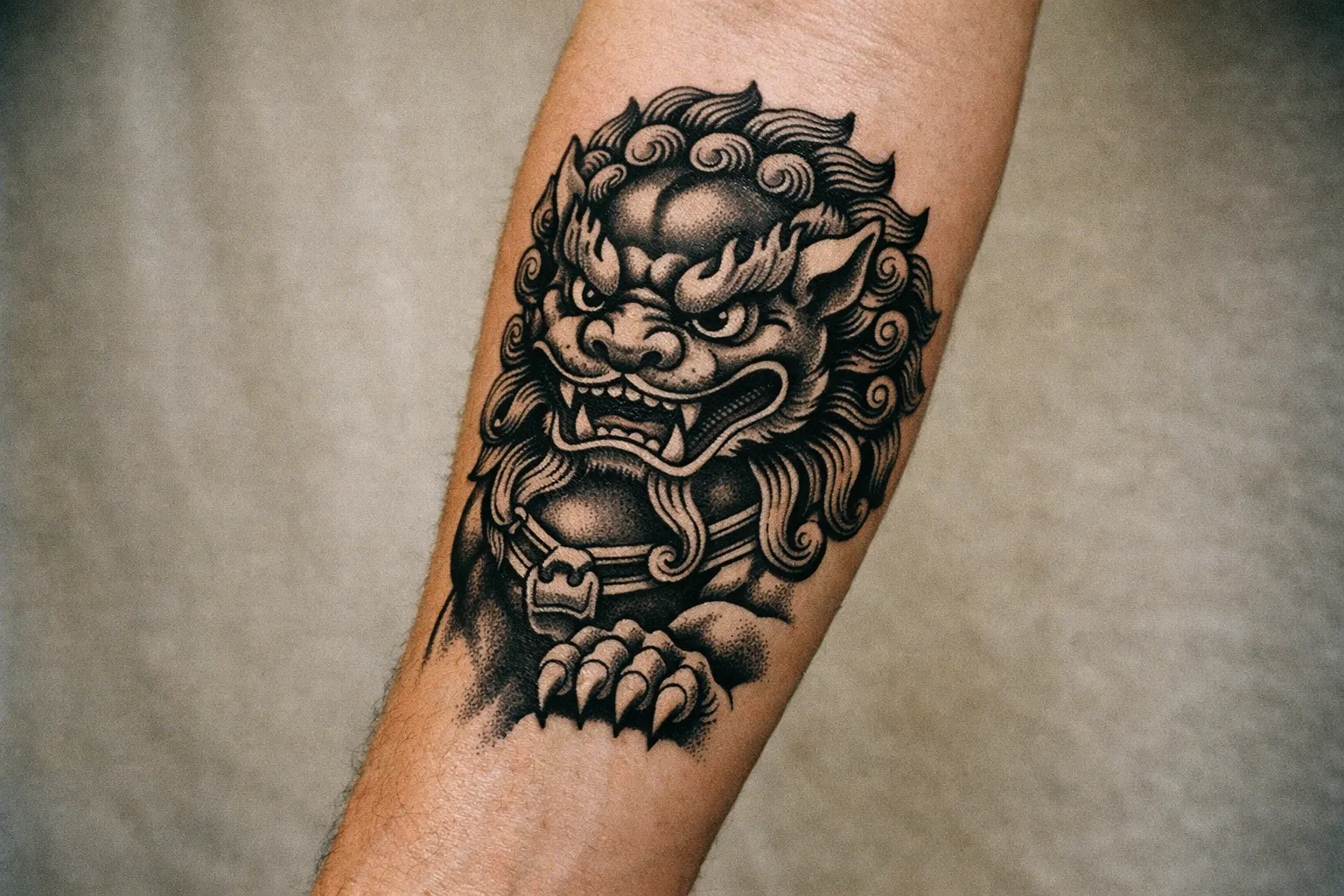
The cultural mechanics matter if you want this tattoo to actually mean something:
- They appear in pairs. The male rests his paw on a wish-fulfilling jewel (worldly power, wisdom). The female rests her paw on a cub (nurture, protection of the home).
- The open mouth wards off evil spirits. The closed mouth keeps good ones in.
- They symbolize protection against malevolent energy, courage, and imperial strength(1)(2).
In Japanese horimono (traditional tattoo work), foo dogs frequently pair with peonies (botan) - the classic karashishi-botan motif, the king of beasts with the king of flowers. If you’re going traditional Japanese style, that pairing isn’t decorative - it’s the canonical composition. I’ve seen clients come in asking for “just the foo dog” and end up with something that looks incomplete because the surrounding negative space has nothing to anchor it.
Technical hallmarks of a good foo dog tattoo: thick black outlines, bold solid color blocks (often red, green, deep blue), and stylized cloud, wave, or peony fillers. Common pitfall: artists who treat the foo dog as a generic lion-dog and skip the stylized mane curls, the bulging eyes, the muscular crouch. It ends up looking like a confused mascot. Check the portfolio carefully before you book.
Placement and size for foo dogs: these are big designs. A single foo dog needs at least 5-7 inches to carry the detail. A proper pair usually lives on the chest (one per side), the calves, or the shoulders. Trying to shrink one to wrist size is the fastest way to lose everything that makes it readable.
If you don’t have a personal or cultural connection to East Asian guardian symbolism, that’s worth thinking about before committing. Increasingly, artists are asking clients to engage with the meaning rather than picking the design purely on aesthetics (1).
The Dog Paw Tattoo - Small, Symbolic, and Easy to Get Wrong
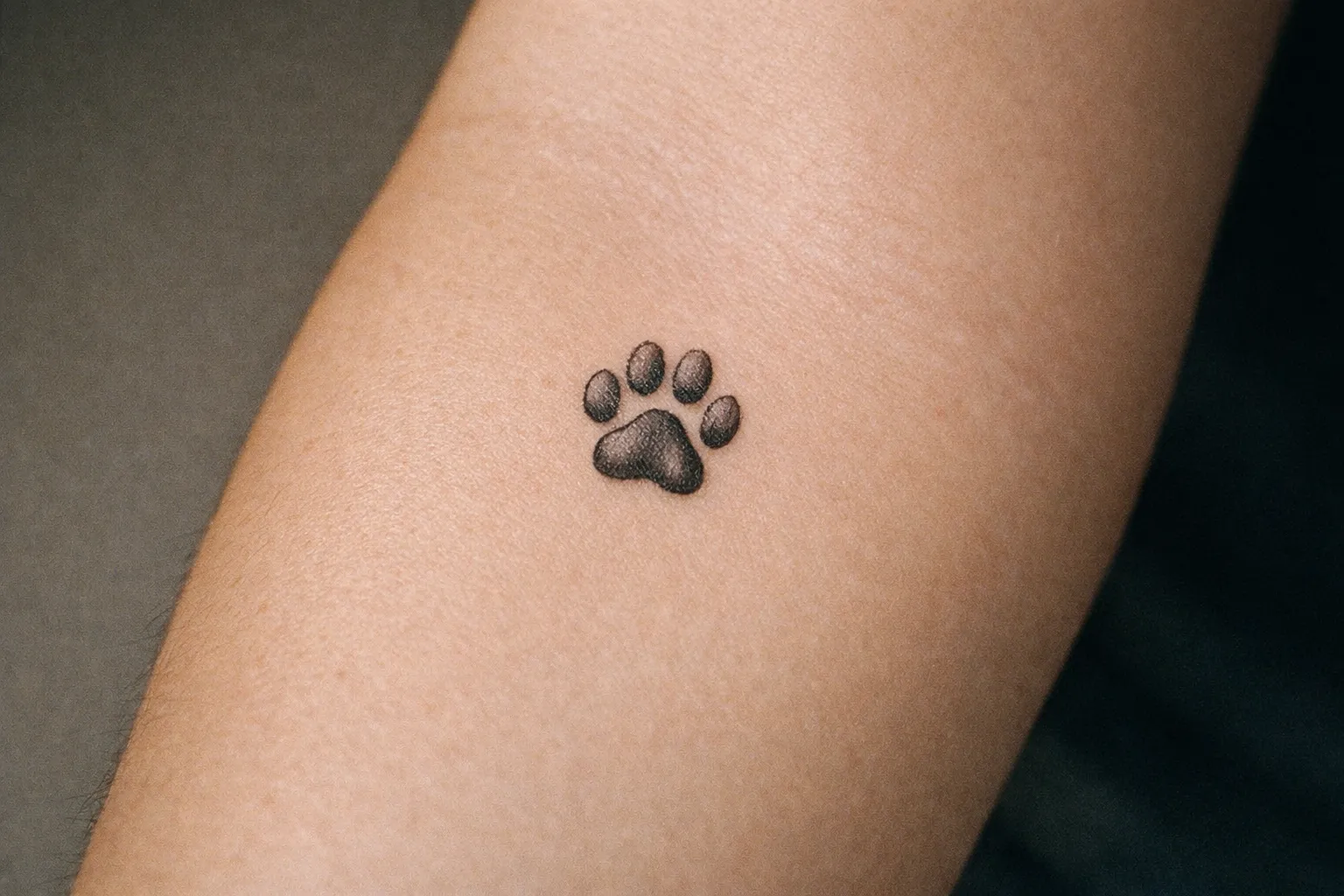
The dog paw tattoo is the entry-level dog tribute for a reason. It’s small, it’s recognizable, and it works on almost any placement. It also gets botched more than people realize.
What works:
- Single black outline paw, 1-2 inches, on the wrist, ankle, behind the ear, or side of the hand.
- A “trail” of three to five small paws walking up the forearm or around the ankle.
- Paw filled with watercolor wash, a landscape, or a galaxy texture - best at 2-3 inches so the fill has room to read.
- Negative-space paw inside a heart or infinity shape.
- An actual print of your dog’s paw, pressed into non-toxic ink and scanned, then cleaned up by the artist.
What doesn’t:
- Paws smaller than about 0.75 inches with internal detail. The pads and toes blur together within a few years, especially on fingers and feet.
- Dense lettering inside or under the paw - keep script at least ½ inch (12-13 mm) tall if you want it legible after healing.
- Hyper-fine line paws on high-friction zones (wrist crease, side of finger). Fine line on a constant-flex area is asking for blowout.
Pain reference for paw placements: behind the ear and the top of the foot run hotter than people expect (ribcage > foot > behind-ear > forearm > calf, roughly). The ankle bone itself is sharper than the soft ankle. A wrist paw is one of the easier sits.
For a memorial paw, the strongest move is to use your actual dog’s print. Press the cleaned paw into a stamp pad (non-toxic, water-based), have your dog step onto thick paper, scan it at high resolution, and hand it to the artist. That gives you a paw that is that dog’s paw - not a generic icon. I’ve had clients bring in prints on crumpled notebook paper, and we’ve still been able to work with them. The unique pad shape is what matters.
Memorial Dog Pieces: Designing Something That Holds Up
A memorial dog tattoo is what most people want when they search “dog tattoo” after a loss. The mistake is rushing it. Grief tattoos done within the first month often get redone or covered later - not because the love faded, but because the design was reactive instead of designed.
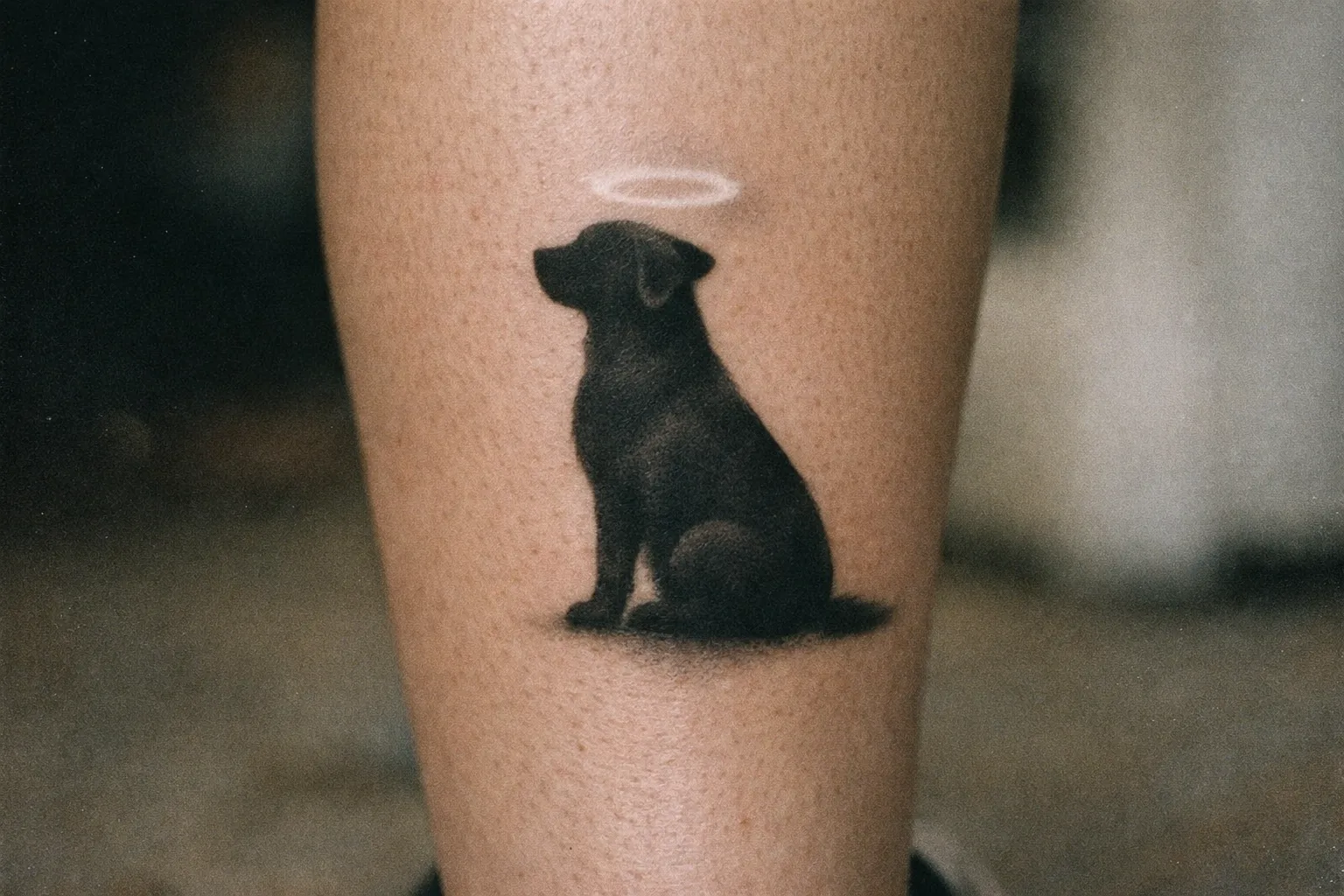
Wait at least a few weeks if you can. Then build the piece around concrete details, not abstract symbols.
Specific elements that personalize a memorial:
- The collar tag, including the actual tag number or shape.
- Birth and death dates in legible script (at least ½ inch tall, or ¼ inch in block numerals).
- A favorite toy, leash, or blanket pattern incorporated as a fill or background.
- GPS coordinates of a favorite walk or dog park.
- The waveform of a recorded bark - a few seconds of audio rendered as a visual wave.
- A notched ear, scar, or unusual marking that was specific to your dog.
Format options by budget:
- Under $150: small black-line silhouette or simple paw with initials and a date. Realistic at the lower end of mid-tier shops.
- $150-$400: a 3-5 inch black-and-grey headshot, a detailed paw with lettering, or a small portrait with a simple background element.
- $400-$800: color realism portrait, a 5-7 inch piece with a meaningful background, or a stylized scene.
- $800+: larger memorial scene, multi-dog composition, or sleeve segment with full background.
Placement for memorials: forearm, upper arm, inner bicep, calf, and thigh all give the artist enough flat real estate for fur detail and eyes. Ribcage memorials are popular but hurt significantly more - the ribcage easily outpaces the forearm on pain - and the curvature can distort detailed portraits.
Style tip: for short-haired breeds (boxers, dobermans, dachshunds), realism translates well even at smaller sizes. For long, fluffy coats (collies, samoyeds, doodles), realism needs more size - under about 4 inches the fur turns into mush. A neo-traditional or illustrative style often works better for fluffy breeds at smaller scales.
How Big Should a $500 Tattoo Be?
Straight math, based on U.S. studio rates in 2024-2025.
Most mid-tier shops charge $150-$200 per hour, with shop minimums around $80-$120. A $500 budget gets you roughly 2.5 to 3.5 hours of needle time, plus stencil and setup.
What that actually buys in dog tattoo terms:
- A 4-6 inch black-and-grey dog portrait on the forearm or calf, with moderate fur detail and a simple background element (a collar, a date, a small floral).
- A 5-7 inch stylized foo dog outline with basic shading, no full background scenery.
- A 3-4 inch color portrait of a short-haired breed with simple background.
- Two coordinated smaller pieces: a 2-inch paw with name and a 1.5-inch silhouette, for example.
What $500 doesn’t cover:
- A full-color realism sleeve segment with background (typically $800-$1,500+).
- A pair of detailed foo dogs across the chest (usually multi-session, $1,500+).
- A large back piece or thigh portrait with extensive scenery.
Two budget realities most articles skip: a deposit of $50-$200 is standard and applies to the final price, and tipping in North America runs 15-25%, so a $500 tattoo really costs you closer to $600 walking out the door. Big-city studios in New York, LA, or Toronto can push the hourly rate to $250-$350, which compresses what $500 buys to maybe a 2-hour session.
If your budget is fixed at $500 and you want a portrait, prioritize size and clean linework over color. A solid 5-inch black-and-grey portrait ages better than a cramped 3-inch color piece every time.
What’s the Best Tattoo to Represent Your Dog?
There isn’t a single best answer - there’s a best answer for your dog and your skin. Here’s how to choose between the main options.
Realistic portrait - best when: you have high-quality reference photos, your dog has a distinctive face, and you have at least a 4-inch placement area. Short-haired breeds translate easier than heavily-coated ones at smaller sizes.
Paw print - best when: you want something subtle, you have a small budget, or you want to use the actual paw print as the source. Works on almost any placement.
Silhouette or line art - best when: you want minimal commitment, you like fine-line work, or your dog has a recognizable breed profile. A greyhound silhouette reads instantly; a generic mixed-breed silhouette less so.
Scene-based or illustrative - best when: the design is about the relationship, not just the likeness - your dog hiking with you, sleeping in their favorite spot, holding their toy. These tell a story rather than render a face.
Stylized portrait (neo-traditional, illustrative, watercolor) - best when: you want the personality more than photo-accuracy. Often holds up better than realism over 10+ years because the linework anchors the piece even as color fades.
Foo dog - best when: you want protective symbolism rooted in East Asian tradition, not a literal tribute to your dog. Don’t conflate the two.
The fastest way to decide: build a Pinterest or saved-image board of 20-30 dog tattoos you actually like. Look for the pattern - are most of them black-and-grey? Fine line? Color realism? Your eye is already telling you the style. Bring that board to the consultation so the artist can name the style precisely and steer you toward someone (themselves or a referral) who specializes in it.
Building a Moodboard Before the Consultation
If you’ve been saving “dog tattoo” pins on Pinterest, that scattered collection is more useful than you think - but only if you process it before the consultation.
When you find a pin you love, use the “More like this” or “More about this Pin” prompt to surface visually similar work. Save 20-30 images, then sort them into three buckets:
- Style hallmarks - line weight (fine-line vs. bold), shading approach (dotwork, smooth black-and-grey, color realism), palette (monochrome, limited color, full color).
- Composition - portrait only, portrait with background, multiple subjects, integrated lettering.
- Size and placement - note where the tattoo sits on the body and roughly how big it is relative to the limb.
The pattern in those three buckets is the brief. If 80% of your saves are fine-line black-only portraits on forearms at roughly 3-4 inches, that’s your tattoo. Bring the printout or the digital board to the consultation. A good artist will recognize the style instantly - “that’s micro-realism” or “that’s illustrative neo-traditional” - and either book you or refer you to someone whose portfolio matches.
This is also where you catch mismatches. I’ve had clients come in with 30 incompatible saves and ask me to combine watercolor splashes with hyper-realistic fur and traditional bold outlines. The result is a confused tattoo. Moodboarding early forces the decision before the needle starts.
Why Does My Dog Have a Tattoo? Sterilization Markings Explained
If you’ve adopted a dog and noticed a small green line near a surgical scar on the belly, that’s a sterilization indicator tattoo - placed by the vet at the time of spay or neuter to mark the animal as already altered (3).
The standard mark is short, straight, and usually green ink, applied right next to the surgical incision and sometimes sealed with a small amount of surgical glue (3). It’s used so that if the dog’s medical records get lost or the animal moves between shelters, no one performs an unnecessary exploratory surgery to check for reproductive organs.
Widespread adoption picked up after about 2010, pushed by shelter and rescue protocols (3). If you see one on a rescue dog, it’s not decorative and it’s not something to worry about - it’s a quiet piece of veterinary record-keeping.
Worth noting: cosmetic tattooing of pets (decorative ink on a dog’s skin for aesthetic purposes) is widely considered unethical and is illegal in several U.S. states and provinces. The sterilization tattoo is the only legitimate use case.
Tattoo Placement and Pain for Dog Designs
Pain isn’t ranked on a numeric scale here - it depends too much on the person - but the relative ranking holds across most clients.
Lower pain, good for portraits:
- Outer forearm - flat, easy to work, ages well. The default for medium portraits.
- Outer calf - similar profile to forearm, slightly more pain.
- Outer thigh - large canvas, low-to-moderate pain.
- Upper arm (outer) - great for foo dogs, larger portraits.
Moderate pain:
- Inner forearm - softer skin, slightly more sensitive than outer.
- Shoulder blade - fine for larger pieces, watch for stretch over time.
- Behind the ear - popular for tiny paws; hurts more than people expect because of the bone proximity.
Higher pain, smaller designs only:
- Ribcage - the most common regret zone for first-timers; ribcage > sternum > forearm by a wide margin. Beautiful for memorials but commit to the discomfort.
- Sternum - high pain, but the centerpiece spot for a paired foo dog or central memorial. If you’re considering this placement, the full breakdown of sternum tattoo pain and healing is worth reading before you book.
- Inner bicep - soft skin, ticklish-painful.
- Ankle bone, top of foot, fingers - sharp pain, and these zones fade and blur faster than anywhere else.
Aging concerns by placement: hands, feet, and fingers blur within 3-7 years no matter who does the work. Sun-exposed areas (forearms, calves, shoulders) fade faster without sun protection. Areas that flex constantly (wrists, elbows, inside fingers) show blowout earlier. If you want a piece that still looks crisp at year 15, the outer upper arm, outer thigh, and upper back are your best bets.
Aftercare: A Realistic Healing Timeline
Generic aftercare advice gets people in trouble. Here’s the timeline that actually matters.
Day 1 (the first 24 hours):
- Keep the initial wrap on for the time your artist specified - usually 2 to 6 hours for plastic wrap, or up to 3-5 days for adhesive second-skin bandages.
- When you remove a plastic wrap, gently wash with lukewarm water and a fragrance-free, gentle soap. Pat dry with a clean paper towel. Do not rub.
- Apply a thin layer of a fragrance-free moisturizer or the healing ointment your artist recommended.
Day 2-3:
- Wash 2-3 times per day, moisturize lightly after each wash.
- Expect some plasma weeping, slight redness, and mild swelling. Significant redness spreading outward, pus, or fever is not normal - contact your artist or a doctor.
- Sleep on clean sheets; avoid letting pets sleep on the fresh tattoo. Yes, including the dog you just got tattooed.
Week 1:
- Itching and tightness ramp up. Do not scratch, pick, or peel - let scabs fall off naturally.
- Keep using fragrance-free moisturizer 2-3 times daily.
- Avoid the gym for the first 3-5 days if the tattoo is in a friction zone or a sweat zone.
Week 2:
- Peeling and flaking peak. The tattoo can look dull, cloudy, or patchy - this is normal. Don’t panic and don’t try to “help” the peel.
- Continue moisturizing.
- Still no soaking - no pools, no hot tubs, no lakes, no long baths.
Week 3-4:
- Surface skin is healed. Deeper layers are still settling.
- You can resume swimming and soaking by around week 3-4, depending on size and placement.
- Start sun protection seriously. Once healed, sun-protective clothing or high-SPF mineral sunscreen on the tattoo whenever it’s exposed - UV is the single biggest factor in long-term fading.
Month 2-6:
- The tattoo is fully healed but still maturing. Color and contrast continue to settle.
- A small touch-up after the 6-week mark is normal and usually free if the artist recommended it.
The honest truth about longevity: black-and-grey paw and line-art tattoos hold detail well for 10+ years with sun protection. Color portraits and detailed foo dog tattoos often need touch-ups around the 5-8 year mark, especially on yellows and light blues. Plan for it.
Things That Wreck a Fresh Tattoo
The shortlist of what causes infections, blowouts, and color loss in the first month:
- Sun exposure - even cloudy-day UV breaks down ink. Cover the fresh tattoo completely for the first 3-4 weeks.
- Soaking - pools, hot tubs, lakes, ocean, long baths. The skin is an open wound; soaking introduces bacteria and pulls ink out.
- Picking or peeling scabs - pulls pigment out of the dermis. The result is patchy color you’ll have to pay to fix.
- Over-moisturizing - thick layers suffocate the skin and can clog pores. Thin layers, frequent enough that the skin isn’t dry but never shiny.
- Fragranced products - perfumed lotions, scented soaps, essential oils. They irritate healing skin and can cause reactions. People with sensitive skin should be especially careful with product selection during healing.
- Letting your dog lick or sleep on it - dog saliva is bacterially loaded. Keep the fresh tattoo covered around your pets.
- Tight or rough clothing on the fresh tattoo - friction lifts scabs early and causes patchy healing. Loose cotton for the first week.
Picking the Right Artist for a Dog Tattoo
This matters more than the design choice. A great artist saves a mediocre concept; a mediocre artist ruins a great one.
What to look for in a portfolio:
- Healed work, not just fresh photos. Fresh tattoos look crisp because the skin is irritated and the ink is bright. Healed photos at 6+ months show how the work actually ages.
- Multiple examples of the style you want. If you want fine-line, look at fine-line work. If you want realism, look at realism. An artist with a broad portfolio but no depth in your chosen style is a risk.
- Specific experience with dogs (or animals in general). Faces and fur are technically harder than geometric work. You want someone who has done this before.
Red flags:
- No healed photos in the portfolio.
- Refusal to share consent forms or discuss medical conditions.
- Pushing you toward a bigger, more expensive piece than you asked for.
- No deposit policy or no consultation step.
- Working out of an unlicensed location (varies by jurisdiction - check your local health authority).
Green flags:
- Asks for 3-6 reference photos and asks you to point out distinguishing features.
- Sketches a custom design rather than handing you a flash piece.
- Walks you through the aftercare in detail.
- Reasonable about timeline - usually a 2-6 week wait for a custom appointment with a sought-after artist.
For portraits especially, bring photos that show your dog’s actual face: a clear straight-on shot, both profiles, and at least one image that captures your dog’s typical expression - the head tilt, the tongue out, the side-eye. Defining marks matter. Point out the white whisker, the split nose, the notched ear, the asymmetrical eyes. That’s what makes the tattoo look like your dog and not a generic golden or generic shepherd.
Frequently Asked Questions
- How long does a dog paw tattoo take?
- A simple 1-2 inch outline paw takes 15-45 minutes of needle time. A shaded paw with a name or date runs 45-90 minutes. Add 15-30 minutes for stencil application and setup.
- Will a small portrait look like my dog?
- Under about 3 inches, fine detail blurs as the tattoo heals and ages. Eyes and fur - the things that make a dog recognizable - need size. For a recognizable portrait, plan for at least 3.5-4 inches for short-haired breeds and 4-5 inches for fluffy ones.
- Can I use my dog's actual paw print?
- Yes, and it's one of the most meaningful options. Press the cleaned paw onto a non-toxic ink pad and then onto thick paper, or scan a clear print. Bring the original to your consultation so the artist can decide between using it literally or cleaning it up while keeping the unique pad shape.
- How soon after losing my dog should I get a memorial tattoo?
- There's no rule, but designs chosen in the first month of grief often get redone later. If you can, wait 4-8 weeks and use the time to gather references, build a moodboard, and find the right artist. The dog isn't going anywhere; the tattoo can wait until the design is right.
- Do foo dog tattoos have to come in pairs?
- Traditionally yes - male with the jewel, female with the cub. In modern tattoo practice, single foo dogs are common, but a pair carries the full symbolic balance. If you only have space or budget for one, the meaning still holds; just know you're working with half of the traditional composition.
- What if I want a tattoo of my dog but my dog is still alive?
- Get it. Many people wait until after a loss and regret not having it while their dog was still around. A celebration tattoo of a living dog reads exactly the same as a memorial - it's just the dog without the dates.