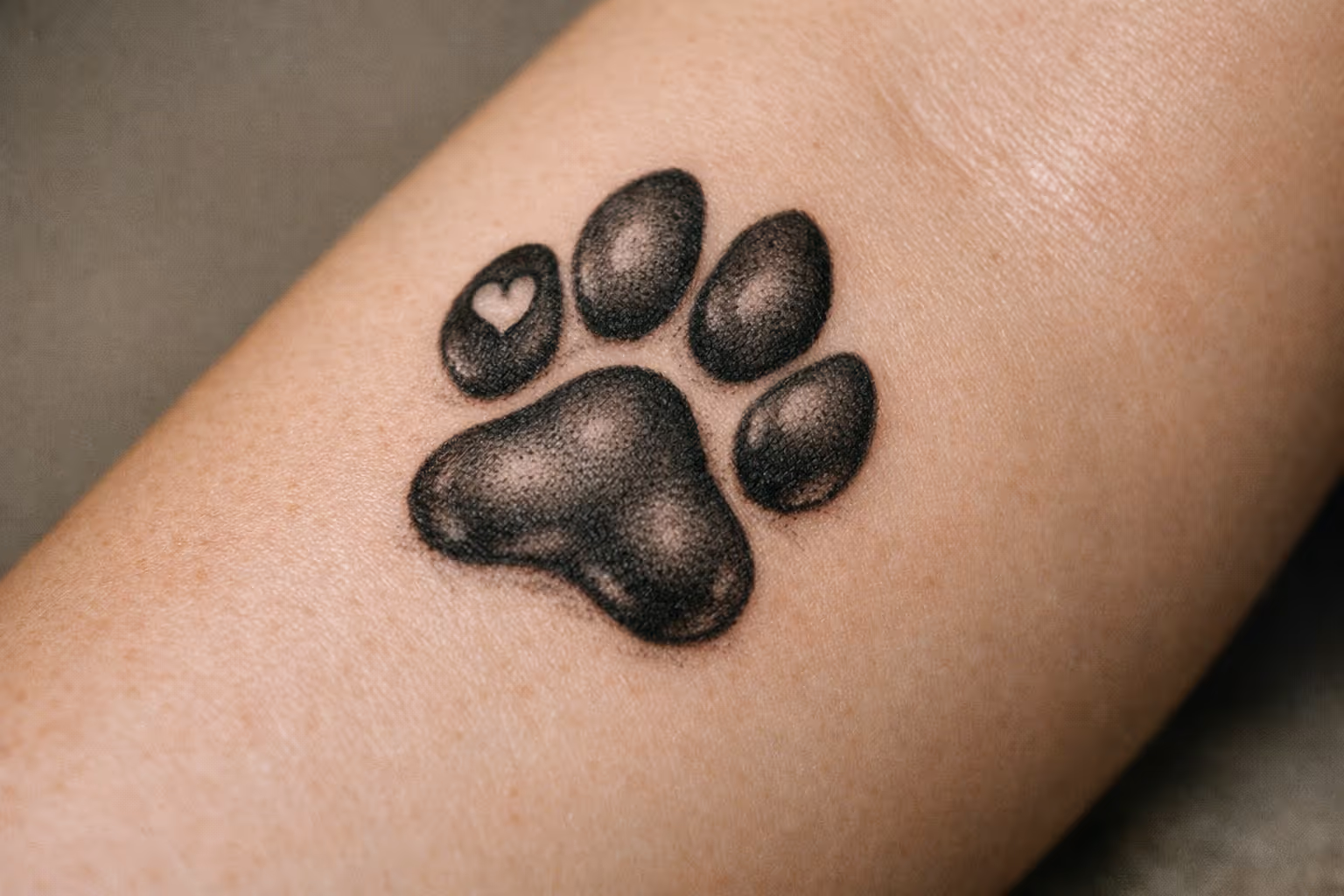
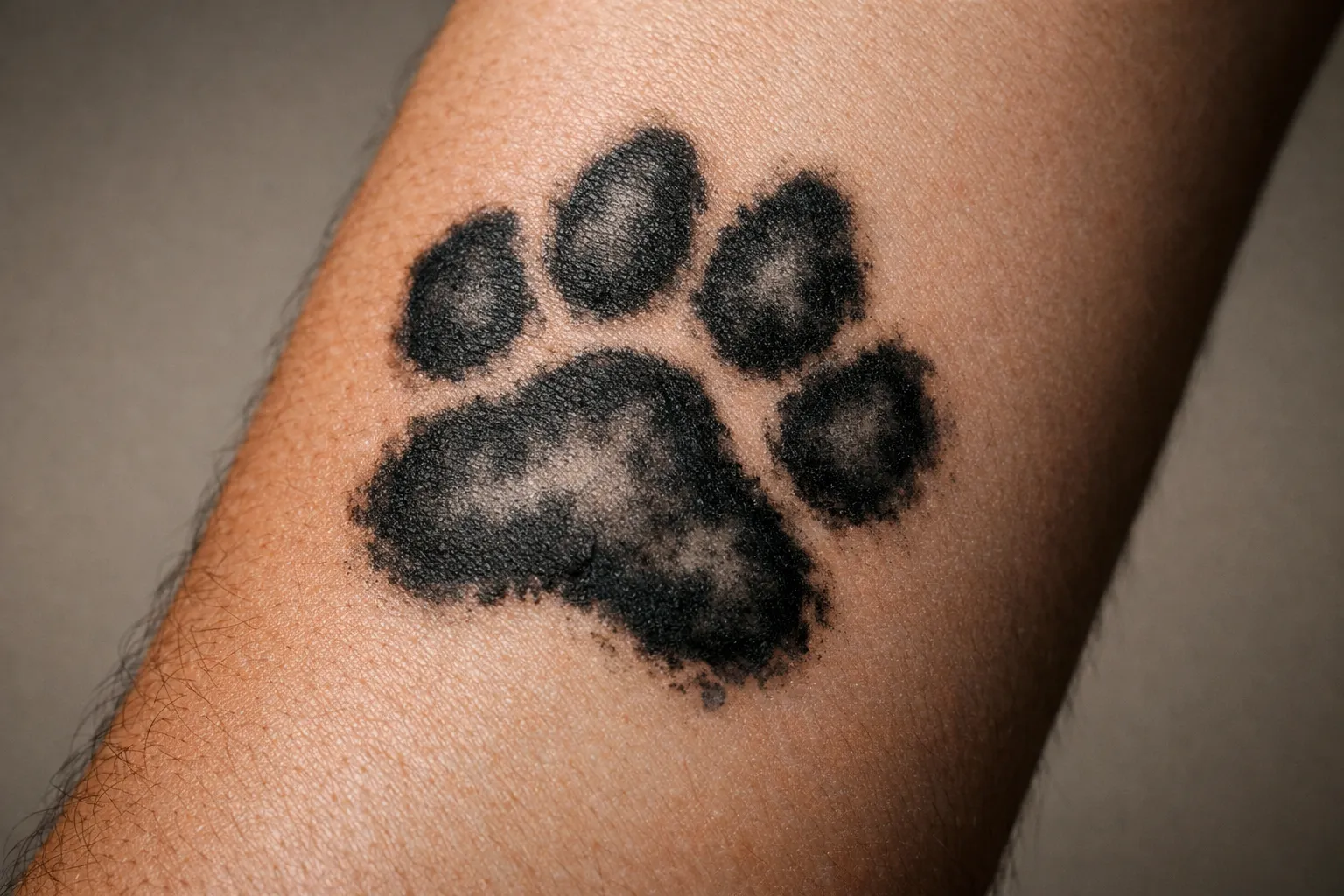
The big shift in paw print tattoos right now is authenticity: instead of a generic clip-art paw, people bring in an actual ink print of their own dog’s or cat’s foot and have it tattooed one-to-one. It’s the dominant 2026 trend, and it rewrites the sizing and placement rules - a real print carries detail a stylized one doesn’t. Here’s how to take a clean print off a live animal, the sizes that keep that detail, and what it costs.
What a Paw Print Tattoo Actually Means and How Designs Vary
The meaning isn’t fixed, and any artist who tells you it is hasn’t done enough of them. In practice, paw print tattoos cluster around three intents:
- Memorial for a specific pet. Usually paired with a name, a date, or both. The paw belongs to one animal, and the tattoo exists because that animal is gone or aging.
- Active companionship. The pet is still around. The tattoo marks the relationship rather than the loss.
- Symbolic “moving forward.” Lifestyle and tattoo-meaning sources describe paw prints as representing progress or moving past a difficult chapter (3). Less common, but it shows up - especially with clients who don’t currently have pets.
There’s also a fourth use that surprises people: some clients use paw prints to represent children or close family members, not animals (3). One paw per kid, lined up on the forearm. Worth knowing before you assume every paw tattoo is about a dog.
Culturally, the paw print as a tattoo motif is fairly modern and Western - it doesn’t carry the deep traditional symbolism of a Japanese koi or a Polynesian tribal element. That’s a feature, not a bug. It means you get to define what it means for you without overwriting someone else’s tradition.
✓ Pros
- Highly personal and customizable symbolism
- Modern motif with no fixed cultural constraints
- Works well as memorial or active companionship marker
✗ Cons
- Meaning can be ambiguous without context
- Some clients mistakenly assume fixed symbolism
- Potential for overused generic designs
Dog Paw Print: Designs That Hold Up
The dog paw print tattoo is the most-requested version in this category, and there’s a reason. Dogs leave a clear, readable footprint - one large central pad, four toe pads, sometimes a hint of claw. That structure tattoos well at most sizes.
Placement and size that ages well:
- Inner forearm, 2-3 inches (5-7.5 cm): the sweet spot for a realistic dog paw with light shading. Visible to you daily, holds detail for years.
- Outer wrist, 1-1.5 inches (2.5-4 cm): good for minimalist outlines. Avoid heavy shading at this size - it muddies over time.
- Shoulder blade or upper back, 3-5 inches (7.5-12.5 cm): room for a paw plus name, date, or a portrait alongside.
- Behind the ear or ankle, 0.5-1 inch (1.5-2.5 cm): subtle, but skip the texture detail at this scale.
A common pitfall with dog paws: artists who clean them up too aggressively. I’ve seen clients bring in a beautiful, lopsided, completely unique impression and walk out with something that looks like it came off a greeting card. If you brought your dog’s actual print and the stencil comes back looking like a logo, push back. The asymmetry is the point.
Designs that work without getting cluttered:
- Single paw with the dog’s name in fine-line script beneath
- Paw with a single date (adoption or memorial), no extra ornamentation
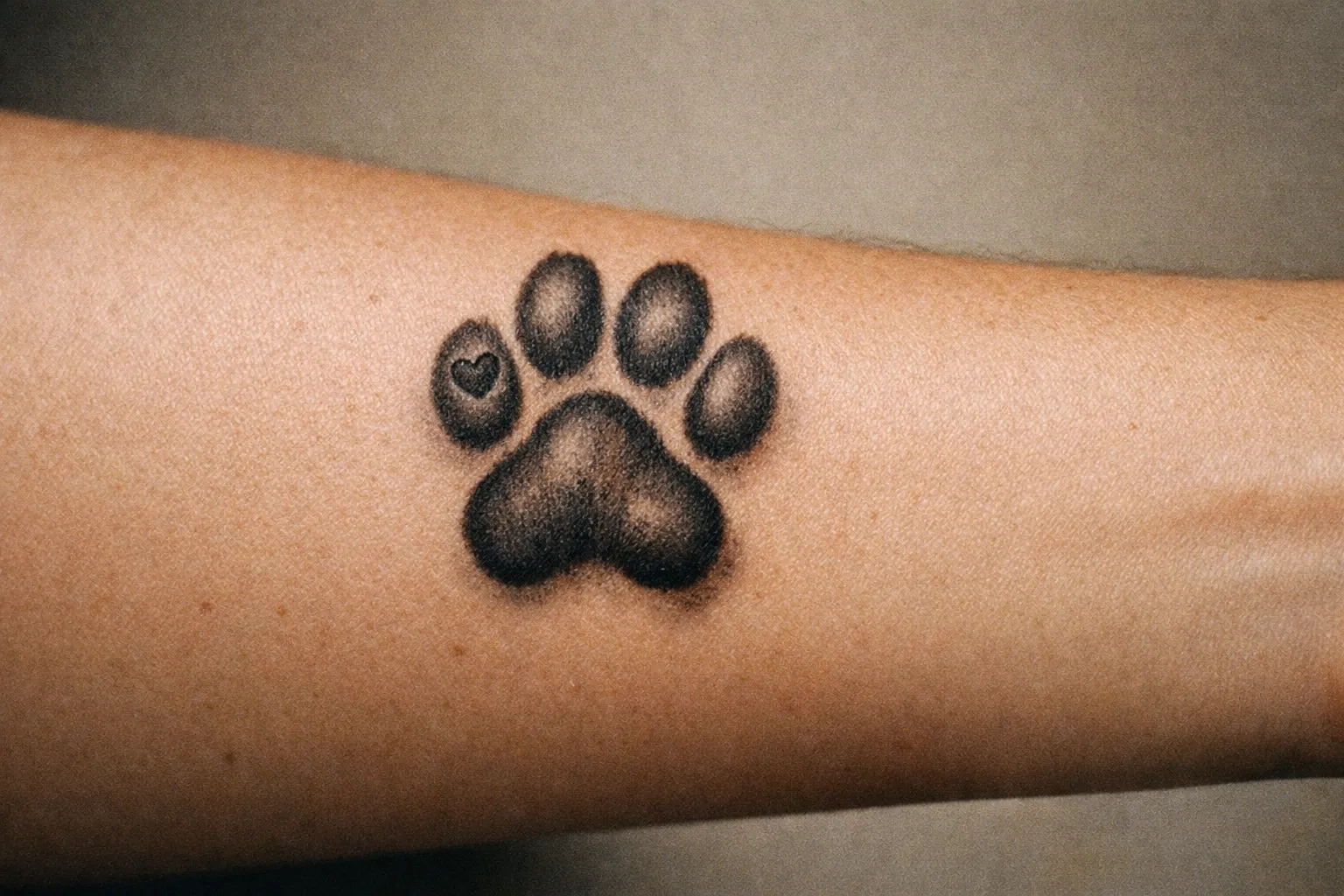
- Paw outline filled with a small inner motif - a tiny heart in one toe pad, nothing more
- Multiple dog paws in a row for households with several dogs, sized down so the row reads as a unit
Pain-wise, a dog paw on the inner forearm sits in the mild range. Ribs and sternum are noticeably worse than forearm or shoulder if you’re considering a larger placement.
Cat Paw and Print Combinations: Smaller, Softer, Different Rules
A cat paw is structurally different from a dog paw - smaller central pad, more delicate toe pads, often a slight curve to the print. The cat and paw print tattoo combination (a cat silhouette or portrait paired with the print) is one of the most-saved formats on Pinterest and Lemon8 right now, but it has its own pitfalls.
Size and placement:
- Behind the ear, 0.5-0.75 inch (1.5-2 cm): classic placement for a single cat paw. Stays subtle.
- Inner wrist or finger side, 0.75-1 inch (2-2.5 cm): popular but high-friction; expect a touch-up within 3-5 years (2).
- Inner bicep, 2-3 inches (5-7.5 cm): the spot for a cat silhouette plus paw print combination, with room for both elements to breathe.
The mistake I see most in cat and paw print tattoo designs: cramming the silhouette and the print too close together. Leave at least 0.2-0.3 inch (5-8 mm) of negative space between the two elements. As the tattoo ages and lines spread slightly, that gap is what keeps the design readable instead of merging into a blob.
For pairings, a moon, a small floral sprig, or a sliver of script work well. Avoid stacking three or more accent elements around a small cat paw - the paw stops being the subject.
Style Choices That Matter for Paw Print Tattoos
The style you pick affects how the tattoo ages more than the subject does. Here are the paw print tattoo designs I see most in 2026, with honest notes on each.
Authentic Paw Impression (the 2026 trend)
Using your pet’s actual paw print - cracks, texture, asymmetry and all - is the dominant trend this year (1). Instead of a stylized icon, the tattoo reproduces the real print. It reads like a fingerprint: nobody else’s dog or cat made that mark.
Technical hallmarks: irregular pad edges, visible texture inside the pads, slight ink density variation. The pitfall is artists who “clean it up” until it looks generic. If accuracy matters to you, say so out loud during the consult.
Minimalist Outline
Single-needle or 3RL liner, no shading, no fill. Sits well at 0.5-1.5 inches. Cheapest option, fastest session, easiest to age gracefully - provided you don’t go smaller than 0.75 inch with any internal detail (2).
Watercolor Paw Print
The 2026 version of watercolor has shifted. Heavy black outlines with color splashes are out; color-only or sketch-edge designs are in, often in pastel or galaxy palettes (1). Two technical hallmarks: soft gradient transitions and intentional color “drips” that look unplanned. Pitfall: watercolor without a base structure fades faster than lined work - budget for a touch-up at the 5-year mark.
Script-Integrated Designs
The pet’s name forms the outline of the paw pads, or the date wraps the paw in calligraphy (1). Looks cohesive when done right. Looks like a typography accident when done wrong - vet the artist’s healed-script portfolio specifically, not just their paw work.
White Ink
Subtle, almost-secret. Sits beautifully when fresh, but white ink on most skin tones yellows or fades to near-invisible within 2-3 years. Go in knowing that - it’s a deliberately impermanent-looking choice, not a forever-crisp one.
How to Turn Your Dog’s Paw Print Into a Tattoo
This is the question I get most often from clients planning this design, and most inspiration posts skip the actual steps. Here’s the process I walk people through.
How to Turn Your Dog's Paw Print Into a Tattoo
About 1 hourA step-by-step guide to capturing and converting your pet's paw print into a lasting tattoo stencil.
- 1
Buy a non-toxic, inkless paw print kit
Purchase a reactive paper kit ($15-$25) designed to capture paw prints safely without ink touching your pet.
- 2
Take multiple prints
Get 3 to 5 prints including clean, messy, and full toe-pad pressure versions to provide options for the artist.
- 3
Photograph the prints
Use flat, even light to photograph prints at 1080p or higher, plus a photo of the pet's paw for texture reference.
- 4
Bring prints and photos to the consult
Provide originals and photos along with a clear brief about your accuracy and style preferences.
- 5
Discuss size and stencil
Confirm minimum size (around 1 inch) for detail survival and approve the stencil before tattooing.
- 6
Decide on additions before the session
Finalize elements like name, date, or hearts during consult to avoid crowded designs mid-session.
Yes, you can absolutely get a tattoo of your dog’s paw print. The process above works for cats too, though you may need to be more patient - cats are considerably less cooperative with paw kits than most dogs.
Memorial Tattoos Featuring Paw Prints and Rainbow Bridge Designs
Memorial paw print tattoos are the highest-volume reason people walk into my chair for this design. The composition has evolved past “paw plus date” in 2026.
What I’m seeing now:
- Paw fading into birds or butterflies - a direct visual reference to the Rainbow Bridge poem, where the paw at the bottom dissolves into flight at the top (1)(4)
- Paw with clouds and a small color gradient - pastel sunset palettes are common, sized 3-4 inches on the chest, ribs, or shoulder blade
- Two dates flanking the paw - adoption and passing, or birth and passing - in a small serif font
Placement for memorial pieces:
- Over the heart (chest), 2-4 inches (5-10 cm): the obvious symbolic choice; sternum hurts more than chest pad, so position matters. Many clients pair the paw with a small heart tattoo or the pet’s name
- Inner forearm: for clients who want to see it daily as part of grief processing
- Ribs, 4-6 inches (10-15 cm): room for a larger composition with portrait elements; pain is significantly higher here than forearm or shoulder
One honest note: don’t book a memorial tattoo in the first two weeks after loss. The design choices you’ll make in acute grief are different from the ones you’ll want to live with for 30 years. Take a beat.
Ideas for Paw Print Designs Beyond the Basics
A few paw print tattoo ideas that hold up better than the average Pinterest carousel suggests:
- Single paw with a tiny embedded symbol in one toe pad. A blueberry for the dog who stole them off the counter. A single fish bone for the cat who only ate one brand. One personal detail, hidden in plain sight (2).
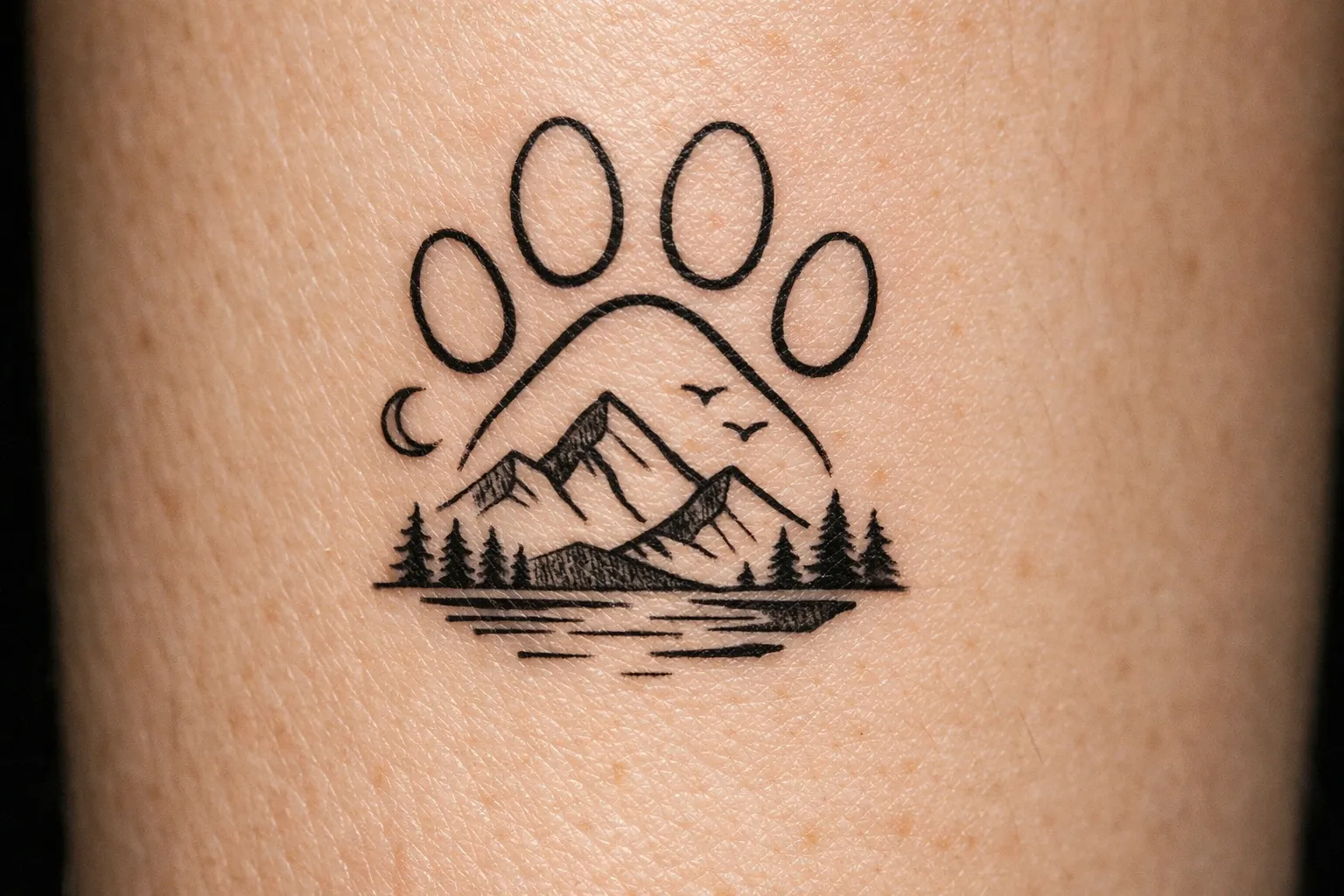
- Paw print as part of a larger landscape. The paw sits at the bottom of a small mountain scene, suggesting the trails you walked together. Works at 3-4 inches on the upper arm.
- Matching paws across family members. Same artist, same stencil, different placements. Cleaner than matching full portraits.
- Paw with the pet’s collar tag silhouette. Subtle, recognizable to you, abstract to strangers.
- Negative-space paw inside a larger shape - a heart, a circle, a moon - where the paw is implied by what’s not tattooed.
Skip the paw with infinity symbol unless you genuinely love infinity symbols. It’s the most over-requested combination and reads as dated already.
When Small Paw Prints Work and When They Don’t
Small paw print tattoos are popular for a reason - they fit anywhere, cost less, and don’t commit you to a large, high-contrast piece. But size has consequences.
Small works at:
- 0.75-1.5 inches for a clean outline with no internal detail
- Wrist, ankle, behind the ear, finger side, inner bicep
- First tattoos where you want to test how you feel about ink
Small fails at:
- Under 0.5 inch with any texture or shading - it blurs within 2-3 years (2)
- Tiny script underneath a tiny paw - script letters under about ½ inch (12-13 mm) tall lose definition fast
- Finger placements with detail - fingers fade and need touch-ups regularly
If you want both small and accurate-to-your-pet’s-actual-print, push to at least 1 inch (2.5 cm). Below that, you’re getting a generic paw shape regardless of what the artist started with.
Cost, Time, and What to Budget
US studio pricing in 2026, mid-tier shops:
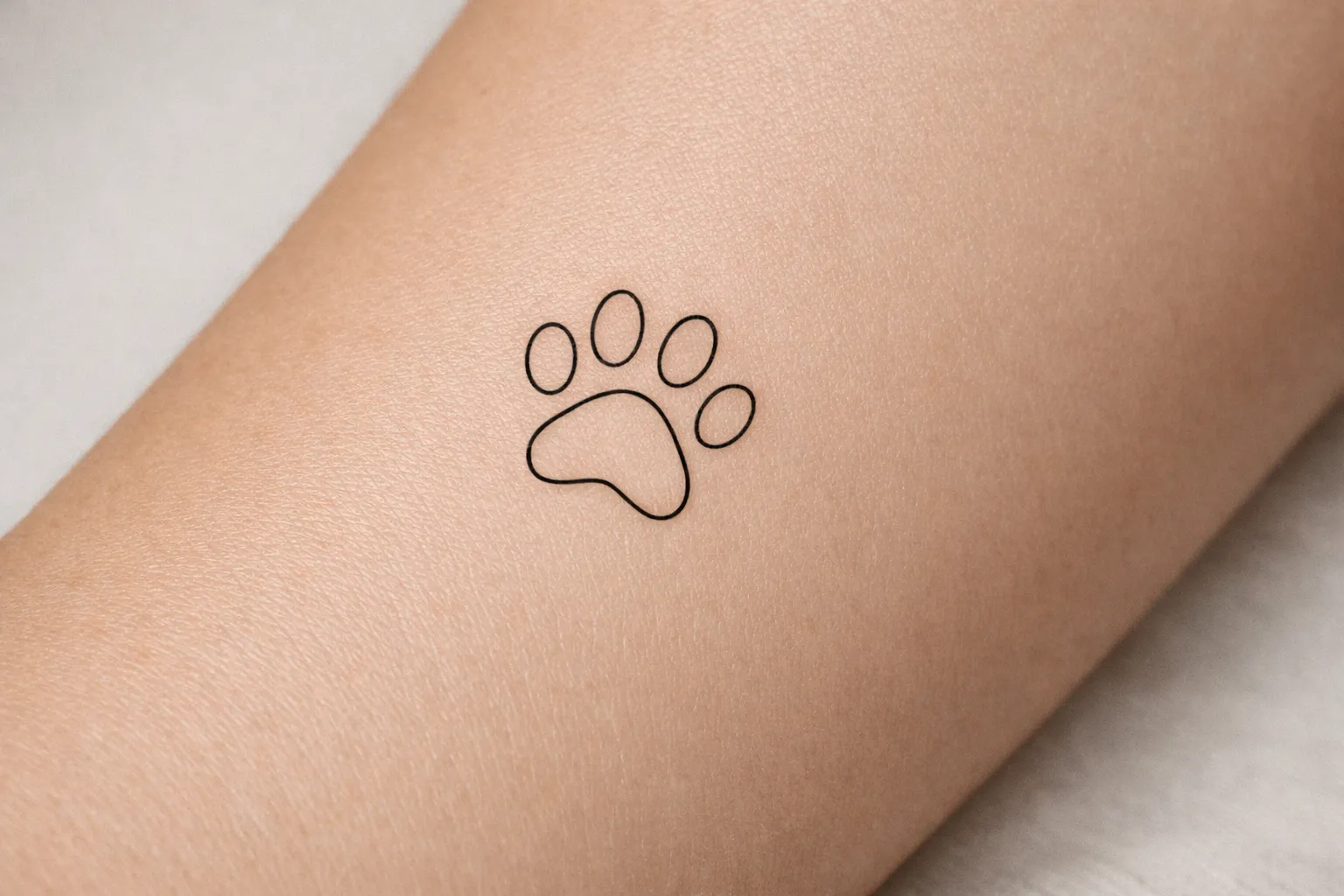
- Tiny outline paw (shop minimum): $80-$150
- Small custom realistic paw with light shading or a name: $150-$300
- Watercolor paw or paw plus date composition (2-3 inches): $250-$500
- Larger memorial piece with portrait, landscape, or heavy color (3-5 inches): $300-$700+
Major-city studios (NYC, LA, Chicago) trend toward the upper end and often have shop minimums of $150-$200 regardless of size.
Session time:
- Tiny outline: 15-30 minutes of needle time
- Small realistic paw with shading: 45-90 minutes
- Larger or watercolor composition: 1.5-3 hours, sometimes split across two sessions for color
Touch-ups: budget $50-$150 for a touch-up at the 3-5 year mark, especially for fine-line work or anything on fingers, wrists, or ankles. Many artists offer one free touch-up within 6 months of the original session - ask.
Healing and Aftercare
Standard tattoo healing applies to paw prints - there’s nothing special about the shape that changes the timeline.
- Day 1-3: keep the wrap on as long as your artist instructed (some use second-skin for 3-5 days). Wash 2-3 times daily with fragrance-free soap, pat dry, apply a thin layer of tattoo balm or healing ointment. Too much product is worse than too little - it suffocates the skin and pulls ink.
- Week 1: light scabbing and flaking is normal. Do not pick. Switch from ointment to a fragrance-free, unscented moisturizer around day 4.
- Week 2-4: surface healing completes. The tattoo may look slightly cloudy or “milky” - that’s a deeper layer of skin still settling. Keep moisturizing.
- Up to 3 months: complete settling. Final color and crispness are not what you see at week 2.
Sun is the long-term enemy. Once healed, sun-protective clothing or daily SPF over the tattoo is the single biggest factor in how it looks at year 10. Fine-line paws on exposed forearms fade faster than the same tattoo on a covered shoulder.
Common Mistakes to Avoid with Paw Prints
- Using craft ink or paint on your pet’s paw. Use an inkless, non-toxic kit. Always.
- Going under 0.75 inch with internal texture. It will blur. Go bigger or go simpler.
- Picking a generic paw silhouette when you wanted your pet’s actual print. This is the most common regret I hear about in 2026 - clients realize after the fact that the real print was always an option.
- Overloading with extra symbols. One personal detail beats four generic ones. A paw with three hearts, a name, a date, a star, and a quote reads as clutter.
- Not specifying “clean vs accurate” at consult. Different artists interpret “your dog’s paw print” very differently. Use words (2).
- Skipping aftercare or over-moisturizing. Both lead to ink loss and patchy healing.
Frequently Asked Questions
- Can I use regular ink or paint to capture my pet's paw print?
- No. Using craft ink, printer ink, or paint can irritate your pet's skin and pose ingestion risks. Always use a non-toxic, inkless paw print kit designed for this purpose.
- What should I do if my tattoo stencil doesn't look like my pet's actual paw print?
- Speak up during the consult and request a revision. The stencil should reflect your pet's unique print, including asymmetry and texture, not a generic shape.
- How often will I need touch-ups on a paw print tattoo?
- Touch-ups are common within 3-5 years for fine-line or small detail tattoos, especially on high-friction areas like wrists, ankles, and fingers.
- Is white ink a good choice for a paw print tattoo?
- White ink fades or yellows within 2-3 years on most skin tones. It's a deliberately impermanent look, so choose it only if you understand this tradeoff.
- Why should I wait at least two weeks after a pet's passing before getting a memorial tattoo?
- Acute grief can affect your design choices. Waiting allows you to make decisions you'll be comfortable living with for decades.
- Are small paw print tattoos suitable for finger placement?
- Finger tattoos fade faster and require regular touch-ups. Small paw prints with detail often lose clarity quickly on fingers.
- Can paw print tattoos represent family members instead of pets?
- Yes, some clients use paw prints symbolically for children or close family members, often lining up one paw per child on the forearm.
The Decision
Three decisions, made clearly, and this tattoo works: whose paw (a specific pet’s actual print or a stylized version), what size (at least 1 inch if you want real texture to survive), and what placement (somewhere you actually want to see it, with realistic expectations about fading on high-friction areas).
Bring the inkless print, bring the photos, bring a one-line brief about what matters most to you, and approve the stencil before the needle starts. The rest is aftercare and sunscreen.