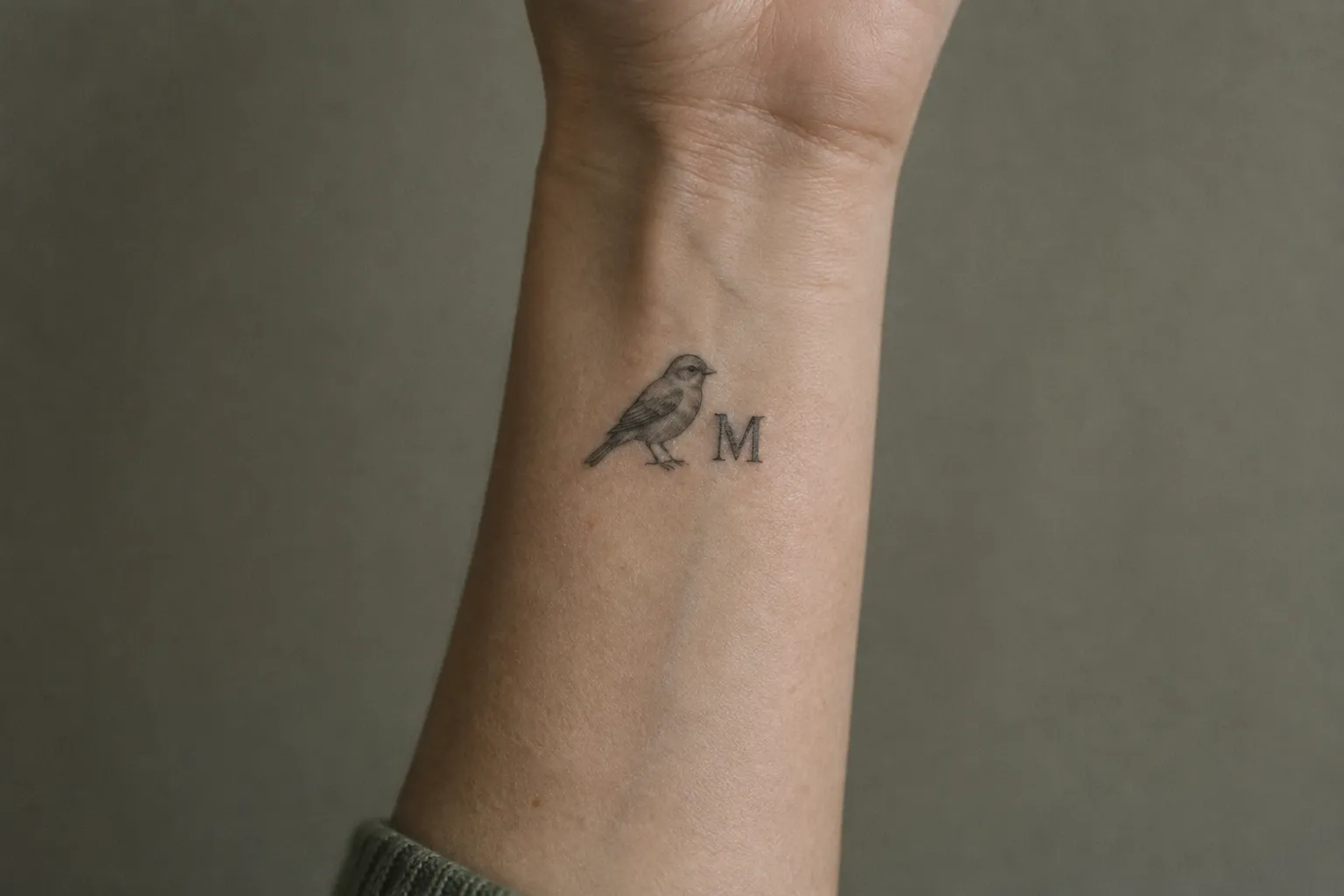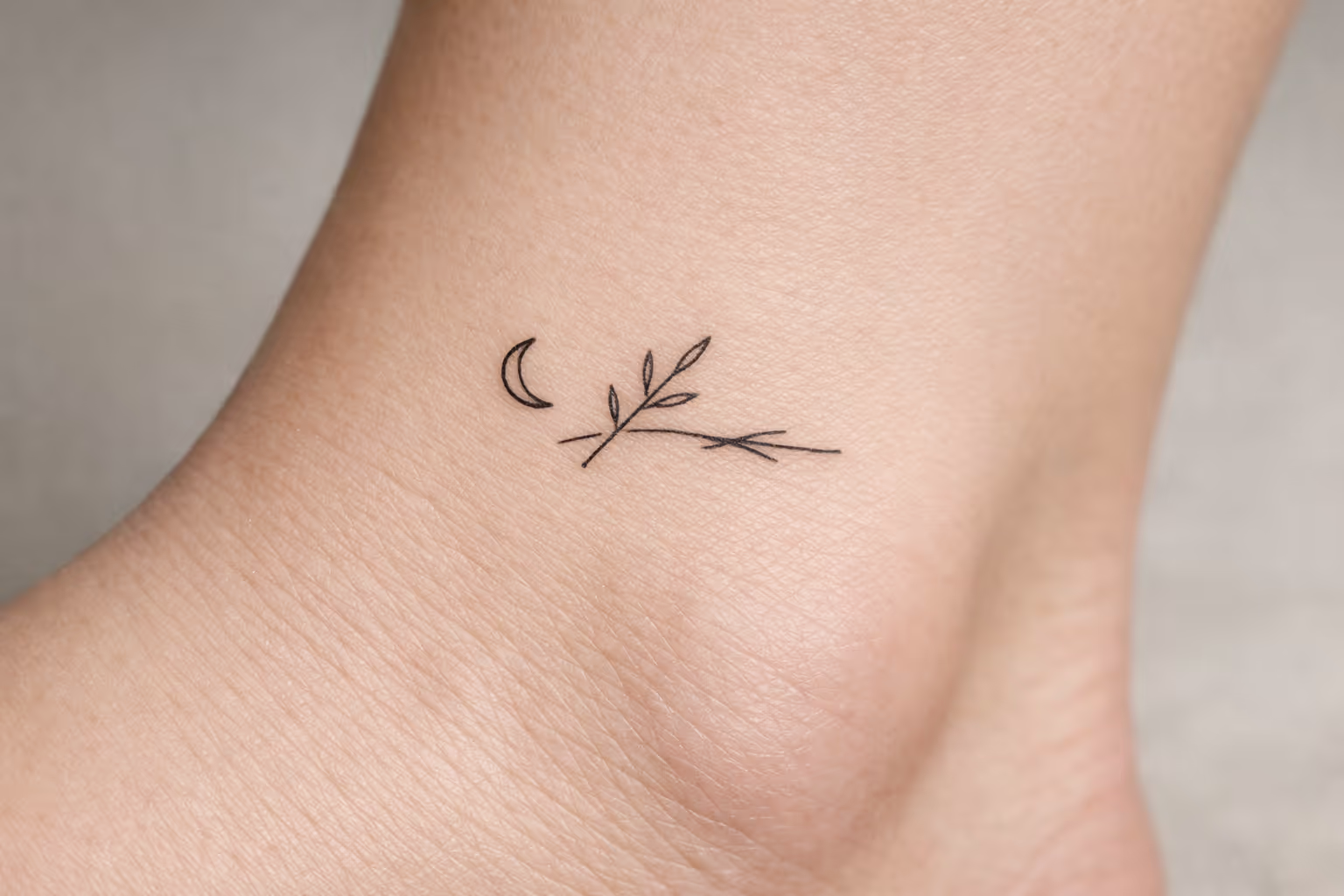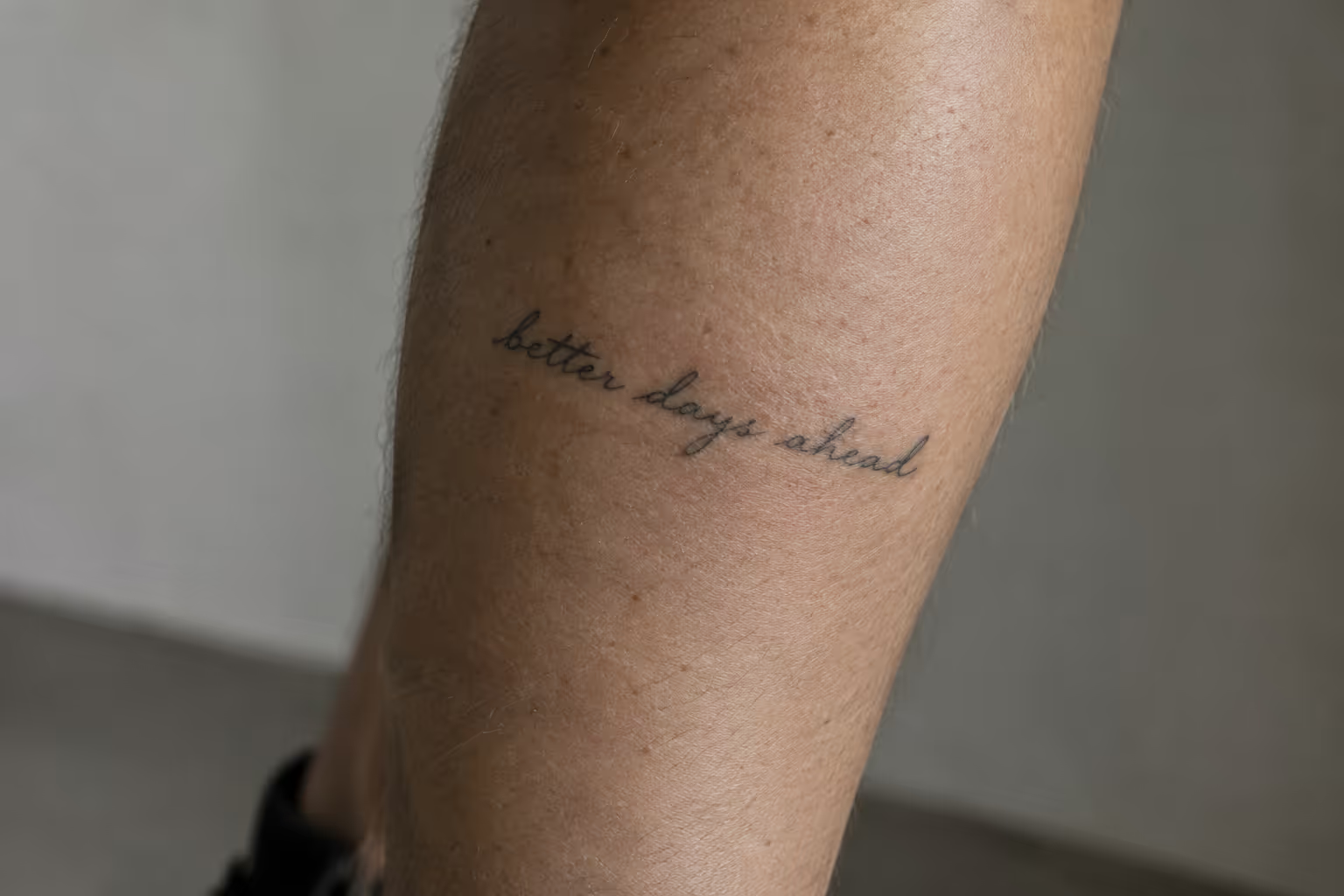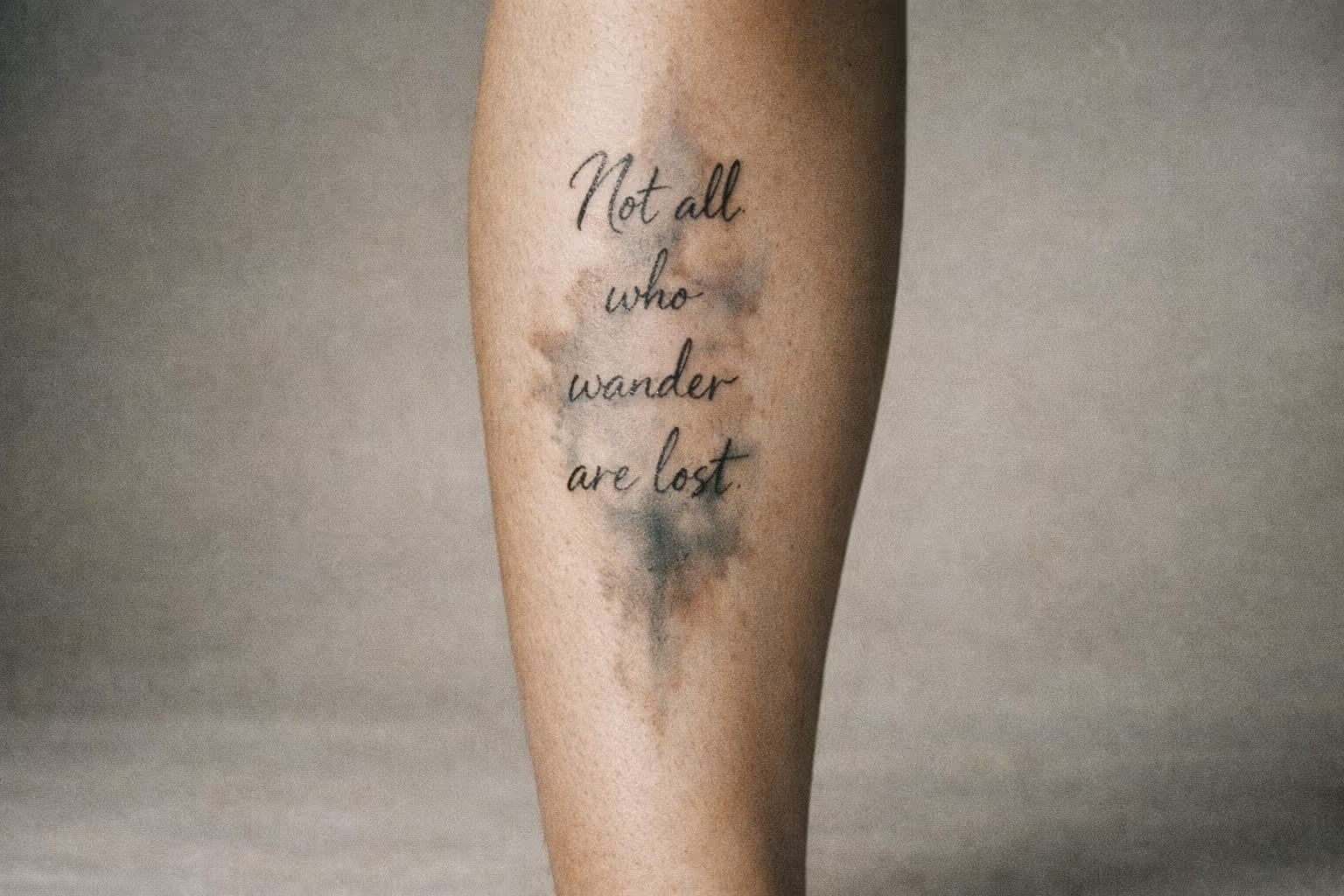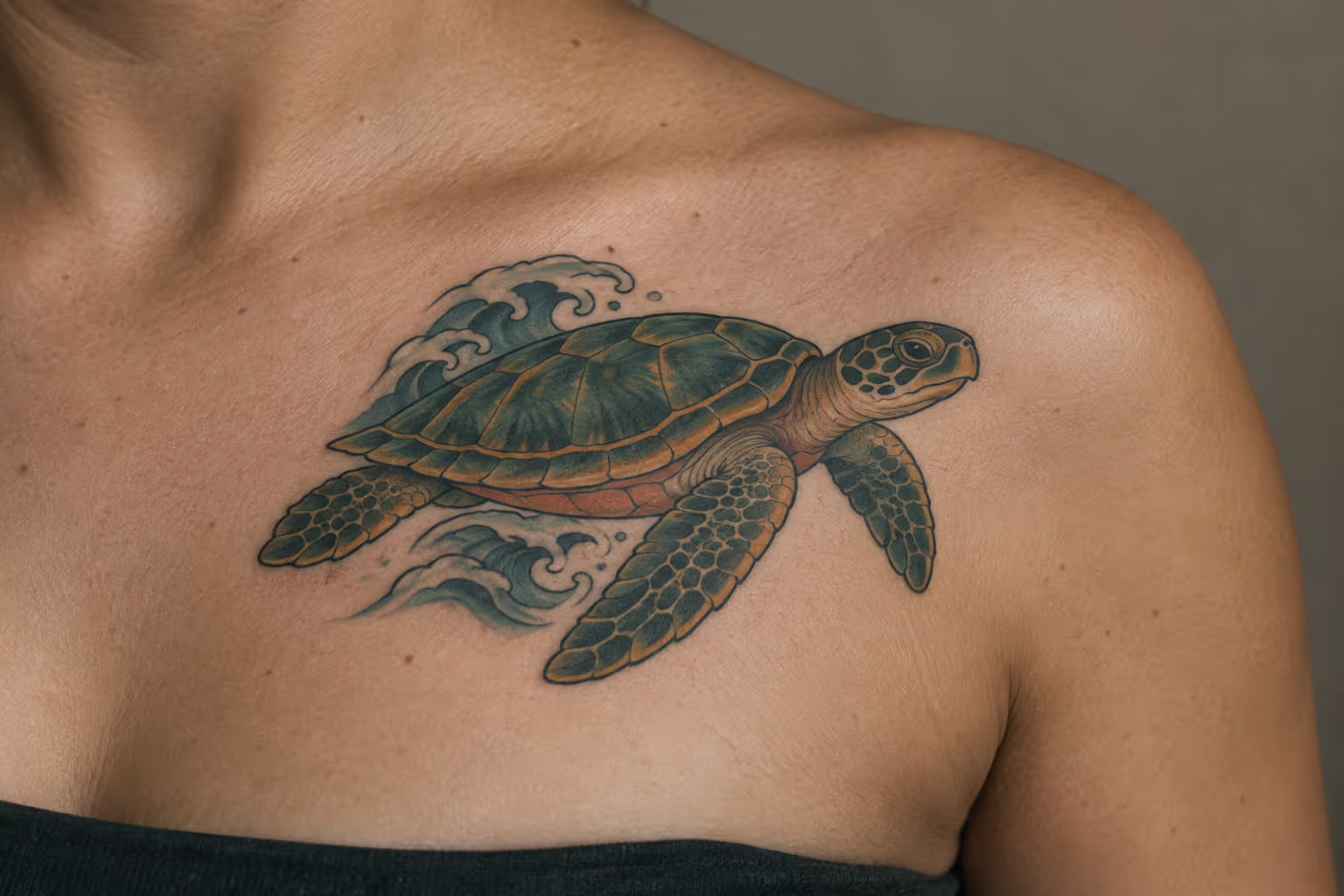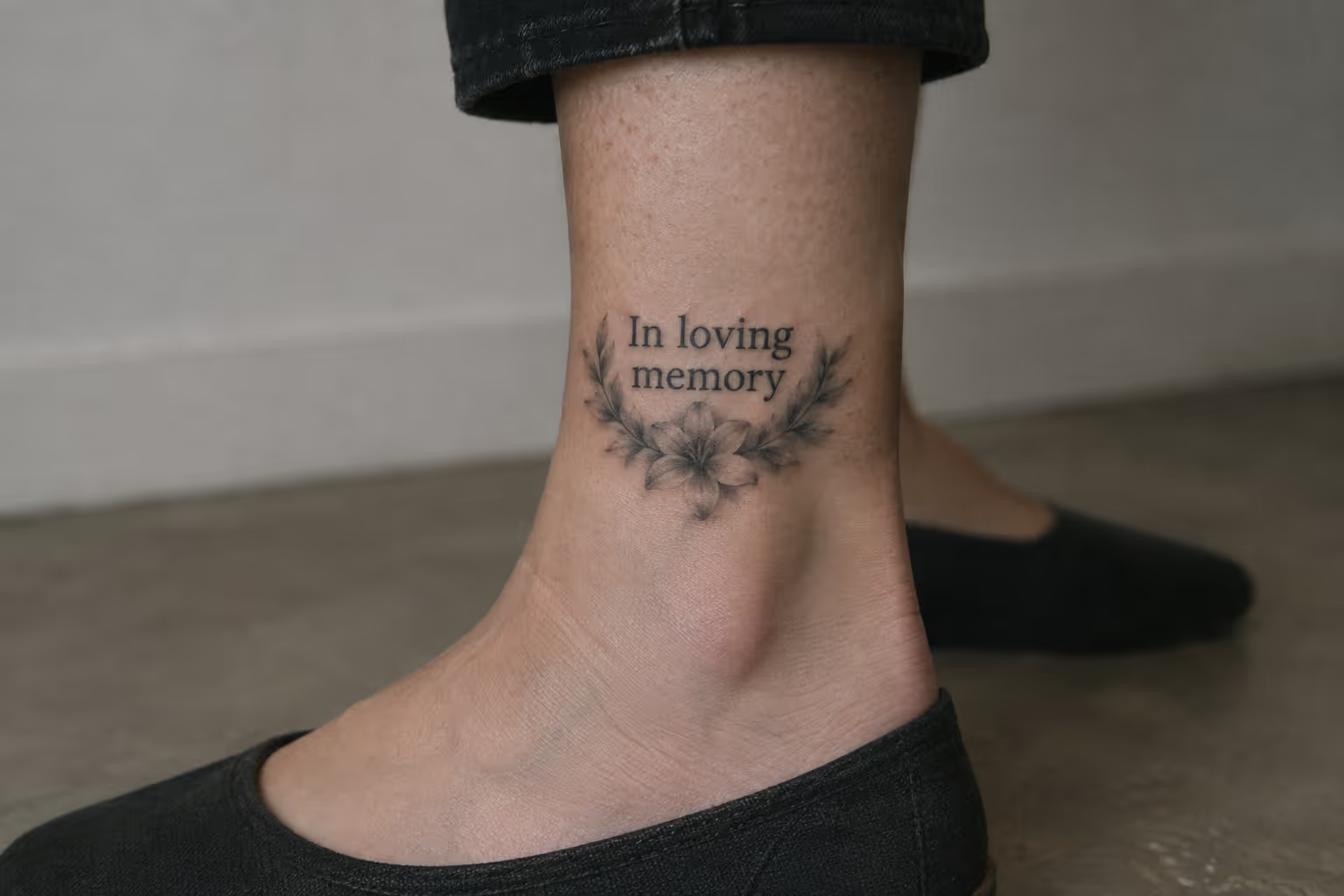
A memorial tattoo is any tattoo made to honor someone who has died, and the range is wide: a 1 in (2.5 cm) initial behind the ear, a line of a parent’s handwriting on the inner forearm, or a 6 in (15 cm) black-and-grey portrait on the upper arm. In a study that interviewed six people who had one, researchers identified five roles the tattoo played: permanence, a way to manage grief, communication, continuing bonds, and transformation of self (17). The route you pick, where it sits, and what ink goes into your skin matter more than which symbol is trending.
✓ Pros
- A specific, personal detail can make the tribute meaningful without relying on a familiar symbol.
- A visible design can keep a chosen memory present in everyday life.
✗ Cons
- A rushed choice can feel mismatched later, and a tattoo cannot be undone like a sketch.
- Poorly sourced ink or unsafe handling can create health risks separate from the design itself.
The trade-off is plain. Some people report that a tribute they see every day keeps a bond with the person going. The same permanence cuts the other way when a design is chosen in the first raw weeks and no longer feels right a year later (7). There is also a physical risk that has nothing to do with the design. According to the FDA, contaminated inks have caused infections even when the tattoo artist followed hygienic procedures (3). Plan the design slowly, and vet the ink as carefully as you vet the artist.
What This Kind of Tribute Tattoo Means and What It’s Called
A tattoo honoring someone who died is usually called a memorial tattoo, though you’ll also hear tribute tattoo, remembrance tattoo, in memoriam piece, or RIP tattoo. It is a theme, not a style. One Los Angeles studio describes memorial work as something that can be rendered in fine line script, black-and-grey realism, American traditional, Japanese, ornamental, or blackwork (6). The style carries the reference. The substance is the relationship.
The grief research is encouraging but small. A systematic review included 11 studies, 10 qualitative and 1 mixed-methods, and all of them described memorial tattoos being used as a therapeutic tool in grieving (19). Another study interviewed 41 people and described the tattoos as an expression of the bond with the person who died, and as a way to talk with others about it (18). These are interview samples, not population statistics. They show that some people use a tattoo to process a loss. They do not show that a tattoo replaces other support or will work that way for you.
Memorial Tattoo Ideas: Portraits, Names, Symbols, and More
The strongest memorial tattoo ideas start from a specific memory, such as a face, a signature, a date, or an object, rather than from whatever motif is popular this year. Most designs fall into six categories: portraits, names and dates, symbols, handwriting, birds or spirit animals, and quotes. Many pieces combine two or three, like a portrait with a name and date (9).
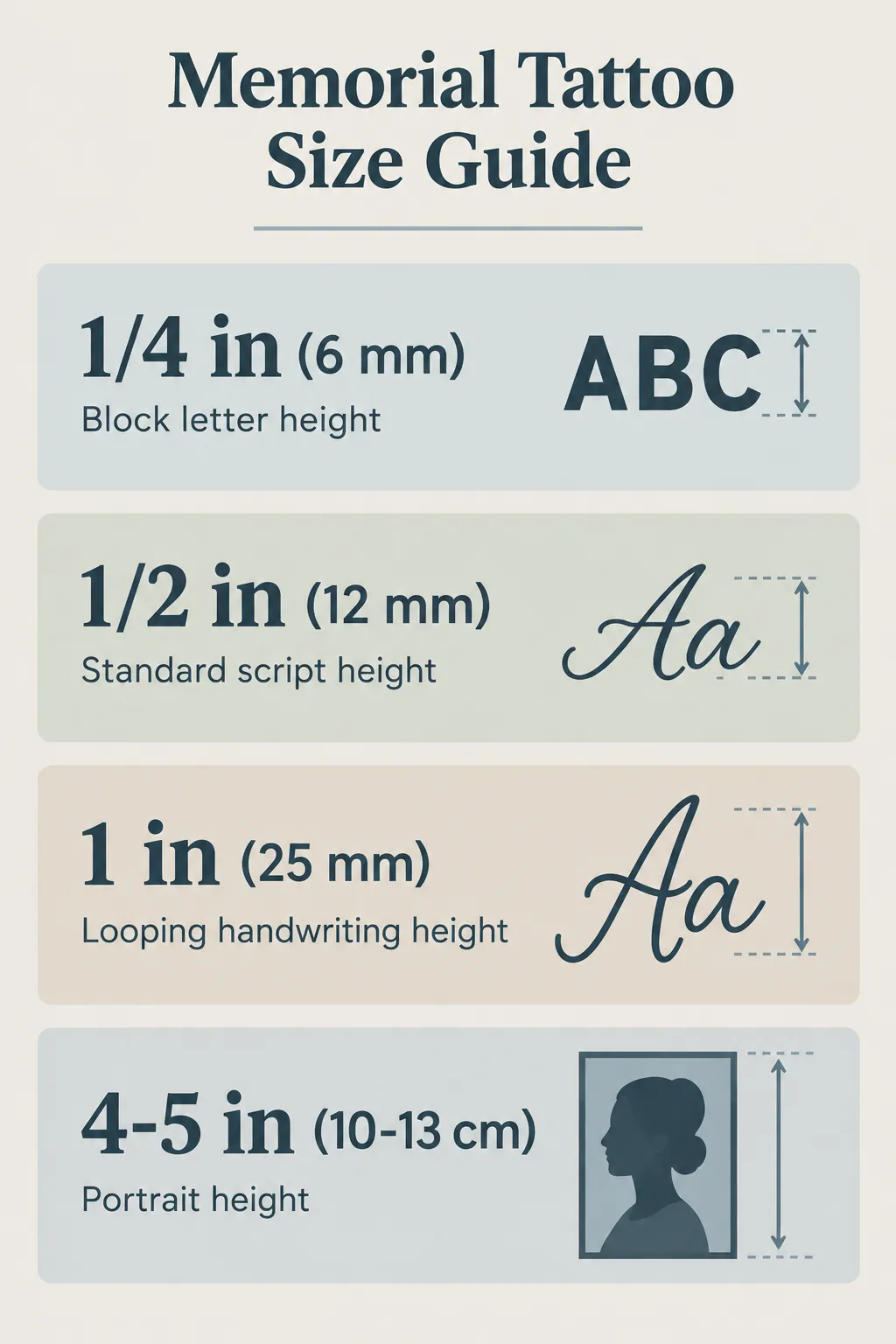 The article recommends at least 1/4 in (6 mm) for block lettering, 1/2 in (12 mm) for standard script, about 1 in (25 mm) for looping handwriting, and 4-5 in (10-13 cm) of height for a portrait.
Portrait tattoos: reference photos and artist fit
Portraits are the most direct memorial and the highest-stakes one. A mediocre likeness becomes a permanent source of frustration (9). Most memorial portrait tattoos are done in black-and-grey realism (5). Its two technical hallmarks are soft gradients built from diluted black instead of hard outlines, and contrast created by deep blacks against open skin. The common pitfall is muddy mid-tones: everything sits at the same grey, the face flattens, and within a few years the likeness goes soft.
Bring several well-lit, in-focus reference photos and tell the artist which features matter most, such as the crooked smile or the laugh lines (5)(9). Hire a realism specialist rather than a generalist (9), and look at healed portrait work in their portfolio, not only fresh photos, before you book (7). Size matters here: give the face at least 4-5 in (10-13 cm) of height, because a small face can lose its subtle features as the ink settles (8). One Los Angeles studio’s sizing table puts black-and-grey memorial portraits at 10-20 cm on the upper arm, outer thigh, or chest, and lists the wrist among the spots to avoid (6).
Names, dates, and handwriting
Names and life dates are a classic route, and they are also the easiest to get wrong. Check every letter, digit, and punctuation mark before the stencil goes on (8). For size, use letter height, meaning the full height of the letter. Block letters and numerals need at least 1/4 in (6 mm). Standard script needs at least 1/2 in (12 mm).
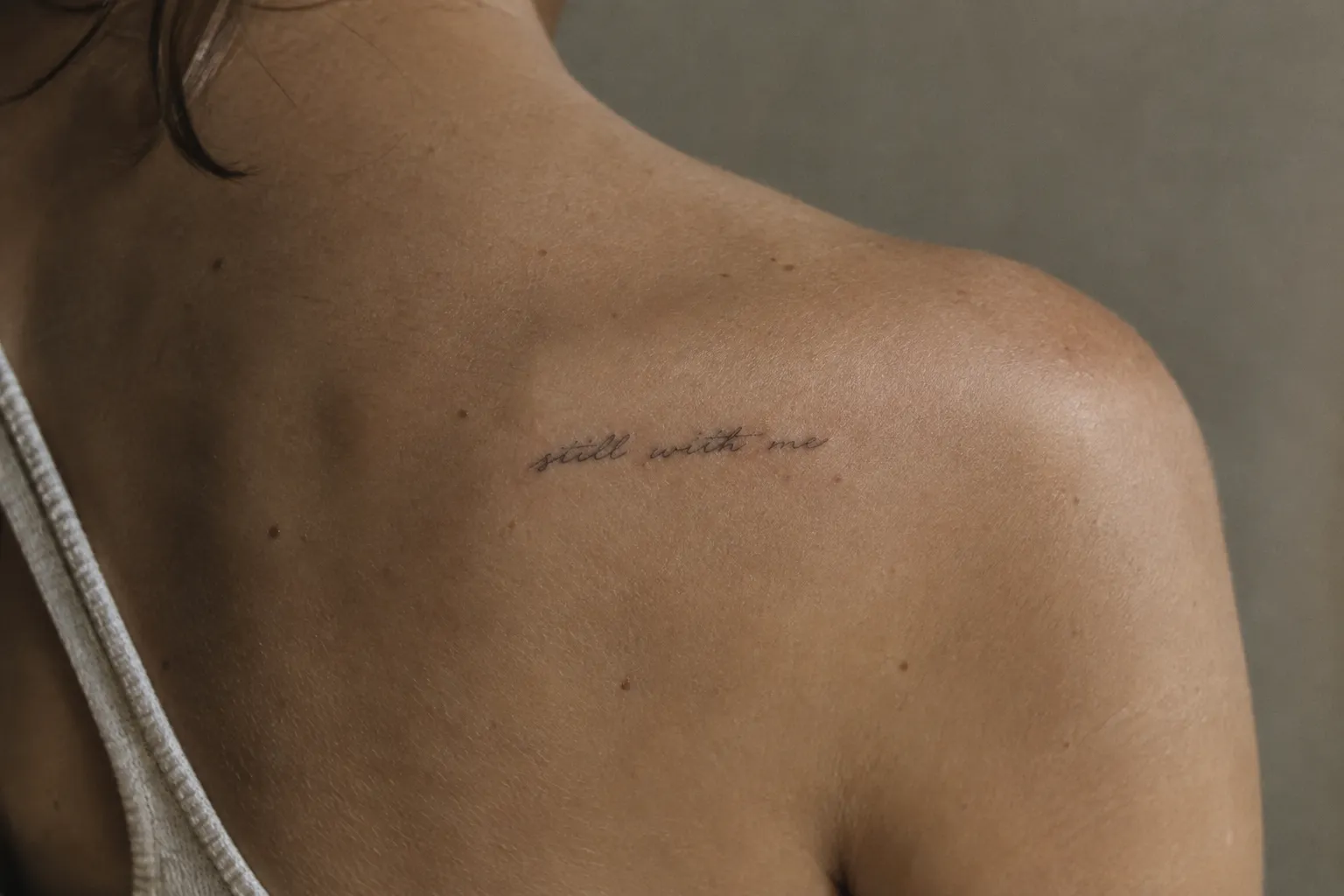
Handwriting preserves something no font can. Bring the original card or letter, or a high-resolution scan (6)(7). The signature or line is then cleaned up and tattooed at its actual size or slightly larger (7). Ask what minimum size will stay readable instead of assuming a tiny copy will hold, because very fine lines spread and soften over the years (7). Looping, fine handwriting usually needs a letter height of about 1 in (25 mm).
Symbols, flowers, birds, and butterflies
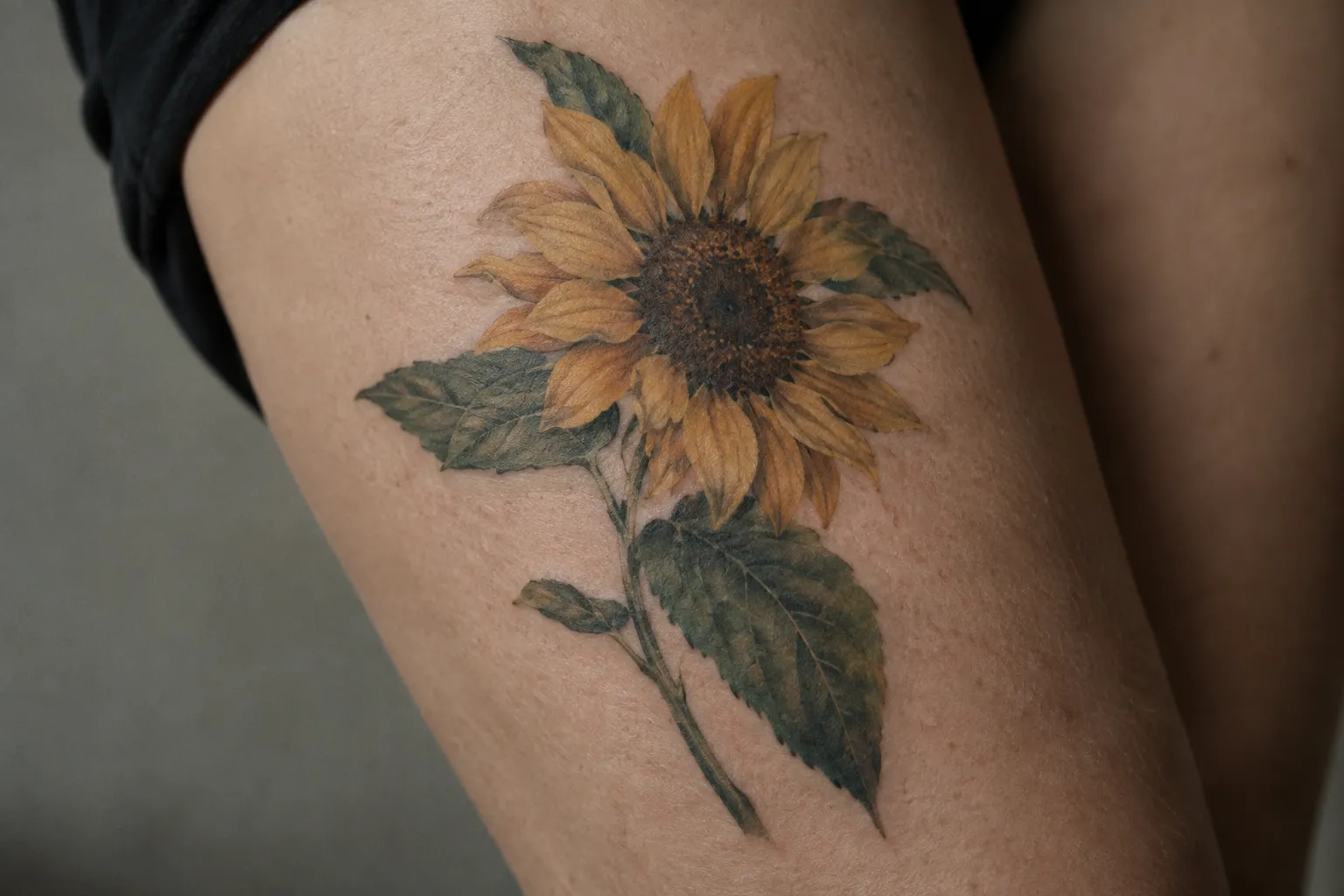
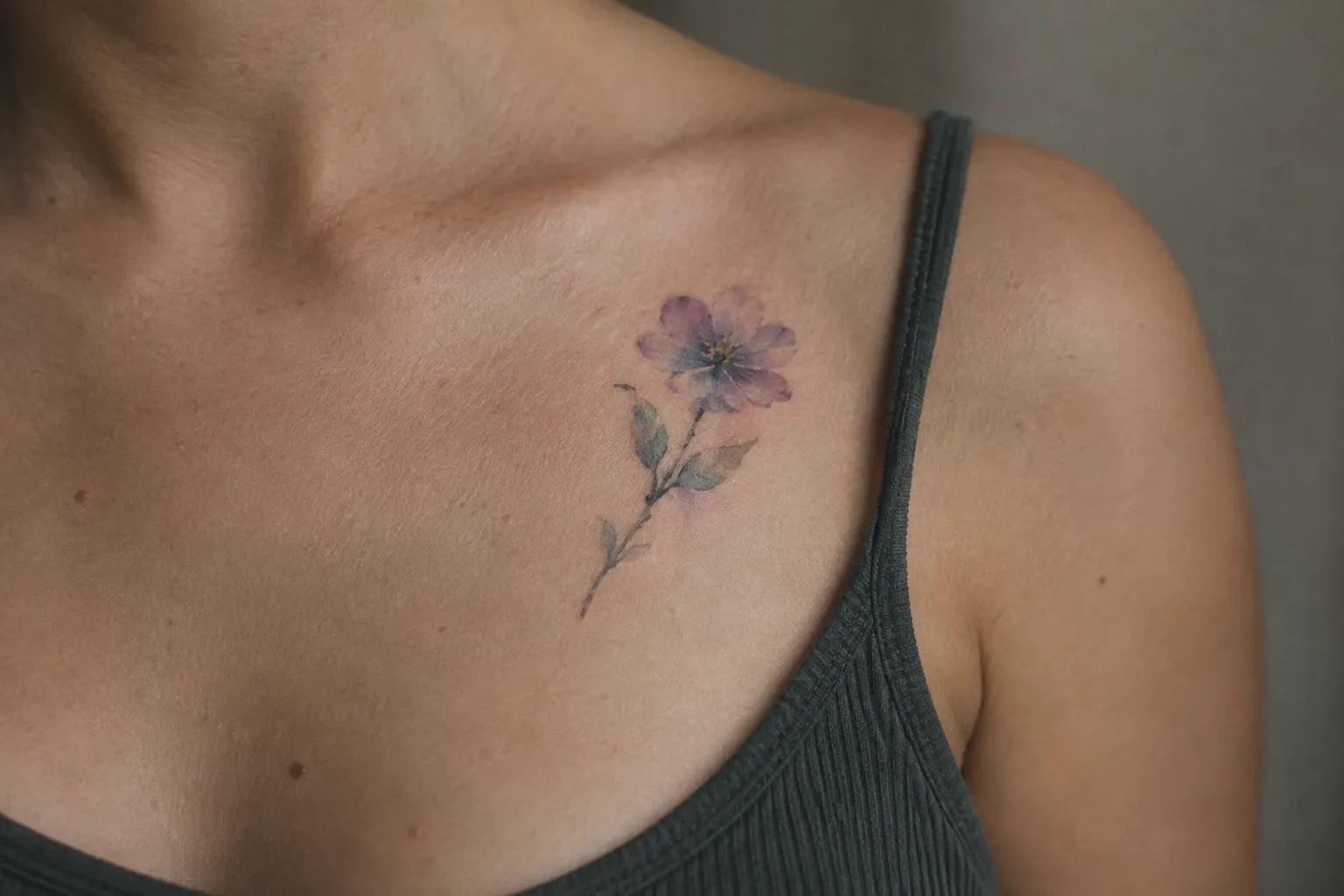
Symbolic objects work when they belonged to or represented the person, such as a specific flower, an instrument, or a favorite phrase in their handwriting (5). Clocks can mark a date and time, and compasses can stand for guidance someone left behind (5). Birds and wings are a common motif for loss, suggesting the person “flying on” (5). Butterflies, hummingbirds, and doves also show up often as symbols of presence (9).
Butterfly symbolism has several roots. In ancient Greek, psyche meant both soul and butterfly. In Japanese folklore, butterflies have long been linked with the souls of the living and the dead. In modern Western tattooing, the meaning has drifted toward a general “transformation” motif, so tie your butterfly to something specific, like a species from their garden.
Short quotes and meaningful lines
A quote can be their words, a lyric they loved, or words about them (9). Keep it to a few words if it goes somewhere narrow like the collarbone.
Tributes for a Mother or Father You’ve Lost
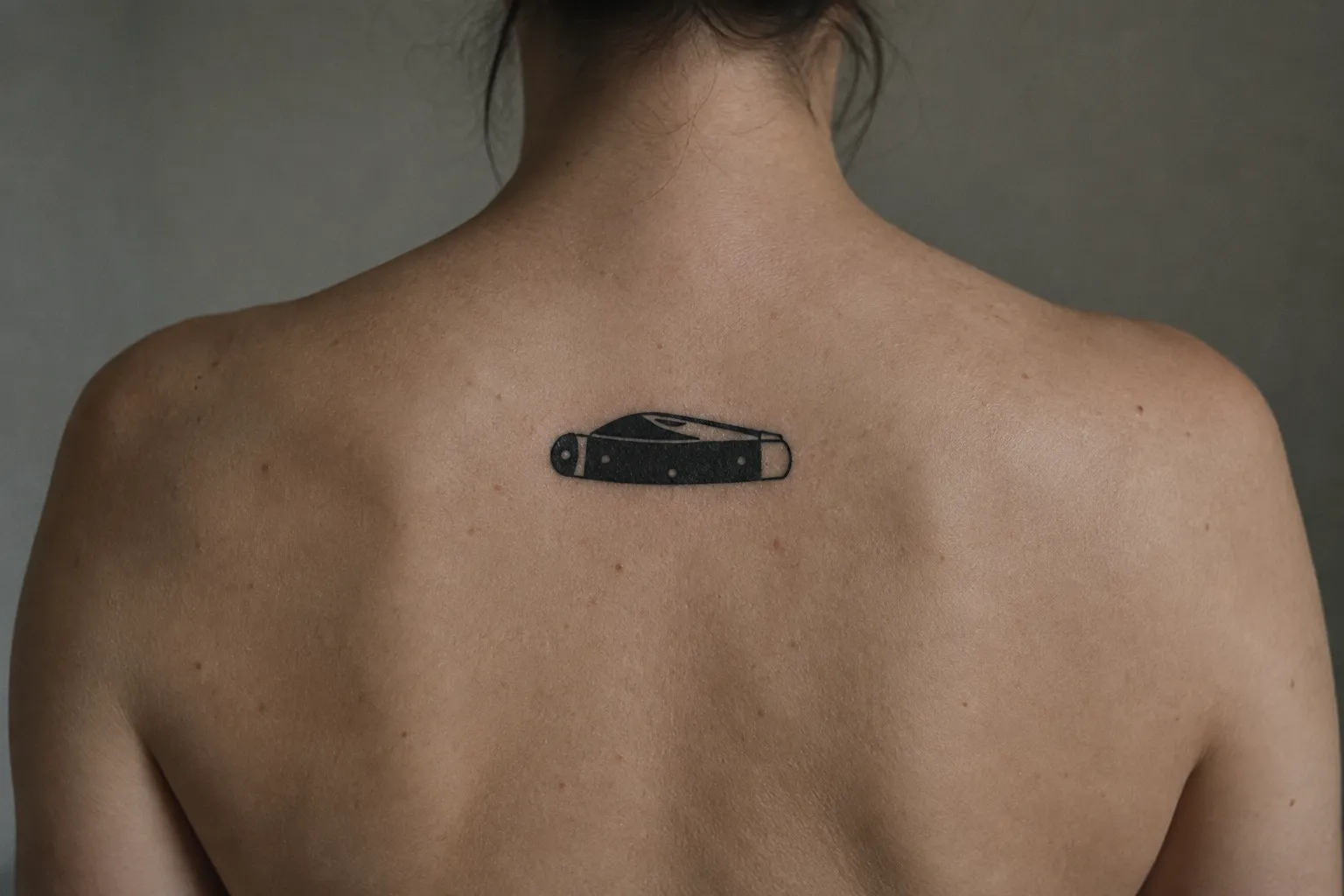
Memorial tattoos for mom and memorial tattoos for dad work best when they borrow something only that parent had: their handwriting, a tool, a recipe card, a flower from their garden. A line from a birthday card in your mother’s script means more than a generic rose. For a father, it could be his signature from a letter, the outline of the pocketknife he carried, or the fly he tied every summer.
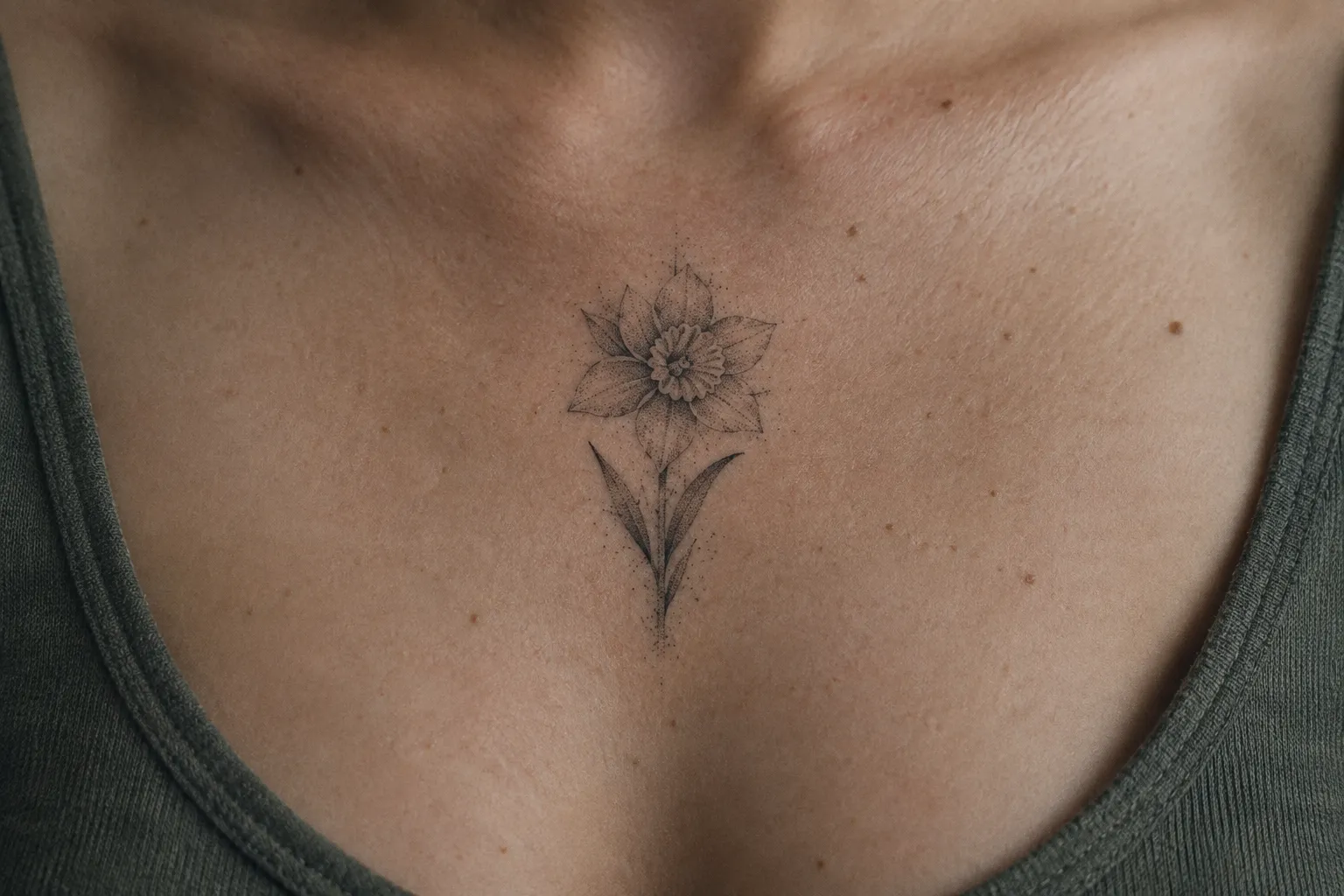
There is no single correct symbol for a mother or a father. Start with what you’d recognize as them across a room. Dates can do quiet work too. A birthday or wedding anniversary in small numerals, at least 1/4 in (6 mm) tall, can tuck beside a flower or under a signature. If you have a handwritten recipe card, ask the artist to pull just the title line or their sign-off, because a full card will not fit legibly on a forearm.
The Rest in Peace Tattoo and Other Short Text Tributes
A rest in peace tattoo is a short epitaph. At that length every letter carries weight, so legibility and spelling checks matter more than flourish. “RIP” comes from the Latin requiescat in pace, a Christian epitaph formula. Many people now swap it for “In loving memory,” a nickname, a phrase the person always said, or “Until we meet again.”
Check spelling, punctuation, apostrophes, and dates on the printed stencil, not just the sketch (8). For lettering, block type reads from further away and ages more predictably. Script feels more personal but needs that 1/2 in (12 mm) floor. On the wrist, only bold script or block lettering holds.
Sound-wave tattoos are a text-adjacent option: a waveform of a voicemail or recorded laugh. Don’t treat one as self-explanatory, and decide what it should communicate before you commit. To everyone else it reads as a jagged line, and fine spikes blur together over time, so give it enough width for the peaks to stay apart.
Choosing Placement and Size for a Small, Lasting Tribute
No single body spot is best for a memorial tattoo. Some people choose a private, easily covered spot, while others want it visible as part of grieving openly, and either is valid (5). Then match the size of the design to how much flat skin its detail needs. The main options:
- Inner forearm: visible to you every day and easy to cover. It suits handwriting and names.
- Behind the ear: private, and suits an initial or tiny bird. Very fine lines here blur fast.
- Sternum: hidden under most clothes and suits a symmetrical flower or wings.
- Ribcage: plenty of room for a quote or composition, but the skin stretches and shifts.
- Upper arm or outer thigh, 10-20 cm (about 4-8 in): the flat space one studio recommends for a black-and-grey portrait (6).
- Wrist: high movement and heavy sun exposure. Use only bold lettering or a simple symbol.
For pain, ribcage and sternum hurt more than the inner forearm, and the inner forearm hurts more than the outer upper arm.
Small memorial tattoos, such as initials, a date, or a compact symbol, keep the design focused and carry less risk of a disappointing result. A portrait or larger composition can hold more detail, but it demands careful photo selection and an artist who specializes in realism (5)(9). If you may later add flowers, dates, or other family members, leave room for them in the first composition (8).
Before your consultation, work through the checklist below with the artist.
On timing, one studio keeps a soft six-month minimum between a loss and the needle, while still booking consultations anytime (6). Booking the consultation now and the session later lets you see whether the design still feels right (7).
Prepare for a Memorial Tattoo Consultation
Bring verified details and references, then settle design, placement, and safety questions with the artist before booking the session.
- 1
Verify names, dates, and wording
Check every name, date, spelling, and punctuation mark against a reliable document or with a family member.
- 2
Gather useful references
Bring several clear photos for a portrait, or the original handwritten note or a high-resolution scan for script.
- 3
Discuss size and placement
Tell the artist how visible you want the tattoo and agree on a size range that can hold the design's detail.
- 4
Check the ink
Ask for the ink brand and lot, then look for relevant FDA safety alerts before the session.
- 5
Ask about ash processing if relevant
If considering an ash tattoo, ask how the material will be processed and prepared, and discuss health questions separately with a clinician.
Ashes, Ink Safety, and Questions to Ask Before You Book
A clean-looking studio does not guarantee safe ink. Scientists at the FDA and elsewhere have found that even unopened, sealed inks can harbor bacteria and other microorganisms (1). In its October 2024 announcement, the FDA reported that firms conducted 18 voluntary recalls of microbially contaminated tattoo inks between 2003 and 2024, the most recent issued on August 23, 2024 (14).
In October 2024, the FDA issued final guidance for ink manufacturers. It covers testing ink and its components, preventing contamination during manufacture, and using appropriate sterilization methods (14). In May 2025, the agency warned against specific lots of Sacred Tattoo Ink contaminated with bacteria including Pseudomonas aeruginosa (2). Contamination can happen before the bottle ever reaches the shop. The FDA’s advice to consumers is to ask the artist or studio which inks they use and to avoid the products named in its alerts (2).
Ash tattoos need their own conversation. Some studios offer them, usually by grinding a small amount of cremated remains very fine, filtering it, and blending it into standard ink, but there is no universally accepted medical guidance for the practice (16). It is not regulated, there is a genuine infection risk, and many artists decline (7). Ask the artist whether they have done ash work before and exactly how they process the ashes, then take your health questions to your doctor as well (16). If you have skin sensitivities, an autoimmune condition, or trouble healing, a clinician may advise against ash-based ink altogether (16).
Healing and Aftercare: What’s Normal vs What Needs a Doctor
Soreness, clear fluid, itching, and flaking are normal parts of healing a new tattoo, and none of them on their own means the tattoo is infected (4). An NHS leaflet describes three healing stages over 14-21 days, but that timetable is for medical tattooing (11). For a decorative piece, follow your artist’s instructions and the general tattoo aftercare timeline below.
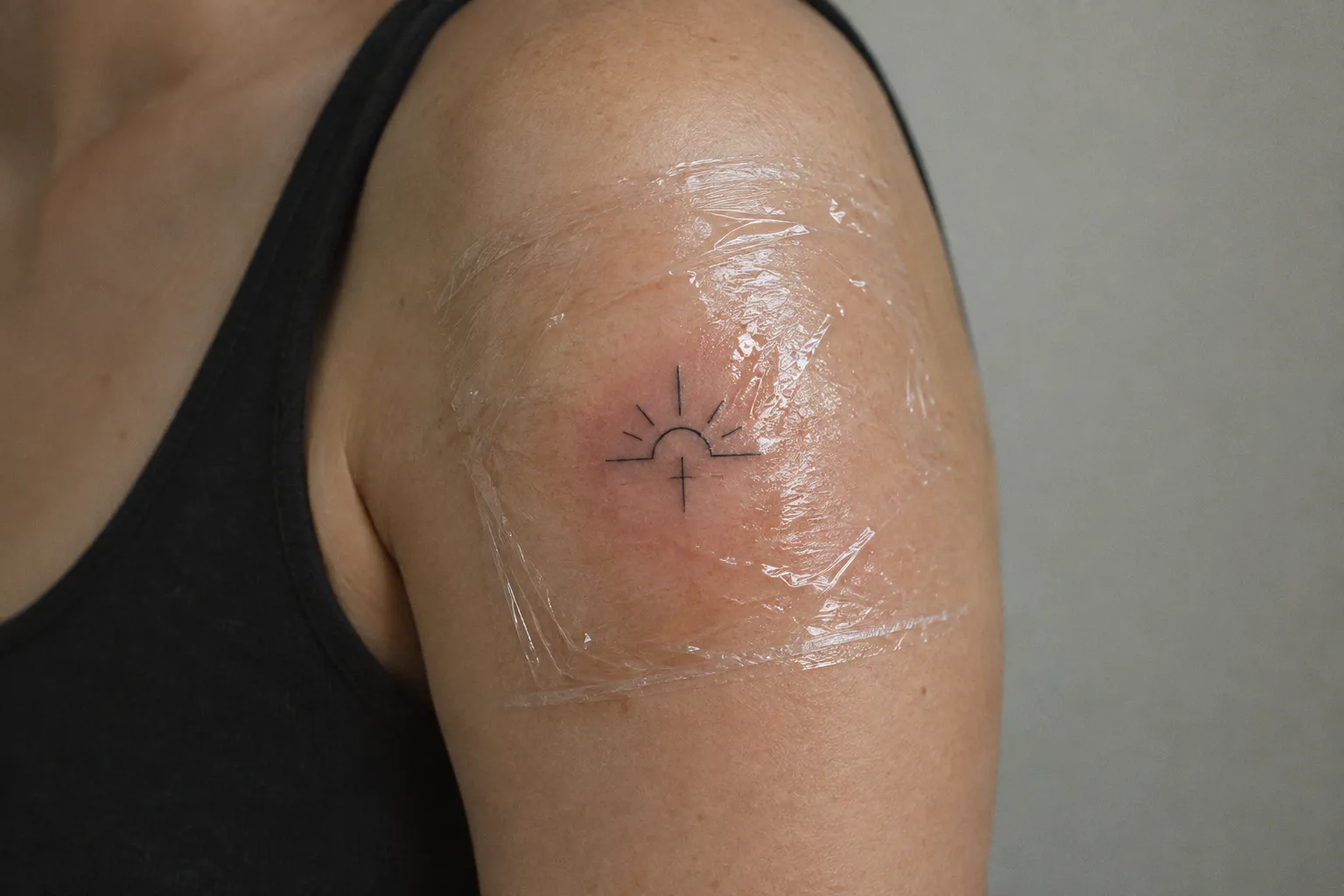
Day 1-3: fresh tattoo
Expect redness, swelling, soreness, and some clear fluid (4). Follow the artist’s wrap instructions. Wash gently, pat dry, and apply a thin layer of fragrance-free moisturizer.
Days 4-14: flaking, then peeling
Around days 4-7 the surface dries and starts to flake, and in week 2 it peels and itches. Itching, flaking, and light scabs are part of normal healing (4). Don’t pick or scratch. Stay out of chlorinated pools until the scabs have fallen off (11).
Week 3-4: healed on the surface
By this point the surface looks settled, although the skin underneath keeps healing until around week 6. Keep the tattoo out of direct sun for the first 4-6 weeks, then cover up with sun-protective clothing, because sun exposure affects how fine lines and color look over time (8).
See a doctor or board-certified dermatologist right away if redness darkens or spreads, pain worsens instead of fading, itchy red bumps appear inside the tattoo, or you get fever, chills, pus, or open sores (4). Early signs of an ink infection can look like an allergic reaction, which can lead to misdiagnosis, so have it checked rather than guessing (2).
Frequently Asked Questions
- What is a good tattoo to remember someone who passed?
- Choose a detail you associate with that person, such as their handwriting or a familiar object; a specific reference makes the design personal without requiring a portrait.
- What is a memorial tattoo called?
- Memorial tattoo is the clearest term, while tribute tattoo and remembrance tattoo are also used for designs honoring someone who died.
- Where is a good spot for a memorial tattoo?
- The best spot is one that fits both the design and your privacy preference; test the proposed size on the body before settling on placement.
- What is a good tattoo to remember my deceased mother?
- A detail tied to her rather than a standard mother symbol - such as a recipe title in her handwriting - can make a more personal tribute.
- What are memorial tattoo ideas for a pet?
- A collar tag, a distinctive marking, or a paw-print impression can identify a particular pet; use a clear photo if you want a portrait.
- Can ashes be mixed into tattoo ink?
- Some artists offer ash tattoos, but preparation methods vary; ask exactly how the ashes are handled and discuss health concerns with a clinician.
- What does a sound-wave memorial tattoo represent?
- A sound-wave tattoo represents a chosen recording, such as a voice message, but the waveform alone will not tell other people what it means.
- Are portraits a good idea for a memorial tattoo?
- Portraits can work when the reference shows the face clearly and the artist has healed portrait examples; otherwise, a simpler design avoids relying on fine facial detail.
What Makes a Memorial Tattoo Last
The right tribute is matched to a specific memory, not borrowed from a trend. Settle placement and size first, so the detail has room to age. Confirm every letter and date on the printed stencil. Ask which inks the artist uses and check them against FDA alerts. If ashes are involved, get the processing explained and raise the health side with a doctor. Then follow your artist’s aftercare, with fragrance-free moisturizer in the first weeks and no direct sun for the first 4-6 weeks.