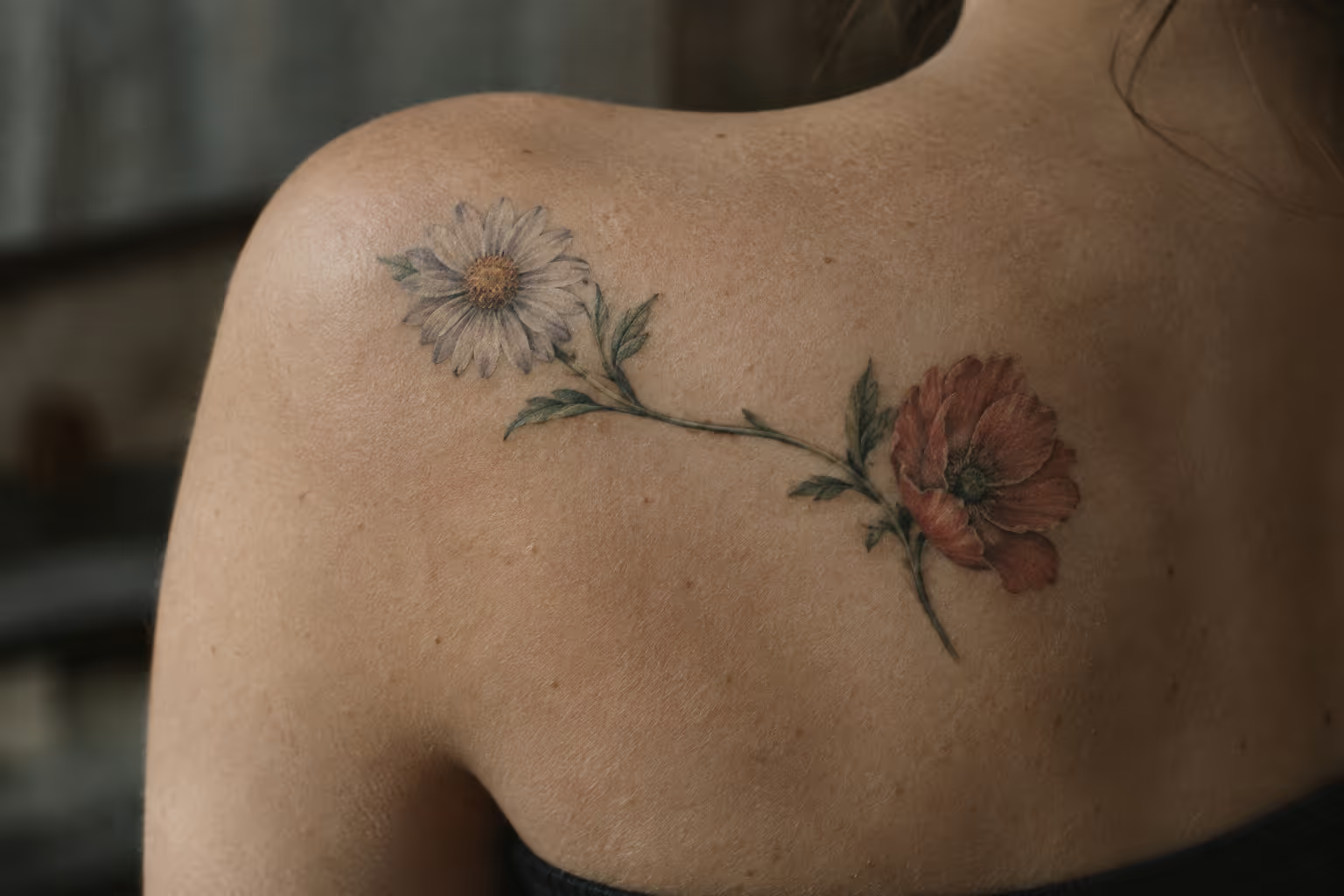
A tattoo that only looks finished when two sisters stand side by side looks unfinished the other 364 days of the year. That is why sister tattoos start with a structural choice (identical, complementary, or split) before anyone picks a motif. Settle that first, then choose the symbol, the placement, and the artist, in that order.
✓ Pros
- The design can reflect how often the sisters are together, rather than forcing one format on every relationship.
- A shared visual theme can connect tattoos while leaving room for different personal styles.
✗ Cons
- A design that relies on two people being together can become an unfinished-looking fragment when they are apart.
- A set requires coordination on wording, placement, scale, and line weight across more than one person.
The trade-offs are clear before you start. You can choose identical, complementary, or split designs, and any of them can work for two, three, or more sisters. Paired symbols carry the bond without needing words. On the downside, split designs fall apart if you rarely see each other. Bony placements hurt more. A misspelled shared quote or a wrong translation is permanent on every sister. And while the surface heals in weeks, deep healing takes months.
Sister Tattoos: Matching, Complementary, or Split Designs?
Sister tattoos come in three structural types: identical designs, coordinated-but-individual designs, and split designs that only form one image when the tattoos sit together. One idea collection of 25 designs includes examples of all three (1).
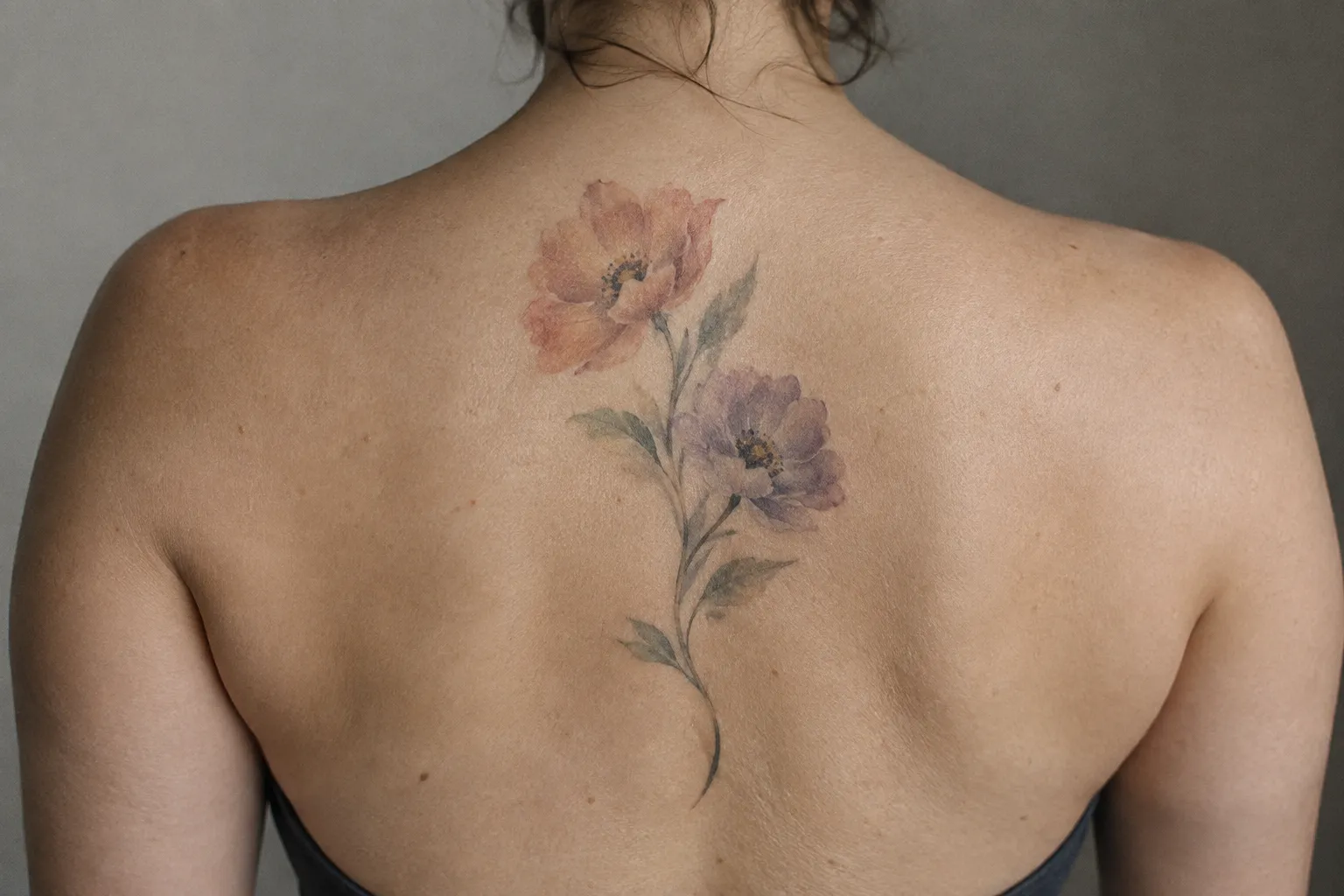
The deciding factor is how you live, more than what you like. Ask a few blunt questions. How often are you in the same room? Do you get photographed together at holidays and weddings? Does one of you live three time zones away? Will one of you want to cover the tattoo for work while the other wears hers in short sleeves? A design built around being together works for sisters who are together a lot. For everyone else, each tattoo has to hold up alone.
Identical tattoos: same design, same meaning
Identical tattoos repeat one design on each sister, usually at the same placement or a mirrored one. One older gallery notes that sister tattoos are normally placed “on the same or counter places” of the two people (6). The idea collection’s matching options include ghost and penguin pairs (1).
This is the simplest route to plan. You argue about one drawing, not two. The artist stencils the same file twice, so line weight and proportions match. The catch is that “identical” rarely stays identical once the tattoos heal. Lines can fade or blur over time depending on the tattoo’s size and location, and sun exposure fades color (3), so each sister’s tattoo ages in its own way. Two tattoos that matched on day one will look like siblings, not twins, years later. Most people are fine with that, but expect it.
Coordinated but individual: related, not identical
Coordinated designs use two distinct symbols from one theme, so each tattoo stands on its own while referring to the other. The collection’s examples include an anchor and compass, and a Saturn and rocket (1). Neither half needs the other to make sense. An anchor is a finished anchor and a rocket is a finished rocket.
This approach also handles different tastes. If one sister likes bold American traditional work and the other wants fine line, a shared theme lets each get her style without forcing a compromise drawing on both.
Split designs: only complete when together
Split designs divide one image across two or more people, so each tattoo reads as a fragment on its own. The collection’s clearest case is a butterfly whose two halves are explicitly meant to form a whole when placed together (1). Split lyrics work the same way. In one pair of sunflower tattoos, one sister carries the first line of a lyric and the other finishes it, and the full sentence only reads when they stand side by side (1).
A split design is the most romantic option and the most fragile one. Before you book, settle the order of decisions below: structure, theme, wording, placement, artist, and appointments.
Wording deserves special weight. Settle text spelling and language before the artist draws the final version. Changing a word on a finished stencil is easy. Changing it in skin is not.
Plan Sister Tattoos
Work through the design structure, shared theme, wording, placement, artist checks, and appointment plan before booking.
- 1
Choose the structure
Decide whether each sister wants an identical tattoo, a coordinated individual design, or a split image, based on how often you are together.
- 2
Agree on a theme
Choose a motif or shared reference that gives the set a connection without making any one sister's tattoo feel like an afterthought.
- 3
Verify any wording
Check spelling, punctuation, and translations together before the artist draws the final version.
- 4
Choose placement
Compare visibility and comfort for each sister, and make sure the design has enough room to stay legible.
- 5
Vet the artist and studio
Review healed work, confirm hygiene practices, and check the studio's local licensing requirements.
- 6
Plan the appointments
Decide whether matching scale and line weight call for one shared session or whether separate appointments suit the sisters better.
Two-Sister Design Ideas: Paired Symbols and Shared Themes
Of the 25 designs in one idea collection, most are for two sisters, 2 are explicitly for three, and 1 is for four (1). The collection spans floral, celestial, cartoon, quote, and humorous concepts (1). Treat it as a menu of starting points.
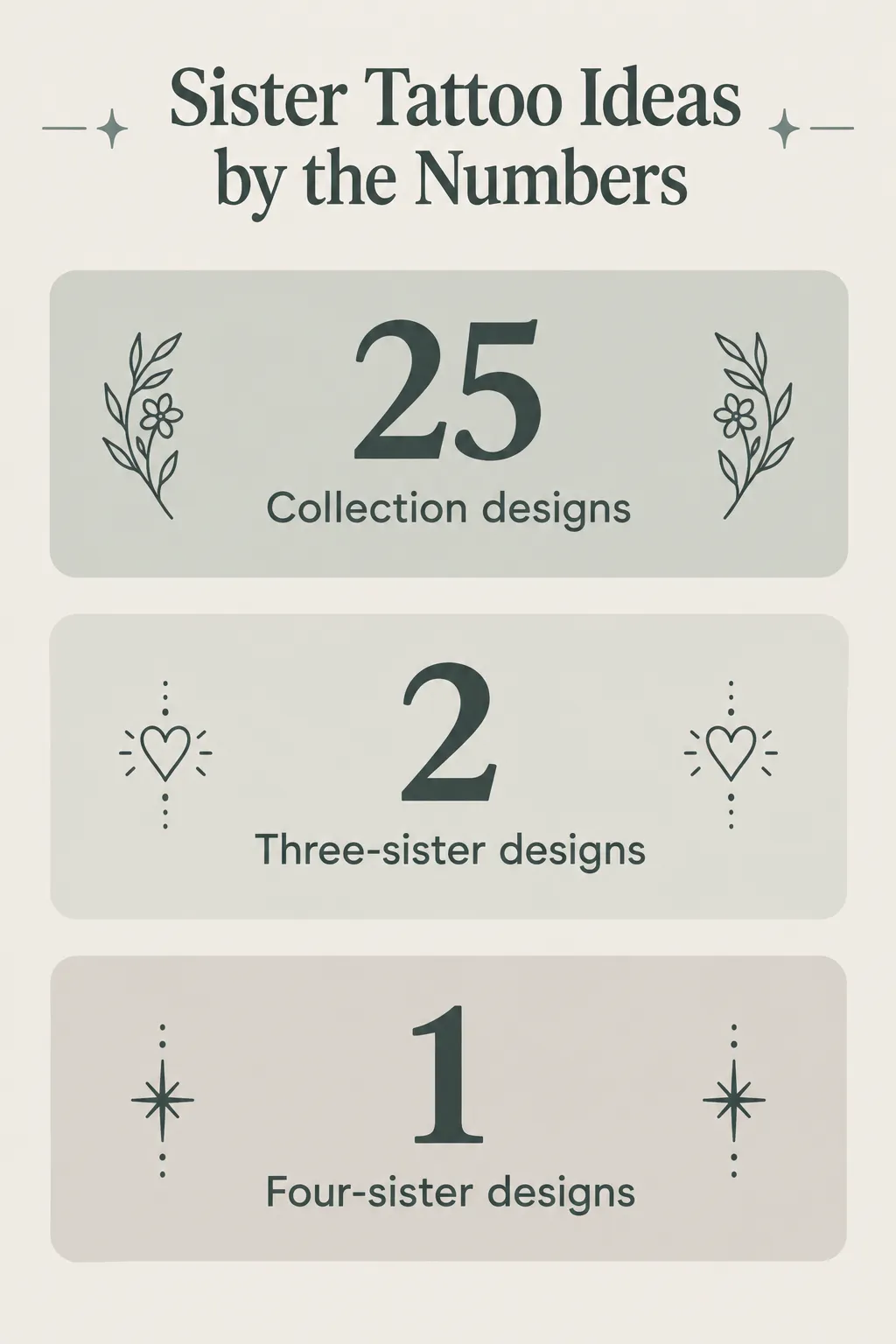 One sister-tattoo idea collection includes 25 designs, with 2 explicitly made for three sisters and 1 for four sisters.
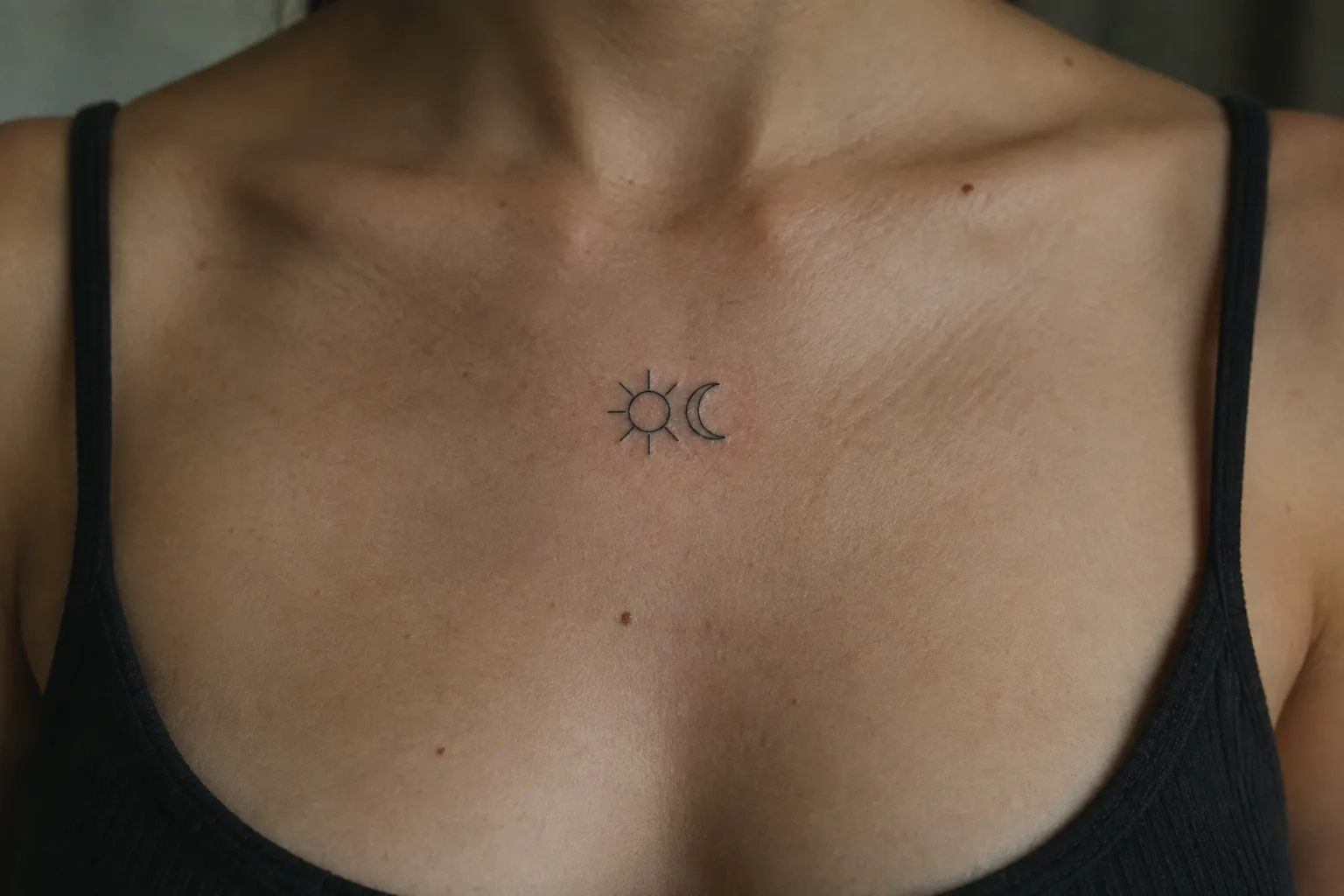
Here is how those themes break down.
Sun and moon, anchor and compass
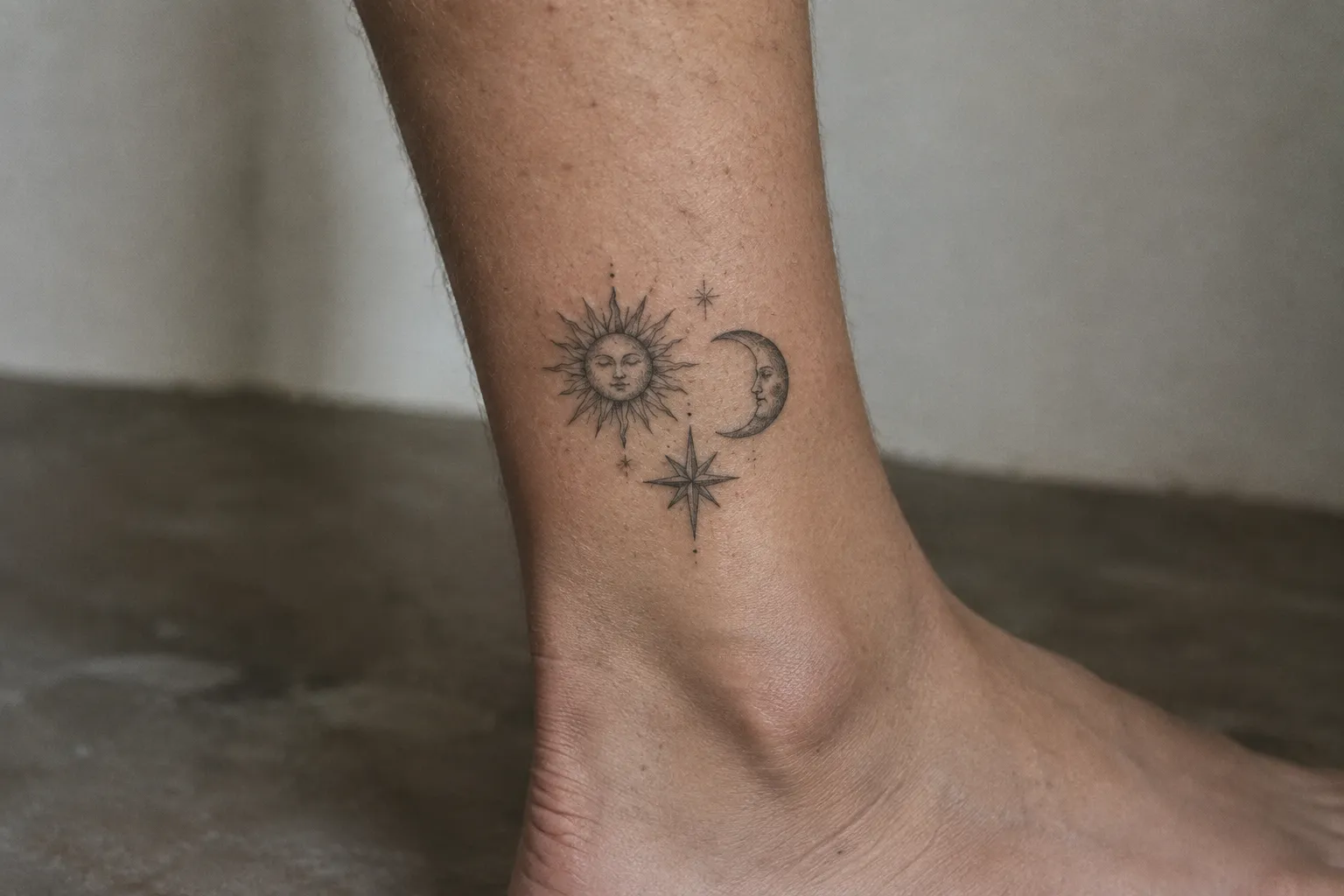
The collection pairs a sun with a moon and an anchor with a compass, one symbol per sister (1). A sun and a moon divide naturally between two people. You can also give the pair a personality split, such as the morning person and the night owl, the loud one and the calm one.
The collection reads its sun-and-moon pair as support and balance between two sisters who complement each other (1). An older gallery works the same pair into a yin-yang design and reads it as balance and harmony, each sister bringing something unique to the relationship (6).
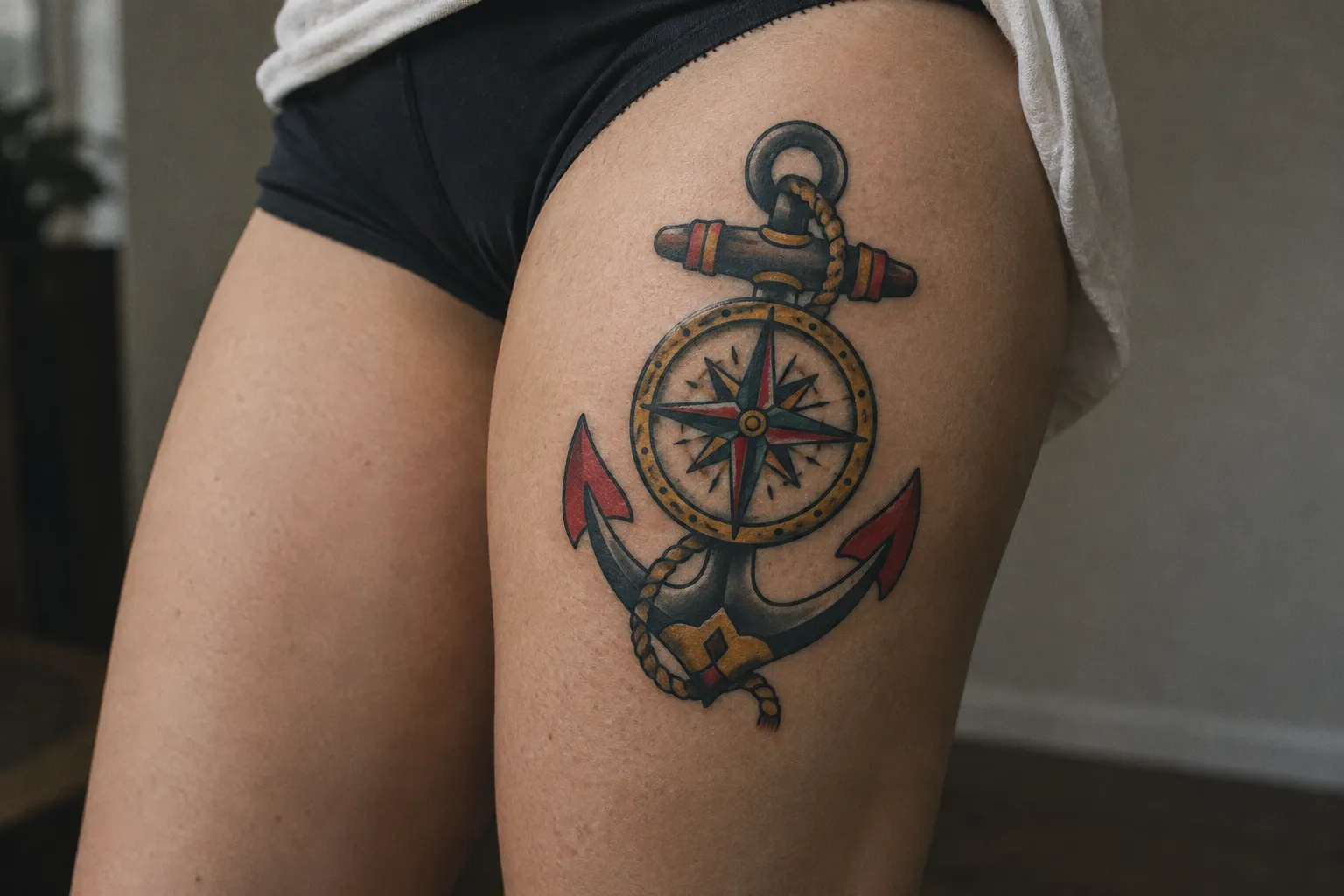
The collection casts one sister as the anchor, a grounding force, and the other as the compass, the guide (1). Paired between sisters, that reads as one keeping the other grounded and the other keeping her on course. If you want these in American traditional style, expect bold black outlines and a limited palette, a style designed to age well (2). That matters when two of you are betting on the same drawing.
The Saturn-and-rocket pair is the playful version of the same idea. The collection shows them as small ankle icons (1), a placement we come back to below for its pain trade-off. The same collection places a fish motif on the forearms (1), one of the less painful spots (7), with more flat skin for detail.
Matching simple icons: flowers, hearts, ghosts
Matching simple icons are the identical option for sisters who want one shared mark instead of two halves. The collection features matching ghosts holding flowers and a pair of penguins (1). A small flower, a heart, a single word, or a plain outline repeated on each sister also fits this category.
From the chair, the technical advice is to keep the icon open. Outlines that look sharp at first can fade or blur over time, depending on the tattoo’s size and location (3). A ghost or penguin drawn as a clean outline with lots of negative space has room to soften and still read. The same motif crammed with tiny facial features, shading, and a flower crown at a small size has no such margin. If you love detail, size up or pick a flatter placement.
Pop-culture and lyric pairs
Pop-culture and lyric pairs turn a shared childhood reference into the design. The collection includes Toy Story- and Gilmore Girls-inspired examples, paired lyric tattoos, and a set of fine line clocks with lines from Billy Joel’s “Vienna” (1).
Check every word before it goes on skin. A lyric copied from an idea page can carry a typo or a paraphrase that looks plausible until a fan of the song reads it on your arm. Pull the line from the album’s lyric sheet or the artist’s official site, print it, and have every sister sign off on the spelling and punctuation.
For sisters sharing a character reference, consider giving each of you a different character from the same film instead of the same one twice. That moves you from identical to coordinated, and each tattoo stays readable alone.
Three-Sister Sets: Giving Each Person Their Own Element
Three-sister sets work best when each sister gets a distinct element of one theme, not a two-person design stretched to fit three. Only 2 of the 25 cataloged designs are explicitly built for three sisters (1). Most of what you find online is designed for a pair, and forcing a pair into a trio usually leaves one sister with the leftover.
Take an anchor and compass. Adding a third element to that pair means inventing one (a ship’s wheel? a rope?), and the third sister can end up with the piece that reads as an afterthought. Start instead from a theme that has three natural parts.
Sun, moon, and star sets
Sun, moon, and star sets are the celestial answer for three. In the collection’s version, each sister’s tattoo contains all three bodies, arranged differently on each sibling (1). The other route is one celestial body per sister: each tattoo is complete alone, all three are obviously related, and nobody gets the minor role. A small sun, crescent moon, and star also sit at similar visual weights, so the set looks balanced when you line up your wrists or ankles for a photo.
Have the artist draw all three at the same time, in one style and one line weight. If you get them months apart from different artists, a bold-outline sun next to a single-needle star will look like it came from different sets.
Character-based trios
Character-based trios assign each sister a character with a distinct personality. The collection’s example is Blossom, Bubbles, and Buttercup (1). The appeal is that the casting conversation is half the fun: who is the leader, who is the sweet one, who is the fighter.
The template works for any franchise with three clear personalities. Before you commit, make sure each character reads as a complete, recognizable image at the size you want, not just as a color. Three cartoon girls who differ mainly in hair color lose that difference if one sister’s color fades faster on a sun-exposed placement.
The same rule extends to four or more sisters. The collection has a single four-sister design (1), so you are mostly building your own set. Look for themes with a natural count: four seasons, four elements, four suits in a deck of cards, or a bouquet where each sister picks her own flower in one shared style. One element per person keeps the set fair and makes each tattoo self-sufficient.
Matching vs Complementary: Picking the Right Approach
Matching sister tattoos are the lowest-risk option when you want an identical small icon, while complementary designs suit sisters who want related but individual tattoos that still read as complete on their own. Split designs belong to a third, riskier category.
The split-design trap is simple. If you won’t often be photographed or standing together, a split design like the two-half butterfly will look incomplete on its own. That covers sisters in different cities and sisters who see each other twice a year. It also covers sisters who are close but just aren’t the posing type. Your half of the butterfly will spend most of its life as a lopsided wing. Strangers will ask what it is, and the honest answer (“the other half is on my sister in Denver”) gets old.
Complementary symbols fix this. An anchor and compass or a Saturn and rocket lets each tattoo read as whole individually while still referencing the other. You get the “we belong together” meaning without needing the other person present to finish the picture. In the collection, the complete butterflies stretch across the collarbones, while the split butterfly runs across each sister’s triceps and forms one whole butterfly when the two arms are placed together (1).
Identical small icons are the safest matching route. Matching ghosts or penguins each stand alone, need no partner to make sense, and are simple to plan because there is one drawing. If the relationship changes, through distance, a falling-out, or one sister wanting a cover-up, a single small icon is also the easiest to live with or rework.
Here is how the three compare:
- Matching designs stand alone visually and never need the sisters together to read as complete. Typical motifs are a small flower, heart, ghost, or penguin. They suit any number of sisters, and the risk if proximity or the relationship changes is low.
- Complementary designs also stand alone. Each one points to the others, but none needs a partner to look finished. Typical pairs are anchor and compass, Saturn and rocket, and sun and moon, extended to sun, moon, and star for three. They suit two to four sisters, and the risk if things change is low to moderate.
- Split designs do not stand alone. They need the sisters physically together to read as complete. Typical examples are a two-half butterfly or a lyric divided across two people. They mostly suit two sisters who are together often. If proximity or the relationship changes, the risk is high, because a fragment stays a fragment.
If you are torn, choose complementary. It keeps most of the meaning of a split design and drops most of the risk.
Small-Scale Designs and Placement Choices
Small sister tattoos work best when you simplify the shared concept to a compact outline or single icon, then choose a placement with enough flat skin for that outline to stay crisp. The collection’s small Saturn-and-rocket ankle icons are a good model (1). Each one is a recognizable silhouette with minimal interior detail.
Simplifying means cutting, not shrinking. A detailed sunflower scaled down to fit an inner wrist keeps all its seeds and petals, and those lines sit close enough to blur together as the tattoo ages (3). A simplified sunflower is a circle, a ring of petals, and a short stem. Ask your artist to draw the small version from scratch rather than resizing the large one on a photocopier. Fine line is a common choice for small matching work, but it ages faster than bold American traditional linework (2). The thinner the line, the more open space it needs around it.
Where small tattoos read best
Small sister tattoos read best on flat, low-movement skin you can line up next to each other. Placements in the design collection include:
- Ankles: the Saturn-and-rocket pair (1). Easy to line up for a photo, and easy to cover with socks.
- Forearms: the fish motif (1). Flat skin, easy to show, and one of the less painful spots (7).
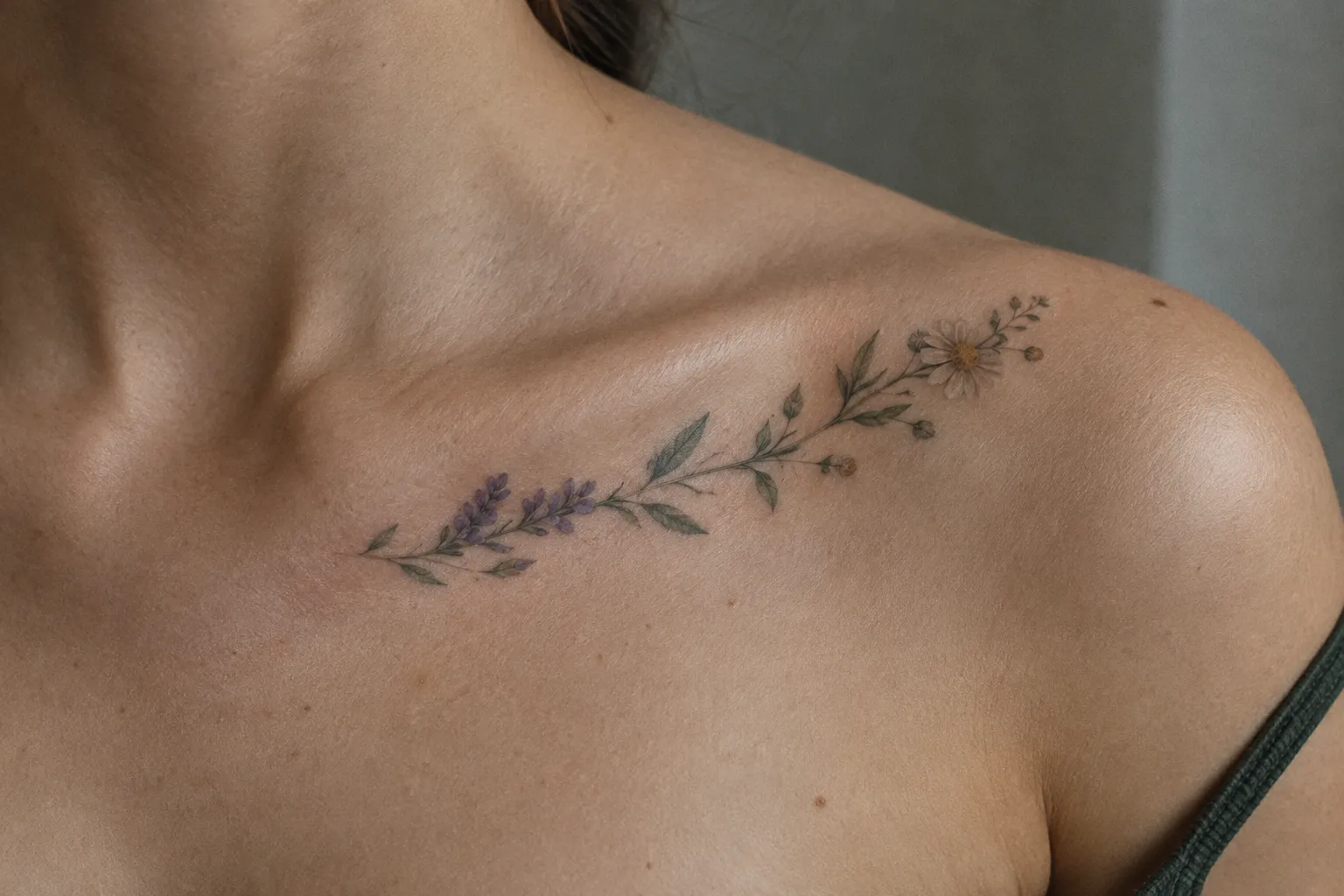
- Collarbones: the complete butterflies (1). Visible in open necklines and mirrored nicely across two sisters.
- Triceps: the split butterfly (1). Halves meet when two arms touch.
The inner wrist is the other common small placement. It’s fine for an icon. It’s tougher for text, because wrist skin moves and wears, and fine script spreads there quickly.
Lettering has hard size floors no matter how small the rest of the design is. Measure letter height, meaning the full height of the letter, not just the body of the lowercase letters. Standard script needs at least 12-13 mm (1/2 in). Fine or ornate script needs about 25 mm (1 in). Block, serif, typewriter lettering, and numerals need at least 6 mm (1/4 in). On the wrist, only bold script or block lettering holds over time. If a shared word or date won’t fit at those heights in your chosen spot, change the spot or change the font. Don’t shrink the letters.
Placement and pain trade-offs
Ankles are a popular small-tattoo spot, but they hurt more than forearms. Healthline lists ankles among the more painful areas, along with hands, fingers, ribs, and neck, because those spots have more nerves and less flesh (8). Healthline’s pain table also puts the ankle among the more painful spots and the forearm among the less painful ones (7), so sisters choosing a small ankle tattoo should expect more discomfort than at the forearm, which the collection also uses for matching designs (1).
In relative terms: ankle > forearm, ribs > forearm, and fingers or hands > forearm (7). Pain also depends on more than placement. Size, style, the artist’s technique, and session length all matter, and longer sessions hurt more (7). A small icon is a short session, which helps at a bony spot.
If you are booking together, note that pain tolerance varies a lot between people (7). Siblings are no exception. One sister may sail through an ankle piece while the other grips the bench. If one of you is nervous, pick the placement she can tolerate and match to that.
Symbols That Represent Sisters and Sisterhood
No single universal “sister symbol” exists, but idea galleries return to the same few motifs for sisters and siblings. These include paired sets like sun and moon, sun, moon, and star, anchor and compass, and two-part butterflies, plus shared single icons like flowers, hearts, and ghosts (1). Which one fits depends on the structure you chose earlier.
For sibling sets, the sun and moon cover two siblings and the sun, moon, and star cover three (1). They work just as well for brothers or mixed siblings.
For paired symbols that express a relationship, there are the anchor and compass (stability and direction) and the two-part butterfly, which is meant to complete itself when two sisters stand together (1). The anchor also appears in quote form. One gallery features the line “You be the anchor that keeps my feet on the ground, and I will be the wing to keep your head in the clouds” as a sister tattoo quote (6). That quote suggests a nice coordinated pair: an anchor on one sister, a wing on the other.
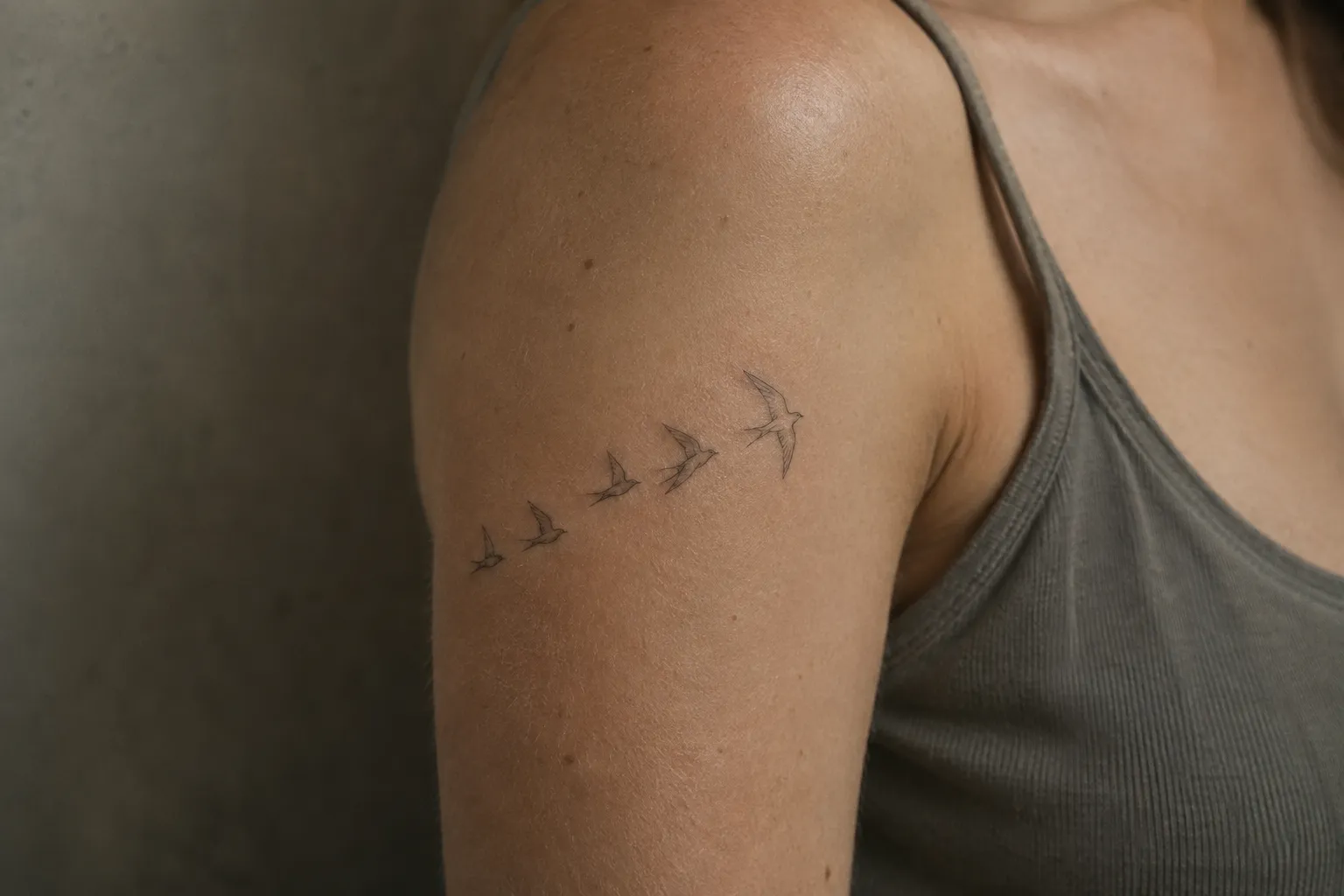
For a single shared symbol of sisterhood, the collection repeats a flower or a heart on each sister (1). One older gallery describes matching words and flying birds as symbols of the bond between sisters (6). Flowers let each sister personalize the shared format, for example by choosing her own birth flower in the same line style.
Be careful with “ancient” claims. If a design is sold with a fixed historical or cultural meaning for sisters, ask where that meaning comes from before you commit. If cultural origin matters to you, talk to an artist who specializes in that tradition before you choose. Otherwise, pick a symbol whose meaning the two of you agree on. A sun and moon that refers to how you shared a bedroom as kids is a stronger reason than a borrowed definition.
Choosing a Safe Artist and Studio
A safe artist for sister tattoos shows healed work in their portfolio, uses new single-use needles and fresh supplies, and works in a studio where sealed packages are opened in front of you. U.S. licensing rules vary by state, so check your local requirements rather than assuming they are uniform (2).
Booking together raises the stakes, because one bad choice affects every sister. Also make sure the artist’s specialty matches the style you want. An artist known for bold traditional work is not automatically the right person for single-needle micro-icons, and the reverse is also true (2).
Portfolio check: ask for healed photos
Healed photos show you what a tattoo looks like after the skin settles, which is what you’ll live with. Fresh tattoos look sharp and saturated under studio lights, and every artist’s fresh work photographs well. An artist-selection guide specifically recommends looking at healed photos to assess line quality, saturation, and blowouts (4). A blowout is ink spreading under the skin into a blurry halo around the line.
For matching or coordinated work, also ask whether the artist has done sets before. Getting two or three tattoos to match in scale and line weight across different body shapes takes some care. A good artist will adjust the stencil so a design on a narrow ankle and one on a wider ankle look like the same tattoo.
Hygiene signs to look for in the studio
Visible hygiene practices are your best signal of a safe studio, so visit before you book if you can. Look for these (2):
- Sealed needle packages opened in front of you, not pre-opened at the station
- Stations cleaned between clients
- Sharps disposed of in a designated container
Ask the artist directly whether they use new, single-use needles and fresh supplies. This applies to gloves, bandages, swabs, and razors as well as needles and ink (3). A professional will answer without hesitating. Licensing is regulated at the state and local level, and requirements differ from state to state (2). The FDA notes that state and local authorities oversee the practice of tattooing, while the FDA regulates inks as cosmetics (5). Check what your state or county requires and confirm the studio meets it.
On general health, tell your artist about any medications you take, blood thinners included (2), and skip aspirin and ibuprofen for 24 hours before the session, since both can thin the blood (7).
Healing Timeline After the Appointment
Sister tattoos heal at the surface in about 2-3 weeks, but the skin beneath keeps healing after the tattoo looks done (9). Visible peeling is only the first stage. Our week-by-week tattoo aftercare guide puts full integration at about week six, so don’t judge final line quality, compare your tattoos side by side, or book touch-ups before then.
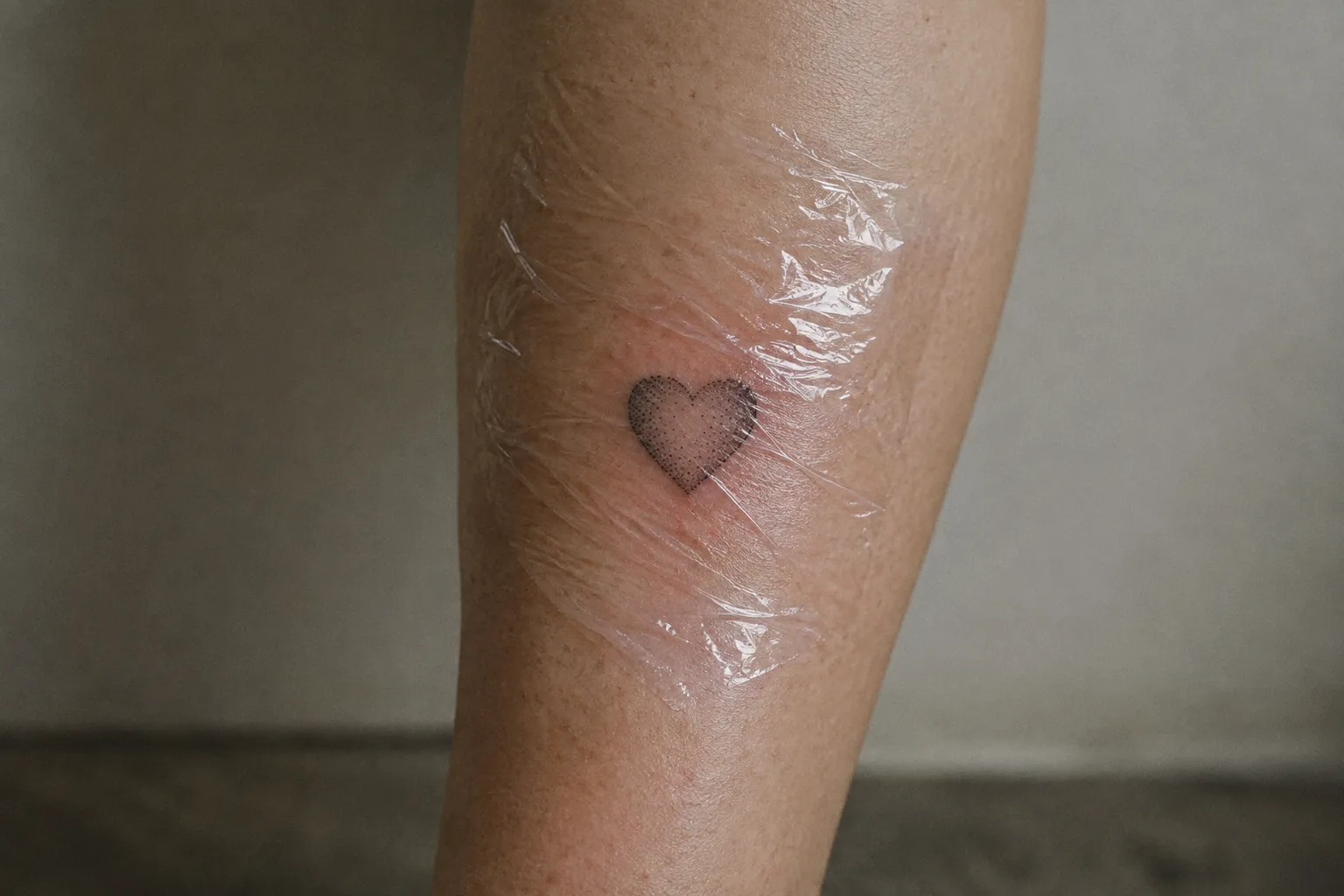
The comparison point matters for sets. Sisters often get tattooed on the same day and then text photos to each other at week two, worried that one looks cloudier or lighter. At that stage that is normal variation between two people’s skin. It is not a sign of a bad tattoo.
First 2-3 weeks: surface healing
Surface healing covers the outer skin, which typically closes over in 2-3 weeks (7). Follow your artist’s aftercare instructions first. The FDA notes that your tattooist should tell you how to care for the new tattoo (5). A typical timeline looks like this:
- Day 1-3: Keep the wrap on for as long as your artist says, then wash gently with clean hands and lukewarm water and pat dry. Some redness, swelling, or warmth is expected (5). Don’t soak the tattoo in baths, pools, or the ocean.
- Day 4-7: Switch to a thin layer of fragrance-free lotion when the skin feels tight. The tattoo will tighten, look duller, and start to flake. Don’t pick or scratch.
- Week 2: Peeling and itching peak, and the tattoo may look milky. That cloudiness is the new skin layer, not faded ink. Keep it under loose clothing and out of direct sun for the first 4-6 weeks, then use sunscreen whenever it is exposed.
Ankle tattoos need extra care at this stage. Sock seams and shoe edges rub fresh skin, so wear loose socks or open shoes for the first couple of weeks if you can.
Week 3 onward: deeper healing
The skin beneath the tattoo keeps healing after the surface looks done (9). That is why you should plan around the full healing time instead of assuming the tattoo is done once the surface stops peeling. Wait until at least week six before you line your tattoos up to compare saturation or ask the artist for a touch-up. Most artists offer one free touch-up appointment (3), so ask about the touch-up policy at booking (2).
Know which signs are not normal. According to the FDA, redness, swelling, or warmth can occur after tattooing, but if healing looks abnormal or you develop a rash, contact both your tattooist and a healthcare professional, especially if you also have a fever (5). Also, don’t take sealed packaging as proof of safety: the FDA says microorganisms have been found in unopened, sealed tattoo inks, and contaminated ink can cause infection (5). The FDA also links do-it-yourself ink kits to infections and allergic reactions (5), one more reason to choose a licensed studio over a friend’s kitchen table.
Frequently Asked Questions
- What symbol represents sister?
- No symbol represents sisters universally; choose a motif you can both explain in your own terms, rather than relying on a meaning claimed to fit every culture.
- What are some good tattoos to represent sisters?
- A good sister tattoo gives each person a design she can live with on her own, even when the shared reference is personal or playful.
- Is there a symbol for sibling?
- There is no single fixed sibling symbol across tattoo traditions; decide whether you want a motif tied to a specific culture or one rooted in your family.
- Is there a symbol for sisterhood?
- Sisterhood tattoos can use a shared motif, but verify any claim that a design has an ancient, fixed sisterhood meaning before choosing it.
- Do sister tattoos have to be identical?
- No; sisters can share a theme while choosing different imagery, styles, or placements, so each tattoo suits the person wearing it.
- Why do ankle tattoos for sisters hurt more than forearm ones?
- The ankle has less padding over bone than the forearm, so the same small design can feel sharper there; placement sensitivity also varies by person.
- How soon can healed sister tattoos be compared for touch-ups?
- Do not judge a set by its peeling stage; wait until about week six, when the skin has settled, and ask the artist to assess both tattoos before planning corrections.
Before You Book: Structure, Placement, Healing
Make the structural decision before anything else. Identical small icons are the simplest and lowest-risk option. Complementary pairs like anchor and compass or sun, moon, and star give each sister a complete tattoo with a shared meaning. Split designs only make sense if you are physically together often enough for the halves to meet.
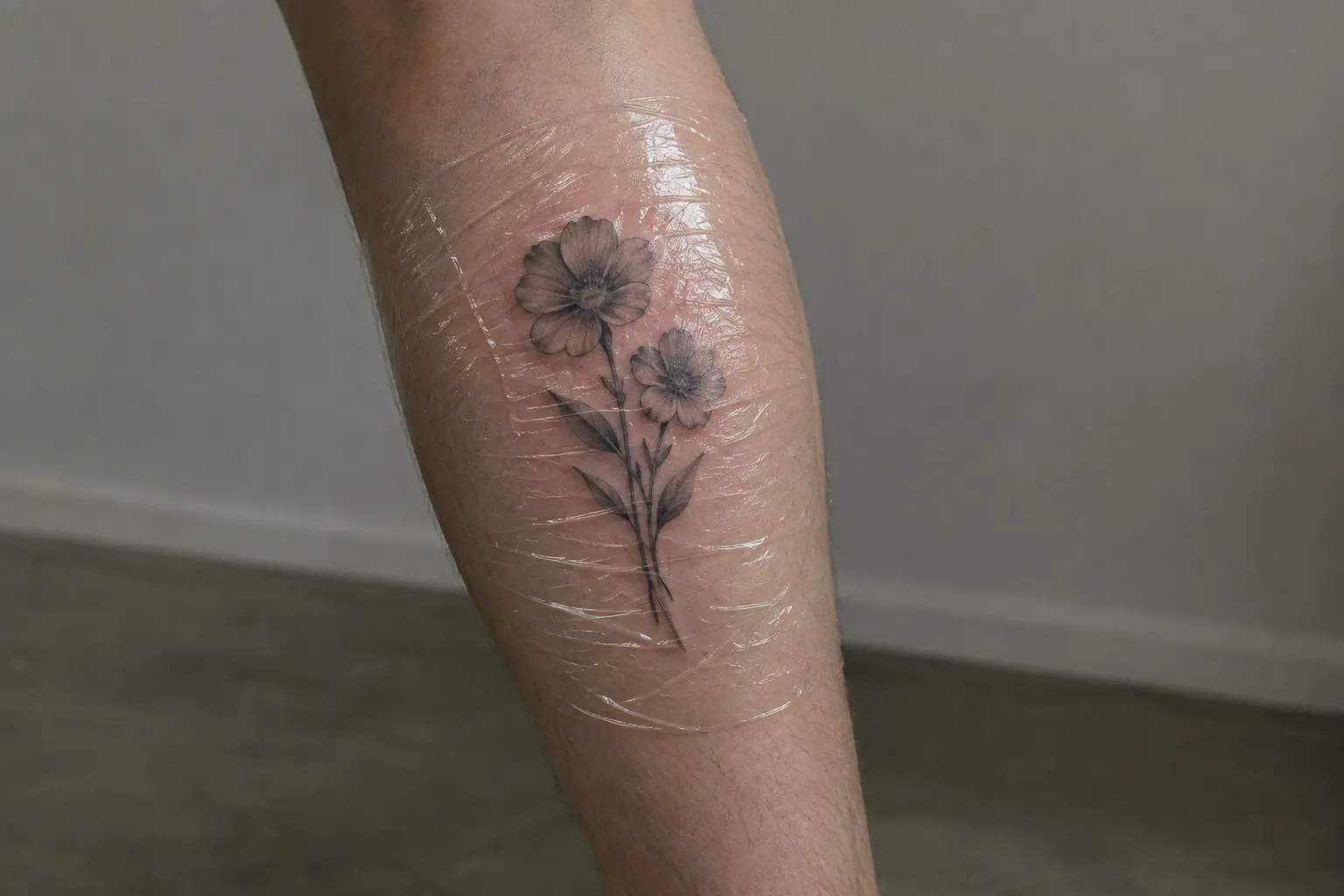
Then size the plan to the body. Pick a placement every sister can tolerate, knowing that ankles hurt more than forearms (7). Keep lettering at or above the letter-height floors: 12-13 mm (1/2 in) for standard script, about 25 mm (1 in) for fine script, and 6 mm (1/4 in) for block letters and numerals. Expect the surface to heal in 2-3 weeks (9) and wait until about week six before comparing sets or booking touch-ups. Last, vet the artist: look at healed photos, watch needle packages being opened in front of you, and check your state’s licensing rules before anyone sits down in the chair.