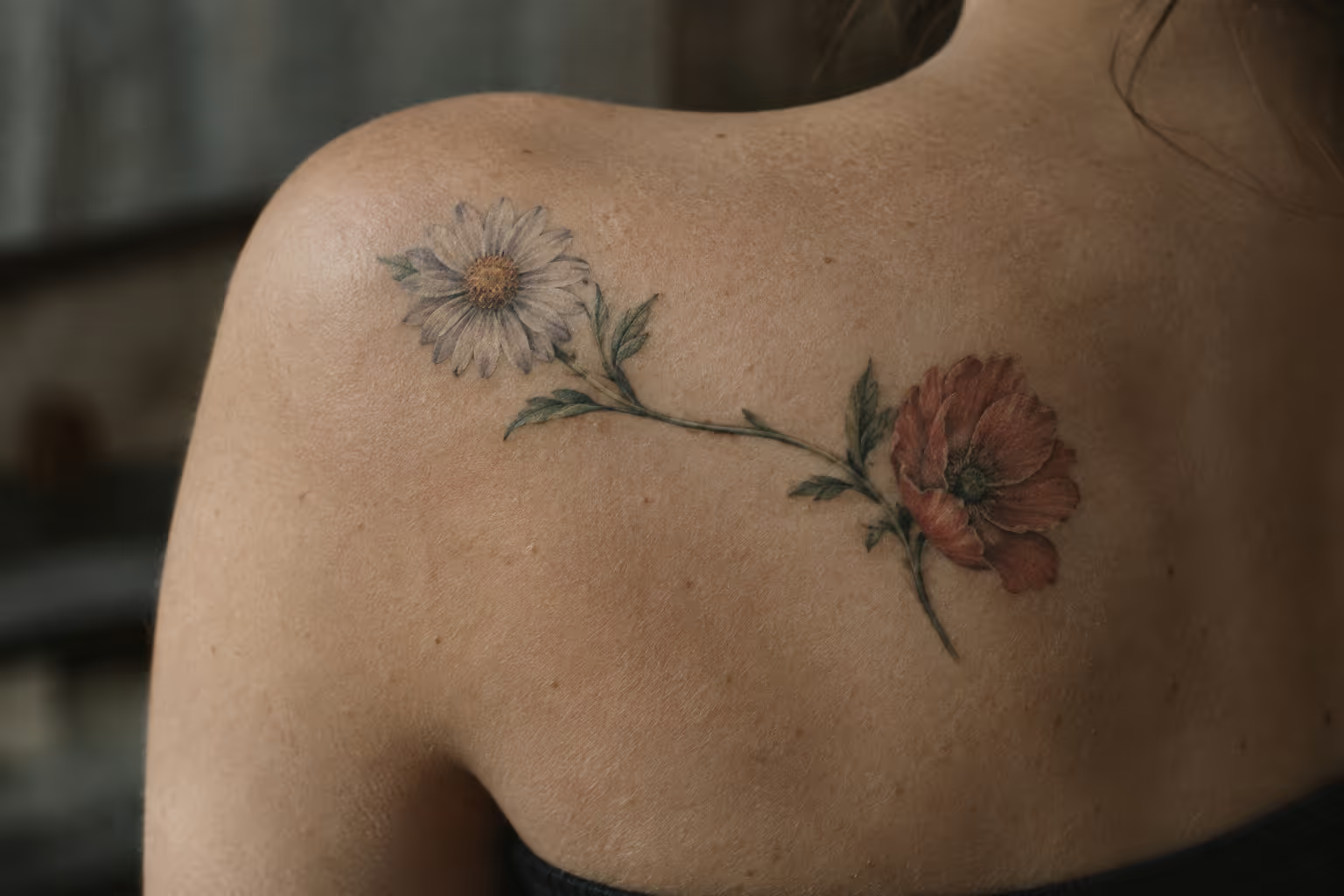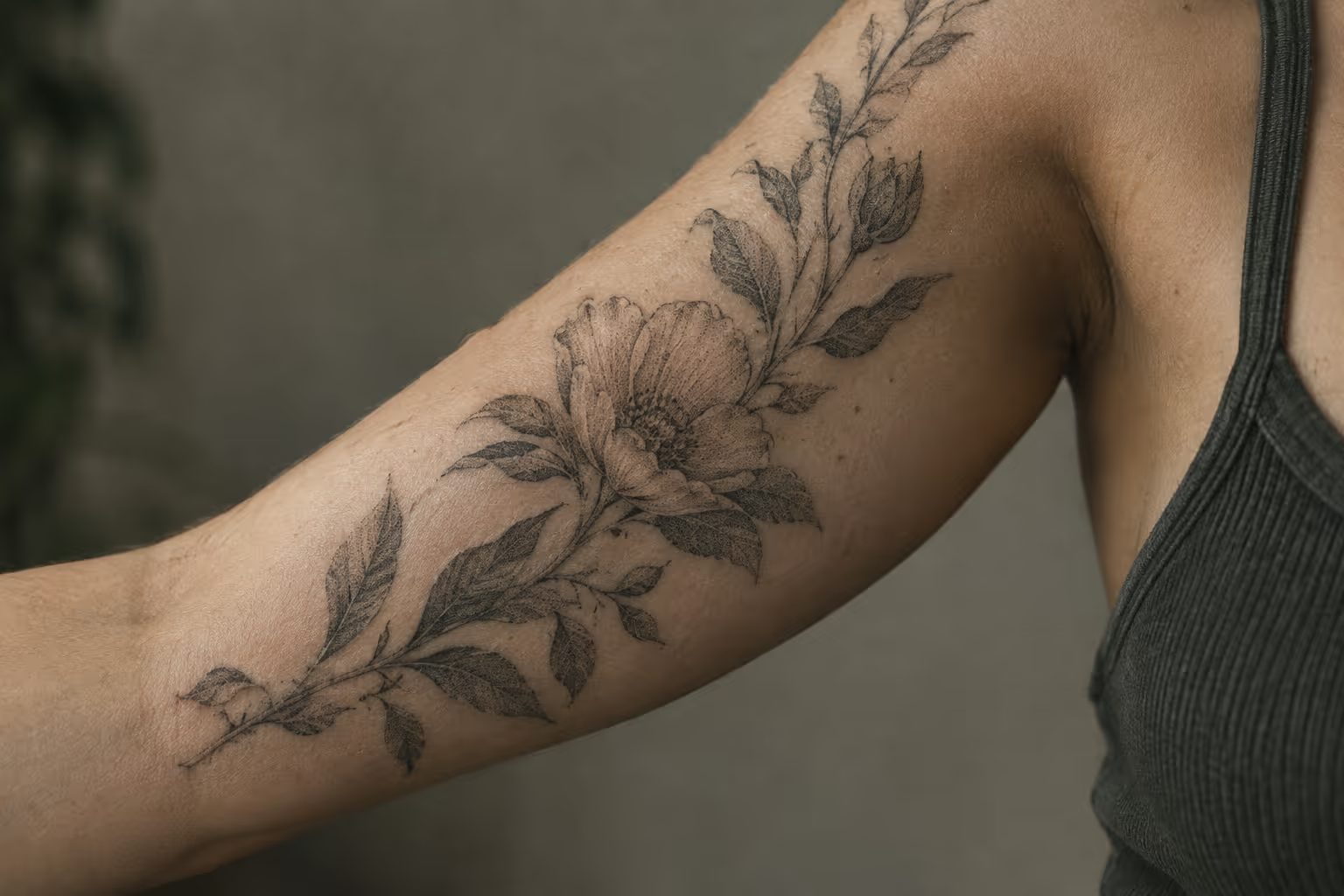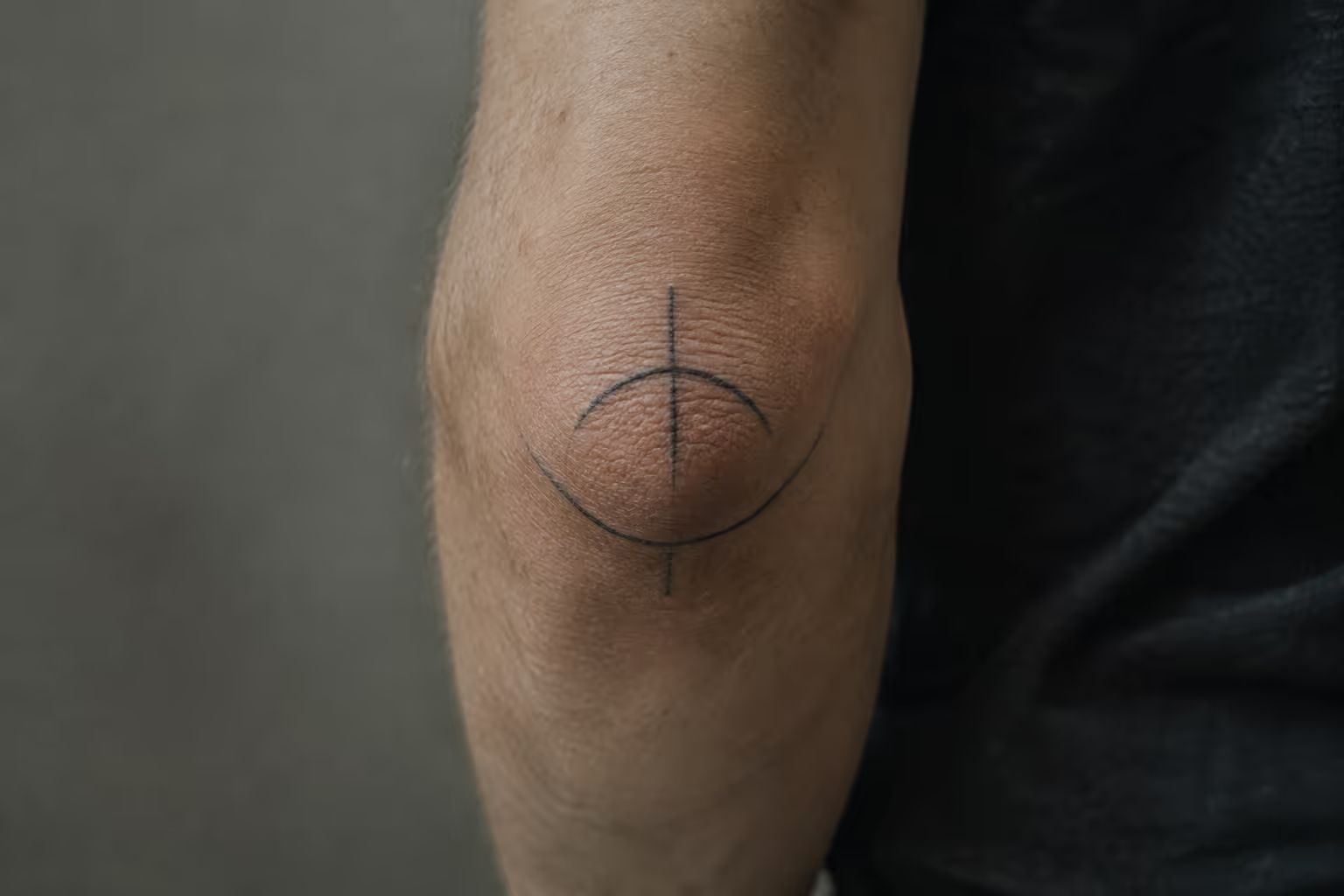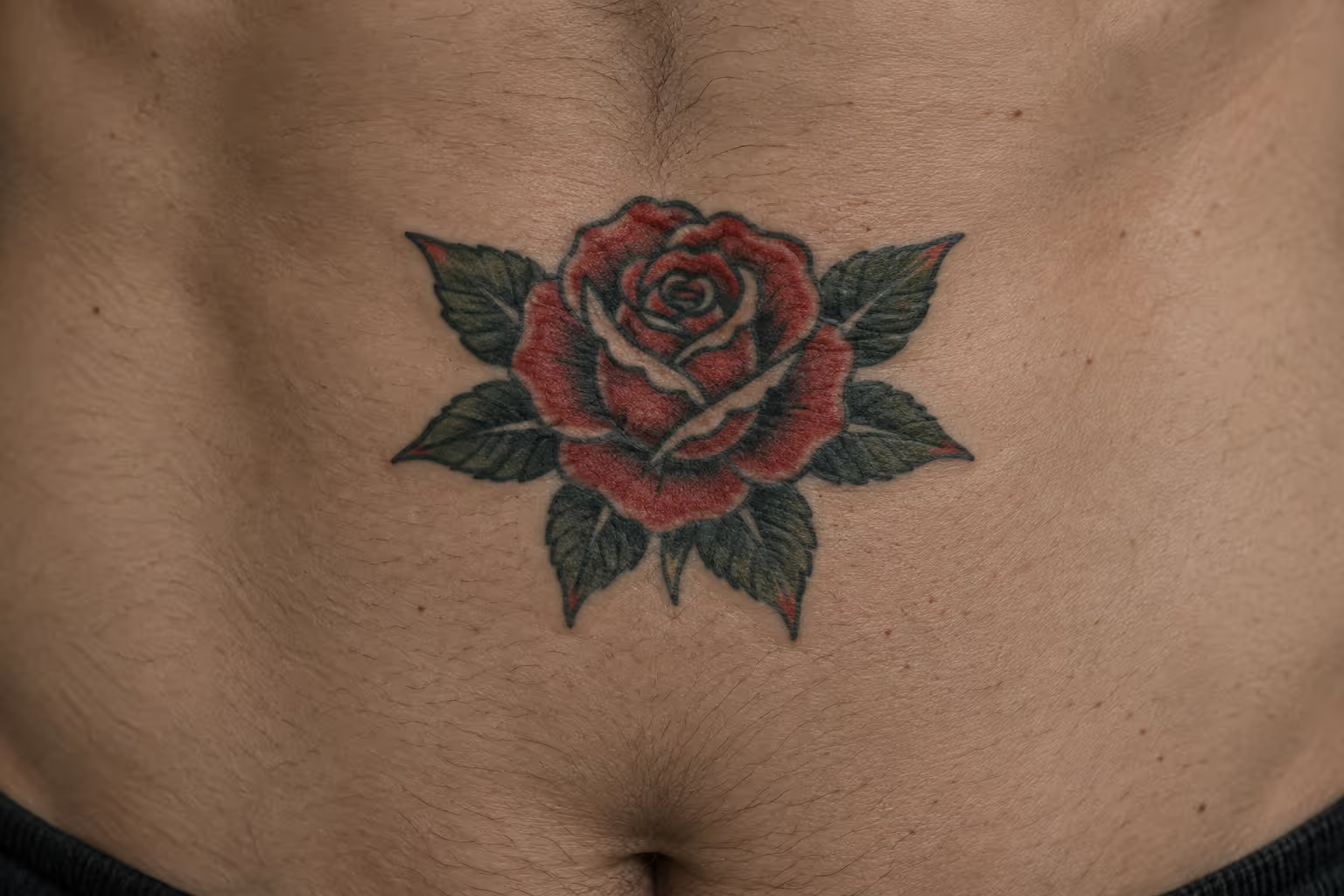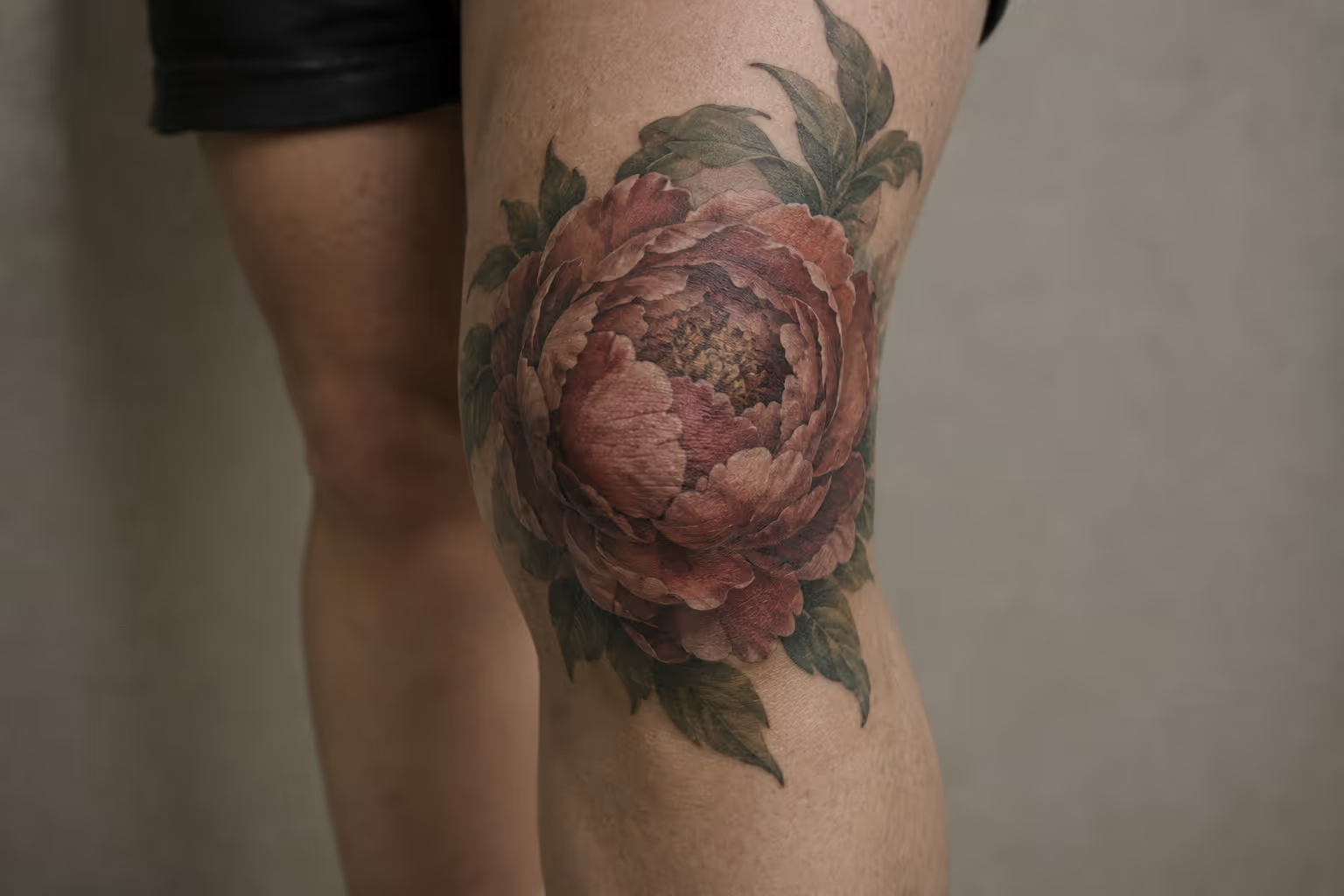
A knee tattoo covers three separate areas: the kneecap itself, the thigh-side skin above it, and the top of the shin just below it (5). Each area bends, stretches and heals differently, so choose the design for the zone first and the artwork second. Pain runs high for most people, healing is complicated by a joint you use all day, and a well-placed design still reads clearly when you sit down.
✓ Pros
- The three zones let you scale the commitment to your tolerance for bone and crease work.
- A standalone design can be finished with a clear edge instead of requiring a sleeve plan.
- The curved cap gives centered motifs a natural focal point.
✗ Cons
- The kneecap's shape can make a straight-on stencil misleading when you stand or bend.
- Creases and clothing contact put extra demands on line spacing during healing.
- A highly detailed image may lose readability faster on moving, bony skin.
Knee Tattoo Placement: Kneecap, Above, and Below the Joint
A knee tattoo can sit on the kneecap, above it on the lower thigh, below it on the upper shin, wrap around the whole joint, or connect into a full leg sleeve. Each option changes how much usable skin you get and how the design moves when the leg bends. Our tattoo placement guide puts the knee with the shins and ankles among the most painful placements, none of which suit a first tattoo.
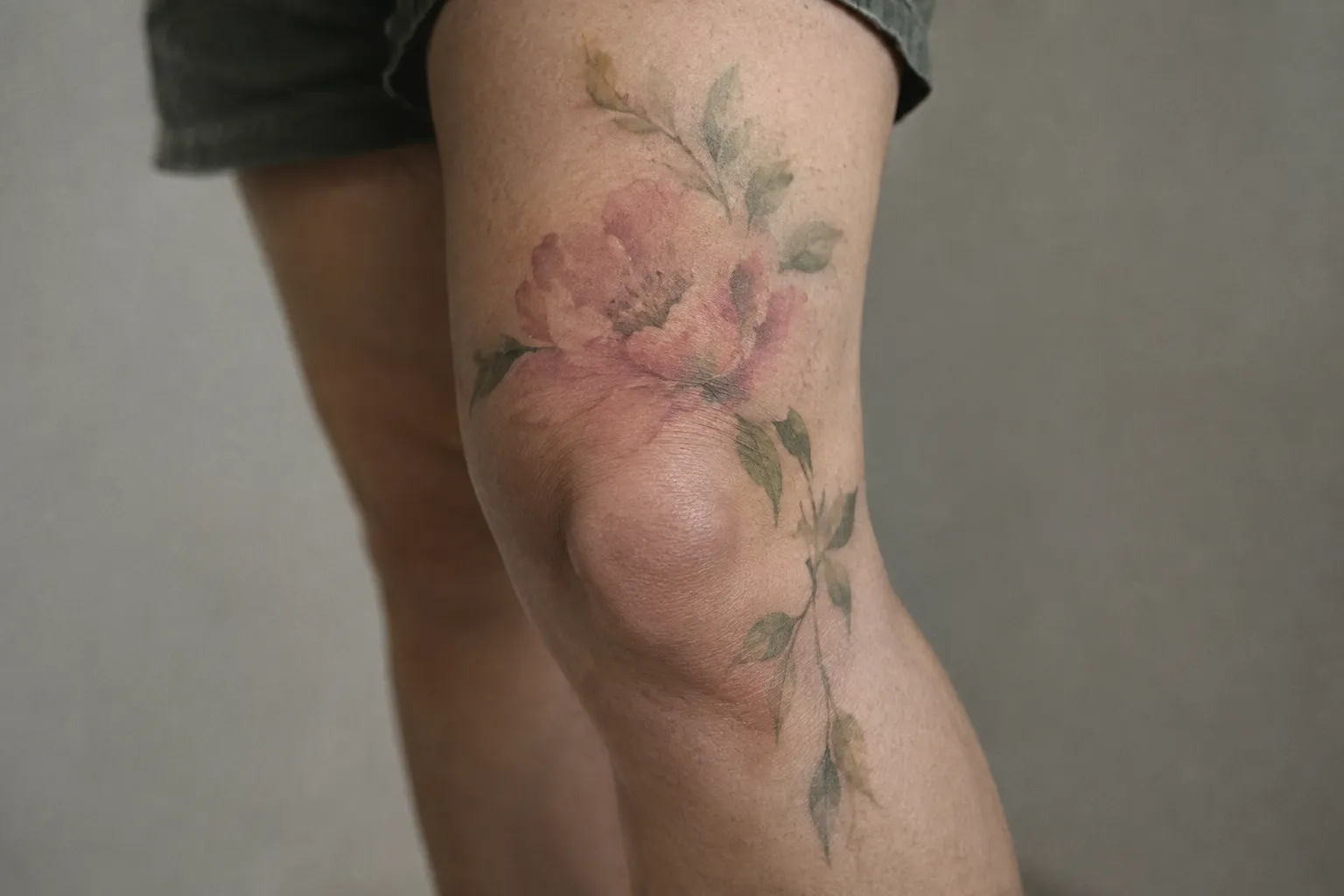
The kneecap is a curved, bony dome with bone close to the surface and little padding (7). Skin over it is often dry (5), and it stretches hard every time you kneel or squat. The skin above the knee is flatter and better padded, and it behaves more like the rest of the thigh. Below the cap, the upper shin is bony too, while the ditch at the back of the knee folds and creases with every step (7).
Kneecap vs Above vs Below: How Placement Changes the Design
The working rule is to match the design type to the zone (5):
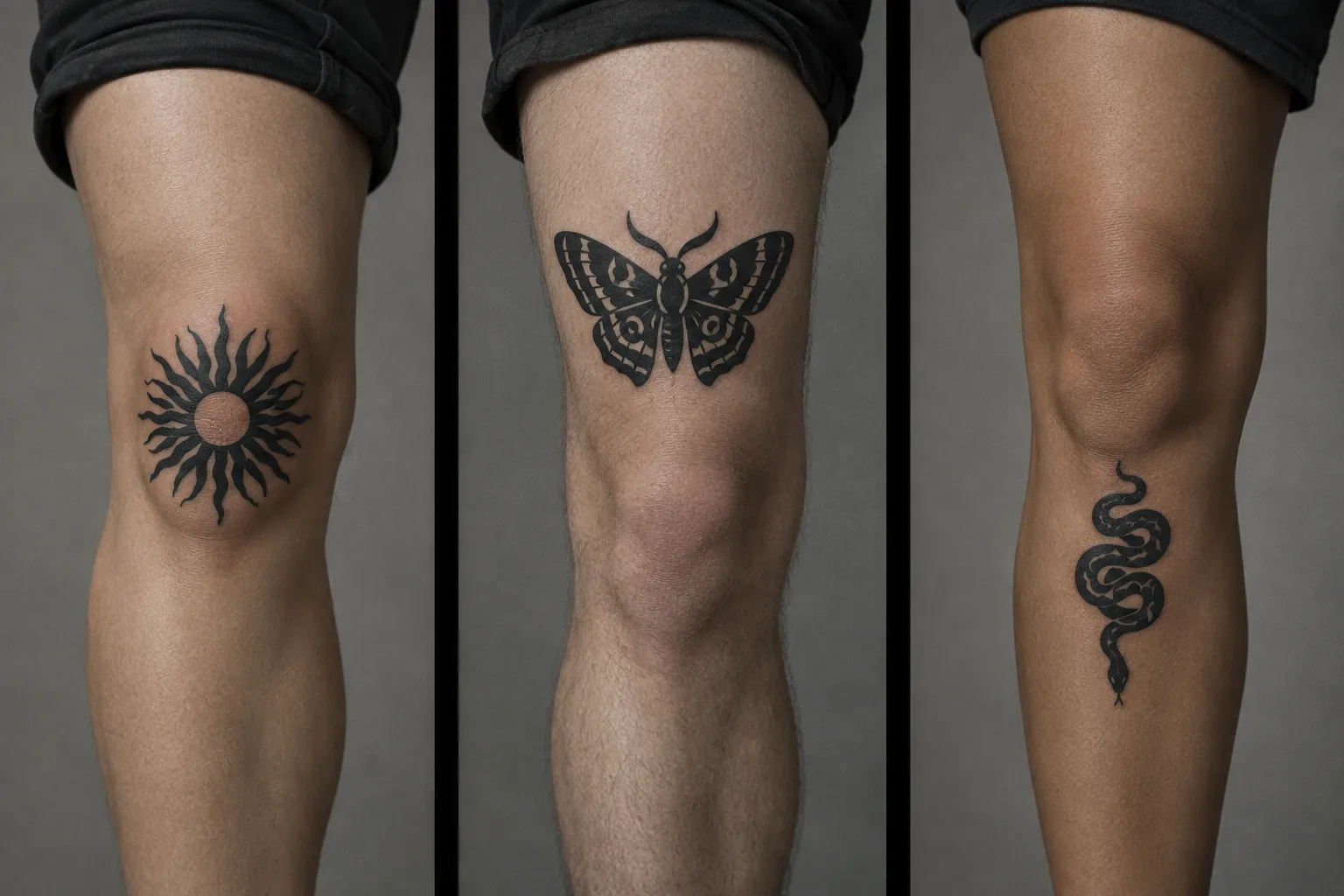
- On the kneecap: symmetrical or ornamental designs (mandalas, spiderwebs, a single traditional flower or head) that use the cap as a focal point. A round design on a round surface hides some of the distortion when the leg bends.
- Above the kneecap: floral frames, butterflies, cut-out mandalas, barbed wire or a short line of script. This shifts the design onto the thigh-side skin, which is flatter and better padded.
- Below the kneecap: flowers, moths, bats, horseshoes or band-style designs that frame the cap from underneath and follow the curve of the bone.
The most common planning mistake is picking an image first and then trying to force it onto the knee. A design drawn for a flat forearm won’t hold its shape on a dome that changes contour every time you stand up. Bring the reference to your artist and ask which zone suits it. Then let them redraw it to fit that zone, rather than shrinking or stretching the original.
Working the Knee Into a Leg Sleeve
A knee piece is a natural way to complete a leg sleeve (6). Treat it as part of the larger leg tattoo composition rather than an isolated motif (5). The kneecap design should pick up the flow of whatever runs down the thigh and continues onto the shin.
A standalone knee piece is also a valid choice (5). If you don’t plan to sleeve the leg, pick a design with a clear border, such as a closed mandala, a flower with leaves that taper off, or a band. That way the piece looks deliberate on bare skin instead of waiting for something to attach to.
Before you commit, weigh the trade-offs:
- Strengths:
- Three distinct zones give you real design range.
- The knee ties a leg sleeve together.
- A knee piece is easy to see in shorts.
- Drawbacks:
- It’s a high-pain placement for many people.
- The bending joint complicates healing.
- Clothing rubs the fresh tattoo during recovery.
- Any design will distort to some degree when the leg flexes.
Design Ideas for the Kneecap Itself
The best knee tattoo ideas for the kneecap are symmetrical or ornamental: mandalas, spiderwebs, single bold florals, and traditional-style heads that treat the cap as a centerpiece (5). Two other ideas that work around the knee are chain-link fence motifs and bees set beneath the kneecap (5).
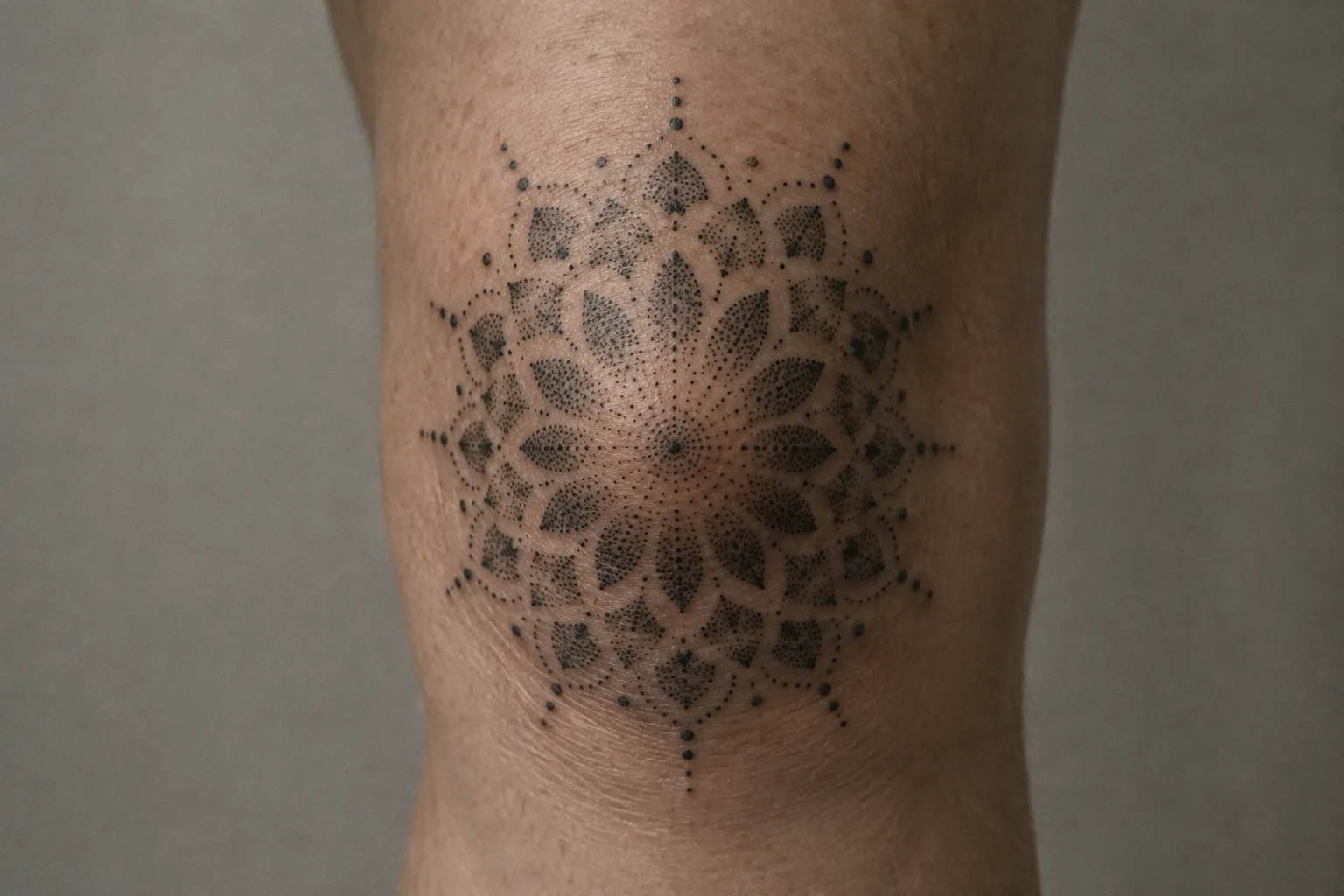
The cap rewards designs that look intentional from the front and still make sense at an angle. You will see your own knee from above far more than anyone sees it head-on.
Mandala and Spiderweb Symmetry
Mandalas and spiderwebs are the two classic kneecap designs, and for the same reason: both radiate from a center point. Center that point on the cap and the design follows the dome. When the knee bends, the whole thing stretches more or less evenly instead of one corner warping out of shape.
Mandala hallmarks:
- Strict radial symmetry.
- Either dotwork shading or solid blackwork petals.
The pitfall is stencil placement. If the center sits even slightly off the highest point of the cap, the mandala looks lopsided every time you stand. Fine dotwork on bony, dry skin can also heal patchy. A mandala with a mix of solid black areas and open space holds up better than one built entirely from tiny dots.
Spiderweb hallmarks:
- Clean, even radial lines.
- Concentric threads that sag slightly between spokes.
The spider web carries a history worth knowing: in the mid-to-late 20th century it became closely tied to US prison culture, where it was linked to long sentences, before it moved into mainstream tattooing (8). Know that reading before you get one.
The pitfall with webs is line weight. Thin threads over the kneecap can blur or break up as they heal, so ask for spokes bold enough to read from a few feet away.
Chain-link fence motifs, sometimes drawn as a broken fence, work on the knee as wraparound texture (5). They suit a blackwork or neo-traditional leg.
Bees are usually placed beneath the knee rather than dead center on the cap (5). A single bee just under the kneecap works as a small accent below a larger kneecap design.
Traditional Florals, Bear Heads, and Sacred Hearts
Standalone traditional-style designs fill the kneecap well because they were built for exactly this kind of spot: one strong image, readable at a distance. Common examples include (5):
- Peonies and roses
- Bear heads
- Sacred hearts
American traditional hallmarks:
- Thick black outlines.
- A limited palette with solid color saturation and simple shading.
Those bold outlines are what keep the design legible when the skin over the cap creases. They also hold their shape for longer as the tattoo ages (6). The pitfall is an artist cramming fine detail into a traditional design. Small interior lines close up over the years, and on a joint they close up faster. A traditional rose with three or four bold petal shapes reads clearly for years. One with twenty thin petal lines turns into a red smudge.
The peony is a favorite for the kneecap because its rounded bloom fits the cap naturally (5).
The sacred heart is another classic standalone kneecap design (5).
Bear heads work the same way (5). Ask your artist to angle the head so the snout sits on the highest part of the cap and the ears frame the sides.
Size for the kneecap is set by the cap itself. The design should cover the dome and stop roughly where the bone falls away, so measure your own knee with the artist rather than working from a stock sheet.
Thigh-Side Design Ideas Above the Kneecap
An above the knee tattoo sits on the lower thigh, just over the kneecap, where the skin is flatter and better padded than on the cap itself. That usually makes it more tolerable than the kneecap (6). Design options include:
- Floral frames
- Butterflies
- Cut-out mandalas
- Barbed wire
- Short phrases
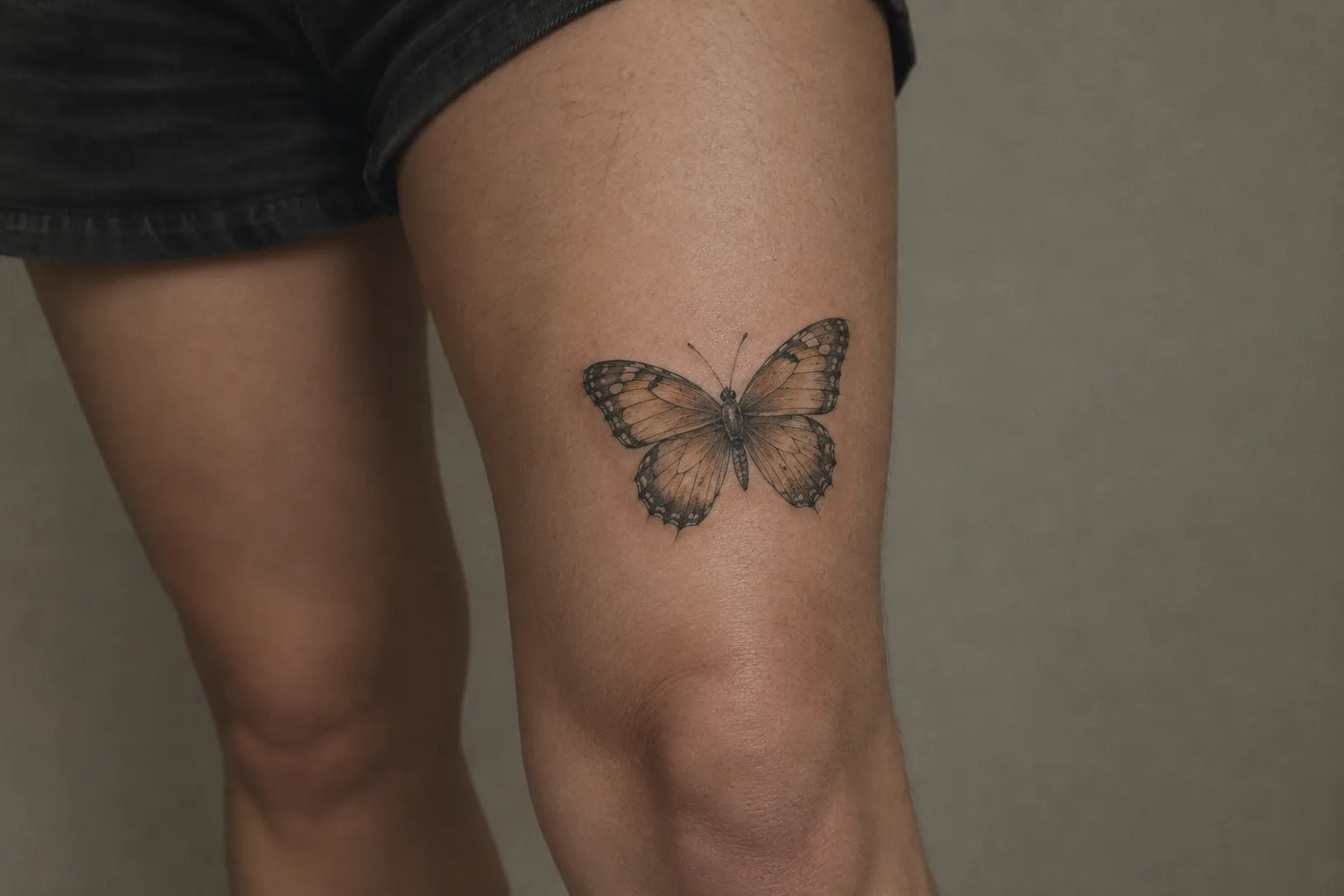
This zone works well if you want the visual impact of a knee piece but are nervous about tattooing over bone. It also suits people who kneel a lot for work or sport and don’t want a fresh tattoo directly on the contact point.
Floral frames sit in an arc over the top of the cap, so the kneecap itself becomes negative space. A cluster of roses, peonies or wildflowers curving across the lower thigh draws the eye down without a single line of ink on the bone. It also leaves the cap open if you change your mind and fill it later.
Butterflies suit the space above the knee because the symmetry of a butterfly tattoo fits a horizontal space (5). Set one directly above the cap and the wings span the width of the lower thigh. The fine-line versions popular right now look delicate when fresh, but very thin lines spread over time. If you want a butterfly that still reads clearly years from now, ask for a slightly heavier outline than the reference shows.
Cut-out mandalas are half or partial mandalas, often with the bottom edge cut flat or curved to echo the top of the kneecap. They give you the radial look without committing the cap to it.
Barbed wire wraps around the lower thigh as a band (5). Barbed wire bands can look dated. Done as a single strand with real shading and some depth rather than a flat repeated stencil, they read as blackwork rather than nostalgia.
Short script fits this zone better than anywhere else on the knee (5), because the skin above the knee is flat enough for lettering to stay straight. Keep it to a few words and size it by letter height:
- Standard script: at least 12 mm (1/2 in) tall.
- Fine or ornate script: at least 25 mm (1 in) tall.
- Block, serif or typewriter lettering and numerals: at least 6 mm (1/4 in) tall.
Lettering smaller than that fills in as the ink settles. Run the line horizontally just above the cap, or curve it along the top edge of the bone.
Below-the-Knee Framing: Flowers, Moths, Bats, and Bands
Below-the-knee designs frame the kneecap from underneath. Flowers, moths, bats, horseshoes and bracelet-style bands sit on the upper shin just below the kneecap and follow the curve of the bone (5). This zone pairs naturally with a kneecap piece, or it can stand alone as an accent.
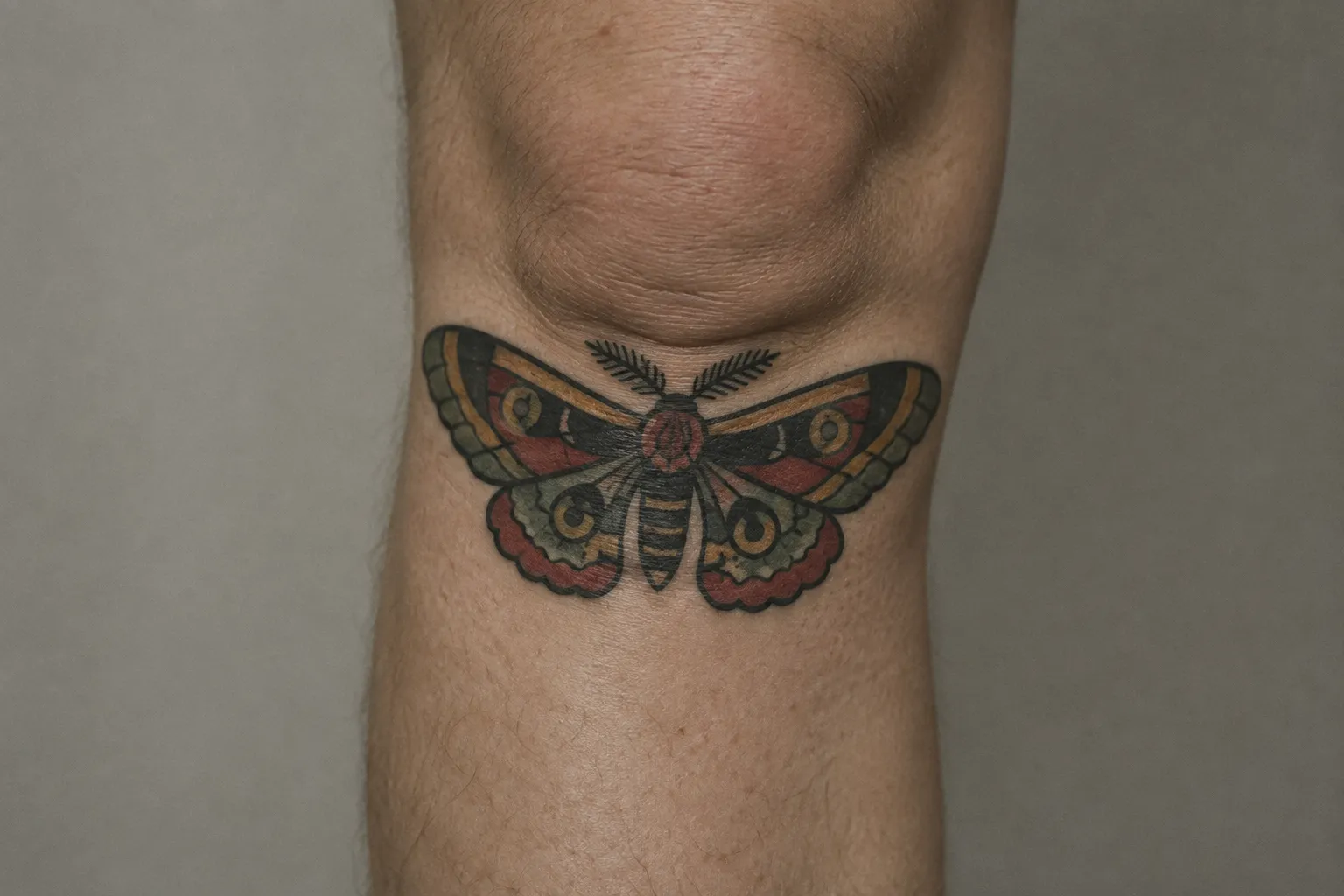
The upper shin is a hard placement too. Bone sits close to the surface, the skin stretches every time you bend your leg, and a fresh tattoo there gets flexed and rubbed. Designs here need bold, simple outlines, because fine detail on a bending joint tends to blur (6).
Flowers below the knee usually take the form of a small cluster or a single bloom with leaves trailing outward under the cap. It works as a bottom frame for a kneecap design, or as the whole tattoo if you want something lower-key.
Moths and bats suit this zone because their spread wings make a natural horizontal shape (5). A moth or bat with wings open across the top of the shin frames the cap like a pedestal.
Horseshoes also frame the cap from underneath (5). On the knee, open them upward so the curve cups the bottom of the kneecap.
Bracelet-like bands wrap around the leg just below the joint: beaded strings, ornamental lace, simple geometric bands. The band is a good choice if you want a below-knee piece that reads as finished on its own. The pitfall is symmetry around a cylinder that isn’t a true cylinder. A band that looks even when your leg is straight can tilt when you bend it, so check the stencil in both positions.
Pain Levels and Why They Vary So Much
Knee tattoo pain ranks high for most people: the kneecap has thin skin over bone with little padding, and the ditch at the back of the knee is soft, folded and nerve-rich (7). Pain still varies enough between people that no placement ranking can predict your session (7).
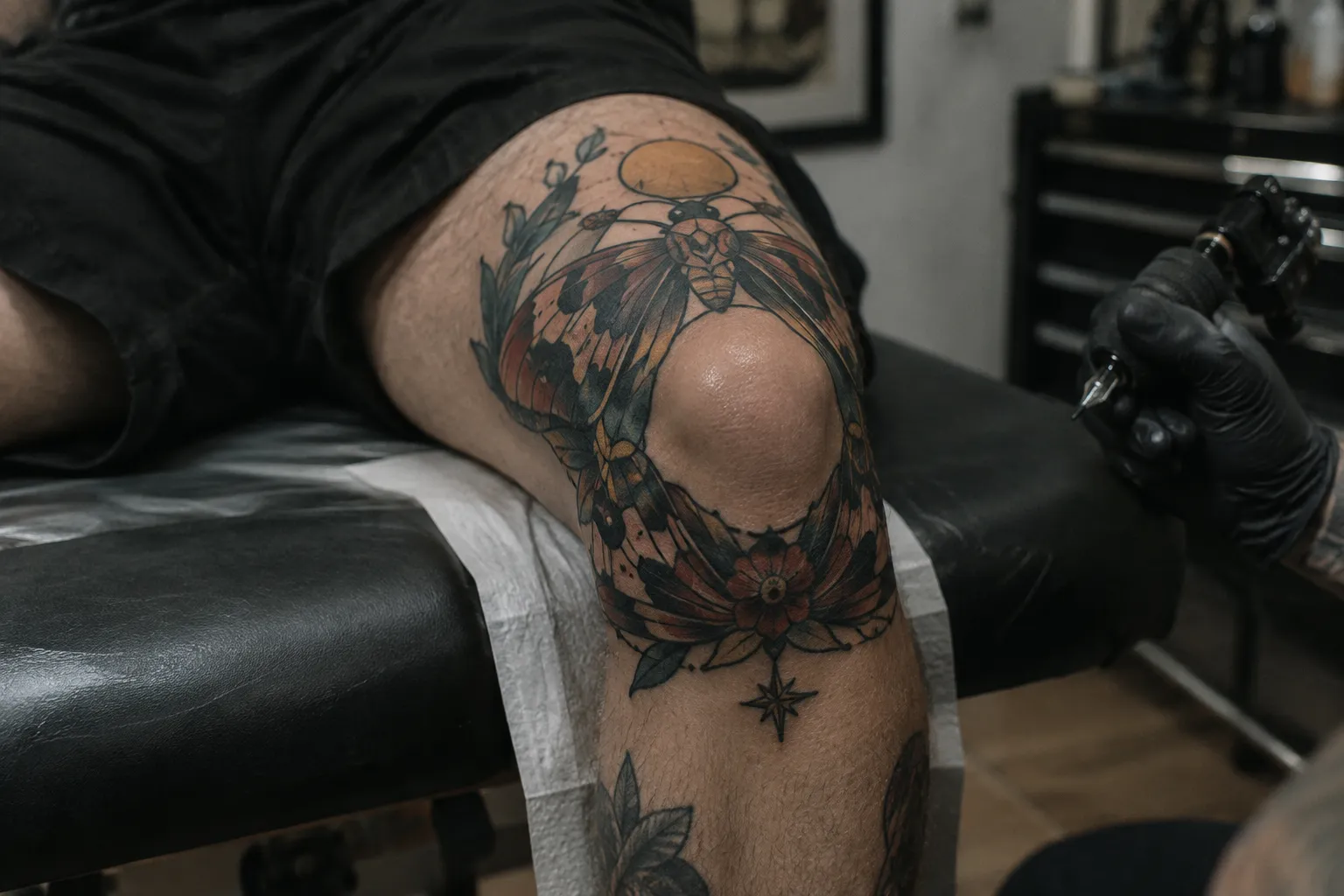
Pain for a knee tattoo is often described in two ways that seem to contradict each other. On one side, the knee sits in the high-pain group of most tattoo pain charts, next to the ribs and feet. On the other, plenty of people who sit for a knee piece describe it as unpleasant but manageable rather than the worst thing they’ve felt (6). Both can be true. A placement ranking describes a population average, not what you will feel. One tattoo artist who has had her own knee done says knee tattoos tend to be high on the pain scale for most people, yet she found hers painfully uncomfortable to sit still for, but not unbearable (5). A “high pain” ranking tells you where a placement sits relative to others; it doesn’t tell you what your own session will feel like.
In relative terms, the pattern is roughly (6)(7):
- Kneecap and the ditch at the back of the knee > the skin around and above the knee > outer thigh
Bony and creased areas usually hurt more than padded ones. Some people find the kneecap worse; others struggle more with the back of the knee (7). The thigh-side skin above the kneecap is the best-padded part of the knee area, which is why many people find it the most tolerable. But individual tolerance, skin thickness and how tired you are by hour two can all flip that, which is exactly why this is a conversation to have with your artist rather than a chart to trust.
If pain is your main worry, talk it through with your artist. Explain your tolerance honestly and ask whether they’d split the knee into shorter sessions (6). Starting with the above-knee zone before working onto the cap can also give you a sense of how your knee handles it.
A few things that make a session easier regardless of placement:
- Sleep properly the night before (7).
- Skip alcohol beforehand: it can thin the blood and increase bleeding (7).
- Speak up when you need a break, rather than tensing your whole leg through it (7).
Does It Matter If Your Leg Is Bent or Straight?
Leg position matters, because bending the leg stretches the skin over the knee and changes the shape of the surface the design sits on (7).
What matters most is that the artist checks the stencil in both positions before they start. A design placed only with a straight leg can stretch and drift sideways when you bend. A design placed only with a bent leg can bunch up when you stand. A good artist will have you stand, sit and bend before they commit.
Wear shorts or loose clothing that rolls up easily and won’t bind around the knee (7).
Preparing for the Appointment and Healing a Knee Tattoo
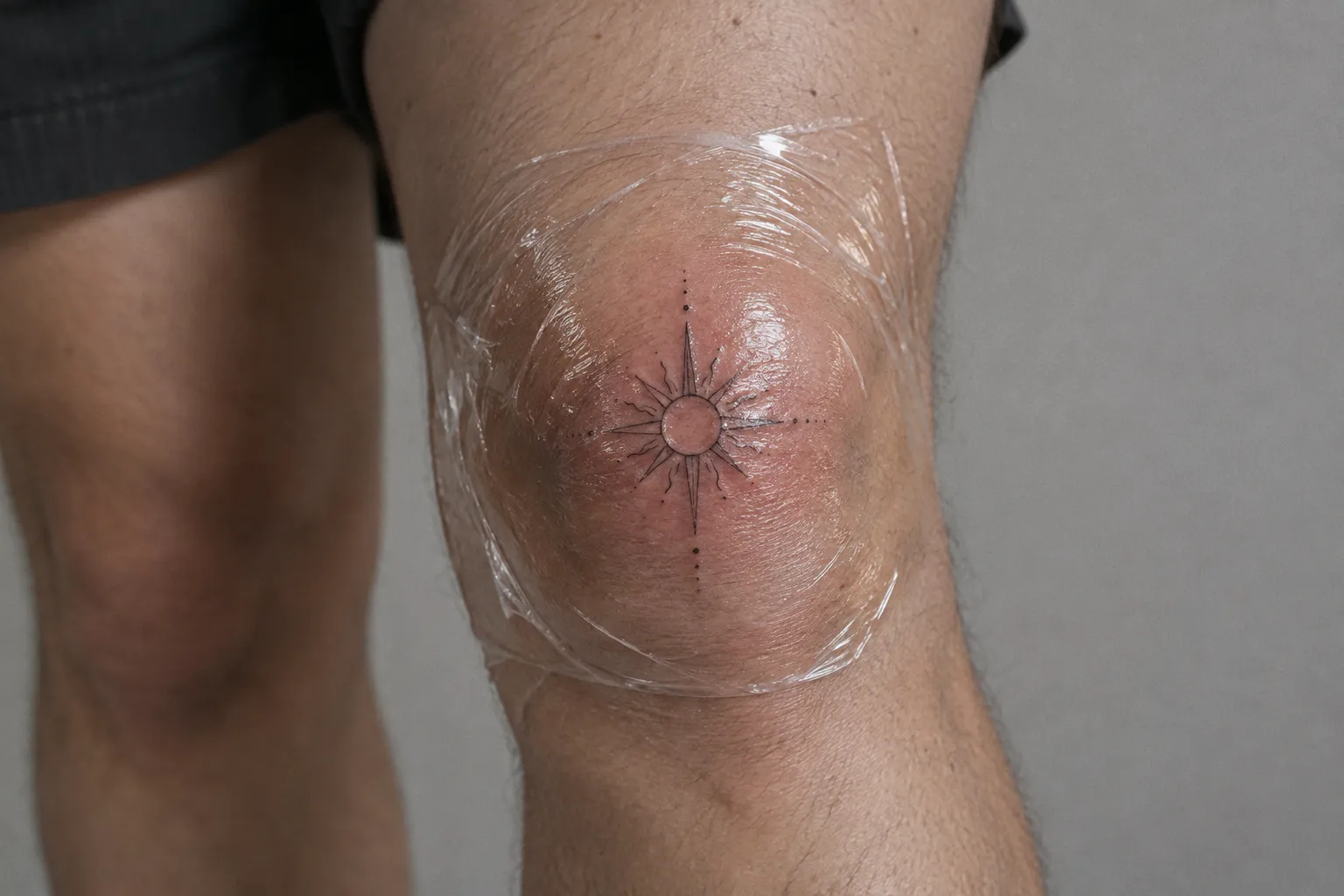
Knee tattoo preparation comes down to three things: exfoliate the dry skin over the knee in the days before, eat a substantial meal beforehand, and agree on placement with your artist. Healing then means resting and elevating the leg through the first few days of swelling, and following your artist’s specific aftercare.
Before You Sit Down
Exfoliate the knee in the days before your session. Knees tend to be dry and thick-skinned (5), and rough, flaky skin takes ink less evenly. A gentle exfoliation beforehand gives the artist a smoother surface. Don’t scrub so hard that you irritate the skin right before the needle hits it.
Eat a real meal before you go. A substantial breakfast or lunch helps (5), because low blood sugar can make pain feel worse (7). Bring a snack and water as well.
Settle the design for your chosen zone at the consultation, not on the day. Bring two or three references and say whether you want the cap, the space above it or the upper shin below. Then ask the artist directly whether the design will work there. A knee tattoo that reads clearly when you’re sitting is the result of that conversation.
Check the area for moles. More on this in the next section, but do it before you book, not on the day.
The First Few Days: Swelling and Movement
Expect a few days of tenderness and swelling; rest and elevate your leg where you can (5). A fresh knee tattoo gets flexed every time you take a step, so keep stairs, kneeling and long walks to a minimum for those first days if your schedule allows (7).
Normal healing on any new tattoo includes:
- Some redness and swelling.
- Soreness.
- Clear fluid oozing in the first stage.
- Itching, flaking and scabs as it heals. (1)
Signs that something has gone wrong include:
- Redness that darkens or spreads instead of fading.
- Pain that worsens instead of easing.
- Itchy, painful bumps within the tattoo.
- Fever, chills, pus or open sores.
If you see any of these, see your doctor or a board-certified dermatologist right away. (1)
A realistic timeline follows the stages in our tattoo aftercare guide, keeping in mind that a joint in constant motion is tricky to heal and can run behind it (6):
- Day 1-3: Swelling and tenderness are at their strongest. Keep the leg elevated when sitting, wear loose clothing that doesn’t rub the knee, and clean the tattoo as your artist instructs. No soaking, no baths, no pools.
- Day 4-7: The skin tightens and starts to flake, with light scabbing. Movement can crack scabs on the cap and in the folds of the joint, so don’t kneel on it and don’t pick at them.
- Week 2: Peeling and itching. Don’t pick or scratch, even when it itches.
- Week 3-4: The surface looks healed but can look cloudy or dull while the skin underneath keeps healing, with full integration around week 6. Keep moisturizing with a fragrance-free moisturizer and keep the knee out of direct sun for the first 4-6 weeks, using clothing rather than sunscreen on unhealed skin.
The knee can lag behind a flat placement, so if the creased skin around the joint still looks shiny or patchy after the rest has settled, don’t panic, and don’t start scrubbing at it.
Wet Healing vs Standard Aftercare
Some artists prefer “wet healing” for knees: keeping the tattoo consistently moisturized or covered so the skin doesn’t dry out and crack every time the joint bends (5). Other artists prefer a lighter touch: moisturize gently, but don’t overdo it (6).
Every artist has their own aftercare guidance, so the rule is simple: follow the aftercare from the artist who did your tattoo (5). They know their technique, the ink they used and how hard they worked the skin. Don’t swap in a routine from a forum or a different shop halfway through. If something in their instructions doesn’t make sense to you, ask them before you change it.
The short version:
- Exfoliate the knee before the session.
- Eat a full meal before the session.
- Agree on placement and design fit with your artist.
- Rest and elevate the leg for the first few days.
- Follow your artist’s specific aftercare rather than a generic routine.
- Switch to SPF 30+ water-resistant sunscreen once the tattoo is fully healed.
How to Prepare for and Care for a Knee Tattoo
Prepare the skin and session, then protect the moving joint through early healing and long-term sun exposure.
- 1
Prepare the skin
Gently exfoliate the knee before the appointment without irritating it.
- 2
Eat before the session
Have a substantial meal beforehand and bring water and a snack for a long appointment.
- 3
Confirm the design fit
Bring references and ask the artist to check the stencil for the chosen zone with your leg bent and straight.
- 4
Rest after the session
For the first few days, reduce unnecessary walking and elevate the leg when sitting.
- 5
Follow the artist's aftercare
Use the specific routine provided by the artist; ask them before changing between wet and dry healing.
- 6
Protect healed skin
Once the tattoo is fully healed, use water-resistant SPF 30+ sunscreen and keep checking the skin underneath.
Long-Term Care: Sun Protection and Checking the Skin Underneath
A healed knee tattoo needs broad-spectrum, water-resistant sunscreen of SPF 30 or higher, applied 15 minutes before going outside and reapplied at least every 2 hours. Before you get tattooed at all, check the chosen zone for moles. (4)
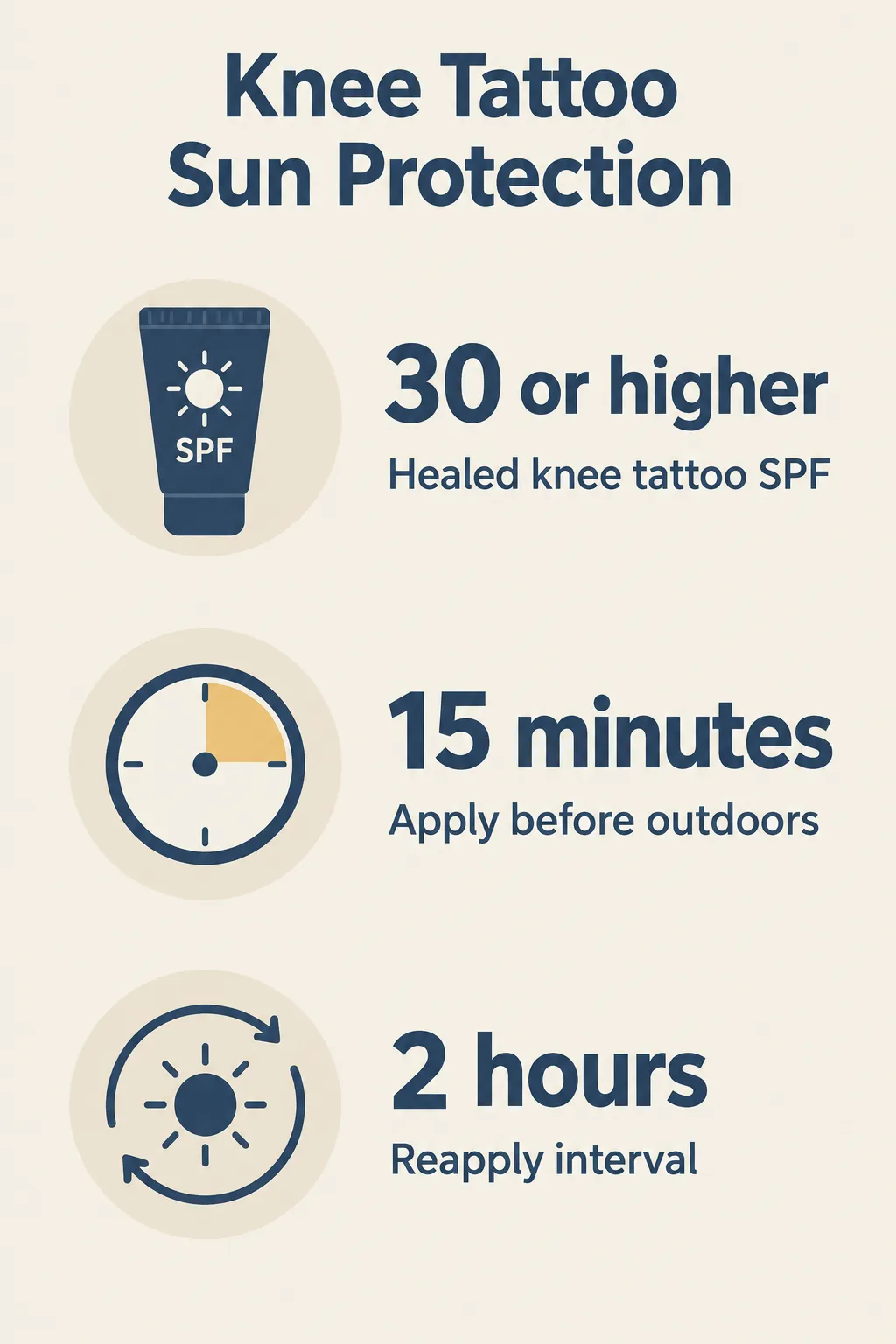 For healed knee tattoos, use water-resistant SPF 30 or higher, applied 15 minutes before going outdoors and reapplied at least every 2 hours.
The knee is one of the most sun-exposed spots on the leg every time you wear shorts. Ultraviolet light can fade tattoo ink, so the American Academy of Dermatology recommends broad-spectrum, water-resistant sunscreen of SPF 30 or higher on tattooed skin. Apply it 15 minutes before going outside and reapply at least every 2 hours. (4) For dry skin over a healed tattoo, the AAD advises applying a water-based lotion or cream. (4) That suits the knee, which tends to stay drier than the surrounding leg.
Recovery runs in two stages. First comes rest and elevation for the swelling in the first few days. Once the skin is fully healed comes ongoing sun protection. A joint that’s constantly moving and constantly exposed needs both. Skipping the second stage is how a sharp traditional rose turns into a blurry pink shape within a few summers.
Check the area for moles before you book. The AAD advises considering skin that’s free of moles for a tattoo, because ink over a mole can make early signs of skin cancer harder to spot. (4) Look over the kneecap, the lower thigh, the upper shin and the back of the knee before you settle on a zone. If there’s a mole right where the design would go, shift the placement or have the artist design around it, leaving the mole in open skin rather than shading over it. If you’re unsure about a spot, get it checked first.
Once you have the tattoo, keep an eye on the skin. A tattoo can react weeks or years after it heals. If the skin under or around your knee tattoo changes, or you notice a mole that looks different, see a dermatologist. (4) Tattooed skin can still be examined. It just needs someone looking at it.
Frequently Asked Questions
- Do tattoos on the knee hurt?
- Yes, for most people: the knee sits in the high-pain group, especially over the kneecap and in the ditch at the back of the knee, though many people find it manageable with breaks or a session split in two.
- Where is the least painful spot for knee tattoos?
- The thigh-side skin above the kneecap is usually the most tolerable part, while the kneecap and the back of the knee hurt most; tolerance still varies, so discuss breaks or shorter sessions with your artist.
- Do you tattoo a knee bent or straight?
- Ask your artist to confirm stencil alignment in both positions; a placement that looks centered only while sitting may shift when you stand.
- How long does a knee tattoo take to heal?
- The surface usually looks healed around weeks 3-4 and the skin finishes integrating around week 6, but a bending joint can run behind that; wait until the surface has fully settled before applying sunscreen or resuming friction-heavy activity.
- Can you tattoo over a mole on the knee?
- Do not cover a changing or unassessed mole with ink; have a dermatologist check it and plan the design around any spot that needs monitoring.
- Can I kneel or work out after a knee tattoo?
- Choose clothing and recovery plans that avoid direct pressure on the fresh tattoo; ask your artist when your specific activity is safe to resume.
Choosing Your Zone Before You Book
Choose the zone first and the image second:
- Kneecap: symmetrical, centerpiece designs like mandalas, spiderwebs, or a single traditional peony, rose, bear head or sacred heart with bold outlines.
- Above the knee: the best-padded and most tolerable zone. It suits floral frames, butterflies, partial mandalas, barbed wire and short script sized to at least 12 mm (1/2 in) letter height.
- Below the knee: moths, bats, horseshoes, small flowers and bands that frame the cap, with outlines bold enough to survive the bend.
Expect high pain but don’t let a chart decide for you. Pick an artist who will check the stencil with your leg bent and straight. Rest and elevate through the first few days, and follow that artist’s aftercare, wet or dry, rather than a generic routine. Once the tattoo is healed, keep water-resistant SPF 30+ on it and keep checking the skin underneath.