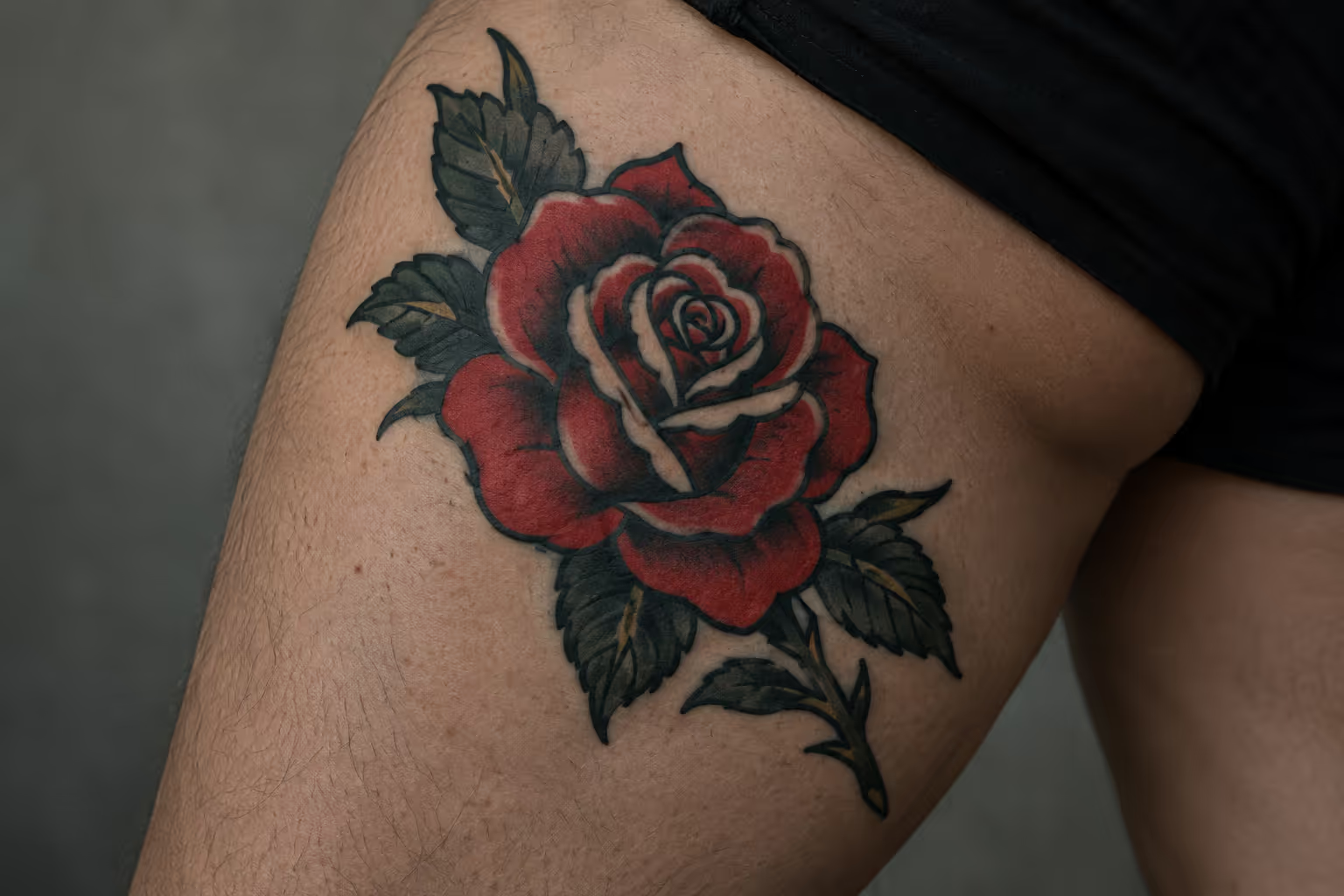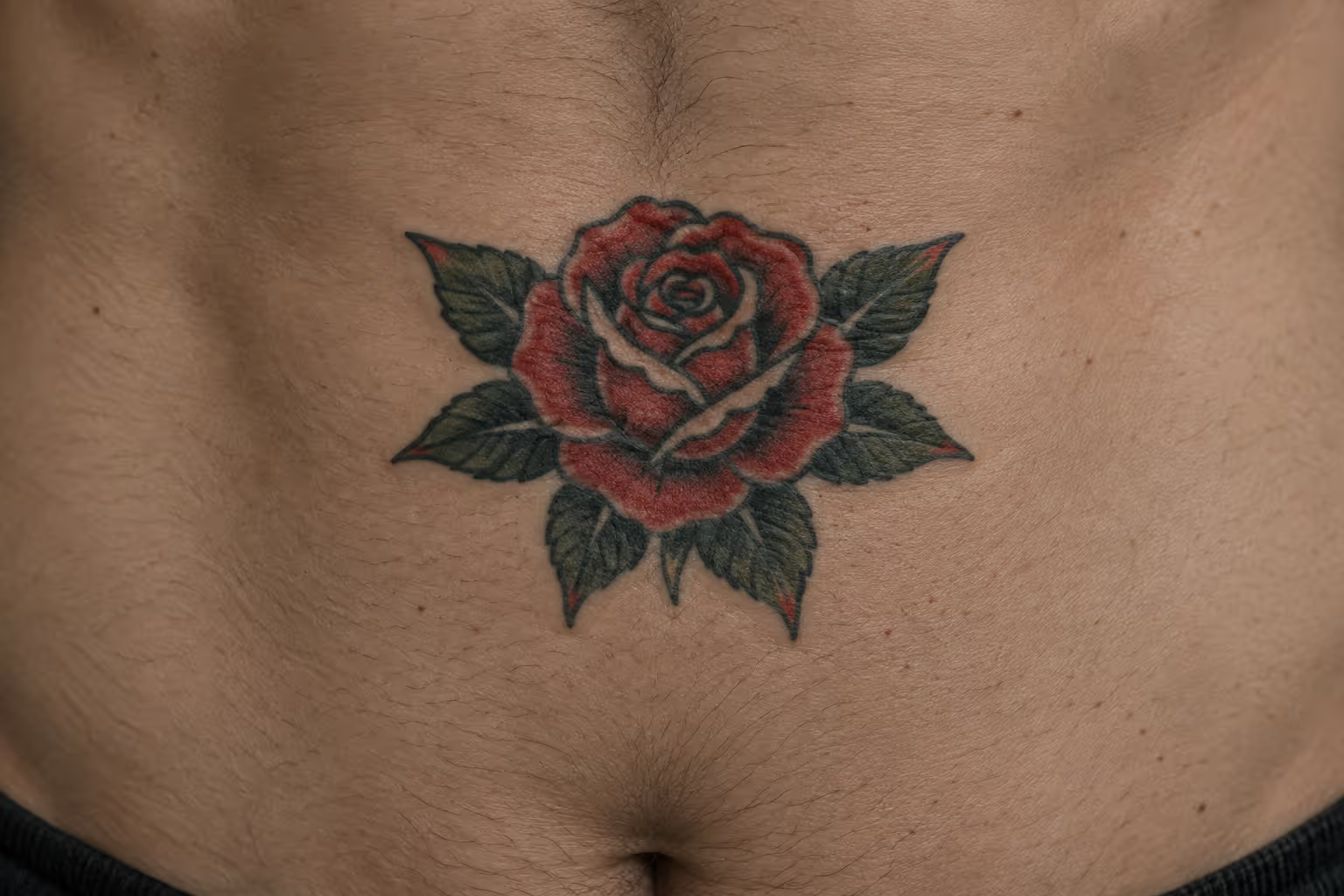
The navel splits a stomach tattoo into two different jobs. The upper abdomen, between the sternum and the belly button, sits flatter, just below the ribcage. The lower abdomen folds every time you sit and lies right where skin stretches most during pregnancy or weight change. Match the placement to the design’s size and shape, expect above-average pain, and time the session around any planned pregnancy.
The trade-off in short: you get a large, flexible area that disappears under a shirt. In exchange, pain reports run higher than for an arm, stretch marks can cross the design later, and waistbands rub on it while it heals.
✓ Pros
- The navel gives you a natural reference point for balancing a centered design.
- Organic motifs can accommodate small changes in skin texture better than straight lines or rigid geometry.
✗ Cons
- Folds and breathing make the skin a moving surface for both placement and line work.
- Pain tends to rise near the ribs, the hip bones and the belly button.
Stomach Tattoo Ideas by Placement: Upper, Lower, and Sides
Stomach tattoo ideas work best when matched to one of three placements (upper abdomen, lower abdomen, or sides and hip line) rather than to the belly as one flat area (3)(4). Each zone suits a different scale and shape, so choose the spot by the size of the design and how it sits relative to the navel and ribs (4)(7).
Upper Abdomen Placement Ideas
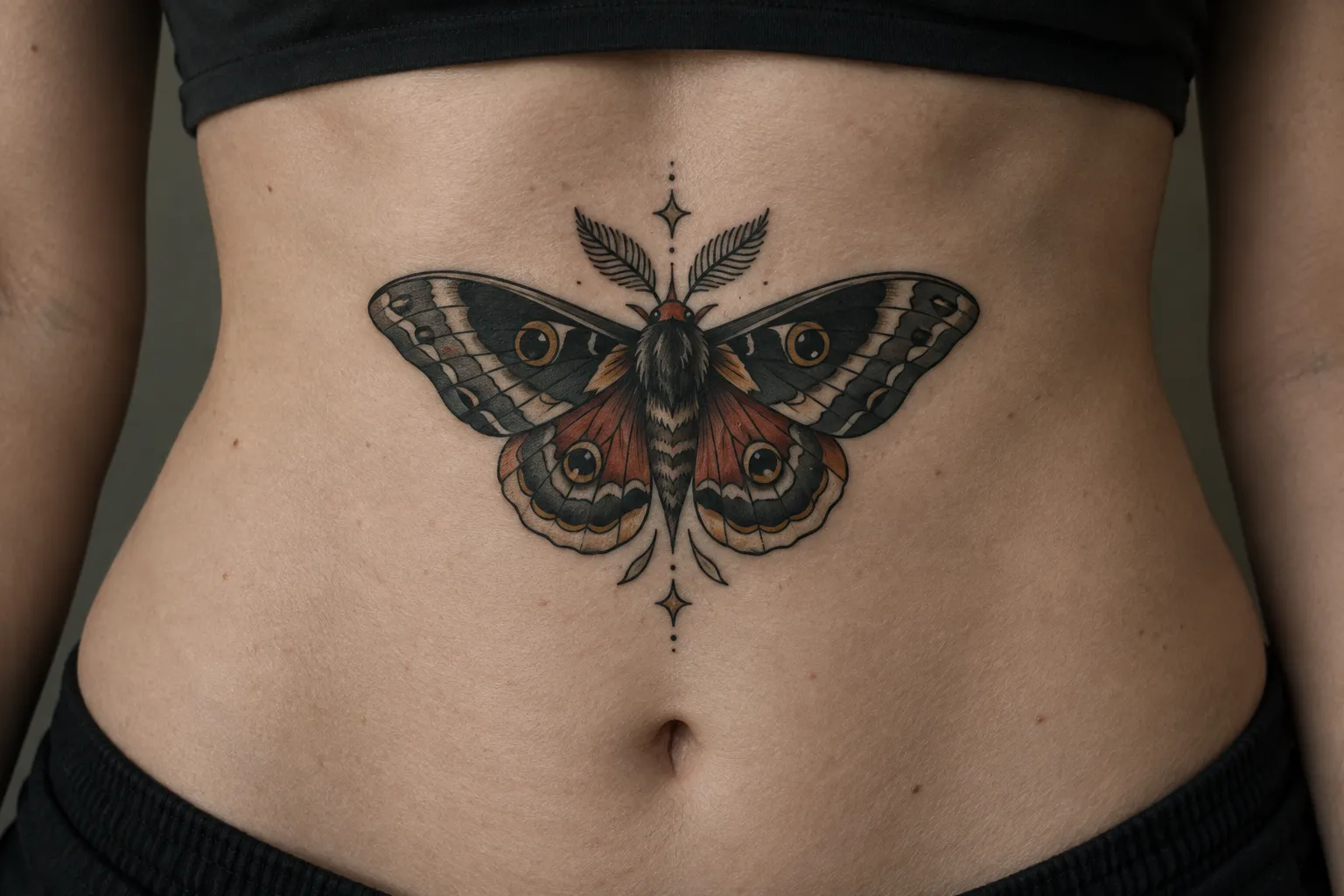
The upper abdomen suits centered, symmetrical compositions that hang below the chest, such as florals, mandalas, sacred hearts, or a moth with its wings spread (3)(4)(6). Your midline is the reference point here. An off-center piece looks crooked every time you breathe or twist. Sizes range from palm-sized up to a panel running from the sternum to the navel.
Lower Abdomen Placement Ideas
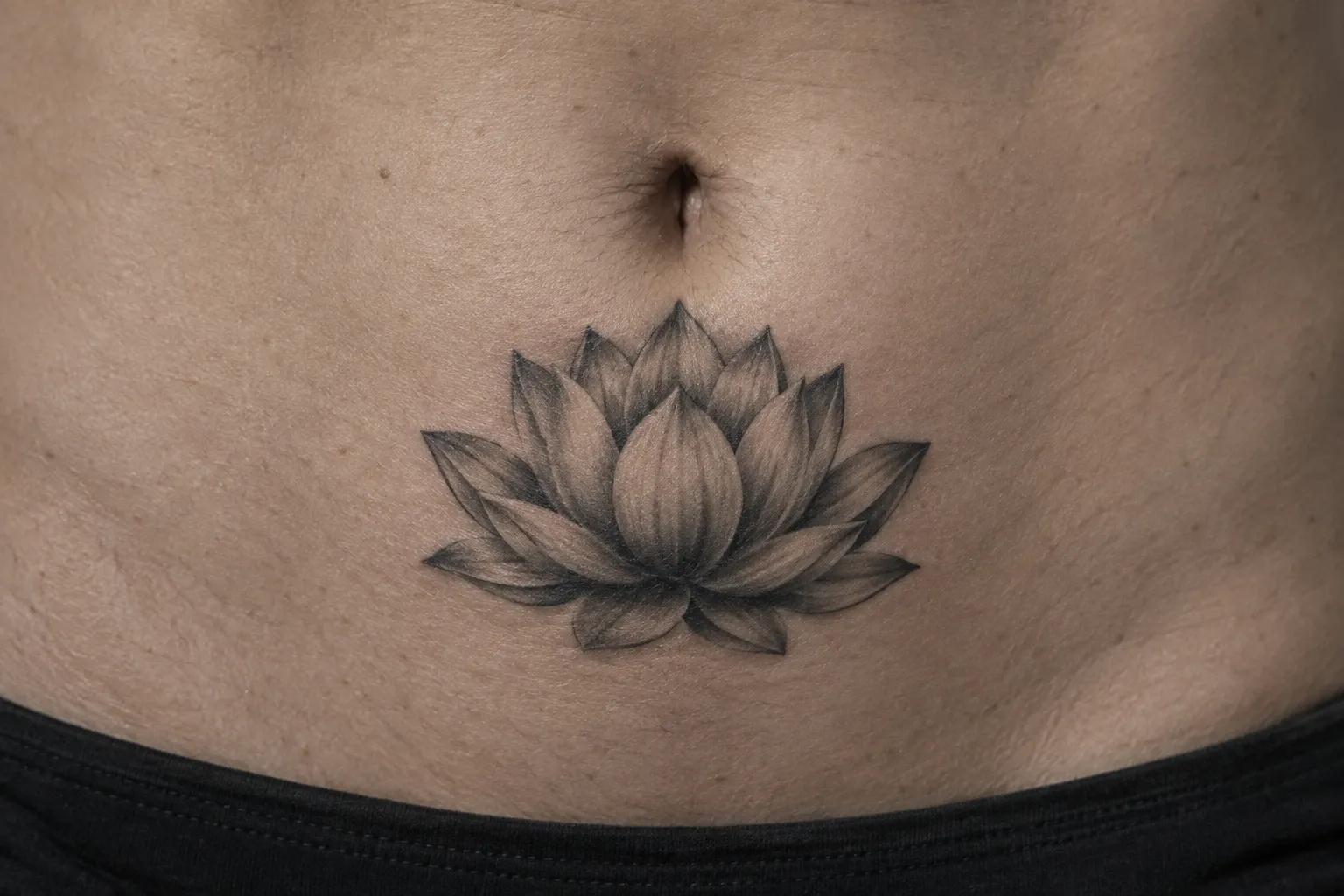
Below the navel, small lotus and floral motifs are common, and the area also has room for wider compositions (6)(7). The lotus is read as rebirth and spiritual awakening (7), or more broadly as growth and resilience (4). This is also the zone that pregnancy stretches hardest and that waistbands press on.
Side and Hip-Line Placement
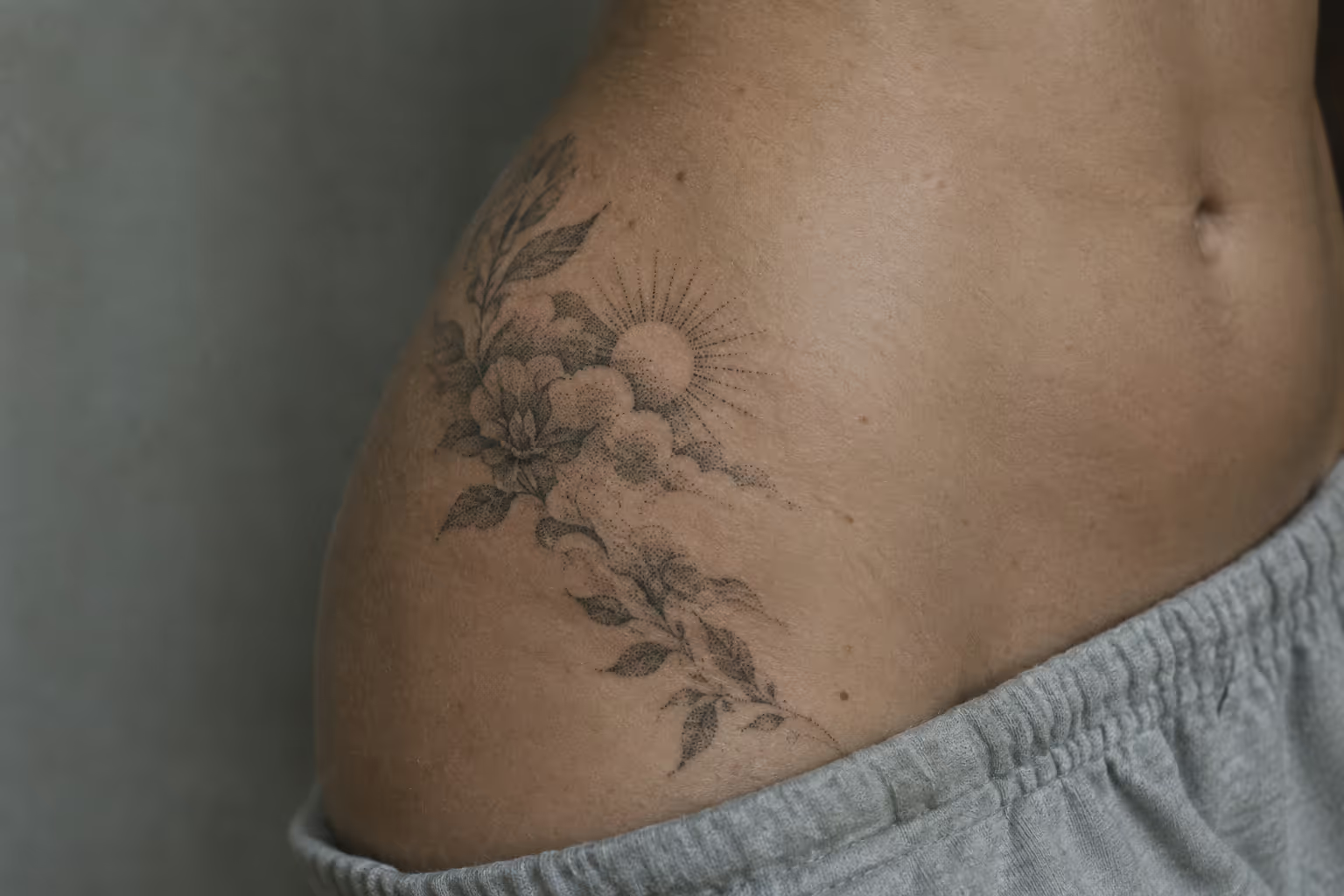
Side placements can frame the abdomen or carry a design toward the ribs or hips (3)(4). Curved stems, snakes, and script that follows the hip line all fit this area. A design that climbs onto the ribcage itself becomes a rib tattoo, with its own pain and healing considerations. If you choose lettering, keep standard script at a letter height of at least 12 mm (1/2 in) so it stays readable as it heals.
The table below lines up how each zone compares on fit, visibility, and stretch exposure.
Upper, Lower, and Side Stomach Placements Compared
| Upper abdomen | Lower abdomen | Sides and hip line | |
|---|---|---|---|
| Design fit | Centered, symmetrical compositions | Small motifs or wider compositions | Curved designs following the ribs or hips |
| Visibility when clothed | Hidden under most tops | Easiest to conceal | Can show in crop tops and swimwear |
| Stretching exposure | Lower than below the navel | Highest during pregnancy | Lower than the center |
Pain, Terminology, and Why This Spot Is Tricky to Tattoo
Our tattoo pain chart puts the stomach in its top tier, alongside the sternum and armpits and well above the outer forearm. On the belly itself, pain tends to rise near the ribcage, the hip bones and the belly button, and it varies with your own tolerance and how much padding the area has (7). For a first tattoo, start smaller: a small design keeps the session short, and a less sensitive placement is a gentler place to learn your tolerance (7).
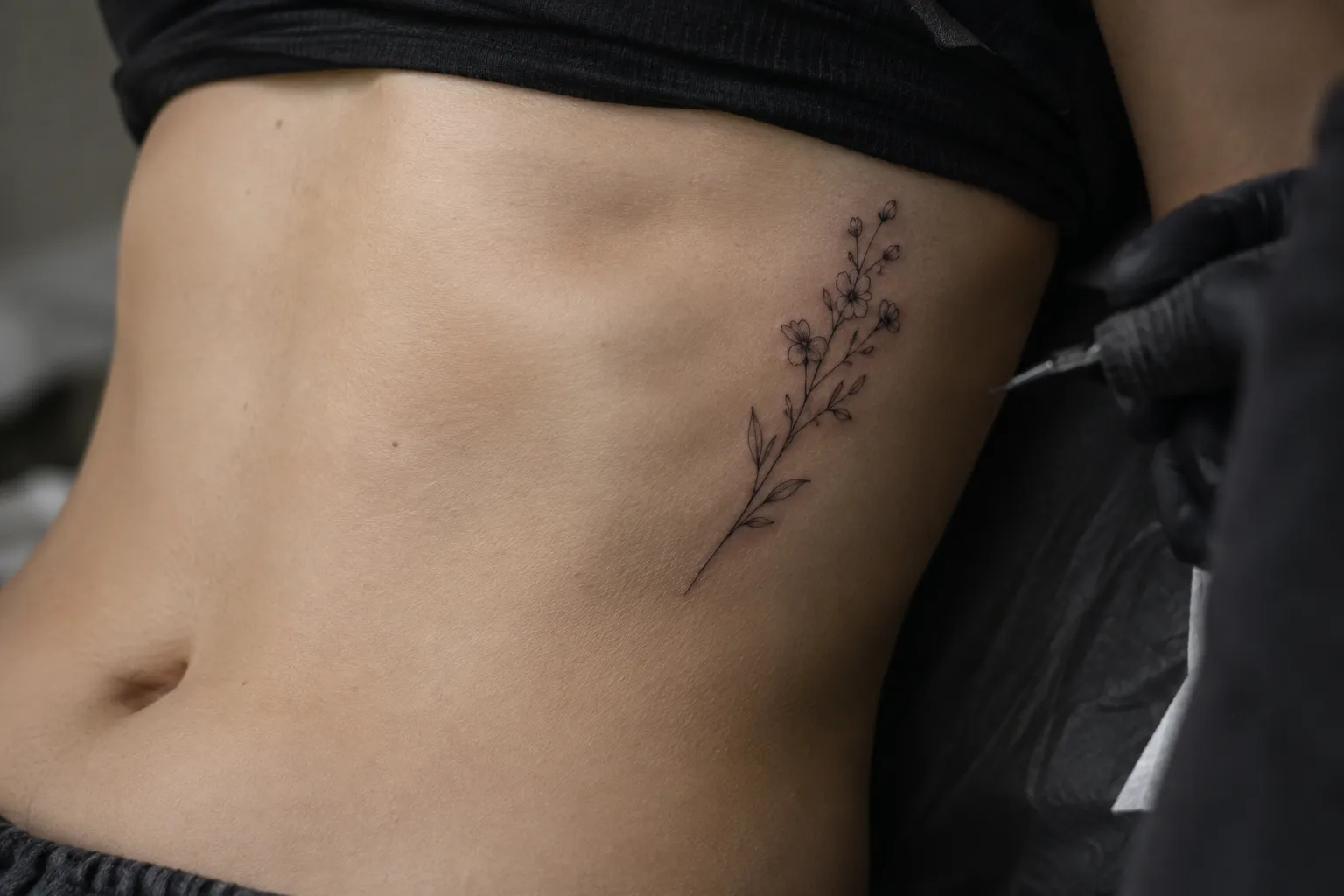
The area has no special name. “Tummy tattoo,” “belly tattoo,” and “abdomen tattoo” all mean the same thing. A piece covering the whole front is usually called a full stomach piece.
The skin here rises and falls with each breath, which makes the area harder for the artist to work (7).
Pregnancy, Weight Change, and What Happens to the Design
A design here changes because of the skin underneath, not the ink. The American Academy of Dermatology describes stretch marks as a type of scar that forms when skin stretches or shrinks quickly, as it does in pregnancy or rapid weight change (10). They occur in 50% to 90% of pregnant women, and the abdomen is one of the areas most commonly affected (11).
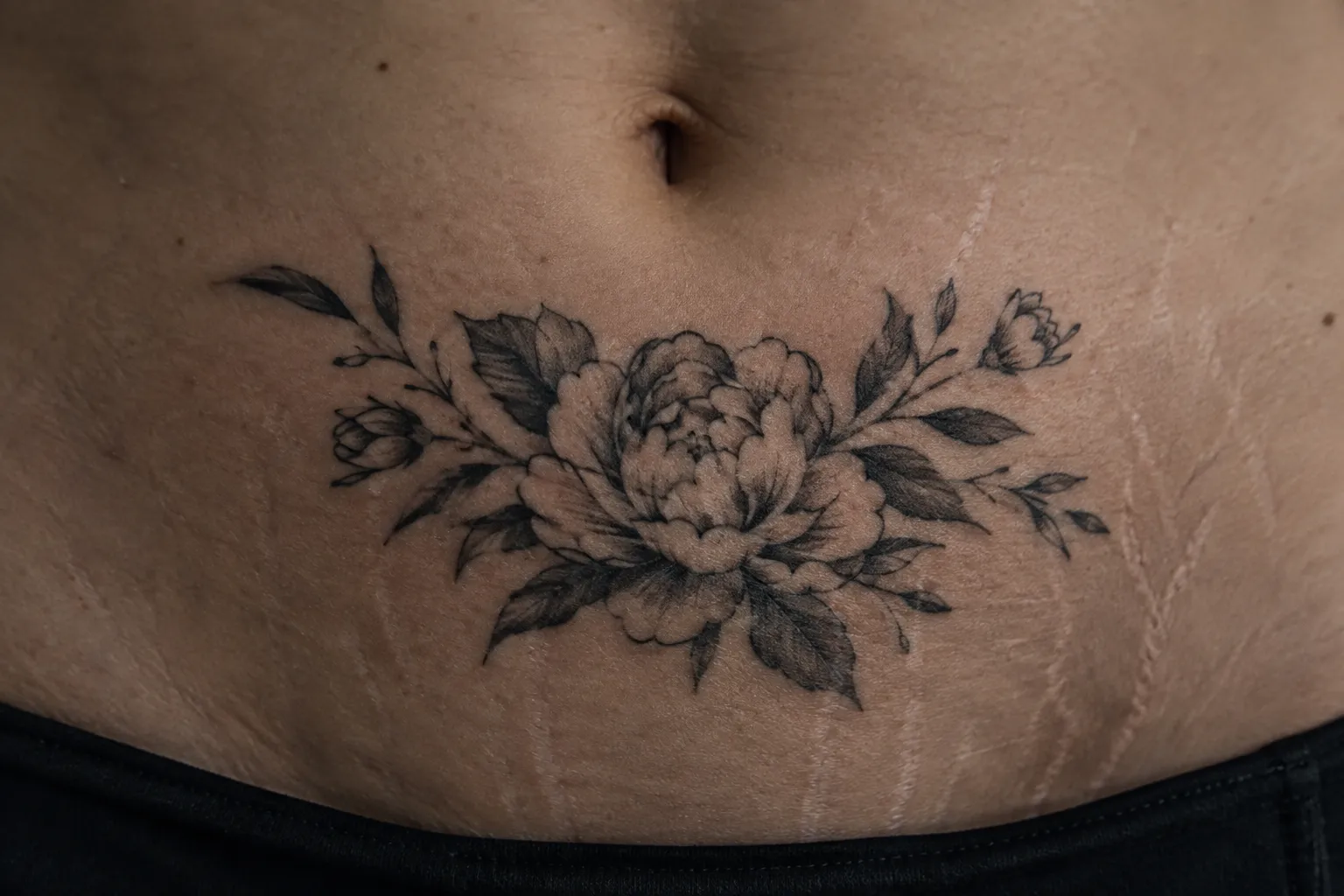
What Stretching Does to the Skin
Stretch marks are most likely during pregnancy, rapid weight loss or gain, and fast muscle growth from weight training (10). They start red, purple, pink, or brown depending on skin tone. Over time they fade and sink, leaving a slight depression, and they are permanent (10). When the skin under a tattoo stretches, its lines and colors can change (9). Designs built on natural elements or abstract shapes adapt to body changes better than geometric shapes or straight lines (7), and our tattoo placement guide ranks the lower belly among the zones most likely to distort.
Planning a Stomach Tattoo After Pregnancy
Because evidence on tattooing during pregnancy is limited, the general medical advice is to avoid it while pregnant or breastfeeding (9), and the safest course is to wait until after both before getting a stomach piece, since the stretching involved can alter how the design looks. Stretch marks can also be worked into a later piece: florals, branches or celestial designs can follow or absorb their lines (7), and cover-ups tend to be larger and more intricate so they hide the marks completely (3).
Cost, Sessions, and Aftercare for a Stomach Piece
A stomach piece is priced by size, detail, and the artist’s rate. A small design can often be finished in one sitting, while a full stomach piece takes several sessions (7) and costs markedly more than a small lower-abdomen motif.
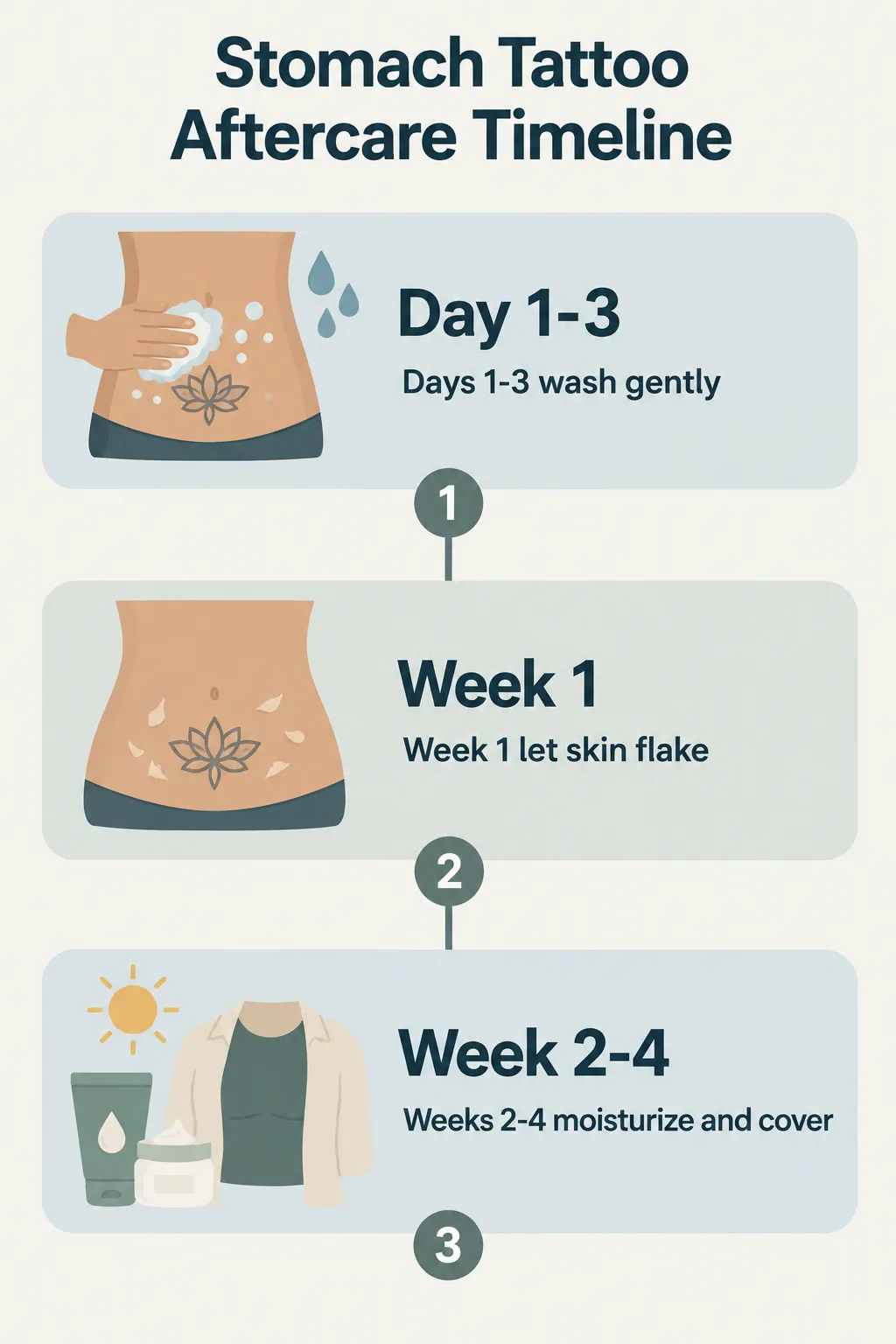 Wash gently on days 1-3, leave flakes alone through week 1, and keep moisturizing and covering up through weeks 2-4.
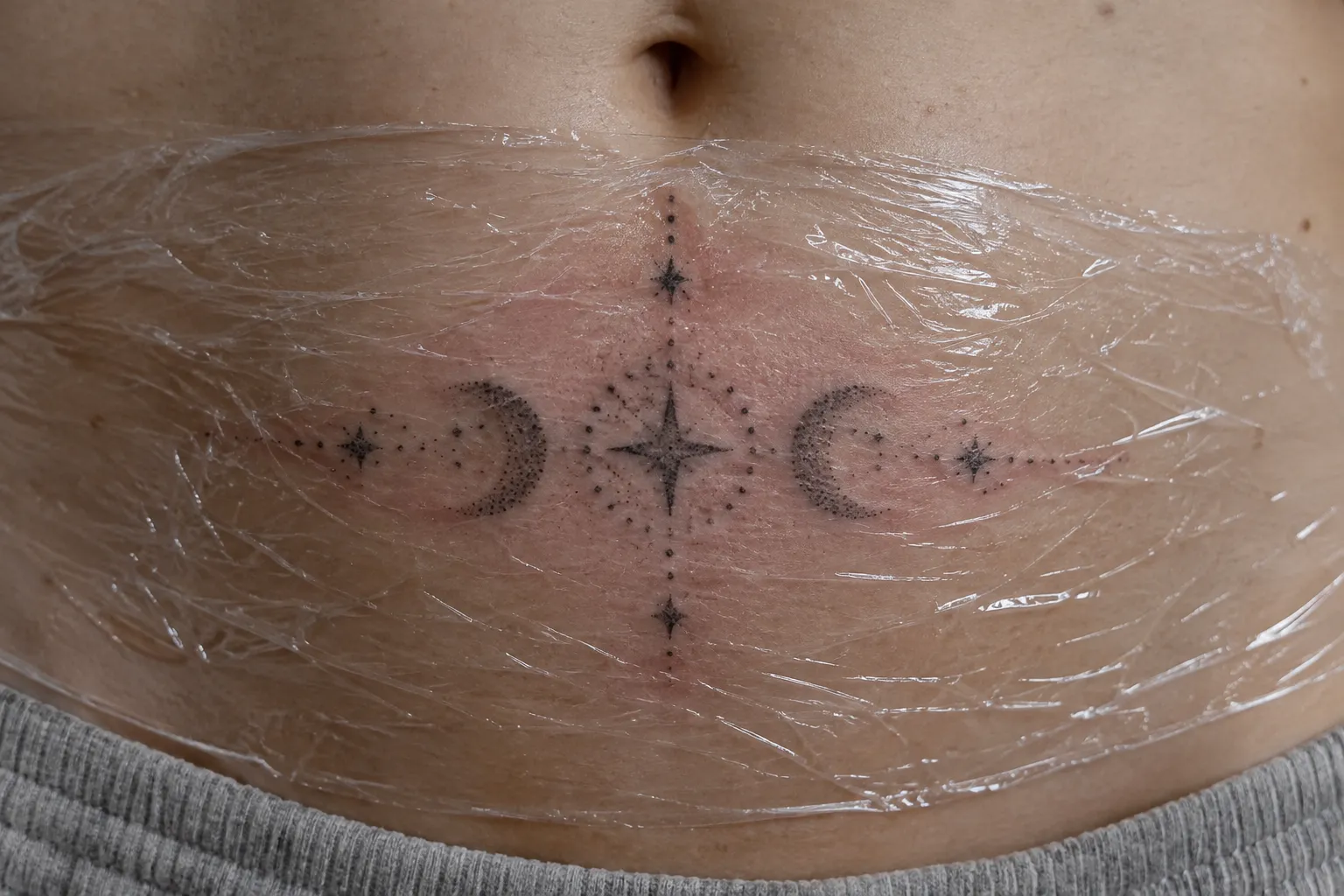
Confirm that the studio works with sterile equipment. The FDA links tattoo infections both to unhygienic practices and non-sterile equipment and to contaminated inks, and warns that even a sealed ink can carry bacteria (1).
- Day 1-3: wash gently two or three times a day, pat dry, and apply a thin layer of fragrance-free moisturizer. Wear loose, high-waisted clothing so nothing rubs the tattoo, and avoid sleeping on your stomach (7).
- Week 1: from around day 4 the skin tightens and flakes; let it flake without picking at it. Stay out of pools, baths, hot tubs, and the sea for at least two to three weeks (7).
- Week 2-4: peeling and itching peak in week 2; keep moisturizing and cover up. Keep the tattoo out of direct sun for 4 to 6 weeks, as our tattoo aftercare guide explains.
If the tattoo is not healing or develops a rash, especially with a fever, contact a healthcare professional. Tell your artist and note the ink brand, color, and lot number (1).
Frequently Asked Questions
- How painful is a stomach tattoo compared with other placements?
- The stomach ranks among the more painful placements, well above the outer forearm, and pain tends to rise near the ribs, the hip bones and the belly button.
- What is a tummy tattoo called?
- A tummy tattoo is also called a stomach, belly, or abdomen tattoo; a design covering the whole front is often called a full stomach piece.
- Why can a stomach tattoo be harder for an artist to line cleanly?
- Breathing keeps the abdominal skin moving, which makes the area harder for the artist to work.
- How can I compare quotes for a stomach tattoo?
- Ask each artist to quote the same design, approximate size, and placement, and clarify whether the estimate covers one sitting or multiple sessions.
- When is it sensible to schedule a stomach tattoo after pregnancy?
- Wait until pregnancy and breastfeeding are over and the skin has settled; an artist can then assess stretch marks before placing or adapting the design.
- Can gradual weight change distort a stomach tattoo?
- Gradual weight change is less likely to create stretch marks than rapid change, but major shifts can still alter how abdominal skin and lines sit.
Choosing Your First Stomach Placement
Pick the upper abdomen for symmetrical pieces, the lower abdomen for small motifs you want hidden, and the sides for designs that flow toward the ribs or hips. Treat pain as personal rather than a fixed score. If a pregnancy or major weight change is coming, wait. Bring your design to your artist, have it placed on your body standing up, and plan for about a month of careful aftercare and six weeks out of direct sun.