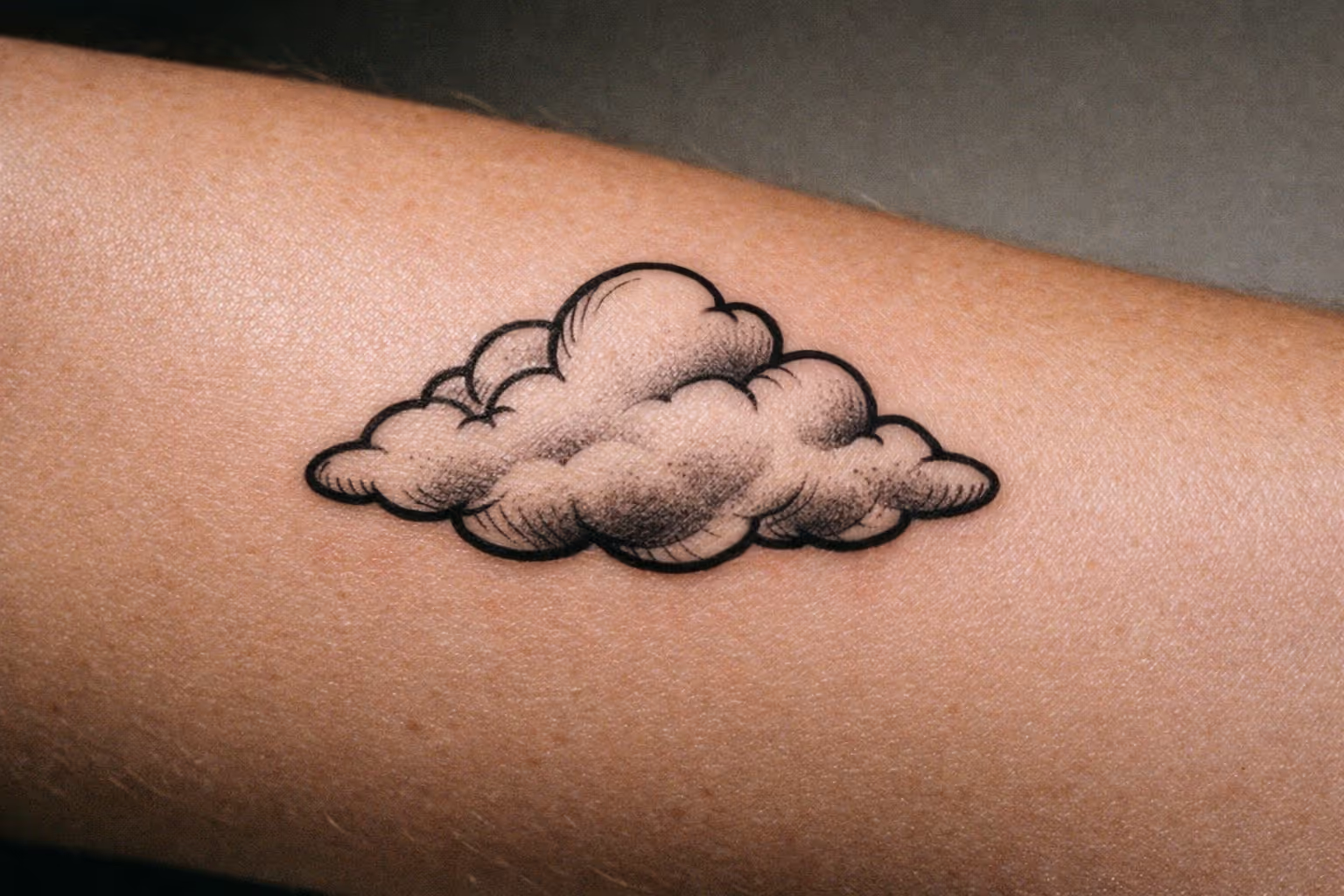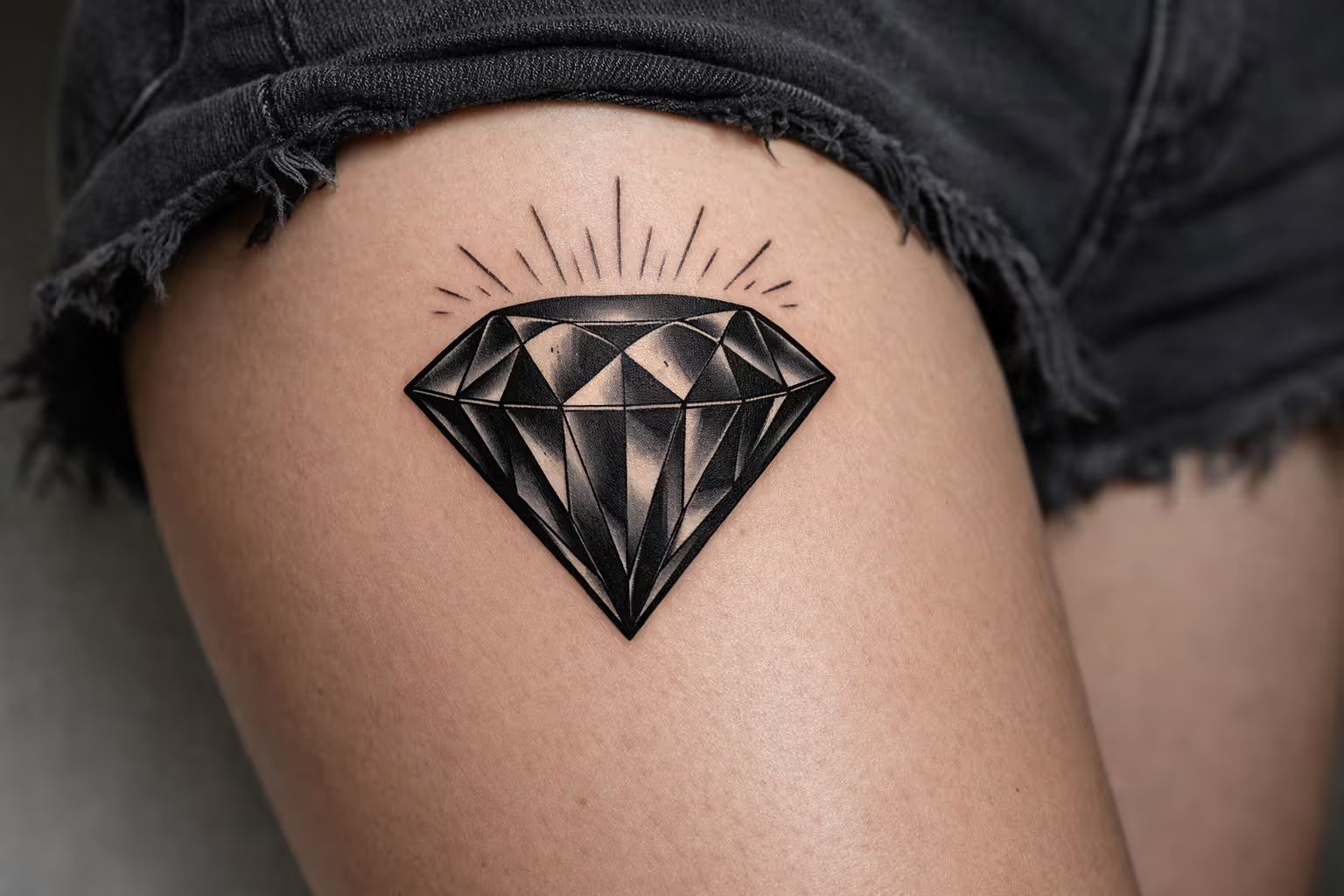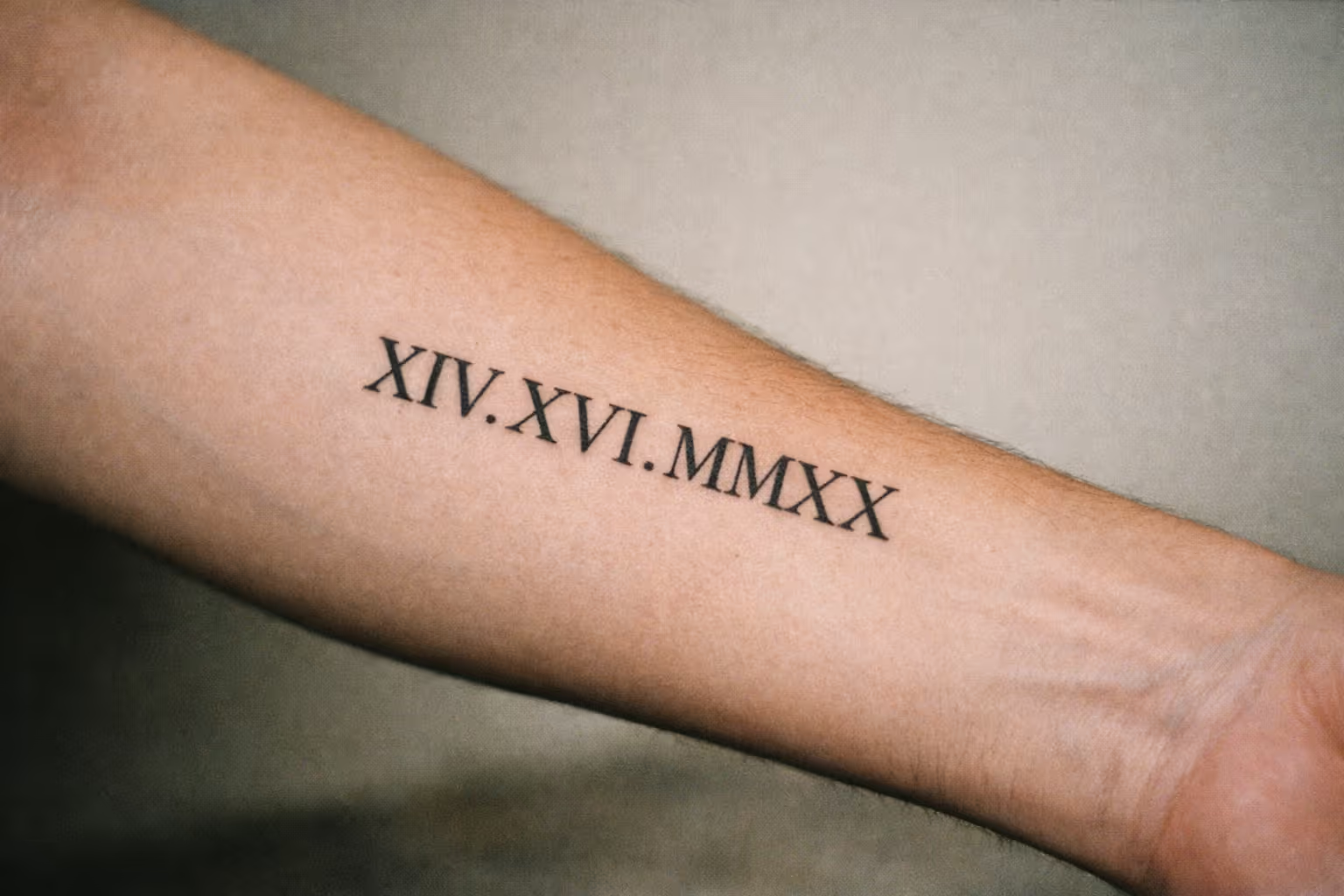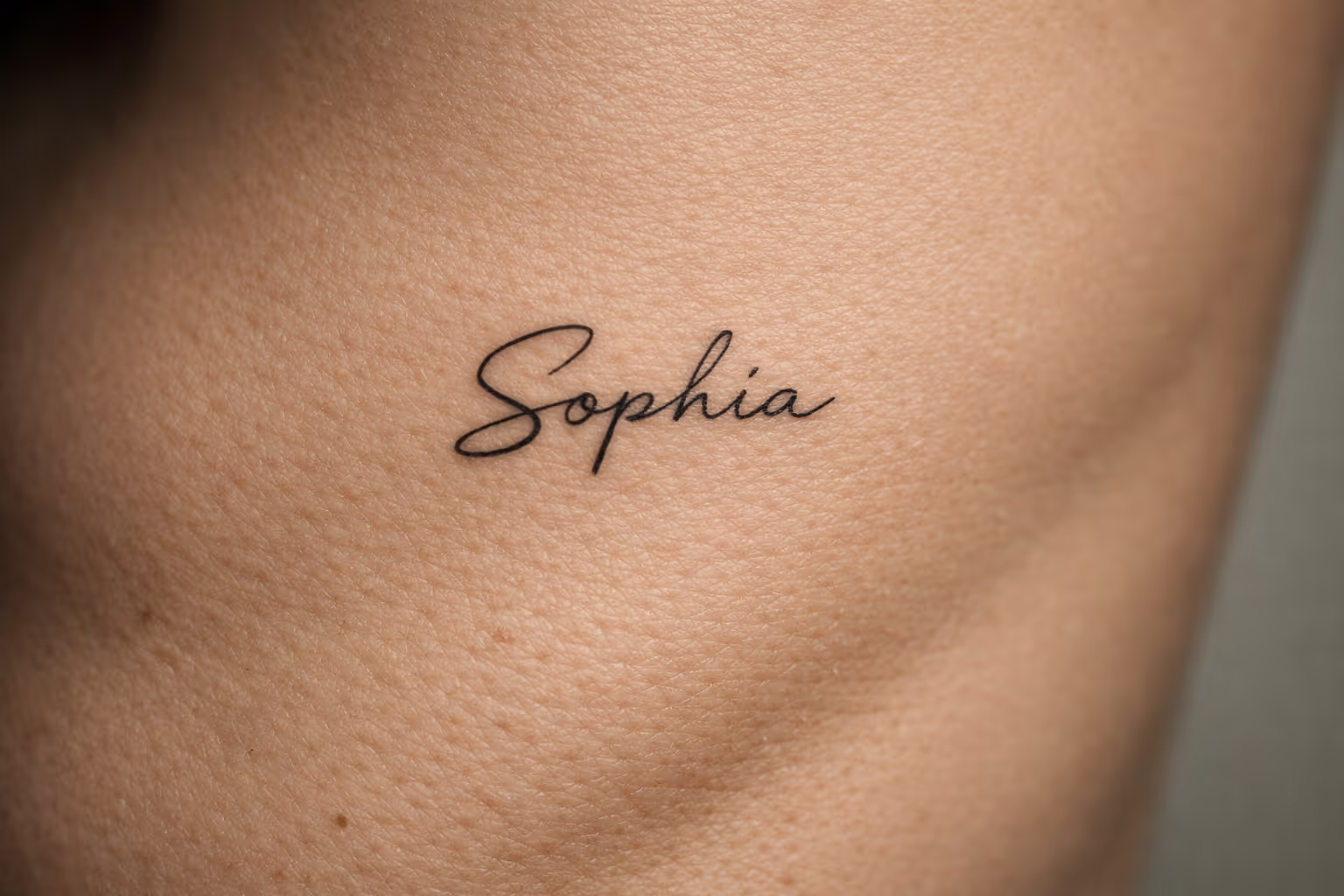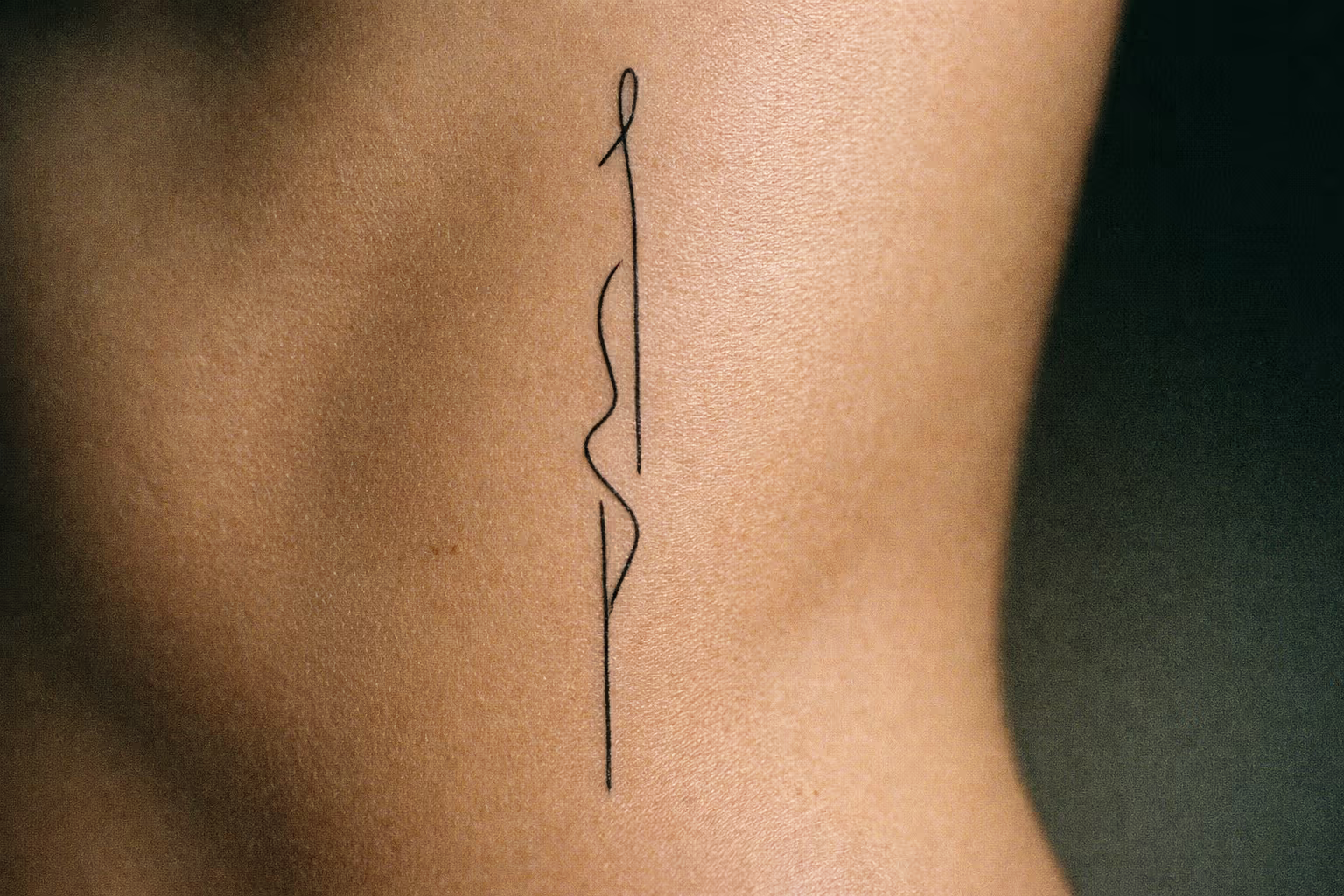
Your ribcage expands and contracts roughly 20,000 times a day, and a rib tattoo asks a tattooer to work clean lines across a surface that never stops moving. That single fact explains why this placement hurts more than a forearm, heals differently, and punishes design choices that would be fine on flatter skin. A rib tattoo can sit on the side ribs, the front ribs near the sternum, or the under-rib zone by the waist. This guide covers what each zone actually feels like, which designs hold up on a curved moving canvas, and the healing logistics that make or break the result.
The short version: the pain is real, the placement is concealable, and bold, well-scaled work ages better here than ultra-fine detail. Now the specifics.
✓ Pros
- Long, curved canvas suits vertical compositions, scripts, florals, snakes, and wraparound designs
- Concealable under most clothing; visible in swimwear or fitted tops
- Pairs naturally with adjacent placements (sternum, hip, waist) for larger compositions
- Front-rib zone is more manageable pain-wise than the side ribs
✗ Cons
- Consistently ranked among the most painful tattoo placements - thin skin, bone proximity, constant breathing movement
- Healing complicated by friction from clothing (bra bands, waistbands), side-sleeping, and torso movement
- Session requires extended stillness and breath control; more breaks than fleshier areas
- Ultra-fine detail in a curved, moving area can blur faster than expected
What Exactly Is a Rib Tattoo, and Where Does It Sit?
A rib tattoo is any tattoo placed on the ribcage, split across three zones: the side ribs (the classic placement running along the lateral torso from armpit toward hip), the front ribs (closer to the sternum, with slightly more padding), and the under-rib or floating-rib area near the waist. The side ribs get the most attention because they run vertically along the ribcage, following the body’s natural lines - which is exactly why the long, narrow, curved shape suits vertical designs and fights horizontal ones.
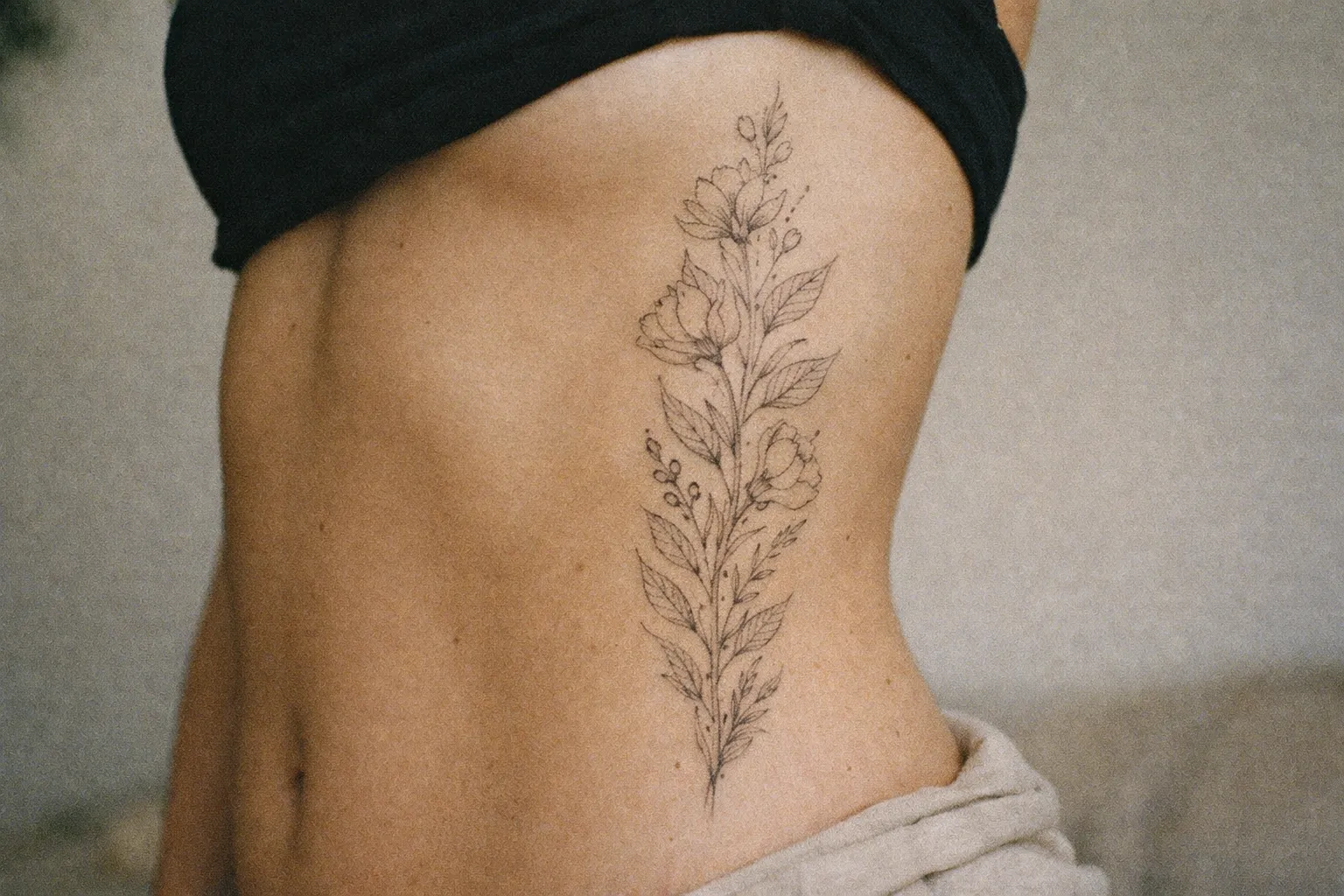
That canvas shape dictates everything. Rib pieces typically run from 3-4 inches (7.5-10 cm) for a small script or symbol up to 10-14 inches (25-36 cm) for a full side-panel composition. The ribcage also connects to the sternum, hip line, and waist, which matters if you plan to extend into a larger composition later - design the rib piece to connect rather than clash.
Side Ribs vs. Front Ribs: Which Zone Are You Actually Getting?
The side ribs sit on the lateral torso and carry the highest pain and the most breathing movement. The front ribs, closer to the sternum, have slightly more flesh and read as somewhat more tolerable. The under-rib / floating-rib area near the waist is lower and often chosen for smaller pieces, though it can get sharp near the lowest floating ribs.
There’s no single formal term for the side placement - most artists and clients just call it a side rib tattoo, a side piece, or a side panel when it covers a larger stretch of the lateral torso.
Ideas and Designs That Actually Work on This Canvas
Design orientation is the first decision, and it matters more here than almost anywhere. Pieces that follow the body’s natural angle - vertical or diagonal along the ribs - age better visually than horizontal designs fighting the torso’s curve. The second rule: on a moving, curved surface, very small intricate elements blur faster than the same detail on a flat, stable placement like the outer forearm. Design around that instead of ignoring it.
Script and Lettering
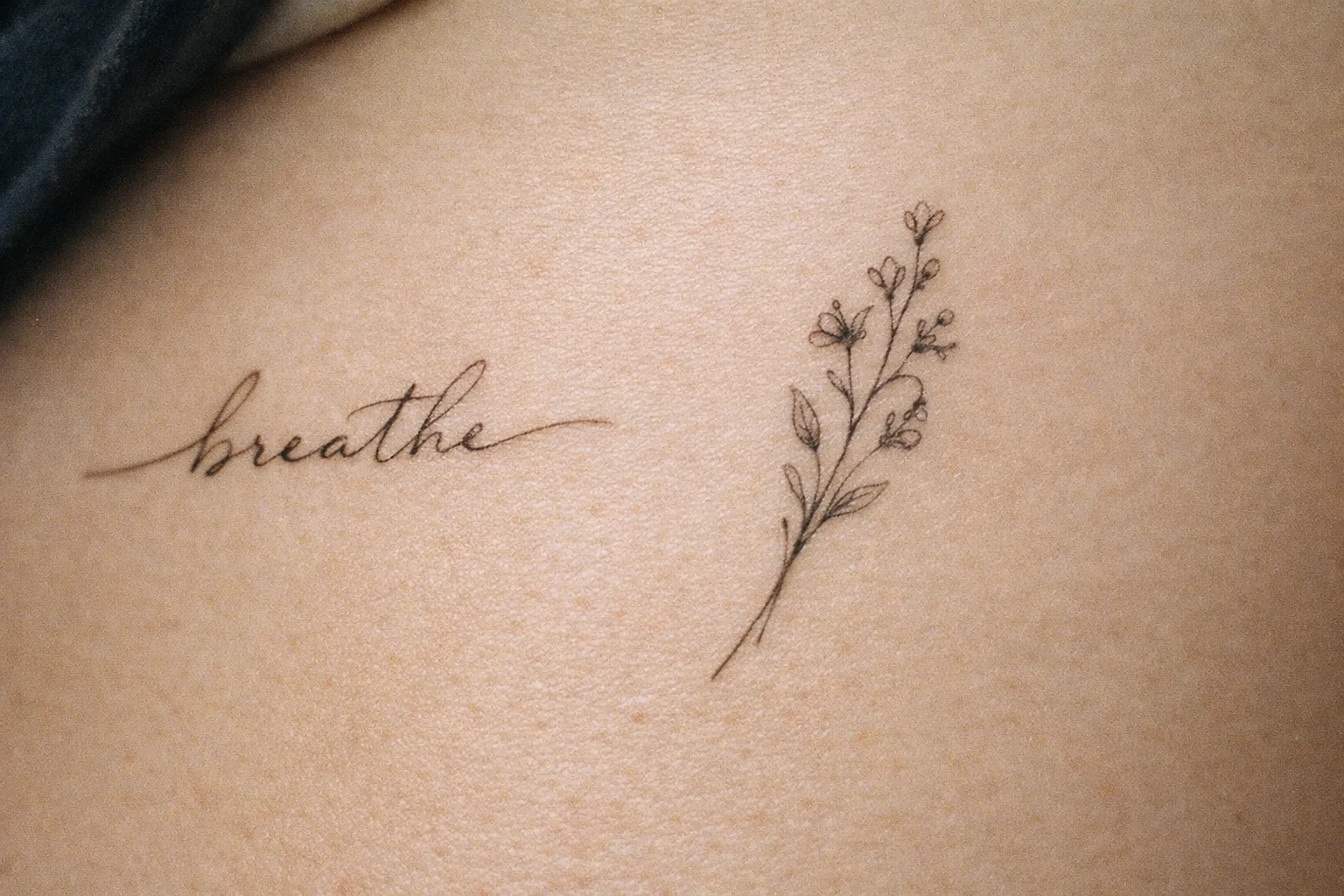
A script rib tattoo is one of the most requested styles, and for good reason - the long vertical canvas is a natural fit for a quote, name, or single word running top to bottom. Fine-line script works here only at a generous size, about 1 inch (25 mm) of letter height, and standard script still needs ½ inch (12-13 mm), so small font sizes get hard to read once the tattoo heals and the skin settles. I’ve seen clients come in with reference photos of long quotes that simply don’t fit the rib at those heights, and that’s a conversation we have to have before the stencil goes on. Keep lettering away from the underarm crease, where the skin folds and stretches and clean lines are harder to hold.
Fine-Line Florals and Botanicals
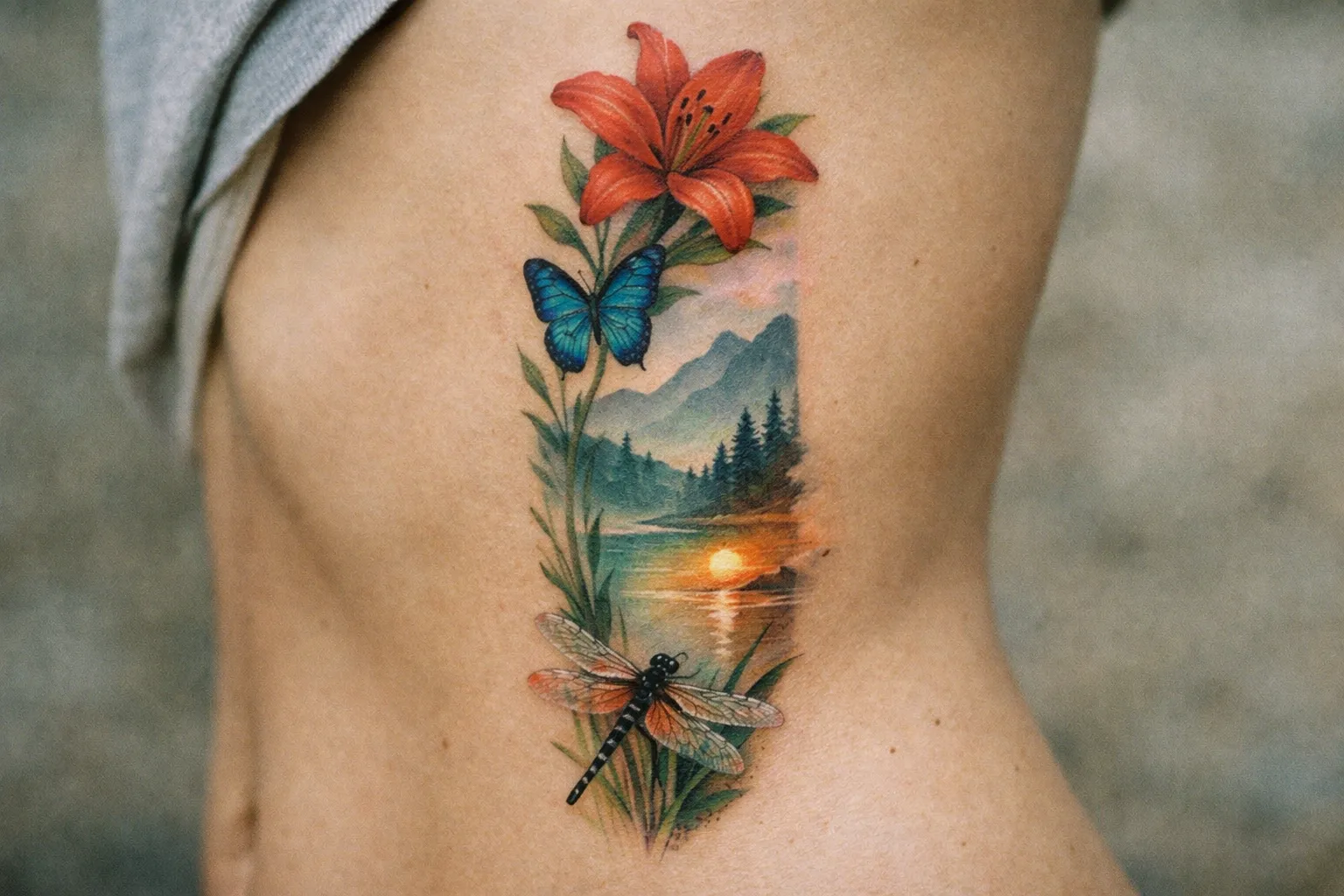
A fine line flower rib tattoo - roses, peonies, wisteria, botanical sprigs - is consistently popular because the vertical stem follows the rib lines naturally. The caveat is real: very fine linework on a moving surface can lose crispness over 5-10 years. Anchor delicate florals with at least one area of stronger line weight so the piece keeps its structure as the fine detail softens. That single heavier element is often the difference between a floral that still reads at year ten and one that turned into a gray smudge.
Snakes, Dragons, and Elongated Motifs
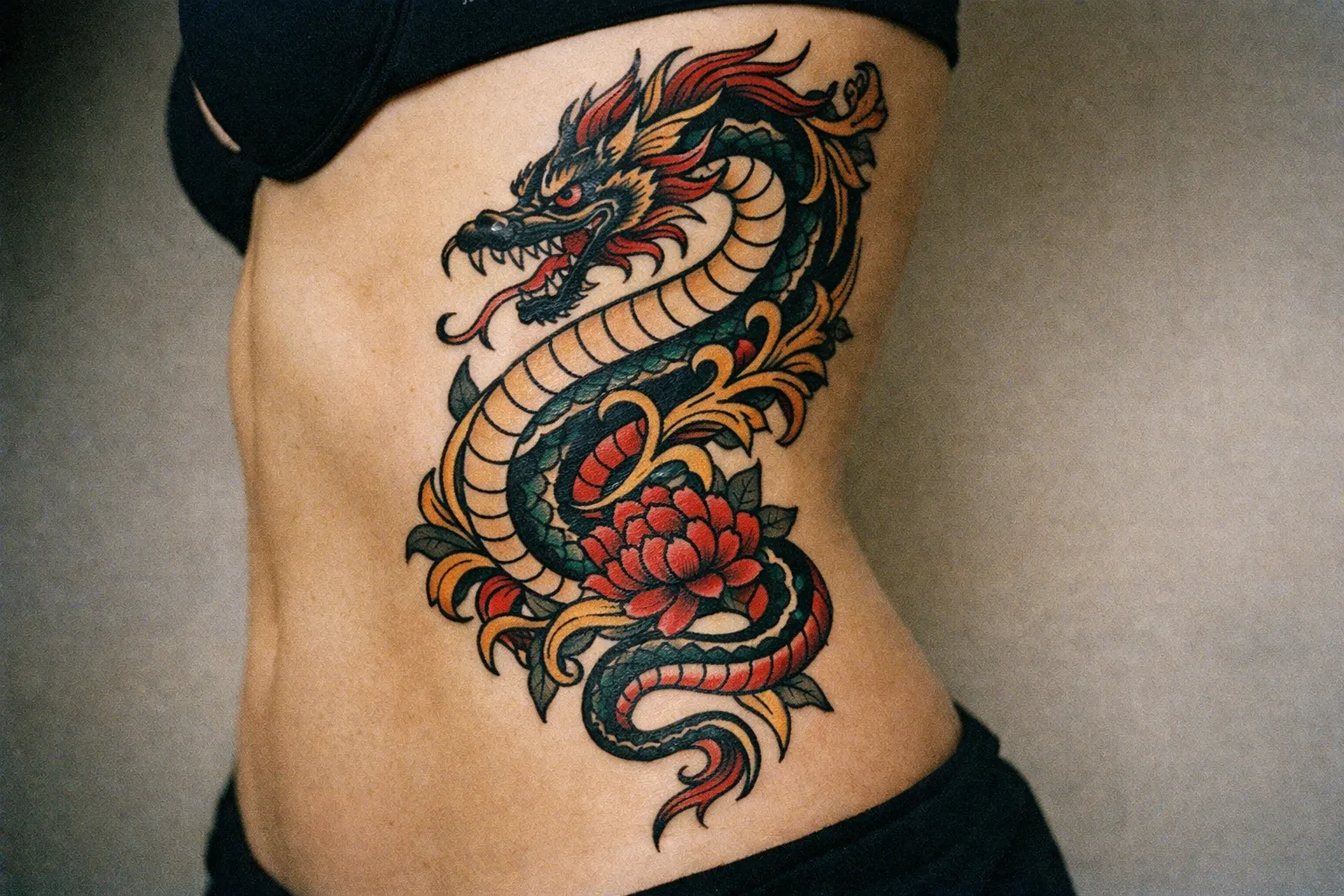
Snakes and serpents are a natural fit - the body of the animal follows the rib curve without forcing the composition. Japanese irezumi-influenced snake and dragon designs work particularly well for larger side-panel pieces, where the elongated form has room to travel from armpit toward hip. If you want the ribs to read as a major piece, this is the category that uses the anatomy instead of fighting it.
Cross and Geometric Designs
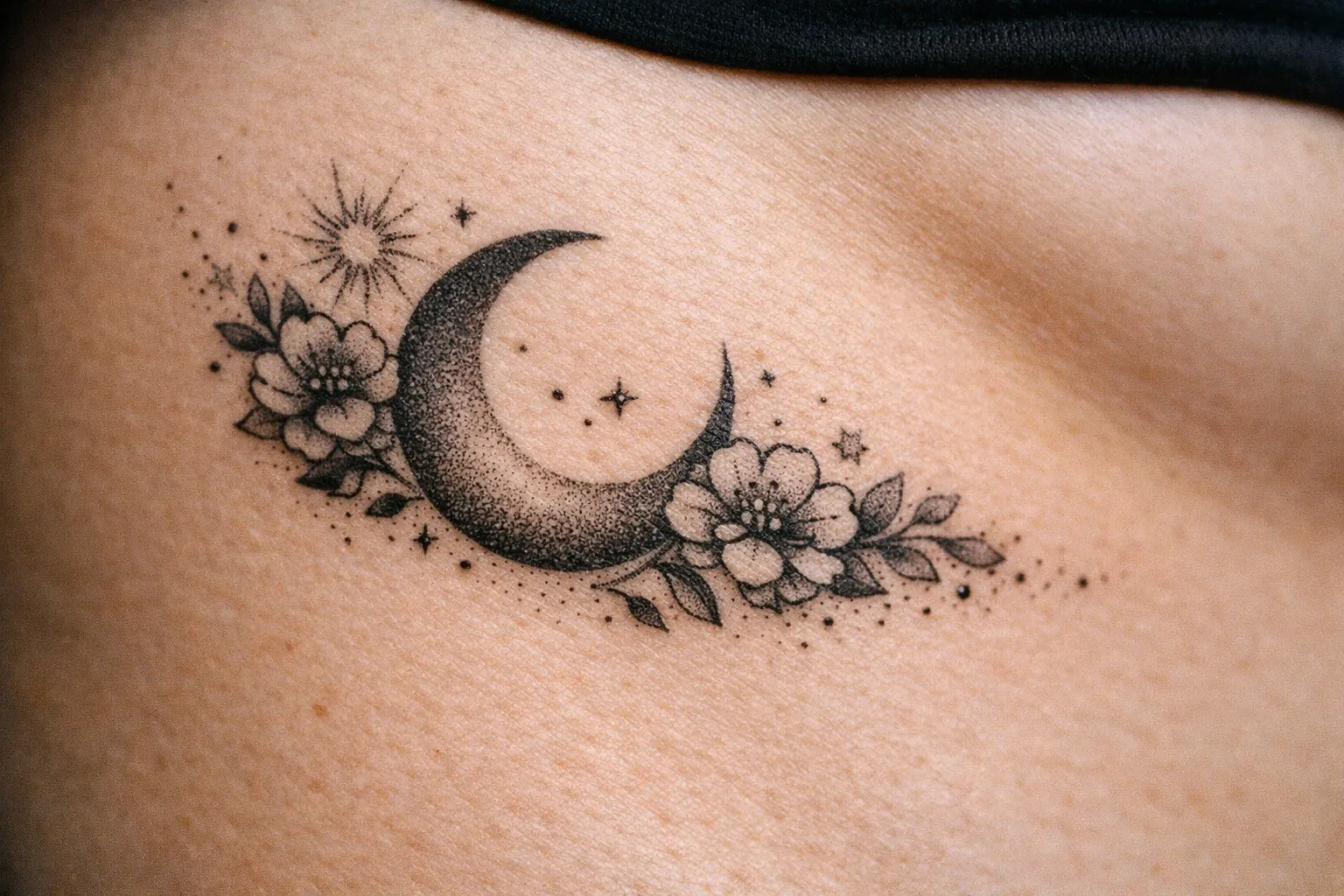
A cross rib tattoo works cleanly in blackwork or fine line on either the front or side ribs; the flat planes of the cross read clearly against the rib’s curve. Geometric and dotwork designs - mandalas, sacred geometry - can also work, but they demand an artist experienced with curved surfaces to keep symmetry accurate. On a rounded, moving canvas, a mandala that isn’t mapped carefully will look off once it heals.
American Traditional and Bold Blackwork
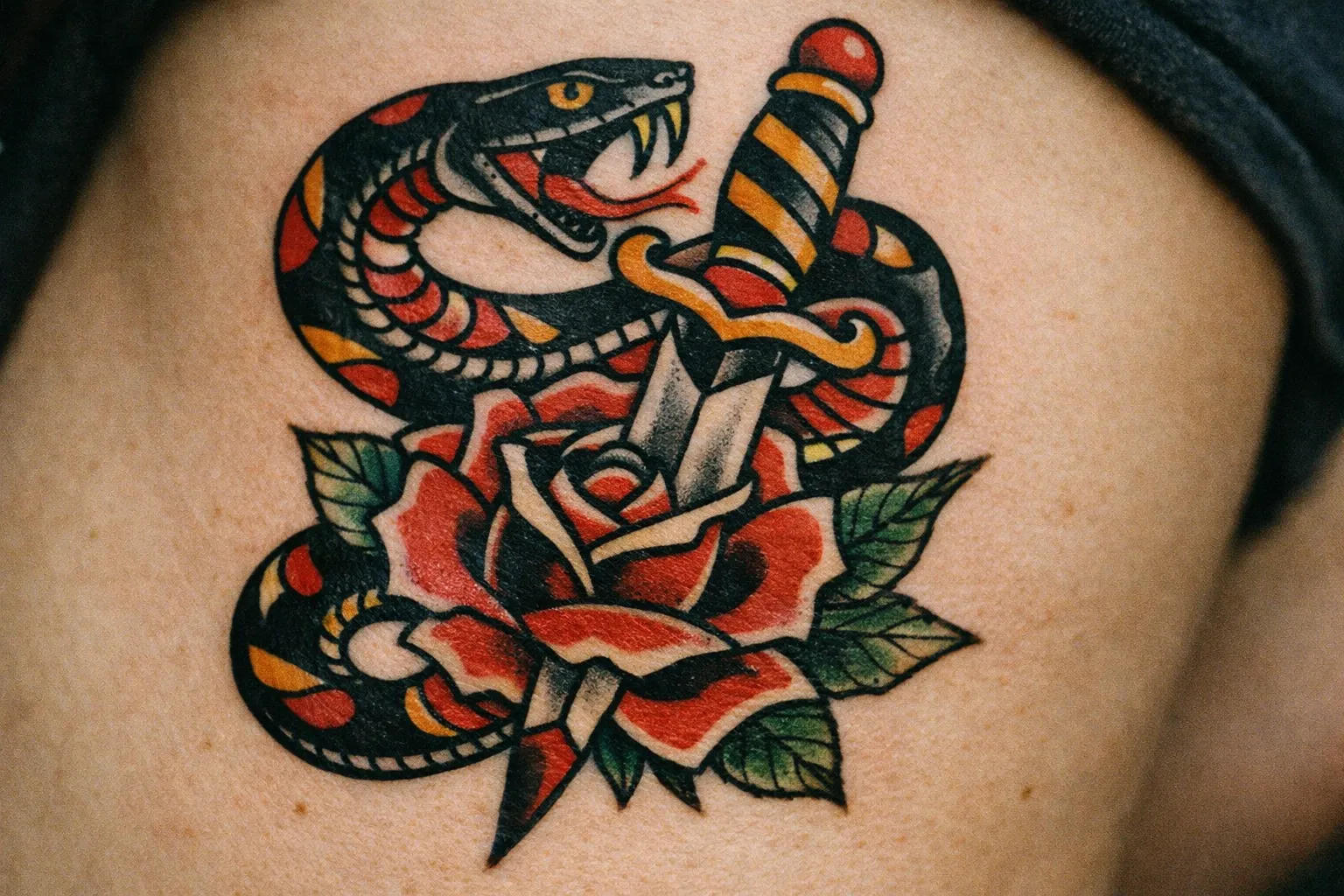
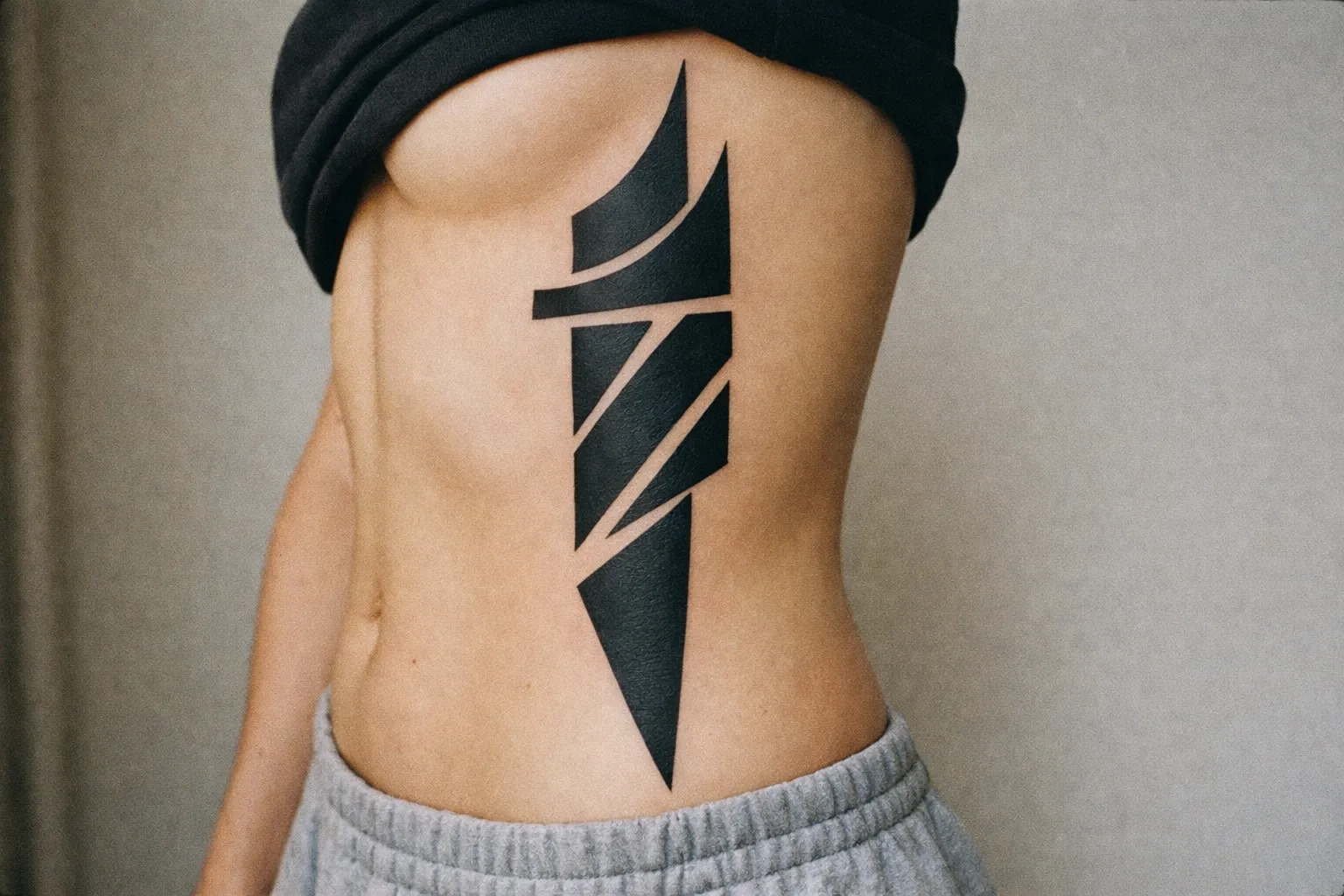
A traditional rib tattoo leans on the two American traditional hallmarks - thick black outlines and a limited, saturated palette - and those hold up unusually well on the ribs because bold linework survives movement and aging better than ultra-fine work. The common pitfall when it’s done badly is muddy shading or outlines too thin to carry the weight of the style, which defeats the point. Bold blackwork (solid fills, strong negative space) is the other durable choice here. Both age well precisely because they don’t depend on hairline detail.
Minimalist and Small Rib Pieces
Small pieces are the usual choice for first-timers or anyone who wants a shorter session. Just be clear on one thing: the placement doesn’t get easier because the design is smaller - the session is shorter, but the pain-per-minute is the same. Avoid going too tiny in a highly curved zone. A 2-3 inch (5-7.5 cm) minimum is a reasonable floor for anything with real detail, because below that the skin’s movement will blur it faster than you’d like.
The Honest Pain Reality of Getting a Rib Tattoo
Yes, a side rib tattoo hurts, and it hurts a lot. The ribcage rates 9 out of 10 for tattoo pain, with very little separating the tattooing needle and your rib bones. Pain scales put ribs and side torso at 8-10/10, grouping them with armpits, hands, and feet at the top tier. Healthline’s placement guide lists the ribcage among the most painful areas, alongside the spine, armpit, and nipples. Three factors compound: thin skin, bone proximity, and constant breathing movement.
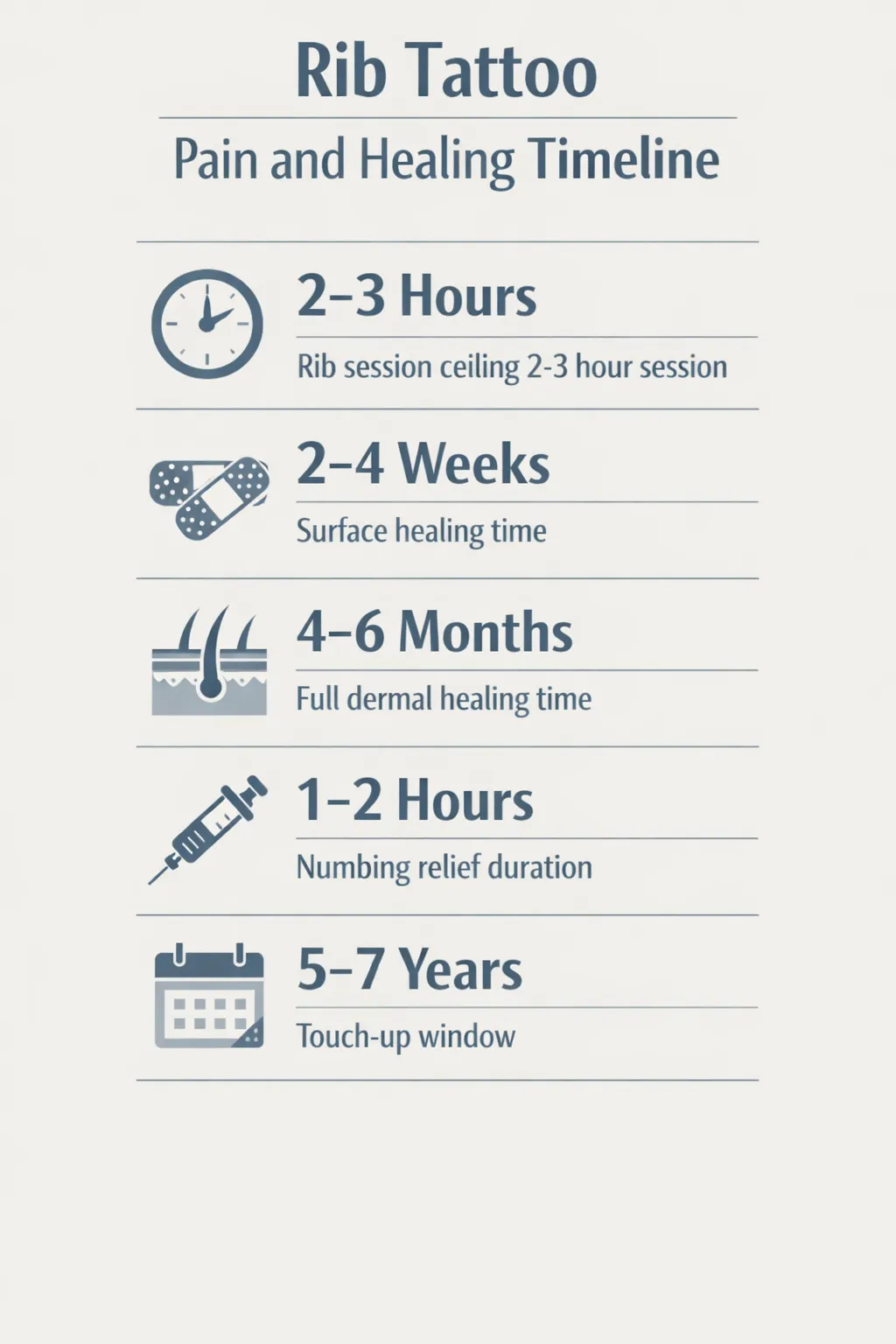 Rib tattoo pain and healing timelines: 2-3 hour sessions, surface healing 2-4 weeks, full healing 4-6 months, numbing relief 1-2 hours, touch-up window 5-7 years.
The pain isn’t one sensation - it rotates. Linework passes feel sharp and stinging. Shading burns. When the needle works close to bone, you get a dull vibrating ache. Breathing is the complication unique to this placement: every inhale and exhale shifts the skin slightly, which is why artists often ask you to exhale slowly during passes and why rib sessions need more breaks than arm or leg work.
I’ve had clients who sail through forearm sessions hit a wall at the 45-minute mark on their ribs. It’s not a character flaw - it’s anatomy. The ribcage is genuinely harder to sit through than most placements, and that combination is also why ribs answer the question of what the hardest body part to tattoo is. They’re consistently cited alongside the sternum, spine, armpits, and hands and feet as the most difficult placements - hard for you to sit through and hard for the artist to work cleanly, because the skin won’t hold still.
Side Ribs vs. Front Ribs: Which Hurts More?
Side ribs win the difficulty contest: more movement, less flesh between skin and bone, and the strongest consensus around high pain. Front ribs, closer to the sternum, are somewhat more tolerable thanks to slightly more padding. The under-rib and floating-rib area is variable - it can turn sharp near the lower floating ribs, where there’s very little to cushion the needle.
Comparison of Rib Tattoo Zones
| Side Ribs | Front Ribs | Under-Rib / Floating Ribs | |
|---|---|---|---|
| Pain Level | Highest | Moderate to High | Variable, can be sharp |
| Skin Thickness / Padding | Thinnest | More padding | Variable |
| Movement from Breathing | Most | Moderate | Less |
| Best Design Types | Large vertical, wraparound | Centered symbolic, crosses | Smaller pieces |
| Clothing Friction Risk During Healing | High (bra bands) | Lower | High (waistbands) |
| Visibility | Low | High (shows in low-cut tops) | Low |
How to Make the Session More Manageable
Prep does real work on a high-pain placement. A few things that matter:
- Eat a full meal 1-2 hours before the session. Low blood sugar mid-session is a known cause of lightheadedness on painful placements.
- Hydrate the day before and the day of. Hydrated skin takes ink in fewer passes.
- Avoid alcohol for 24-48 hours beforehand - it thins your blood and increases bleeding.
- Breathe on purpose. Slow exhalations during needle passes reduce torso tension.
- Plan for breaks. A 2-3 hour session is a reasonable ceiling for rib work before both quality and your tolerance drop off.
- Numbing cream is an option worth asking about. 4-5% lidocaine creams give roughly 1-2 hours of effective relief and work best on thin-skinned areas like the ribs - but they wear off during longer sessions, so clear it with your artist first.
- Wear loose clothing to and from the appointment. Nothing that compresses the ribs afterward.
Placement Strategy: Choosing the Right Spot on Your Ribs
Vertical orientation almost always reads better than horizontal on the ribs, because the body’s natural lines run top to bottom and designs that follow that axis age more predictably. Size and placement interact: a 3-5 inch (7.5-13 cm) piece works well on the mid-rib zone, while larger compositions of 8-14 inches (20-36 cm) extending toward the hip or sternum need to be planned as a unified composition from the start, not added to piecemeal.
Two more placement notes. The underarm crease is a problem zone - designs that climb too high into the armpit hit skin that folds, stretches, and is harder to tattoo cleanly and heal well. Healthline notes that highly mobile areas are more challenging both to tattoo and to heal, and in my experience that’s especially true where the underarm meets the top of the rib. Front-rib placement is often chosen for two reasons at once: it shows in lower-cut tops and carries a slightly more manageable pain profile than the sharp, bony side ribs.
If you’re planning to extend into a sternum piece, hip piece, or waist wrap later, discuss the full composition with the artist before starting so the rib piece is designed to connect.
Small Rib Tattoos: What Size Actually Works
For a standalone minimalist piece - a single symbol, a short word, a small floral - 2-4 inches (5-10 cm) is a reasonable range. Going below 2 inches (5 cm) in a curved, moving area risks readability problems as the skin ages and shifts. The main advantage of small is a shorter sit; the pain-per-minute doesn’t change with the design size.
Large and Wraparound Compositions
A full side-panel piece runs 8-14 inches (20-36 cm) and may need multiple sessions. Designs that integrate the sternum, hip line, or waist curve have to be planned as one composition, not stitched together over time. The larger the piece, the more healed surface is exposed to friction - which means stricter aftercare for longer.
Do Rib Tattoos Fade Quickly? Longevity and What Affects It
Rib tattoos don’t fade faster than other placements by default - style and line weight are the biggest longevity factors, more so here than almost anywhere. Bold blackwork and American traditional work with thick outlines and solid fills hold up significantly better than ultra-fine linework or light grey wash, which can lose contrast over 5-10 years. The movement factor compounds it: the ribcage’s constant expansion and contraction can make very fine detail blur visually sooner than the same design on a flat, stable surface like the outer forearm.
Sun exposure is the primary fading accelerant. The ribs are usually covered, which actually helps, but any time the area is exposed - swimwear, summer - Healthline’s fading guidance recommends broad-spectrum SPF 30 or higher on healed tattoos, or sun-protective clothing. Dermatology-based aftercare resources also note that black and dark pigments outlast pastel and light colors, which UV breaks down faster; on the ribs, the movement factor amplifies that.
Plan for a touch-up at 5-7 years if you go with fine-line or delicate styling. Bold blackwork can go considerably longer without intervention, which is part of why it’s the smarter long-term bet on this placement.
Healing a Rib Tattoo: The Timeline and What Makes It Different
Surface healing - the outer skin layers closing, scabbing, and peeling - takes 2-4 weeks (2). Full dermal healing takes 4-6 months. That distinction matters more than most people realize: a rib tattoo that looks fine at week three is not fully healed, and friction or sun during that window can still affect the final result. “The scab is gone” is not “I’m healed.”
What makes ribs harder than a forearm is friction and movement that never fully stop: bra bands, waistbands, side-sleeping pressure, and the constant torso movement from breathing, laughing, coughing, and sneezing. You can’t switch those off, so you plan around them.
Rib Tattoo Healing Timeline
Up to 6 monthsStep-by-step care and what to expect during healing
- 1
Day 1-3
Tenderness, mild swelling, plasma weeping. Keep bandage as artist specifies. Wash once or twice daily with fragrance-free soap, pat dry, apply thin layer of fragrance-free ointment or moisturizer. Sleep on opposite side.
- 2
Week 1
Soreness fades; itching and tightness begin. Avoid tight clothing, bra bands, and waistbands pressing on the area. Moisturize 2-3 times daily. No intense exercise.
- 3
Week 2-4
Peeling and flaking start; do not pick. Tattoo may look dull or cloudy (normal). Keep out of direct sunlight. Avoid swimming, soaking, saunas, hot tubs. Limit sports and heavy torso twisting.
- 4
Month 2-6
Deeper layers continue settling; tattoo clarifies as skin fully heals. Use SPF 30+ or sun-protective clothing when exposed. Avoid prolonged sun exposure.
The Friction Problem: Clothing and Sleeping Position
Bra bands are the single most common friction source for rib tattoos - switch to soft bralettes or front-clasp styles for at least 2-4 weeks. Waistbands on jeans, leggings, and athletic shorts rub the lower rib zone, so loose, high-waisted soft fabrics are the practical fix. Side-sleeping puts direct pressure on the healing area; sleep on the opposite side, or on your back, for the first 1-2 weeks while the surface closes. Bring loose layers to the appointment - not just one outfit - because post-session comfort depends on avoiding compression for several days.
This is where people usually get it wrong: they plan for the session and forget to plan for the week after. A fresh rib tattoo under a tight bra band for eight hours is a problem you could have avoided.
Warning Signs That Need Medical Attention
Normal early healing means tenderness and mild swelling that decrease after the first few days. See a doctor - not a tattooer - if you notice any of these:
- Pain that increases after day 3 instead of decreasing (2)
- Red streaks radiating from the tattoo
- Oozing that is yellow or green rather than clear plasma
- Fever, particularly above 101°F (38.3°C)
These are infection signals, and they’re a medical problem, not an aftercare tweak.
Before You Book: Who Should Think Twice
The ribs are not a beginner-friendly placement. Placement guides point first-timers toward the outer forearm, outer thigh, and calf - more padding, easier to relax through - and explicitly flag ribs and sternum as thinner-skinned, closer to bone, and harder to sit still for. If this is your first tattoo, learn your personal pain response somewhere gentler before committing to a high-pain zone.
If you have a history of keloids, poor wound healing, eczema, or general skin sensitivity, treat the rib placement as a higher-friction healing scenario and talk it through with a licensed tattooer or clinician before booking. Timing matters too: don’t book a rib tattoo close to a major event. Visible redness, crusting, and tenderness can last days, and full maturation takes months.
Don’t schedule a marathon first session - 2-3 hour blocks are far more realistic than an all-day sit on a placement this intense. And if you’re planning a large composition that ties into the sternum, hip, or waist, map the whole design with your artist before the first session. Retrofitting a rib piece into a bigger composition later is harder than planning it from the start.
Frequently Asked Questions
- Does a side rib tattoo hurt?
- Yes - significantly. Side ribs rank among the most painful placements due to thin skin, bone proximity, and breathing movement. Pain varies from sharp stings to dull aches.
- What is the hardest body part to tattoo?
- Armpits, sternum, and ribs are the hardest. The ribcage's constant movement makes needle depth and line quality difficult, requiring shorter passes and more breaks.
- Do rib tattoos fade quickly?
- Not inherently. Style and line weight affect longevity more. Bold blackwork lasts longer; fine lines fade faster due to movement. SPF 30+ is essential when exposed.
- What is a side rib tattoo called?
- Commonly called a side rib tattoo or side piece. It runs along the lateral ribcage from underarm to hip; no single formal term exists.
- How long does a rib tattoo take to heal?
- Surface healing takes 2-4 weeks; full dermal healing 4-6 months. A tattoo looking healed early isn't fully healed, so avoid sun and friction during this time.
- Can I sleep on my side after a rib tattoo?
- Not for 1-2 weeks on the tattooed side. Pressure disrupts healing and can cause ink loss. Sleep on the opposite side or back until surface closes.
- What should I wear to a rib tattoo appointment?
- Loose, soft clothing that doesn't compress ribs, like a loose tank or button-up. Avoid tight waistbands or bra bands. Bring an extra layer for comfort.
What to Sort Out Before You Book
Three decisions determine whether a rib tattoo goes well. First, the zone: side ribs for the highest-impact vertical and wraparound work at the cost of the most pain, front ribs for visibility and a more tolerable sit, under-rib for smaller pieces near the waist. Second, scale and orientation - does the design follow the body’s lines, and is it big and bold enough to survive a moving, curved surface? Ultra-fine detail here is a maintenance commitment, not a set-and-forget choice. Third, the healing logistics: do you have 2-4 weeks where you can avoid bra-band and waistband friction, direct sun, and side-sleeping?
The pain is real and manageable with proper prep - underestimating it is the single most common mistake people make. Bold, well-scaled designs age better on the ribs than delicate work. An artist who can show you healed rib pieces in their portfolio is worth waiting for.