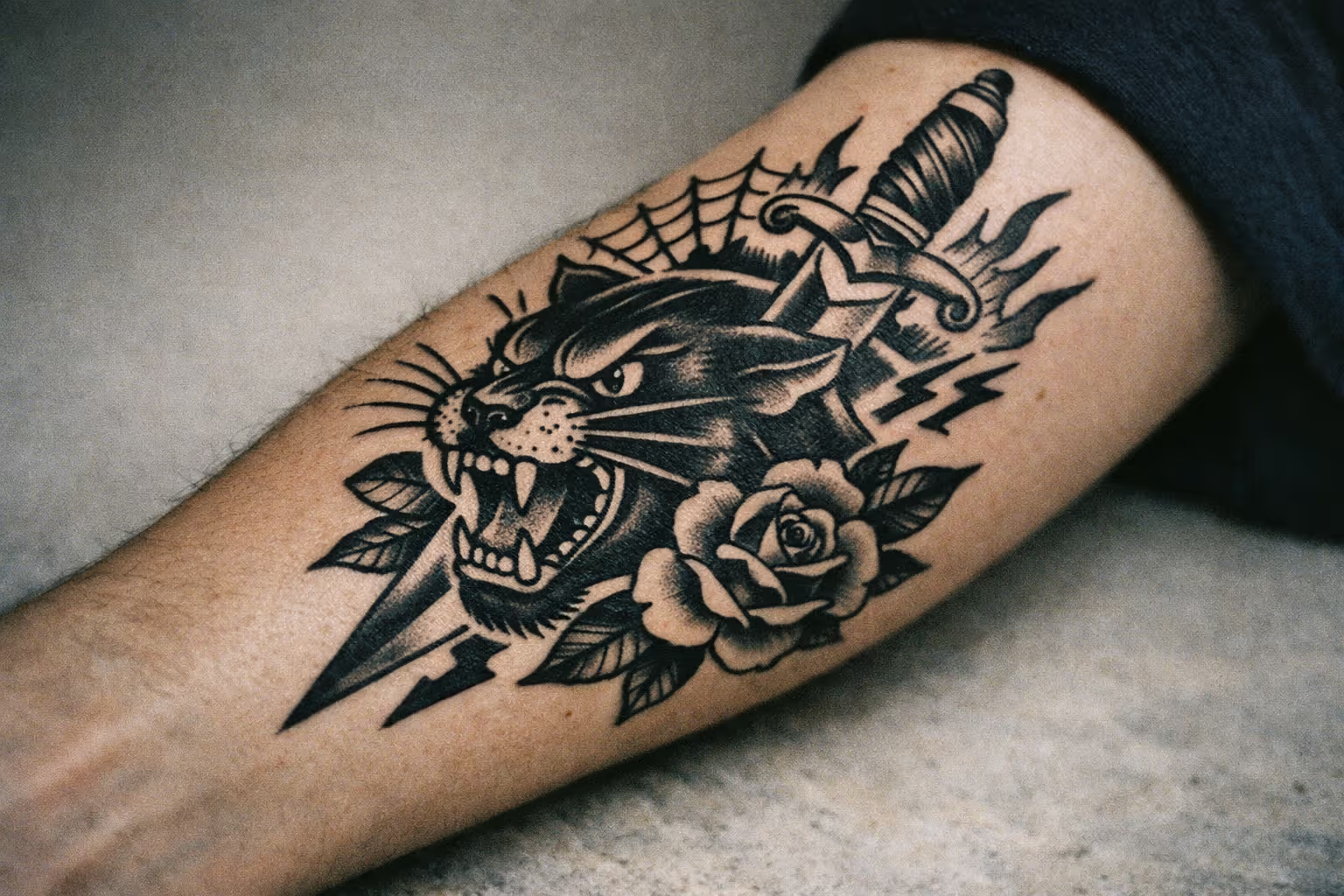
Forearm tattoos are the easiest placement to get right and the easiest to overpay for. The forearm takes ink well, hurts less than most spots, and shows off - which is exactly why shops quote all over the map for it. What separates a piece that still reads at 50 from a blurred one at 40 isn’t the design; it’s how the ink ages. Here’s what works, ranked by that.
Why Forearm Tattoos Work So Well as a Canvas
Forearm tattoos take advantage of the forearm’s roughly 9-11 inches of usable space from wrist to elbow crease, and about 3-4 inches across at its widest point. This area naturally suits vertical compositions - snakes, daggers, botanical stems, columns of script - and also works well for wraparound designs that read clearly from multiple angles.
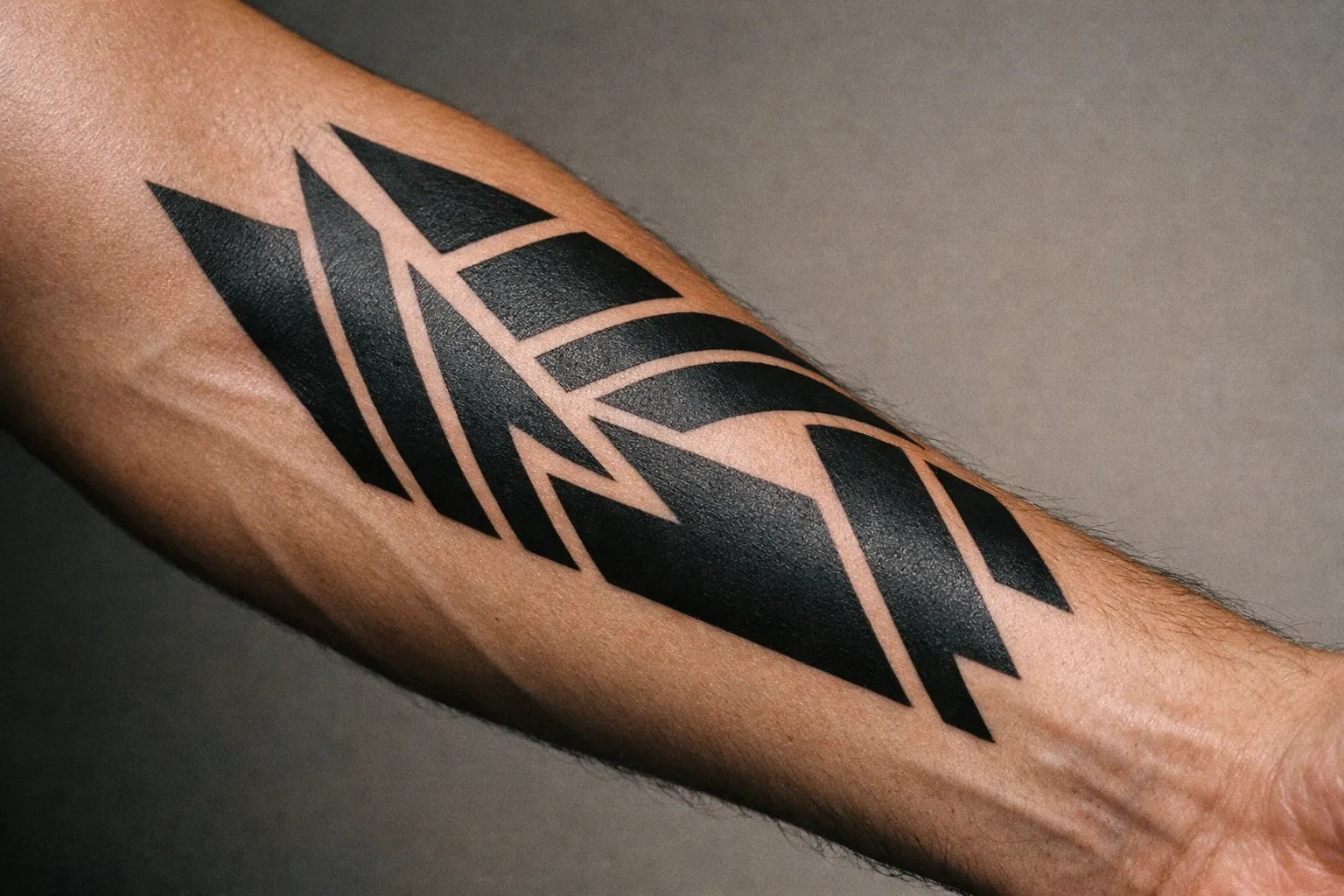
A few practical reasons the forearm stays one of the most-requested placements:
- Visibility on demand. Short sleeves show it, long sleeves hide it. Useful if your workplace is conservative.
- Healing speed. Forearm skin typically settles in 2-3 weeks with normal aftercare (1).
- Lower pain than most arm areas. The fleshier zones tolerate the needle well - more on this below.
- Future-proof. You can add to a forearm piece and grow it into a half or full sleeve without forcing the composition.
The trade-off: this area gets hammered by sun, friction from sleeves and watches, and constant washing, which means aftercare and long-term sun protection matter more here than on covered placements (2). I’ve watched clients come back two years later with a forearm piece that’s faded noticeably faster than a bicep tattoo done in the same session - the difference was almost always sun exposure.
✓ Pros
- Large, flat surface that holds detailed linework and lettering without crowding
- Easy to show off, and simple to extend into a half or full sleeve later
- Ages better than hands or fingers - the skin moves less and holds ink well
- Less painful than ribs, sternum, or feet, especially on the outer side
- Visible to you day to day, which is what most people want from a first big piece
✗ Cons
- Hard to hide in conservative or client-facing workplaces
- Sun exposure fades and blurs it faster than covered placements - daily SPF matters
- Inner forearm is thinner-skinned and more tender than the outer side
- One of the most common placements, so it takes effort to make a design feel personal
Forearm Tattoo Ideas That Actually Suit the Shape
Not every design reads well on the forearm. The shape rewards compositions that follow the arm’s direction rather than fight it. Here are forearm tattoo ideas that consistently age well and use the canvas correctly.
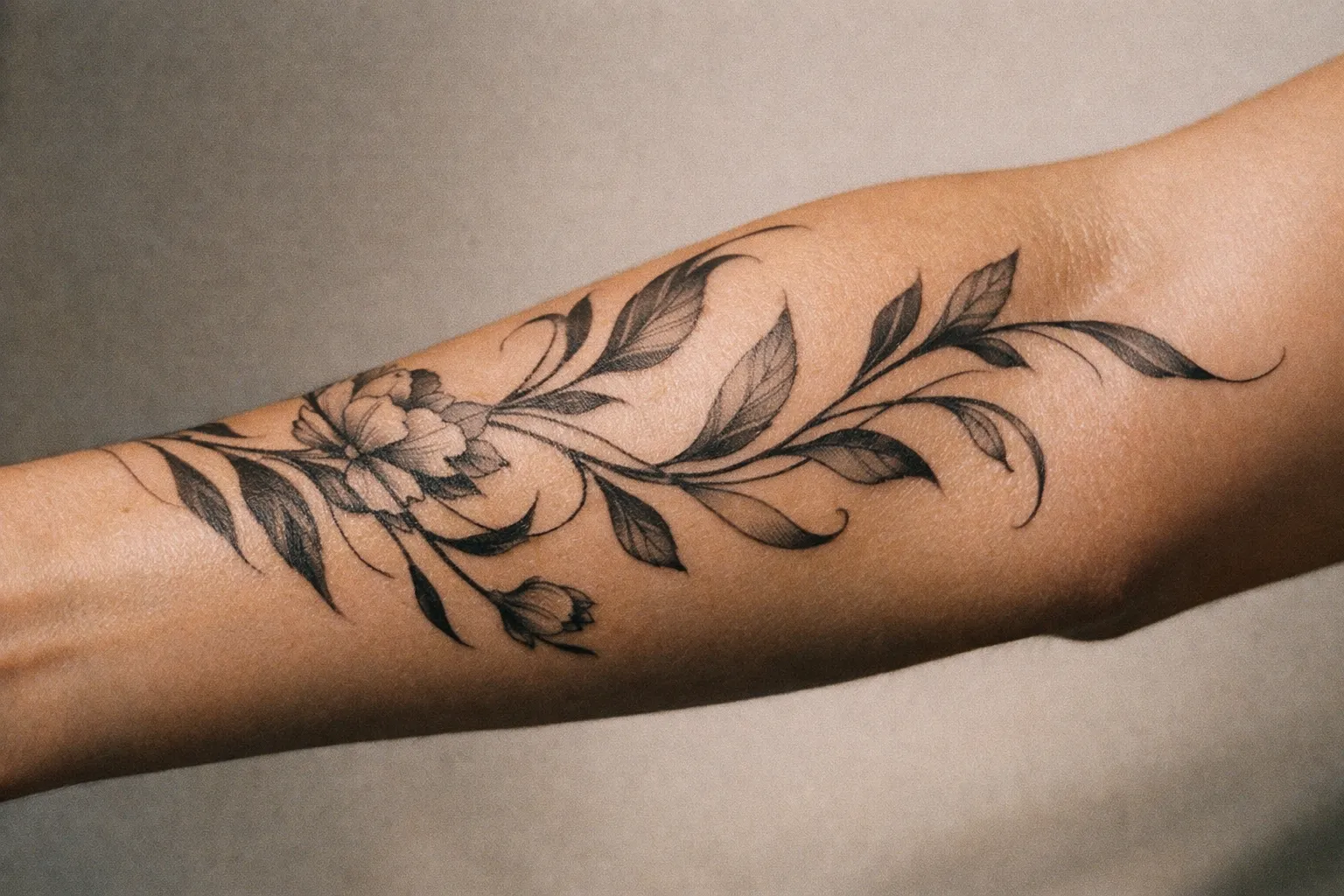
Geometric Forearm Tattoo
A geometric forearm tattoo is one of the strongest matches for this placement. Mandalas, sacred geometry, dotwork triangles, and linework polyhedra all benefit from the forearm’s flat-ish plane, which lets straight lines stay straight. Hallmarks of good geometric work: clean, consistent line weight and deliberate symmetry. The common pitfall is artists who can draw the shape but can’t keep the line weight even - wobbly geometry shows up loudly on healed skin.
Size range that works: 3-6 inches for a single ornamental panel, or 6-10 inches for a forearm-length piece running wrist to elbow.
Blackwork Forearm Tattoo
A blackwork forearm tattoo uses solid black saturation as the primary visual tool - think bold silhouettes, heavy ornamental panels, neo-traditional florals packed with shading. Two technical hallmarks: even saturation across large black areas (no patchiness) and intentional negative space that gives the design breathing room. Bad blackwork shows up as blotchy fills and lines that bleed into each other over years.
Blackwork ages exceptionally well on the forearm because it holds contrast as skin softens. If you want a piece that still reads clearly in 15 years, this is the safer bet than ultra-fine grey wash. I’ll take a well-executed blackwork piece over a delicate grey wash on the forearm almost every time.
Inner Forearm Tattoo
The inner forearm tattoo is the more private option - you see it constantly, but it’s tucked away from casual view. The skin here is softer and slightly less sun-exposed, which means tattoos retain saturation longer. It’s also one of the more comfortable arm placements to sit through, which is why it’s a frequent first-tattoo choice (3).
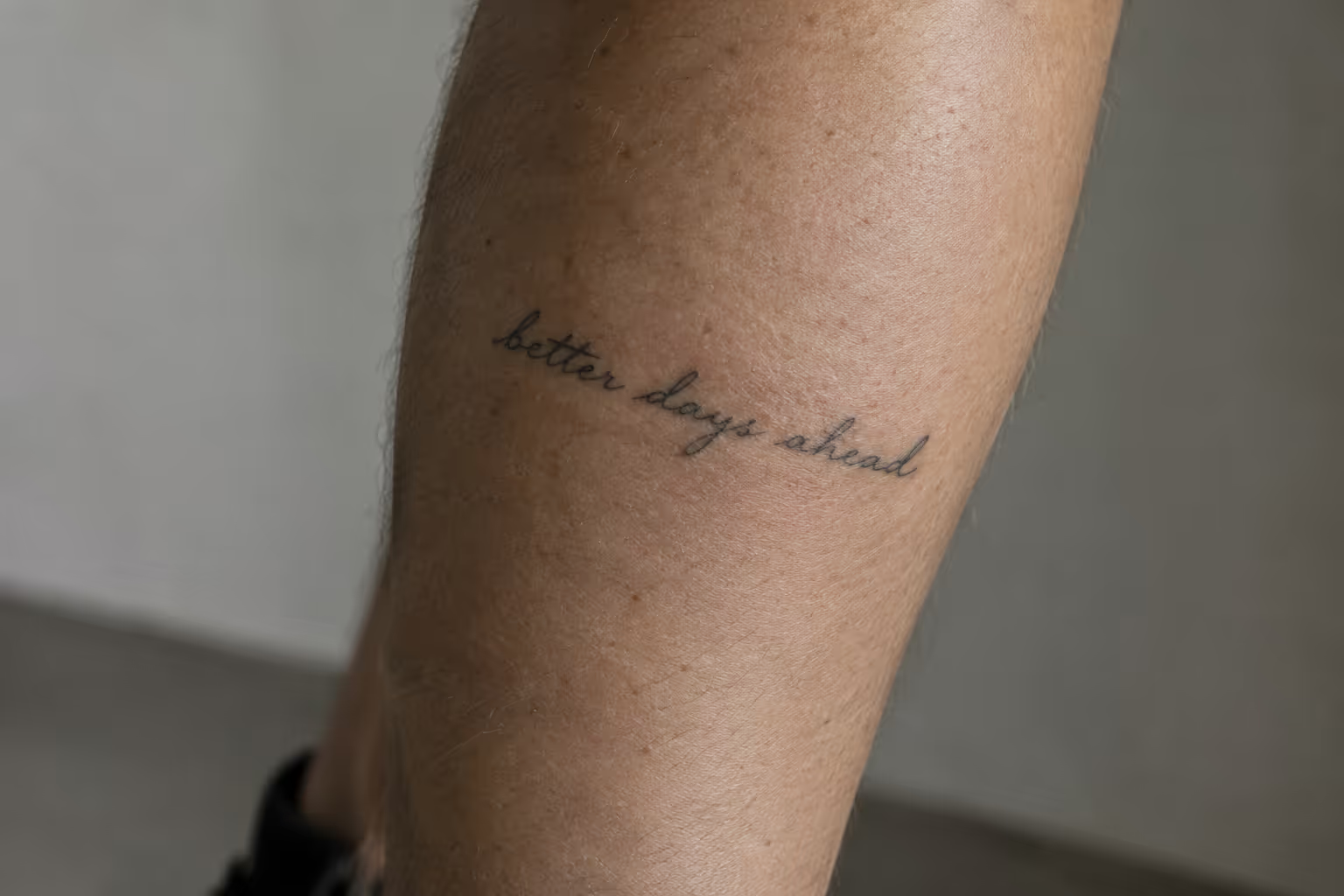
Best uses: script and lettering (the flat surface helps lines stay straight), small symbolic pieces, fine-line botanicals, and personal references you want to see daily. Size range: typically 2-5 inches for script, 4-7 inches for illustrative work.
Fine-Line and Minimalist
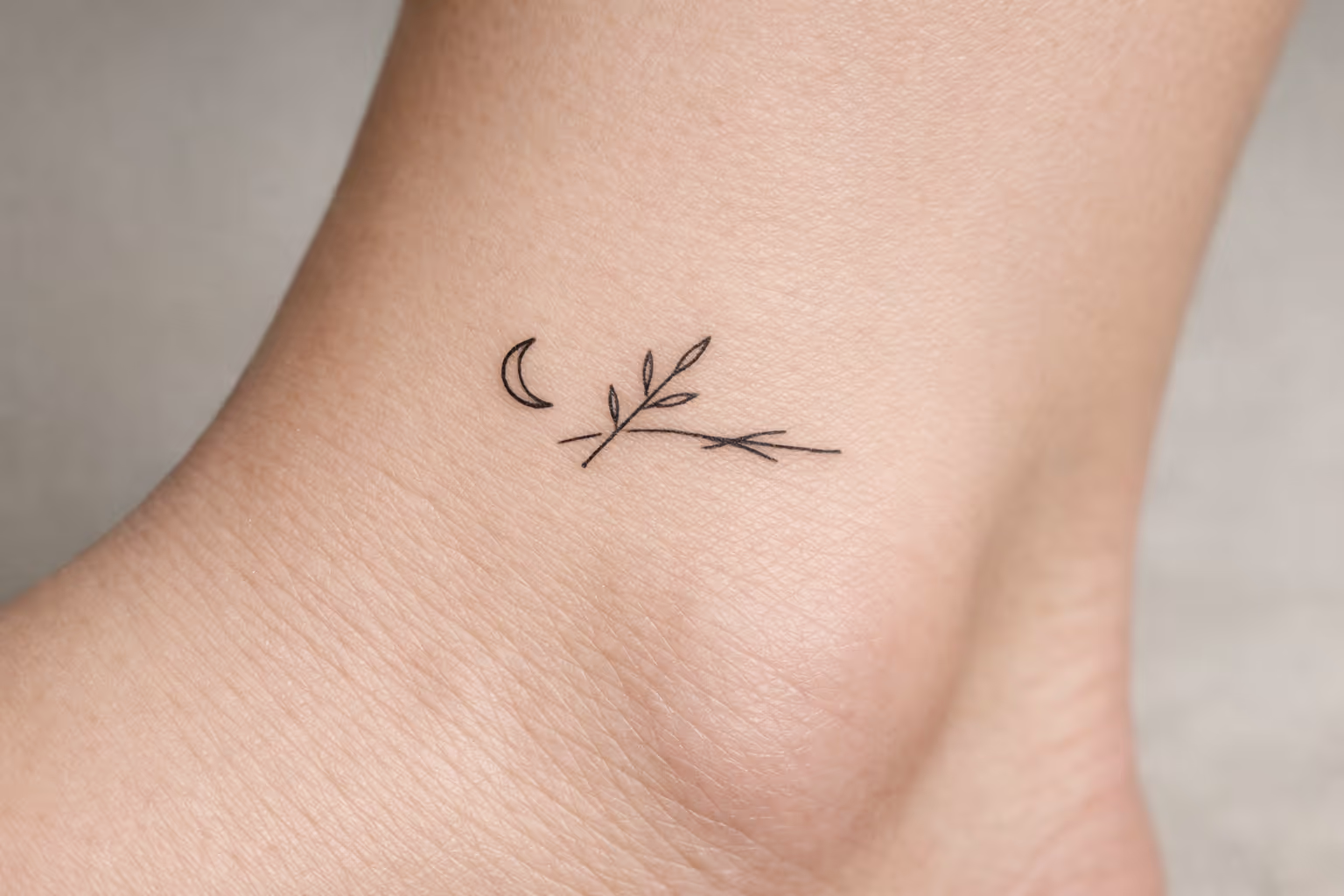
Single-needle linework, small botanicals, and minimalist symbols all suit the inner or outer forearm. The caveat: fine line ages harder than blackwork. Very thin lines can lose contrast over time as skin changes, so anchor delicate designs with at least one area of stronger weight or shading to keep the piece legible (2).
This is where people usually get it wrong - they fall in love with a fresh photo of fine-line work and don’t ask to see the healed version at two or three years out.
Realism and Portraits
Forearm realism - animal portraits, religious figures, micro-realism scenes - needs space. A detailed realistic piece typically wants 5+ inches to avoid blurring as it heals and ages. If you’re set on realism and only have room for a small piece, scale the subject down rather than cramming detail. Cramming never works. Ask anyone who’s tried to fix it.
Designs for Men on the Forearm
Popular forearm tattoo designs for men lean toward:
- Geometric and sacred geometry panels - mandalas, Penrose triangles, dotwork
- Animal realism - wolves, lions, eagles, snakes
- Norse and mythological motifs - runes, Yggdrasil, valknut
- Japanese (irezumi) elements - koi, dragons, waves, peonies, usually built to grow into a sleeve
- Script and dates - names, coordinates, short phrases
- Religious imagery - rosaries, hands clasped, Hanuman, crosses (4)
If you’re building toward a sleeve, talk to the artist before the first session about overall flow. A standalone forearm piece that doesn’t account for future work can box you into a layout that fights the rest of the arm later (2). I’ve seen clients come in wanting to extend a forearm piece into a half sleeve and the original tattoo was placed in a way that made it nearly impossible to connect cleanly. That conversation costs nothing at the consultation stage.
What Women Are Getting on Their Forearms
Common forearm tattoos for women pull from a slightly different vocabulary, though placement and motif are not gender-specific:
- Fine-line florals - wildflowers, lavender, single-stem botanicals
- Soft blackwork - ornamental shapes with negative space
- Script and quotes - usually on the inner forearm, vertical orientation
- Minimalist symbols - moon phases, small celestial work, birth flowers
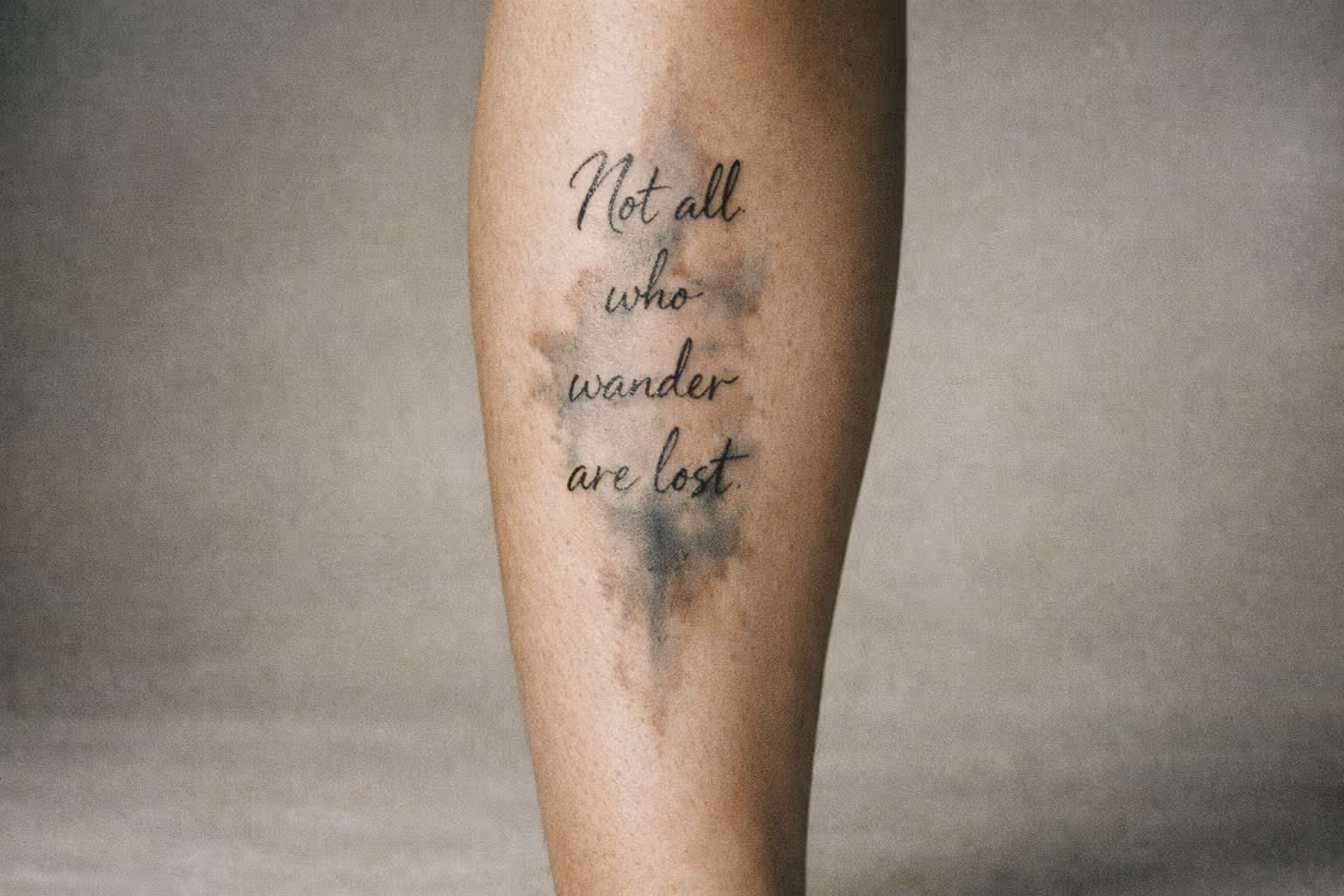
- Watercolor-style - keep in mind that watercolor without a black anchor can fade faster
For visibility-conscious wearers, inner forearm placement gives you a piece you see daily but can cover for work or formal settings with a watch, bracelet, or sleeve.
Forearm Tattoo Pain: What to Actually Expect
Forearm tattoo pain is consistently described as low to medium - one of the more manageable spots on the body (1)(3). Here’s how the different zones stack up:
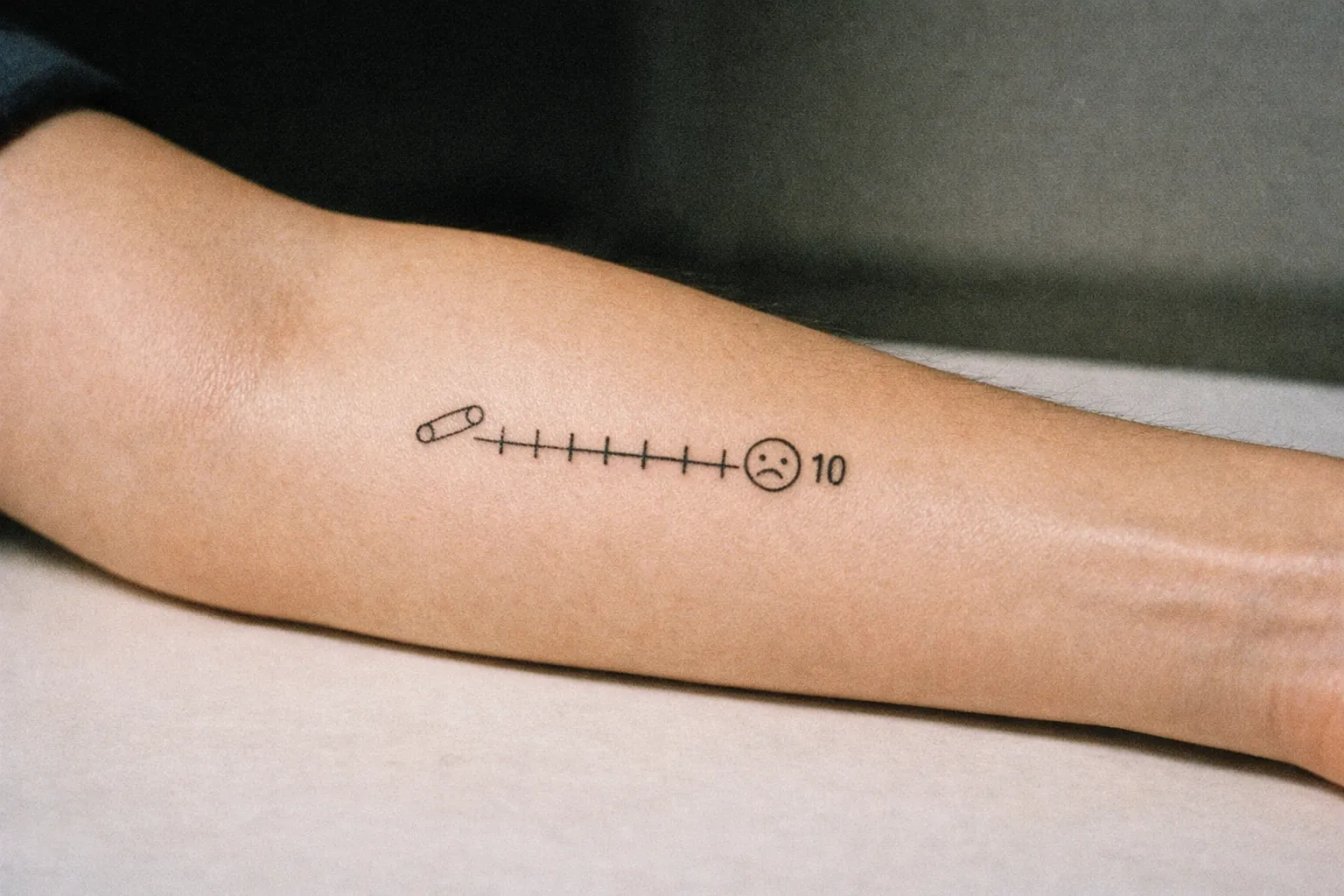
- Inner forearm: the easier side - soft tissue, fewer nerve clusters
- Outer forearm: slightly sharper but still manageable, especially closer to the muscle belly
- Wrist end of the forearm: more intense - thinner skin over bone
- Elbow ditch (inner elbow): the worst part of the area - many people break here
Compared to other placements: forearm < upper arm < thigh < ribcage < sternum. If the ribcage is a 9, most of the forearm sits around a 4-5, with the wrist and elbow ditch spiking higher.
Practical things that help: eat a real meal beforehand, hydrate the day before (not just the morning of), avoid alcohol for 24 hours prior, and don’t show up running on three hours of sleep. Numbing creams can help on longer sessions, but ask the artist first - some refuse to work over them because they alter skin texture.
How Much Does a Forearm Tattoo Cost?
Pricing varies wildly by shop, city, and artist reputation, but here are realistic bands for 2025-2026:
- Small simple piece (1-3 inches): $100-$250, often hitting shop minimum
- Medium custom work (3-6 inches): $300-$800
- Large detailed piece (6-10 inches, realism or dense blackwork): $800-$2,500+
- Full forearm panel as part of a sleeve: $1,500-$4,000+, usually billed by session or hourly
Most established artists charge $100-$250 per hour in mid-size US markets and $200-$400+ per hour in major cities. A large realism forearm tattoo can take 4-10 hours spread across multiple sessions (1).
How Big Should a $200 Tattoo Be?
A $200 budget typically lands you a small piece - roughly 2-4 inches - in most professional shops. Many studios have a minimum of $100-$150, so $200 buys you slightly above minimum: a small symbol, short word of script, simple linework piece, or a compact fine-line design. It does not buy a half sleeve, a detailed realism piece, or a wraparound forearm design at a reputable studio.
If a shop is quoting you a large detailed forearm tattoo for $200, that’s a red flag about either skill level or sanitation standards. Not a soft maybe - a hard flag.
Choosing the Best Design for Your Forearm
The best forearm tattoo is the one that fits the canvas, ages well, and reads clearly from a few feet away. Practical filters when picking a design:
- Does the composition follow the arm’s direction? Vertical or wrapping pieces usually work; horizontal blocks fight the shape.
- Is there enough contrast? Pieces built only on light grey wash or hair-thin lines lose readability as they age.
- Is the detail level matched to the size? Cramming photorealistic detail into a 2-inch piece leads to a blurry blob within five years.
- Does it leave room for future work? Even if you’re not planning a sleeve now, leaving some negative space around the piece keeps your options open.
- Can the artist show you healed photos of similar work? Fresh photos lie. Healed photos tell you what your tattoo will actually look like.
Bring 3-4 reference images to the consultation, not 20 screenshots: one for composition, one for line style, one for shading, one for mood. That gives the artist enough direction without burying them in conflicting inputs (2). I’ve sat through consultations where clients bring 40 references that contradict each other entirely. It doesn’t help anyone.
Preparing for Your Appointment
The week before:
- Stay hydrated and moisturize the area daily so skin takes ink well
- Avoid sunburn on the forearm - sunburned skin can’t be tattooed
- Skip blood thinners (aspirin, heavy alcohol) for 24-48 hours before
The day of:
- Eat a full meal 1-2 hours before
- Wear a short-sleeved or sleeveless top
- Bring water, a snack for long sessions, and headphones
- Show up with clean, unmoisturized skin
For multi-session work, expect 4-6 weeks between sessions to let the area heal fully before the artist works over or near it again.
Preparing for Your Forearm Tattoo Appointment
About 1 hour total prepSteps to get your skin and body ready for the best tattoo experience
- 1
Week Before
Hydrate and moisturize daily, avoid sunburn, and skip blood thinners 24-48 hours before.
- 2
Day Of
Eat a full meal 1-2 hours prior, wear short sleeves, bring water/snacks/headphones, and arrive with clean, unmoisturized skin.
- 3
Between Sessions
Allow 4-6 weeks for healing before returning for touch-ups or additional work.
Aftercare Timeline, Week by Week
Forearm aftercare is straightforward but has to be done consistently. The area is exposed to sleeves, washing, and sun all day, which means slip-ups show up faster than on covered placements.
Day 1-3:
- Keep the initial bandage on for the timeframe your artist specified (2-24 hours for standard wrap, up to 5 days for second-skin)
- Wash gently 2-3 times daily with lukewarm water and fragrance-free soap
- Pat dry with a clean paper towel, never rub
- Apply a thin layer of fragrance-free moisturizer or the aftercare product your artist recommends
- Sleep with the arm uncovered if possible to avoid sticking to sheets
Week 1:
- Expect plasma, slight swelling, and the start of peeling around day 4-6
- Do not pick, scratch, or peel flaking skin - it lifts ink with it
- Keep moisturizing 2-3 times daily, but don’t over-apply (heavy product traps moisture and slows healing)
- No swimming pools, hot tubs, saunas, or long baths
- No gym sessions that soak the area in sweat
Week 2-4:
- Peeling finishes; the tattoo may look cloudy or dull - this is normal during the “milky” healing phase
- Continue moisturizing once or twice daily
- Skin returns to normal appearance around the 2-3 week mark (1)
- Light exercise is fine; avoid heavy friction on the area
Long-term (month 2 onward):
- Apply SPF 30+ sunscreen any time the forearm is exposed - this is the single biggest factor in how the tattoo ages
- Re-moisturize regularly to keep skin healthy
- Touch-ups, if needed, are usually free or low-cost within 3-6 months at the original artist
The sun protection piece is not optional. I’ve seen forearm tattoos done on the same day, by the same artist, look dramatically different five years later based purely on whether the client used sunscreen. Sun-protective clothing works too if you’d rather not reapply SPF constantly.
How the Ink Ages
Forearm tattoos generally age better than placements that get folded, stretched, or rubbed constantly - hands, feet, inner lip. But how your forearm tattoo ages depends on three factors:
- Line weight. Bolder lines stay legible. Hair-thin single-needle work softens and can blur within 5-10 years.
- Contrast. Solid black holds. Light grey wash and pastel colors fade first.
- Sun exposure. UV is the main driver of fading. Forearm tattoos that get daily sun without SPF lose vibrancy noticeably faster than covered placements (1)(2).
If longevity is a priority, lean toward blackwork, traditional, or bold geometric styles with strong contrast. If you want fine-line or watercolor, accept that it will likely need a touch-up every 8-12 years to maintain crispness, and protect it from the sun consistently.
Skin also changes - weight fluctuations, muscle gain, and aging soften the canvas. Tattoos with generous negative space and clear composition handle these changes better than densely packed designs. A skull tattoo is one example of a bold, high-contrast design that tends to hold up well under these conditions.
Tattoos and the Workplace
Visible tattoo acceptance has shifted significantly in most industries - tech, hospitality, healthcare (depending on role), trades, creative fields, and most retail no longer treat forearm tattoos as a barrier. More conservative sectors (corporate law, finance, some client-facing executive roles) still vary by employer.
If you’re concerned, the inner forearm is easier to cover with a rolled sleeve or watch than the outer forearm. A long-sleeve dress shirt covers either side completely. Worth checking your specific workplace policy before committing to anything large or wrapping toward the wrist.
Frequently Asked Questions
- Do tattoos on the forearm hurt?
- Most of the forearm is low to medium pain and generally manageable. The inner forearm is easier, while the wrist and elbow ditch are more sensitive. If you can handle an upper arm tattoo, the forearm will feel similar or easier.
- Which tattoo is best for the forearm?
- Designs that follow the arm's length work best: vertical, wraparound, or ornamental panels. Bold blackwork, geometric/dotwork, fine-line botanicals with anchor weight, and clean script age well with proper sun protection.
- How big should a $200 tattoo be?
- At reputable shops, $200 typically covers a small piece about 2-4 inches, like a symbol or short script. It won't cover large detailed or wraparound forearm tattoos. Shop minimums usually start around $100-$150.
- How do tattoos look as you age?
- Tattoos soften and lose contrast over decades. Forearm tattoos age better than many placements due to less skin folding, but UV exposure speeds fading. Sun protection after healing is the biggest factor in longevity.
- How long does a forearm tattoo take to heal?
- Surface healing takes 2-3 weeks with peeling and itching finishing by week two. Deeper layers settle over 2-3 months, so the tattoo can look cloudy until fully healed.
- Can I get a forearm tattoo if I'm planning a sleeve later?
- Yes, but communicate with your artist upfront. Leaving negative space and discussing flow at consultation helps avoid awkward connections when extending to a sleeve.
What Actually Matters When You Book
The forearm gives you flexibility, decent comfort, and a canvas that ages well - but the design and the artist matter more than the placement. Pick a piece with the right contrast and line weight for the size. Bring a focused reference set, not a screenshot dump. Budget honestly for the size you want, not the size your wallet wants.
Then protect it from the sun for the rest of your life. That’s the actual difference between a forearm tattoo that still reads cleanly at 50 and one that’s faded into a soft blur by 40. Everything else is details.