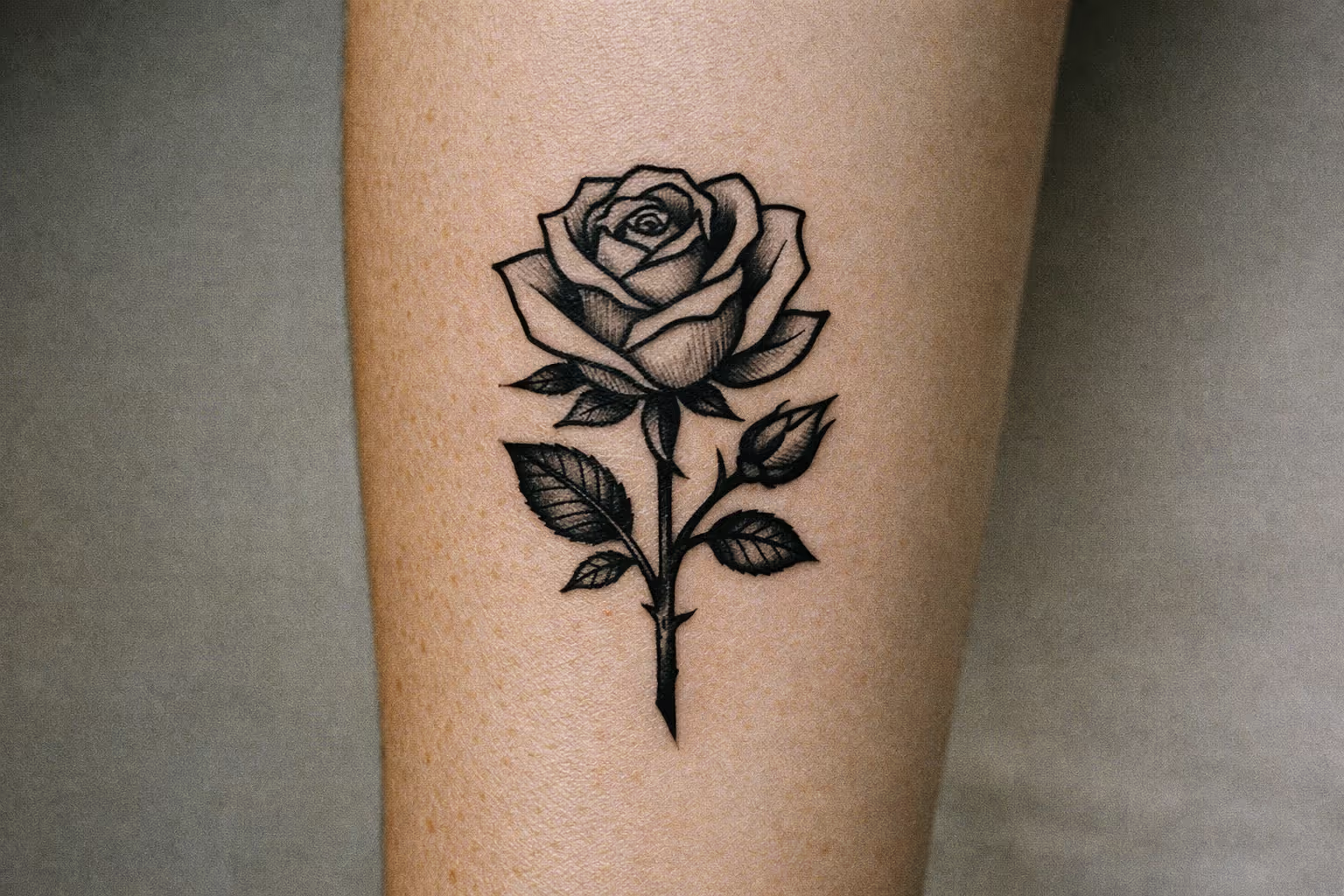
Flower tattoo ideas span a huge range - a full peony sleeve and a 1.5-inch wildflower on the ankle are barely the same commitment - and that range is exactly where people go wrong. Meaning, placement, and style don’t just decide how it looks; they decide whether it still reads in ten years or bleeds into a smudge. Pick the flower for what it means to you, but build it for how skin actually ages. Here’s how to do both.
Flower Tattoo Ideas: Meaning, Placement, Style, and Aftercare Explained
Before picking petals, explore flower tattoo ideas that resonate with your personal story. Floral symbolism isn’t decorative - it’s the difference between a tattoo that marks something real for you and one that quietly contradicts it.
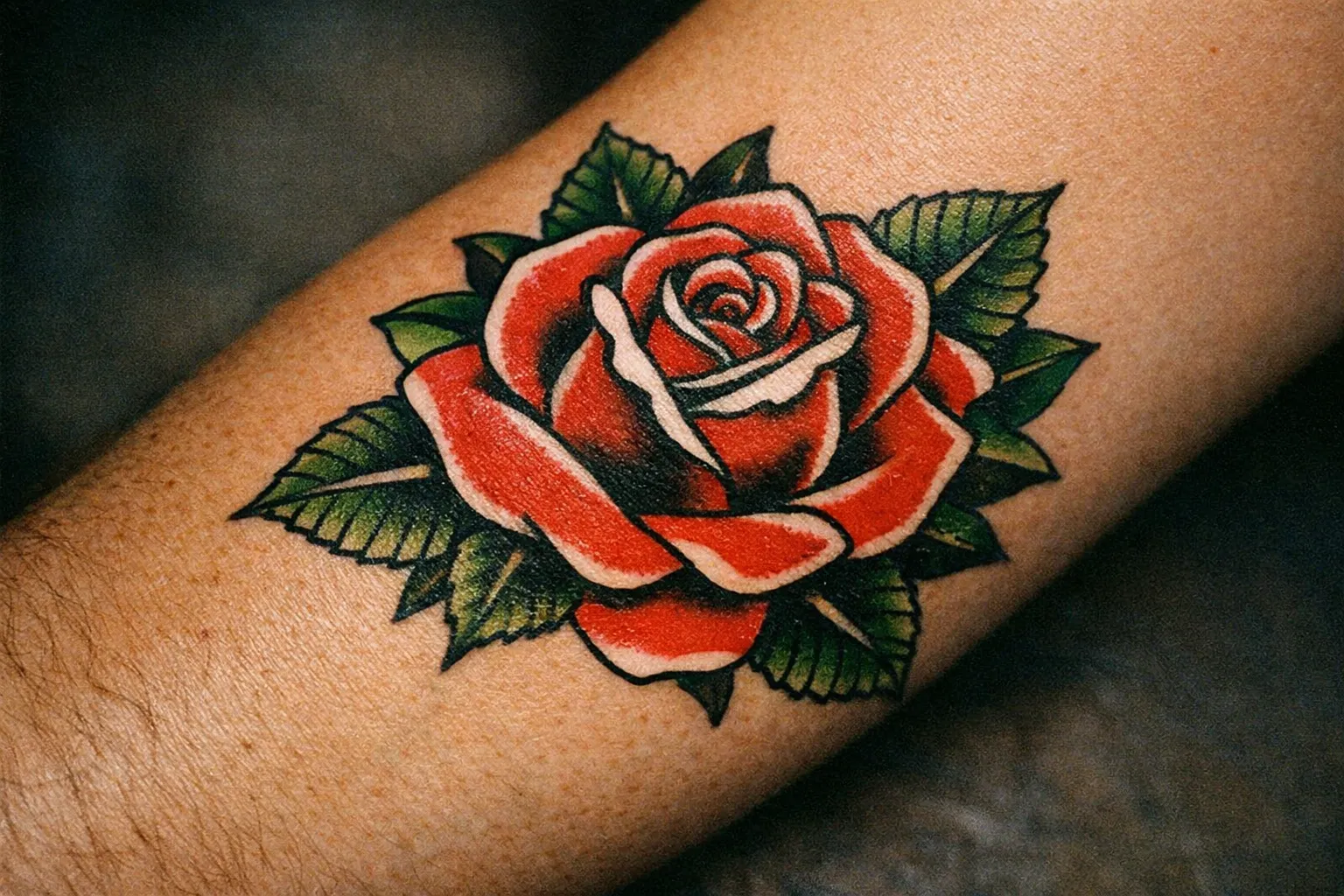
The most common readings, drawn from standard floral symbolism in Western tattoo culture (1)(2)(4):
- Rose - love, passion, beauty. Add thorns or a cut stem and the meaning shifts toward loss, defense, or hardship.
- Lotus - purity, rebirth, spiritual harmony. Roots in Buddhist and Hindu iconography; popular across genders.
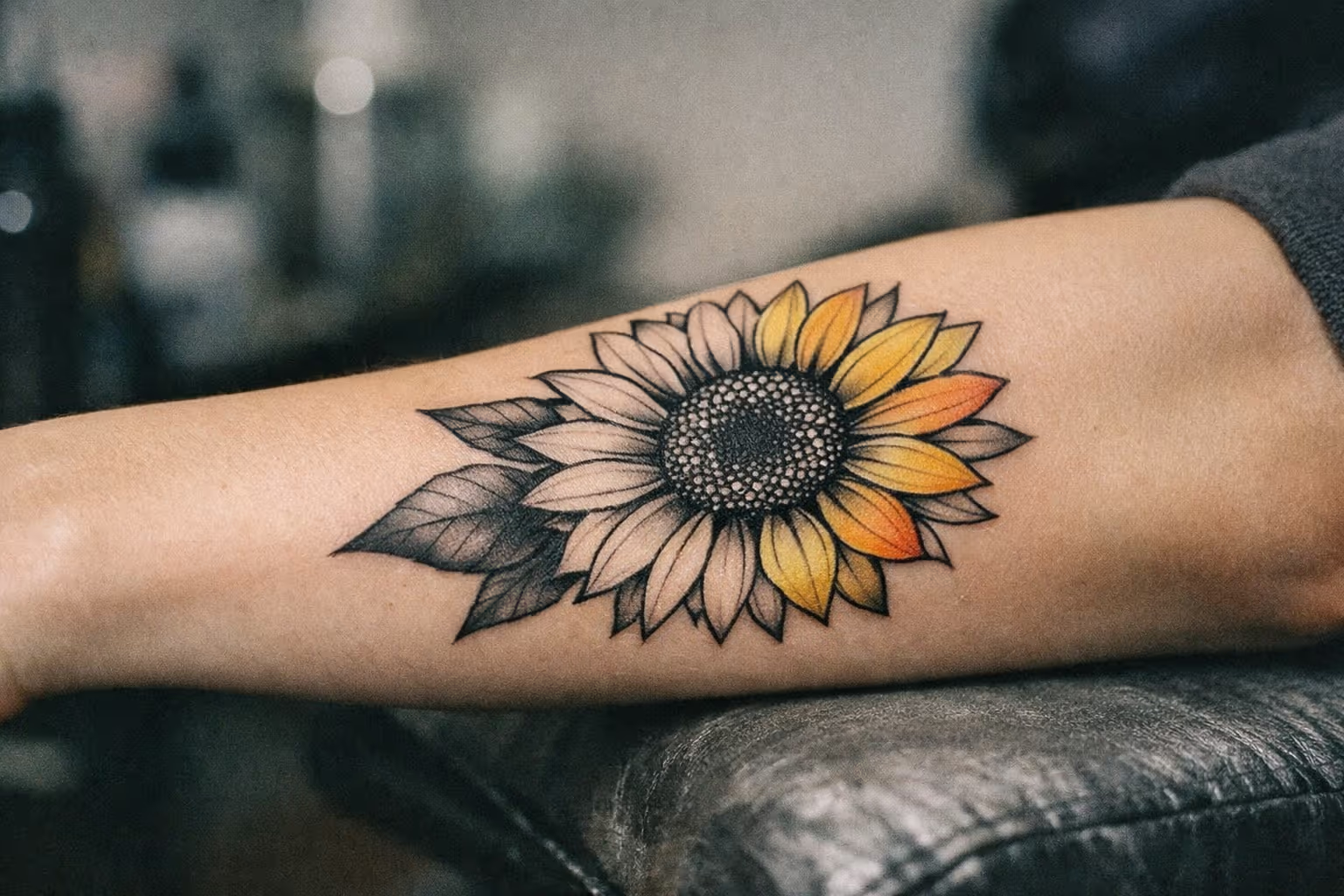
- Sunflower - loyalty, adoration, longevity, warmth (1).
- Cherry blossom (sakura) - impermanence and beauty in the present moment. The Japanese reading (mono no aware) is the dominant one; the modern Western use leans more decorative.
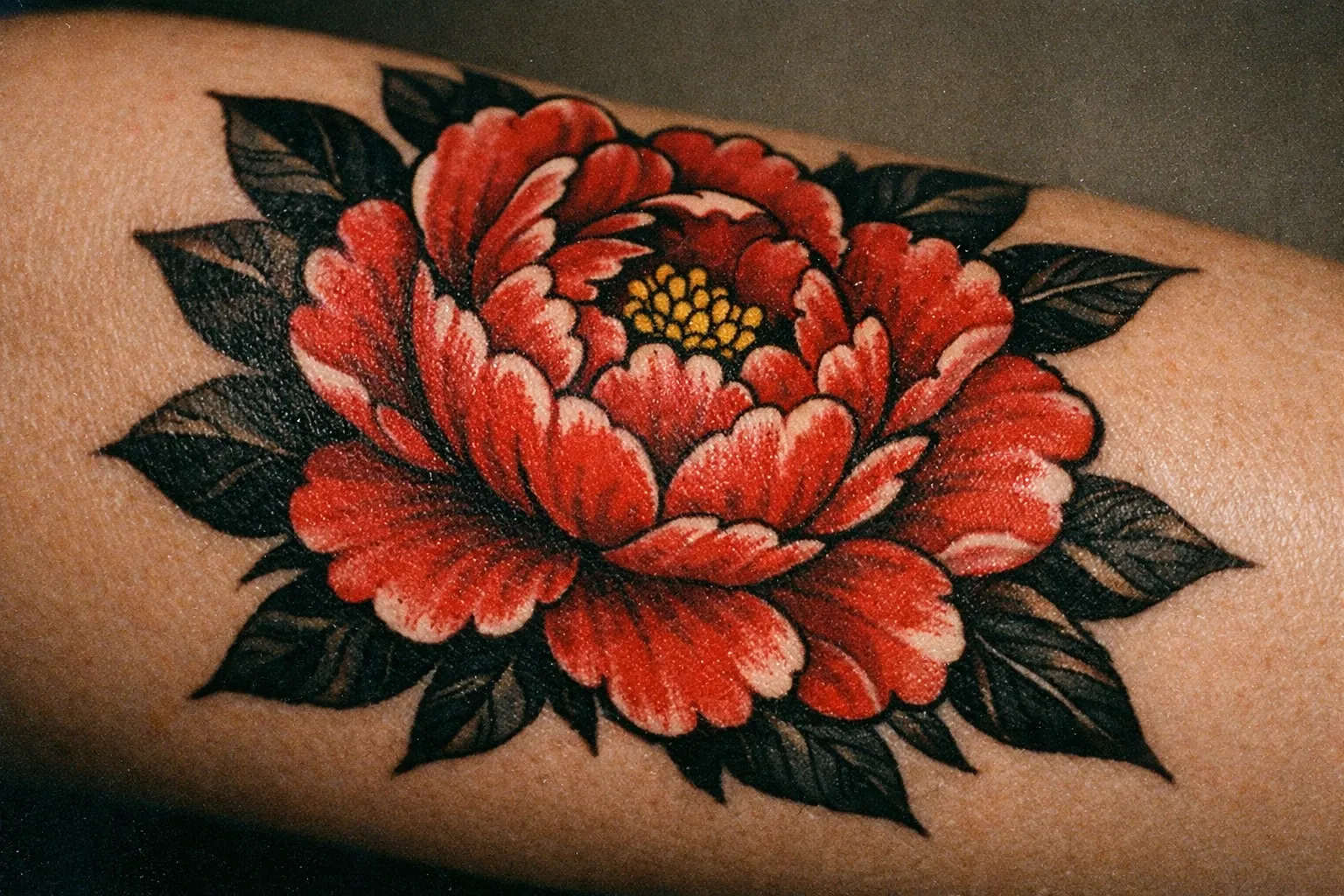
- Peony - prosperity, honor, new beginnings. Chinese symbolism of wealth; in Japanese irezumi the peony reads as bravery (4).
- Lily - purity, compassion, the divine feminine. White lilies can also signal mourning, depending on context (4).
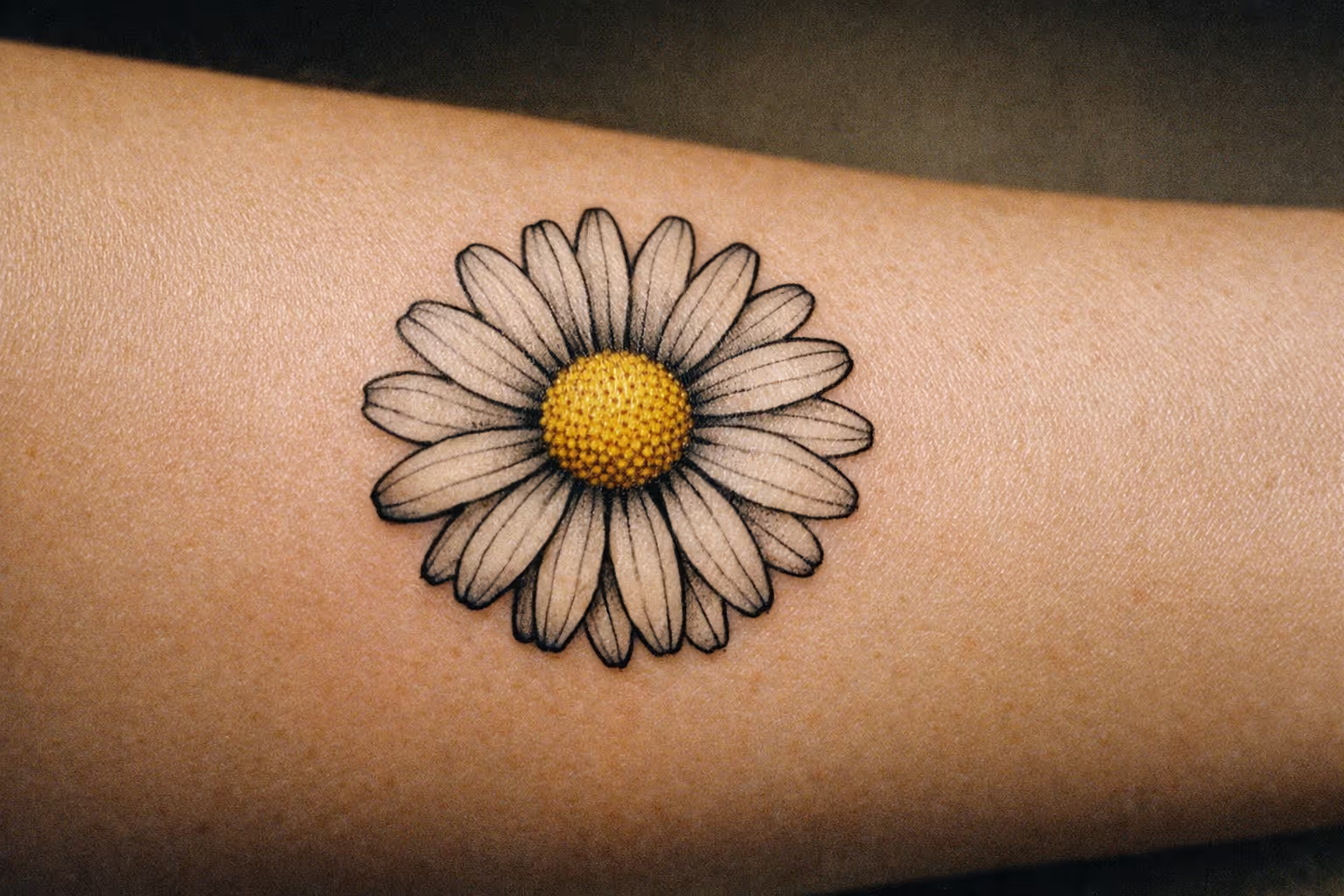
- Daisy - innocence, simplicity (4).
- Poppy - remembrance, sleep, sometimes death. Don’t pick this one purely for the red pop.
- Chrysanthemum - longevity and nobility in East Asian symbolism; respect at funerals in some European traditions.
One honest caveat on flower tattoo meaning: most blooms carry several traditions stacked on top of each other. A cherry blossom doesn’t have one fixed reading - it has a Japanese one, a Chinese one, and a current Western one, and they don’t fully agree. Pick the tradition you’re actually drawing from and own it.
Why the Prettiest Flowers Aren’t Always the Best Choice
“Prettiest” is subjective, but the blooms that consistently photograph and heal the best are peony, rose, cherry blossom, lily, and magnolia. Layered petals, readable at most sizes, hold up in both color and black-and-grey, and translate across styles from fine line to Japanese.
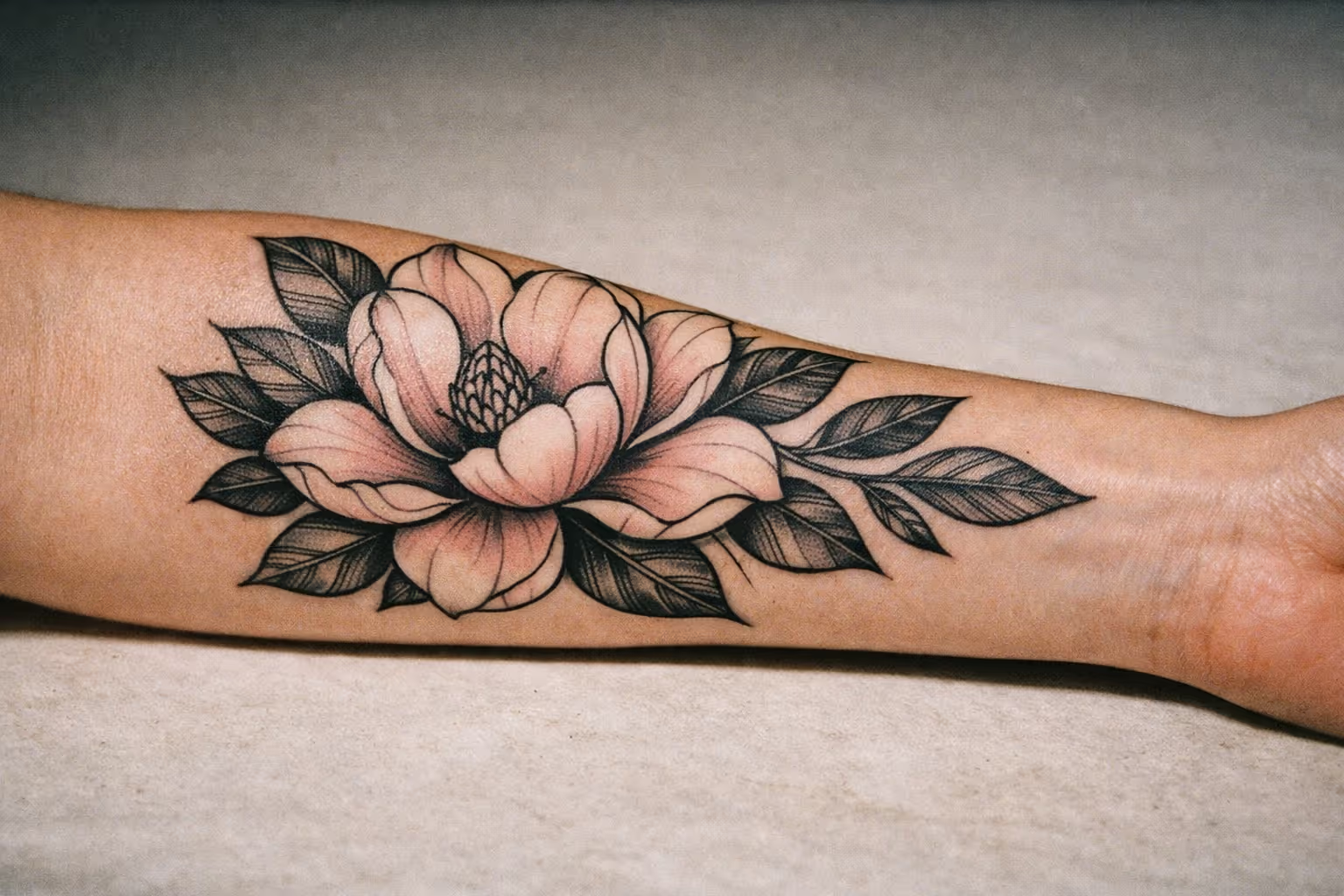
That said, “prettiest” isn’t really the call you should be making. Ask instead: does this bloom hold up at the size and placement I want? A magnolia at 1 inch on a finger is going to mush in two years. A peony at 5 inches on a thigh stays crisp for a decade. Design longevity beats peak-day prettiness every time.
I’ve seen clients come back frustrated at year three because a delicate magnolia on their inner wrist had blurred into something unrecognizable. The flower was beautiful on paper. The placement and scale killed it.
When Less Actually Holds Up: Tips for Small Flower Tattoos
Small flower tattoos are the most common first piece I do, and they’re the ones most often executed badly - usually because the artist crammed too many petals into too little space.
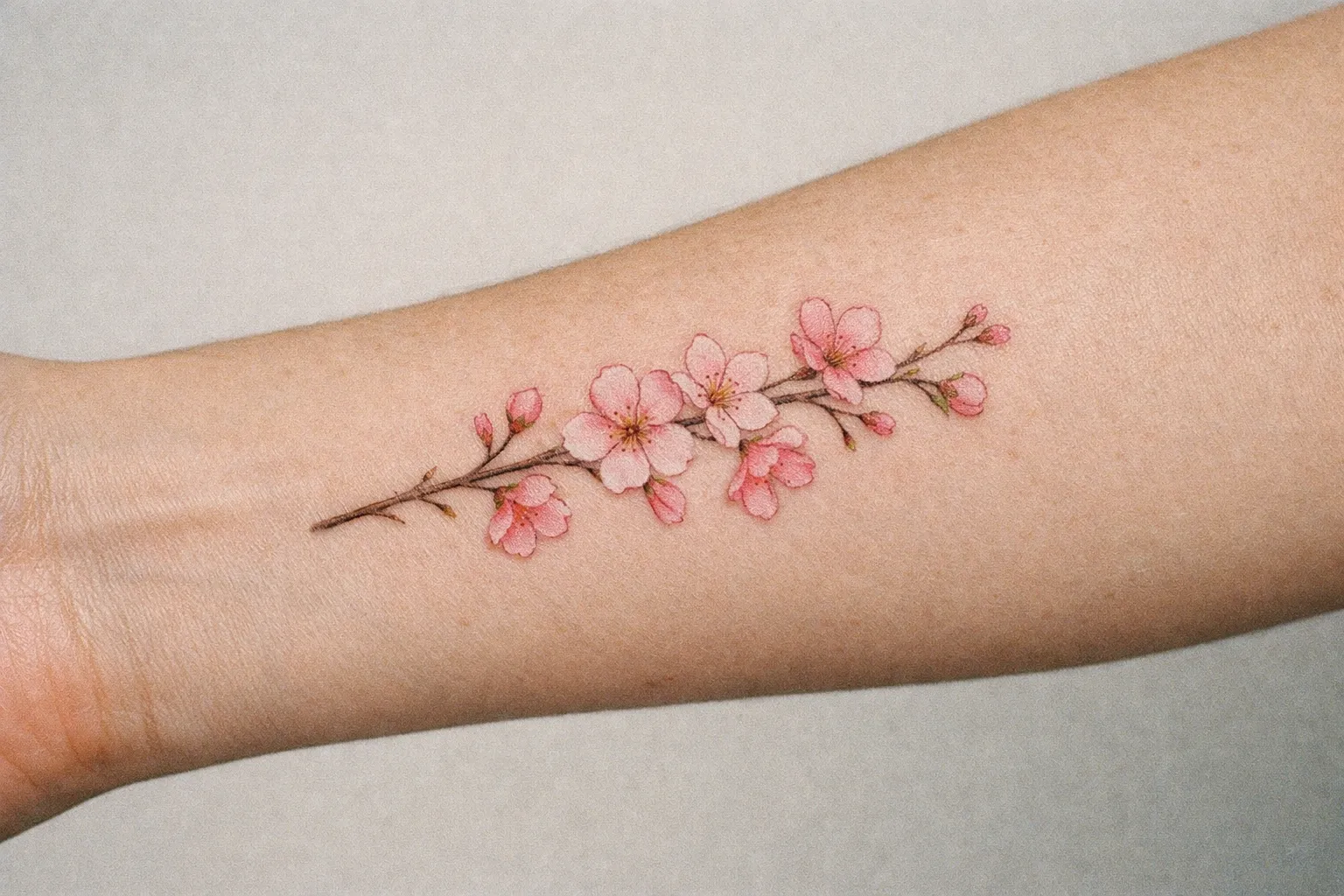
A small floral works if you respect three rules:
- Size floor: 1.5-2 inches minimum for anything with internal detail. Below that, drop to a single-bloom silhouette with minimal interior linework.
- Line weight: slightly thicker outer lines than you’d use on a logo-style fine line. Hairline work blurs faster on small placements.
- Placement that doesn’t stretch: outer forearm, upper arm, calf, shoulder blade, behind the ear. Avoid fingers, the side of the wrist, and inner foot - they distort and fade fastest.
Good small-flower designs include a single daisy (1-1.5 inches), a sprig of lavender (2-3 inches), a forget-me-not cluster (1.5 inches), or a minimalist rose outline (2 inches). Expect $80-$200 for a simple piece in most U.S. studios, more in coastal cities.
Pain on these placements is low - outer forearm and calf sit at the easy end of the scale, well below the ribcage or sternum.
Loose, Botanical, and Personal: Wildflower Tattoo Inspirations
A wildflower tattoo gives you more design freedom than a single-species piece because the composition is inherently mixed. You can combine poppy, daisy, lavender, baby’s breath, cornflower, and chamomile in one loose arrangement without forcing botanical accuracy.
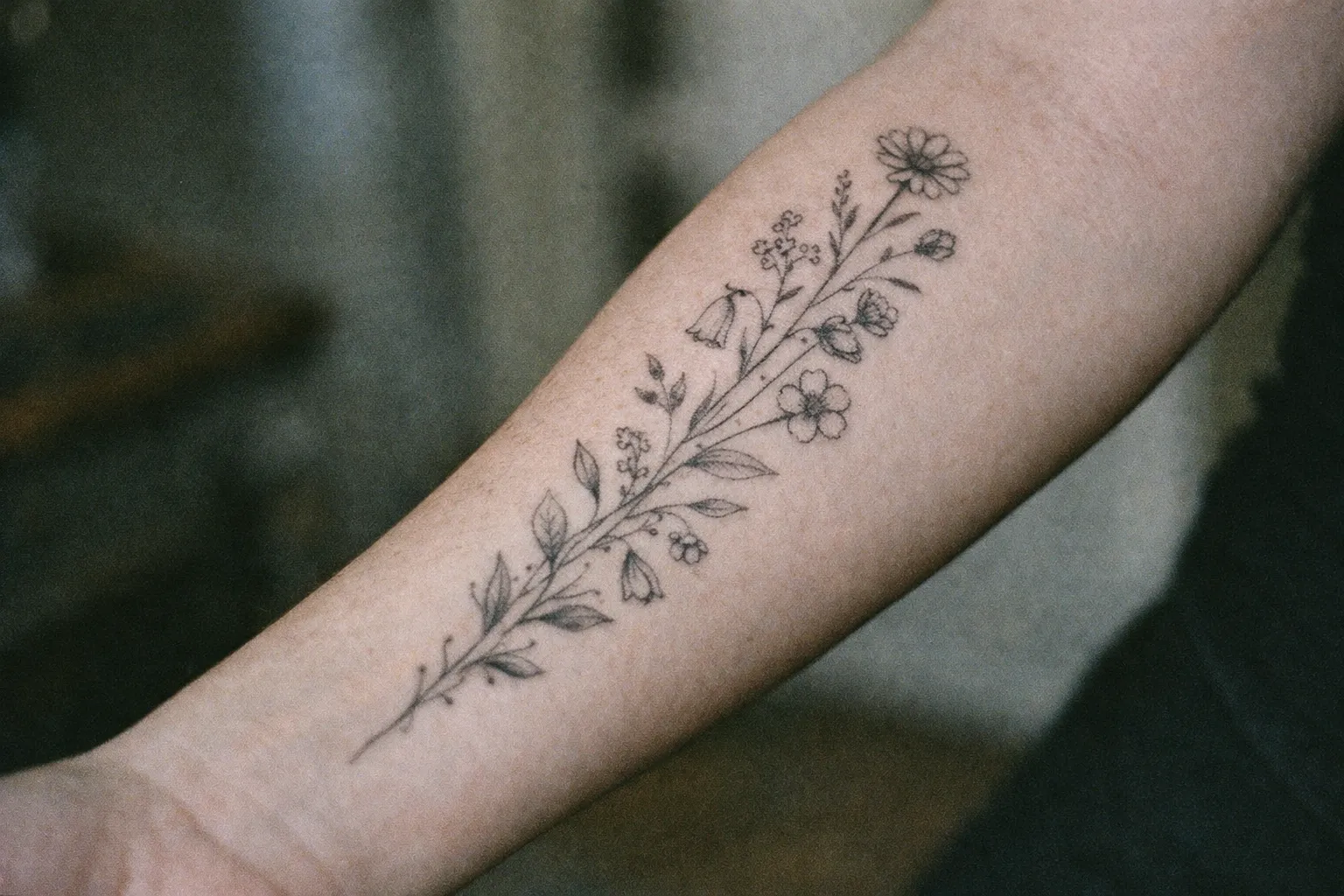
Two hallmarks of wildflower work that ages well:
- Asymmetry on purpose - wildflower bouquets shouldn’t be tightly composed. Let stems cross at irregular angles.
- Mixed line weight - the foreground bloom gets the heaviest outline, background flora gets thinner lines and softer shading. This is the technical move that gives the piece depth without color.
Good placements: forearm length (4-7 inches as a vertical bouquet), spine (8-14 inches running down the back), or wrapped along the collarbone. A common pitfall is artists drawing every flower at the same line weight - the result looks flat, like a sticker.
Budget for a forearm wildflower piece: $250-$500 for black and grey, $400-$800 if you’re adding color. Plan on 2-4 hours in the chair.
Birth Month Flowers: A Quick Reference
Birth month florals give you a built-in personal meaning without needing script. The standard Western calendar:
- January - carnation or snowdrop (devotion, hope)
- February - violet or iris (loyalty, wisdom)
- March - daffodil (rebirth, new beginnings)
- April - daisy or sweet pea (innocence, blissful pleasure)
- May - lily of the valley or hawthorn (humility, happiness)
- June - rose or honeysuckle (love, devotion)
- July - larkspur or water lily (positivity, purity)
- August - gladiolus or poppy (strength, remembrance)
- September - aster or morning glory (wisdom, affection)
- October - marigold or cosmos (passion, order)
- November - chrysanthemum (loyalty, longevity)
- December - narcissus or holly (rebirth, protection)
You can stack two birth flowers - yours plus a partner’s, parent’s, or child’s - into one bouquet. It’s one of the cleaner ways to do a memorial or family piece without resorting to names and dates. I’ve done a few of these and they tend to hold up better over time than script does, both visually and emotionally.
How to Plan a Flower Tattoo Sleeve That Flows
A flower tattoo sleeve is a different design problem from a single tattoo. You’re not picking a flower - you’re choreographing several across a moving, curving surface.
The build order that works:
- Pick your anchor bloom first. The biggest flower - usually a peony, rose, or chrysanthemum at 4-6 inches - goes on the outer upper arm or outer forearm where the muscle is flattest. Everything else orbits this.
- Add secondary blooms at roughly 60% scale. Two or three of them, placed to balance the anchor visually.
- Fill negative space with leaves, vines, and small filler florals - buds, baby’s breath, geometric dot work, or smoke depending on the style.
- Plan transitions around joints. The inner elbow and wrist crease move constantly; design flow should pass through these zones with leaves or vines, not petal detail.
Style hallmarks worth knowing:
- Japanese (irezumi) floral sleeves - thick black outlines, bold color blocking (red, pink, green), wind bars or water as background. The pitfall: artists who copy the look without the foundation linework end up with pieces that smudge into gray by year five.
- Black-and-grey realism - soft gradient shading, no outlines, photographic depth. Pitfall: heavy stippling that looks crisp fresh but blurs into a flat gray patch after healing.
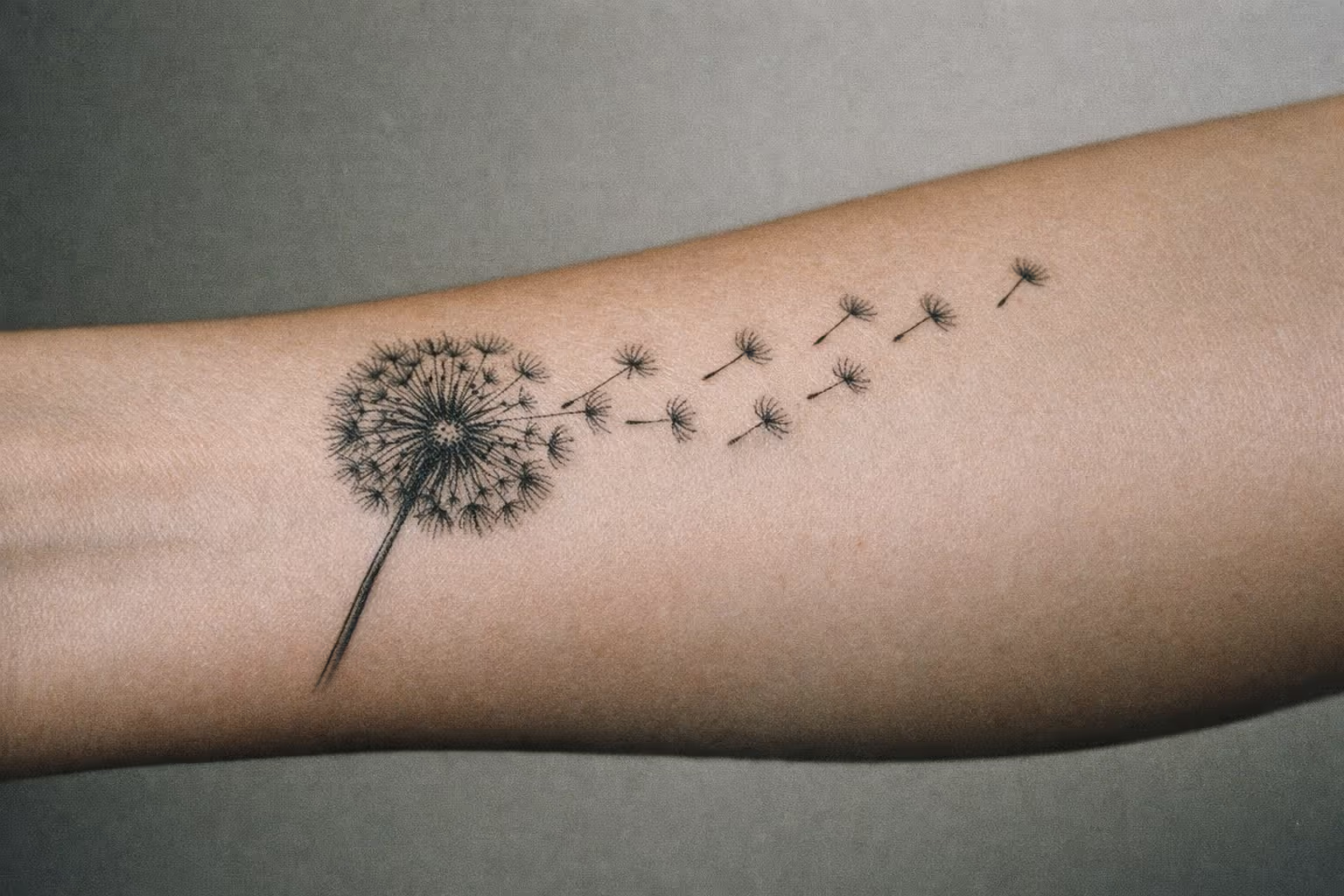
- Fine-line botanical - single-needle linework, minimal shading, lots of negative space. Pitfall: pieces that look sharp fresh but fade significantly within five years if the artist went too thin.
Realistic budget: $1,500-$5,000+ for a full sleeve, spread across 3-6 sessions of 3-5 hours each. Most artists want skin to rest 4-6 weeks between sessions.
Male Flower Tattoo Ideas: Composition and Style Tips for Men
Male flower tattoo ideas are not a separate category of flower - they’re a separate set of composition choices. Most floral pieces I do on men lean into one or more of these moves:
- Larger scale - a single peony or rose at 5-7 inches reads structurally rather than delicately.
- Darker palette - heavy black-and-grey, or color limited to deep reds, blacks, and muted greens. Skip pastel pinks unless that’s specifically the read you want.
- Pair with a non-floral motif - dagger through a rose, snake coiled around a peony, skull nested in chrysanthemums, geometric mandala behind a lotus. The second element shifts the visual weight.
- Stronger outlines - American traditional roses (thick black outline, limited palette of red/green/yellow) read as more structurally bold to most viewers because the linework dominates.
- Bold placements - full chest panel, outer thigh, half-sleeve, ribcage. Smaller blooms behind the ear or on the inner bicep also work, but they read differently.
Some of the most successful pieces I’ve done on men: a black-and-grey peony with a tiger on the outer forearm (around 6 inches), a Japanese-style chrysanthemum chest panel, an American traditional rose with a swallow on the upper arm, and a single lotus with mandala geometry between the shoulder blades. The tiger-and-peony combination in particular - that one aged beautifully. The contrast between the organic flower and the structured animal keeps the eye moving.
Best Placements for Flower Tattoos, Ranked Honestly
Where you put the flower matters more than which flower you pick. The placements I recommend most, with the trade-offs:
- Outer forearm - most versatile. Visible when you want, easy to heal, low pain, distorts minimally with age. Best for 3-6 inch pieces.
- Upper arm / shoulder - strong canvas for medium and large pieces, hides under a t-shirt, low-to-moderate pain.
- Calf - underrated. Lots of flat real estate, low pain, ages well. Good for vertical bouquets.
- Spine / centered back - best for symmetrical vertical pieces (long-stem flowers, vine work). Moderate pain over the vertebrae themselves.
- Sternum / under-bust - high impact, high pain (ribcage > forearm by a wide margin), heals slowly.
- Ribcage - same pain story as sternum. Looks striking, hurts the most of any common placement.
- Behind the ear, finger, inside wrist - high visibility, but distort and fade fastest. Reserve for small, simple pieces and expect to touch up within 3-5 years.
A common mistake: picking a placement for the photo, not for daily life. If your work doesn’t allow visible ink, plan around what a short sleeve covers before you finalize the size.
Style Choices and How They Age
The style affects longevity as much as the placement.
- Bold blackwork / American traditional - thick outlines, limited palette. Ages best of any style. The pitfall is that a sloppy artist treats “traditional” as an excuse for messy linework.
- Japanese / irezumi - heavy outlines, saturated color blocking. Ages well if the foundation linework is solid.
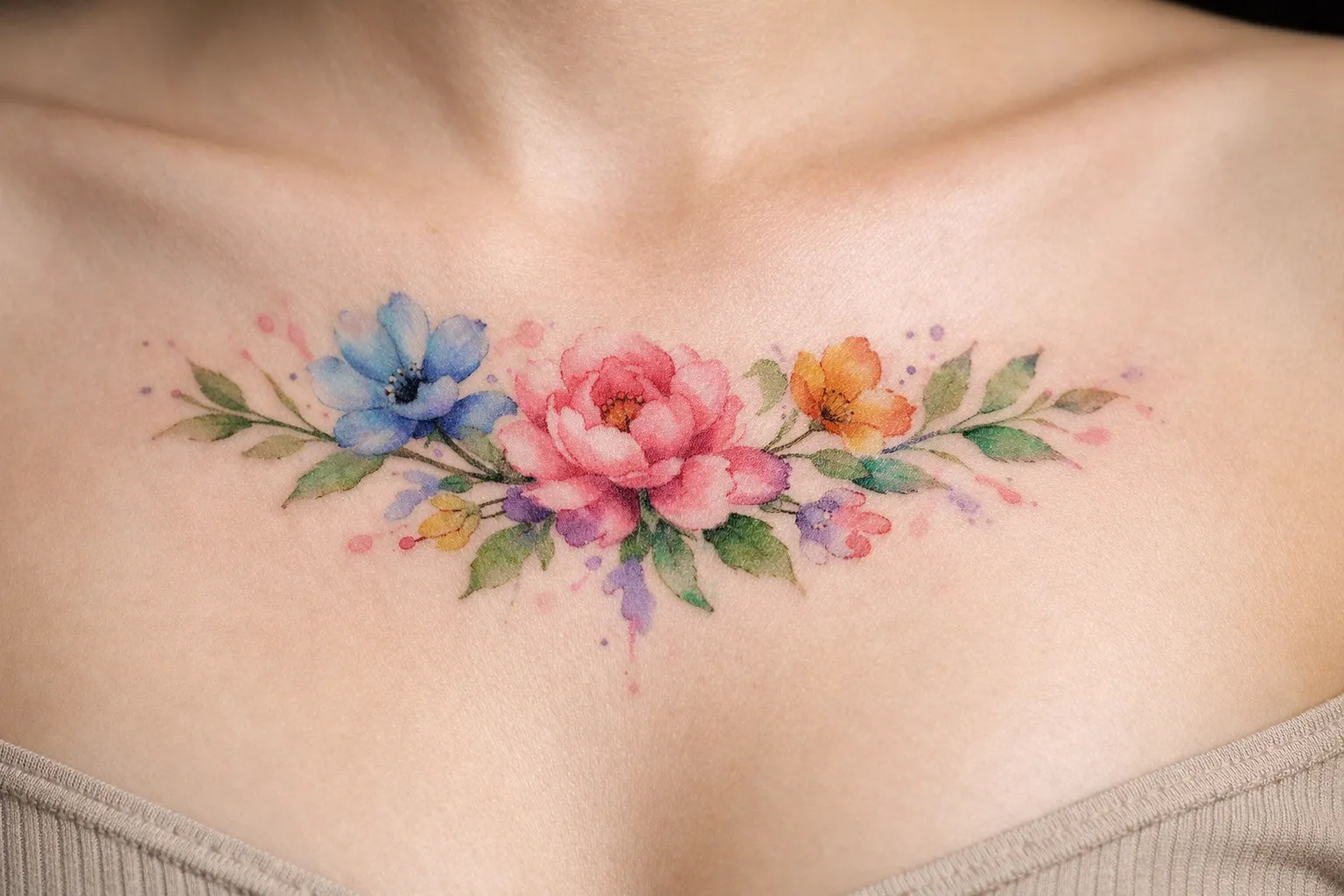
- Fine line / single needle - pretty fresh, but fades faster. Plan for a touch-up at the 5-7 year mark (3).
- Watercolor - pastel washes without strong outlines. The most maintenance-heavy style; expect noticeable fading by year three without touch-ups.
- Black-and-grey realism - gorgeous when done well, but only as good as the artist. Look at healed photos in the portfolio, not just fresh ones.
If you want a piece that looks identical at year ten, go bold blackwork or traditional. If you want something that looks ethereal fresh and don’t mind upkeep, fine line or watercolor is fine - just go in knowing what you’re signing up for.
What Does a Flower Symbolize in Tattoos?
Broadly, flower tattoos symbolize growth, transformation, beauty, and the cycle of life and death - themes that scale up or down depending on the species. Specific blooms then narrow the reading: a rose leans toward love, a lotus toward rebirth, a poppy toward remembrance, a chrysanthemum toward longevity (2).
Two things worth knowing about symbolism in modern tattoo culture:
- Meanings are layered, not fixed. Most flowers have a Western reading, an East Asian reading, and a contemporary tattoo-culture reading. Pick the tradition you actually identify with.
- The symbolism only matters if you can articulate it. A tattoo whose meaning requires a five-minute explanation tends to feel less personal than one with a clear, simple anchor.
What Is the Luckiest Flower Tattoo?
If you want a flower chosen specifically for positive symbolism, the strongest options from the cultural sources are:
- Lotus - rebirth and spiritual growth, with deep Buddhist and Hindu roots (4).
- Peony - wealth, prosperity, honor in Chinese tradition (4).
- Sunflower - loyalty, warmth, longevity (1).
- Cherry blossom - appreciation of the present moment, renewal.
- Chrysanthemum - longevity and nobility in East Asian symbolism.
I’d rank lotus and peony at the top for “lucky” intent because both carry positive readings across multiple traditions with minimal contradictory meanings.
Which Flower Is Best for Tattoos?
The most flexible flowers - meaning they work at multiple sizes, in multiple styles, and carry strong symbolism - are rose, lotus, peony, sunflower, and cherry blossom. Any of these can be executed as a 2-inch fine-line piece or built into a full sleeve, which is why they dominate flash sheets year after year.
If I had to pick one all-rounder it’d be the rose: ages well at any scale, translates across every style from traditional to realism, and the symbolism (love, passion, beauty) is broadly understood without requiring context.
Aftercare: What Actually Matters
Fresh ink needs structured care. The timeline:
Day 1-3. Leave the artist’s wrap on as long as they instructed (typically 2 hours to 5 days for second-skin wraps). Once off, wash gently with fragrance-free soap and lukewarm water, pat dry with a clean towel, and apply a thin layer of fragrance-free moisturizer or the aftercare ointment your artist specified. Wash 2-3 times daily.
Week 1. Expect light scabbing and peeling - do not pick. Keep washing 2-3 times a day and moisturizing in thin layers. Skip the gym, swimming pools, hot tubs, saunas, and direct sun.
Week 2-4. The top layer is healed but the deeper skin is still settling. Continue with fragrance-free moisturizer. You can return to normal exercise around week 2 but keep clothing loose over the area. No sun exposure without sun-protective clothing.
Long term. Sunscreen (SPF 30+) on the tattoo whenever it’s exposed. UV is the single biggest cause of fading. Watercolor and fine-line pieces may need a touch-up at the 5-7 year mark; bold blackwork can go a decade or more without one.
Common aftercare mistakes: over-moisturizing (suffocates the skin and slows healing), picking scabs (pulls pigment out), and skipping sunscreen once healed. That last one is where most people fall off. The tattoo looks healed, life gets busy, sunscreen stops happening - and then three summers later you’re wondering why the color looks dull.
Budget Reality Check
Rough U.S. ranges, based on standard studio pricing:
- Tiny single flower (under 2 inches) - $80-$200
- Palm-sized floral (3-5 inches) - $150-$400
- Forearm bouquet or large single bloom (5-8 inches) - $300-$800
- Half sleeve - $800-$2,500
- Full sleeve - $1,500-$5,000+
- Back piece - $2,000-$6,000+
Hourly rates in major cities run $150-$300/hour; specialist artists with waitlists charge more. Tip 15-20% on top.
A practical move if budget is tight: book the linework now, schedule color or shading 6-12 months later. Splitting the piece is normal and gives you time to save.
Common Pitfalls I See in the Booth
- Picking the flower before the placement. Different blooms suit different placements; deciding the body part first narrows the design in a useful way.
- Going too small with too much detail. A 1-inch peony with full petal shading will be a smudge in three years.
- Choosing watercolor for a high-friction area. Pastel washes on the wrist or ankle fade fastest of any combination.
- Ignoring how the flower will look on aging skin. Thick outlines and bold contrast hold up. Hairline detail does not.
- Copying a Pinterest photo without your artist’s input. Good artists redraw - they don’t trace. If your artist is willing to copy another artist’s work exactly, find a different artist.
Frequently Asked Questions
- What is the prettiest flower to tattoo?
- Subjectively, peony, rose, cherry blossom, lily, and magnolia photograph and heal the most reliably. These blooms have layered petals that read well at most sizes and translate across styles from fine line to traditional Japanese.
- What is the luckiest flower tattoo?
- Lotus and peony are the strongest lucky choices because they carry positive readings - rebirth and prosperity respectively - across multiple traditions without contradictory meanings. Sunflower is a close third for warmth and longevity.
- How much does a flower tattoo cost?
- Small simple pieces typically range from $80-$200, forearm-sized bouquets cost $300-$800, and full sleeves can run $1,500-$5,000 or more in most U.S. studios. Hourly rates in major cities usually fall between $150 and $300.
- Do flower tattoos fade quickly?
- It depends on the style. Bold blackwork and traditional styles hold well for 10+ years with minimal fading. Fine-line and watercolor pieces generally need touch-ups around the 5-7 year mark. UV exposure is the biggest factor in fading, so daily sunscreen after healing is essential.
- Can I combine multiple birth month flowers in one tattoo?
- Yes, stacking two birth flowers - such as yours and a partner's or child's - is a clean way to create a memorial or family piece without using names or dates. These tend to age better visually and emotionally than script.
- Why do some flower tattoos blur faster than others?
- Blurring often results from choosing too small a size with too much detail, placing tattoos on high-friction or stretchy areas like the inner wrist or fingers, or using fine-line or watercolor styles without accounting for their faster fading.
- What's the best placement for a flower tattoo that ages well?
- Outer forearm, upper arm, and calf are top picks for longevity and low pain. Avoid high-movement or high-friction spots like the inner wrist, fingers, or behind the ear if you want the tattoo to stay crisp longer.
Pick the flower for the meaning, pick the placement for daily life, pick the style for how long you want it to look sharp. Get all three right and you’ll stop noticing it in the mirror after a year - not because it faded, but because it fits.