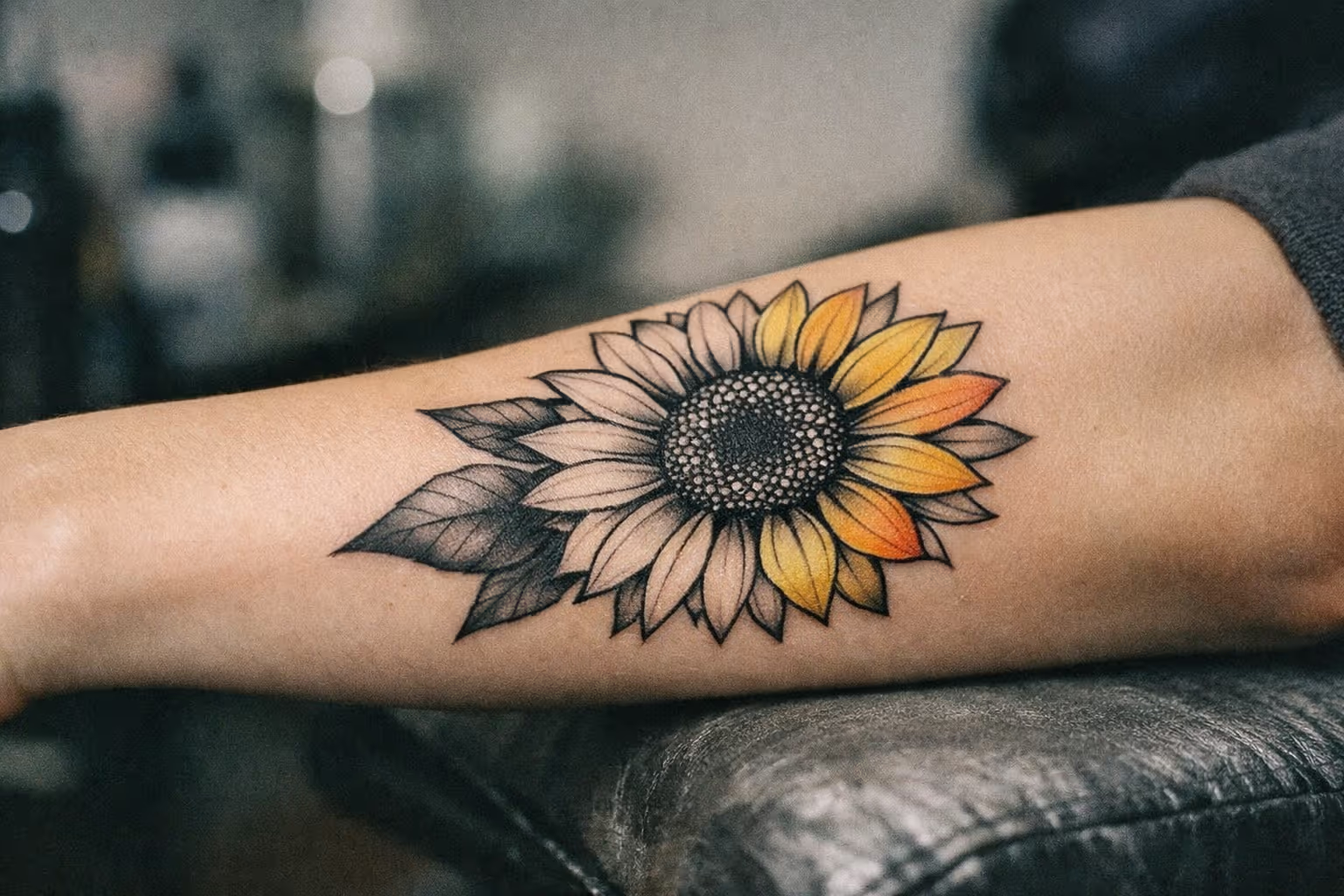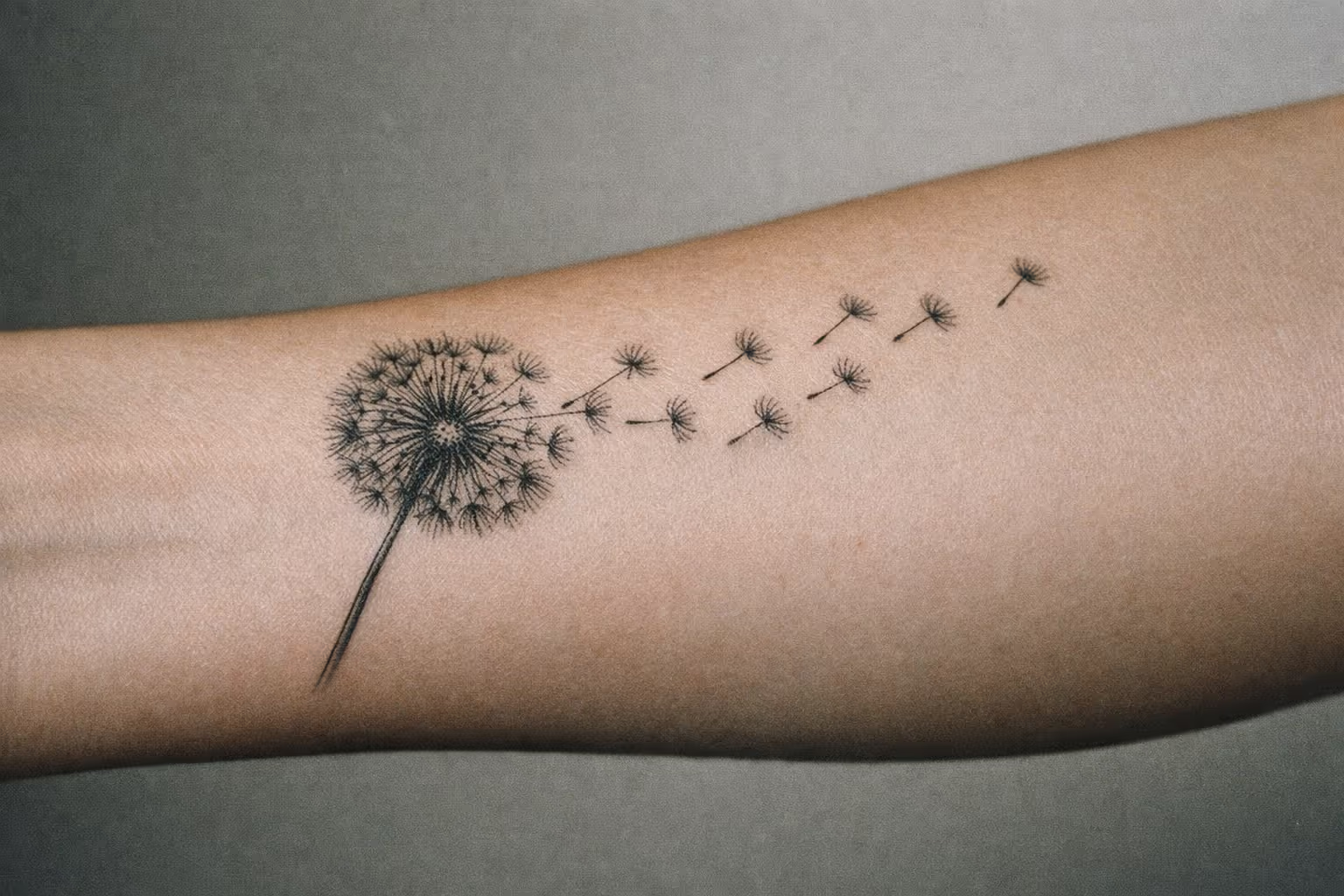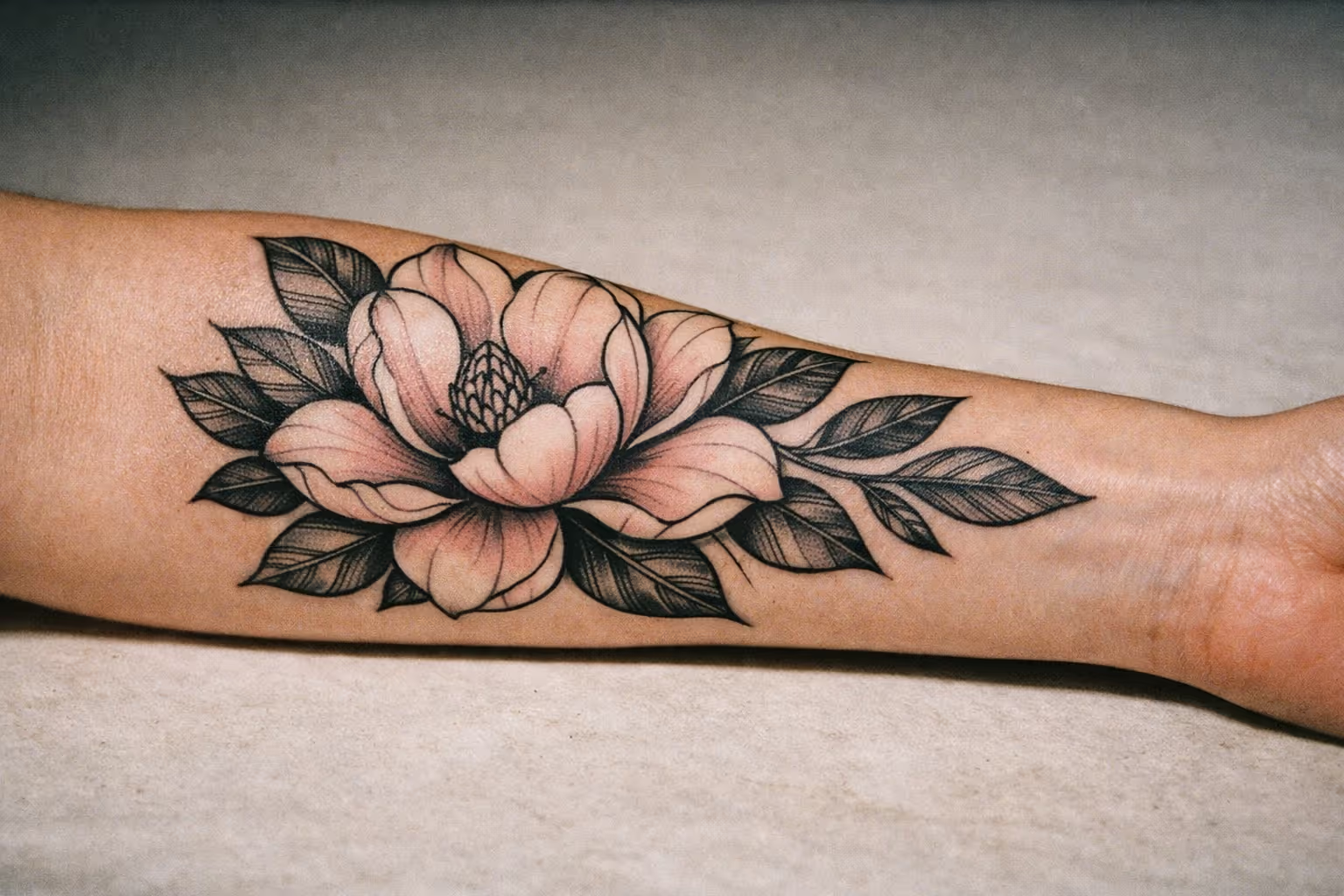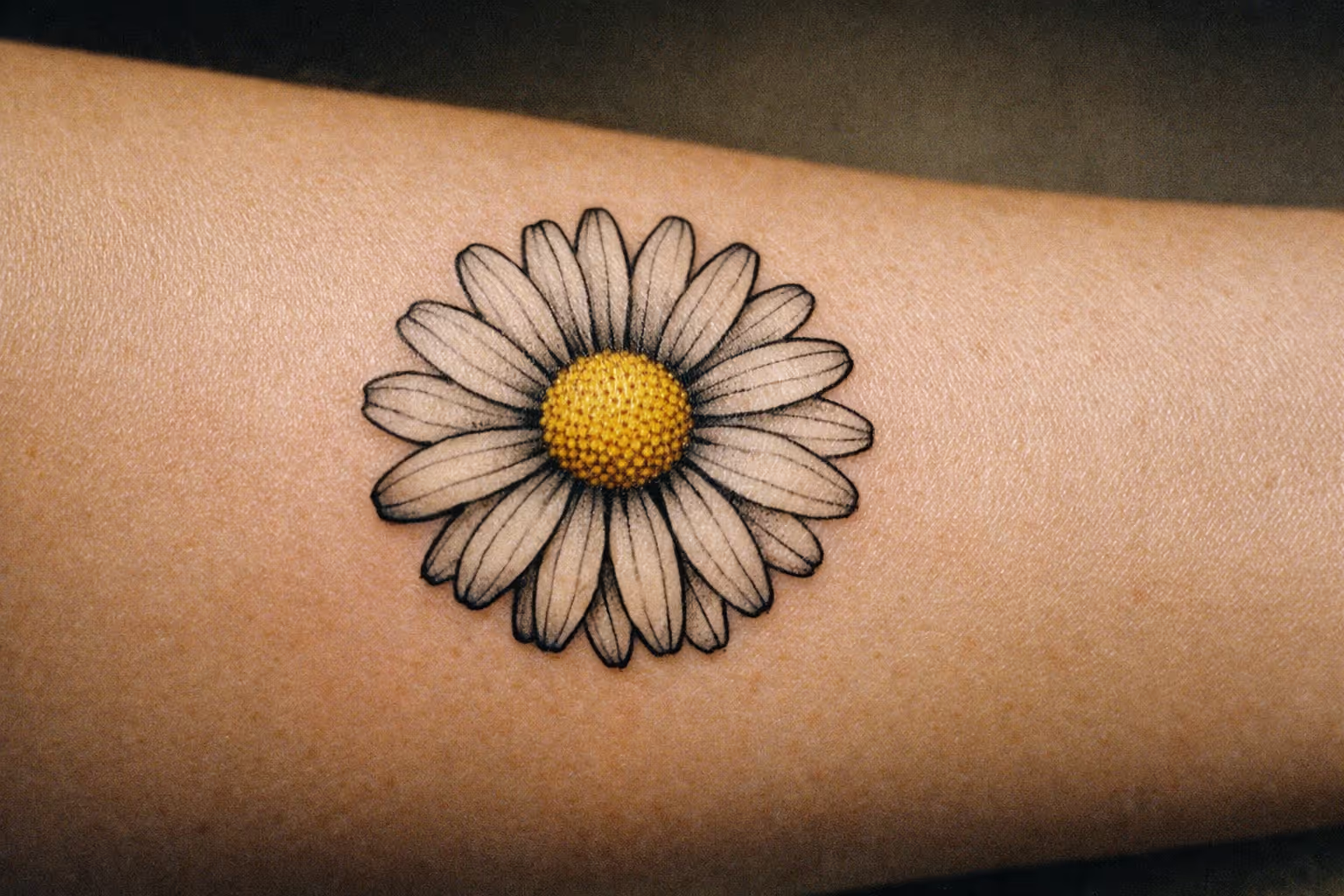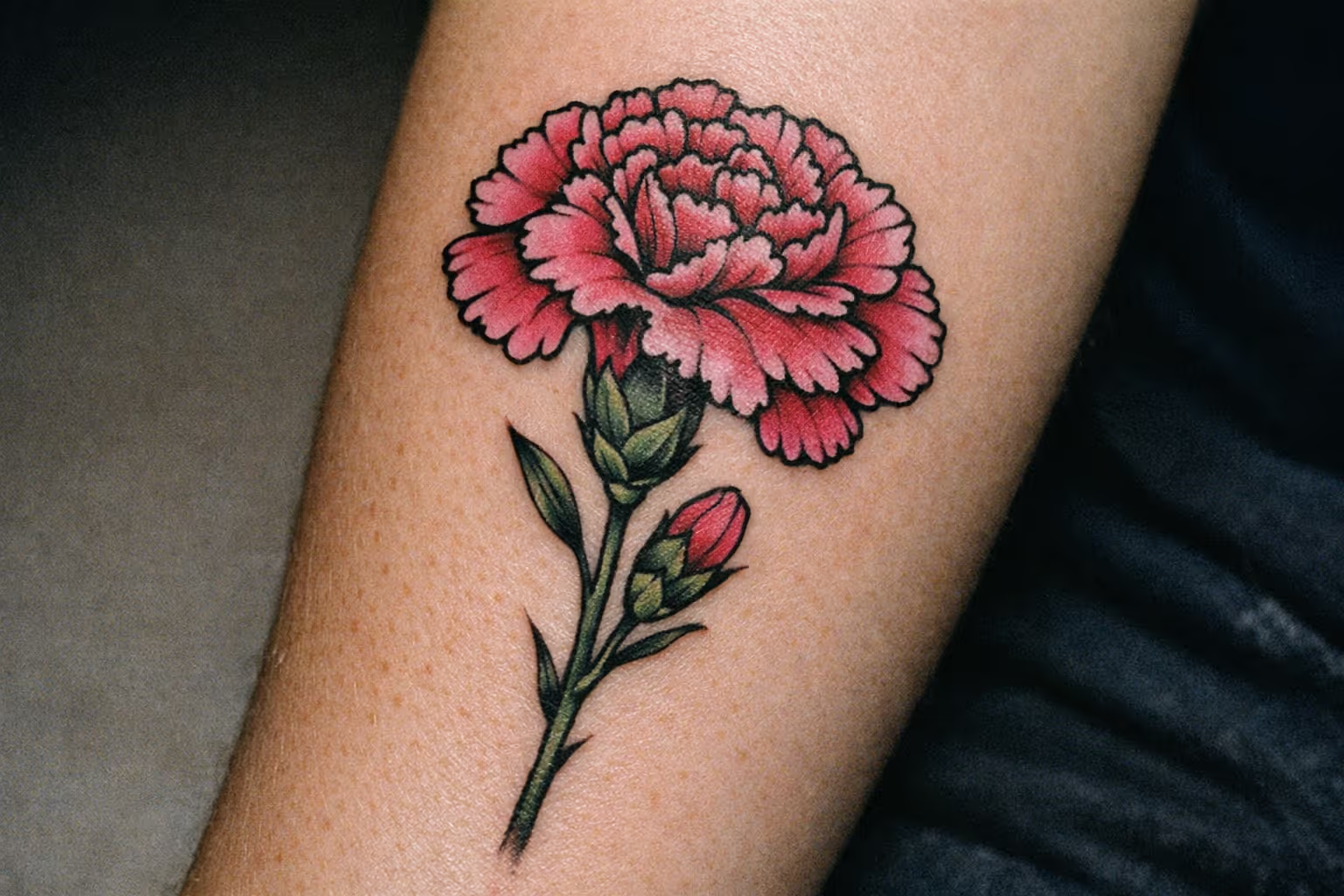
With a carnation tattoo, the color isn’t decoration - it’s the message, and it can flip from devoted love to outright rejection depending on the shade. That makes it one of the few flower tattoos where picking “red” or “yellow” is a meaning decision, not an aesthetic one. Choose it deliberately, before the stencil is cut. Here’s what each color says, plus sizing, $500 examples, and how it holds up.
What a Carnation Tattoo Means (and the Snowdrop Pairing)
A carnation tattoo is built around Dianthus caryophyllus - the ruffled, densely layered bloom you’ve seen in red, pink, white, purple, or yellow. It works as a fine-line single stem on the inner forearm or as a full-color bouquet packed across the shoulder. The meanings run deeper than the petals: admiration, love, remembrance, and resilience, with the symbolism shifting hard depending on color (1). This guide covers carnation tattoo design options, carnation flower tattoo styles, the carnation and snowdrop tattoo birth-flower combo, realistic costs and sizing, and carnation tattoo meaning by color - so you can walk into a consult knowing exactly what you want.
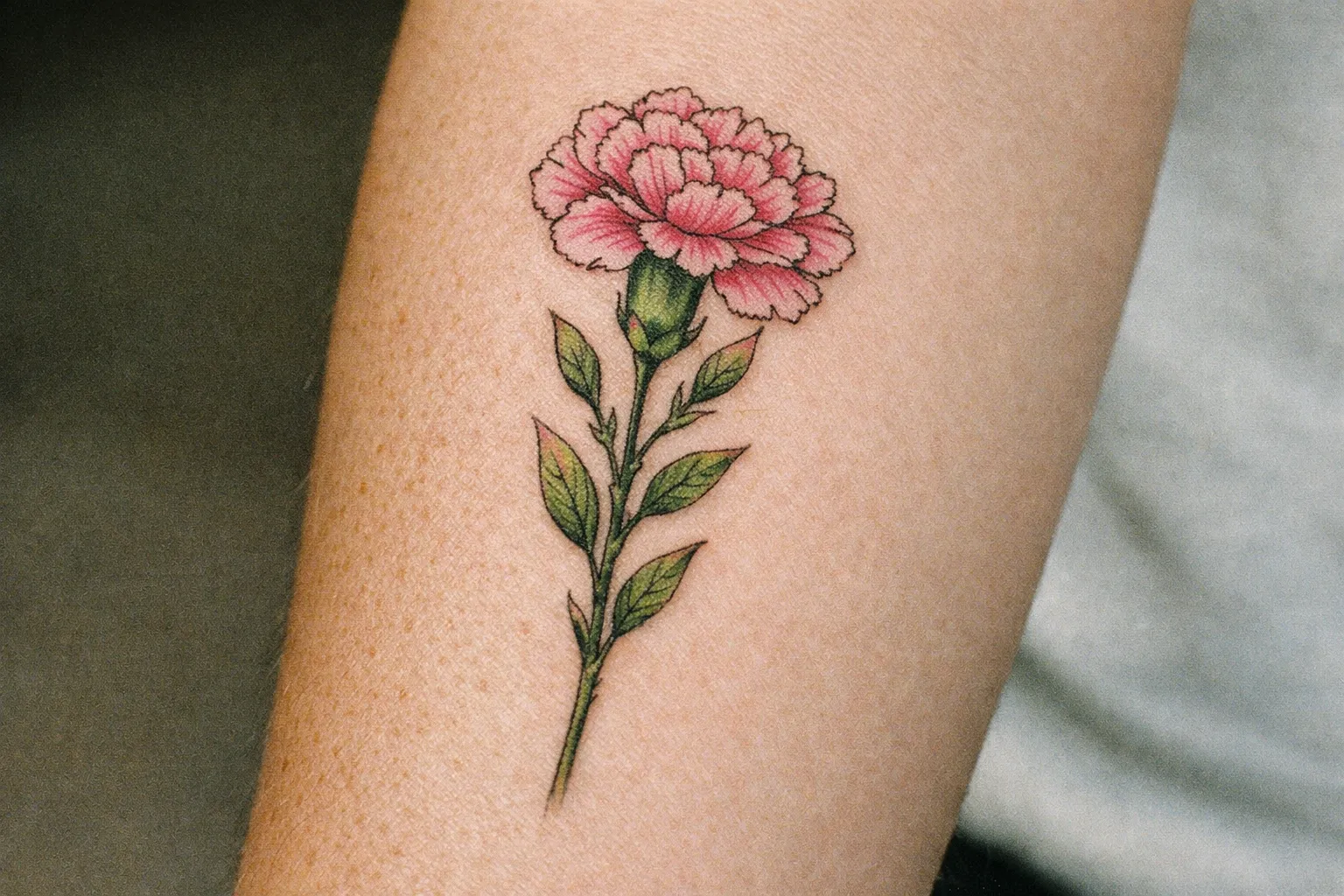
Carnations carry a stack of meanings, and unlike some flowers, the color does most of the talking. The general associations are admiration, fascination, love, romance, deep friendship (especially among women), and strength (5). Pin down a color and the message gets specific:
- Pink - gratitude and admiration; the classic “thank you, Mom” flower (1)
- White - luck, purity, innocence, and remembrance (1)(4)
- Dark red - deep affection and love (2)(4)
- Light red - admiration and respect
- Purple - capriciousness and individuality
- Yellow - rejection or disappointment (2)
That yellow one trips people up. I’ve had clients pick yellow purely because it looked good next to a red bloom, not realizing they’d accidentally tattooed “rejection” beside “love.” Some people do this intentionally - a yellow-and-red mix to signal a love story that came with pain. Just make sure it’s intentional, not a color you grabbed off a reference photo.
Carnations are also the January birth flower, which is why they show up in commemorative pieces tied to a birthdate or a memorial. They carry a built-in calendar meaning without needing extra text - that’s a big part of their appeal.
Carnation Tattoo Meaning vs. Other Flowers
If you’re comparing florals before committing, the meaning landscape sorts out roughly like this: carnations lean toward love, admiration, and resilience; roses skew passion; lilies read as purity; peonies signal wealth and elegance. Stacking a carnation with a peony in one bouquet layers love and prosperity into a single piece - a common move for anniversary or milestone tattoos. If your interest extends to the full birth flowers tattoo system, carnations are just January’s entry in a much richer calendar of personal symbolism.
✓ Pros
- Rich symbolism that varies by color, allowing personalized meaning
- Multiple design styles from fine-line to full-color realism
- Works well in various placements with good aging if sized properly
✗ Cons
- Yellow carnations can unintentionally convey rejection if chosen without care
- Fine-line small carnations risk losing detail over time
- Complex compositions require large space to avoid blurring
Carnation Styles and What They Signal
The carnation’s ruffled, many-layered petals make it a rewarding flower to tattoo well and a frustrating one to tattoo badly. The texture rewards an artist who understands line direction; it punishes one who doesn’t.
Fine-line single stem. A clean black outline, usually 1-2 inches for a single small bloom, larger if you want the stem and a leaf or two. This is the budget-friendly, short-session option. The technical hallmarks are restraint and precision - thin, even linework with minimal shading, where every petal edge has to be deliberate. The pitfall: go too small with full petal detail and the ruffles turn to mud within a few years. Carnation petals generally need at least 2.5-3 inches to hold their structure long-term. I’ve seen fine-line carnations done at 1.5 inches that looked great fresh and were unreadable at the five-year mark.
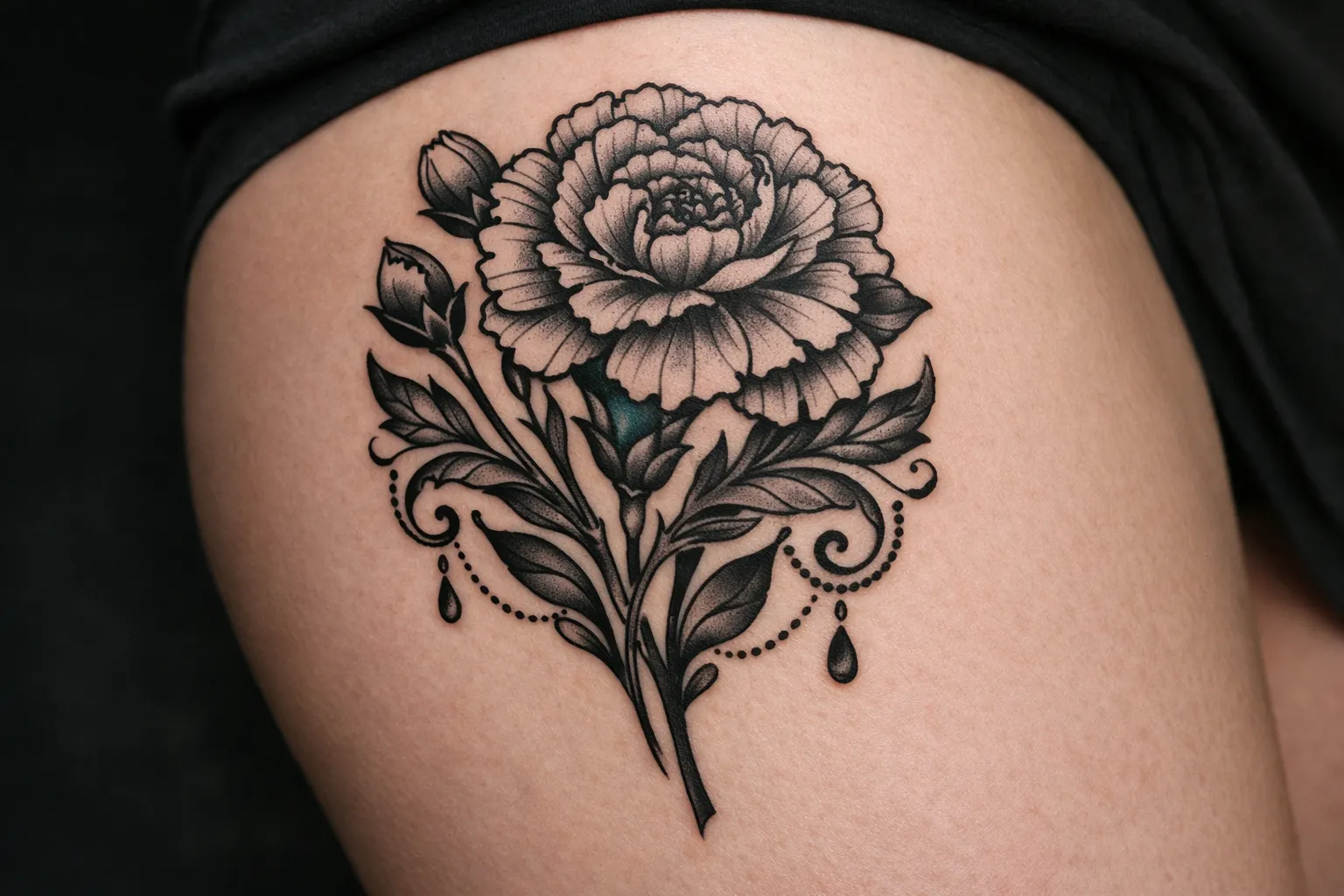
Black-and-gray shaded. A single bloom or small cluster with leaves, 3-6 inches, built on smooth gradient shading. Good artists align the shading from the flower’s center outward to mimic how the petals actually layer. This style ages well and reads clearly at a distance.
Full-color realism and watercolor. The most demanding style - 4-10 inches, often with a soft watercolor background bleed. Reds and pinks need proper saturation, which means more time in the chair and sometimes a second color pass. Watercolor carnations look striking healed, but the looser washes can fade faster than solid color, so factor in touch-ups.
A common pitfall across all styles: overcrowding. Cramming three carnations, a date, and a second flower onto a wrist or small forearm panel guarantees blurring as the lines spread over a decade. If you want a complex composition, give it room - upper arm, thigh, or back - or split it into linked pieces.
The Carnation and Snowdrop Tattoo as a Birth-Flower Combo
The carnation and snowdrop tattoo pairs January’s flower (carnation) with the snowdrop, a flower associated with late winter and early spring that has become a popular stand-in for February in modern tattoo culture - even though violet holds the more widely recognized February birth-flower slot in most English-language references. That distinction matters if you’re building a strict birth-flower piece: if botanical accuracy is the point, confirm which February flower your artist is working from before the stencil gets cut. That said, the carnation-snowdrop pairing is one of the most-requested birth-flower combos I see, and for good reason - it tells a time-specific story instead of a generic floral one. Siblings born a month apart, a parent-and-child pairing, or a couple use it to mark two birthdays in a single design.
Structurally, the snowdrop’s drooping, bell-shaped flower contrasts nicely with the carnation’s frilled fullness, so the two read as distinct even in black-and-gray. Plan for 4-6 inches to give both flowers enough room - the snowdrop in particular gets lost if shrunk too far. Forearm, upper arm, and the outer thigh all hold this combo well.
Choosing Colors That Resonate: Pink, Red, White, Purple, Yellow
Color is where a carnation tattoo stops being decoration and starts being a message. Here’s how each reads on skin.
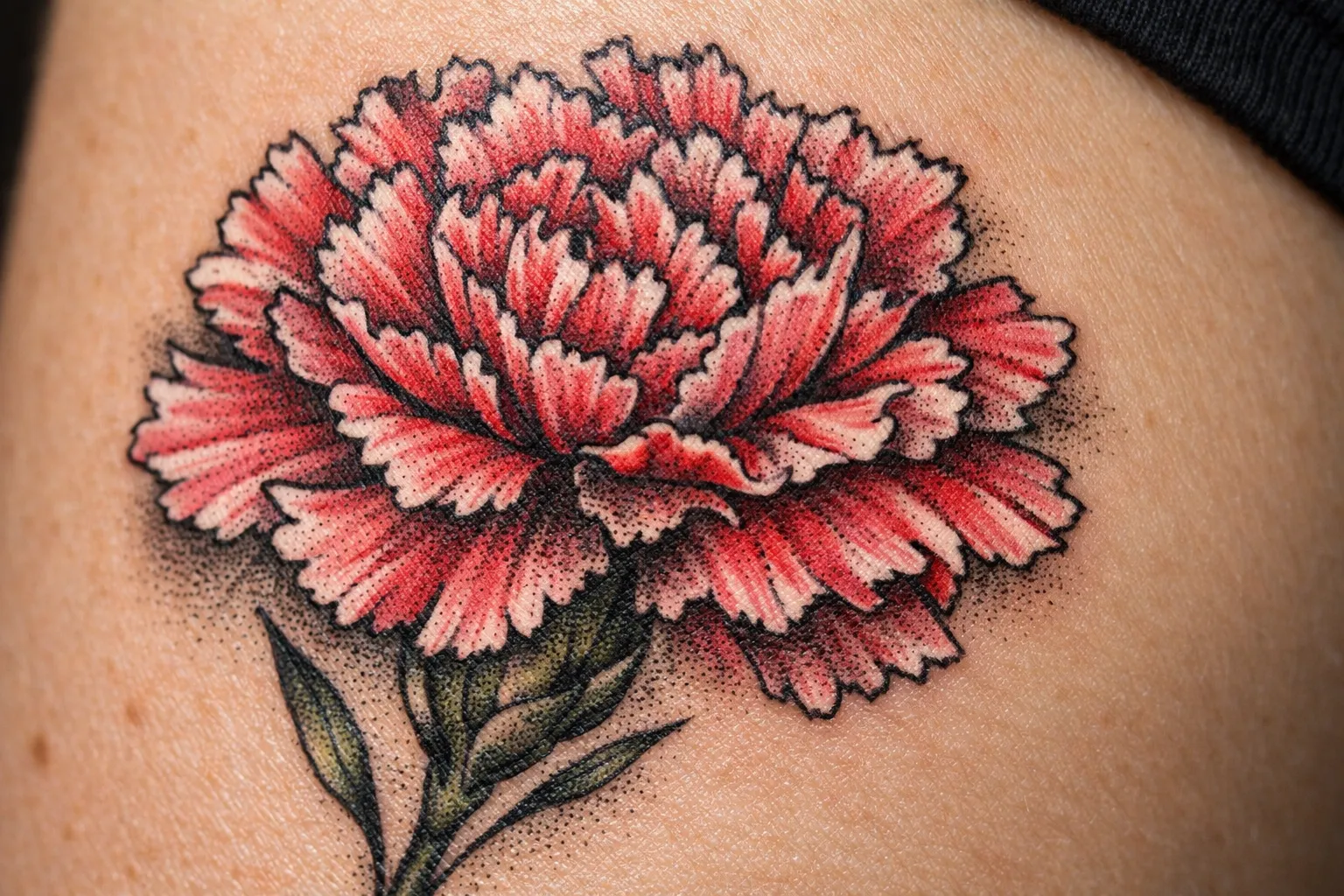
Pink carnation tattoo. Gratitude and admiration (1). This is the maternal-love choice - pair a light pink bloom with the word “Mom” or a birthdate and you’ve got a clean, legible tribute. One technical caveat: pastel pinks fade faster than saturated colors, so expect a touch-up around the 3-5 year mark if you want it to stay crisp.
Red carnation tattoo. Dark red signals deep love; light red leans toward admiration and respect (4). It’s the romantic pick - frequently inked with partner initials or an anniversary date. Reds hold saturation well, especially on lighter skin tones, but darker skin often benefits from two color passes with a healed check at 6-8 weeks.
White carnation tattoo. Luck, purity, and remembrance (1)(4). The default for memorial pieces - usually black-and-gray with a date or a small cross. Because “white” ink on skin reads mostly as the absence of color plus subtle shading, an experienced artist matters here more than usual.
Purple carnation tattoo. Individuality and capriciousness. A solid choice if you want a flower that signals independence rather than romance. Often stylized or abstracted to lean into the “uniqueness” angle.
Yellow carnation tattoo. Rejection or disappointment, traditionally (2). Only pick this if the meaning fits your intent - it’s an excellent flower for a tattoo about a hard chapter, a bad ending, or resilience after loss. Don’t choose it by accident.
Ideal Placement for Your Carnation Flower Tattoo
Placement decides two things: how visible the tattoo is and how well it ages.
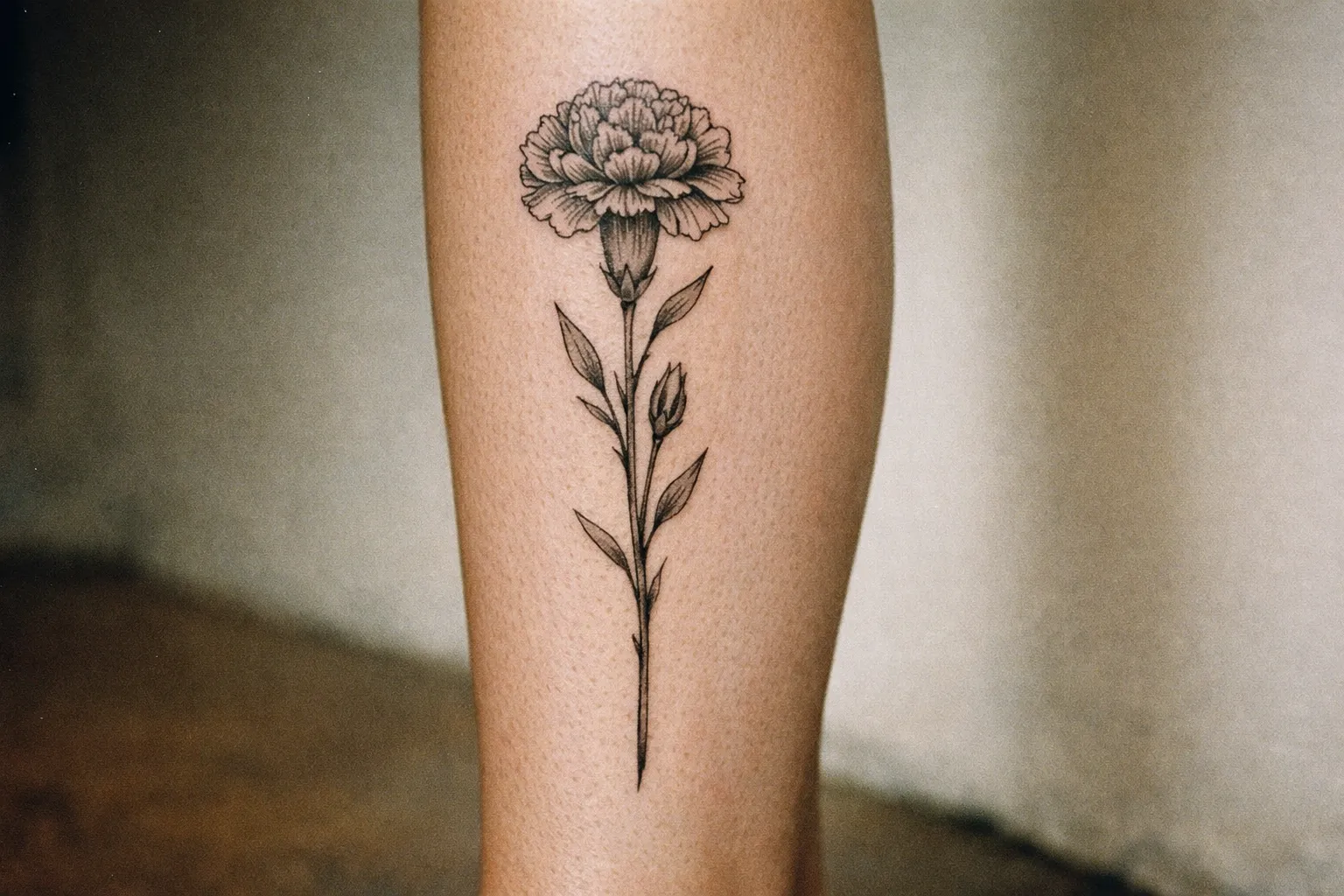
For visibility:
- Forearm - high visibility, plenty of flat space for detail, comfortable to sit through. A single carnation or a stem with leaves works at 3-5 inches.
- Upper arm and shoulder - versatile; show it or cover it with a sleeve. Holds larger bouquets well.
- Sternum - dramatic, symmetrical placement for a centered bloom or mirrored pair. Higher pain than forearm.
For something more private:
- Ribcage - striking for a vertical stem, but expect the most discomfort here. Ribcage hurts more than forearm by a wide margin - thin skin over bone, and every breath moves the area while you’re trying to sit still.
- Thigh - large canvas, low pain, ages exceptionally well.
- Ankle - subtle, peeks out occasionally; keep the design small and simple given the limited space.
- Behind the ear - bold when revealed, but a tight area; stick to a tiny single bloom.
For aging, the upper arm, thigh, and upper back keep carnation detail noticeably better over 10+ years than hands, fingers, and feet, which see constant friction and sun exposure. If you want a delicate fine-line carnation to still look like a carnation in 2036, keep it off the high-wear zones.
Cost and Sizing: How Big Should a $500 Tattoo Be?
This is the question most guides skip, so here are real numbers from mid-tier to reputable US city shops.
Cost benchmarks (based on mid-tier to reputable US city shop rates reported by outlets including Tattoodo and Byrdie):
- Shop minimum for a tiny outline (≤2 inches): $80-$150
- 3-5 inch detailed black-and-gray carnation: $200-$400
- 5-7 inch full-color carnation, or a carnation + snowdrop piece: $350-$700
- Large rib/hip/shoulder bouquet (floral specialist day-rate): $800-$1,500+
So how big is a $500 tattoo? It depends on the hourly rate:
- At $150/hour - a common floor rate at established US shops - $500 buys roughly 3-3.5 hours - enough for a 5-7 inch detailed full-color single carnation, or a black-and-gray carnation plus a small secondary flower (like a snowdrop) with shading.
- At $200/hour, $500 buys about 2.5 hours - better suited to a 4-5 inch carnation with moderate detail and limited color.
Time investment by style:
- Simple fine-line carnation: 45-90 minutes
- Medium black-and-gray with leaves: 1.5-3 hours
- Full-color bouquet: 3-6 hours, often split across 1-2 sessions to layer color
A common budgeting mistake: expecting a realistic, color-packed bouquet for under $200 at a quality shop. That math forces you to compromise on the artist, not the design - the wrong trade. Better to shrink the size or simplify the style than chase a cheaper, less experienced hand.
Create Your Own Design
You don’t have to walk in with someone else’s Pinterest screenshot - and you shouldn’t. Bringing an exact copy of another person’s tattoo and asking for a duplicate raises ethical issues and usually produces a worse result than a custom piece.
Start from royalty-free assets. Stock platforms offer 199+ royalty-free carnation tattoo vectors, clipart, and graphics that you can legally use as a base (5). Pull a vector you like, then modify the petals, stem, and color so it stops being generic clipart and starts being yours. Shutterstock and similar sites flag these as licensed starting points, which keeps you clear of copying copyrighted illustrations.
Layer in your own elements. Combine the carnation base with hand-drawn additions - a name, a date, a geometric frame, a constellation, or a small secondary flower. This is where the birth-flower angle shines: drop in a snowdrop for a January-February pairing, or add initials inside the petals.
Use design tools to test it. If you want to sketch and try colorways before the consult, Procreate (around $13) or Clip Studio Paint (around $50-$60) on a tablet let you layer petals and experiment with reds versus pinks. You’re not tattooing yourself - you’re producing a clear reference your artist can refine into a stencil, which speeds up the consult considerably.
Or commission bespoke art. Some illustrators and tattoo artists sell custom carnation designs for $50-$200, separate from the tattoo cost. You own the art, and any studio can stencil from it - genuinely useful if you found a designer online but live in another city and want to get the tattoo locally.
Whatever route you take, hand the artist a direction, not a mandate. Their job is to make your concept hold up on skin over time, and that often means adjusting petal density or sizing you didn’t think about.
Caring for Your New Carnation Tattoo
Aftercare is where a beautiful fresh tattoo either stays beautiful or turns patchy. The timeline matters more than any single product.
Day 1-3. Your artist will send you home in either a plastic wrap (remove in 2-24 hours per their instructions) or a second-skin adhesive bandage. Once it’s off, gently wash the area with lukewarm water and mild, fragrance-free soap, then pat - don’t rub - it dry. Apply a thin layer of fragrance-free ointment. The tattoo will feel tender and may weep a little plasma; that’s normal.
Week 1. Switch to a light, fragrance-free moisturizer and apply it 2-3 times a day. The skin will start to flake and may itch - do not pick or scratch. Pulling off scabs lifts ink with them and causes patchy healing or color loss. No swimming, baths, or soaking; quick showers only.
Week 2-4. Flaking finishes and the surface skin closes, though the deeper dermal layers keep healing. Primary healing runs 10-21 days; full dermal healing takes up to 6 weeks. Keep moisturizing. Avoid submerging the tattoo in pools or the ocean for 2-3 weeks, and keep it out of direct sun for at least 4 weeks.
Long term. Once healed, SPF 30-50 sunscreen on the tattoo, daily, is the single best thing you can do to protect it. UV is what fades ink, and pastel pinks and light yellows fade fastest - without sun protection, a delicate carnation can lose contrast in 3-5 years. Stay hydrated, and expect that color-heavy pieces may want a touch-up down the line.
Related Floral Tattoos and Where to Look Next
If you’re saving carnation designs, you’re probably also drawn to a cluster of related motifs. People who bookmark carnation tattoos commonly save roses, peonies, lilies, and snowdrops, along with birth-flower charts, calligraphy scripts, and minimalist line-art (3). The cross-interests skew toward vintage botanical illustration and Korean/Japanese fine-line styles - the same aesthetic driving the rise of micro-color and ultra-fine-line florals.
If your real interest is the full birth-flower system rather than carnations specifically, that’s a broader topic worth its own deep dive - the carnation is just January’s entry. And if you’re weighing carnation against rose or peony on meaning alone, the shorthand holds: carnation reads love and resilience, rose reads passion, peony reads wealth and elegance.
Frequently Asked Questions
- What does the carnation tattoo mean?
- Carnation tattoos symbolize admiration, love, fascination, and deep friendship, with meanings shifting by color. They also serve as January birth flower tattoos, often commemorating birthdays or memorials.
- What is the luckiest flower tattoo?
- Within floral tattoos, the white carnation is traditionally lucky, symbolizing purity and luck. Pairing it with subtle charms like four-leaf clovers can enhance protective symbolism without clichés.
- How big should a $500 tattoo be?
- At $150/hour, $500 covers about 3-3.5 hours, enough for a 5-7 inch full-color carnation or a black-and-gray carnation with a small snowdrop. At $200/hour, expect 2.5 hours for a 4-5 inch piece with moderate detail.
- Why avoid overcrowding in carnation tattoos?
- Overcrowding small areas like wrists with multiple carnations and details causes blurring over time. Larger placements or splitting into linked pieces preserves clarity.
- How does placement affect carnation tattoo aging?
- Upper arm, thigh, and upper back placements retain detail better over 10+ years compared to hands, fingers, and feet, which face more friction and sun exposure.
- What aftercare steps are critical for carnation tattoos?
- Follow a timeline: gentle washing and ointment days 1-3, fragrance-free moisturizer weeks 1-4, avoid soaking and sun exposure, and use daily SPF after healing to preserve color and detail.