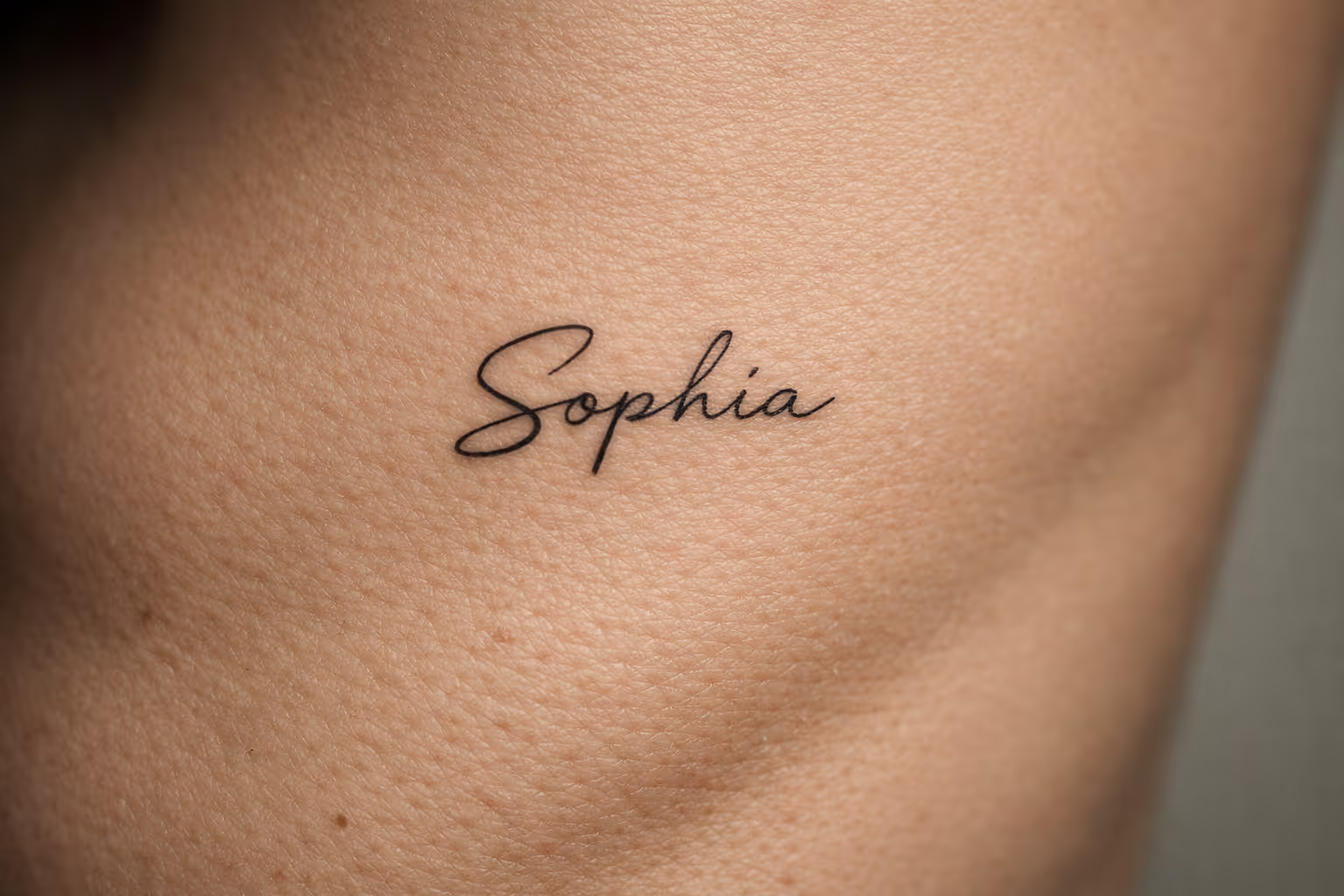
A name tattoo is the single most regretted design in the shop. In one UK poll of 1,000 tattooed adults, 31.34% of men and 24.33% of women who regretted a tattoo specifically regretted getting a person’s name tattoo (2). That statistic isn’t a reason to skip the idea. It’s a reason to make every decision - whose name, which font, where on your body - deliberately, because the ones that go wrong tend to go wrong for reasons you can see coming if you know what to look for.
This guide covers the design options, the fonts that survive a decade instead of blurring into a smudge, the placements that give you cover-up options versus the ones that lock you in, and the honest tradeoffs most guides bury. If you’ve already decided you want a name tattoo, here’s how to do it so you’ll still stand behind it in ten years.
✓ Pros
- Deeply personal - commemorates someone or something with direct, unambiguous meaning
- Versatile in scale: a single name fits anywhere from a finger to a full forearm piece
- Script and fine-line lettering are among the fastest-healing tattoo types (2-3 weeks for surface healing)
- Can be integrated with other design elements (roses, dates, symbols) for a richer composition
- Children's names and memorial tattoos tend to retain meaning over a lifetime
✗ Cons
- Highest regret rate of any tattoo type - partner names especially
- Spelling errors are permanent; foreign scripts add extra risk
- Fine-line scripts can blur over time, particularly on high-movement placements like fingers and wrists
- Removal or cover-up is costly ($150-$210/hr for the original; laser removal adds more)
- Visible placements (forearm, hand) carry social and professional tradeoffs
What a Name Tattoo Actually Means - and Who Gets Them
A name tattoo is any design built around a person’s name, initials, or a meaningful date, and it’s one of the most common tattoo categories there is. According to a 2020 study in Dermatologic Therapy, 53% of 302 tattooed patients had at least one tattoo involving letters or numbers, with names and initials the most common type in that group (3).
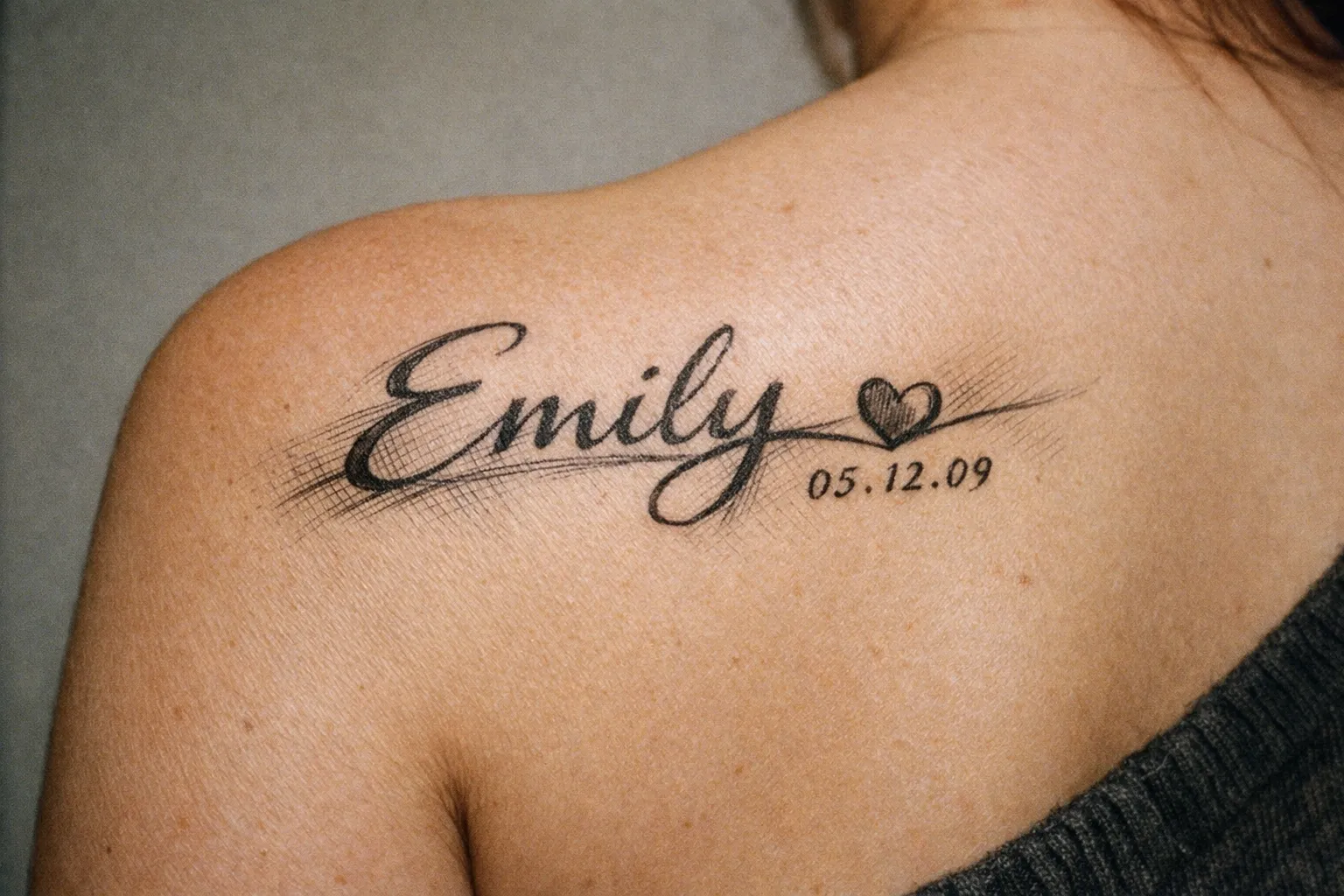
Who gets them breaks down into a few clear groups. Parents get children’s names. Couples get partner names. People get memorial tattoos for someone who died. And some people tattoo their own name or nickname as a self-identity marker. Those categories matter more than they look, because they carry very different regret risks.
Children’s names and memorial tattoos hold up over time because the relationship doesn’t change. Your child stays your child. A person you’ve lost stays lost. A romantic partner is a moving target - and when the relationship shifts, the tattoo’s meaning shifts with it. The same Dermatologic Therapy study found that 26% of tattooed participants regretted at least one tattoo, and 42.5% of those had already removed or camouflaged the piece (3). That’s not a fringe outcome. That’s four out of ten regretful people already paying to undo the work.
The financial stakes have climbed too. Experienced artists commonly charge $150 to $210 per hour as of 2025, which means even a small, simple name that takes under an hour typically lands in the $100 to $200 range. A name tattoo is no longer a cheap impulse.
None of this means don’t do it. It means know which category your name falls into before you book.
Designs - From Simple Scripts to Integrated Motifs
The right design approach depends on how much meaning you want the piece to carry and how well you want it to hold up over time. I’ve seen clients come in with a screenshot of an ultra-delicate micro-script they found on Instagram, and I always ask the same question: do you want it to look like that in fifteen years, or just on the day?
The cleanest option is a standalone name in script or block lettering. At 2 to 4 inches on the inner forearm, inner wrist, or collarbone, it reads clearly and heals fast. A single short word covering 2 to 4 square inches typically costs $50 to $200 and takes about an hour or less. Lowest-risk design in terms of both money and aging, provided you don’t go too small.
From there, the options build:
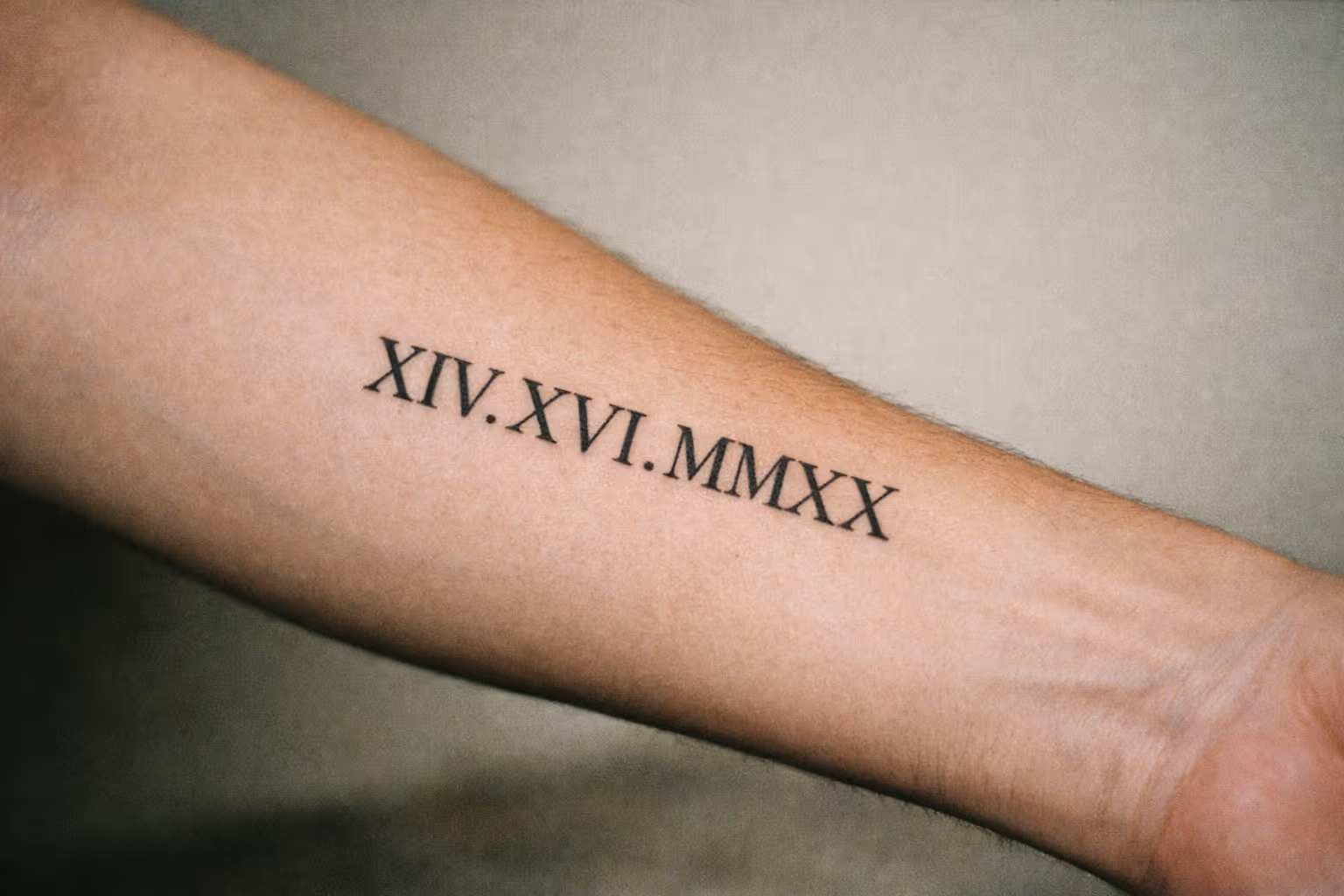
- Name with dates - a birthdate, anniversary, or memorial date beside the name. Adding a date anchors the tattoo to a moment rather than a relationship status, which makes it more resilient if things change.
- Name wrapped into a symbol - an infinity sign, an anchor, a heartbeat line, or GPS coordinates of a meaningful place. The symbol carries weight even if you’d rather the name read less literally.
- Multi-name designs - stacked children’s names, sibling names, or a parent’s name paired with a child’s. These work well running down the forearm or across the ribs.
- Last name tattoos - a family surname as a heritage marker, which reads differently and carries less risk than a partner’s first name.
One warning on placement before you fall in love with an arm design: the 2020 Dermatologic Therapy study found upper-extremity tattoos were significantly associated with regret, with 29.3% of participants who had them reporting it (3). A 2023 national survey by Advanced Dermatology similarly ranked the forearm as the single most regretted location. Arm-based name designs are technically ideal but statistically higher-stakes. Worth sitting with before you commit.
Rose and Name Tattoo - What the Combination Means
A rose combined with a name anchors the flower’s symbolism to a specific person. In American traditional tattooing - the style that codified the rose as a standard motif, with its thick black outlines and limited palette of bold reds and greens - the rose signals love, beauty, and loss, rooted in sailor lore tied to romance and memorial. That lineage runs through 19th-century maritime culture and was formalized by artists like Sailor Jerry in the mid-20th century. Pair it with a name and you’ve made the dedication explicit: this rose is for this person.
Color choice changes the reading considerably. A black and grey rose with a name reads as memorial or tribute - the piece you get for someone you’ve lost. A color rose with a name reads as romantic or celebratory, for someone living and loved.
For placement, the rose works on the forearm, upper arm, shoulder, or sternum. Size is the thing people get wrong most often. A rose needs at least 2.5 to 3 inches to hold petal detail without collapsing into a dark blob after healing. The name usually sits on the stem or beneath the bloom, where there’s a clean line of skin to keep the lettering legible.
On cost: a small rose with a name at 2 to 4 inches typically runs $100 to $200. A simple 2-inch outline-only rose runs around $100, with rose tattoos overall in the $100 to $300 range. At $150 to $210 per hour, most rose-and-name pieces fit into a one to two hour session. Adding the flower roughly doubles the cost compared to plain lettering - budget for it before you sit down.
Last Name Tattoos on the Forearm and Arm
A last name tattoo carries less regret risk than a partner’s first name because it marks lineage and heritage, not a specific relationship that can end. Your surname is yours whether or not any particular relationship survives. That structural difference is why family-name pieces tend to hold their meaning across decades.
For a last name tattoo on the forearm, block or bold serif fonts work best. The forearm gives you a flat run of skin roughly 9 to 11 inches long, and a surname reads cleanest at 3 to 5 inches in a font with real stroke weight. Thin decorative script on a forearm surname looks elegant fresh and turns to mush at ten years. Go bold.
A last name tattoo on the upper arm or bicep sits slightly more private than the forearm and suits larger lettering with flourishes, a laurel, a banner, or a date. This is a good spot for a name tattoo variation where the surname is paired with a small decorative element rather than standing bare. The upper arm also ages well because the skin moves less than it does lower down.
Fonts That Hold Up - Choosing Lettering That Ages Well
The font that ages well is the one whose stroke weight you can still see clearly at arm’s length on the day it’s tattooed. Everything else follows from that single principle, because thin lines blur and thick ones survive.
Start by matching the tattoo font to the emotional register of the name. Bold or block lettering suits strength and heritage - surnames, memorials, a father’s name. Delicate script suits romantic or sentimental names. Clean sans-serif suits dates and initials, where legibility at small size matters most. A font that fights the meaning of the name reads wrong even when it’s executed well.
Here’s how the main styles compare:
Font Styles for Name Tattoos
| Script/Cursive | Block/Sans-Serif | Calligraphic/Ornate | Blackletter/Gothic | Foreign Scripts (Arabic, Kanji, Cyrillic) | |
|---|---|---|---|---|---|
| Best Use Case | Romantic or sentimental names | Last names, initials, dates | High-impact decorative names | Heritage, memorial themes | Cultural or personal significance |
| Aging Risk | High - fine lines blur quickly | Low - holds contrast well | Medium - needs skilled artist | Low - thick strokes age well | High - risk of errors |
| Minimum Recommended Size | 2 inches or more | 1.5 inches | 1 inch (25 mm) letter height | 2 inches | Varies - verify with experts |
| Example Placement | Inner forearm, collarbone | Forearm, upper arm | Upper arm, shoulder | Forearm, chest, upper arm | Varies |
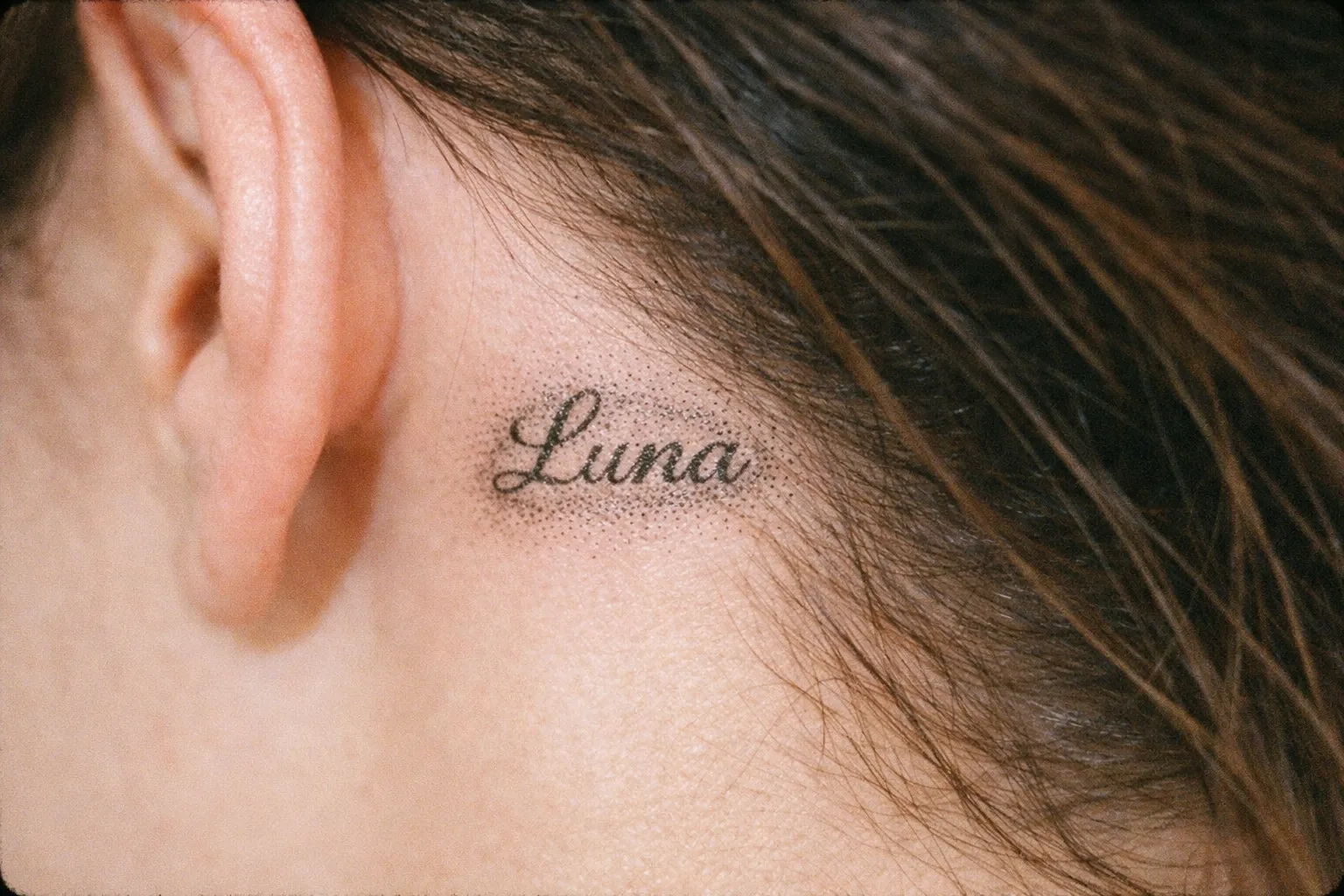
Script and cursive is the most-requested style for romantic and sentimental names, and it’s genuinely beautiful fresh. The two technical hallmarks are flowing connected strokes and variable line weight - the thick downstrokes and thin upstrokes that give cursive its elegance. The common pitfall is going too thin: artists who treat script like a drawing exercise rather than a tattoo discipline produce hairline strokes that blur into the skin within a few years. The problem is aging - fine cursive lines blur, and ultra-thin micro-script on fingers and wrists blurs fastest. I’ve done touch-ups on wrist scripts that were less than three years old and already needed work. If you want script, keep the stroke weight visible and the size at 2 inches or more. Best on the inner forearm or collarbone, where skin moves less.
Block and sans-serif ages the cleanest. It reads well at smaller sizes, holds contrast as skin softens, and suits last names and initials. If you’re anxious about how a name will look in fifteen years, this is your safest bet. Works almost anywhere.
Calligraphic and ornate delivers high visual impact but demands a skilled artist and a minimum letter height of roughly 1 inch (25 mm) to stay legible after healing. Below that, the flourishes close up and the whole thing reads as a blur. Good on the upper arm or shoulder where you have room to breathe.
Blackletter and Gothic has a strong, heavy register that suits heritage and memorial themes. The two technical hallmarks are dense, high-contrast letterforms built from thick vertical strokes and thin hairline serifs, and a compressed letter spacing that gives the style its monumental weight. The common pitfall is overcrowding: artists who pack letters too tightly produce a block of ink that reads as texture rather than text after healing. The thick strokes age well - this is one of the few decorative styles that genuinely holds up long-term. Suits the forearm, chest, or upper arm.
Foreign scripts - Arabic, Kanji, Cyrillic - carry an extra layer of risk. Over 12% of both men and women in one survey regretted character tattoos, largely because of mistranslations and spelling errors the wearer couldn’t catch. Arabic in particular is written right to left, and a single misplaced diacritic changes the meaning entirely. If you go this route, verify the design with both a native speaker and a professional calligrapher before anything touches skin. Not one or the other - both.
A useful timing note: the surface looks healed in about 2 to 3 weeks, but the deeper skin layers can take up to a year to finish healing (10). A fine-line script can look crisp at two weeks and still shift as the deeper skin settles. Don’t judge whether your lettering held up until the piece has had a few months of stable skin.
Placement - Where It Works and Where It Causes Problems
Placement decides three things at once: how visible the name is day to day, how fast it fades, and whether you can cover it up later. Here’s how the common spots stack up.
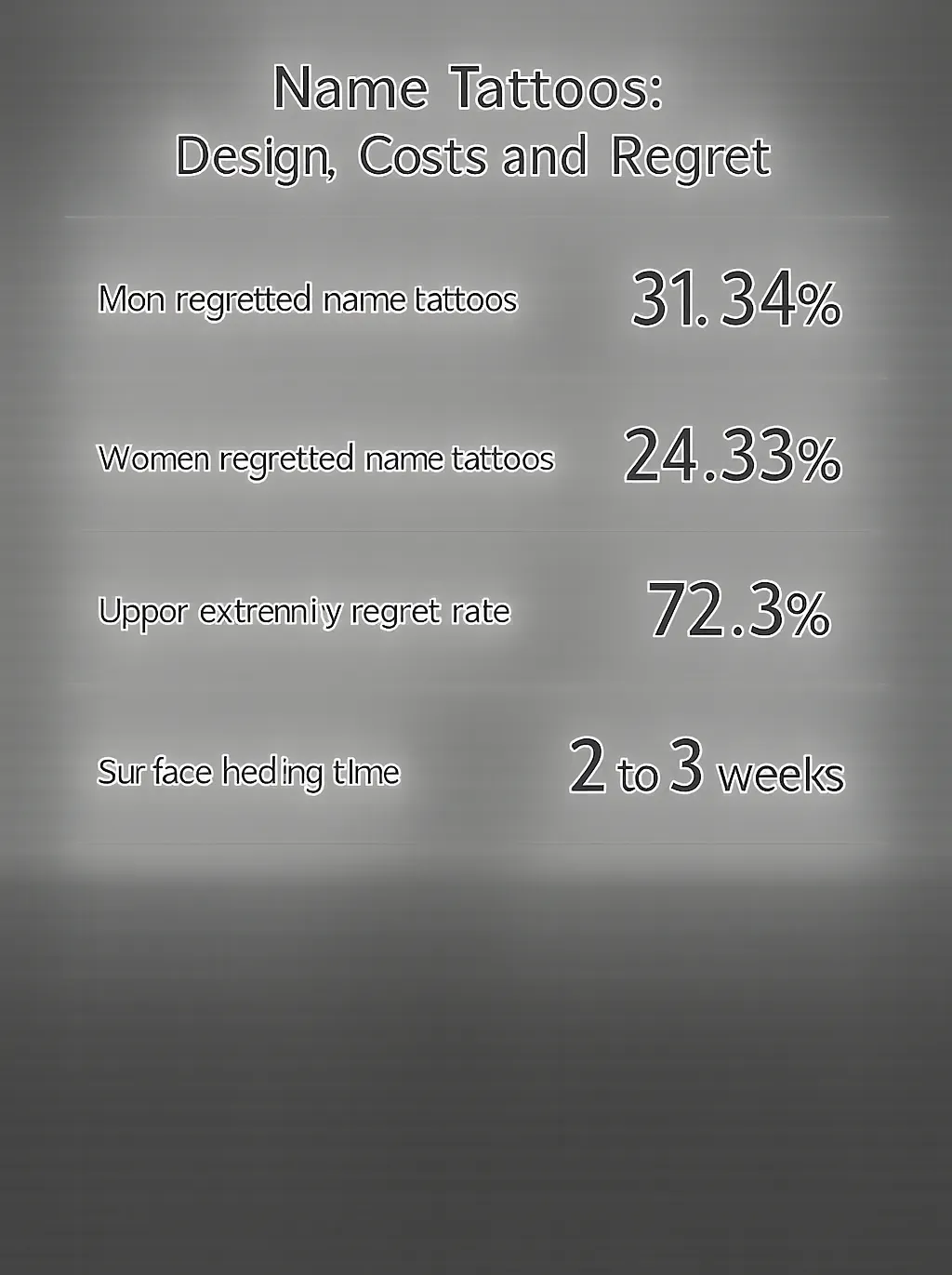 Regret rates by gender, upper-extremity risk, healing timelines, and typical costs for name tattoos.
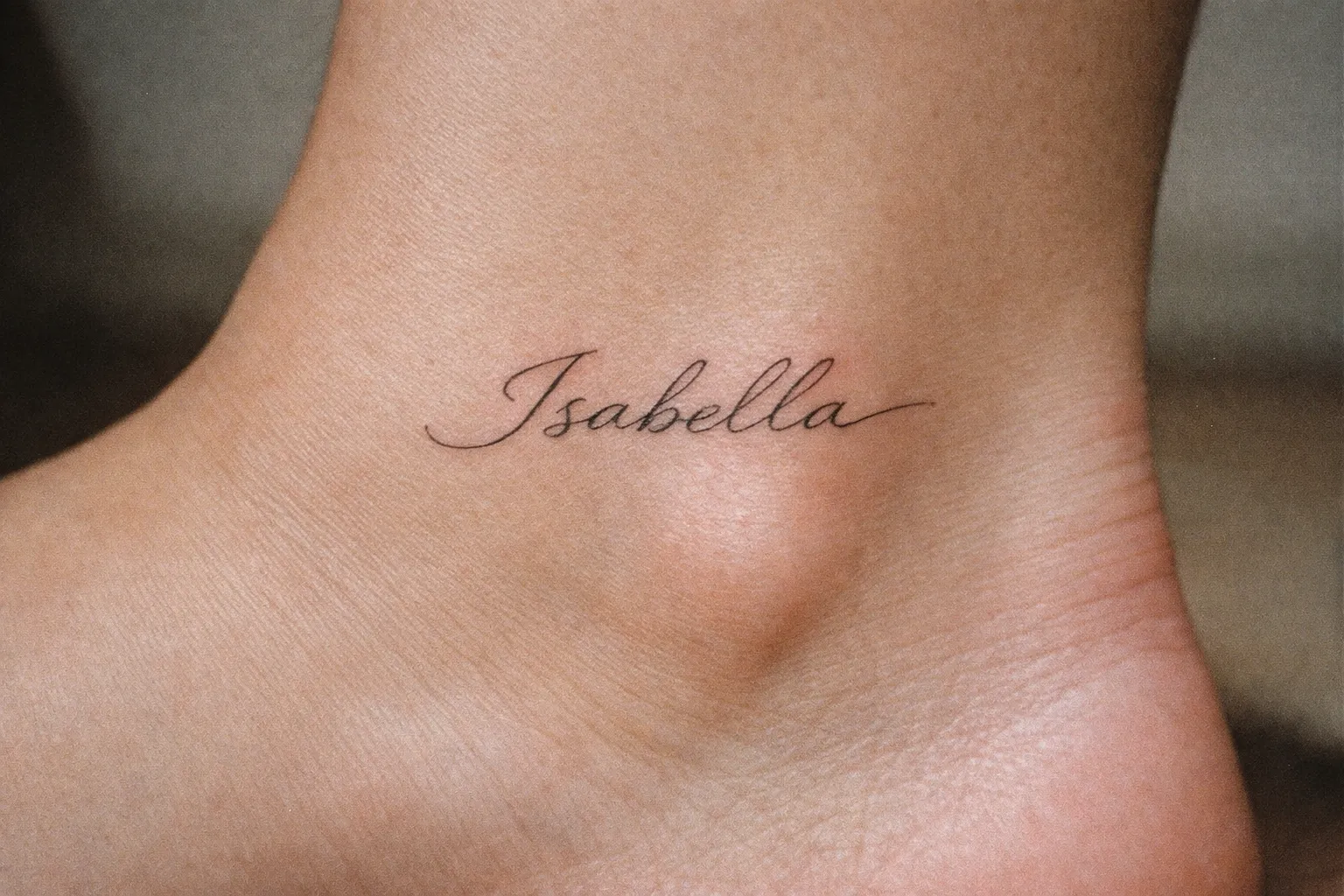
- Inner forearm - a flat surface that’s ideal for script and highly visible. That visibility cuts both ways: the UK survey reported by Marie Claire found 20.98% of men who regretted a tattoo had it on the forearm. Decide whether seeing this name every day is a feature or a liability.
- Wrist - popular for short names and initials, but high movement means faster fading. Fine lines here need touch-ups sooner than anywhere except the hands.
- Upper arm / bicep - more private than the forearm, suits larger lettering with decoration, and ages well. A strong choice if you want options later.
- Collarbone / sternum - elegant for a single name in fine script and easy to cover with a shirt. Pain is moderate here; the sternum gets sharper as you move toward the ribs, and ribcage pain is notably higher than forearm pain.
- Ribcage / side - discreet and easy to cover, which makes future cover-ups more realistic. The tradeoff is that ribcage pain is genuinely higher than most other placements.
- Behind the ear - suits very short names or initials at 1 to 2 inches max, but the skin texture makes it fade faster.
- Fingers and hands - the highest fade rate of any placement. Not recommended for fine-line scripts, and plan for touch-ups every few years if you insist.
- Lower back - historically a high-regret placement. The Marie Claire data showed 15.17% of women who regretted a tattoo had it on the lower back.
The 2020 Dermatologic Therapy study found upper-extremity tattoos had a 29.3% regret rate among participants who had them (3). Arm and forearm names aren’t just regretted more - they’re removed more. Discreet placements reduce social judgment and keep your cover-up options open. Visible placements only make sense for names you’re genuinely certain will stay meaningful. If there’s any doubt about the name, there should be no doubt about choosing a coverable spot.
The Regret Problem - Why Partner Names Fail and What to Do Instead
Partner names are the engine of name tattoo regret, and the reason is simple: the relationship changes and the ink doesn’t. Follow-up coverage from Marie Claire on the UK poll found 28.07% of men cited diminished sentimental value as their reason for regret - a direct line from a faded relationship to a tattoo the person no longer wants.
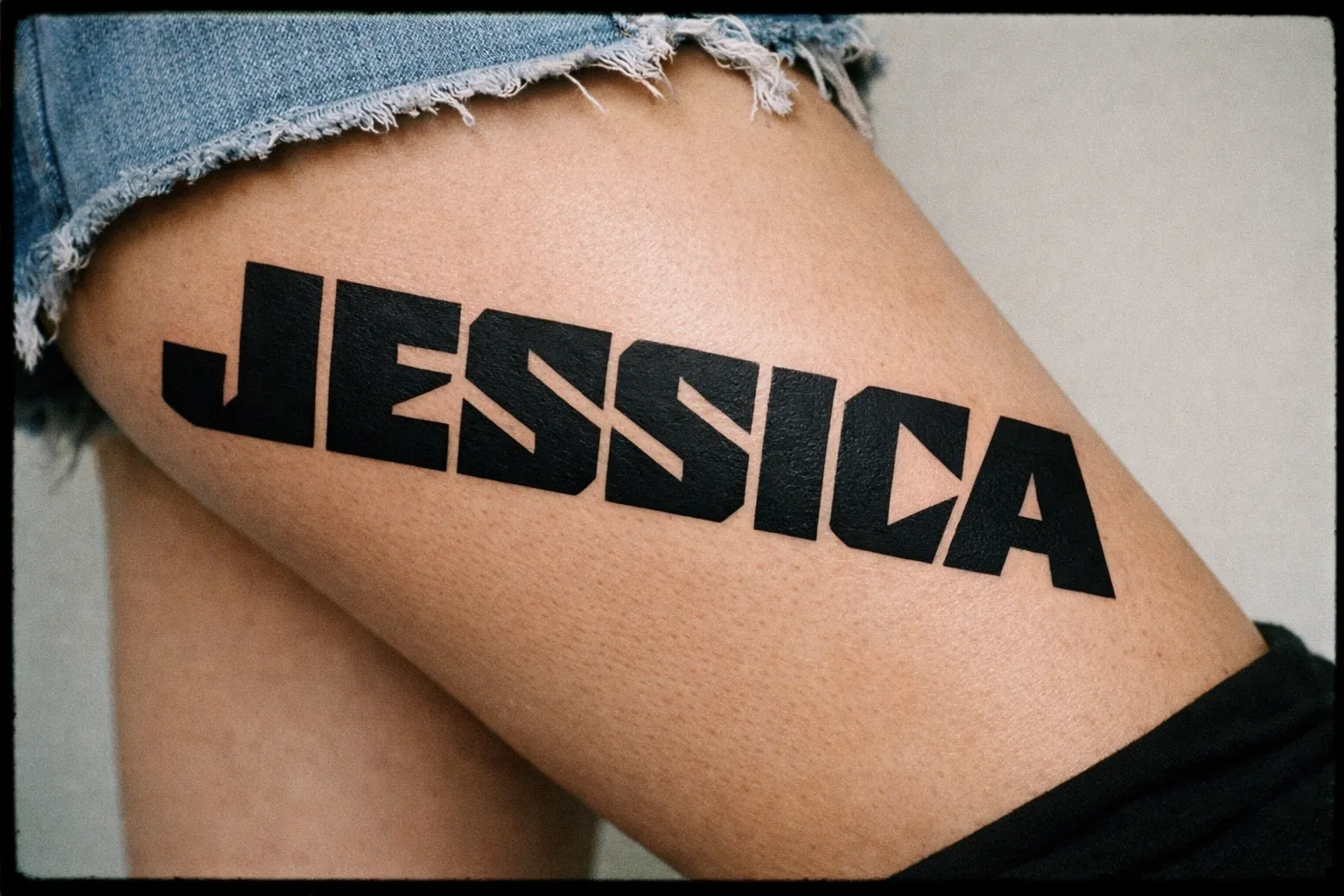
Compare that to the low-risk end. A 2023 PubMed study found that getting a tattoo for remembrance was a statistical predictor of not having regret, while impulsive and peer-pressure motivations predicted the opposite. Children’s names and memorial pieces sit squarely in the remembrance category. The relationship they mark doesn’t dissolve, so the tattoo keeps its meaning. That’s the whole difference in risk profile between a child’s name and a boyfriend’s.
If you’re set on a partner’s name, here’s how to lower the odds of regret:
- Wear the name first. Some artists recommend a temporary tattoo or a stencil worn for one to two weeks before you commit. It sounds excessive. It’s cheaper than laser removal.
- Use a symbolic alternative. Coordinates of a place that matters to you both, a shared date, or an abstract motif tied to a shared interest all carry meaning without naming a person. If the relationship ends, the coordinates are still a place you loved.
- Use initials instead of the full name. Initials cut recognizability and lower regret risk while keeping the personal reference intact.
- Add a date. Anchoring the name to a birthdate or a specific day ties the meaning to a moment rather than a relationship status.
- Choose a coverable placement. The same 2023 PubMed study flagged face, neck, hands, wrist, and fingers as significant predictors of regret. If you get a partner’s name, put it on the upper arm or ribcage where a cover-up is realistic - never the hand or wrist, where your options run out fast.
The pattern across all the data is consistent: the names that fail are the ones tied to relationships that can change. Build in an exit and you’ve solved most of the problem before it starts.
Size, Cost, and Time in the Chair
The size sweet spot for a name tattoo is 2 to 4 inches. It keeps the lettering legible, leaves room for future additions or a cover-up, and fits most placements without crowding. Going smaller saves nothing meaningful and costs you legibility over the years.
Here’s how cost and time break down by size:
- Under 2 inches (a tiny name or initials): $50 to $150, typically 15 to 30 minutes, but subject to shop minimums. Reputable shops set minimums in the $50 to $100 range - don’t expect to walk in for less than that on even the smallest piece.
- 2 to 4 inches (a name with simple flourishes or a small rose): $100 to $200, typically 30 to 60 minutes at $150 to $210 per hour. Multiple 2026 pricing calculators put small 2-to-4-inch designs in the $100 to $300 range.
- Larger scripts with multiple names or an integrated motif: one to two hours, with cost scaling accordingly.
Shop minimums are the thing first-timers forget. A $50 to $100 minimum is standard even on the smallest piece, and the calculators confirm you shouldn’t expect a reputable shop to do even a finger initial for less than about $80 to $100.
Two logistics that matter more than they sound.
Bring a printed stencil with the exact spelling confirmed before the appointment. For names with diacritics, unusual spellings, or non-Latin characters, this is non-negotiable. The spelling on your skin is permanent - check it, then check it again, then check it against the stencil in the shop before the needle goes anywhere near you.
And don’t book within four weeks of a beach holiday or a big outdoor event. Healing fine-line script means no submersion and no sun exposure for the first four weeks. Schedule around your life, not against it.
Healing and Aftercare for Fine-Line Name Tattoos
Fine-line name tattoos heal on the surface in 2 to 3 weeks, but the deeper skin layers keep settling long after. Healthline puts the outer-layer healing at 2 to 3 weeks, while complete healing of the deeper layers can take up to a year (10). That gap matters: your script can look finished at two weeks while the ink underneath is still integrating.
Thin lines are more vulnerable than bold blackwork. The biggest self-inflicted damage I see is over-moisturizing - too much product waterlogs the skin and can physically push ink out of fine lines, leaving patchy or faint lettering. The correct approach is a fragrance-free, dye-free moisturizer, a pea-sized amount, two to three times per day. More is not better. More is worse.
Avoid submersion - pools, baths, hot tubs - for the first four weeks. Ink leaching in fine lines shows up as faint or broken letters, and there’s no fixing it without a touch-up. Over the long term, sun protection is the single biggest factor in keeping crisp lettering at five and ten years. Sun-protective clothing or regular SPF on healed linework does more for longevity than anything else you can do after the session.
How to Care for a Fine-Line Name Tattoo
1 monthStep-by-step aftercare to keep your script crisp and avoid fading or patchiness.
- 1
Day 1-3: Clean and Protect
Keep the area clean. Use a thin layer of ointment or a second-skin wrap if recommended. Avoid overdoing ointment.
- 2
Day 3-4: Switch to Moisturizer
Use a fragrance-free, dye-free moisturizer in a pea-sized amount, 2-3 times daily. Expect peeling; do not pick.
- 3
Week 1-2: No Picking
The tattoo may flake or peel. Avoid picking to prevent ink loss and patchiness.
- 4
Weeks 2-4: Avoid Pools and Sun
Keep the tattoo out of pools, baths, and direct sunlight to prevent fading and ink leaching.
- 5
Long-Term: Use Sun Protection
After healing, regularly apply SPF or wear sun-protective clothing to maintain crisp lettering for years.
For fine-line script, plan on touch-ups every five to seven years as normal maintenance - and every three to five years on hands or fingers, where movement wears the lines down faster. With good aftercare and smart placement, most fine-line tattoos hold crisp detail for five to ten years. That’s the payoff for doing the aftercare right.
Frequently Asked Questions About Name Tattoos
Frequently Asked Questions
- What does a rose tattoo with a name mean?
- A rose combined with a name anchors the flower's symbolism - love, loss, memorial - to a specific person, making the dedication explicit.
- How much does a rose with name tattoo cost?
- A small rose with a name (2-4 inches) typically costs $100-$200 in the US, fitting into a 1-2 hour session at $150-$210/hr, with shop minimums applying.
- What is the prettiest flower to tattoo alongside a name?
- Roses are most requested, but peonies, lotuses, and cherry blossoms also pair well; choose flowers with enough visual mass to balance the text.
- What does the name Rose symbolize as a tattoo?
- "Rose" as a name tattoo carries dual meaning: the person and the flower's symbolism of love, beauty, and the coexistence of softness and thorns.
- Are name tattoos a bad idea?
- Not inherently; partner names have higher regret rates, but children's names, memorials, and family surnames have stronger longevity and meaning.
- How do I stop a name tattoo from blurring over time?
- Choose fonts with adequate stroke weight, keep size above 2 inches, apply SPF regularly, and expect touch-ups every 5-7 years for fine-line scripts.
- Can a name tattoo be covered up?
- Yes, but planning is key; darker, larger designs cover names best, and placement affects cover-up options; laser removal before cover-up helps.
Before You Book: The Three Decisions That Actually Matter
Whether a name tattoo holds up over ten years comes down to three decisions, in order of importance. First, whose name - a child, a lost loved one, or a family surname carries far less regret risk than a romantic partner’s first name, because the relationship it marks doesn’t change. Second, which font and size - bold, legible lettering at 2 inches or more survives; ultra-fine micro-script on a wrist does not. Third, where on your body - a coverable placement like the upper arm or ribcage keeps your options open, while a hand or wrist locks you in.
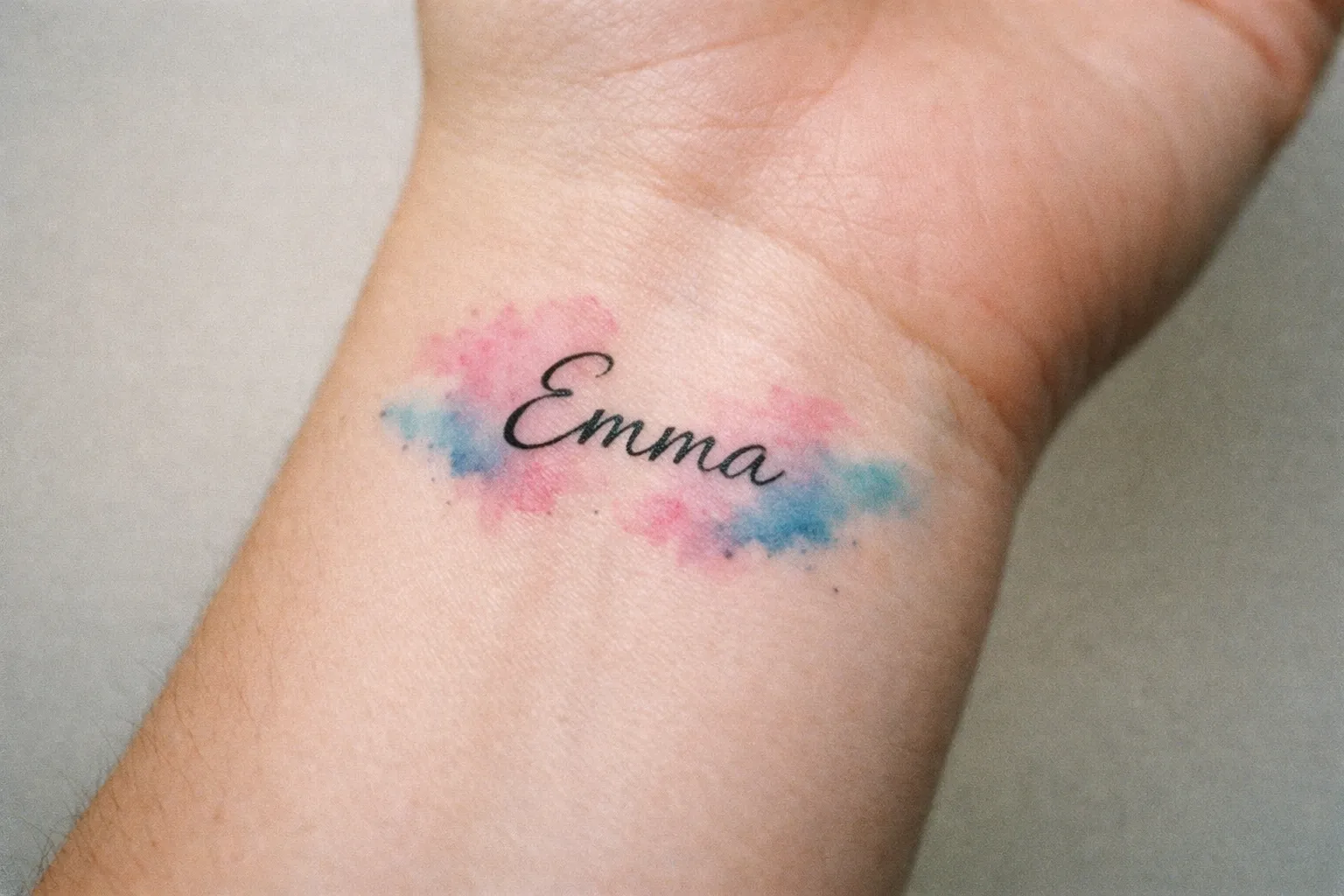
Fine-line script heals fast - 2 to 3 weeks on the surface - but it needs consistent aftercare and long-term sun protection to stay crisp past year five. That part is on you, not the artist.
So before you sit in the chair: confirm the exact spelling on a printed stencil and check it twice, test the placement with a temporary version for a week, and pick a spot that gives you room to change your mind. Do those three things and you’ve eliminated most of the ways a name tattoo goes wrong.