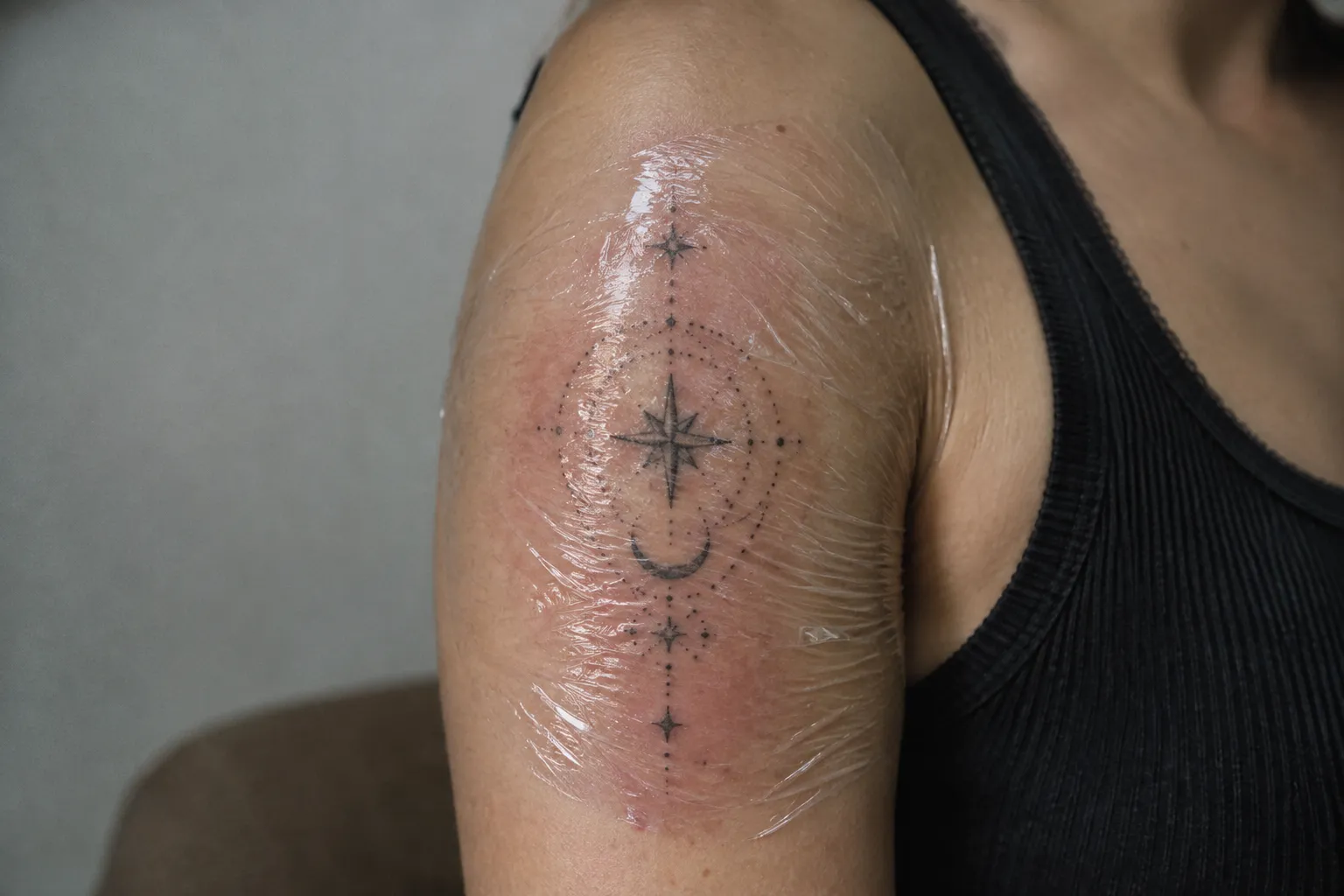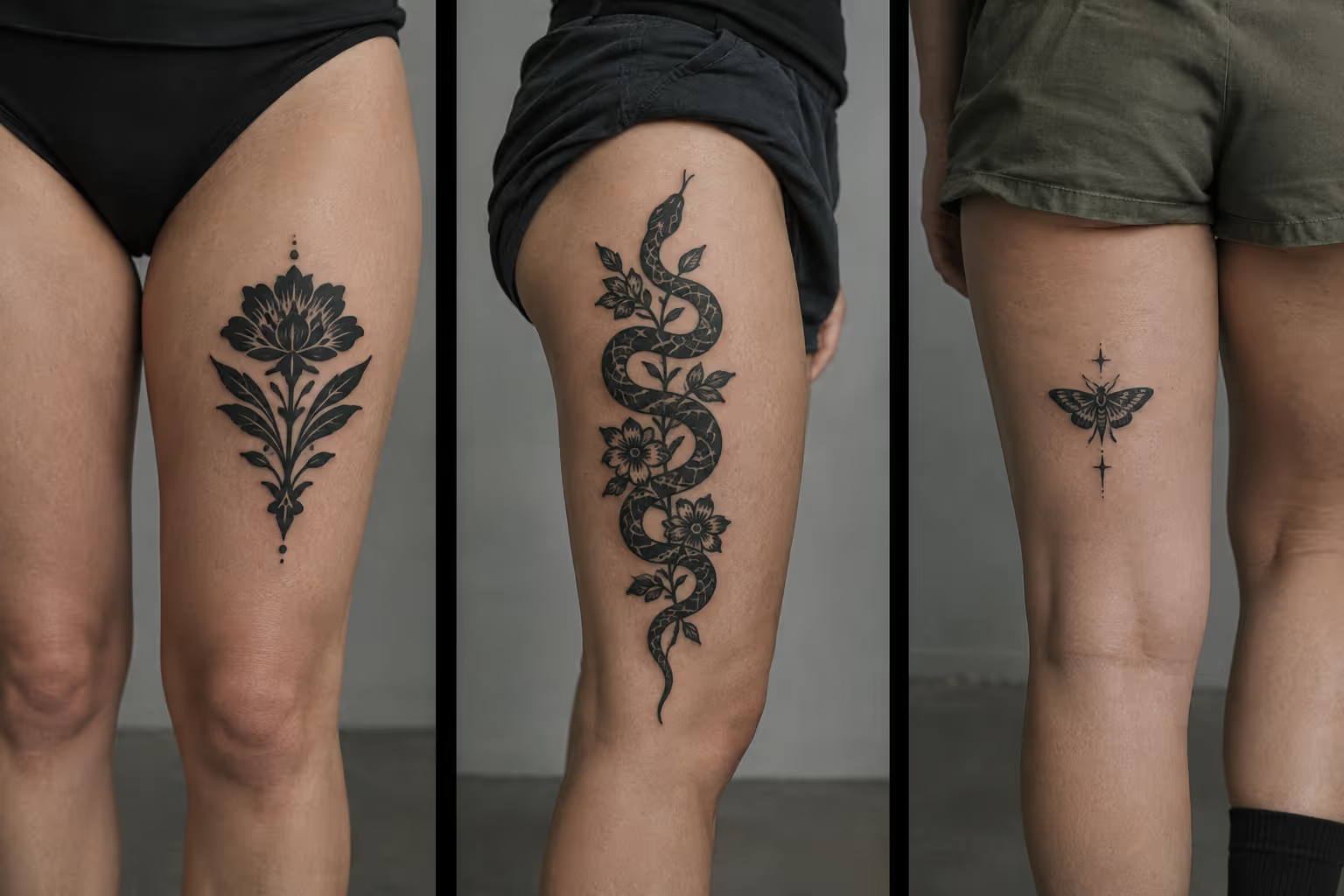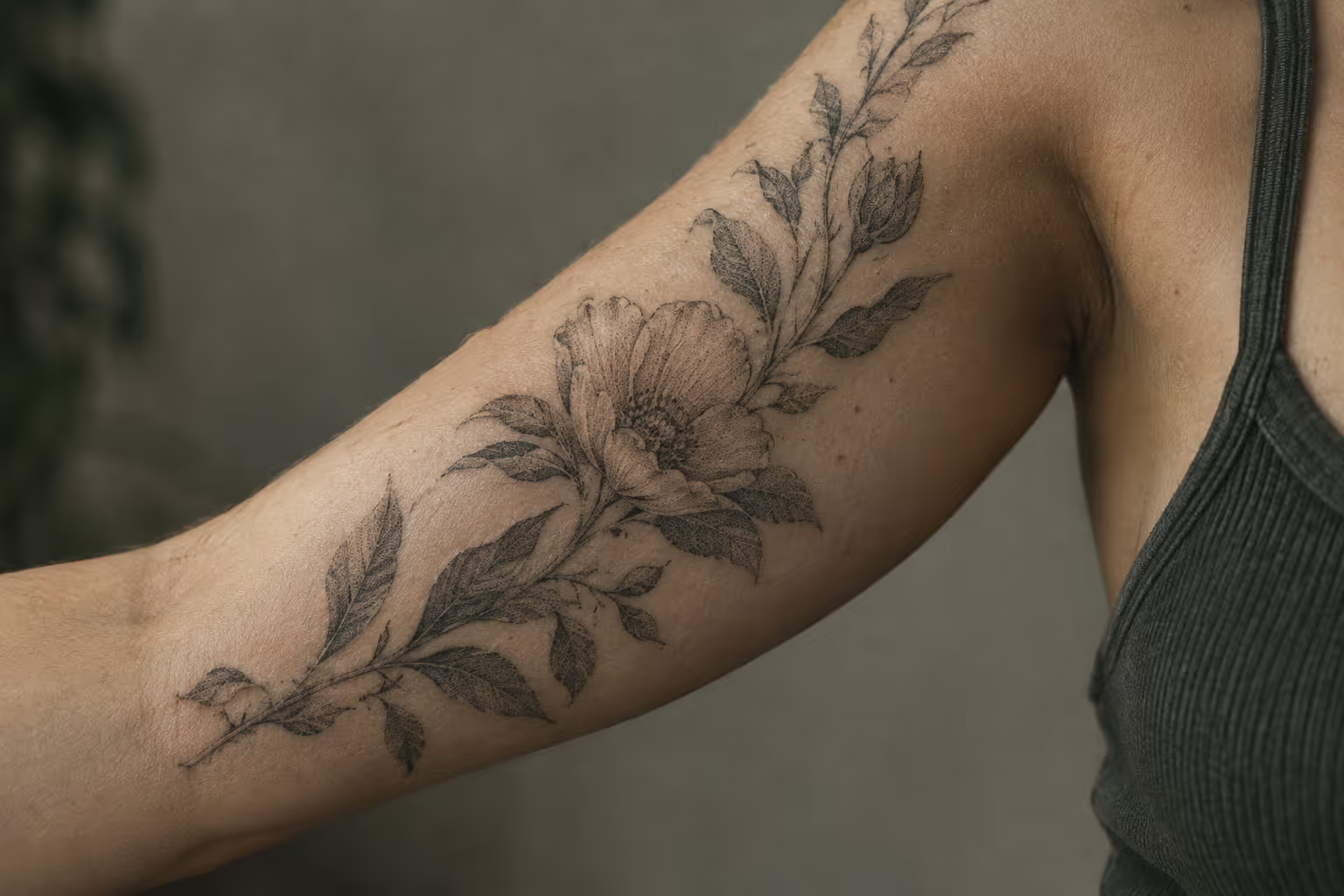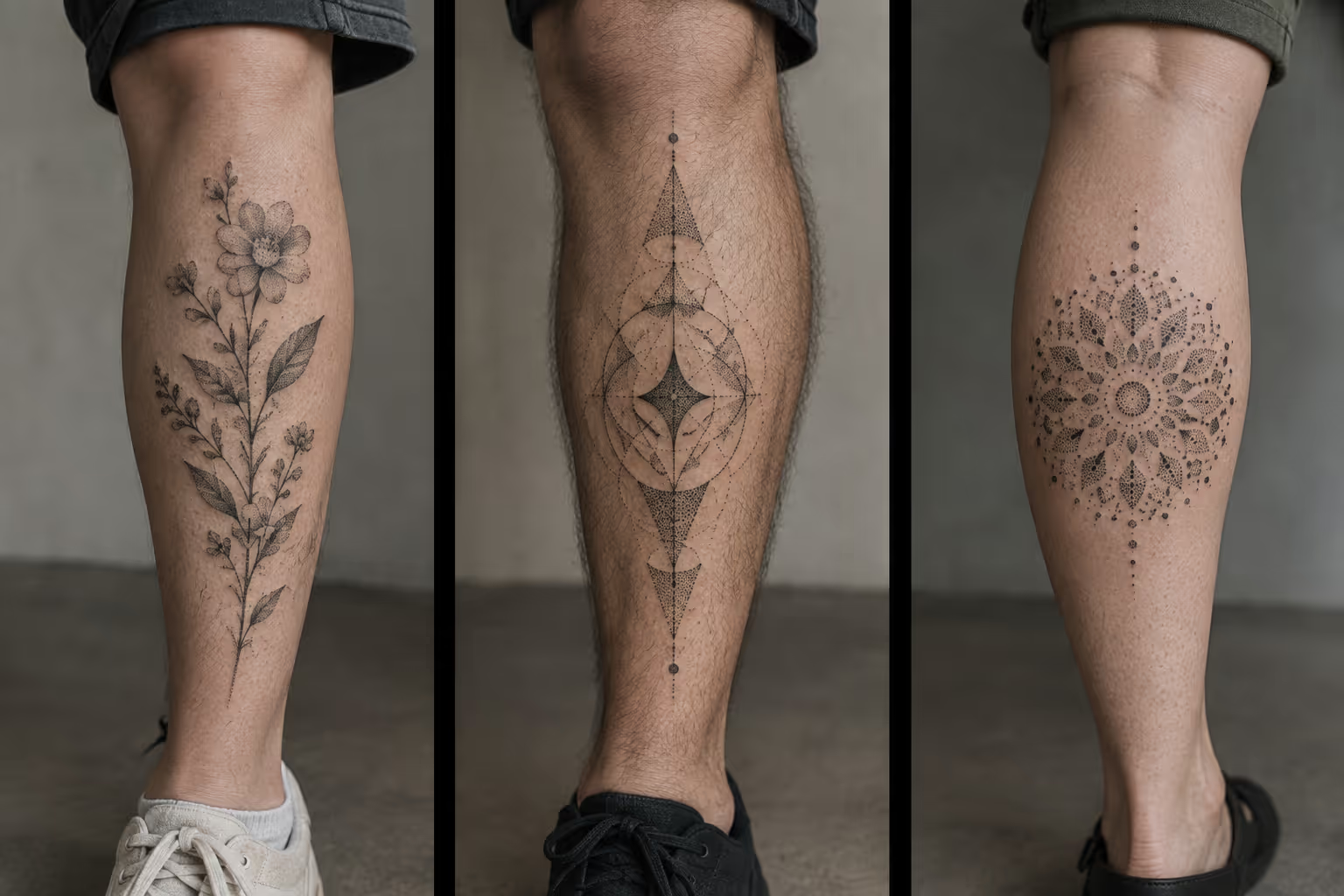
A dotwork tattoo is built from thousands of separate ink dots, with no continuous outline doing the shading. Tone comes from how close those dots sit to each other. Done at the right size with well-spaced dots, dotwork tends to age well; tiny, tightly packed pieces are the ones that blur. If you want a mandala or geometric piece that still reads clearly in a decade, the decisions that matter are dot spacing, size, placement, aftercare and which artist you book.
What Is a Dotwork Tattoo? The Stippling Technique Explained
A dotwork tattoo builds imagery, texture and shading from separate ink dots, and varies their spacing and density to create tonal gradients that the eye reads as one image from a distance (4). Up close you see every individual point. From across a room, the dots merge into smooth shading. A medium-sized piece can carry ten thousand individual dots (4), which is why the work is slow.
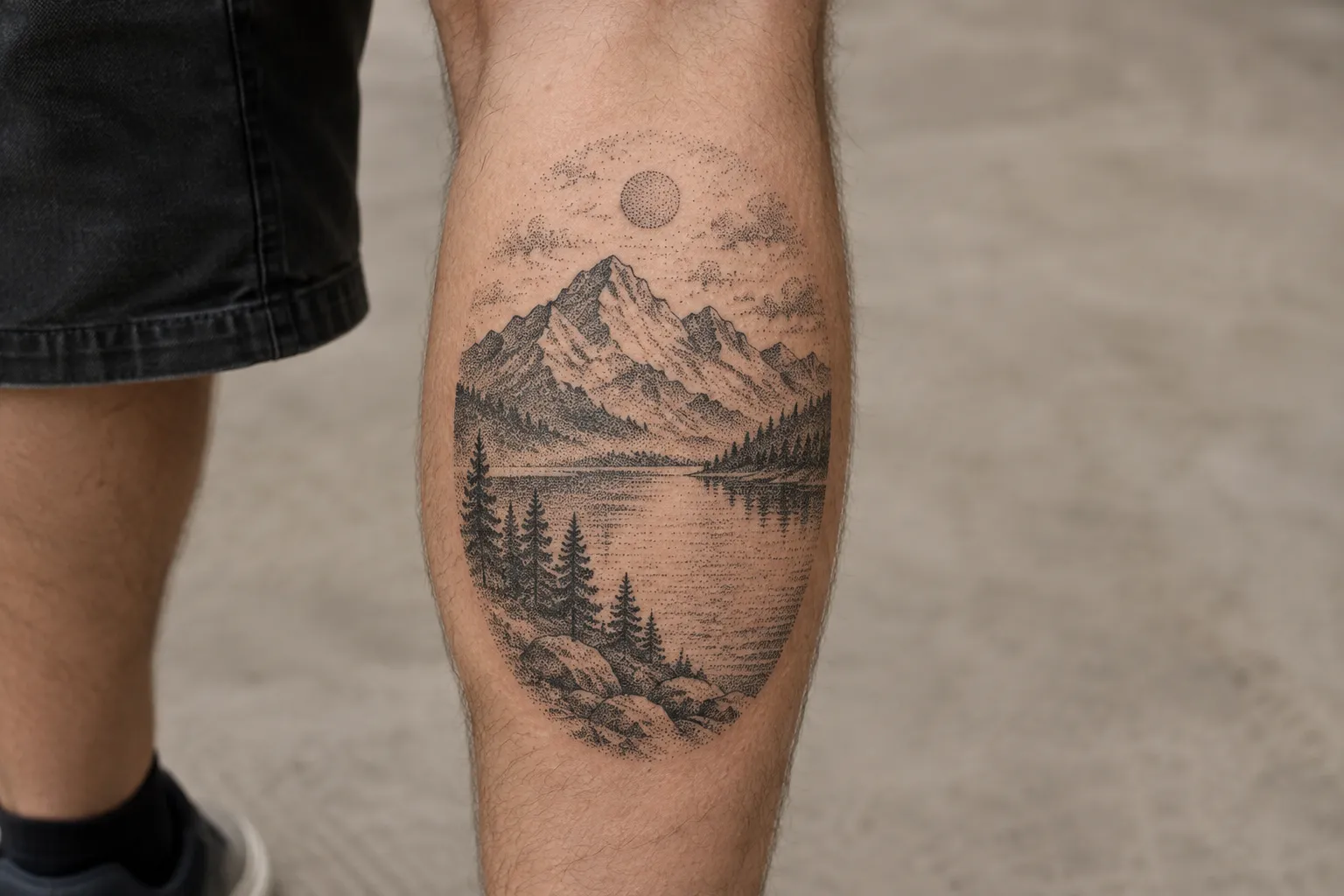
“Stippling” is the name for the mark-making technique itself. A stippling tattoo can be pure dots, or the stippling can sit alongside linework, blackwork and geometric patterns (4). Dotwork is the style, and stippling is how the artist puts it into the skin.
Pure dotwork vs. dotwork with linework
Pure dotwork forms the whole image from dots. It shows off texture and the transitions from dense to sparse areas (4). Dotwork with linework uses crisp outlines or geometric scaffolding to define the structure, and the stippling handles the shading (4).
Here’s the decision rule. Choose pure dotwork when you want texture built entirely from density, such as a moth, a moon or a soft botanical. Add linework when the design needs hard geometric or ornamental structure, because the outlines anchor the shape and the dots fill in the tone (4). A hexagon grid or a mandala with sharp petal edges almost always benefits from a defining line.
Single needles and tight needle groupings
Most controlled stippling is done with a single needle or a tight three-round grouping (4). That is practitioner preference, not a universal rule, but it tells you what to expect: small configurations that give the artist control over each mark.
These are the two technical hallmarks of good dotwork:
- Tone built from spacing alone, with no solid fills and no brushed shading.
- Consistent dot size and depth across the piece, so the gradient reads as smooth rather than patchy.
The common pitfall in weak dotwork is uneven spacing, inconsistent depth or rushed clusters. Any of these breaks the optical effect immediately (4). The eye notices a dot in the wrong place before it notices anything else.
✓ Pros
- The stippled surface can create a shaded, dimensional read without relying on solid blocks of black.
- A design can move between soft texture and crisp structure by changing how much linework it uses.
✗ Cons
- Tiny, tightly packed patterns leave little room for softened dots to remain distinct.
- A design that depends on perfect circles or repeated spacing can be less forgiving on a moving, curved body area.
The Meaning Behind Dotwork Designs
Dotwork tattoo meaning comes mostly from the motif you choose, not from the dots. Dotwork is a technique with no fixed symbol of its own, although the slow, deliberate method is often linked with patience, structure and mindfulness (7). The rest of the meaning depends on what those dots draw.
Geometric and sacred-geometry associations
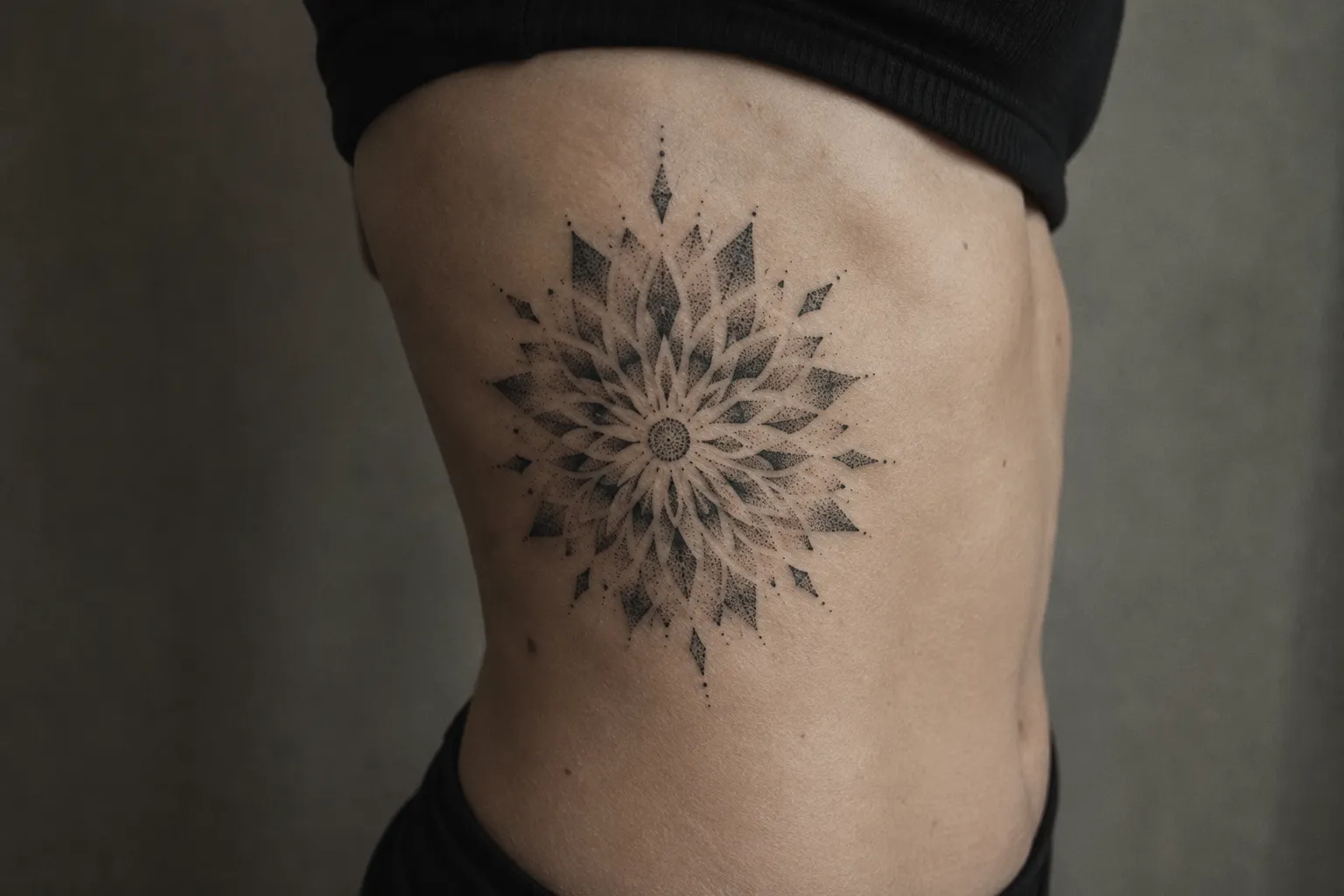
The style is closely associated with geometric tattooing, mandala art, sacred geometry and ornamental designs (7). The mandala has the deepest roots: in Hindu and Buddhist practice it is a diagram of a cosmos used for meditation, and its Western reading as wholeness and the self comes largely from Carl Jung rather than from that original practice (3). Many people now choose it for that looser meaning, or simply for how it looks. Neither reading is wrong, but they are not the same thing.
The dot technique has its own separate visual lineage. It echoes pointillism, the painting movement that Georges Seurat and Paul Signac developed in the 1880s (6). That is an art-history link, not a symbolic one.
Why the meaning is personal, not fixed
Hand-tapped stippling has been used for centuries in tattoo traditions across the Pacific, Southeast Asia and North Africa, while dotwork as a contemporary genre took shape in 1990s London (4). So don’t assume one ancestry or one message. Decide what the piece represents to you, whether that’s a spiritual practice, a period of your life or just a pattern you love. Then tell your artist, because it can shape the motif choices inside the design.
How Dot Density Creates Shading, Texture and Aging Over Time
Dot density controls tone in dotwork: closer-set dots read darker and widely spaced dots read lighter (5). That same spacing decides how the piece ages, which is why it should be planned with future spreading in mind (7).
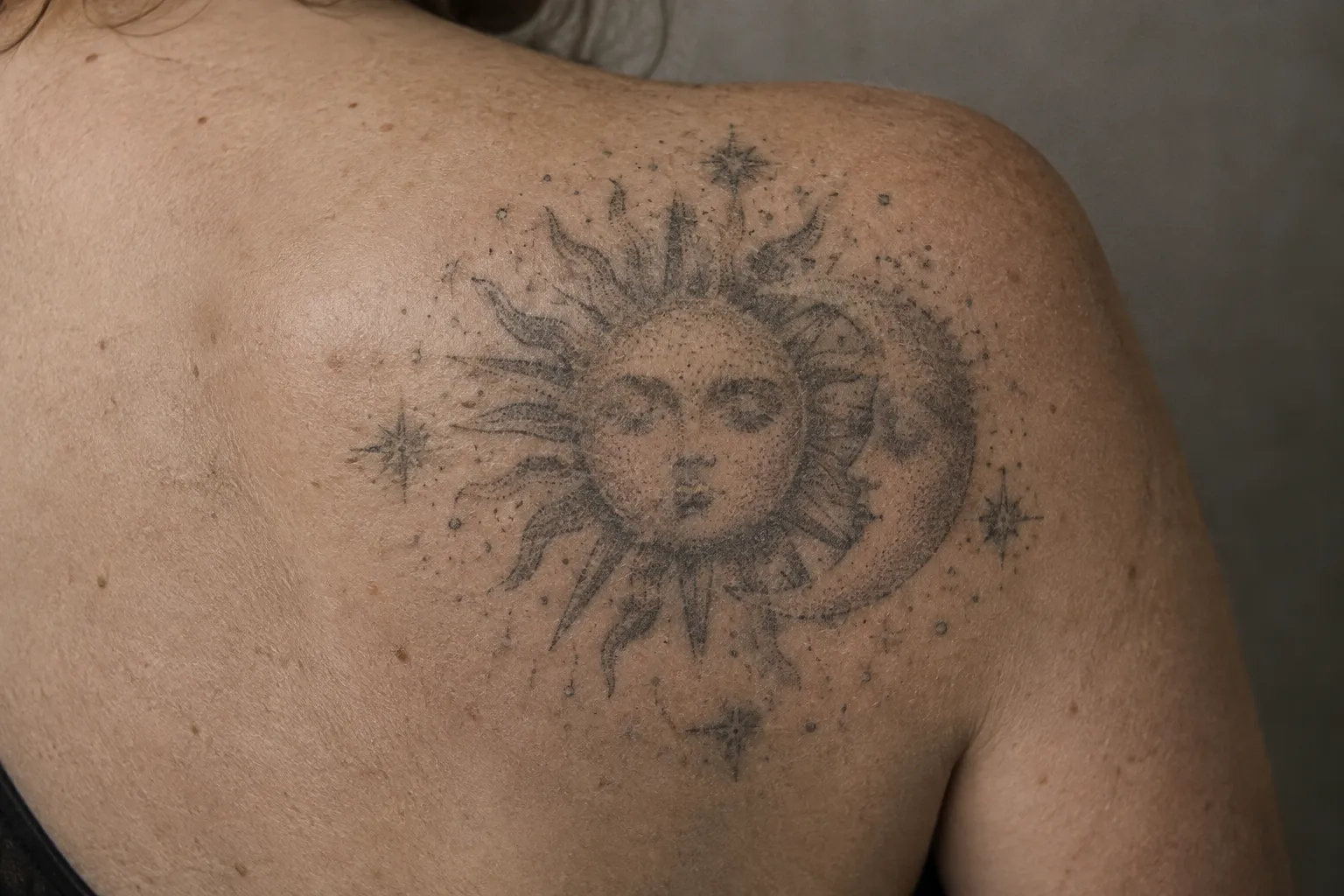
How density creates tone
Think of a gradient in dotwork as a controlled thinning-out. In the darkest zone, the dots almost touch. As you move toward a highlight, the gaps widen until bare skin takes over. Bare skin works as negative space in dotwork, so the untouched areas are part of the design. Ask your artist to walk you through how the spacing will step from dense to sparse, because that transition is what makes the gradient (5).
How dotwork ages, and what blurs it
Tattoo ink sits in the dermis, and ink particles can gradually move deeper into the skin over time. That redistribution is one reason tattoos look faded or blurred as they age (9). In dotwork, very small pieces with intricate shading or fine geometry are the ones that soften fastest, which is why artists often recommend scaling detailed designs up (7). Sun exposure, skin type and how evenly the artist set the dot depth also shape how the piece looks years later (5).
Dotwork tends to hold up better than that general picture suggests. Each dot is a separate deposit, so a well-placed field mellows slightly over the years instead of smearing, and settling can even make a piece read denser and richer than it did fresh (4)(5). What breaks the effect is closed gaps: when the dots sit too tight for the size of the piece, they merge into a grey patch as they settle (4)(5).
So, does a dotwork tattoo last? The ink stays in your skin for life, and like any tattoo it slowly softens as particles move deeper into the dermis (9). Expect the separate-dot look of the fresh piece to mellow into softer shading. Well-spaced dots at a generous size keep their structure better than a tiny piece crammed with fine shading (7). Placement matters too: hands and fingers drop dots quickly, and the thin skin of the inner wrist shows uneven density in a dense mandala sooner than other areas (4).
Dotwork Mandala Tattoo Ideas and Geometric Patterns
A dotwork mandala tattoo holds its symmetry best on flatter body fields, such as the sternum, centre back, shoulder blade or outer thigh (3). Radial symmetry is unforgiving. Wrap a perfect circle around a curved limb and it turns into an oval from most viewing angles.
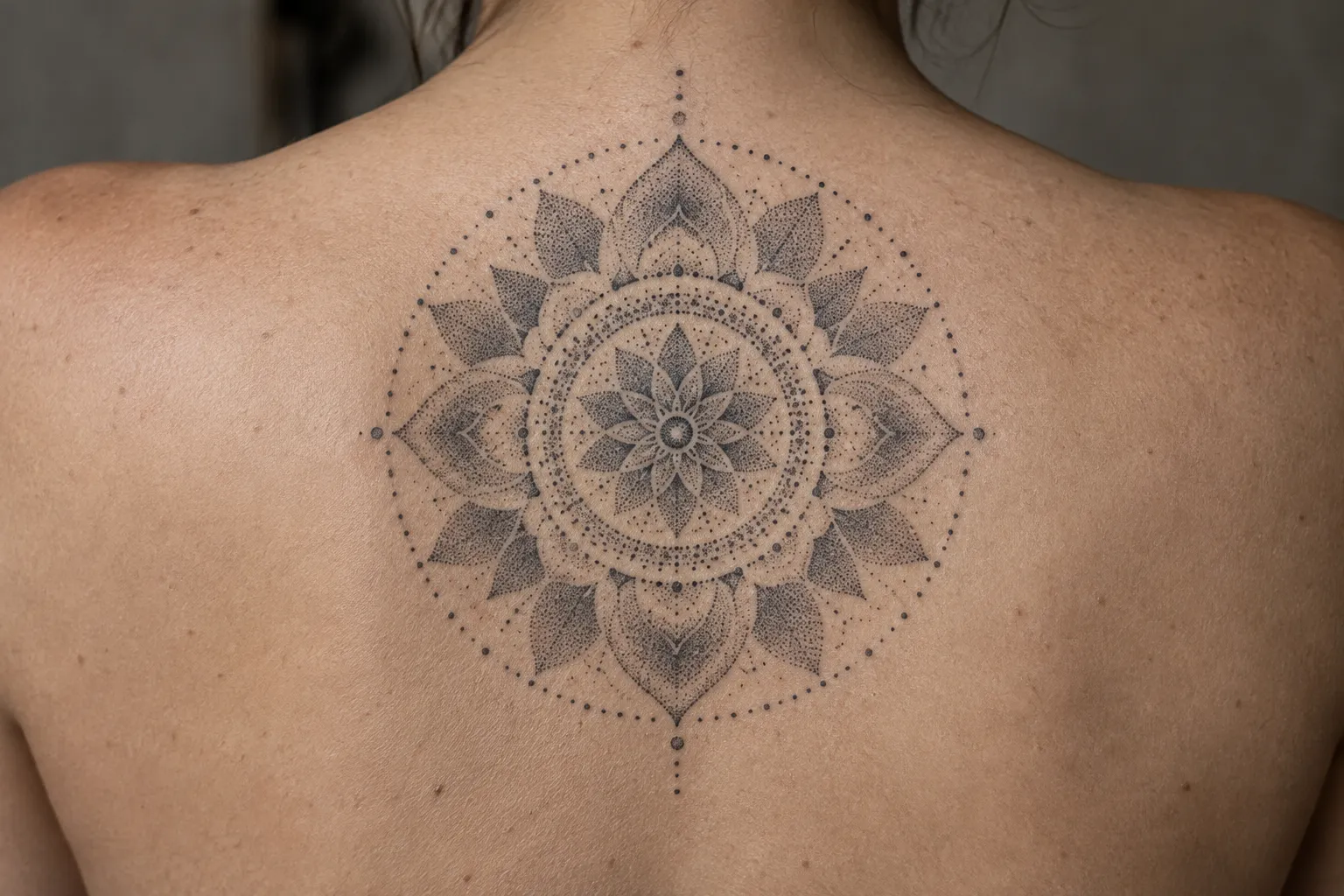
Flat body fields vs. curved contours
These are good placements for this kind of design:
- Sternum: the classic centred spot for a single mandala. It is also among the most painful areas, with almost no padding over the bone (3).
- Centre back: a flat, broad canvas where mandalas and ornamental compositions sit well (4).
- Shoulder blade: its flat part keeps a mandala’s circle true (3).
- Outer thigh: a broad, flat field and a natural home for larger mandala work (4).
Contoured areas are where mandalas struggle. Check the inner elbow, the calf wrap, the knee and the side of the neck with your artist before you commit. If you want a mandala on the forearm, keep it to the flattest strip of the outer forearm rather than letting it wrap around. Discuss symmetry and placement together during the consultation, because how flat the body field is decides whether the circle stays true (3).
Combining mandalas with geometric linework
Graded dot fields can define a mandala’s petals, rings and segments (4). Many strong dotwork mandala tattoo ideas pair a linework skeleton with stippled fills. The lines hold the geometry, and the dots shade the petals so they appear to curve inward. Common directions include a radial or top-down fade, a dense centre thinning toward sparse edges, and ornamental motifs such as lotus petals, teardrops or filigree scrolls (4). Ask which placements the artist would recommend for this subject, and what they would talk you out of (4).
The table below lines up the three approaches side by side.
Dotwork approaches at a glance
| Pure dotwork | Dotwork + linework | Dotwork mandala | |
|---|---|---|---|
| Design structure | Defined by dot density | Lines establish the structure | Radial structure |
| Placement fit | Flexible when the design does not rely on straight geometry | Works with gentle contours | Flatter body fields |
| Symmetry demand | Low | Moderate | High |
| Best for | Texture-led imagery | Ornamental designs | Symmetrical designs |
Pain by Placement and What Your Budget Buys
Pain in a dotwork tattoo depends more on placement, size, skin sensitivity and session length than on the stippling itself (7). Dense stippling keeps the needle working one patch of skin for a long time, and dotwork sessions tend to run long for exactly that reason (4).
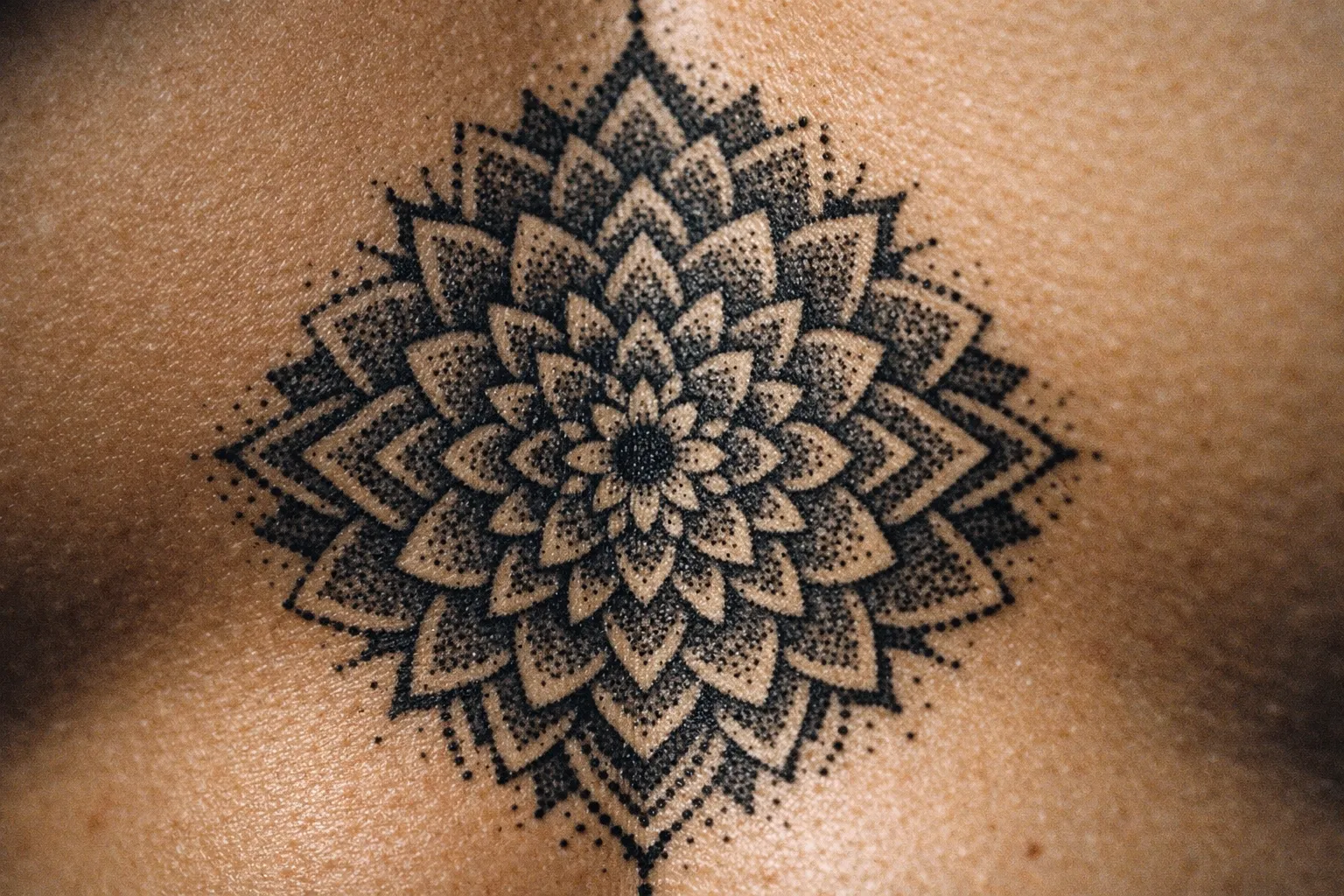
Pain by zone, ribcage vs. forearm
As a relative guide, from worst to easiest:
- Ribcage, sternum and spine: high. Thin skin over bone, plus breathing movement under the needle on the ribs. The sternum ranks among the most painful areas on the body (3).
- Upper back away from the spine, and the shoulder blade: moderate. The bony edges sting more than the meatier areas.
- Outer thigh and outer forearm: easiest of these. There’s more padding, and you can usually sit through a longer stipple session.
So, are dotwork tattoos more painful? Not inherently. The repeated tapping feels different from line work: some people find it easier to sit through, while others find the long sessions the harder part (4). A dense gradient on the ribs means a long stretch on a sensitive area, so splitting the work into more sessions is a reasonable request.
Sizing against a budget: why there’s no fixed answer
Dotwork is priced by density, not by size. A four-inch (10 cm) stipple field can keep you in the chair longer than a twelve-inch (30 cm) panel (4). That’s why “how big is a $500 tattoo?” has no fixed answer. Rates vary by city and artist, and the same budget could cover a light, open design or a much smaller piece with heavy stippling. Bring your reference and your placement to a consultation and ask for an estimate based on hours.
Machine vs. Hand-Poked Dotwork: What Actually Differs
Machine and hand-poked dotwork both build tone one dot at a time. Machine stippling places controlled dots quickly and consistently. Hand-poked dotwork applies each dot manually and often gives a softer, more organic look (7).
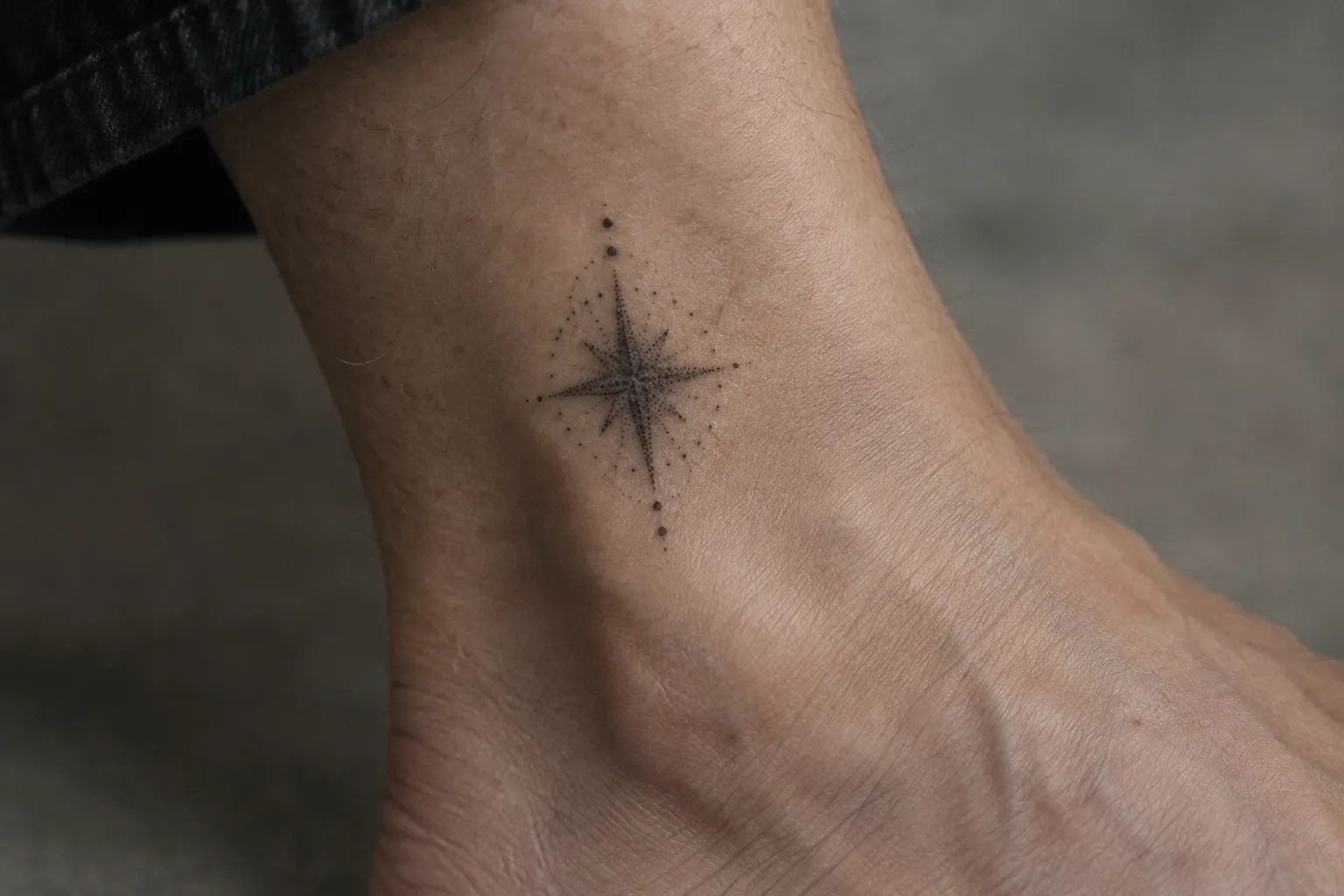
One guide adds that hand-poke tends to be gentler on the skin and may heal faster, while machine work gives the consistency that precise geometry and mandalas often need, and it calls them different tools for different looks rather than better and worse (5). Either way, consistent dot depth from the artist is what decides how the piece looks long term (5). Stippling can’t be hurried without visible consequences, by machine or by hand (4).
So ask the artist directly. Why do they use this method for this design? How long will it take? Can they show you healed examples done the same way? A good answer covers the look they’re aiming for and how they control depth. “Hand-poke is always gentler” or “machine is always better” isn’t a good answer.
Aftercare Timeline for Dotwork Healing
Dotwork heals like other black-ink work (5). Wash it gently with mild, fragrance-free soap and warm water twice a day and moisturize twice a day (1), keep it out of the sun while it heals, then protect it with sunscreen once it has healed (2). Your artist’s own instructions come first, so confirm the routine at your appointment.
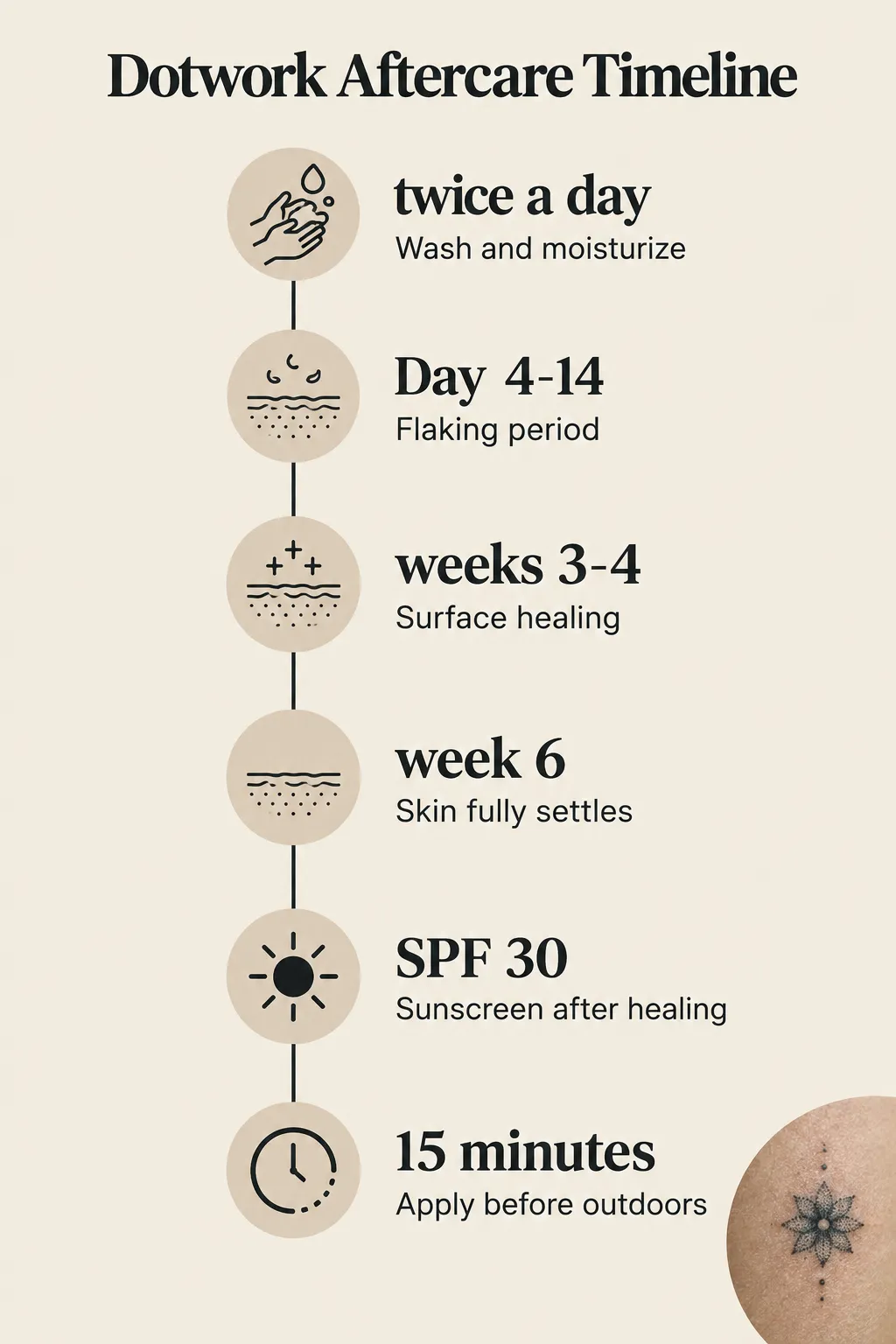 Dotwork aftercare includes washing and moisturizing twice a day, flaking through Day 4-14, surface healing around weeks 3-4, full settling around week 6, and SPF 30 or higher after healing.
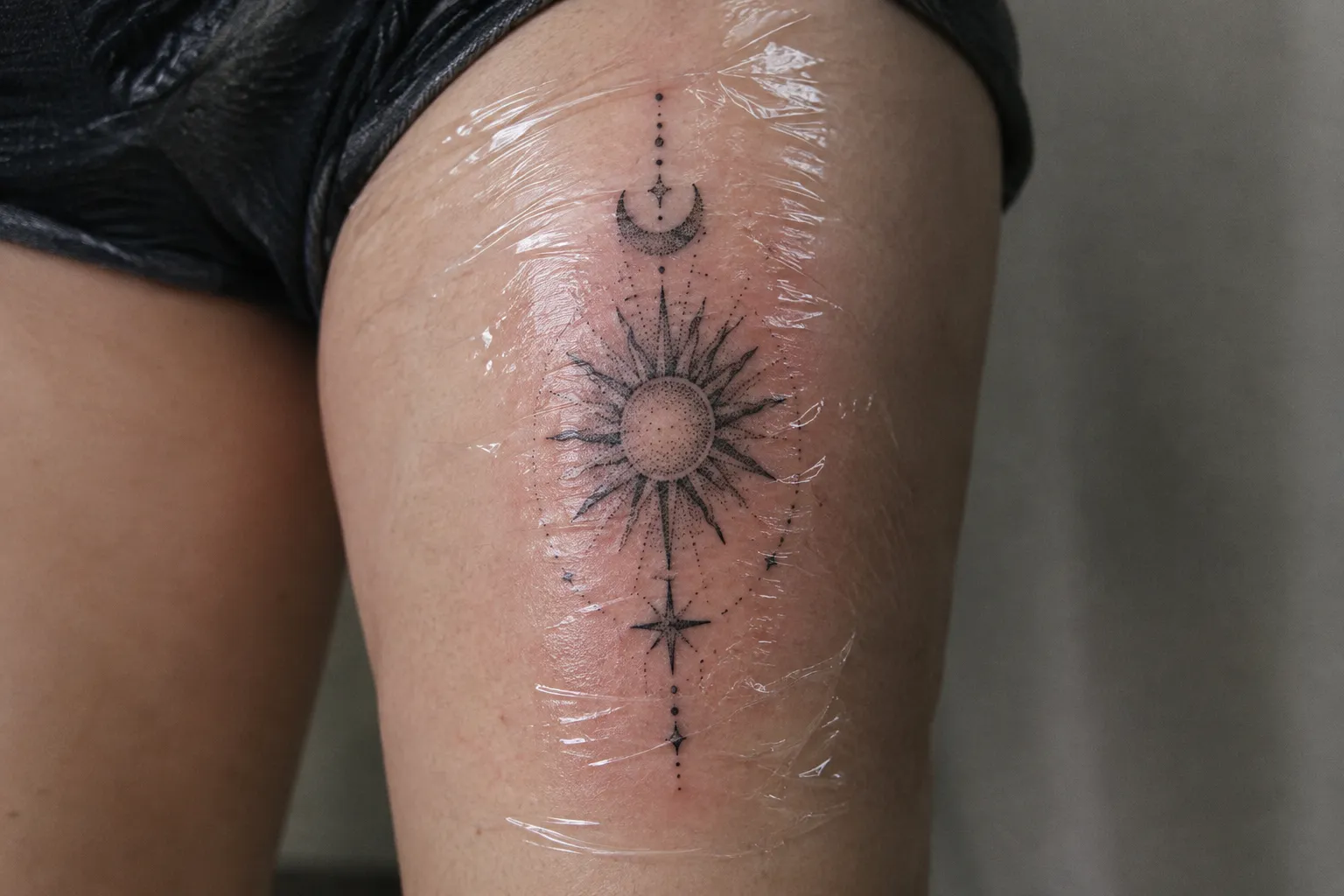
First two weeks: washing and moisturizing
- Day 1-3: Wash gently twice a day, pat dry with a clean paper towel and moisturize twice a day (1). Keep the layer thin: over-lubricating blurs fresh stipple (4).
- Day 4-14: The skin flakes from around day 4, then peels and itches through week 2. Itching, flaking and scabs are normal in the first two weeks and usually ease after about three weeks (1). Let the flakes and scabs come away on their own. Picking or scratching irritates healing skin and can cause infection (1). In dotwork, pulling a flake can also disturb the dots beneath it (5).
- Until it has healed: Don’t soak the tattoo in pools, baths or hot tubs (1). Keep it out of direct sun, since UV can fade fresh ink (1), and wear loose, breathable clothing over it so nothing sticks or rubs (1). Sunscreen waits until the skin has healed.
The surface usually looks healed around weeks 3-4 and the skin settles fully around week 6, so keep direct sun off it for the first 4-6 weeks, as in our week-by-week tattoo aftercare guide. Cleveland Clinic notes that larger tattoos can take a few months to heal completely (1).
After healing: sun protection
Once the tattoo has fully healed, use a broad-spectrum, water-resistant sunscreen of SPF 30 or higher. Apply it 15 minutes before you go outdoors and reapply at least every two hours (2). Skip tanning beds and sunlamps, which can also fade tattoo ink (2). One dotwork guide calls sun exposure the single biggest enemy of tattoo longevity, so any dotwork that sees daylight needs that protection (5).
Choosing an Artist for Dotwork and Stippling Work
Choose a dotwork artist by their healed photos at six months, one year and two years, not by fresh photos (4). Fresh stipple always looks sharp; healed stipple shows whether the dots kept their spacing or bled into fog (4).
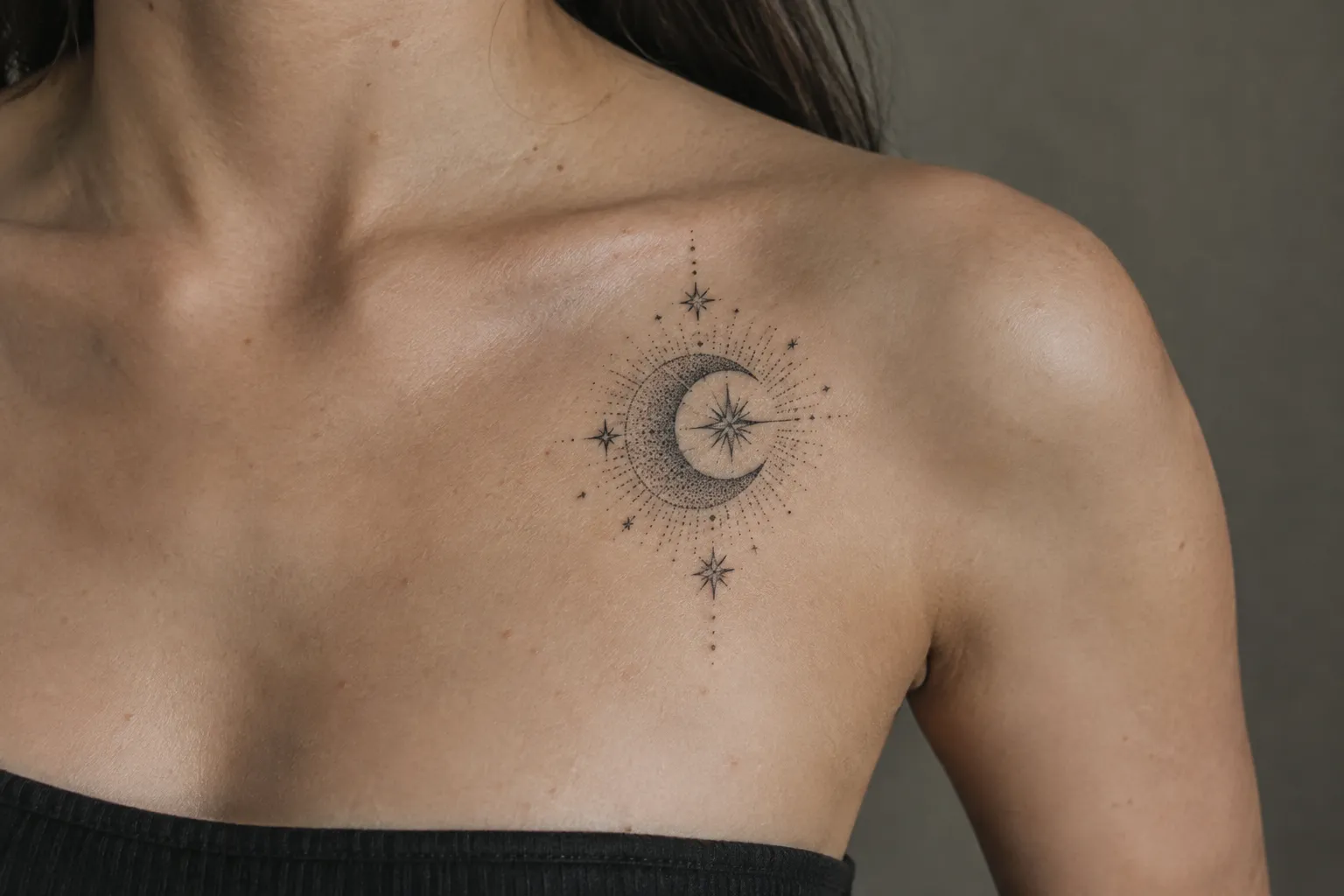
Questions to ask during consultation
Gather reference images before you book, then cover these points (7):
- Placement and scale for this specific design.
- Dot density: where the darkest zones sit and how sparse the highlights go.
- Line weight, if the piece mixes linework with stippling.
- How the design will sit on a moving or curved area.
- How the spacing will transition from dense to sparse areas (5).
For a mandala, add one more question: will the symmetry hold when you raise your arm or twist your torso?
Checking healed photos, not just fresh ink
Make sure the portfolio includes the subject and technique you want, whether that’s mandalas, geometric work or illustrative stippling (4). Then compare the same artist’s work at several ages (4). Look at three things in the healed shots:
- Do the gradients still step smoothly, or have they flattened into grey?
- Are the dots consistent in size, or have some blown out into blobs?
- Does the negative space still read as clean skin?
An artist who posts only fresh, filtered photos is giving you half the information.
Frequently Asked Questions
- What is a dotwork tattoo?
- A dotwork tattoo uses individual marks to build its image or shading, so the design reads through spacing and contrast rather than blended gradients.
- Are dotwork tattoos more painful?
- Dotwork is not inherently more painful than other styles in the same spot; a dense session can feel more demanding because the artist works an area longer.
- Does a dotwork tattoo last?
- A dotwork tattoo remains visible, but fine stippling may lose definition; leave open skin between marks instead of packing a small design with detail.
- How big is a $500 tattoo?
- A $500 budget does not translate to a standard tattoo size; ask for an estimate based on the design's density, placement, and your local artist's rate.
- Can dotwork be combined with other tattoo styles?
- Dotwork can shade designs built in other styles; bring references that show how you want stippling to meet outlines, color, or other textures.
- What's the real difference between machine and hand-poked dotwork?
- Machine stippling is quicker and more uniform, hand-poke softer and more organic; neither is simply better, so compare the artist's healed work in the method you want.
- What should I ask before booking a mandala piece?
- Ask the artist to test the design's symmetry on your body while you move, and to explain how its smallest details will hold at the planned size.
Before You Book: Placement, Healing and Healed Proof
Dotwork’s gradients are what make it striking, and the spacing behind them decides how it ages. That changes how you plan the piece. Put mandalas on flat fields like the sternum, centre back, shoulder blade or outer thigh. Follow the twice-daily wash-and-moisturize routine while the tattoo heals, then switch to SPF 30 or higher for life. Pick your artist from healed photos, not from the most impressive fresh post on their feed. Walk into the consultation with your reference images, your placement in mind, and one specific question about how the dot density will step from dark to light.