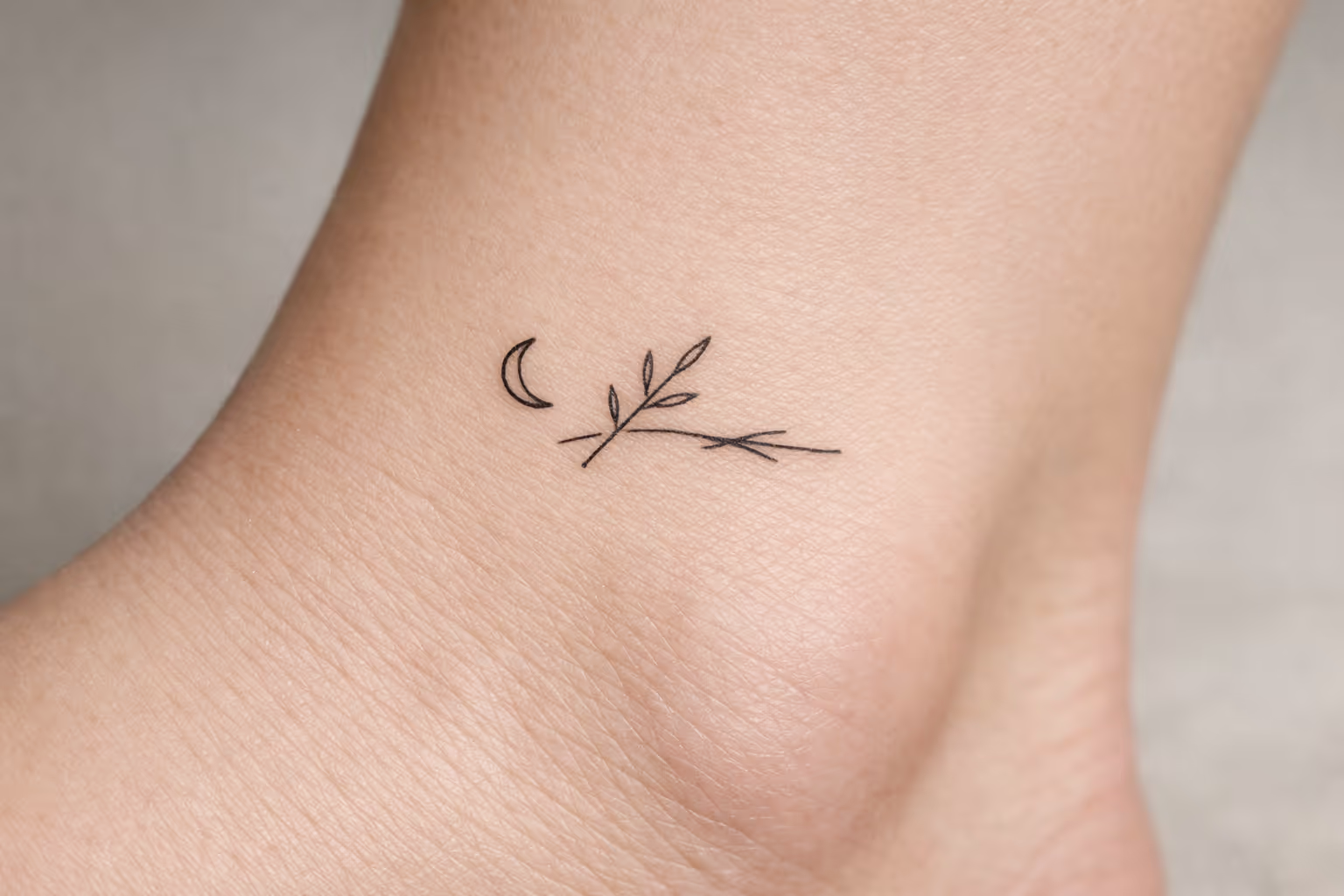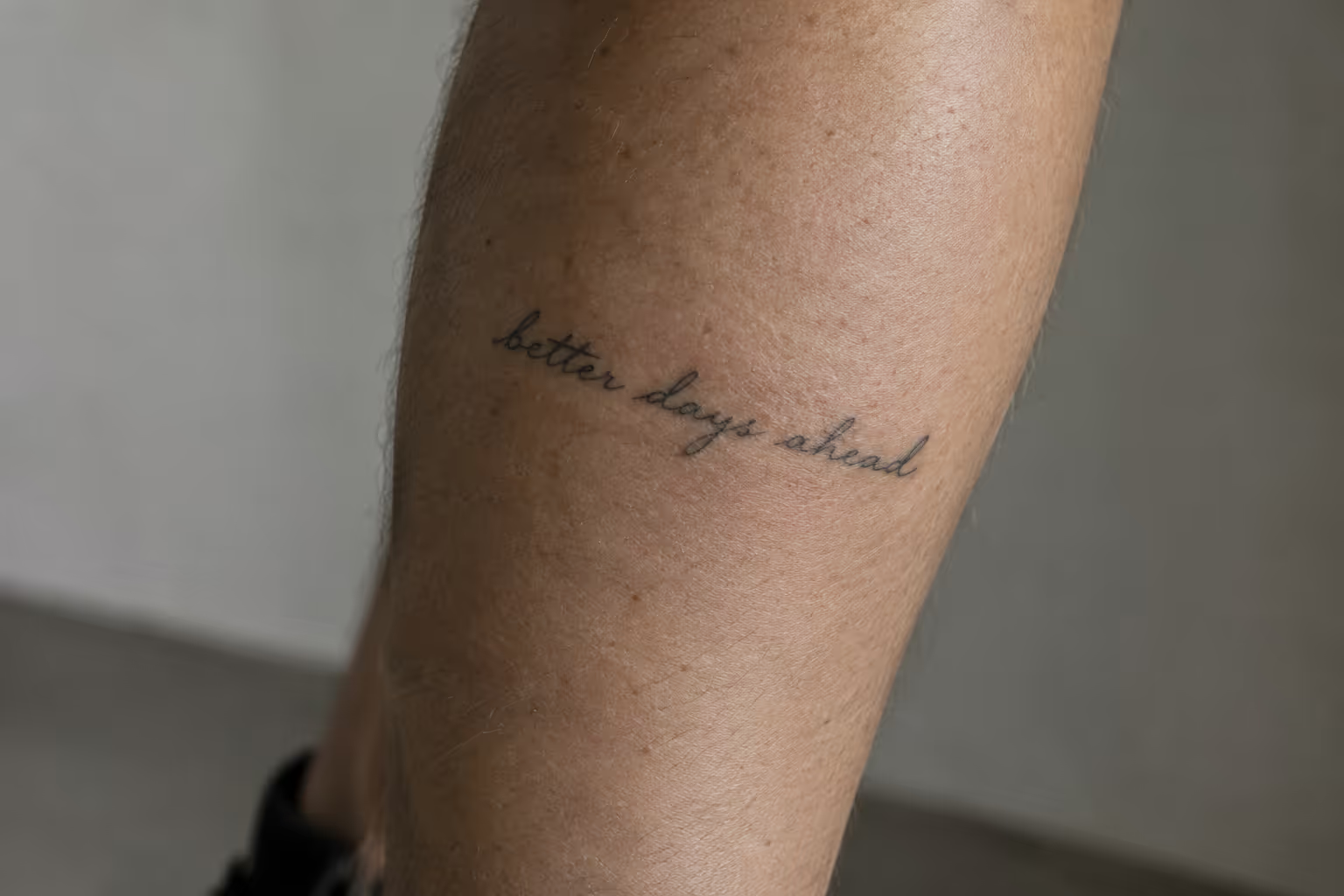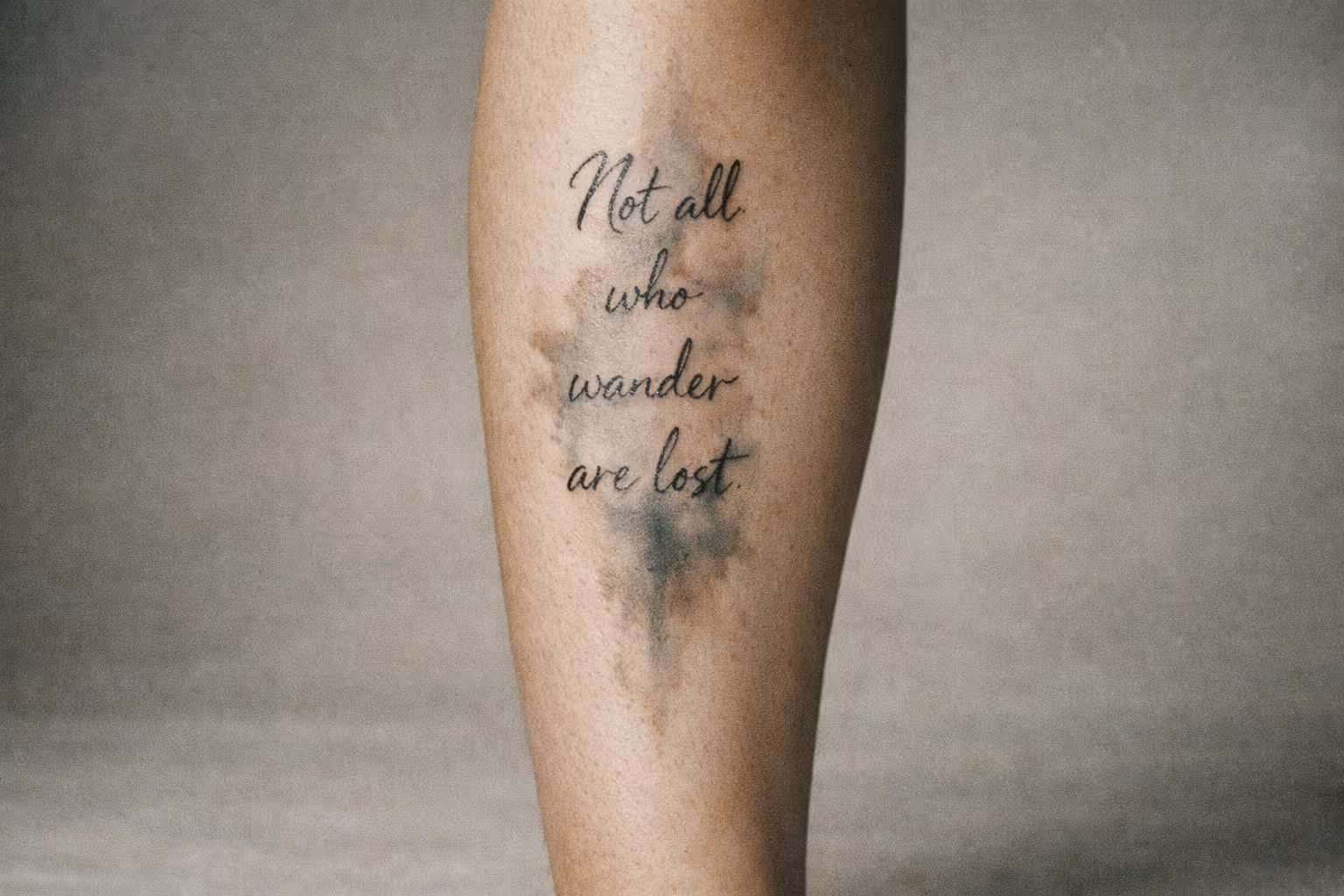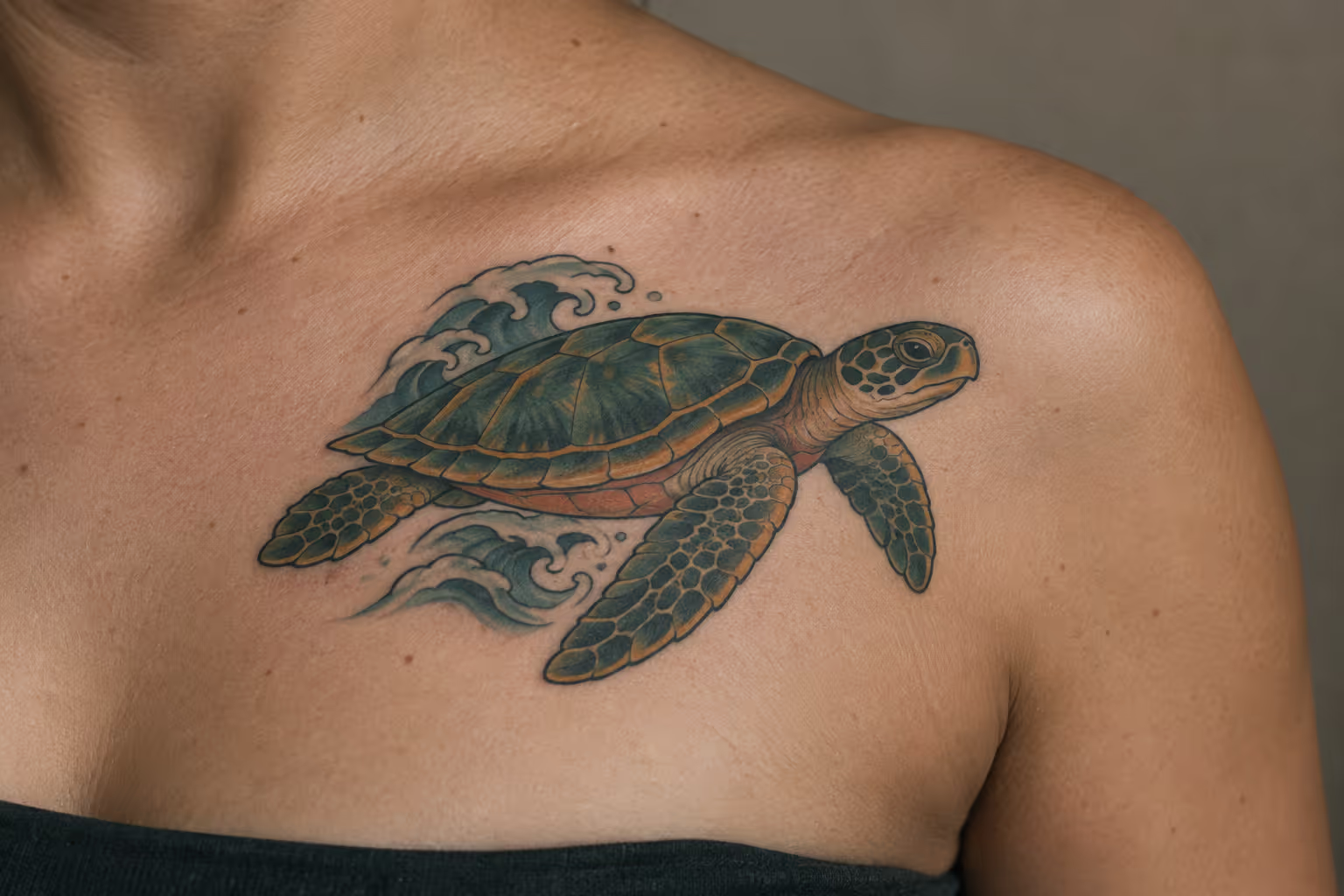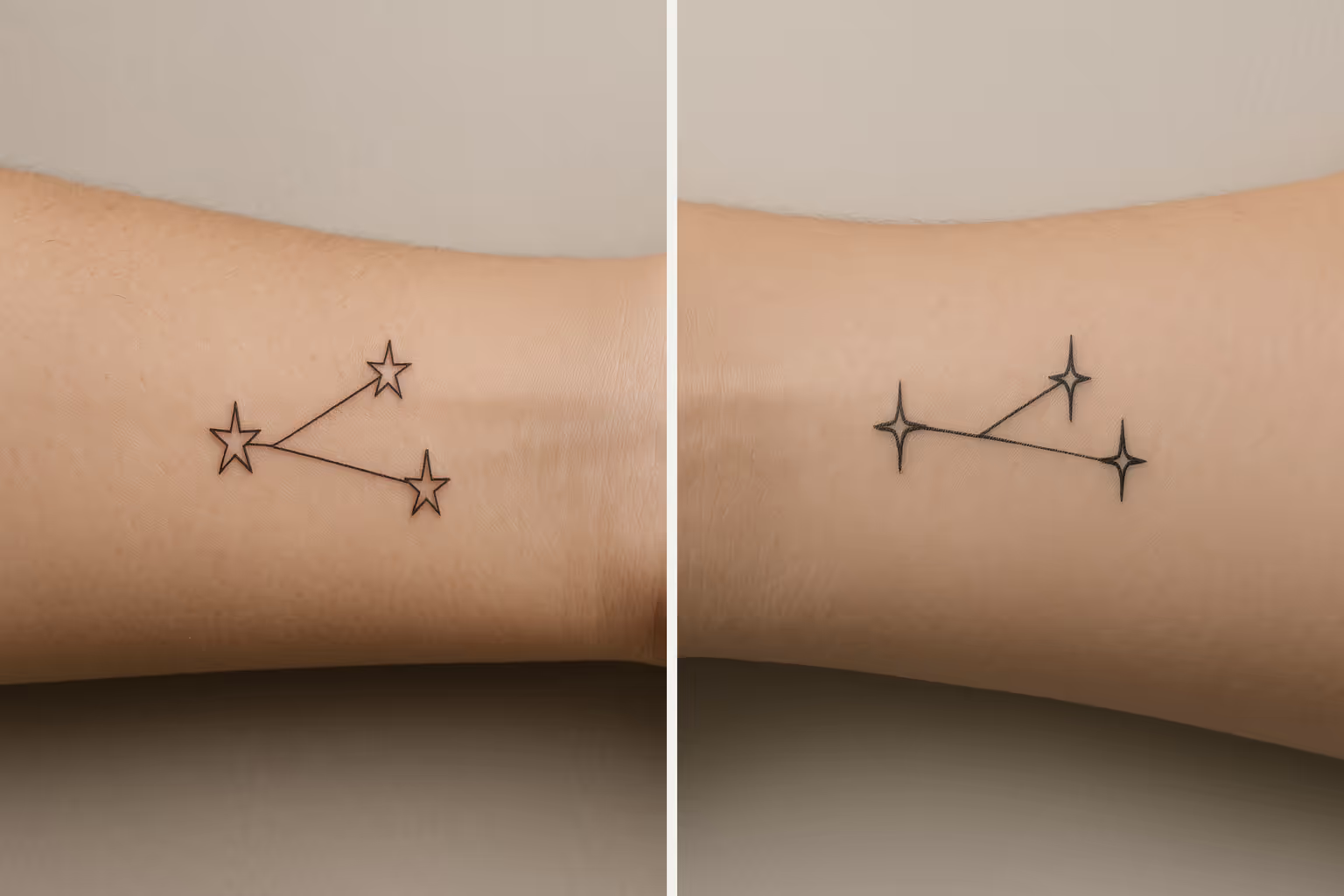
Most guides about matching tattoos make the same assumption: two people, one romantic relationship, identical placement on identical bodies. That falls apart the moment you’re designing a set for three siblings, a group of college friends scattering across the country, or a parent and adult child who want something that holds up as well as the bond does. The design logic changes completely depending on who’s involved and what “matching” actually means to them: a shared symbol, a complementary pair, a split design that only completes when everyone stands together, or the same placement with a different icon for each person.
This guide is about the engineering of a set, not the sentiment behind it. How to build one that works, what breaks when placement and scale diverge across different bodies, and the honest question of what happens if the relationship changes. Matching tattoos are a different problem depending on the people involved, and most guides never acknowledge that.
Romantic couple tattoos carry a different risk profile entirely, and they’re covered in full in our couple tattoos guide. Everything here is for everyone else: friends, siblings, cousins, parents and kids, teams, and groups.
Here’s the quick version of the tradeoffs before we get into the structure.
✓ Pros
- Marks a shared bond or milestone without requiring words
- Complementary designs let each tattoo stand alone if circumstances shift
- Simple designs (dates, coordinates, small symbols) keep cost and session time low
- Booking the same artist keeps line weight and style consistent across the set
- Friend and family sets can skip the partner-name designs that sit among the most-regretted tattoos
✗ Cons
- Regret climbs if the relationship changes, even for non-romantic pairs
- Mismatched placement or scale makes one piece feel 'louder' than the other
- Inconsistent aftercare across the group leads to uneven healing and line quality
- Half-and-half designs require tight coordination, and they fail if one person moves or changes size
- Groups of 4+ require block bookings and logistical planning most people underestimate
What Matching Tattoos Actually Mean: Four Structural Approaches
Matching tattoos fall into four structural types: identical motif, complementary elements, half-and-half split designs, and same-placement-different-icons. Choosing the structure first, before any specific design, determines whether the set survives distance, different bodies, and time.
Identical motif means everyone gets the same symbol in the same style: a shared date, a family crest, one line drawing repeated across the group. Works well for siblings and parent/child sets where uniform unity is the whole point. The risk is that identical designs can read as couple-like or feel overly literal once the group gets larger than two or three.
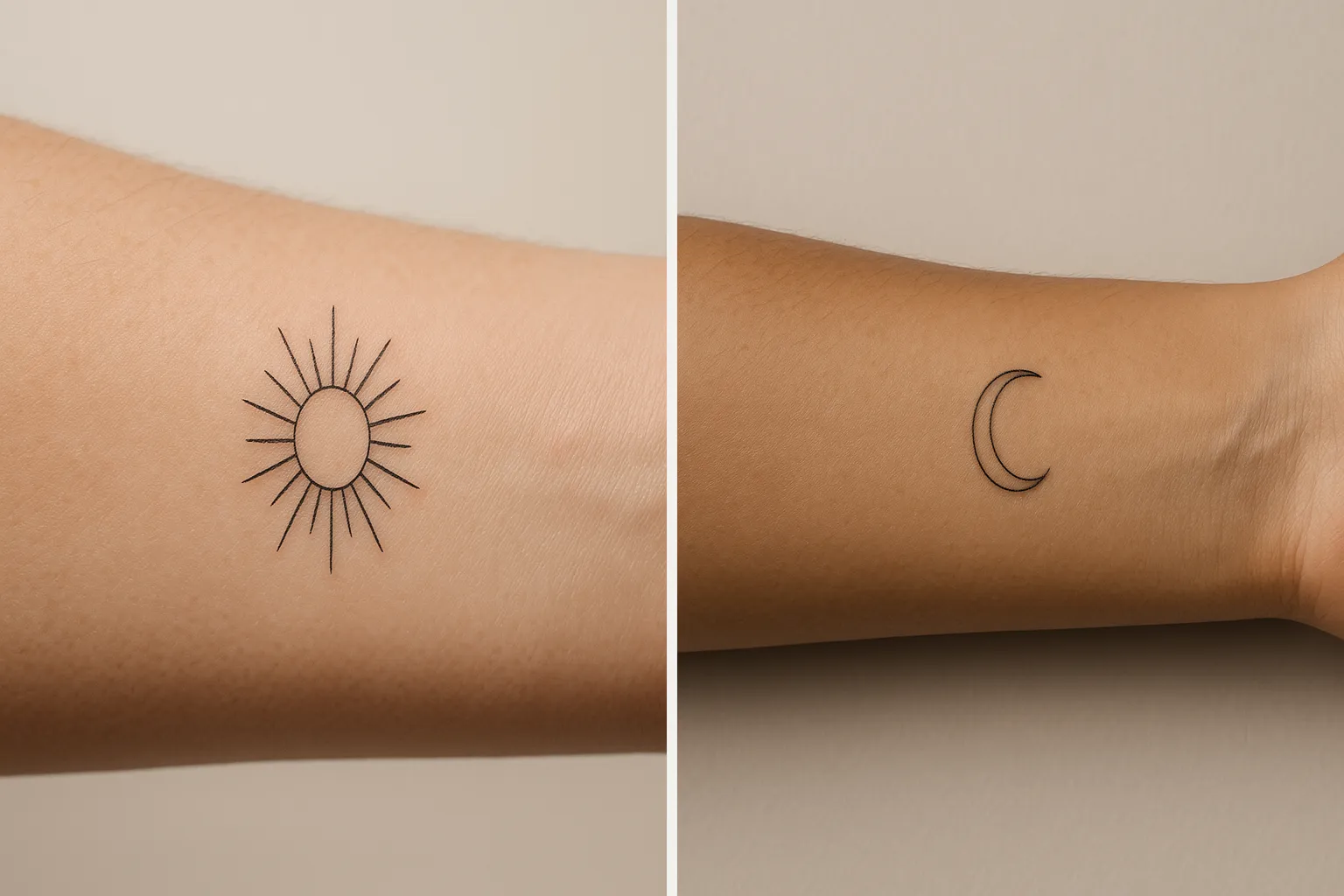
Complementary elements give each person a distinct tattoo that conceptually belongs to the set: sun and moon, lock and key, yin and yang, a phrase split into “best” and “friends.” Each piece reads as complete on its own, which is what makes the structure such good insurance (28). This is the most flexible structure for groups with different pain tolerances or visibility preferences, and it’s the smartest default for friends who’ll end up in different cities.
Half-and-half (split) designs are the ones that visually complete when people stand together: split phrases, a continuous line broken across two arms, interlocking puzzle pieces. Highest visual payoff, highest planning risk. They require tight agreement on placement, size, and orientation before anyone sits in the chair.
Same placement, different icons keeps the location and line weight identical (say, everyone on the inner wrist at the same scale) but personalizes each symbol: a birth year, a personal icon, a birth flower. The set is linked by style rather than imagery, and it scales cleanly to families of four or more.
Before you commit to any of these, run the stands-alone test: cover one tattoo and ask whether the other still reads by itself. If yes, the structure is sound. If no, the design depends on physical proximity, which is a long-term risk, because the people won’t always be in the same room.
Identical vs. Complementary: Which Structure Fits Your Group
Identical works when everyone shares the same pain tolerance and visibility preferences and the bond is fixed regardless of geography. That’s why it fits siblings better than friends. Complementary is smarter when those things differ. Two friends who want different placements can each carry a sun or a moon and keep the link in the concept, not the location.
Split Designs and Why Placement Has to Be Agreed First
Split designs are the only structure where placement isn’t a personal choice: it’s a shared engineering decision. A continuous line or split phrase is drawn for a specific body region and a specific size. If one person puts their half on a flat forearm and another puts theirs on a curved ribcage, the two halves won’t line up when you photograph them together, which is the entire reason split designs exist.
Lock the placement, the size, and the orientation before anyone books. And design each half so it still reads as a complete thought on its own. “To infinity” is a phrase. Half a puzzle piece is just a broken shape.
Four Matching Tattoo Structures at a Glance
| Identical motif | Complementary elements | Half-and-half (split) | Same placement, different icons | |
|---|---|---|---|---|
| Each tattoo stands alone? | Yes | Yes | No | Yes |
| Best for | Siblings, parent/child, teams | Friends, mixed groups | Close pairs only | Families of 4+, groups |
| Main risk | Can feel couple-like | Weak if halves depend on each other | Fails if placement or size diverges | Requires style discipline |
| Scales to groups of 3+? | Yes, straightforward | Yes, with planning | Difficult: requires tight coordination | Yes, the best option at scale |
Design Ideas by Relationship Type
The best design depends less on what looks good on Pinterest and more on the relationship it marks. A sibling bond is geographically fixed in a way a new friendship isn’t, and that changes which structure holds up over time.
Friends and Best Friends: Designs That Stand Alone When You’re in Different Cities
Complementary beats identical for friends, because friends often end up in different cities and the set needs to survive that. The pinky promise is a staple among friendship motifs (16): split so each person gets one hand, done in blackwork on the inner wrist or forearm at 1 to 2 inches (2.5 to 5 cm). Coordinates of the place where you met (16), whether a hometown, a campus, or one specific spot, work well on the inner forearm at 2 to 3 inches (5 to 7.5 cm), and they age well because they’re personal rather than trend-driven.
A sun-and-moon pair splits the concept cleanly. A split quote works too, as long as each half reads as a complete thought alone. I’ve drawn a lot of friendship sets over the years, and the ones that hold up best are the ones where each person’s piece still makes sense without the other person standing next to them.
Siblings: When Identical Actually Makes Sense
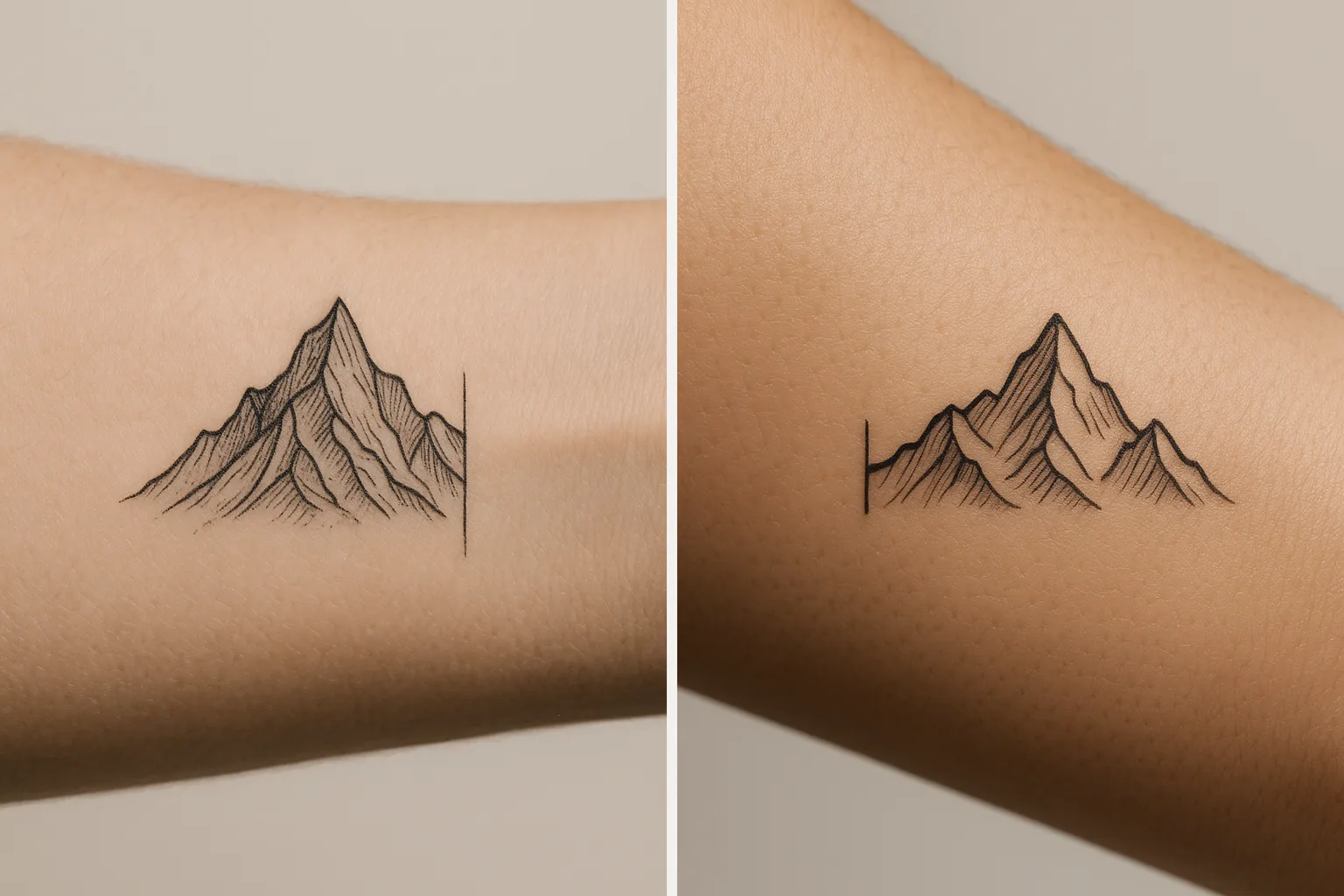
Identical designs work better for siblings than for friends because the bond is fixed regardless of geography: you don’t stop being someone’s sibling if you move to another state. That makes a shared symbol lower-risk here than almost anywhere else. Good options: a single element from a family crest, matching birth flowers (16, 26), coordinates of the childhood home, or a split phrase pulled from a shared memory.
Most sibling sets sit well on the upper arm or forearm at 2 to 4 inches (5 to 10 cm), which gives enough room for the design to stay readable as skin changes over the decades.
Parents and Children: Keeping It Simple Enough to Age Well
Parent and child sets tend toward simpler, more restrained motifs: a shared date in Roman numerals, matching botanical line drawings, or a small symbol tied to a family story. The inner wrist or ankle at 1 to 2 inches (2.5 to 5 cm) suits this scale. Fine-line blackwork works here as long as the design stays simple and open, because the thinnest lines are the first to soften and a small, busy design closes up sooner than a clean one. For the most common pairing, our mother-daughter tattoos guide goes deeper on symbols and placement.
This is the set where you resist the urge to over-design. A clean date outlives a busy illustration: a simple Roman numeral date on the inner wrist keeps looking intentional long after an elaborate illustrative piece at the same size has started to blur.
Groups of Three or More: The Same-Placement Formula
For groups, cousins, and teams, the same-placement-different-icon formula beats every other structure at scale. Agree on a style (all fine-line blackwork, say) and a location, like everyone on the inner forearm, then let each person choose their own symbol within that constraint. The set reads as a set because of the shared discipline, not because the images are identical.
Event-based sets work well here too: a shared year, a place, a milestone gives the group a time-stamp that ages well conceptually. For trios and larger groups, check the balance of odd-numbered arrangements before booking: three interlocking elements or three stars from one constellation need to be composed deliberately, not improvised in the chair.
What Breaks When Scale and Placement Diverge
The most common failure in a matching set isn’t a bad design. It’s two good designs at different scales on different body parts, which read as two unrelated tattoos instead of a pair. This is the part most guides skip entirely, and it’s where sets quietly fall apart.
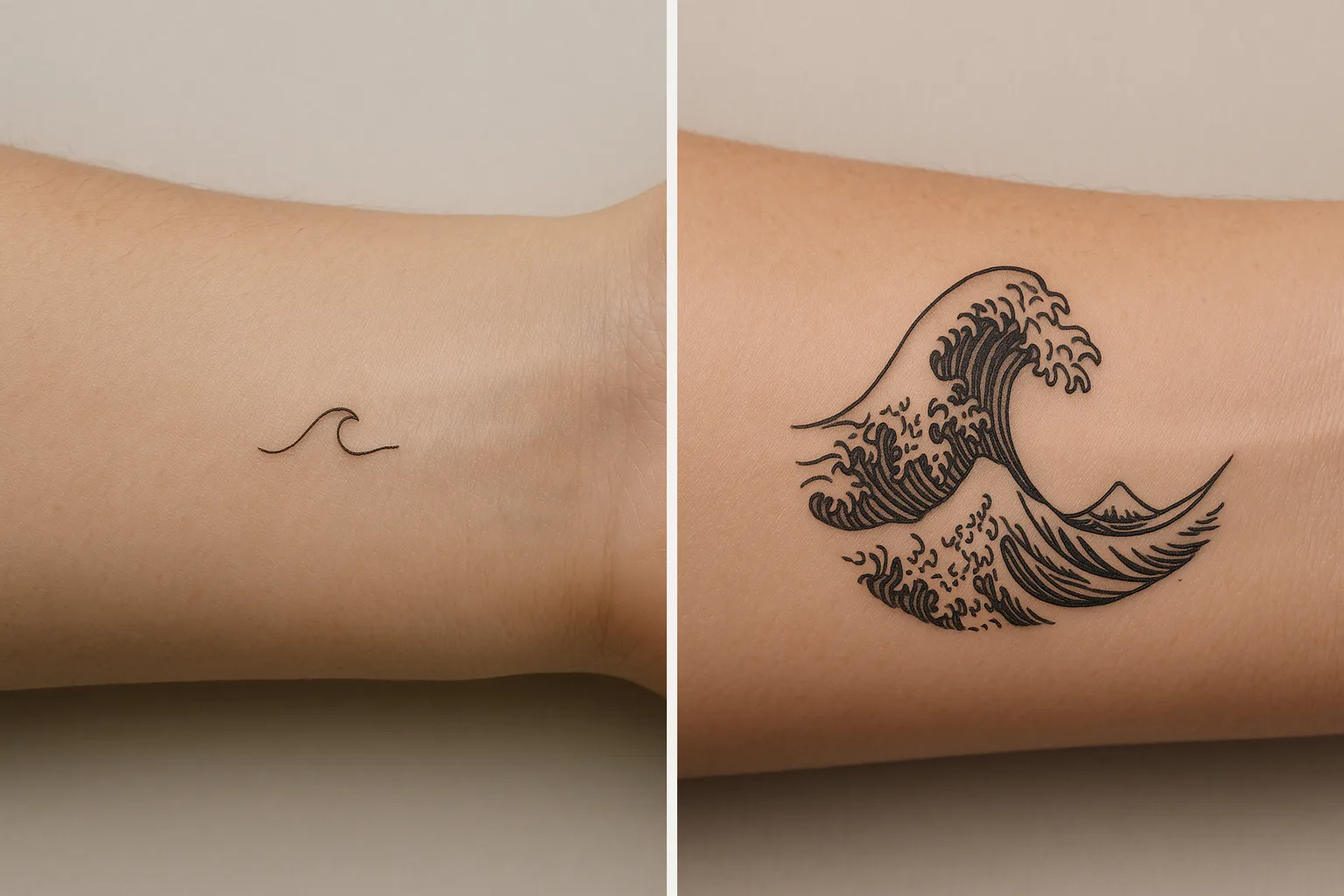
Scale mismatch is the first killer. If one person puts a 1-inch symbol on their inner wrist and another puts the “same” design at 3 inches on their upper arm, the visual relationship is gone. Agree on a size range, not just a design, before the consultation.
Placement and visibility mismatch creates a slower problem. A hand tattoo is visible in nearly every social context; a ribcage piece is almost never seen. When one person’s tattoo is constantly exposed and the other’s is hidden, the set feels unequal, and the person carrying the visible piece often regrets the exposure first.
The “louder” problem in groups is the same issue multiplied. In a group of four, if three people choose inner wrist and one chooses sternum, the sternum piece will never actually be part of the visual set in daily life. Agree on a visibility tier (all visible or all concealable) before anyone commits.
Split Designs and Body Curves: Why the Same Region Matters
A continuous line or split phrase designed for two forearms will distort if one person moves it to a ribcage. Flat skin and curved skin compress a design differently, so the two halves stop matching when they meet.
There’s an aging dimension too. Fine-line work on fingers, hands, and feet fades faster than on the outer forearm or upper arm: constant friction and skin turnover mean a finger tattoo typically needs a touch-up every 1 to 3 years, while forearms and upper arms hold ink noticeably longer. Put half a split design on a fast-aging wrist and half on a stable upper arm, and the set won’t age in sync even if it lined up perfectly on day one. Plan split placements on the same body region, full stop.
Visibility Tiers: Agreeing on How Public the Set Will Be
Font and lettering need standardizing across different limb circumferences. A ½-inch letter height on a narrow wrist reads differently than the same height on a broader forearm, so the artist has to see both people’s placement areas before finalizing the stencil.
The bigger point: decide as a group how public this set is going to be. Everyone visible, or everyone concealable. Mixing the two guarantees one person’s piece does the daily work of representing the set while another’s stays hidden, and that imbalance is what people notice years later.
The Honest Question About Relationship Change
We couldn’t find a study-backed regret rate for matching sets specifically, so we won’t quote one. What broader surveys show is useful enough. In a June 2023 survey of 1,002 Americans, Advanced Dermatology found that 1 in 4 regretted at least one of their tattoos, that names ranked among the most-regretted designs, and that loss of connection to the original meaning was one of the top reasons people gave (29). Just over half (51%) said the regret didn’t fully sink in until two or more years after the tattoo (29).
That maps directly onto matching sets. A design whose meaning depends on one relationship is exactly the kind that loses its connection when the relationship changes, which is why partner names carry so much regret (our name tattoo guide covers that problem in detail). Friend and family sets can avoid the riskiest category, but they aren’t immune: siblings become estranged, friendships fade, and groups drift apart.
Designs That Survive Relationship Change, and Ones That Don’t
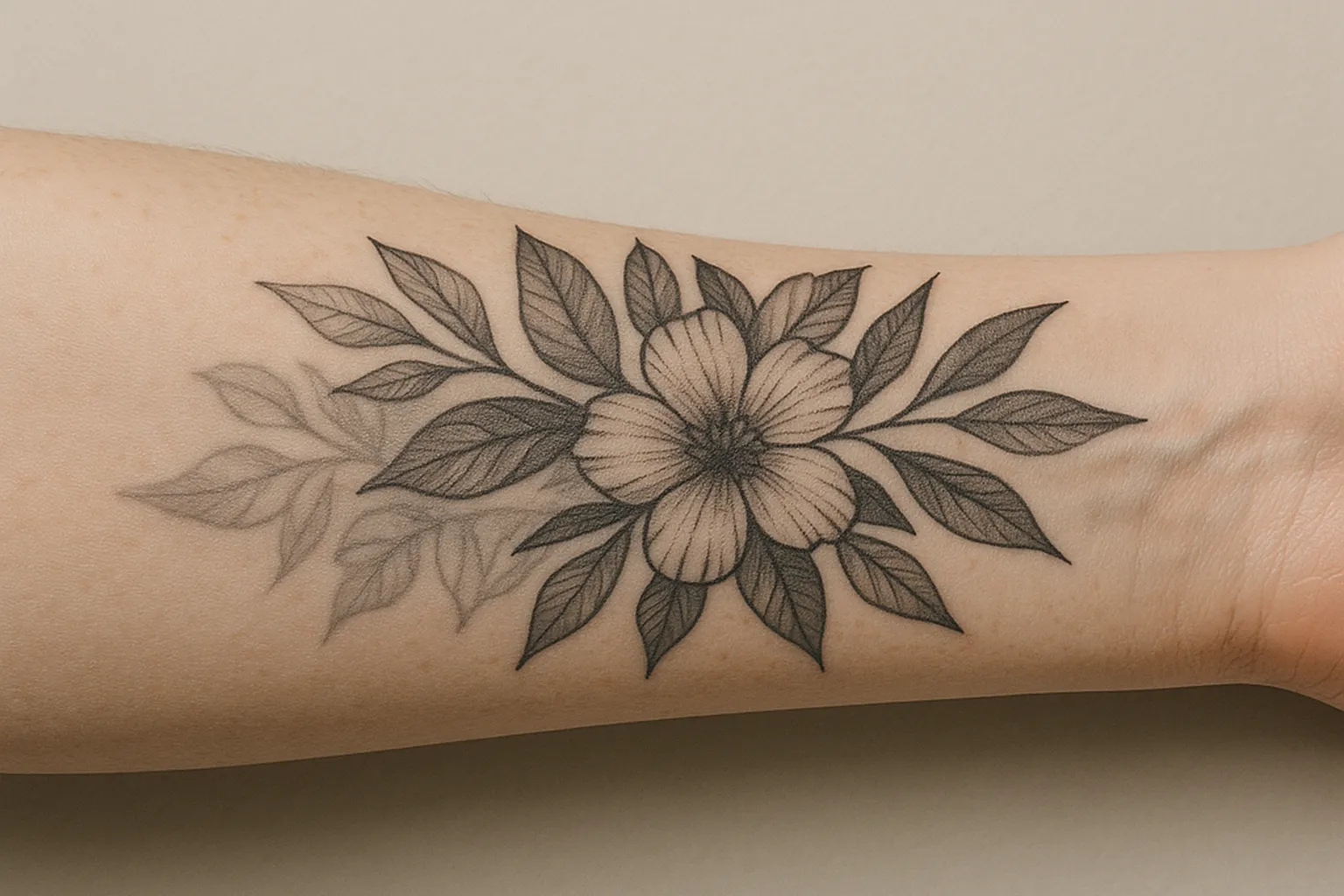
Generic symbols age better than references locked to a single phase of a relationship. A coordinate tattoo of a childhood home still means something even if the sibling relationship becomes complicated: it marks a place you both lived, which stays true. An inside joke from a friendship that ended does not survive the friendship.
That’s the structural case for dates, coordinates, and botanical motifs over literal, relationship-specific imagery: they mark something that stays true on its own rather than a bond that has to stay intact. It’s the same question worth asking of any matching design before you book: does it still work as a complete piece without its partner (28)?
The stands-alone test doubles as a future-proofing tool. If each tattoo reads as complete and meaningful on its own, the set survives relationship change better. A sun is still a sun. Half a puzzle piece is just half a puzzle piece, and that’s a much worse thing to be wearing after a fallout.
Planning for Cover-Up or Reinterpretation Before You Book
Choose placements and shapes that can be absorbed into larger work later. A small central symbol on the upper arm can become the core of a sleeve; an isolated shape on the inner wrist is harder to integrate and harder to hide. Removal is not a clean exit either: most professional tattoos need 6 to 12 laser sessions spread over 6 to 24 months, as our laser tattoo removal guide explains. Plan placement with exit options in mind before you book, not after.
For groups, do the math honestly. In a set of four, the odds that all four relationships stay unchanged over 20 years are low. That’s not pessimism. It’s the structural argument for complementary designs that stand alone over split designs that require all four people to be present to make sense, and a reminder that estrangement, not just romance, is what turns a non-romantic set into a regret.
Logistics for Getting a Group Set Done Right
Book the same artist for the entire set. Line weight, shading style, and ink type need to be consistent, and inconsistencies are immediately obvious in fine-line or minimalist work where there’s nowhere to hide a mismatch. One artist, one session block or back-to-back sessions, is the standard.
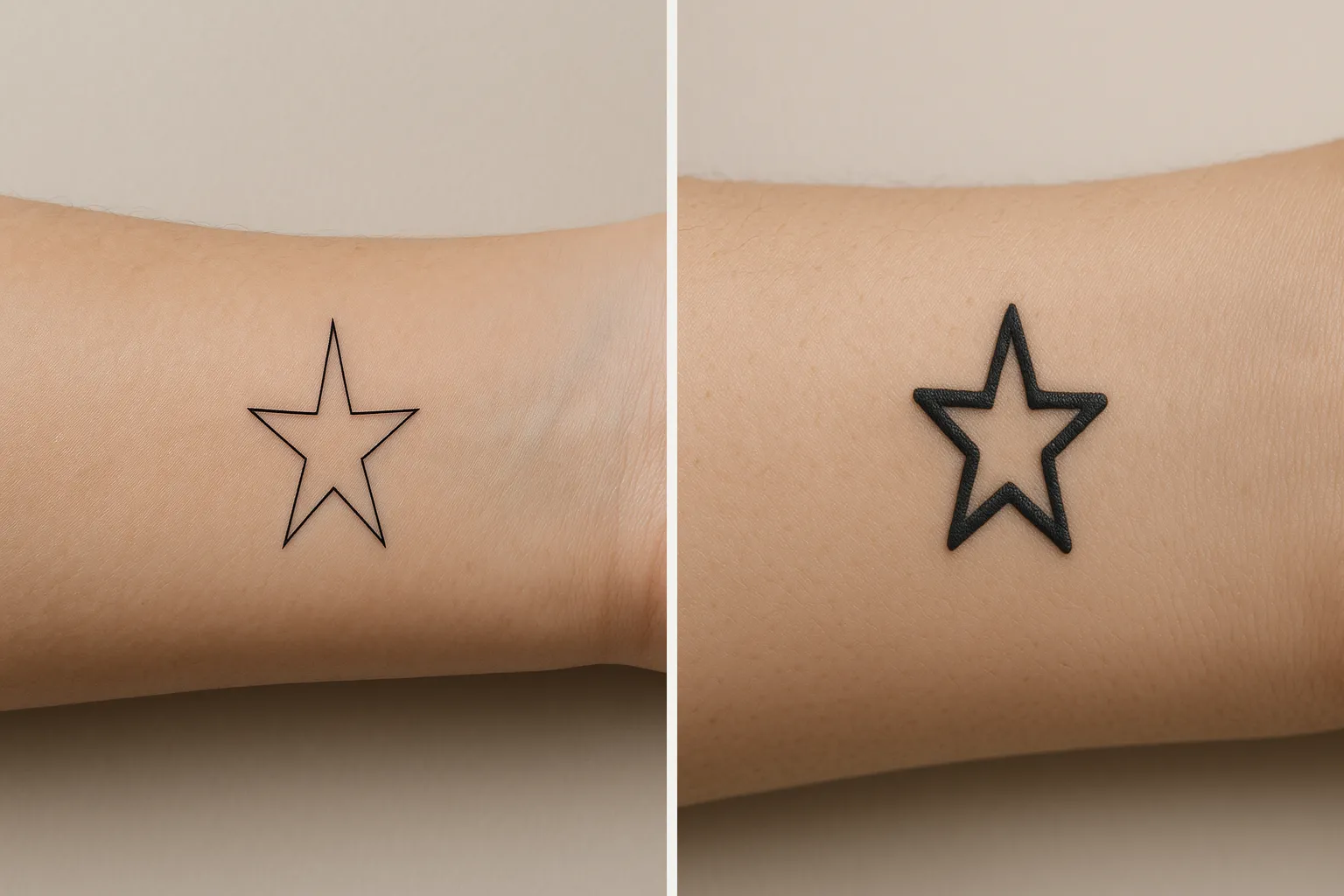
On time and cost: a small tattoo takes anywhere from under an hour to an hour or two in the chair (2, 9), so budget up to 2 to 4 hours for a pair and 4 to 8 hours for a group of four, usually split across multiple sessions. Price guides from 2025 put a small, simple design at roughly $50 to $150 per person (5, 9); a September 2026 guide puts a simple outline at $80 to $150 in a mid-sized city and $150 to $300 at a major-city or specialist shop, mostly because of the shop minimum (2). Shop minimums alone range from about $50 to $250 regardless of size (8). Experienced artists commonly charge $150 to $250 an hour, and top-tier names far more (14), which matters if your set needs fine-line precision from a sought-after artist. Don’t count on a group discount: four people means four individual costs.
What to Bring to the Group Consultation
Bring a shared reference folder, not four separate Pinterest boards relayed through one person. Artists may cap same-day group size depending on complexity and fatigue, so book a block well in advance and share references as a group before the consultation.
Disappointment in the artist’s work is one of the top reasons people give for regretting a tattoo (29), and in a group set the usual cause is weak communication with no joint sign-off. Get a stencil approval from every participant before anyone sits down, not individual approvals given separately.
How to Book a Matching Tattoo Set for a Group
8 hoursStep-by-step process to coordinate design, artist, booking, and aftercare for a group tattoo set.
- 1
Agree on the design structure first
Decide on identical, complementary, split, or same-placement-different-icons before contacting any artist. Bring a shared reference folder.
- 2
Choose a single artist or studio
Consistency in line weight and style is non-negotiable for the whole set.
- 3
Book a group consultation
All participants present, not one person relaying the concept. Agree on placement and size range as a group.
- 4
Review the stencil together
Get joint sign-off on the final design before anyone sits down.
- 5
Schedule the sessions
Book back-to-back slots or a block booking. 2-4 hours for a pair; 4-8 hours for a group of four, sometimes across two days.
- 6
Coordinate aftercare
Agree on the protocol (fragrance-free soap, washing once or twice daily, no pools or soaking for about three weeks, no direct sun for 4-6 weeks) so all pieces heal consistently.
- 7
Plan a check-in at 4-6 weeks healed
Compare pieces once fully healed to assess whether touch-ups are needed for consistency.
Aftercare When Multiple People Get Tattooed the Same Day
If one person follows aftercare and another doesn’t, the tattoos heal differently. You end up with variation in line quality and color across a set that was supposed to match. Agree on the protocol as a group before anyone books; our week-by-week tattoo aftercare guide is a good shared reference.
Days 1 to 3: keep the first bandage on as long as your artist specifies, then wash with fragrance-free soap and apply a thin layer of fragrance-free ointment. Week 1: wash once or twice daily, switch to a fragrance-free moisturizer around day 3 or 4, and expect flaking and peeling over the first two weeks; don’t pick it. Weeks 2 to 3: stay out of pools, hot tubs, and the ocean while the surface closes, which takes about 2 to 3 weeks, though deeper healing continues for months. Keep direct sun off the tattoo for the first 4 to 6 weeks, then protect it with SPF 30+ or sun-protective clothing: sun exposure fades everyone’s piece, and uneven sun exposure across the group is one more way a set diverges.
Style Choices and How the Set Holds Up Over Time
The consistency of a set over 10 to 15 years depends on style choice, and different styles age at genuinely different rates. That’s a specific problem for matching work, because one person’s piece softening faster than the rest breaks the visual coherence of the whole set.
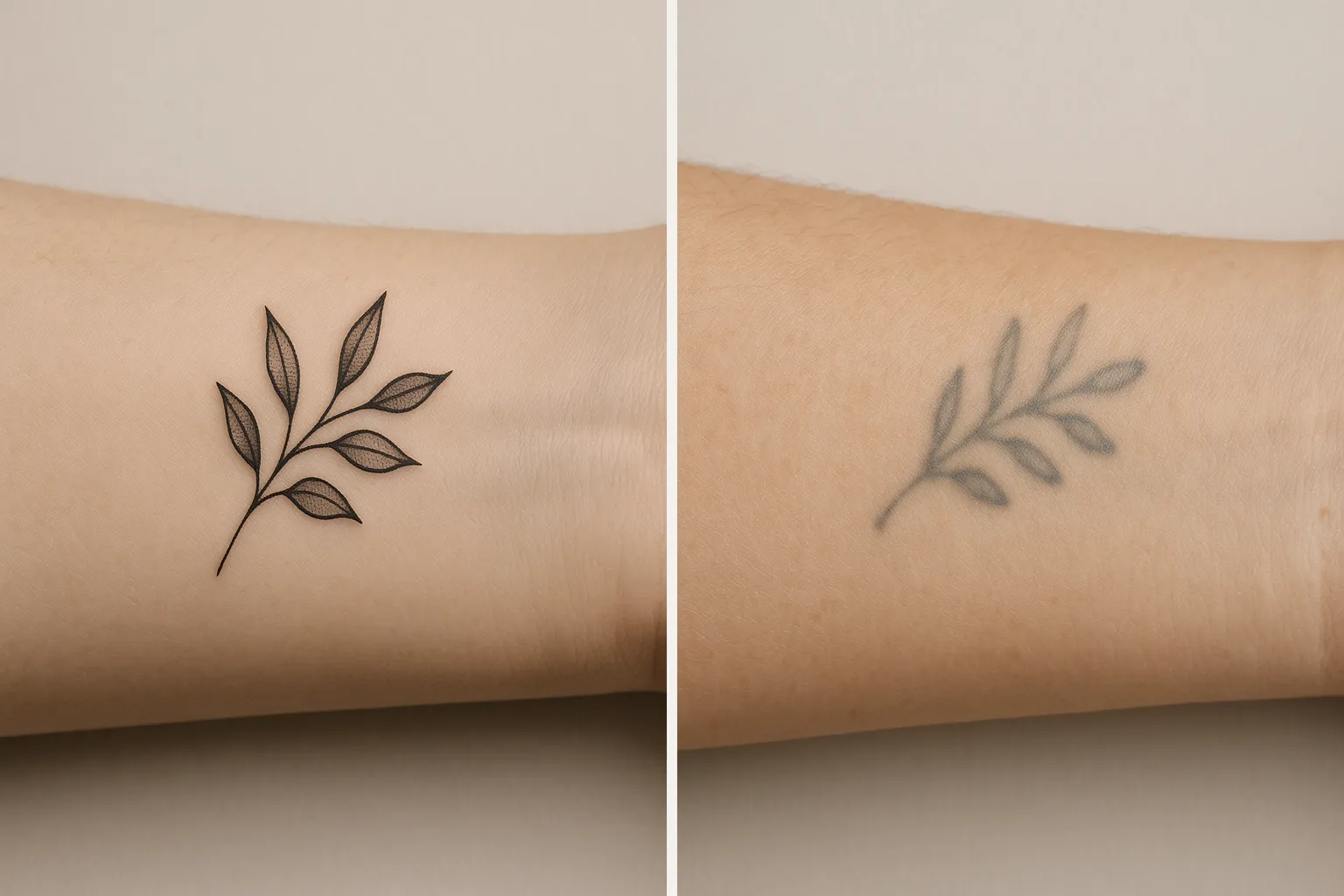
Fine-line blackwork is one of the most popular styles for matching sets (16), but its lines are genuinely thin: fine-line work is laid down with 1RL or 3RL needles, roughly 0.30 to 0.35 mm, and those lines soften first, especially on movement-prone areas like the inner wrist and fingers. Budget a touch-up every 5 to 7 years on a well-placed piece, and ask the artist to use the same needle grouping for the structural lines of every piece so the set ages at an even pace.
American traditional means thick black outlines and a limited palette of bold flat color. It’s the style that still reads cleanly after decades, because bold outlines hold contrast as skin changes, which is exactly what a long-lived matching set needs (our American traditional guide covers the rules of the style). The tradeoff is that it reads louder and less minimalist than fine-line, so it’s a taste decision as much as a longevity one. The common pitfall: artists who thin the outlines to look more modern lose the durability that makes the style worth choosing in the first place.
Blackwork (solid black saturation, bold silhouettes) holds well on forearms and upper arms and suits geometric or animal designs in sibling and group sets.
Color ages least predictably. Watercolor and pastel-only pieces fade faster than blackwork, and sunlight is the biggest enemy of lighter tones. If one person gets more sun than the rest, their color fades faster and the set diverges. If you’re set on color, insist on a strong black-ink foundation so the design stays readable once the color softens.
Finger tattoos fade faster than any other placement due to constant skin wear. Bold black linework holds better than color there, but expect more upkeep across the set regardless.
The rule that ties it together: same style, same line weight, same ink type across every piece. Two people getting the same design from different artists in different styles won’t read as a set; it’ll read as a coincidence.
Frequently Asked Questions
- What's the difference between matching and complementary tattoos?
- Matching means identical design, often same placement. Complementary means distinct but conceptually linked designs that each read as complete on their own.
- Do matching tattoos have to be in the same spot on both people?
- No, but large placement or visibility differences make the set feel unequal. Split designs require the same body region to avoid distortion.
- Are friend and family matching tattoos often regretted?
- No study we could find measures matching sets specifically. A June 2023 survey of 1,002 Americans found that 1 in 4 regret at least one tattoo, with names among the most-regretted designs, so friend and family sets built on symbols that stand alone avoid the riskiest category.
- How much does a matching tattoo set cost?
- Small designs typically run $50 to $150 per person, more in big cities, and shop minimums range from about $50 to $250. Don't count on a group discount: four people means four individual costs.
- Should we all use the same artist?
- Yes. Consistent line weight, shading, and ink type across the set are critical, especially for fine-line or minimalist designs.
- What happens if the friendship or sibling relationship changes?
- Generic symbols retain meaning despite relationship changes. Inside jokes or split designs that depend on proximity age poorly.
- How do we keep aftercare consistent across the group?
- Agree on fragrance-free soap, washing once or twice daily, moisturizer from day 3-4, no pools or soaking for about three weeks, and no direct sun for 4-6 weeks.
- Can matching tattoos work for groups larger than two?
- Yes, but same-placement-different-icon designs scale better. Block-book the artist and plan for 4-8 hours total session time.
Three decisions determine whether a matching set works long-term, and none of them are about the design itself.
First, structure: complementary designs that stand alone reduce risk no matter what happens to the relationship, while split designs are high-reward but high-risk and should only be used when placement is locked before anyone books. Second, placement and scale: agree on a visibility tier and a size range at the consultation, because divergent placements make a set feel unequal and divergent scales make it look like two unrelated tattoos. Third, artist consistency: one artist, one session block, one joint design approval. The set lives or dies on line-weight consistency.
If the set is for a romantic couple, that’s a different risk profile with different data, and our couple tattoos guide covers it in full. This one is for everyone else.