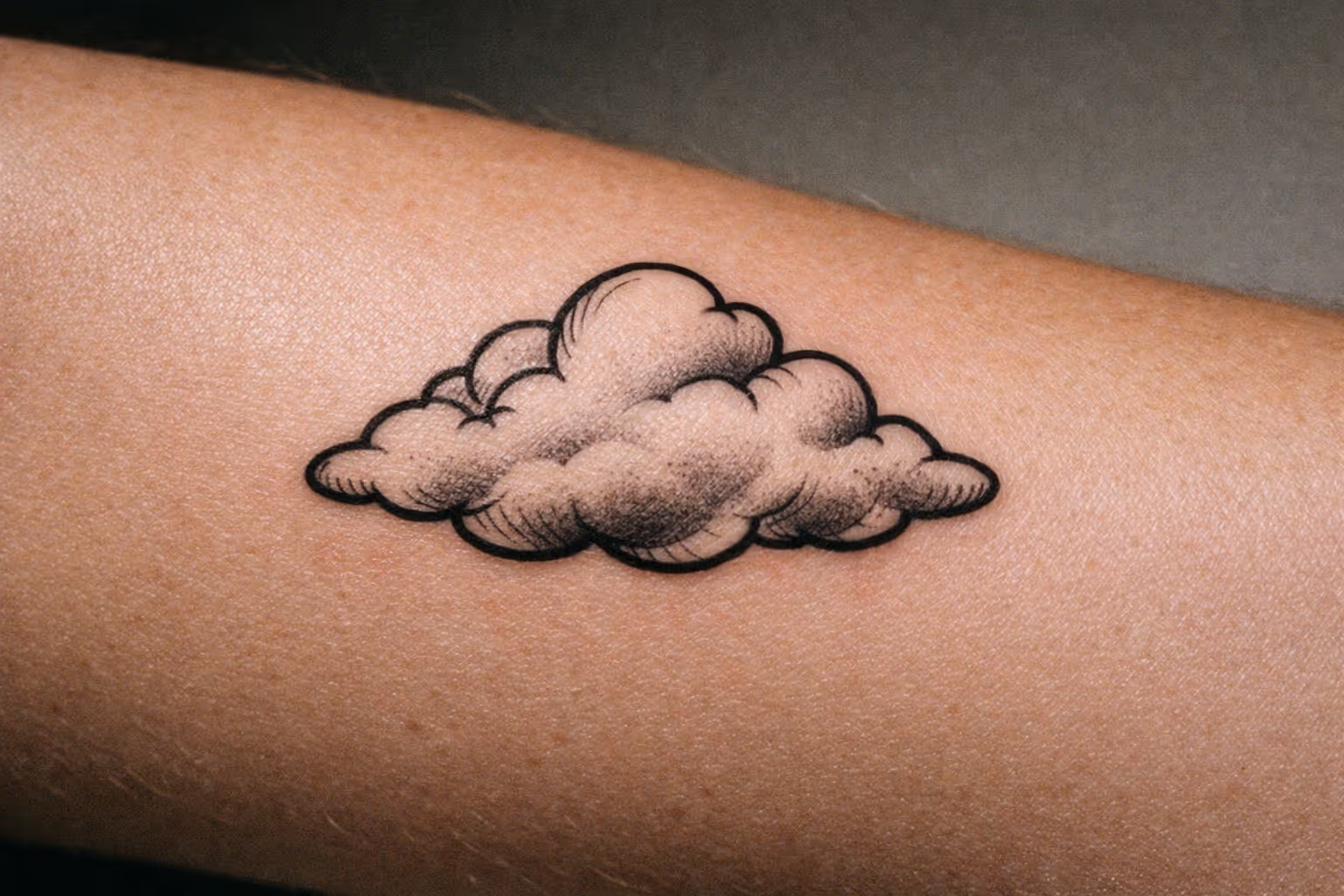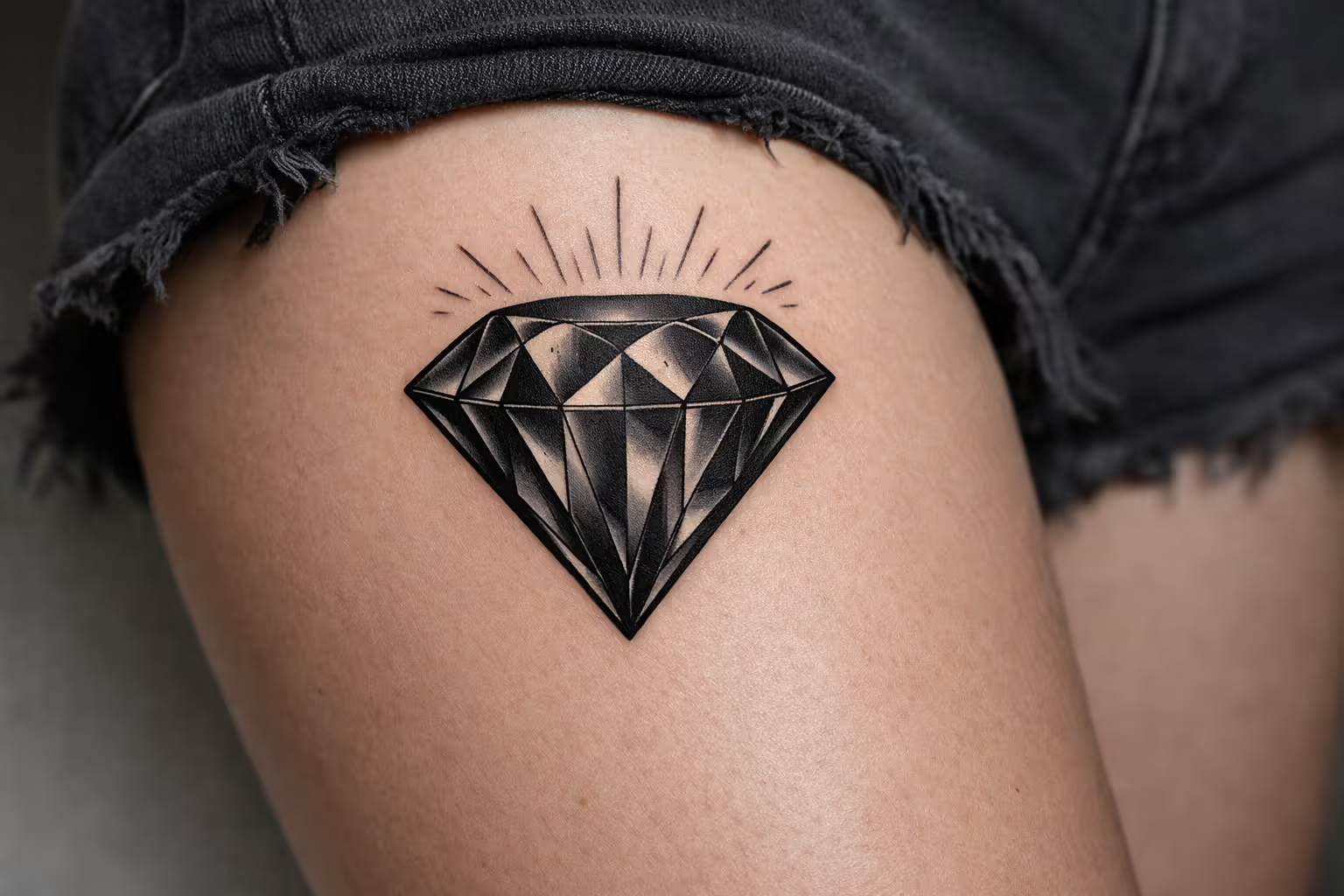
Most pairs decide on a best friend tattoo in the same afternoon, then stall for weeks over the real question: do you want the exact same design, or two designs that connect but stand alone? That choice - identical versus complementary - shapes everything else: how the tattoo ages, how it reads if one of you moves away, and whether it makes sense solo. This guide cuts through the noise with practical advice: which symbols genuinely mean friendship, 20 design ideas worth your time, how to handle different pain tolerances, and how to make sure your tattoos still look good past year ten. Most 2026 roundups just recycle the same 10 images without explaining why some concepts hold up and others look dated fast. This one does the boring but necessary work.
✓ Pros
- Small, fine-line designs keep sessions short and cost low
- Shared experience of getting tattooed together is itself memorable
- Complementary designs let each tattoo stand alone if circumstances change
- Personalised concepts (coordinates, inside jokes) age better conceptually than trend-based imagery
- Wide range of placements means both people can choose comfort and visibility independently
✗ Cons
- Identical designs can feel couple-like or overly literal - especially if the friendship dynamic shifts
- Very fine lines (single-needle micro-work) can blur within 5-10 years without touch-ups
- Finger and wrist placements fade faster and need more maintenance than forearm or upper arm
- Choosing a design that only works when both tattoos are together creates long-term risk
- Trend-driven picks (infinity signs, generic puzzle pieces) can feel dated quickly
What Makes a Best Friend Tattoo Actually Work
Yes, best friends get matching tattoos all the time - but in 2026, “matching” usually means complementary rather than identical. That shift is the smartest move friendship tattoos have seen in years.
There are two main ways to approach this. First: identical tattoos - the exact same design in the exact same spot on both of you. Second: linked but separate designs that make sense alone - a lock on one person, a key on the other; sun and moon; or two halves of a phrase that each read as a complete thought. This second model often pairs a rocket ship with a planet or a sun with a moon, a better alternative to identical matching. Both styles show up in use - from identical lightning bolts to three hearts for trios.
Why does “matching but not matching” reduce risk? Simple: each tattoo means something on its own. If one of you moves across the country or your friendship changes, you’re not stuck with half a design that only makes sense next to someone you don’t see as often.
Before your consultation, agree on four things: style, placement, size, and whether you want identical or complementary tattoos. Settling that early prevents the most common mismatch - one wants a tiny wrist piece, the other a bold forearm design, and neither knows until they’re in the chair. On budget, expect small tattoos: micro pieces under two square inches usually take 30 to 60 minutes, while small 2 to 4 inch designs typically run one to two hours each.
Pro tip: many artists can create a design that works as one combined image and as two separate pieces. Ask for this specifically. It’s the single most useful thing you can get out of your consult.
Symbols That Actually Mean Friendship (Not Just Look Like It)
The most meaningful friendship symbols fall into four groups - balance, loyalty, shared origin, and inside jokes. The ones tied to a specific shared memory age best.
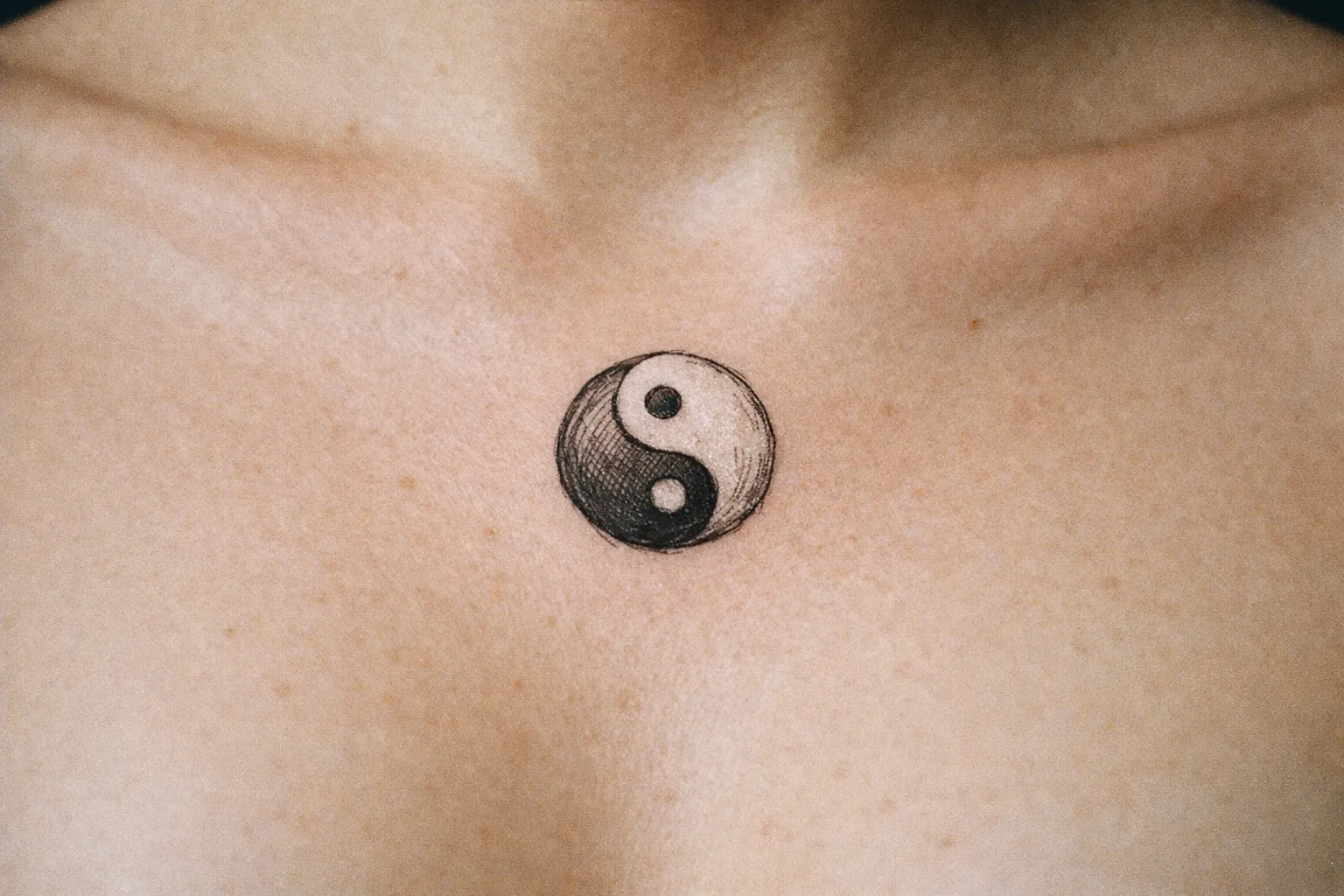
Balance symbols are classic pairs that complement each other. Sun and moon work because one lights the day, the other the night, and neither feels complete alone. Balance, duality, and wholeness are core meanings here, making this a natural choice for close friends. Yin-yang carries a similar idea from Taoist philosophy - interdependence where opposites complete each other. Each person takes one half.
Loyalty symbols tend to be older. The Celtic knot is a continuous, interwoven line with no start or end, genuinely rooted in Celtic tradition rather than tattoo flash. The Celtic Love Knot family symbolizes an unbreakable bond, and the Serch Bythol knot represents an eternal connection between two people. Interlocked hearts and matching crowns work in the same vein - crowns playfully mark the “royalty” of friendship and read clearly.
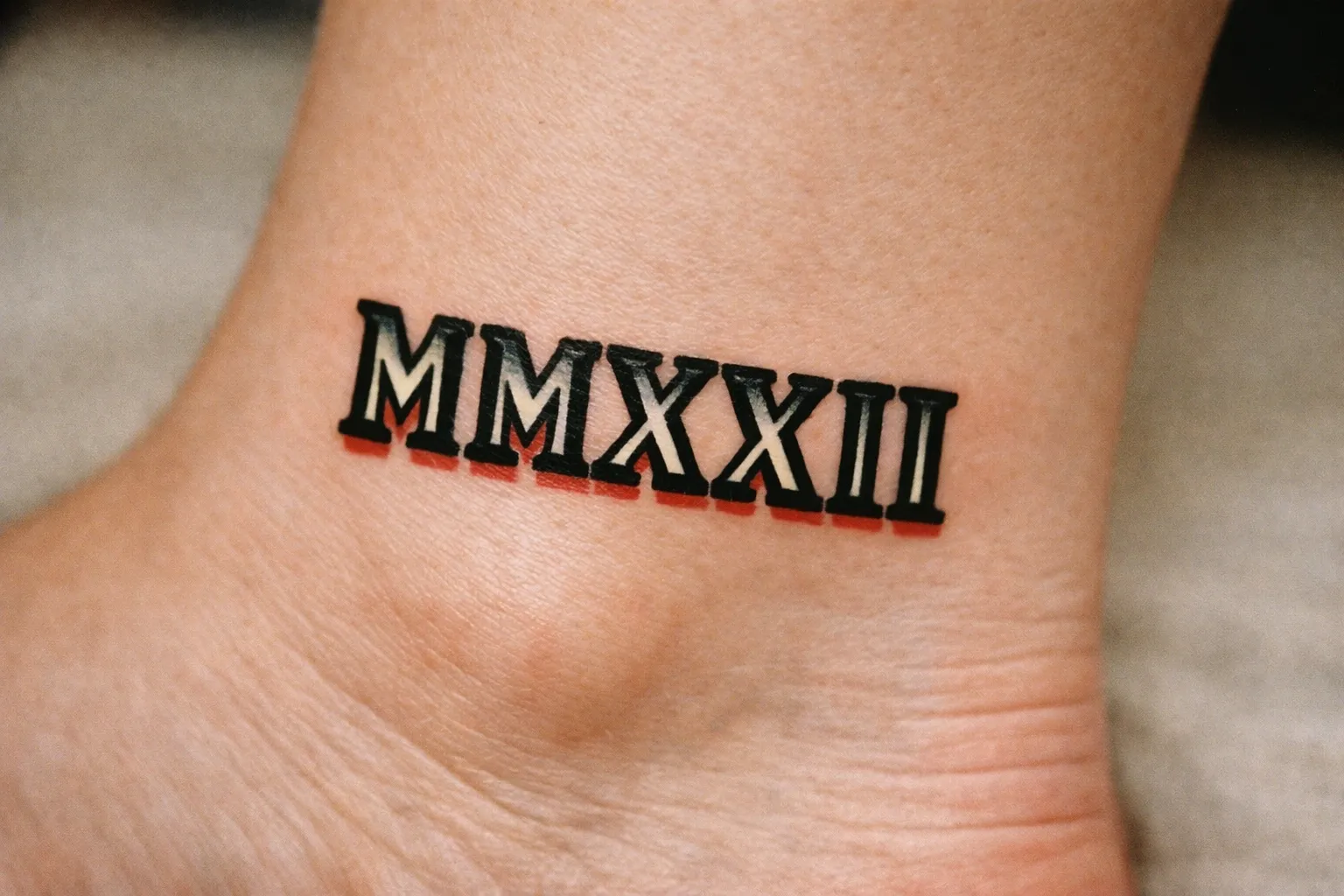
Shared origin symbols last longest conceptually because their meaning is private. Coordinates of where you met, Roman numeral dates of milestones, matching initials - no one else gets the meaning at a glance, which is exactly why they hold up. They aren’t trendy, so they don’t go out of style.
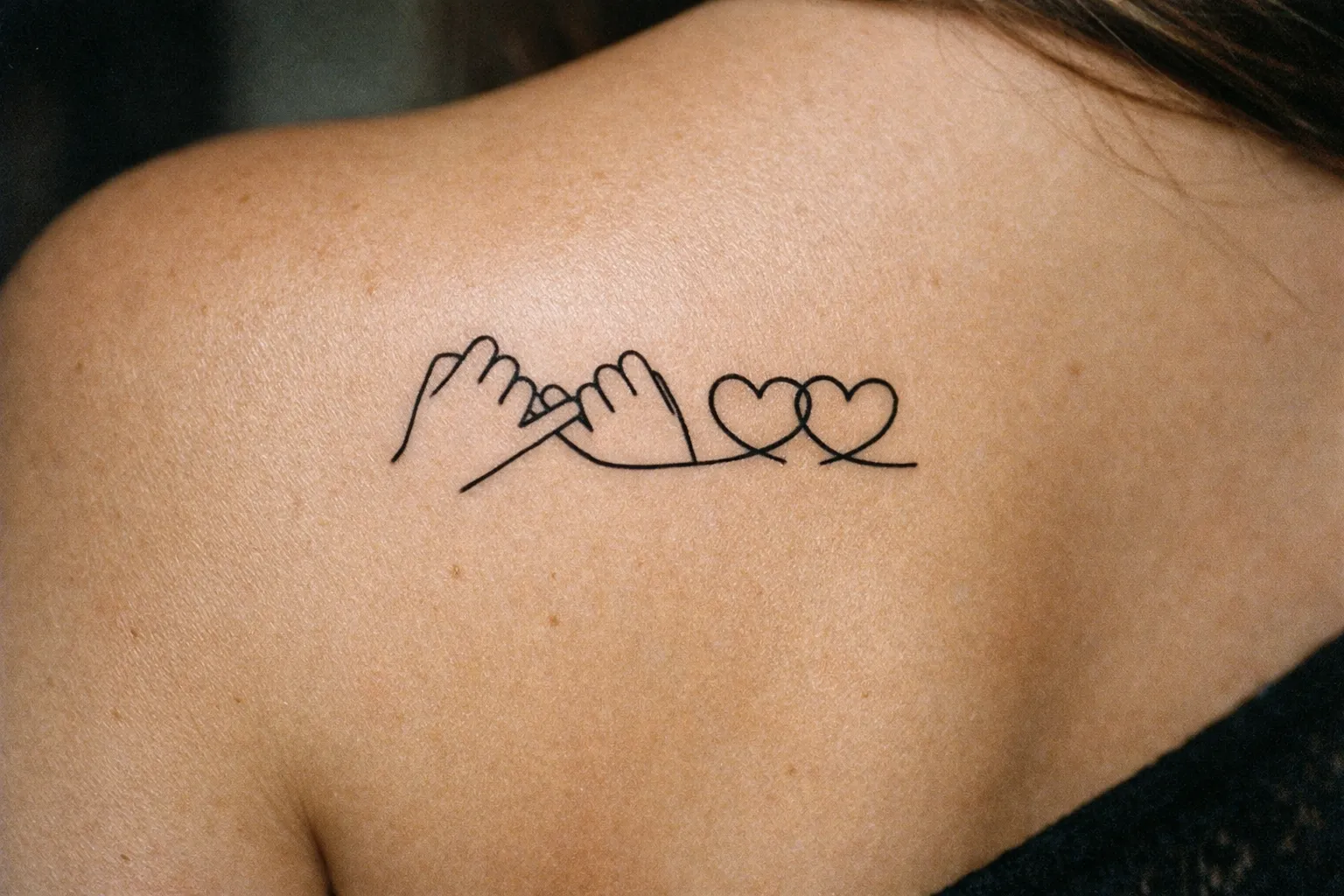
Pinky promise sits between trend and genuine symbol. It’s currently the most searched fine-line friendship tattoo in 2026. It works as a split design - one person gets one hand, the other the matching hand - or as mirrored pairs. Inside-joke icons - a specific food, object, or tiny symbol only you two understand - are the hardest to copy and often outlast everything else emotionally, since their meaning lives in a private story.
If you’re leaning toward a Celtic knot or yin-yang, pick them with an understanding of their origins rather than treating them as generic decoration. That cultural context helps them hold their meaning over time.
The 20 Design Ideas Worth Actually Getting
Here are 20 designs, organized into four clusters. For each, I note style, size range, placement, and how well it ages. Small tattoos between 1 and 2 inches in the US typically cost $80 to $150, so budget accordingly per person. Tiny 1-inch pieces like hearts usually run from $80 to $150.
Minimalist and Fine-Line Picks (Ideas 1-6)
-
Pinky promise. Split design - each person gets one hand; fine-line blackwork on the inner wrist or forearm, 1 to 2 in (2.5 to 5 cm). The dominant friendship motif in 2026, instantly recognizable.
-
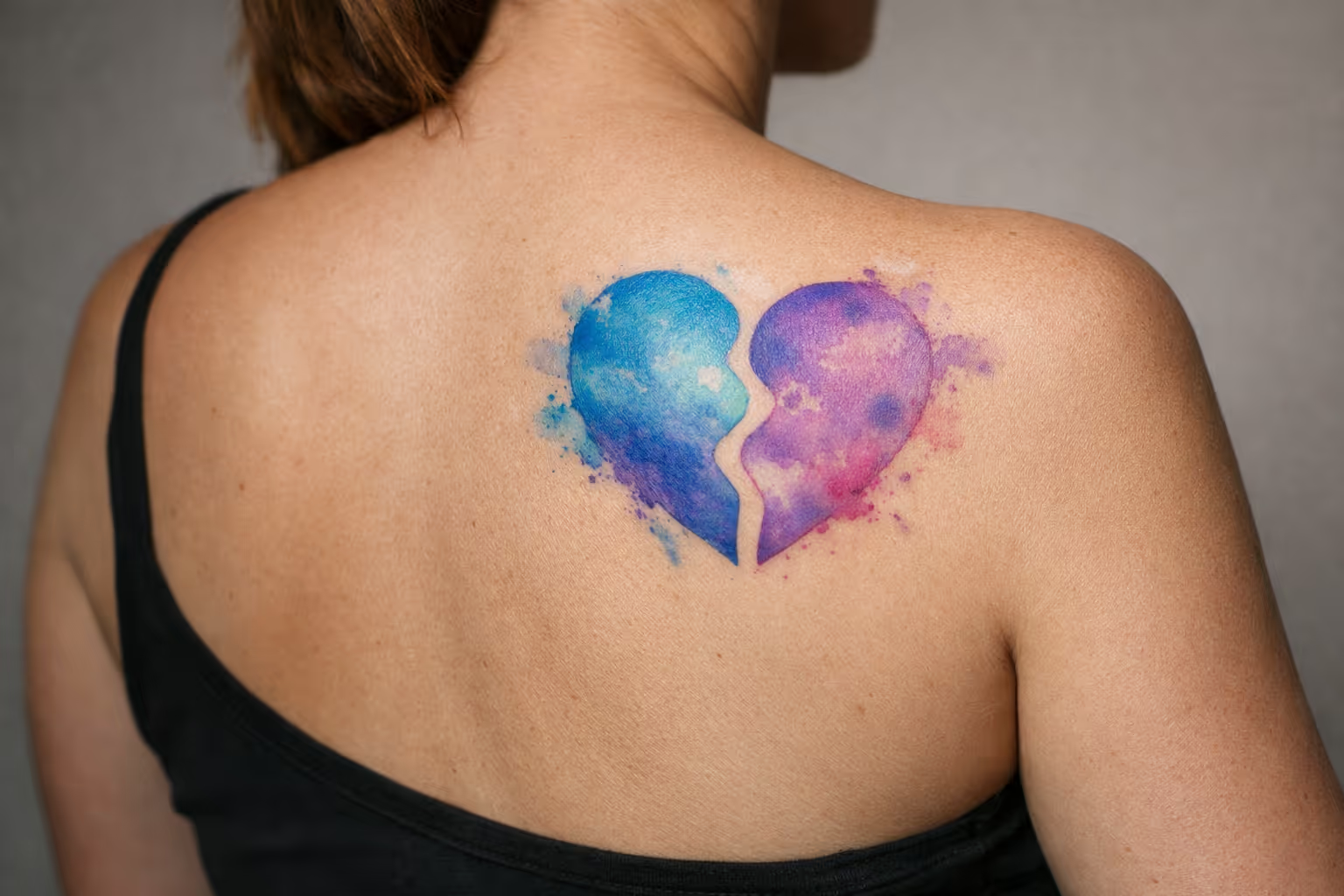
Split heart. Each person wears one half; fine-line or bold outline on the wrist, ankle, or inner forearm, 1 to 1.5 in (2.5 to 4 cm). Bold outlines age better than razor-thin lines here.
-
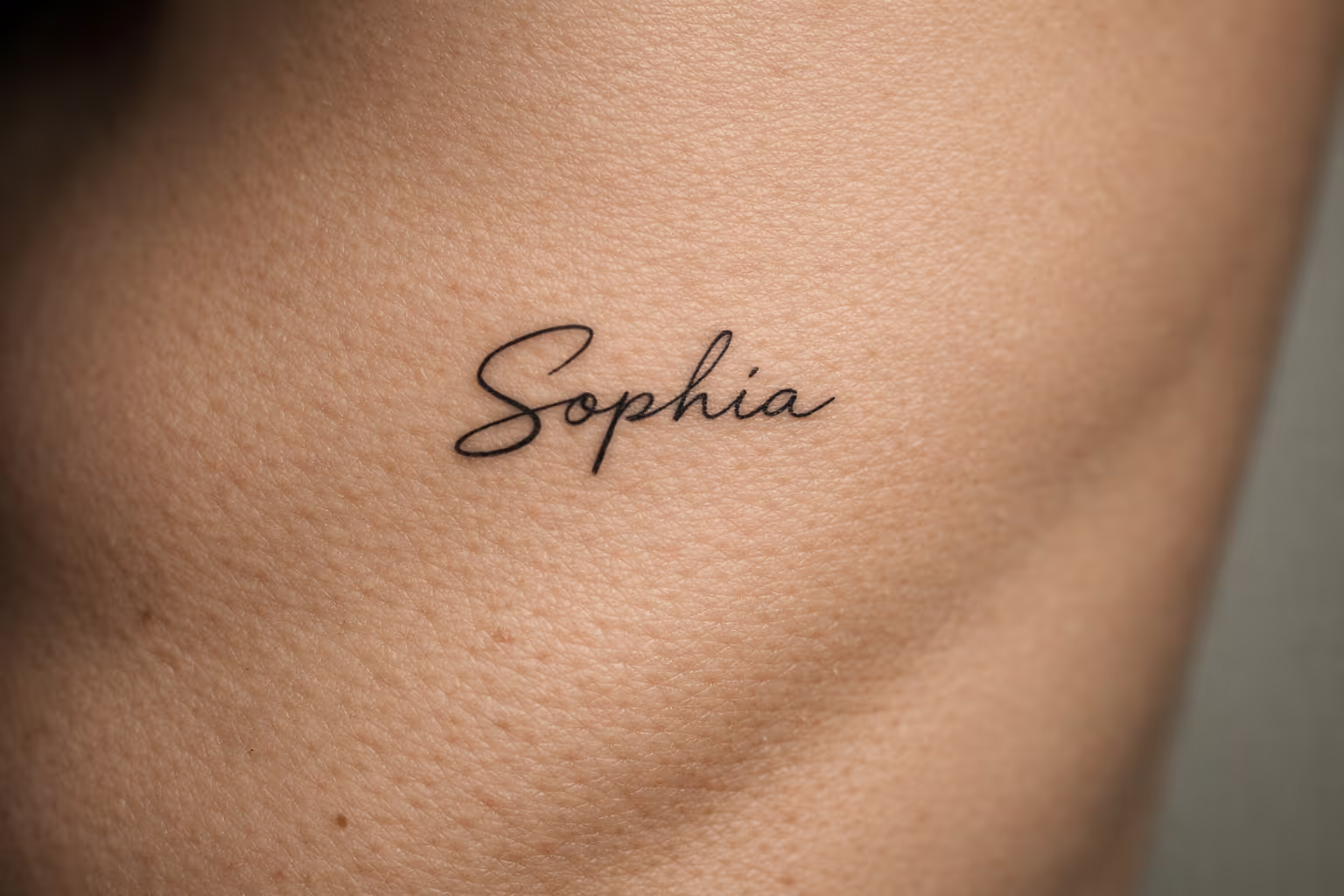
Matching initials. Same font and size, different placements - or stacked initials of both names on each person; behind the ear or inner wrist, under 1 in (2.5 cm). Avoid cramming letters too tightly.
-
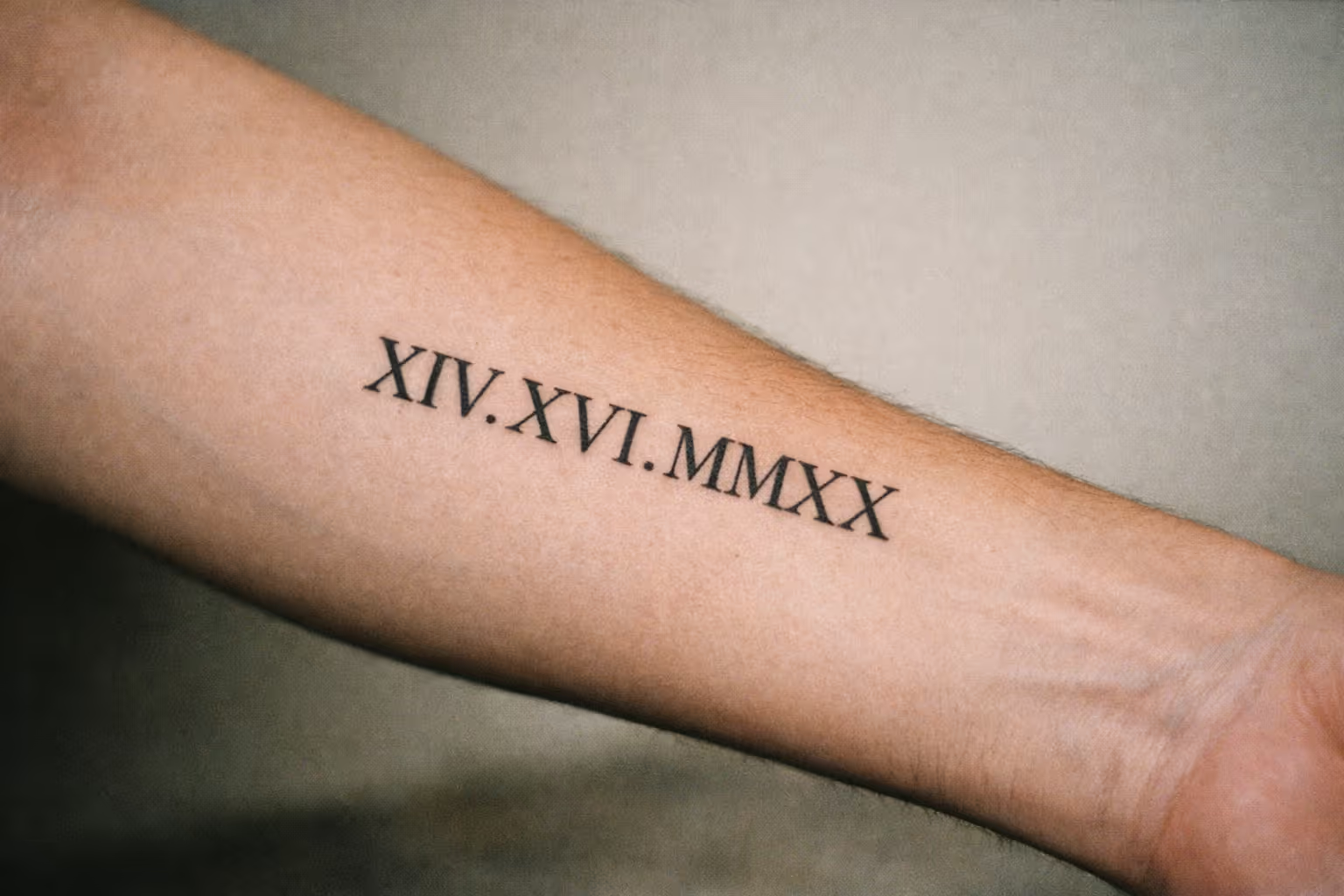
Roman numeral date. The year or full date your friendship started or a milestone; inner forearm or collarbone, 2 to 3 in (5 to 7.5 cm). Ages well because it’s personal, not trendy.
-
Single star or constellation pair. Each person takes one star from the same constellation or matching micro-stars; ankle, wrist, or behind the ear, under 1 in. Ultra-fine single-needle stars tend to soften within 5 to 7 years.
-
Micro-word split. One word split between two people (“always / there,” “you / me”) in matching script; inner forearm or collarbone, 1 to 2 in. Keep script letters at least ½ inch (12-13 mm) tall to avoid blurring.
Symbolic and Meaning-First Picks (Ideas 7-12)
-
Coordinates. Latitude and longitude of where your friendship began - hometown, university, a meaningful spot; inner forearm or collarbone, 2 to 3 in (5 to 7.5 cm). Perfect for friends who will be apart.
-
Sun and moon. Complementary pair - one gets the sun, the other the moon; upper arm, forearm, or ankle, 2 to 4 in (5 to 10 cm). Works in fine-line or neo-traditional styles.
-
Zodiac constellation pair. Each person’s birth constellation in matching dot-and-line style; inner forearm, ribcage, or collarbone, 2 to 3 in. The ribcage hurts more than the forearm, so think about that.
-
Celtic knot. Continuous interlocked line symbolizing an unbroken bond, rooted in Celtic tradition; identical matching designs work well on the upper arm or forearm, 2 to 4 in (5 to 10 cm). Bold lines age better than fine-line here.
-
Lock and key. One person gets the lock, the other the key; complementary asymmetry means each tattoo reads independently; inner wrist or forearm, 1.5 to 3 in (4 to 7.5 cm). Keep it at least 1.5 in so the key teeth don’t blur.
-
Puzzle pieces. Each person gets one interlocking piece; stylized versions age better than literal ones; upper arm or forearm, 1.5 to 2.5 in (4 to 6 cm).
Visual and Immediately Readable Picks (Ideas 13-17)
-
Butterfly pair. Matching butterflies or a split butterfly - each person gets one wing; fine-line or blackwork on the shoulder blade, upper arm, or ankle, 2 to 4 in (5 to 10 cm). Popular with women but not limited to them.
-
Matching birds in flight. Two birds from the same flock; blackwork silhouette on the wrist, collarbone, or forearm, 1 to 3 in (2.5 to 7.5 cm). Simple silhouettes hold up well.
-
Matching animals. Same species in the same style - two cats, foxes, dogs - great for friends who share a love of a specific animal; upper arm or forearm, 2 to 4 in; fine-line or illustrative.
-
Yin-yang. Split between two people or matching full symbols; upper arm or forearm, 1.5 to 3 in (4 to 7.5 cm). Rooted in Taoist philosophy, where opposing forces are interdependent rather than opposed - in modern Western tattoo culture it’s often read simply as “balance,” which is a narrower meaning than the original but still holds up as a friendship symbol. Simple enough to age cleanly.
-
Matching flowers. Same bloom in the same style - roses, peonies, or birth flowers; forearm, upper arm, or ankle, 2 to 4 in. American traditional style with thick black outlines and limited palette ages best.
Bold and Playful Picks (Ideas 18-20)
-
Food pairs. Two things that go together - avocado halves, peanut butter and jelly, pizza slice and cake slice; fine-line or illustrative on the inner forearm or upper arm, 1.5 to 3 in. Works best as a genuine inside reference, not a trend grab.
-
Crown pair. Matching crowns in the same style; American traditional or fine-line on the inner wrist or forearm, 1.5 to 2.5 in (4 to 6 cm). Bold enough to read immediately, simple enough to age well.
-
Split quote. A meaningful phrase divided between two people, each wearing half; bold script on the inner forearm or collarbone, 2 to 4 in. Keep letters at least ½ inch (12-13 mm) tall (fine-line script needs about 1 inch) and ask the artist to design each half so it reads as a complete thought alone.
For trios, some of these scale - triple hearts, three stars from one constellation, or three interlocking pieces. Just check the design balances with an odd number before booking.
Matching vs. Complementary: Choosing the Right Structure for Your Pair
There are three basic structures for friendship tattoos, and picking the right one is more important than picking the design.
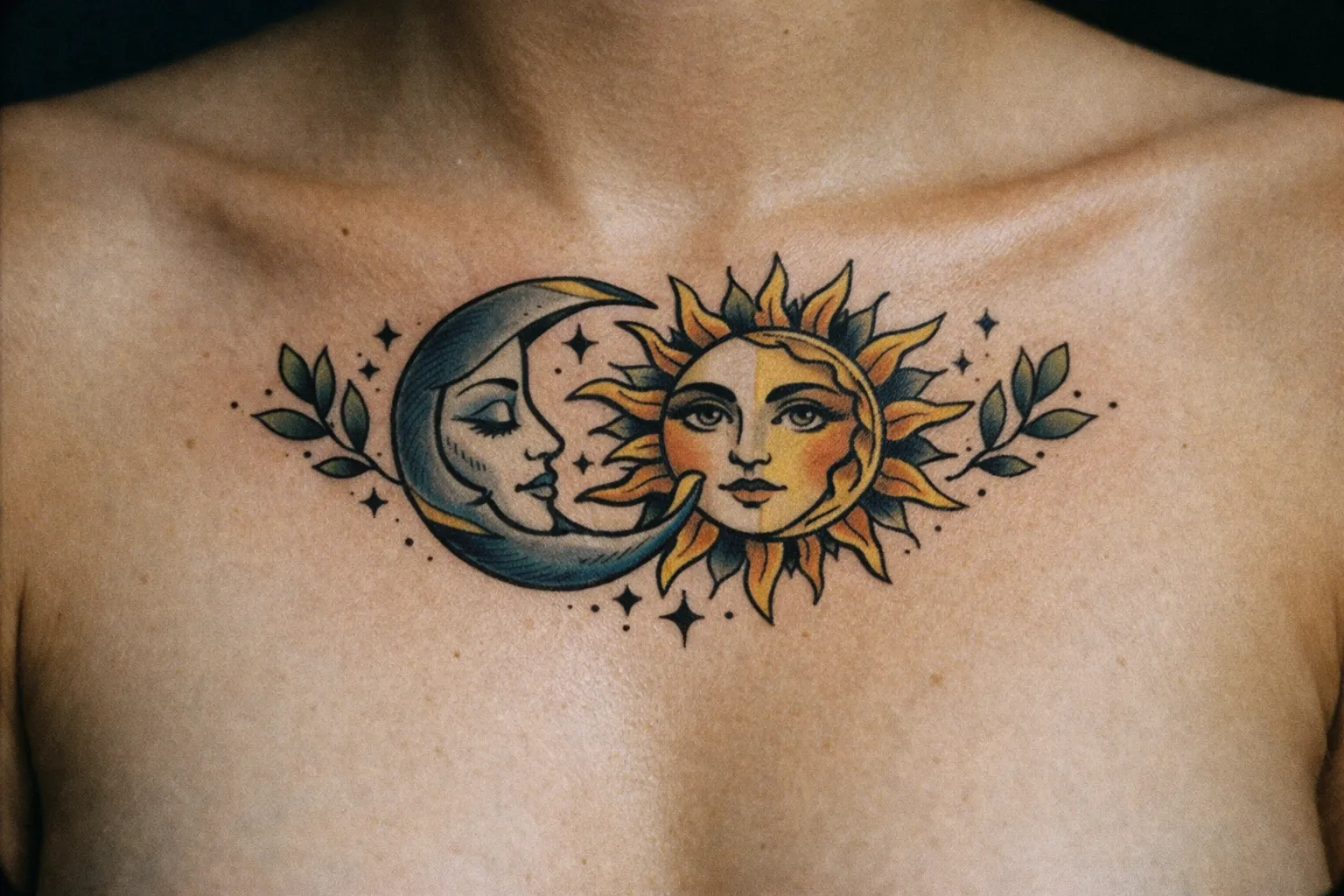
Friendship Tattoo Structures Compared
| Identical | Mirrored | Complementary | |
|---|---|---|---|
| Structure type | Same design, same spot | Same design, flipped | Linked but distinct |
| How it looks | Same design, same spot | Same design, flipped | Linked but distinct |
| Stands alone? | Yes, but obviously paired | Mostly | Yes |
| Best for | Same pain tolerance and visibility preferences | Pairs who want tattoos to "meet" in photos | Different pain tolerances or visibility needs |
| Risk | Can feel couple-like | Only fully works side by side | Weak if halves depend on each other |
Identical works when you share the same pain tolerance, want the same visibility, and are fine with the design reading as obviously paired. Complementary is smarter when those things differ - if one can’t handle ribcage pain, or needs to keep it hidden at work, or just wants a more visible tattoo. Use the same motif at different scales rather than forcing identical placement. I’ve seen designs where half a butterfly and half a quote are deliberately built so each stands alone but forms a whole together.
Do the stands-alone test before you book: cover one tattoo and ask if the other still makes sense by itself. If yes, you’re good. For split quotes and images, ask your artist to design each half so it works as a complete thought or image on its own.
Placement Options for Two People Who Don’t Have the Same Pain Tolerance
Pain varies, but placement differences are predictable: the ribcage and sternum hurt way more than the forearm or upper arm. Fingers and wrists fade faster and need more upkeep than both.
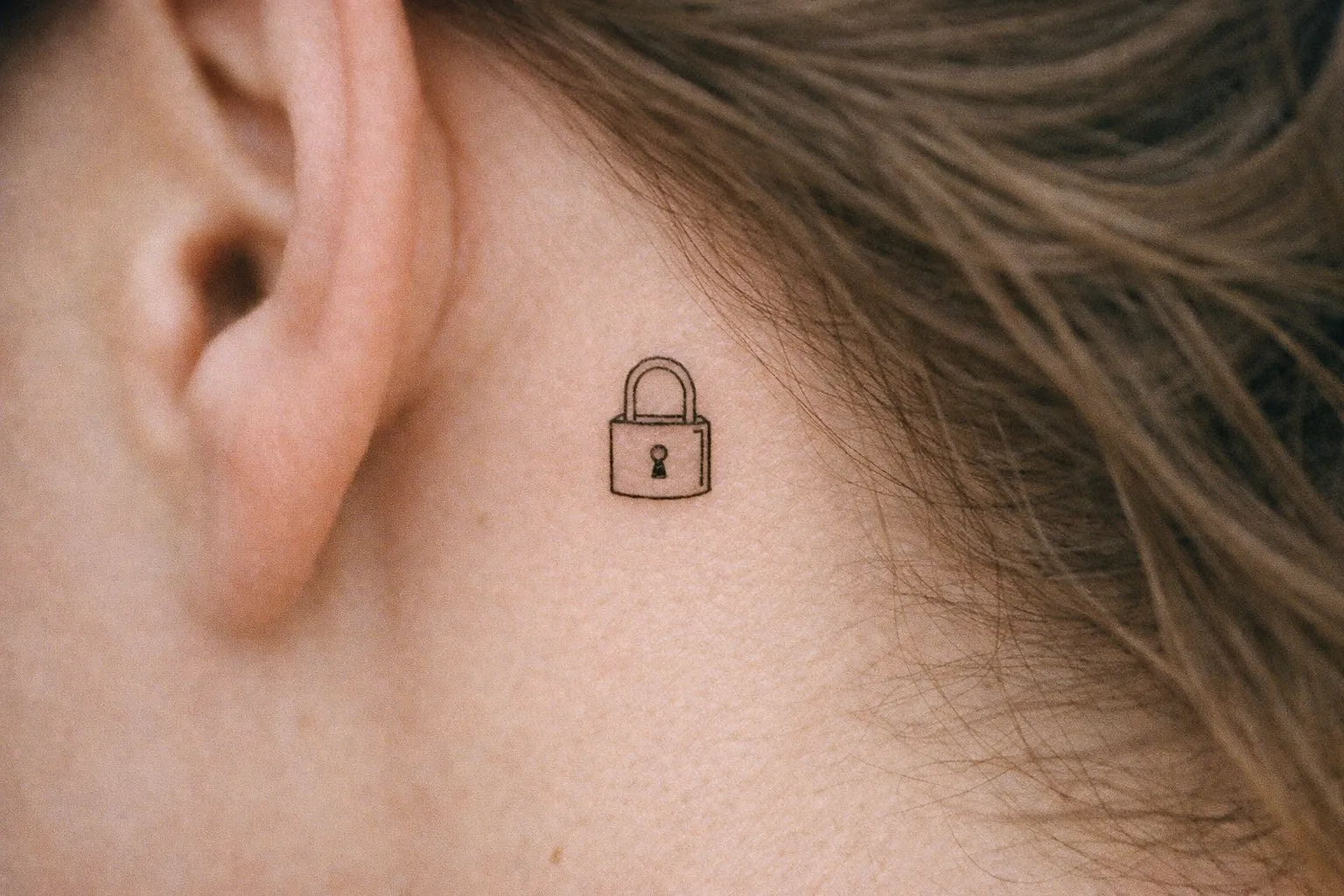
If one of you is pain-averse or a first-timer, stick to low-commitment spots: inner wrist, ankle, and behind the ear all suit small designs under 2 in (5 cm). Fingers are a special case - they need more maintenance because the skin wears constantly. Bold black linework works better than color on fingers, since color fades faster there.
Think about real visibility, not just the photo you’ll post the first week:
- Inner forearm is visible to you all the time but not always obvious to others.
- Collarbone and ribcage are easy to cover.
- Wrist and hand are the hardest to hide.
For office-friendly options, single-line symbols or micro-words on the inner wrist, ankle, or behind the ear are small enough to cover with a watch or hair.
If you want different placements, keep the motif identical or complementary and vary the spots - a sun on one person’s forearm and a moon on the other’s ankle still reads as a pair. The link lives in the design, not the location. This solves the most common friction: one wants a ribcage tattoo, the other won’t touch it.
Size-wise, most small best friend tattoos sit at 1 to 3 in (2.5 to 7.5 cm). Anything under 1 in in fine-line risks blurring within 5 to 10 years. If you want tiny, ask your artist to keep lines a bit bolder than feels right.
Small wrist and ankle designs under two inches usually cost in the low three figures per person.
Style Choices and How They Hold Up Over Time
What looks good fresh isn’t always what reads clearly in ten years. For friendship tattoos, that gap matters because you’re both aging the same design.
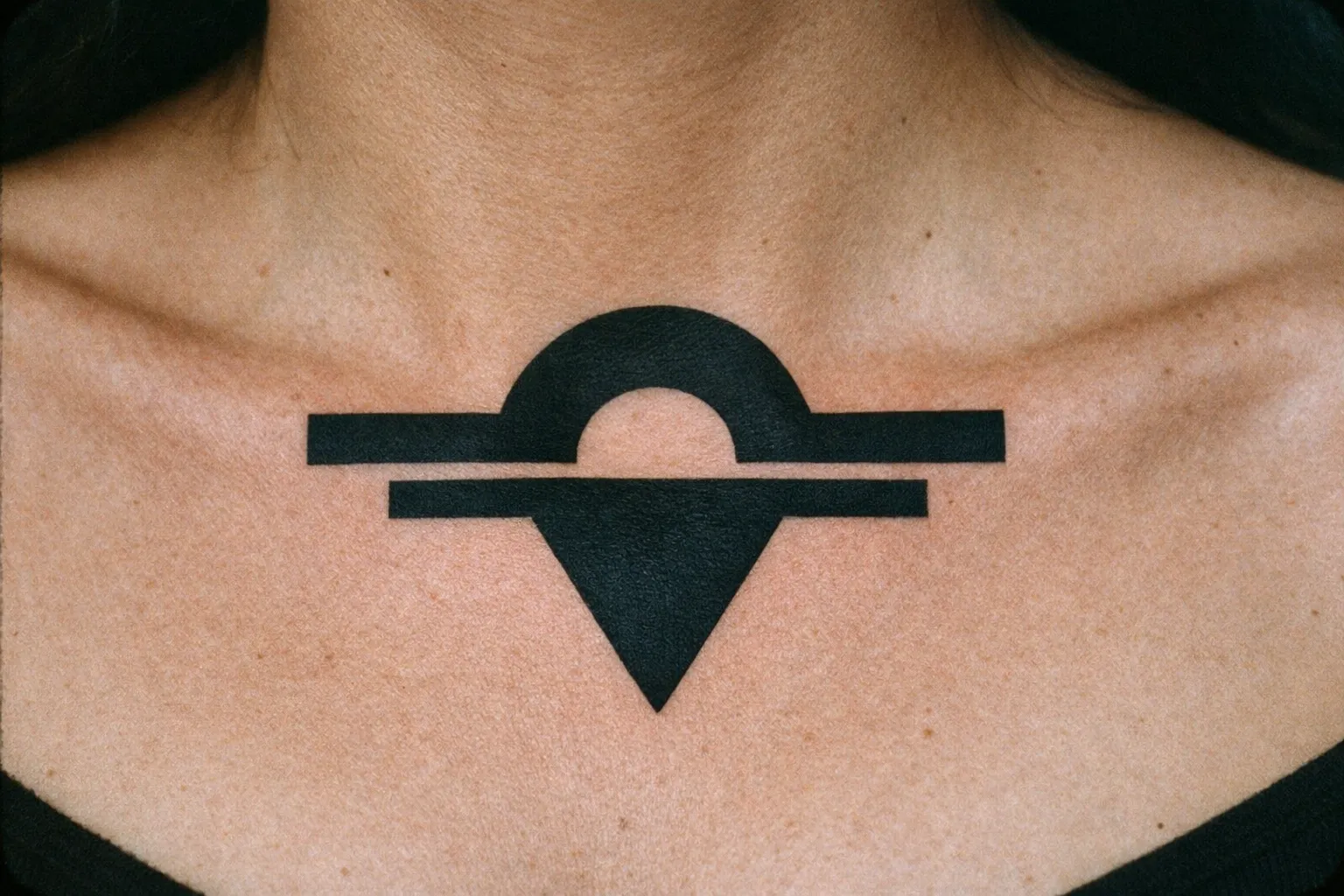
Fine-line blackwork dominates 2026 friend tattoos - clean, minimal, low-commitment visually. The catch: ultra-thin single-needle lines under 1 mm soften noticeably within 5 to 10 years, especially on high-movement spots like wrists and fingers. Slightly reinforced micro-line work ages better, so ask your artist to keep structural lines between 1 and 1.5 mm.
American traditional ages best of any style. Its two defining hallmarks - thick black outlines and a limited palette of bold, flat color - hold contrast as skin softens over decades, which is why it suits crowns, hearts, birds, and floral motifs. The common pitfall when artists do it badly: they thin the outlines to look more “modern,” and those lines blur within a few years, losing the graphic punch the style depends on. If you want your tattoo to look basically the same at year fifteen, this is your safest bet.
Blackwork - solid black saturation and bold silhouettes - lasts well on forearms and upper arms. Great for geometric or animal designs.
Watercolor and illustrative color have dropped off 2026 friend-tattoo trends for good reason: they fade faster than blackwork. Bold-contrast watercolor holds strong visibility for 5 to 8 years, pastel-only pieces need maintenance after 3 to 5, and a color refresh between years 5 and 10 helps. Sunlight is the biggest enemy of lighter colors. If you go this route, insist on a strong black-ink foundation so the design still reads when the color softens.
The rule that saves the most regret: keep line weights slightly bolder than they look on screen. Razor-thin lines in photos almost always age worse than they appear fresh. High-contrast simple shapes outlast complex fine detail at small sizes - a bold outline heart at 1.5 in will still read at year fifteen; a single-needle micro-portrait probably won’t.
Aftercare When Two People Get Tattooed the Same Day
If you and your friend get tattooed together, you need to coordinate your aftercare schedules. That means planning your calendar before booking.
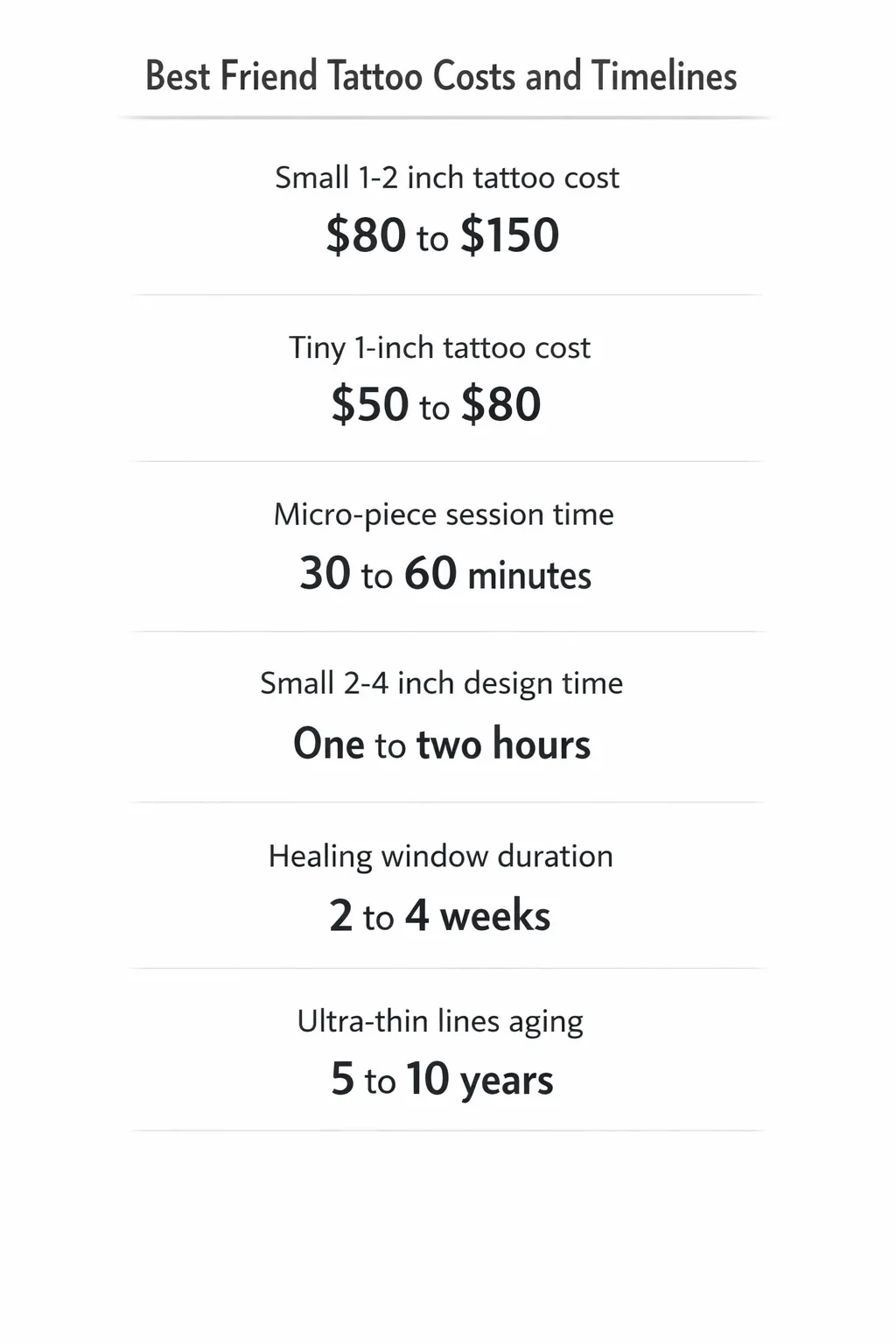 Costs, session times, and healing window for common small best friend tattoos: $80 to $150, $80 to $150, 30 to 60 minutes, one to two hours, 2 to 4 weeks, and 5 to 10 years aging of ultra-thin lines.
How to Plan a Best Friend Tattoo Session
About 1 hourStep-by-step process to plan your matching or complementary tattoos with your best friend.
- 1
Agree on the structural model
Decide whether you want identical, mirrored, or complementary tattoos.
- 2
Pick the symbolic theme or motif together
Choose meaning-first designs rather than trendy images.
- 3
Decide on style and longevity
Discuss fine-line, blackwork, or American traditional and how each ages.
- 4
Choose placement independently
Consider pain tolerance and visibility; the motif can stay the same even if placements differ.
- 5
Research artists
Look for healed portfolio examples of your chosen style and size.
- 6
Book a consultation
Ask the artist to design each tattoo so it reads independently as well as together.
- 7
Confirm aftercare supplies
Prepare fragrance-free soap, moisturizer, and clean paper towels.
- 8
Plan your healing window
Avoid pools, heavy sun, and submerging for 2 to 4 weeks after the session.
Day 1-3: If your artist used a second-skin adhesive (Saniderm, Derm Shield), leave it on as instructed - some stay on 24 to 72 hours, others up to 3 to 7 days. If you got a traditional film wrap, it comes off after a few hours; wash with fragrance-free soap, pat dry with a clean paper towel, and apply a thin layer of fragrance-free ointment. Saniderm’s own guide recommends washing 2-3 times daily, drying gently before ointment.
Week 1: Wash once or twice daily with fragrance-free soap, then switch to a fragrance-free moisturizer around day 3 or 4. Peeling and cracking usually start within 7 to 14 days. Don’t pick or scrub - let flakes come off naturally.
Weeks 2-4: Avoid pools, hot tubs, and soaking, and skip scented products. Saniderm warns against full submersion for 2 to 4 weeks. Surface healing usually finishes in this window, though deeper healing goes on for months.
A bandage note: traditional film wrap comes off in hours; second-skin systems stay on for days. Saniderm’s schedule describes a first bandage removal after 8 to 24 hours, then a second worn 3 to 6 days. Always follow your artist’s instructions, not a generic timeline.
Once healed, protect your ink from UV. Cleveland Clinic warns sun fades ink; apply SPF 30+ about 15 minutes before exposure and reapply every couple of hours. Forearm and wrist tattoos are especially vulnerable.
For two people, book the same session or back-to-back slots so your healing windows match. Both need to avoid submerging, scrubbing, and scented products for the same 2 to 4 weeks. Plan accordingly - the beach trip two weeks after your session is the mistake most pairs only spot after booking.
Frequently Asked Questions
Frequently Asked Questions
- What tattoos symbolize friendship?
- Hearts, Celtic knots, pinky promises, sun-and-moon pairs, and coordinates are common friendship symbols with cultural roots and personal meaning.
- What is the symbol for best friends?
- The pinky promise is the most-searched 2026 motif; historically, interlocked hearts, Celtic knots, and yin-yang represent friendship and mutual dependence.
- What tattoo can I get for my best friend?
- Choose something specific to you both like coordinates, dates, inside jokes, or complementary pairs rather than generic trendy designs.
- Do best friends get matching tattoos?
- Yes, but matching usually means complementary designs that stand alone rather than identical tattoos in the same spot.
- What's the difference between matching and complementary best friend tattoos?
- Matching means identical design and placement; complementary means linked but distinct designs that read independently.
- Where is the best placement for a small best friend tattoo?
- Inner forearm, ankle, and inner wrist suit small designs; finger tattoos fade faster and need more upkeep.
- How long does a best friend tattoo take to heal?
- Surface healing takes 2-4 weeks; bandage time varies 1-7 days; avoid pools and scented products during healing.
Before You Book: The Three Things That Actually Matter
Skip the sentimental wrap-up. Three practical decisions determine whether your tattoos hold up.
First, structure: complementary beats identical for long-term flexibility because each tattoo stands on its own if life shifts.
Second, style and line weight: go slightly bolder than your reference photo suggests, since razor-thin lines soften faster than they look fresh.
Third, placement: pick spots that fit your daily life and pain tolerance, not just for the first photo. The motif can stay identical even if placements differ.
Plan your healing window before you book. Two to four weeks of no pools, heavy sun, or scented products is the part most pairs forget until they’ve already scheduled a beach trip. Book a consultation together, bring your references, and ask your artist to show you how each piece reads on its own. If both halves make sense solo, you’ve chosen well.