Picture a fine-line split heart on two inner wrists - each half a clean shape that reads as a complete design on its own, not a broken piece waiting to be reunited. That distinction is the whole game with couple tattoos: a design that works together is easy, but one that also works separately is the harder, smarter goal. With 32% of U.S. adults now carrying at least one tattoo (Pew Research, 2023), romantic ink is no longer a fringe move, and the couples who don’t regret it treat the design question and the relationship question as inseparable. This guide handles both: design structures, motifs, placement, what ages well, and what to think through before you book. One honest caveat up front - names are among the most frequently removed tattoo designs, so if you take one thing from this, let it be that a symbol beats a name every time.
✓ Pros
- A shared tattooing experience can genuinely deepen closeness; psychotherapist Rachel Wright noted in a 2024 Glamour interview that going through it together can enhance a couple's connection.
- Minimalist designs keep sessions short: small tattoos of 2-3 in usually run 30-60 minutes per person.
- Complementary designs let each tattoo stand alone if circumstances change.
- Coordinates and symbol-based motifs hold personal meaning even after life shifts.
- A wide placement range means both partners can pick comfort and visibility independently.
✗ Cons
- Names and initials are among the most frequently removed tattoo designs, per practitioner consensus across laser clinics - high regret risk. Pew Research Center's July 2023 survey found that roughly a quarter of tattooed U.S. adults say they regret at least one of their tattoos.
- Tattoo artists on Reddit repeatedly report matching couple tattoos coming back for cover-ups.
- Designs that only work as a pair create long-term dependency on the relationship.
- Impulsive decisions are a leading cause of regret.
- Very fine single-needle lines can blur within 5-10 years without touch-ups.
How Couple Tattoos Actually Work: Four Design Structures
Couple tattoos fall into four structures - identical, mirrored, complementary, and connected - and the one you pick determines how the design ages if life shifts. Identical means the same motif in the same or similar spot. Mirrored is the same design flipped. Complementary splits one motif into two halves - lock and key, sun and moon. Connected forms a single image only when partners stand together, like a tree and its roots.

Complementary beats identical for long-term flexibility, because each tattoo reads on its own if the relationship changes. Run the standalone test before you book: cover one tattoo and ask whether the other still makes sense solo. If yes, the design works. If no, you’ve built something that depends on the other person staying in the picture.
A good artist checks each partner’s tattoo independently - subject, size, placement, orientation - before finalizing the linking feature. Neither of you should end up with something that only makes sense when “completed” by the other person. Worth noting: matching tattoos, as a term, covers all four structures. The distinction matters for planning, because “matching” to one couple means identical wrist pieces and to another means two halves of a scene.
Identical and Mirrored Designs
Identical and mirrored designs use the same motif, in the same or flipped placement, and work best when both partners share pain tolerance and visibility preferences. The risk is that they can feel overly literal - the “his and hers” energy that dates fast. Mirrored designs only fully read side by side, so they’re strongest for couples who want their tattoos to “meet” in photos.
Complementary and Connected Designs
Complementary and connected designs - lock and key, sun and moon, tree and roots - let each half read independently, which makes them the smarter choice when partners want different placements or sizes. One person gets the sun on a forearm, the other the moon on an ankle, and the link lives in the design rather than the location. This is the structure I steer most couples toward, because it survives a placement disagreement and it survives a breakup with your dignity intact.
Couple Tattoo Ideas by Motif Category
The best couple tattoo for most people is a complementary symbol or a piece of shared personal history - coordinates, a date, a split motif - rather than a generic matching design. Below are four motif clusters, each with a concrete placement, a size range, and one honest aging note. Fine-line blackwork dominates 2026, but ultra-thin single-needle lines under 1 mm soften within 5-10 years, so slightly reinforced micro-linework with structural lines at 1-1.5 mm ages better.

Symbol-Based Motifs: Hearts, Infinity, Lock and Key, Puzzle Pieces
- Split heart: fine-line or bold outline on inner wrist or ankle, 1-1.5 in (2.5-4 cm). Bold outlines age better than razor-thin lines here.
- Infinity symbol: inner forearm or wrist, 1-2 in. Simple enough to age cleanly - just avoid cramming script inside the loop at small sizes, where it blurs.
- Lock and key: a complementary pair, inner wrist or forearm, 1.5-3 in (4-7.5 cm). Keep it at least 1.5 in so the key teeth don’t blur.
- Puzzle pieces: stylized versions age better than literal ones; upper arm or forearm, 1.5-2.5 in (4-6 cm).
A word of caution: infinity symbols and literal puzzle pieces are the two motifs most likely to feel dated in five years. If you want them, stylize them.
Nature and Organic Motifs: Sun and Moon, Florals, Animals, Coordinates
- Sun and moon: a complementary pair, upper arm or forearm, 2-4 in (5-10 cm). Works in fine-line or neo-traditional.
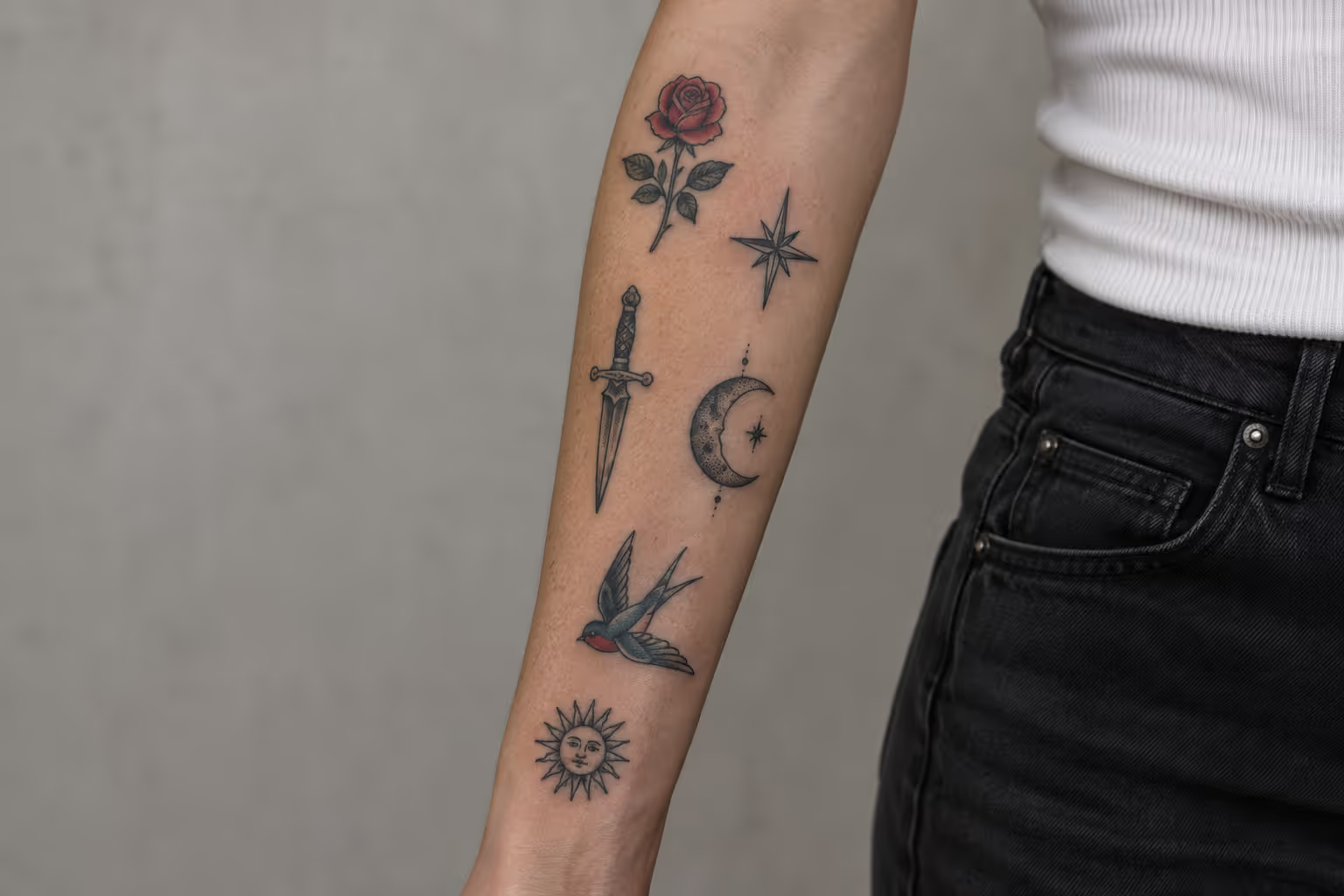
- Matching florals (roses, peonies, birth flowers): forearm, upper arm, or ankle, 2-4 in. American traditional with thick black outlines ages best.
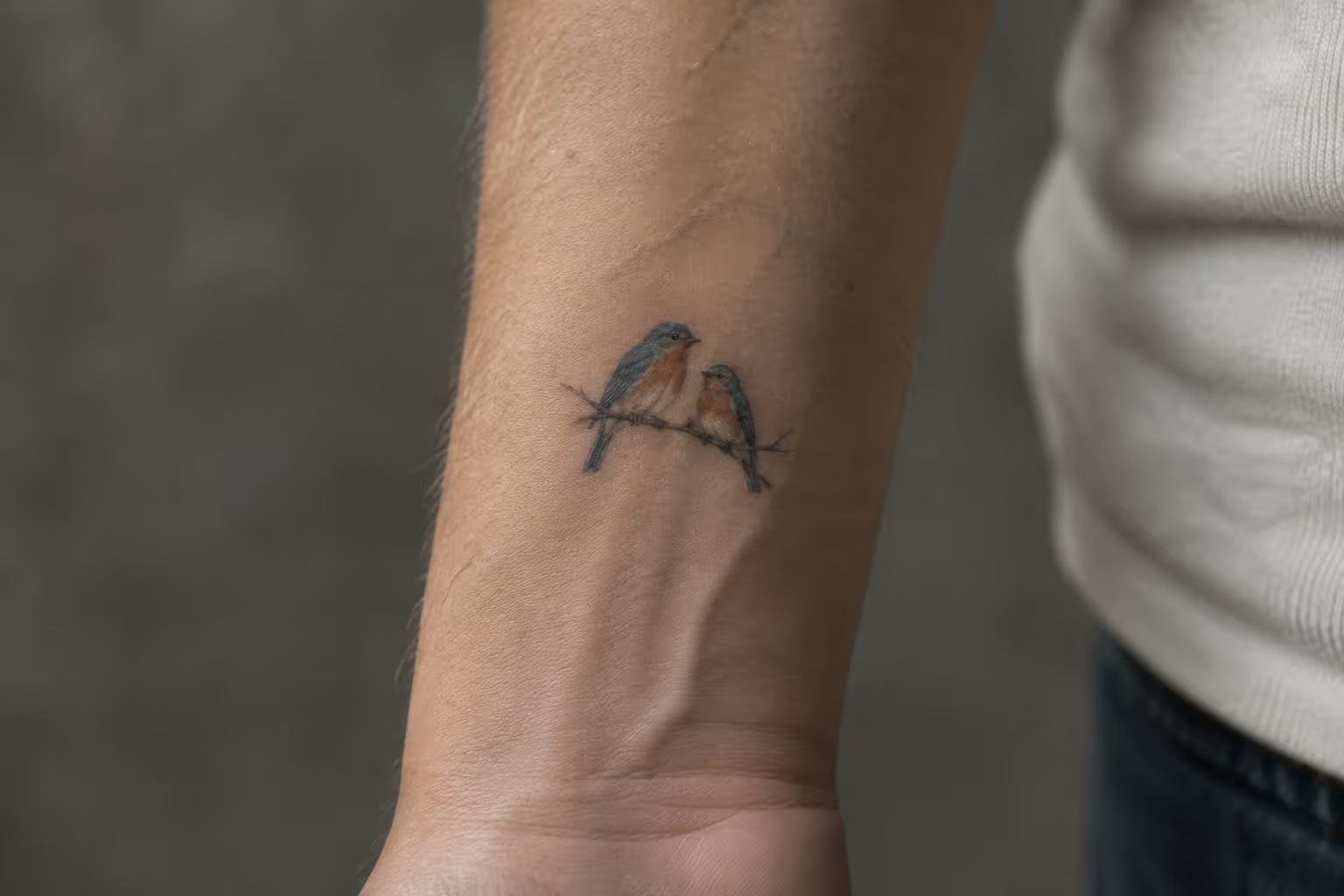
- Matching birds or a butterfly pair: blackwork silhouette on wrist, collarbone, or forearm, 1-3 in. Simple silhouettes hold up well.
- Coordinates of a meaningful location (first date, proposal spot): inner forearm or collarbone, 2-3 in. This one stays personally meaningful even after life changes and can be reframed as personal history - one of the strongest choices on this whole list.
Text and Date Motifs: Quotes, Roman Numerals, Initials
- Split quote: one phrase divided between two people, each wearing half; bold script on inner forearm or collarbone, 2-4 in. Keep letters at least ½ inch (12-13 mm) tall to avoid blurring (fine-line script needs about 1 inch), and design each half so it reads as a complete thought alone.
- Roman numeral date (anniversary, first meeting, proposal): inner forearm or collarbone, 2-3 in (5-7.5 cm). Ages well because it’s personal, not trendy.
- Initials: behind the ear or inner wrist, under 1 in. Don’t cram the letters. And remember - names and initials consistently appear near the top of laser removal requests, per practitioner consensus, so ask yourself whether you’d still want it solo before you sit down.
Personal and Pop-Culture Motifs: Shared Hobbies, Fandoms, Inside Jokes
- Matching icons from a shared fandom (film, game, band): work best as complementary designs rather than identical; forearm or upper arm, 1.5-3 in.
- Food pairs (avocado halves, peanut butter and jelly): fine-line or illustrative on inner forearm, 1.5-3 in. Works as an inside reference, not a trend grab.
- Pet portraits or a matching animal species: upper arm or forearm, 2-4 in, fine-line or illustrative.
- Custom symbols from a shared story: the hardest to copy, and often the longest-lasting emotionally, because no one else on earth reads them the way you two do.
What Does a 444 Tattoo Mean for Couples, and Other Number Symbolism
In angel-number numerology, a 444 tattoo represents stability, protection, and a strong foundation - which is why couples use it to signal a relationship built to last. It’s usually placed as small stacked numerals on the inner wrist or forearm, under 1 in as plain numerals or 1-2 in as a stacked design. Other number motifs carry their own reading: 111 for new beginnings, 222 for partnership and balance, 1111 for alignment or synchronicity. Each works small on a wrist or forearm.

For soulmate symbolism specifically, a few motifs have real cultural roots rather than invented meaning:
- The red thread of fate is rooted in East Asian folklore, particularly Chinese and Japanese traditions, where a red cord invisibly connects two people destined to meet. It reads beautifully as a fine-line red thread wrapped around a finger or wrist - the most literal soulmate symbol there is.
- The Celtic Love Knot (Serch Bythol) comes from Celtic tradition: a continuous interlocked line with no start or end, symbolizing an unbroken bond. Keep it bold - fine-line versions lose the interlock as they blur.
- The yin-yang, from Chinese Taoist philosophy, represents complementary forces in dynamic balance - interdependence, not a modern soulmate invention. Works at 1.5-3 in on the upper arm or forearm.
- An infinity symbol with an intertwined knot is the most common Western soulmate motif, though it carries less cultural weight than the others.
The honest note on numerology and symbol tattoos: they age well conceptually because the meaning is personal and not trend-dependent. A 444 means what you decide it means, and that doesn’t fade even if the ink softens.
Placement Guide: Where Couple Tattoos Actually Sit
The inner forearm is the most versatile placement for couple tattoos - visible to you daily, easy to hide, and gives an artist enough room to expand into future pieces. Trending small spots like wrists, ankles, fingers, and behind the ear suit minimal designs and conceal easily. Forearms and upper arms offer more real estate and better long-term adaptability if you want to build around the piece later. Pain runs predictably: ribcage and sternum hurt more than forearm or upper arm.

Small and Discreet Placements: Inner Wrist, Ankle, Behind the Ear
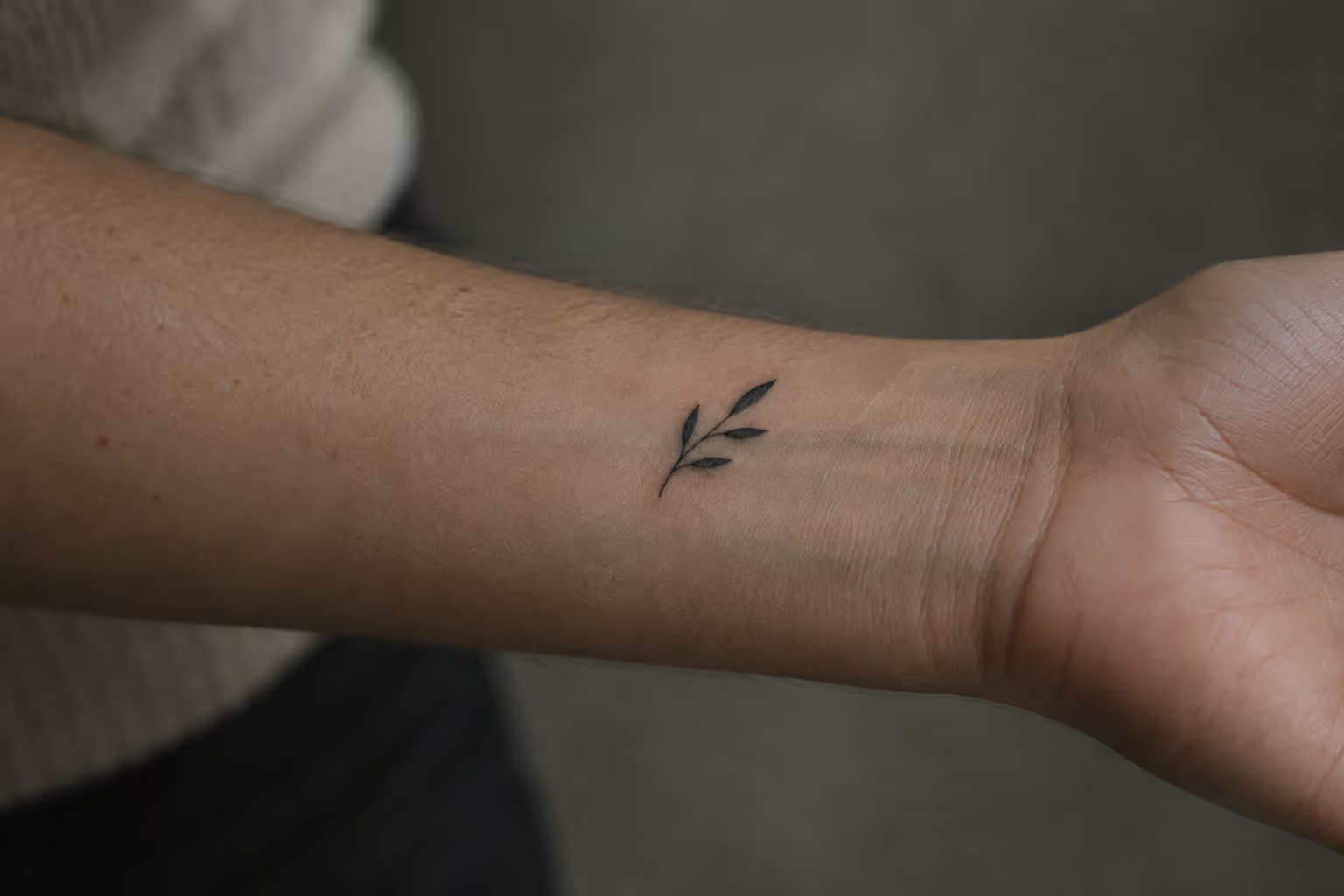
- Inner wrist: visible to you daily, not always obvious to others; suits designs under 2 in (5 cm). A low-commitment entry point.
- Ankle: easy to conceal with socks or shoes; suits small symbols and dates; similar pain level to the wrist.
- Behind the ear: a very small area, designs under 1 in only, with slightly higher sensitivity than the forearm.
Mid-Size Placements: Forearm, Upper Arm, Collarbone
- Inner forearm: the most versatile spot - visible to the wearer, easy to show or hide, suits 1-4 in designs. Good for coordinates, split quotes, and nature motifs.
- Upper arm: easy to cover with a sleeve; suits 2-4 in complementary designs; ideal for sun-and-moon pairs.
- Collarbone: slightly more intimate; suits fine-line script and small symbols; expect more movement during tattooing than on the forearm.
Finger and Hand Tattoos: What to Know Before You Commit
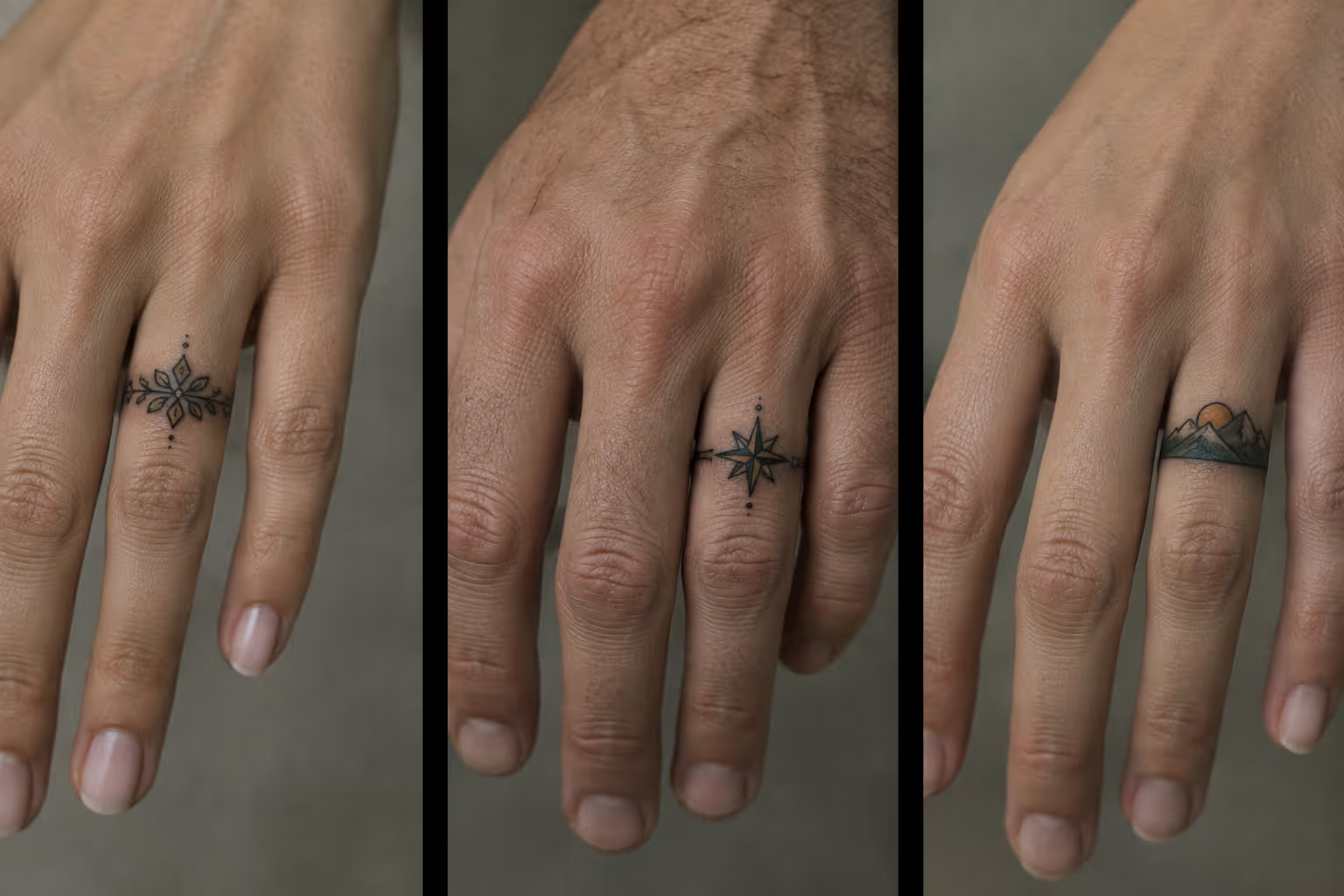
Finger tattoos fade faster than any other placement, thanks to constant skin friction and washing. Bold, simple designs - a single band, a tiny symbol - hold far better than fine-line work here. Hands are among the hardest placements to cover or rework, so factor that in before you commit.
Ring-finger initials or bands carry a high regret risk. One Reddit user who had covered an ex-wife’s initial on the ring finger with a flower described it as “total and utter regret.” If you want a ring-finger piece, keep it a plain band or a symbol, never a name.
That Age Well: Style and Longevity Notes
American traditional ages best of any style, because thick black outlines and a limited palette of bold, flat color hold contrast as skin remodels - ideal for hearts, birds, and floral motifs. Those two technical hallmarks - thick black outline and limited palette - are exactly what give American traditional its staying power. The common pitfall when artists do it badly is going too light on the outline weight, which means the design loses its structure within a few years.

Bolder linework and higher-contrast designs consistently outlast ultra-fine detail, since all lines widen and blur slightly over time. Blackwork - solid saturation and bold silhouettes - lasts well on forearms and upper arms and suits geometric or animal designs. Watercolor and illustrative color fade faster: bold-contrast watercolor can hold 5-8 years, while pastel-only pieces need maintenance after 3-5 years. Whatever the color, insist on a strong black-ink foundation so the design still reads when the color softens.
The guiding rule: keep line weights bolder than they appear in your reference photo, and favor high-contrast simple shapes over complex fine detail at small sizes. Fine detail turns muddy when scaled down.
Fine-Line vs. Bold Linework: The Aging Trade-Off
Fine-line is the dominant look for couple tattoos in 2026 - dainty, minimal, easy to place on wrists and ankles. The trade-off is that razor-thin lines soften faster than they look fresh. A bold-outline heart at 1.5 in may still read cleanly at year 15; a single-needle micro-portrait may not.
The practical fix costs nothing: ask your artist to go slightly bolder than the reference photo suggests. A good artist will already be nudging you there.
Color vs. Blackwork for Couple Designs
Blackwork holds longest and suits geometric, animal, and silhouette designs. Color adds personality but fades faster, and sunlight is the biggest enemy of lighter tones. If you go color, insist on a strong black-ink foundation so the design stays readable once the color softens - that black skeleton is what keeps a faded piece looking intentional rather than tired.
Before You Book: The Decision Framework
The single most useful thing you can do is separate the design decision from the relationship decision, then apply a waiting period to both. Clinical research links tattoo regret strongly to impulsive decisions and younger age at first tattoo - which is exactly why the informal rules below exist.

One professional guide suggests waiting until roughly 18 months into a relationship, when the initial neurochemistry has subsided, before committing. Another useful practice is the one-year waiting period: design and agree on the tattoo, then wait a full year. If both your enthusiasm and the relationship persist, proceed. Run the standalone test one more time: “Would I still want this tattoo if we separated?” If the answer is no, you’re betting on the relationship, not commemorating it - per the framing in a December 2025 guide from Vitium Tattoo.
Mutual enthusiasm is non-negotiable. One partner deciding for both is a red flag, and lack of equal commitment correlates strongly with later dissatisfaction. If you’re pain- or commitment-averse, test the design with a temporary tattoo for a few weeks first.
How to Plan a Couple Tattoo Session
About 1 hourStep-by-step guide to planning a couple tattoo session that respects design, placement, and timing.
- 1
Agree on the structure
Choose identical, mirrored, complementary, or connected before any design work starts.
- 2
Apply the standalone test
Cover one design and check if the other reads solo.
- 3
Choose motif and style
Decide symbol vs. text, fine-line vs. bold, factoring in aging.
- 4
Select placement independently
Match pain tolerance and visibility preferences; same spot not required.
- 5
Research and book a studio
Find an artist with your specific style; mismatched style is a regret source.
- 6
Book a consultation
Bring references; ask artist to show how each piece reads solo; confirm size and placement.
- 7
Wait (optional but recommended)
Observe the one-year waiting period; if enthusiasm and relationship hold, book the session.
- 8
Coordinate aftercare
Book same session or back-to-back slots so healing windows align.
Symbol vs. Name: The Regret Data
Names are among the most frequently removed tattoo designs - professional artists and laser clinics consistently report them near the top of removal requests. Professional artists consistently steer couples toward symbols or artwork over names and initials, because a symbol can be reframed and a name cannot. Coordinates of a meaningful location are a strong alternative - personal, not trend-dependent, and reframeable as personal history if the relationship ends.
As Derrek Everette of Broken Art Tattoo put it: “The best way to get couples tattoos you won’t regret if you break up is to choose an image that means something to both of you but can be customized so neither person has the exact same tattoo.”
That’s the whole argument in one sentence.
Researching the Right Artist
Look for a portfolio that includes your specific style - fine-line, American traditional, blackwork - not just “tattoos in general.” Ask how the artist handles complementary designs: do they check each piece independently before finalizing the link? Walking in cold without a consultation is a common mistake, and studios explicitly flag it as a source of regret. Ten minutes of portfolio scrolling saves years of “I wish I’d gone somewhere else.”
What to Expect from a Couple Tattoo Session: Timing and Cost
Small tattoos of 2-3 in usually take 30-60 minutes per person; medium pieces of 4-6 in run 1-3 hours. Tiny designs under 5 cm can be done in 15-30 minutes, and small 5-10 cm pieces in 30-90 minutes. A simple matching pair is often finished in under two hours per person, so plan for a half-day if you’re booking back-to-back.
 Pew 2023 shows 32% of U.S. adults have at least one tattoo, 24% regret, with typical small tattoo costs around 50-200 USD and higher-end 100-400 USD.
Couple Tattoo Session Cost by Artist Tier (2026)
| Apprentice | Mid-level (3-7 yrs) | Established | Senior/Specialty | Premium (long waitlist) | |
|---|---|---|---|---|---|
| Hourly Rate (USD) | $80-$120/hr | $100-$175/hr | $120-$220/hr | $175-$350+/hr | $220-$400+/hr |
| Small Tattoo (2-3 in) Est. Cost | $80-$150 | $100-$200 | $120-$250 | $175-$350+ | $220-$400+ |
| Notes | Less experience; good for simple linework | Reliable for fine-line and blackwork | Consistent quality across styles | Realism, Japanese/irezumi, complex work | High demand; book months ahead |
Booking Back-to-Back vs. Same Session
Same session means both of you are tattooed simultaneously (two artists) or one after the other, and your healing windows line up perfectly. Back-to-back - one partner immediately after the other - achieves the same aligned timeline. Avoid booking days apart if you want to heal together, because coordinating aftercare is far easier when your timelines match.
Aftercare When Two People Get Tattooed the Same Day
Surface healing typically completes in 2-4 weeks, while deeper skin healing continues for up to four months. The wrinkle with couple tattoos is that two people are healing at once, so coordinate your calendar before you book.

If your artist uses a second-skin adhesive like Saniderm or Derm Shield, leave it on as instructed - some systems stay 24-72 hours, others up to 3-7 days depending on the product. With a traditional film wrap, remove it after a few hours, wash with fragrance-free soap, pat dry with a clean paper towel, and apply a thin layer of fragrance-free ointment. Both partners should avoid pools, hot tubs, soaking, scented products, and picking for the same 2-4 week window.
Day 1-3: Keep the bandage on as instructed - hours for a traditional wrap, up to 3-5 days for a second-skin system. Once it’s off, wash 2-3 times daily with fragrance-free soap and apply a thin layer of fragrance-free ointment.
Week 1: Switch from ointment to a fragrance-free moisturizer around day 3-4. Peeling and cracking begin within 7-14 days - do not pick or scrub; let flakes shed on their own.
Weeks 2-4: Keep avoiding pools, hot tubs, full submersion, and scented products. Surface healing usually finishes in this window.
After healing: Protect the ink from UV. Apply SPF 30+ about 15 minutes before sun exposure and reapply every couple of hours. Forearm and wrist placements are especially vulnerable to fading - sun-protective clothing works better than sunscreen for daily coverage if you’re outside a lot.
Frequently Asked Questions
- Which tattoo is best for couples?
- Complementary designs that stand alone - lock and key, sun and moon, split heart, or coordinates - are the most practical choice. Each tattoo reads as a complete design on its own, which matters if placements differ or circumstances change. For longevity, bold-outline blackwork or American traditional style holds better than ultra-fine single-needle work.
- What are the best couple matching tattoos?
- Coordinates of a meaningful location, split-heart fine-line designs on inner wrists, sun-and-moon complementary pairs on forearms, and Roman numeral dates consistently rank as strong choices because they're personal, not trend-dependent, and age well. Avoid generic puzzle pieces or infinity symbols if you want something that won't feel dated in five years.
- What does a 444 tattoo mean for couples?
- In angel number numerology, 444 represents stability, protection, and a solid foundation - couples use it to signify a relationship built to last. It's typically placed on the inner wrist or forearm as small stacked numerals, under 1-2 in. Other popular number motifs include 111 (new beginnings) and 222 (partnership and balance).
- What tattoo means soulmate?
- The red thread motif - rooted in Chinese and Japanese folklore - is the most literal soulmate symbol, representing two people fated to meet. Celtic Love Knots (Serch Bythol) from Celtic tradition symbolize an unbroken bond. The yin-yang from Chinese Taoist philosophy represents interdependence. An infinity symbol with an intertwined knot is the most commonly used Western soulmate motif.
- Should you get your partner's name tattooed?
- Most professional artists advise against it. Names are among the most frequently removed tattoo designs, consistently reported at the top of laser removal requests by clinics and artists alike. Symbols, coordinates, or artwork that represents your connection are harder to copy and easier to reframe if the relationship ends.
- How long do couple tattoos take to heal?
- Surface healing takes 2-4 weeks. The bandage comes off within hours (traditional wrap) or up to 3-7 days (second-skin systems like Saniderm). Avoid pools, soaking, and scented products for the full 2-4 week window. Deeper skin healing continues for several months.
- Do couple tattoos jinx relationships?
- No tattoo affects a relationship's outcome. What the data does show is that impulsive couple tattoos - especially name-based ones - have a high cover-up and removal rate. The design decision and the relationship decision are separate; a well-chosen, standalone design carries much less long-term risk regardless of what happens between the two of you.
Three Things That Actually Determine Whether You’ll Still Like It in Ten Years
Strip away the inspiration dumps and it comes down to three decisions. First, structure: complementary beats identical, and each tattoo has to stand on its own. Second, design: symbols and coordinates over names, with lines bold enough to age cleanly - go a touch heavier than the reference photo. Third, timing: don’t rush. The one-year waiting period exists for a reason, and a good artist will still be there when you’re ready.

Placement and aftercare are the last variables you control once the needle stops. Forearm and inner-wrist placements give you the most room for future additions or reworks, and they’re the easiest to live with day to day. Follow your artist’s aftercare instructions to the letter - the smartest design in the world is only as good as how it heals.