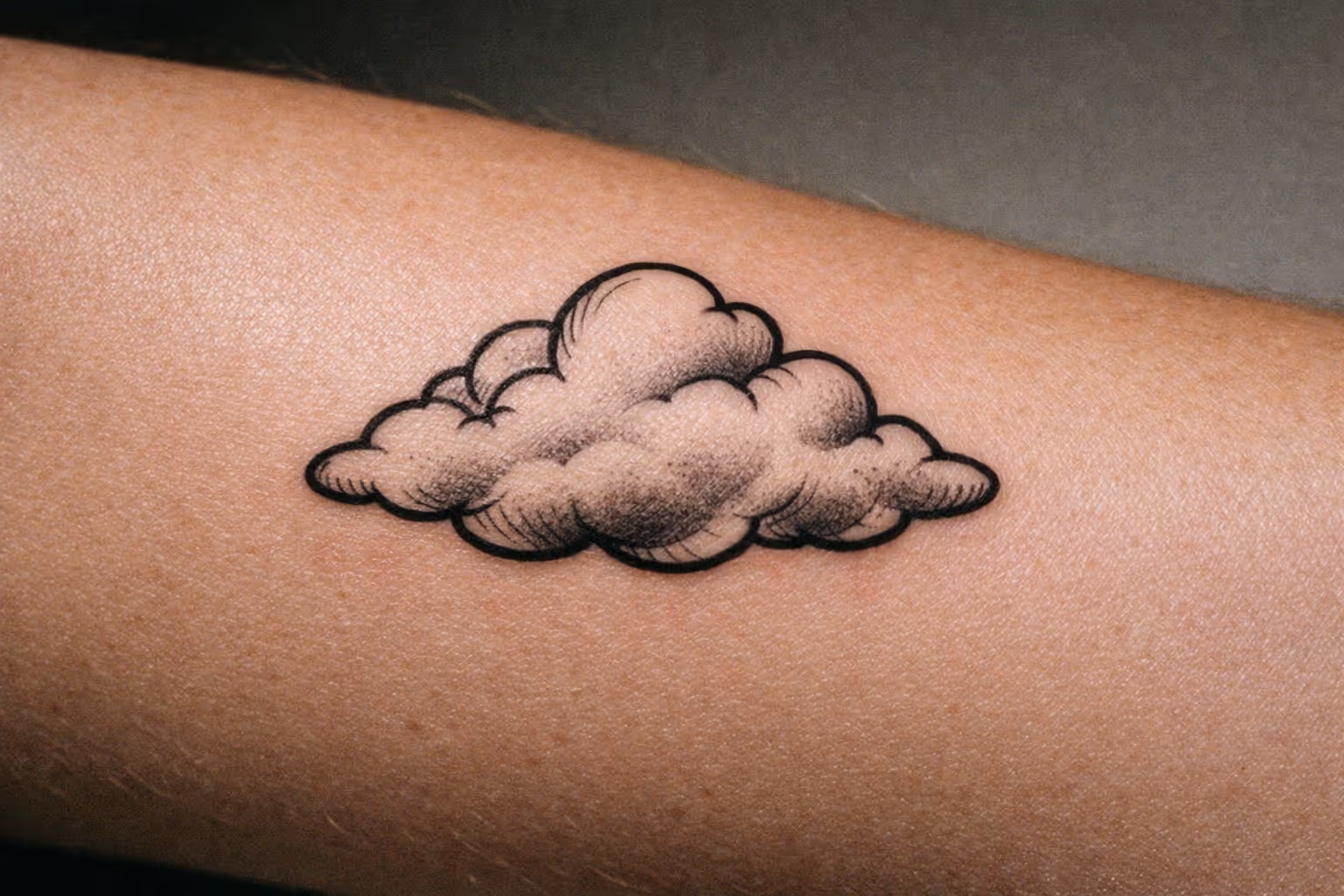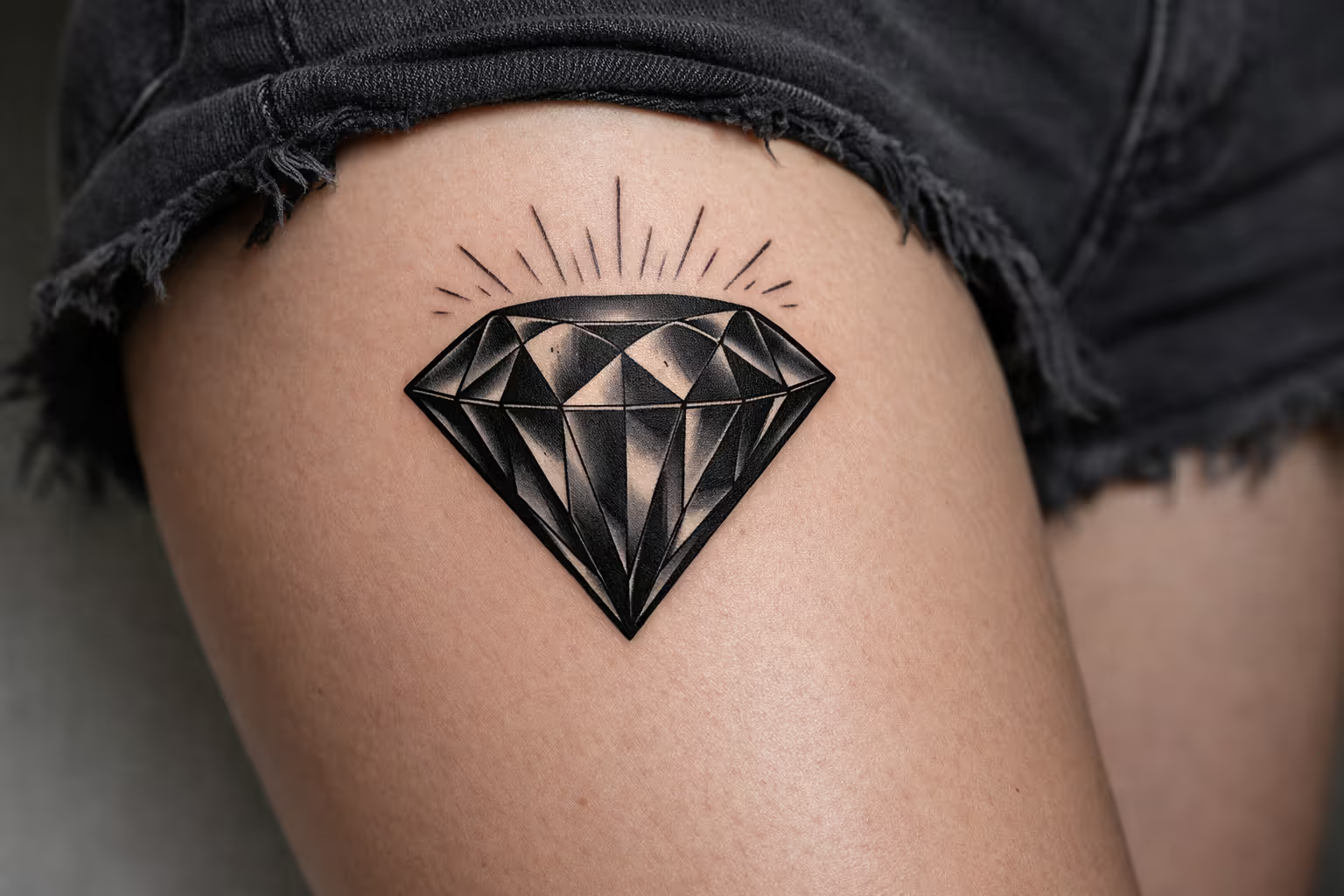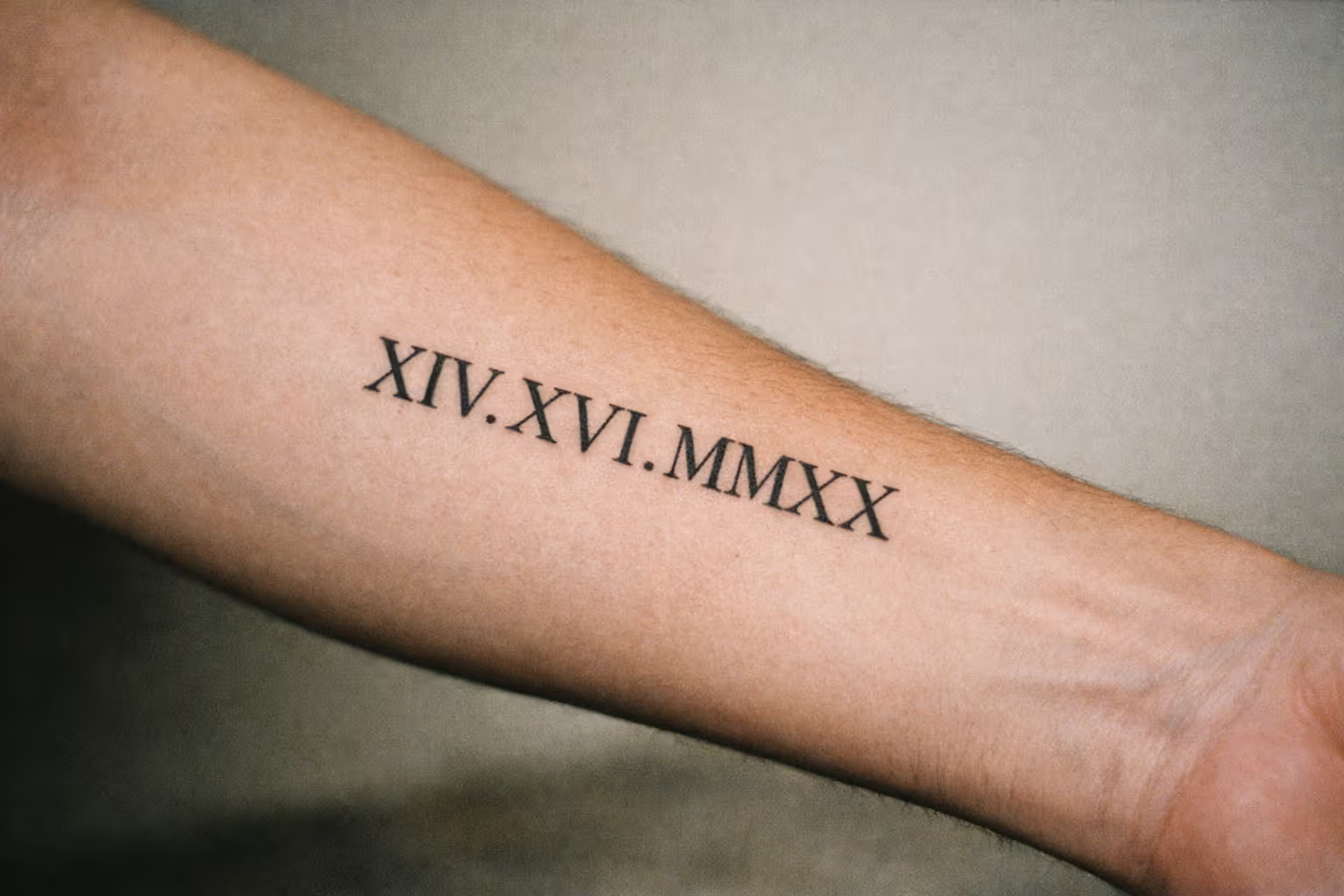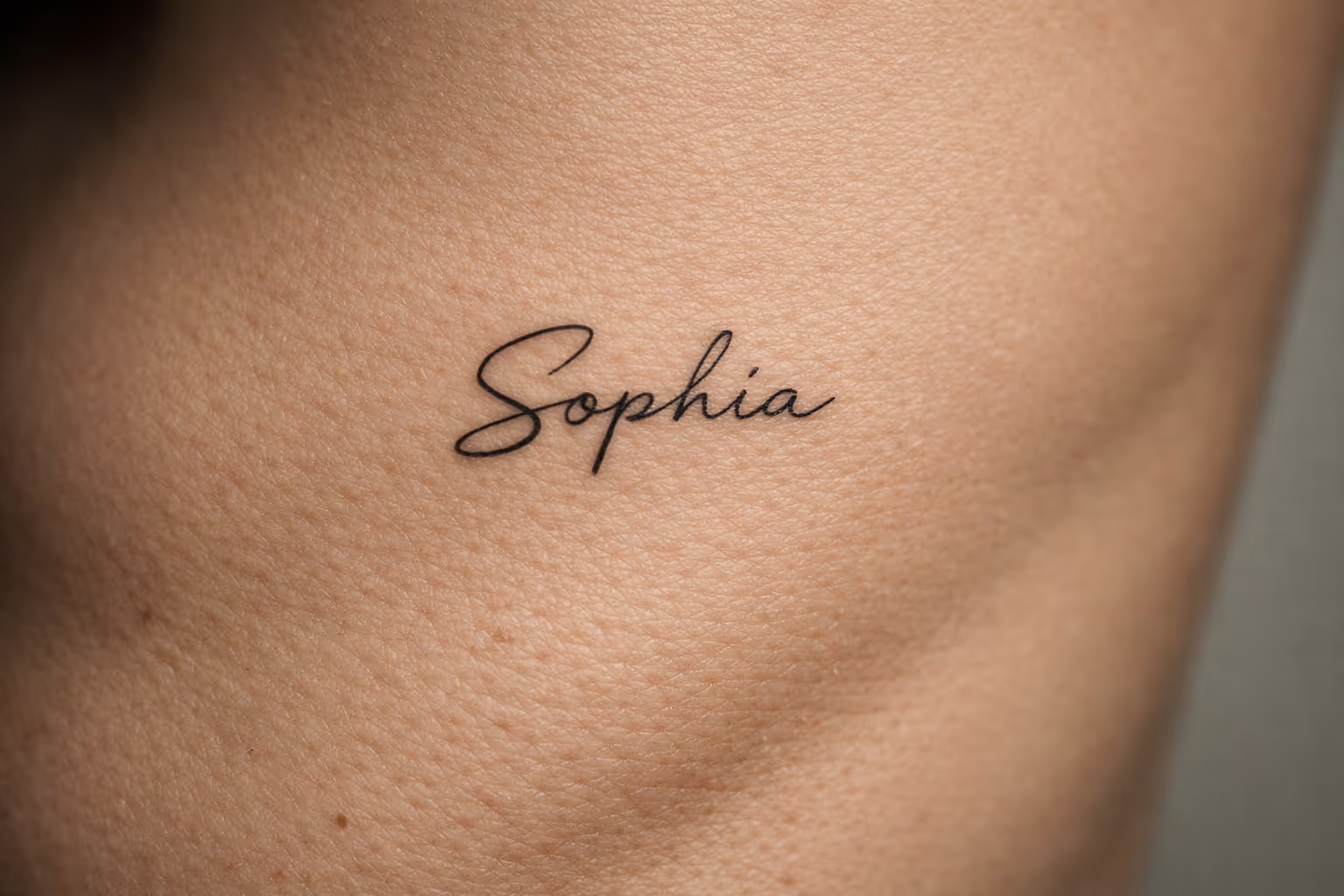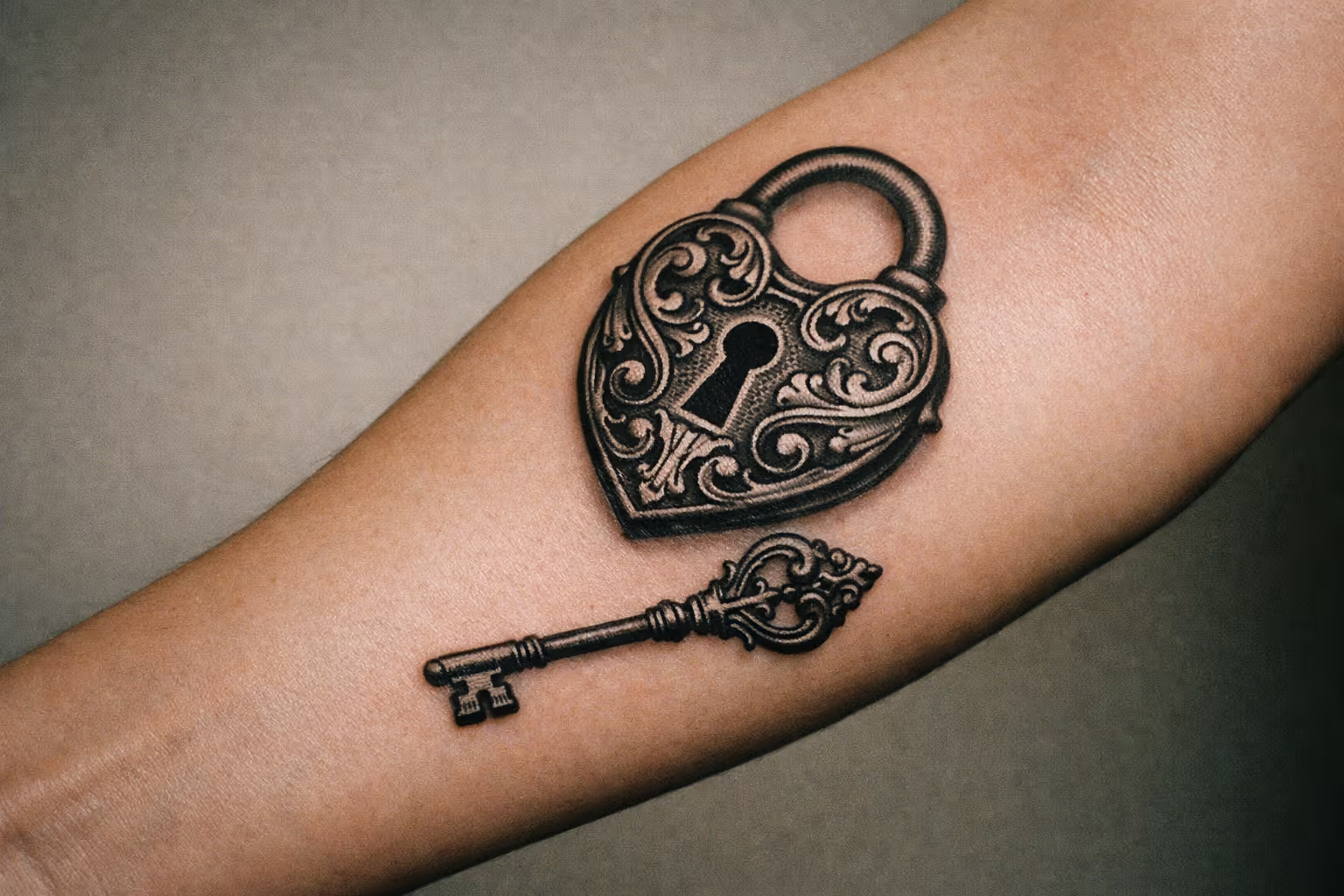
A lock and key tattoo hides its difficulty in the small parts - the keyhole, the teeth, the bow of the key - and those are exactly what blur first when the piece is sized too small. It’s also one of the few designs built to be split between two people, which changes how you plan it. Get the scale and detail right on both halves. Here’s what it symbolizes, how to size it smart, and the couple options worth considering.
What a Lock and Key Tattoo Actually Means
A lock and Key Tattoo pairs two objects that only make sense together: one guards, one opens. As a single design on one person or split between two, it reads as security, access, and devotion - which is exactly why it’s become one of the most requested couple designs I see come through the shop. The visual logic does the storytelling without any help. One person holds what the other can open.
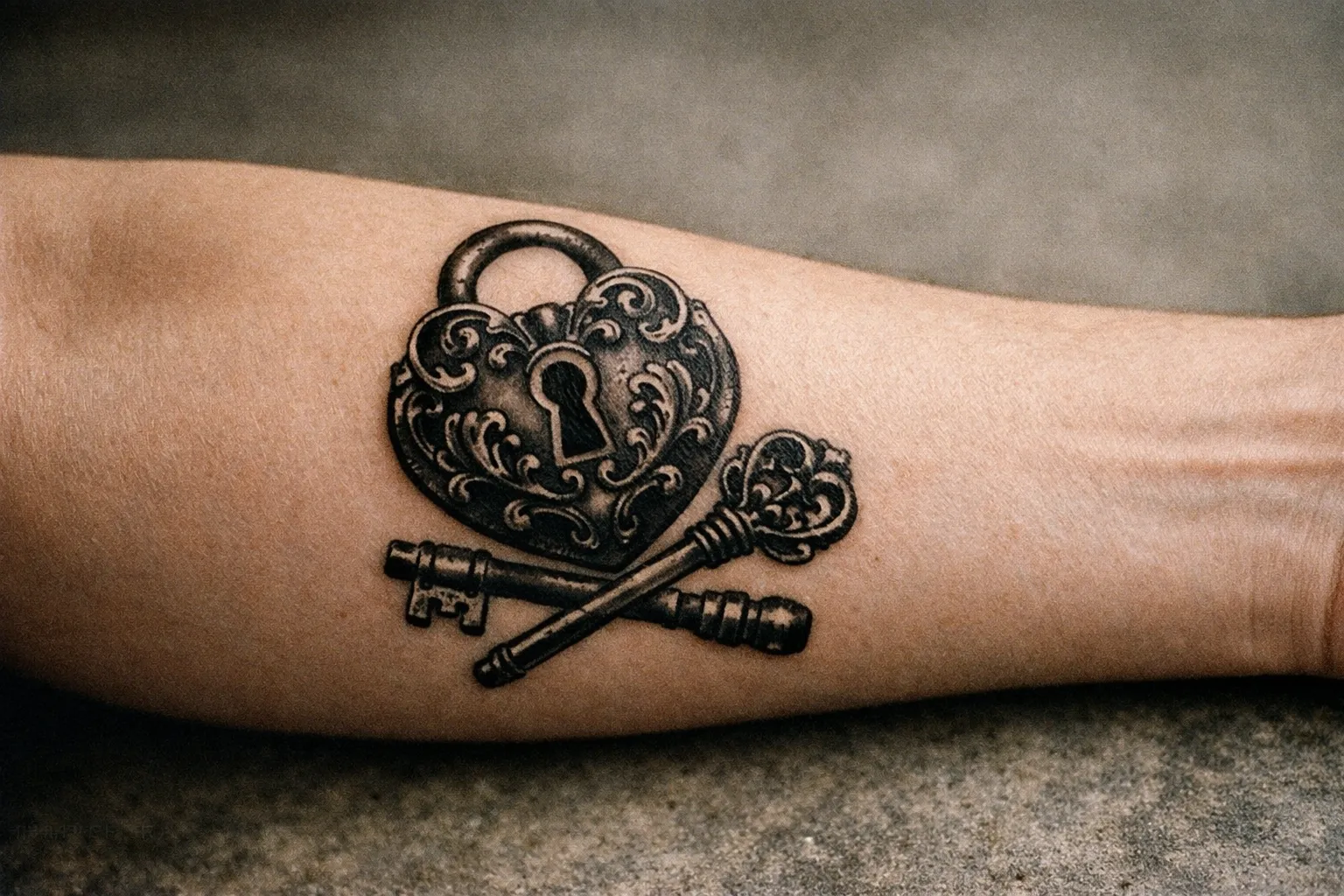
Below you’ll find what the symbolism actually means across different traditions, the design variations that hold up over time, real placement and size guidance, honest cost benchmarks, and the medical and aftercare details most galleries skip. If you’re considering this with a partner, read the section on future-proofing couple designs before you book anything.
✓ Pros
- Strong symbolic meaning with multiple cultural layers
- Works well as a couple's tattoo or solo design
- Variety of styles from minimalist to realism to fit budgets and tastes
- Clear aftercare guidelines help preserve fine detail
✗ Cons
- Fine-line and script details blur over time if too small
- Relationship tattoos have a high later-regret rate
- Certain placements (wrists, joints) fade faster
- Medical conditions and medications can complicate healing
What the Symbolism Actually Comes From
The meaning splits along two lines depending on whether you read the lock or the key as the focal point.
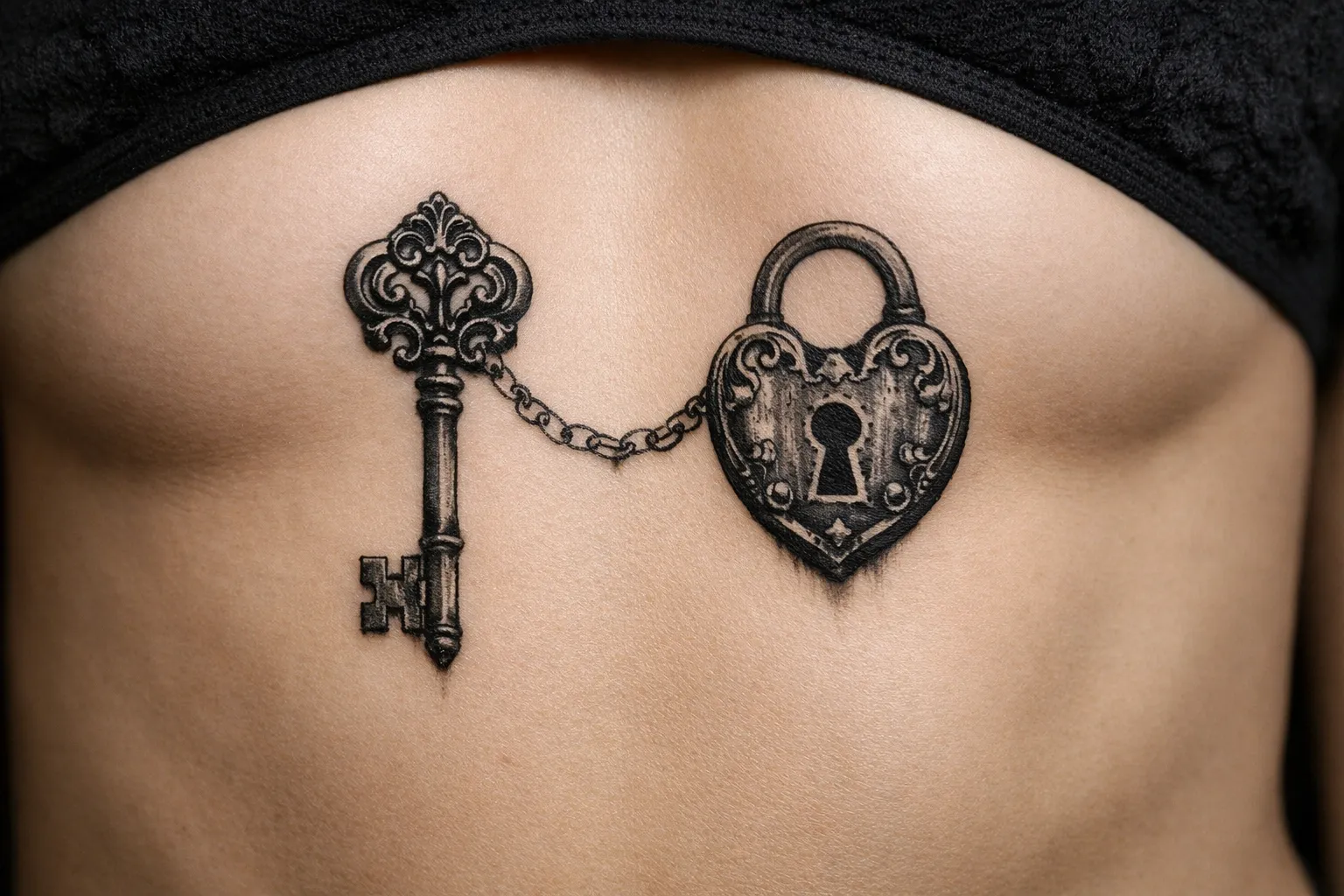
Keys carry meanings of freedom, opportunity, ownership, and transition - opening and closing doors on different phases of life (1). A key isn’t only romantic. People get them to mark a new chapter, a move, a release from something that had a hold on them. The skeleton key, which can open many locks, gets used to symbolize capability or the broader theme of life and death (1).
Locks lean toward devotion, security, and guarding what matters - feelings, secrets, connections (2). A lock can signal loyalty, inner strength, and the resilience it takes to protect something (2). It’s a boundary made visible.
Put them together and you get the romantic reading most people are after: the heart-shaped lock with a keyhole, where the message is “you own the key to my heart” (1). A heart with a keyhole on its own reads as the search for true love - the idea that one specific person can unlock it (1). This is the version that’s common among couples, where the key represents access to someone’s heart.
There’s also a self-directed reading worth knowing about. A single lock and key on the same person can mark unlocking your own freedom - leaving behind something that held you. The key in that context is about you opening your own door, not handing it to anyone else.
Designs by Style Featuring Key and Lock Tattoos
A Key and lock Tattoo can look like almost anything, which is both the appeal and the trap. The style you choose determines how it ages, how big it needs to be, and what it costs. I’ve seen clients come in with beautiful reference images that simply don’t translate to their chosen size or placement - and the style is usually why.
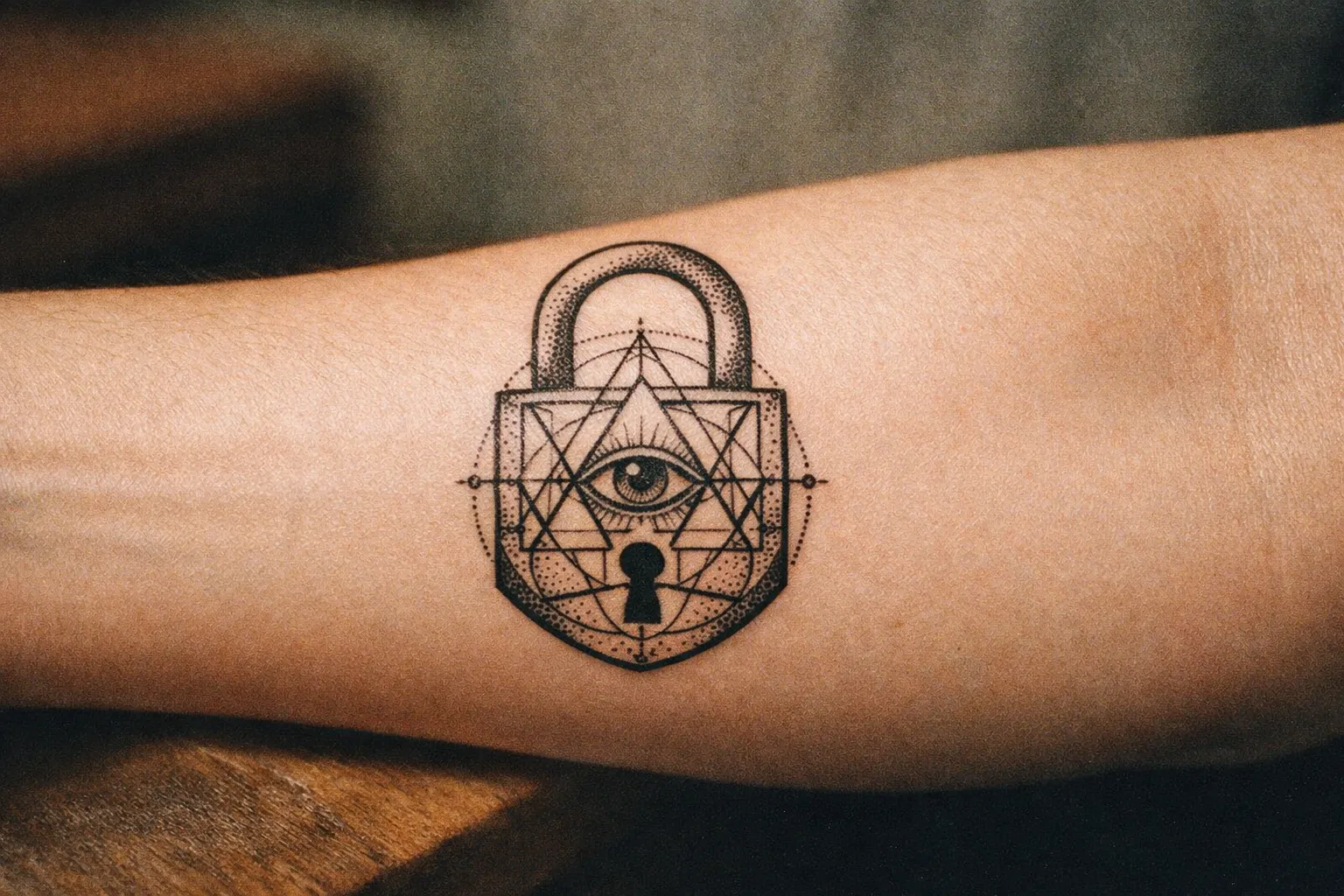
Minimalist / fine line. Clean outlines, little or no shading. Good for small placements like the inner wrist, fingers, or behind the ear. Budget-friendly - often under $200. The catch: tiny key teeth and delicate filigree blur as ink spreads under the skin over three to five years. Fine-line work has gotten more popular thanks to single-needle technique, but experienced artists now warn clients about long-term blur and often push for a slightly larger size for durability.
Traditional and neo-traditional. Bold black outlines, a limited saturated palette, classic accents like hearts, roses, and banners. These are the two technical hallmarks of the American traditional approach, and they exist precisely because they hold up - thick lines and solid color read clearly even after a decade. Suits the forearm, bicep, or calf well. The common pitfall is an artist applying traditional motifs with thin, timid lines. If the outline isn’t bold, it isn’t really traditional and it won’t age like one.
Realism. Detailed metal texture, reflections, rust, and chain. To make metal look like metal, skilled artists layer three to four tones - a dark line, mid-grey, a soft wash, and limited white highlights. That extra rendering adds 30 to 45 minutes but creates the depth that lets the piece read from across a room. Realism runs $400 and up, needs four or more hours, and needs real estate of at least 4 inches.
Gothic / dark. Rusty padlocks, skulls, chains, barbed wire, usually in black and grey. Reads well at medium-to-large sizes.
Whimsical / fantasy. Steampunk gears, ornate filigree, or an ankh-style key referencing Egyptian symbolism of life and transition.
Heart Lock and Key Designs with Names
The heart lock and key with a partner’s name is the most-requested romantic version, and the symbolism is direct: one person holds the key to the other’s heart. Adding a name, date, or short quote personalizes it further.
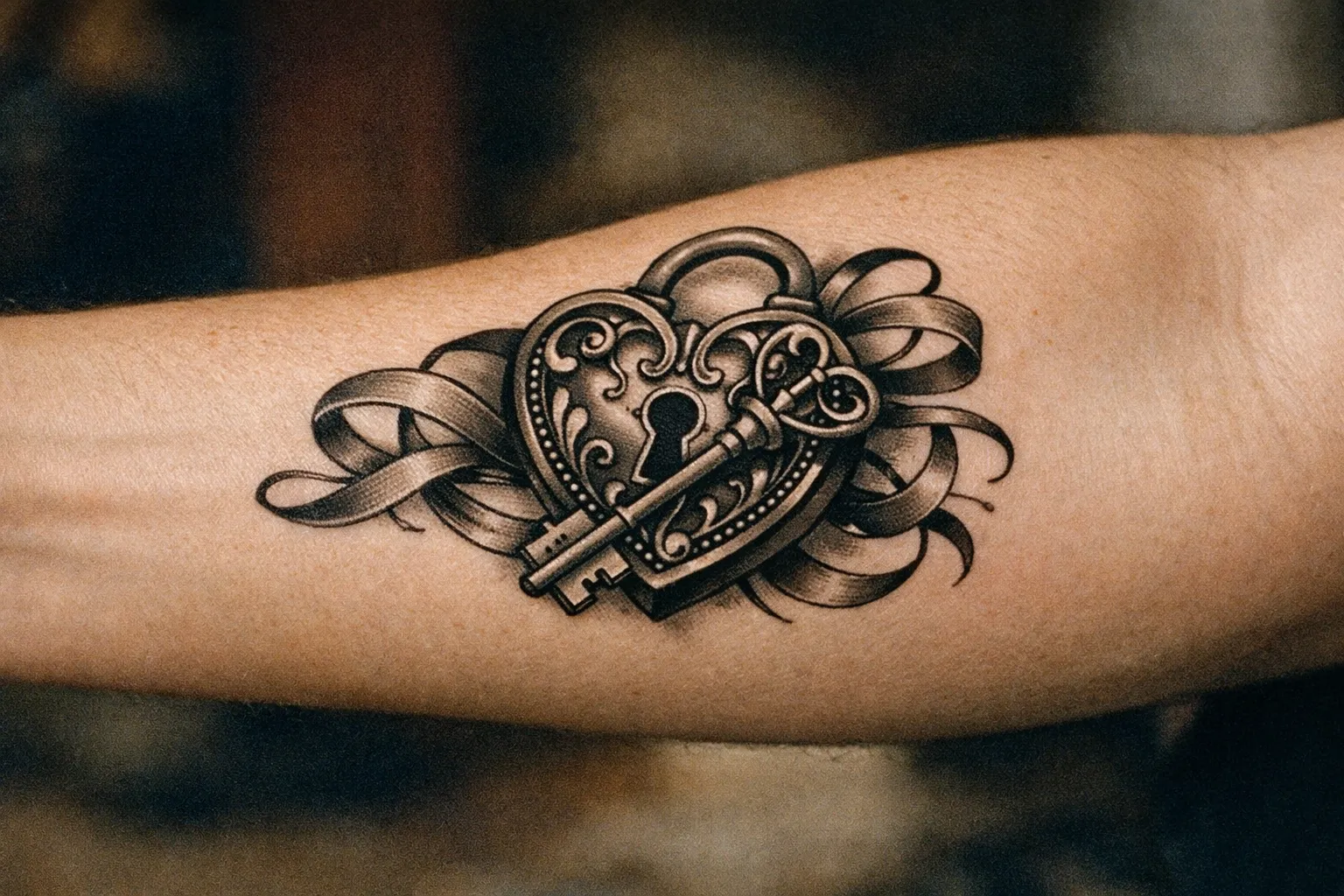
A few honest constraints. Script ages worse than almost anything else in tattooing, so keep letter height above roughly ½ inch (12-13 mm). Cramming a name plus filigree plus a detailed key into a 1-2 inch design is the single most common reason these blur into a smudge within a few years. I’ve retouched more than a few of these that came in looking like a grey blob at the three-year mark. If you want text, you need size - figure at least 2.5 to 3 inches for the lock alone so the key teeth and the lettering stay legible.
Placement for the heart-lock-with-name version tends toward the inner forearm or over the heart (upper chest), roughly 3 to 4 inches, where there’s flat skin and enough room for the detail to breathe.
Couples’ Popularity and Regret with Lock and Key Tattoos
This is where most of the demand sits, and it’s also where most of the regret happens. Lock and Key tattoos for couples typically split the design: one partner wears the lock, the other the key (3)(4). Studios actively market the pairing as a bond symbol for friends and couples, with the key standing for access to someone’s heart (4).
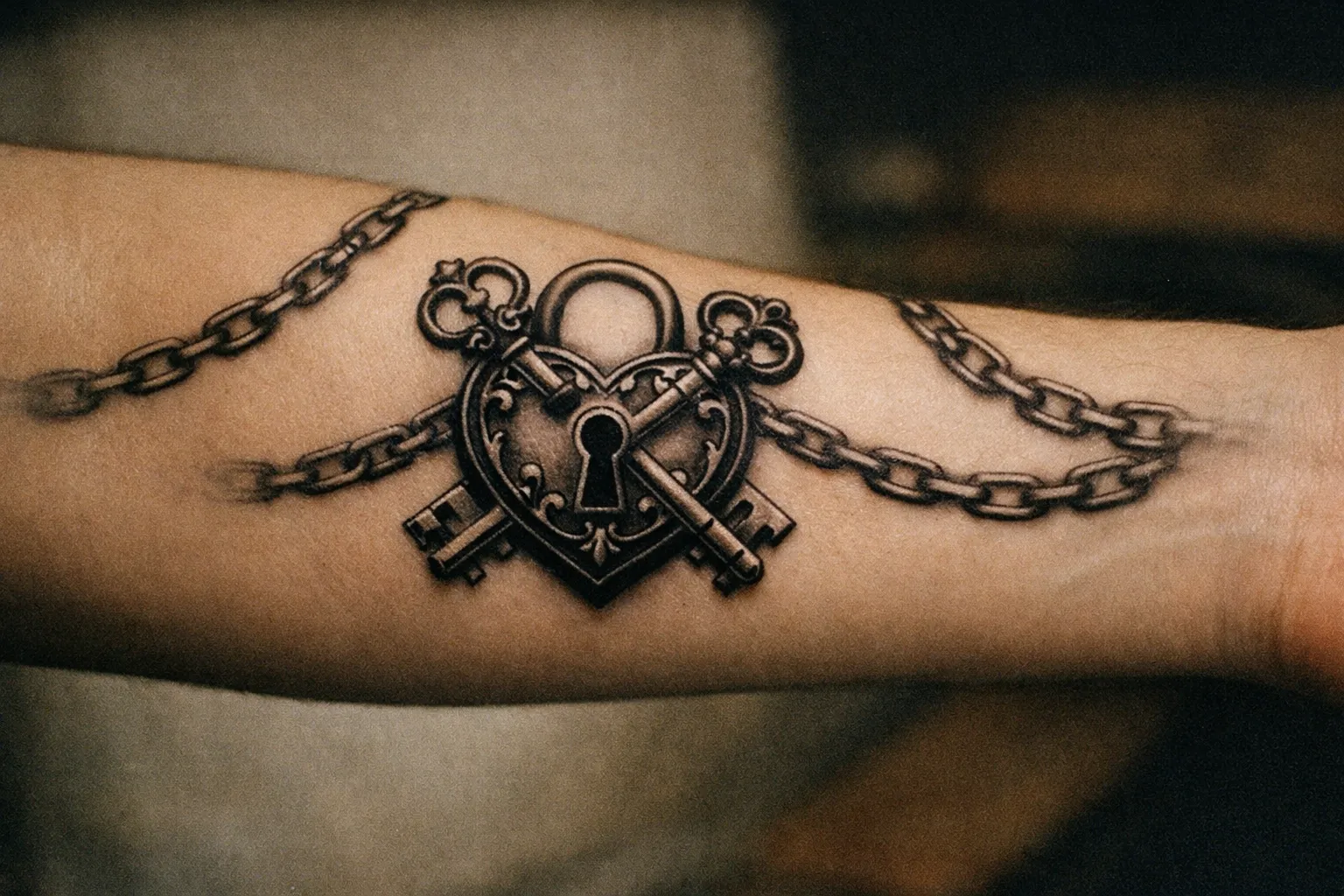
A few configurations beyond the basic split:
- Friendship version: two keys to the same lock, or a single lock with multiple keyholes for a close group.
- Combined: both people get the full heart-lock-with-keyhole plus a matching skeleton key.
- Alignment play: plan the placement so that when you hold hands or stand side by side, the key visually “enters” the lock - for example, both on inner forearms facing inward. This costs nothing extra and makes the pair photograph well.
Now the honest part. Relationship tattoos carry a high later-regret rate - removal clinics commonly report that 20 to 30% of their clients cite relationship-related ink. A matched mirror-image pair becomes a real problem the moment the relationship ends.
The fix experienced artists use is complementary asymmetry instead of mirror imaging. One person gets an ornate lock; the other gets a simpler skeleton key that stylistically belongs with the lock but also stands alone as a solid tattoo if you two no longer match. The design works as a pair and works solo. That’s the version to ask for if you want to hedge your bets.
For couples, wrists and forearms stay the most popular spots - visible, easy to align, easy to photograph. Just know the wrist sits over thin skin and bone, so it stings more than the fleshy forearm, and joint movement fades wrist tattoos faster than most placements.
Placement, Size, and What It Costs
Placement is a three-way trade between visibility, pain, and how the design ages.
Lower pain, ages well, efficient to tattoo: outer forearm, upper arm, calf. These have enough flesh to cushion the needle and don’t stretch much with normal movement.
Higher pain, higher cost: ribs, sternum, spine, inner bicep, foot. Ribs and sternum hurt more than the forearm by a wide margin - thin skin directly over bone with no muscle padding. Worth it for a large ornate piece, rough for a quick session.
Fades faster: wrists, fingers, and other joints, due to constant movement and friction.
Size guidance by style:
- Minimalist outline: 1-2 inches, inner wrist, finger, behind the ear.
- Detailed lock and key with shading: 3-5 inches, forearm or chest.
- Ornate pair or chest piece with color or realism: 5-8 inches.
One aging rule that matters: avoid placements that stretch heavily. The stomach, areas affected by pregnancy, and biceps that change significantly with heavy lifting can warp a perfectly aligned lock and key over five to ten years.
What it costs (US studio norms):
- Small minimalist lock or key (1-2 in): $80-$150, at shops with $80-$100 minimums.
- Medium detailed lock and key (3-5 in): $200-$400, depending on shading.
- Larger ornate pair or chest piece (5-8 in): $400-$800+, especially with color or realism.
Expect a 15-25% tip if you’re happy with the work, and ask whether a free or low-cost touch-up within three to six months is included - that can save you $50 to $150 down the line.
How Big Should a $500 Tattoo Be?
In most US urban shops charging $150 to $200 an hour, $500 buys roughly three to four hours of work. Realistically, that covers either:
- One high-detail 5-7 inch lock-and-key piece with shading and ornamentation, or
- A matching couple pair at 2.5-4 inches each with moderate detail.
Anyone promising you a fully shaded, color, realism lock-and-key for $500 is either very fast, very cheap, or cutting corners on detail. Detail takes time, and time is what you’re paying for.
The History Behind Lock and Key Imagery
Locks and keys as protective symbols predate tattooing by centuries. The lock guarded a sanctuary - a treasure, a secret, a home - and the key granted access only to whoever was trusted with it. That power relationship is what makes the pairing work on skin: the design encodes who gets in and who doesn’t.
In modern Western tattoo culture the romantic reading dominates - the “key to my heart” framing - but the older meanings around security, boundaries, and guarded access are still legible and still chosen. Some clients lean into the ankh, an Egyptian key-like symbol tied to life and transition (1), which pulls the design back toward the older, less strictly romantic tradition. If your meaning is closer to “I protect what matters” than “I love you,” the design supports that reading too. The symbol isn’t fixed to one story, and you don’t have to pretend it is.
Medical Considerations Before You Book
Most galleries skip this entirely, which is a problem, because a few medical situations genuinely change whether you should be getting tattooed at all.
Standard studio prerequisites:
- Age: typically 18+ with ID; some jurisdictions allow 16-17 with parental consent.
- Health: no active infection over the area, no uncontrolled diabetes, and a conversation about any medications you’re currently taking.
- Pre-session: skip alcohol and blood thinners (high-dose ibuprofen, aspirin) for 24 hours, since they increase bleeding and can wash out ink before it sets.
Symbols to Research Before You Add Them
If you’re tempted to decorate a Viking-style or “occult” lock and key with runes, stop and research first. Some Norse runes have been adopted by hate groups, and a few have been so thoroughly co-opted that they now carry associations most people don’t intend.
What Rune Tattoos to Avoid
The two most commonly flagged are the Odal (Othala) rune and the Wolfsangel, both of which were appropriated by extremist groups and now read as hate symbols to many viewers regardless of your intent. The Sowilō rune in its doubled “SS” configuration is another to steer clear of. A reputable artist should flag these for you, but don’t rely on that - if you want authentic Norse imagery on a lock-and-key piece, research each individual symbol’s modern associations before it goes on your skin permanently. Ink doesn’t come with a footnote explaining what you meant.
Aftercare Timeline for a Lock and Key Piece
Detailed lock teeth and filigree only stay sharp if you heal the tattoo properly. This is where a lot of clients undo good work.
Day 1-3: If your artist used a second-skin bandage (Saniderm, Derm Shield), leave it on for the recommended 24 to 72 hours - these have become standard in the last few years because they reduce scabbing and keep detail sharp. If you have a traditional wrap, remove it after a few hours, then wash gently with a fragrance-free soap, pat dry, and apply a thin layer of healing ointment. Thin is the operative word - too much ointment suffocates the skin and can cause breakouts over the fresh linework.
Week 1: Wash once or twice daily with fragrance-free soap. Around day three or four, switch from ointment to a fragrance-free moisturizer. Do not pick at peeling skin or scabs - that’s where you lose linework. If it itches (it will), slap it lightly over clothing instead of scratching directly.
Weeks 2-4: The surface heals but the deeper layers are still settling. Keep moisturizing, keep your hands off it, and stay out of pools, baths, and direct sun. Sun exposure or tanning during this window dulls black lines and causes uneven fading - the fastest way to ruin a crisp design.
Ongoing: Sun protection is a lifetime commitment if you want the blacks deep and any color bright. Use SPF 30+ or sun-protective clothing over the tattoo when you’re out for extended periods. UV breaks down ink over years, not decades.
Aftercare supplies are cheap: a fragrance-free soap, a tattoo balm or fragrance-free lotion ($5-$20), and optionally a second-skin bandage pack ($10-$25).
Choosing the Right Artist
The artist makes or breaks a detail-heavy design like this. Three things to check before you commit.
Portfolio, specifically healed work. Anyone can post a fresh photo where the lines look crisp because the skin is still swollen and inked-up. Ask to see healed photos at one to three years out - that’s how you find out whether their fine lines hold or blur. For a lock and key with small teeth and filigree, this is the single most important thing to verify. I’ve had clients come to me for cover-up work on designs that looked great in the artist’s fresh portfolio but turned to mush by year two.
A consultation. Fifteen to thirty minutes, often free or with a $25-$50 fee credited toward the tattoo. Bring your one-sentence version of what the piece means - “my partner is the only one who can unlock me,” or “this marks the year I got out.” Artists consistently say a clear sentence sharpens the custom design more than a folder of reference images. Use the consult to settle size, placement, and price before anyone picks up a machine.
Communication. The right artist listens, then tells you honestly when something won’t work - that your 1-inch wrist idea can’t hold the detail you want, or that a mirror-image couple design is risky long-term. An artist who agrees to everything isn’t doing you a favor. If something feels off during the consult, trust it. This is permanent.
Frequently Asked Questions
- Why Did Tyler Posey Get a Tattoo?
- Tyler Posey's tattoos honor personal experiences and relationships, reflecting the common motivation behind lock and key tattoos: meaningful, specific references rather than trends.
- How Big Should a $500 Tattoo Be?
- At typical US rates, $500 covers about 3-4 hours, enough for a detailed 5-7 inch lock-and-key piece or matching couple pairs at 2.5-4 inches each with moderate detail.
- What Rune Tattoos Should I Avoid?
- Avoid runes like Odal (Othala), Wolfsangel, and doubled Sowilō ('SS') due to their extremist group associations. Research modern meanings carefully before choosing Norse symbols.
- How Can I Reduce Regret with Couple Tattoos?
- Opt for complementary asymmetry rather than mirror-image designs, so each tattoo stands alone if the relationship changes, reducing later regret.
- What Aftercare Products Are Essential?
- Use fragrance-free soap for cleaning, fragrance-free moisturizer starting around day 3, and consider second-skin bandages to protect detail early on.