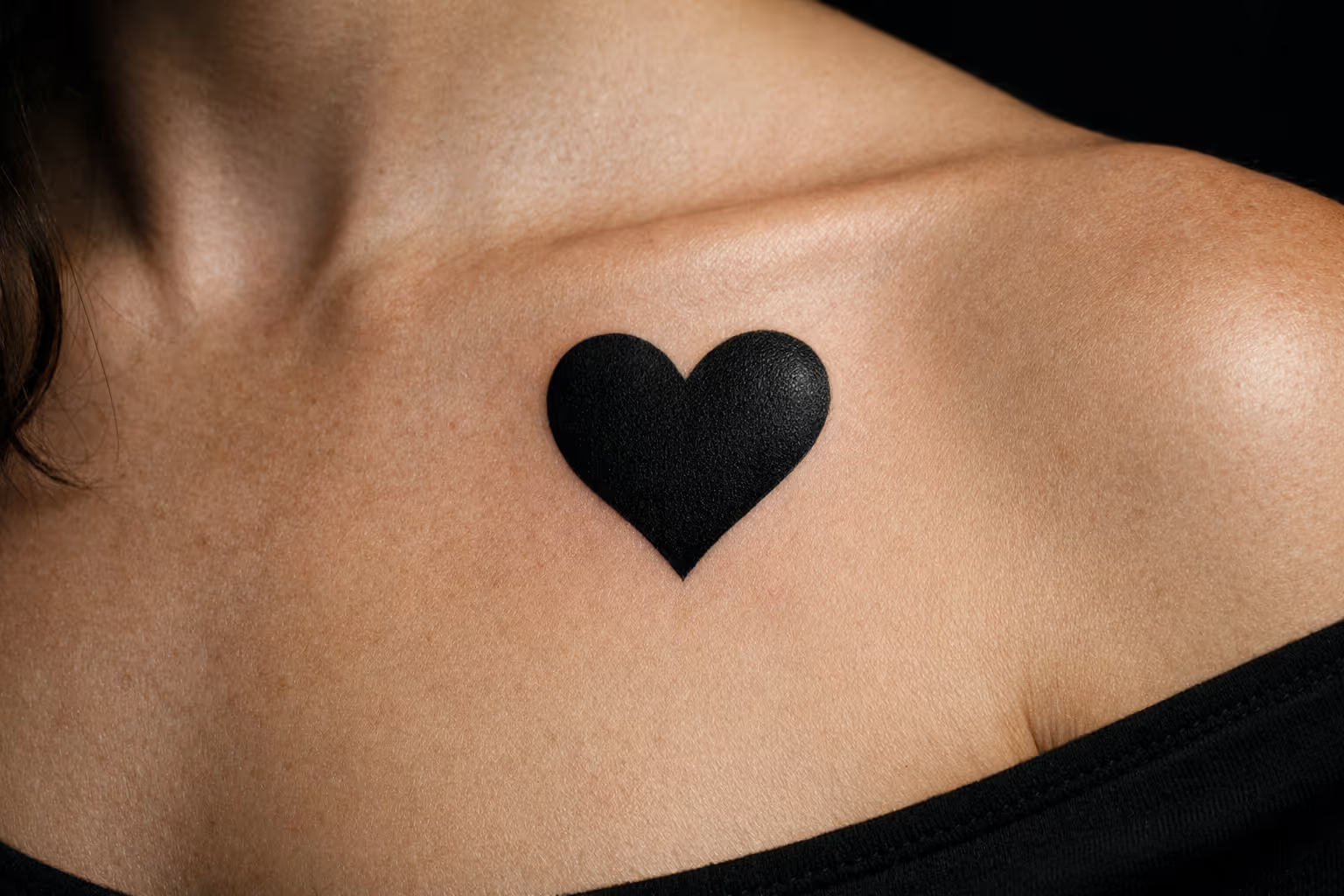
The most common heart tattoo mistake is going too small. Under a centimeter, or in hair-thin lines, a heart loses its shape fast - the tip rounds off, the point fills in, and within a few years you’ve got a blurry blob instead of a heart. The symbolism is the easy part; the execution is where they fail. Here’s how to pick the style, size, and placement that keep a heart looking like one.
What a Heart Tattoo Actually Means
The short answer: love, but with a lot of asterisks.
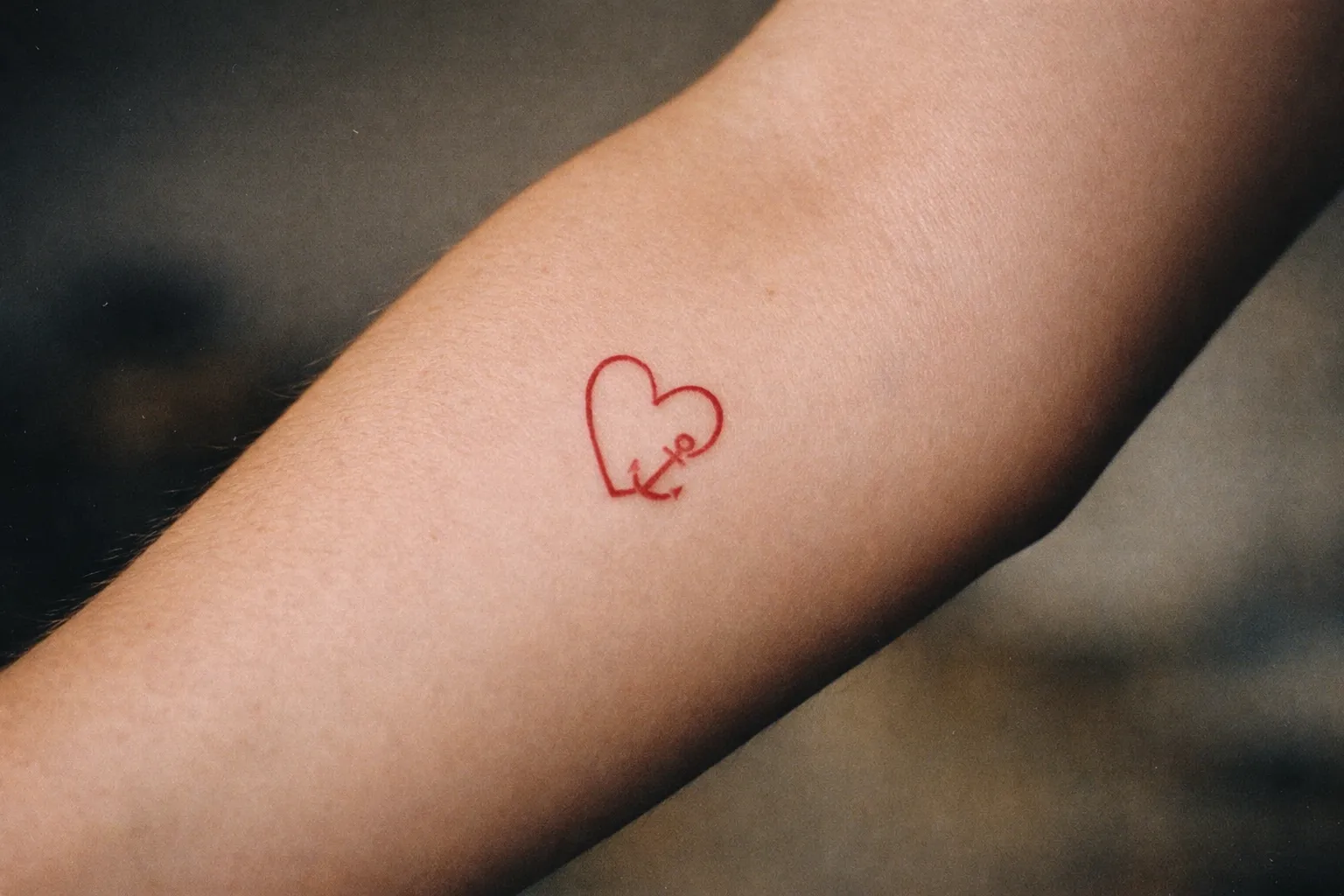
Heart imagery in tattooing has carried different weights depending on style, color, and era. Sailors in the early 20th century used the heart-with-banner as a protective talisman and a reminder of someone back home. Modern clients use the same shape to mark grief, faith, sobriety, motherhood, or a relationship that ended badly. I’ve drawn all of those in the same week, sometimes the same day.
Before you book the appointment, write down three to five words that describe what you want the piece to represent. “Grief, resilience, mom” pulls the design in a completely different direction than “passion, devotion, faith.” Color choices, added elements (thorns, stitches, daggers, banners), and style - American traditional vs. fine line vs. realism - all shift to match those words. It sounds like homework, but it saves you from a 20-minute consult where we’re both guessing.
The most common heart tattoo meaning categories:
- Romantic love - red hearts, lock-and-key sets, infinity hearts, matching couple pieces (1)(2)
- Grief and loss - black hearts and broken hearts read as mourning or the end of a relationship (2)
- Courage and survival - stitched hearts, heartbeat lines, anatomical hearts for medical survivors
- Religious devotion - sacred heart of Jesus, Immaculate Heart of Mary (3)(5)
- Family memorial - traditional “Mom” hearts, hearts with dates or initials (3)
Skip the all-purpose “love” answer if a friend asks what it means. The whole point of choosing specific elements is that the symbol gets specific.
Religious Roots and Modern Reads of the Sacred Heart Tattoo
A sacred heart tattoo is the heart wrapped in a crown of thorns, pierced or topped by a cross, often surrounded by flames or radiating light (5). The iconography comes from Catholic devotional art depicting the heart of Jesus - the flames represent burning divine love, the thorns represent suffering, the wound represents sacrifice. The Immaculate Heart of Mary is the parallel design, usually shown with a dagger or sword piercing it and surrounded by roses.
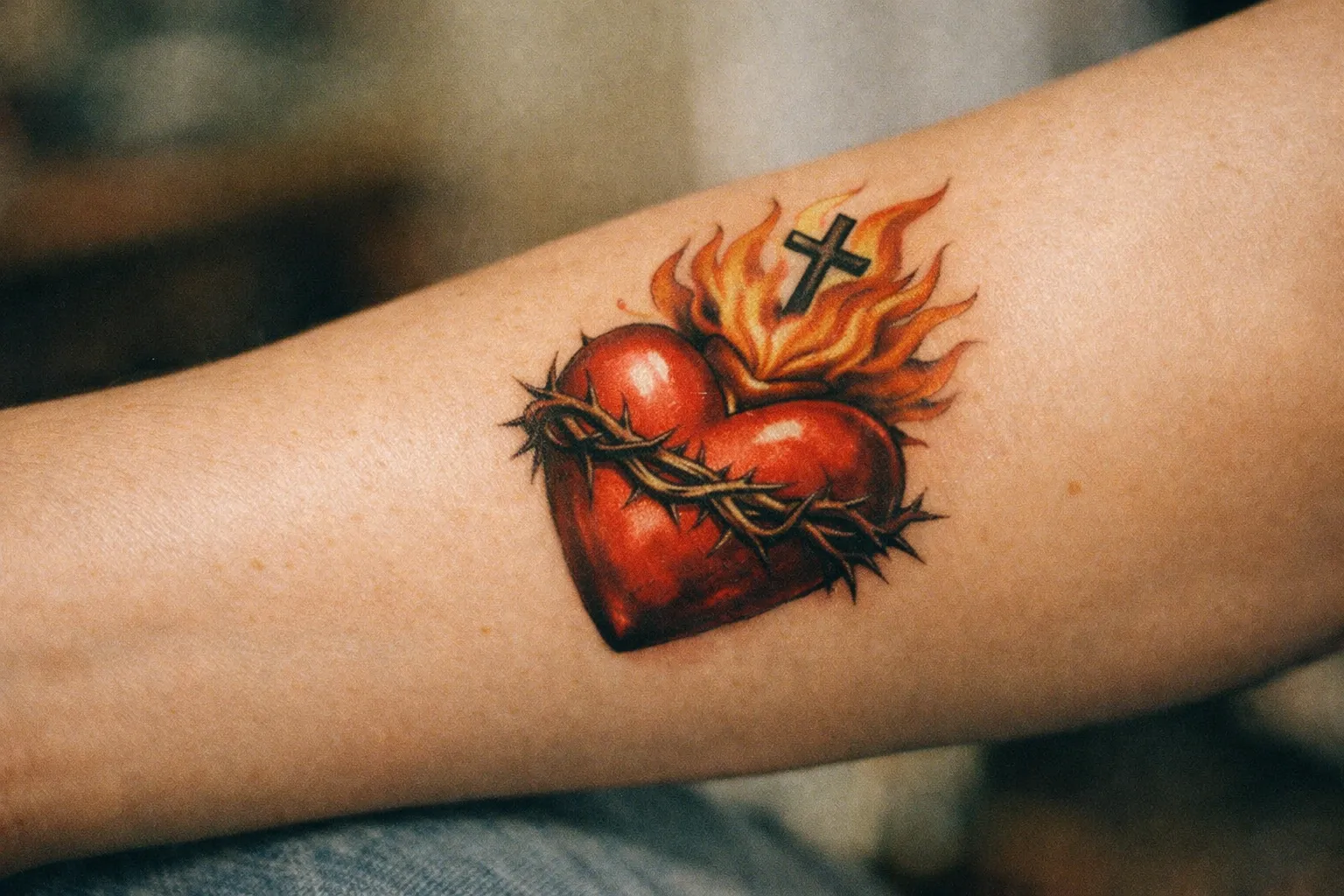
Two technical hallmarks of a well-executed sacred heart: strong, confident linework that holds thick black outlines (this sits closer to American traditional than realism) and a limited but saturated palette - deep reds for the heart, warm yellows and oranges for flames, white highlights kept minimal. The common pitfall is an artist trying to push the design too small or too detailed for the placement. Sacred hearts need room. I’ve seen them crammed into a 4 cm square and the flames just look like orange noise by year five.
Practical placement and size:
- Chest, over the actual heart - 10-20 cm (4-8 in), the most traditional spot, allows full rays and flames
- Upper arm or bicep - 8-12 cm (3-5 in), good for half-sleeve compositions
- Forearm - 10-15 cm (4-6 in) vertical, works well for sacred hearts with banners or daggers
- Back of calf or thigh - 12-18 cm (5-7 in), plenty of room for color gradients
If you want the aesthetic without the Catholic specificity, plenty of people drop the cross and keep the flames as a “burning passion” symbol. That said: thorns and flames still read as religious to most viewers who know the imagery. Decide if you’re okay with that read before you sit down.
When Small Designs Actually Work
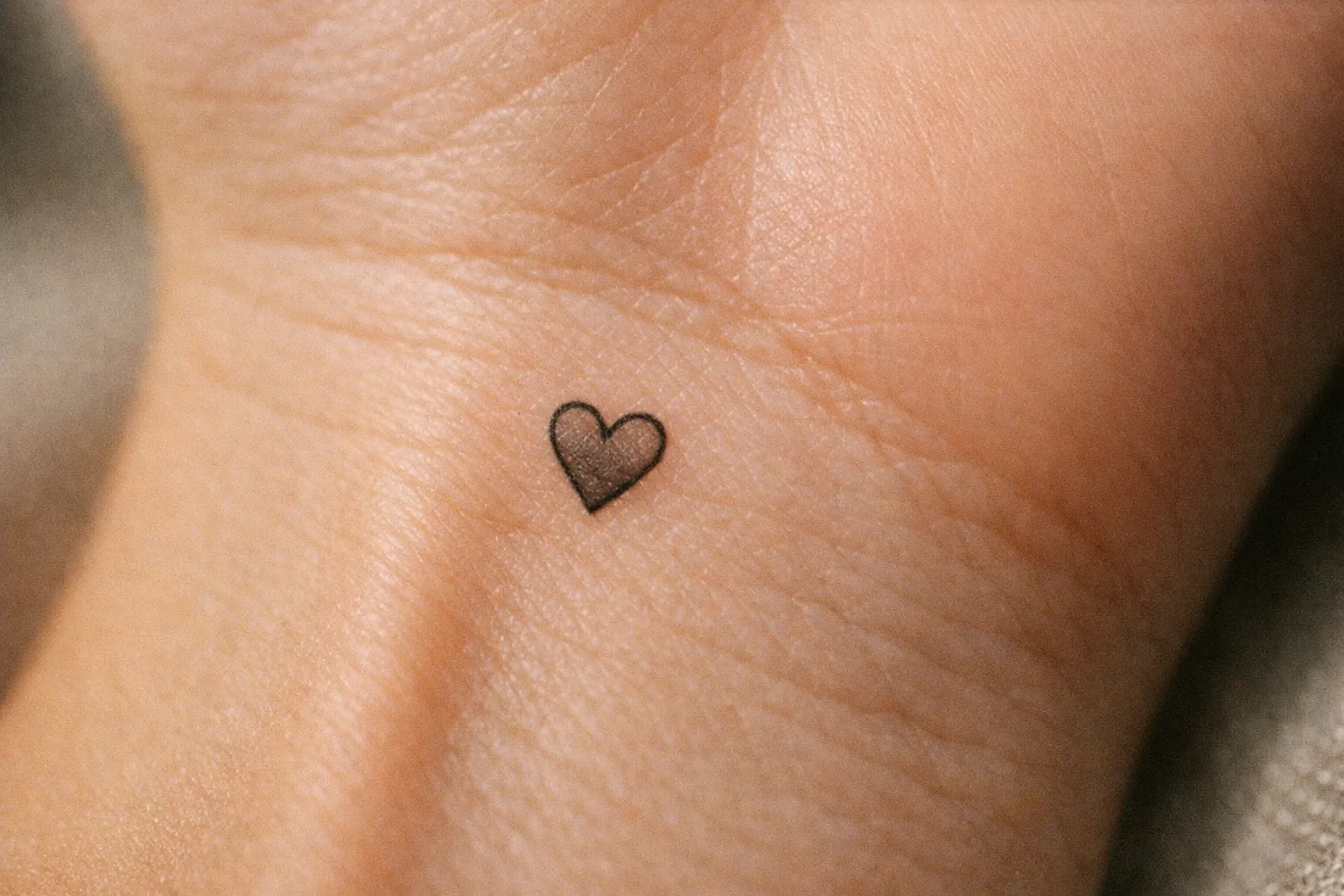
A small heart tattoo is the most common first tattoo request, and most of them are fine. Some of them aren’t. The line between “ages beautifully” and “looks like a smudge in six years” comes down to size, line weight, and placement - in that order.
Minimum specs that hold up:
- Size: at least 1 cm (0.4 in) tall - anything smaller closes up as ink spreads under the skin over time
- Line weight: at least 0.25-0.30 mm - single-needle hair-thin lines look incredible at the appointment and start blurring within a few years
- Skin stability: outer forearm, outer upper arm, ankle, behind the ear, and the collarbone all hold tiny designs well
Placements where small hearts fade fast: inside of the fingers, palms, sides of the hands, and the tops of the feet. Skin there regenerates faster, sees more friction, and sun exposure tanks the pigment. A finger heart is cute on day one and patchy by year three. If you want one anyway, budget for a touch-up every two to three years - that’s not a maybe, that’s a given.
For a small filled red heart on the forearm, expect the studio minimum - often $80-$150 in the US (6) - for what amounts to 15-30 minutes of actual tattoo time. The price is for the artist’s setup, sterilization, and skill, not the duration.
The Mom Heart: The Sailor Original and How to Update It
The Mom heart tattoo is one of the oldest motifs in Western tattooing. Sailors in the early-to-mid 20th century carried hearts banded with “MOM,” “MUM,” or a sweetheart’s name through months at sea - part protective charm, part reminder of who was waiting. The design is pure American traditional: thick black outline, a red heart, a yellow or white banner with bold serif lettering, sometimes flanked by roses or daggers.
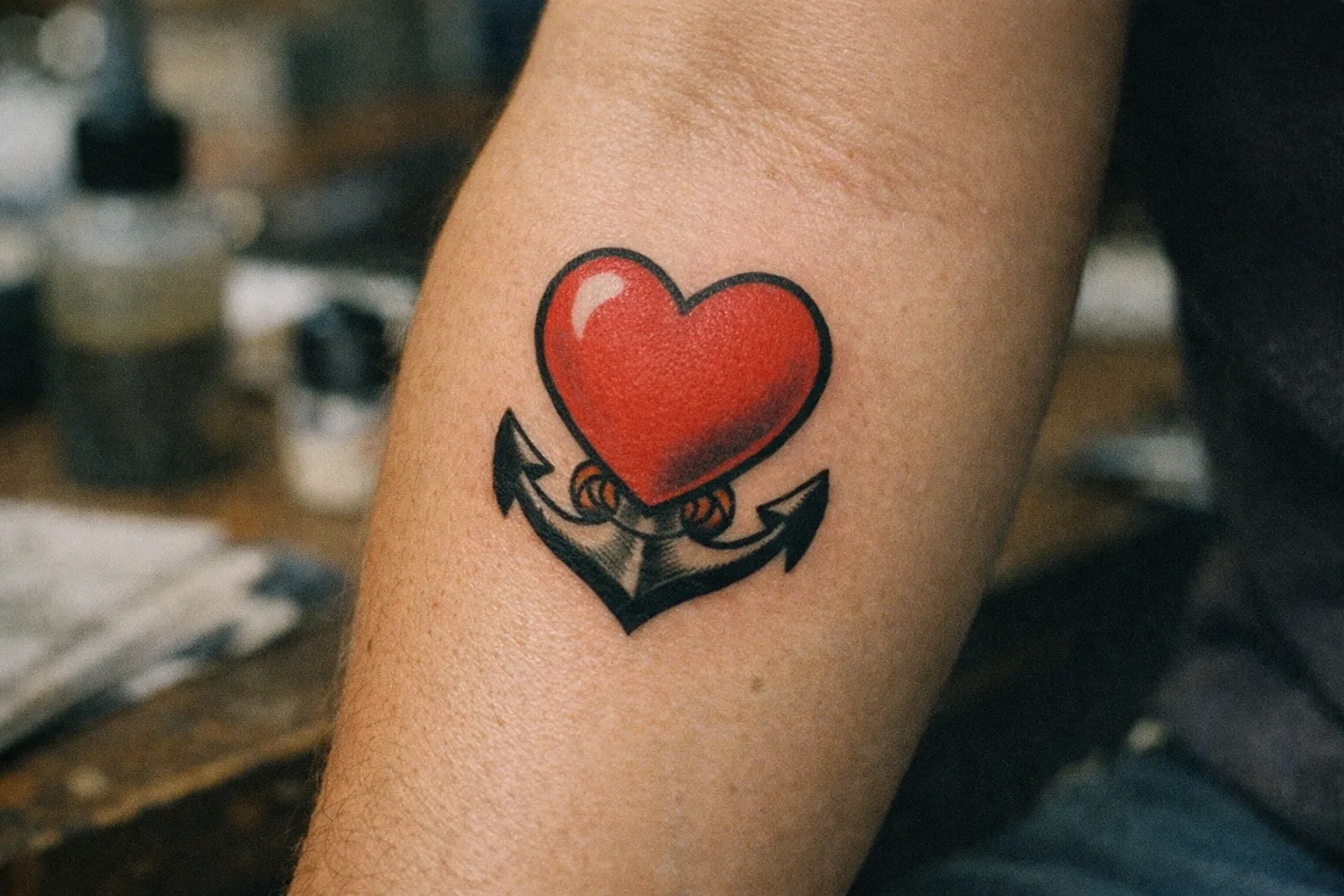
The reason this design has lasted nearly a century without going stale is the same reason it works as a tattoo: bold lines and a limited palette age gracefully. Compare a 1940s sailor’s MOM heart at 70 years healed to a single-needle script tattoo at 10 years. The traditional piece still reads clearly.
Modernizing it without losing the bones:
- Keep the banner short - 3 to 6 letters max. “MOM,” “MUM,” “MAMA,” initials. Long names in small banners turn into blurry stripes within a decade.
- Swap the standard red heart for an anatomical heart if you want a more contemporary read while keeping traditional execution.
- Surround it with the birth flowers of your mom - or your kids, if it’s a tribute to motherhood from the other direction - instead of generic roses.
- For a memorial mom heart, add dates inside the banner rather than on a second scroll. Keeps the composition clean.
Common placements: inner forearm, upper arm, chest over the heart, calf. Sized 6-12 cm (2.5-5 in) - small enough to finish in one session, big enough for the banner to stay legible long-term.
Broken Hearts: Symbol or Cover-Up Magnet?
A broken heart tattoo reads as heartbreak, betrayal, or grief - sometimes a specific relationship ending, sometimes a more general acknowledgment that the wearer has been through something (2). Common variations: a heart split down the middle with a jagged crack, a heart with stitches holding it together (the “healed but scarred” read), a heart dripping blood from the wound, a heart torn in half with the two pieces drifting apart.
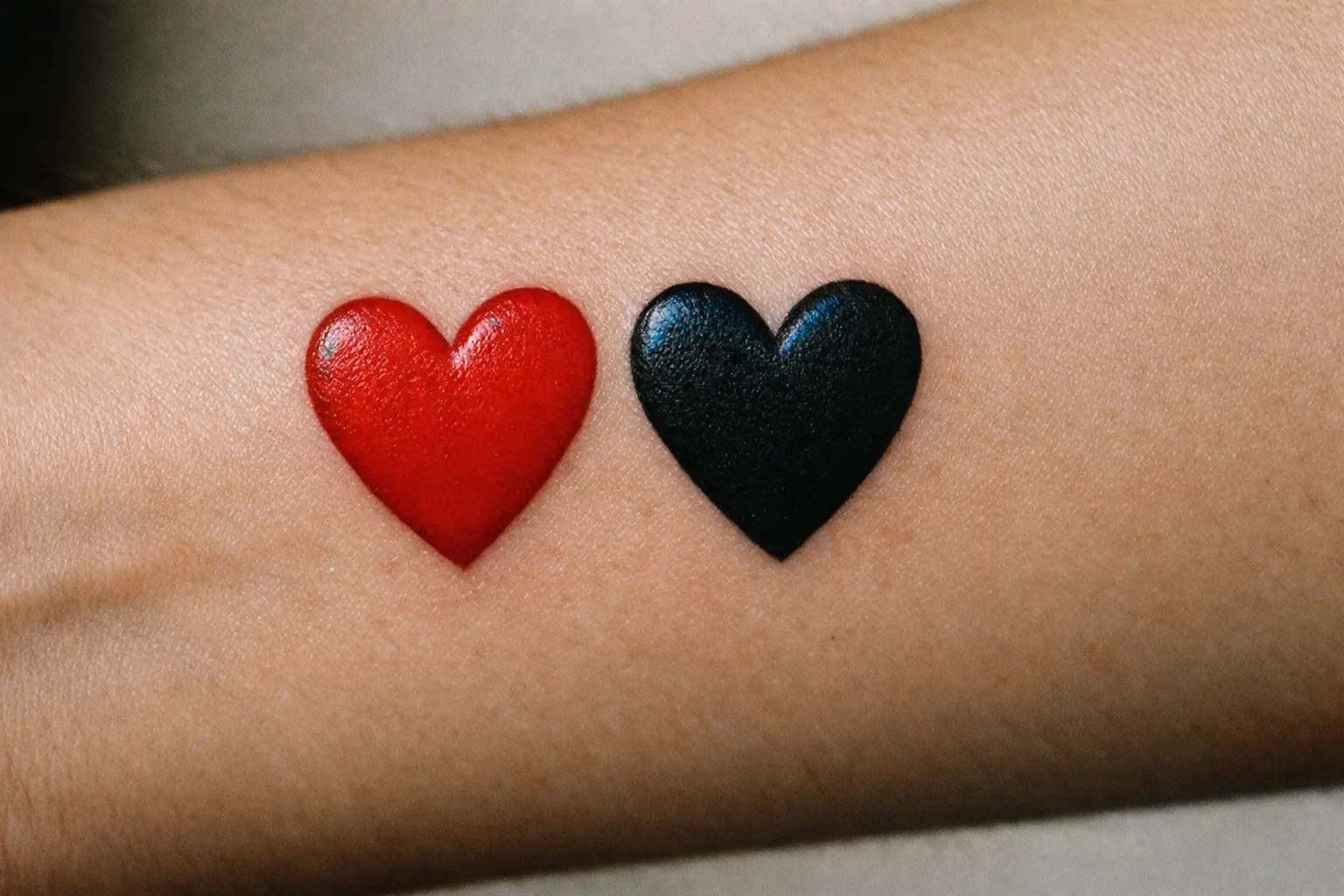
The strategic question with any broken heart piece: are you marking the experience or the person? Mark the experience. A heart with stitches, a crack, or a date stays meaningful as you move forward. A heart with someone’s name through it becomes a cover-up project the moment the next relationship starts - and cover-ups are almost always more expensive and visually larger than the original tattoo they’re hiding. I’ve done enough of them to say that with confidence.
Stitched hearts are the more nuanced version. The stitches read as repair, scar tissue, “fixed but visible” - useful symbolism for people processing loss, mental health, or grief that has integrated rather than disappeared. They work well in:
- Black and grey - 5-10 cm (2-4 in) on the forearm or upper arm
- Neo-traditional color - 8-12 cm (3-5 in) with surrounding elements like daggers or thorns
- Fine line - minimum 4 cm (1.5 in) so the stitches don’t blur into a single line
Pain-wise, broken hearts often end up on the ribcage or sternum for the symbolic location-over-the-heart placement. Fair warning: ribcage > forearm by a wide margin. Sternum is worse. If it’s your first tattoo and you want a broken heart, start with the forearm or upper arm and save the ribs for piece number three.
The Anatomical Heart
The anatomical heart - the actual organ, with chambers, vessels, and aorta - has become more popular as fine-line and realism work has gotten better. Meaning-wise, it pulls toward vocation (medical professionals), survival (heart conditions, transplants), or “you have my whole heart” literalism (4).
This is the design where size matters most. An anatomical heart needs at least 8-10 cm (3-4 in) of height to show the chambers, vena cava, and aorta clearly (4). Smaller than that and you lose the anatomy that makes it readable as an anatomical heart instead of a generic lumpy shape. I’ve had clients push back on this, and I’ve had to show them healed photos of undersized anatomical hearts to make the point stick.
Common placements and sizes:
- Chest, over the heart - 12-18 cm (5-7 in), the most thematically obvious spot
- Inner forearm - 10-14 cm (4-5.5 in) vertical, great visibility for medical professionals
- Outer upper arm - 10-15 cm (4-6 in), good for color realism
- Sternum - 10-14 cm (4-5.5 in), high pain placement but powerful symbolism
Color realism is the most time-intensive style (6), so an anatomical heart is priced by the hour rather than by the shape: most US studios bill $100-$300 an hour depending on the artist and the city (6). Ask for an hours estimate at the consult, and whether color packing will need a second session.
Other Variations Worth Knowing
The heart shape is unusually flexible. A few variations that come up constantly:
- Heart with arrow - Cupid’s bow imagery; reads as falling in love, struck by love, or the pain of love depending on whether blood is added
- Flaming heart - burning passion or devotion; without the cross/thorns it’s secular, with them it tips into sacred heart territory (5)
- Winged heart - freedom of spirit, liberation, sometimes specifically recovery from addiction (2)
- Heartbeat / EKG line - endurance, survival, “still here”; often shaped into a heartbeat tattoo at the peak (1)
- Infinity heart - heart looped through the infinity symbol; “forever” love (1)
- Lock and key hearts - matching set for couples; one partner wears the lock, the other the key
- Three hearts - past, present, future; or three core relationships (1)
- Anchor heart - stability and grounding in love or in life
- Butterfly heart - heart with butterfly wings; transformation, freedom, sometimes lost loved ones
- Heart with name - high cover-up risk; safer for children, parents, deceased loved ones than for romantic partners
Color Meanings: Red vs. Black vs. Everything Else
Color does symbolic work whether you intend it to or not.
Red is the default - romantic love, passion, life. It also fades faster than black under UV because red pigments are more light-sensitive, so red hearts need sunscreen and may need a touch-up at the 7-10 year mark. Recent regulatory changes in the EU have restricted some traditional red pigments, so ask your artist what brands they’re using if you want bright, saturated red.
Black reads as grief, loss, mourning, the death of a relationship (2). Black ink ages the most predictably and stays readable longer than any color. If you want a black heart purely for the aesthetic, know that most viewers will read it as mourning. That’s not a problem if you know it going in.
Watercolor and pastel tones carry softer emotional weight - often used for self-love or memorial pieces. Watercolor styles need a skilled artist to age well. Sloppy watercolor hearts blur into colored bruises within a few years. I’ve touched up enough of them to say that plainly.
Neo-traditional palettes - deep teals, mustard yellows, burgundy reds - age well because they’re saturated and bounded by black linework. Common for sacred hearts and modernized traditional pieces.
What a Heart Tattoo Costs
Most US studios price by the hour - $100-$300 an hour depending on the artist and the city - and set a shop minimum, often $80-$150, that covers setup and sterilization however small the piece (6). Location moves the rate a lot: about $150-$300 an hour in major metro areas, $120-$180 in mid-size cities, and $80-$130 in smaller markets (6). A small heart outline sits at the shop minimum.
The other half of the math is chair time. One studio plans its sacred hearts like this (7):
- Fine line, 2-4 in (5-10 cm): one session, 2-3 chair hours
- American traditional, 3-5 in (8-13 cm): one session, 2-4 chair hours
- Neo-traditional, 4-7 in (10-18 cm): two sessions, 6-10 chair hours
- Full chest panel, 8-12 in (20-30 cm): 8-12 chair hours across one or two sessions
By placement, a 2026 pricing guide puts a palm-sized, simple forearm piece at $150-$400, a smaller sternum or half-chest design at $300-$600, and a full chest piece at $1,500-$2,500 or more (6). Tip on top: 15-20% of the session cost is standard (6).
What you’re paying for: needle time, yes, but also sterilization, single-use materials, design time before the appointment, and the artist’s accumulated skill. The cheapest quote in your city is almost never the right call for a piece you’re keeping for life.
Pain by Placement (Relative, Not Numeric)
Pain is real but it’s also brief, and the relative ranking matters more than any 1-10 scale that won’t translate to your body. From most tolerable to most challenging for a heart-sized tattoo:
- Outer upper arm, outer forearm, outer thigh, calf - the easy zones. Most clients describe these as a hot scratch.
- Inner forearm, inner upper arm, shoulder, upper back - noticeable but manageable
- Wrist, ankle, behind the ear - sharper because of thin skin over bone, but tattoos here are usually small and fast
- Chest (outer pec), sternum, ribcage, hip, stomach - significantly more intense, especially over bone or thin tissue. Sacred hearts on the chest are worth it, but plan for it.
- Fingers, hands, feet, neck - high-sensation zones with fast-fading risks on top
A small wrist heart hurts less than a sacred heart over the sternum by a wide margin. If the symbolism doesn’t require a specific placement, ease matters.
Aftercare Timeline
Heart tattoos heal like any other tattoo - but small ones, red ones, and fine-line ones each have specific risks worth knowing.
Day 1-3: Keep the bandage on as long as the artist recommended (often 2-24 hours, longer for second-skin film). Wash gently with fragrance-free soap, pat dry with a paper towel, apply a thin layer of fragrance-free moisturizer or a tattoo-specific ointment. No soaking, no swimming, no sun.
Week 1: The tattoo will look shiny and feel tight. Continue washing twice a day and moisturizing 2-3 times a day. Around day 4-7 you’ll see flaking and peeling - do not pick it. Picking flakes pulls color out of solid red hearts and causes patchy healing. This is where people usually mess up a red heart.
Week 2-4: The surface is healed but the deeper layers are still settling. The color may look slightly dull or cloudy through this period - this is normal and resolves by the end of week 4. Avoid direct sun, saunas, and chlorinated pools. Switch to fragrance-free moisturizer (drop the ointment).
Week 4 onward: Full healing. Start using SPF 30+ sunblock on the tattoo any time it sees direct sun. UV is the single biggest factor in tattoo fading, especially for red and color pieces.
A small touch-up at 6-8 weeks is normal and most artists include it free. If a spot didn’t take color or a line dropped out, message the studio - they’ll book you back in.
Common Mistakes to Avoid
Going too small for the detail. Sacred hearts and anatomical hearts under the minimum size lose their identifying details within a few years. If you want a small piece, choose a design that’s small by nature - a simple outline, a filled silhouette - rather than shrinking a detailed design (4)(5).
Putting names inside hearts on visible placements. Romantic-partner name tattoos have the highest cover-up rate of any heart variation. Parent, child, and memorial names are safer bets - relationships that change far less often. If you must do a partner name, place it where a cover-up has room to work (forearm, upper arm) rather than wrist or finger.
Misreading black-heart symbolism. Black hearts read as grief or death to most viewers familiar with tattoo iconography (2). If you wanted “edgy aesthetic” and got “in mourning,” that’s a long correction conversation. Pick the color that matches the meaning.
Ignoring how skin stretches. Stomach, hip, and chest tattoos warp with weight changes and pregnancy. Sacred heart imagery is especially vulnerable to distortion because the radiating lines exaggerate any stretch. Stable placements - forearm, calf, upper arm - age more predictably.
Skipping the consult. A 20-minute conversation with the artist before the day-of appointment catches design problems, sizing issues, and placement adjustments. Most studios offer free consults for any piece over the minimum. Use it.
Frequently Asked Questions
- What does a small heart tattoo mean?
- Small hearts often symbolize self-love, a specific person, or simple affection for life. Placement and color narrow the meaning, e.g., ring finger hearts read as commitment, red hearts skew romantic, black hearts skew grief or memorial.
- What does a black heart tattoo symbolize?
- Black hearts commonly represent grief, loss, or endings. They can also symbolize courage through suffering. The grief interpretation is the default among those familiar with tattoo symbolism.
- Is a heart tattoo a good first tattoo?
- Yes. Small hearts on outer forearm or upper arm are low-pain, age well, and quick to tattoo. Avoid finger placements for first tattoos due to high fade rates and touch-up costs.
- How much does a sacred heart tattoo cost?
- Most US studios bill $100-$300 an hour, with a shop minimum of about $80-$150 (6). One studio plans a 2-4 in fine-line sacred heart at 2-3 chair hours and a 3-5 in traditional one at 2-4 hours, each in one session, and a full chest panel at 8-12 hours across one or two sessions (7); a 2026 guide puts a full chest piece at $1,500-$2,500+ (6).
- Where does a heart tattoo hurt the most?
- Sternum and ribcage placements hurt the most due to thin tissue over bone. Forearms, upper arms, and calves are easiest. Wrists and behind the ear are sharper but usually quick.
- Will a tiny heart tattoo fade?
- Single-needle hair-thin hearts fade within 3-7 years, especially on fingers, hands, and feet. To slow fading, keep size at least 1 cm, line weight 0.25-0.30 mm, place on stable skin, and apply SPF 30+ regularly.
- Can I get a heart tattoo to cover up an old one?
- Solid filled hearts cover small black tattoos well. Larger or colored cover-ups need complex designs and experienced artists. Cover-ups are usually bigger and more expensive than the original tattoo.
Choosing Your Heart Tattoo
Start with the meaning, then the style, then the size, then the placement - in that order. A red traditional heart on the forearm is a different statement than a sacred heart on the chest, even though both are “heart tattoos.” Bring reference images to the consult, but bring your three to five meaning words too. The artist’s job is to translate intent into a design that works on skin and holds up over time. Your job is to know what you’re translating.
For longevity: bolder lines, slightly bigger sizes, and stable placements (forearm, upper arm, calf) outlast everything else. For meaning: specific symbolic elements - thorns, stitches, banners, dates - lock the design to its purpose better than a generic shape. For first tattoos: a 2-3 cm outlined or filled heart on the outer forearm is a reliable, low-regret entry point that you can build into a larger composition later if you decide to.
Take it seriously enough to plan it. But don’t overthink it so much that you forget a heart tattoo is also just allowed to look good.