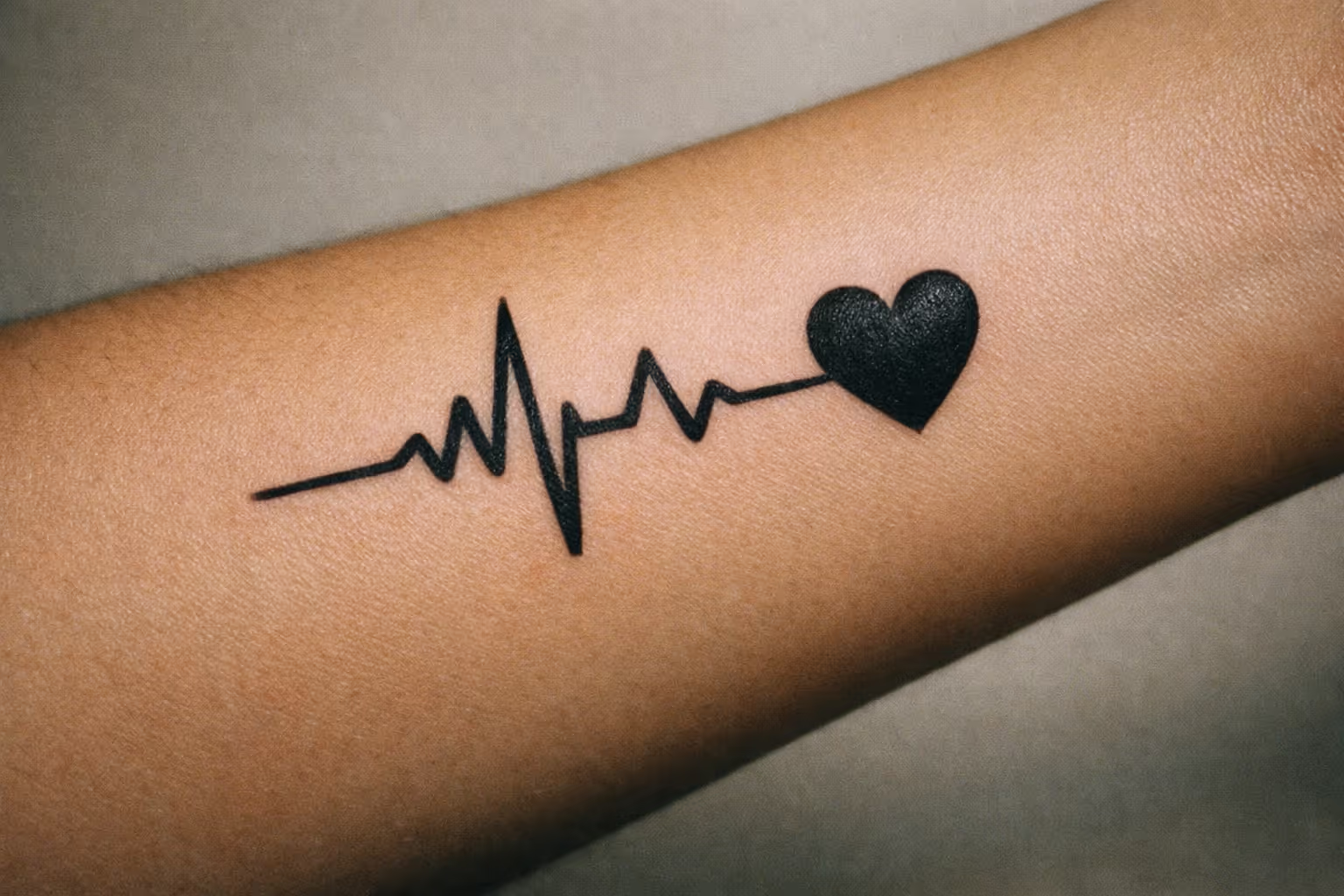
The spot most people want for a heartbeat tattoo - a thin single-needle line across the fingers - is the one that betrays it fastest, blurring within two to three years. Move that same waveform to the inner forearm and it holds far longer. It’s a design where the emotional pull is obvious and the placement math is what gets skipped. Here’s where a heartbeat line actually lasts, how adding a name or color changes it, and what it costs.
What a Heartbeat Tattoo Means
A heartbeat tattoo uses the waveform as shorthand for being alive. Each spike is a beat, and a row of them says, plainly, I’m still here. That’s why the design lands so hard for people who’ve survived something - a cardiac event, an illness, an accident. Add a date and the word “survivor” and the line stops being decorative; it’s a record.
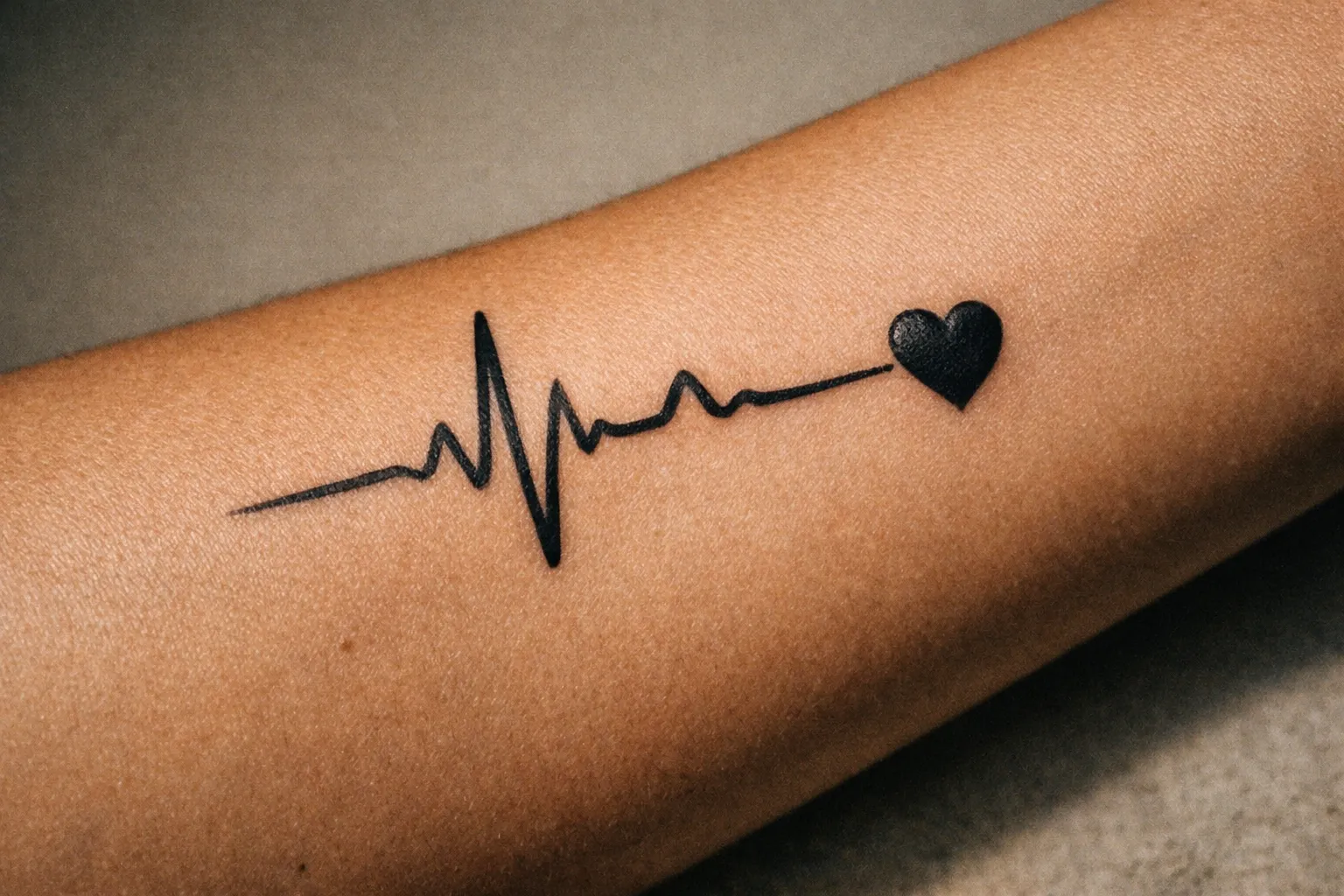
Beyond survival, the meaning splits a few ways:
- Romantic love - a partner’s rhythm or name woven into the line, often mirrored across two people’s wrists.
- Parent-child bond - a child’s first heartbeat from an ultrasound, or a birth date tucked under the waveform.
- Memorial - a last recorded heartbeat with name and dates, sometimes ending in a small heart or cross.
There’s no single fixed symbolism here, and that’s worth saying out loud. The same line can mean grief on one arm and new parenthood on another. The meaning lives in what you attach to it - the name, the date, the context you bring to the chair.
Adding Names to Heartbeat Tattoos
Adding a name is where this design gets personal, and where it most often goes wrong. The waveform itself is forgiving. Text is not.
The two common approaches:
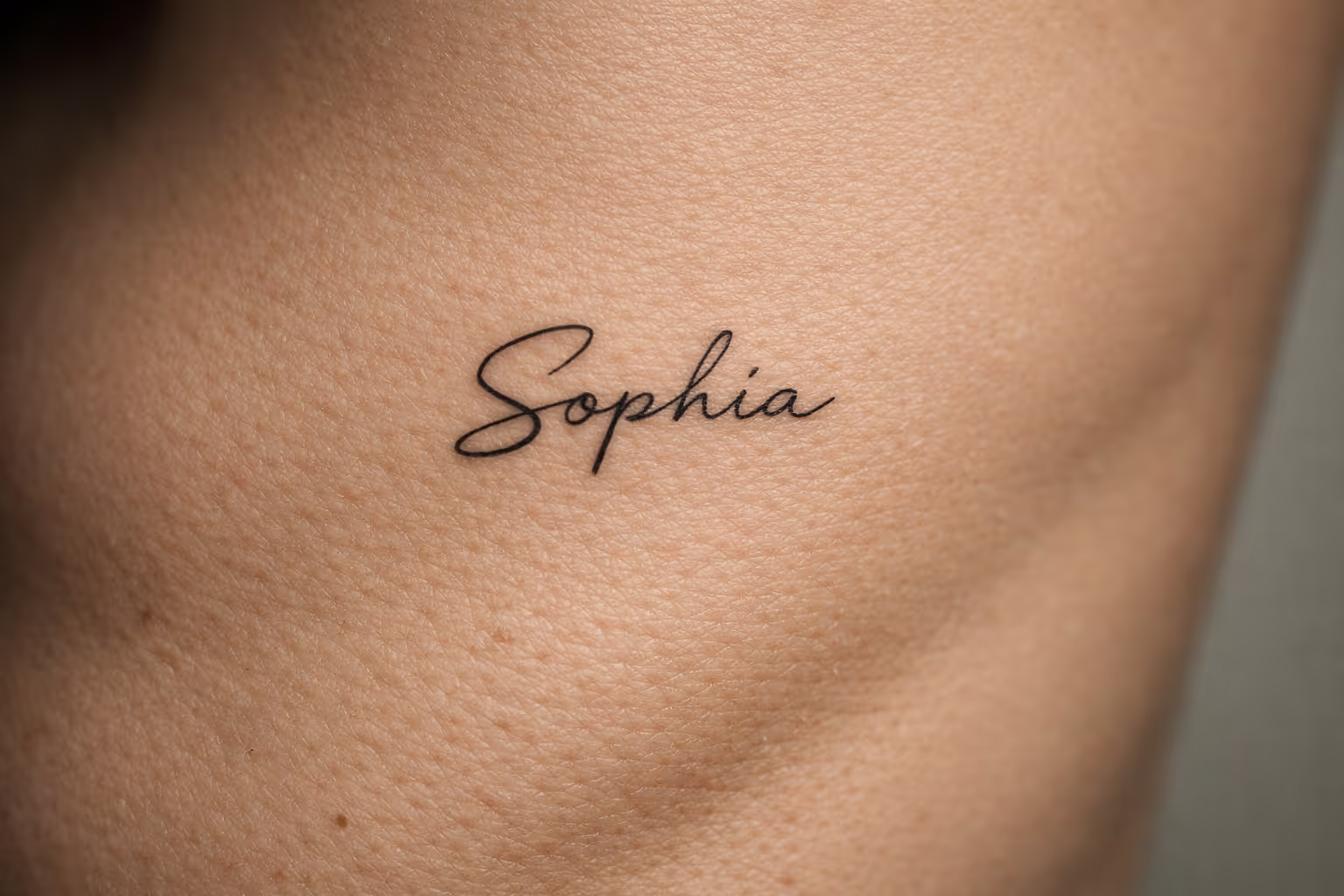
- Name along the line - the heartbeat runs straight, with a name in cursive sitting just below it like a caption. Clean and legible.
- Name inside the waveform - the letters become part of the line, the script rising and falling as if the name itself is the pulse. This looks great in a portfolio shot and is harder than it looks once healed. It needs an artist who’s comfortable integrating text, not just tracing a stencil.
I’ve seen the second approach done beautifully and I’ve seen it turn into a smear. The difference is almost always the artist, not the concept.
A few rules that keep a heartbeat tattoo with names readable five years out:
- For anything under 3 inches, stick to simple cursive or a clean sans-serif. Ornate, hairline-thin scripts close up and blur as they heal.
- One name reads cleanly. Two or three names plus dates crammed into a 3-inch space turns to mush from arm’s length once it’s healed.
- Triple-check spelling and date format on the stencil. Misspelled names and wrong dates are among the most common tattoo regrets, and the fix is laser removal at roughly $200-$500 per session or a heavy cover-up. Read the stencil out loud before the needle touches you.
Good placements for a named heartbeat: inner forearm (3-5 in) for visibility, or collarbone (3-4 in) if you want it more private. Avoid the side of the hand or the ankle bone - high-friction, high-movement skin distorts fine letters fast.
Variations Featuring a Heart in the Design
The heartbeat tattoo with heart is the most-requested variant, and it’s beginner-friendly. The waveform either ends in a small heart outline, passes through one, or the final spike morphs into the heart shape itself.
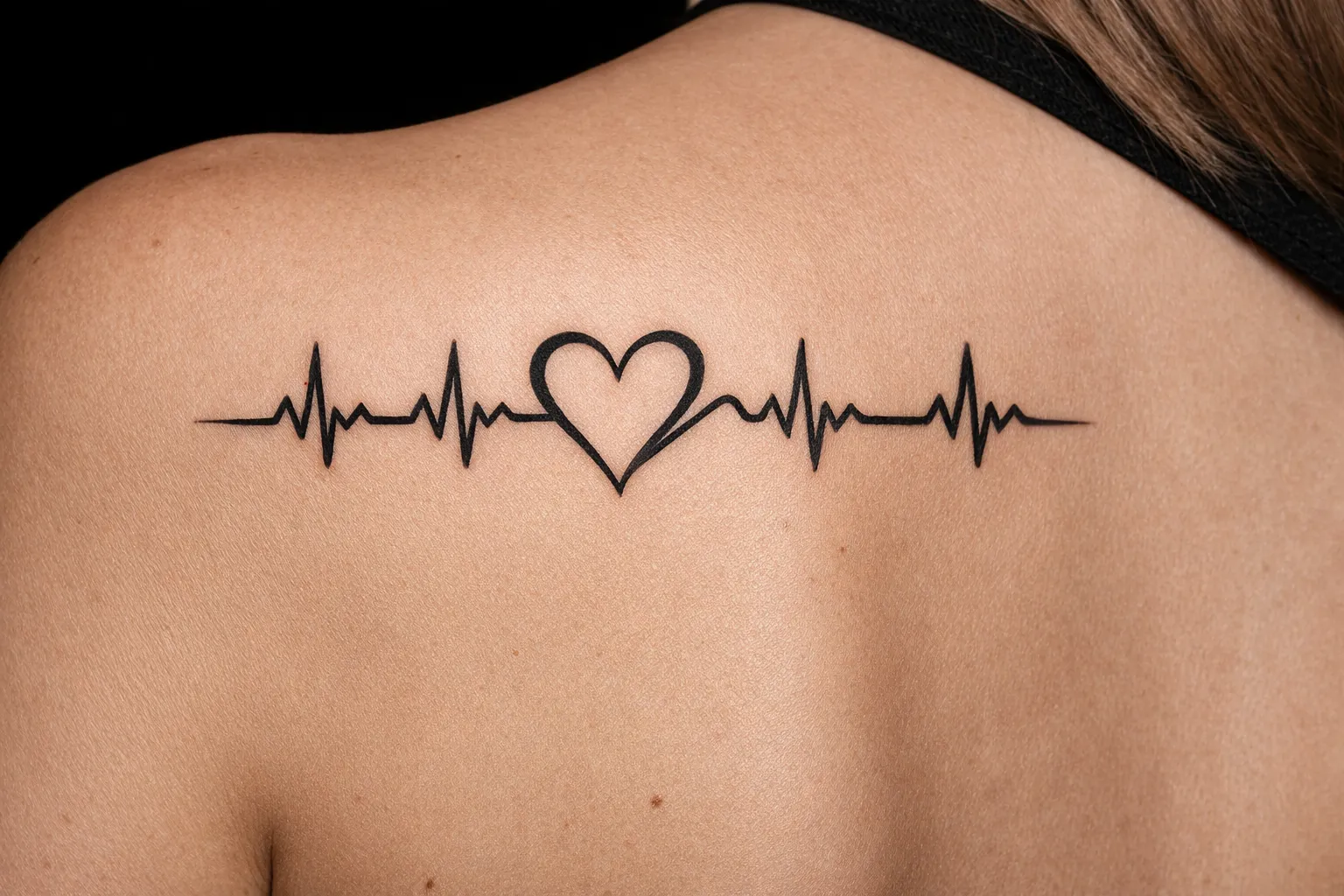
Three reliable layouts:
- Heart at one end - the line runs flat, beats a few times, and resolves into a small heart. Simple, balanced, ages well.
- Line through the heart - the waveform passes straight through a heart outline, the spikes visible inside it. More detail, slightly larger footprint.
- Spike-to-heart morph - the last upstroke curves into half a heart. Subtle and clever when done right; muddy when the line weights don’t match.
If you want color, here’s the honest version: keep the heartbeat line in black and use red only for the heart accent. Red ink fades faster and blurs more than black, especially in thin lines. A black line with a small red heart will hold its shape years longer than an all-red design. I’ve had clients come back two years after getting all-red fine-line work and the difference is real.
Size and placement that work: wrist (2-3 in) for a minimalist look, or forearm (3-5 in) if you’re adding more detail to the heart.
Creative Ideas Beyond Names and Hearts
Once you move past names and hearts, the waveform becomes a base layer you can build on. Some heartbeat tattoo ideas that hold up technically:
- Heartbeat into a shape - the line transitions into a mountain outline, an airplane (for travelers), a paw print (for a pet), or an infinity symbol. Keep the transition crisp; the shape should grow out of the line, not get bolted onto it.
- Cross heartbeat - the waveform with a small cross integrated, common for people tying faith to the design. Works well on the inner forearm at 4-5 in.
- Multi-line family piece - several ECG lines (parents plus child) woven together. This is advanced work - book extra time and an artist who’s done layered linework before.
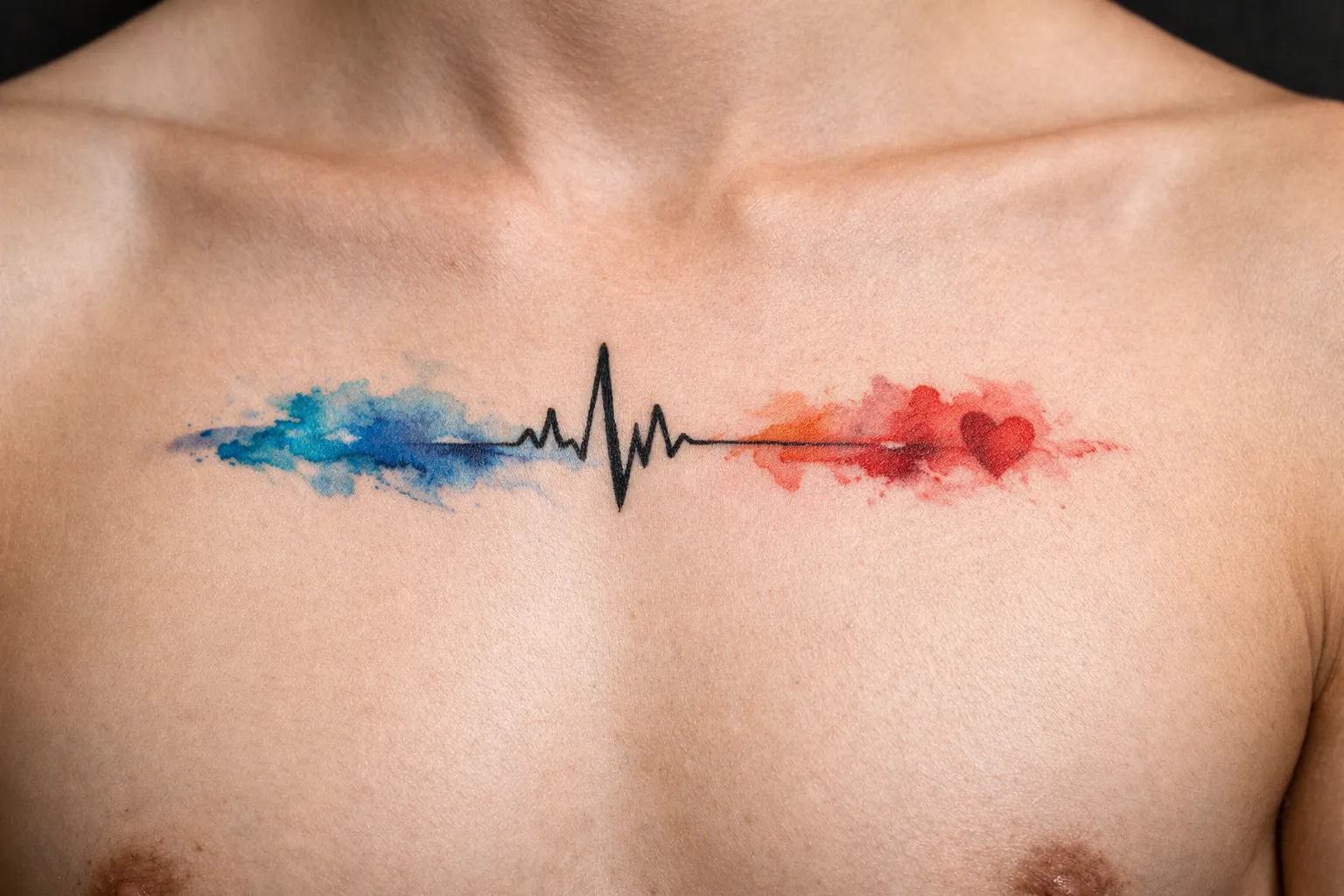
- Watercolor backing - soft color washes behind a black heartbeat line. The black holds the structure; the color is mood.
- Geometric framing - the waveform set inside a circle, triangle, or dotwork frame. Clean and modern, but the frame has to be the same line weight as the heartbeat or it fights itself.
Idea catalogs and stock platforms collectively surface thousands of heartbeat tattoo variations - so reference material is not the bottleneck. Curating it down to one cohesive design is. Bring 3 to 5 reference images that share a line weight and style, not a scrapbook of mismatched ideas. One underused source: medical illustration databases and open-access cardiology journals publish clean ECG strip images that translate well to tattoo reference - sharper and more anatomically accurate than most Pinterest grabs.
Real ECG vs. Stylized Heartbeat
This trips people up, so decide before your consultation. A real ECG - pulled from a hospital strip, a fetal monitor, or a smartwatch reading - looks irregular. It has uneven spacing, a baseline that wanders, sometimes a flat stretch. A stylized heartbeat is the clean, evenly-spaced spike pattern you see in stock graphics.
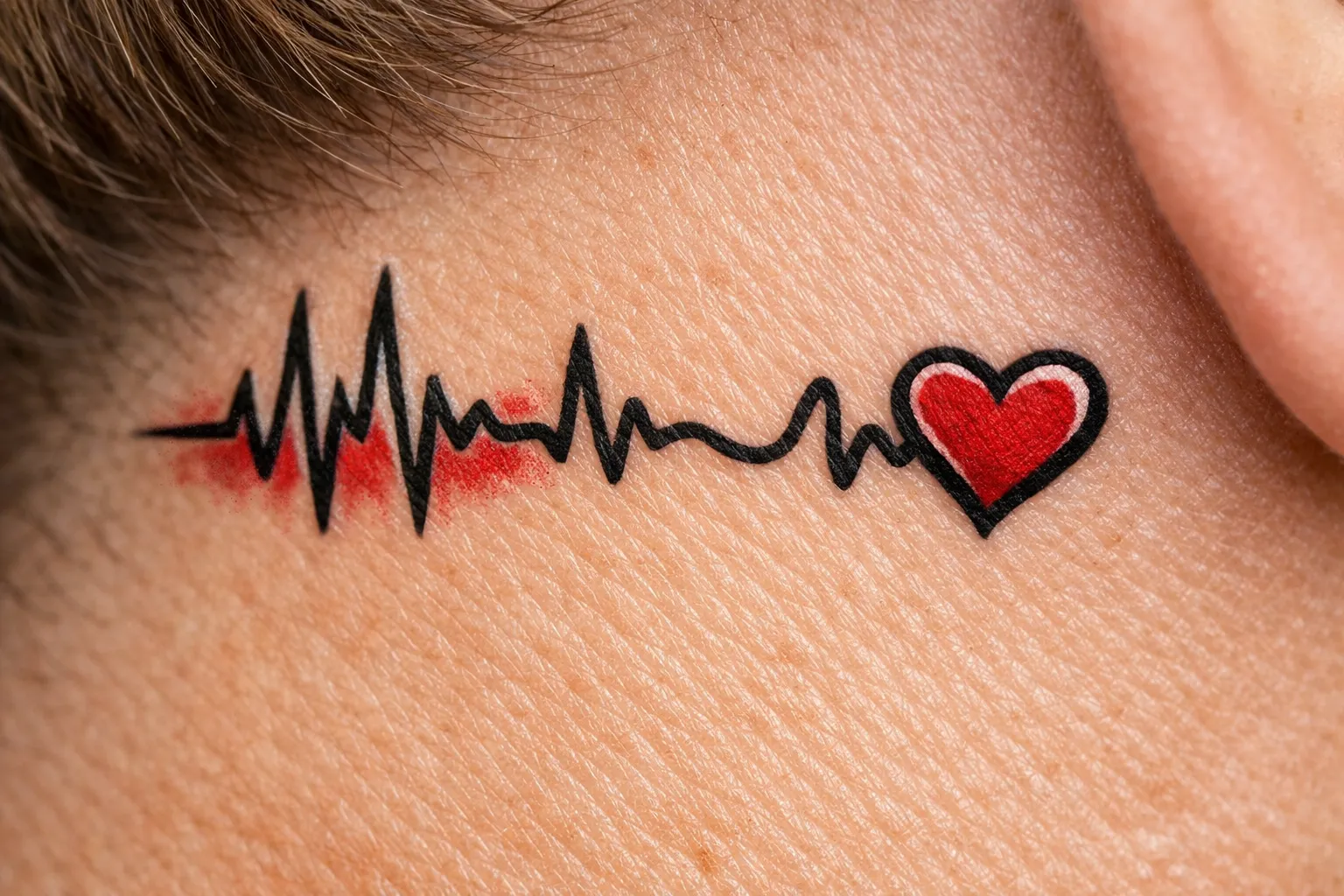
If you want clinical authenticity (your actual rhythm, your baby’s actual ultrasound), bring a high-contrast, full-segment image - ideally a paper printout at 300 dpi or better, not a cropped phone screenshot. Artists trace and scale paper strips far more cleanly than a blurry screen grab. Smartwatch ECG graphs from an Apple Watch or fitness tracker work too, as long as the export is sharp.
One detail medically savvy viewers catch: most Western ECG lines read left to right. If the stencil gets mirrored, the rhythm runs backwards. Check the orientation in a mirror before you commit.
Best Placements and Sizes
Placement drives both how the tattoo looks and how long it stays crisp. The waveform is a straight, thin line, so stable, flat skin keeps it straight.
- Wrist (2-3 in) - high visibility, intimate, low-to-moderate pain. The most popular spot for minimalist single-line pieces. Sun exposure here is heavy, so expect fading sooner.
- Inner forearm (3-5 in) - the best all-rounder. Stable skin, easy to add a name or date, moderate pain, ages well.
- Collarbone (3-4 in) - elegant for a line-plus-name, easy to hide. The bone underneath makes it pricklier than the forearm.
- Ribcage (5-9 in) - room for memorial pieces with multiple names and dates, but a curved surface that warps a straight ECG line if your weight shifts. This is the high-pain zone.
On pain: ribs and sternum hurt considerably more than forearm and wrist - the ribcage delivers a sustained, deep scrape sensation while the forearm registers more as a surface sting - and the ankle and foot sit somewhere in between but closer to the rib end. The collarbone lands closer to the rib experience than the forearm one, because the bone is right there with minimal padding between skin and needle. Bony, thin-skinned areas always bite harder than fleshy, stable ones. If you’re getting a ribcage piece and you’re sensitive, schedule around your menstrual cycle - pain perception and swelling can run higher during it.
For memorial and named tattoos specifically, favor stable skin - inner forearm or upper back - over stomach or outer thigh, which stretch over time and distort lines and letters. The inner forearm is the single most reliable spot for a named heartbeat: flat, low-stretch, and easy to read at arm’s length, which matters when the name on it matters.
What It Costs and How to Book
Most posts dodge the numbers. Here are realistic USD ranges for urban US and EU studios:
- Minimum shop charge: $80-$120, even for a tiny wrist line.
- Simple heartbeat line (2-3 in, no text): $100-$200 in most US urban studios; EU pricing varies by city and artist tier, so treat this as a floor, not a ceiling.
- Heartbeat + name + small heart: $150-$300.
- Larger ribcage/chest or multiple names: $250-$600+, depending on time and the artist’s reputation.
Time at the chair: a plain single-line heartbeat runs 20-40 minutes; add a name and small heart and you’re at 45-90 minutes; a multi-element piece with a portrait, date, or quote can take 1.5-3 hours.
Good fine-line artists book out 4 to 12 weeks ahead, and the in-demand ones run 3 to 6 month waitlists - longer in cities like New York, Los Angeles, London, or Berlin where fine-line demand has outpaced supply since roughly 2019. Expect a deposit of $50-$150 or 20-30% of the quote, usually non-refundable but transferable if you reschedule with decent notice.
Before you book, vet the artist’s portfolio for two things specifically: clean fine-line work and legible text. Plenty of artists nail one and fumble the other. Ask to see healed photos that are 1-3 years old, not fresh shots. Fresh ink always looks crisp. Healed ink tells you how their lines actually hold.
How Heartbeat Lines Age and Heal
Thin lines are the whole appeal of this design, and thin lines are also its weakness.
A fine, single-needle heartbeat on a high-movement spot - fingers, side of the hand - can blur within 2 to 3 years. Fine-line black heartbeat tattoos on stable skin like the inner forearm often need a first touch-up somewhere in the 3 to 5 year range to keep the line crisp, though placement and skin type push that window in either direction; bolder, thicker variants - say, a 1.5-2mm line versus a single-needle hairline - tend to hold longer before noticeable fading, but there’s no universal cutoff. If you want maximum longevity, ask your artist for a line that’s a touch thicker than the hairline-thin stock look. It sacrifices a little delicacy for years of legibility. That’s a trade most people are happy they made.
Healing timeline:
- Day 1-3: The tattoo is an open wound. Keep it clean, wash gently with mild soap, pat dry, and apply a thin layer of fragrance-free moisturizer or whatever ointment your artist specifies. Some redness and weeping is normal.
- Week 1: Flaking and light scabbing start. Do not pick. Keep moisturizing, keep it out of soaking water - no swimming, no hot tubs.
- Week 2-4: The surface heals and any peeling finishes. The line may look slightly cloudy as deeper skin remodels - that clears.
- Weeks 6-8: Full skin remodeling completes.
Two non-negotiables for keeping a thin line sharp: avoid soaking the tattoo for 2-3 weeks, and protect it from the sun. UV breaks down ink, and a thin black line shows fading faster than a bold one. Once healed, use SPF 30-50 or sun-protective clothing over the spot, especially for wrist and forearm placements that catch daily sun.
Common Mistakes to Avoid
The regrets cluster around a handful of predictable errors. I see the same ones repeatedly.
- Lines too thin for the placement. Single-needle work on fingers or the side of the hand looks incredible for a year, then blurs. Match line weight to how much that skin moves.
- Bad reference quality. A cropped, blurry ECG screenshot produces a waveform that doesn’t actually resemble your heartbeat. Bring high-contrast, full-segment images.
- Overcrowding. Multiple names, a long quote, and several dates jammed into 3 inches reads as a smudge from arm’s length once healed. Less text, more space.
- Style mismatch. Pairing an ultra-minimal fine line with a thick, bold font or a clipart-style heart looks unbalanced. Keep line weights and style cohesive across every element.
- Tattooing too soon after loss or a breakup. Memorial and relationship pieces inked in the rawest weeks can become painful to look at later. Many artists suggest waiting 3 to 6 months after a major event before committing. The duality of joy and pain in how we process grief and love is worth sitting with before you commit it to skin permanently.
That last one is worth sitting with. The design isn’t going anywhere.
✓ Pros
- Strong symbolic versatility: survival, love, memorial, family
- Minimalist style suits many placements and sizes
- Fine-line work can look elegant and clean
- Customizable with names, hearts, shapes, and color accents
✗ Cons
- Thin lines fade faster and need touch-ups
- Text integration is tricky and often fails if artist lacks skill
- High-movement or bony placements distort lines quickly
- Real ECG references require high-quality images for best results
Frequently Asked Questions
- Can I use a digital screenshot of my ECG for the tattoo?
- Digital screenshots often lack the contrast and resolution artists need to trace cleanly. A high-contrast paper printout at 300 dpi or better is preferred for accuracy.
- How do I know if my artist can handle fine-line text?
- Ask to see healed photos that are 1-3 years old, not just fresh ink. Legible text after healing is a good indicator of their skill with fine lines and lettering.
- Is it better to get a thicker line for longevity?
- Yes. Slightly thicker lines sacrifice some delicacy but maintain crispness for years longer, especially on high-movement areas.
- When is the best time to get a memorial heartbeat tattoo after a loss?
- Many artists recommend waiting 3 to 6 months after a major event to avoid emotional distress and ensure the design feels right over time.
- What aftercare products are best for healing a heartbeat tattoo?
- Use fragrance-free moisturizers during the healing phase and avoid soaking the tattoo for 2-3 weeks. Once healed, protect it with SPF 30-50 or sun-protective clothing.
- Can I get multiple names in one heartbeat tattoo?
- You can, but cramming two or three names plus dates into under 3 inches usually blurs and becomes unreadable after healing. More space or simpler text is better.
Choosing Yours
Pick the placement first. Inner forearm at 3-5 inches is the most forgiving spot for a line that includes a name or date, and it ages better than the wrist. Decide between a real ECG and a clean stylized line before you walk in, and bring a sharp reference if it’s the real thing. Keep text simple and the line weight consistent across every element.
Then vet the artist’s healed work, not their fresh shots, and confirm they can handle fine line and legible text in the same piece. Get the spelling and the dates right on the stencil - read it twice, out loud if you have to.
Everything else - the touch-up in a few years, the sunscreen, the no-swimming rule - is just maintenance on a line that, done well, keeps reading as a pulse for a long time.