Most pairs pick a mother daughter tattoo in an afternoon, then stall for weeks on the real question: do you want the exact same design on both of you, or two pieces that connect but each stand alone? That single choice - identical versus complementary - shapes how the tattoos age, how they read when you’re not standing side by side, and whether the design still makes sense in fifteen years. This guide covers the full chain: what to get, where to put it, and what actually holds up on two generations of skin.
Here’s the part most guides skip. Your skin and your daughter’s skin - or your mother’s - don’t age the same way. Mature skin has less elasticity, and ultra-fine micro-detail that looks razor-sharp on younger skin blurs faster on it. That’s not a reason to avoid matching tattoos. It’s a reason to plan them properly before you book, not to find out at year seven.
Below you’ll find the symbols that carry real meaning, fifteen designs sorted by scale, short quotes that survive healing, a placement breakdown by pain and visibility, and the two-scale approach that solves the generational skin problem outright.
✓ Pros
- Complementary designs let each tattoo read independently if you're not together
- Small-scale options (wrist, ankle) keep sessions short and healing straightforward
- Handwriting-based designs add deep personalization without adding visual complexity
- Wide range of scales means mom and daughter can each choose a size that suits their body and skin
- Placement flexibility - from visible (inner forearm) to private (ribcage) - suits different lifestyles
✗ Cons
- Skin texture and elasticity differ across generations; fine micro-detail that looks sharp on younger skin can blur faster on mature skin
- Long quotes in small script are the single most common mistake - letters crowd, blur, and lose readability within years
- Complementary designs that only work side-by-side carry long-term risk if the visual logic depends on both pieces being present
- Mismatched placements (e.g., forearm vs. foot) age at different rates and can weaken the 'matching' effect over time
- High-pain placements (ribcage, spine) chosen for symbolism can lead to regret if pain tolerance wasn't discussed first
What Makes a Mother Daughter Tattoo Actually Work - and Why Most Pairs Get It Wrong
A mother daughter tattoo works when both people agree on three things before they book: design type (symbol or text), scale (micro or medium), and visibility (public or private). Get those aligned and everything else follows. Skip that conversation and you end up with mismatched placements that age at different rates and stop reading as a pair.

Start with the structure question. Identical means the same design in the same style - clearly a matched set, obviously paired. Complementary means linked but distinct pieces: same motif at different scales, or two halves of one idea (a bird and a nest, a watering can and a sprout). Complementary is usually the smarter choice across generations, because identical only works cleanly when both people share the same pain tolerance, body proportions, and visibility preferences - which is rare between a mother and a daughter.
Run the stands-alone test before you commit. Cover one tattoo and ask whether the other still reads by itself. If yes, you’ve reduced your long-term risk: if placements drift or one of you moves away, each piece still holds its own meaning.
The handwriting upgrade is the best-value trick in this whole category. Use each other’s actual handwriting for a single word - “Mom,” “Love,” or a set of initials. It makes a simple design deeply personal without adding a shred of visual complexity, and simple is exactly what scales and ages well.
One sequencing note: decide the emotional message first, then pick the symbol. Figure out what you want the tattoo to say - “I’ve got you,” “we grew together,” “always” - and let that drive the choice of image or word. Working the other way around, starting from a pretty design and reverse-engineering the meaning, is how people end up with something that photographs well and means nothing.
Symbols That Represent the Mother Daughter Bond
The symbols that best represent the mother-daughter bond are hearts, birth flowers, butterflies, Celtic knots, and complementary pairs like a bird and nest - each carrying love, growth, or protection. No single universal symbol exists, so pick the one whose meaning actually matches your relationship.

Hearts are the most universal motif and the most flexible. They work from a 1 cm micro heart on the inner wrist up to a 5-6 cm illustrative piece on the upper arm. Bold outlines age far better than single-needle fills here - a hair-thin heart tattoo looks sharp on day one and softens into a smudge faster than you’d think.
Flowers, especially birth flowers, add a personalizing layer without any new complexity. A daisy for an April birthday, a rose, or any shared bloom works well as a matching pair on the forearm or ankle at 2-4 in (5-10 cm). American traditional style with thick outlines holds up best. Worth knowing: white and yellow pigments fade fastest, so a yellow-centered daisy needs SPF after healing.
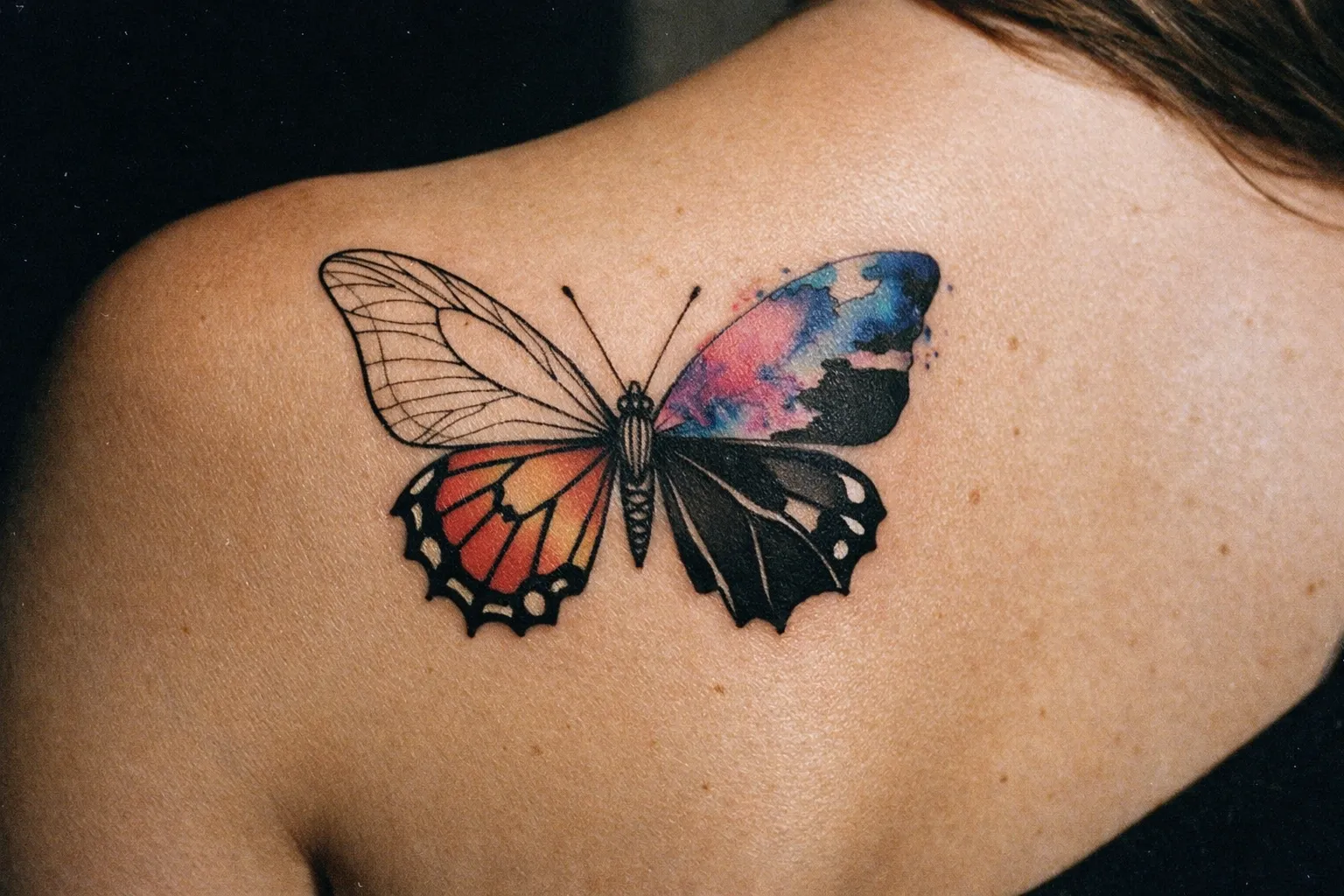
Butterflies carry transformation and growth symbolism. A split butterfly - each person taking one wing - reads as a complementary pair on the shoulder blade or upper arm at 2-4 in. Blackwork silhouette ages more reliably than color-only fills at this scale.
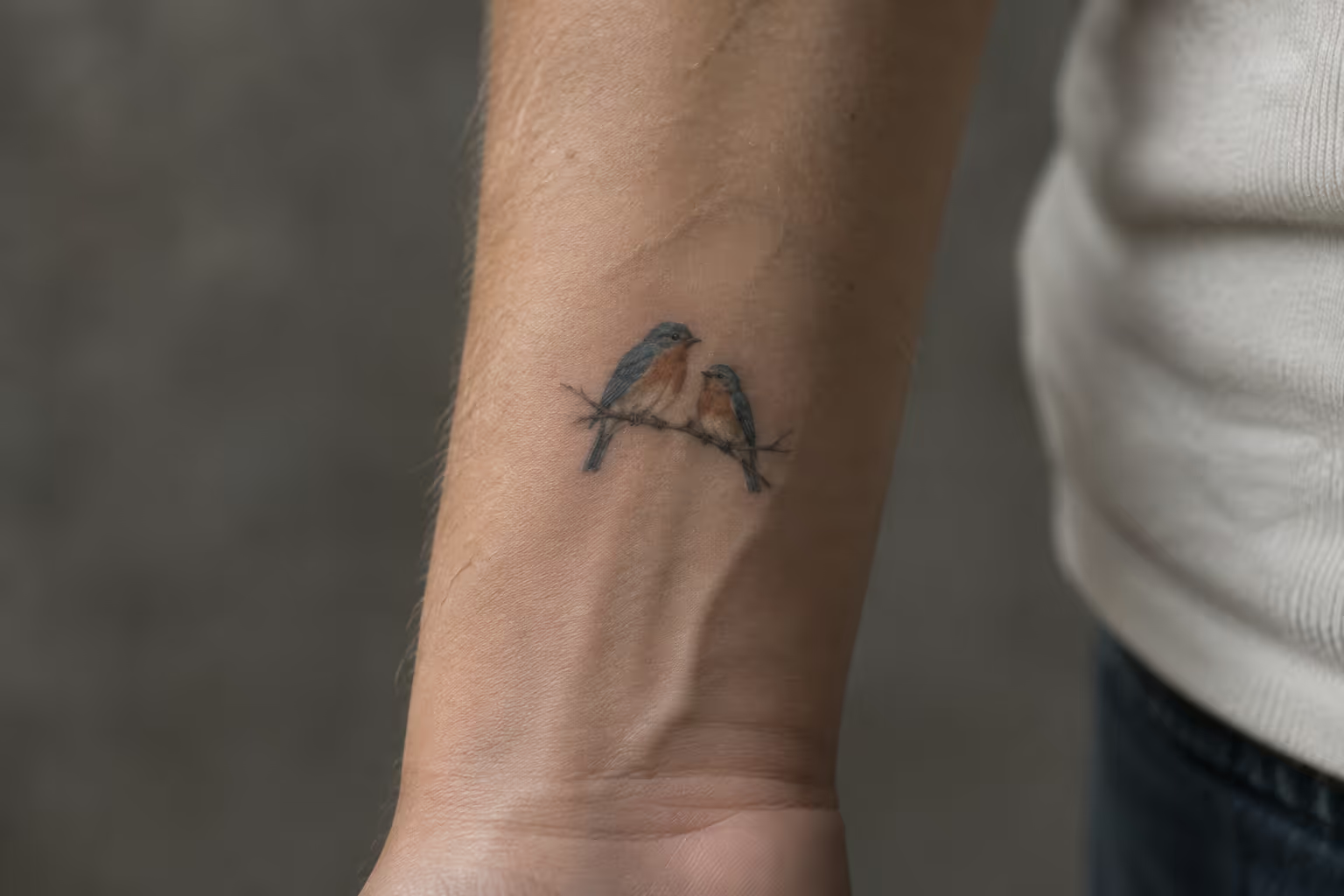
Complementary pairs are where the mother-daughter story gets room to breathe. A watering can and a sprout (nurturing and growth), a bird and a nest (protection), a bird in flight paired with wings - each half reads alone, and together they tell one idea. Plan both halves with the same artist, ideally in the same session, so the line weight and style match.
Stars and constellations carry guidance symbolism. Micro-stars under 1 in on the ankle or behind the ear work, but micro-thin lines under about 0.4 mm are the fastest to soften and blur - plan for touch-ups roughly every 5-7 years on high-wear placements, so go slightly bolder than the reference photo suggests from the start.
A note on cultural roots, because they matter if the meaning matters to you. The Celtic knot is a continuous line with no start or end, originating in Celtic tradition as a symbol of an unbroken bond. The lotus carries Buddhist and Hindu meaning - growth and beauty emerging through difficulty. Both are specific traditions, not generic decoration, so choose them knowing where they come from.
15 Design Ideas Worth Considering - Sorted by Scale
Here are fifteen mother daughter tattoo ideas sorted by scale, from tiny and discreet to bolder illustrative work. Each one names a placement, a size range, and one honest note on how it ages.
Small and Discreet (Ideas 1-5)
-
Micro heart - fine-line or filled blackwork; inner wrist or ankle; 1-1.5 in (2.5-4 cm). A bold outline holds far better than a single-needle fill at this size.
-
Matching initials - each other’s handwriting is the version worth getting; behind the ear or inner wrist; under 1 in. Don’t cram the letters; spacing matters more than the font choice.
-
Tiny star pair - two stars from the same constellation or matching micro-stars; ankle or behind the ear; under 1 in. Fine-line tattoos typically begin softening within 1-2 years and often show clear loss of definition by around 5-7 years - go slightly bolder than the reference photo suggests and plan for a touch-up in that window.
-
Birth flower pair - a daisy for April, a rose, or any shared birth-month bloom; inner forearm or ankle; 1.5-2.5 in (4-6 cm). White and yellow pigments fade fastest - use SPF once it’s healed.
-
Minimalist moon phases - a matching crescent or full moon; collarbone or inner wrist; 1-2 in. Simple silhouettes hold up cleanly for the long haul.
Symbolic and Complementary (Ideas 6-10)
-
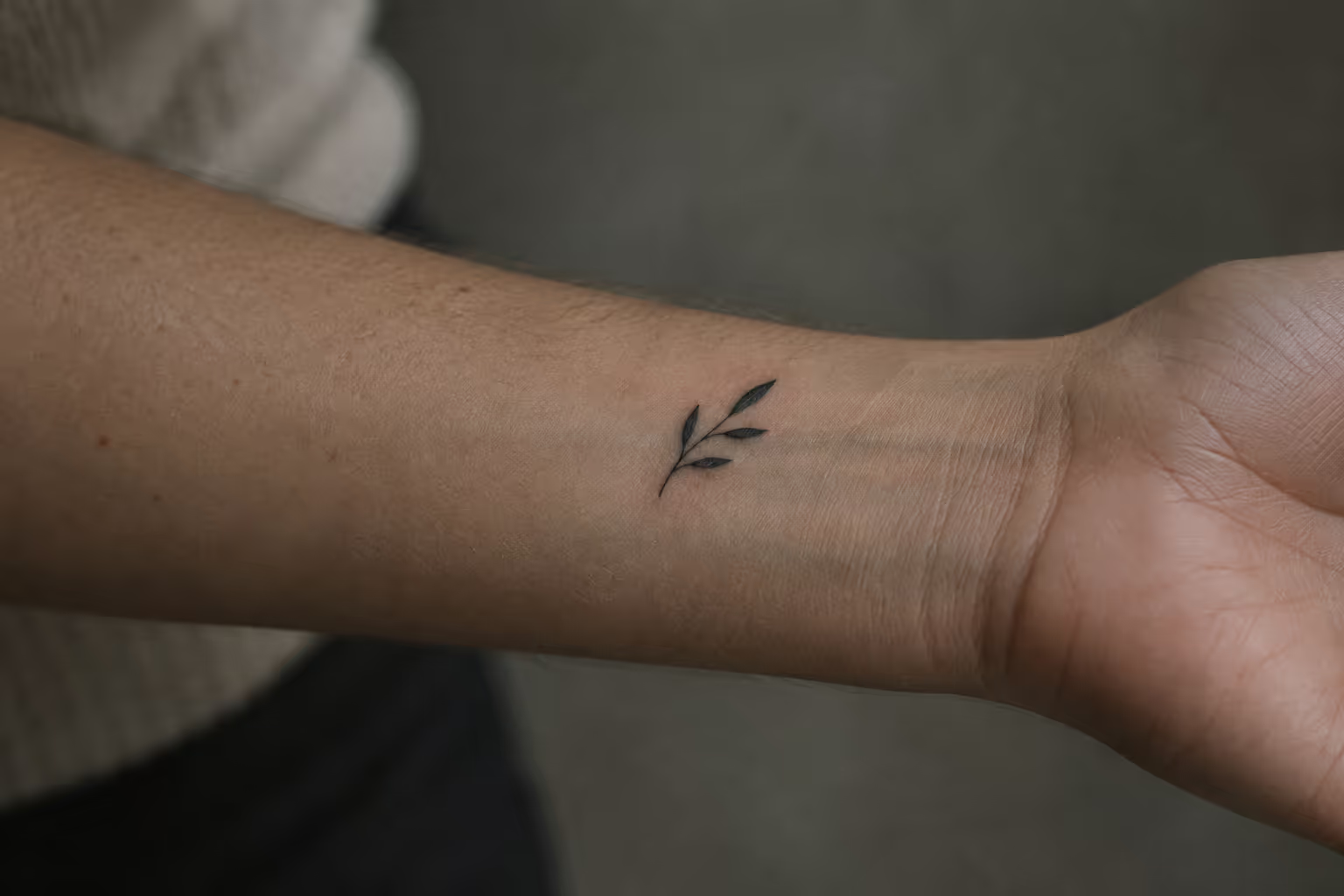
Watering can + sprout - nurturing and growth, split between you; fine-line blackwork; inner forearm; 1.5-2.5 in each. Design each half so it reads on its own.
-
Split butterfly - one wing each; shoulder blade or upper arm; 2-4 in (5-10 cm). A blackwork silhouette ages better than a color-only version here.
-
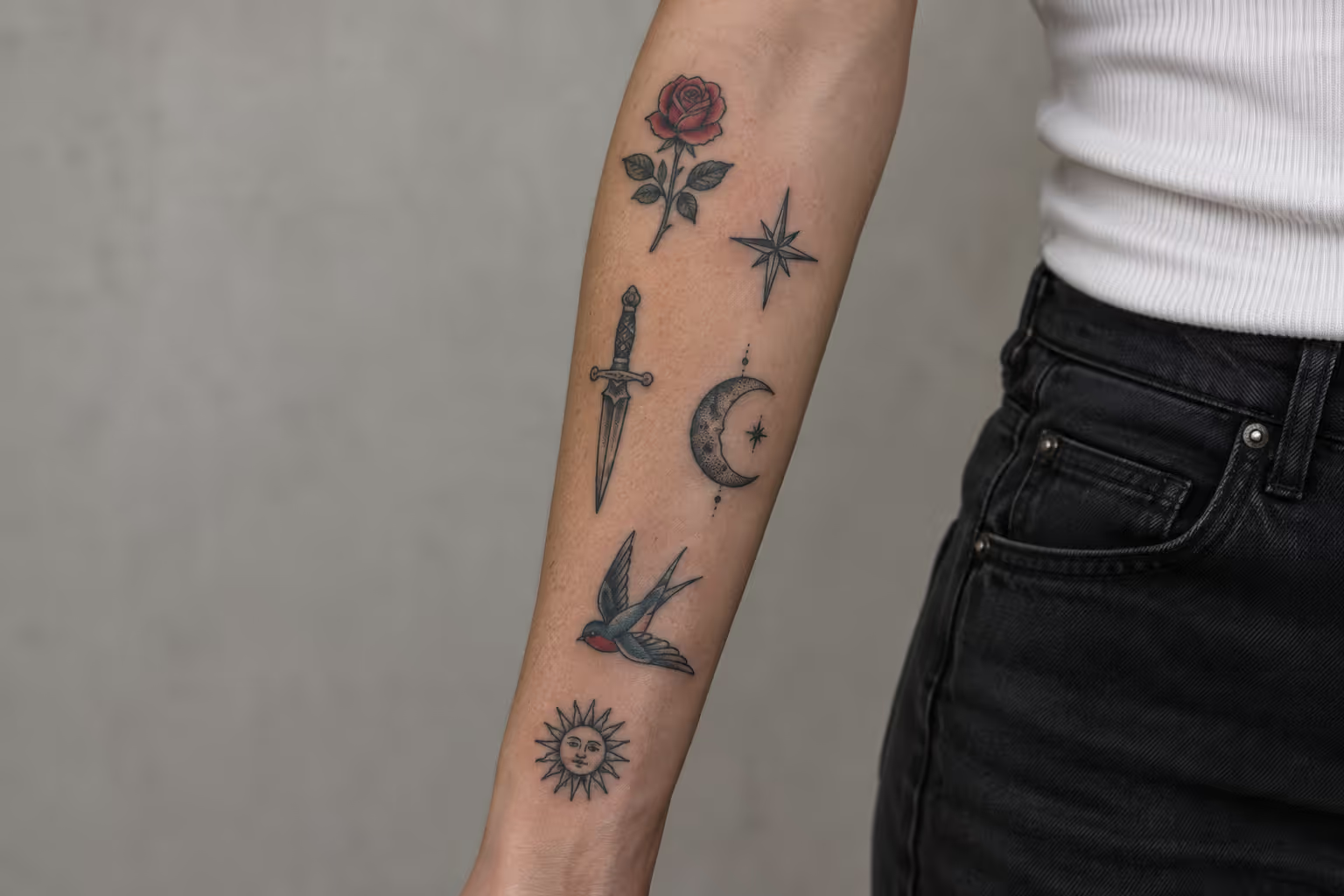
Sun and moon pair - one takes the sun, one the moon; forearm or ankle; 2-3 in. Works in fine-line or neo-traditional.
-
Bird + nest - protective symbolism; upper arm or shoulder blade; 2-3 in. Illustrative or fine-line are both viable.
-
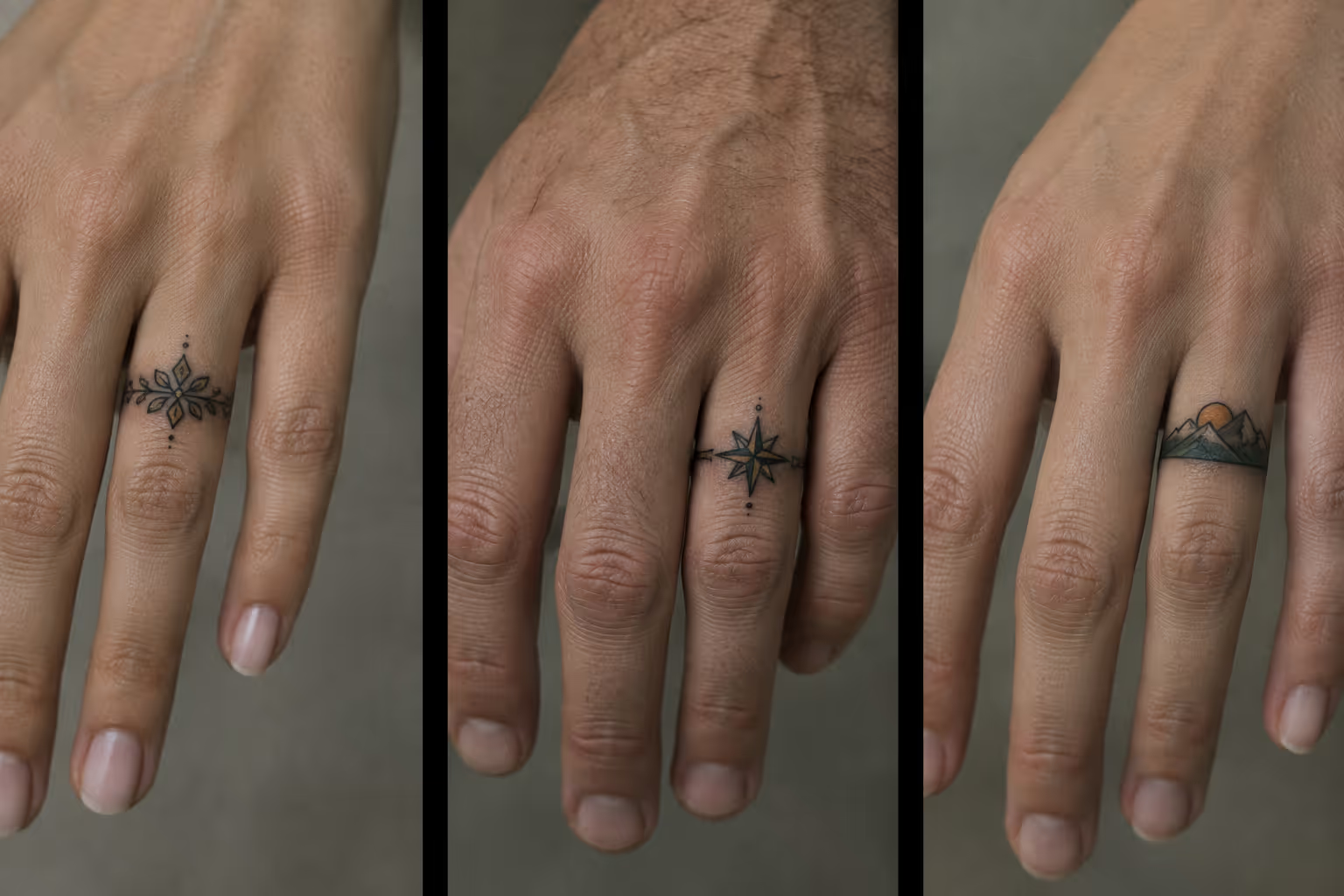
Celtic knot - a continuous line for an unbroken bond, matching and identical; upper arm or forearm; 2-4 in. Bold lines age better than fine-line for knotwork, since the strands need to stay visually separate. Celtic in origin.
Illustrative and Bolder (Ideas 11-15)
-
Matching daisy cluster - April’s birth flower in American traditional style; outer forearm or upper arm; 2-4 in. Thick black outlines hold contrast as skin ages.
-
Elephant pair - loyalty and memory symbolism; fine-line or illustrative; upper arm or thigh; 2-4 in. Avoid over-detailing at small sizes; the wrinkles turn to mush.
-
Shooting stars - matching or a trailing design; collarbone or shoulder blade; 2-3 in. Simple silhouettes beat hyper-detailed realism at this scale.
-
Arrows - direction and forward movement; inner forearm; 2-3 in. Clean geometric linework ages well.
-
Matching character reference - a shared film or book character in simple illustrative style; upper arm or forearm; 3-5 in. This needs an artist experienced in illustrative work. Avoid hyper-realistic micro-detail that won’t survive.
Short Quotes and Words That Survive Healing and Aging
For mother daughter tattoo quotes, text length is the single biggest variable in whether they survive: the longer the phrase, the smaller each letter must be, and small letters blur. Keep it to one to three words per person as a firm guideline. A practical ceiling: limit wrist and inner-arm designs to roughly four words maximum for exactly this reason.

The size numbers back this up. Standard script needs a letter height of at least ½ inch (12-13 mm) to stay readable as the ink settles, and fine or ornate script about 1 inch (25 mm); on the inner wrist, stick to bold script or block lettering. The lightest strokes should heal to at least 0.3-0.4 mm thick, which is the argument against ultra-thin single-needle script. It looks sharp at the appointment and starts closing up within a few years.
Split-phrase structure is where quote tattoos get personal. Each half should read as a complete thought alone: “Always my” / “Forever my” works, and “She taught me” / “to fly” works. Avoid halves that are grammatically stranded without the other, or you’ve built the exact side-by-side dependency the stands-alone test warns against.
Short options that work at tattoo scale:
- “Mama” / “Daughter” - inner wrist or collarbone, fine script
- “Always my” / “Forever my” - inner forearm or collarbone
- “I love you” / “I love you more” - wrist or inner forearm
- “Love you to the moon” on one person, with “and back” or a moon symbol on the other - ribcage or collarbone
- “Heart to heart” - collarbone or sternum
- “Forever yours” - inner wrist
- Single words - “Home,” “Always,” “Mine” - behind the ear or inner wrist, under 1 in
On fonts: a thin serif or fine cursive reads as elegant, but it needs about 1 inch (25 mm) of letter height to stay readable after the ink settles. Skip ultra-condensed fonts where the strokes sit too close together. The handwriting upgrade applies here too - using each other’s actual handwriting for a single word is the most personal version of a quote tattoo, and it forces the design simple enough to scale correctly.
For placement: the inner forearm suits slightly longer phrases and leaves room to add to later; the collarbone or ribcage works for a single clean line; the wrist is for one to three words of micro-text and nothing more.
Where to Put It - Placement Guide by Visibility and Pain
Placement comes down to two axes: how visible you want the tattoo day to day, and how much pain you’re willing to sit through. Neither answer is wrong, but a mother picking the ribcage while her daughter picks the wrist means two very different sessions - talk about it before you book.
 Size ranges for common placements in mother-daughter tattoos.

Mother Daughter Tattoo Placement Comparison
| Inner wrist | Inner forearm | Upper arm | Ankle | Behind the ear | Collarbone | Ribcage | Shoulder blade | Spine | |
|---|---|---|---|---|---|---|---|---|---|
| Pain Level | Low-moderate | Low-moderate | Moderate | Moderate | Moderate-high | Moderate | High | Moderate | High |
| Best Design Size | 1-2 in (2.5-5 cm) | 2-4 in (5-10 cm) | 3-5 in (7.5-12.5 cm) | Under 1.5 in (4 cm) | Under 1 in (2.5 cm) | 1-3 in (2.5-7.5 cm) | 2-4 in (5-10 cm) | 3-5 in (7.5-12.5 cm) | 2-5 in vertical |
| Visibility | High | High | Medium | Medium | Low | Medium | Low | Low | Low |
| Sun Exposure | High | High | Medium | Low-medium | Low | Medium | Low | Low | Low |
| Best For | Short quotes, micro symbols | Handwriting quotes, florals | Illustrative, symbolic pairs | Tiny symbols, dates | Micro symbols, initials | Single-line text, small symbols | Meaningful quotes, symbolic designs | Larger illustrative pieces | Vertical quotes |
Visible Every Day: Wrist, Forearm, and Upper Arm
The inner wrist is ideal for short quotes, initials, and tiny flowers - easy to glance at when you want the reminder, quick to tattoo, and simple to match across ages. Pain-wise, it sits well below the ribcage. The inner forearm takes slightly longer handwriting quotes, stays easy to see, and leaves room to add related pieces later; 2-4 in designs sit well here. Both the inner forearm and inner wrist sit in the low-to-moderate range, though the inner forearm generally reads lower than the inner wrist - the wrist’s thin skin over bone and high nerve density push it closer to moderate-to-high, while the forearm muscle padding keeps it genuinely mild for most people. The outer forearm or upper arm has a classic feel and handles larger symbolic or illustrative work at 3-5 in.
Subtle and Intimate: Ankle, Behind the Ear, and Collarbone
The ankle suits tiny symbols and dates at under 1.5 in, though expect some fading from footwear friction. Behind the ear is very discreet at under 1 in, but it’s more sensitive because of the bone underneath - the session is quick, at least. The collarbone is a clean spot for single-line text or small symbols at 1-3 in, moderate on pain, and easy to cover or show as you like.
Private and Symbolic: Ribcage, Shoulder Blade, and Spine
The ribcage is reserved for meaningful quotes or symbolic designs at 2-4 in - the skin is thin over bone, and you’ll move when you breathe, which affects line quality. Pain here runs significantly higher than the forearm or wrist. The shoulder blade carries a protective feel and takes larger illustrative pieces at 3-5 in with only moderate pain thanks to the muscle padding. The spine works for vertical quotes but sits at the top of the pain scale on the upper section - best saved for someone who’s been tattooed before (6).
One long-game note: forearm and wrist see far more sun than the ribcage or shoulder blade. If one of you takes the forearm and the other the ribs, expect uneven fading over the years, which quietly weakens the matching effect. Factor that in when you’re pairing placements.
Two-Scale Designs - When Mom and Daughter Need Different Sizes
A two-scale design uses the same motif at different sizes: larger and more decorative on one person, smaller and more minimal on the other, so each piece fits the body it’s on while still reading as a matched pair. This is the approach that directly solves the generational skin problem, and it’s the one most competing guides miss entirely.

The logic is simple. Mature skin has less elasticity, and heavy color packing or ultra-fine micro-detail blurs faster on it. So the mother’s version might run 3-5 in on the upper arm or shoulder, done a little bolder and simpler, while the daughter’s runs 1-2 in on the wrist or ankle. Same motif, still clearly matching - but each one built to hold up on the skin it’s sitting on. Larger placements naturally support bigger, more decorative versions; a forearm or upper arm carries ½-inch script comfortably, where a wrist caps out lower.
To execute it well, bring both designs to the same artist in the same session or back-to-back slots, and ask them to show how each piece reads independently before anyone commits. On style:
- Fine-line works for both people if the mother’s version uses slightly reinforced line weights - not single-needle.
- American traditional (thick black outlines, limited palette) ages best on both skin types, because the bold structure holds contrast as skin changes.
- Avoid heavy color packing on the mother’s version; clean lines and simple shapes outlast complex fine detail.
Then apply the stands-alone test to scale, not just structure. Cover the daughter’s tattoo - does the mother’s still read clearly? Cover the mother’s - does the daughter’s still make sense on its own? If the answer to both is yes, the size difference is working exactly as intended. The same logic holds when the pair is a mother and an adult son, which our mother-son tattoos guide covers placement by placement.
The Classic Mistakes - And How to Avoid Them Before You Book
Most mother-daughter tattoo regret traces back to a handful of avoidable decisions. Here’s what actually goes wrong.

Long quotes in small script. This is the number one mistake. The longer the quote, the smaller each letter, and healed spread and aging skin make small letters merge (1). Script needs about ½ inch (12-13 mm) of letter height to stay reliable, so cap it at one to three words per person.
Over-complex designs scaled too small. Highly detailed work loses clarity at micro scale, especially on thinner or older skin, and the white gaps between strokes should stay at or above roughly 1 mm to remain open after healing. Below that they close up. Minimalism over complexity isn’t a style preference here - it’s a longevity decision.
Placements that need to line up. Designs meant to physically connect - one on the wrist, one on the forearm, aligning when you hold hands - rarely align correctly when two bodies differ in proportion. Design each piece to stand alone instead.
Mismatched sun exposure. Forearm and wrist take far more UV than the ribcage or shoulder blade. If one person picks a high-sun spot and the other picks a covered one, the two tattoos fade at different rates and stop looking like a set.
Skipping the pain conversation. The ribcage and spine sit significantly higher on the pain scale than the wrist or forearm. One person choosing a high-pain placement without discussing it leads to a rushed session or plain regret. Talk about tolerance first.
Leaving no room to expand. A wrist or forearm tattoo placed without any thought to future additions can box you in. If there’s any chance you’ll add related pieces later, plan the composition with space around it now.
Frequently Asked Questions
- What are good mother-daughter tattoos?
- Small complementary designs - matching hearts, birth flowers, split phrases, or symbolic pairs like watering can and sprout - work well because each piece reads independently.
- What symbolizes the mother-daughter bond?
- Hearts, flowers, butterflies, and Celtic knots are common symbols; complementary pairs like bird and nest or sun and moon carry nurturing and guidance meanings.
- What symbol represents mother and daughter?
- No single universal symbol exists; hearts, butterflies, and complementary pairs like watering can and sprout are widely used; some choose meaningful words from shared languages.
- What kind of tattoo should I get for my daughter?
- Start with the emotional message, then pick a symbol or word that carries it; small birth flowers, short split phrases, or complementary pairs work well at different scales.
- Should mother-daughter tattoos be identical or complementary?
- Complementary designs are usually smarter; identical only works when pain tolerance, body proportions, and visibility preferences align, which is rare across generations.
- What's the best placement for a first mother-daughter tattoo?
- Inner wrist or inner forearm are best for most pairs due to accessibility, shorter sessions, and straightforward healing; avoid ribcage or spine for first tattoos.
- How do you make a quote tattoo last?
- Keep quotes short (1-3 words), script letters at least ½ inch (12-13 mm) tall, and use fine serif or cursive fonts with slightly reinforced line weight to prevent blurring over time.
Three decisions actually determine whether a mother daughter tattoo holds up - not emotionally, but physically and visually. Choose the message before the motif. Pick a scale that suits each person’s skin and body rather than forcing identical sizes. Place it somewhere you can both live with for decades, with the pain and sun exposure discussed openly first.
Aftercare runs the same regardless of placement. Days 1-3: keep the tattoo covered with the wrap your artist applies, then wash gently with unscented soap twice a day and pat dry - no soaking, no picking. Week 1: apply a thin layer of fragrance-free moisturizer two to three times daily; the skin will peel and itch, which is normal. Weeks 2-4: the surface heals but the deeper layers are still settling - keep using fragrance-free moisturizer and cover the tattoo with sun-protective clothing any time you’re outside. UV is the fastest way to fade new ink, and forearm and wrist placements get far more of it than ribcage or shoulder blade ones.
The tattoos that age best are almost always the simplest ones. A clean 1.5-inch heart in bold linework on the inner wrist will still read clearly at year fifteen. A long quote in micro script on the ankle probably won’t. Design for the version you’ll have in a decade, not just the one you photograph the week you get it.