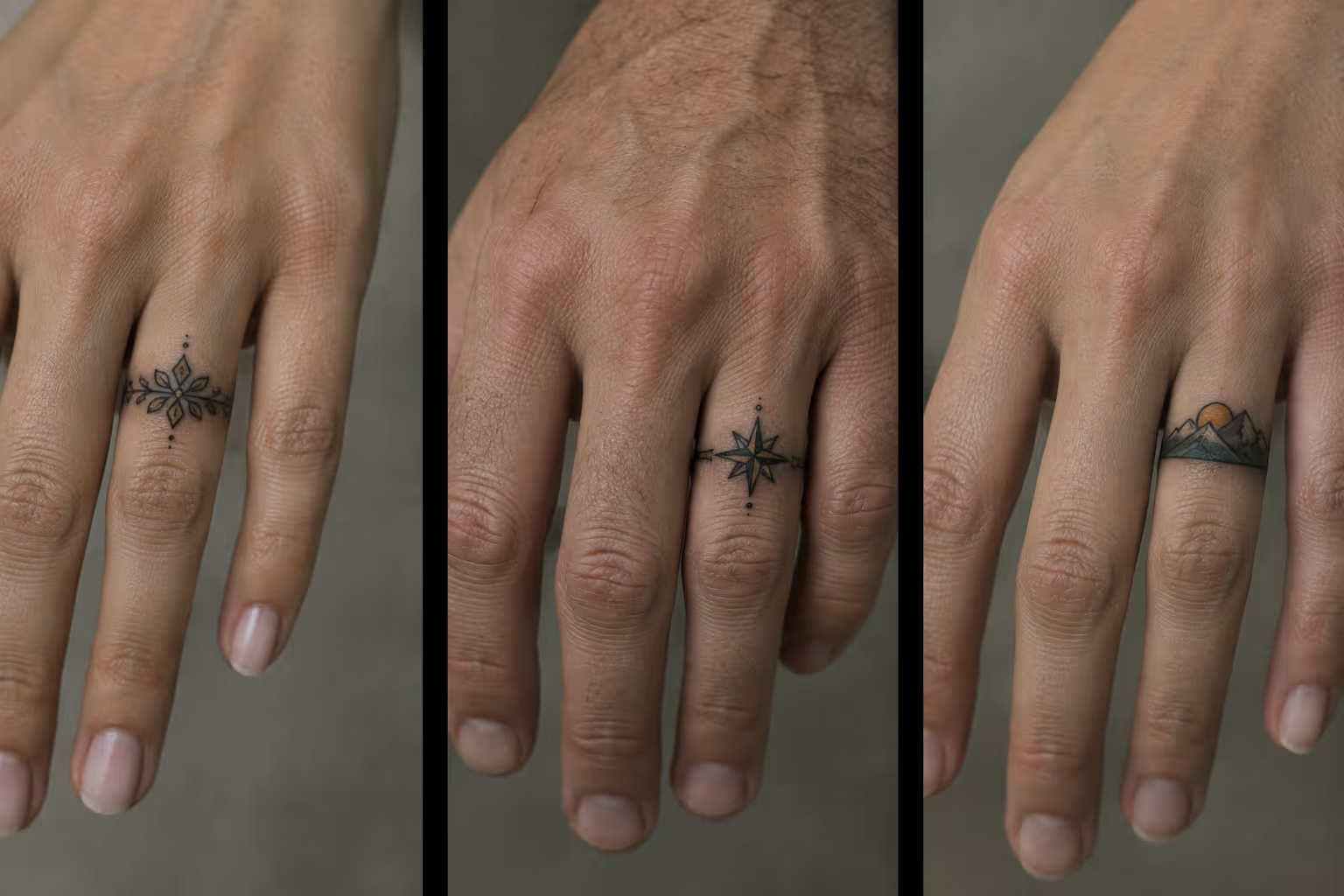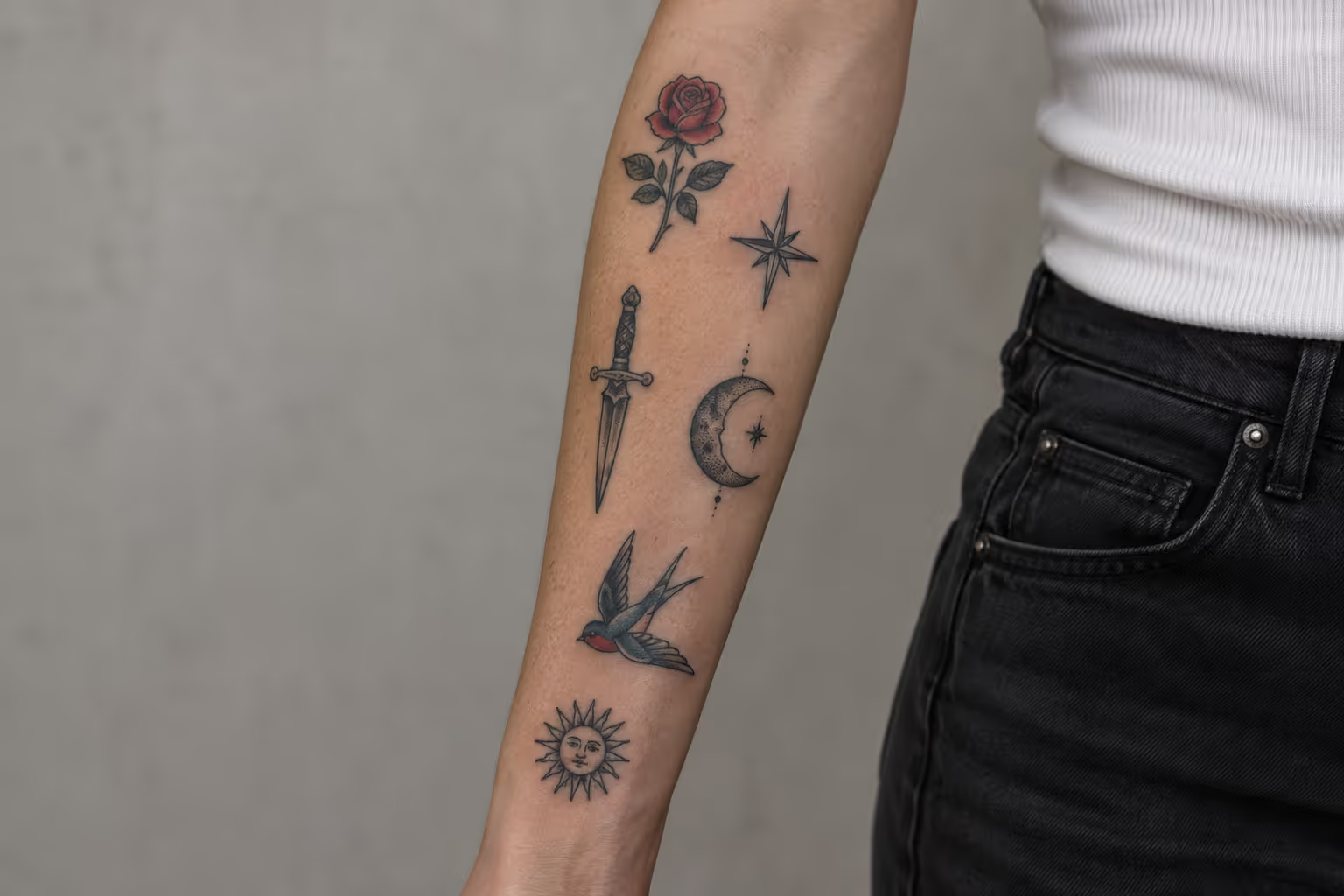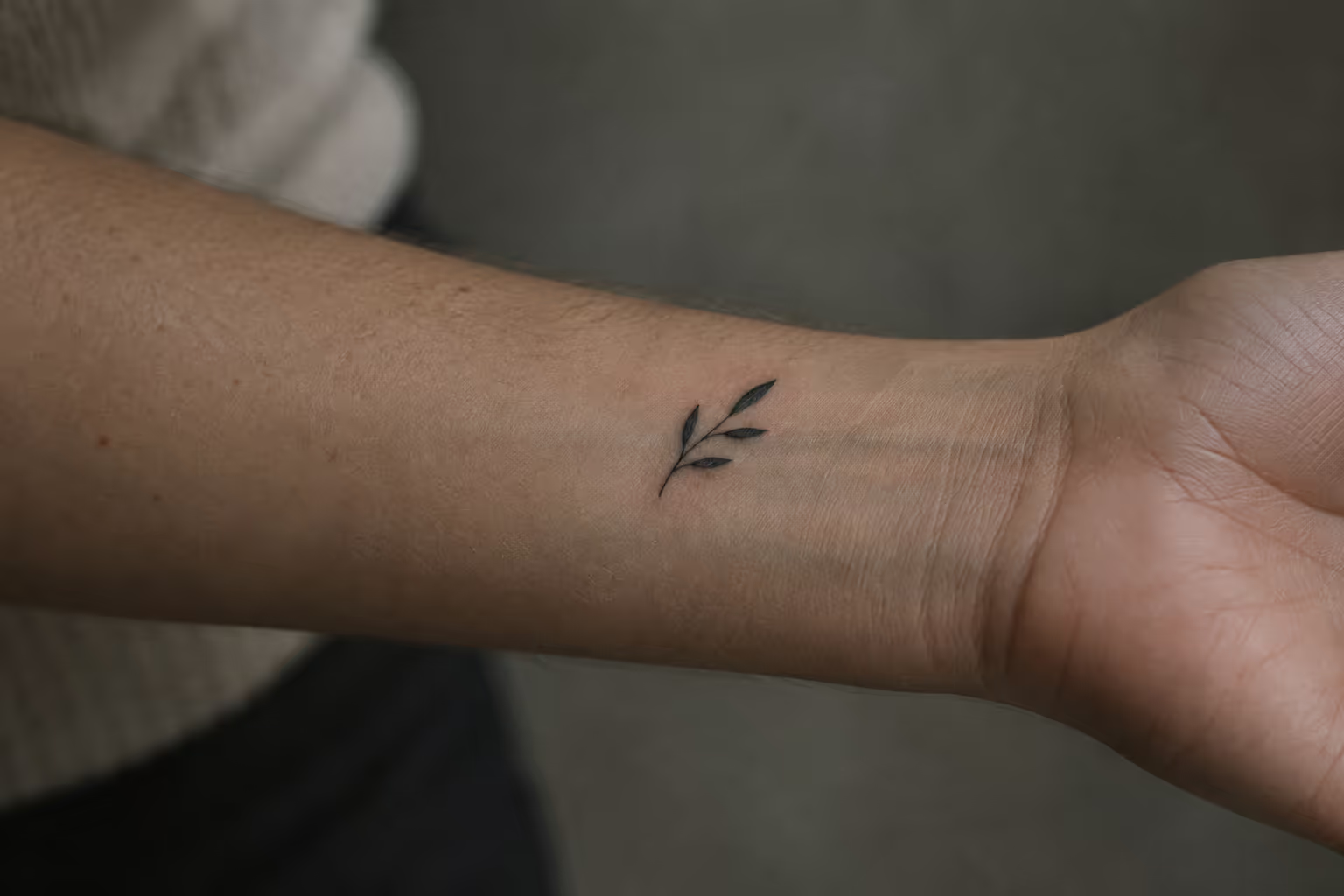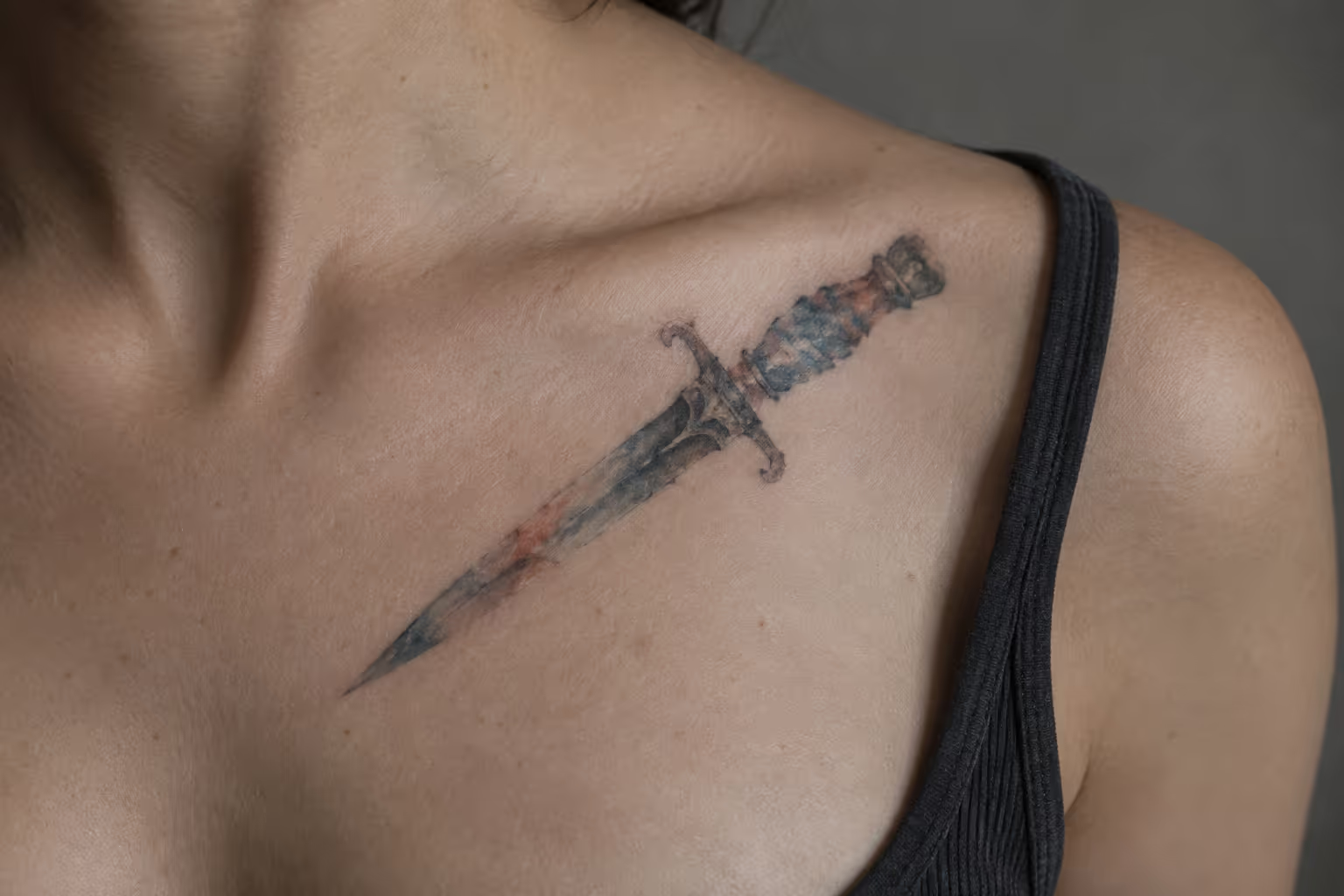
The most meaningful mother son tattoos rarely look like what you expect. Forget the cartoon characters or the classic heart with “Mom” in a banner. More often, it’s something like a clean anchor on his forearm paired with a smaller one on her wrist, or the waveform of his laugh inked across her inner arm. This guide zeroes in on the mother-son bond as it exists between an adult son and his mother - two very different bodies, two different aesthetics, one design that needs to work for both of you over the next thirty years. I’ll walk you through what to get, what it really means, and where to place it so it still looks right two decades from now.
Most lists you’ll find online throw 70-plus ideas at you with a one-line caption each. This one is shorter and more useful because the real question isn’t “Which of 70 designs?” but “How do we make one design suit a 6-foot-2 man and his 5-foot-3 mother without either of us quietly hating it?”
✓ Pros
- Complementary designs let each tattoo stand alone - no awkward explanation needed if you're not together
- Shared session is a memorable experience in itself
- Minimalist options (under 2 in / 5 cm) are low-commitment in time and pain
- Designs rooted in a shared hobby or memory age better conceptually than trend-based imagery
- Placement flexibility - he can go bicep or chest; she can go wrist or inner forearm - without breaking the visual connection
✗ Cons
- Mismatched style expectations (she wants delicate fine-line; he wants bold blackwork) can make the pair look unrelated
- Overly cute or childish motifs can feel off on an adult man's body within a few years
- Placements on aging skin (lower stomach, side ribs) distort faster - poor long-term choice for the mother
- Highly detailed pieces require multiple sessions and more planning
- Rushing the design decision because the moment feels right is the most common source of regret
What Makes a Mother-Son Tattoo Different from Other Matching Designs
Here’s the core challenge: the son is an adult man, which means a lot of the softer, floral, or script-heavy territory that works for mother-daughter pairs usually won’t sit right on him long term.
Mother-daughter tattoos can lean into florals, butterflies, and split phrases without either person feeling out of place. But a grown son usually wants something masculine or at least gender-neutral - an anchor, an arrow, a bold blackwork silhouette - not something “cute.” One guide put it bluntly: if the design is too masculine, it looks odd on the mother; if it’s too girly, it won’t fit the son’s taste (2). Balancing that is most of the work.
Then there’s the two-body reality. Her skin and his skin age differently, and placement needs to account for that from the start. A design that looks sharp on his 25-year-old bicep may distort on her forearm a couple of decades later if she loses elasticity. You have to plan for both of those aging paths now, not after one of the tattoos starts to blur.
For general principles on matching tattoos - identical vs. complementary, coordinating sessions - see our matching tattoos guide. For mother-daughter pairs, our mother-daughter tattoos guide covers florals, butterflies, and split-phrase designs in depth. This article sticks to mother-son: the symbols, designs, and placements that actually suit that bond.
Symbols That Actually Represent the Mother-Son Bond
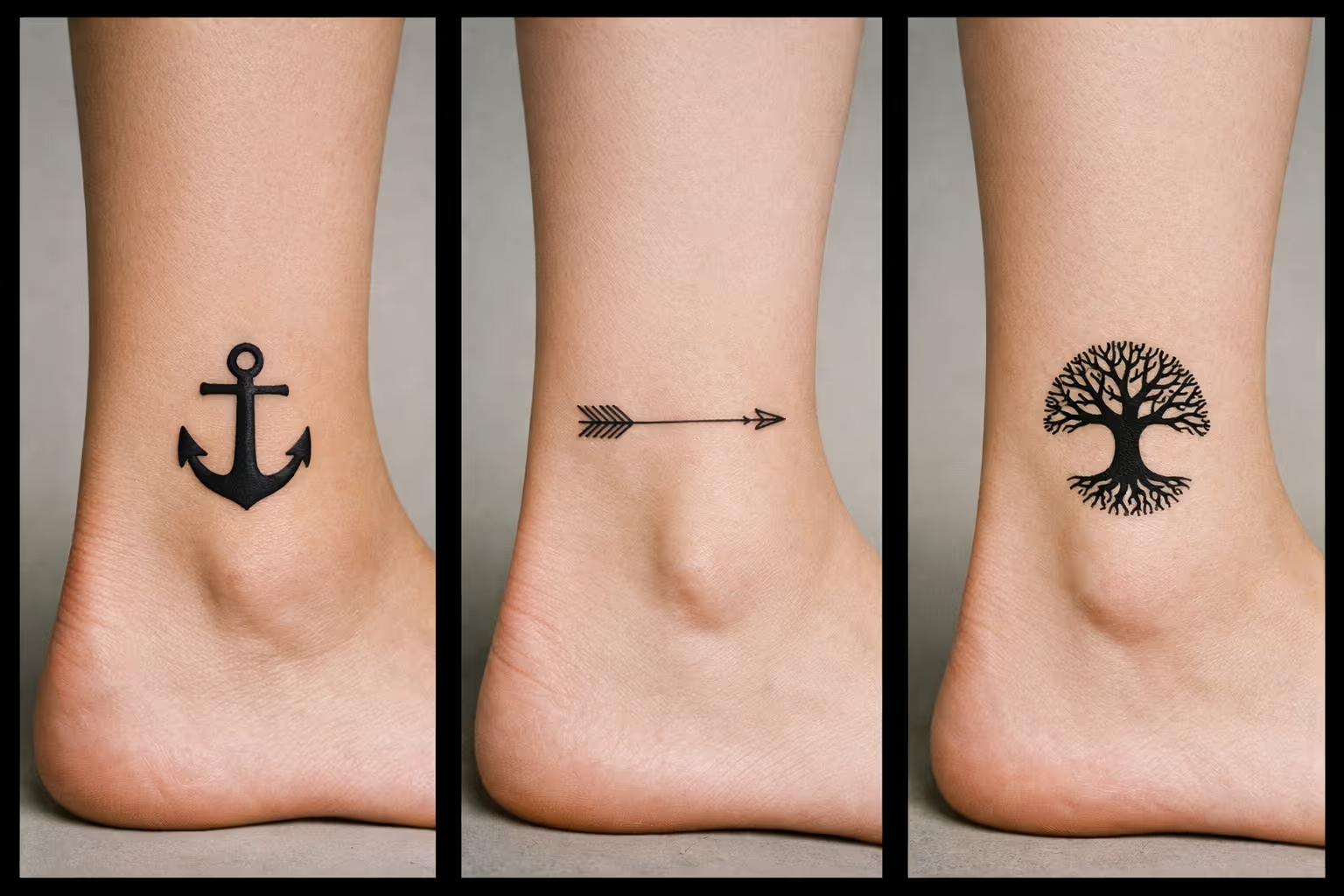
The most common symbols for mother-son tattoos are anchors, arrows, and tree-of-life designs. They all carry themes of stability, direction, or growth without feeling overly sentimental. Here’s what each means and how to size it.
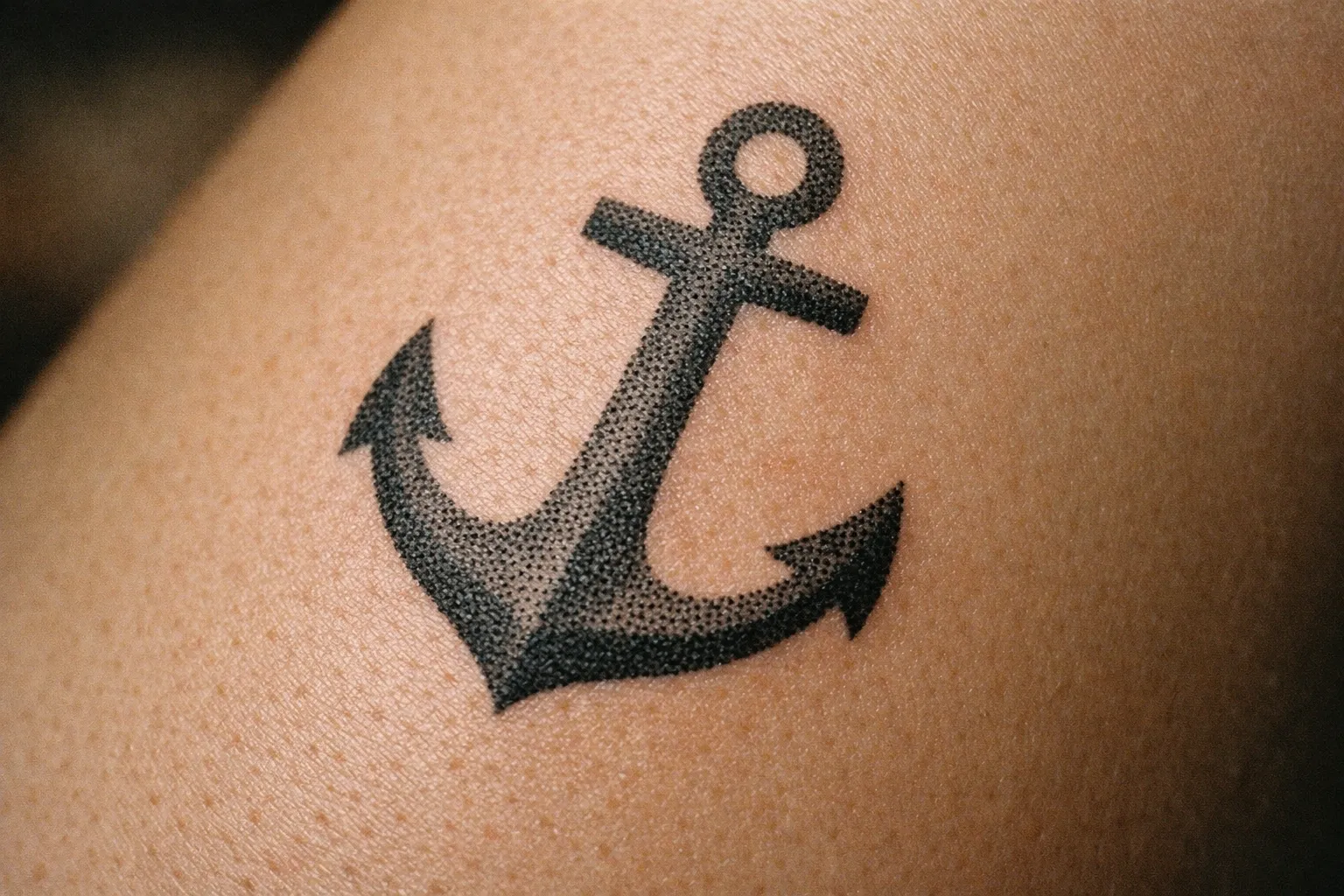
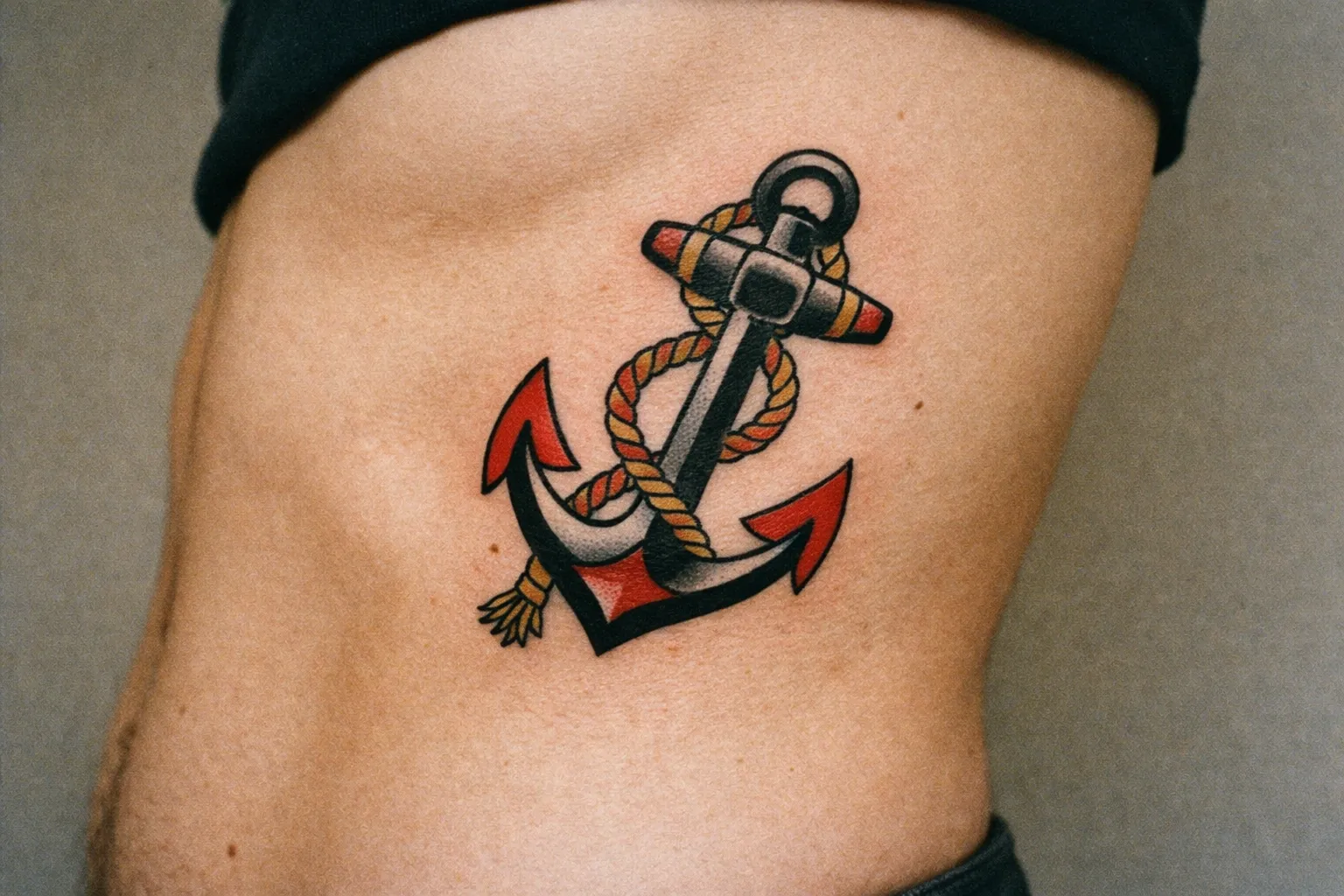
Anchor. Represents stability and grounding - she anchored him, and now he’s her anchor. Anchors symbolize strength, which is why they keep showing up in mother-son lists (14). Works well in American traditional style (thick black outline, limited palette) or fine-line blackwork. Place hers on the inner forearm or wrist, his on the bicep or forearm, sized 2-3 inches (5-8 cm).
Sun and moon pair. Symbolizes complementary roles - she’s the constant sun, he’s the one who reflects and grows, or vice versa. Often done in Japanese-influenced illustrative styles. Sizes range from 1.5 inches (4 cm) minimalist to 4 inches (10 cm) detailed.
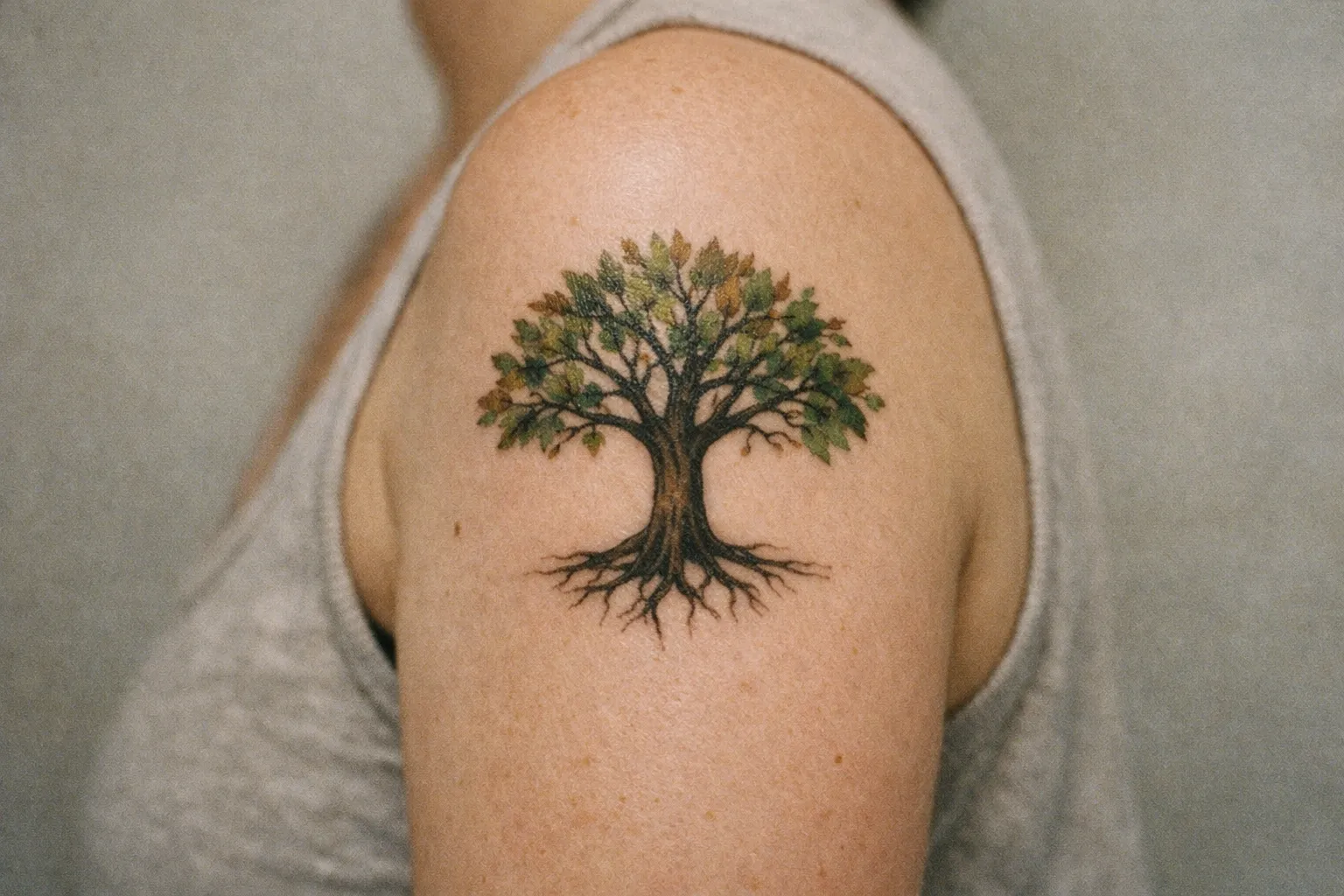
Tree of life or mother tree. She’s the roots; he’s a branch or a tall trunk. Can be a split design or two related but separate pieces. This is a bigger commitment: 3-5 inches (8-13 cm), chest or upper arm for him, shoulder blade or forearm for her.
Infinity variations. Infinity alone is overused, but pairing it with an anchor or weaving in a birth date gives it meaning. Fine-line blackwork on wrist or inner forearm, kept under 2 inches (5 cm).
Arrow. Stands for direction and forward motion - she pointed the way. A single blackwork arrow reads masculine and ages cleanly on a forearm. Size 2-3 inches (5-8 cm).
Fingerprint heart. Her fingerprint and his forming a heart shape - unique by definition. Keep it small, 1-1.5 inches (2.5-4 cm), on wrist or inner forearm.
One note on placement: fine-line work on forearms, wrists, and hands takes the most UV exposure and fades faster than on upper arm or back. Outer forearm and chest/upper arm hold detail well, which is why classic mother-son symbols belong there instead of fingers or top of the foot.
Symbols with Cultural Roots Worth Knowing
If you want something with real cultural weight, a few options stand out.
Celtic mother’s knot. There’s no ancient Celtic symbol specifically for mother and son. The mother-son knots you see most often online are modern variations of older designs, not original Celtic symbols, though many people still choose them for mother-son tattoos because they look striking (16). Beyond that, Celtic symbols for strength, love, and family - the Trinity Knot, the Dara Knot, the Triskelion, the Celtic Tree of Life - can stand in for the bond, though none is specific to sons (16).
Japanese/irezumi influence. Sun and moon imagery, waves, and other nature motifs all appear in Japanese irezumi, where celestial and natural imagery carries strong meaning. If you go this route, brief your artist on the style so it reads intentional, not just decorative.
Polynesian-inspired geometric patterns. A masculine option for the son, echoed in smaller, cleaner geometric elements for the mother. Genuine Polynesian tattooing, such as Marquesan tattooing, is culturally specific, so treat this as inspiration and discuss it honestly with your artist instead of copying patterns wholesale.
Design Category Comparison at a Glance
| Symbolic (anchor, arrow, tree) | Hobby-based (fishing, sports, music) | Personalized data (handwriting, sound wave, fingerprint) | Humorous/playful (food pairs, puns) | |
|---|---|---|---|---|
| Best for | Meaning-first pairs | Memory-first pairs | Uniqueness-first pairs | Lighthearted tone |
| Typical size | 1.5-4 in (4-10 cm) | 2-4 in (5-10 cm) | 1.5-4 in (4-10 cm) | 1-2 in (2.5-5 cm) |
| Style options | Fine-line, blackwork, American traditional | Blackwork silhouette, illustrative | Fine-line blackwork | Fine-line, illustrative |
| Session length | 1-2 hrs each | 1.5-3 hrs each | 1-2 hrs each | Under 1 hr each |
| Placement fit | Forearm, wrist, bicep, chest | Forearm, bicep, chest | Inner forearm, wrist | Wrist, ankle |
Mother Son Tattoos: Design Categories and Ideas Worth Considering
Instead of scrolling through 70 options, narrow your thinking into three categories: symbolic (meaning-first), hobby-based (memory-first), and personalized data (uniqueness-first). Pick the one that fits how you actually connect, then choose inside it.
Symbolic and Classic Designs
This covers anchors, arrows, trees, sun/moon pairs, plus a few bond-specific ideas.
A mother-child silhouette or hand-holding line piece works best as fine-line blackwork on the inner forearm or chest, sized 2-3 inches (5-8 cm). One solid example shows a silhouette of a mother holding her son’s hand against a fading sun, framed in a circle on the forearm - instantly readable as a family tribute (11).
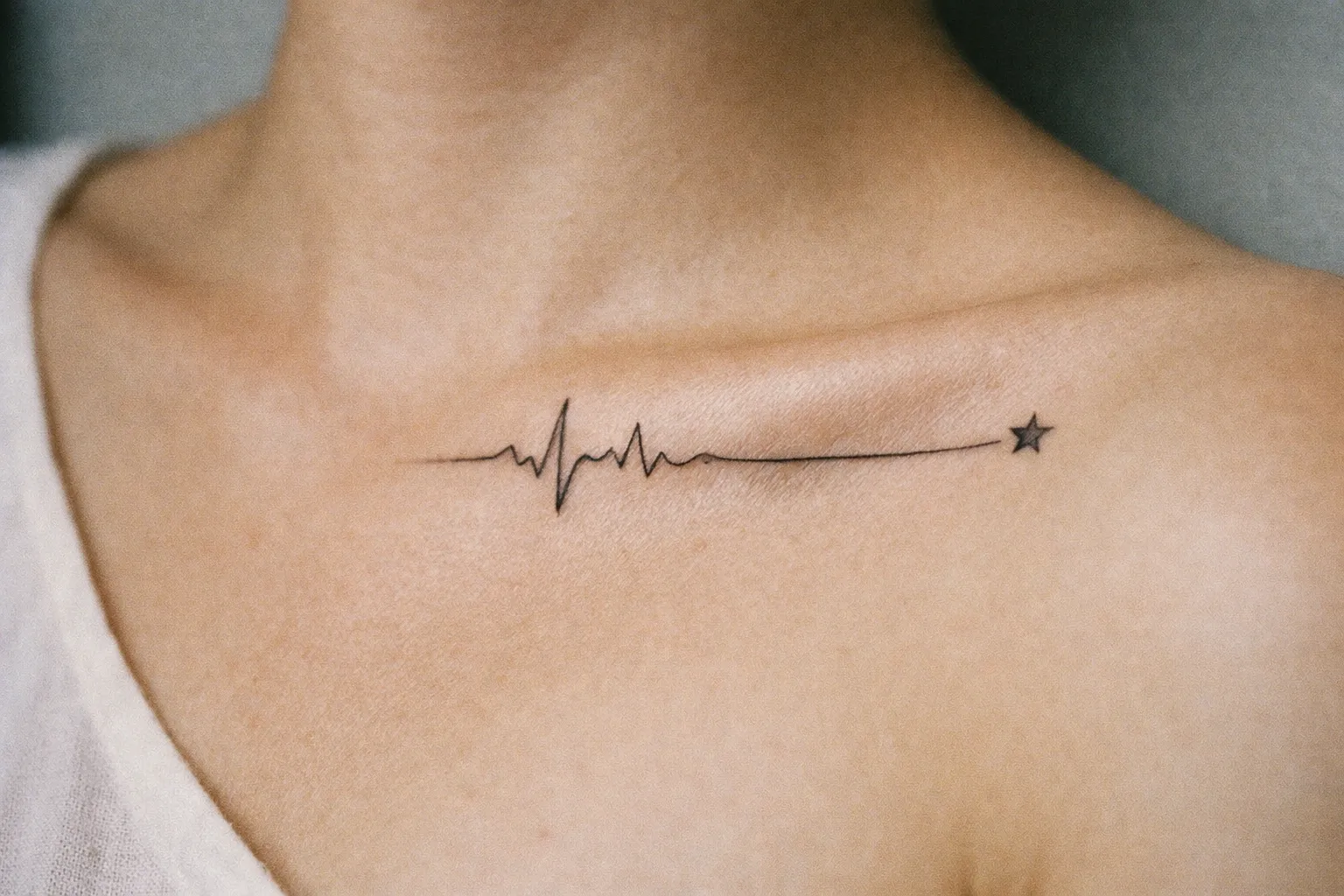
A heartbeat line paired with short phrases splits a sentence: “She gave me life” on her forearm, “He gave me purpose” on his. Fine-line script on forearm or collarbone. One mother-son guide features exactly this ECG-line set (13).
A four-leaf clover stands for love, hope, and luck, reads well on both bodies, and stays simple on the wrist or ankle at 1-2 inches (2.5-5 cm).
Hobby and Memory-Based Designs (Strong for Adult Sons)
This category usually fits grown sons best because it avoids the “too cute” trap.
For outdoorsy families, a fishing hook and fish, a campfire scene, or a mountain outline works as blackwork silhouettes on his forearm or bicep, sized 2-4 inches (5-10 cm). These outdoor motifs pop up frequently in recent mother-son content (10).
Sports motifs - a jersey number in Roman numerals, a ball and glove, a basketball hoop - work as identical or complementary pairs. This only fits if the sport is genuinely shared, not just decorative.
Music notes or a sound wave of a recorded phrase or laugh look like bands on the inner forearm, 3-4 inches (8-10 cm). The artist converts audio into a waveform stencil. A sound wave taken from a short recorded message, or from a laugh you both recognize, is one of the more personal options (10).
A shared constellation or coordinates of a meaningful place round out this track for families whose bond ties to a location.
Personalized Data Designs (Unique by Definition)
If uniqueness is your priority, these designs can’t be copied - they come from your actual lives.
Handwriting. A short phrase - “love you,” a nickname - done in the other person’s actual handwriting. Fine-line, inner forearm or wrist, 1.5-3 inches (4-8 cm). Real handwriting adds meaning without complexity (10).
Sound wave. Same as hobby-based, but worth repeating here because it’s the most personal data option: the waveform of a recorded message or a shared laugh becomes the tattoo itself (10).
Childhood drawing. His drawing from age six, recreated in fine-line on both of you. It’s unique and tied directly to your story (3). A close cousin is fine-line art traced from a favorite childhood photo of the two of you (10).
Birth date in Roman numerals or a moon phase tied to his birth date are subtle, clean data points that suit an adult man’s aesthetic. The fingerprint heart from earlier also fits here.
Humorous and Playful Pairs (When the Tone Fits)
Yes, peanut butter and jelly, milk and cookies, or “Mom” and “Son” peanuts exist. They work for some families but lean cute. A cute food pair can feel off on an adult man’s body after a few years. Band-aid X’s and hot-air balloon pairs are low-commitment, small on wrist or ankle. Only get these if he’s genuinely comfortable wearing that aesthetic for decades, not just because it feels lighthearted on booking day.
Placement That Ages Well on Both Bodies
Here’s the core problem no gallery mentions: her skin and his skin age differently, so the same placement might look great on one and distort on the other. Placement is what actually determines whether your pair still reads as a pair twenty years from now.
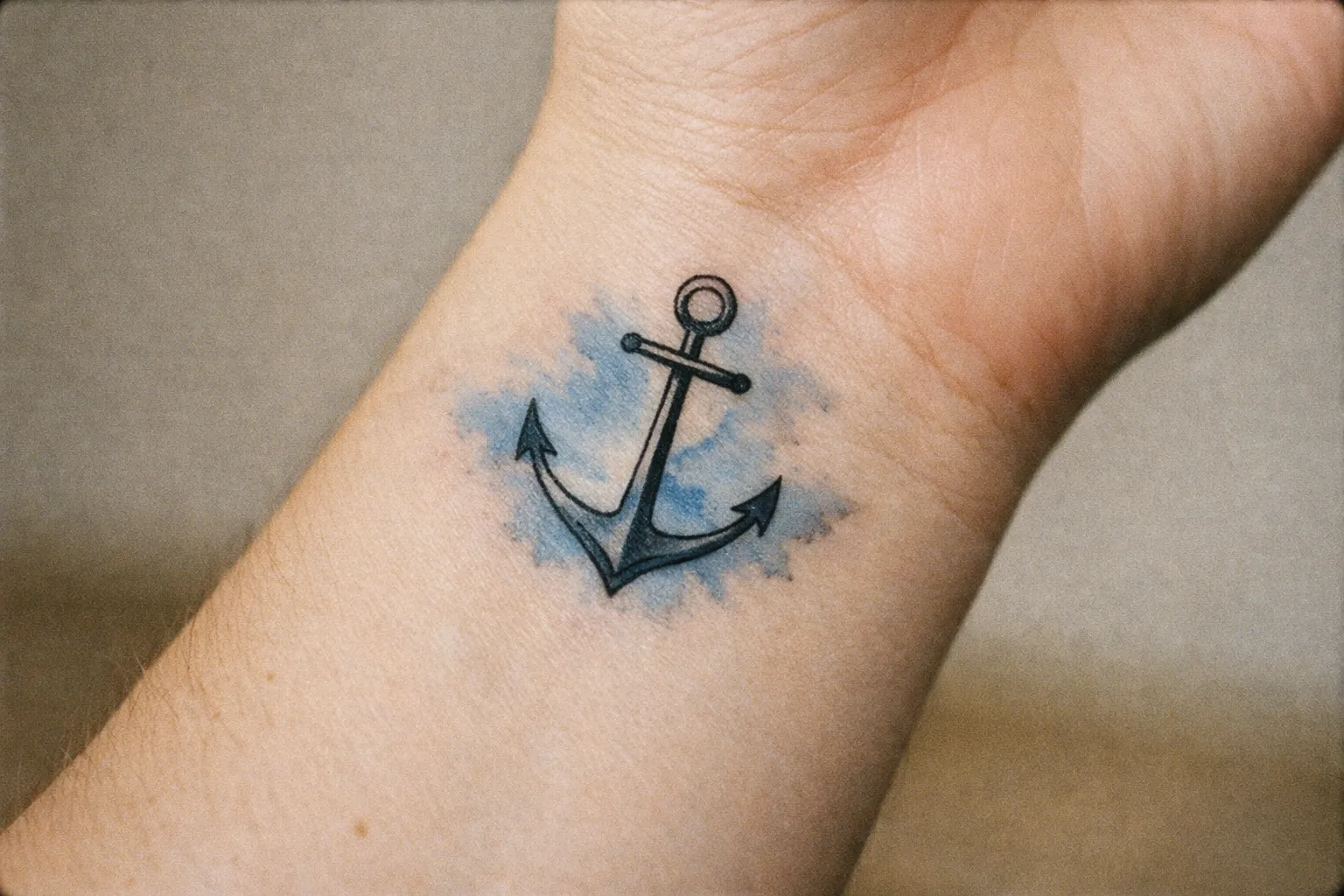
Start with how placements age. Outer forearm, outer upper arm, calf, outer thigh, and upper back are stable placements where tattoos generally hold detail longer than high-friction or high-UV areas - with good aftercare and sun protection, protected tattoos on these spots typically hold their detail for many years before fading becomes noticeable, with significant variation depending on style and sun exposure. At the other end, fingers, knuckles, hands, and top of the foot fade fastest. Hand and finger tattoos typically need touch-ups far more often than tattoos on stable placements to stay crisp, due to constant friction, washing, and sun exposure. Build your pairing from the first list, not the second.
Placement pairs that work:
-
Her inner forearm + his forearm or bicep. Both stable, low-distortion zones, easy to show together. Forearms age well even on older skin if the design has clean lines.
-
Her wrist + his wrist or shoulder. Wrist is small, so keep designs under 2 inches (5 cm). His shoulder gives more room for a larger version.
-
Her chest/over the heart + his bicep or chest. Close-to-heart placement for her, masculine and visible for him; both areas hold ink well. This over-heart plus bicep pairing is one that tattoo guides suggest for mother-son sets (13).
-
Both behind the ear or inner ankle. Subtle and professional-friendly, good for small symbols under 1 inch (2.5 cm). Note that behind-the-ear hurts more than the forearm.
Placements to avoid:
-
Lower stomach, side ribs, and hip for her. High distortion risk as skin and weight change.
-
Hands and fingers for either of you. Fastest-fading spots needing frequent touch-ups.
-
Inner bicep for her if the design has fine detail. The skin folds and loses elasticity faster there.
Visibility matters. Some sons work in places where visible tattoos still get scrutiny. Inner forearm or bicep can be covered by a sleeve; the wrist cannot. Talk about this before booking, not after.
Scale across two bodies. If he’s 6-foot-2 and she’s 5-foot-3, the same 2-inch design looks very different on each. The artist should scale proportionally, not identically, so the pair reads balanced, not mismatched.
Planning for His Future Tattoos
If he’s likely to build a sleeve or chest piece later, put the mother-son design where it can integrate naturally. Upper arm and chest absorb new work better than wrist or ankle. Leave some space around it so future pieces don’t swallow it visually. This is a quick conversation at your consultation that saves an awkward cover-up or an orphaned wrist tattoo later.
Minimalist vs. Detailed - Choosing the Right Scale
Minimalist designs - fine-line blackwork, single symbols, small script - keep sessions short (under two hours), stay low-profile when needed, and age cleanly if the line weight holds up. Hair-thin strokes are the first to break down from sun and washing; heavier line weights hold up noticeably better over time, which is why most minimalist artists build in slightly more weight than the design looks like it needs fresh. Minimalist mother-son tattoos built around a small symbol, a tiny animal silhouette, or short script are chosen precisely because they wear easily day to day (12).
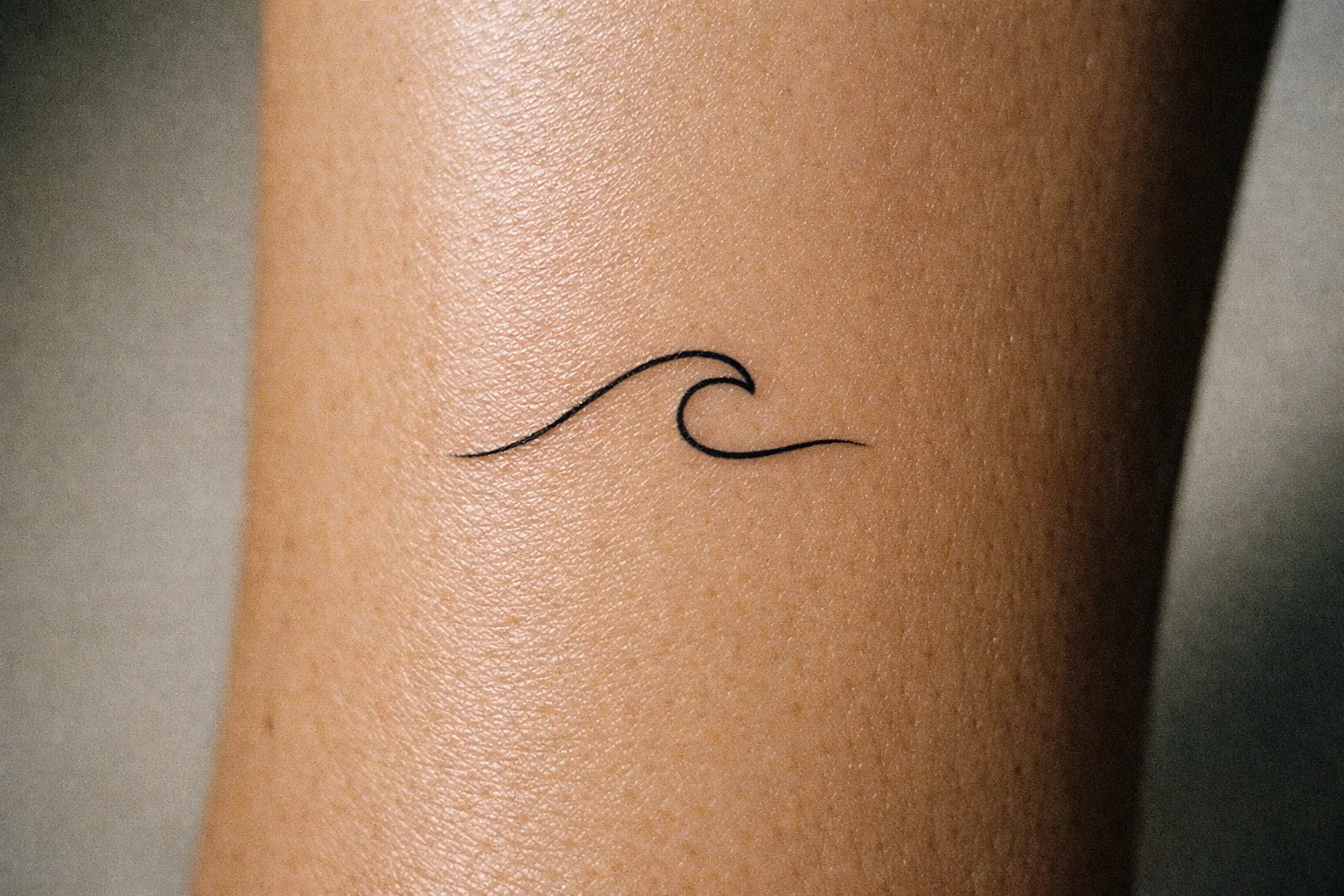
Detailed designs - a realistic lioness and cub, a full tree-of-life scene, or a large sound-wave band - are multi-hour commitments, sometimes across multiple sessions, and require an artist experienced in that style. Worth it if your concept demands it, but expect time and cost to climb fast.
Line-weight matching is the quiet killer of pairs. If he gets a bold American traditional anchor and she gets a hair-thin fine-line anchor, they won’t read as matching - even if the motif is identical. The artist needs to calibrate both tattoos to the same visual weight. One minimalist mother-son guide makes the same point: match size and line weight so the design reads the same on different skin (12).
Styles that suit an adult son: blackwork, fine-line blackwork, American traditional (bold outlines), and illustrative. Avoid overtly feminine styles - watercolor washes, pastel neo-traditional - unless both of you are genuinely comfortable for the long haul.
A practical filter: narrow the idea to one word, symbol, or animal, then say it out loud a few times. If it still feels right, bring it to the artist (12). This step kills most overcomplicated or mismatched designs before they hit skin.
Short Quotes That Work for a Mother-Son Tattoo
Text tattoos need more planning than symbols because letter size drives readability. Standard script needs a letter height of at least ½ inch (12-13 mm) to stay readable as skin ages, ornate script about 1 inch (25 mm), and the lightest strokes should heal to at least 0.3-0.4 mm; anything smaller carries a real risk of blurring over time. Treat these as floors, not targets - your artist’s eye on your actual skin matters more. The takeaway: the longer the quote, the smaller the letters, and small letters blur first.
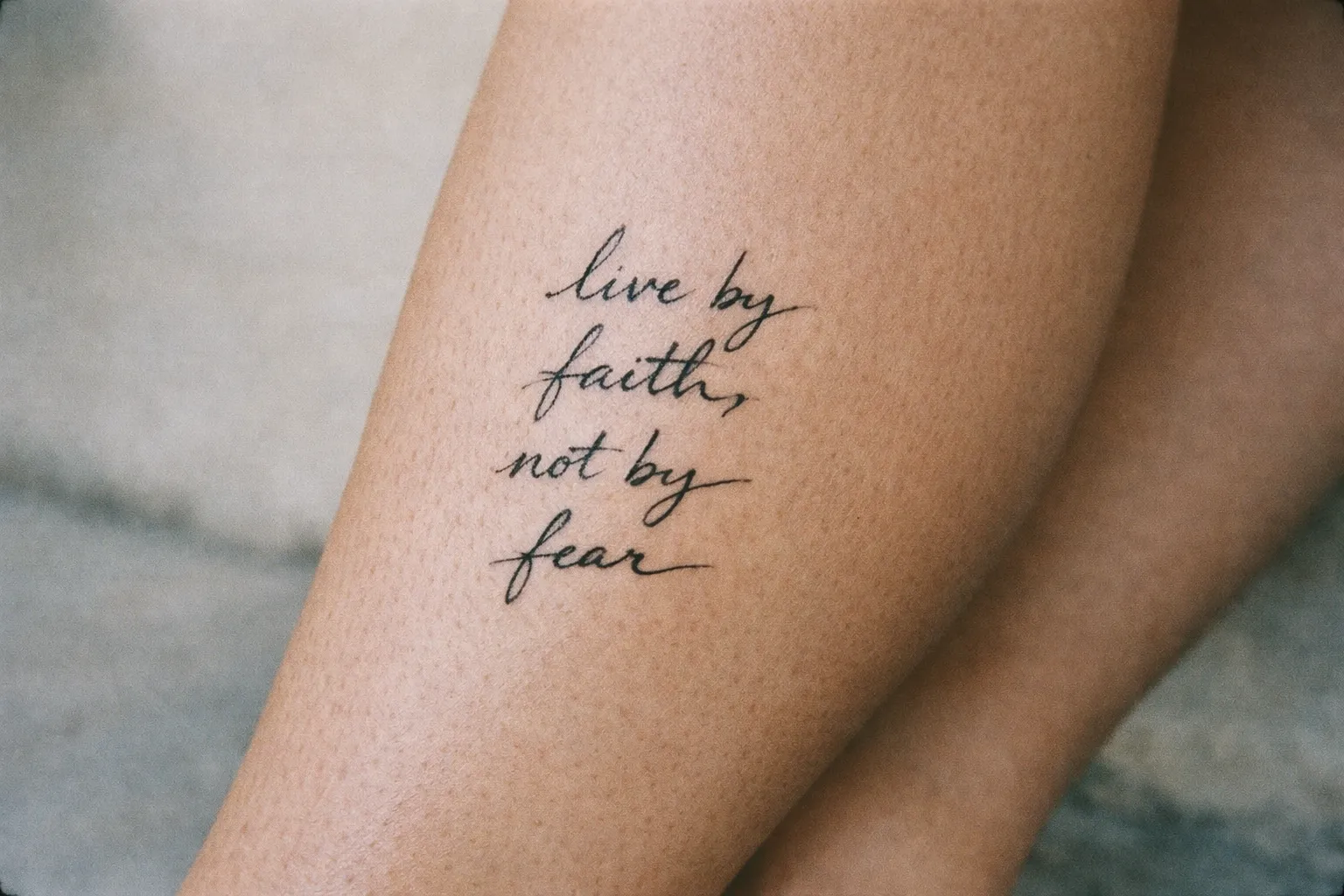
Keep it short. The split-phrase approach works best - each person gets one half of a sentence that stands alone:
- “She gave me life” / “He gave me purpose”
- “Always your mom” / “Always your son”
- “My greatest adventure” / “My greatest guide”
Single words work even better for an adult son: “Anchor,” “Home,” “Always.” Simple, masculine-friendly, and meaningful, especially if done in the other person’s handwriting.
Handwriting tattoos add uniqueness without complexity - inner forearm or wrist, fine-line, 1.5-3 inches (4-8 cm).
What to avoid: long sentimental quotes in tiny script, which can blur within 5-10 years on high-movement areas like the wrist. Also avoid anything that only makes sense when both tattoos are visible at once - one of you will inevitably be showing it solo.
How to Plan a Mother-Son Tattoo Session
Good planning is mostly about sequence: nail down meaning before you look at designs, and settle style and scale before booking. Here’s the order that keeps two people from talking past each other.
How to Plan Your Mother-Son Tattoo
2 hoursStep-by-step process to coordinate your matching tattoo thoughtfully
- 1
Agree on what the tattoo represents
Write down one sentence describing the shared memory, hobby, symbol, or personal data the tattoo will represent before browsing designs.
- 2
Pick your track: symbolic, hobby-based, or personalized data
Use the three categories to narrow down options and avoid decision paralysis in front of large galleries.
- 3
Choose placement independently, then compare
Each person selects a spot that fits their body, visibility needs, and future tattoo plans, then check compatibility for scale and visibility.
- 4
Settle style and scale together
Decide on minimalist fine-line or bold blackwork; small (1-2 in / 2.5-5 cm) or medium (3-5 in / 8-13 cm). Confirm matching line weight.
- 5
Gather reference materials
Bring photos, handwritten notes, recorded phrases, or childhood drawings to the consultation.
- 6
Consult a professional tattoo artist
Share placements, skin types, and references. Ask for proportional scaling and healed look, not just fresh.
- 7
Book sessions
Coordinate sessions so small designs can be done same-day; larger pieces may need separate sittings and staggered healing.
Frequently Asked Questions
Frequently Asked Questions
- What tattoo symbolizes mother and son?
- Anchors, arrows, and tree-of-life designs represent this bond. The anchor means stability; the arrow signals direction. Celtic knots are another option, though no ancient Celtic symbol is specific to mother and son.
- What symbol represents a son?
- Arrows and anchors are common for sons due to masculine connotations of direction and strength. Sports motifs work if genuinely shared.
- What kind of tattoo should I get for my son?
- Choose a design reflecting a shared hobby, memory, or phrase. Avoid childish motifs; the tattoo should suit an adult son's aesthetic.
- What is a cute quote from a mom to her son?
- Short split phrases work best, like "She gave me life" / "He gave me purpose." Single words in each other's handwriting age well.
- Do mother-son tattoos have to be identical?
- No. Complementary designs often work better, letting each tattoo stand alone. Identical small symbols are fine but not required.
- Where is the best placement for a mother-son tattoo?
- Inner forearm is practical for both; wrist suits small symbols. Avoid high-distortion or fast-fading zones like ribs and hands.
- How do we make the tattoos look like a matching pair if we're different sizes?
- Ask the artist to scale proportionally, not identically. Matching line weight is crucial; size adjusts to body proportions.
Aftercare for a Fresh Mother-Son Tattoo
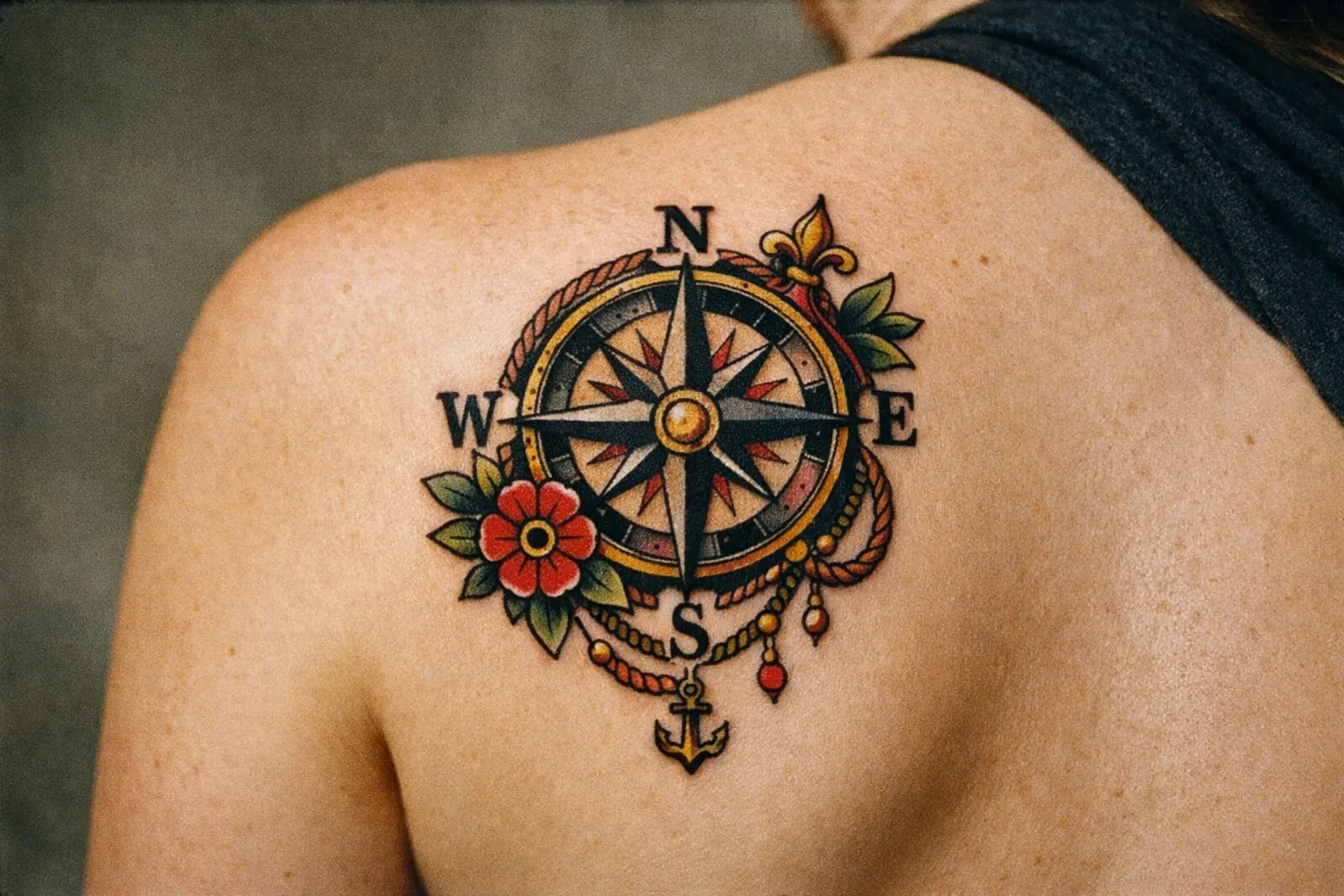
Both tattoos need the same basic care, but the timeline matters. Days 1-3: keep the area clean with unscented soap, pat dry, and apply a thin layer of fragrance-free moisturizer two to three times a day - no soaking, no sun. Days 4-7: the skin tightens and starts to flake; don’t pick it. Keep moisturizing and stay out of direct sun. Week 2: peeling and itching peak, which is the riskiest window for picking. Weeks 3-4: the surface looks healed, but the deeper layers keep settling until full integration around week 6. Switch to sun-protective clothing over the tattoo whenever you’re outside - UV is the fastest way to break down fine-line work, especially on forearms and wrists where these designs usually land.
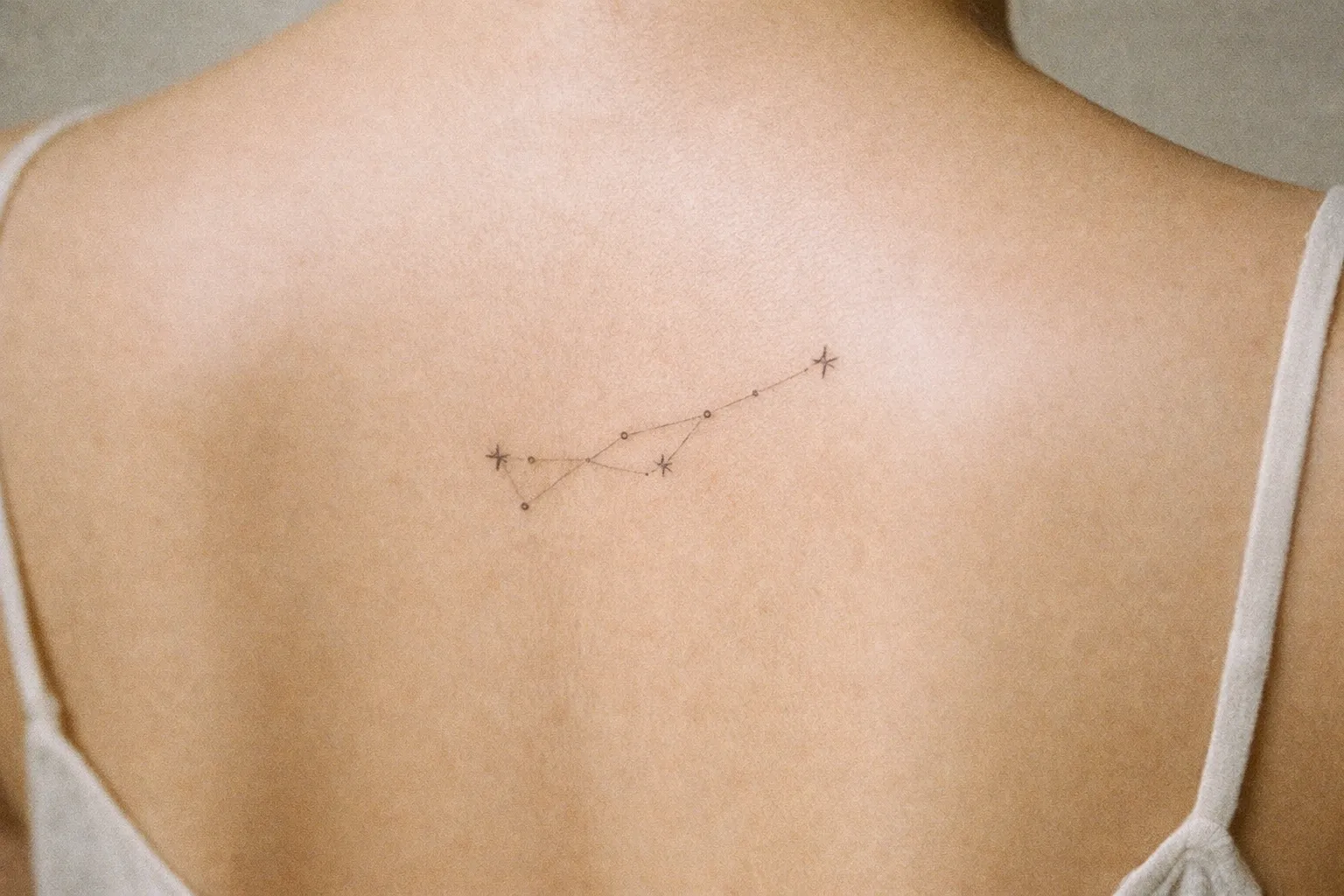
If either of you went with fine-line blackwork, be especially consistent about keeping it out of direct sun for the first four to six weeks. Hair-thin strokes are the first to ghost out, and early UV damage accelerates that.
What Actually Drives the Decision
Three things matter more than which design you scroll past. The tattoo has to mean something real to both of you - not just a symbol you liked in a gallery. The placement has to work on both bodies for the next 30-plus years, which means sticking to stable zones - forearm, upper arm, chest - and avoiding hands, ribs, and her lower stomach. And the style has to suit an adult man’s aesthetic without either of you compromising so much that one quietly regrets it.
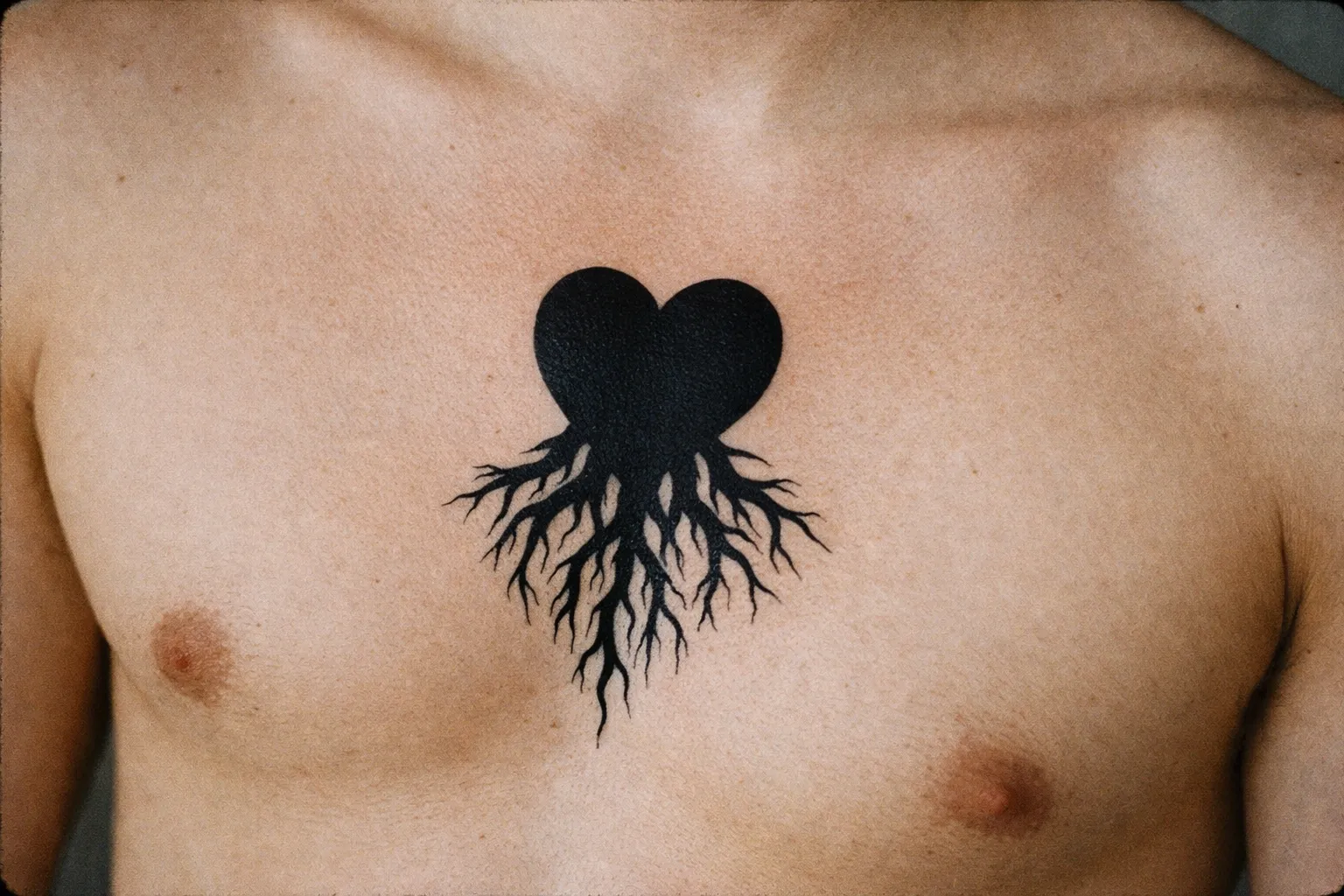
Here’s one piece of prep that pays off before the consultation: each of you writes down one memory, one shared interest, and one word that describes the other. Bring that to the artist. It’s far more useful than a screenshot of 70 ideas.
That’s the practical side of mother son tattoos. If you keep the design real, the placement smart, and the style balanced, you’ll have a set that still works for both of you decades from now.