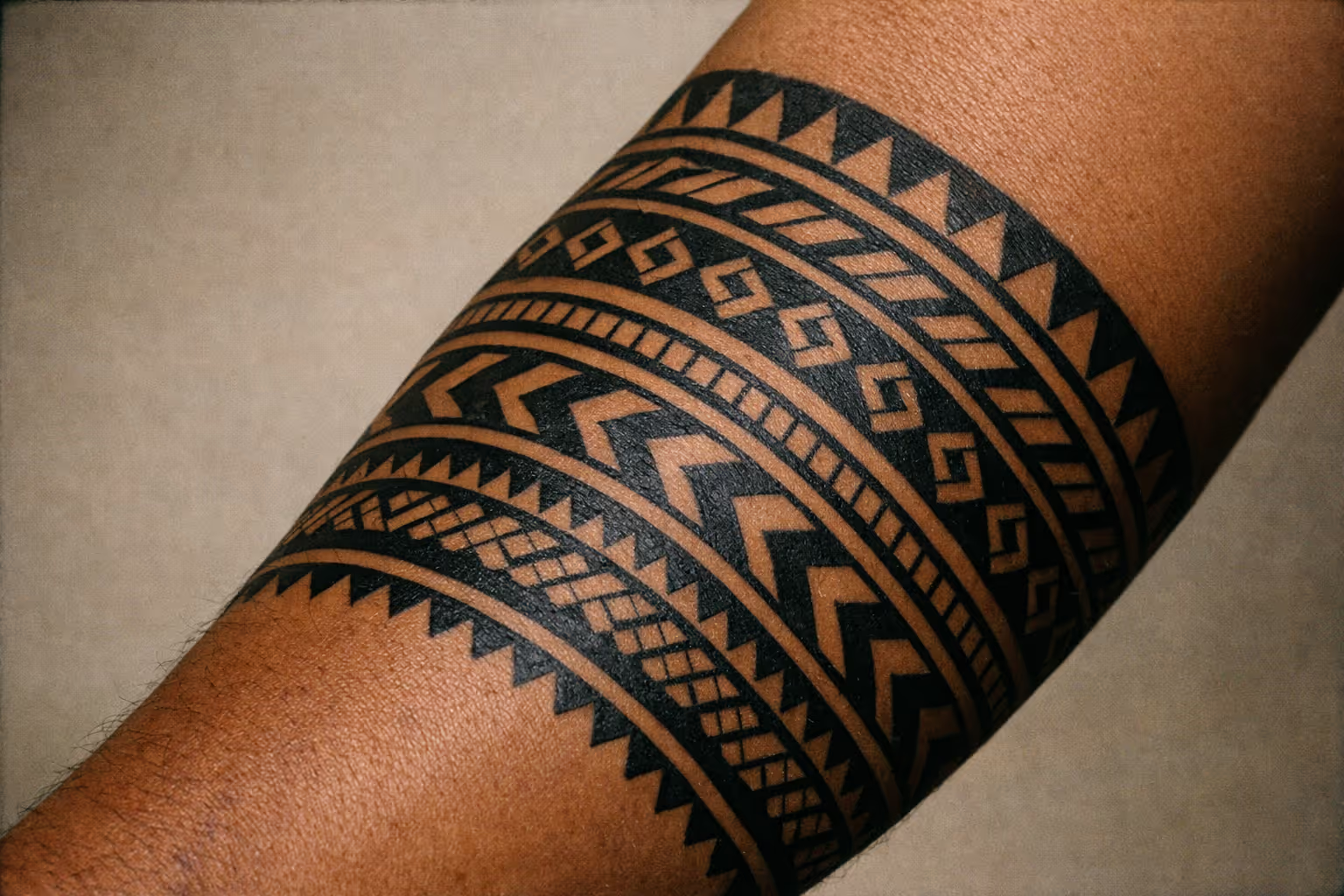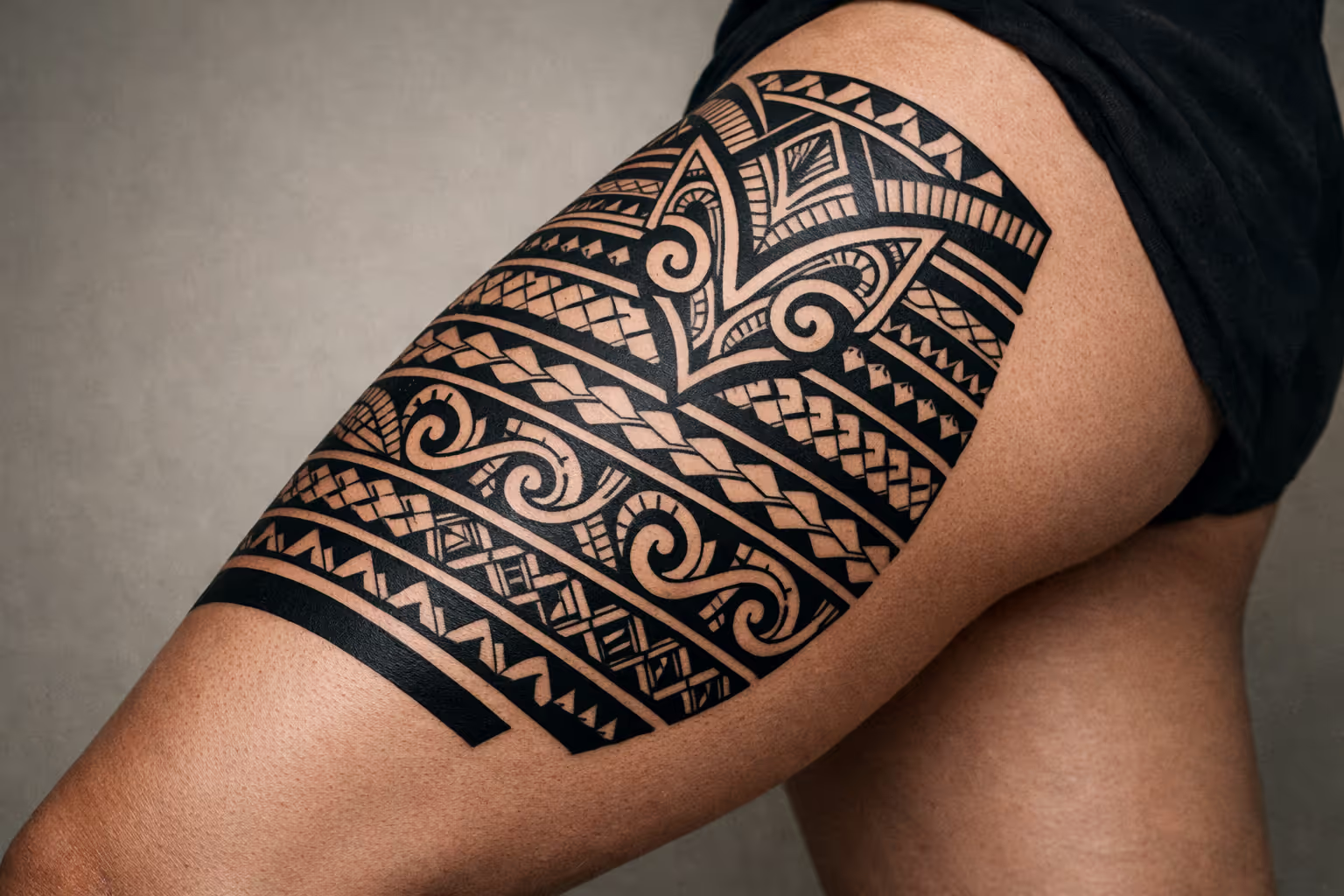
Picture a Marquesan chief a couple of centuries ago: face, shaved skull, and torso covered in dense geometric panels, each section marking lineage, rank, and spiritual protection. What most people call marquesan tattoos today comes from this tradition, but the real name is patutiki. It’s not just decorative “tribal” filler - it’s a carefully structured body-mapping system. The Marquesas Islands, roughly 1,200 to 1,500 km northeast of Tahiti in French Polynesia, are among the most remote archipelagos on earth. That distance let the style evolve its own vocabulary of motifs, panels, and placement rules.
Tattooing itself was called patu’i te tiki - “hitting the tiki.” The tiki refers both to the tapping tool’s mark and the ancestral figure the patterns honor. Traditional coverage ran from face to feet, accumulating over a lifetime. Here’s what you need to grasp before committing: placement matters as much as the motif. Above the waist says one thing, below another. A well-crafted patutiki design is a system, not a mix-and-match of Pacific symbols. This guide breaks down what the motifs mean, where to put them, and how the blackwork ages.
✓ Pros
- Dense geometric panels age well. Solid blackwork holds saturation much longer than fine-line or color work.
- The symbolic vocabulary is rich enough to build a design that means something specific to you, not just a generic flash pull.
- Panel logic scales smoothly from a single wrist motif to a full body suit.
- Blackwork reads well on a wide range of skin tones.
✗ Cons
- Large panels require multiple sessions. Full sleeves or chest pieces can take dozens of hours.
- Motifs carry specific ancestral, clan, and warrior meanings. It's easy to misuse them without proper research.
- Face, neck, and head placements come with heavy cultural weight and aren't appropriate for casual wear.
- Mixing Marquesan motifs with Samoan, Māori, or Hawaiian elements creates cultural incoherence.
What Patutiki Actually Is - and Where Marquesan Tattoos Come From
Patutiki is the traditional tattooing system of the Marquesas Islands, a remote archipelago in French Polynesia where dense geometric panels once covered bodies from face to feet. These tattoos encoded status, lineage, and spiritual protection. Encyclopaedia Britannica places the Marquesas about 1,200 km (740 miles) northeast of Tahiti, one of the most isolated volcanic island groups in French Polynesia. Tahiti Tourisme gives the distance closer to 1,500 km and calls the region Te Henua ‘Enana - “the Land of Men” - highlighting its distinct cultural identity within Polynesia.
The Marquesan people are Polynesian. Archaeological research summarized on Wikipedia shows the islands were settled by voyagers from West Polynesia around the 10th century AD, part of the broader Austronesian migration across the Pacific. Polynesian explorers from Samoa were among the first settlers, making the Marquesas one of the earliest inhabited and most isolated groups in eastern Polynesia. The population dropped from over 78,000 in the 18th century to about 9,346 by 2017, but patutiki never disappeared.
In traditional Marquesan society, almost everyone was tattooed. The marks encoded social status, lineage, spiritual protection, fertility, courage, and wealth - never just decoration. Full body suits ran from the face and shaved skull down to the feet. Chiefs and warriors stood out with spirals, bullseyes, and thick bands. The amount of coverage was public proof of endurance and wealth, since tattooing was long, painful, and expensive. The more skin you committed, the more your standing showed at a glance.
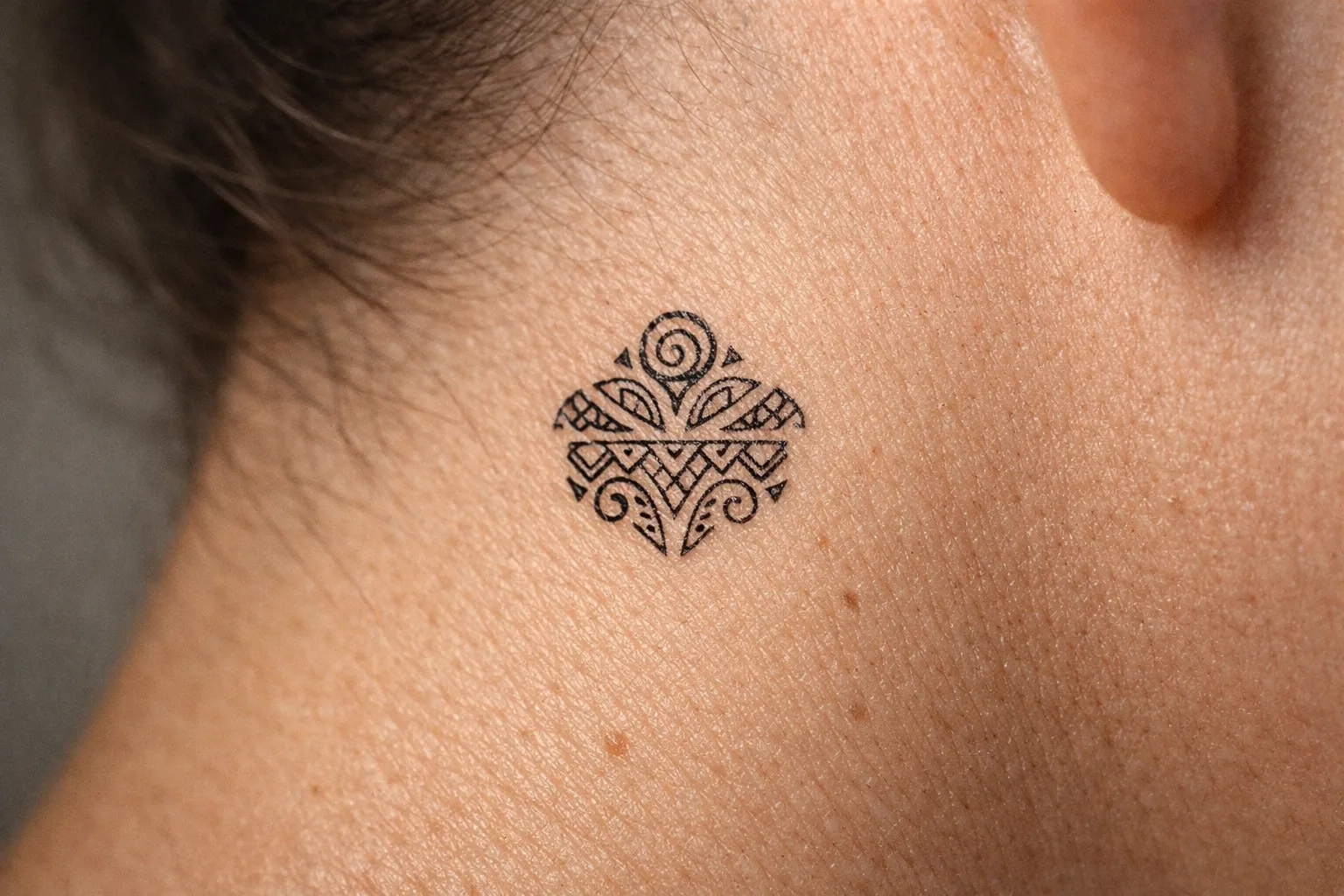
Women had their own tradition. The right hand was tattooed around puberty to mark readiness for duties like food preparation and care of the deceased. The Marquesan cross was placed just below the ear, a spot linked to fertility and the womb rather than pure ornament.
Traditional Tools vs. Modern Machines
Patutiki was hand-tapped using bone or shell combs driven into the skin with a small mallet - that’s the “hitting” in patu’i te tiki. Today, most Marquesan-style tattoos are done with electric machines, which handle large dense fills more consistently than hand-tapping over big areas. Some specialist artists still offer hand-tapped work for authenticity, and it’s worth asking. But for sleeves or chest panels, machine work delivers cleaner saturation across large blackwork sections.
The Core Motifs in Patutiki and What They Mean
Every Marquesan motif carries a specific ancestral, social, or spiritual meaning. Tossing them together without care can accidentally claim defeated enemies, marriage bonds, or clan ties you never intended. What follows is a working glossary of the motifs you’ll actually see in contemporary work - not an exhaustive catalog, but the vocabulary you need before designing or evaluating a piece.
Enata - the Human Figure That Does the Most Work
Enata is a stylized human figure and the backbone of Marquesan design. The local name for the islands, Te Henua Enata (“Land of Men”), ties directly to this symbolism. Enata sit at the center of tattoos expressing lineage rather than generic tribal decoration.
Orientation and arrangement change everything:
- Rows of enata mean continuity of a clan or lineage, often read as ancestors guarding living relatives (4).
- Two mirrored enata represent a couple or marriage bond.
- Different-sized enata grouped together show family members - parents and children.
- Upside-down enata mark defeated enemies. This is the most commonly misused element in contemporary work.
Get the orientation wrong, and what you meant as ancestral protection becomes a claim of victory over others. Confirm the orientation of every enata with your artist before the stencil hits skin. This isn’t decorative - it’s grammar.
Tiki - Ancestor-God at the Center of Warrior Designs
Tiki is the central ancestor-god motif, linked both to life, creativity, and fertility (the realm of ao) and to death and the spiritual world (the realm of po) (7)(9). That dual weight is the point - tiki anchors warrior compositions like mata komoe and ipu, not a generic good-luck charm. It usually sits in chest pieces and shoulder panels as the visual center the surrounding bands orbit.
Marquesan Cross - Balance, Not Just Geometry
The Marquesan cross is a geometric motif symbolizing balance and harmony among opposing elements. French Polynesian tourism highlights it as one of the archipelago’s most distinctive symbols, traditionally significant for women when placed just below the ear, linking to fertility and the womb rather than pure ornament (2)(9). Now it’s widely used in sleeves and chest pieces for all genders, but the fertility meaning sticks when it’s below the ear or on the lower abdomen. As a panel anchor, it works well at 3-5 inches on the upper arm or chest, where its geometry reads clean.
Shark Teeth (Niho Mano), Spearhead, and Ocean Patterns
Niho mano - shark teeth - is one of the most versatile fills in Marquesan panels. The jagged triangular pattern stands for strength, guardianship, ocean life, power, and adaptability (6). It’s popular because it builds large blackwork areas without losing clarity as the tattoo ages.
Two related elements round out the ocean vocabulary:
- Spearhead: aim, warrior spirit, defensive courage. Often a directional element inside bands.
- Ocean patterns: life, continuity, exploration. Common background fill between primary motifs.
Turtle (Honu), Mata Hoata, and Ipu
Three more motifs complete the set:
- Turtle (honu): fertility, health, longevity, peace, and safe voyaging. Turtle-shell geometry often structures larger panels.
- Mata hoata (“shining eyes”): vigilance and protection. Repeated widely as filler and focal element.
- Ipu (calabash/shell halves): balance, the cyclic nature of life, and protection. Historically placed at key body points in warrior designs for spiritual and ancestral protection (7)(9).
Placement in Patutiki - Where You Put It Changes What It Says
In patutiki, placement isn’t decoration - it carries meaning. Above the waist relates to spirituality, the heavens, social rank, and personal achievements. Below the waist connects to earth, life, procreation, and lineage (1)(5). Frommer’s describes traditional tattooing as full-body “maps” of identity, with upper-body panels tied to status and spiritual protection, and lower-body areas tied to fertility and earthbound life. The spine and sternum are central axes - lineage and breath run down the vertical center - while shoulders and deltoids carry leadership and social identity.
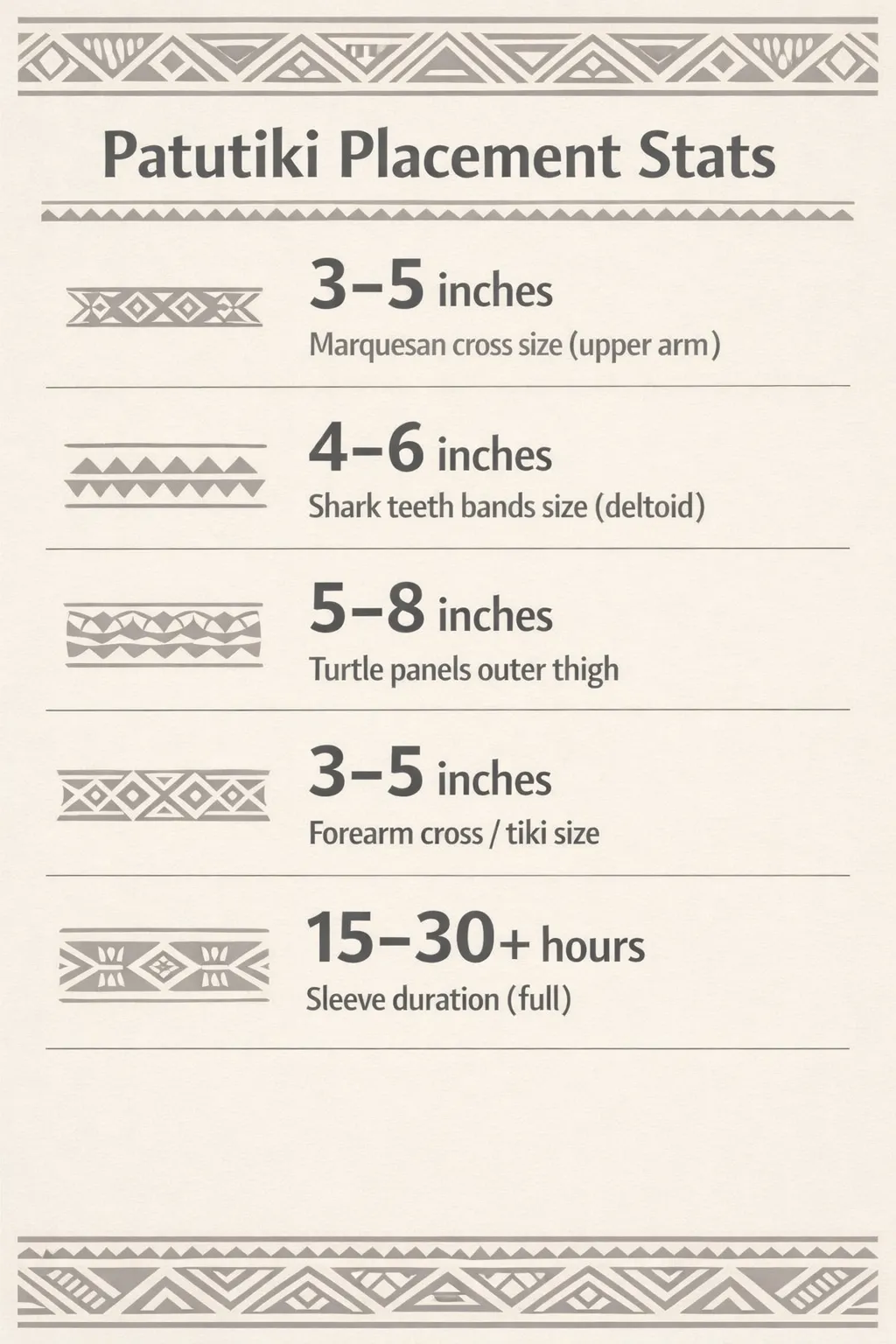 Patutiki placement sizes show cross 3-5 in on upper arm, shark teeth bands 4-6 in on deltoid, turtle panels 5-8 in on outer thigh, forearm cross/tiki 3-5 in, and sleeve duration 15-30+ hours.
Above the Waist - Chest, Shoulders, Upper Back
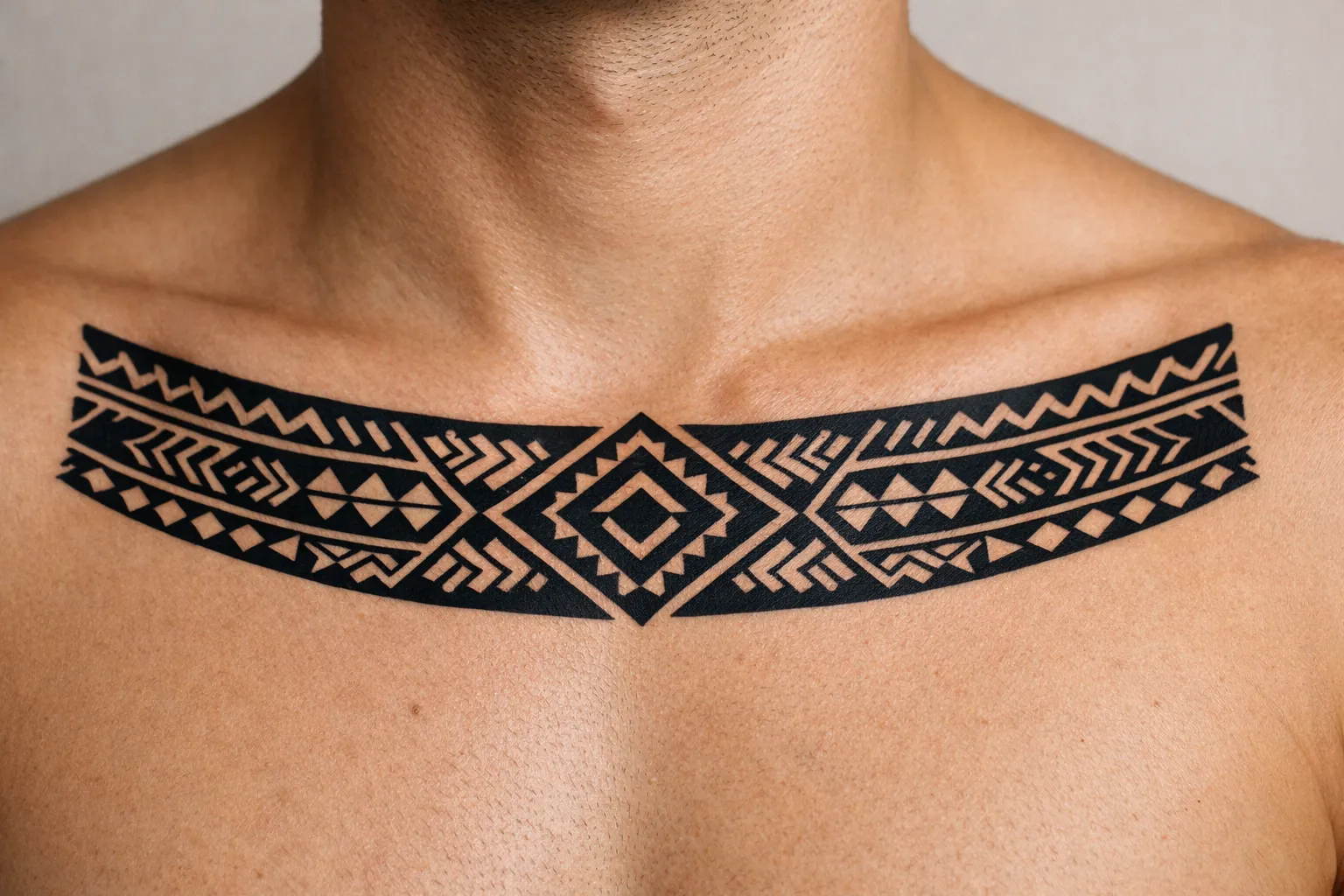
Chest and sternum: spirituality, social rank, matters of the heart. Tiki and enata rows work well here, with the sternum providing a strong central axis. Pain warning: sternum and ribcage tattoos hurt more than forearms, comparable to ribcage work.
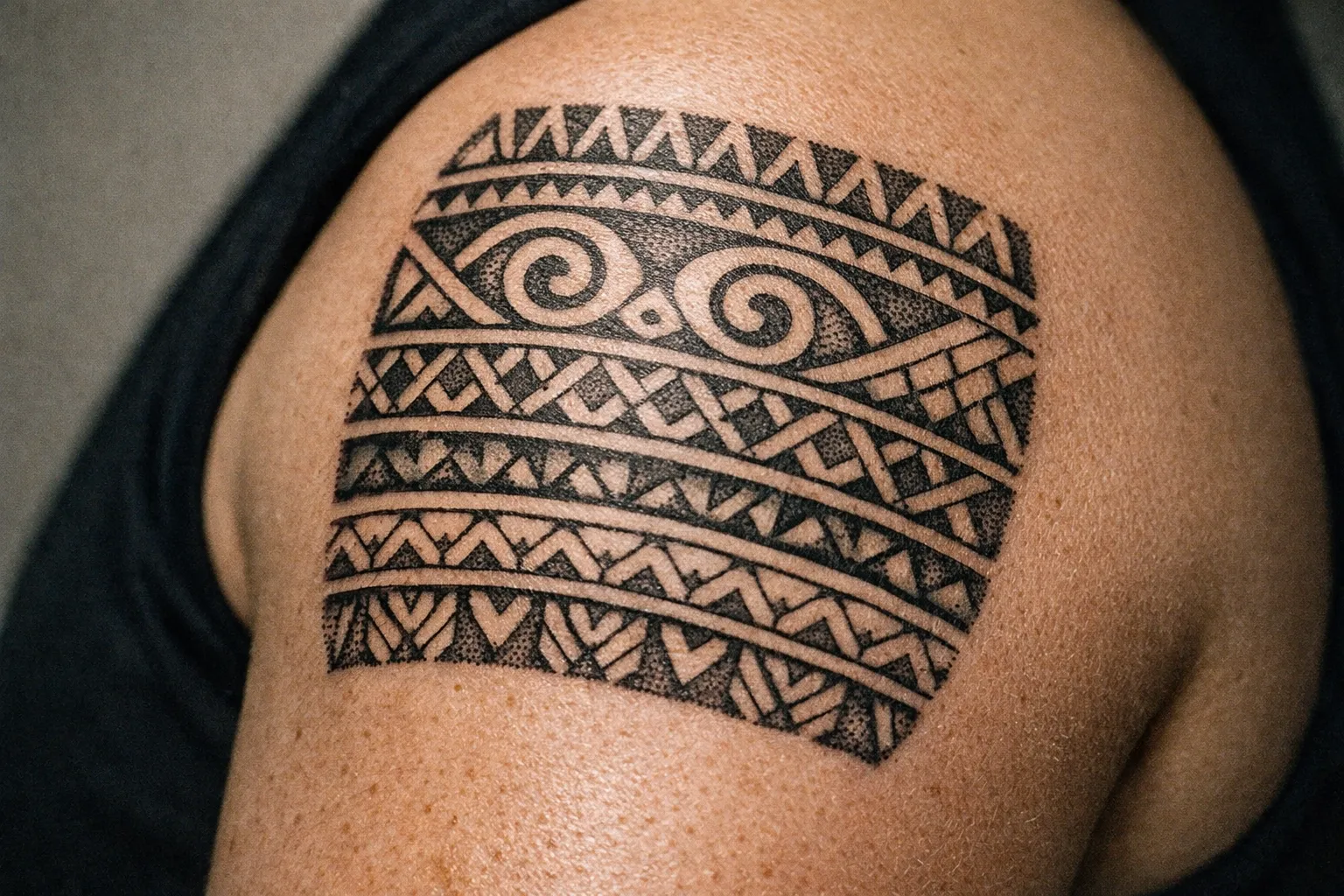
Shoulders and deltoids: leadership, protection, outward identity. Mata hoata and shark-teeth bands fit the deltoid cap at 4-6 inches across. The outer upper arm is one of the least painful areas, so this is a comfortable spot.
Upper back: ancestral protection and lineage. Enata rows running horizontally read as ancestors guarding from behind - a meaningful use of the motif.
Face and neck: highest status and spiritual identity in traditional patutiki, historically reserved for chiefs and warriors. Today, this carries the heaviest cultural weight. I’d steer anyone without Polynesian heritage well clear of this placement.
Below the Waist - Hips, Thighs, Calves
Lower abdomen and hips: tied explicitly to procreation and lineage continuity. A Marquesan cross here carries fertility symbolism - know this before choosing placement.
Thighs: power and endurance. Men traditionally had coverage from upper knees to lower back. Turtle-shell panels work well on the outer thigh at 5-8 inches, and the outer thigh is another less painful zone.
Calves: journey, work, movement. Ocean patterns and spearhead bands suit the calf’s vertical shape. It ages better than forearms due to less UV exposure.
Arm Placements - the Most Common Entry Point
Forearm: high visibility and a relatively flat canvas. Works well for a single motif - Marquesan cross or tiki at 3-5 inches - or as part of a sleeve. Forearms get more sun and movement than calves or upper arms, so tattoos fade a bit faster here (2).
Upper arm and half-sleeve: the most common contemporary format. Mix cross, enata, shark teeth, and mata hoata. Lean on panel logic - structured bands with repeating fills - to keep the composition coherent rather than chaotic.
For full sleeves, plan the symbolism above and below the elbow deliberately: upper arm for rank and protection, forearm for journey and work. That keeps the design’s internal logic intact.
Designing a Patutiki Piece - From Single Motif to Full Panel
Start from meaning, not motif. Identify your core themes - family, protection, journey, fertility - then match them to symbols: enata rows for lineage, tiki for protection, mata hoata for vigilance. Use panel logic. Traditional patutiki arranges motifs in structured panels and bands with repeating geometric fills (spirals, bullseyes, niho mano rows) to maintain visual rhythm. AI For Tattoo’s aging guide recommends blackwork, traditional, or Japanese styles for pieces that must age well, noting panel-based blackwork with solid fills and repetition holds coherence far better than scattered motifs over time.
Here’s the process:
How to Design a Marquesan Tattoo
About 2 hours of planningA step-by-step approach to building a meaningful Marquesan tattoo from theme to scale.
- 1
Define the theme
Identify what the tattoo is about - family, protection, journey, fertility - to guide motif selection.
- 2
Choose motifs
Select symbols that carry your chosen meanings, confirming orientation and cultural significance.
- 3
Plan placement
Apply the above/below waist logic to decide where each motif should go for symbolic coherence.
- 4
Pick a scale
Decide on small, medium, or large size based on your commitment and session availability.
Marquesan Tattoo Scale Tiers Compared
| Small | Medium | Large | |
|---|---|---|---|
| Coverage Area | Single motif, 2-4 inches | Half-sleeve or chest piece, 5-8 inches | Full sleeve, back panel, or body suit |
| Typical Sessions | 1-2 | 3-5 | Multiple (5+) |
| Common Placements | Wrist, behind the ear, upper arm | Upper arm, chest | Full arm, back, torso |
| Best Motif Combinations | Marquesan cross, tiki, enata pair | Cross, enata rows, shark teeth, mata hoata | Full panel compositions, incremental additions |
Small - Single Motif Pieces
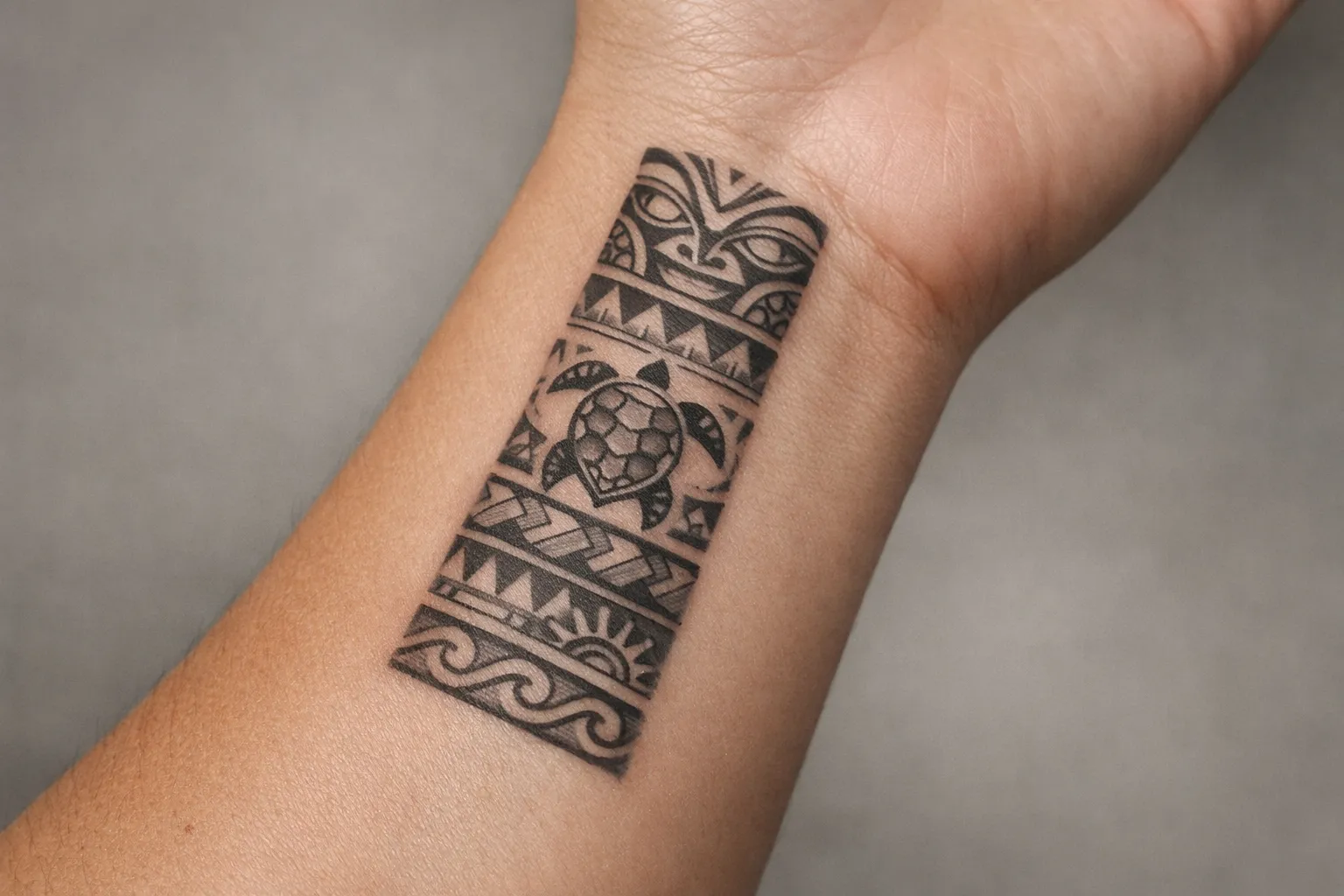
A single Marquesan cross, tiki, or enata pair fits the wrist, behind the ear, or upper arm at 2-4 inches. These take fewer sessions and less time, making them good entry points for first Polynesian-style tattoos. Blackwork at this scale holds well - solid fills and clean outlines age better than fine-line work.
Medium - Half-Sleeve or Chest Piece
This size mixes crosses, enata rows, shark teeth, and mata hoata into a structured panel composition. A half-sleeve on the upper arm covers 5-8 inches and requires multiple sessions over weeks or months. For a chest piece, anchor it with a central tiki, then build enata rows and niho mano fill outward from the sternum axis. Panel logic is critical here - without it, the piece reads as a collection of unrelated symbols.
Large - Full Sleeve, Back Panel, or Body Suit
Full sleeves or back panels take serious time - many sessions. Historically, these marked wealth and age in Marquesan culture, with patutiki accumulating over a lifetime. Modern clients can plan incrementally - adding a new enata row for a child’s birth, a mata hoata for a milestone. Work with an artist who specializes in Marquesan or Polynesian designs and can explain each element’s meaning.
On budget: U.S. tipping etiquette suggests 15-25% of the total, with 20% a safe default. For a $500 Marquesan-style piece, that’s $75-$125 on top of the base price. Factor this in when planning large projects or traveling to a specialist.
What to Avoid and Why It Matters
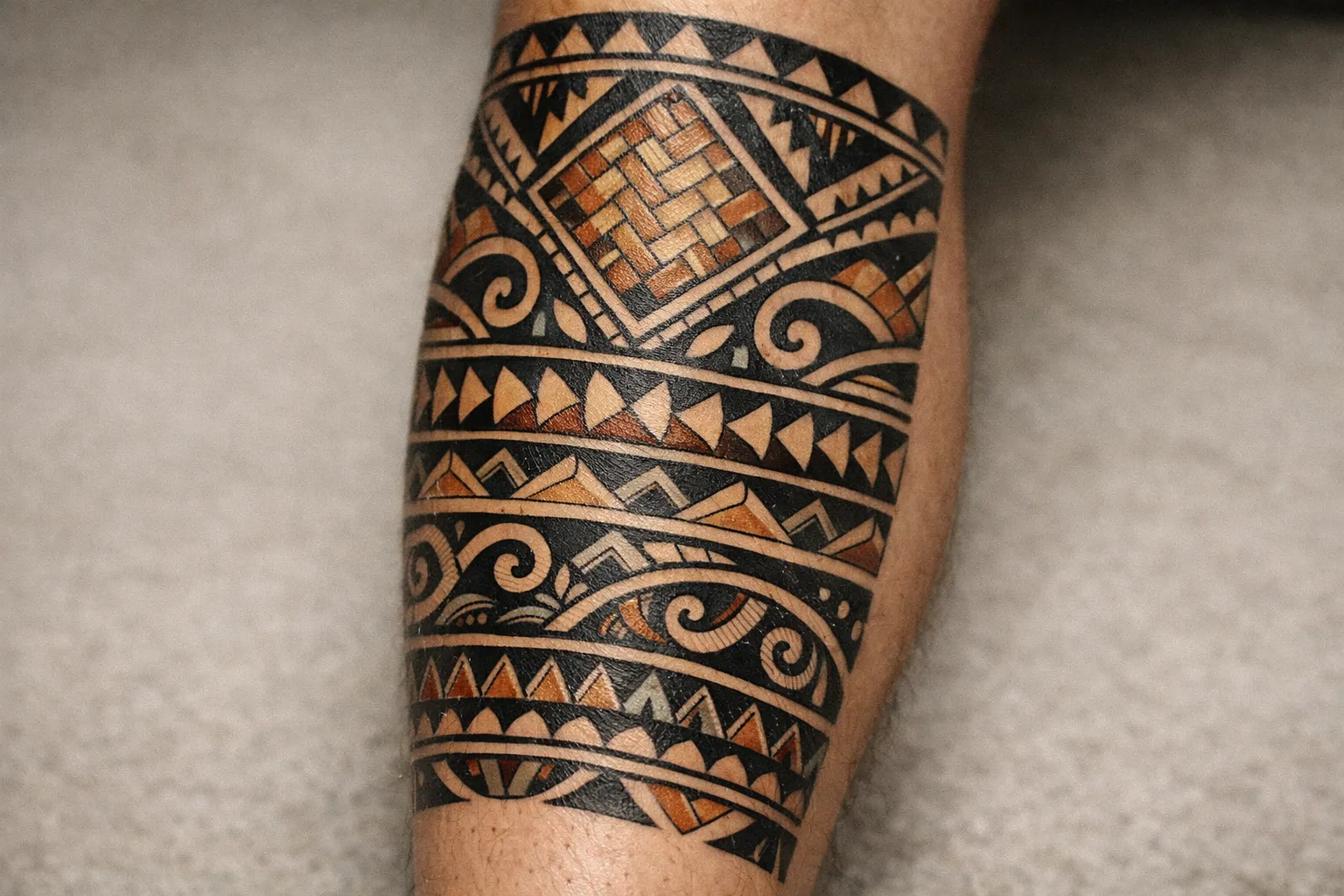
The quickest way to ruin a Marquesan-style tattoo is the generic tribal trap. Mixing Samoan, Māori, Hawaiian, and Marquesan motifs in one design creates cultural incoherence - patutiki uses structured panels and repetition, not a grab-bag of Pacific symbols (6)(7). Pick one tradition and stick to it.
Common mistakes:
- Upside-down enata. The most frequent misuse. If you don’t want to mark defeated enemies, confirm orientation with your artist before the stencil hits skin.
- Marquesan cross below the ear. Carries womb and fertility symbolism for women. Not a problem, but worth knowing before you place it (2)(9).
- Lower abdomen and thigh motifs. These belong in the procreation and lineage zone. Placing fertility symbols there without awareness is a common slip.
- Full warrior or chief layouts covering face, skull, and torso without Polynesian heritage or consultation with a Polynesian artist. This crosses into appropriating status tied to specific genealogies - a real concern (6)(7)(8).
- Overcrowded panels. Filling every gap with unrelated symbols kills the visual rhythm that makes patutiki work. Negative space isn’t wasted - it’s part of the structure.
None of this is about permission. It’s about not walking around with a design that says something you didn’t mean.
How Marquesan-Style Blackwork Ages on Skin
Dense blackwork is one of the most durable tattoo formats out there. Solid fills and thick outlines hold saturation much longer than fine-line, watercolor, or color work. AI For Tattoo’s aging guide flags dense blackwork as one of the best styles for staying legible past ten years. Style, placement, and sun protection are the main factors.
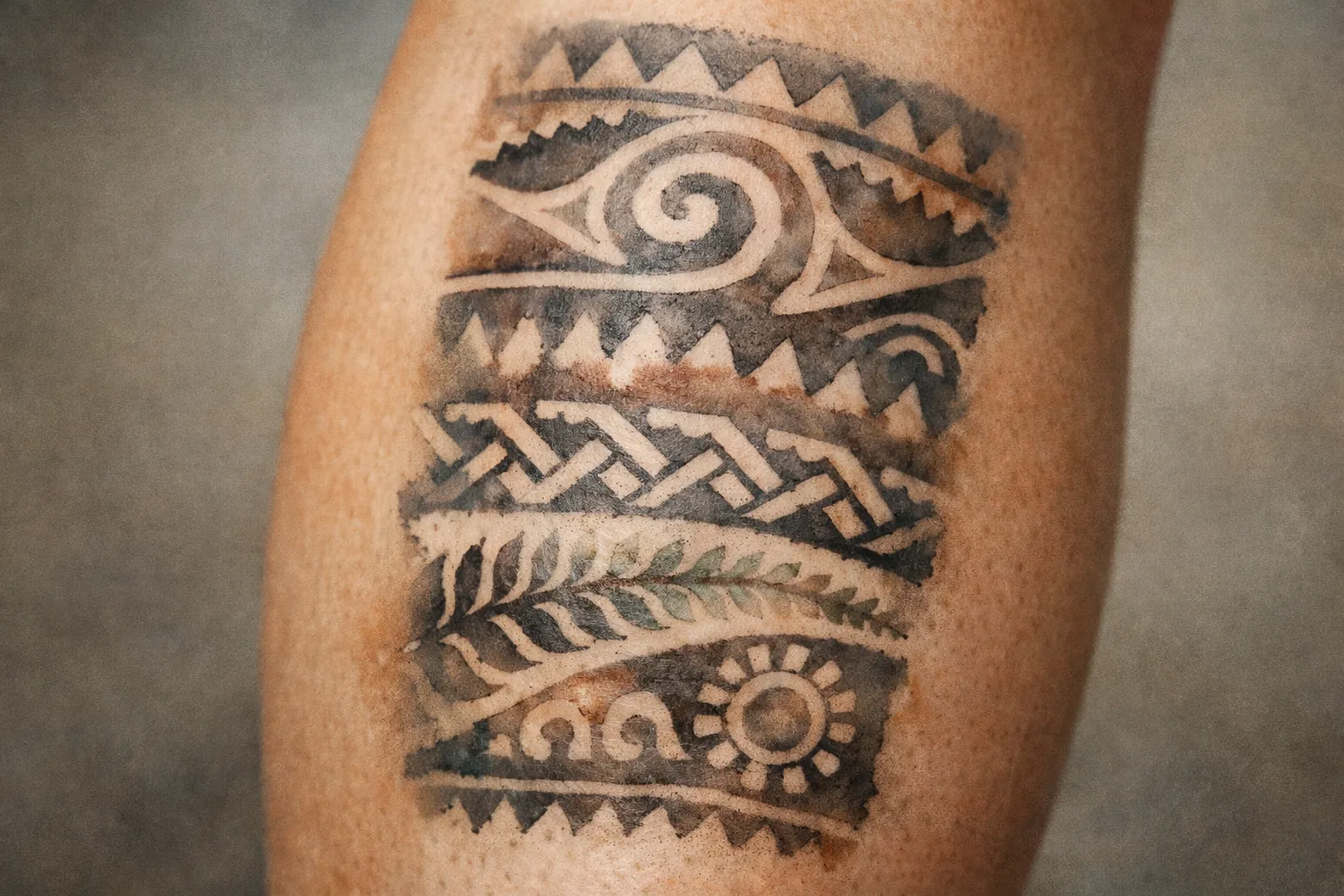
Placement matters. Calves and upper arms - less sun exposure and skin movement - age better than forearms and hands. Ribcage and sternum hurt more, but the skin moves less, which helps retention. Sun is the biggest enemy of blackwork saturation. Surf N Ink Tattoo calls sunscreen “not a choice, rather a must,” recommending SPF 50 or higher on healed panels; SPF 30-50 or sun-protective clothing is non-negotiable for long-term sharpness.
Watch for blowout risk. Dense panels on thin-skinned areas - inner wrist, behind the knee - can spread. Choose an artist with healed photos of large blackwork, not just fresh shots. Fresh blackwork always looks saturated; healed photos show line stability and fill consistency. Done well on a good placement (upper arm, calf, chest), solid blackwork can go 10-15 years without a significant touch-up. Fine-line Polynesian-inspired work softens much faster.
Healing Timeline for Dense Blackwork Panels
- Day 1-3: Keep the wrap or second-skin film on as directed. Wash twice daily with a fragrance-free cleanser and apply a thin layer of fragrance-free moisturizer. Dense blackwork weeps more than fine-line work, so keep it clean.
- Week 1: Peeling starts. Don’t pick - pulling peeling skin on a dense black panel can lift pigment and leave patchy spots needing touch-up.
- Week 2-4: Surface looks healed but deeper layers are still settling. Avoid soaking - no pools, ocean, or baths - for at least three weeks. Keep the fresh piece out of direct sun. Dermatologists advise waiting until all flaking stops before submersion.
- Week 8 and beyond: Fully healed. Check saturation and line crispness. Book a touch-up if any areas healed patchy.
Finding the Right Artist for Marquesan Work
Look for artists who explicitly list Marquesan or Polynesian specialization - not just “tribal” as a catch-all. That’s a red flag for flash, not knowledge. Vet them with these checks:
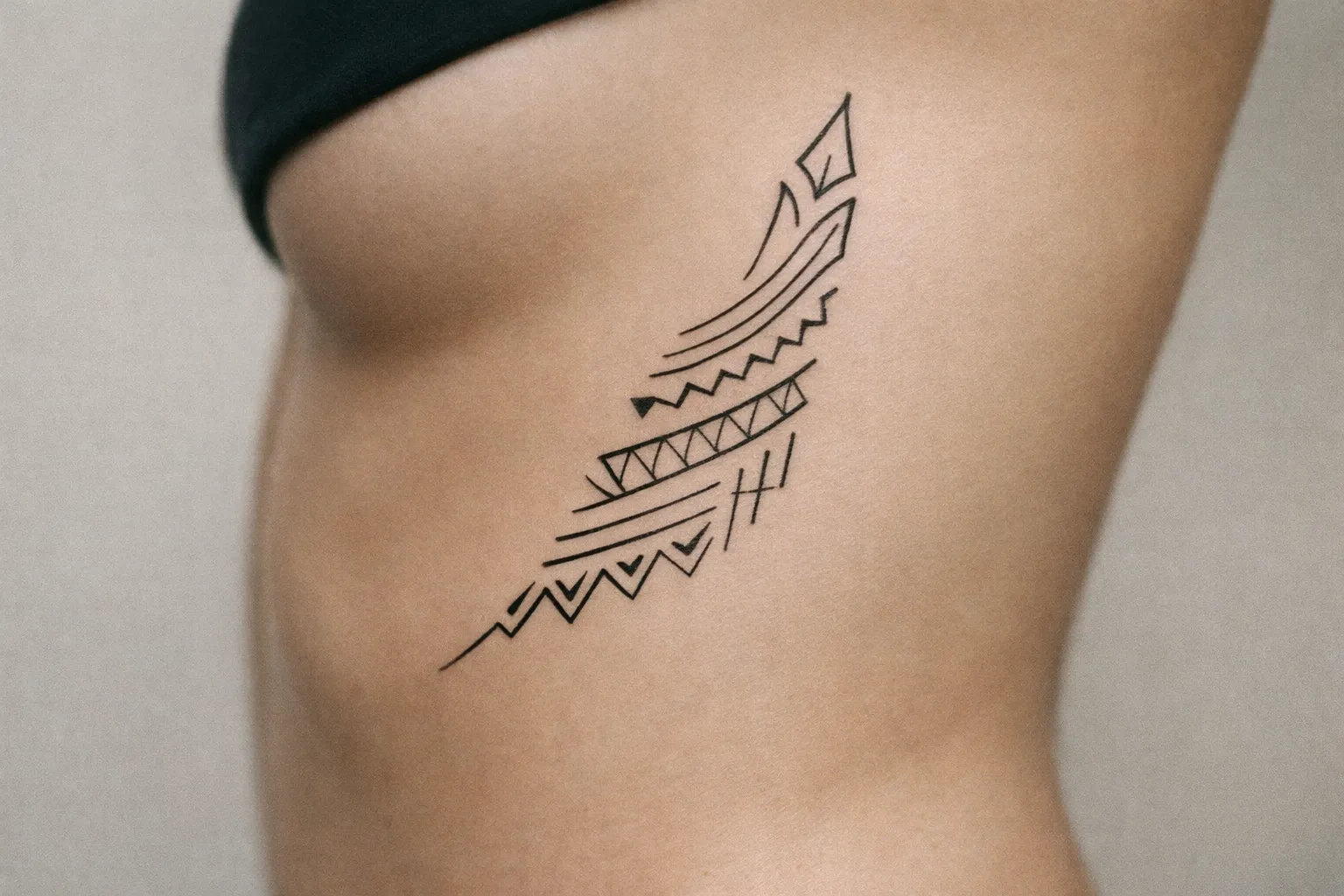
- Ask them to explain each element they propose. If they can’t tell you what a motif means or why it’s oriented a certain way, they’re working from flash sheets, not tradition.
- Request healed photos of large blackwork. Fresh blackwork always looks saturated. Healed photos show line stability and fill consistency.
- Consider the incremental approach. Experienced Polynesian artists often recommend building a piece across consultations, adding elements as life events happen - echoing the traditional accumulation of patutiki over a lifetime.
If you want traditional or semi-traditional work, traveling to French Polynesia is an option. Marquesan studios follow French Polynesia’s health and hygiene rules - age, consent, health screening apply. Flights from Tahiti take about three hours over roughly 1,500 km, so plan for multiple days to fit consultation and sessions.
Frequently Asked Questions
- What is the Marquesan tattoo tradition?
- Patutiki is the traditional body art system of the Marquesas Islands in French Polynesia. It encodes social status, lineage, spiritual protection, and fertility with dense geometric panels.
- Are Marquesan people Polynesian?
- Yes. Marquesans are Polynesian, part of the Austronesian migration. The Marquesas Islands are among the earliest settled groups in eastern Polynesia with a rich tattoo tradition.
- What does the Marquesan cross mean?
- The Marquesan cross symbolizes balance and harmony. Traditionally linked to fertility and the womb when placed below the ear or on the lower abdomen.
- What does the enata motif represent?
- Enata is a stylized human figure representing ancestors, family, or defeated enemies if upside-down. Orientation changes its meaning entirely.
- Can non-Polynesian people get Marquesan tattoos?
- Legally yes, but cultural weight is significant. Full warrior layouts require consultation with Polynesian specialists to avoid misappropriation.
- Which Marquesan motifs age best as tattoos?
- Dense blackwork motifs like shark teeth and thick enata outlines age better than fine-line work. Placement and sun protection are key factors.
- How long does a Marquesan sleeve take?
- A full Marquesan sleeve takes multiple sessions over weeks or months, totaling 15-30+ hours depending on detail and coverage.
Three choices carry the most weight. First, motif selection - know what each element means before it goes on skin. Enata orientation and Marquesan cross placement are the two biggest decisions. Second, placement - above vs. below the waist isn’t random; it’s the structural logic that makes a Marquesan design read as a coherent map, not decorative noise. Third, the artist - find someone who can explain symbolism, show healed blackwork photos, and treat the piece as a system rather than a pile of flash.
Get those right, and the payoff is durability. Dense blackwork ranks among the longest-lasting tattoo styles. A well-planned Marquesan panel on a good placement - upper arm, chest, calf - will hold saturation for years with basic sun protection and honest aftercare. The cultural depth isn’t a burden. It’s what gives the design a clear logic that purely decorative work never has.