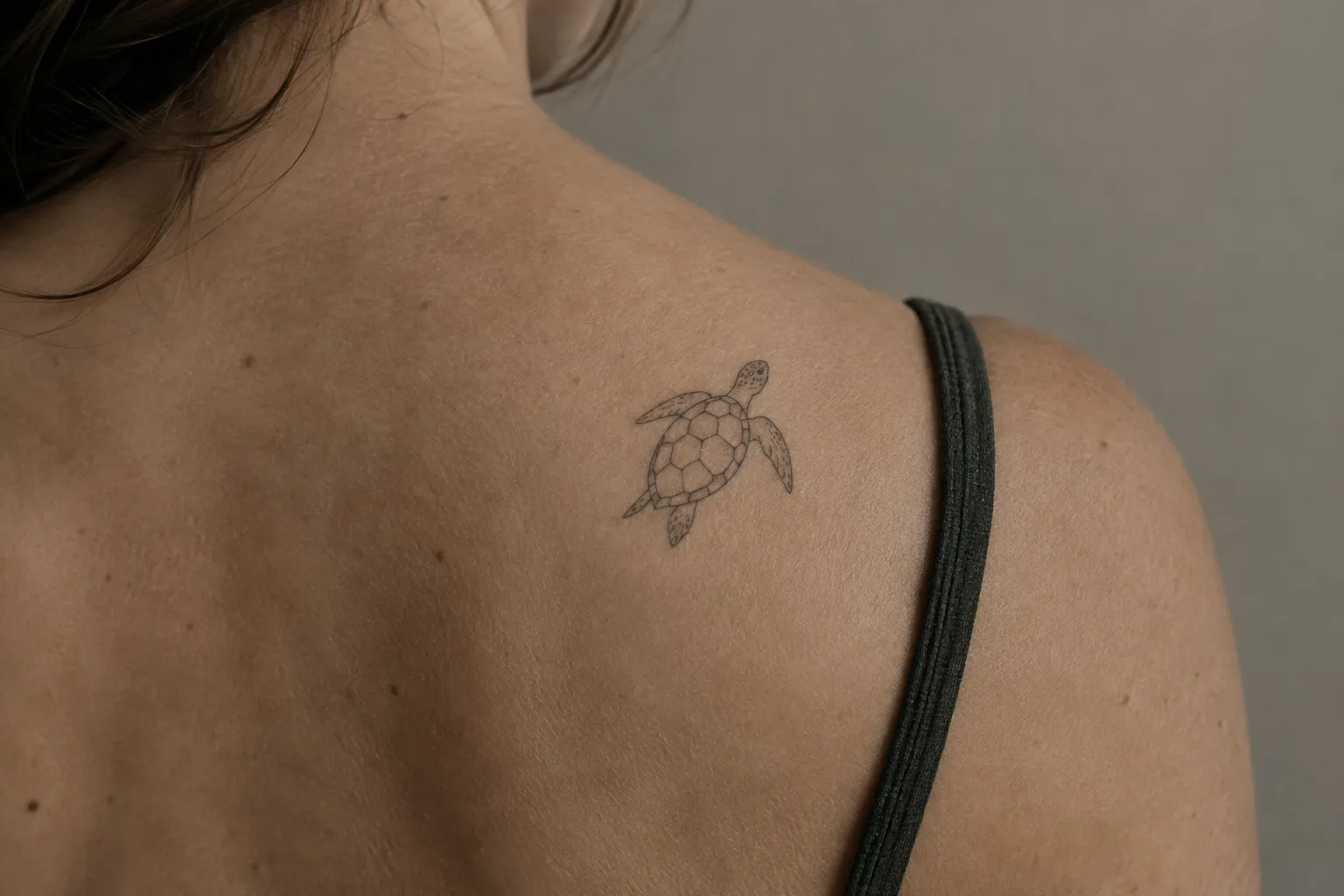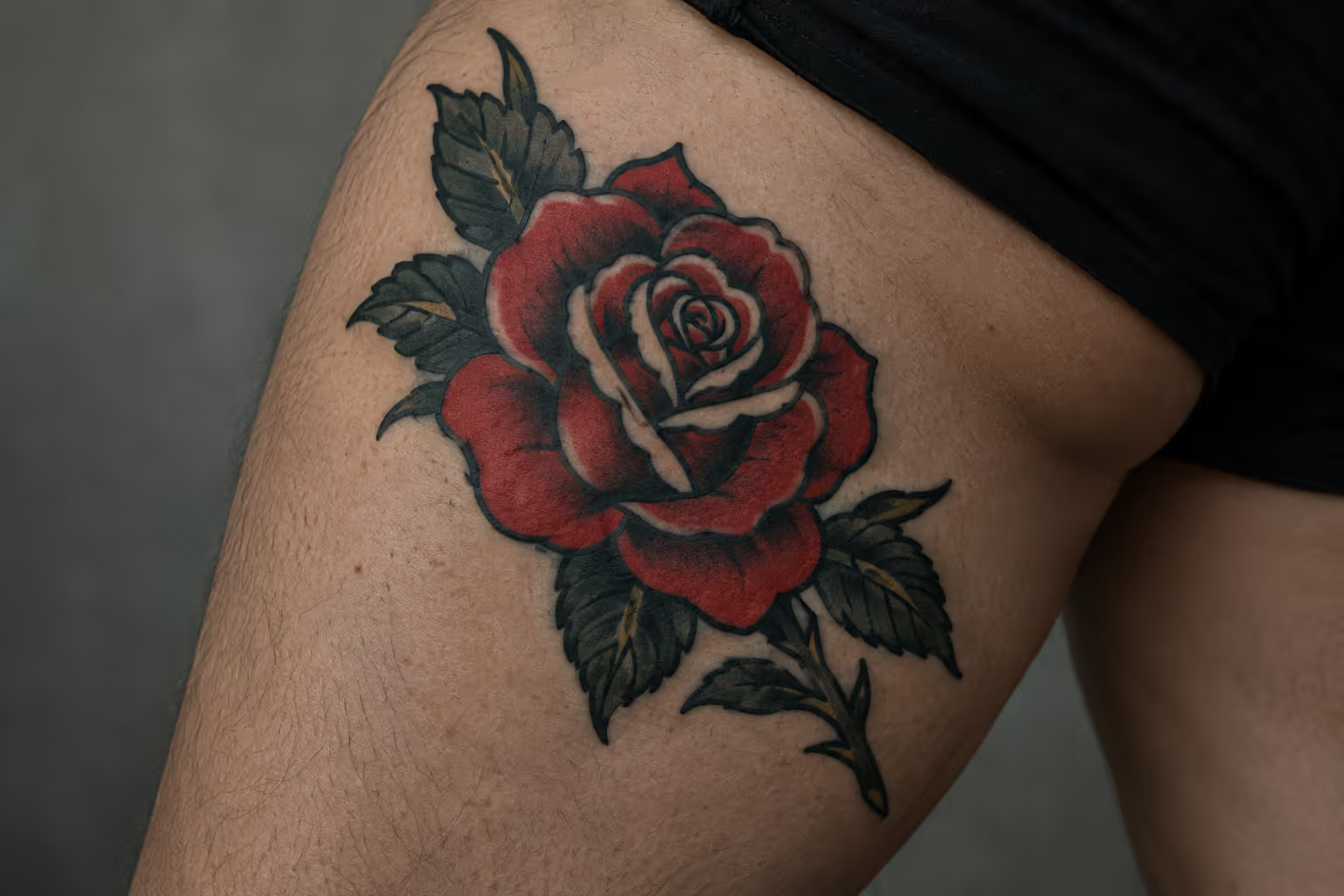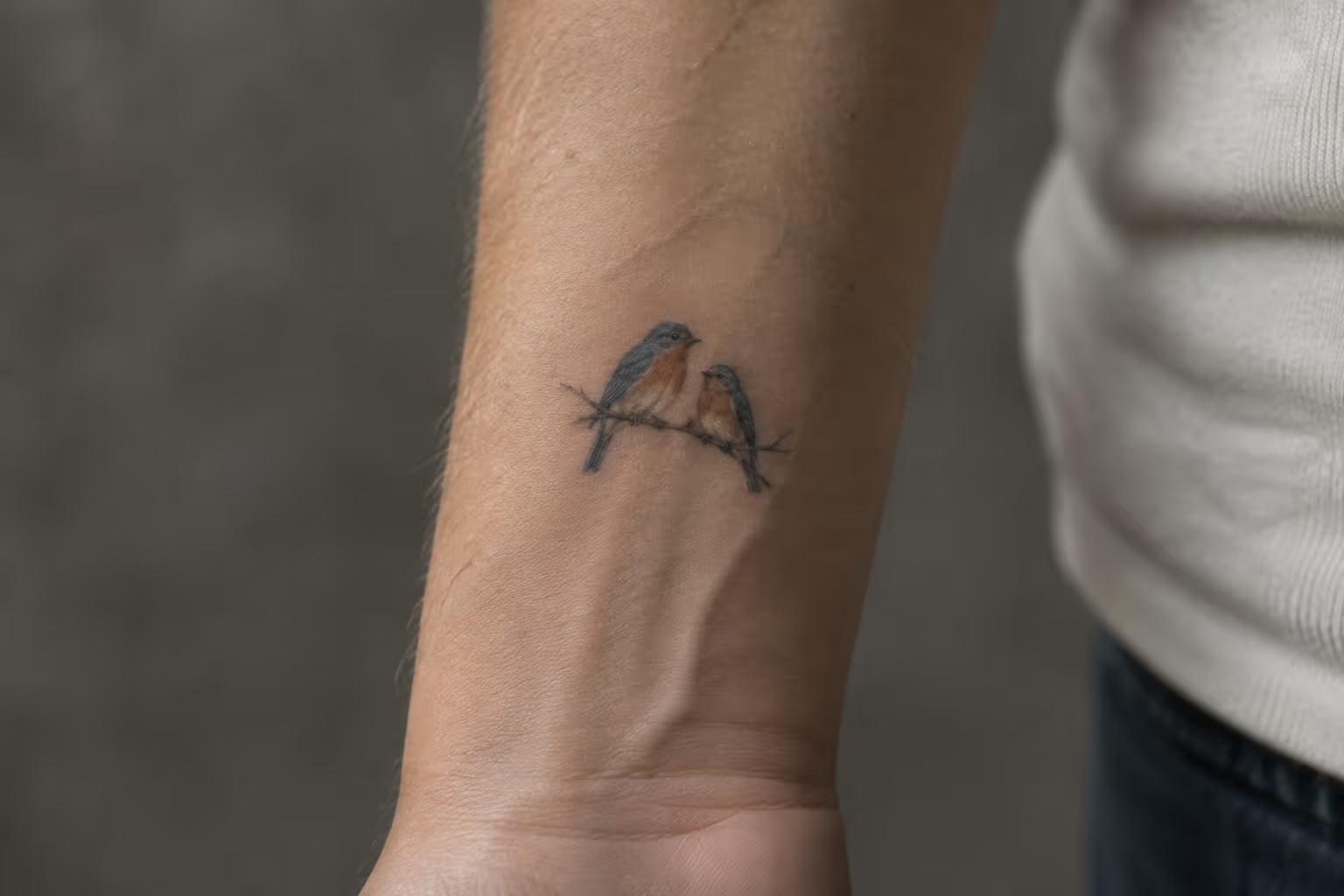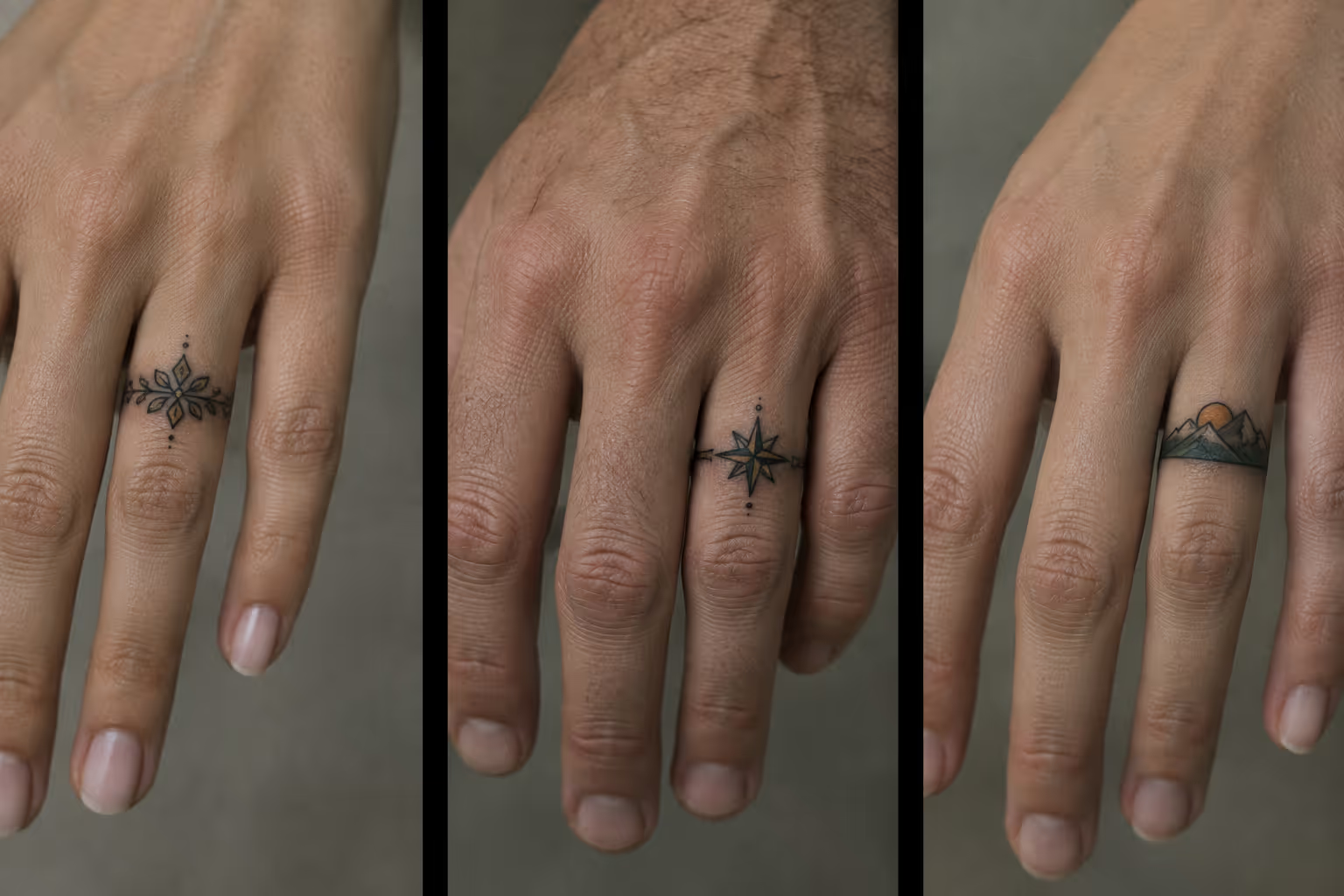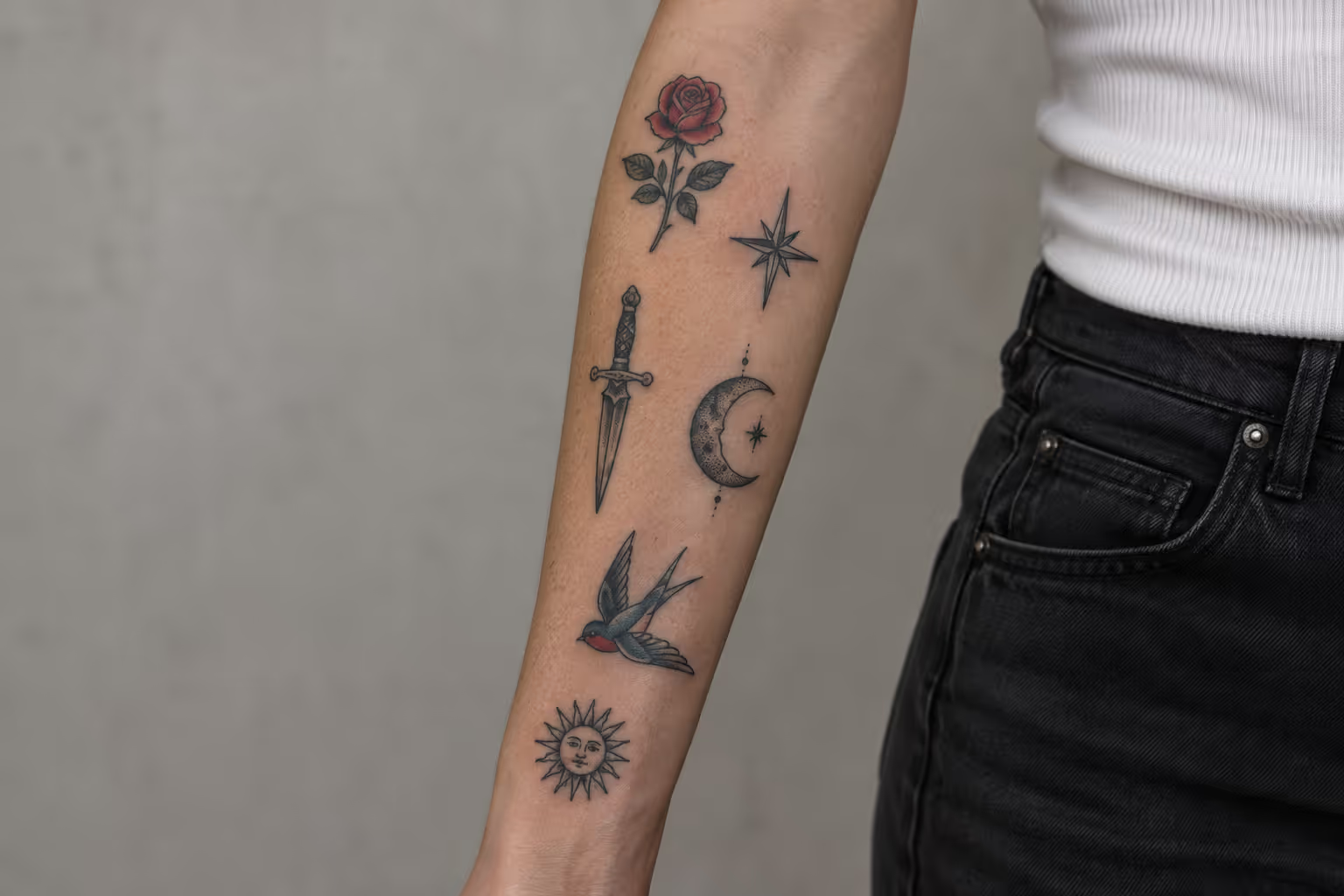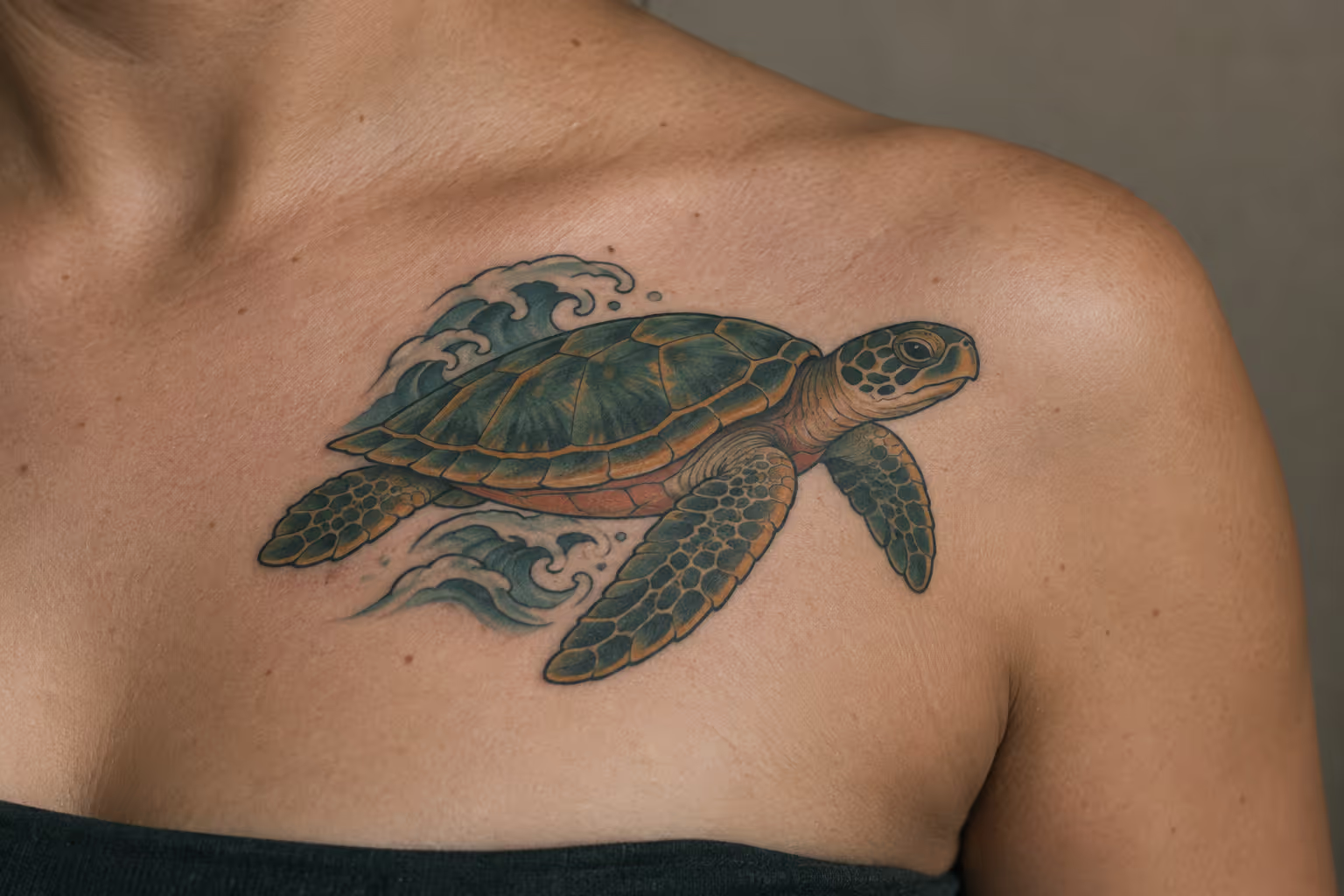
A turtle tattoo can show three different animals: a land tortoise with a high, domed shell and stumpy clawed feet, a freshwater turtle with a flatter shell, or a sea turtle with long paddle flippers. That choice separates an earthbound design from an ocean one, and it changes the symbolism, the silhouette, and how much shell detail your artist can fit. Pick the species first. Then match the size and placement to how much detail the design needs.
The case for a turtle is strong. The symbolism is flexible, the shape scales from a tiny outline to a full back piece, and it works on most placements. There are three downsides. Copying a Polynesian design without its context carries cultural baggage. Shell pattern needs real surface area. And the skin under a turtle tattoo keeps healing for weeks after the surface looks finished.
✓ Pros
- The recognizable shell-and-body silhouette stays legible across several tattoo styles.
- Species-specific anatomy gives the artist clear visual cues to distinguish a tortoise from a sea turtle.
✗ Cons
- A stylized design can blur the distinction between species if its anatomy is simplified too far.
- Viewers may read cultural motifs through a different tradition than the wearer intended.
Turtle Tattoo Meaning: Symbolism by Species and Culture
Turtle tattoo meaning is not fixed. Design guides tie turtles to wisdom, longevity, protection, and patience (9), but what a specific piece means depends on your intention and on the culture a design draws from. Across Polynesia, for example, symbols carry different meanings from one archipelago to the next (5). Treat these as common interpretations, not rules.
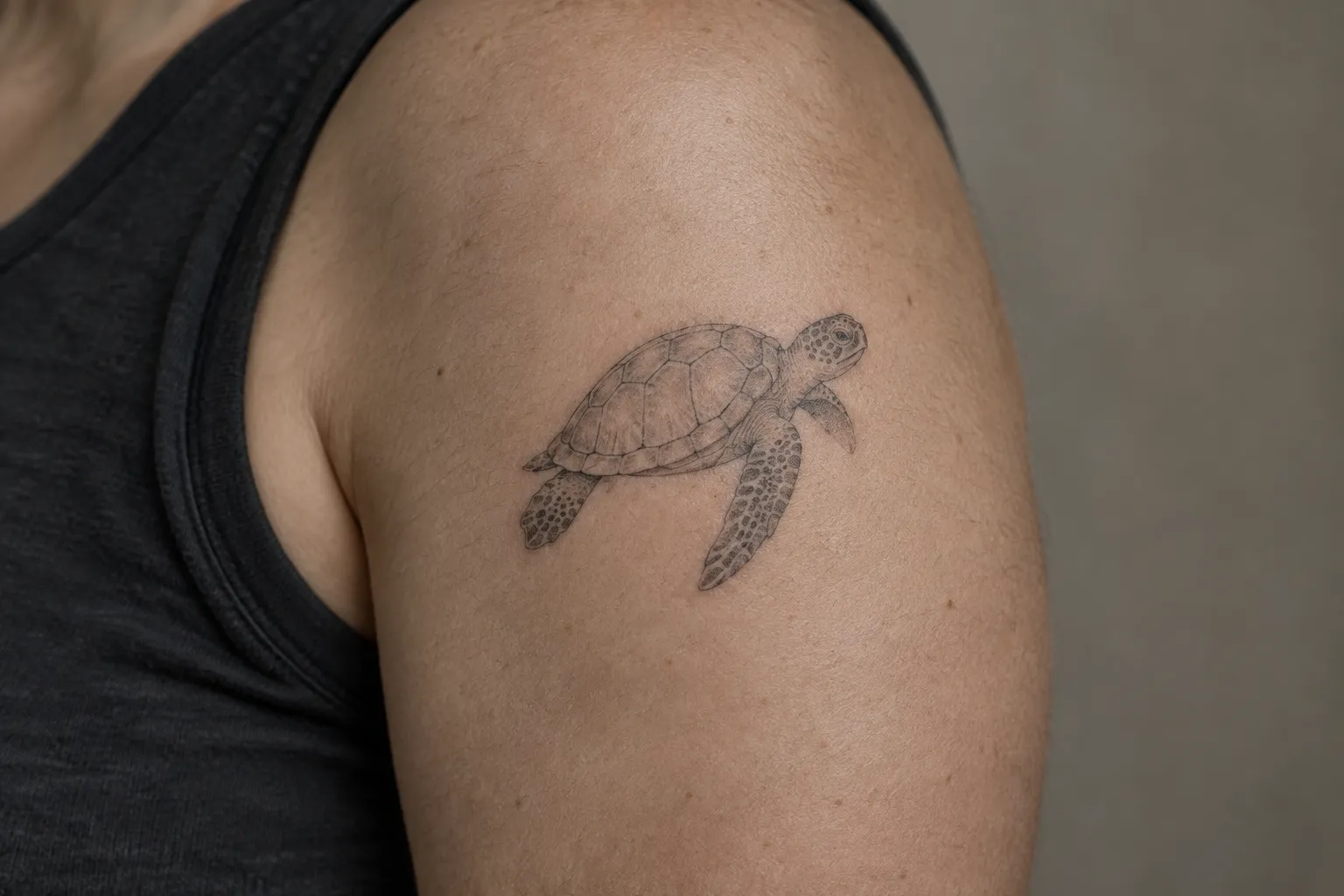
Species matters more than most lists admit. A sea turtle leans toward protection, endurance, patience, guidance, and connection to the ocean (4). General turtle guides apply wisdom, longevity, and protection to land tortoises and sea turtles alike (9). If “slow and steady” is the point, a tortoise fits better than a sea turtle mid-glide.
What turtles symbolize spiritually
Spiritually, one sea-turtle guide reads turtles as symbols of healing and renewal, pointing to their long lives and their return to the place where they were born (4). The shell reads as armor, so protection is the most consistent thread. The long lifespan gives you longevity and wisdom. Most tattoo guides fold these ideas into one broad “patience and resilience” meaning (9). That is fine for a personal piece, as long as you don’t claim it as a specific tradition’s teaching.
Is a turtle a good luck symbol?
A turtle is generally read as good luck, not bad. In Hawaiian culture the honu, the green sea turtle, is seen as a protector and a symbol of good luck (4), and a Thai sak yant turtle stands for good luck, long life, and spiritual safety (9). Outside those specific traditions, the luck reading is a modern generalization, so don’t lean on it if you want a meaning with deep roots.
Sea Turtle Symbolism and Ocean-Inspired Design Details
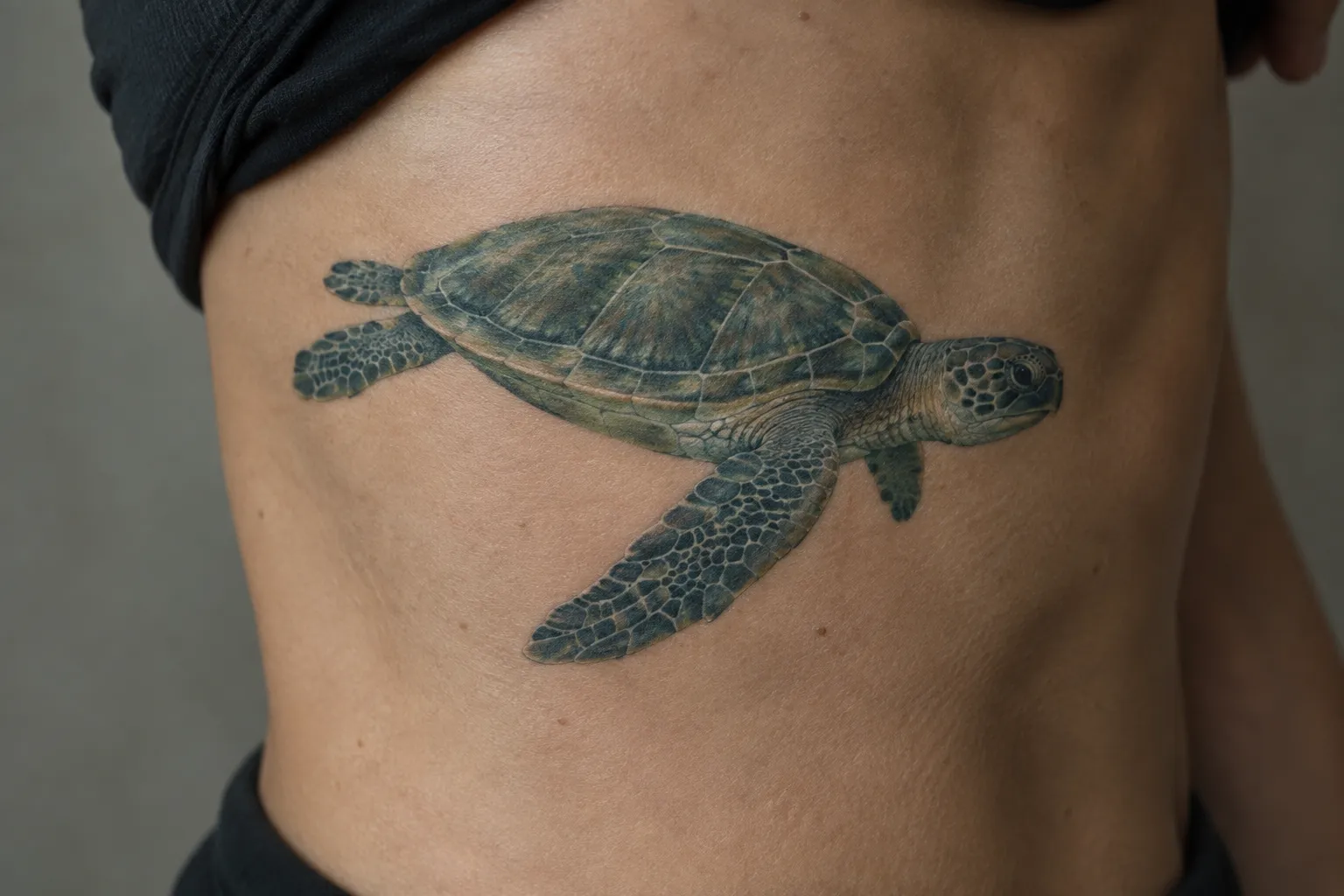
A sea turtle tattoo carries protection, endurance, patience, guidance, and ocean connection. It is the choice for someone whose reference point is the water, not the garden (4). People who love the ocean, or want to mark time spent on the coast, often land here (4).
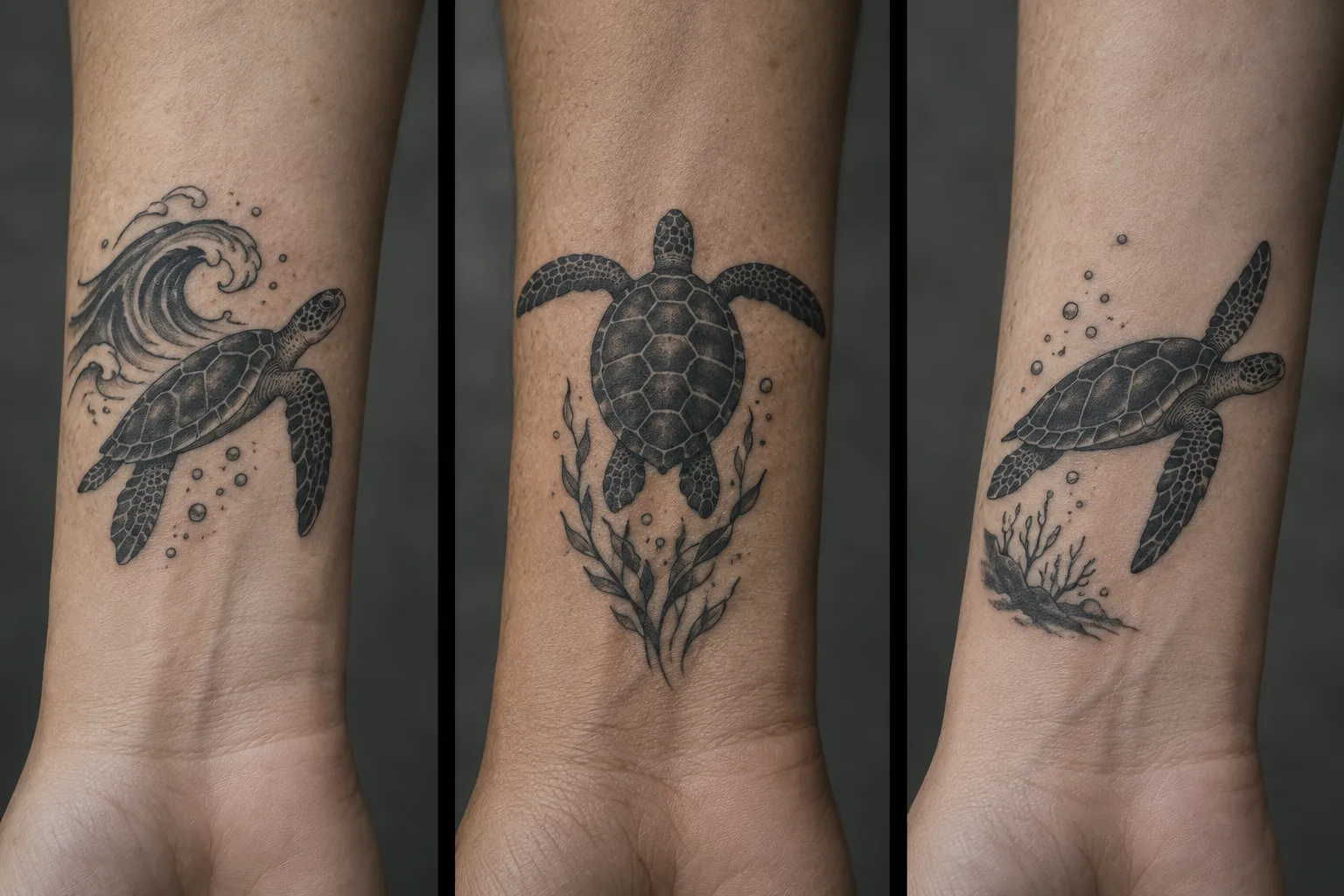
Design-wise, the sea turtle is easy to tell apart from a tortoise if the artist commits to the anatomy:
- Flippers, not feet: long front paddles swept back, no visible claws
- Low, teardrop shell: flatter and more streamlined than a tortoise’s dome
- Scute pattern: the plates on the shell, drawn as clean shapes with enough negative space between the lines so they don’t fill in as the ink spreads
- Ocean add-ons: wave curls, bubbles, coral, kelp, or flowers around a honu-inspired design (4)
Every add-on needs space. Waves and coral around a turtle add real surface area, so plan the placement around the finished composition, not just the turtle.
Placement and Size: Small vs. Detailed Turtle Designs
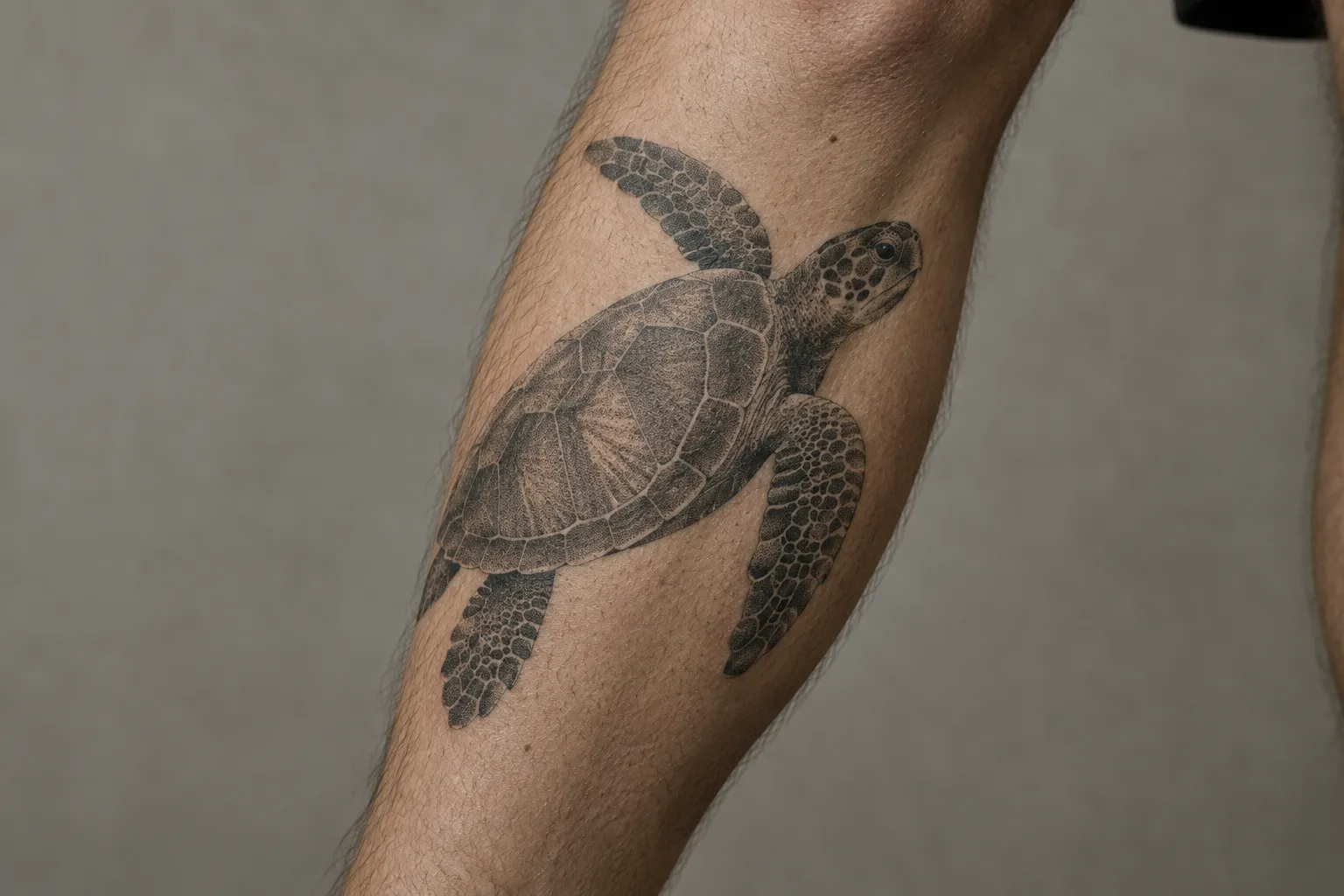
For a small, simple turtle outline, go with the wrist, ankle, inner arm, or behind the shoulder. Save detailed sea-turtle designs for the forearm, shoulder, calf, back, or thigh, where shell texture and ocean elements have room (4). These are design suggestions, not hard rules. The logic underneath them holds: the more detail you want, the more flat skin you need.
Small and minimalist placements
A small turtle tattoo works as a clean outline with a simplified shell. Tiny flipper lines, dots, and shell segments packed too tightly can blur over time, so use fewer shell divisions and don’t make the turtle smaller than its detail can support (4). On the wrist, a tiny turtle with hairline scutes can age into a dark oval. Go with a bolder line or fewer plates.
On pain: wrist and ankle sit close to bone and feel sharper than the inner arm. Behind the shoulder is usually easier than both.
Larger, detailed placements
Detailed turtle tattoo designs need room. Medium pieces fit the forearm, calf, upper arm, and shoulder blade, and large ocean scenes need the back, thigh, ribs, or chest (4). That is where shaded scutes, flipper texture, and background fit. Forearm and calf are among the more comfortable spots. Ribcage and spine sting more than either, so a full back piece with a spine crossing is a longer, harder sit.
Side by side: a small, simple design goes on the wrist, ankle, inner arm, or behind the shoulder, with outline-only shell detail, and suits fine line or minimalist blackwork. A detailed sea turtle goes on the forearm, calf, shoulder, thigh, or back, with full scute shading and an ocean background, and suits realism, American traditional, or Polynesian-inspired work. If you go American traditional, expect bold outlines and rich color (9). The common pitfall is cramming too much shell pattern inside that heavy outline until it reads as mud from across a room.
Polynesian Turtle Symbolism and Cultural Considerations
A Polynesian turtle tattoo usually centers on the honu, which references link to health, fertility, peace, foundation, and longevity. Those meanings are not universal across Polynesian communities (3)(5). The Polynesian Triangle takes in more than a thousand islands and several dozen cultural groups, most with their own tattoo traditions (5). “The Polynesian meaning” of the turtle is a simplification.
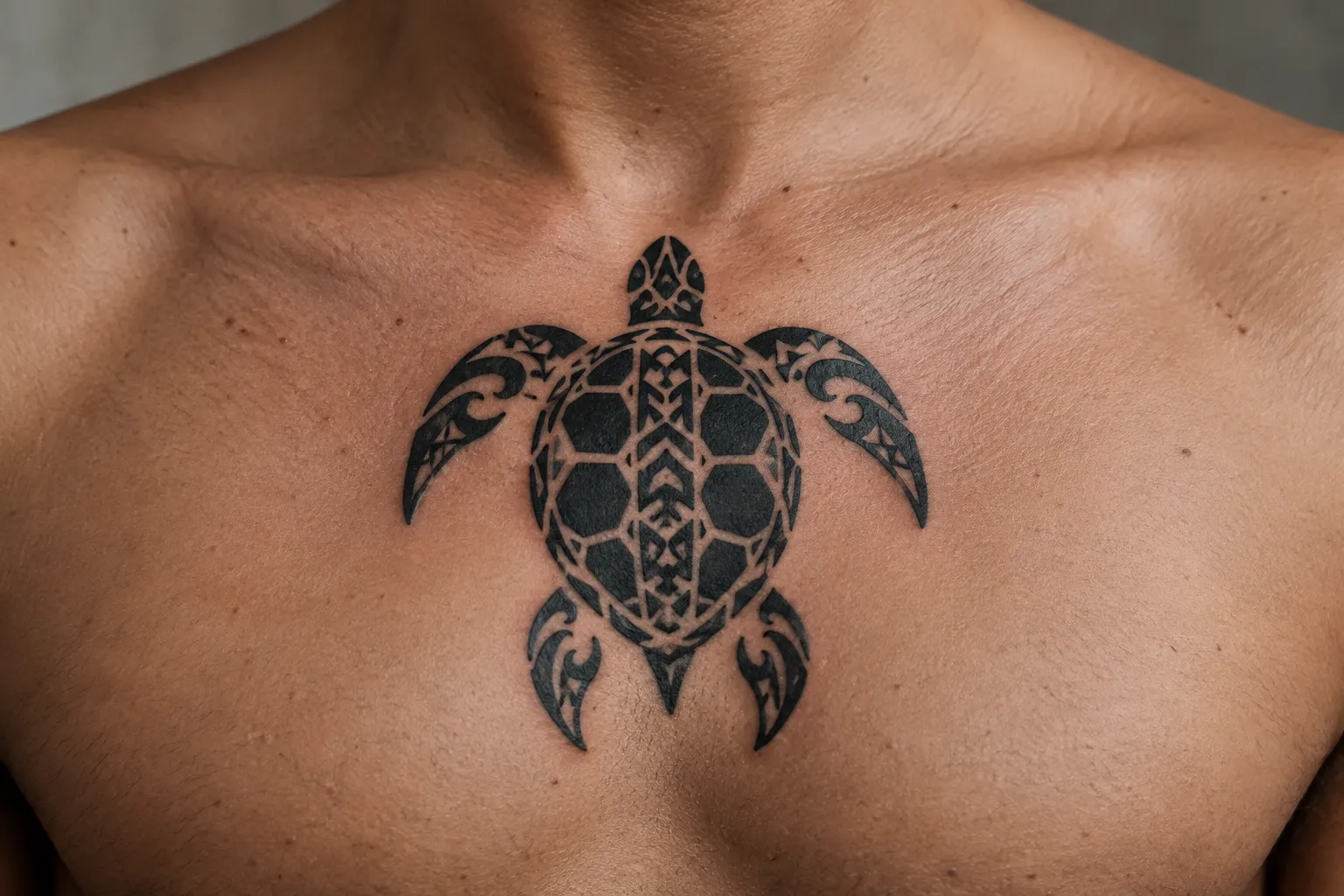
Be wary of online symbol glossaries. National Geographic reports that online explanations of Polynesian tattoo motifs are often inaccurate (5). The same caution applies to generic turtle-symbolism lists. A neat bullet list of what each shell segment “means” is usually somebody’s guess.
This also answers one of the most common questions about which tattoos to avoid: don’t ask an artist to replicate someone else’s personalized Polynesian design. Those pieces are built around the wearer’s own story. The same report describes artists declining exact copies and building a new design from a conversation with the client instead (5). Bring a photo to show the style you like. Then book time with an artist who knows the tradition, and talk through what you want the honu to represent.
Before You Book: Choosing Species, Size, and Studio Safety
Before booking a turtle tattoo, decide the species, then the meaning, the placement, the line weight, and whether you want color or black and grey (4). Walking in with those answered cuts the consult short and gets you a better drawing.
- References as inspiration: bring a few examples of line style and composition you like, and ask for a design built for you, not a copy (5)
- Licensing: in the US, state and local authorities oversee tattoo practice, so check that your artist and studio meet local licensing and health requirements (6)
- Ink safety: the FDA warns that contaminated inks can cause infections and that inks can trigger allergic reactions. It has found bacteria even in unopened, sealed inks (6)
Tell your artist about any medications you take, and ask about a patch test if you’ve reacted to pigments before.
Healing Timeline and Aftercare Basics
A turtle tattoo’s outer skin closes in about 2-3 weeks (2) and looks healed by weeks 3-4, but the skin underneath keeps remodeling until the tattoo fully settles around week 6. A piece that looks done at week three is still healing underneath. The full week-by-week routine is in the tattoo aftercare guide.
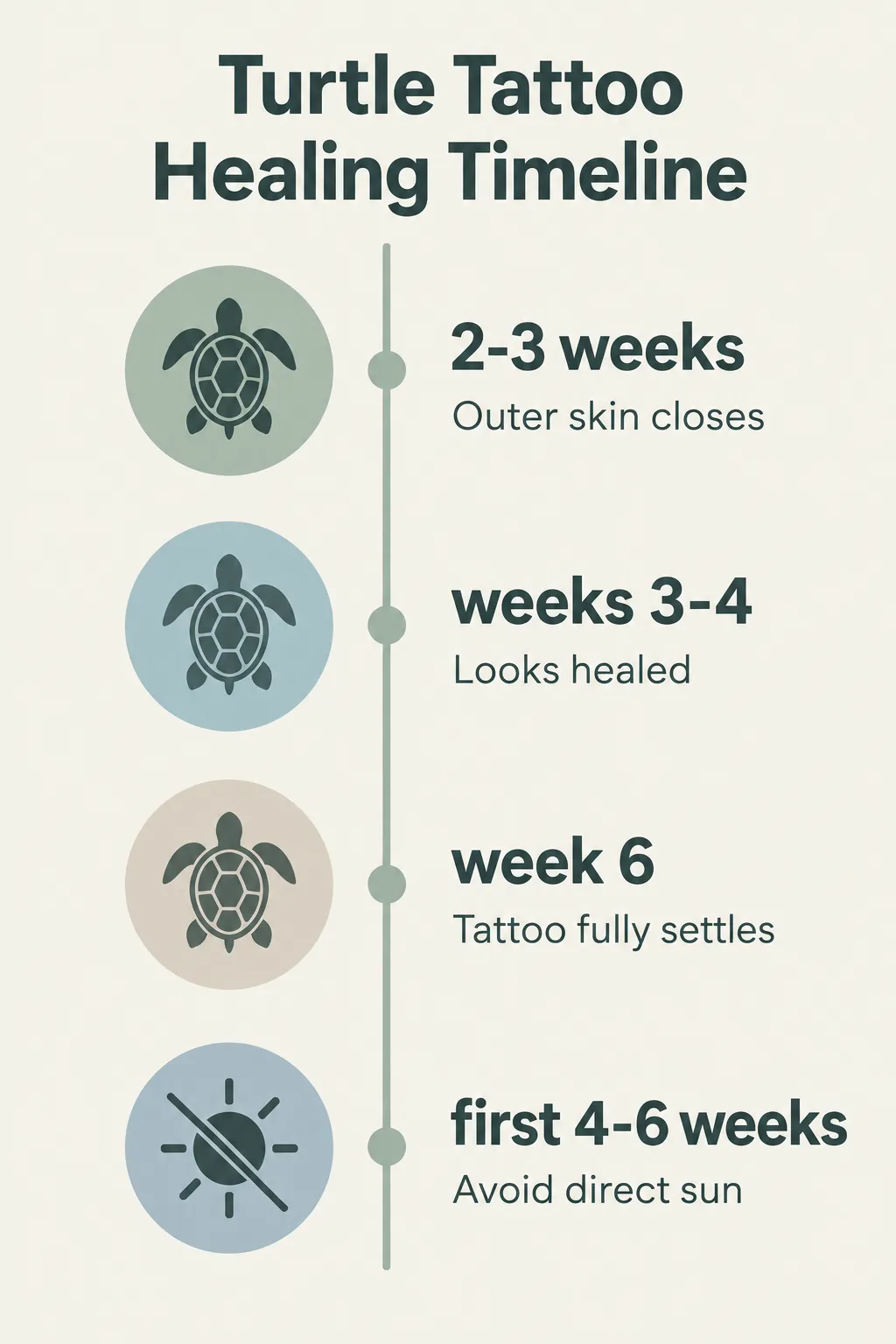 Healing timeline: the outer skin closes in 2-3 weeks, looks healed by weeks 3-4 and fully settles around week 6; keep it out of direct sun for the first 4-6 weeks.
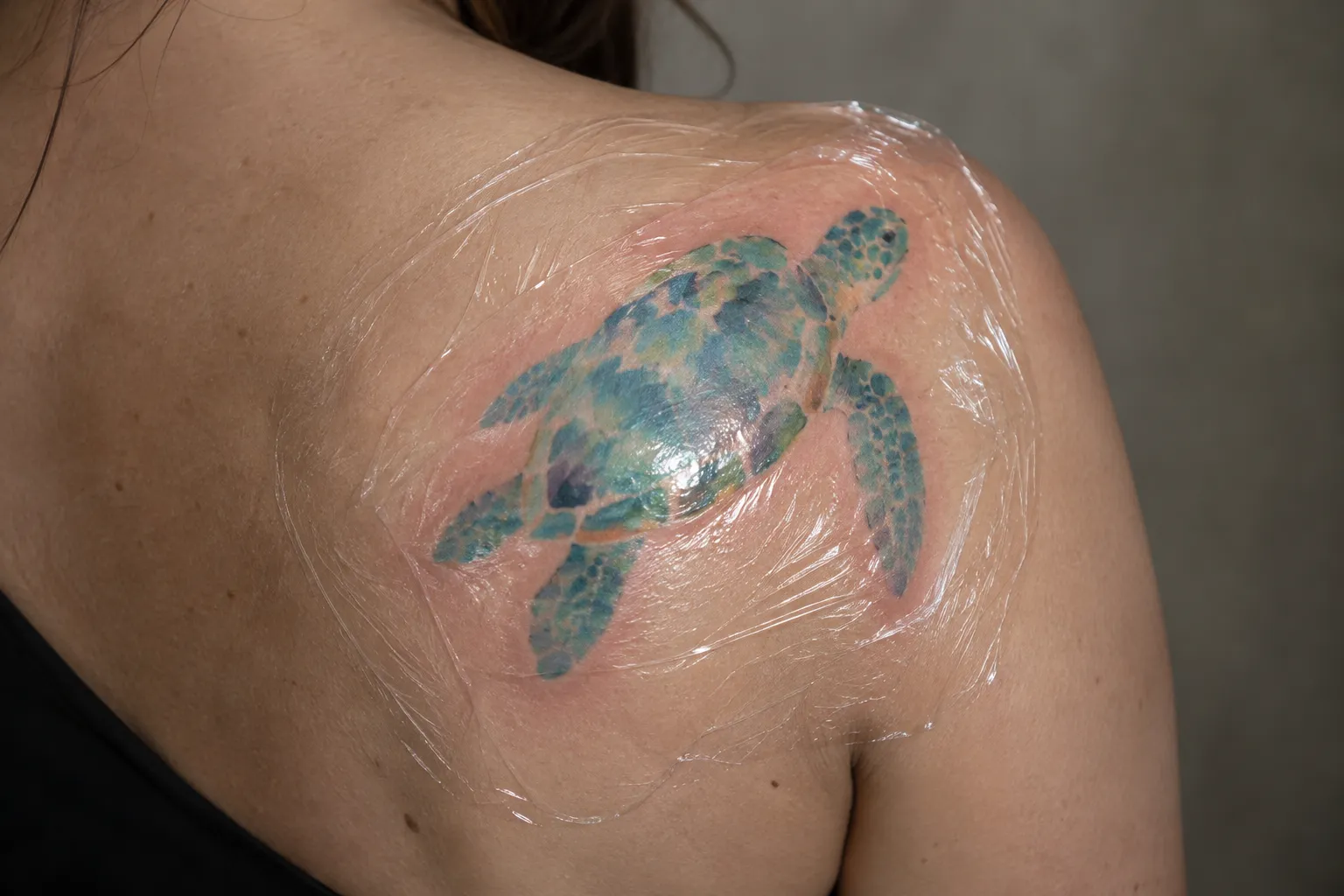
- Day 1-3: keep the artist’s dressing on as directed, then start gentle washing. Expect redness, swelling, and some weeping plasma.
- Days 4-7: the skin feels tight and starts to flake. Let flakes and scabs fall off on their own, because picking risks irritation and infection (1).
- Week 2: peeling and itching peak. The tattoo may look dull or milky, which is normal.
- Weeks 3-4: the outer layers have healed by now (2) and the tattoo looks finished, but the skin underneath is still remodeling.
- Weeks 4-6: the tattoo fully settles around week 6. Keep it out of direct sun for the first 4-6 weeks. Loose, sun-protective clothing or shade helps when you’re outside (2).
Day-to-day washing and moisturizing
Wash gently and moisturize twice daily (1). Use a mild fragrance-free soap, pat the tattoo dry instead of rubbing, follow with a simple moisturizer, and wear loose, breathable clothing over it (1). Keep washing and moisturizing twice a day through the first month (1).
How long to avoid water immersion
Stay out of pools, hot tubs, baths, and any other soaking until the tattoo is healed (1). A surface that looks closed at week two or three is not healed underneath, so be conservative: a closed surface is not permission to swim. See a doctor if you get a fever, worsening pain, spreading redness, red streaks, an unusual smell, or heavy drainage (1).
Frequently Asked Questions
- What are some tattoos to avoid?
- Avoid designs lifted wholesale from another artist's flash sheet or another person's back piece without adapting them; ask your artist to rework the composition so it fits your own skin and intention.
- Where should I put a turtle tattoo?
- Choose a placement with a broad, relatively flat area when the design needs several shell plates or background elements; curved, narrow spots constrain those shapes.
- What do turtles mean spiritually?
- Turtle symbolism varies by tradition, so identify the cultural source you mean rather than treating protection, longevity, or wisdom as universal teachings.
- Is a turtle good luck or bad luck?
- Turtles are commonly treated as auspicious, but that reading is not universal; a personal design need not make luck its central meaning.
- What do turtles symbolize in Native American cultures?
- Meanings differ among Indigenous nations; ask which community or story a design refers to instead of using "Native American" as one undifferentiated source.
- What is the historical significance of turtle imagery?
- Turtle imagery appears in distinct religious and cosmological traditions, so its history is best understood through a specific example rather than one shared origin.
- How long until a turtle tattoo is fully healed?
- A tattoo can look settled before deeper skin has recovered; keep following your artist's care instructions and do not judge healing by appearance alone.
Matching Your Turtle to Your Skin
The right turtle comes down to three matches. The species should fit what you want it to mean: a sea turtle for the ocean, a tortoise for slow persistence, a honu only with a culturally informed artist. The detail level should fit the size. And the size should fit a placement with enough flat skin to hold it. Book a licensed studio, bring references as a starting point, and wash twice daily through the surface heal. Don’t treat the tattoo as finished until it has had about six weeks to settle.