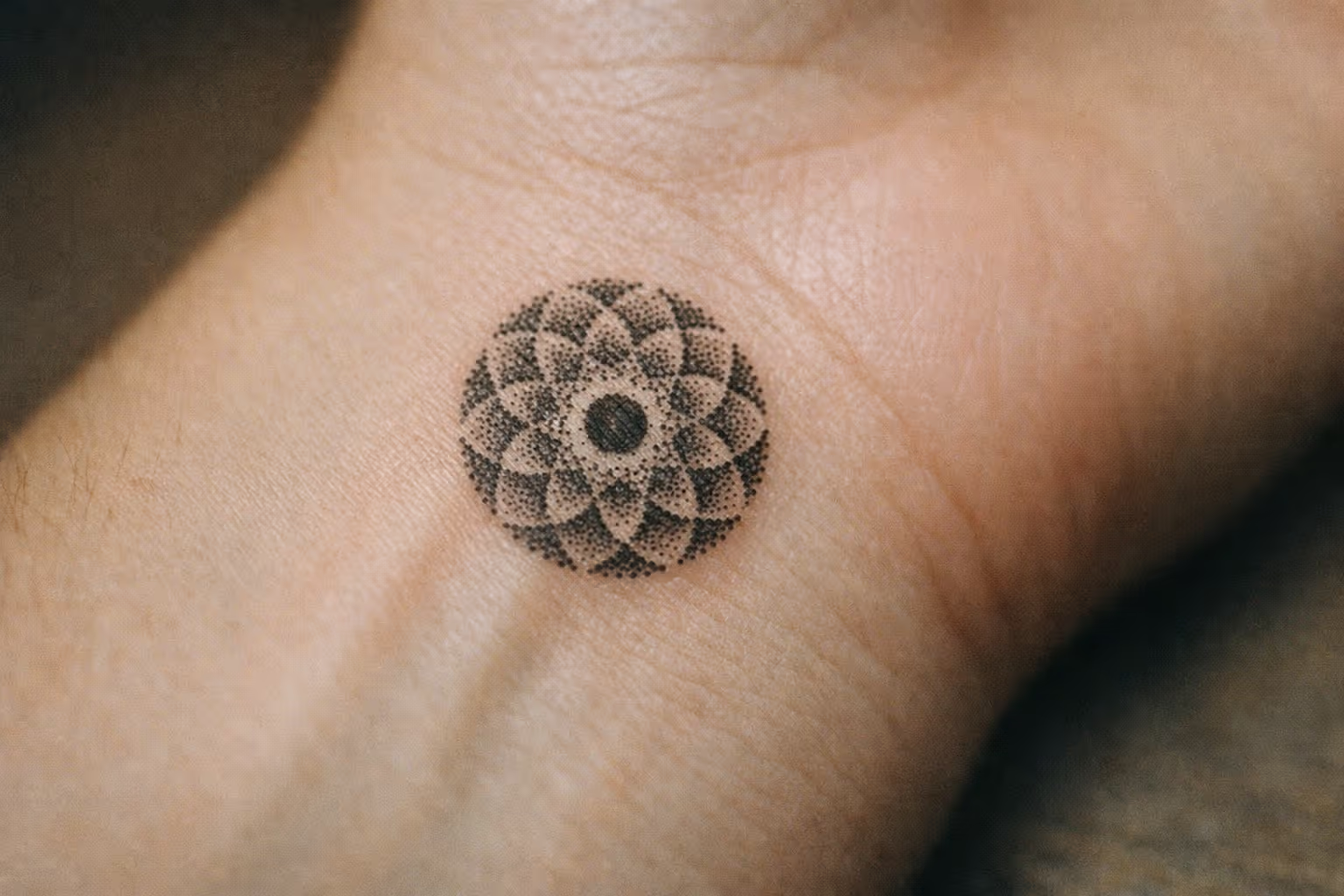
The inner wrist is one of the most visible spots on your body and one of the more nerve-dense ones, which is exactly why a wrist tattoo deserves more thought than most people give it. You’re dealing with three trade-offs at once: high visibility, higher-than-average pain, and faster fading if you pick the wrong sub-zone or style. This guide walks you through the whole decision in order - pick the right zone first, then the right design, then the style and aftercare that keep it looking sharp for a decade or more.
✓ Pros
- High visibility - easy for the wearer to see daily
- Short session time for most designs (0.5-1 hour)
- Works well with minimalist, fine-line, and script styles
- Easily extended into a forearm or sleeve composition later
- Beginner-friendly session length despite higher pain
✗ Cons
- Among the higher-pain placements due to thin skin and nerve density
- Sun-exposed location accelerates fading, especially fine-line and pastel work
- Visible in professional settings - harder to conceal than upper arm or thigh
- High-wear area (watches, bracelets) creates friction on fresh and healed ink
- Ultra-fine micro-detail risks blurring faster than on fleshier placements
Wrist Tattoo Placement - Inner, Outer, and Side Compared
The wrist splits into three distinct sub-zones - inner (volar), outer/top (dorsal), and the side over the bone - and each one differs in pain, visibility, and how it ages. Treating “wrist” as one uniform spot is the most common planning mistake I see clients make. Pick the sub-zone before you pick the design, because the zone limits which designs work and how much they’ll hurt.
Healthline’s placement guide puts the wrist, palm, and finger together in the band where pain “may be high to severe”, because of thin skin, dense nerve endings, and closeness to bone; pain generally eases as you move up toward the forearm. (2)
Inner Wrist - Personal Designs, Higher Sensitivity
The inner (volar) wrist has the thinnest skin and the highest nerve density of the three zones, which makes it the most painful and, not coincidentally, the most popular for designs you want to see yourself. M. INK Tattooing’s placement chart rates the inner wrist 7-8/10 and classes it High. (3) The inner side runs notably worse than the outer, and Healthline puts the reason in the anatomy: thinner skin, and the palmar cutaneous branch of the median nerve running close beneath it. (1) That puts the inner wrist clearly above the inner forearm, which the same chart places at 5-6/10, in the moderate band. (3) It’s the traditional home for personal mottos, dates, faith symbols, and mental-health markers - anything meant as a daily marker for the wearer rather than a display for others.
One thing worth flagging plainly, without alarmism: a 2011 case report in the Journal of Clinical Neuromuscular Disease documented hyperalgesia consistent with complex regional pain syndrome (CRPS) after a volar wrist tattoo, noting the tattoo’s proximity to the palmar cutaneous branch of the median nerve. (4) This is rare, but if you have a history of nerve issues or CRPS, talk to a physician before booking an inner-wrist piece.
Outer Wrist - Lower Pain, More Public Visibility
The outer/top (dorsal) wrist has slightly thicker skin and sits further from the main nerves, so it’s the more tolerable of the two flat zones and better suited to designs meant for outward display. Bracelet and band tattoos usually go here, and the placement integrates naturally with a forearm composition if you extend the design later. If you want a wrist tattoo but you’re nervous about pain, the outer wrist is the sensible starting point - I’ve had clients who were braced for the worst and genuinely surprised by how manageable it was compared to the inner side.
Side of Wrist - Narrow Canvas, Bony Ridges
The side of the wrist runs over the bony ridges of the ulna and radius, which often makes it the sharpest single moment of the session even though the overall zone is small. It’s a narrow vertical strip, which limits design width. Works for dates, coordinates, and single-line minimalist tattoos - not for anything that needs breadth.
Here’s a micro-decision most clients never think to ask about: shifting a design slightly toward the forearm from the wrist crease can reduce movement-related distortion during healing. The crease flexes every time you bend your wrist, so ink sitting directly on it stretches constantly. Moving it a hair up the arm costs nothing and tends to buy cleaner lines long-term - how much clearance you need depends on your anatomy and the design, so ask your artist to mark the stencil placement before committing.
Wrist Sub-Zone Comparison
| Inner Wrist | Outer Wrist | Side of Wrist | |
|---|---|---|---|
| Pain Level | Highest (7-8/10) | Moderate | Sharp spikes over bone |
| Visibility to Wearer | Best (constant view) | Lower (faces outward) | Moderate |
| Visibility to Others | Lower | Highest | Moderate |
| Best Design Types | Script, symbols, personal motifs | Bracelets, bands, outward display | Dates, coordinates, minimalist lines |
| Aging Risk | Higher (movement, thin skin) | Lower (thicker skin, stable) | Higher (bony ridges, movement) |
| Ease of Concealment | Needs sleeve | Easily covered by watch | Needs sleeve |
On the dominant-versus-non-dominant question: your dominant hand moves more during the day, so it sees more friction and movement during healing. The non-dominant wrist is the slightly lower-friction choice while it recovers. Beyond healing, neither wrist ages differently - some people put inward-facing personal designs on the non-dominant side and outward-facing ones on the dominant, but that’s personal preference, not a rule.
How Much Does a Wrist Tattoo Hurt?
Wrist tattoo pain ranks high on most pain charts because the skin is thin, the bone is close, and the area is dense with nerve endings - but the sessions are short, so the pain is sharp rather than drawn out. Healthline groups the wrist with the palm and finger in the “high to severe” band. (2) Most people describe it as a stinging or sharp sensation rather than a dull ache. Pain is also subjective enough that Healthline puts the range wide: people rank wrist pain anywhere from a 5 out of 10 upward, to a “what-was-I-thinking” level. (1) Treat 5/10 as the floor, not the typical score.
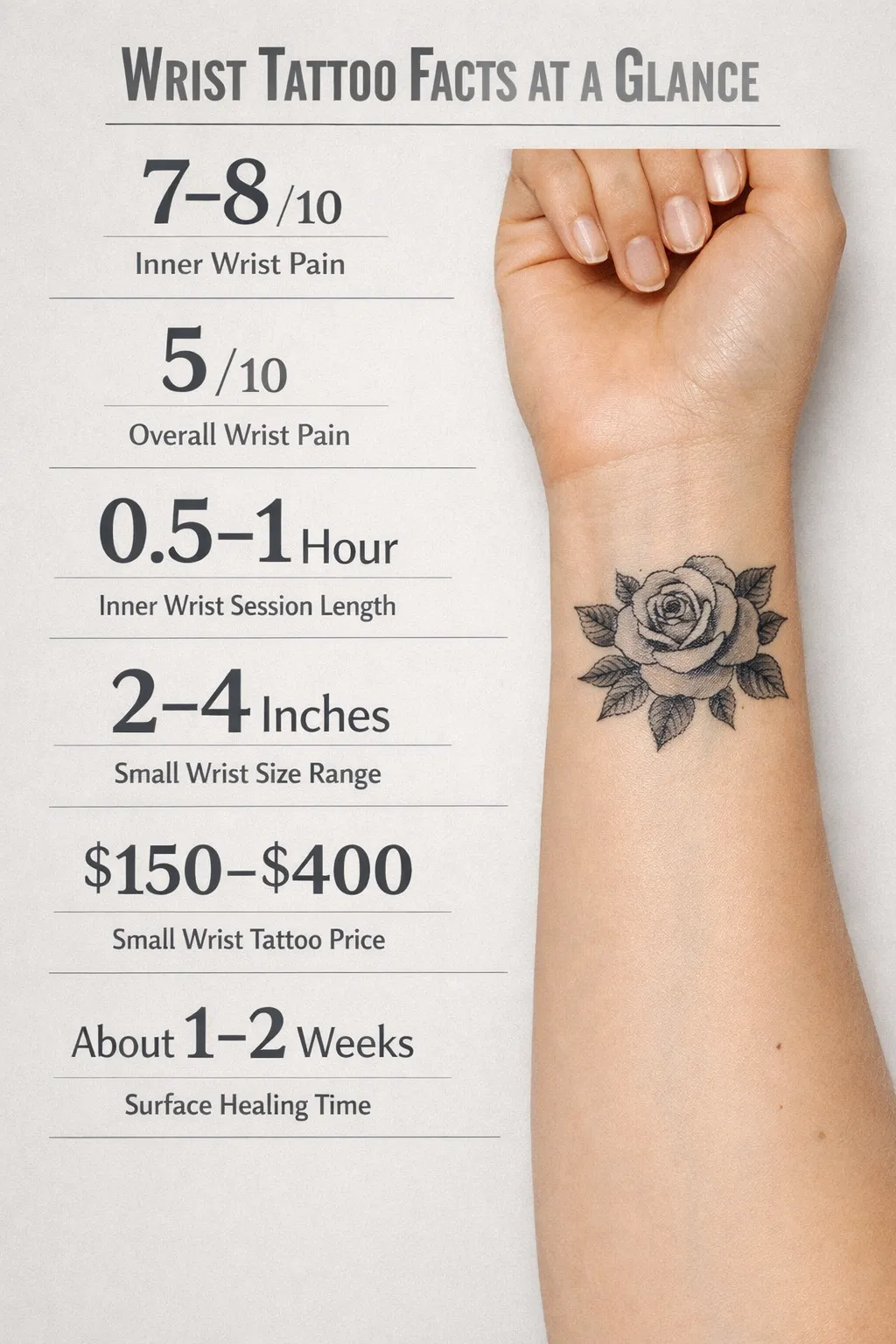 Pain: inner wrist 7-8/10; overall wrist 5/10; inner-wrist sessions 0.5-1 hour; small wrist size 2-4 inches; price $150-$400; surface healing 1-2 weeks.
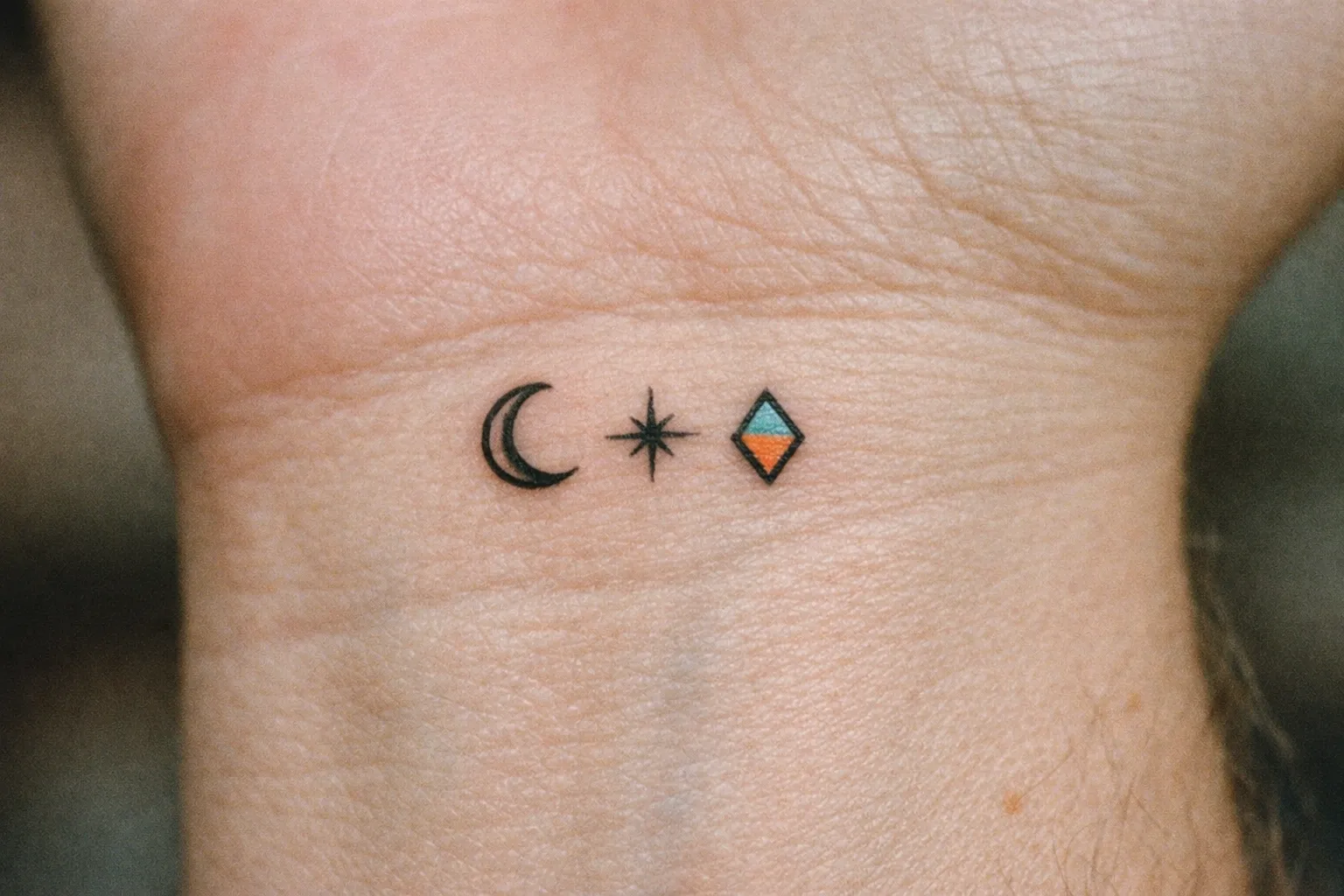
Why the Inner Wrist Stings More Than the Outer
Pain varies a lot within the wrist itself. M. INK Tattooing Winnipeg’s placement chart rates the inner wrist 7-8/10 and classes it High, against 5-6/10 and Medium for the inner forearm, with typical inner-wrist sessions running 0.5-1 hour. (3) Most guides agree the inner wrist hurts more than the outer, and many people only feel the gap when the needle crosses between the two mid-session. The side of the wrist, directly over the bony styloid, is frequently the worst single moment: short, but sharp.
Session length matters too. A 2020 study of 1,092 people in the International Journal of Environmental Research and Public Health found time to be one of the three strongest factors raising pain during tattooing, alongside bleeding and stress level. (5) Small wrist designs run 0.5-1 hour; a full wrap-around bracelet can run 1-2 hours, and the discomfort compounds over that time. The same study found no difference in pain intensity between men and women during tattooing, though pain was higher in women directly after - worth noting without overstating. (5)
Numbing Options - What Artists Actually Say
Topical numbing creams exist, but talk to your artist before you buy one. Not every artist allows them, and some affect the skin’s texture during tattooing in ways that make the work harder. If numbing matters to you, raise it at the consultation, not on the day.
Honest framing: the wrist is short-duration pain, not low-pain. Most people get through it fine. Just don’t pick this spot expecting a gentle experience.
Ideas - Designs That Work in This Space
The wrist canvas is typically 1.5-3 inches wide, and it rewards designs that follow the arm’s axis or wrap around it. Horizontal scenes and wide compositions fight the shape. That constraint is actually your friend - it filters out designs that won’t age well here anyway.
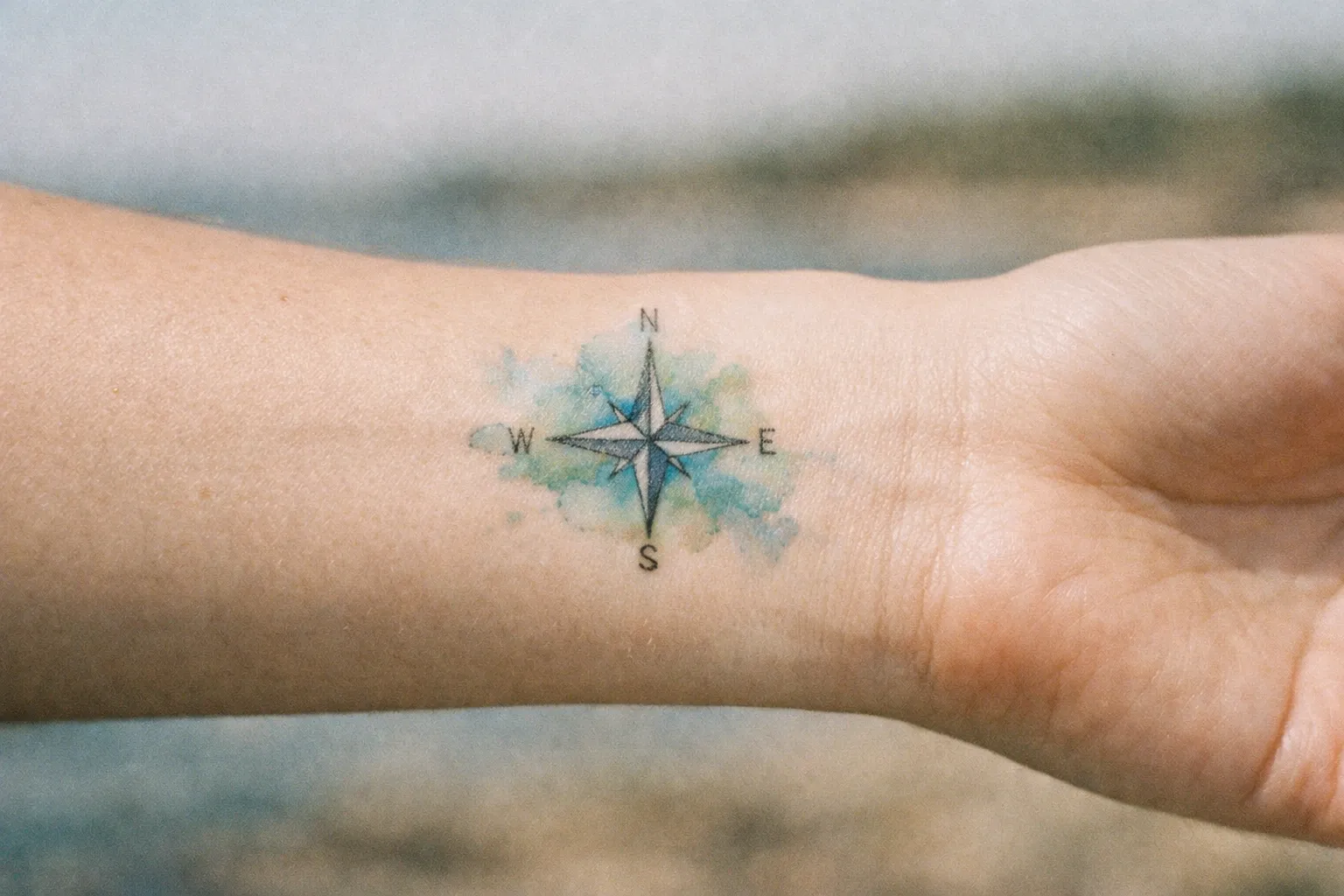
Small Wrist Tattoos - What Fits Without Blurring
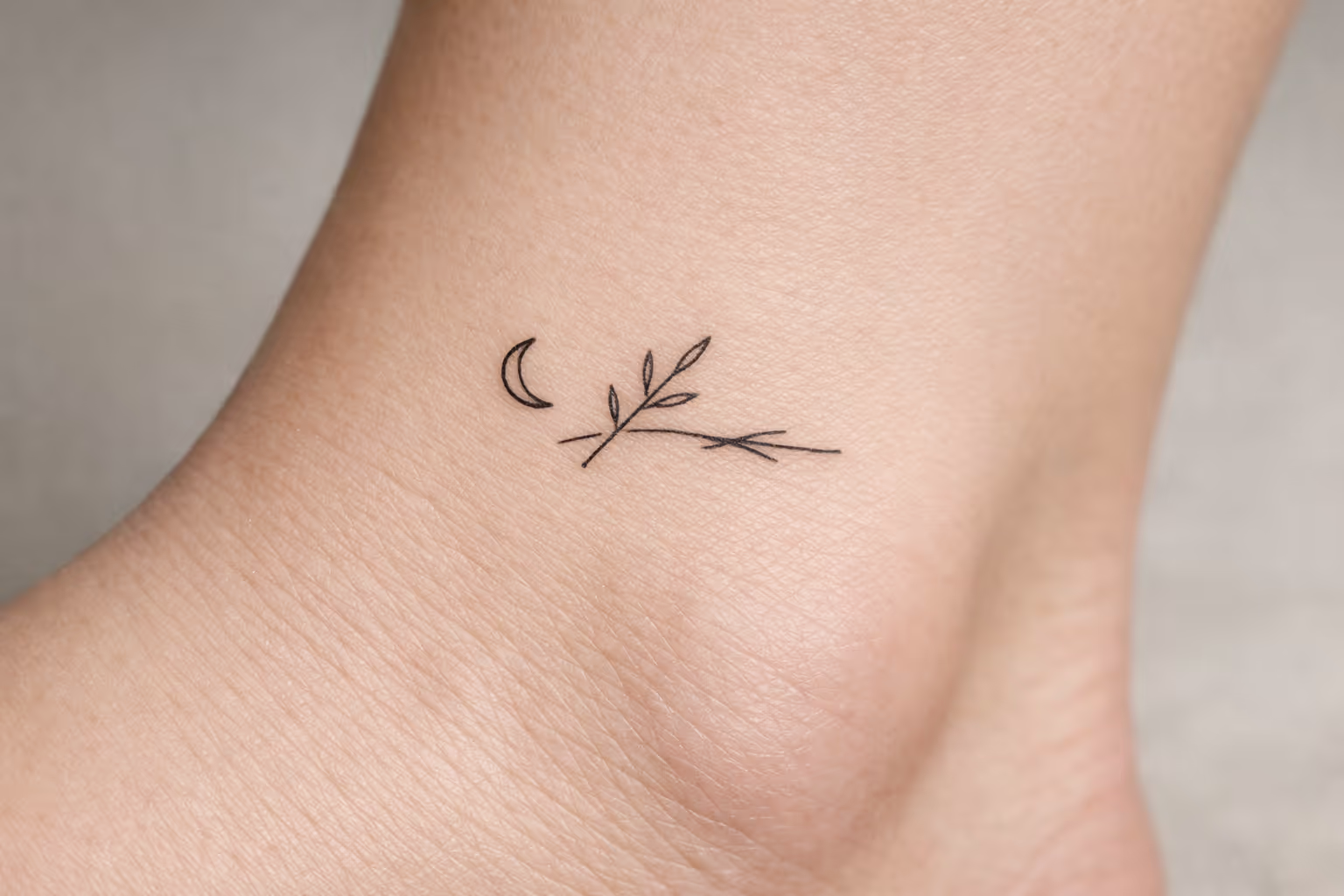
Small wrist tattoos run roughly 2-4 inches along the arm’s axis, and the fine-line end of that band - single-needle icons and minimalist symbols at 1-2 inches - is where most wrist work sits: single-stem florals, geometric shapes, tiny animals, a compass motif. Note that the 1.5-3 inch figure above is the wrist’s width; a 4-inch design runs lengthwise, not across. These sit well on the inner or outer wrist and age reasonably as long as they’re not hyper-detailed. The rule that matters: detail packed into a tight space has nowhere to go as the skin ages. If your idea needs a dozen fine lines crammed into an inch, either size it up or simplify it.
Session-wise, most inner-wrist pieces run 0.5-1 hour on the same placement chart, which tells you the sweet spot here is compact rather than densely shaded. (3)
Bracelet and Wrap-Around Designs
Bracelet and band tattoos - dotwork bands, floral chains, a solid wrap-around - go on the outer wrist or fully around it. They read strong visually but cost you a longer session and more pain exposure, since you’re tattooing continuously around the joint. If you wear a watch daily, leave a 5-10 mm buffer zone between the design and where the watch sits, or the band will grind on your ink for years.
I’ve touched up more than a few bracelet tattoos where the client wore a watch directly over the work for years. The difference between a buffered design and one that sat right under the clasp is significant - the buffered one holds.
Script, Dates, and Coordinates
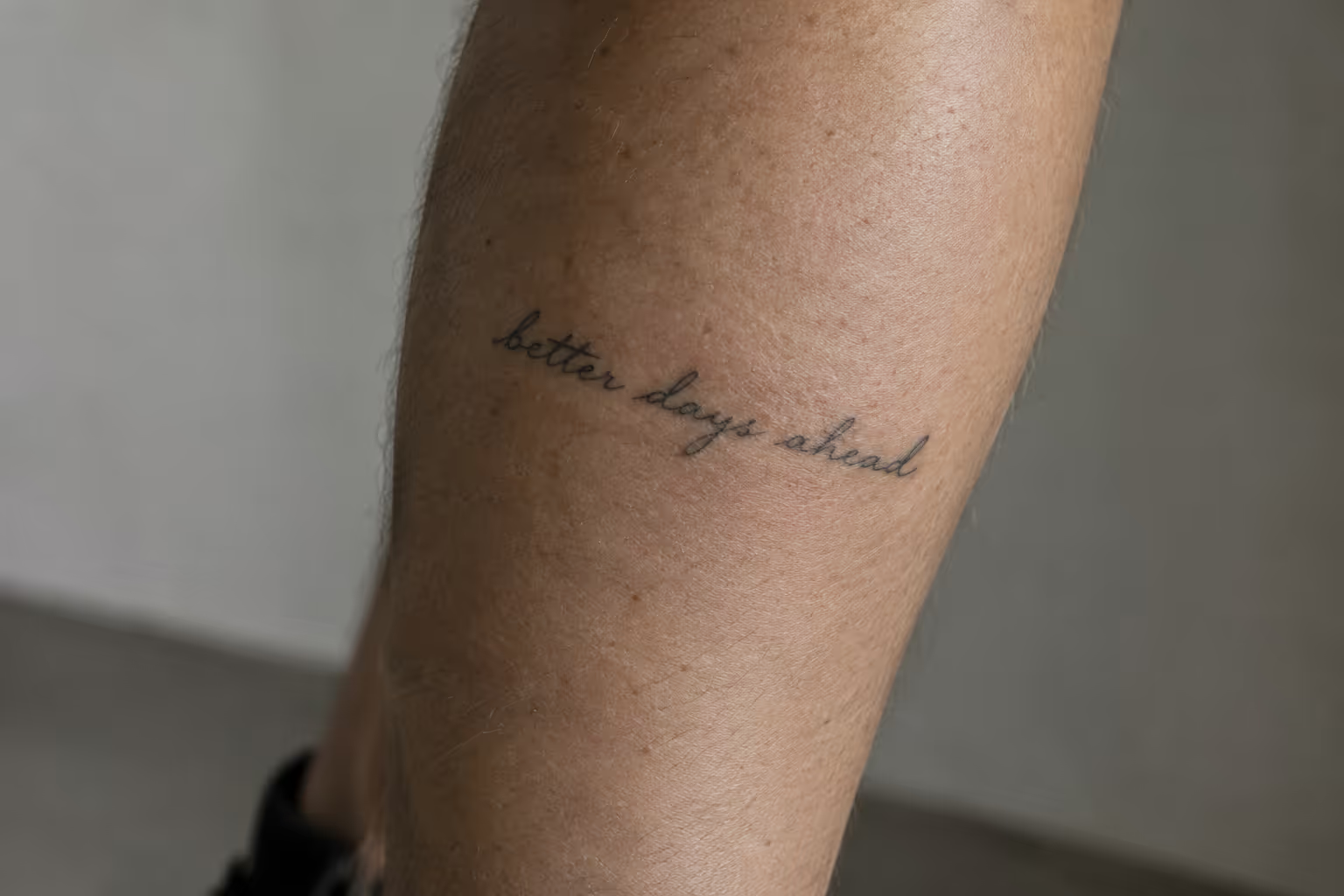
Single words, short mantras, names, and Roman-numeral dates work well on the inner wrist for personal references. Full sentences don’t - long text wraps awkwardly around a narrow wrist, so push anything longer than a couple of words to the inner forearm. Coordinates and dates are the classic side-of-wrist placement, where the narrow vertical strip actually suits the format. One practical note: Roman numerals age better than fine-line Arabic numerals, because thicker, blockier strokes hold up as the skin softens over time.
Symbolic Designs and Their Origins
Symbolic icons - semicolons, faith symbols, protective charms, matching couple or friend designs - traditionally go on the inner wrist because that’s where the wearer sees them constantly. More on the specific meanings and their origins below.
For a first tattoo, a small symbol under 2 inches on the outer wrist is the beginner-friendly pick: short session, moderate pain, easy to cover. On the advanced end sit full wrap-around bracelets, stacked bands, and multi-element compositions that run onto the forearm - longer sessions, more technical demand.
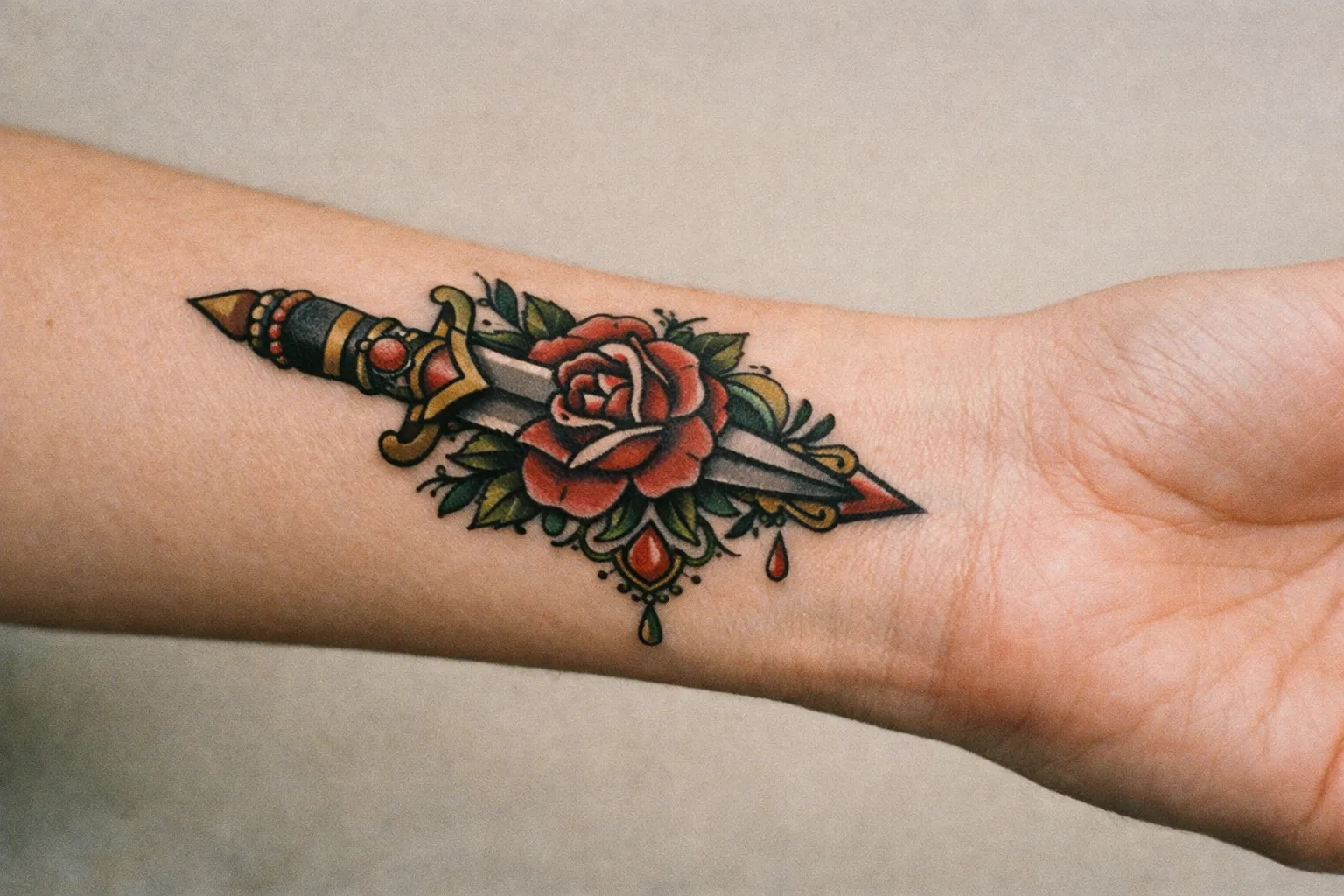
One note on style. Fine-line and single-needle work dominate wrist tattoos right now, and they suit the small canvas. But American traditional - two technical hallmarks: thick black outlines and a limited palette - holds up far better over decades for small script or symbols that need to stay readable. The common pitfall with fine line on the wrist is choosing lines so thin they can’t survive the sun and friction this spot gets. If long-term readability matters more than day-one delicacy, weight your lines heavier.
What Wrist Tattoos Mean - Symbolism by Design and Placement
Wrist tattoo meaning is tied closely to placement: the inner wrist has a long association with visibility to the self, so designs there tend to be chosen as a daily marker for the wearer rather than a display for others. That’s why faith symbols, personal dates, and mental-health markers cluster on the inner wrist. Below are the most common motifs and where their meaning actually comes from.
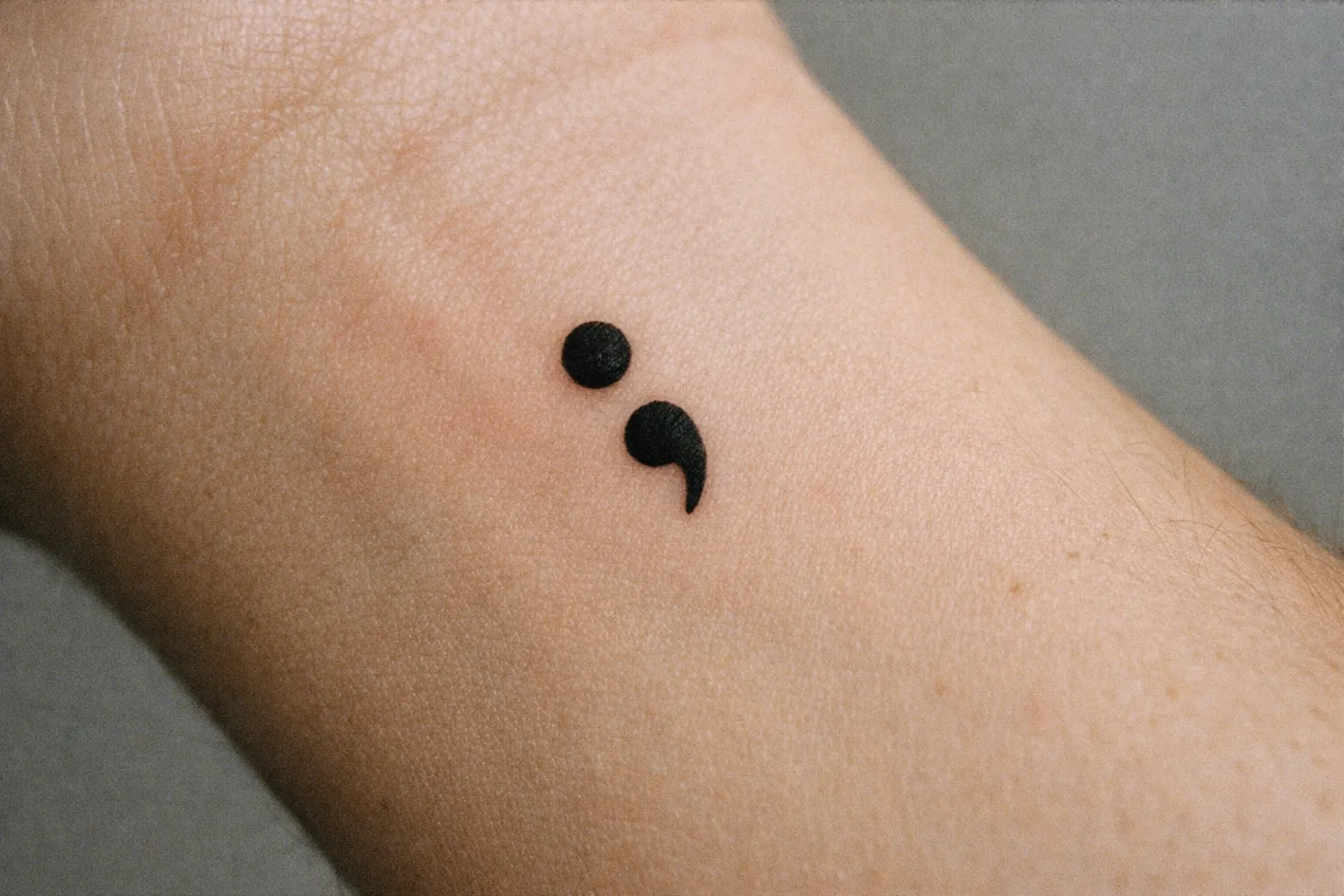
Semicolon. The semicolon tattoo comes from Project Semicolon, a mental-health movement founded by Amy Bleuel in 2013. The punctuation mark stands for a sentence the author could have ended but chose not to - a life that continues - and it’s used to raise awareness of mental illness, self-harm, suicide, and addiction. It’s normally placed on the wrist so it stays visible to the wearer during hard moments.
Cross. A cross on the wrist is a Christian faith symbol. Celtic cross variants add interlaced knotwork (Celtic origin); the Coptic cross, from the Egyptian Christian tradition, is a distinct variant with equal-length arms. These aren’t interchangeable, so pick the one whose tradition you actually mean.
Coordinates. Coordinates mark a meaningful location - a birthplace, where you met someone, somewhere that matters to you. There’s no single cultural origin here; the format is modern minimalist, and it suits the side of the wrist.
Hamsa and evil eye. Both are protective symbols with roots in Middle Eastern and North African traditions, placed on the wrist for constant visibility as a ward.
Om. The Om symbol is Sanskrit/Hindu in origin, often placed on the inner wrist for meditative visibility.
Matching and couple designs. The wrist is the most common site for matching tattoos, because both people can see them at once during everyday interaction.
One detail your artist will likely raise: orientation. Text facing inward is for you to read; text facing outward is for others. Decide which you intend before the stencil goes on, because it changes how the whole piece is laid out.
How Long It Lasts, and What Shortens Its Life
A well-executed wrist tattoo on healthy skin, cared for properly, holds its basic shape for 10-20+ years - but the wrist fades faster than covered placements because of sun and friction. Here’s what actually shortens its life, in order of impact.
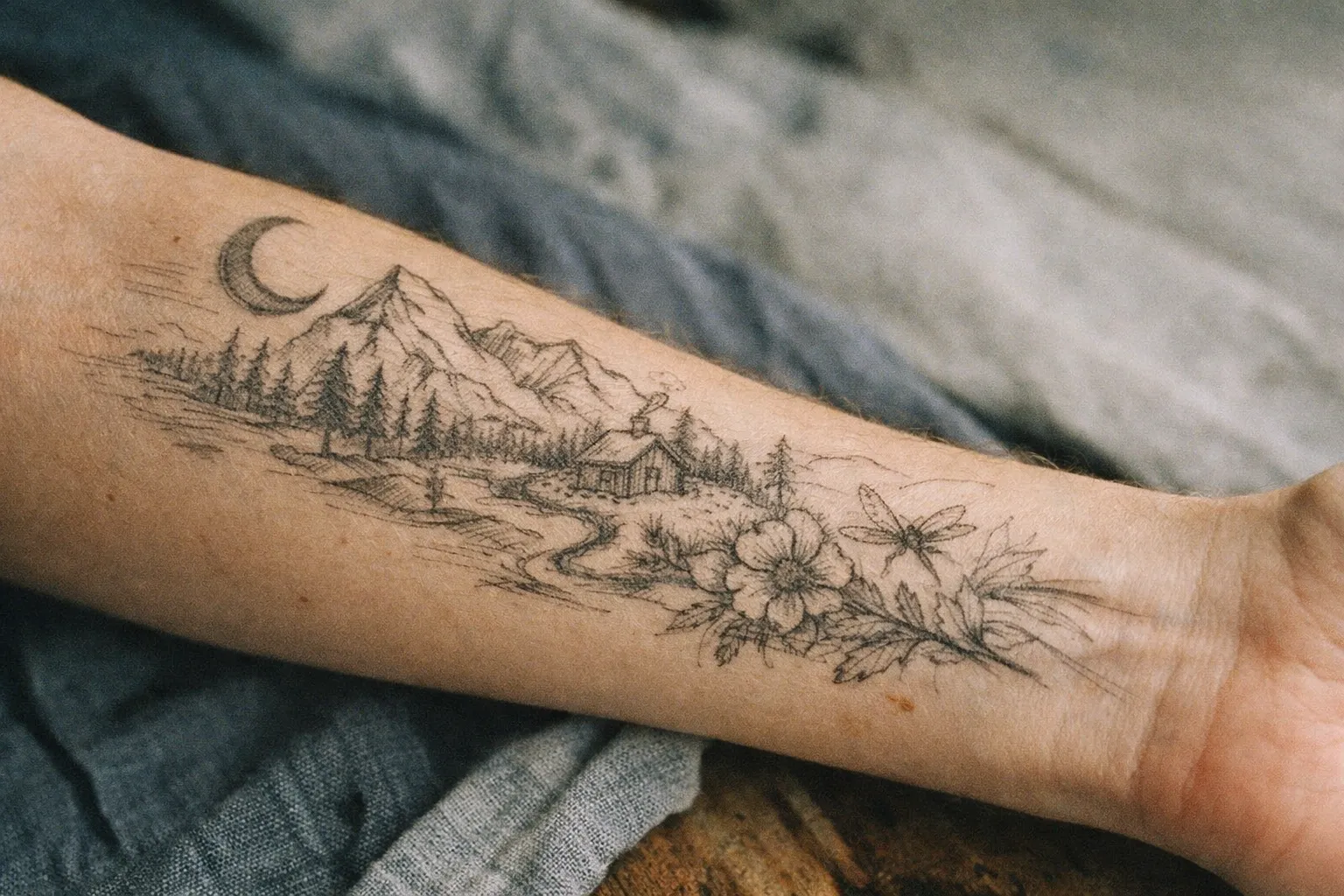
Sun exposure is the main enemy. The wrist is one of the most consistently sun-exposed areas on your body, and UV breaks ink pigment down faster in exposed locations, which is why consistent sunscreen on healed ink slows fading. Pastel colors, light greys, and fine-line work suffer first. SPF 30+ on healed ink isn’t optional here.
Friction from jewelry and clothing. Watches and bracelets create constant mechanical wear on the same strip of skin. Leave a 5-10 mm buffer between the design and where a watch sits - critical for fine-line work especially.
Skin movement at the crease. A design placed directly over the flexion crease stretches every time you bend your wrist, which accelerates line distortion. Shifting the design slightly toward the forearm reduces it.
Style choice. Bold blackwork and American traditional designs with thick outlines hold contrast far longer than single-needle fine-line work. Micro-text and hyper-fine detail are the highest-risk choices for blurring within 5-10 years.
Touch-ups. Fine-line wrist tattoos often need a touch-up at 3-5 years if sun exposure hasn’t been managed. Bold designs may go 10+ years without one.
On the “hottest placement” question people ask: the wrist is consistently one of the most-requested spots precisely because it’s so visible. But that same visibility is what exposes it to the sun and friction that age it fastest. Visibility and longevity pull in opposite directions here - which is the whole reason to plan the placement and style deliberately.
Healing Timeline and Aftercare
The wrist heals on a similar timeline to other placements, but constant movement and sun exposure make the first two weeks more demanding than on a covered spot. Here’s the timeline and what the wrist specifically needs.
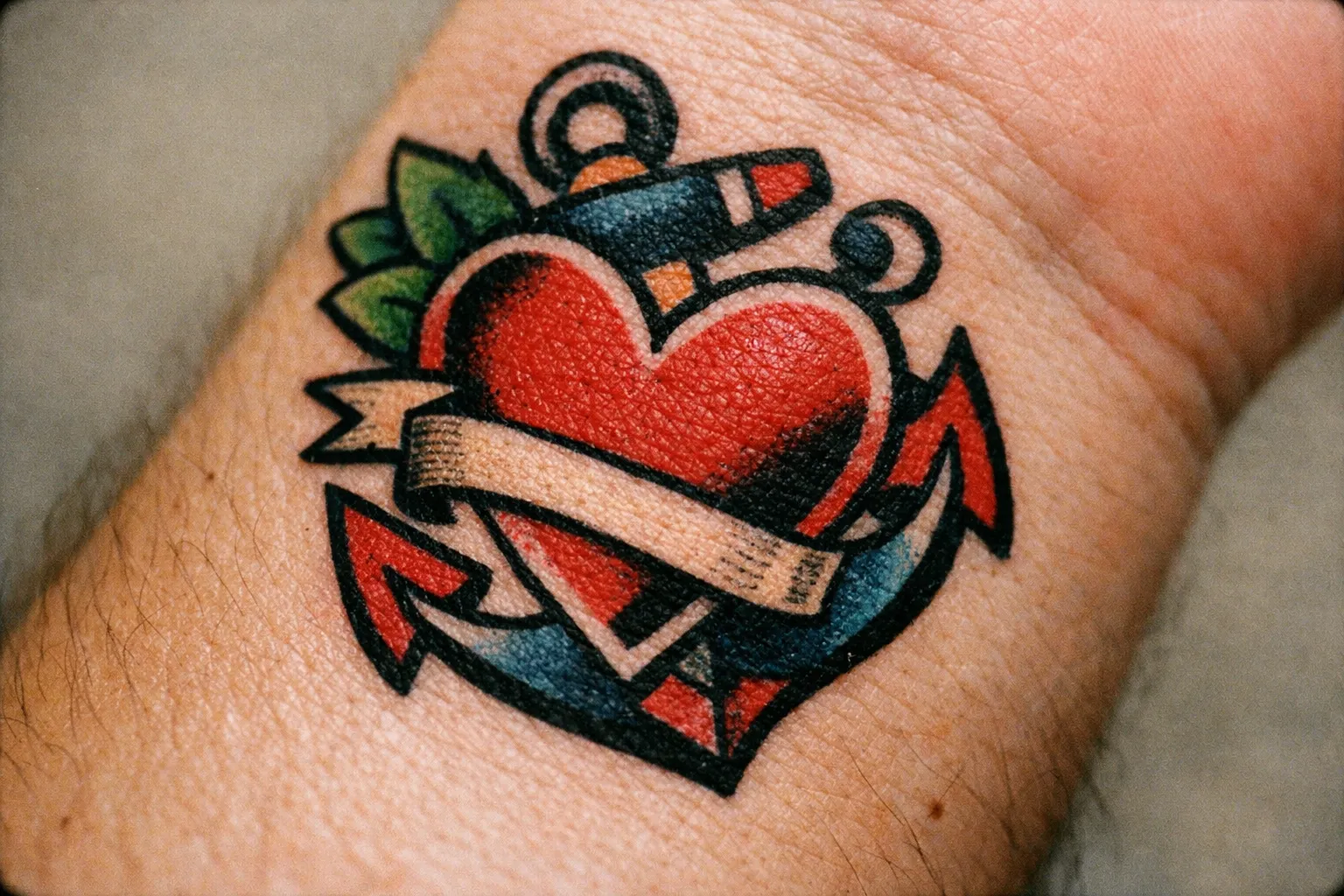
Day 1-3 - The First 72 Hours
Expect redness, swelling, and weeping plasma - all normal, and thin-skinned areas like the wrist tend to feel it more. Wash gently with fragrance-free soap, apply a thin layer of unscented ointment, and keep it out of submerged water. Most of the sharp pain is gone by day 3, though plasma can keep oozing for several days.
Week 1 - Managing Movement and Peeling
Peeling and flaking begin. Don’t pick or scratch. Your wrist bends constantly, so be conscious of not snagging peeling skin on sleeves or a watchband - and keep all jewelry off the tattooed area. This is the zone where movement works against you, so mind how the healing skin catches on cuffs.
Week 2-4 - Surface Healing
The epidermis itself closes in about 1-2 weeks, which is the number most aftercare guides quote for “surface healing”. What takes until roughly week four is the outer layer fully settling: the tattoo may look dull, slightly faded, or “milky” across that stretch, and it resolves as the deeper layers finish.
Long-Term Maintenance - Sun and Friction
The deeper dermis, where the pigment sits, keeps remodelling for 1-3 months, and contrast often improves noticeably between weeks 3 and 6. Wait until full healing before you assess whether a touch-up is needed - usually around month 2-3.
Two long-term rules do the heavy lifting. First: once fully healed, apply SPF 30+ every time the wrist is exposed. Sun-protective clothing works too for days when you’d rather not reapply. This single step is the biggest difference between a crisp tattoo in ten years and a faded one. Second: keep watches and bracelets off the tattooed area for the full healing period - friction on fresh ink causes irritation, uneven healing, and can literally pull ink out of the skin.
Scratching, picking, and soaking in pools or baths during healing can cause more trouble than the tattooing itself. This is not a placement where you can be casual about aftercare.
Workplace Visibility and Practical Considerations Before You Book
The wrist is the most professionally exposed placement short of the hand or neck - it shows during handshakes, presentations, and client-facing interactions, so think about your work before you commit. Plenty of workplaces that have relaxed their tattoo policies still draw the line at hand and wrist visibility in client-facing roles. Check your specific policy before you book a bold or large design.
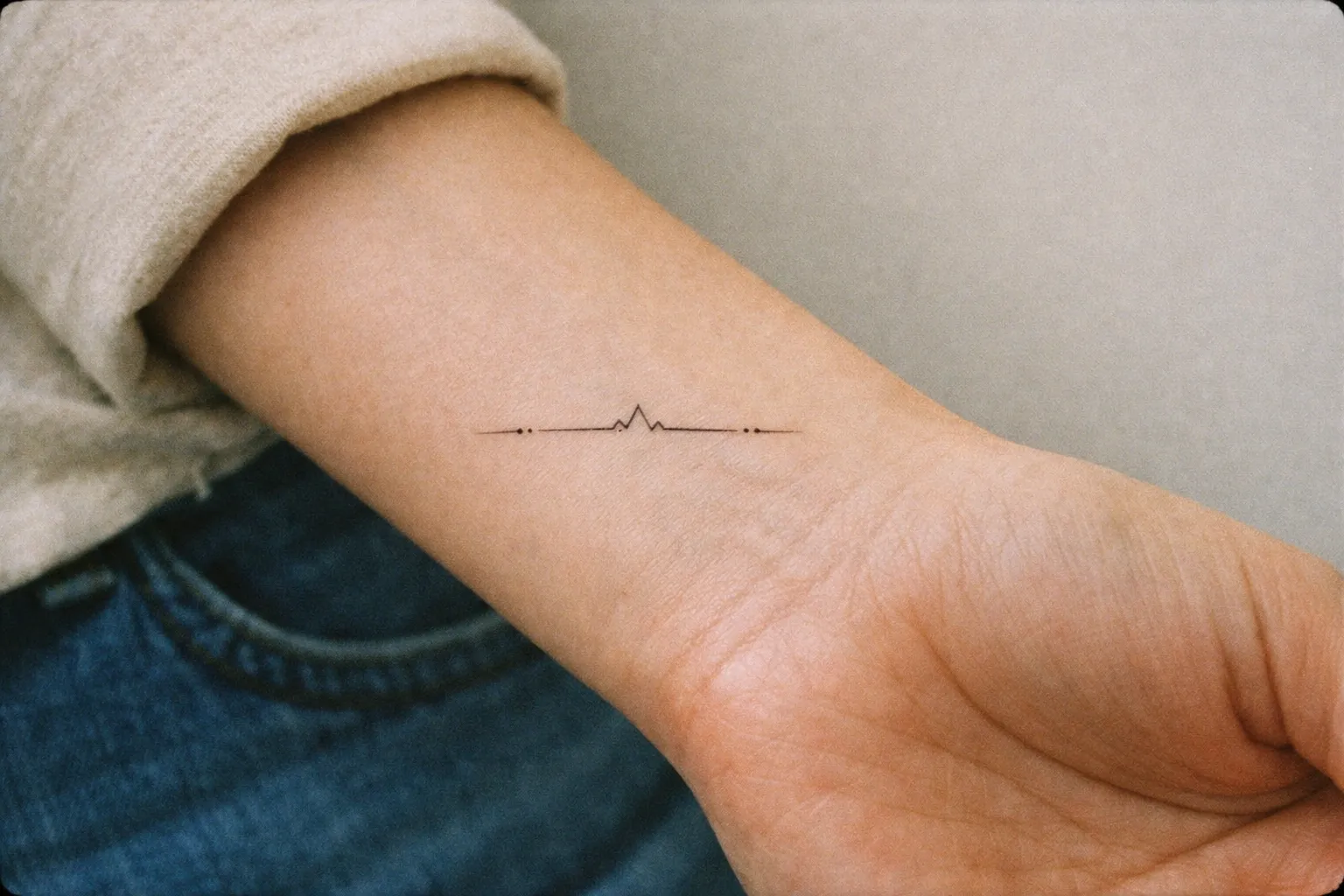
Concealment. A watch covers the outer wrist; long sleeves cover everything - but you’ll be relying on accessories or clothing daily if concealment matters. Small designs placed slightly off-center or toward the forearm are easier to cover than a full wrap-around.
Right vs. left. Your dominant hand moves more during healing, so it sees more friction and distortion risk - the non-dominant wrist is the lower-friction choice while it recovers. Socially, some people put inward-facing personal designs on the non-dominant wrist and outward-facing ones on the dominant. Neither is objectively correct.
Imagery. Because the wrist is seen constantly in public, anything that reads as aggressive, political, or explicit will be on display everywhere you go. Think through how a design reads to strangers, not just to you.
Future-proofing. Careers change and industries shift. A small, neutral symbol is far easier to work around than a large, bold piece in a visible spot. If you’re on the fence, err smaller and more discreet.
Frequently Asked Questions
- How long will a wrist tattoo last?
- Sun exposure and friction from jewelry are the two biggest factors - the wrist gets more of both than most placements. Consistent SPF on healed ink is the single biggest thing you can do to slow fading. For style-specific longevity, see the 'How Long a Wrist Tattoo Lasts' section above.
- How big is a $400 tattoo on the wrist?
- At most reputable shops, $400 covers a small-to-medium wrist piece - roughly 2-4 inches, simple to moderately detailed. Studio minimums typically run $100-$150, so $400 is a reasonable budget for a single-session wrist tattoo with some complexity. Wrap-around bracelet designs or highly detailed work will push beyond that. Prices vary significantly by artist experience and location.
- Should I get a tattoo on my right or left wrist?
- Your non-dominant wrist is the lower-friction choice during healing - it moves less during daily tasks. Beyond healing, it's a personal call. Many people place inward-facing personal designs on the non-dominant wrist and outward-facing ones on the dominant. Neither wrist ages or holds ink differently long-term.
- Is the inner wrist more painful than the outer wrist?
- Yes. The inner wrist stings more than the outer - thinner skin and denser nerve endings are the reason. The side of the wrist over the bony ridges is often the sharpest single moment of the session, even though it covers a small area. For a fuller breakdown of why, see the placement and pain sections above.
- What is the most popular wrist tattoo placement?
- The inner wrist is the most requested sub-zone - it's where the wearer sees the design most easily. Outer wrist is close behind, especially for bracelet designs. Side-of-wrist placement is common for dates and coordinates but less frequently chosen as a primary placement.
- Do wrist tattoos blur over time?
- They can, especially fine-line and micro-detail work. The wrist bends constantly, and designs placed directly over the flexion crease experience repeated stretching. Sun exposure degrades ink pigment faster here than on covered placements. Bold designs with thick outlines hold up significantly better than single-needle micro work.
- Can I wear a watch after getting a wrist tattoo?
- Not during healing. Keep watches and bracelets off the tattooed area for the full healing period - the epidermis closes in about 1-2 weeks and the surface has fully settled by around week four, with the deeper dermis longer still. Friction from a watchband on fresh ink causes irritation, uneven healing, and can pull ink out of the skin. After healing, leave a small buffer zone between the design and where the watch sits.
- What tattoo style works best on the wrist?
- Fine-line and minimalist styles dominate wrist work and suit the small canvas well. For longevity, bold blackwork or American traditional designs with thick outlines outlast single-needle fine-line work. Avoid hyper-fine micro-text or densely packed detail - the wrist's sun exposure and movement will blur it faster than on a fleshier, covered placement.
Before You Book
Work the decision in order: pick the sub-zone first (inner, outer, or side - each has different pain, visibility, and aging behavior), then the design, then the style. That sequence stops you from falling for a design that won’t survive the spot you want it in.
The single highest-impact thing you can do for the tattoo long-term is daily SPF on healed ink - more important than any product you use during healing. And if you’re torn between two designs, default to the one that works at a slightly larger size with bolder linework. Fine-line wrist tattoos look sharper on day one, but they need more maintenance to stay that way.
Practical next step: book a consultation, bring two or three reference images, and ask the artist to show you the stencil placement before the needle starts. Moving it a few millimeters at that stage costs nothing. Moving it after costs a lot more.