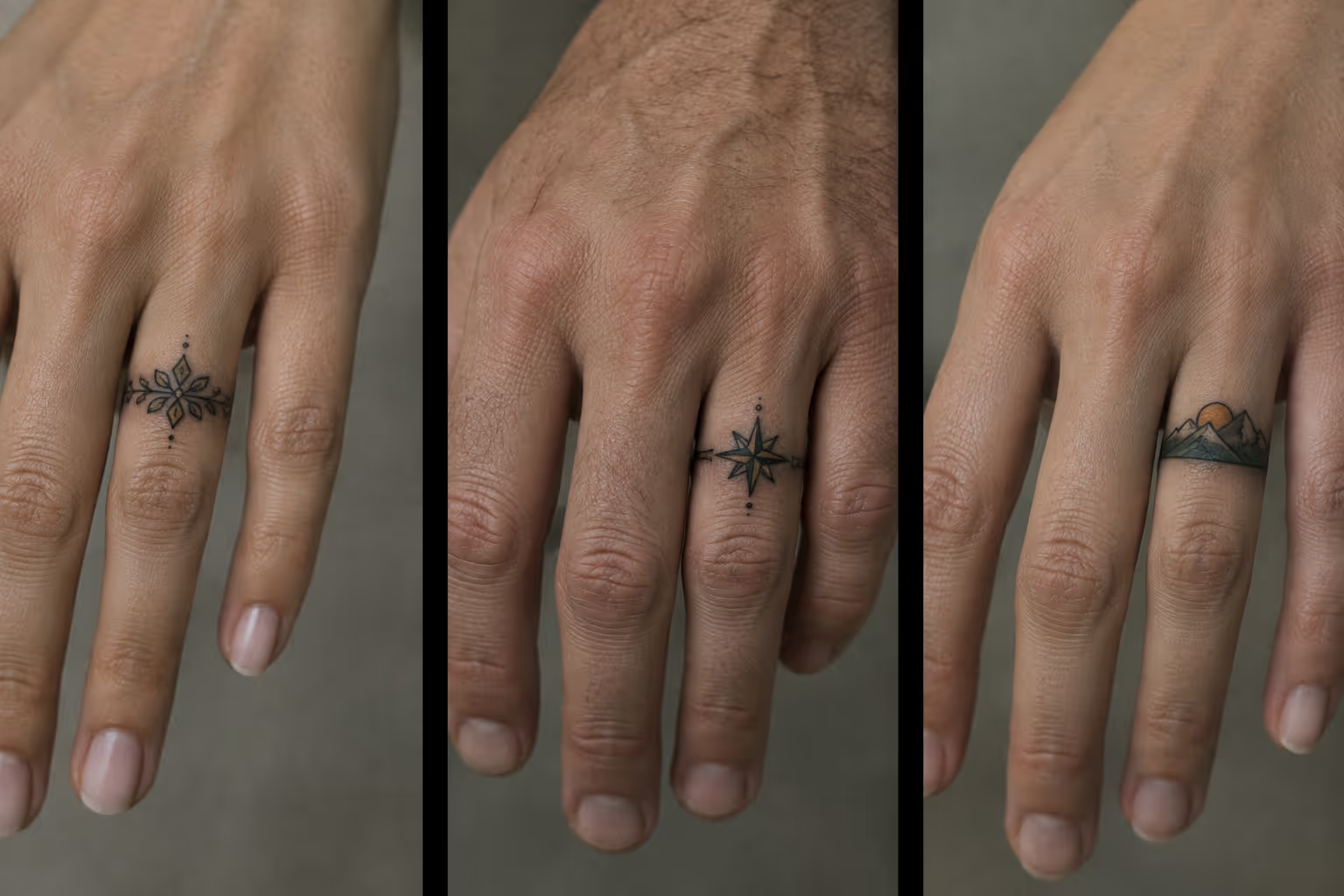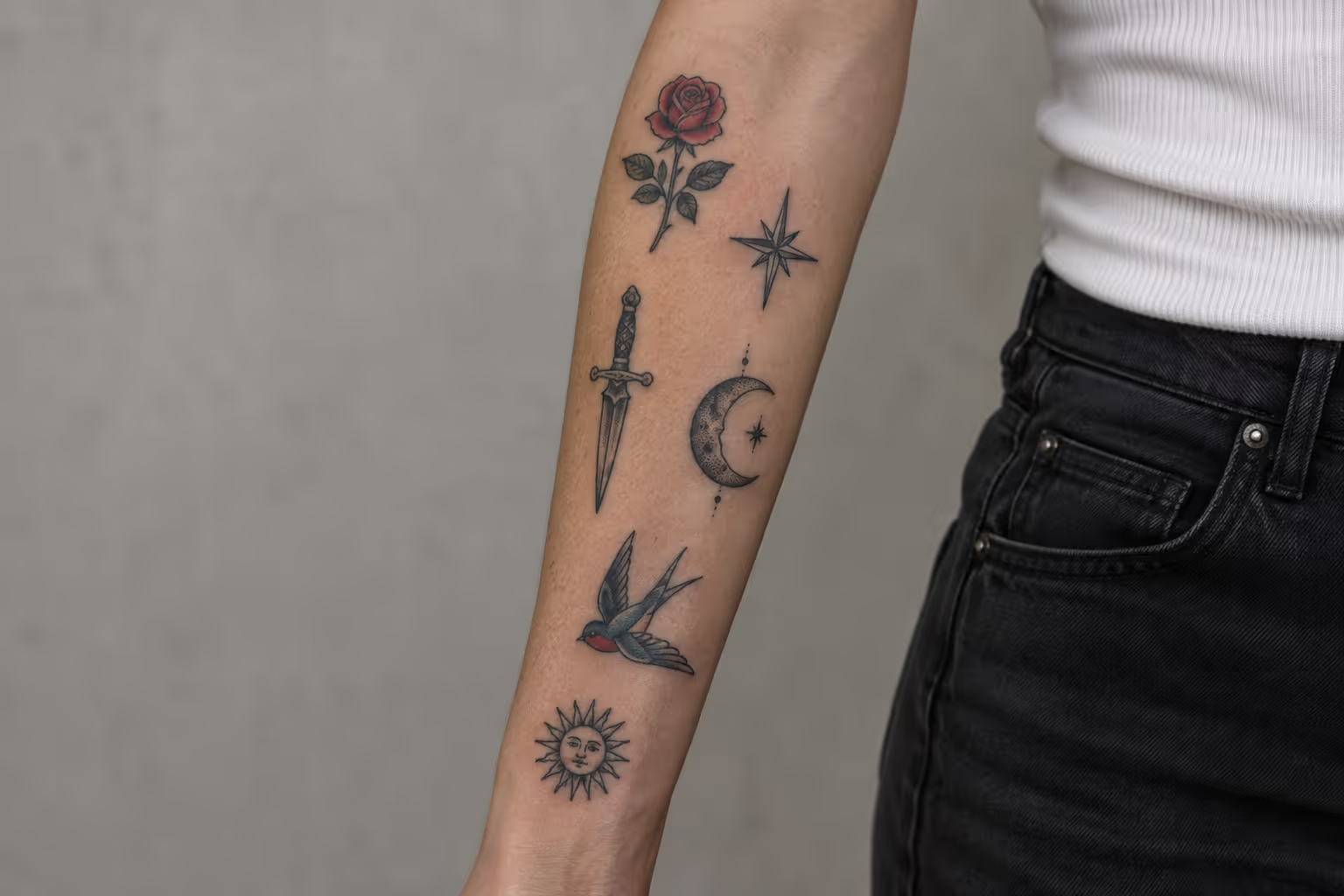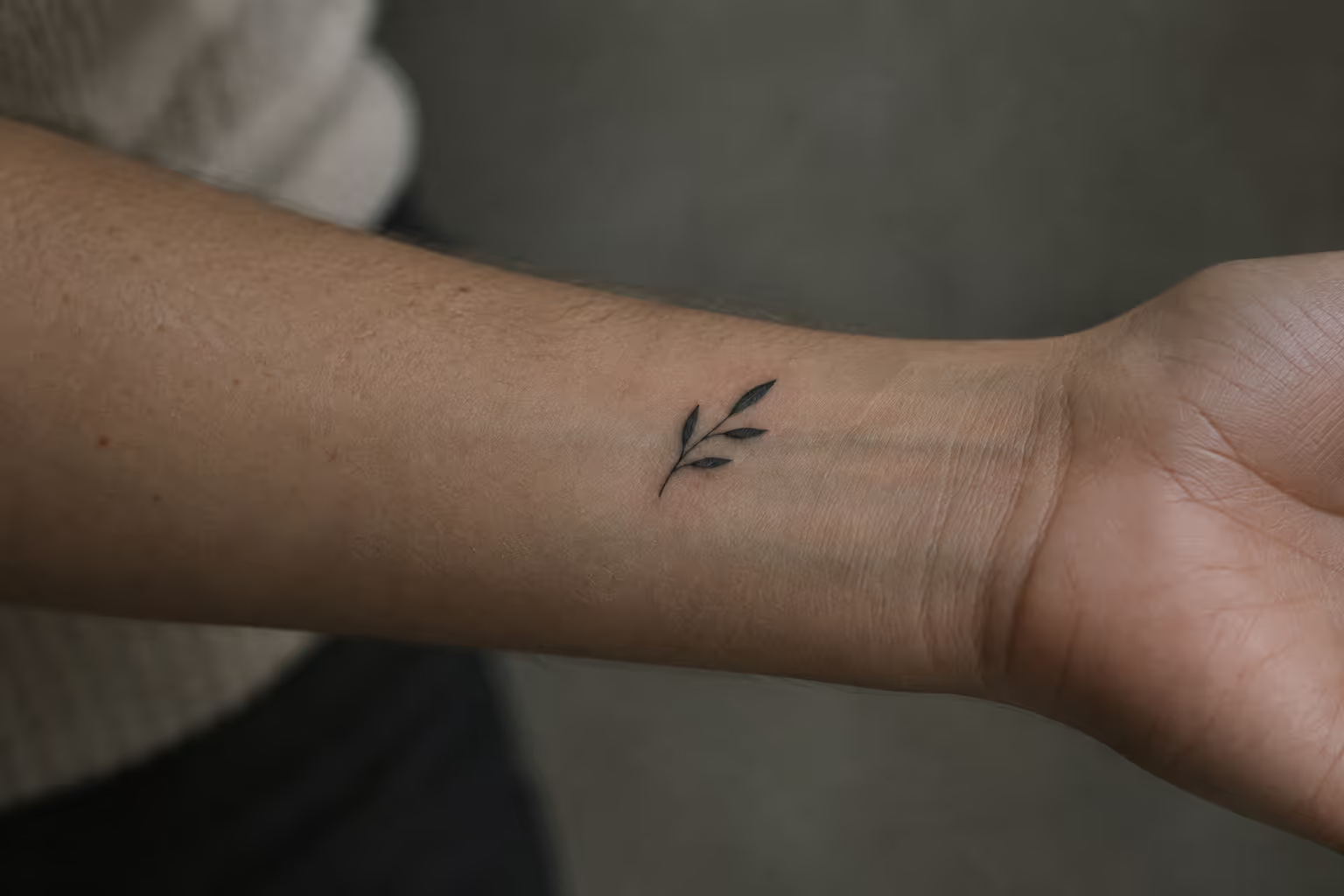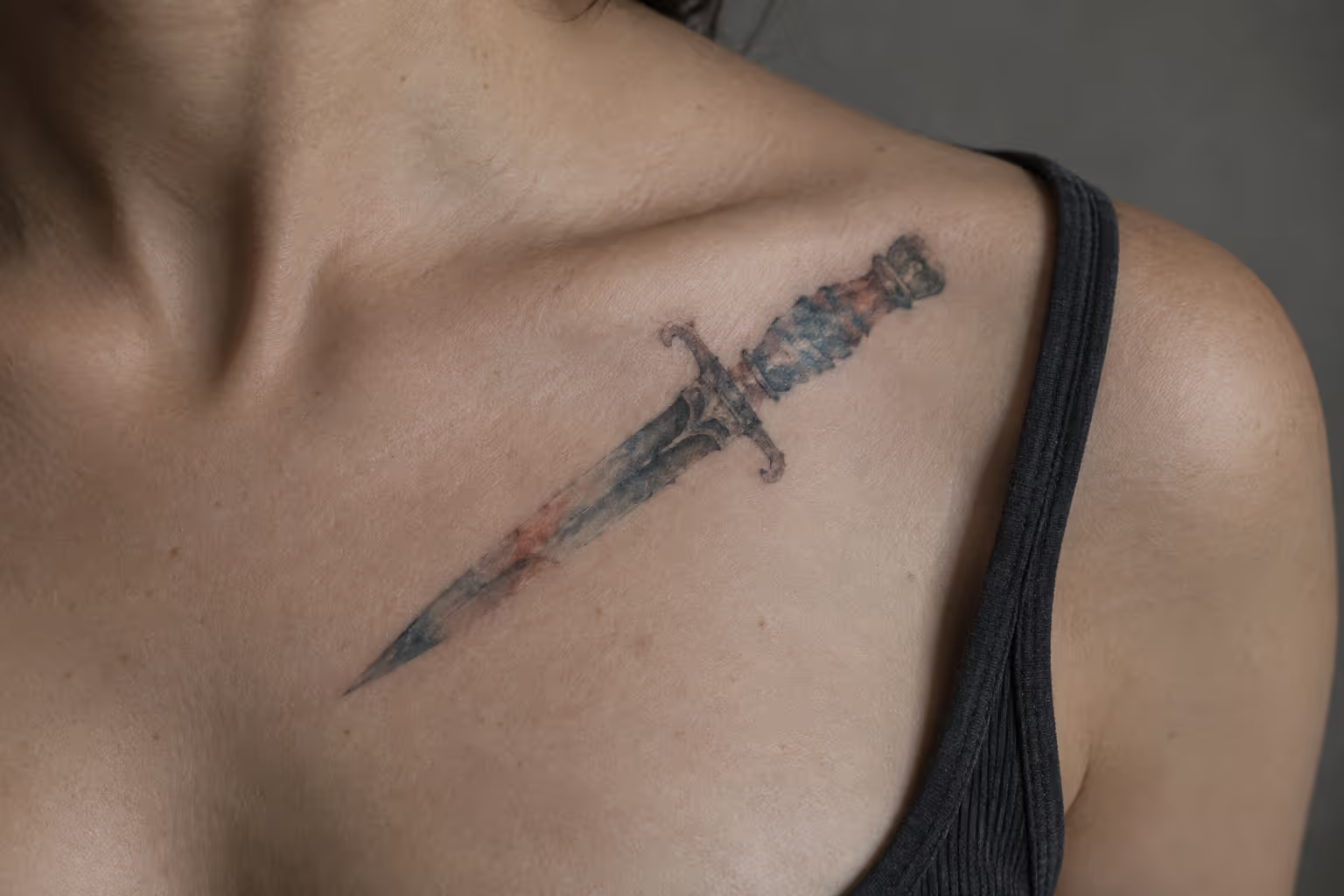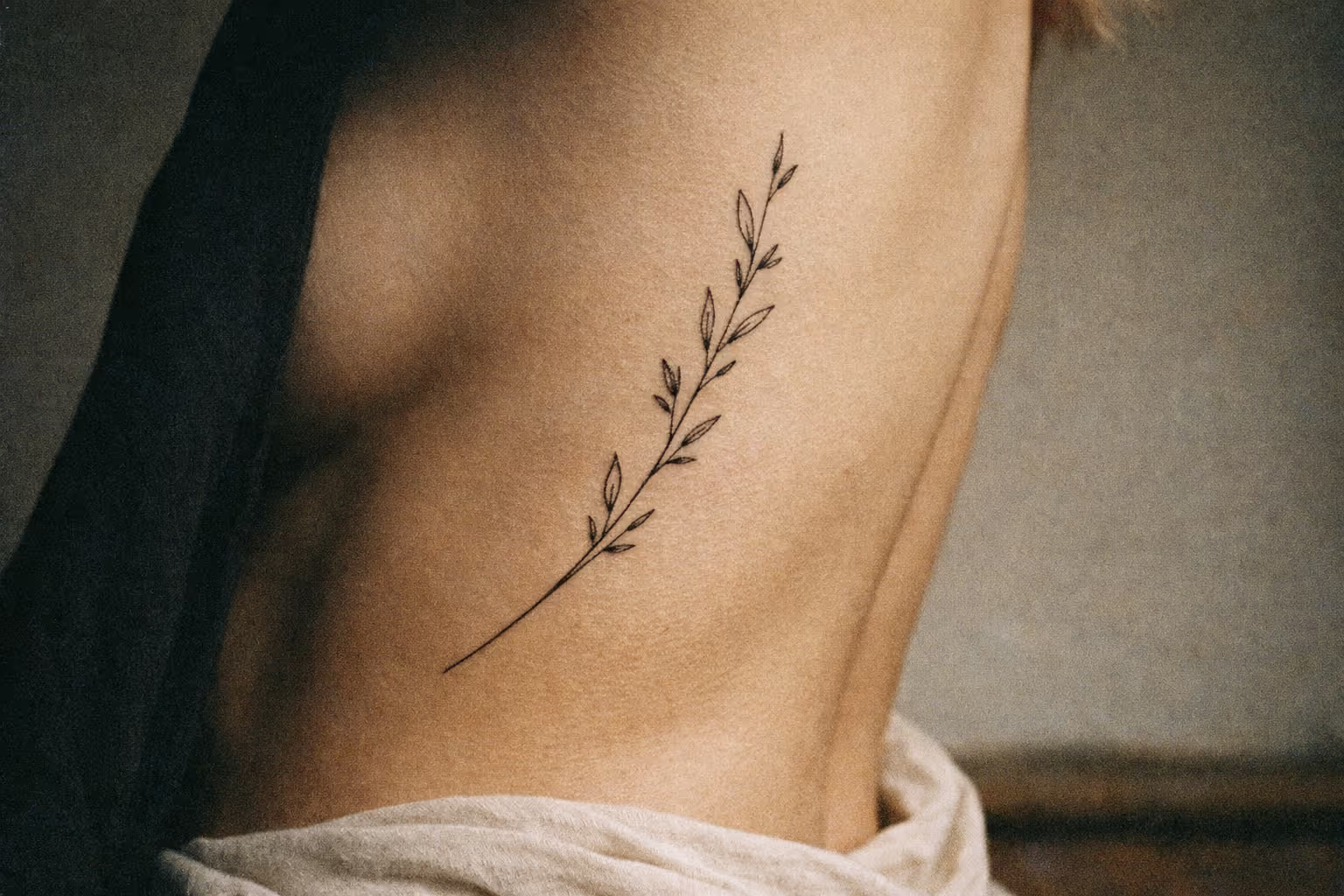
A single-needle tattoo uses a 1RL needle, thinner than a human hair, to lay down lines that read as hairline-thin. That precision is exactly what makes a fine line tattoo beautiful, and exactly what makes it the most maintenance-intensive style you can pick. These pieces photograph sharper than almost anything else the day you get them, and they soften faster than almost anything else over the years that follow.
What the fresh-tattoo shots don’t show you is what this guide covers: the technique behind the lines, which designs muddy over time, which placements hold, how to pick an artist who won’t wreck the work, and how to keep it legible for a decade. Technique first, then designs, placement, aging, artist selection, and aftercare.
✓ Pros
- Extremely detailed, delicate look that larger needle groupings can't produce
- Works at small sizes (around 2-5 cm / roughly 1-2 inches) where bold styles would crowd
- Lower visual weight, so it's easier to layer or add to later
- Suits collarbone, sternum, and ribcage placements where bold work can feel heavy
- Surface heals relatively fast (about 2-4 weeks)
✗ Cons
- Fades and softens faster than bold blackwork, with noticeable change in 5-10 years
- Needs a specialist; a generalist can cause blowouts, or lines laid so shallow they fade early
- Touch-ups every 5-7 years are realistic, not optional
- Fingers, hands, and feet are especially punishing for this style
- Premium pricing, with specialist rates well above generalist work
What Fine Line Tattooing Actually Is (Technique and Tools)
Fine line tattooing is minimalist linework laid down with a single needle (1RL) or a very small round-liner grouping, producing lines that read as thin, precise, and delicate rather than bold. The needle shorthand you’ll hear is 1RL / 3RL (1). Standard liner needles run 0.30-0.35 mm in diameter: #12 standard gauge sits at 0.35 mm, while the finer #10 “bugpin” gauge runs 0.30 mm; true fine line work targets the 0.30 mm end or below. That’s the needle diameter, not the healed result: ink spreads slightly as skin heals, so the visible stroke ends up wider than the needle that laid it down.
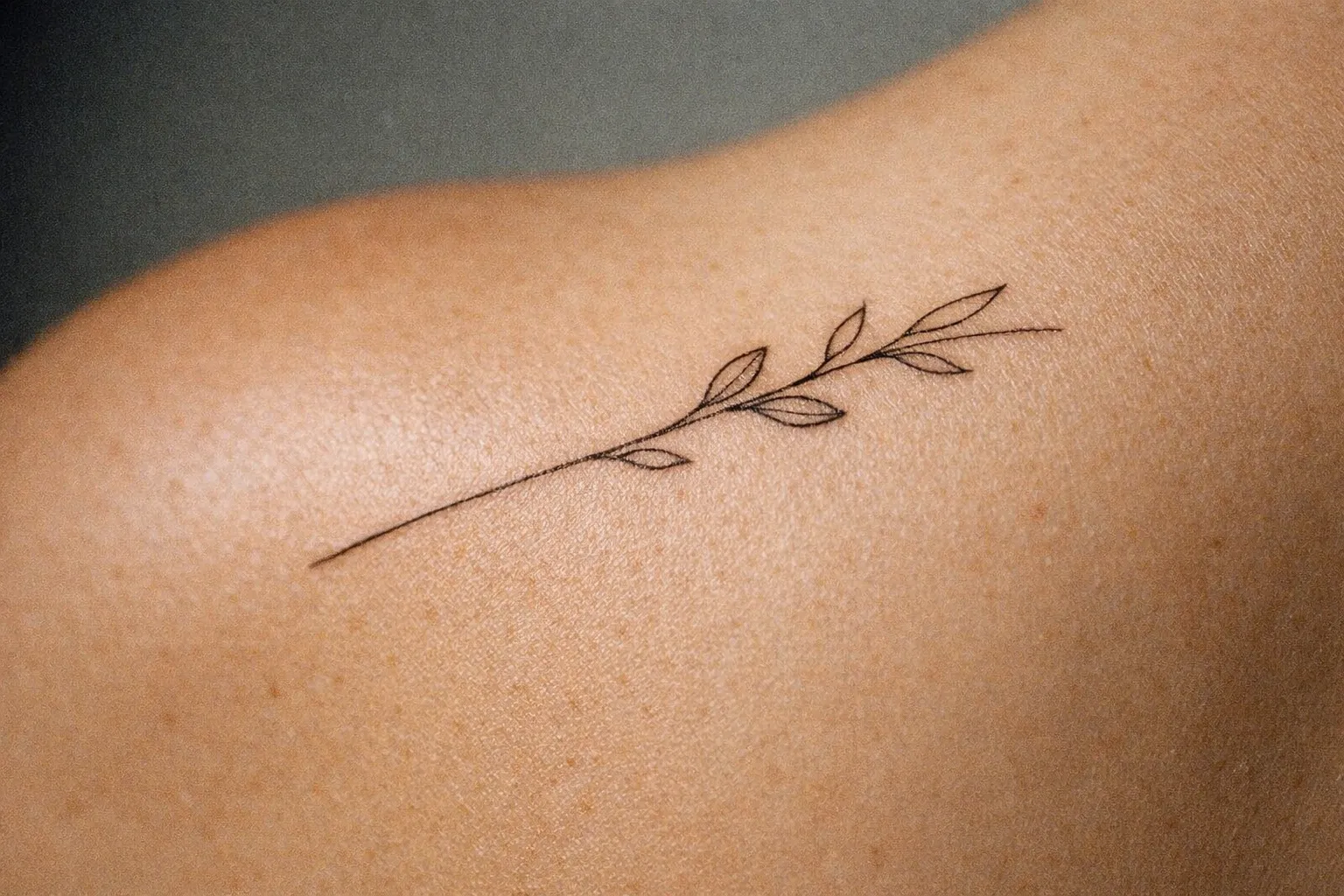
Compare that with traditional tattooing, where artists reach for 7-14RL liners. The smaller needle means less ink volume goes in per pass, deposited at a slightly shallower depth in the dermis. Less ink and a shallower target means a narrower margin for error. Too shallow and the ink sits in the epidermis and sheds as the skin turns over; too deep and you get a blowout, where ink spreads under the skin and the line balloons. Bold work forgives small depth inconsistencies. Fine line does not.
There are two ways to make these lines: machine and hand-poke. Machine-based fine line is more consistent for most artists and is what you’ll see in the majority of dedicated studios. Hand-poke done properly can achieve extremely delicate lines, but it leans hard on the practitioner’s consistency. For either approach, judge by healed portfolios, not fresh work. The style has surged since around 2020, driven by social media and studios that brand themselves around single-needle work.
Single-Needle vs. 3RL: What the Difference Looks Like in Practice
A 1RL gives you the finest possible line and the highest precision demand, and it’s the most susceptible to fading because it deposits the least ink. A 3RL puts down marginally more ink volume, which makes it slightly more forgiving as the tattoo ages, while still reading as fine line.
Experienced artists don’t hand this choice to the client. They pick based on the design’s complexity and your skin type, because those variables decide what will actually hold.
Fine Line Tattoo Designs: What Works and What Muddies Over Time
The design decides how well the piece ages as much as the placement does. The rule is simple: fewer micro-details means less to blur. Here’s how the common categories hold up.
Minimalist and Single-Line Designs: the Safest Starting Point
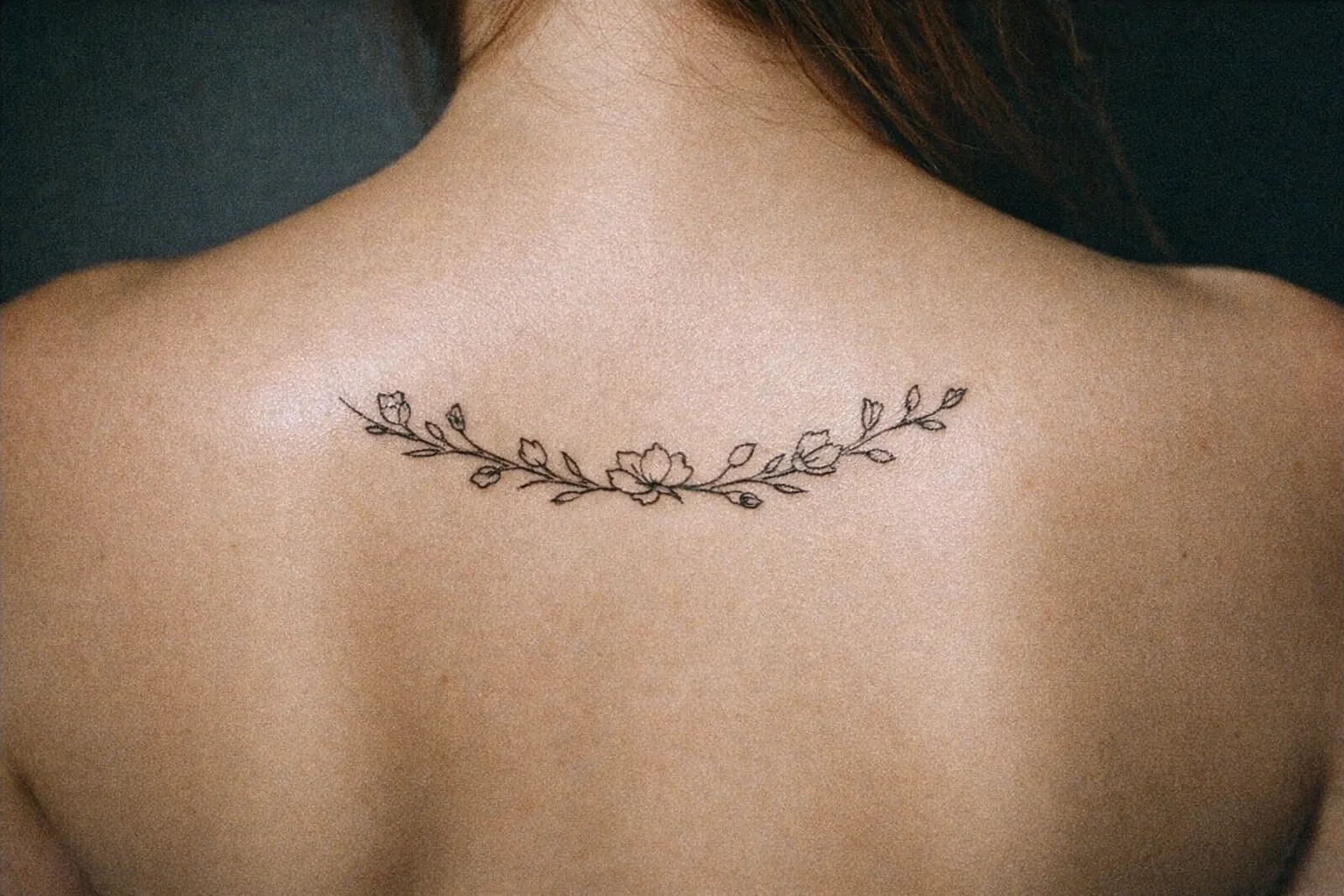
A minimalist fine line tattoo (simple icons, single-line florals, geometric shapes, or short script) is the most forgiving thing you can get in this style. There’s little internal detail to merge, so as the lines soften the design still reads. Single-line botanicals and small geometric shapes at around 4-8 cm are the most reliable long-term choices, and they’re also the most requested. If this is your first fine line piece, start here.
Fine line florals and botanicals are popular fine line tattoo ideas across the board, and among the most requested fine line tattoo designs for women in particular. There’s a technique that keeps them legible: stems and leaves can be drawn with slightly thicker baseline structural lines while the secondary detail stays ultra-fine. That’s how experienced artists hedge against aging without losing the delicate look.
It’s the single most useful line-weight trick in the style. Subtly thickening key structural lines, the outer contour of a flower say, builds in margin for the inevitable 5-10 year softening, while everything secondary stays whisper-thin. I’ve used this approach on botanical pieces going back years, and the difference in how they hold is not subtle.
Size guidance for design categories, roughly:
- Simple symbols and line icons: work down to 2-3 cm
- Small florals, script, simple animals: 3-4 inches (about 8-10 cm) reads better long-term
- Readable illustrative pieces: 5-7 inches
- Dense backgrounds and tiny texture: avoid at 3-4 inches, they smear as they diffuse
Micro-Realism: the Highest-Risk Category
Micro-realism and micro-portraits (faces, animals, or architectural scenes under about 5 cm) are the highest-risk work in this style. The same blur problem affects skull tattoo micro-work, where tiny facial details merge quickly at small scales. The problem is physics, not the artist. Tiny facial features sit close together, and as ink diffuses over the years they merge. A micro-realism portrait about the size of a quarter can look incredible fresh, but within a few years the microscopic lines often blur together or drop out entirely. A quarter is about 1 inch across, which is exactly the scale where portraits fail.
If you want a face or a dense scene, either scale up or simplify to graphic fine line rather than photorealistic detail. Fewer lines doing more work will still read at year seven. A tight cluster of micro-detail won’t.
Fine line script has its own floor. For long-term readability, fine script needs a letter height of about 1 inch (25 mm), and even standard script needs ½ inch (12-13 mm); below that, thin strokes close up as the ink spreads. Ultra-thin script with a long phrase is one of the most common regrets in this style, because letter spacing degrades first and the words close up into a smudge.
How Long It Lasts
How long a fine line tattoo stays crisp depends heavily on placement, ink depth, skin type, and aftercare: there’s no single number that covers every scenario. Studio experience broadly puts the range somewhere between a couple of years on a finger and a decade-plus on a well-shielded ribcage piece, with touch-ups commonly recommended around the 5-7 year mark as maintenance rather than repair. That bottom end isn’t scare-mongering; it’s what happens on a finger.
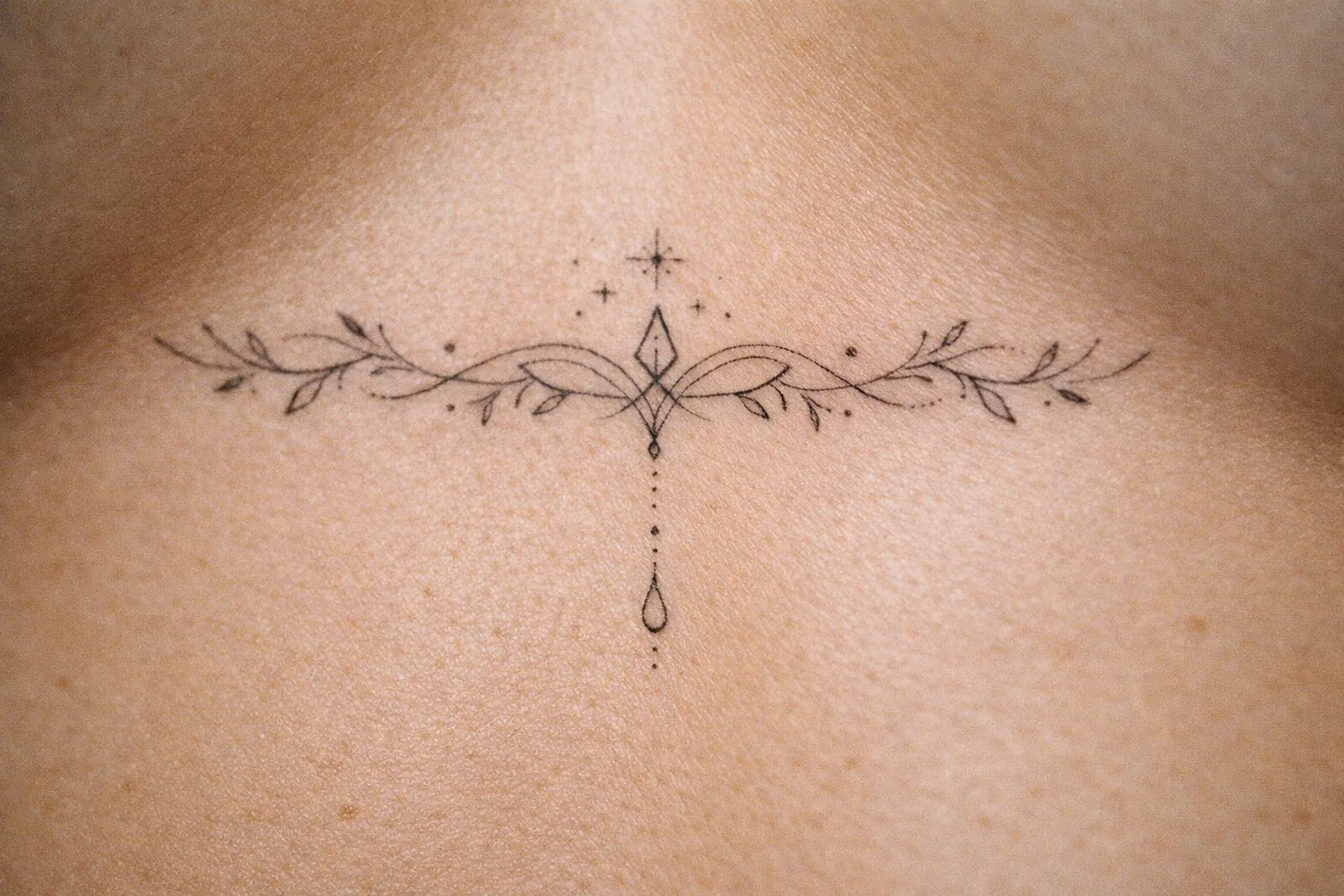
“Softening” doesn’t mean the tattoo vanishes. The lines spread slightly and lose edge definition, and the finest details merge first. In high-UV, high-friction spots (wrists, hands, forearms with no sun protection) obvious fading tends to show up sooner. Micro-realism ages fastest of all; tiny facial details blur together relatively quickly regardless of placement, because the details sit so close together that even modest ink diffusion merges them.
A fine line tattoo on the outer forearm, with its high cumulative UV exposure, typically shows noticeable softening of ultra-thin lines sooner than a comparable ribcage piece, which sees far less sun. That’s the placement variable in one sentence.
Touch-up cadence for a well-placed piece is every 5-7 years to restore crispness and contrast (1). This mirrors the general guidance in any solid tattoo aftercare plan for long-term maintenance. That’s maintenance, not a sign the work failed.
Aging Timeline by Design Type (Quick Reference)
- Simple minimalist / geometric: 7-10+ years before significant softening
- Fine line florals with structural lines: 5-10 years
- Micro-realism / dense scenes: 3-7 years depending on placement
- Ultra-thin script: 5-8 years, with letter spacing degrading first
Placement vs. Expected Lifespan for Fine Line Tattoos
| Ribs / Upper back | Hip / Upper thigh | Inner upper arm | Outer forearm | Collarbone / Sternum | Wrist / Inner elbow | Fingers / Hands / Feet | |
|---|---|---|---|---|---|---|---|
| UV Exposure | Low (usually covered) | Low-moderate | Low-moderate | Moderate-high | Moderate | High (wrist) | Very high |
| Friction/Movement | Low | Low | Low | Moderate | Low | High (folding) | Very high |
| Expected Crispness | 7-10 years | 10-15 years | 8-15 years | 5-10 years | 5-10 years | 3-7 years | 1-3 years |
| Touch-Up Frequency | Every 7-10 years | Every 7-10 years | Every 7-10 years | Every 5-7 years | Every 5-7 years | Every 3-5 years | Every 1-3 years |
Placement: Where Fine Line Work Holds and Where It Fails
The best placements for fine line longevity are ribs, upper back, hip, inner upper arm, and upper thigh: low UV exposure, low friction, low movement. Areas typically covered by clothing, such as the trunk, back, and upper arms, are better protected from UV and hold tattoo definition longer than frequently sun-exposed areas like the forearms, hands, and feet. These longevity-first zones share one thing: skin that doesn’t fold, stretch, or bake in the sun.
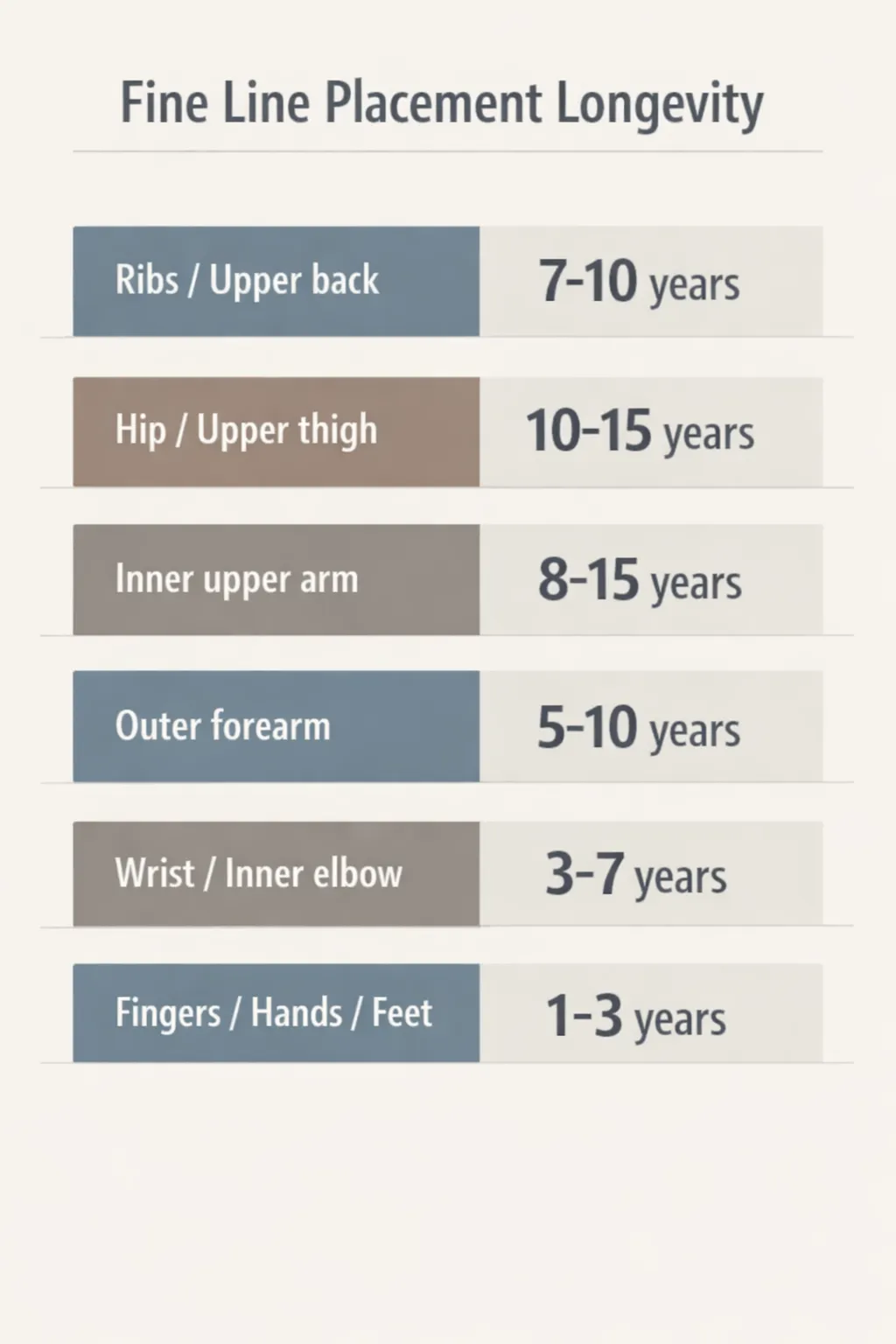 Lifespan estimates by placement: Ribs/Upper back 7-10 years; Hip/Upper thigh 10-15 years; Inner upper arm 8-15 years; Outer forearm 5-10 years; Wrist/Inner elbow 3-7 years; Fingers/Hands/Feet 1-3 years.
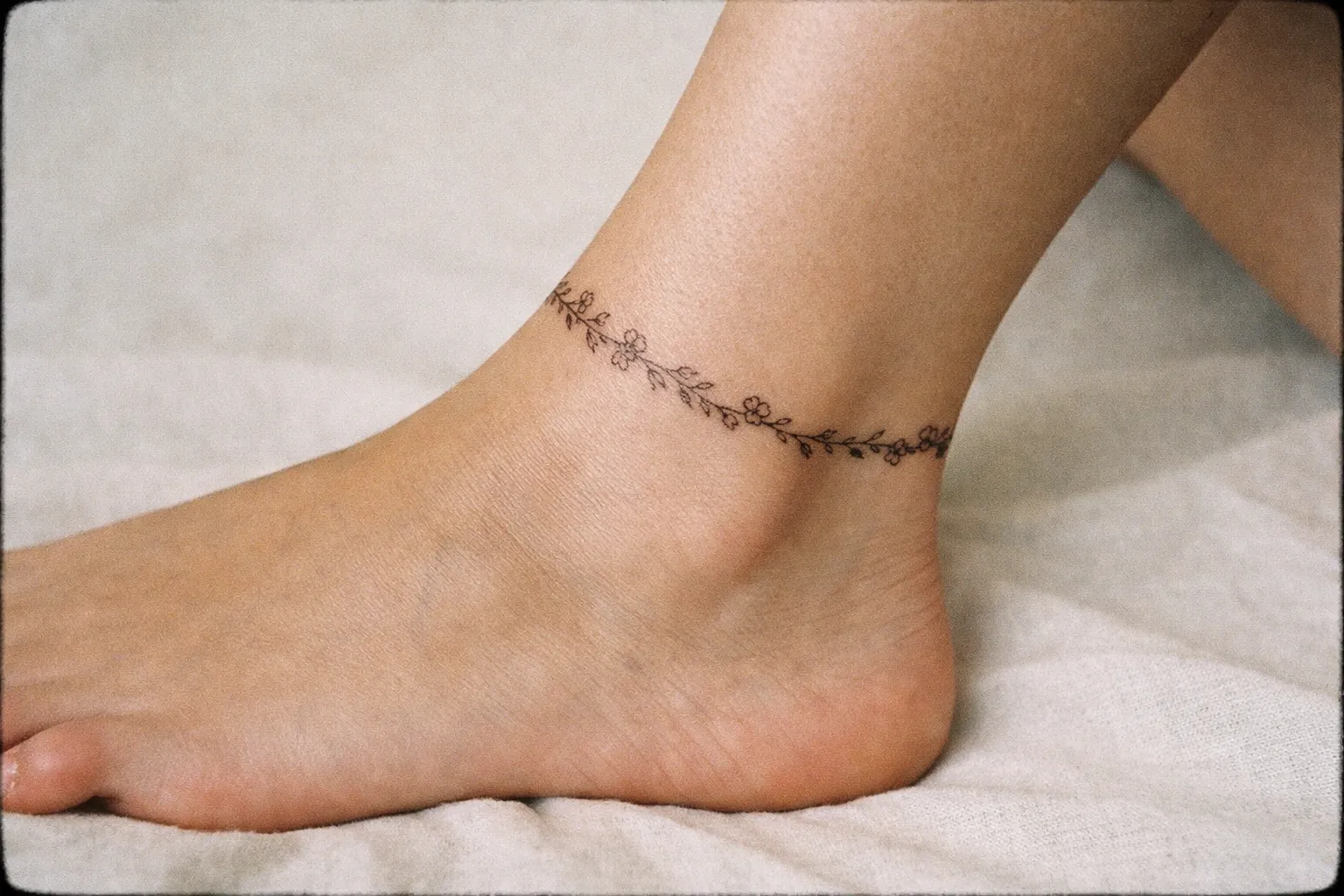
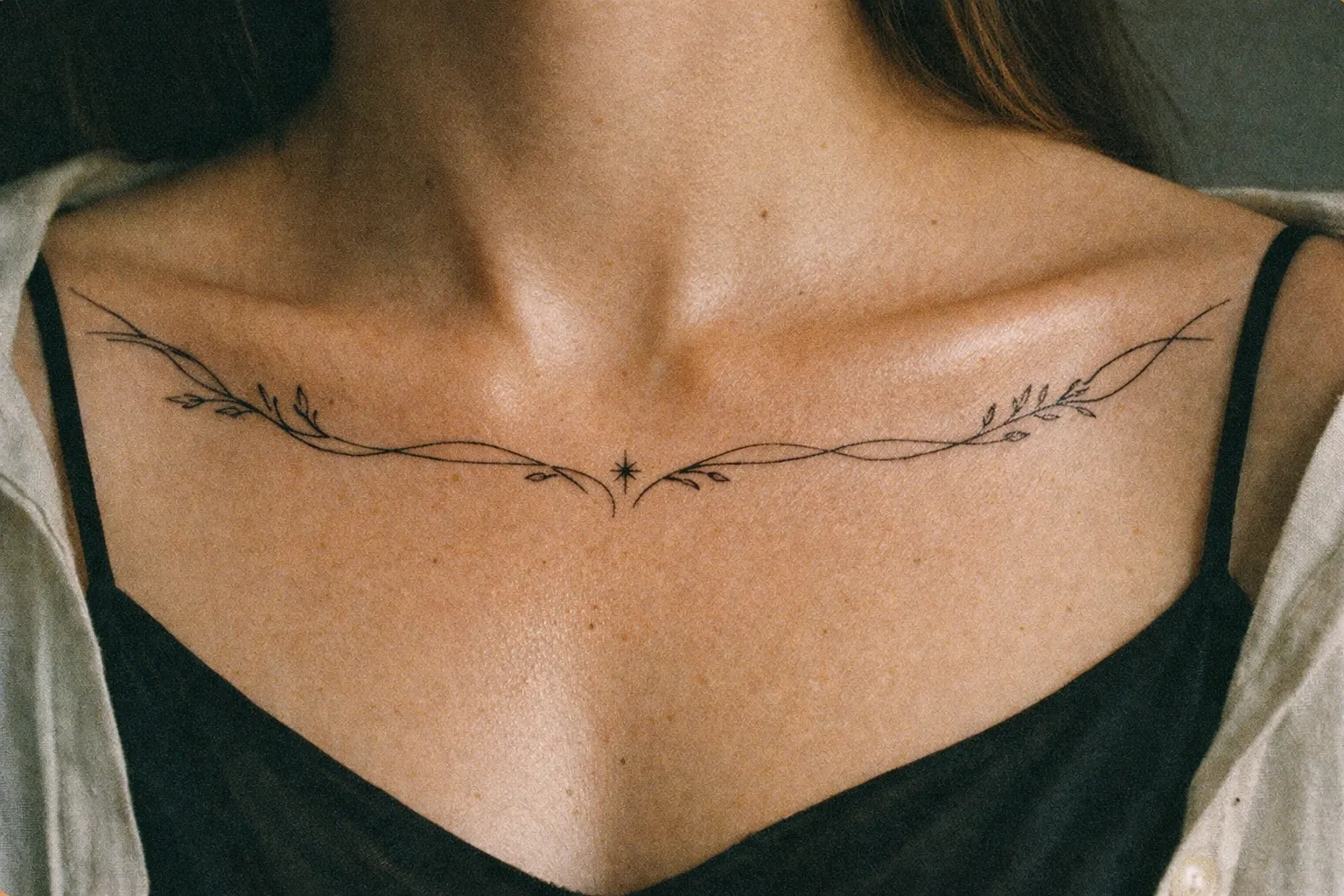
Acceptable placements come with caveats. Inner and outer forearm, collarbone, sternum, and shoulder see moderate UV and friction. The forearm is regularly exposed to sun, so daily SPF there isn’t optional. Collarbone and sternum are especially popular for fine line tattoos for women, and they hold reasonably well because they’re low-friction, but they still sit in the moderate-UV band.
High-failure zones are fingers, palms, sides of hands, and feet. Constant friction, fast skin turnover, and frequent washing wreck fine lines here, and studios that specialize in this work commonly report needing to re-line or partially rework these placements well before they’d touch up a ribcage piece. Upper arm, ribcage, and back retain fine line detail significantly longer than the extremities. If someone will happily give you a finger tattoo without flagging that trade-off, that tells you something about them.
High-movement joints (wrists, inner elbows, knees) distort fine lines because the skin folds and stretches over them. If you’re set on a visible-arm placement, orient the design so the most detailed elements sit away from the wrist crease and the elbow ditch, and leave the joints for simpler line or open skin.
Longevity-First vs. Visibility-First: Choosing Your Trade-Off
This is a genuine decision, not a right-and-wrong one.
Longevity-first means ribs, upper back, hip, inner upper arm: less UV, less friction, longer lifespan, fewer touch-ups over decades. The cost is you don’t see it much day to day, and it’s under clothing most of the time.
Visibility-first means wrists, forearms, hands, collarbone: you see it every day and so does everyone else, but you’re accepting faster fading and a shorter touch-up cycle. If clarity at year fifteen matters more to you than daily visibility, pick a clothing-shielded spot. If you want the piece in view, go in knowing you’re signing up for more maintenance.
Choosing Your Artist: The Decision That Matters Most
The single biggest risk in this style is choosing a non-specialist. A generalist may not control depth or machine speed precisely enough for ultra-thin linework: one millimetre too deep and you get a blowout, one too shallow and the line fades almost immediately (4). No aftercare routine or clever placement rescues a piece that was laid in wrong. This is where the money and the research should go.
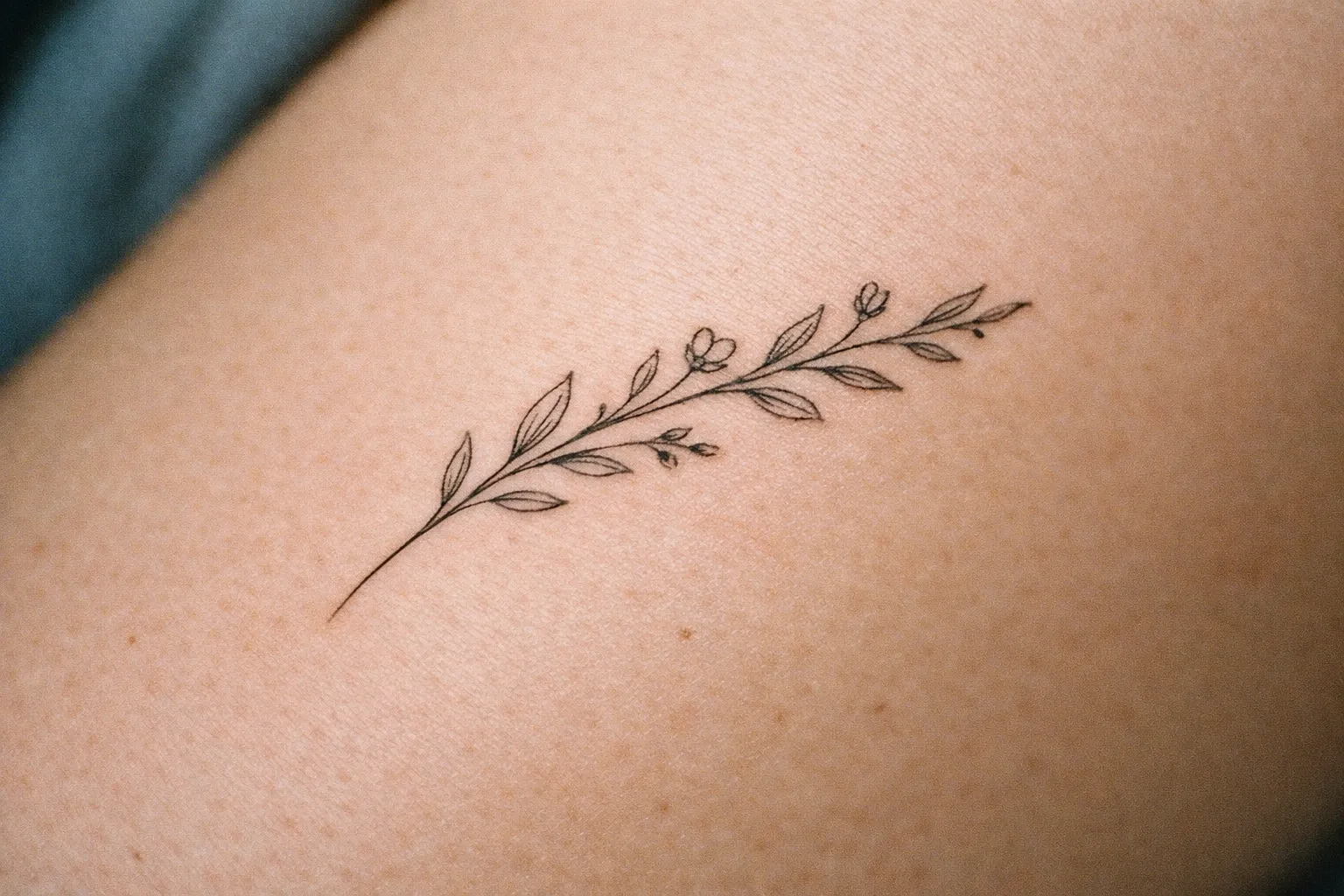
The healed portfolio rule is the most important vetting step. Ask to see healed photos at least 6-12 months old, not fresh work. Instagram is wall-to-wall with sharp fresh tattoos that look very different a year later. A fine line tattoo artist who does good work will have healed follow-ups and will show them without hesitation. If an artist can only show day-of shots, treat that as a red flag, not an oversight.
In those healed photos, look for line consistency (no gaps, no spreading from blowout), retained contrast, and details that are still legible. That’s the whole test. Work that still reads a year out is the standard.
A specialist should also check your skin at consultation. Excessively dry, sun-damaged, or scarred skin retains ink unevenly, and a good artist will flag that before you book rather than after the tattoo heals patchy.
On pricing, rates run by tier:
- Apprentice / junior: $80-$130/hr, fine for simple linework and small minimalist designs
- Mid-career specialist: $150-$220/hr, clean portfolio with solid healed work
- Established specialist: $250-$450/hr, recognizable work and longer waitlists
- Celebrity-tier (LA, NYC, London): $500-$1,200/hr
Apprentices are reasonable for simple minimalist pieces. Complex micro-realism and very tiny script should only go to an experienced specialist, full stop. Machine versus hand-poke doesn’t change the vetting: both can produce good fine line work, and hand-poke depends even more heavily on practitioner consistency, so inspect healed portfolios carefully either way. Dedicated single-needle studios often carry longer waitlists thanks to social-media demand, so factor booking time into your planning.
On a tight budget, know the floor: most studios charge a shop minimum well above $50 regardless of size, because setup and sterile supplies cost the same whether the design takes five minutes or fifty. A $50 fine line tattoo, where it’s even possible, buys a tiny single-line symbol or a few letters at most: think under 2 cm, apprentice or trainee-tier pricing, and a design so simple it doesn’t need much artist judgment. Anything with real detail costs more than that, and asking a specialist to work at that price is asking them to lose money on your appointment.
Red Flags to Spot Before You Book
- Shows only fresh tattoo photos, no healed follow-ups
- Can’t explain their depth control or machine settings when you ask
- Prices fine line work the same as bold traditional work, which can signal it isn’t a specialty
- No healed client photos anywhere in the portfolio
Aftercare for the First Four Weeks: Where Most Line Loss Happens
Fine line work deposits less ink than bold work, so any aftercare mistake that costs you even a little ink is proportionally more damaging to the final result. The first four weeks decide how much of that thin line survives, and the principles mirror general tattoo aftercare best practice. Surface healing runs about 2-4 weeks, while deeper layers keep settling for 3-6 months.
Days 1-3, the wound phase. Treat it as an open wound. Wash gently with lukewarm water and a fragrance-free cleanser (a non-soap syndet bar works well) 2-3 times daily. Following the right aftercare steps in this window is what protects the thin ink deposit. Pat dry, never rub. Apply a thin layer of fragrance-free, unscented moisturizer. No gym, no soaking, no sun. Some studios recommend a second-skin bandage (medical adhesive film) for the first 3-4 days; others prefer traditional dry healing with light lotion. Follow your specific studio’s protocol, not a generic one. Aftercare guidance is consistent on the part people skip: no sunscreen on unhealed skin, only once it has closed up, and keep the area out of the sun while it heals.
Week 1, peeling begins. Peeling and flaking start around days 4-7. Do not pick, scratch, or peel anything off. This is the primary cause of gaps and broken lines in fine line work. Keep up the thin moisturizer 2-3 times daily and avoid tight clothing rubbing over the area.
Weeks 2-4, surface healing. The surface is largely closed but the deeper layers are still settling. Avoid soaking (pools, baths, ocean) for at least 2-4 weeks. Fresh tattoos are most vulnerable to UV damage during these first 2-4 weeks, so protect the area with clothing or, once it’s healed enough per your studio, SPF. Keep AHA/BHA products off the tattoo entirely.
Over-moisturizing is a real risk. A thick occlusive layer softens scabs and leaches ink out unevenly. Thin layers only, 2-3 times daily. Certified Tattoo puts it bluntly: do not over-moisturize, because it traps bacteria and softens the scabbing process too much, which leads to uneven healing (2).
Products to avoid: anything scented, AHA/BHA exfoliants over the tattoo, and heavy ointments piled on thick.
What Picking and Over-Moisturizing Actually Do to Fine Lines
Picking pulls the scab off with ink still bound inside it, leaving a gap in the line that’s difficult to touch up cleanly later. Over-moisturizing swells the scab and lets ink leach out unevenly, which reads as patchy, inconsistent line weight once it heals. Both problems hit fine line work harder than bold work because there’s so little ink there to begin with.
Fine Line Tattoo Aftercare: Week-by-Week Protocol
1 monthStep-by-step care instructions for the first month and ongoing maintenance.
- 1
Days 1-3 (wound phase)
Wash 2-3× daily with a fragrance-free cleanser; pat dry; apply a thin layer of unscented moisturizer; keep second-skin on if your studio uses it; no gym, no soaking, no sun.
- 2
Days 4-7 (peeling begins)
Don't pick or scratch; continue thin moisturizer 2-3× daily; wear loose clothing; avoid soaking.
- 3
Weeks 2-4 (surface healing)
Reduce washing frequency; protect from sun with clothing or SPF once healed; avoid pools, baths, ocean; no AHA/BHA over the tattoo.
- 4
Months 2-3 (internal healing)
Surface looks healed but deeper layers are still settling; keep up daily SPF on exposed placements; no chemical peels over the area.
- 5
Long-term
Daily SPF 30+ on sun-exposed placements; fragrance-free moisturizer daily; plan a touch-up at 5-7 years.
Long-Term Maintenance: Keeping Fine Line Work Legible for a Decade
SPF is the most controllable ongoing variable for fine line work. A broad-spectrum, water-resistant sunscreen with SPF 30 or higher on tattooed skin when in the sun is the standard advice, and most fine-line specialists echo that as a daily habit on any exposed placement. Following a structured aftercare routine is what separates lasting work from premature fading. Clients who apply SPF daily and moisturize regularly consistently keep clearer lines further out than those who skip sun protection.
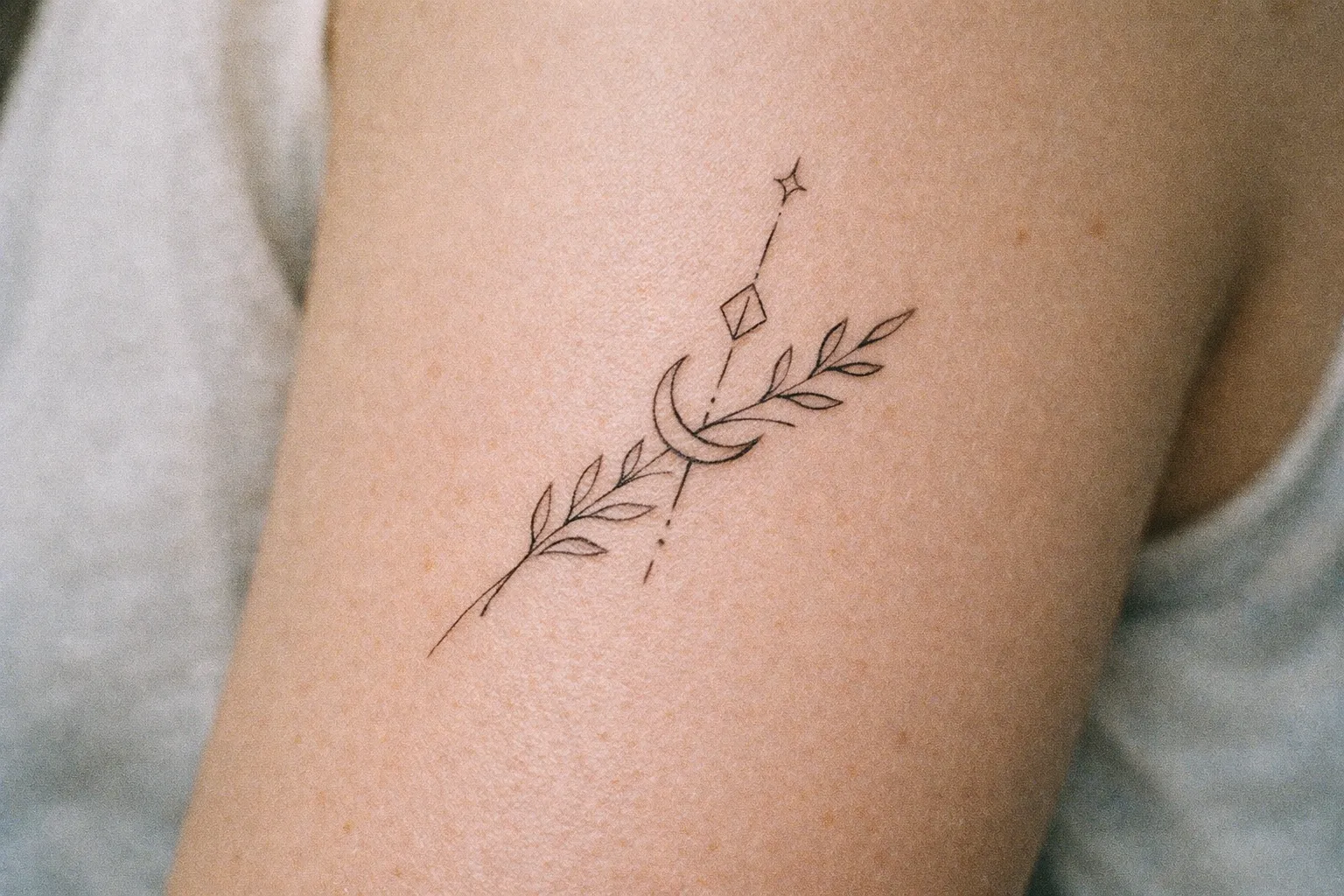
Make it a habit you don’t have to think about. Keep a dedicated sunscreen near the door or in your bag. The gap between a crisp tattoo at year ten and a faded one at year five is mostly whether you actually applied it.
Daily moisturizing keeps the skin supple and the ink looking saturated. A basic fragrance-free lotion with minimal additives is all you need.
Chemical exfoliants (AHA/BHA) don’t belong over a tattoo. If they’re part of your skincare routine, work around the tattooed area rather than over it, because repeated exfoliation accelerates pigment loss.
Budget for a touch-up every 5-7 years on a well-placed piece (1). Proper aftercare in the first month is what protects that investment. This is the realistic cadence for the style, not a repair of bad work. And remember the shielding logic from placement: pieces naturally covered by clothing (ribs, upper back, hips) hold clarity with fewer touch-ups over decades, because sun-protective clothing does the SPF job for you without you having to remember anything.
Common Mistakes That Ruin Fine Line Results
The downsides of fine line tattoos mostly trace back to a handful of avoidable errors. Here they are, ranked by how much damage they do.
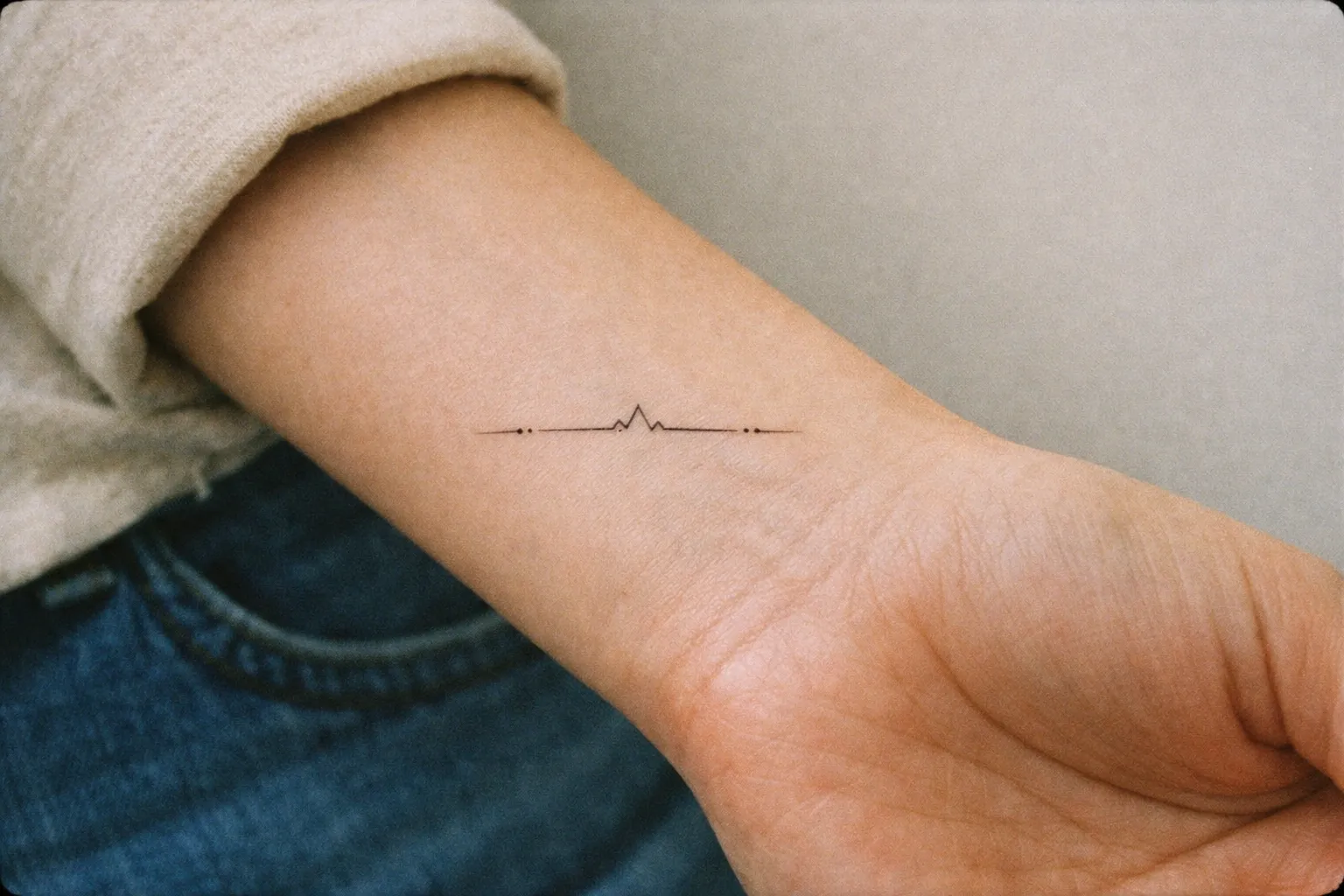
Over-shrinking complex designs. Cramming a realistic face, a landscape, or a dense scene into under 3-4 cm is the classic mistake. Portraits, animal faces, and detailed flowers should be avoided at 1-2 inches; at that scale the details merge as the skin ages and ink diffuses, often making the design unreadable within a few years. The same scale problem applies to ghost tattoo designs, where hairline single-needle work on small formats blurs early. Scale up or simplify.
Choosing the wrong artist. The most expensive mistake, because a non-specialist can blow the lines out immediately or leave them fading early, and no amount of aftercare fixes it. Not checking healed photos is the most common error that hides this risk until it’s too late.
Ignoring placement failure zones. Fingers, palms, sides of hands, and feet lose crispness within a few years. Wrists and inner elbows distort fine lines through constant folding. Wanting a tattoo somewhere doesn’t change how that skin behaves.
Aftercare errors. Picking at peeling skin creates gaps, over-moisturizing causes patchy ink loss, scented products cause irritation and uneven healing, and exposing a fresh tattoo to sun, pools, or baths in the first 2-4 weeks invites fading and infection.
Relying on fresh tattoo photos. Fresh work looks dramatically sharper than the healed result. Judge every artist by healed photos, never by the day-of shot. This one habit prevents most of the mistakes above.
Frequently Asked Questions
- How long will a fine line tattoo last?
- Fine line tattoos stay crisp for varying lengths of time depending on placement, ink depth, skin type, and aftercare, and well-placed pieces on low-friction, low-UV areas hold longest. Most studios recommend a touch-up somewhere in the 5-7 year range to restore crispness, though that cadence is a practitioner guideline rather than a fixed rule.
- What does fine line mean in tattooing?
- Fine line tattooing uses single-needle or very small needle groupings (0.30-0.35 mm in diameter) to create thin, precise lines with less ink volume than traditional styles.
- What are the downsides of fine line tattoos?
- They fade faster than bold work, require specialist artists, need touch-ups every 5-7 years, and perform poorly on fingers, hands, and feet.
- How big should a fine line tattoo be?
- Simple designs can work at 2-3 cm; complex imagery needs 4+ cm; micro-realism under 3-4 cm is high-risk; fine script letters should be about 1 inch (25 mm) tall, standard script at least ½ inch (12-13 mm).
- How do I find a fine line tattoo artist I can trust?
- Look for healed portfolio photos 6-12 months old showing consistent lines and contrast; avoid artists showing only fresh work or lacking healed follow-ups.
- Does fine line tattooing hurt more than traditional tattooing?
- Fine line tattooing often feels lighter due to slower needle passes and less ink per pass, but placement determines pain more than style.
The Three Decisions That Actually Matter
A fine line tattoo looks good in ten years because of three choices, and none of them is the design you pick.
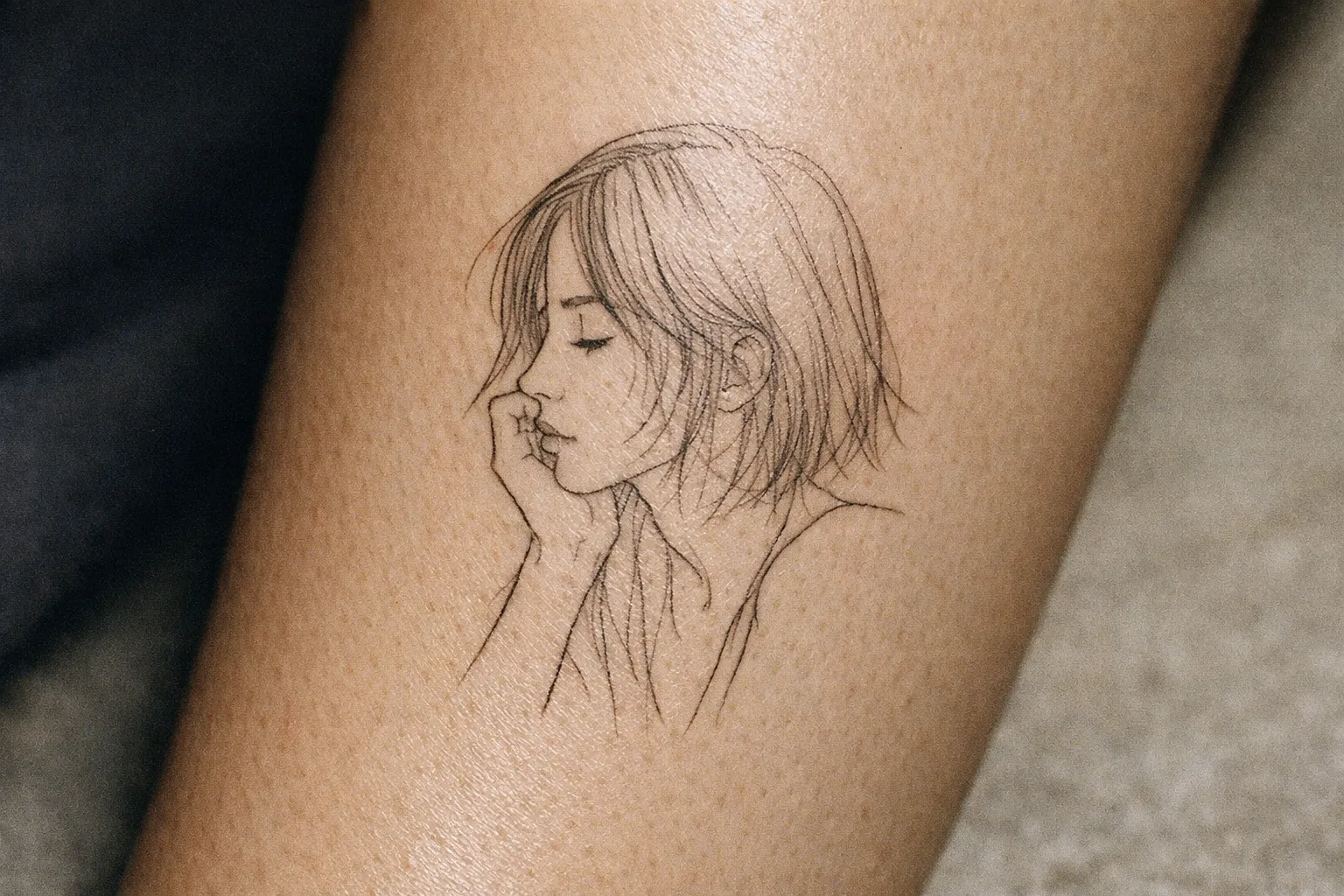
Artist. Judge on healed photos 6-12 months old, not fresh shots, and hire a specialist over a generalist. This is the decision that can’t be undone by anything you do afterward.
Placement. Go longevity-first (ribs, upper back, hip, inner upper arm) or visibility-first (wrist, forearm, collarbone), but make the trade-off knowingly. One buys you decades with fewer touch-ups; the other buys you daily visibility at the cost of faster fading.
Maintenance. Daily SPF 30+ on any exposed placement is the single habit that separates a crisp tattoo at year ten from a faded one at year five.
Fine line work is not set-and-forget. Budget for a touch-up at 5-7 years and the design stays legible. Skip it, and the softening compounds year over year. That’s the honest version of how this style works.