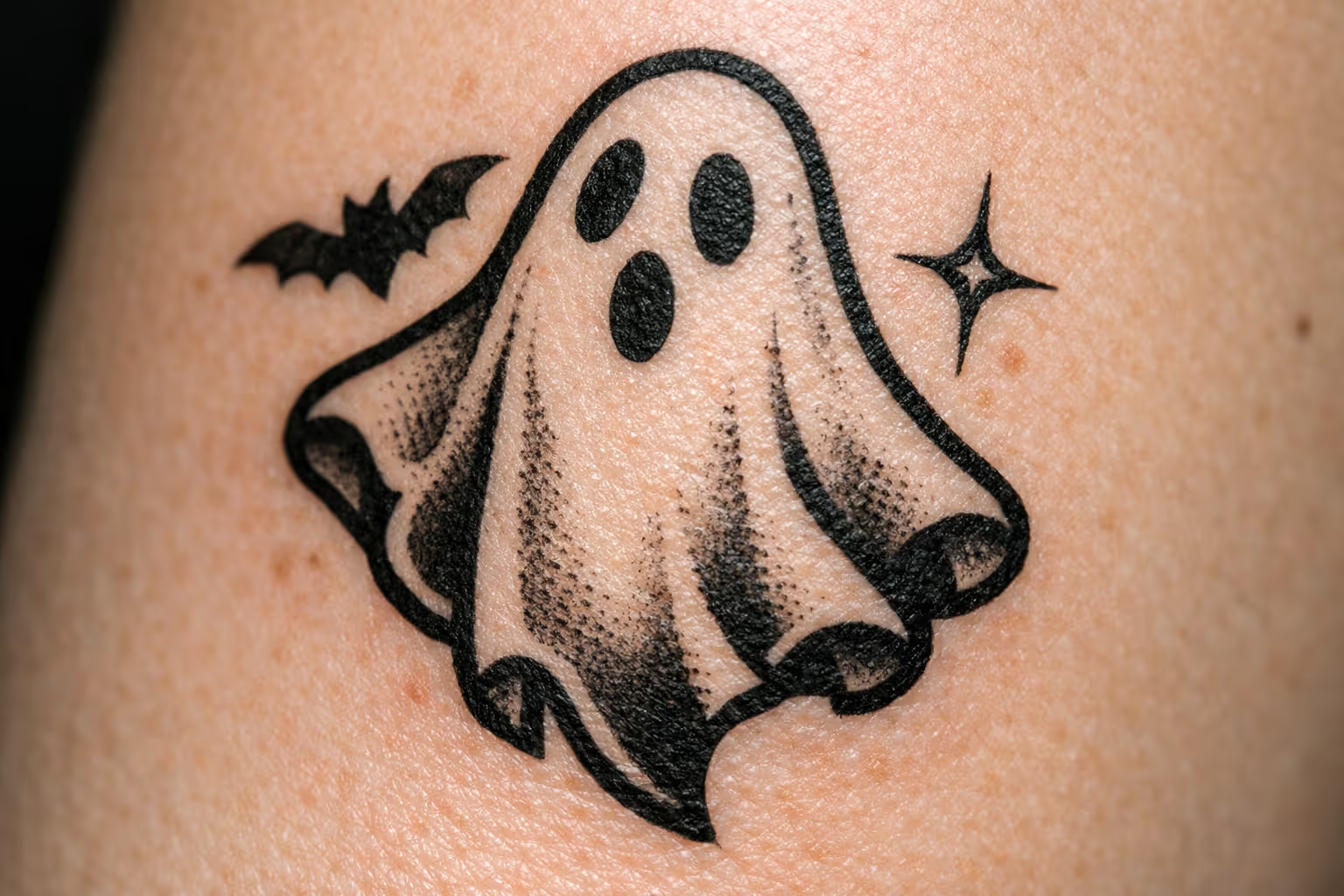
A ghost tattoo is one of the few designs that actually rewards going small. Under about two inches, the simple sheet-ghost shape heals fast and holds its detail better than a large shaded version - the minimalism is the point, and line weight does the rest. Get that right and it stays crisp for years. Here are the line-weight rules, the cost ranges, and a six-week care timeline, plus what a ghost can mean.
What a Ghost Tattoo Actually Means
The meaning isn’t fixed, and anyone who tells you otherwise hasn’t worked the chair long enough.
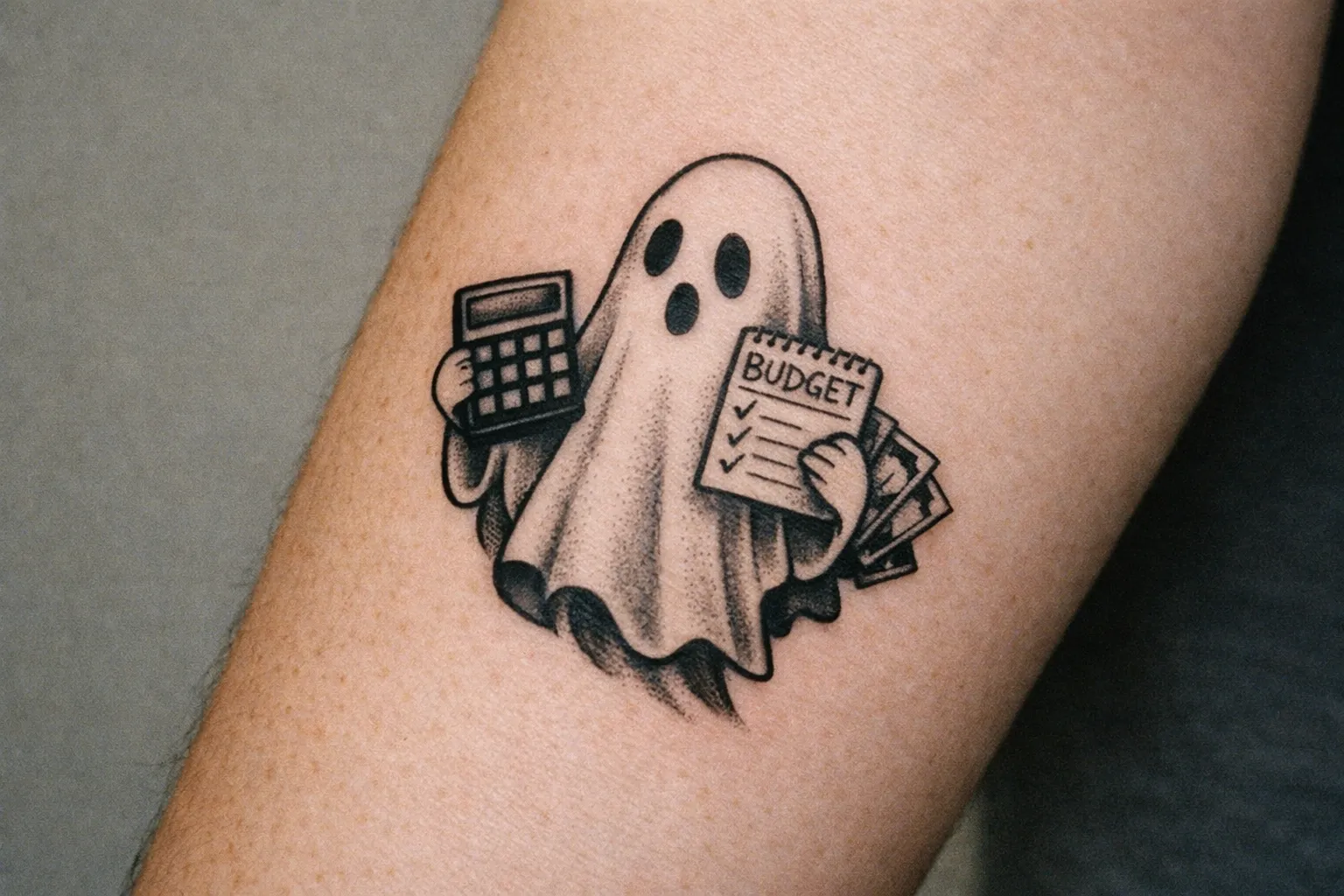
In modern Western tattoo culture, ghosts most often signal one of four things: letting go of the past, honoring someone who died, a love of horror and Halloween imagery, or - and this is the most honest one - the design just looked good. All four are legitimate reasons.
Some clients bring memorial intent: a small sheet ghost with a date, sometimes paired with a pet’s name. Others want the cartoon ghost they remember from childhood Halloween specials. Animal ghost tattoos - a cat, a wolf, an owl rendered as a translucent spirit - show up frequently as pet memorials (2).
The “ghost as past you can’t shake” reading is real but not universal. Don’t let a Pinterest caption write your meaning for you. If a ghost holding a coffee cup marks your grad school years, that’s what it means. The tattoo doesn’t need a folklore footnote.
Simple Designs for a Ghost Tattoo That Hold Up Over Time
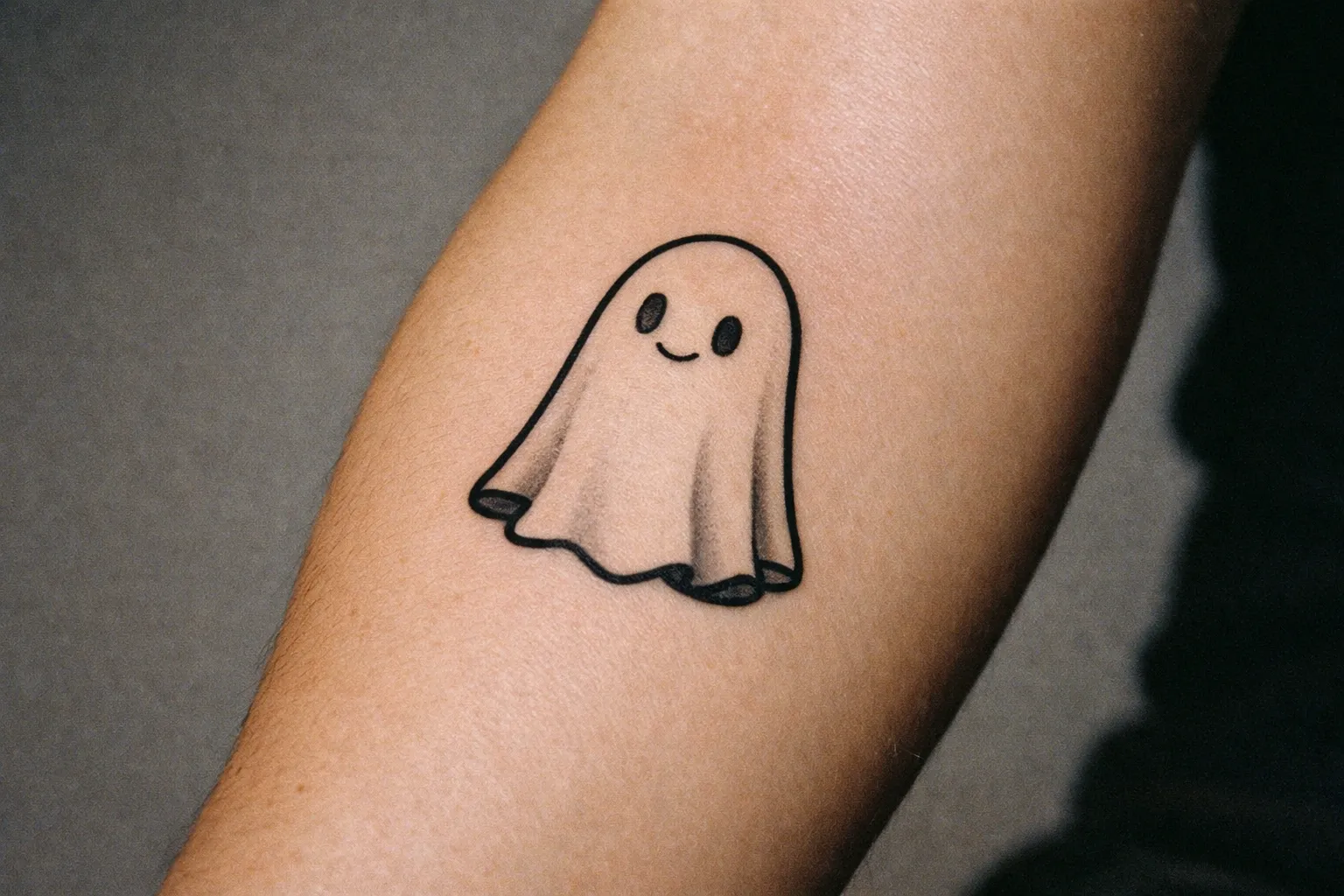
A simple ghost tattoo is the most requested version of this motif, and for good reason: it ages well, heals predictably, and the design language is forgiving. The classic sheet ghost - rounded top, wavy bottom hem, two dot eyes, optional O-shaped mouth - is essentially three shapes. Three shapes don’t blur.
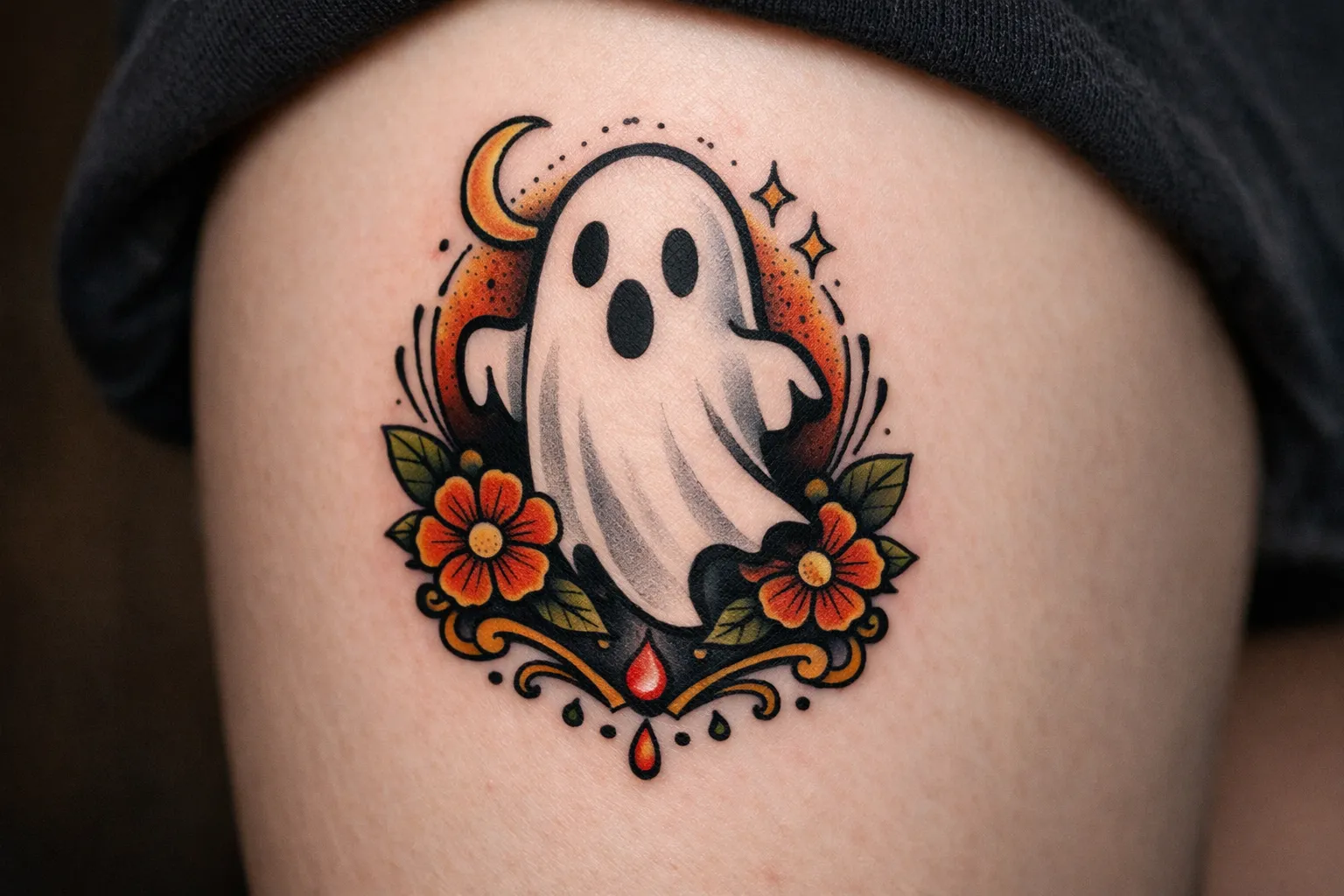
Two technical hallmarks of a simple ghost done well:
- Thicker line weight than you’d expect. For anything under 2 inches, the artist should be using a 7RL or 9RL liner instead of a single needle. Hairline work looks crisp at week one and disappears at year five.
- Negative space inside the body. Resist the urge to fill the ghost with shading. The white of the skin is what reads as “ghost.” Fill it in and you’ve got a blob.
The common pitfall: artists who overdetail. A simple ghost with eyelashes, blush marks, tiny stars, and a banner gets muddy fast. If you want detail, go bigger.
I’ve seen clients come in with reference images that are essentially a simple ghost buried under decorative noise - little stars, a tiny banner, micro-text. Every time, I tell them the same thing: pick two elements max, or size up to at least 3 inches. Usually they listen. Sometimes they don’t, and they’re back in 18 months wanting a rework.
Recommended size range: 1-2 inches (2.5-5 cm) for a single simple ghost. Placement that works: inner forearm, outer upper arm, calf, behind the ear. Skip the fingers and the side of the hand unless you’re prepared for touch-ups every 1-3 years.
Cute Ideas for Ghost Designs (Kawaii, Pastel, and Soft Shading)
The cute ghost tattoo trend is what’s driving most of the current volume. Soft shading, pastel washes, big round eyes, sometimes a little blush - this is the Lemon8 and TikTok aesthetic, and it’s not going anywhere soon (2).
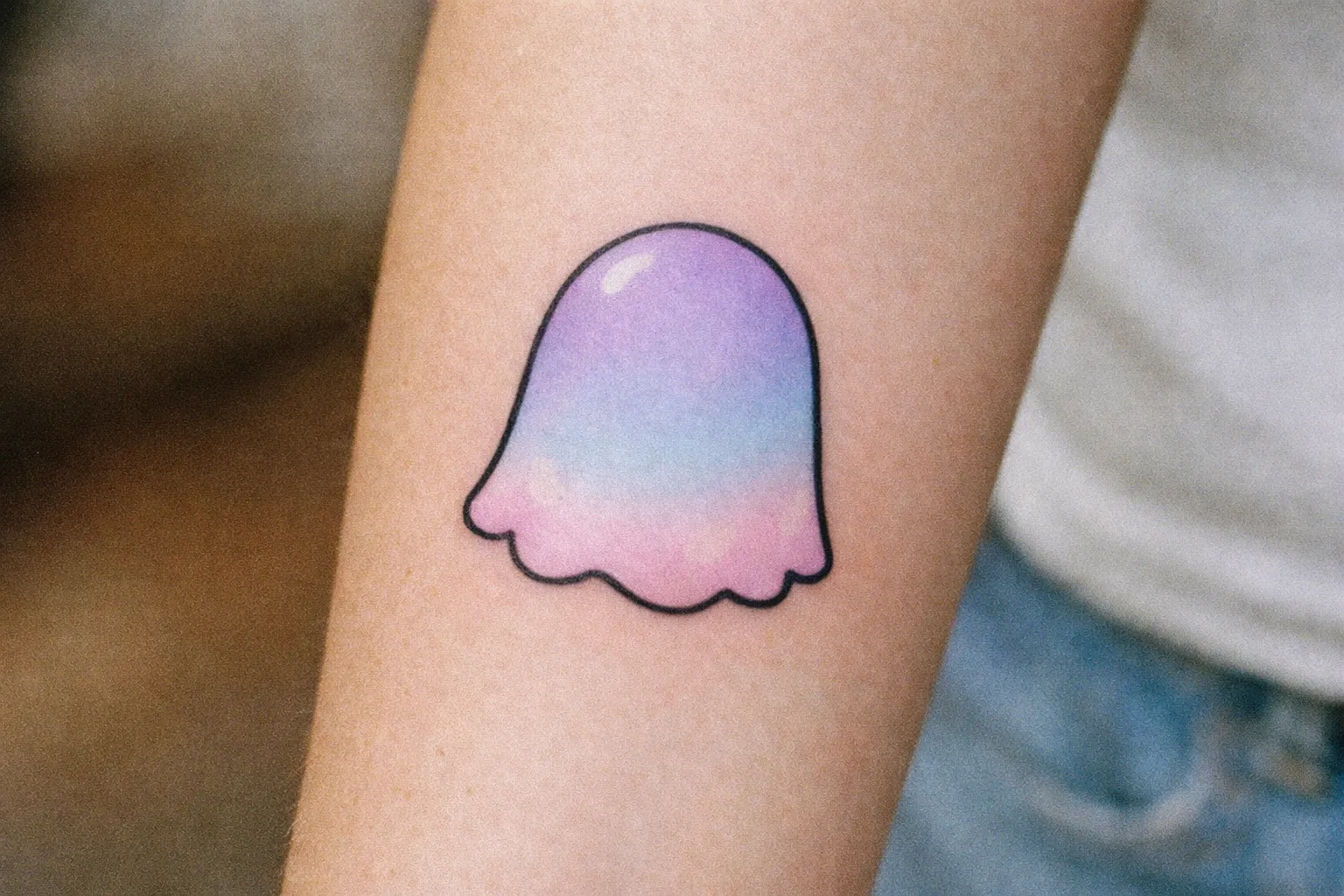
Hallmarks of a cute ghost that lands:
- Rounded body, never sharp at the corners
- Eyes set wide and low, not centered
- Optional pastel: pink cheek dots, lavender body wash, mint accents
- Paired with one small prop: heart, star, mushroom, tiny bow
What I’d flag honestly: pastel ink doesn’t age the same as black. Soft pinks and pale blues can fade noticeably within 5-7 years, especially on sun-exposed skin. If you want a cute ghost to stay sharp for two decades, do the linework in solid black and add color sparingly - or commit to color touch-ups every 4-6 years at roughly $80-$150 a session.
A few concrete cute concepts that artists are booking right now:
- Butterfly hunting ghost - a small sheet ghost with a net chasing a butterfly. Reads as chasing joy, transformation, or just being whimsical about it. Works best at 2.5-3 inches on the inner forearm so the composition has room to breathe.
- Mushroom ghost - ghost peeking out from under a toadstool cap. Cottagecore-adjacent, popular in 1.5-2 inch sizes on the ankle or behind the ear.
- Frog and ghost - small frog companion next to the ghost. Pairs well as a wrist piece.
Best Placements and Expectations for a Small Ghost
A small ghost tattoo - anything under 2 inches - is one of the most common first-tattoo requests I see. Quick, affordable, and the pain is manageable in most spots.
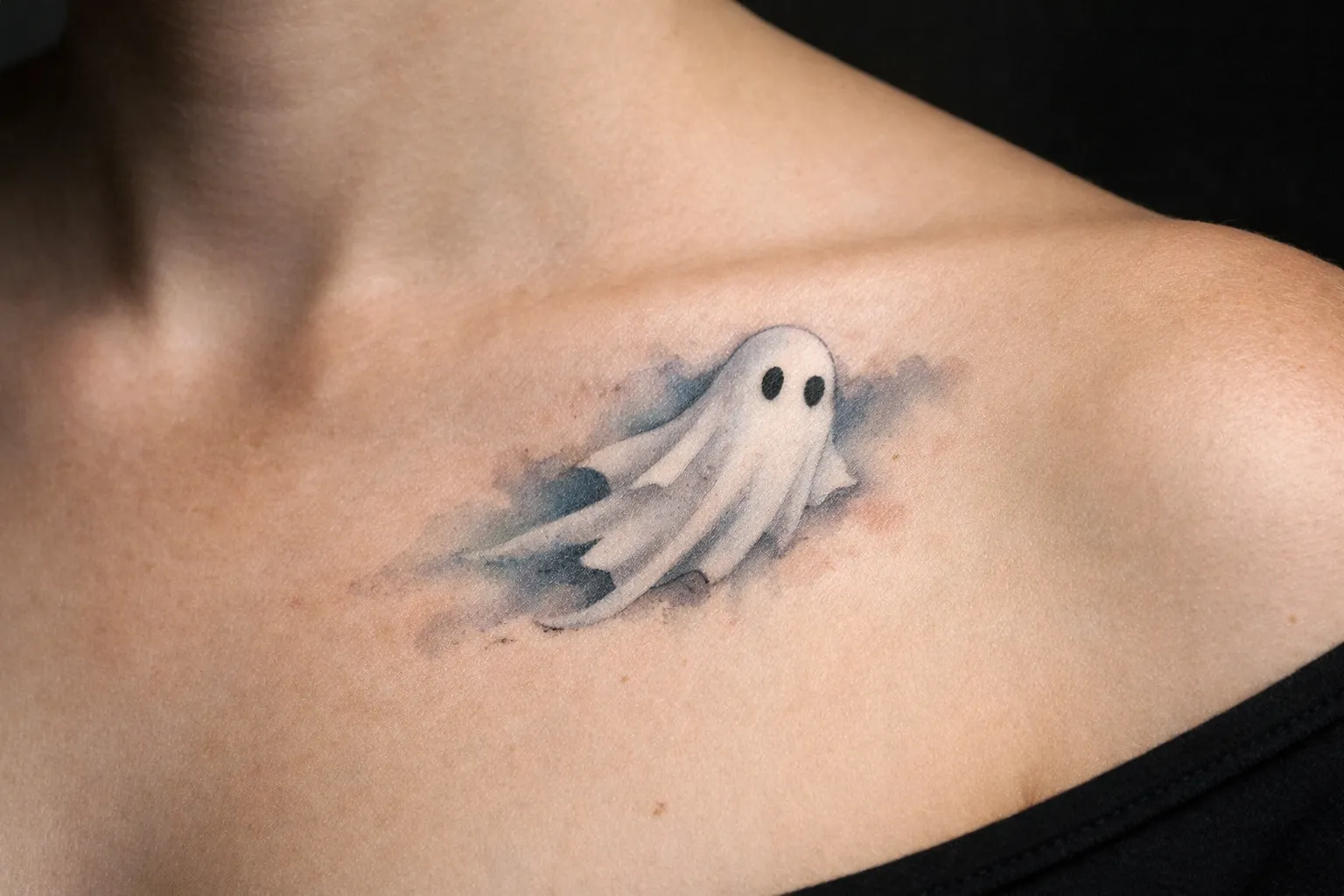
Best placements for a small ghost, ranked roughly by longevity:
- Inner forearm - minimal sun exposure if you wear sleeves often, low friction, heals clean
- Outer upper arm - good for slightly larger small ghosts (1.5-2”)
- Calf - ages well, low pain
- Behind the ear - visually fun but harder to see the healed result yourself
- Ankle - fine, but watch for shoe friction during healing
- Wrist (inner) - popular but more sun exposure than the forearm
- Side of the finger / hand - looks great fresh, blurs within a year
Pain on these spots is mild relative to ribcage, sternum, or inner bicep work. If your only reference point is “does it hurt,” a small ghost on the forearm sits at the low end of the scale.
Time in the chair for a small simple ghost: 15-45 minutes of actual machine time, with a total studio visit of 30-90 minutes once paperwork, stencil, and aftercare instructions are factored in.
What a Ghost Piece Costs in 2026
Price ranges in the US, current as of 2026:
- Shop minimum (covers setup, sterile supplies, artist time even for a 15-minute tattoo): $80-$150 in most cities, higher in NYC, LA, and SF where $150-$200 minimums are normal
- Simple black-ink ghost under 2 inches: $80-$180
- Cute ghost with light color or shading: $150-$300
- Vintage cartoon ghost with full color, 3-5 inches: $250-$500
- Multi-ghost narrative piece (dinner table scene, bungee jumping, etc.) at 4-6 inches: $400-$800
Other costs to plan for:
- Tip: 15-25% in the US and Canada
- Numbing cream (if your artist allows it): $10-$25
- Aftercare supplies: $10-$30 for a fragrance-free cleanser and lotion
- Touch-ups: often free within 3-12 months of the original session; after that, $50-$150 depending on the artist
Temporary ghost tattoo sheets are a separate market - Etsy lists hundreds of options, most under $15 per pack of 5-30 designs (1). Useful for testing a placement before committing.
Themed Concepts for Ghost Pieces Worth Stealing
These are the concepts driving the most engagement on Pinterest and PopSugar’s ghost roundups, and most of them aren’t covered in older guides.
Coffee Ghost Tattoo
A sheet ghost holding, drinking, or emerging from a coffee cup. Symbolism is flexible: caffeine dependency, late-night work, a cozy spooky vibe, or marking a specific period like grad school or a job. Pair with small text - a date, a single word like “always brewing” - only if your artist can do clean small-text work. Sloppy text is the fastest way to ruin a clean ghost. Recommended size: 2-3 inches on the inner forearm.
”E.T.” Matching Ghost Tattoo
Two ghosts reaching toward each other, mirroring the E.T. finger-touch scene. Each friend gets one ghost. Best on the inner forearm or back of the hand so that when you put your arms together, the ghosts almost touch. The composition only works if both tattoos are done by the same artist with the same line weight - this is not a “get it at different studios” situation.
Dinner Table Ghost Tattoo
A miniature scene: two or three ghosts seated at a small table. Common symbolism is family, found family, or a specific friend group. The pitfall here is sizing - anyone doing a dinner table scene under 2.5 inches is asking for muddy lines within five years. Minimum recommended size: 3 inches, ideally 4. Forearm or upper outer thigh.
Hand Matching Ghost Tattoos
Mirrored ghosts on the outer hands or sides of the index fingers, visible when hands come together. Honest disclosure: hand tattoos blur. The skin regenerates aggressively and you’re using and washing your hands constantly. Plan on touch-ups every 1-3 years. If that maintenance cycle doesn’t appeal to you, put the matching ghosts on the inner wrists instead.
Bungee Jumping Ghost Tattoo
A ghost mid-jump with a bungee cord, often used to mark a real leap - a bungee jump, a skydive, a career change. The cord is the design element that needs to be clean; a wobbly cord ruins the whole thing. Best at 3-4 inches on the outer calf or upper arm where the vertical composition has room to work.
Vintage Cartoon Ghost Tattoo
Based on 1930s-1950s “rubber hose” animation: thick black outlines, white gloves, oversized eyes, exaggerated motion lines (2). This style is having a real moment alongside the broader retro-animation tattoo trend. Bring reference images from actual 1930s-40s cartoons and ask your artist to design something inspired by the era, not a direct copy of a copyrighted character. Size: 3-5 inches minimum - the style relies on bold linework and motion, and it won’t read at small scale.
Best Friend Ghost Tattoo
Two complementary ghosts that tell a story together: one holding a book, one holding a coffee. One with headphones, one with a microphone. The key is asymmetry - identical matching ghosts read as less personal than complementary pairs. Wrists, ankles, or upper arms are the standard placements.
Ghost Face and Ghost Rider Tattoos
Two larger compositions worth separating out from the cute and simple work above.
Ghost Rider is the comic-book skeletal biker, usually rendered in black and grey with heavy flame work. This is not a small tattoo. The fire detail, the chain work, and the chrome reflections need 6+ inches of real estate, usually on the upper arm, shoulder, or back. Budget realistically: $500-$1,500 depending on artist and session length, often across two sittings. See more about the Grim Reaper Tattoo: Meaning, Designs, Size, Aging.
Ghost face tattoos - the expressionless mask from horror iconography - work in a different register entirely. These often pair with a horror sleeve or a black-and-grey realism piece. If you want this to look like the mask rather than a smudge, you need an artist with a strong realism portfolio, not a flash artist. Look at healed work, not fresh photos.
Cartridge Needles and Why They Matter for Small Ghosts
Most modern studios now use disposable cartridge needle systems - single-use needle units that snap into the machine and get thrown out after each client. This matters more for ghost tattoos than people realize.
A good cartridge setup lets an artist swap between a tight liner (for the ghost outline) and a soft shader (for any cheek blush or background) in under thirty seconds. For a small piece, that speed difference is real - it’s the difference between a 25-minute session and a 50-minute session.
More importantly, single-use cartridges cut contamination risk to near zero compared to older reusable needle bars. If you have any condition that affects immunity or healing, this should be non-negotiable when choosing a studio. Ask directly: “Do you use single-use cartridges, and can I see the package opened in front of me?” Any reputable artist will say yes without hesitation.
Aftercare Timeline
The design doesn’t matter - the healing process is the same. Where you’ll see ghost-specific issues is on small detail work that didn’t have the line weight to survive the healing scab.
Day 1-3: Keep the artist’s wrap or second-skin bandage on for the time they specified (usually 2-24 hours for plastic wrap, up to 5 days for second-skin). Wash gently with a fragrance-free cleanser twice a day. Pat dry. No lotion yet if you’re using second-skin.
Week 1: The tattoo will scab lightly and itch. Apply a thin layer of fragrance-free moisturizer 2-3 times daily. Do not pick. Do not soak. No pools, hot tubs, ocean, baths - showers only.
Week 2-4: Scabs flake off. The tattoo may look cloudy or faded - this is normal, it’s a layer of dead skin over the ink. Keep moisturizing. Still no sun exposure, still no submerging.
Week 4-6: Surface healing is done; deeper healing finishes around week 6. Now you can swim, soak, and judge whether the tattoo needs a touch-up. Most artists offer one free touch-up within the first 3-12 months.
Forever after: Sun-protective clothing or sunscreen on the tattoo. UV is the single biggest factor in long-term fading. A ghost tattoo on a sun-exposed wrist will fade twice as fast as the same tattoo on an inner forearm.
For more on sensitive skin and aftercare, see Tattoo for Sensitive Skin: Ink, Numbing, Aftercare.
Basic Mistakes to Avoid with Ghost Designs
The “basic tattoos to avoid” question gets asked constantly, and most lists are generic. Here’s what specifically goes wrong with ghost tattoos:
- Partner names inside the ghost. Don’t. The ghost will outlast the relationship most of the time, and ghost-with-name-banner is the single most common cover-up request I see.
- Tiny dinner-table or bungee-jumping scenes. Multi-element ghost compositions under 2.5 inches blur within 5 years. Either commit to size or simplify the design.
- Hairline single-needle work on fingers. Looks gorgeous at week one. Looks like a smudge at month eighteen.
- Direct copies of copyrighted cartoon characters. Casper, the Ghostbusters logo, branded mascots - most reputable artists will refuse, and you don’t want a cease-and-desist over a forearm tattoo. Ask for an inspired-by design instead.
- Unlicensed or home studios. The risk profile - hepatitis, staph, MRSA, allergic reactions to unknown inks - is not worth the savings. Always check that your studio has a visible health permit, uses single-use cartridge needles, and changes ink caps between clients.
Final Notes Before You Book
Pick the design for the right reasons - meaning, aesthetic, or both - but pick the placement and size for longevity. A simple ghost at 1.5 inches on the inner forearm will outlast almost any other configuration. The cute pastel cheek dots will fade before the linework does, so commit to either solid black or accept the touch-up cycle.
Find an artist whose healed work - not their fresh photos - matches the style you want. Confirm single-use cartridges, visible health permits, and a clean studio. If you have any condition that affects healing, talk to your doctor before you book.
And if it’s your first tattoo: a small ghost is one of the better choices you can make. Low pain relative to the ribcage or sternum, fast session, clean design, holds up well. Start there, see how you heal, and decide later if you want the dinner-table scene on your thigh.