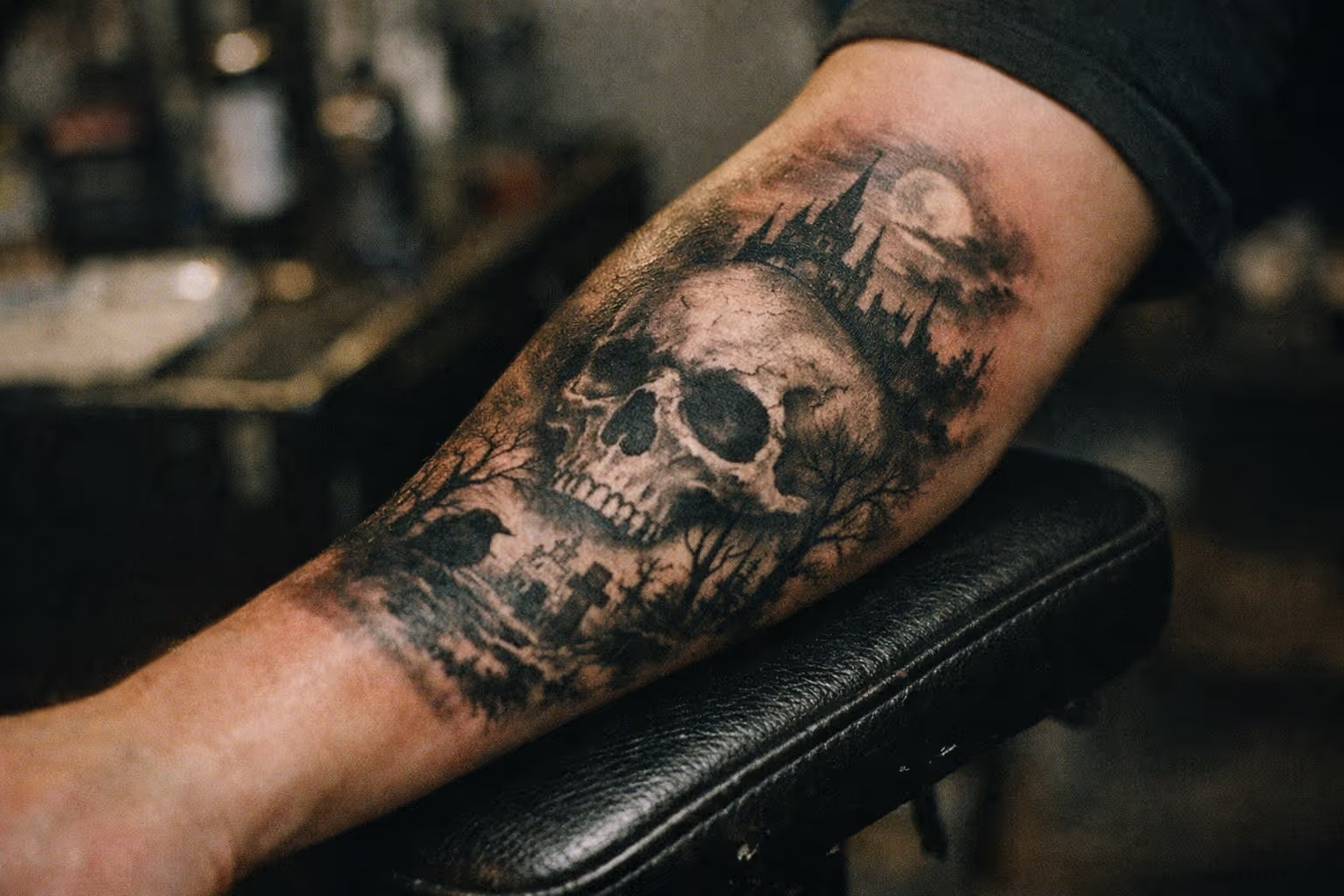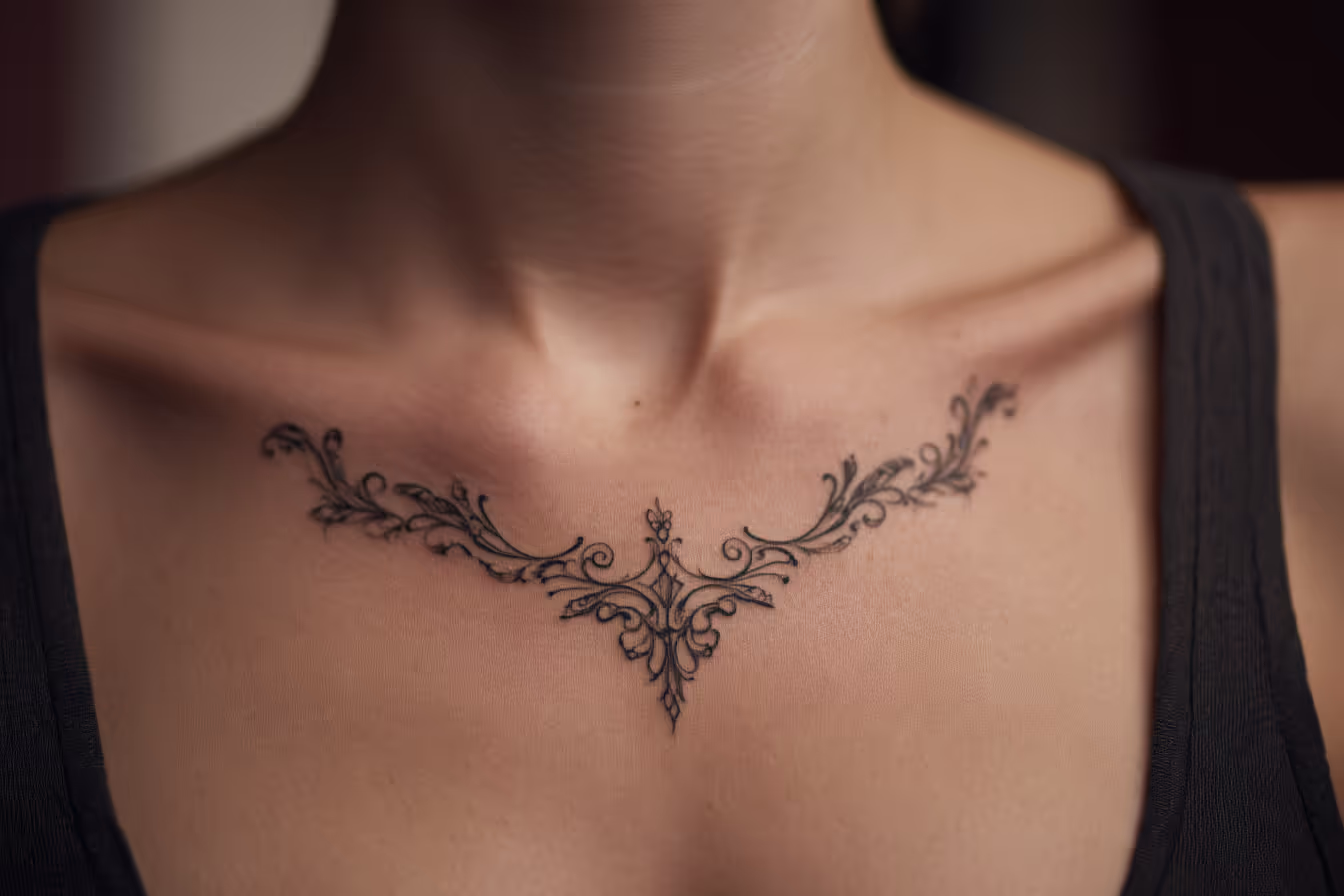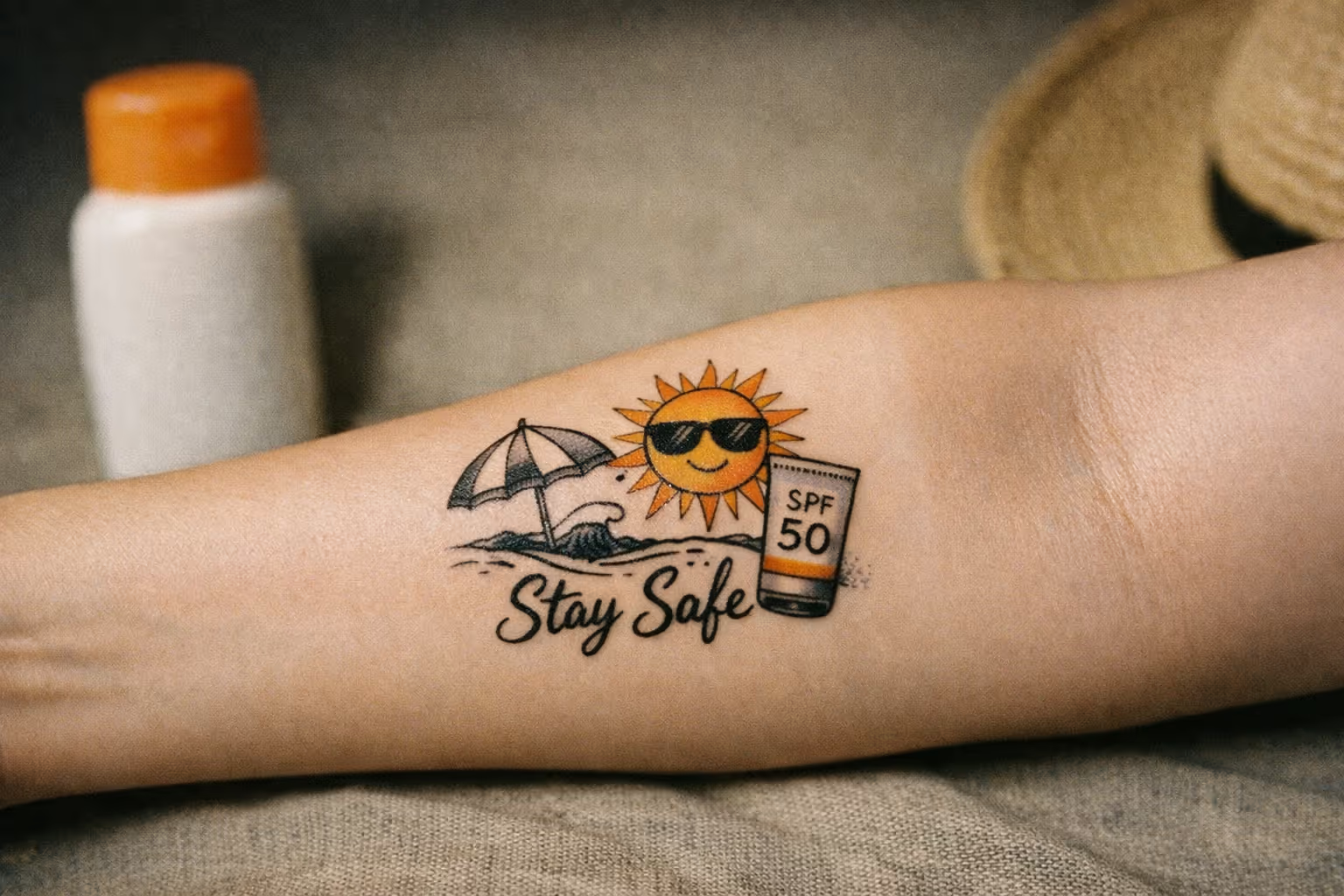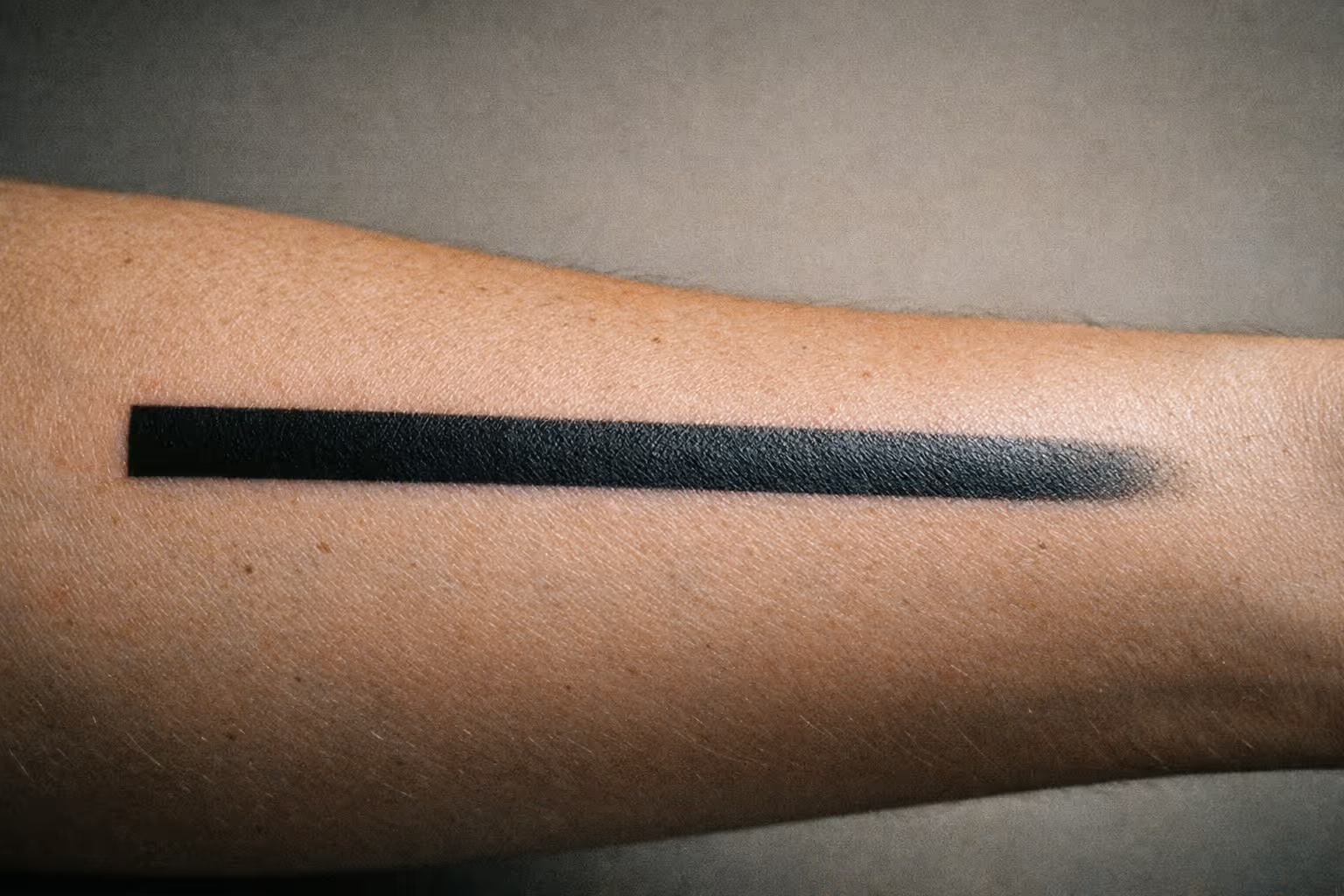
If you have reactive skin, the real question with a tattoo for sensitive skin isn’t whether you can get one - you usually can - it’s how much longer it takes. Typical skin resurfaces in about two weeks; sensitive skin often needs three to six, which quietly raises the stakes on every choice: the ink, the artist, the aftercare. Skip a step and reactive skin punishes it harder. Here’s how to do it safely, starting with a patch test.
Getting a Tattoo for Sensitive Skin: What to Know
Yes - most people with sensitive skin can get tattooed safely with the right prep, product choices, and artist (3)(7). What changes is the margin for error.
Sensitive-skin clients report more redness, swelling, and longer healing windows. Where average skin closes the top layer in 10-14 days, reactive skin often needs 3 to 6 weeks for full surface healing. Reactions described as “common but manageable” become risky only when you ignore them - applying the wrong ointment over an emerging rash, sitting through a 6-hour session when your skin is screaming after hour two, or skipping a patch test on a pigment you’ve never been exposed to.
The honest answer: if your skin reacts to fragranced lotion and cheap jewelry, it will likely react to something in the tattoo process. The job is figuring out what, before the needle goes in.
I’ve had clients come in convinced their sensitivity was mild, only to find out mid-session that the ink’s preservative was the culprit. That’s a bad place to make that discovery.
Tattooing Over a Skin Condition: What You Should Consider
This depends on the condition, the location, and how active it is. Dermatologists generally want clearance before you tattoo over rosacea, psoriasis, eczema, discoid lupus, vitiligo, or lichen planus (6).
Generally avoid tattooing directly over:
- Active eczema or psoriasis plaques
- Open, crusted, or weeping skin
- Sunburned or recently inflamed areas
- Vitiligo patches (trauma can spread depigmentation)
- Discoid lupus lesions (sun- and trauma-sensitive)
Sometimes possible after derm clearance:
- Well-controlled, quiescent eczema or psoriasis
- Mature, flat scar tissue
- Stable rosacea that doesn’t involve the tattoo site
A useful concept here is the Koebner phenomenon - psoriasis, vitiligo, and lichen planus can produce new lesions at trauma sites, including tattoo lines, months or years later. That’s not a hypothetical. It’s the reason rheumatology and dermatology clinics ask about tattoos when these conditions flare in odd patterns.
If your condition flares seasonally or with stress, book during your most stable window - not a week before a wedding or finals (1)(4).
Eczema specifically
Get the condition in remission first. Tattooing during an active flare invites infection, blowouts (ink spreading under the skin because the dermis is compromised), and patchy healing. Once you’re clear, choose placement that avoids your typical flare zones - for many people, that means the outer forearm or calf, not the inner elbow crease or behind the knee.
Psoriasis specifically
Same logic, but with added urgency around the Koebner risk. Plaques on the elbows, knees, or scalp are common triggers for new lesions at unrelated tattoo sites. A dermatologist familiar with your case can tell you whether your subtype is high-risk.
Lupus specifically
Discoid and systemic lupus are flagged in dermatology guidance as conditions that may rule out tattooing entirely during active disease or while on high-dose immunosuppressants. UV-exposed placements - forearms, upper chest, shoulders - are higher risk because lupus skin is already photosensitive. If you’re cleared, choose covered placements and time it during remission.
How Artists Should Adjust Technique for Reactive Skin
Yes - and a good artist will adjust without being asked. The hallmarks of a sensitive-skin-friendly approach (2):
- Smaller needle groupings. Single needles or small liners and shaders cause less trauma than large mags.
- Fewer passes per area. Two or three passes max over the same spot. Overworking is what produces blowouts and prolonged healing.
- Lower machine voltage and a lighter hand to avoid tearing the dermis.
- Frequent, gentle wiping with non-scented, alcohol-free solution rather than harsh disinfectants.
- Shorter sessions, 1-3 hours, instead of marathon 6-hour sittings.
- More lubricant during the session to reduce friction burn.
For larger pieces, the work gets split. A sleeve or portrait that another client might knock out in two sessions becomes three or four for sensitive skin, with 3-4 weeks of healing between each. Total cost typically rises 10-30% because of the extra chair time.
Placement matters too. The inner arm, neck, ribs, and groin sit on thinner, more reactive skin. If you have choices, the outer arm, calf, upper back, and outer thigh are kinder - thicker skin, less friction from clothing, and generally less pain. Ribcage is significantly more painful than forearm, and on reactive skin that added stress compounds the healing challenge.
I ask new clients with reactive skin to book a 90-minute session first, regardless of the piece size. It tells me a lot about how their skin responds before we commit to anything longer.
Choosing the Best Tattoo Ink for Sensitive Skin: What to Know
There is no single best tattoo ink for sensitive skin, but there are filters worth applying.
What to look for:
- Hypoallergenic, vegan, heavy-metal-reduced formulations. Many modern brands are reformulating in response to EU REACH restrictions on certain pigments and preservatives, which has incidentally raised the floor on ink quality (2).
- Ingredient sheets and SDS available on request. A studio that can’t or won’t share what’s in the bottle is a no.
- EU REACH-compliant inks, even outside Europe, tend to have stricter purity standards.
What to avoid or limit:
- Red and yellow pigments account for the majority of pigment allergies. Reds historically contained cinnabar (mercury sulfide); modern reds use azo dyes, which are less toxic but still the most common allergen.
- Unlabeled inks or off-brand bottles with no ingredient disclosure.
- Any color family that has caused you problems before - if red hair dye gives you a rash, red ink probably will too.
If you can plan your design around a limited palette - black-and-grey, single accent color, or fine-line work - you reduce your allergy surface area dramatically. This isn’t about giving up color forever; it’s about not committing to a full-color back piece before you know how your skin handles a 2-inch test swatch.
Expect hypoallergenic or premium ink lines to add roughly $20-$60 to a medium session.
Understanding Allergies Related to Tattoos
Yes, though true ink allergy is described as rare but possible (5). The reaction can be immediate (within hours) or delayed (weeks to months), and it can be to:
- A specific pigment (most often red, then yellow, then green and blue)
- A preservative or carrier in the ink
- The numbing cream
- The aftercare product
- The bandage adhesive
Cross-reactivity is the sneaky part. If you’ve reacted to nickel jewelry, hair dye, or certain cosmetics, your odds of reacting to related compounds in ink are higher (6). Tell your artist about every contact allergy you know of, not just the dramatic ones.
A patch test is the cheapest insurance you can buy. Ask the artist to place a small dot or short line of each intended ink color in a discreet spot, plus a swatch of numbing cream and the aftercare ointment if you’re using new products. Wait at least 7-14 days and watch for delayed reactions before committing to the main piece (3).
How to Spot Signs of a Reaction to a New Tattoo
Normal healing and a brewing reaction can look similar in the first 72 hours. Here’s how to tell them apart.
Normal (days 1-7):
- Mild redness around the lines
- Clear or slightly cloudy plasma weeping for 1-2 days
- Light swelling that decreases daily
- Itching starting around day 3-5
- Light flaking or peeling by day 5-7
Concerning - call your artist or doctor:
- Redness expanding outward after day 3
- Pain increasing instead of decreasing
- Yellow or green pus
- Thick crusting or weeping past day 4
- Persistent burning sensation
- Bumps or hives appearing in or around the tattoo
- A rash that follows specific ink colors
Emergency - go to urgent care or ER:
- Swelling around the eyes or face
- Trouble breathing or swallowing
- Widespread hives
- Red streaking radiating from the tattoo
- Fever above 101°F
Take daily photos for the first 10-14 days. Patterns are easier to see in pictures than in the mirror, and your dermatologist will want them if something goes sideways (1). If you’re unsure whether what you’re seeing is normal, reviewing the signs of an infected tattoo can help you decide whether to wait or seek care.
I tell every reactive-skin client the same thing before they leave the studio: photograph it in the same light, same angle, every morning. You won’t notice gradual changes day-to-day, but the difference between day 2 and day 6 will be obvious in a photo.
Picking and Applying Numbing Cream When Your Skin Reacts to Everything
A tattoo numbing cream for sensitive skin should do one job - numb - with as few extra ingredients as possible.
What to look for:
- Lidocaine 4-5% as the active anesthetic
- Fragrance-free
- Paraben-free
- Minimal preservatives
- No menthol or “cooling” botanicals
- No essential oils (3)
How to use it:
- Apply a thin layer 30-60 minutes before the session, ideally under a piece of plastic wrap to drive absorption
- Wipe clean before the artist preps the skin
- Patch test it 24-48 hours before the appointment on a small area of the same body region
Numbing cream isn’t a substitute for short sessions. It wears off, and the deeper layers it doesn’t reach are exactly where the needle works. On the ribcage-to-forearm pain scale, numbing helps most on the lower-pain placements. It barely takes the edge off ribs or sternum.
Health Conditions: Lupus
This one keeps surfacing, which means a lot of readers are showing up with lupus on the table.
Can people with lupus get tattoos?
Sometimes, but dermatology guidance flags lupus specifically as a condition to clear with your specialist (6). Considerations:
- Active discoid or systemic lupus is generally a no
- High-dose immunosuppressants raise infection risk and may delay healing significantly
- UV-exposed placements (forearms, chest, shoulders) are higher risk because lupus skin is photosensitive
- Tattoos may trigger new discoid lesions at trauma sites in susceptible patients
If your rheumatologist clears you, time it during remission, choose a covered placement, and commit to lifelong SPF 30-50 on the area.
Get Ready For Your Tattoo: Pre-Appointment Checklist
For sensitive skin, the two weeks before the appointment do more work than you’d think.
Pre-Appointment Checklist for Sensitive Skin Tattoos
2 weeksSteps to prepare your skin and body for a tattoo session when you have sensitive skin.
- 1
Two weeks before
Switch to fragrance-free cleanser and bland moisturizer twice daily on the tattoo area. Hydrate with 8-10 glasses of water daily. Stop retinoids, AHAs, BHAs, and physical scrubs. Photograph the area for baseline.
- 2
One week before
Avoid sunburn and tanning beds. Do not introduce new skincare products near the site. Confirm patch-test results with your artist. Prioritize sleep.
- 3
24 hours before
Avoid alcohol and NSAIDs unless prescribed. Eat a real meal and bring snacks for sessions over 90 minutes. Wear loose, soft, clean clothing that won't rub the tattoo area.
- 4
Bring to appointment
Medication list including supplements, specialist clearance notes, and your own fragrance-free aftercare products if patch-tested.
Aftercare That Won’t Wreck a Reactive Tattoo
Standard aftercare advice fails on reactive skin. Heavy petrolatum, scented “tattoo balms,” and over-washing all show up as triggers (4).
Days 1-3:
- Keep the bandage on as your artist directs (usually 4-24 hours for traditional wrap, up to 3-5 days for breathable film)
- Wash 2-3 times daily with lukewarm water and a fragrance-free cleanser (5)(6)
- Pat dry with a clean paper towel - no shared bath towels
- Apply a very thin layer of fragrance-free, non-comedogenic moisturizer. Shiny or greasy means too much
- Expect mild redness, light swelling, and clear plasma weeping
Week 1:
- Continue washing 2-3 times a day, moisturizing in thin layers 3-4 times a day
- No swimming, hot tubs, saunas, or long baths
- Sleep in clean cotton sheets; loose clothing only
- Itching usually starts around day 3-5 - do not scratch or pick
Weeks 2-4:
- Flaking and light peeling are normal; let it shed on its own. Understanding the peeling tattoo stages can help you distinguish normal shedding from something that needs attention.
- Continue fragrance-free moisturizer once or twice daily
- Avoid direct sun on the healing tattoo
- Sensitive skin often takes the full 3-6 weeks to fully resurface
Long term:
- Once fully healed, daily SPF 30-50 broad-spectrum sunscreen on the tattoo. UV fades ink and triggers flares in rosacea and lupus
- Keep up the fragrance-free routine on the area indefinitely if you’re prone to contact dermatitis
Product categories to look for (not specific brands):
- Fragrance-free liquid cleanser ($8-$15)
- Non-comedogenic, fragrance-free lotion ($10-$18). A fragrance free lotion for tattoo aftercare is one of the simplest ways to protect reactive skin during healing.
- Hypoallergenic breathable film bandage ($10-$25 per pack)
What to avoid:
- Anything scented, even “lightly”
- Thick petrolatum-only ointments on acne-prone or sensitive skin (5)
- Essential-oil “natural” balms
- Antibacterial ointments unless prescribed
The “natural” balm category catches people off guard. Lavender, tea tree, calendula - all common sensitizers. If the label reads like a botanical garden, put it back.
Why Portraits Are the Hardest Ask for Reactive Skin
Portraits demand fine shading, smooth gradients, and color saturation - exactly the work that overworks reactive skin. The solution is splitting the work across sessions.
A typical sensitive-skin portrait plan:
- Session 1 (2-3 hours): Linework and basic structure only. Heal for 3-4 weeks.
- Session 2 (2-3 hours): First shading pass, foundational tones. Heal for 3-4 weeks.
- Session 3 (2-3 hours): Detail shading and color, if any. Heal fully.
- Touch-up (optional): 2-3 months after the final session, once the skin has settled.
Black-and-grey portraits age more reliably on reactive skin than color portraits, partly because there are fewer allergenic pigments and partly because micro-blowouts are less visible in monochrome shading. If realism matters more than color, lean black-and-grey.
Expect total cost to land in the $1,000-$3,000+ range for a sensitive-skin portrait with a specialist artist, mostly because of the additional chair time.
Frequently Asked Questions
- Can you get a tattoo if your skin is sensitive?
- Yes, most people with sensitive skin can get tattoos with proper precautions: patch testing, hypoallergenic ink, fragrance-free aftercare, and an artist who adjusts technique for reactive skin (3)(7). Expect longer healing - often 3-6 weeks instead of the standard 2 weeks.
- Can people with lupus get tattoos?
- Sometimes, with rheumatologist clearance. Active discoid or systemic lupus, high-dose immunosuppressants, and sun-exposed placements all argue against it. Tattoos can also trigger new discoid lesions at trauma sites in susceptible patients. If cleared, time it during remission and choose a covered placement.
- Can you be allergic to tattoo ink?
- Yes, though true ink allergy is rare (5). Red and yellow pigments cause the most reactions. You can also react to preservatives, numbing cream, aftercare products, or bandage adhesive. Patch test if you have known contact allergies.
- How long do tattoos take to heal on sensitive skin?
- The surface usually resurfaces in 3-6 weeks for sensitive skin, versus 10-14 days (about 2 weeks) for average skin. Full dermal healing takes 2-3 months regardless of skin type.
- Is numbing cream safe for sensitive skin?
- Lidocaine 4-5% in a fragrance-free, paraben-free base is generally well tolerated (3). Patch test 24-48 hours before the session. Avoid products with menthol, essential oils, or "cooling" botanicals.
- What ink is best for sensitive skin?
- Hypoallergenic, vegan, heavy-metal-reduced inks with full ingredient disclosure. Limited palettes - black-and-grey or one accent color - reduce allergen exposure compared to full-color work. Avoid pigment families you've reacted to in cosmetics or hair dye (6).