The fastest way to fade a tattoo isn’t a beach day - it’s the sun you don’t think about: the UVA coming through your car window on the commute, every day, for years. That steady, invisible exposure does more cumulative damage than the occasional burn, and what shields the ink changes as you heal. Here’s how sun protection for tattoo works by healing stage, from fresh to fully settled, plus the UPF options worth owning.
Why Sun Protection for Tattoo Is Crucial to Prevent Ink Fading
Sun protection for tattoo is essential because tattoo ink resides in the dermis, the layer beneath the epidermis. UVA radiation (320-400 nm) penetrates deeply enough to reach those pigment particles and break them down over time. UVB (280-320 nm) burns the surface and triggers the skin damage you can feel the next day. Both contribute to fading, but UVA is the bigger long-term threat to pigment.
What that looks like on real skin:
- Reds, yellows, and pastels dull first - often visibly after one or two summers of unprotected exposure.
- Black and grey can blur and shift toward a muddy blue-green over years of chronic UV.
- Fine line work loses crispness as the surrounding skin ages and the ink particles disperse.
MD Anderson, a cancer center that publishes on this directly, also flags a separate issue: tattoos do not protect against skin cancer, and dark ink can make it harder to spot moles or early melanoma changes. Sun protection for a tattoo is skin protection first, ink preservation second.
How Long to Keep a New Tattoo Out of Direct Sunlight
A new tattoo is an open wound. The epidermis usually closes in 10-14 days, but full barrier recovery - when the skin is genuinely back to baseline - takes 4-6 weeks. During that window, direct sun is one of the worst things you can do to it. UV slows healing, can bleach pigment before it settles, and increases scarring risk on a still-inflamed surface.
The rule most tattooers give:
- Day 1-3: wound care only - clean, moisturized, covered per your artist’s instructions. No sun, no sunscreen.
- Week 1: still peeling and scabbing. Keep it covered with loose clothing. No sunscreen yet.
- Week 2-4: peeling finishes, skin looks shiny and new. Still avoid direct sun where possible. Sunscreen is OK only once all peeling and scabbing has fully stopped.
- Week 4+: treat it as healed for sun-protection purposes - daily SPF on exposed inked skin.
If you’re going to be outside during weeks 1-3 and can’t avoid it, the answer is fabric, not lotion. A loose cotton long-sleeve over a fresh arm piece is better than any SPF you can buy in that window.
What to Use to Protect Your Tattoo From Sun Exposure
There are three categories of tattoo sun protection, and the best routine usually combines two of them.
1. Sunscreen - broad-spectrum SPF 30-50, applied 15 minutes before exposure and reapplied every 2 hours. For healed tattoos only.
2. UPF clothing - long sleeves, UV shirts, or a dedicated tattoo sun protection sleeve rated UPF 30-50+. UPF 50 fabric blocks roughly 98% of UV and protects instantly with no reapplication (3).
3. Tattoo sun protection patch or film - sheets like Onyx Black Out UV Protected Film that act as a physical UV and infection barrier on a healing tattoo (2). This is the new-tattoo category.
For most people the practical answer is: SPF on healed tattoos for daily life, a UPF sleeve for long outdoor sessions, and a film or patch only during the first couple of weeks of a fresh piece if you genuinely can’t keep it covered with clothing.
Choosing the Best Sunscreen for Tattoo Sun Protection
What “best tattoo sun protection” actually means depends on whether you want vibrancy preservation, water resistance, or minimal skin reactivity. The non-negotiables:
- Broad-spectrum - covers both UVA and UVB. Without UVA coverage, you’re not protecting the pigment.
- SPF 30 minimum, SPF 50 if you burn easily or live somewhere with high UV. SPF 30 blocks roughly 97% of UVB, SPF 50 roughly 98%.
- Fragrance-free and low-irritant - fragrance and high alcohol content can sting healing or sensitive skin.
- Water-resistant (80 minutes) if you swim, sweat heavily, or work outside.
Mineral vs. Chemical Sunscreen for Tattoos
Mineral SPF uses zinc oxide and/or titanium dioxide to physically block UV. It tends to be less irritating, which matters on densely packed color work or recently-healed pieces. The trade-off is a possible white cast, especially on darker skin.
- Tattoo Goo Mineral Sunscreen SPF 30 - 100% mineral, broad-spectrum, formulated specifically for healed tattoos. Apply 15 minutes before sun, reapply every 2 hours or after swimming (1).
- Mad Rabbit SPF 30 - 100% mineral UVA/UVB protection, often sold bundled with their tattoo balm so you can moisturize on the same routine (4).
Chemical SPF uses filters like octocrylene that absorb UV. Usually more transparent, often more water-resistant, but more likely to sting on compromised skin.
- PhiShop Tattoo Sun Protection Cream 50 ml - uses octocrylene for water resistance, absorbs without a white cast (6). Better suited to fully healed skin and people who already know they tolerate chemical filters.
If your tattoo is heavily saturated, on sensitive skin, or recently healed, default to mineral. If you’re swimming or running outdoors and need something that stays on through sweat, chemical formulas like the PhiShop cream are practical - just patch test first.
Tattoo Sun Protection Sleeve and UPF Clothing Benefits
A tattoo sun protection sleeve is the lowest-effort, highest-coverage option for arm tattoos. UPF clothing is rated like SPF but for fabric: UPF 50+ means less than 2% of UV reaches the skin underneath, and that protection is constant - no reapplication, no missed spots, no chemical load (3).
I’ve seen clients with full sleeves who are diligent about sunscreen for beach days but completely ignore the two hours of forearm UV they’re getting through a car window every weekday. That’s where the slow fade actually happens.
When a UPF sleeve makes more sense than sunscreen:
- Long outdoor sessions - hiking, fishing, festivals, work in the sun. Reapplying SPF every two hours for eight hours is unrealistic; a sleeve solves it.
- Driving - UVA passes through car windows. A lightweight sleeve handles the commute without daily lotion.
- Recently healed tattoos - the skin is still settling; a sleeve gives you total UV avoidance without putting product on freshly recovered skin.
- Saving money on SPF - large arm or leg pieces burn through sunscreen fast. A $20-40 sleeve pays for itself in a season.
What to look for: UPF 50+ rating, polyamide/elastane blend for stretch, moisture-wicking if you sweat, and full coverage from shoulder to wrist (or thigh to ankle for leg pieces). Loose cotton works in a pinch but isn’t rated - assume something closer to UPF 5-10 for a thin cotton tee, much less when wet.
For torso tattoos, a UPF rash guard or long-sleeve UV shirt is the equivalent - same logic, different shape.
New Tattoo Sun Protection: Patches, Films, and Wraps for Healing Skin
New tattoo sun protection is its own problem because sunscreen is off the table. The categories that actually work in weeks 1-3:
Tattoo sun protection patch or film. Products like Onyx Black Out UV Protected Film are designed to do two jobs at once - block UV and act as a barrier against dirt and bacteria during healing (2). They’re typically used in sheets cut to size, applied over the fresh tattoo, and changed per the artist’s aftercare instructions. Useful if you have unavoidable outdoor exposure during the first two weeks. Not a free pass to sunbathe - they’re a damage-limitation tool, not a license.
Second-skin style adhesive dressings. Many artists send clients home with a transparent adhesive bandage worn for the first 3-5 days. These weren’t designed primarily for UV but provide a partial barrier. Follow the artist’s removal timing - leaving them on too long can trap fluid and cause irritation.
Loose cotton clothing. Still the most foolproof option for weeks 1-3 if you can manage it. Choose loose-fitting so the fabric doesn’t rub the healing skin, and dark colors block more UV than light ones (though they also absorb more heat).
What not to do on a fresh tattoo: regular sunscreen (irritation and infection risk), tanning oils, baby oil, or anything occlusive marketed for “tattoo aftercare” that isn’t specifically cleared for healing skin.
How Often to Reapply and How Much Sunscreen to Use
Even the best tattoo sun protection sunscreen only works if you use enough of it and reapply. Most people use about half the amount they should - I see this constantly, and it’s probably the single biggest gap between people who think they’re protecting their tattoo and people who actually are.
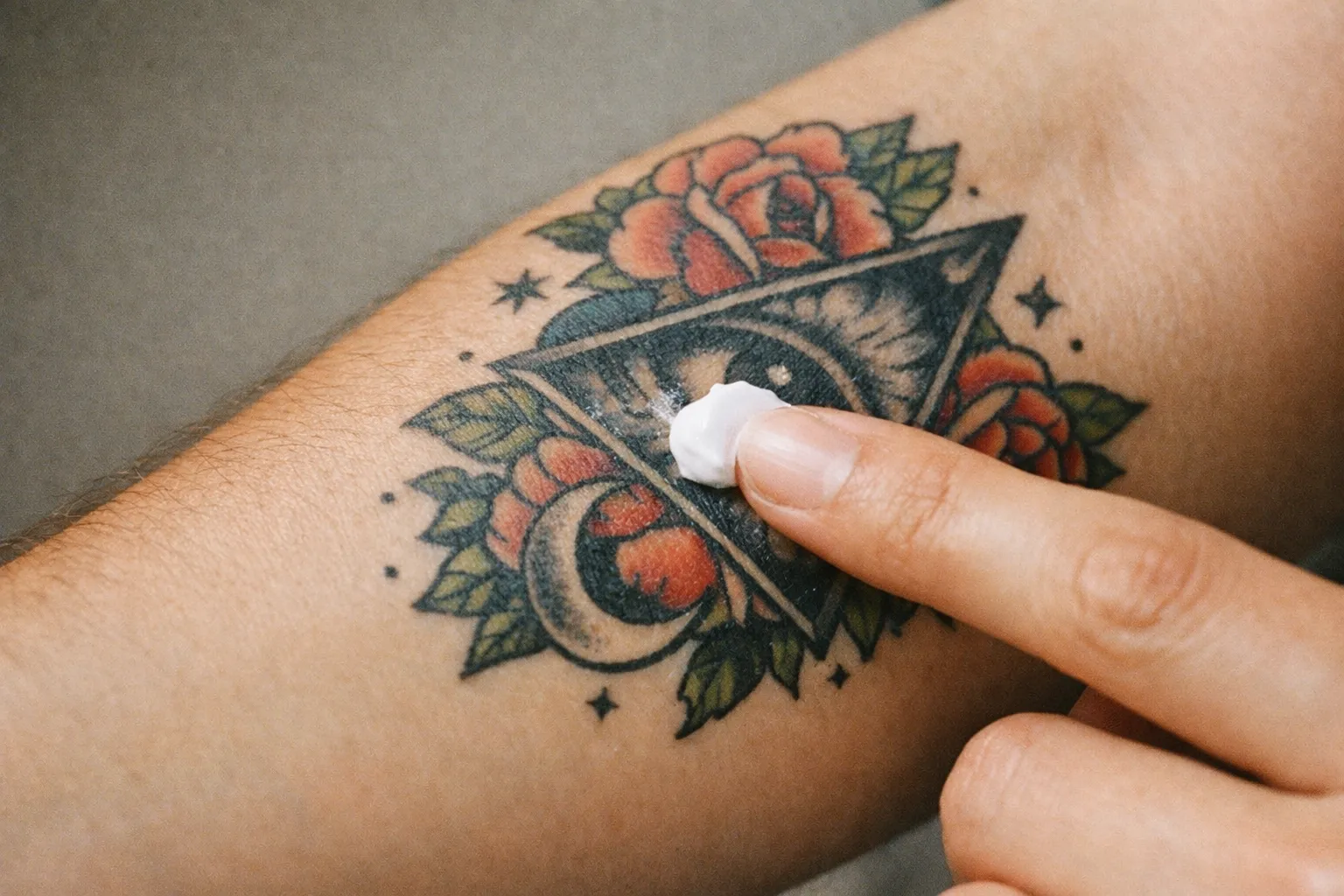
- Amount: roughly 1 teaspoon (5 ml) per arm and 2 teaspoons (10 ml) per leg.
- Timing: apply 15 minutes before going outside so the film has time to set (1).
- Reapplication: every 2 hours outdoors, and immediately after swimming, heavy sweating, or towel-drying (1).
- Coverage: the whole area, not just the inked parts. Patchy application creates patchy fading and odd tan lines around the tattoo edges.
For an all-day outdoor event, expect to reapply 2-4 times. A 3-4 oz bottle won’t last a full summer if you have a large piece on your arm or leg - budget for 1-2 bottles per summer of active sun exposure.
Sun Protection for Healed Tattoos: Maintaining Ink Vibrancy Long-Term
Once a tattoo is fully healed, sun protection shifts from healing-priority to preservation-priority. The goal is keeping the ink saturated and the lines sharp for as long as possible.
Daily habits that actually move the needle:
- SPF 30 every day on tattoos that get incidental sun - face, neck, hands, forearms. UVA penetrates car and office windows, so “I’m just driving to work” isn’t an exemption.
- SPF 50 plus UPF for outdoor days. Layer them. Sunscreen on exposed skin, sleeve or shirt over large pieces.
- Moisturize. Hydrated skin shows color more vividly. Use a fragrance-free moisturizer or a tattoo-specific balm - many brands like Mad Rabbit sell sunscreen and balm as a set for this reason (4).
- Check yearly. Compare your tattoo against a photo from a year ago. Visible fading means your sun protection routine isn’t working hard enough.
Touch-ups are an option if a tattoo has faded significantly, but prevention is cheaper than re-shading a full sleeve. A good tattoo sun protection routine extends touch-up intervals by years.
Tattoos and Skin Cancer
MD Anderson is clear that tattoos do not block UV and do not lower skin cancer risk (5). Dense ink can mask the early visual signs of melanoma - irregular borders, color changes - which is why dermatologists ask people with large tattoos to do regular skin checks and flag any mole that sits inside or near a tattoo for monitoring.
Common Mistakes That Fade Tattoos Fast
Things people do that visibly age a tattoo years before its time:
- Sunscreen on a fresh tattoo. Introduces irritation and infection risk, doesn’t help healing (2).
- One application, all day. SPF starts losing effectiveness after roughly 2 hours of sun, faster with sweat or water.
- SPF 15. Insufficient for ink preservation, especially for outdoor lifestyles.
- Skipping UVA coverage. Non-broad-spectrum sunscreen doesn’t protect the pigment.
- “My tattoo protects me from the sun.” It doesn’t - and the cancer risk on tattooed skin is the same as elsewhere (5).
- Ignoring window UV. UVA passes through glass. Daily commute exposure adds up.
- Tanning beds. Concentrated UV directly over your tattoo. Don’t.
✓ Pros
- Protects tattoo pigment and skin health long-term
- Multiple protection methods tailored to healing stage
- UPF clothing offers consistent coverage without reapplication
✗ Cons
- Sunscreen must be reapplied frequently to be effective
- Fresh tattoos require strict sun avoidance, limiting outdoor time
- Some sunscreens can irritate sensitive or healing skin
Protecting Your Ink Year-Round With Consistent Sun Protection for Tattoo Care
Treat sun protection for your tattoo as a year-round habit, not a beach-day afterthought. During the first 2-4 weeks, keep it covered with loose clothing or a UV-protective film - no sunscreen. After it’s fully healed, apply broad-spectrum SPF 30-50 daily on any exposed inked skin, reapply every two hours when you’re outside, and layer with a UPF sleeve or shirt for long outdoor days.
The tattoos that still look sharp at ten and fifteen years aren’t the ones with the most expensive ink. They’re the ones whose owners actually used sunscreen.
Frequently Asked Questions
- What can I use to protect my tattoo from sun?
- For a healed tattoo: broad-spectrum SPF 30-50, ideally mineral, applied 15 minutes before exposure and reapplied every 2 hours. Tattoo Goo Mineral SPF 30, Mad Rabbit SPF 30, or any quality drugstore mineral sunscreen works (4). For long outdoor sessions, add a UPF 50+ sleeve or shirt - it's more reliable than constantly reapplying sunscreen (3). For a new tattoo, skip sunscreen entirely and use loose clothing or a tattoo sun protection patch/film like Onyx Black Out (2).
- What kind of sunscreen is OK for tattoos?
- Broad-spectrum, SPF 30 or higher, fragrance-free, and water-resistant if you'll be sweating or swimming. Mineral filters (zinc oxide, titanium dioxide) are gentler on sensitive or recently healed skin. Chemical filters like octocrylene are more transparent and water-resistant but more likely to sting on compromised skin (6). Tattoo-specific formulas (Tattoo Goo, Mad Rabbit) are formulated for ink-covered skin, but a quality general mineral SPF works equally well (4).
- Can you get a sunburn through a tattoo?
- Yes. Tattoo ink provides no meaningful UV protection. You can burn through any tattoo, regardless of color or density.
- How long until I can put sunscreen on a new tattoo?
- Wait until all peeling and scabbing is completely done - typically 2-4 weeks. If skin still feels raised, shiny, or sensitive, give it another week. Until then, use clothing or a UV-protective film.
- Does the sun fade tattoos through windows?
- Yes. UVA penetrates glass and contributes to both fading and skin aging. If your tattoo is regularly exposed during driving or near a sunny window at work, apply daily SPF.
- What if my tattoo has already faded from sun exposure?
- Talk to your tattoo artist about a touch-up. Most healed pieces can be re-saturated effectively, though heavily sun-damaged tattoos sometimes need more than one session to restore. Going forward, daily SPF and UPF clothing during outdoor activity will protect the refreshed work - otherwise you'll be back in the chair in another few years.