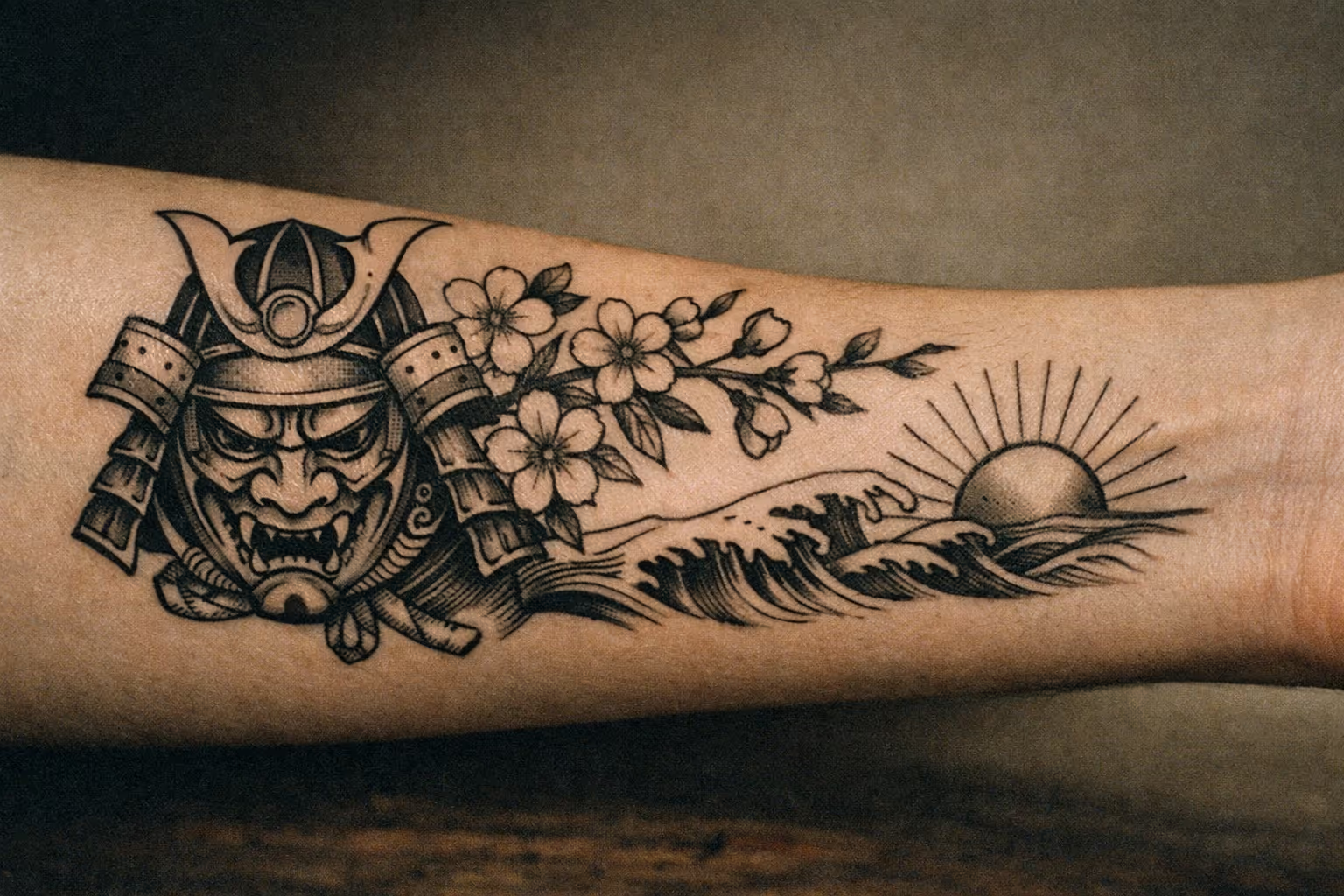
The part of the tattoo healing process nobody warns you about is the dull phase. Around weeks two to four, a fresh tattoo can look cloudy, matte, and faded - like the color is draining out - and it sends plenty of people into a panic. It isn’t ruined: that haze is a layer of new skin sitting over the ink while the deeper healing catches up, and it clears on its own. Knowing it’s coming is half the battle. Here’s the full timeline, stage by stage, and what’s normal at each.
How Long Does the Tattoo Healing Process Take
Understanding the tattoo healing process involves two key layers: surface healing and deeper structural healing. They run on very different timelines, which is why a tattoo can look finished weeks before it actually is.
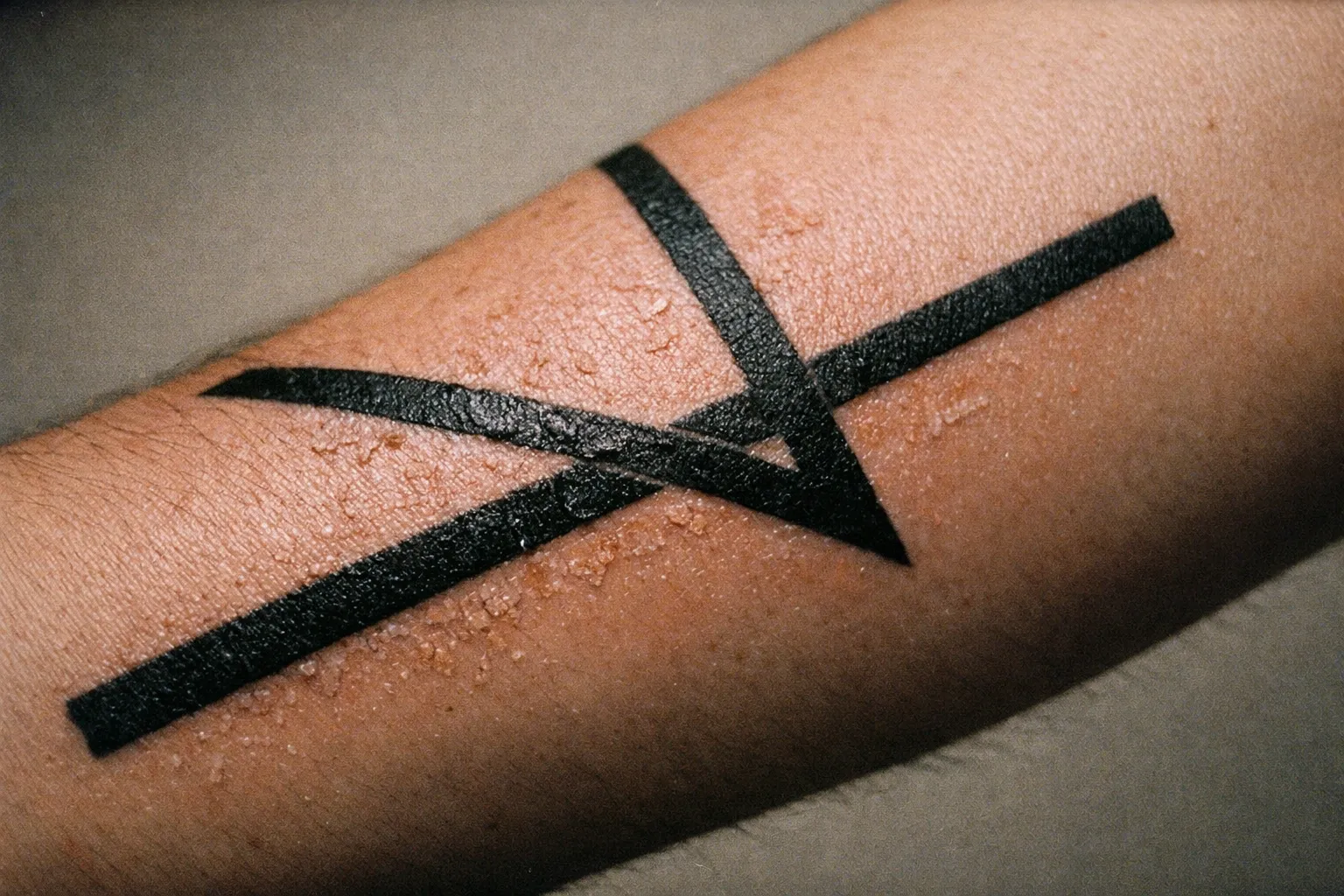
Surface healing: 2-3 weeks. By the end of week three, the tattoo looks finished to anyone but you. Peeling is done, scabs are gone, colors are no longer hiding under dull skin (2).
Full structural healing: up to 6 months (2). You won’t see this happening. The skin above the ink keeps thickening and clarifying, which is why a tattoo at week 8 often looks crisper than it did at week 4 - and why I always tell clients not to judge the final result until at least the two-month mark.
A practical tattoo healing time breakdown most shops use:
- Days 1-3: inflammation, oozing plasma, tenderness
- Days 4-14: itching and peeling
- Days 15-45: dull, dry, “milky” appearance that slowly resolves
- Months 2-6: invisible deep healing
Healing slows down if you smoke, run high blood sugar, sleep badly, or push hard workouts during week one. A bicep heals faster than a foot. A 2-inch piece heals faster than a half-sleeve. None of that is a moral judgment - it’s blood flow and trauma load.
Tattoo healing stages - day by day
Times are approximate. Healing isn’t a train schedule.
Day 0 - the session and the wrap
Your artist will use either plastic wrap (2-4 hours) or a medical adhesive film like Saniderm or SecondSkin (3-5 days). The tattoo is technically an open wound at this point. Plasma, blood, and excess ink will pool under the film - that’s normal, not infection.
Days 1-3 - inflammation and oozing
Redness extending about a centimeter past the linework. Warmth. Swelling that’s worse in the morning, especially on hands, feet, and ankles. Plasma weeps out and dries into a thin sticky film. Discomfort peaks here - a fresh tattoo feels like a moderate sunburn for the first 48-72 hours (3)(6).
What to do: wash 2-3 times a day with fragrance-free liquid soap, pat dry with a clean paper towel, apply a thin layer of fragrance-free lotion.
Days 4-7 - itching starts, light scabbing forms
The skin tightens. Tiny flakes appear at the edges. Itching kicks in - for some people this is the worst part of the whole tattoo healing process. Do not scratch. A clean, cool (not icy) compress for 5-10 minutes settles the itch without pulling ink.
Days 7-14 - tattoo peeling stages
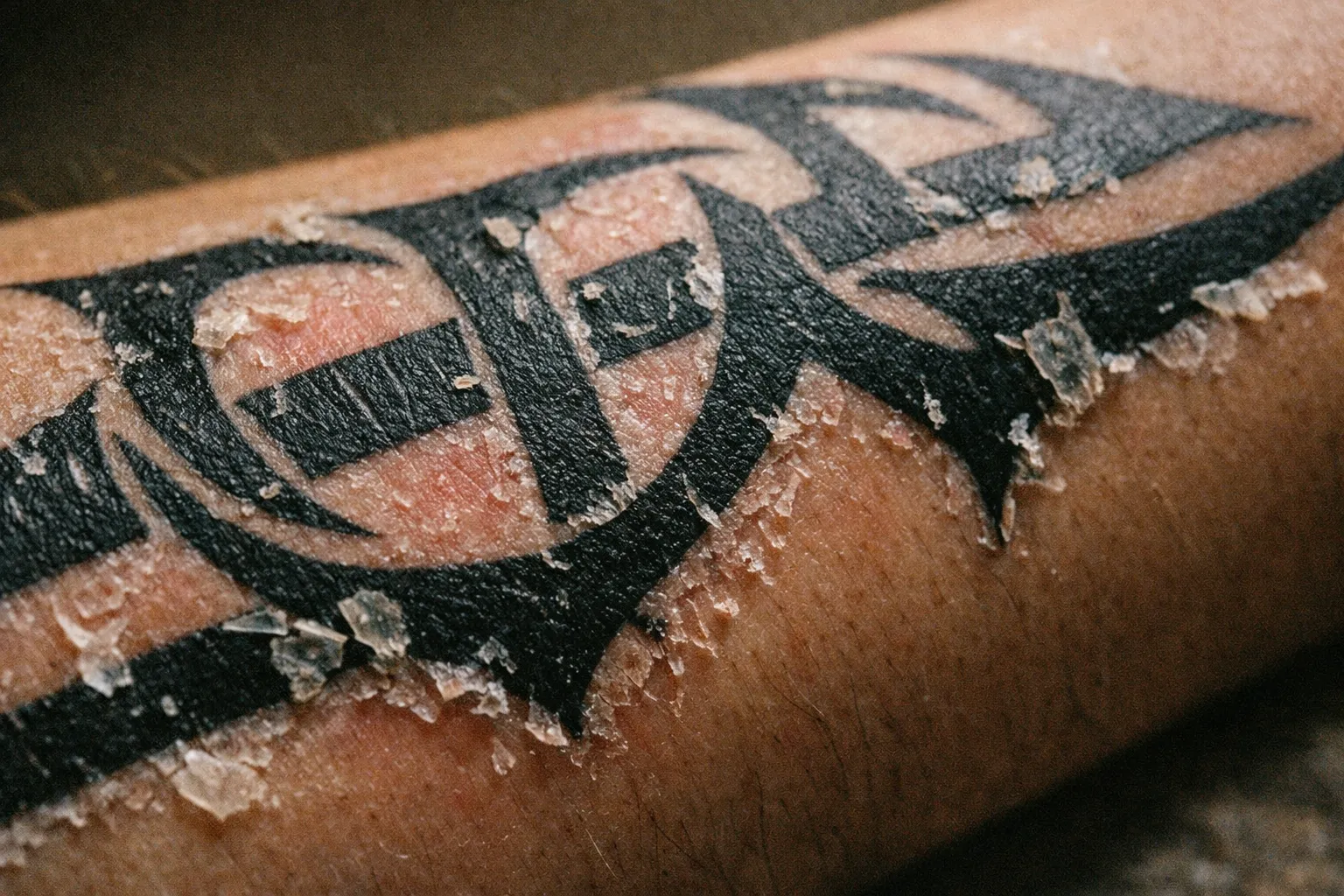
Peeling looks alarming the first time you see it. Sheets of thin, ink-tinted skin flake off - this is dead epidermis, not your tattoo falling out. The color underneath looks dull or hazy. That haze is a new layer of skin sitting on top of the ink. It clears (1)(2)(3). For a closer look at what that stage looks like, see the peeling-stage guide.
Tattoo peeling stages typically go:
- Light flaking around the edges (day 4-6)
- Sheet peeling across the whole piece (day 7-10)
- Patchy, fine flakes in densely shaded areas (day 10-14)
Heavily shaded or color-packed sections peel longer than thin linework. A single-needle script piece may finish peeling by day 7. A Japanese back panel can flake into week three.
Days 15-45 - the dull “milky” phase
The tattoo looks finished from across the room and slightly cloudy up close. The epidermis is thickening and clarifying. Keep moisturizing once or twice a day and stay out of direct sun (2).
Months 2-6 - invisible healing
Active aftercare is done. Just sunscreen and basic moisturizer from here. If small light patches remain at the 6-8 week mark, that’s the window to ask about a touch-up - policies vary by studio, so ask about touch-up windows when you book.
What are the worst days of tattoo healing
Two windows are usually rough (3)(6):
- Days 2-5: swelling lingers, itching starts, you’re still sleeping awkwardly to avoid the tattoo
- Days 7-10: peak peeling, tightness, and the strongest itching
“Worst” depends heavily on placement. Ribcage and sternum tattoos make sleeping on your side miserable for the first week. Foot and ankle tattoos swell whenever you stand. Inner bicep itches more than almost anywhere because the skin is thin and stretches constantly.
If pain is increasing after day 3 instead of fading, that’s not “worst days” - that’s a sign to contact your artist.
Tattoo healing cream and aftercare products
The product category matters more than the brand. Three things go on a healing tattoo: a wash, a lotion, and sometimes an ointment or film.
Wash: fragrance-free liquid soap. SoftSoap unscented, Dial Gold, or any unscented hand soap works. Around $4-$7.
Tattoo healing cream / lotion: fragrance-free, dye-free, water-based.
- Lubriderm Fragrance-Free (16 oz): about $7-$10
- CeraVe Daily Moisturizing Lotion (12 oz): about $10-$15, one of the picks in our tattoo lotion guide
- Aveeno or Curel fragrance-free: similar price range
Ointment (optional, first 2-3 days only): Aquaphor 3 oz runs about $7-$9. Use a paper-thin layer. I’ve watched the industry shift away from heavy petroleum products over the past decade - more shops now steer clients toward lighter water-based lotions for the entire heal, because heavy ointments can suffocate the skin and produce soft, soupy scabs.
Film bandages: Saniderm or SecondSkin sheets cost roughly $10-$25 for enough to cover a medium tattoo, worn 3-5 days.
The “shiny test”: if your tattoo looks glossy more than 5 minutes after applying lotion, you used too much. You want a matte finish with a faint sheen.
Total aftercare kit cost: $20-$40 for the basics, plus $10-$20 for SPF 30+ sunscreen once you’re past week six.
Choosing a healing method: traditional, ointment, or film
There’s no single correct method. Match it to your lifestyle.
Traditional wash-and-lotion: plastic wrap for 2-4 hours, then wash and apply lotion 2-3 times a day for two weeks. Cheapest, most hands-on, works well if you’re home and can stay clean.
Ointment-based: thin Aquaphor layer for the first 3-5 days, then switch to lotion. Good occlusive barrier for very dry climates. Overuse causes plump, sticky scabs - use sparingly.
Film bandage (Saniderm/SecondSkin): medical-grade adhesive applied at the studio, worn 3-5 days continuously unless it’s leaking heavily or peeling off (5). Easiest for busy people, construction workers, parents of small children, or anyone who’d rather not think about their tattoo for five days. Downside: adhesive reactions do occur - an itchy red rash exactly where the film sat. If you’ve reacted to bandage adhesive before, skip it.
Aftercare - the actual steps
Print it, screenshot it, whatever works.
Tattoo Aftercare Steps
14 daysFollow these steps to care for your tattoo during the critical healing period.
- 1
Leave the initial wrap on
Keep plastic wrap on for 2-4 hours or Saniderm/SecondSkin for 3-5 days as your artist instructs.
- 2
Wash gently
Use lukewarm water and fragrance-free soap with your fingertips. No scrubbing.
- 3
Pat dry carefully
Use a clean paper towel or soft towel. Avoid rubbing.
- 4
Apply lotion thinly
Use a fragrance-free lotion with a matte finish, not shiny.
- 5
Repeat washing and moisturizing
Do this 2-3 times daily for 7-14 days.
- 6
Avoid swimming and soaking
No pools, baths, hot tubs, lakes, or saunas for at least 2 weeks, ideally 3-4.
- 7
Protect from sun
No direct sun for 4-6 weeks, then apply SPF 30+ broad spectrum sunscreen every exposure.
- 8
Wear loose clothing
Choose breathable cotton garments over the tattooed area.
- 9
Limit workouts
Avoid heavy sweating or stretching of the tattooed area for 7-14 days.
- 10
No picking or scratching
Slap to relieve itch if needed, but never scratch or peel.
Signs of tattoo infection - when to call who
Most fresh tattoos look angry on day 2 and fine on day 5. That’s not infection. Worsening is the keyword.
Contact your artist if:
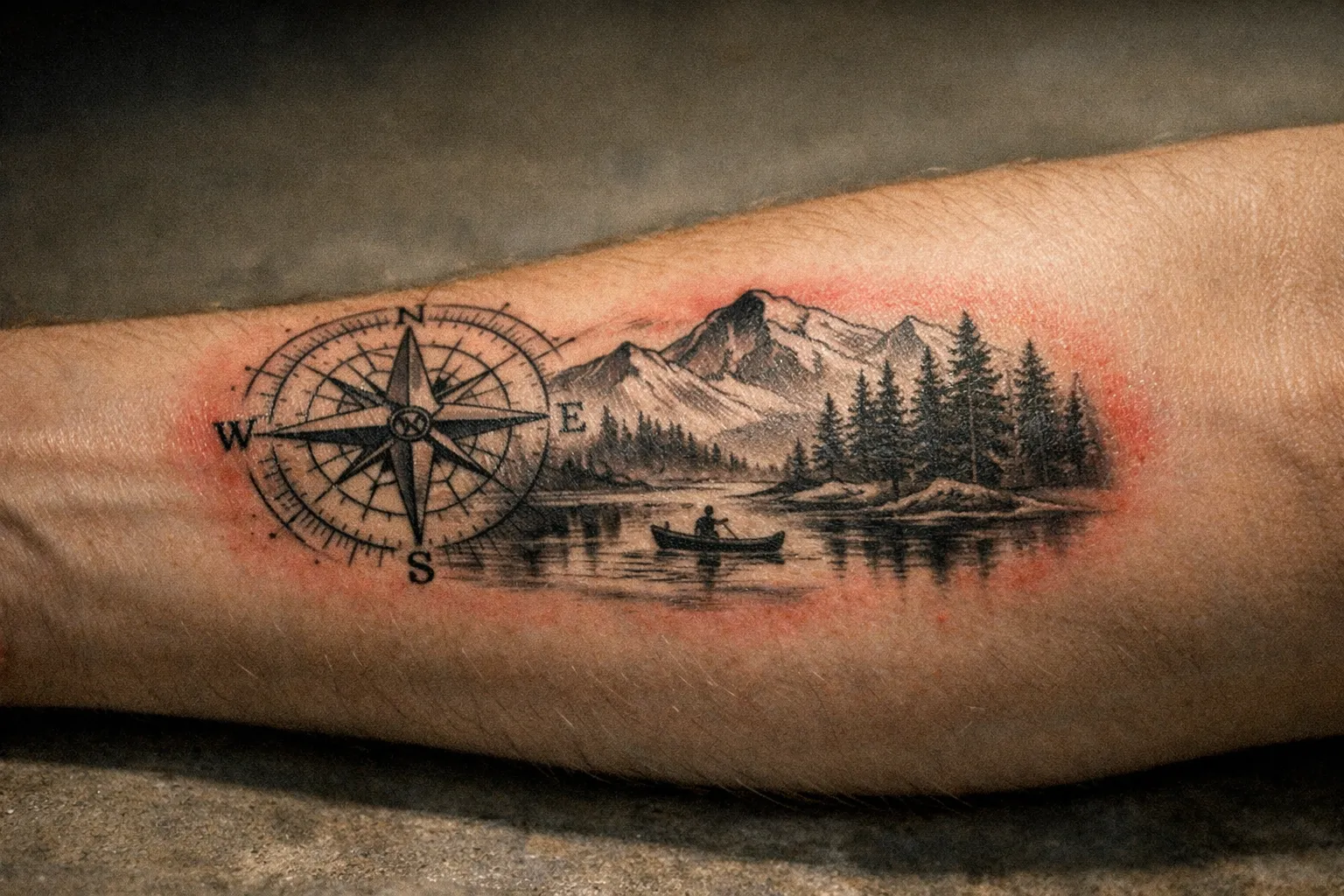
- Redness extends 1-2 cm past the tattoo and isn’t shrinking by day 4
- Scabbing looks thicker or wetter than expected
- A small area is rejecting ink or staying raw past day 10
See a doctor or urgent care if:
- Pain increases after day 3 instead of fading
- Redness expands more than 2-3 cm beyond the tattoo
- Thick yellow or green pus
- Fever, chills, or red streaks moving away from the tattoo
- Hard, warm, swollen lumps under the skin (more on the warning signs in our infected tattoos guide)
Clinical reviews note that while most tattoos heal cleanly in 2-3 weeks, immediate adverse reactions - inflammation, infection, or allergic response - affect a notable minority of clients in real-world surveys (7). Most are mild. The ones that aren’t escalate fast, so don’t ride out worsening symptoms hoping they’ll resolve on their own.
Public health departments in cities like Denver track body art complications and run hotlines for reporting (5). If your artist is unreachable and something looks wrong, that’s a legitimate route.
Activity restrictions - when can you swim, work out, tan
Swimming, baths, hot tubs: minimum 2 weeks, ideally 3-4. Chlorine fades fresh ink and standing water carries bacteria a new tattoo can’t defend against (5).
Heavy workouts: 7-14 days off anything that heavily sweats or stretches the tattooed area. Light cardio is usually fine after day 3 if it doesn’t soak the bandage.
Direct sun: zero for the first 4-6 weeks. After that, SPF 30+ broad-spectrum sunscreen every time it’s exposed. Consistent sunscreen use is the single biggest factor in how a tattoo looks at year five versus year ten; our tattoo sun protection guide goes deeper on this.
Tanning beds: treat them like direct sun. No exposure for 4-6 weeks, then sunblock without exception.
Travel: if your trip involves pools, beaches, or hot tubs, schedule the tattoo at least 4 weeks before departure - ideally 6.
Common mistakes that ruin a heal
- Over-moisturizing. Shiny, wet skin softens scabs and pulls color out in patches.
- Under-moisturizing. Thick crusty scabs that crack when you move, then take ink with them.
- Picking peeling skin. Especially bad on fine-line work and light colors - you’ll see the gaps for years (3); our peeling tattoo guide explains why.
- Sleeping on a fresh tattoo. First 2-3 nights, use clean sheets and a loose cotton layer between skin and bedding. If it sticks, wet the fabric with lukewarm water and peel slowly.
- Tight clothing. Waistbands on fresh hip pieces, bra straps on rib tattoos, socks on ankles - friction during week one causes scabbing and occasionally blowouts.
- Using harsh products. No alcohol, no hydrogen peroxide, no antibacterial soaps with triclosan, no scented anything.
- Hitting the gym on day 2. Heavy lifting on a fresh tattoo restarts the bleeding underneath and adds days to healing.
Touch-ups and long-term care
Many studios offer free or low-cost touch-ups if small areas didn’t hold ink properly - ask your artist about their specific policy before you leave the session. Wait until at least week 6 before booking - what looks like a gap at week 3 is often just unfinished peeling.
Long-term, the two factors that age a tattoo are sun exposure and skin condition. Daily SPF 30+ and basic moisturizer extend vibrancy by years. Fine-line and single-needle tattoos blur faster than bold traditional work - that’s the trade-off for the delicate look, not a sign of bad technique.
Frequently Asked Questions
- What are the stages of a healing tattoo?
- Healing typically progresses through inflammation and oozing (days 1-3), itching and peeling (days 4-14), and a dull settling phase (days 15-45). Deep tissue healing continues invisibly for up to 6 months.
- What are the worst days of tattoo healing?
- Days 2-5 and 7-10 are usually the roughest, with swelling, itching, and peeling. Increasing pain after day 3 is a red flag for infection, not normal healing.
- Can I swim during the healing period?
- No, avoid swimming, baths, hot tubs, and open water for at least 2 weeks, ideally 3-4 weeks, to prevent infection and ink fading.
- Is itching normal during the healing process?
- Yes, especially between days 4 and 10. Use a clean, cool compress to relieve itch instead of scratching.
- Can I apply regular lotion on my healing tattoo?
- Only use fragrance-free, dye-free lotions like CeraVe or Lubriderm Fragrance-Free. Avoid scented lotions, body butters, or essential oils.
- How long should I avoid sun exposure on my healing tattoo?
- Avoid direct sun for at least 4-6 weeks, then apply SPF 30+ broad-spectrum sunscreen every time the tattoo is exposed.
The tattoo healing process rewards boring discipline more than anything else. Wash twice a day, moisturize lightly, stay out of pools and sunlight, leave the scabs alone. The decisions that mattered most - placement, size, artist - happened before you sat in the chair. Now your only job is to not get in the way of your skin doing what it already knows how to do.