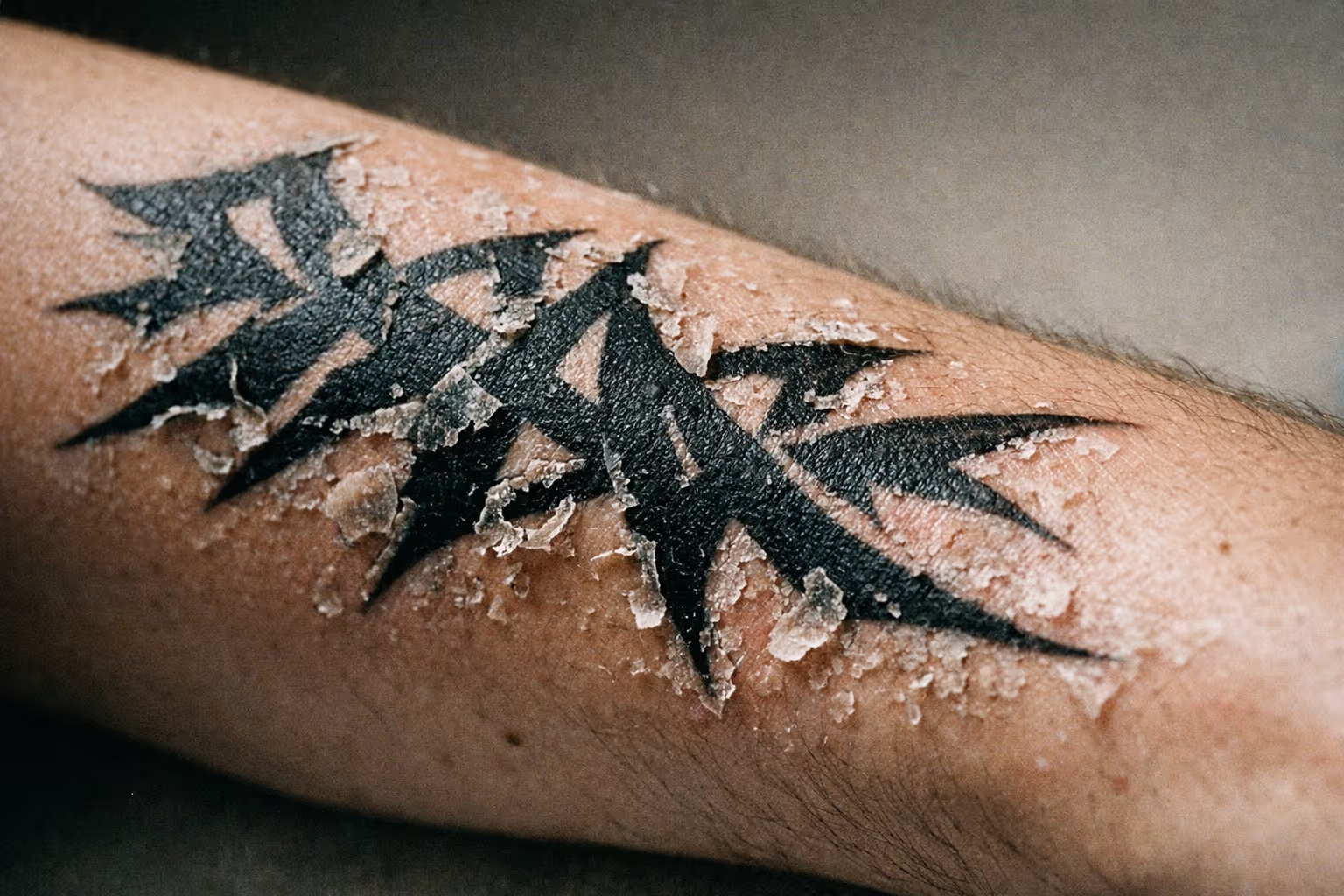
The moment your tattoo starts peeling and you see flecks of color coming off on your fingers, it’s hard not to panic - it looks exactly like the ink is falling out. It isn’t. A peeling tattoo isn’t losing pigment: those colored flakes are dead surface skin that the ink sits beneath, and the peeling is a normal stage that starts around day 3-7 and runs 7-14 days. Here’s what’s happening, what’s normal, and the few warning signs that mean it’s something else.
What Is a Peeling Tattoo?
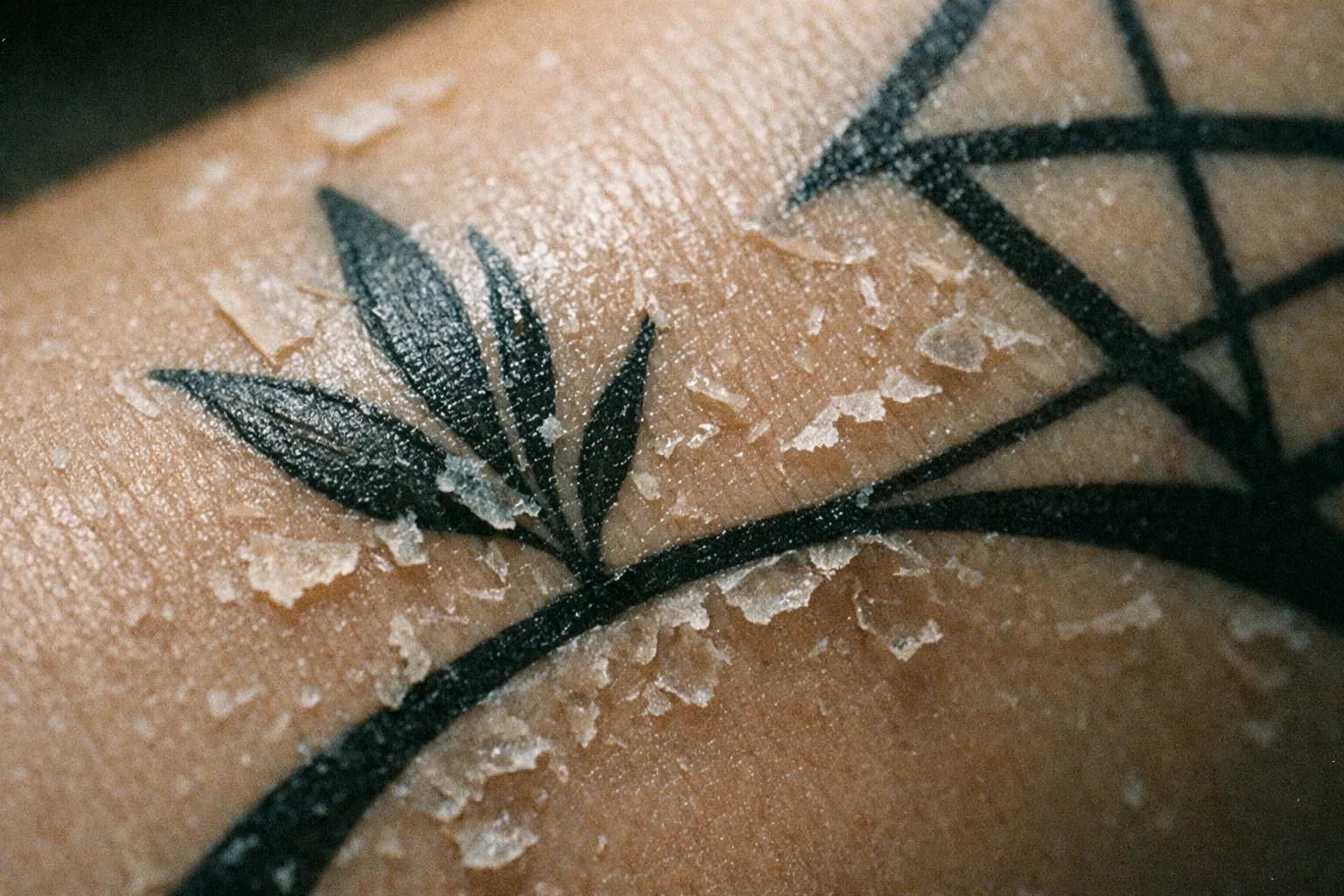
Tattoo peeling is controlled exfoliation. Your top skin layer - the epidermis - took a beating during the session. As it rebuilds, damaged surface cells lift off in thin flakes to make room for new ones underneath. The pigment doesn’t live in the epidermis. It’s deposited in the dermis, the deeper layer that doesn’t shed. That’s why tattoos are permanent, and that’s why peeling skin doesn’t take the design with it (6).
What confuses people is that the flakes often look pigmented. Some of those shed cells picked up trace ink on their way out, so when they drop off in the shower, the water can run blue, black, or red. The color in the dermis stays put. The flake is just a souvenir.
Peeling is also different from scabbing. Scabs are thicker, crusty, and form earlier over areas that bled or were worked heavily. Peeling is flakier, drier, and follows after. Most tattoos do a little of both (6).
When Does a Tattoo Start Peeling?
Most tattoos start peeling between day 3 and day 7 after the session and continue for about 7 to 14 days (1)(4)(9). The exact onset depends on skin type, the size and saturation of the piece, body location, and how aggressive the artist was with the needles.
Here’s the rough timeline:
- Day 1: Tattoo is wrapped or covered with a second-skin bandage. Plasma and ink may weep under the wrap. No peeling yet.
- Days 2-3: The surface looks cloudy, slightly blurry, sometimes “frosted.” Dead skin is starting to lift - peeling is about to begin (3).
- Days 4-6: Light scabbing forms on heavily worked areas. Flaking begins, usually starting at the edges.
- Days 6-14: The main peeling and itching phase. Flakes come off in sheets in some spots, dust in others.
- Days 14-30: Surface looks almost healed. Color settles, slight shininess may remain. Deeper layers continue knitting (4).
- Up to 6 months: Deeper dermal layers stay sensitive to sun, friction, and trauma - relevant for color retention, not daily care.
If you’re asking when does a tattoo start peeling on a specific placement: thinner skin (inner forearm, ribcage) tends to peel earlier and lighter. Thicker skin - outer thigh, calf, upper back - often peels a day or two later and a bit heavier.
Why Is My Tattoo Peeling? The Short Biology Answer
Why is my tattoo peeling is the most-searched panic question, and the answer is almost always: because it’s healing correctly. The needles punctured the epidermis up to several thousand times per minute. Your body responds the same way it would to any controlled abrasion - inflammation, plasma seal, scab where needed, then exfoliation of the damaged surface layer.
A few factors push peeling heavier or lighter:
- Saturation and color packing: Solid black fill and dense color packing trauma the skin more than fine-line work. Expect more peeling.
- Skin type: Dry skin tends to flake more visibly. Oily skin sometimes peels in smaller, less obvious bits.
- Location: Joints, hands, and feet move constantly and tend to peel unevenly. Backs and thighs peel more uniformly.
- Aftercare: Under-moisturized skin cracks and flakes harder. Over-moisturized skin can develop pimples or trap moisture under thick lotion.
- Your age and health: Healing slows with age, smoking, diabetes, and some medications.
If the area is mildly pink, itchy, dry, and shedding thin flakes between days 3 and 14, that’s textbook normal.
✓ Pros
- Peeling is a natural, healthy part of tattoo healing indicating skin renewal.
- Understanding peeling stages reduces unnecessary panic and improper aftercare.
- Proper aftercare during peeling improves final tattoo appearance and longevity.
✗ Cons
- Peeling can look alarming to first-timers, causing anxiety and poor handling.
- Improper care during peeling can lead to ink loss or infection.
- Extended peeling beyond two weeks may indicate complications requiring medical attention.
Tattoo Peeling Stages: What Each Phase Looks Like
The tattoo peeling stages roughly map to one-week chunks. Knowing what each looks like keeps you from misreading normal healing as a problem.
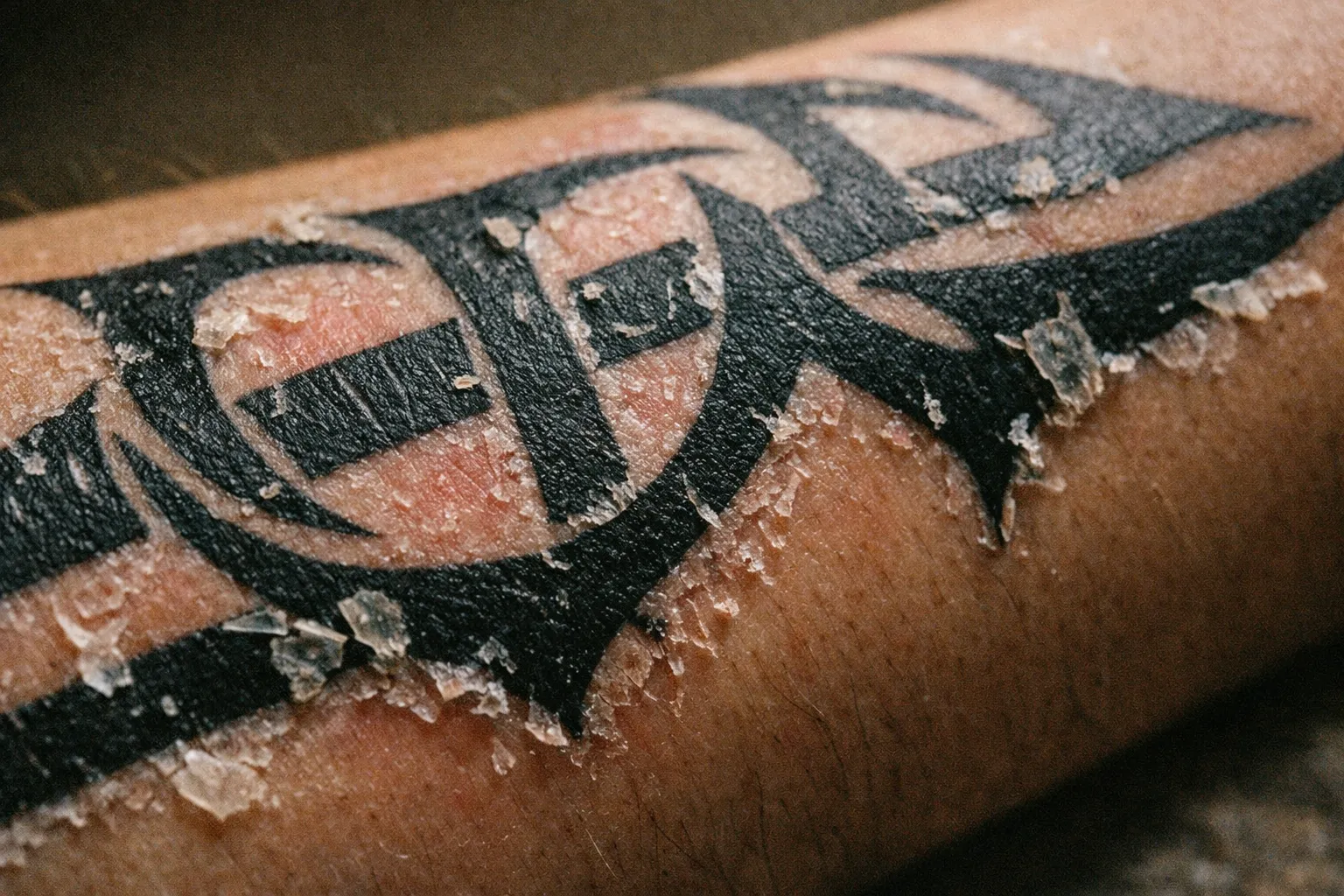
Stage 1 - Cloudy surface (days 2-3): The tattoo looks like there’s a film over it. Colors look duller than they did fresh. This is dead skin starting to lift, not fading.
Stage 2 - Light flaking (days 4-6): Small flakes appear at the edges and over heavily worked areas. The skin may feel tight. Mild itch starts.
Stage 3 - Heavy peeling (days 6-10): The main event. Flakes come off in larger pieces, sometimes carrying color residue. This is when most people Google “my tattoo is peeling and the ink is coming off.” It isn’t - the pigment stays in the dermis. Itching peaks here.
Stage 4 - Thin, shiny new skin (days 10-14): Peeling tapers. The tattoo looks slightly waxy or shiny because new epidermis is thinner than mature skin. Color may still seem slightly muted.
Stage 5 - Settling (days 14-30): Shine fades, true color emerges. Deeper healing continues invisibly. This is when the tattoo finally looks like what you saw in the mirror right after the session.
I tell clients to take a photo on day one and not look at it again until day 21. Comparing a day-eight peel to a fresh tattoo is how you convince yourself something went wrong when it didn’t.
Is Tattoo Peeling Normal? Normal vs Warning Signs
Is tattoo peeling normal - yes, almost always. The question is what kind of peeling.
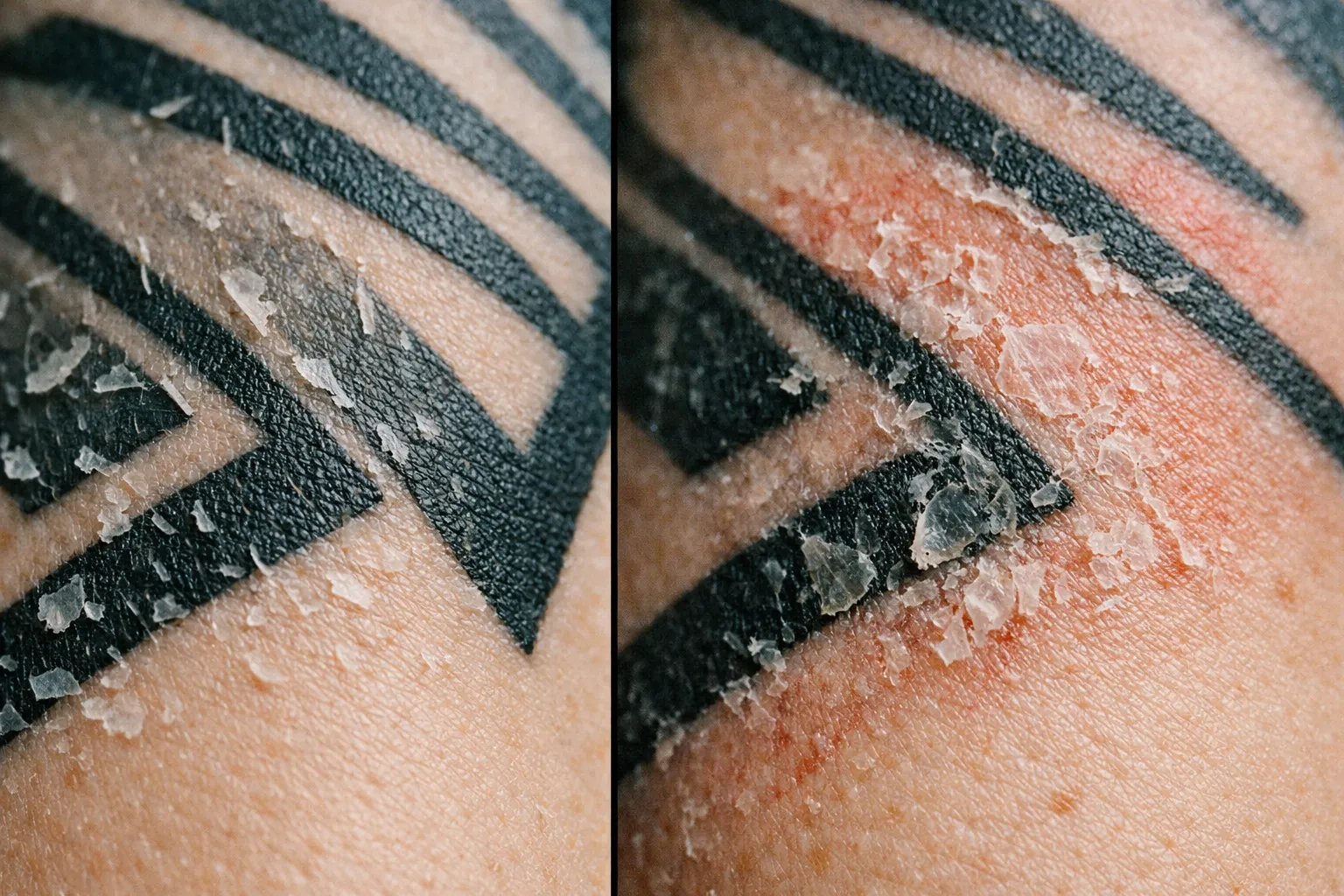
Normal peeling looks like:
- Thin, dry, white-to-gray flakes
- Light pink skin underneath
- Mild itching, especially at night
- Some flakes carrying ink residue
- Heaviest activity between days 5 and 10
- Tapering off by day 14 (4)(5)
Warning signs that aren’t normal peeling:
- Pus - yellow or green discharge, not the clear plasma of day 1
- Red streaks radiating away from the tattoo
- Fever above 102°F, chills, or body aches
- Severe swelling lasting more than 48 hours
- Hard lumps under the skin
- Blisters filled with fluid
- Peeling still going strong past day 14 with no sign of slowing
- Pain getting worse instead of better after day 3
Mild redness fading over the first week is fine. Redness that spreads, deepens, or comes with any of the above is infection until proven otherwise. See a doctor for that, not your tattoo artist.
Should I Do Anything If My Tattoo Is Peeling?
Short answer: yes, but the work is small and consistent, not dramatic. What to do when your tattoo is peeling breaks down to four daily habits.
1. Wash it twice a day. Lukewarm water, fragrance-free mild soap, clean hands, no washcloth. Lather gently with fingertips for 30 seconds, rinse, pat dry with a paper towel or clean soft cloth. Total time: 3-5 minutes per wash.
2. Moisturize 2-3 times a day. Pea-sized amount of fragrance-free lotion per roughly 3-4 square inches of tattoo. Spread thin until it disappears. If you can still see a glossy sheen ten minutes later, you used too much.
3. Wear loose, smooth clothing. Cotton or bamboo, looser than usual, nothing that sheds lint directly on the tattoo. Fleece and fuzzy sweaters are the enemy here - lint sticks to half-attached flakes and pulls them off before they’re ready.
4. Leave it alone. Don’t pick, don’t scratch, don’t peel flakes that look like they’re hanging by a thread. If something is genuinely just dangling, trim it with clean scissors rather than pulling - pulling can lift skin that wasn’t ready and take ink with it (1)(5)(7).
What to skip during peeling: baths, pools, hot tubs, lakes, oceans, saunas, tanning beds, direct sun, shaving over the tattoo, scented lotions, alcohol-based products, exfoliants, and any topical with menthol, lidocaine, or strong essential oils unless your artist specifically cleared it (1)(2)(7).
Should I Moisturize My Tattoo While It’s Peeling?
Yes - moisturizing during the peeling phase is the single most useful thing you do. Properly hydrated healing skin itches less, cracks less, and finishes peeling faster. The trick is doing it right.
How often: 2 to 3 times a day. Morning, mid-day if you can manage it, and before bed.
How much: A thin layer. Pea-sized amount per 3-4 square inches. The lotion should absorb within a minute or two and leave the skin feeling soft, not slick.
What to use:
- Fragrance-free, hypoallergenic lotion for general use - CeraVe, Eucerin, Lubriderm Sensitive ($8-$18 for 8-16 oz)
- Tattoo-specific balm if your skin runs dry - Hustle Butter, Mad Rabbit, or similar ($10-$25 per jar)
- Plain Aquaphor or A&D for the first 2-3 days only if your artist recommended it, then switch to lotion
What to avoid:
- Anything scented or “naturally” perfumed with essential oils
- Coconut oil and other heavy occlusive oils that trap moisture and bacteria
- Petroleum-based ointments past day 3 (clogs pores once peeling starts)
- Anti-aging or active-ingredient lotions (retinol, AHAs, vitamin C)
Signs you’re over-moisturizing: small pimples appearing on or around the tattoo, a wet or macerated look, scabs softening and lifting too early, prolonged shine. Cut back to once a day until skin balances out.
Signs you’re under-moisturizing: deep cracks in the skin, intense itch that won’t quit, thick yellow scabs forming, a tight feeling that doesn’t ease after washing. Add one more application per day.
I’ve seen both mistakes plenty. Over-moisturizing is more common in people who are anxious about healing - they figure more lotion means more protection. It doesn’t. Thin layer, let it absorb, move on. For a full breakdown of recommended products and timing, the tattoo aftercare guide covers every stage from wrap removal through long-term maintenance.
How Long Should Your Tattoo Be Peeling?
The peeling phase typically runs 7 to 14 days from the first visible flake to the last (4)(5)(9). Faster if it’s a small fine-line piece on thin skin. Slower if it’s a large color-packed back piece.
By day 10, most of the heavy flaking should be done. By day 14, you should mostly see thin, slightly shiny new skin with maybe a few stubborn flakes at the edges. By day 21, the surface should look normal, even if color is still settling underneath.
If your tattoo is still actively peeling - not just a stray flake but real, ongoing shedding - past day 14, that’s worth looking into. Possible causes:
- The piece was unusually large or heavily saturated (extends the timeline by a few days, not weeks)
- You’re under-moisturizing and the skin keeps cracking
- An underlying skin condition like eczema or psoriasis is flaring
- Mild allergic reaction to ink or product
- Slow-developing infection
If peeling extends past two weeks with no clear reason, message your artist with photos. If there’s redness, pain, or discharge alongside it, see a doctor.
What If the Ink Looks Like It’s Coming Off While Your Tattoo Peels?
This is the most common false alarm in tattoo healing. My tattoo is peeling and the ink is coming off almost always describes pigmented flakes - dead skin cells that carried trace ink as they shed. The permanent pigment is in the dermis, which doesn’t peel.
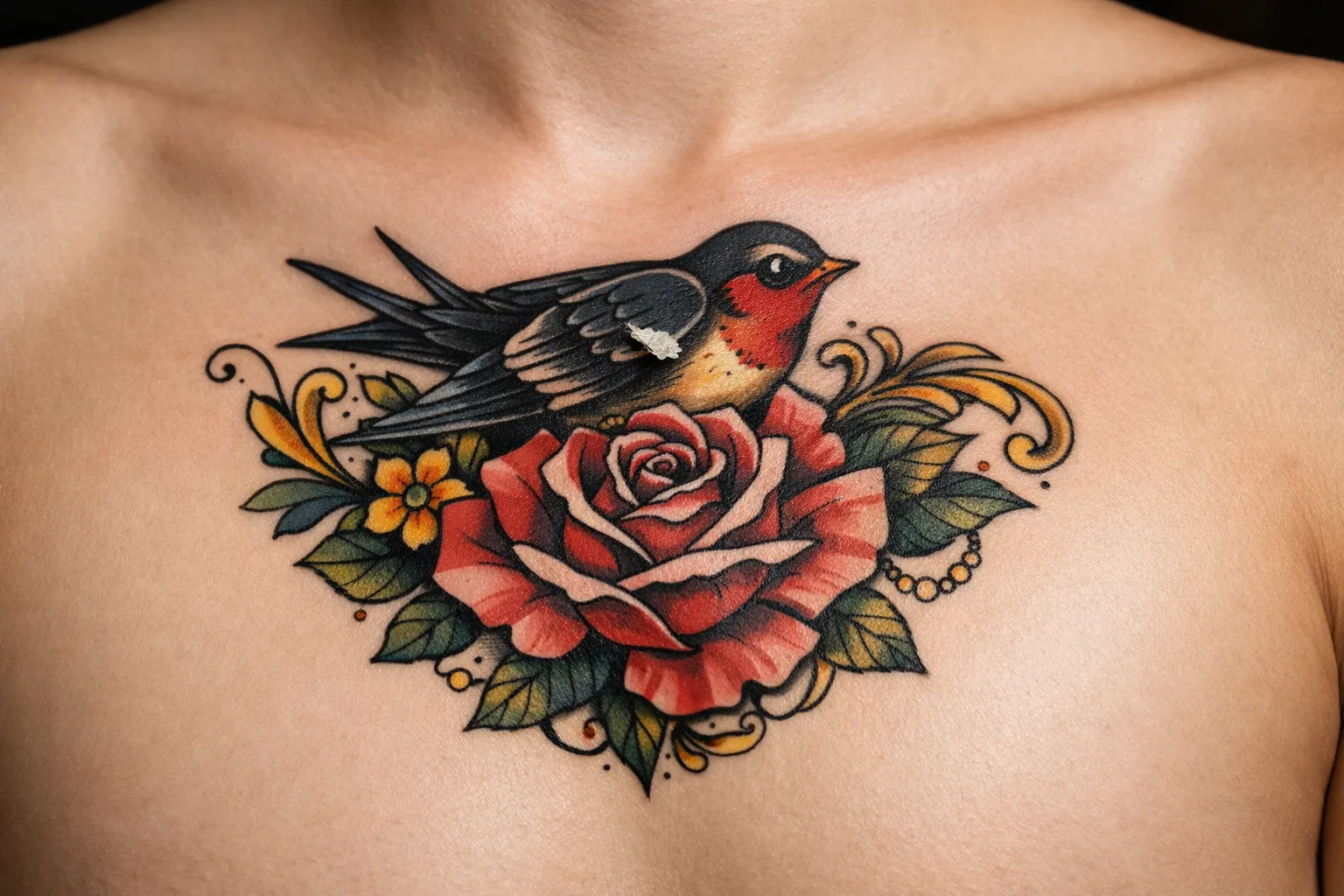
You can confirm this yourself: look at the tattoo under the flake. The design underneath is intact, just covered by dry skin. Once that flake comes off naturally, the color shows through.
When ink actually does come out, it’s because of trauma, not normal peeling:
- You picked at a scab before it was ready, lifting skin that still had pigment locked in it
- You scratched the tattoo and tore healing tissue
- A scab snagged on clothing and ripped off prematurely
- You soaked it in a bath or pool and softened scabs so much they detached early
- The artist worked too shallow or too deep - this only shows up after full healing as light spots, sometimes called ink fallout
If you’re worried, wait until day 30 and compare to your fresh photos. Minor unevenness during peeling almost always evens out. Real gaps in the design need a touch-up, which most artists offer free within 3-6 months. In some cases, what looks like ink loss turns out to be a tattoo blowout, where pigment has migrated under the skin rather than disappeared entirely.
How to Handle Heavy Itching
Itching peaks between days 6 and 10. It can be relentless, especially at night. Scratching is the single fastest way to damage a healing tattoo, so the goal is managing the itch without touching the skin.
What helps:
- Cool compress - clean cloth dampened with cool water, held over the tattoo for 5-10 minutes
- Slap, don’t scratch - a light slap on the area kills the itch reflex without dragging nails across healing skin
- Thin layer of lotion - sometimes the itch is just dryness asking for moisture
- Non-sedating oral antihistamine (cetirizine, loratadine) if itch is widespread - check with a pharmacist first
- Long sleeves or leggings at night - soft cotton over the tattoo blocks unconscious scratching during sleep
What to skip: topical hydrocortisone (slows healing), topical benzocaine or lidocaine (irritation risk), ice directly on skin (can damage healing tissue), and any “anti-itch” cream with fragrance or menthol.
When to Call Your Artist vs When to See a Doctor
Call your artist if:
- Peeling is uneven and you’re not sure if it’s normal
- A flake came off too early and you’re worried about a light spot
- You can’t tell if a spot is a scab or something else
- The piece looks faded after full healing (touch-up territory)
See a doctor if:
- Pus, red streaks, or spreading redness
- Fever above 102°F, chills, body aches
- Severe swelling more than 48 hours after the session
- Pain getting worse after day 3
- Blisters, hard lumps, or anything that looks like an allergic reaction
- Peeling continuing heavily past two weeks with other symptoms (4)
Tattoo artists are not medical providers. They can spot a healing piece versus a damaged one, but infections need antibiotics and that’s a doctor’s call. I’ve had clients wait too long on this because they didn’t want to seem dramatic. Don’t do that.
Aftercare Costs and Time Commitment
You don’t need a $100 aftercare kit. Here’s what realistic spending looks like:
Low budget ($15-$20 total):
- Fragrance-free drugstore lotion (CeraVe, Lubriderm) - $8-$12
- Mild fragrance-free soap (Dove sensitive) - $4-$8
- Paper towels - already in your kitchen
Mid-range ($25-$45 total):
- Add a tattoo-specific balm (Hustle Butter, Mad Rabbit) for the first week - $10-$25
- Same soap and lotion as above
Premium ($50-$80 total):
- Dermatology brand cleanser and lotion (La Roche-Posay, Avene)
- Specialty tattoo balm
- Non-stick breathable dressings for clothing-friction situations - $5-$15
Time investment during peeling: roughly 10-20 minutes per day total, split across two washes and 2-3 moisturizing sessions, for about two weeks. Less time than brushing and flossing.
Protecting the Tattoo After Peeling Ends
Once peeling stops and the surface looks healed, the tattoo isn’t done. Deeper layers stay sensitive for up to six months (4). What you do during that window affects how the tattoo looks five and ten years from now.
- Sunscreen. Broad-spectrum SPF 30+ on the tattoo any time it’s exposed. UV is the single biggest cause of long-term fading, and this is where most people get lazy.
- No tanning beds. Ever, really, but especially during the first year.
- Moisturize daily. Doesn’t have to be tattoo-specific anymore - just keep the skin hydrated.
- Wait on exfoliants and actives. Retinol, AHAs, and physical scrubs are fine after about 4-6 weeks, but ease in.
- Touch-ups are normal. Most reputable artists include one free touch-up within 3-6 months if a spot didn’t take.
Frequently Asked Questions
- Should I moisturize my tattoo while it's peeling?
- Yes, 2-3 times a day with a thin layer of fragrance-free lotion. Too little causes cracking and harder itching. Too much clogs pores and softens scabs prematurely. A pea-sized amount per 3-4 square inches is the right dose.
- Should I do anything if my tattoo is peeling?
- Wash twice a day with mild soap, moisturize lightly 2-3 times a day, wear loose clothing, keep it out of sun and water, and don't pick or scratch. That's the whole routine.
- How long should your tattoo be peeling?
- About 7 to 14 days, starting between days 3 and 7 after the session. Past two weeks with no slowdown is worth checking with your artist, especially if other symptoms are present.
- Does tattoo peeling remove ink?
- No. The flakes can look pigmented because shed skin cells carry trace ink, but the permanent pigment sits in the dermis below the peeling layer. Real ink loss only happens when you pick scabs or tear healing skin.
- Is it normal for my tattoo to look faded while peeling?
- Yes. The cloudy, dull look between days 3 and 14 is dead skin sitting on top of the design. True color shows up again around days 14-21 once peeling finishes and new epidermis settles.
Peeling is the boring part of getting tattooed, which is exactly why it’s where most damage happens. People get anxious, start poking at flakes, slather on too much lotion, or panic-Google at day eight and convince themselves something is wrong. Wash it gently, moisturize it lightly, wear soft clothes, keep it out of pools and direct sun, and leave the flakes alone. Two weeks of quiet aftercare is what separates a sharp, well-healed tattoo from one that needs a touch-up. And if something actually looks wrong - pus, fever, spreading redness, pain that’s getting worse instead of better - that’s a doctor visit, not a forum question.