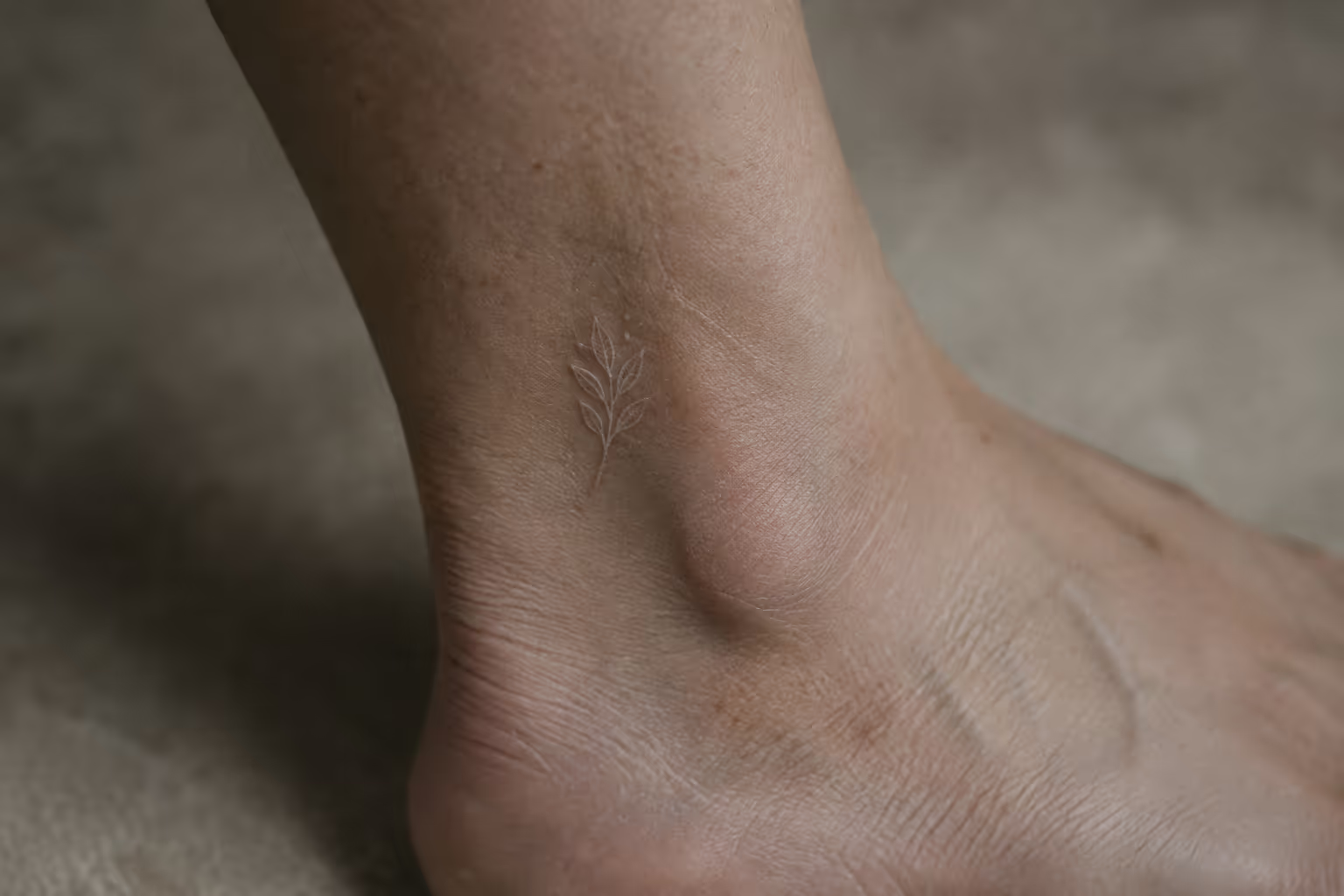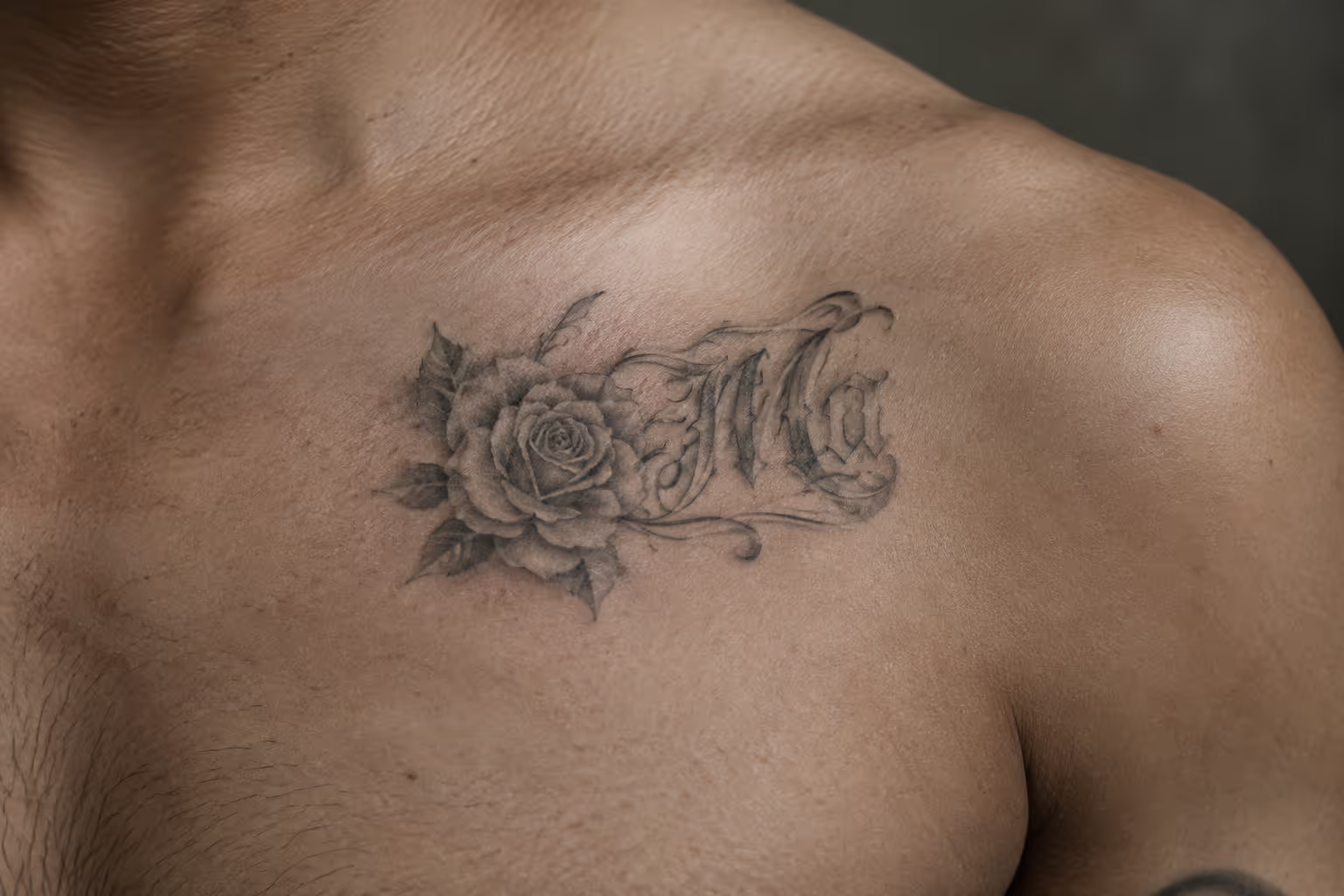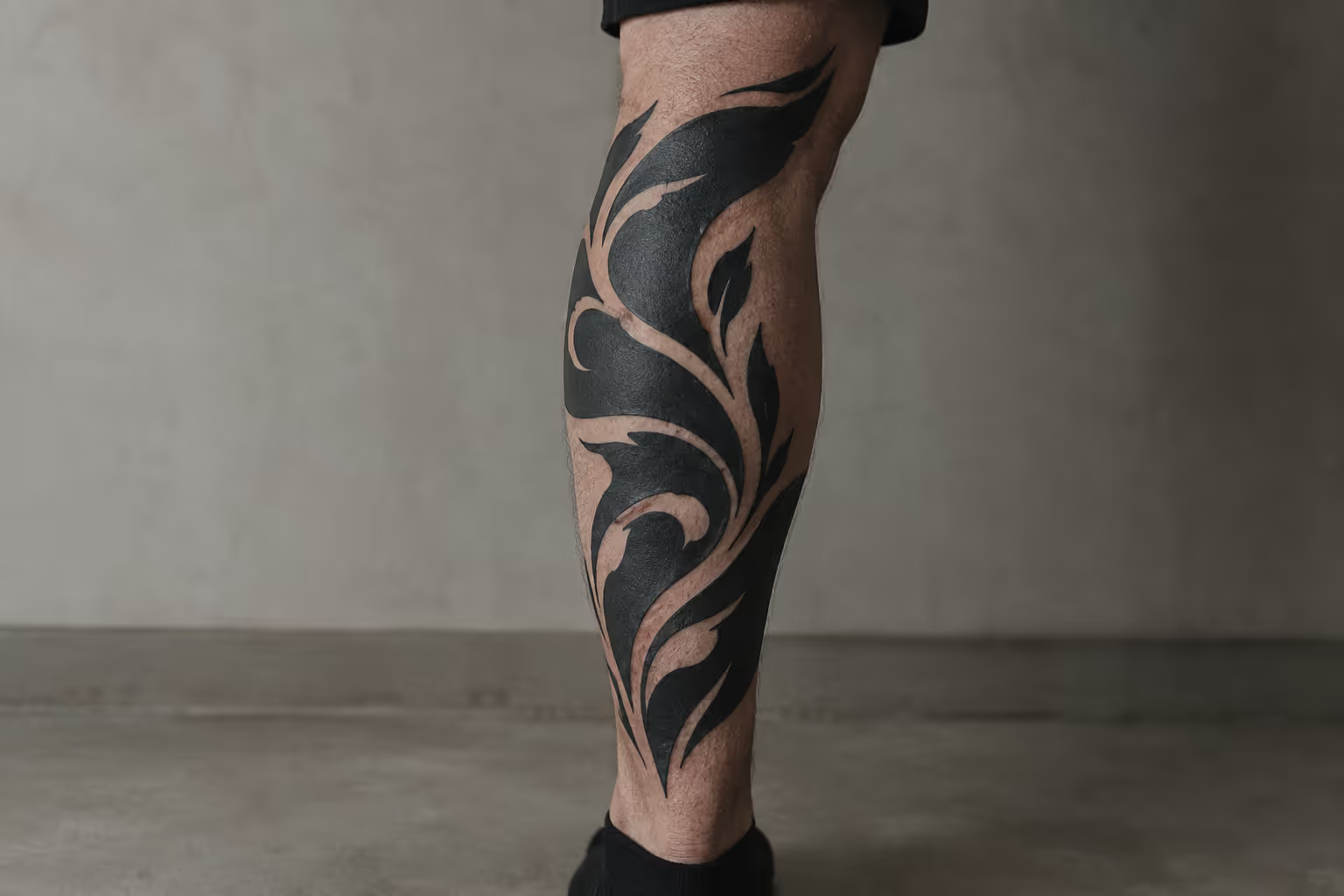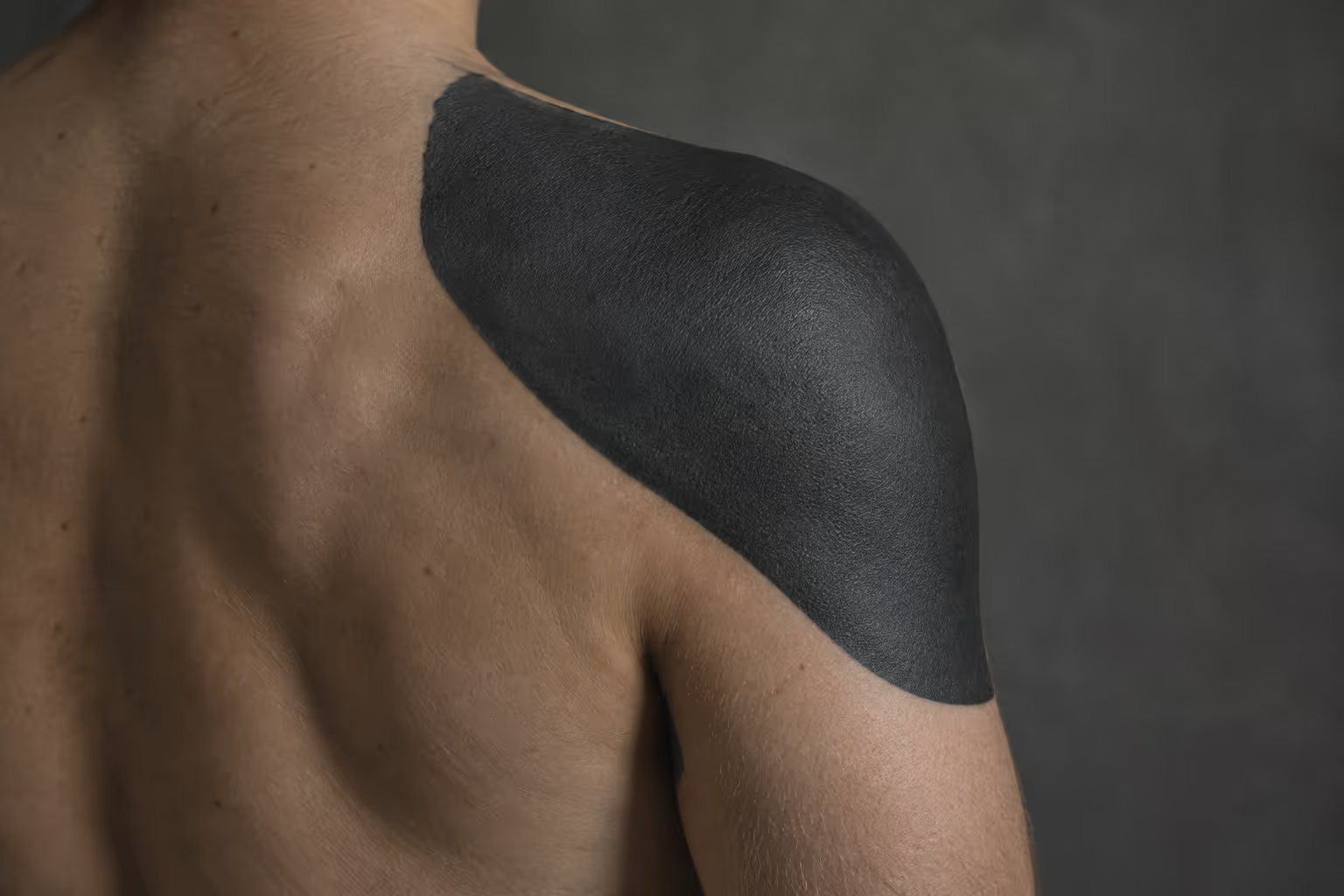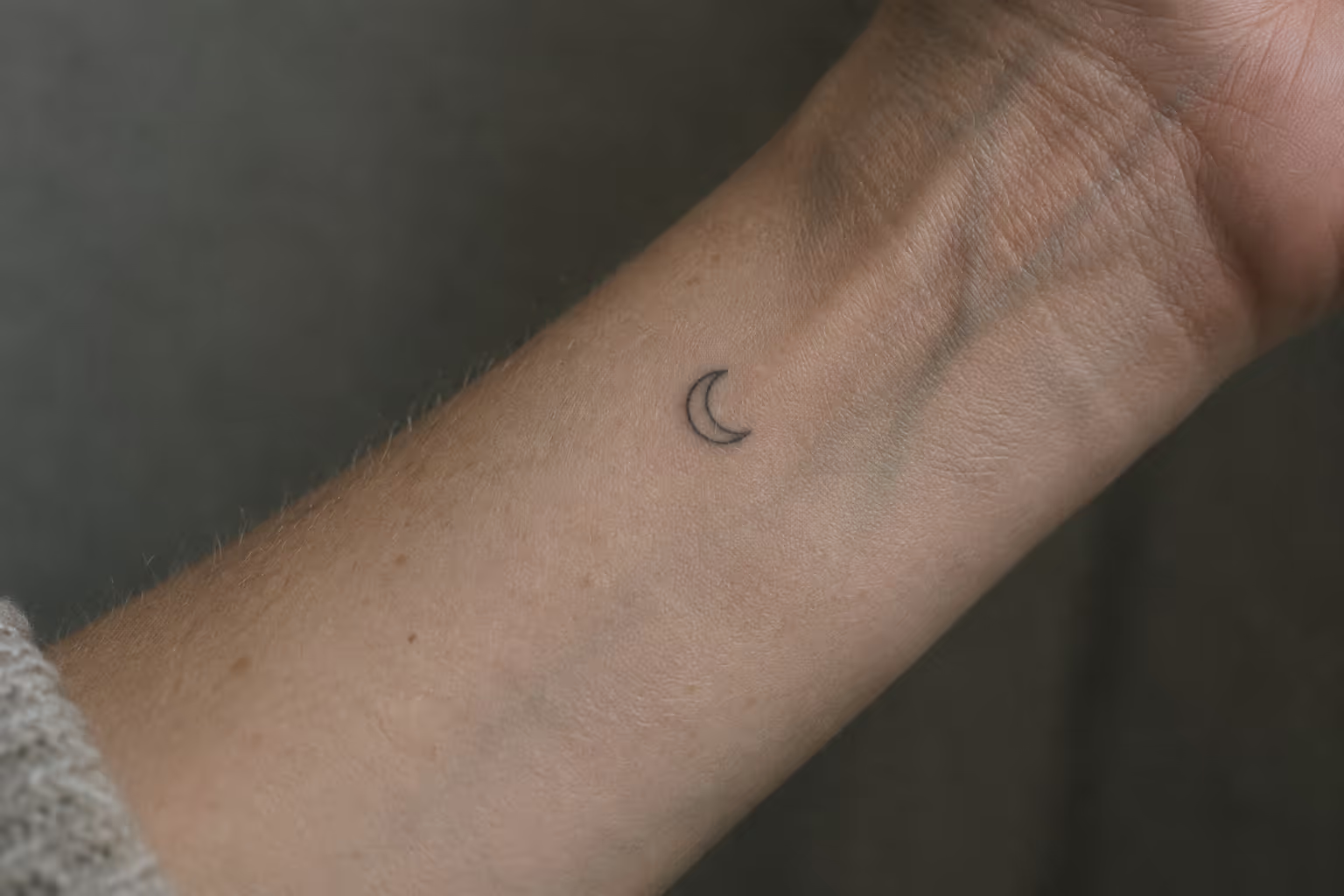
A fresh fine-line tattoo almost never looks the way it will heal. The lines can heal darker or greyer than they looked fresh (4), and the crispness you see under the studio lights gets tested over the following months. “Minimalist tattoo” describes a restrained design: few elements, open space, clean lines. It does not guarantee a technique or a lifespan. Whether yours still reads cleanly in five years depends on three separate choices: the design, the placement and how the artist executes it.
✓ Pros
- Open space keeps a restrained motif legible without relying on dense shading.
- A compact design can suit placements that are difficult to cover with larger work.
- Simple silhouettes leave fewer small features competing for attention as the tattoo softens.
✗ Cons
- Subtle linework gives fading or uneven healing less room to hide.
- Crowded details can merge, especially when the design is scaled down too far.
- A later touch-up may improve patchiness but cannot make a delicate line behave like a bold outline.
What Counts as a Minimalist Design: Fine-Line, Single-Needle and Micro Explained
A minimalist design uses restrained elements, such as simple shapes, symbols or sparse linework, instead of dense shading. Fine-line and single-needle are techniques often used to get that look: fine-line tattooing simply means working with very thin lines, usually on smaller designs (4). Neither technique guarantees how long those lines stay crisp.
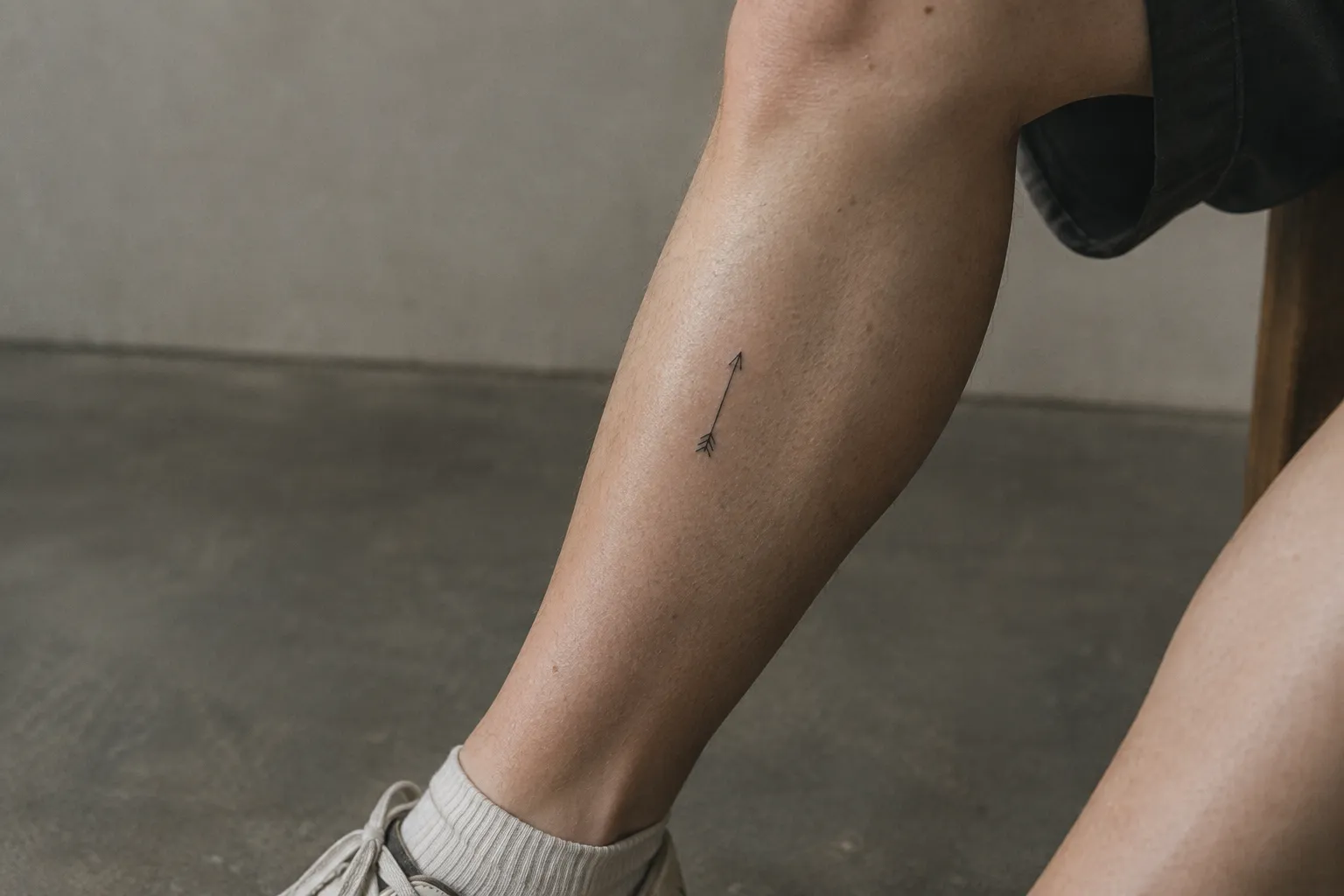
That distinction matters before you book. Clients often walk in asking for “a fine-line minimalist micro tattoo” as if those were one thing. They are three different choices:
- Minimalist is the design philosophy: what you leave out.
- Fine-line and single-needle describe how the lines go in.
- Micro describes scale.
You can have a minimalist design done in bold American traditional linework, and you can have a dense, heavily shaded piece done entirely in fine line.
As a style, minimalism has two technical hallmarks. The first is a thin, consistent line weight with little or no variation in thickness across the piece. The second is heavy use of negative space, where untouched skin carries as much of the design as the ink does. A frequent failure when an artist does minimalism badly is packing lines too close together. Thin lines need breathing room, because a tattoo can heal a bit lighter or slightly thicker depending on how your body heals it (4). Two lines that sit a hair apart on day one can merge into one grey smudge later.
Fine-line vs. single-needle vs. micro: what’s the difference
Fine-line work uses small needle groupings to lay down thin lines. Fine-line artists tend to work with tight round-liner configurations instead of the larger groupings used for bold outlines.
Single-needle is the extreme end of fine-line: in principle one needle point makes every line, although artists often mimic the look with three- to five-point needles (4). It produces the thinnest possible mark and suits delicate detail. That thinness is also its weak point, which we cover in the technique section below.
Micro is about size, not tooling. A micro tattoo is a very small design, often trying to fit a lot of detail into a small patch of skin. A micro tattoo can be done with single-needle, fine-line or a slightly heavier liner. The scale is the risk factor, not the needle.
None of these labels promises how the tattoo will heal. Fine-line tattoos can heal darker or greyer than expected. Fine-line specialist JK Kim advises going with your artist’s suggestion on placement, size and detail, because a design that looks possible on paper won’t always work on skin (4).
Simple shapes over dense shading
A minimalist piece earns its look through what is missing. A single continuous line, an outlined shape with no fill, or a small symbol with a lot of skin around it all read clearly because there is nothing competing with them.
Dense shading works against the style for a practical reason as well as an aesthetic one. Soft grey gradients done with thin needles are among the first details to lose contrast, because fine work packs less ink into the skin and tends to fade quicker (4). A design that relies on linework alone has fewer elements that can fade into each other.
The trade-off, in one paragraph: a minimalist tattoo looks subtle, usually needs a shorter session, fits more placements and feels like a smaller commitment than a sleeve. The cons are that thin lines are prone to fading and greying, over-detailed small designs can blur, you may need a touch-up, and the result will never hit as hard visually as bold traditional work.
Minimalist Tattoo Ideas: Symbols, Script, Geometric and Nature Motifs
The minimalist tattoo ideas that read best at small scale are single symbols, short script, clean geometric forms, tiny mountains and waves, leaves and flowers, and animal silhouettes. Each one works because it is recognizable from its outline alone.
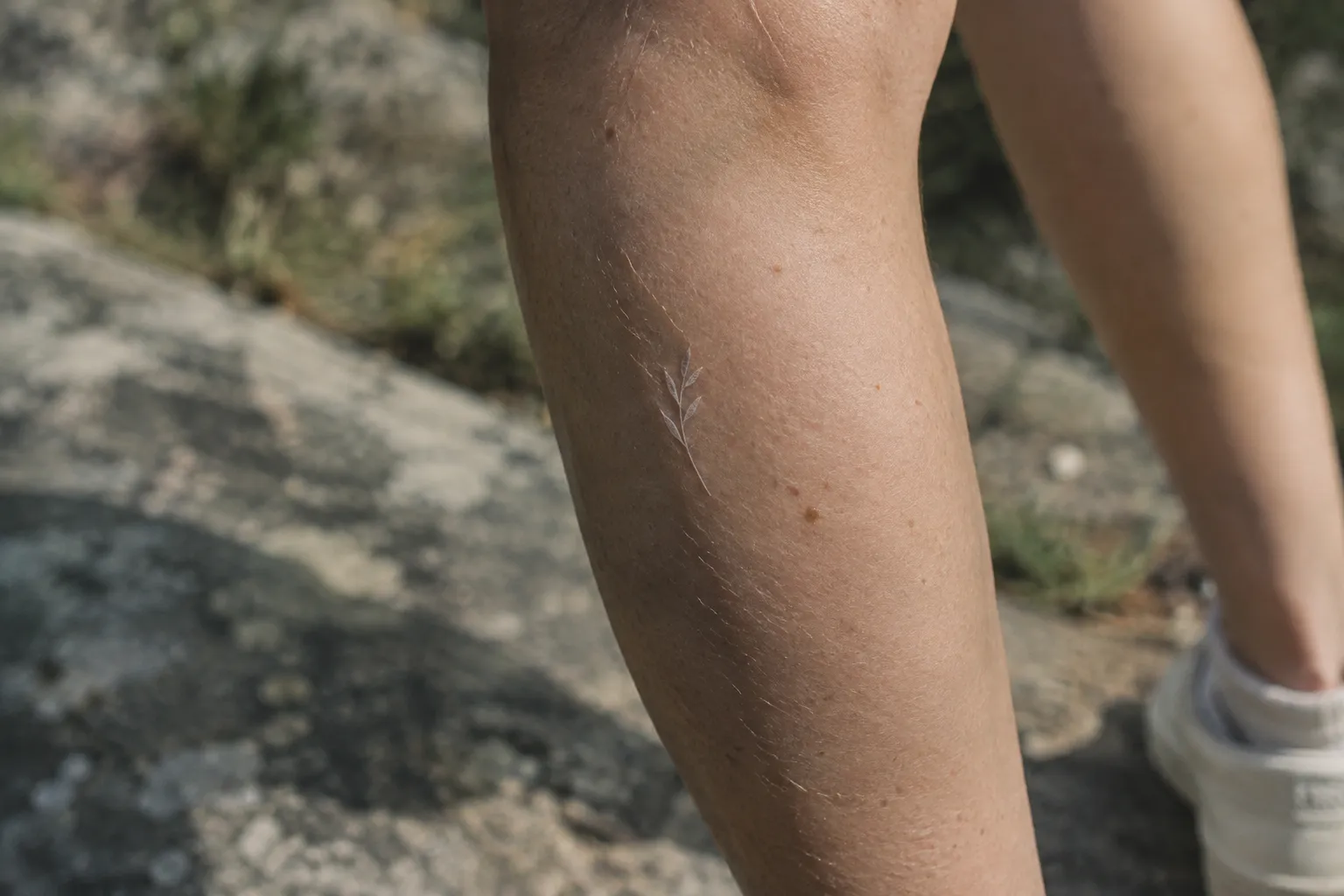
Use one test for any idea: can you draw it in a few strokes and still recognize it? If the motif needs interior shading, texture or more than a handful of overlapping lines to make sense, it isn’t a minimalist design. It is a detailed design shrunk down, and that is the version that blurs.
Script, symbols and geometric shapes
Short script is one of the most requested minimalist tattoo ideas and one of the easiest to get wrong. Keep it to a word, a name or a date. Size the lettering by letter height, meaning the height of the whole letter:
- Standard script: at least 12 mm (1/2 in).
- Fine or ornate script: about 25 mm (1 in), because the hairline connecting strokes and tight loops are the first parts to close up as ink spreads.
- Block, serif, typewriter lettering and numerals: at least 6 mm (1/4 in).
On the wrist, only bold script or block lettering holds. A delicate cursive word on the inner wrist is one of the designs I’d steer a client away from. The wrist bends constantly, and a high-motion spot gives a hairline script little margin.
Symbols work well because they are already reduced to their essentials. Think of an arrow, a crescent moon, a star, a heart outline or a single letter. One clean symbol with space around it reads better than a cluster of three. If you want a symbol tied to a specific tradition, check where it comes from. Many motifs that circulate as minimalist designs carry different meanings depending on whether you look at their original culture or how Western tattoo culture uses them now. If an artist or website gives you one fixed meaning, ask which tradition it comes from.
Geometric shapes are the most structurally forgiving option: triangles, circles, line-and-dot compositions, simple linework mandalas reduced to a few rings. They do need clean execution. A circle that wobbles or two parallel lines that drift apart are obvious in a way a wobbly leaf never is. If you choose geometry, choose an artist whose healed geometric work you have seen.
Nature and animal silhouettes
Tiny mountains and waves suit people who want a reference to a place. A mountain range works best as a single ridge line, not a full landscape with trees and texture. A wave works as one curl, not a crashing sea. In traditional Japanese tattooing (irezumi), waves are a common background motif, alongside clouds and wind bars (5). A small minimalist wave is a different thing: usually a personal reference to the ocean, surfing or a coastal hometown. Both readings are valid, but they are not the same thing.
Leaves and flowers are classic fine-line subjects. Pick botanicals with a clear outline: a single stem with a few leaves, an olive branch, a tulip or a simple daisy. Flowers with dozens of tightly layered petals, like peonies or roses, need room. Shrink them too far and the petals merge into a blob.
Animal silhouettes work when the animal’s outline is distinctive: a cat sitting, a swallow in flight, a whale tail, a fox profile. A solid or outlined silhouette with no interior detail holds up far better than a tiny realistic portrait of your dog. If you want the portrait, that is a different style and a larger piece.
Before your consultation, start from references you like and bring the artist three examples. Include at least one healed photo of a similar design, not just fresh Instagram shots.
Best Placements for a Small, Discreet Design: Wrist, Ankle and Behind the Ear
For a small minimalist tattoo that stays crisp, the wrist, ankle and behind the ear are safer discreet choices than fingers or feet. Allure’s guide to fine-line healing suggests avoiding high-motion areas such as the fingers or feet, which are more likely to fade due to friction (4).
People chasing a discreet tattoo often go straight for the side of a finger or the top of the foot. Those spots are easy to hide and easy to show off, but they are also where fine linework wears out fastest.
Wrist, ankle and behind-the-ear: the safer discreet picks
- Behind the ear: often the most discreet placement on the list. Hair covers it, it doesn’t rub against clothing and it sees little sun if your hair is long. It sits over bone, so expect it to sting more than the outer forearm. It also limits you to compact designs.
- Inner ankle or outer ankle: socks and trousers hide it, and it shows in sandals when you want it to. Keep the design on the ankle itself and off the top of the foot. Shoe friction is concentrated on the foot. The ankle bone makes this placement more painful than fleshier areas.
- Wrist: a watch, a sleeve or a bracelet can cover it. The inner wrist has thin skin and bends constantly, so this is where simple, bold minimalism belongs: a symbol, a short block or bold-script word, or a geometric form. Skip ornate fine script here.
If you want discreet and a bit more room, the inner upper arm and the ribcage also stay covered under most clothing. The ribcage hurts noticeably more than the forearm, though.
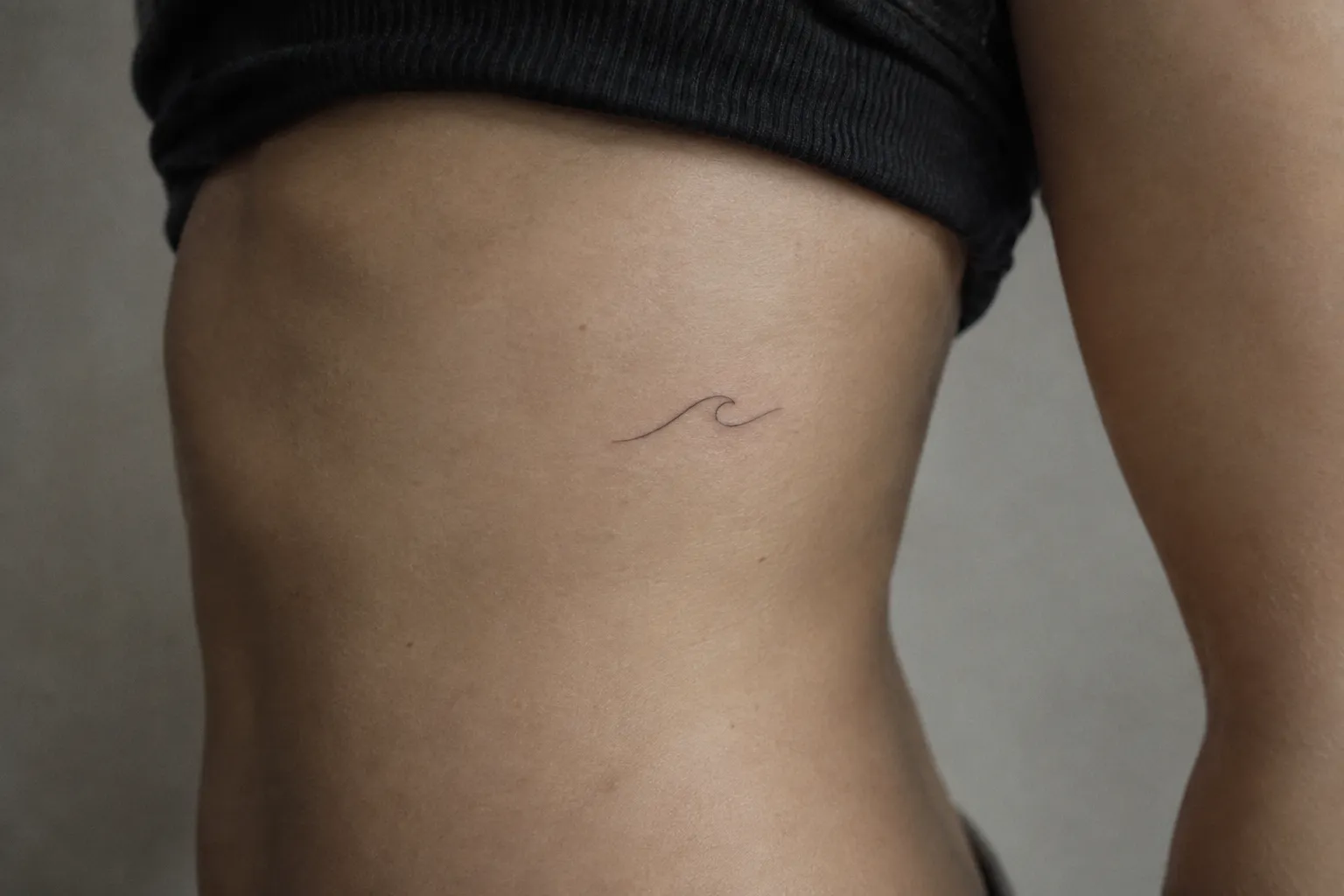
Match the placement to the detail. The smaller and more exposed the spot, the simpler the design should be. Behind the ear fits one symbol. The ankle fits a symbol, a short word or a small botanical. The wrist fits the same, with thicker lettering.
Why fingers and feet are riskier for longevity
Fingers and feet are high-motion areas, and friction makes fine lines there more likely to fade (4). The reasons stack up. Hands are washed many times a day and handle everything. The skin on fingers flexes and regenerates fast. Feet rub against shoes and socks all day. The healed hand tattoos one TikTok user posted as a warning, reported by Allure, included a small heart on a finger and a thumb design that was no longer recognizable (4).
That doesn’t mean nobody should ever get a finger tattoo. It means you should go in knowing it is a high-maintenance placement for fine-line work, and that a bolder, simpler design will hold up better than a delicate one. If discretion is the main goal and longevity matters, choose the ankle or behind the ear instead.
Fine-Line vs Single-Needle: Which Technique Holds Up Over Time
For a minimalist line tattoo, fine-line suits most small designs and single-needle suits the most delicate detail. Neither technique guarantees jet-black healed lines, and single-needle work in particular can heal dark grey (4).
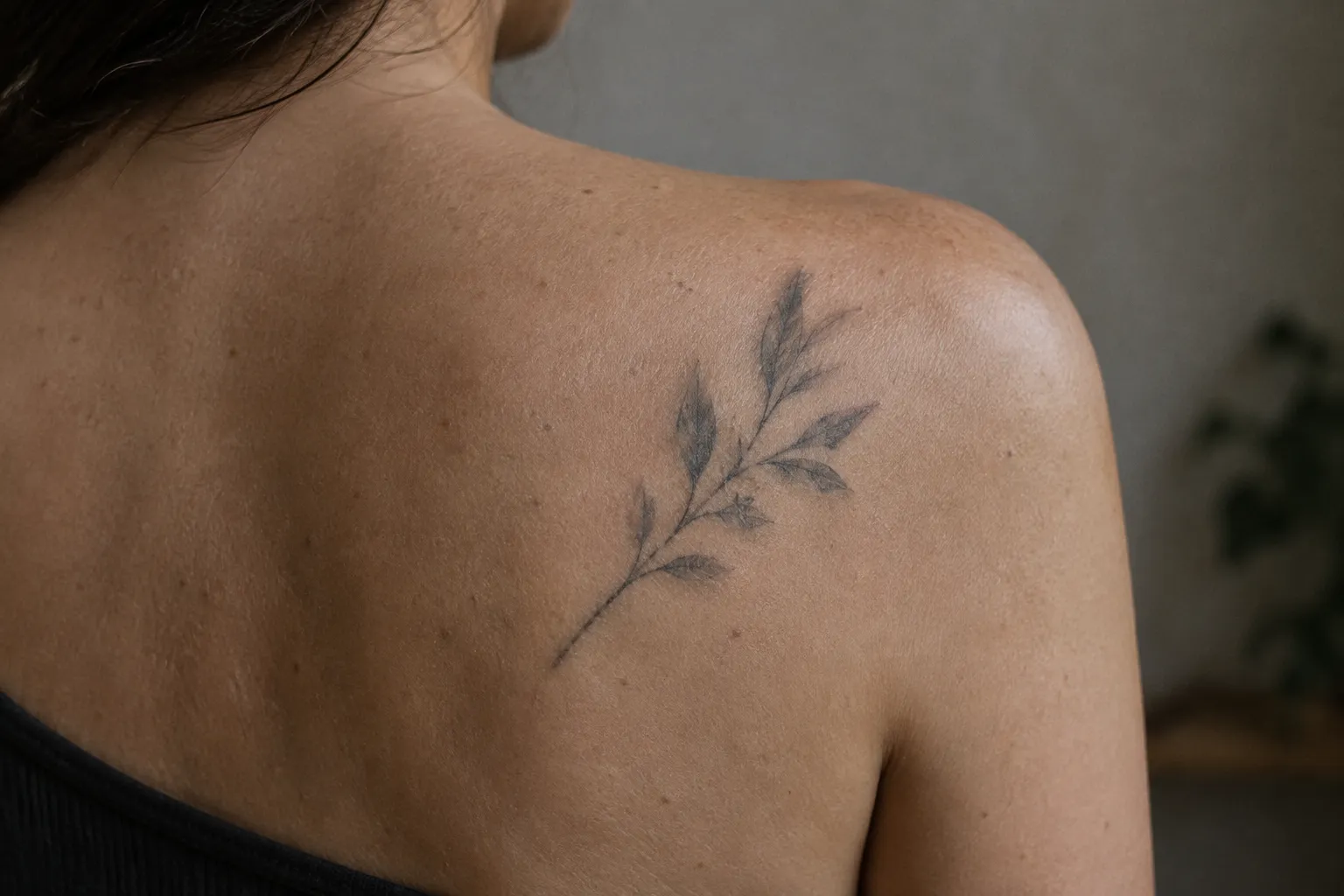
The technique conversation usually starts with “I want the thinnest, crispest lines possible.” That is a reasonable thing to want. It is also a trade-off, because the thinner the line, the less densely the ink is packed, and fine work tends to fade quicker (4).
Why single-needle doesn’t guarantee jet-black lines
Single-needle tattoos are often marketed as the way to get razor-sharp black lines. Fine-line artist Gabby Pignanelli says single-needle work may heal more dark grey (4). That healed grey is not the same thing as fading, where the ink looks inconsistent or nearly invisible in places (4).
A grey healed line isn’t automatically a bad result. On a delicate botanical or a soft fine-script word, a dark-grey line can look refined. The problem is expectation. If you picked single-needle because you wanted solid black outlines, you chose the wrong tool. Ask for a slightly heavier fine-line liner instead.
The other single-needle pitfall is control. Artist Jason Schroeder calls the single needle a very unforgiving tool that can cause a lot of damage if not used correctly, and an artist trained in single-needle work reduces the risk of scratchy lines, blowouts or lines that disappear (4). A blowout is ink spreading sideways under the skin, leaving a blurry halo along the line.
The table below lays out how the three approaches compare on line width, healed look, retouch odds and where each one fits.
Match the technique to the level of detail. A single symbol or a short block word looks good in fine-line and gains little from single-needle. A detailed botanical on the forearm is where single-needle earns its place, because there is space for the fine strokes to stay separate.
Do fine-line tattoos need retouching?
Some fine-line tattoos need a touch-up, so budget for the possibility instead of treating it as a sign something went wrong. Two facts drive this. First, deeper skin layers keep healing for months after the surface looks finished (3). Second, fine ink can heal greyer than it looked fresh (4). Between them, a line that looked even on day one can show a light patch or a softer section once everything settles.
Ask your artist about their touch-up policy at the consultation, not after. Also ask when they want to see the tattoo again. A touch-up only makes sense once the skin has fully healed, otherwise you are working on skin that is still repairing itself. Expect any retouch to address gaps or uneven sections. It won’t turn a single-needle grey into bold black.
Fine-Line, Single-Needle and Micro Compared
| Fine-line | Single-needle | Micro | |
|---|---|---|---|
| Line width | Thin; not the thinnest possible | Thinnest possible | Depends on the needle used |
| Healed appearance | Black to dark grey | Tends to heal dark grey | Depends on detail density |
| Retouch likelihood | Possible, not inevitable | More likely if a darker result is wanted | Likelihood rises with detail density |
| Suitable placement | Wrist, ankle or forearm | Low-motion spot with enough room for detail | Behind the ear or ankle for simple motifs |
Choosing a Canvas: When to Size Up for Detail and the 1/3 Rule
A detailed fine-line design needs a larger canvas, such as the forearm, shoulder or thigh: something minute that works on paper doesn’t always work on skin, and lines can heal slightly thicker (4).
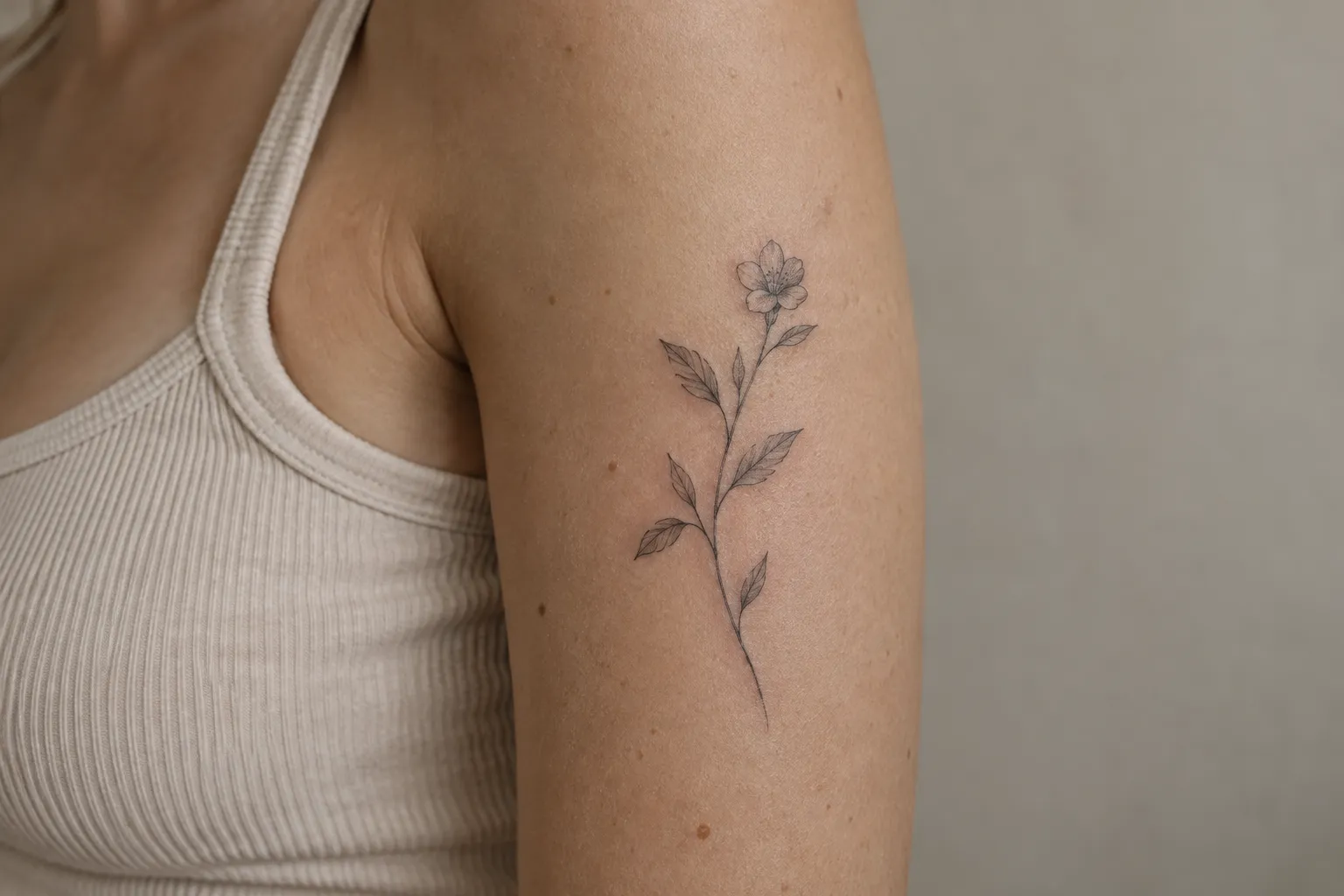
The most common minimalist regret isn’t a bad design. It is a good design made too small. All tattoos fade and change to some degree, and overly detailed micro tattoos have the least margin before that shows (4). Bold traditional work can absorb that change because its lines are thick and widely spaced. A tiny design with a dozen thin lines packed tightly together cannot.
Forearm, shoulder and thigh for added detail
If your idea has more than a few elements, such as a botanical with several leaves and a flower, a small animal with some interior lines, or a fine-line piece with dots and shading, move it to a placement with enough flat space for the detail:
- Outer or inner forearm: flat, easy to see, relatively low pain on the outer side, and it shows how fine work reads at a normal viewing distance. A piece covering the outer forearm gives single-needle detail room to breathe.
- Shoulder and upper arm: good for rounded compositions and botanicals that wrap slightly. It is easy to cover with a T-shirt sleeve.
- Thigh: the largest flat area for detailed fine-line work, discreet under most clothing, and on the outer side one of the least painful placements.
None of these is the tiny, hidden spot people imagine when they say “minimalist.” But a minimalist style doesn’t require a micro size. A clean, sparse design across a palm-sized area of forearm is still minimalist, and it will look sharp for much longer than the same drawing squeezed onto a finger.
What the 1/3 rule means for scaling a design
The “1/3 rule” in tattooing is a composition guideline, not a technical standard. As our tattoo placement guide explains, it treats roughly one-third of a limb segment as a natural visual unit for a standalone piece: the upper arm between shoulder and elbow, for example, holds one cohesive design at about that scale. The design balances its dark lines with open skin so it reads clearly.
For a minimalist piece, the practical takeaway is to leave room around the design. Negative space is part of the style, and it is also what keeps a small piece readable as it ages. Ask your artist how they apply it to your placement, since it isn’t a fixed measurement.
A simpler scaling check works alongside it. Look at the stencil from arm’s length. If you can’t tell what the design is, or if lines that should be separate look like one line, size it up or remove detail. An artist who agrees to shrink a dense design to fit a tiny spot, without warning you about blurring, is telling you something about their priorities.
How Fine-Line Ink Ages: Healing Timeline and What to Expect
Minimalist tattoos can last decades, but fine-line ink fades and softens more visibly than bold work: artist Jason Schroeder has seen fine-line pieces over 30 years old that are soft and grey yet still readable (4). The top layer peels and flakes for up to two weeks, while the skin keeps remodeling underneath for three to six months (4).
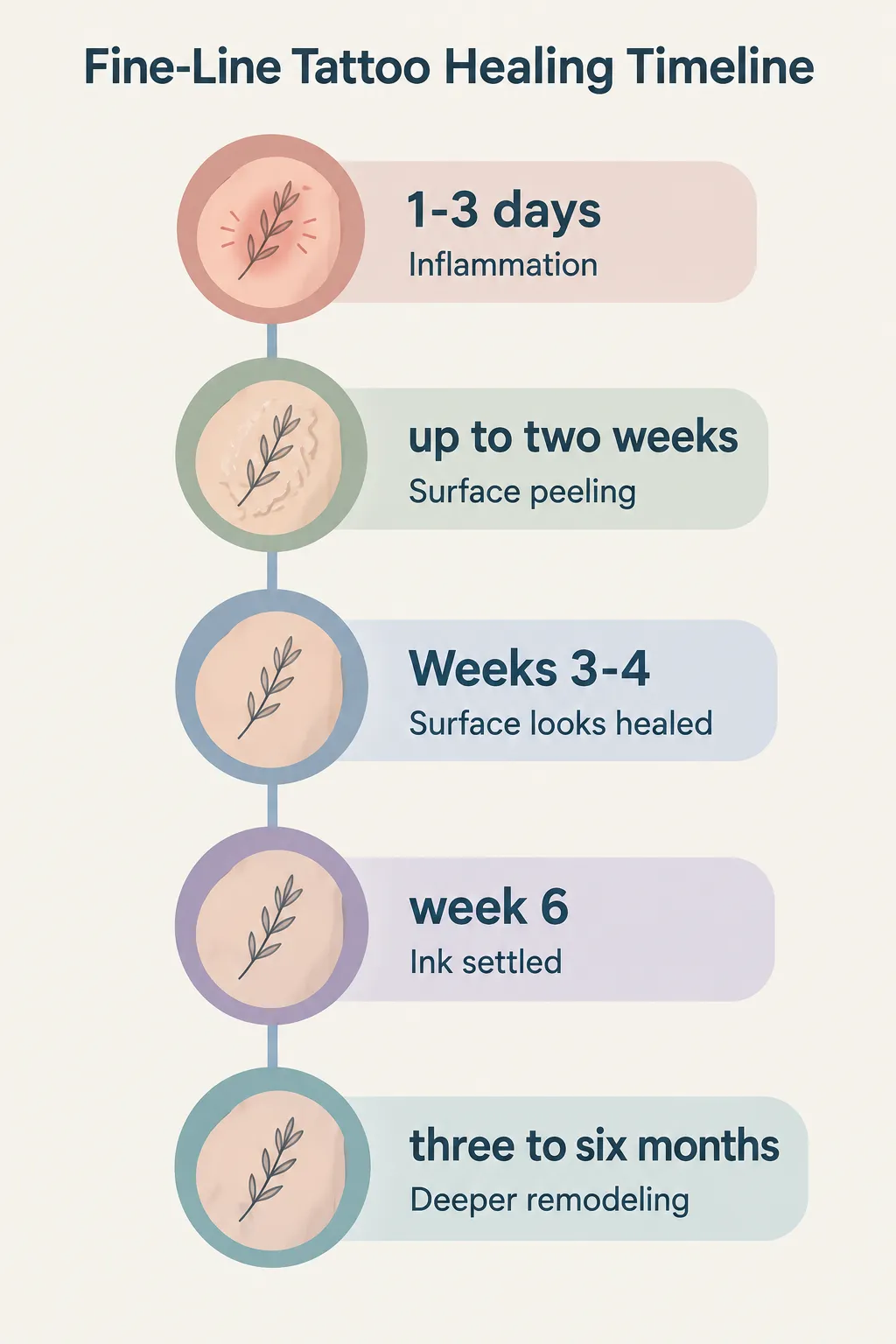 Fine-line tattoo healing progresses from about 1-3 days of inflammation to up to two weeks of peeling, with the surface typically healed in weeks 3-4, ink settled around week 6, and deeper remodeling taking three to six months.
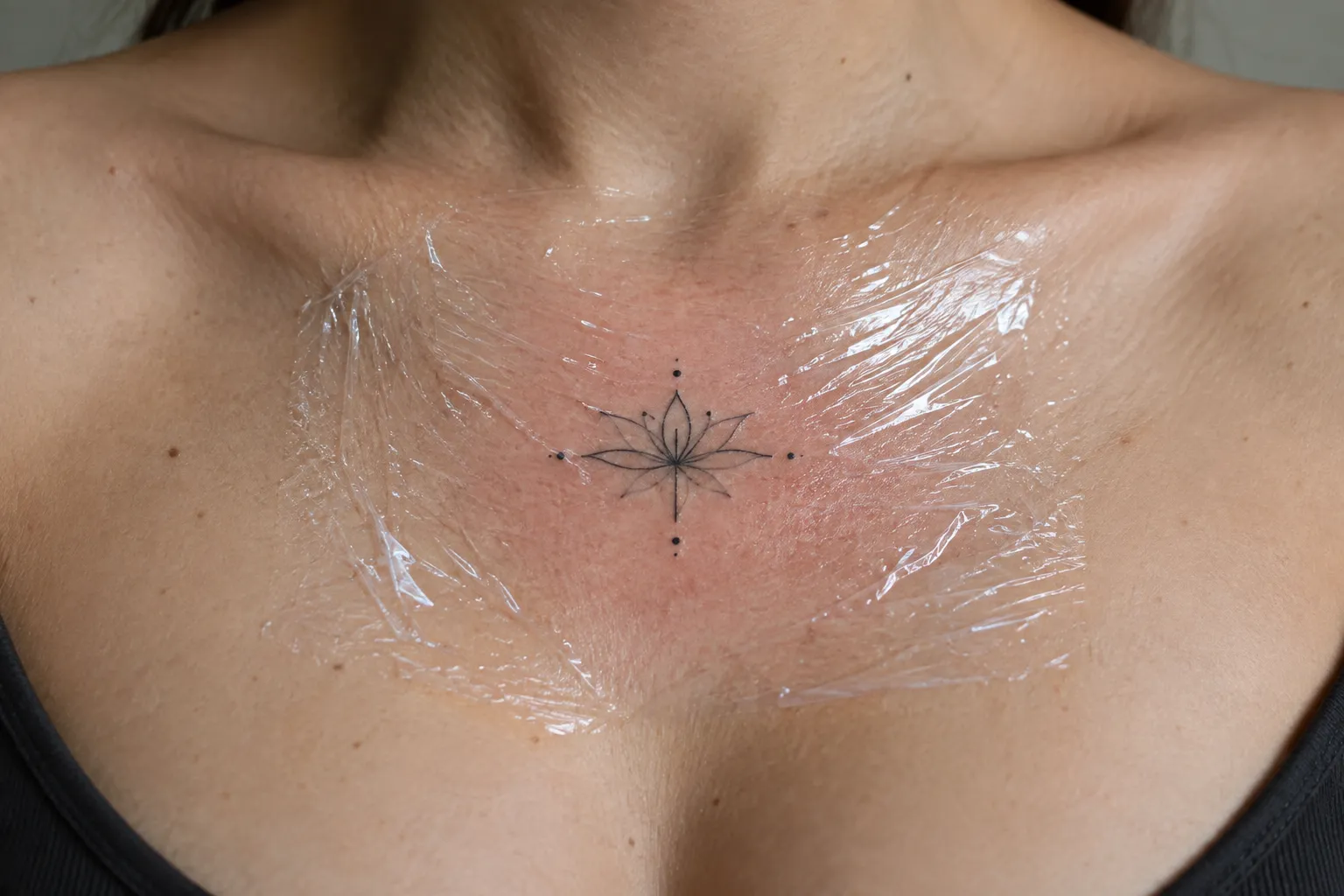
So, do minimalist tattoos last? Yes, in the sense that the ink stays in the skin permanently. What changes is how crisp it looks. All tattoos fade and soften over time (4). Thin lines have less margin before that change becomes visible, which is why placement, spacing and sun protection matter more for this style than for bold traditional work.
Why the first few weeks don’t tell the whole story
Don’t judge a fresh minimalist tattoo by its first-week look. Healing time depends on the tattoo’s size and location (3). Rachel Maiman, a board-certified dermatologist, breaks healing into three stages: inflammation for about 1-3 days, then a top layer that peels, flakes or scabs for up to two weeks, then a less visible stage in which the skin keeps remodeling underneath for three to six months (4). Dermatologist Shilpi Khetarpal describes tattoos as “controlled forms of trauma to your skin” that “need support to heal properly” (3).
What you see along the way:
- Fresh: lines look crisp and dark, sometimes slightly raised, with redness around them.
- First two weeks: flaking and itching. The tattoo can look patchy or cloudy as dead skin lifts off. This is normal and doesn’t show the final result.
- Weeks 3-4: the surface looks healed, but the skin underneath is still remodeling.
- Around week 6: the ink has settled enough to judge the design and talk about touch-ups with your artist.
- Three to six months on: the deeper remodeling finishes, and fine-line ink may have settled darker or greyer than it first appeared (4).
That is why final color and crispness can’t be judged until healing is complete: Maiman notes that a tattoo typically stays dark and somewhat dull before it takes on its more permanent color (4).
What fine-line tattoos look like years later
Healed results vary widely. The fine-line trend produced a wave of people posting their tattoos years later, with a mix of happy and disappointed owners (4). In a TikTok video Allure covered in August 2022, creator @thesnacmac asked to see fine-line, “incredibly detailed, minuscule tattoos” a year out, because her feed kept showing fresh ones (4). User @fleshtattoos905 replied that “ALL tattoos bleed out over time” and that fine line “won’t save you,” showing a set of healed hand tattoos (4).
Read those as reported experiences, not a verdict on the style: in the same thread, Portland artist Parker Midnight argued that fine line done properly holds up just fine (4). The risks Allure’s piece names match the three choices covered above: a lot of detail, a very small size and a high-motion placement like the hands (4). Avoid them and a fine-line tattoo can still look clean years later, with softer lines than day one but the design intact.
Sun exposure is the other big factor. Ultraviolet light can fade some tattoo inks (2). A fine-line ankle piece that sees beach sun every summer without protection will age faster than the same design on a covered shoulder.
Aftercare and Sunscreen Timing for Minimalist Ink
Aftercare for minimalist ink means washing and moisturizing twice daily, avoiding soaking and direct sun during healing, and switching to SPF 30+ sunscreen only after the tattoo has fully healed (3)(2).
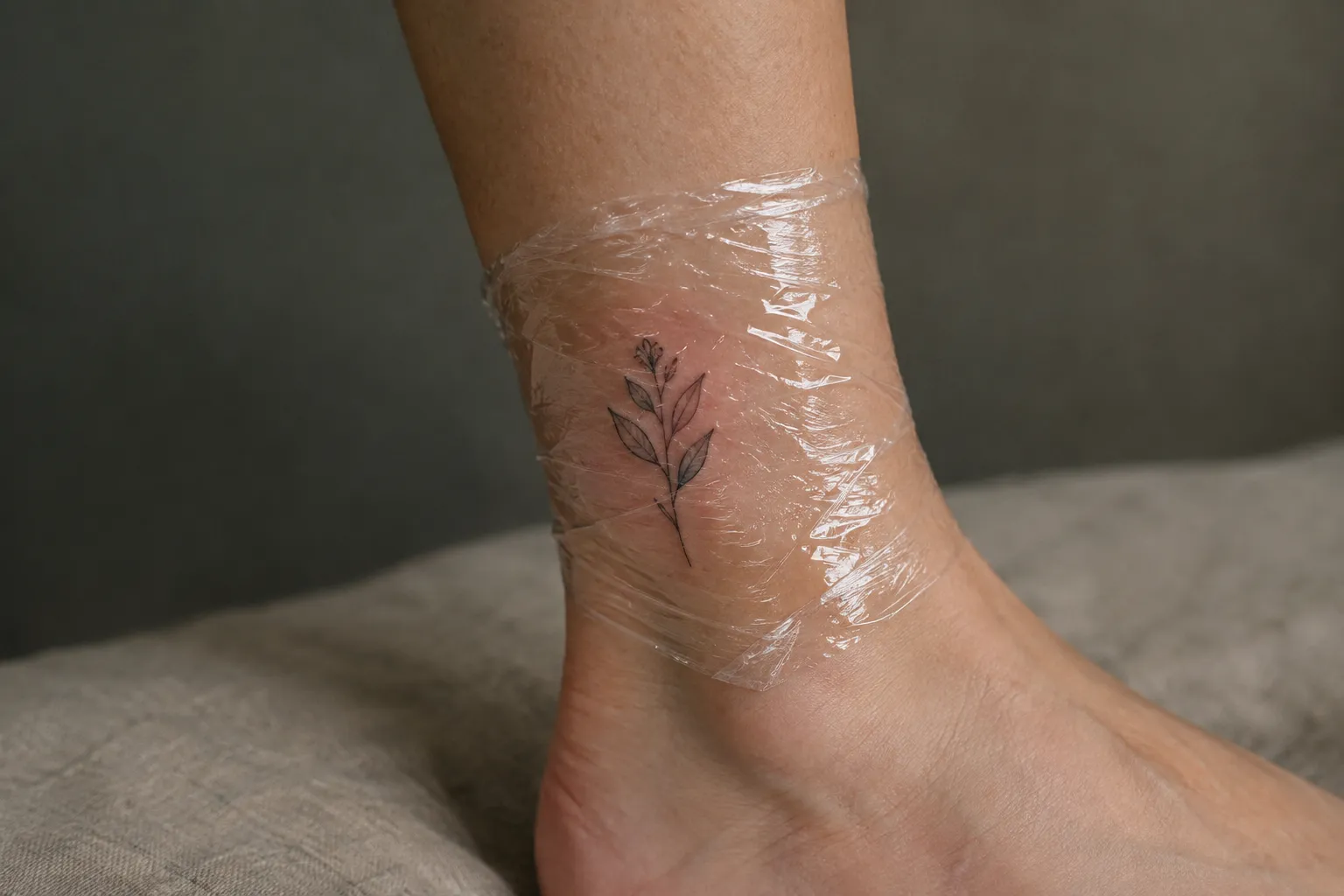
Fine-line work doesn’t need a special routine. It needs the standard routine done consistently, because a thin line has less ink to lose to a picked scab or a sunburn.
Daily care during the healing window
Cleveland Clinic’s aftercare guidance comes down to a short list (3):
- Wash the tattoo gently twice daily with a mild, fragrance-free soap.
- Moisturize twice daily with a simple moisturizer.
- Don’t pick scabs or flaky skin.
- Wear loose clothing over the area. Avoid tight clothing and exfoliation.
- Don’t submerge the tattoo. Skip pools, baths and hot tubs until it’s fully healed.
- Keep it out of direct sunlight while healing.
Here’s how that plays out over the first month:
- Day 1-3: follow your artist’s instructions on when to remove the initial covering. Then start gentle washing twice a day with fragrance-free soap, pat dry with a clean paper towel, and apply a thin layer of fragrance-free moisturizer. Thin is the key word, because a thick layer traps moisture.
- Week 1: flaking and itching usually start. Keep washing and moisturizing twice daily (3). Don’t scratch or pick, even when a flake is hanging off (3). On ankle and wrist pieces, watch for socks, watchbands and tight cuffs rubbing the area.
- Week 2: peeling and itching peak, and the skin can look shiny or milky over the lines. Keep up the moisturizer, keep wearing loose clothing over the tattoo, and keep it out of pools, baths and direct sun (3). Cover it with loose, sun-protective clothing when you’re outside, not sunscreen.
- Weeks 3-4: the surface typically looks healed, but keep direct sun off it for four to six weeks in total, as our tattoo aftercare timeline recommends. Deeper layers keep repairing for several more months (3).
Seek medical care if you have a fever, the skin around the tattoo feels hot to the touch, the pain gets worse instead of better, there is significant drainage, or redness spreads away from the tattoo (3). Those are signs of infection, not normal healing.
Switching to sunscreen once healed
Don’t put sunscreen on a healing tattoo. Cleveland Clinic advises avoiding sunscreen until the tattoo is fully healed and staying out of the sun in the meantime (3). During healing, loose clothing and shade do the job.
Once the tattoo has healed, sunscreen becomes the main tool for keeping fine lines dark. The American Academy of Dermatology advises protecting tattoos with a broad-spectrum, water-resistant sunscreen with SPF 30 or more. Apply it 15 minutes before you go outside and reapply at least every 2 hours (2). UV light can fade some tattoo inks (2). The AAD also advises staying out of tanning beds and away from sunlamps, which can fade tattoo ink too (2).
For exposed minimalist placements like the wrist, ankle and behind the ear, make sunscreen part of the routine, not a beach-day extra. Those spots get incidental sun every day, and thin lines show fading sooner than bold ones.
Frequently Asked Questions
- What is the 1/3 rule tattoo?
- The 1/3 rule is a composition guideline, not a required measurement: roughly a third of a limb segment suits one standalone piece, with open skin around the design.
- What defines a minimalist tattoo?
- A minimalist tattoo is defined by visual restraint: its main shape remains readable without texture, shading or small interior marks doing the explanatory work.
- Do minimalist tattoos last?
- Minimalist tattoos remain in the skin, but their fine details may become less distinct; choosing a design that reads without those details helps.
- Where is the most discreet place for a tattoo?
- Behind the ear is a discreet option when hair covers it; check whether your usual hairstyle leaves the spot exposed before choosing it.
- Do fine-line tattoos need retouching?
- Some fine-line tattoos benefit from a retouch, but decide only after complete healing and ask your artist what their touch-up policy covers.
- How long does a minimalist tattoo take to fully heal?
- The surface usually looks healed in three to four weeks, but allow several months for deeper healing; the tattoo's size and location affect how quickly it gets there.
- Can I put sunscreen on a new fine-line tattoo?
- Wait until the tattoo is fully healed before applying sunscreen; while it heals, use shade and clothing rather than putting sunscreen on the area.
- Is a minimalist tattoo less painful?
- A minimalist style does not make a placement less painful: the ankle and ribcage tend to hurt more than the outer forearm or outer thigh.
Before You Book: Design, Placement and Technique as Three Decisions
Treat the design, the placement and the technique as three separate decisions. Pick a motif that reads from its outline alone. Choose a placement that gives that motif enough room and low enough motion: behind the ear, the ankle or the wrist for simple pieces, and the forearm, shoulder or thigh for anything detailed. Then let the artist recommend fine-line or single-needle based on the detail, knowing that single-needle may heal dark grey (4).
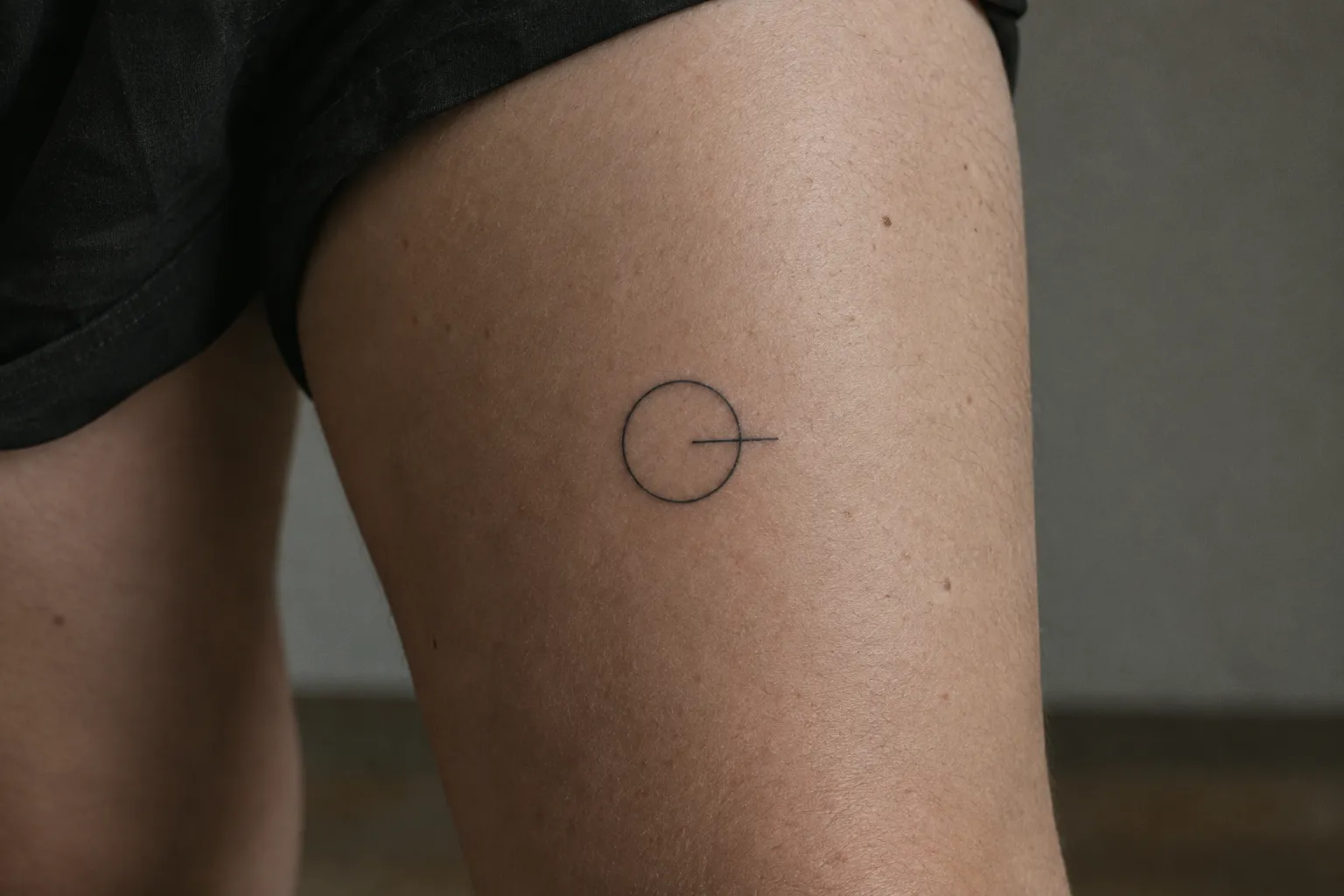
At the consultation, bring clear reference images and ask to see healed photos of the artist’s work at the same size and placement you want. Fresh shots don’t count. Plan your aftercare before the session: fragrance-free soap, a simple moisturizer, loose clothing and no swimming until the surface has healed (3), and no direct sun for the first four to six weeks. Then budget for daily sunscreen for as long as you want the lines to stay dark.