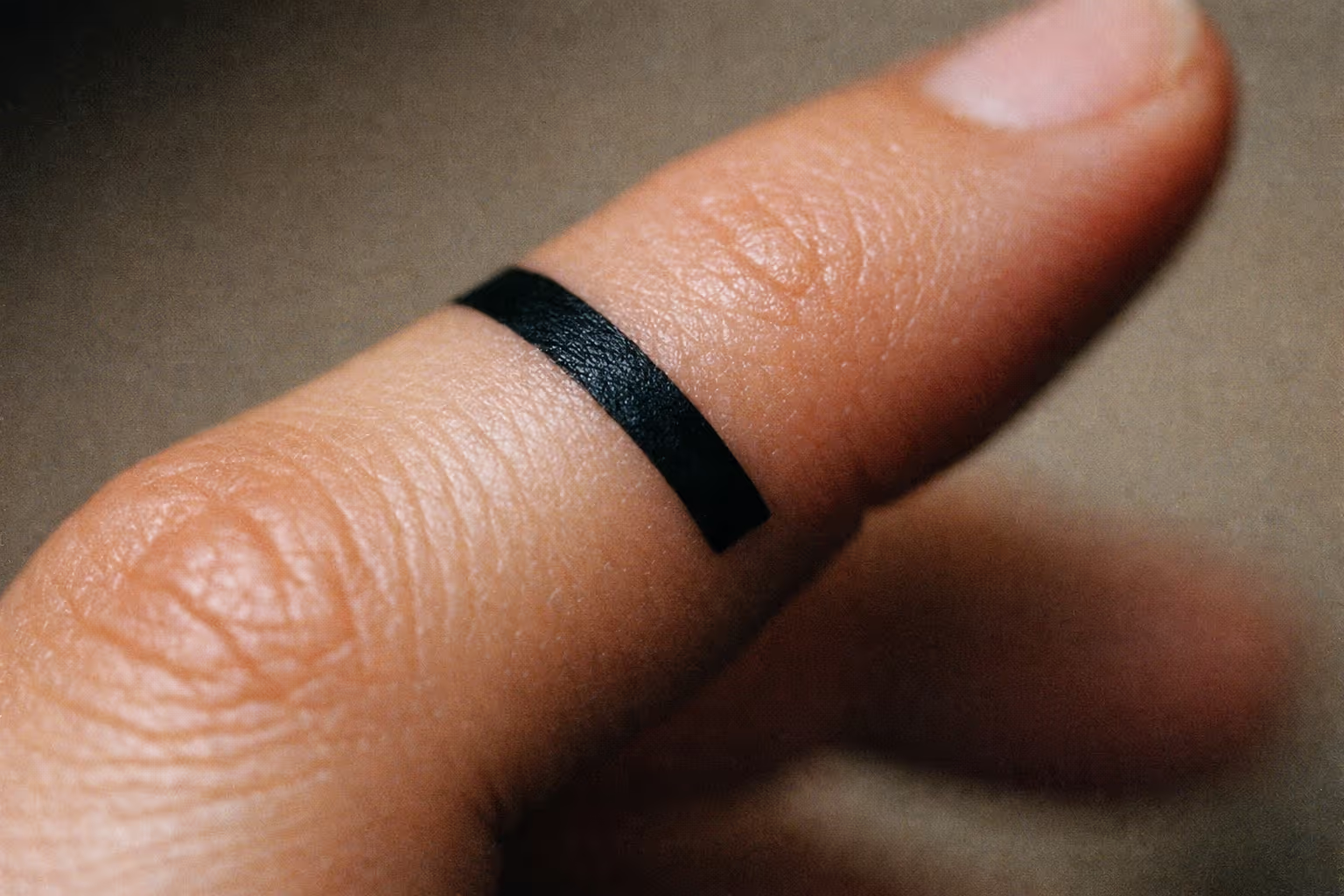
A finger tattoo placed on the inner or side surface can look patchy within months, not years. That’s not bad luck or a bad artist. The finger is one of the fastest-fading placements on the body by design: the skin turns over quickly, you wash your hands constantly, and every grip, type, and pocket-dig drags against the ink. Finger tattoos are appealing precisely because they’re small, discreet, and increasingly popular - but they’re a maintenance placement, not a one-and-done piece. This guide covers what your artist may not spell out at the consultation: the actual fade windows by zone, which designs survive and which turn into grey smudges, and the aftercare that genuinely changes the outcome. Placement zones first, then fade timelines, then what to do about it, then designs worth considering.
✓ Pros
- Small size keeps sessions short and the cost relatively low.
- Highly visible without committing to a large piece.
- Bold, simple designs can stay readable for several years with scheduled touch-ups.
- Works well as a complement to existing hand or wrist work.
✗ Cons
- Among the fastest-fading placements on the body; visible fading in 6 to 12 months is common.
- Fine-line and micro-detail designs often blur or drop out within 1 to 3 years.
- Requires recurring touch-ups every 1 to 3 years to stay legible.
- Inner finger and knuckle crease placements heal patchy for many people.
- Constant handwashing, sun exposure, and friction accelerate ink loss.
- Colored inks other than black carry higher fade risk on fingers - black ink is among the most chemically stable pigments, while many colored pigments, including some reds, yellows, and pastels, are more prone to photodegradation depending on formulation and sun exposure.
Why a Finger Tattoo Fades Faster Than Almost Anywhere Else
Finger skin fades ink faster than the back, thigh, or upper arm because it combines fast cellular turnover, constant friction, frequent washing, and near-total sun exposure in one small area. Each of those factors alone would age a tattoo faster than a covered placement. Stacked together, they make the finger one of the highest-risk longevity zones on the body (1).
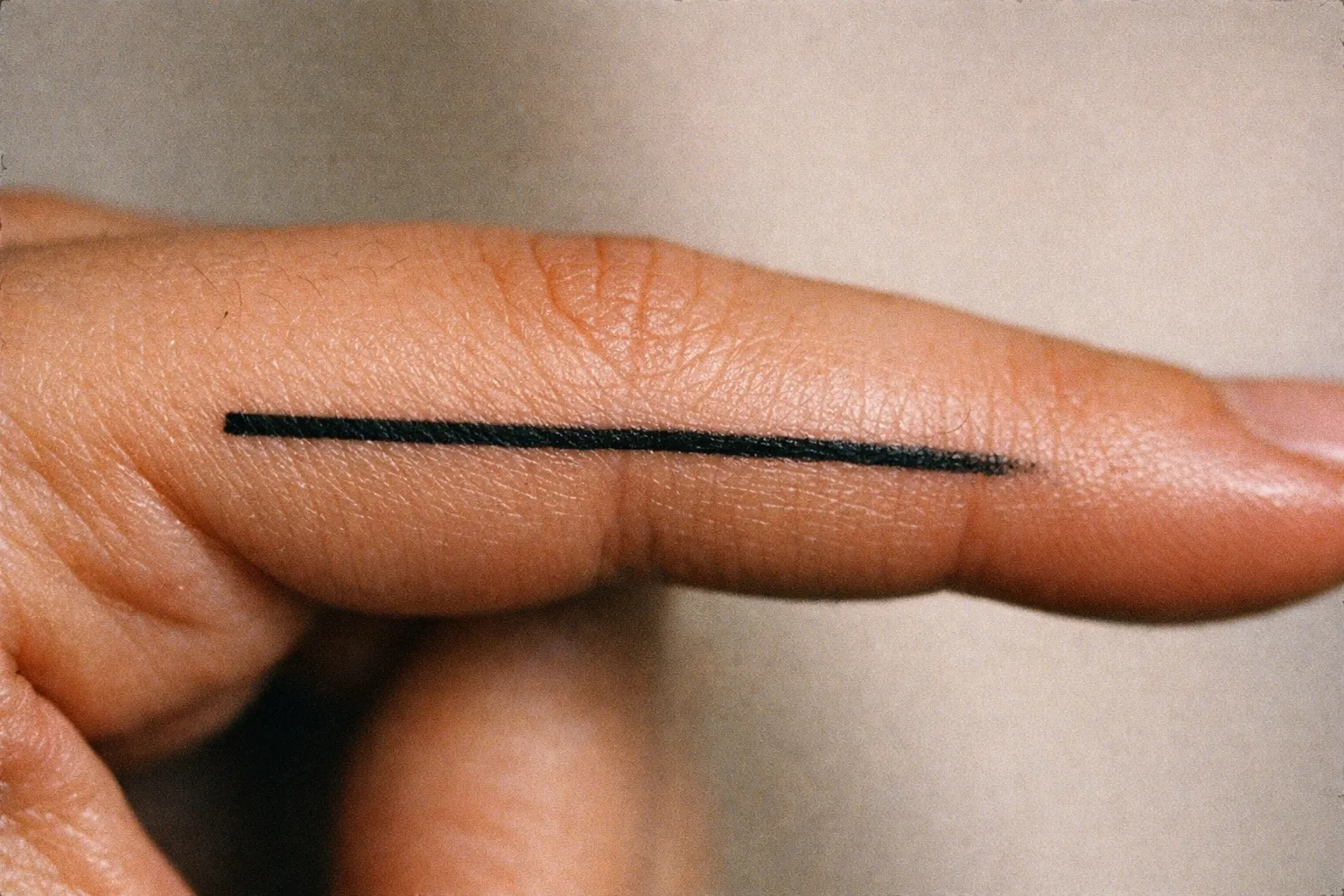
Here’s what’s actually happening. The outer skin layers on your fingers regenerate more quickly than on calmer areas, so the ink sits in a layer that’s essentially being shed and replaced faster. Add the mechanical wear: gripping, typing, and contact with every surface you touch physically abrade the tattooed skin all day. Frequent handwashing compounds it, and alcohol-based sanitizer is worse. Artists and aftercare guides consistently flag alcohol-based hand sanitizer as one of the most damaging daily habits for hand and finger tattoos - the alcohol draws out ink and disrupts the skin barrier, and frequent use compounds the friction and washing damage that already makes fingers a high-fade zone.
Then there’s UV. Your hands are almost never covered by clothing, and sun exposure is the single biggest fading factor you actually control. Exposed placements degrade pigment far faster than covered ones like the ribcage or thigh.
I’ve had clients come back six months after a finger piece looking genuinely surprised at how much it had softened. Every time, the conversation is the same: this isn’t a flaw in your artist’s technique. It’s the placement. Even a perfectly executed finger tattoo will fade faster than a forearm tattoo done by the same artist on the same day. Go in expecting that, and nothing that follows will surprise you.
The Fade Timeline You Should Actually Expect
Most finger tattoos show noticeable softening within 6 to 12 months, and intricate designs often lose legibility between 1 and 3 years, especially on the sides and inner surfaces. Those are the numbers competitors tend to skip. Here’s the realistic breakdown.
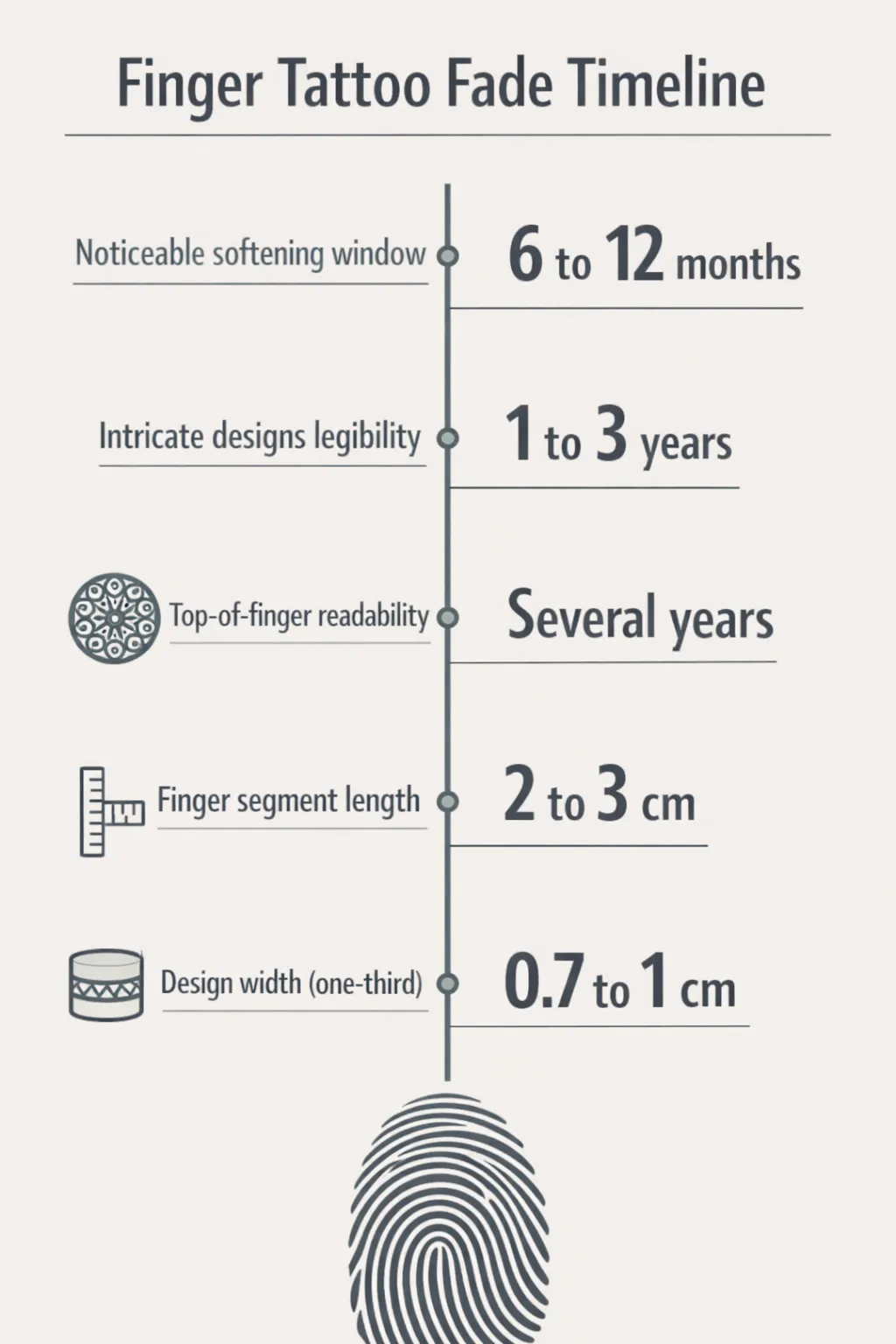 Fade timeline: 6-12 months softening, 1-3 years for intricate designs, top-of-finger readability for several years, finger phalanx length 2-3 cm, design width 0.7-1 cm.
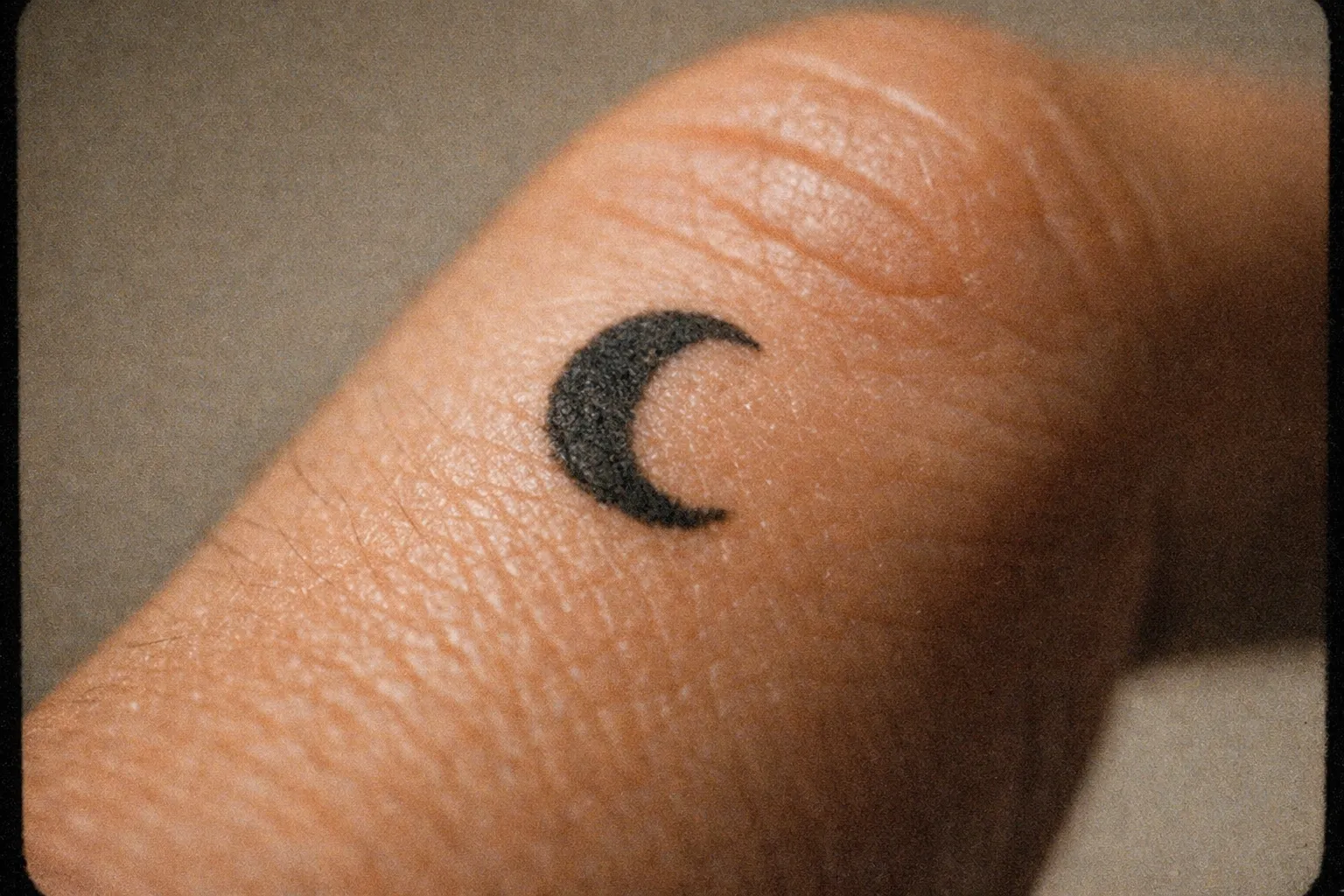
- 6 to 12 months: Noticeable softening begins on most finger placements. Fine-line work may already show gaps or blur at this stage.
- 1 to 3 years: Intricate designs - micro-florals, dense stippling, cursive lettering - often lose legibility. Side and inner finger placements hit this threshold faster than the top of the finger.
- Several years: Top-of-finger placements above the knuckle sit in a lower-movement zone and can stay readable for several years with consistent sun protection and touch-ups.
Comparative aging data on hands and wrists shows tight detail entering visible softening around the 5-year mark and full touch-up territory by roughly 10 years (1) - and that’s for the calmer hand surfaces, not the finger itself, which moves faster than all of them.
On touch-ups: most artists recommend booking a refresh within 6 to 12 months of the original session, then ongoing maintenance every 1 to 3 years for the placement’s lifespan. Fine-line work is the category that needs it soonest, and plenty of clients are back within 3 to 6 months.
One caveat that trips people up: the outer layers of skin close in roughly 3 to 6 weeks, but full deeper healing takes several months. What you see at week two - dull, slightly faded, a little flat - is not the final result. The tattoo settles as the deeper layers heal, so don’t judge the outcome or book a panic touch-up before month three.
Placement Zones Compared: Top, Side, Inside, and Knuckle
No placement on a finger is low-maintenance, but the four zones are not equal. Where you put the design changes its lifespan by years. Here’s how they stack up before we get into the detail.
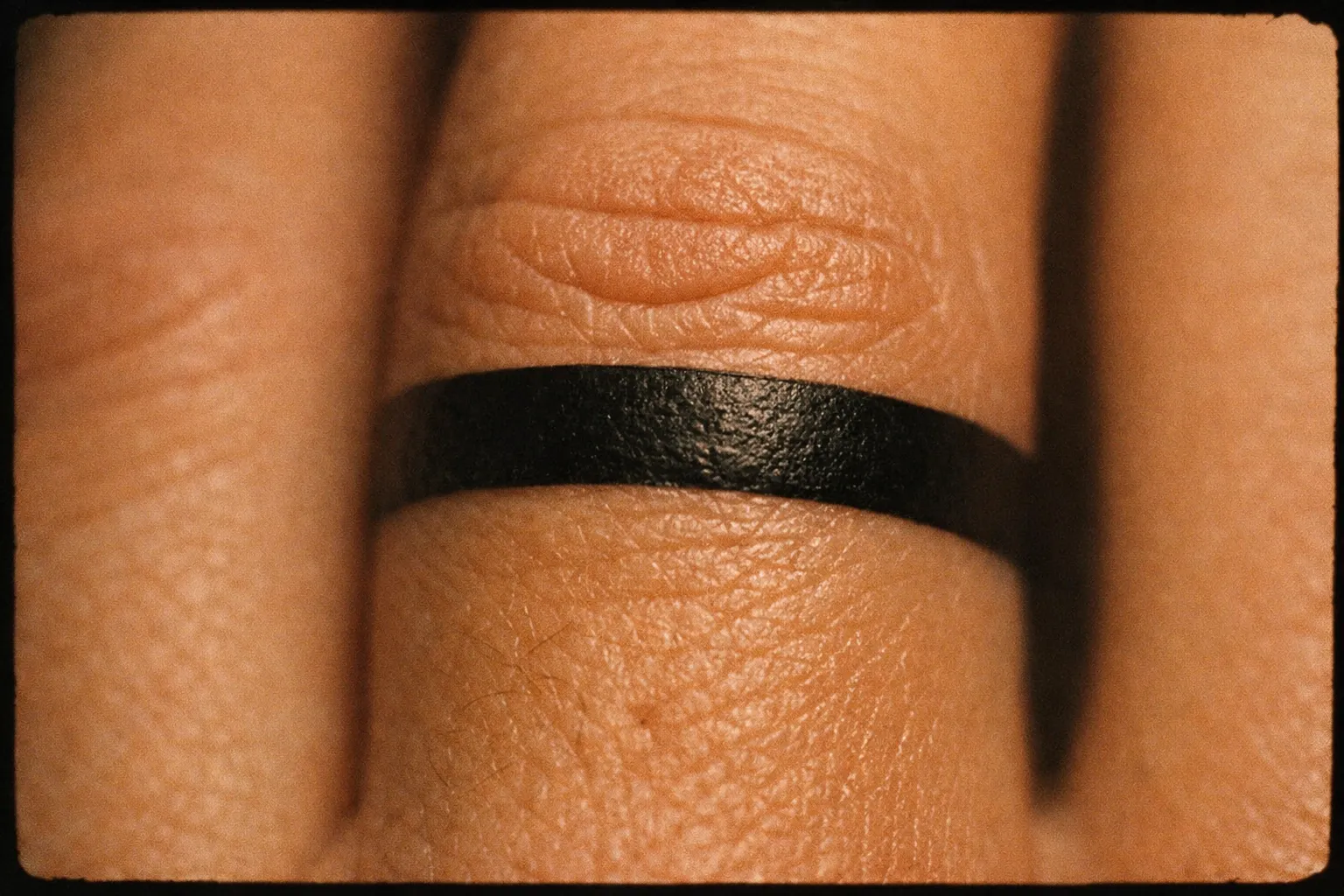
Finger Tattoo Placement Zones Comparison
| Top of finger (above knuckle) | Side of finger | Inside of finger (palmar) | Knuckle crease | |
|---|---|---|---|---|
| Longevity | Best on fingers | Moderate to poor | Poor | Poor |
| Healing Difficulty | Moderate | High | Very high | High |
| Pain (relative) | Sharp but manageable | Sharp, nervy | Sharp, sweaty | Worst on fingers |
| Best Design Type | Bold symbols, bands | Bold single-stroke icons | Not recommended for detail | Simple bands above the crease |
| Touch-Up Frequency | Every 1 to 3 years | Every 1 to 2 years | Every 6 to 12 months or sooner | Every 6 to 12 months |
Top of Finger (Above the Knuckle)
The top of the finger, above the knuckle, is the best-compromise placement for longevity because it sits in a lower-movement zone with less friction than the sides or palm. This is the surface that can actually stay readable for several years if you protect it from sun and schedule touch-ups. It still fades faster than a forearm or upper arm - don’t compare it to those - but among finger options, it’s the one that rewards a bold design with real lifespan.
Side of Finger
The side of the finger is a high-fade zone because it’s in near-constant contact with adjacent fingers and objects, so friction is relentless. Gaps and patchiness can appear within weeks to months on some people, especially with fine lines.
Do tattoos on the side of your finger last? They can stay visible for a year or two, but expect visible fading in that window and plan touch-ups accordingly. Bold, simple designs hold up far better here than fine lines - single-stroke symbols outperform text every time.
Can I get a tattoo on the side of my finger? Yes, and most artists will do it. A good one will tell you upfront it’s a high-fade zone. It’s viable if you go in with realistic expectations: bold design, scheduled touch-ups, daily sun protection after healing.
Inside of Finger (Palmar Side)
A tattoo inside the finger, on the palmar side, is the hardest placement to keep legible because it exposes ink to sweat, soap, gripping surfaces, and the highest friction on the entire hand. I’ve seen this zone heal patchy even when the client followed aftercare perfectly - ink loss during healing is common, not a fluke. Major fading or near-disappearance within months to a couple of years is a realistic outcome, not a worst case. Many artists will steer you away from this placement for anything you actually want to read long-term.
Knuckle Crease
The knuckle crease flexes hundreds of times a day, so fine lines placed directly across it blur quickly and often need touch-ups within the first 6 to 12 months. There’s a simple fix: position rings or bands slightly above the knuckle crease rather than directly on it. Artists recommend this consistently, and it can extend legibility by several years compared to crease placements. If you’re set on a wedding band tattoo here, factor in repeated touch-ups over a 5 to 10 year horizon.
Pain by Placement: What to Expect on Each Zone
Finger tattoos hurt more than forearms because the skin is thin, the bone is close, and the nerve endings are dense across the whole hand. Dermatology explanations of tattoo pain point to exactly that combination - thin skin over bone with dense nerves - as what makes fingers and hands sharper than fleshy placements.
Ranking the finger zones:
- Knuckle crease and side of finger: the sharpest zones. Bone contact with minimal cushioning, comparable to knuckle work on a skeleton hand piece.
- Top of finger (above knuckle): still sharp, but more manageable than the crease or side.
- Inner finger (palmar side): sharp and nervy; sweat and movement during the session can complicate the process.
How bad does a side finger tattoo hurt? It’s a sharp, scratchy sensation rather than a dull ache, and it’s noticeably more intense than the top of the finger. The one mercy is duration - finger tattoos are small, so even an intense session is usually brief. Eat well and stay hydrated beforehand, and skip the alcohol; both help you tolerate the sensation and avoid getting lightheaded.
The 1/3 Rule and Other Sizing Guidelines for Fingers
The 1/3 rule is a general tattooing guideline that a design should occupy roughly one-third of the available placement area - large enough to read and age cleanly, small enough not to crowd the space. It’s not a law, but it’s a useful check against the two most common sizing mistakes: cramming detail into nothing, or overfilling a small zone.
Applied to fingers, the math is straightforward. A finger segment - one phalanx - runs roughly 2 to 3 cm on most adults. A design filling about one-third of that zone, roughly 0.7 to 1 cm, has a far better chance of staying legible than a micro-design jammed into 3 mm.
Line weight matters as much as overall size. Lines under 0.3 to 0.5 mm width often lose legibility within 1 to 2 years on fingers, because tight details merge as ink spreads microscopically over time. Bold, clean strokes age better - full stop. For text, block lettering shorter than ¼ inch (6 mm) is high-risk for blur on side or inner fingers, and cursive or ultra-fine scripts, which need ½ inch or more, rarely fit a finger at a legible size.
When in doubt, go slightly larger and bolder than you think you need. Designs always look smaller once they’ve healed and settled, and the bold version is the one still reading at year five.
Finger Tattoo Ideas and Designs That Actually Hold Up
The design choice is inseparable from the placement and longevity question. A micro-mandala on the inner finger and a bold dot on the top of the finger are two completely different commitments. Here are the finger tattoo ideas that survive - and the ones that don’t.
Bold Symbols and Geometric Shapes
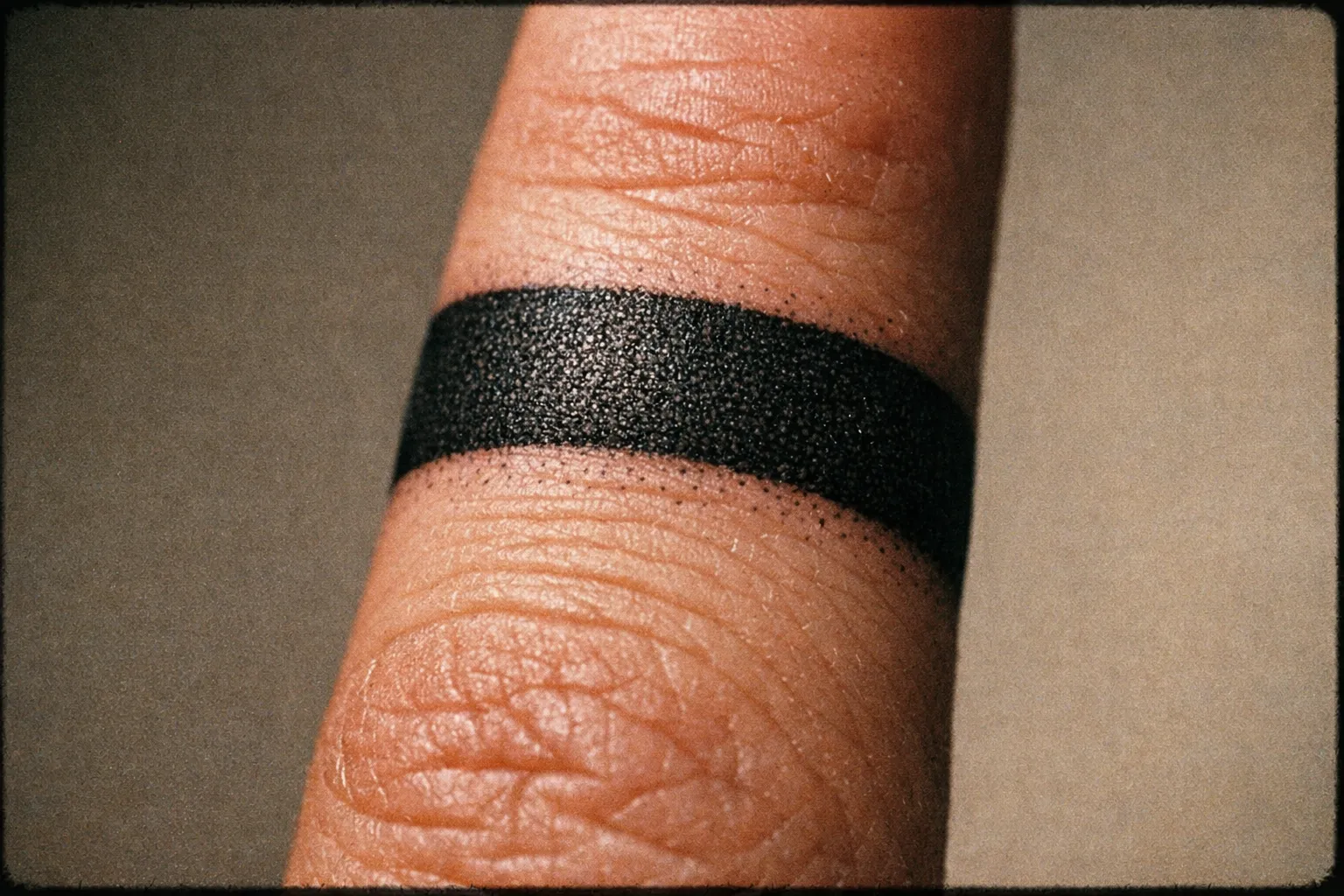
Solid black dots, small triangles, simple arrows, and clean geometric outlines are the strongest performers on fingers. Thick outlines and solid fills hold contrast as the skin softens, and negative space keeps reading clearly even after fading begins. Bold blackwork in low-friction, sun-protected placements can remain readable for roughly 10 to 20 years before needing major reworking, while dense fine detail typically shows noticeable softening within 5 to 10 years - and those windows apply to calmer placements, not fingers, which move faster than all of them.
A small finger tattoo in this style - a single bold symbol at 0.5 to 1.5 cm on the top of the finger - is a realistic long-term choice. The American traditional hallmarks apply here at small scale: thick black outlines and a limited palette, the same two technical features that make those designs age well on forearms. The pitfall when artists execute this style badly is going too light on the outline weight, thinking it’ll look cleaner - it won’t at year three.
Bands, Rings, and Simple Line Patterns
Minimalist bands, chevrons, simple runes, and single-stroke geometric rings are the finger tattoo patterns that age best, because they carry few strokes per element. Dense ornamental work does the opposite - lace and intricate ring designs tend to blur into a grey band within a few years. Position rings slightly above the knuckle crease, not directly on it, to buy years of legibility. If you’re doing a wedding band tattoo, go in knowing 5 to 10 years of periodic touch-ups is the realistic maintenance commitment.
Lettering and Text: Where It Works and Where It Doesn’t
Text can work on fingers, but only if the letters are large enough and the font is clean and bold. The risk zone is cursive or ultra-fine script on side or inner fingers, where it can’t reach the ½ inch (12-13 mm) letter height script needs - illegibility within 1 to 3 years is common there. The better approach is a single bold initial or a short word in a clean sans-serif or block style, placed on the top of the finger and sized to fill the segment. Small text and dense ornamental work on hands hit touch-up territory significantly earlier than bold symbols and single-stroke icons.
I’ve watched clients bring in reference photos of beautiful cursive finger scripts and I always have the same conversation: that photo is fresh, probably taken the same day. Ask to see it healed at two years.
Skull, Bone, and Figurative Small Designs
A skull finger tattoo or a bone finger tattoo works best in bold blackwork - a small stylized skull or a knuckle-bone graphic reads at year five, while fine-line realism at finger scale blurs quickly. The gun finger tattoo (the finger-gun gesture rendered as a small linework icon) is a popular motif, and it holds up best as a bold outline rather than detailed shading. The rule across all figurative designs at this scale: keep it to a recognizable silhouette in solid black. A micro-detailed portrait crammed onto a phalanx does not survive.
What to Avoid
- Micro-mandalas, dense stippling, and tiny florals - these become grey blurs within 1 to 2 years on fingers. Even a well-executed flower tattoo in fine-line style will struggle on this placement.
- Fine line finger tattoos with lines under 0.3 mm: the current trend, and the single highest-risk choice for longevity. Beautiful fresh, often unreadable within two years.
- Colored inks other than black. Black ink - typically carbon-based - is among the most chemically stable and UV-resistant pigments used in tattooing; many colored pigments, including some reds and yellows, are more prone to photodegradation depending on pigment chemistry, ink formulation, and sun exposure. On a high-friction placement like a finger, that instability compounds quickly, so black is the safer long-term choice if longevity matters.
- Intricate cursive or micro-script on inner or side placements.
Aftercare That Actually Affects How Long Your Placement Lasts
Fingers are the hardest placement to protect during healing because you use them constantly. You can’t stop washing your hands or gripping things, which is exactly why the aftercare here has to be more deliberate than for a forearm piece.
The First 3 to 7 Days (Highest-Risk Window)
Keep the tattoo covered and moist with a breathable dressing or a thin layer of ointment. That reduces scab formation and ink loss during the highest-movement period. Here’s the early routine:
Early Healing Routine for Finger Tattoos (Days 1-7)
7 daysStep-by-step care to protect your finger tattoo during the highest-risk healing period.
- 1
Leave initial bandage on
Keep the initial bandage on for 12 to 24 hours to protect the fresh tattoo.
- 2
Wash gently
Clean the tattoo 1 to 2 times daily with mild, fragrance-free soap, then pat dry without rubbing.
- 3
Apply ointment
Use a thin layer of unscented aftercare ointment to keep the tattoo moist.
- 4
Avoid alcohol-based sanitizer
Skip alcohol-based hand sanitizers, which draw out fresh ink; use soap and water instead.
- 5
Reapply ointment or dressing
As needed throughout the day, keep the tattoo moist with ointment or a breathable dressing.
- 6
Avoid soaking
Keep your hand out of pools, oceans, and soaking baths to prevent ink loss.
Avoid submerging the hand for at least two weeks. If your work or environment makes protection difficult, loose cotton gloves help.
Weeks 1 to 4: Surface Healing and What “Settled” Actually Means
Scabbing and flaking are normal in the first two weeks (3), and most of the flaking lands between roughly day 6 and day 14 (5). Do not pick - pulling a scab off a finger tattoo pulls ink with it and leaves you patchy. As the flaking starts, switch from ointment to a fragrance-free moisturizer. Surface healing completes for most people somewhere in the first couple of weeks, and the tattoo will look dull or faded at that stage.
That’s normal. Full deeper healing takes about 3 to 4 months (5), and the brightness and contrast you see at week two is not the final result. Keep moisturizing daily throughout.
Long-Term Maintenance: What Actually Slows the Fade
A broad-spectrum, water-resistant sunscreen of SPF 30 or more on the healed tattoo, applied 15 minutes before you go out and reapplied at least every two hours, is the single most effective tool for slowing UV-driven fading (11). Daily fragrance-free moisturizing even after full healing keeps the skin flexible and may reduce the micro-cracking that contributes to visual blur over the years. Book a touch-up with your original artist within 6 to 12 months so they can adjust line weight and fill gaps based on how your skin held the ink. Then plan for ongoing touch-ups every 1 to 3 years. That’s not a sign something went wrong - it’s the expected maintenance schedule for this placement.
Mistakes That Guarantee a Patchy Result
Most finger tattoo regret is predictable, and every item below is avoidable.
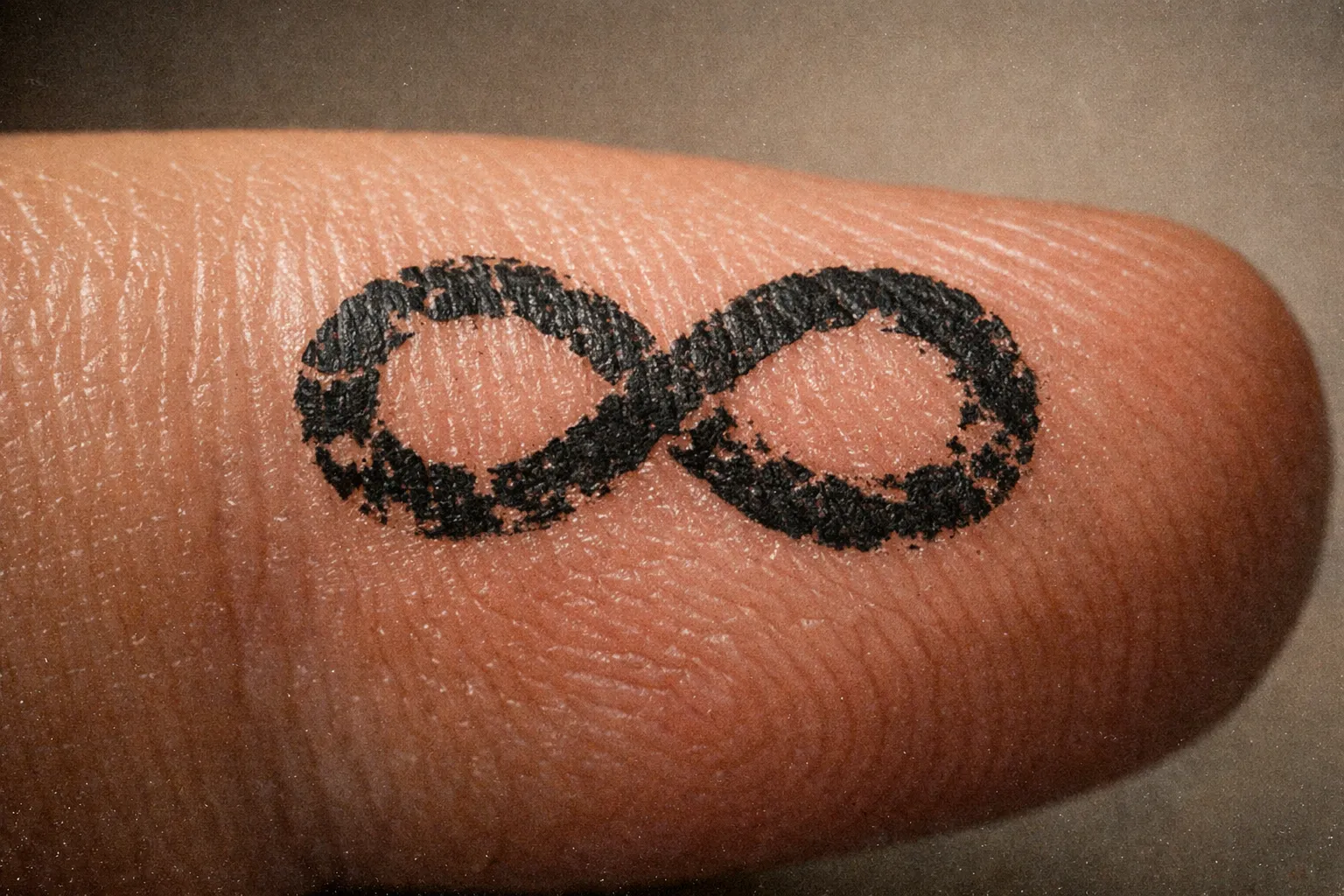
- Choosing intricate micro-detail. Tiny mandalas, microscopic florals, and dense stippling become grey blurs within 1 to 2 years, especially on sides and inner placements, because tight details merge as ink spreads.
- Placing fine-line work on the knuckle crease or inner finger. These are the highest-flex, highest-friction zones. Rapid patchiness within months is the norm, not the exception.
- Treating a finger tattoo like a low-maintenance placement. Skipping daily moisturizer and sunscreen leads to noticeably faster fading than a calmer zone like the upper arm.
- Overwashing or using harsh products in the first 2 to 3 weeks. Rubbing alcohol, strong detergents, and high-alcohol sanitizer draw out ink and increase patchiness. Heavy sanitizer use is damaging - alcohol-based formulas draw out fresh and settled ink alike, and frequent daily use is consistently flagged by artists as a significant contributor to accelerated fading on hand placements.
- Assuming it will age like a forearm or back tattoo. The friction and skin turnover rate simply aren’t comparable.
- Not budgeting for recurring touch-ups. The disappointment when the tattoo softens is entirely avoidable if you plan for maintenance from the start.
- Comparing your healed tattoo to fresh photos online. Fresh tattoos always look sharper. Healed examples are the honest benchmark.
Frequently Asked Questions
- How bad does a side finger tattoo hurt?
- Side finger skin is thin, nervy, and sits close to bone - the sensation is sharp and more intense than the top of the finger. It's comparable to knuckle work. Sessions are short, which helps, but it's not a gentle placement. Eat beforehand and expect a sharp, scratchy feeling rather than a dull ache.
- Do tattoos on the side of your finger last?
- They can stay visible for a year or two, but side placements fade faster than the top of the finger because of constant friction with adjacent fingers and objects. Gaps and patchiness within weeks to months are common for fine-line work. Bold, simple designs hold up better. Plan for touch-ups within the first year.
- Can I get a tattoo on the side of my finger?
- Yes - most artists will do it, but a good one will tell you upfront that it's a high-fade zone. The ink sits in skin that experiences near-constant friction and movement. It's viable if you go in with realistic expectations: bold design, scheduled touch-ups, and daily sun protection after healing.
- What is the 1/3 rule tattoo?
- A general sizing guideline: a design should occupy roughly one-third of the available placement area to read well and age cleanly. On a finger segment (roughly 2-3 cm on most adults), that means a design around 0.7-1 cm - large enough to hold detail, small enough to fit the space without crowding.
- How often do finger tattoos need touch-ups?
- Most artists recommend a first touch-up within 6-12 months, then ongoing maintenance every 1-3 years depending on placement and lifestyle. Inner finger and side placements need more frequent attention than top-of-finger work. Budget for this from the start - it's not optional if you want the tattoo to stay legible.
- What finger tattoo designs age the best?
- Bold symbols, solid geometric shapes, simple bands placed above the knuckle crease, and clean single-stroke icons in black ink. Anything with thick outlines and minimal fine detail holds contrast as the skin softens. Avoid micro-detail, cursive text, block letters under ¼ inch (6 mm), and colored inks if longevity is the priority.
What Actually Determines Whether Your Finger Tattoo Lasts
Three decisions determine the outcome, and you control all of them.
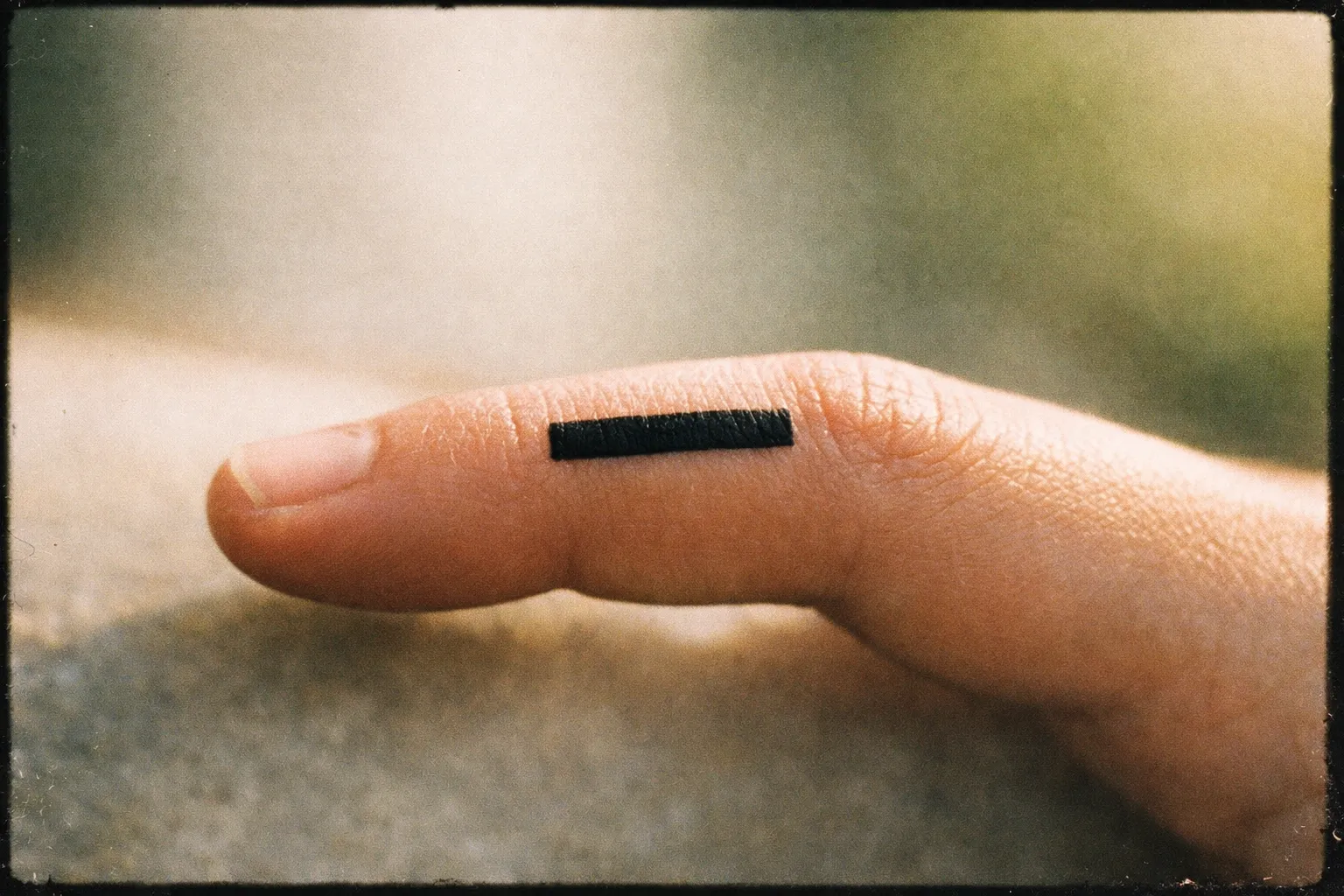
Placement. The top of the finger above the knuckle is the most forgiving; the inner finger and knuckle crease are the least. If longevity matters more than the exact spot, choose the top surface and place any band slightly above the crease.
Design. Bold, simple, black ink. Anything with fine lines under 0.3 to 0.5 mm or text under ¼ inch (6 mm) in height is a maintenance commitment - go in knowing which one you’re signing up for.
Aftercare and sun protection. A broad-spectrum SPF 30+ sunscreen reapplied at least every two hours outdoors, daily fragrance-free moisturizer after healing, and a touch-up booked within 6 to 12 months are the practical levers you actually pull.
Finger tattoos are a maintenance placement. The ones that still look good at year five belong to people who planned for touch-ups, chose a bold design, and treated sun protection as non-negotiable - not to people who hoped for the best and then compared their healed tattoo to a fresh photo online.