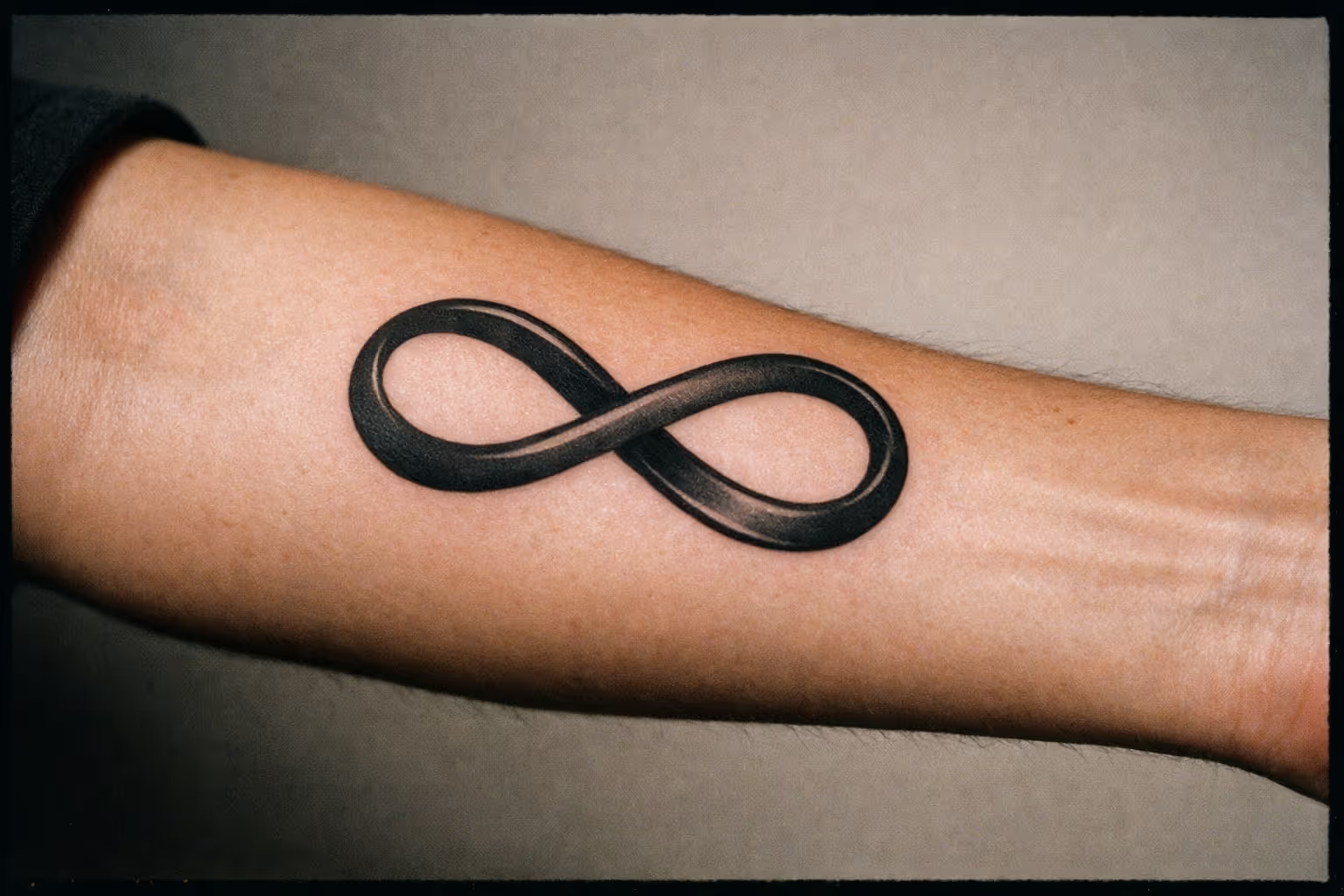
The loop is what kills an infinity tattoo. Done under an inch in the thin, delicate lines everyone asks for, the two curves bleed toward each other and close up - within five years your crisp symbol is an oval blob. It’s the rare design where going slightly bigger and bolder isn’t a style call, it’s survival. Here’s the sizing, placement, and cost math that keeps the loop open, plus where the symbol really comes from.
What an Infinity Tattoo Actually Means
The infinity symbol comes straight from mathematics - a value without limit, formalized by English mathematician John Wallis in the 1600s. Not an ancient sacred symbol, despite what Pinterest captions suggest. In tattoo culture, that mathematical concept loosens into eternity, limitless possibility, forever-love, friendship, faith, hope, strength, family, and in some readings rebirth or reincarnation (1)(3)(4). That’s a lot of weight for one loop.
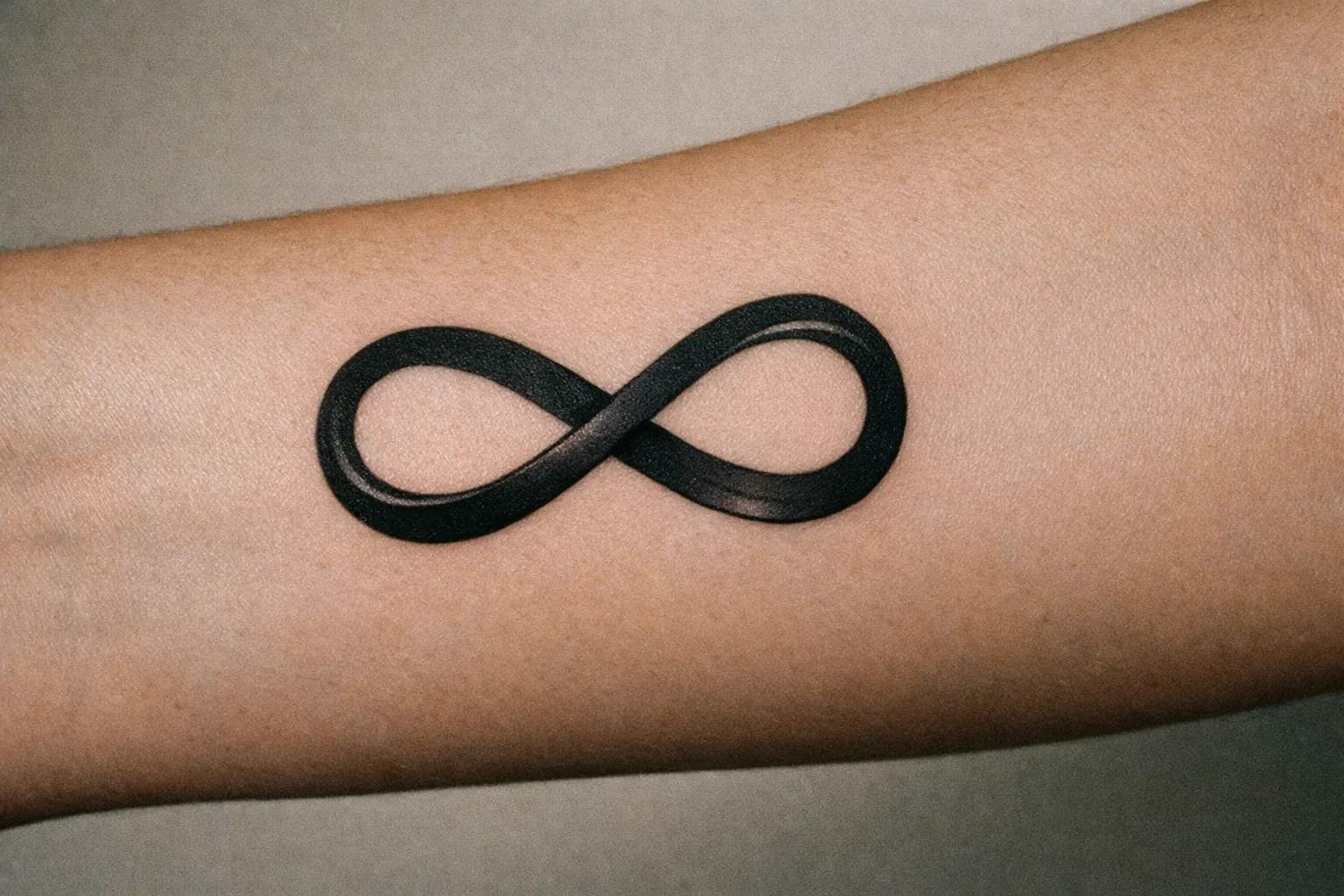
There is no single correct meaning here, and I’d be doing you a disservice pretending otherwise. The infinity tattoo is essentially a container. What you put inside it - a name, a heart, a date, a word like family or faith - is what actually fixes the meaning. A plain infinity symbol on the wrist reads as “endless something.” Endless what is up to you and whoever asks.
A few cultural notes worth flagging:
- The looped figure 8 also appears in the ouroboros family of “no beginning, no end” symbols across multiple cultures, which is where the rebirth reading comes from (1).
- In modern Western tattoo culture, the dominant reading is romantic (“forever”) or familial (“always”). That’s a shift from its earlier mathematical and philosophical use.
- The mathematical symbol itself was formalized by John Wallis in 1655 and is not rooted in Celtic, Polynesian, or Japanese tradition - though visually similar endless-loop motifs do appear in Celtic knotwork, so the overlap isn’t purely coincidental. When people ask if the infinity tattoo carries sacred meaning from a specific tradition, the honest answer is: not the way a Maori ta moko or a Buddhist enso does.
Is an Infinity Tattoo Good or Bad?
Neither. It’s a neutral symbol. No curse attached, no taboo. Cultural appropriation concerns are generally lower here than with sacred Polynesian, Maori, or Hindu iconography - the infinity symbol doesn’t carry the same tribal or spiritual status - though individual views on what counts as appropriation vary, and that’s worth acknowledging rather than dismissing. The “good or bad” question usually comes from two different worries.
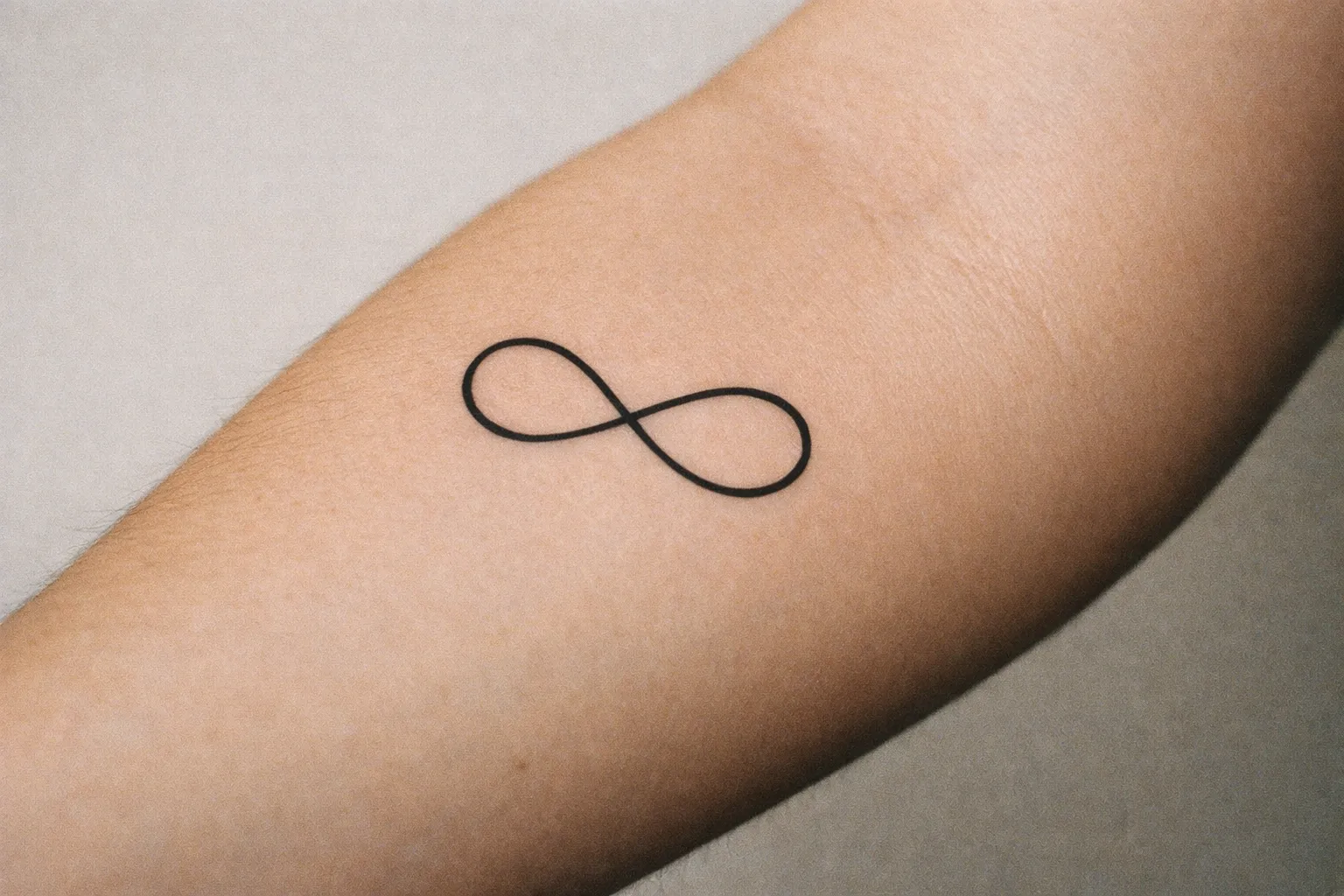
Will I regret it? The honest risk with an infinity tattoo isn’t the symbolism - it’s saturation. This design got very popular between roughly 2010 and 2016, often tied to a partner’s name or a relationship that didn’t last. I’ve had more than a few people sit in my chair asking to cover up an infinity tattoo with an ex’s name woven through it. If you’re getting it for a current romance, ask yourself whether the design still works without that meaning. A plain infinity loop ages fine as “endless possibility.” An infinity wrapped around an ex’s name does not.
Will it age badly? That’s a design and size question, not a symbol question. More on that below.
✓ Pros
- No cultural appropriation concerns
- Symbol is flexible and personal
- A plain infinity ages well if sized and placed properly
✗ Cons
- Overused with ex-partner names leading to regret
- Small, fine-line versions blur and lose clarity over time
Common Designs
Plain symbol-only is the minority. Most people add something. Here are the variants you’ll actually see in a portfolio:
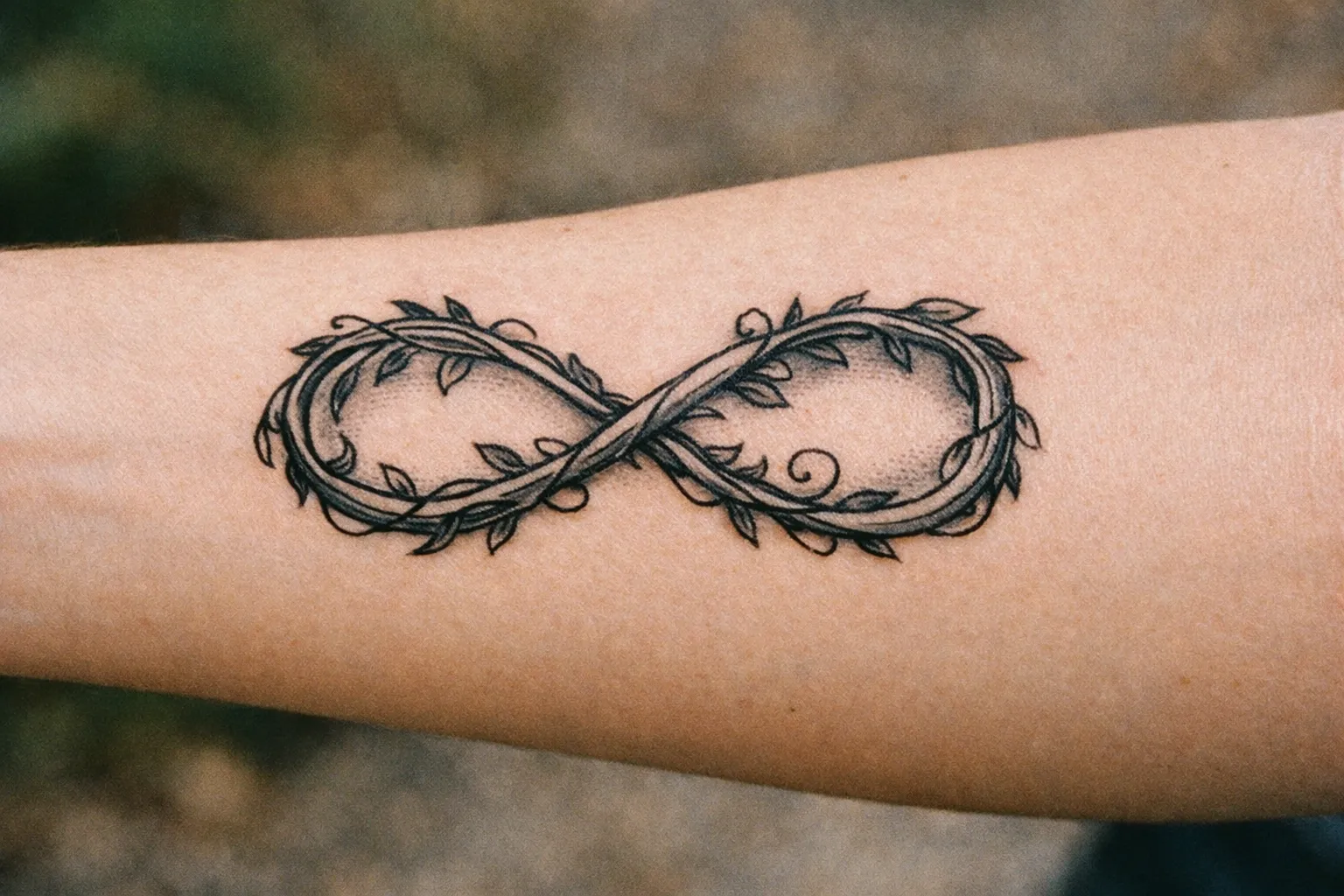
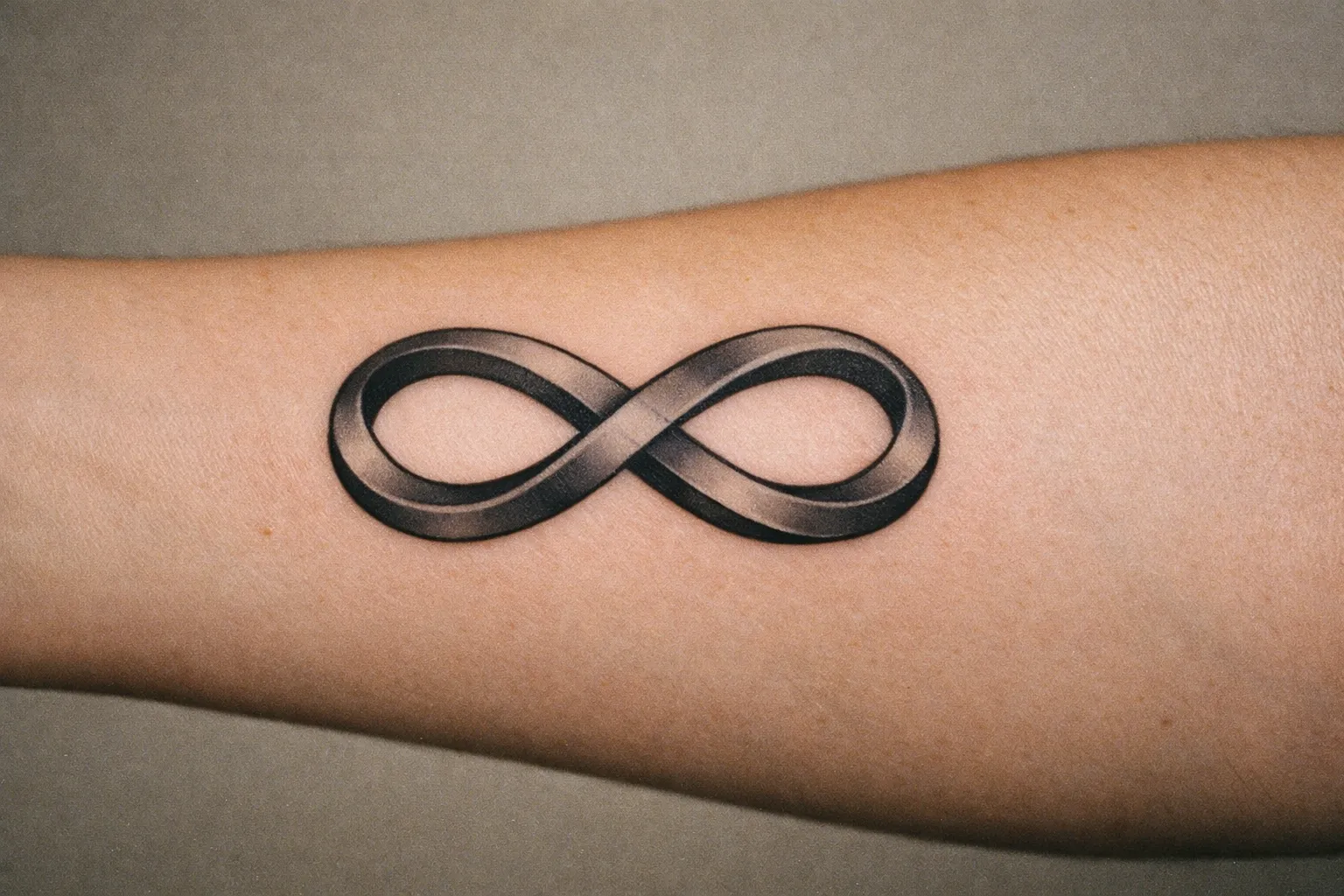
- Plain infinity symbol tattoo - single line, black ink, usually 1-2 inches wide. Lowest commitment, easiest to cover, ages the cleanest.
- Infinity with text inside or threaded through the loop - words like love, family, faith, hope, strength, dream are the most common (1).
- infinity heart Tattoo - a heart is built into one of the loops, or the line transitions into a heart shape mid-curve. Reads as “forever love” without needing a caption.
- Double infinity tattoo - two interlocking infinity loops. More on this below.
- Infinity with names or initials - script threaded into the curve. Most common for kids’ names, spouses, parents.
- Feather infinity - one half of the loop dissolves into a feather. Borrowed from Native American-inspired tattoo flash. It’s been overdone, and unless that tradition is yours, tread carefully.
- Butterfly infinity - wings replace part of the loop. Reads as transformation + continuity.
- Bird infinity - usually small swallows or sparrows breaking off the loop. Reads as freedom.
- Floral infinity - vines, roses, or small wildflowers wrapping the curve. Most common for cover-ups of older, simpler infinity pieces.
What Does Double Infinity Mean?
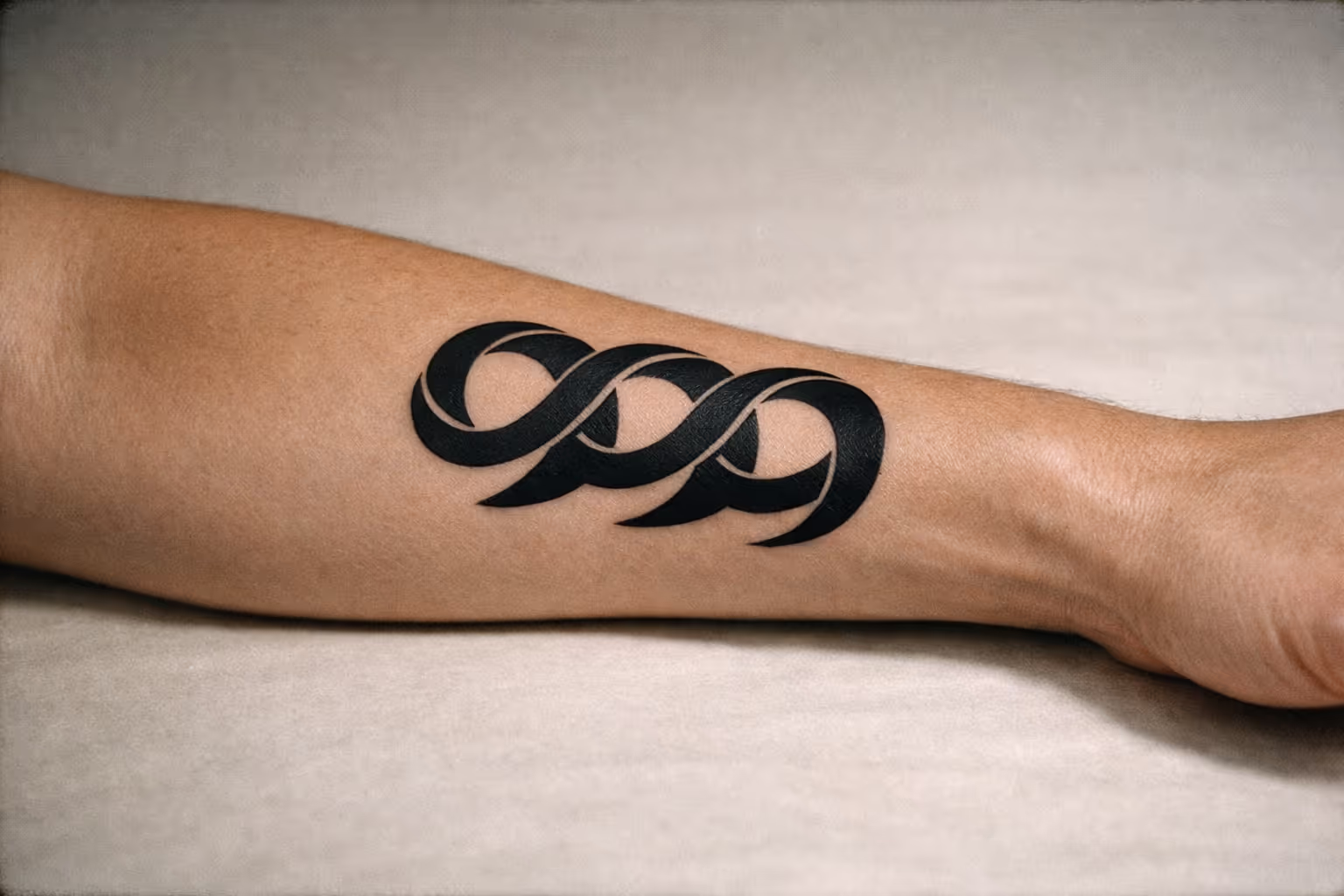
A double infinity is two infinity symbols joined or stacked - sometimes interlocking like chain links, sometimes one above the other, sometimes overlaid into a four-loop shape. There are over 360 documented illustration variants in commercial design libraries alone (6), which tells you how flexible the layout actually is.
The meaning is not standardized. The readings you’ll hear from artists and wearers:
- Two people, one forever - couples, twins, parent and child, best friends.
- Two commitments held at once - marriage and motherhood, or faith and family.
- Double the original meaning - if a single infinity means “always,” a double infinity means “always, and I really mean it.”
- The 8-8 / new beginnings reading - borrowed loosely from numerology, less common in tattoo contexts.
If you want the double infinity to read as “us,” ask the artist to interlock the loops rather than stack them. Stacked reads as “two of the same thing.” Interlocked reads as “two things connected.” It’s a small layout decision that changes how the piece communicates.
Infinity Heart Tattoo: When the Symbol Isn’t Enough on Its Own
The infinity heart tattoo is the most-requested variant, and the reason is straightforward: a plain infinity loop is ambiguous, and a lot of people want the meaning to be obvious without explanation. Adding a heart fixes it to “love.”
A few design notes from across the chair:
- Proportion matters more than detail. If the heart is bigger than the loop, the design stops reading as infinity first - it reads as a heart with a tail. Aim for the heart to occupy no more than one-third of the overall silhouette.
- One heart or two? One heart built into the curve is the cleanest. Two hearts (one in each loop) read more like a couples piece - useful if that’s the point, busy if it isn’t.
- Color or black? Black holds up longer. Red hearts look great on day one and tend to fade unevenly within 5-10 years, especially on skin that gets regular sun exposure. If you want red, ask the artist about their red ink and how it heals on your specific skin tone.
- Where to put the name. If you’re adding a name, run it along the underside of the loop or use it as the line that forms one half of the infinity. Don’t stack name + heart + infinity vertically - it gets cluttered fast at small sizes.
Personalizing With Names, Initials, and Dates
The cleanest way to personalize an infinity tattoo is to replace part of the line with script. The script becomes the curve. This is much harder to execute well than it looks, so it’s worth asking to see healed examples from your artist before booking - not just fresh photos.
Common personalization patterns:
- One name woven into the loop - partner, child, parent, lost loved one.
- Multiple kids’ names, one per loop section - works best with 2-3 short names; four or more gets crowded.
- Initials in the crossover point - subtle, easy to miss unless you’re looking, which some people prefer.
- Dates - birth dates, anniversary dates, memorial dates. Roman numerals read cleaner at small sizes than Arabic numerals because there are no curves to muddle with the loop’s linework.
- Heartbeat line - the EKG-style spike used as part of the infinity curve. Common for medical professionals and memorial pieces.
The honest caveat: names age the worst of any tattoo element. Small script blurs first. If you’re putting a name in an infinity tattoo, size up - go larger than your gut says - and use a slightly heavier line weight than the rest of the loop. I’ve seen beautifully designed pieces become illegible in seven years because the artist went too fine on the lettering.
Placement: Where Infinity Pieces Actually Work
Common placements include inner wrists, between the fingers, lower neck and upper shoulder, ankles, behind the ears, upper arms, and forearms (1). Each has real trade-offs, and I’d rather walk through them plainly than tell you “anywhere works.”
- Inner wrist - most popular. Visible to you, easy to cover with a watch. Pain: low. Ages decently, but friction from watches and sleeves can soften lines over a decade.
- Forearm - best for designs over 2 inches or anything with a name. Pain: low. Ages well. The most forgiving placement for fine line work, full stop.
- Behind the ear - small, hidden, works well for simple designs. Pain: moderate (thin skin over bone). Ages well if you keep it simple - 1 inch max back there.
- Ankle or top of foot - popular but high-wear from shoes and socks. Pain: moderate to high on the bone, lower on soft tissue. Foot tattoos typically need touch-ups sooner than any other placement.
- Fingers - looks great fresh, ages the worst. Finger tattoos blur, fade, and lose their lines because the skin regenerates fast and hands are constantly washed. Expect a touch-up every 2-4 years, minimum.
- Sternum or under-bust - for larger, more decorative infinity pieces with florals or script. Pain: ribcage > forearm by a wide margin. Worth knowing before you book.
- Nape of the neck - clean, hideable under hair. Pain: moderate.
Pain ranking, low to high, for typical infinity placements: forearm < upper arm < wrist < ankle (soft tissue) < behind-the-ear < foot < fingers < ribcage/sternum.
Sizing and Line Weight: Why Small Infinity Pieces Fail
The single most common reason an infinity tattoo looks rough five years later is that it was tattooed too small with lines too thin. The design depends on clean curves. When fine lines blur - and they do - the loop turns into an oval blob with no readable crossover point.
Practical sizing guidance:
- Minimum recommended size for plain black infinity: about 1 inch (2.5 cm) wide, with line weight of at least 1mm. Anything smaller relies on perfect skin and perfect aftercare, neither of which holds over 20 years.
- With added text or names: 2-3 inches (5-7.5 cm) wide minimum. Script needs space to stay legible after the ink spreads slightly during healing.
- With heart, feather, or floral elements: 2.5-4 inches to keep each element distinct and readable.
Ask the artist to print the design at actual size and hold it against your skin in the placement you’ve chosen - not just look at it on a phone screen. A design that looks balanced at 4 inches on a tablet often falls apart at 1.25 inches on a wrist. I do this with every client before we finalize anything, and it saves a lot of disappointment.
What an Infinity Piece Actually Costs
Prices vary by region, artist experience, and shop minimums. For a small, simple, black-ink infinity tattoo, expect $80-$250 USD in the United States, with shop minimums in major cities often starting at $100-$150 regardless of design size. According to pricing surveys published by tattoo industry trade outlets, fine-line minimalist work in urban markets has trended toward the higher end of that range since 2020, as demand for single-needle and fine-line styles pushed studio minimums up across the board.
Rough bands:
- Plain infinity, 1-2 inches, black: shop minimum, often $80-$150.
- Infinity heart tattoo, 2 inches, black: $120-$200.
- Infinity with one name in script, 2-3 inches: $150-$300.
- Double infinity with interlocking detail: $200-$350.
- Decorative infinity (floral wrap, watercolor, feathers): $250-$600+, often charged hourly at $120-$250 per hour.
Cheap is not the goal. A $60 infinity tattoo from a portfolio with no healed photos is the one that needs covering up in three years.
Aftercare: Keeping Thin Lines From Blurring
Infinity tattoos live or die by aftercare because the design is mostly line, and linework is the first thing to blur if the heal goes badly. Fine-line tattoos in particular are documented by dermatology and tattoo-practice literature as more susceptible to blowout and migration than bold traditional work, precisely because the ink deposit is shallower. Below is a standard timeline aligned with professional studio guidance.
Infinity Tattoo Aftercare Timeline
4 weeksStep-by-step care to keep your fine line infinity tattoo crisp and clear.
- 1
Day 1 - Bandage Off
Keep the original wrap on for at least 4 hours, up to overnight, but no longer than 24 hours. Wash hands, then gently clean the tattoo with mild, fragrance-free soap and lukewarm water. Pat dry with a clean paper towel; do not rub or use a cloth towel. Do not re-bandage.
- 2
If Your Artist Used Second Skin
Leave it on up to 3 days. Remove under warm running water if edges lift enough to expose the tattoo. Don't pull it off dry to avoid pulling ink out.
- 3
Day 2-6 - Open-Air Healing
Wash 2-3 times daily with fragrance-free soap. Apply a thin layer of fragrance-free moisturizer after washing. Avoid soaking in baths, pools, hot tubs, or oceans. No direct sun exposure. Expect tightness and slight raised texture.
- 4
Week 1-2 - The Peel
Light peeling and flaking is normal. The tattoo may look dull or patchy underneath. Do not pick or scratch. Keep moisturizing and clean. Itching peaks around days 7-10; slap gently instead of scratching.
- 5
Week 2-4 - Settling
Surface is healed but deeper skin is still rebuilding. Avoid prolonged sun exposure using sun-protective clothing or SPF 30+ sunscreen once fully healed. Color and contrast settle around weeks 3-4.
- 6
Long-term Care
UV exposure is the main cause of fade. Wrist or ankle tattoos get more sun than expected. Expect touch-ups at 5-10 years for fine line designs, sooner for fingers, hands, or feet.
Cover-Ups: When You Outgrow an Infinity Piece
A noticeable trend in recent years is people covering older infinity tattoos rather than removing them - often by wrapping the existing design in flowers, leaves, or larger blackwork. It works because the infinity loop is small and graphic, which gives an experienced artist room to integrate it into a botanical or geometric piece without grinding the original out with laser first.
If you’re considering a cover-up:
- Bring a healed photo of your existing tattoo to the consultation, not a fresh one.
- Cover-ups need to be larger and darker than the original. A small faded infinity becomes a 4-5 inch floral piece, not a slightly different 2-inch design.
- An experienced cover-up artist will sometimes recommend 1-2 laser sessions first to lighten the original, which gives them more design flexibility.
Basic Tattoos to Avoid (and Where Infinity Fits)
The “basic tattoos to avoid” question that shows up in search results isn’t really about which symbols are bad - it’s about which designs tend to look dated, get over-saturated, or cause regret. The honest list:
- Names of current partners - universal artist advice, not just for infinity tattoos.
- Trend-specific designs without personal meaning - anything you got because it was on Pinterest’s front page that year.
- Quotes in tiny script on the ribcage or inner arm - they blur into illegibility within 5-8 years.
- White-ink-only tattoos - they don’t age the way you think; they yellow and fade fast.
- Microscopic finger tattoos - see the placement section.
- Infinity tattoos with someone else’s name, gotten in the first six months of a relationship - the most-covered-up category in this entire design family.
The infinity tattoo itself is not on the avoid list. A well-sized, well-placed, well-personalized infinity is a clean piece. A diamond tattoo is another example of a symbol that holds up well when the sizing and placement are right - the same principles apply. A 3mm-thick blurry loop on the side of a pinky finger with an ex’s initials is a different conversation.
FAQ
Frequently Asked Questions
- Can an infinity tattoo have different meanings in different cultures?
- While the infinity symbol itself is mathematical and not tied to a specific culture, the ouroboros - a related 'no beginning, no end' symbol - has cultural roots and meanings like rebirth. The infinity tattoo's meaning is mostly personal or modern Western interpretations.
- How do I ensure my infinity tattoo ages well?
- Size up to at least 1 inch wide for plain loops and larger for script or decorative elements. Choose placements like forearm or upper arm for better longevity, and follow strict aftercare to avoid blurring.
- Is it better to interlock or stack double infinity loops?
- Interlocking loops communicate connection between two entities, while stacked loops read as two separate but similar things. Choose based on the meaning you want to convey.
- What should I avoid when personalizing an infinity tattoo with names?
- Avoid very fine script that can blur quickly. Use heavier line weight and larger size than you think you need. Also, avoid placing multiple names in cramped spaces to maintain legibility.
- Why do finger infinity tattoos require frequent touch-ups?
- Finger skin regenerates quickly and is exposed to constant washing and friction, causing fine lines to blur and fade faster than other placements.
- Can I cover up an old infinity tattoo without laser removal?
- Yes, experienced artists can integrate the old infinity into larger floral or blackwork designs for cover-ups, but the new design must be larger and darker.
- How long does a simple infinity tattoo session usually take?
- A plain black-line infinity typically takes 30-90 minutes including stencil and setup. Adding script or decorative elements can extend the session to 1.5-3 hours.
What Actually Matters Before You Book
Three things, and they’re not complicated.
Size up. A 1.5-2 inch black infinity on the forearm or inner wrist will outlast a 0.75 inch one on a finger by decades. I’ve watched enough five-year-old tiny wrist tattoos come through the door to say this with confidence.
Decide the meaning before the design. Plain infinity is “endless something.” Add a heart, a name, a word, or a second loop only when you know what you want it to say without having to explain it.
Aftercare is the design. Fine line tattoos blur badly with bad heals. Wash with fragrance-free soap, moisturize thinly, stay out of the sun and water for the first two weeks (2), and accept that a touch-up at year 5-10 is normal, not a failure.
The infinity loop is one of the simplest shapes in tattooing. That’s exactly why it’s so easy to get wrong - and why, when the sizing and placement are right, it holds up better than most people expect.