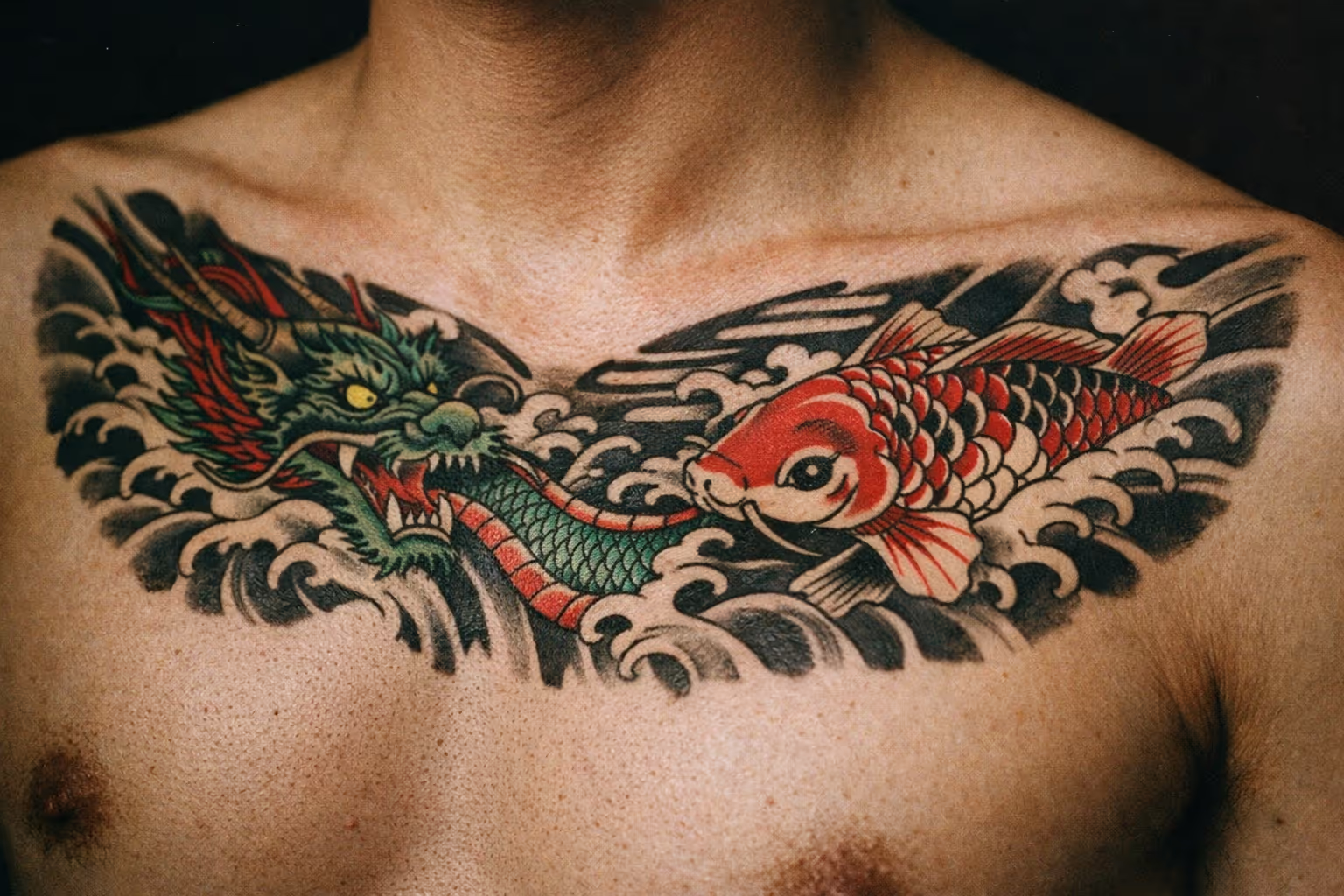
The Rules of Traditional Japanese Tattoo Composition
Strict traditional vs neo-Japanese: where the rules bend
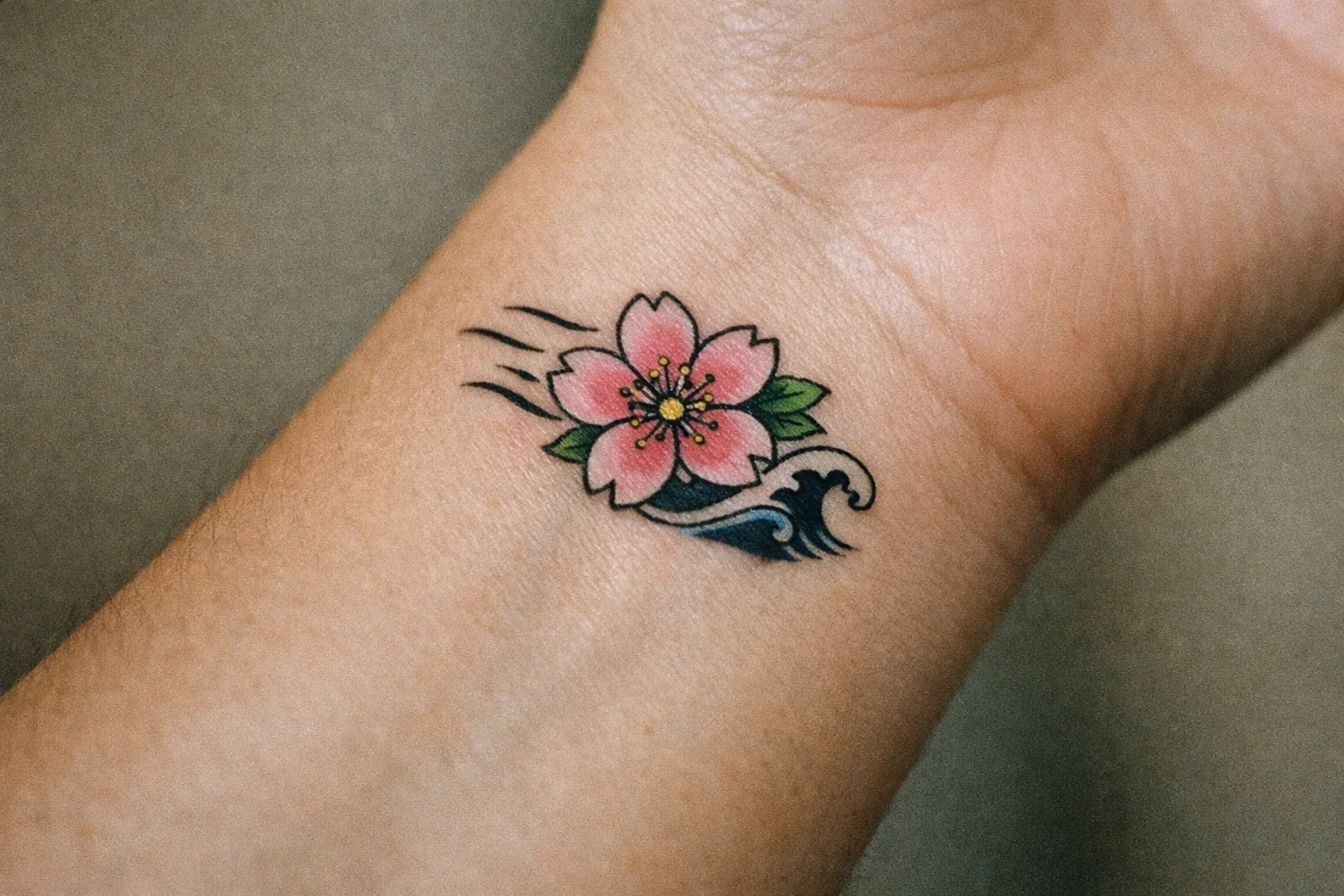
Strict traditional work sticks to a restrained palette (deep blacks, reds, greens) with mandatory backgrounds and classical placement. Neo-Japanese keeps the same motifs but uses a wider color range, sometimes mixes in Western elements, and occasionally skips backgrounds for isolated panels. Neither is wrong, but they age differently and signal different things. Know which you want before you sit down with an artist, because most specialize in one or the other.
A full traditional Japanese tattoo sleeve takes between 25 and 40 hours of actual tattooing, spread over many months of monthly sessions, and that’s before you’ve even picked a single motif. This isn’t something you book on a whim. A traditional Japanese tattoo is a project that needs to hold together from the first line to the last. You’ll hear two terms tossed around, irezumi and horimono, and both matter. This guide breaks down what separates the authentic style from generic Japanese-inspired flash: the meaning behind the motifs, the scale each format commits you to, the technique, how to find a qualified artist, and the social realities most guides skip.
Here’s what you’re signing up for, and what it costs you.
The upside: This is one of the most compositionally sophisticated tattoo styles out there. It’s designed to flow with your body, not just sit on top like a sticker. Bold outlines and a limited palette mean the work ages far better than fine-line or watercolor stuff. The symbolic vocabulary is rich enough to make genuinely thoughtful design choices. Plus, this tradition has a documented lineage going back over 400 years, with masters still practicing today.
The downside: It’s a serious time commitment: a sleeve typically runs 25 to 40 hours and a backpiece around 30 to 60 hours, per Himitsu Tattoo’s Japanese Tattoo FAQ (18). These are estimated total time ranges for full completion, not guaranteed floors. Costs add up, especially if you want tebori (hand-poked) or master-level artists. In Japan, visible tattoos still limit access to onsen, some gyms, and certain workplaces. The style demands upfront planning, because patchwork approaches almost never result in a unified composition later. And finding a genuinely qualified artist takes real digging through portfolios.
✓ Pros
- One of the most compositionally sophisticated tattoo styles, designed to flow with the body's anatomy
- Bold outlines and restrained palette age significantly better than fine-line or watercolor styles
- Rich symbolic vocabulary allows genuinely meaningful design choices
- Large-scale work by a skilled horishi is among the most technically demanding tattooing available
- The style has a documented 400+ year artistic lineage with living masters still practicing
✗ Cons
- Major time commitment: a Japanese sleeve typically runs 25-40 hours, a backpiece around 30-60 hours (estimated total ranges, per Himitsu Tattoo's Japanese Tattoo FAQ, 18)
- High cost: irezumi artists in Japan generally charge 10,000-15,000 JPY/hour with a one-hour minimum, and hand-poked or master-level work costs more than machine work (31)
- Visible tattoos restrict access to onsen, some gyms, and certain workplaces in Japan
- Requires careful upfront planning, because patchwork approaches make unified compositions nearly impossible to build later
- Finding a genuinely qualified artist (Japanese or otherwise) requires significant portfolio research
What a Traditional Japanese Tattoo Is Actually Called
If you want to talk about traditional Japanese tattooing with any precision, you’ll need to know the difference between irezumi and horimono, two terms that overlap but aren’t interchangeable. Irezumi (入れ墨) literally means “inserting ink,” from ireru (to insert) and sumi (the black ink used in calligraphy and painting) (13). It’s the standard word for tattooing in Japan, covering everything from a tiny design to a full bodysuit.
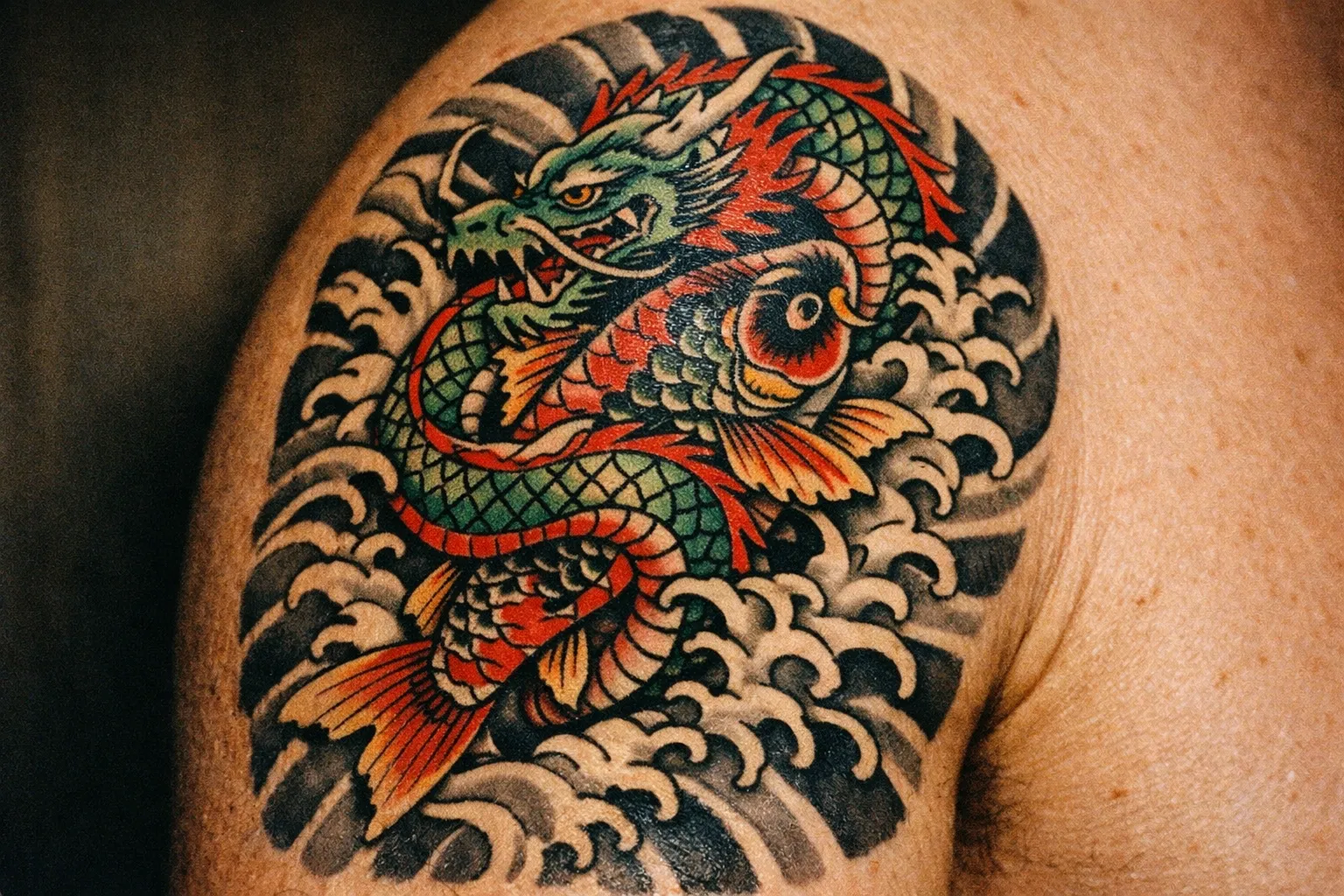
Horimono translates as “carving images.” This term dates back to Edo-period tattooists who wanted to emphasize the artistic skill involved, distinguishing voluntary decorative work from punitive markings. Many specialists reserve horimono for the full-body artistic tradition, while irezumi refers more broadly to any tattoo. The artist who does this work is a horishi (master tattoo artist), and the classical hand-poking method is called tebori, two terms you’ll see a lot in portfolios and studio pages.
Tattooing in Japan goes way back: body markings stretch to the Jōmon period (roughly 10,500-300 BCE), probably as status or spiritual marks. The style you think of today took shape during the Edo period, starting in 1603, when irezumi really flourished alongside ukiyo-e woodblock prints. Craftsmen adapted the same chiselled precision from ukiyo-e to skin.
Irezumi vs horimono: why the distinction matters
The Edo period also saw the rise of irezumi kei, or tattoo punishment: criminals were marked with ink so their offenses followed them between towns, with the placement determined by the crime (3). That is how “irezumi” came to carry the sense of a penal mark. That’s why horishi later leaned on “horimono” to insist their work was art, not a mark of shame. When you see both terms, context is key. On an artist’s site, “irezumi” usually means large-scale Japanese work; casually in Japan, it can mean any tattoo.
Japanese Tattoo Meaning: Core Motifs and What They Actually Symbolize
Japanese tattoo meaning is built on a symbolic vocabulary where each motif carries a specific message. Mixing them carelessly results in a piece that contradicts itself. Here’s what the core motifs really mean.
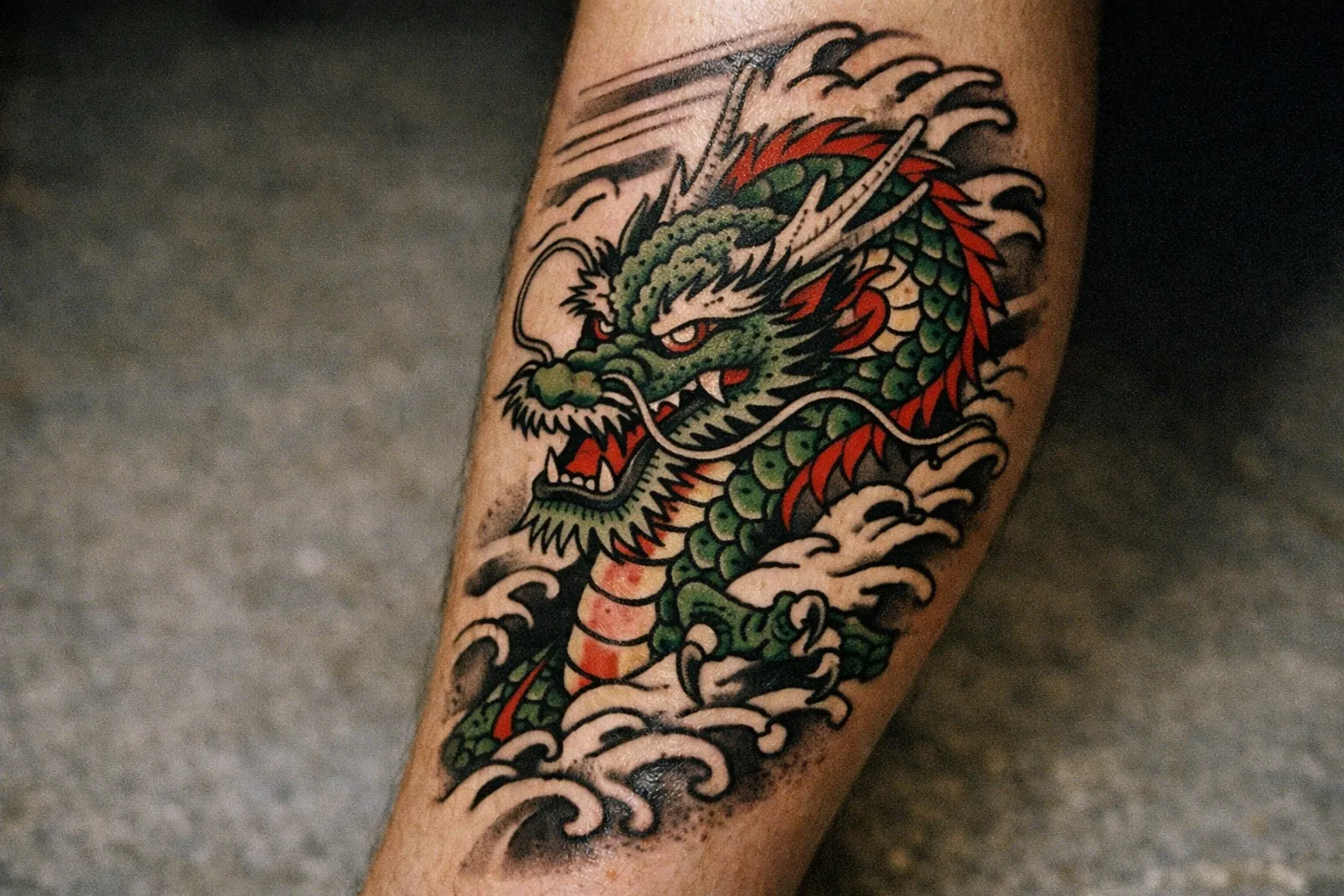
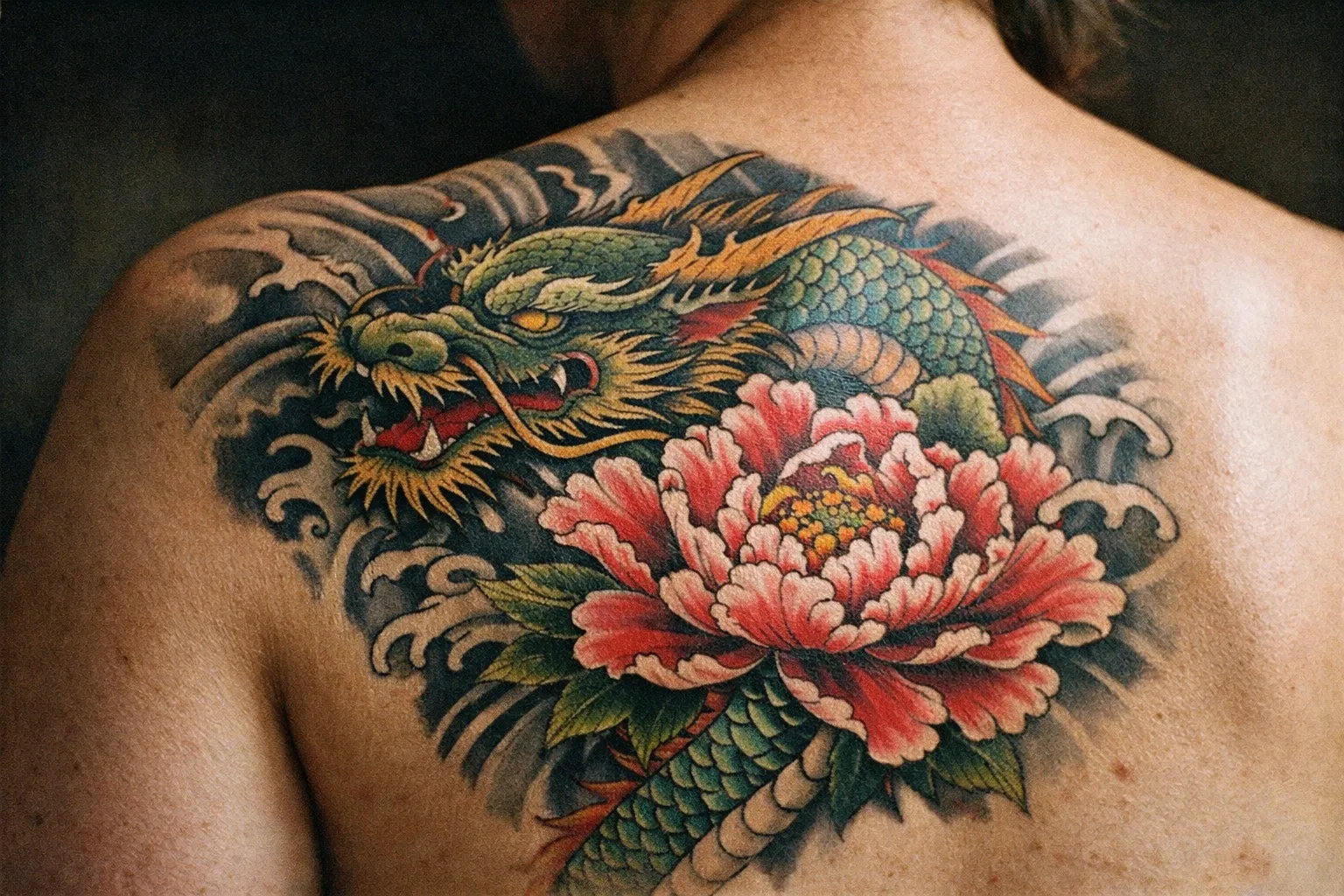
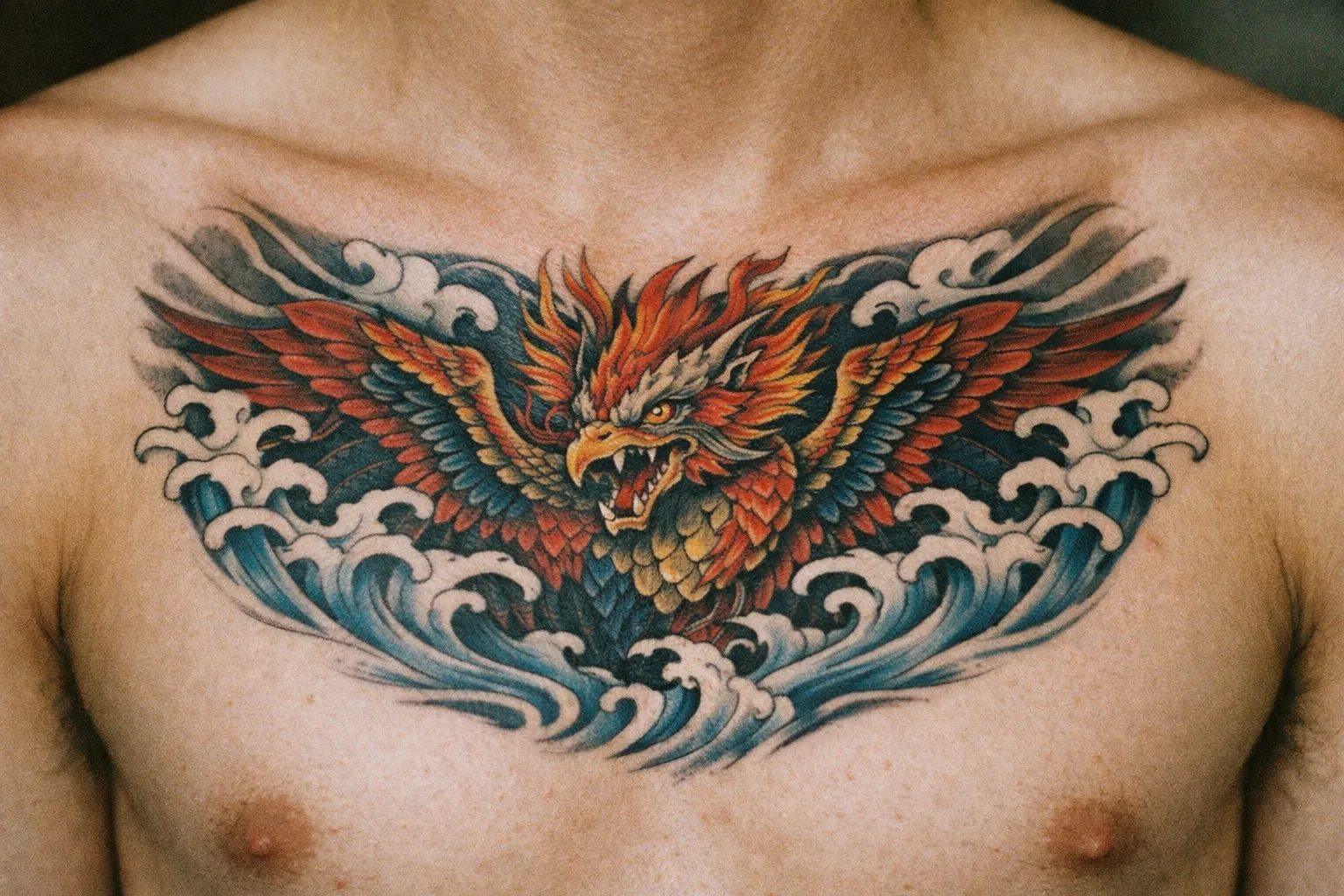
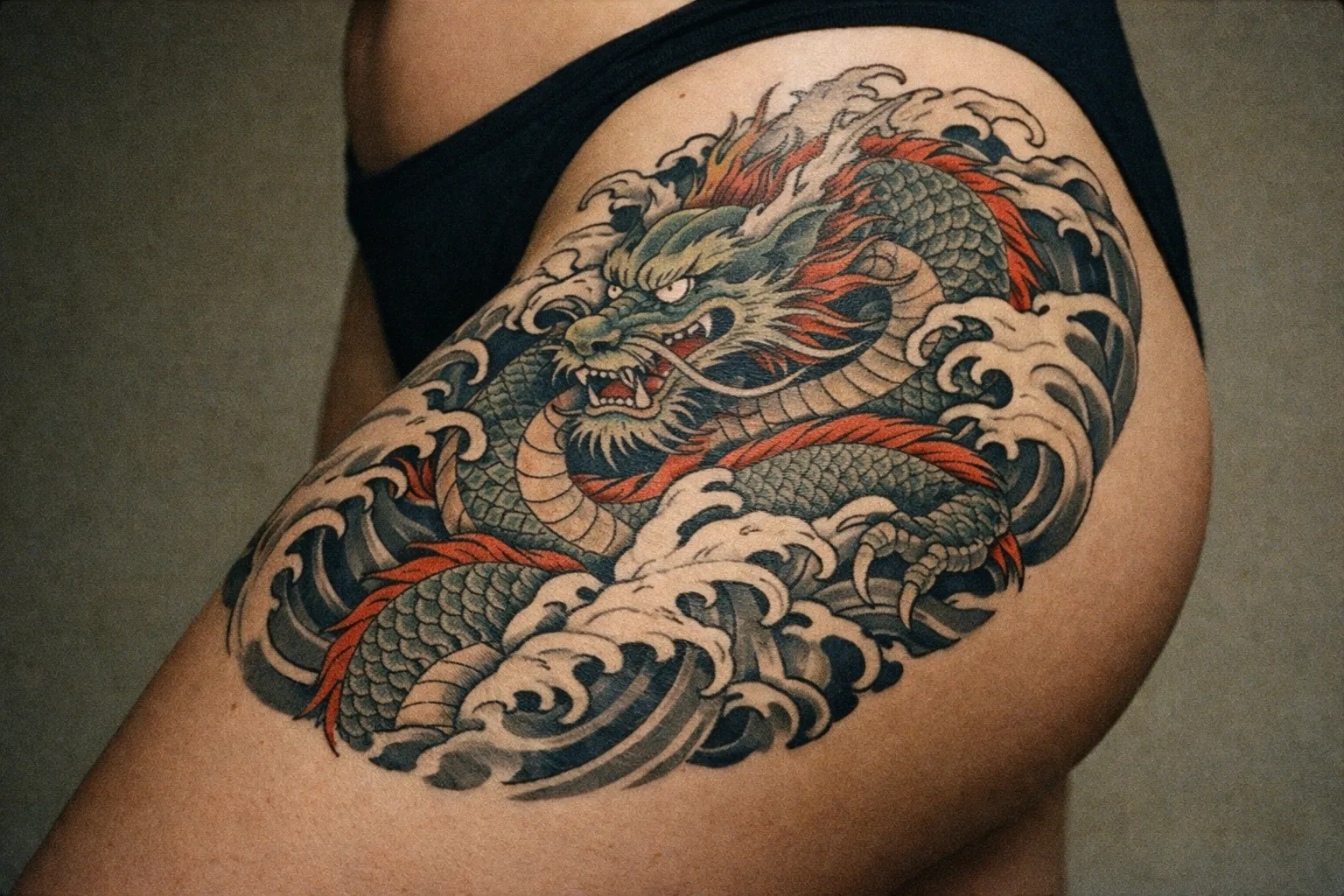
Dragon (ryū): A water deity and protector symbolizing wisdom, strength, and benevolence. Usually shown curling through clouds with three or four claws. This isn’t your Western fire-breathing dragon (10).
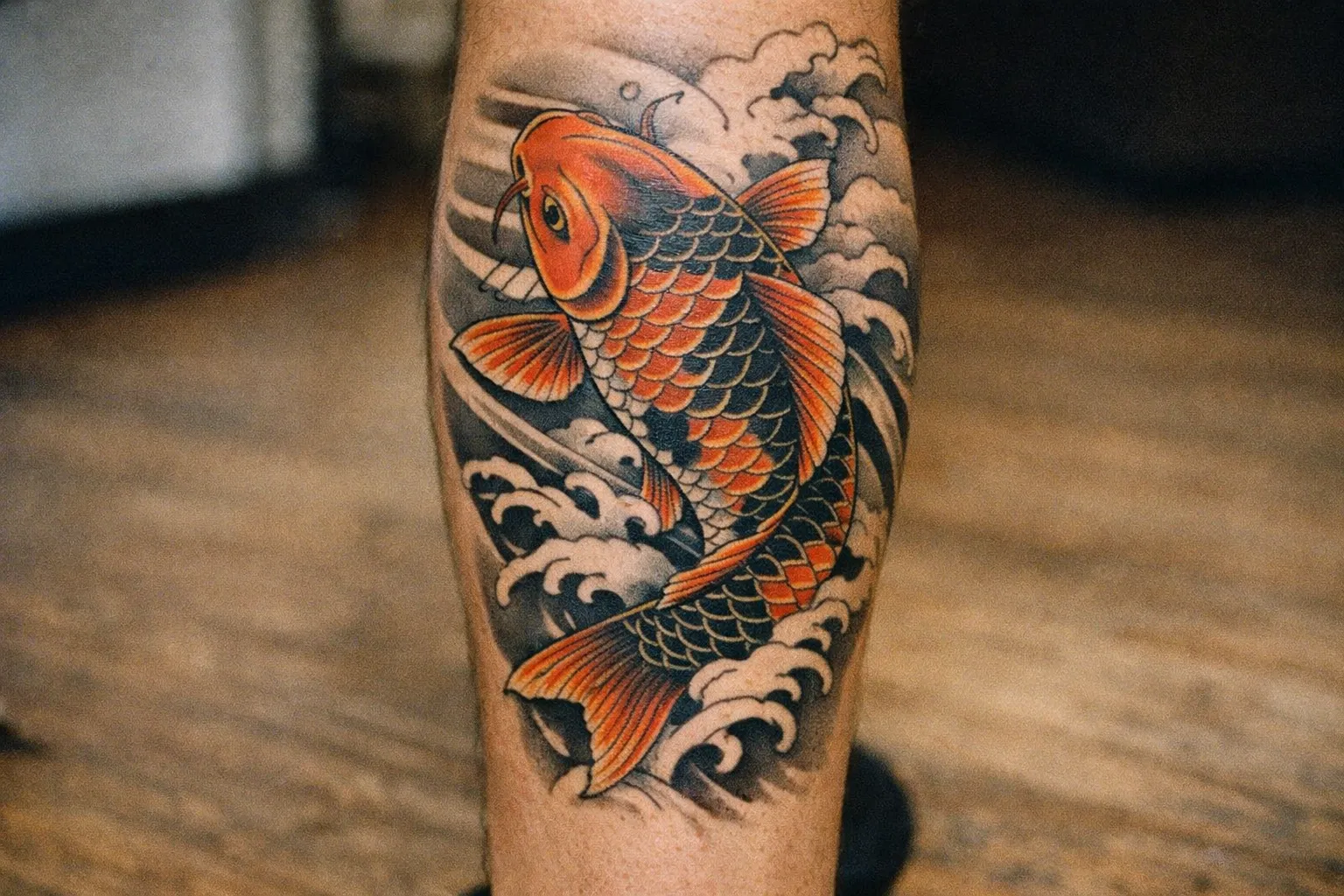
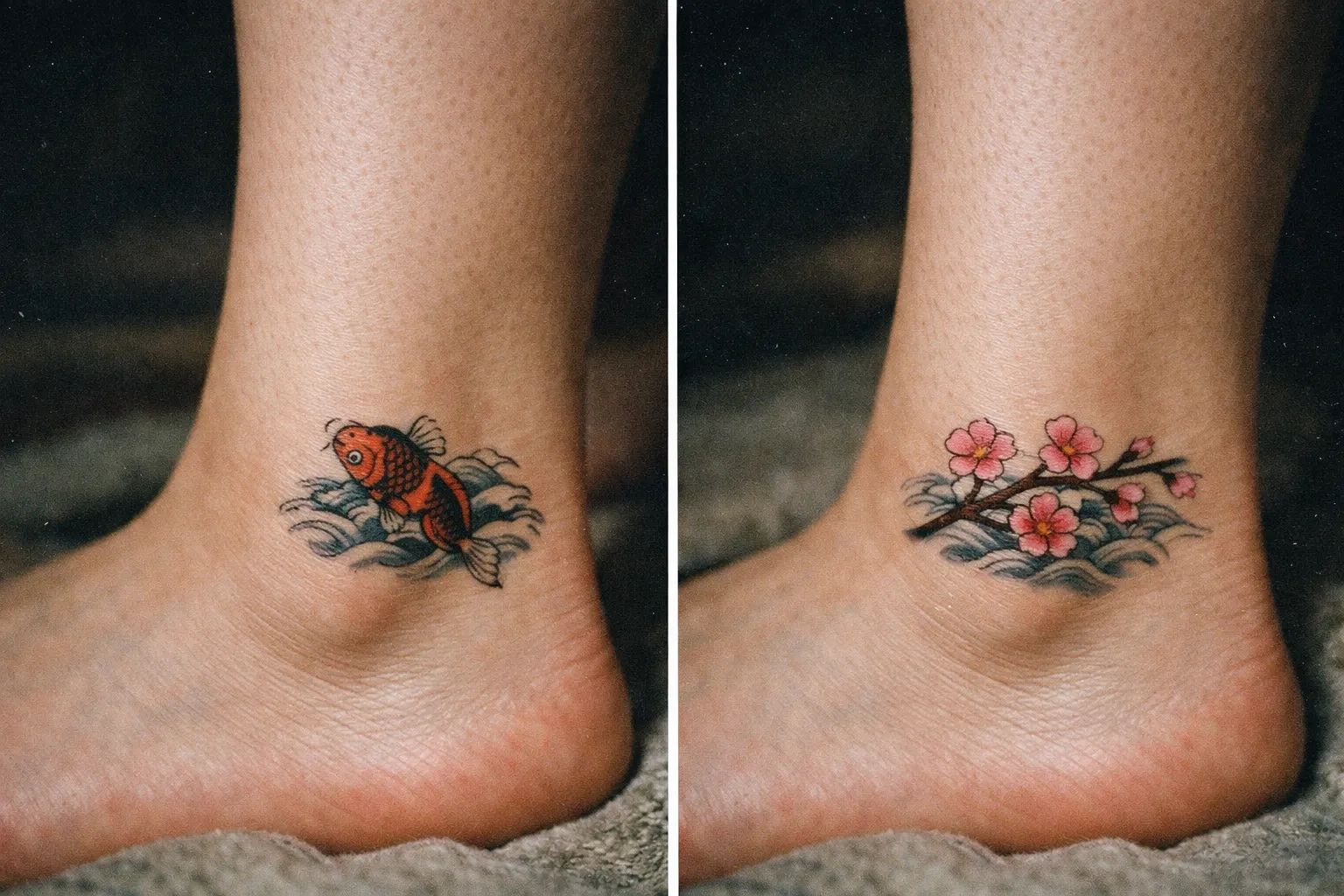
Koi: From the Dragon Gate legend, where a koi swims upstream and transforms into a dragon. It represents perseverance, ambition, and transformation. Direction matters: koi swimming upstream means active struggle; downstream suggests the goal is reached.
Tiger: The dragon’s counterpart, representing wind. It stands for courage, protection, and warding off evil. Usually faces the dragon and is paired with wind and bamboo, and a solo tiger tattoo carries this same meaning on its own.
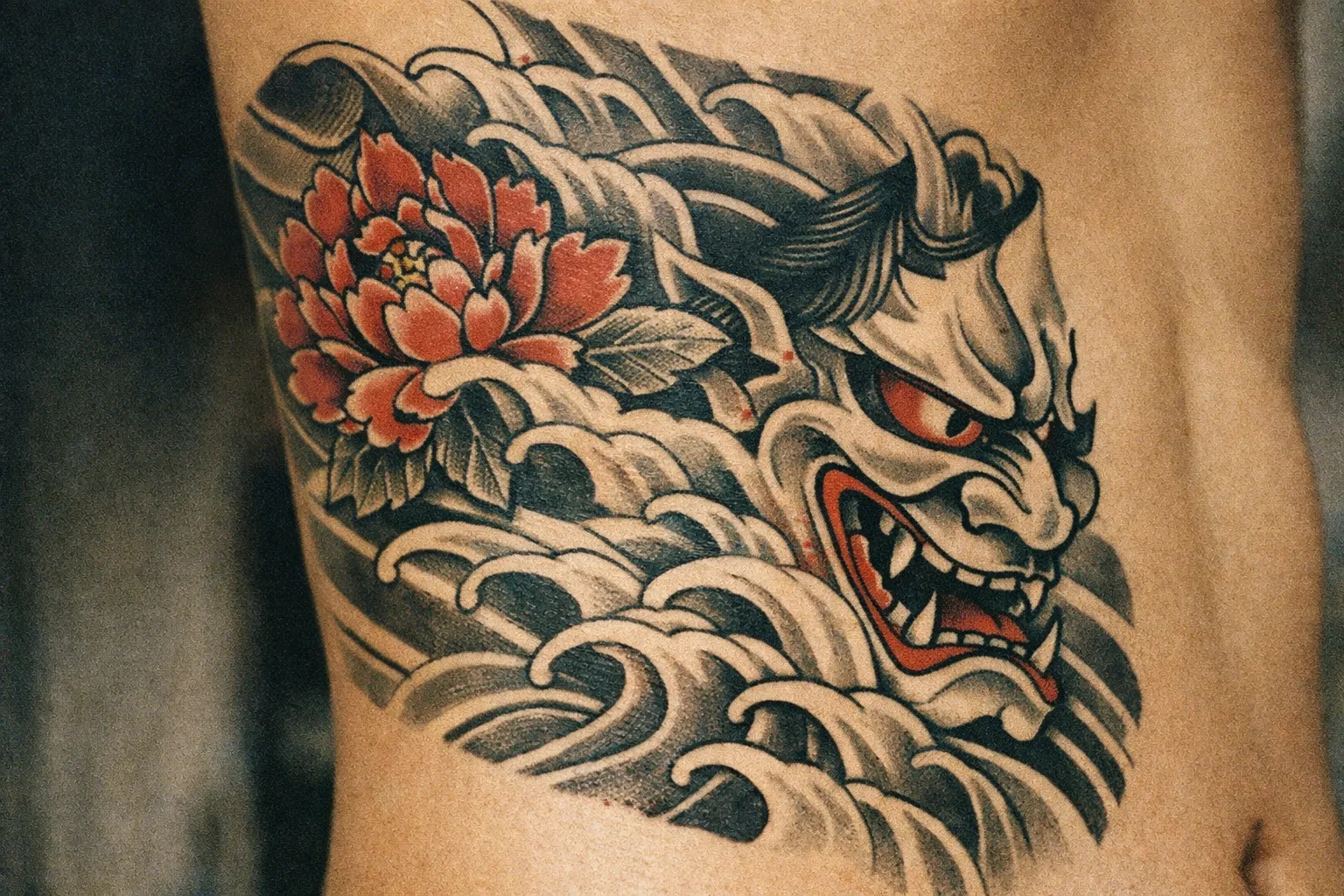
Hannya mask: From Noh theater, depicting a woman turned demon by jealousy. It expresses jealousy, rage, and obsession but also acts as a protective talisman. It carries a genuine dual meaning.
Cherry blossoms (sakura): Symbolize impermanence, or mono no aware, the bittersweet awareness that the moment is fleeting. A cherry blossom tattoo is one of the most requested standalone motifs for this reason.
Peony: The “king of flowers,” symbolizing wealth, prosperity, bravery, and risk-taking, often paired with a lion-dog (shishi) in a full peony tattoo design.
Phoenix (hō-ō): Represents rebirth and renewal after destruction.
Oni: A demon figure used as a ward against evil or as a symbol of punishment and justice.
The common mistake is picking motifs just because they look cool and ending up with clashing meanings, like mixing jealousy symbols with good luck motifs, or dropping in sacred Buddhist imagery without knowing why. Anyone familiar with the vocabulary will spot careless choices immediately.
Core Irezumi Motifs at a Glance
| Dragon (ryū) | Koi | Tiger | Hannya mask | Cherry blossoms | Peony | Phoenix | Oni | |
|---|---|---|---|---|---|---|---|---|
| Cultural Origin | Japanese/irezumi | Japanese/Chinese | Japanese/irezumi | Japanese Noh theater | Japanese (sakura) | Japanese/Chinese | Japanese/Chinese | Japanese folklore |
| Core Meaning | Wisdom, strength, benevolence | Perseverance, transformation | Courage, protection, warding evil | Jealousy/rage + protection | Impermanence, mono no aware | Wealth, bravery, risk-taking | Rebirth, renewal | Ward against evil; punishment |
| Common Pairings | Waves, clouds, koi | Waves, cherry blossoms, peonies | Dragon, peonies, wind bars | Peonies, cherry blossoms | Koi, dragon, wind bars | Tiger, koi, hannya | Waves, flames, cherry blossoms | Hannya, flames, weapons |
| Scale Minimum | Full sleeve or back | 6-8 inches | 5-8 inches | 4-6 inches | 3-5 inches (branch) | 4-6 inches | Full back or chest | 4-6 inches |
How background elements carry meaning too
Backgrounds aren’t neutral. Waves place the motif in water, wind bars set it in motion, seasonal flowers pin it to a moment in time. For example, koi swimming upstream with maple leaves reads as an autumn struggle; koi downstream with cherry blossoms reads as spring renewal. Backgrounds turn floating symbols into scenes with mood and season.
Scale, Placement, and the Japanese Sleeve Tattoo: What Each Format Commits You To
A Japanese sleeve tattoo is just one point on a scale that runs from a single chest panel up to a full bodysuit. Each format locks you into a different time and money commitment. Here’s the terminology:
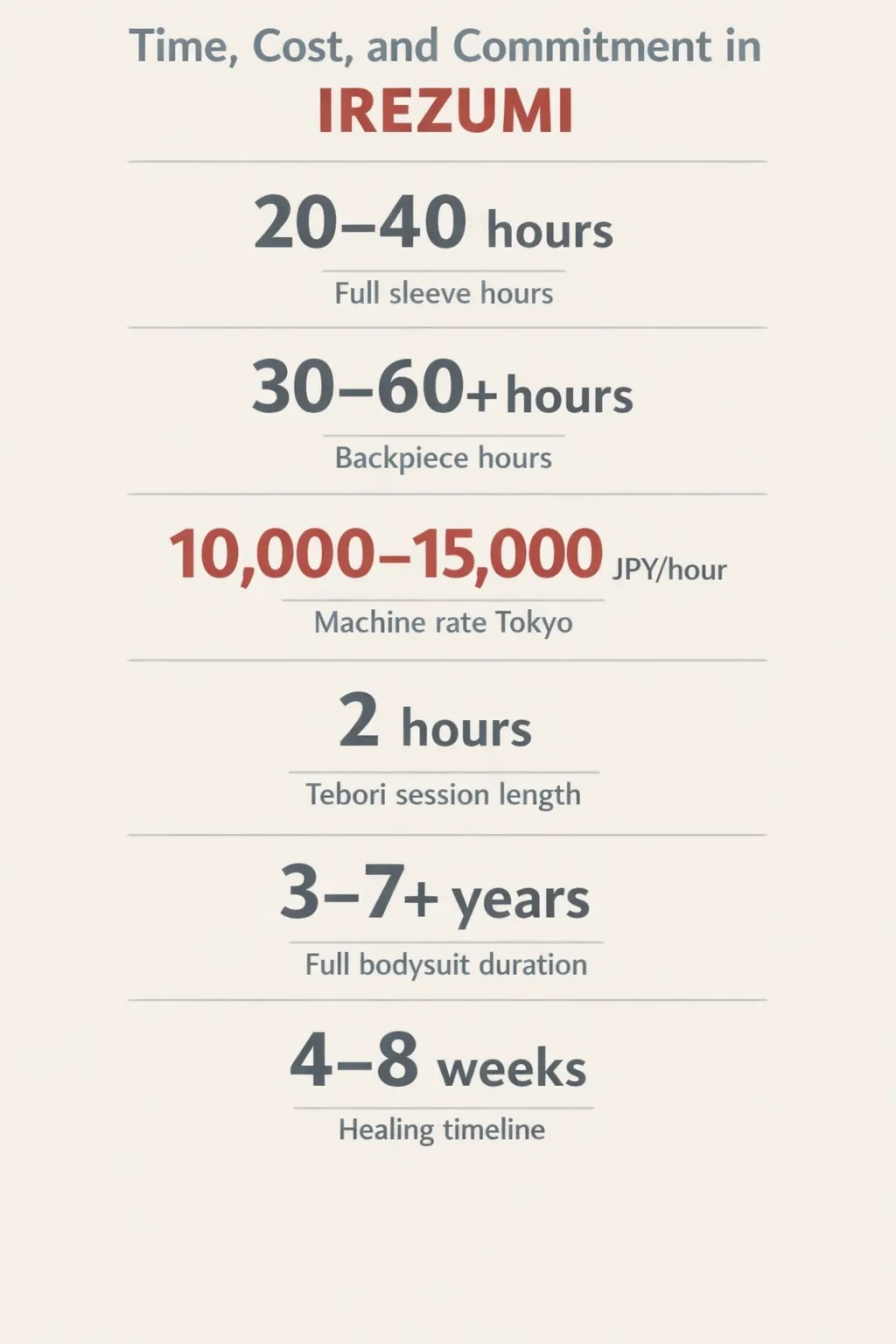 Backpiece: 30-60+ hours; irezumi artist rate: 10,000-15,000 JPY/hour; tebori session length: 2 hours; full bodysuit duration: 3-7+ years; healing timeline: 4-8 weeks. Full-sleeve hours are given in the breakdown below.
- Hikae: chest or shoulder panel.
- Gobu: half sleeve, shoulder to elbow.
- Full sleeve: shoulder to wrist.
- Backpiece: full back, often extending onto buttocks and thighs.
- Bodysuit (soshinbori): covers torso, arms, and legs as a single unified composition, typically sparing hands, feet, neck, and sometimes the genital region. The precise term is soshinbori (総身彫り, “whole body carving”), and the closed-front variant is recorded as donburi soshinbori (3). Specialist glossaries such as Dave Tedder’s use the same vocabulary (32).
What you’re committing to:
- Half sleeve: 10-20 hours across 3-5 sessions. A good way to test both the style and the artist relationship.
- Full sleeve: typically 25-40 hours, usually one 6-hour session per month, so roughly 4 to 7 months if scheduling holds, and often longer. Himitsu Tattoo’s Japanese Tattoo FAQ puts the range at 25-40 hours as an estimate, not a guaranteed floor (18).
- Backpiece: 30-60+ hours depending on complexity, in sessions of 4-6 hours spaced a few weeks apart to allow healing.
- Full bodysuit: a multi-year commitment, usually with one horishi. Costs can top 1,000,000 JPY.
Pain varies by placement more than motif. Outer upper arm and outer forearm are the easiest. Inner bicep, elbow ditch, ribcage, and spine are sharper. A ribcage session is noticeably harder than a forearm one.
The practical rule: decide the full scope before session one. A floating tiger with no background looks worse than a smaller, complete piece.
Starting small without boxing yourself in
You can start with a single motif and still leave the door open for a sleeve. A koi on the forearm at 6-8 inches, with water and one seasonal flower, works as a standalone piece and can anchor a future sleeve, provided you and the artist leave background space around it instead of filling the whole forearm. Tattoo for beginners guides often recommend this approach for those new to large-scale work. The mistake is committing every square inch on day one; that’s what forces an awkward redesign later.
Tebori vs Machine: How the Technique Changes the Experience
Both tebori and machine can produce authentic irezumi; the difference is speed, feel, and availability. Machine tattooing covers ground faster, is offered by more artists worldwide, and handles every traditional motif. Most irezumi done outside Japan is machine work.
Tebori is the hand-poking method: a wooden handle with metal needles attached by silk thread, pushed into the skin in a rhythmic poke-and-wipe motion (3). It’s slower and physically demanding for the artist, so sessions are usually shorter. One tebori studio lists a standard session as 2 hours including a 10-minute break, which gives you a sense of the technique’s physical limits.
How it feels and heals varies a lot. Tebori is often said to produce a slightly softer ink distribution under the skin, and some clients report it heals differently. First-hand accounts differ, and we could not verify any of them against a named, dated source: some clients report the pain as initially milder than machine work, with the skin turning badly irritated after five or six hours in a day, while others describe a four-hour tebori session as more painful than two far longer machine sittings. Treat them as anecdotes rather than data; what they agree on is that fatigue matters over long sittings.
Cost-wise, The Japan School’s guide puts irezumi artists at around 10,000-15,000 JPY per hour with a one-hour minimum, and says outright that an irezumi will be more expensive than the common tattoo-gun method; the two Tokyo studios it lists quote 12,000 JPY per hour for large work (31).
Neither method is inherently “more authentic.” Tebori is the historical technique, but a skilled horishi working with a machine produces traditional irezumi just as well. What matters most is the artist’s training and compositional knowledge, not the tool in their hand.
Finding a Japanese Tattoo Artist Who Can Actually Execute This Style
A good Japanese tattoo artist shows you healed work, not just fresh photos. You want multiple healed sleeves or backpieces at least 6 months post-finish. That’s how you see whether blacks stay solid, lines stay crisp, and backgrounds hold saturation. Fresh photos hide all the future problems.
You’ll meet three broad categories: Japanese horishi working in Japan (long waitlists, highest rates, tebori often available); expatriate Japanese artists abroad; and non-Japanese artists specializing in irezumi, often with documented apprenticeships or study periods in Japan. For that last group, look carefully for portfolio evidence of Japanese composition (background flow, correct motif orientation, integrated scenes), not just isolated flash motifs. A stated training lineage is a strong plus.
Here’s a simple vetting checklist before you book:
- Search for work specifically labeled irezumi or Japanese traditional, not “Japanese-inspired.”
- Filter for healed examples (6+ months post-finish) of sleeves or backpieces.
- Check that backgrounds (waves, wind bars, seasonal flowers) are present and integrated, not afterthoughts.
- Look for documented training: apprenticeship under a horishi, a study period in Japan, or explicit specialization history.
- Book a consultation before committing a deposit. A serious artist asks about your full project scope, not just session one.
- Ask to see their freehand or stencil process. Artists who sketch directly on the body, using the tensho or sharpie sketch, usually understand flow and anatomy better than those working from a flat stencil.
Red flags: Japanese work limited to isolated motifs with no backgrounds; prices well below market for the scale you want; no healed work at all. In Tokyo, machine rates commonly run 10,000-15,000 JPY per hour, so a quote far below that for a complex sleeve is suspicious.
Popular specialists book 1 to 6+ months out for medium pieces; full sleeves and backpieces take longer. Treat the waitlist as a quality signal, not an inconvenience.
What to bring to a consultation
Bring healed reference images, not fresh ones, a clear sense of scale and placement, and be open to the artist’s compositional judgment. Traditional artists often design custom work referencing ukiyo-e prints and folklore rather than copying photos, so expect them to redraw and adjust flow. If you’re traveling to Japan specifically for irezumi, research studios in advance and verify availability independently, and use your consultation to talk about visibility, since many onsen and public baths still refuse entry to tattooed guests.
How to Vet a Japanese Tattoo Artist Before Booking
30 minutesSteps to ensure you find a qualified irezumi artist with a strong portfolio and proper training.
- 1
Search for authentic irezumi work
Look specifically for portfolios labeled irezumi or Japanese traditional, not just Japanese-inspired.
- 2
Filter for healed examples
Check for healed photos at least 6 months post-finish to assess longevity and quality.
- 3
Verify background integration
Ensure backgrounds like waves and wind bars are present and compositionally integrated.
- 4
Check training lineage
Look for documented apprenticeship or study periods under horishi in Japan.
- 5
Book a consultation
Discuss your full project scope and gauge the artist's approach before committing.
- 6
Ask about freehand sketching
Artists who draw directly on the body understand flow and anatomy better than those using flat stencils.
Do Irezumi Tattoos Age Well? Longevity Factors Explained
Traditional irezumi ages better than most styles when done right. That’s because of structure: bold black outlines define shapes across decades, even as color softens. The style’s thick lines and deep, saturated colors were shaped by the need for designs to stay legible long-term.
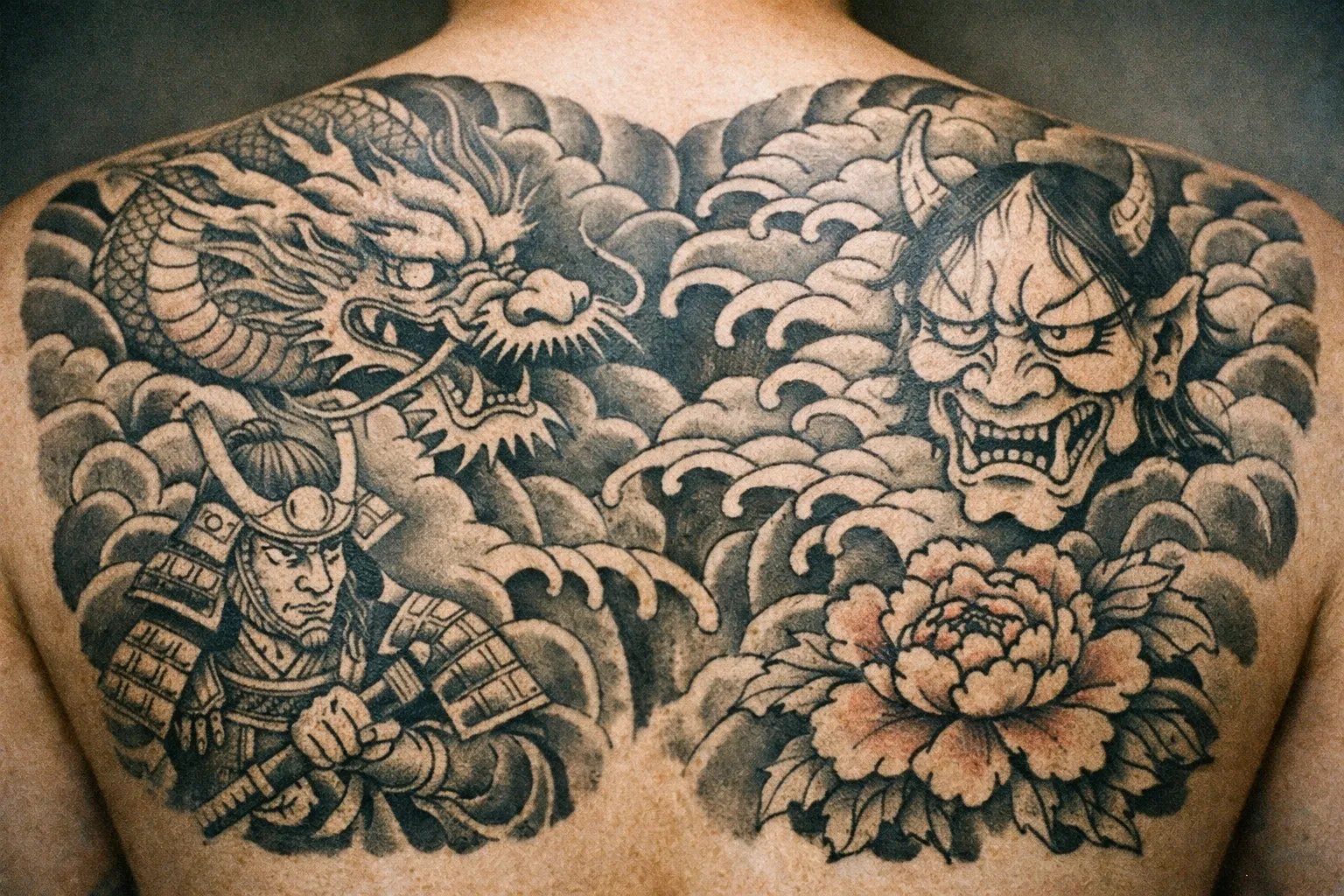
What holds up: thick outlines, a limited palette of deep reds, blacks, and greens, and strong negative space. Those elements remain readable at 20-plus years. What fades or blurs: thin outlines, watercolor-style backgrounds, and fine-line neo-Japanese work lose clarity much faster. Pastels like pink and pale blue fade quicker under UV.
Sun exposure is the biggest threat. UV breaks down color faster than almost anything else. Orange, yellow, and red fade faster than black. Applying SPF 30-50+ sunscreen on exposed pieces or wearing sun-protective clothing extends color life by years. Clothing beats sunscreen for large pieces you can cover.
Touch-ups for bold traditional irezumi with saturated color can go 7-10+ years between visits if you protect it well. Fine-line or watercolor-influenced Japanese work might need attention every 3-5 years. Placement matters too: forearms get more sun and friction than upper arms or backs, so backpieces and upper-arm work age better than forearm tattoos.
One rule: always judge an artist’s longevity by healed portfolio photos, not fresh work. Fresh irezumi looks sharper and darker than it will at 5 years.
The Social Reality of Irezumi: Stigma, Onsen Bans, and Navigating Japan
Tattoos are still rare in Japan. A 2014 survey of 1,000 adults found only 1.6% had tattoos; a 2017 survey of adults in their 20s-40s put it at 3.1%, according to a study published in the Japanese Psychological Research journal citing the Kanto Federation of Bar Associations and Tokyo Iseya Clinic data. Traditional Japanese-style tattoos are a minority within that minority.
Practically, this means access issues. Many onsen, public baths, gyms, and pools bar tattooed guests. Signs reading “irezumi no kata okotowari” (tattooed persons refused) are common. This isn’t just history: it’s current policy at many facilities. If you’re heavily tattooed and traveling in Japan, plan cover-up strategies like long sleeves or rash guards, or seek out private onsen rooms (kashikiri).
Employment is another hurdle. Tattoos remain “deeply discrediting” in many formal workplaces. Younger generations are more tolerant, and visible tattoos are becoming more common in Tokyo and Osaka’s food-service, retail, and fashion sectors. But corporate Japan hasn’t caught up.
That’s why traditional bodysuits leave hands, neck, and face untattooed. This lets wearers appear unmarked in formal dress, a deliberate social workaround rather than an aesthetic choice.
Legally, things have shifted. On 16 September 2020, Japan’s Supreme Court confirmed that tattooing is not a medical practice under the Medical Practitioners’ Act, so tattooists do not need a doctor’s licence (33). But informal regulation through business policies and workplace norms remains.
For non-Japanese wearers, the cultural appropriation question comes up often. The short answer: Japanese horishi have worked with international clients for decades. The style has been practiced globally for a long time. What matters is respect for the symbolism and composition rules, not your nationality.
Project Planning: Time, Cost, and Session Logistics for a Full Irezumi Project
A full irezumi project happens in sessions and healing cycles, not a single marathon. Most Japanese-style sessions run 4-6 hours, spaced 2-4 weeks apart to allow healing. Tebori sessions are shorter, often 2-4 hours, because of the physical demands on the artist.
Sequencing matters. Many horishi prefer starting with the backpiece before sleeves, so the overall composition flows across the body. Bring this up at consultation instead of assuming your first session can be anywhere you want.
The multi-year reality is worth knowing. A full bodysuit is a 3-7+ year project at typical session frequency. Even a full sleeve at one 6-hour session per month takes 4 to 7 months of consistent scheduling, and gaps are the norm, not the exception.
Costs, sourced from recent reports:
- Irezumi artists in Japan: around 10,000-15,000 JPY per hour with a one-hour minimum, per The Japan School’s guide to getting tattooed in Japan; the two Tokyo studios it lists quote 12,000 JPY per hour for large work (31).
- Tebori and master-level traditional work: higher than machine work, which The Japan School states plainly (31). One cost overview puts specialist rates in the 20,000-30,000 JPY per hour range (30), a figure we could not confirm at the source; treat it as indicative. Individual rates vary.
- A full backpiece is a months-to-years commitment; full bodysuits at master level run into millions of yen, with some non-bodysuit projects exceeding 1,000,000 JPY.
Two practical notes: prepare physically for long sittings by hydrating, sleeping, eating beforehand, and bringing snacks for 4-6 hour sessions. Also, disclose medical conditions at consultation. Diabetes, blood thinners, and immune disorders affect healing over multi-year projects, and many artists won’t proceed without clearance.
Healing timeline for large irezumi work
- Day 1-3: Tattoo is an open wound. Clean 2-3 times daily with fragrance-free antibacterial soap, apply a thin layer of fragrance-free moisturizer, avoid soaking and the gym.
- Week 1: Peeling starts around days 4-7. Don’t pick; keep moisturizing.
- Week 2-4: Surface looks closed but deeper layers still heal. Avoid direct sun and pools; colors may look dull.
- Week 4-8: Full surface healing. Apply SPF 30-50+ whenever exposed. Color settles as skin finishes.
Frequently Asked Questions
- What is a traditional Japanese tattoo called?
- The large-scale artistic style is most precisely called irezumi or horimono. The artist is called a horishi.
- What are the rules for traditional Japanese tattoos?
- Core rules govern composition: backgrounds are structural, motifs orient along the body, seasonal pairings follow classical formulas, negative space is intentional, and scale matters.
- Can a white person, or any non-Japanese person, get a Japanese style tattoo?
- Yes. Japanese horishi work with international clients regularly. Respect for symbolism and composition is more important than nationality.
- Do irezumi tattoos age well?
- They age better than most styles when done correctly, thanks to bold outlines and a limited palette. Sun protection is key.
- How long does a Japanese sleeve tattoo take?
- Expect 25-40 hours over five to eight sessions spaced 2-4 weeks apart, typically spanning five to eight months or longer.
- What's the difference between tebori and machine for irezumi?
- Tebori is hand-poking, slower and physically demanding. Machine is faster and more common. Both can produce authentic irezumi.
- How much does a traditional Japanese tattoo cost?
- In Japan, irezumi artists generally charge 10,000-15,000 JPY/hour with a one-hour minimum, per The Japan School's tattoo guide. Tebori and master-level artists charge more. Full sleeves and backpieces scale accordingly.
- Will my irezumi tattoo restrict access to onsen in Japan?
- Very likely. Many onsen and public baths bar tattooed guests. Cover-ups and private rooms are common workarounds.
Before You Book: The Three Decisions That Shape the Whole Project
Three decisions make or break your irezumi project, and all happen before you pick a motif.
Scale first. Decide if you’re aiming for a sleeve, backpiece, or standalone piece before choosing imagery. Scale determines composition, artist, and budget.
Artist before design. Find the right horishi or irezumi specialist, then develop the design through consultation. Locking in a design first and then hunting for an artist often leads to awkward results.
Visibility planning. If you travel to Japan or work somewhere formal, decide now whether hands, neck, and face stay untattooed. Changing this later is expensive or impossible.
Large irezumi is a multi-year relationship with your artist and your skin. Aftercare between sessions is as important as the sessions themselves. Sun protection on healed work is non-negotiable if you want your colors to last.
Plan the whole project, and the individual sessions will fall into place.