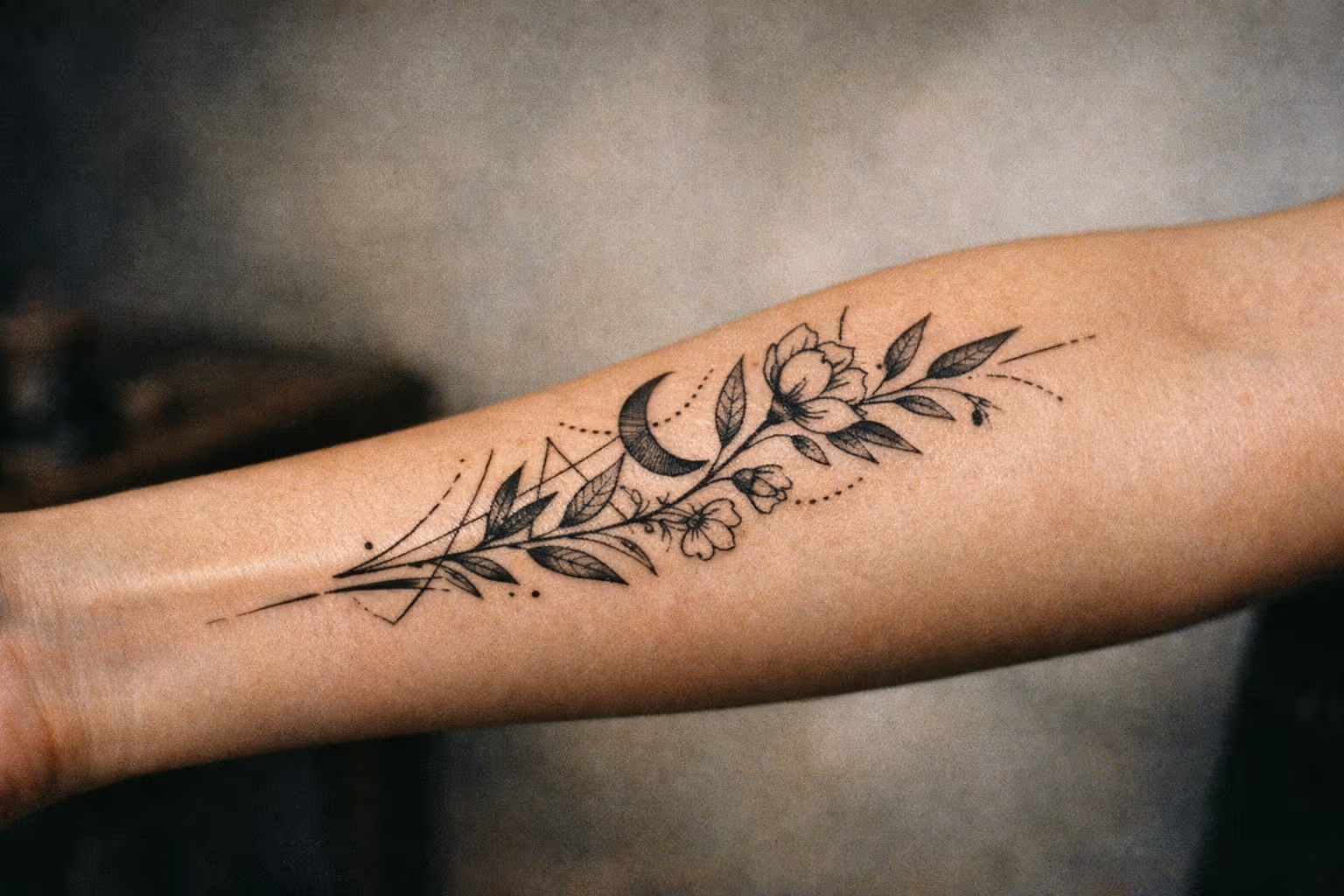
Most tattoo designs for men fail not on the idea but on the math: a $500 budget buys three to five hours of work, which is a well-executed forearm piece - not the full sleeve you sketched. Match the design to what the money, the placement, and a decade of aging can actually carry, and you get something that still looks intentional at 50. Overreach, and you get a rushed, crowded piece that blurs. Here’s how to pick a design that fits all three.
What Makes Tattoo Designs for Men Actually Work
When considering tattoo designs for men, it’s important to first look at the canvas itself. The male body has bigger flat planes - back, chest, upper arm - and stronger muscle definition than most tattoo references assume. A design that looks great on flat paper can warp across a flexed bicep or stretch oddly over a pec.
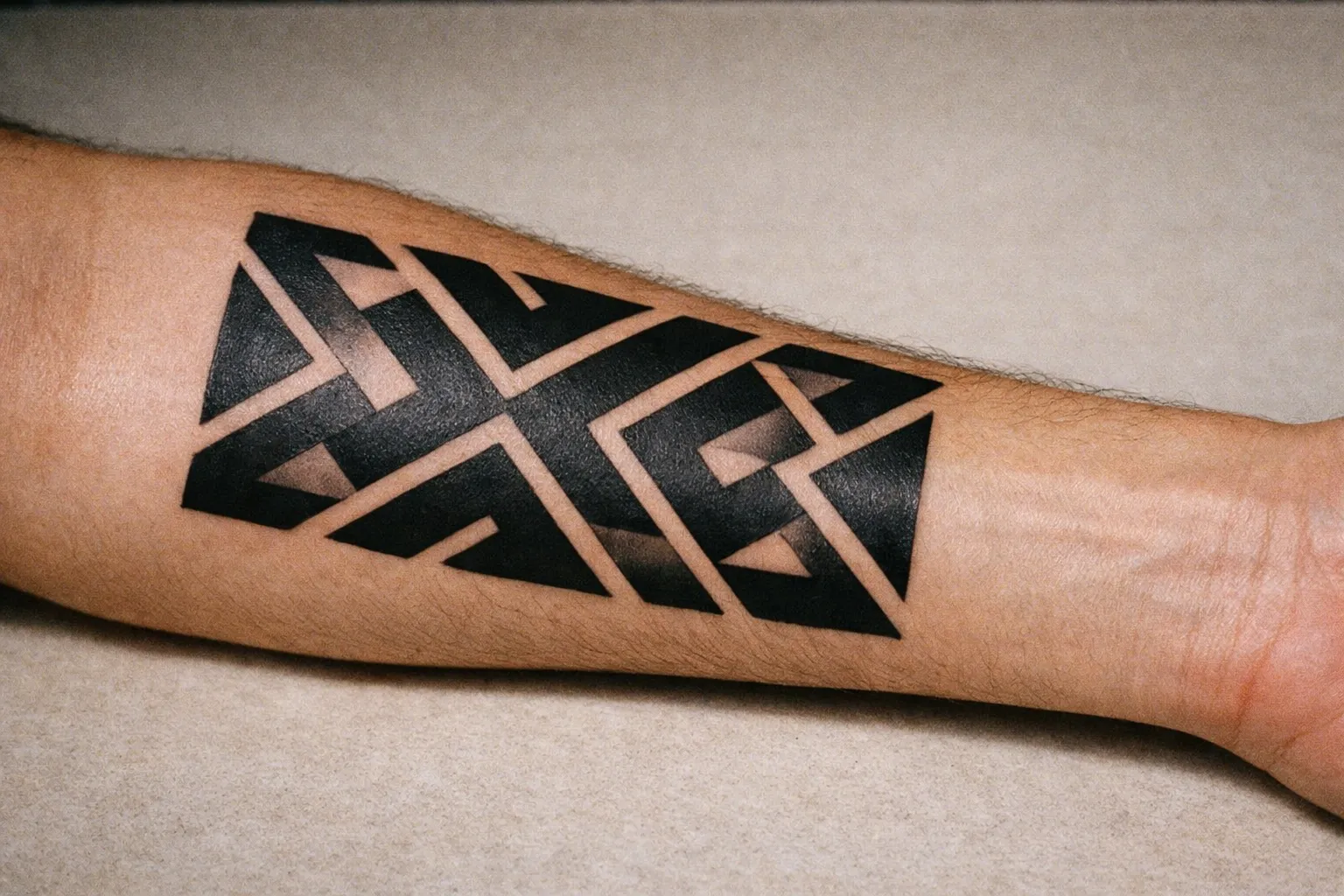
Two technical things matter more than the image itself:
- Body flow. The design has to follow muscle and bone. A snake that wraps the forearm should spiral with the radius, not cut across it. Japanese sleeve work does this well; bad American traditional sleeves don’t.
- Negative space. Skin showing through is part of the composition. Pieces that try to cover every inch read as muddy at 5 feet and worse at 10 years.
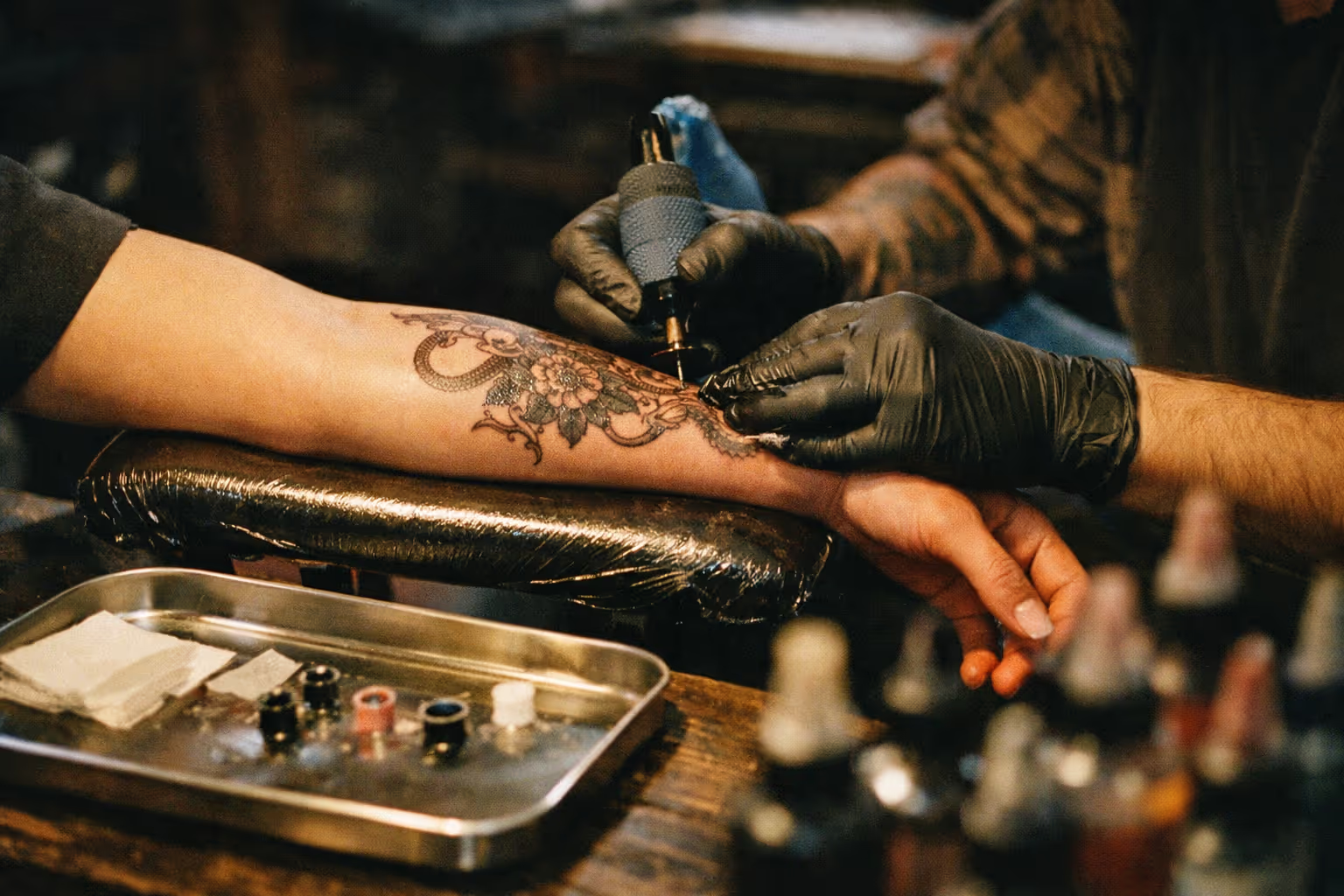
I’ve had clients come in with a square reference image expecting it to land cleanly on a curved deltoid. It won’t. Good artists redraw the reference to fit your specific anatomy - that’s what the consultation is for, and if an artist skips that step, that’s a red flag.
The Most Popular Styles Right Now
The 2025-2026 style lists are remarkably consistent across sources. Top-ranking male tattoo styles include minimalist line work, tribal and Polynesian, black and grey realism, anime characters, neo-traditional, Japanese irezumi, and geometric pieces (1)(2).
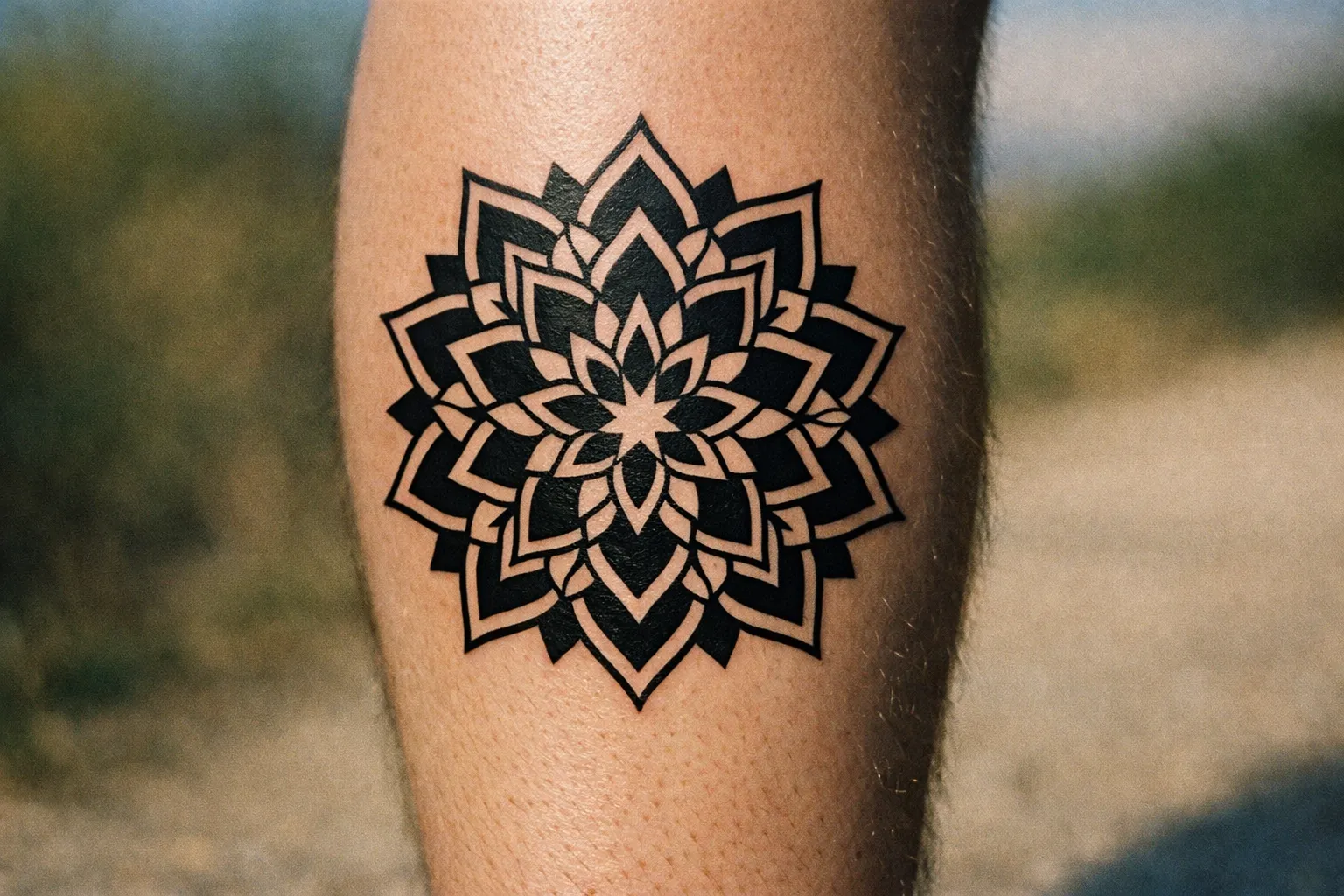
In terms of actual motifs - the subjects men are getting - the top of the list looks like this:
- Roses (usually black and grey, often paired with a skull, dagger, or clock)
- Lions, wolves, and tigers (symbolic strength pieces, popular as upper-arm or chest anchors)
- Snakes (forearm and ribcage, wrapping placements)
- Religious icons (crosses, praying hands, rosaries, Christ portraits)
- Compasses and clocks (often combined with roses or maps)
- Skulls (traditional, realistic, or geometric)
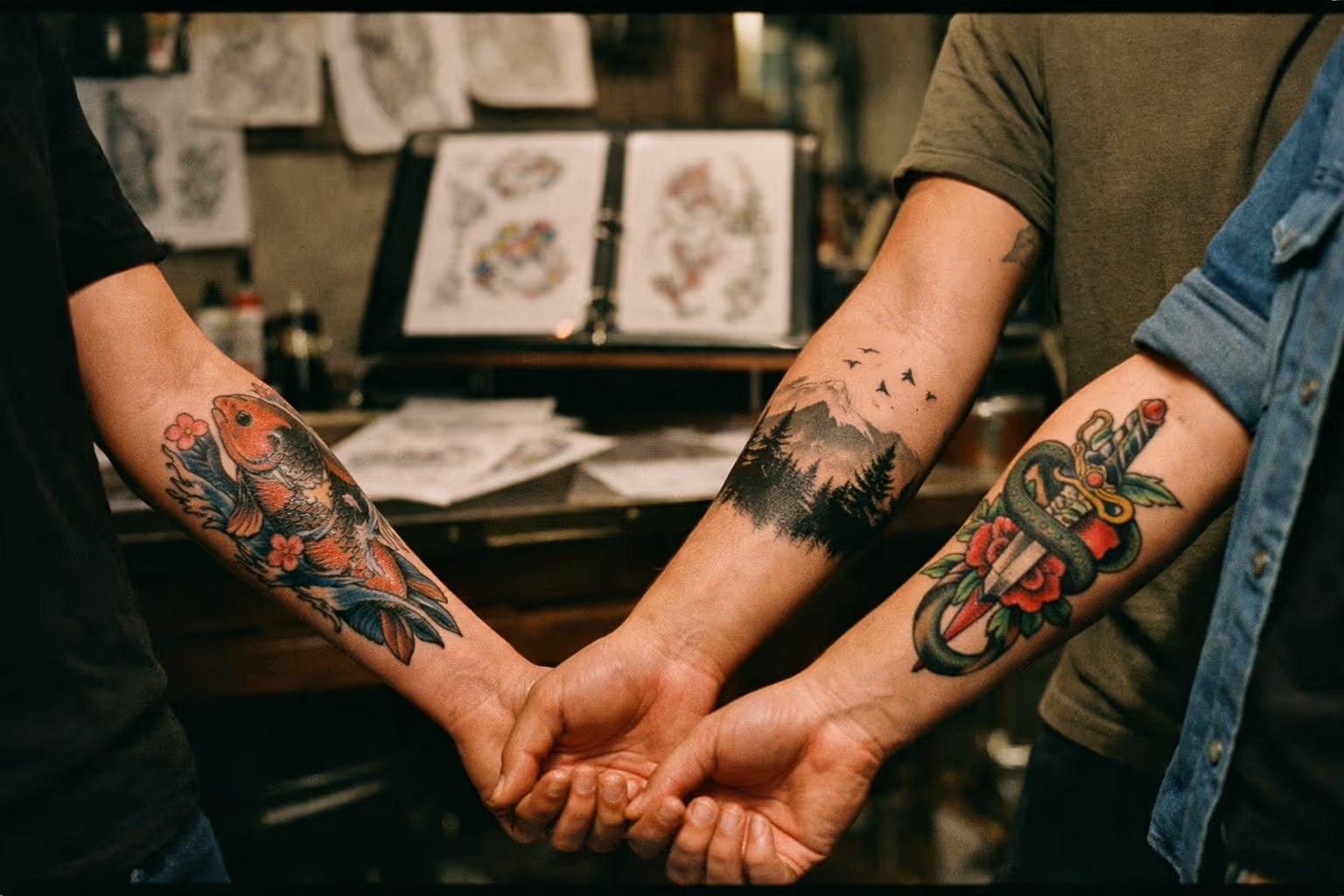
- Mountain ranges and landscapes (forearm bands, single-needle work)
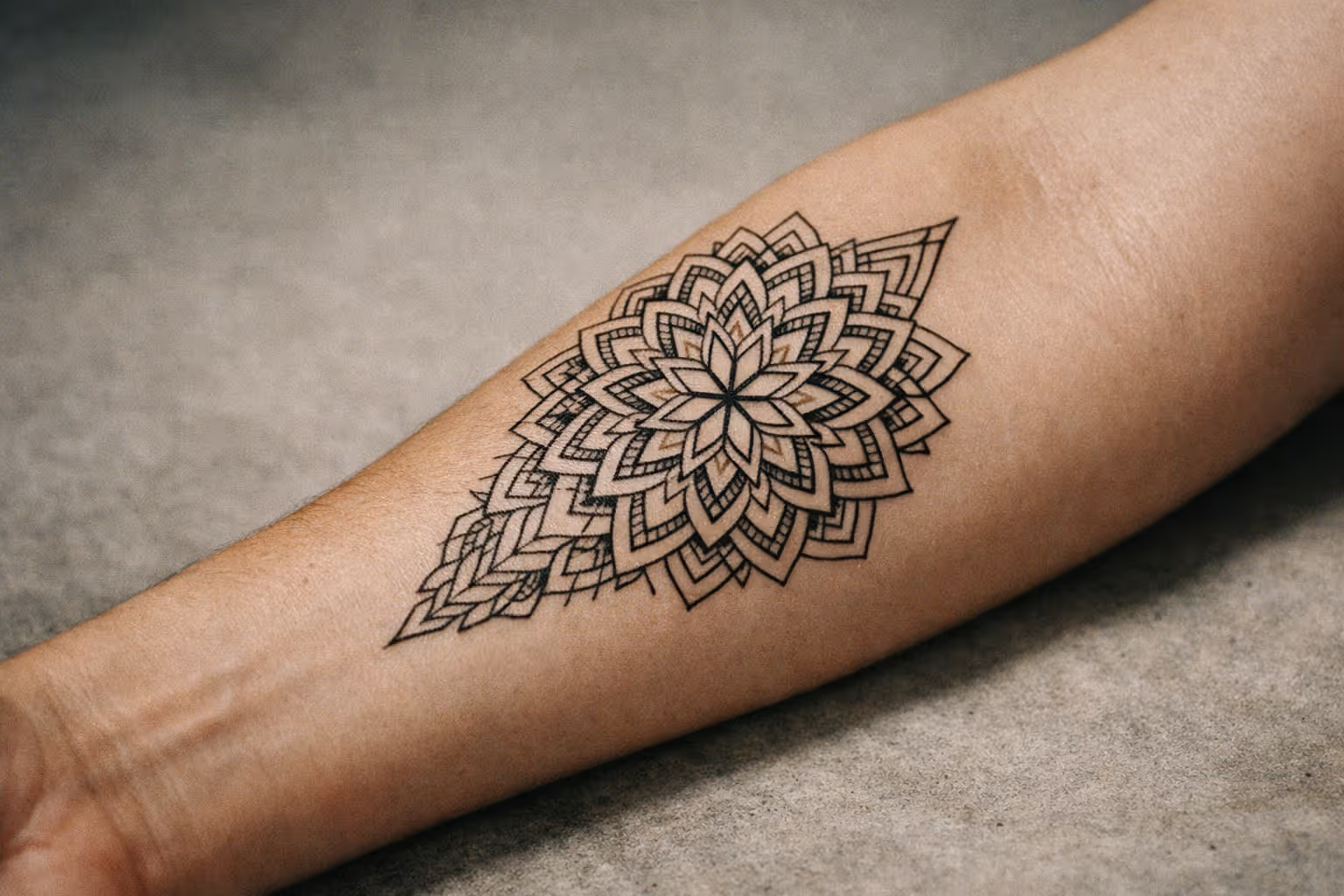
- Geometric patterns and mandalas (upper arm, shoulder, sternum)
- Japanese motifs - koi, dragons, hannya masks, cherry blossoms (sleeves and back)
- Lettering and script (forearm, ribs, chest)
If you want the single most-requested design across shops, it’s a rose - and that’s true across genders. For men it usually appears in black and grey, sized 3-5 inches (7-13 cm), on the forearm, hand, or as part of a larger sleeve composition.
Where Tattoos Look Best on Men
Placement matters more than design choice. The same rose looks confident on a forearm and aggressive on a neck. Style and dating-app surveys consistently rank these placements highest for male tattoos (2)(3):
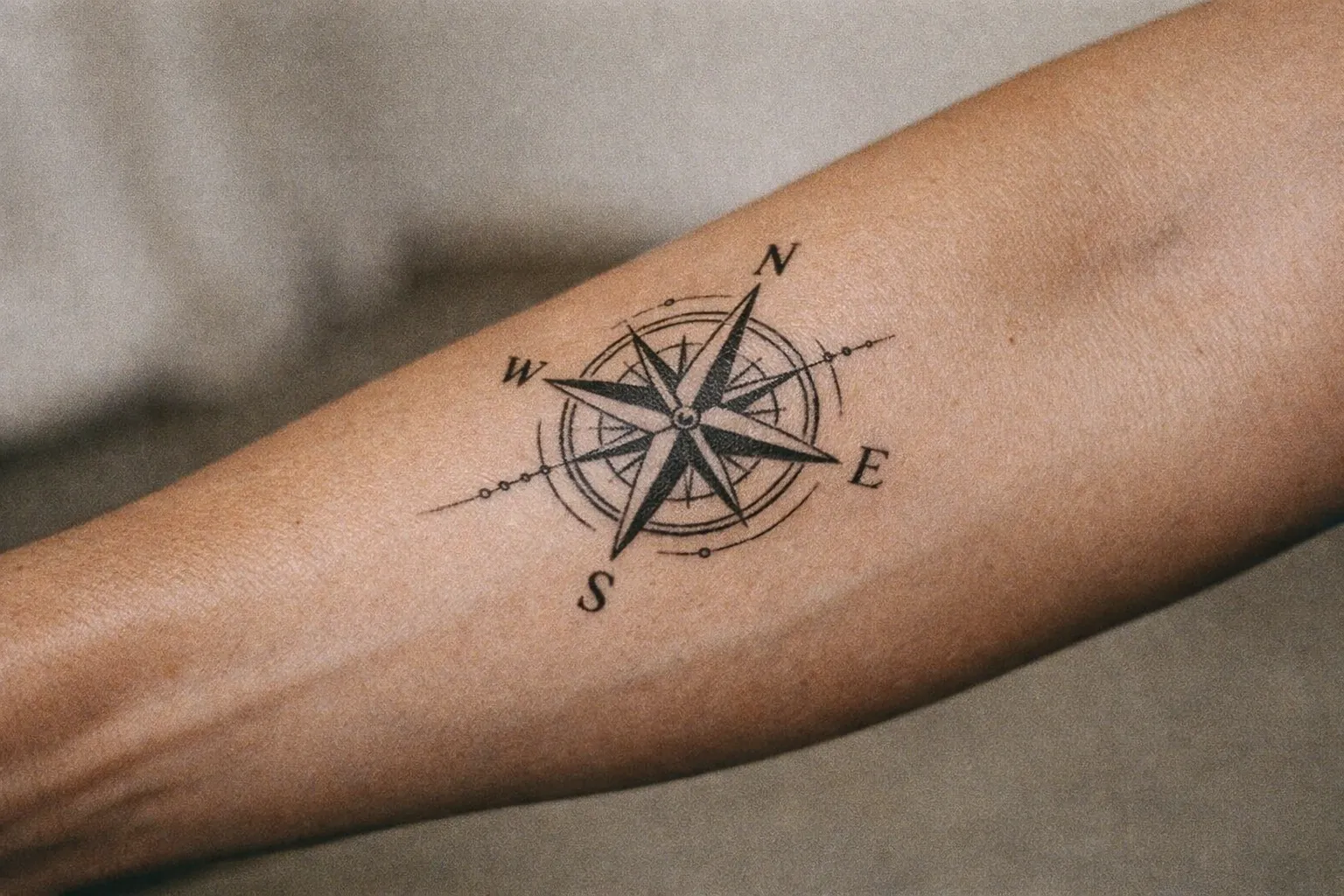
Forearm - the most-recommended placement, especially for first tattoos. Visible when you want it, easy to cover with a long sleeve for work. Pain is moderate (lower than ribs, higher than upper arm). Size range that works: 3-7 inches (7-18 cm).
Upper arm and shoulder - classic masculine territory. Ages well because it gets less sun than the forearm, and the curved surface flatters most designs. Ideal for starter sleeve anchors or standalone pieces in the 4-6 inch (10-15 cm) range.
Chest - pec pieces sit close to the heart, which is why this placement gets symbolic motifs: family names, religious imagery, roses. Pain on the sternum is sharp; outer pec is much easier. Plan for a 6-10 inch (15-25 cm) design if you want it to read.
Upper back - the best canvas for large work. Wings, Japanese scenes, big animals, religious tableaux. Easy to cover. Pain over the shoulder blades is manageable; over the spine it’s brutal.
Ribcage and sternum - high-pain zones. Looks great in photos, hurts the most to sit through. Ribcage > forearm by a wide margin in pain terms. Not recommended as a first tattoo.
Hands, neck, face - these are “job stoppers” in many industries. Even with shifting workplace norms, plan around your actual career, not the one you wish you had.
How Big Should a $500 Tattoo Be?
This is one of the most-searched questions, and the answer most idea lists dodge.
At a mid-tier shop in a U.S. city, hourly rates run $100-$160 per hour, with shop minimums of $80-$150 for anything that takes less than an hour. A $500 budget gets you roughly 3 to 5 hours of work, which translates to:
- A detailed 4-6 inch (10-15 cm) piece on the forearm, upper arm, calf, or outer chest
- A solid black-and-grey rose with shading and background detail
- A medium black-and-grey animal portrait (wolf, lion head)
- A compass or clock with moderate detail
- One anchor piece for a future sleeve - the centerpiece you’ll build around later
What $500 will not cover: a full sleeve, a large back piece, a multi-element chest panel, or a portrait in color. Anyone telling you otherwise is either inexperienced or about to deliver muddy work.
If you have $500 and want maximum visual impact, get one strong focal design rather than three small unrelated ones. A single well-executed 5-inch rose on the forearm reads better than three $150 fillers scattered across your arm.
Sleeve Tattoo Design for Men
A sleeve tattoo design for men is the longest-term commitment in tattooing. Full sleeves take 15-30+ hours spread across 3-8 sessions, with total costs landing between $1,200 and $4,000+ depending on the artist’s hourly rate and the complexity of the work.
Two technical hallmarks separate good sleeves from amateur ones:
- A unified theme - all Japanese, all black and grey, all geometric, all botanical. Mixing American traditional skulls with fine-line minimalism on the same arm reads as a sticker collection.
- Negative space and background flow - water, smoke, wind bars, or empty skin connecting the main elements. Sleeves that cram every inch with subjects look chaotic and age poorly.
The smart way to build a sleeve:
- Start with one or two anchor pieces on the upper arm and forearm (4-6 inches each). Get those done first.
- Live with them for 3-6 months. See how they age, how they sit, whether you still love them.
- Add background and connector pieces in subsequent sessions over 6-24 months.
I’ve watched clients rush this and regret it. The ones who take their time - who let the anchor pieces settle before committing to filler - end up with sleeves that look intentional rather than accumulated.
Common sleeve themes that hold up:
- Japanese irezumi - dragon, koi, hannya, with wind bars and waves. Bold outlines, limited palette, designed for the body since the Edo period.
- Black and grey realism - portraits, statues, religious imagery, with smooth gradients and a unified greyscale palette.
- Neo-traditional - thick outlines, saturated color, stylized animals and florals. Ages well because of the strong linework.
- Geometric and dotwork - mandalas, sacred geometry, stippled shading. Works for clients who want pattern over imagery.
A common pitfall in sleeve work: starting with the forearm because it’s most visible. Forearms get the most sun and fade fastest. Upper arm anchors age better.
Back Tattoo Design for Men
The back is the largest single canvas on the body - roughly 2 feet by 3 feet of unbroken skin if you count shoulder to lower back. A large back tattoo design for men runs 20-40 hours and costs $2,000-$6,000+ with an experienced artist, especially for black and grey realism or Japanese-style backpieces.
Two main composition strategies:
Spine-aligned centerpiece. A single vertical subject - dragon, cross, tree of life, totem, deity - running along the spine. Reads strong, easier to plan in stages, and you can stop at any point without it looking incomplete. Best for clients who want one statement rather than full coverage.
Full coverage (“body suit back”). The entire back as one composition - Japanese landscapes with koi and waves, religious tableaux, full scenes. Requires a single artist committed to the project over months, and your weight has to stay relatively stable (±5-10 lb) for the composition to hold.
Popular back motifs for men:
- Japanese dragons and koi (full back, traditional irezumi)
- Wings (shoulder blades to lower back)
- Religious scenes - crucifixion, archangels, Last Supper
- Large animals - tigers, lions, bears, wolves
- Geometric or mandala work centered between the shoulder blades
The pain profile: shoulder blades and outer back are manageable, spine and lower back are sharp. Plan sessions of 3-5 hours max. Eight-hour back sessions sound heroic but produce worse line quality by hour six - I’ve seen it, and the difference in line consistency between hour two and hour seven is not subtle.
Small Tattoo Design and Minimal Tattoo Design
Minimalist work topped most 2025-2026 style lists for men (4)(5) - partly because it’s workplace-friendly, partly because it ages reasonably well when done correctly.
A small tattoo design generally means 1-2 inches (2.5-5 cm) and costs $80-$300 depending on detail. Common subjects:
- Initials, dates, Roman numerals
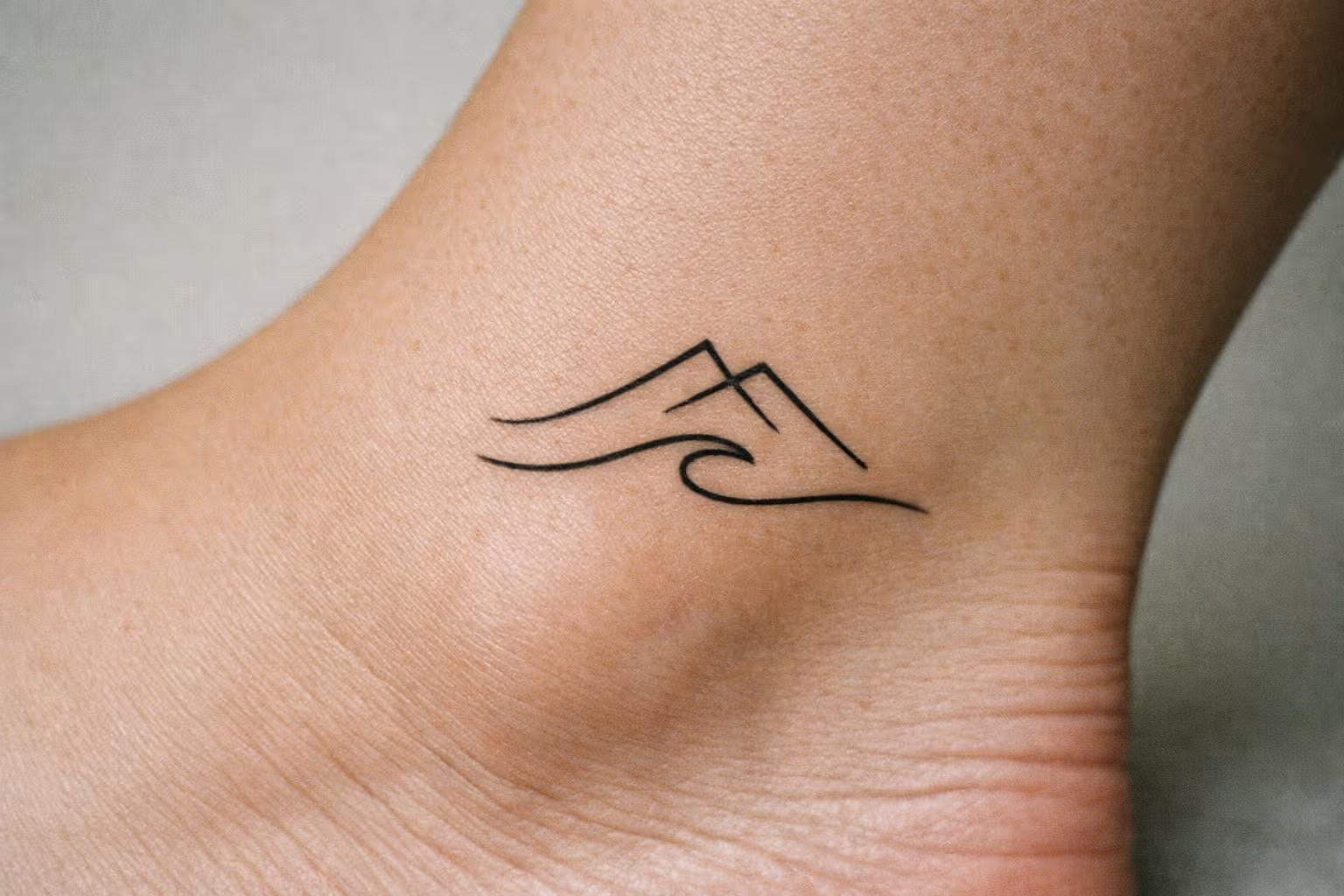
- Single symbols - anchor, arrow, mountain, wave, semicolon
- Small line-work animals (bird in flight, fox silhouette)
- Tiny rose outlines, single flowers
- Coordinates, short script
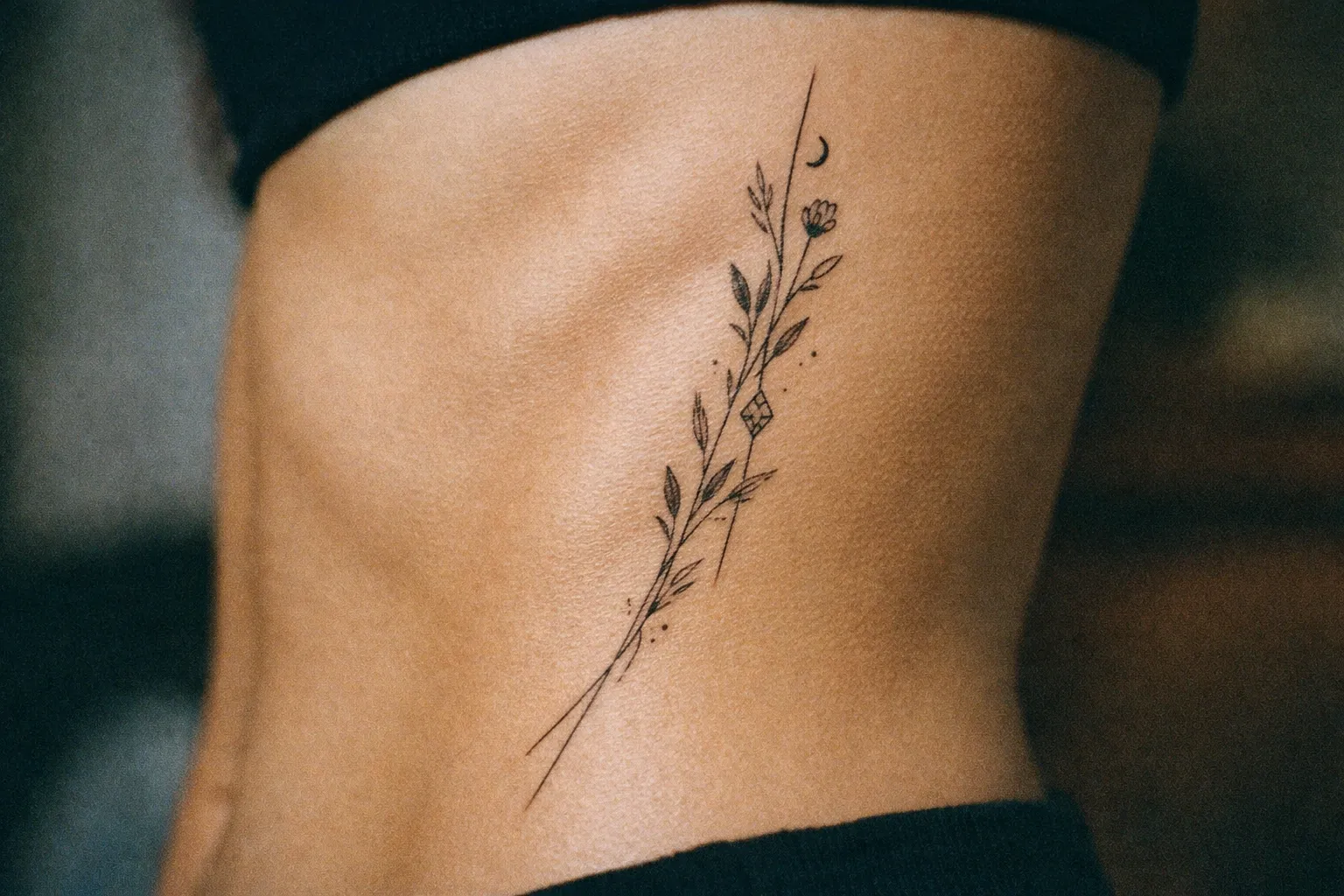
A minimal tattoo design is a style choice, not a size - it’s about clean single-weight lines, no shading, and minimal detail. Best placements: inner forearm, wrist, behind the ear, ribcage band, ankle.
The pitfall with minimal work: artists chasing Instagram aesthetics use needles too fine (3RL or smaller) and lines too thin. Those tattoos look beautiful at one month and disappear or blur within 5-10 years as ink spreads under the skin. Ask for slightly thicker lines - a 5-7 round needle setup gives you 10+ years of clean readability.
Another pitfall: cramming a complex scene into a 2-inch space. A skull, rose, clock, and banner inside a quarter-sized tattoo will heal into a smudge. If you want detail, you need surface area. This is where clients and artists both need to be honest with each other, and the ones who aren’t end up with blowouts.
Tattoo Design of Rose: The Most Versatile Motif
A tattoo design of rose works across more styles than almost any other subject. Black and grey realism, American traditional, neo-traditional, fine-line minimal, Japanese - every style has a rose vocabulary.
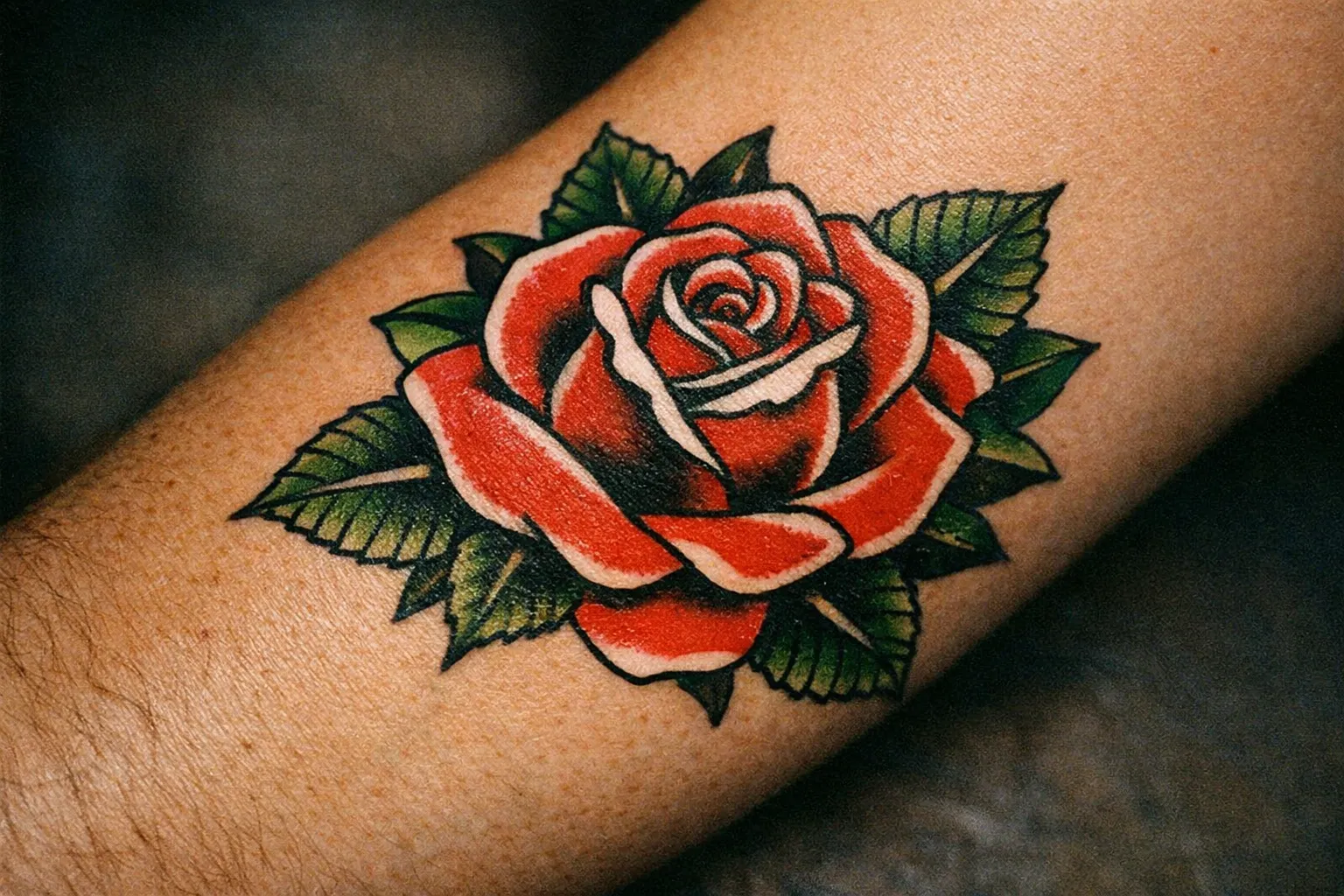
For men, the rose usually appears in these configurations:
- Standalone forearm piece, 3-5 inches, black and grey with heavy shading
- Hand or finger rose in single-needle line work (hands fade fastest - plan for touch-ups)
- Combined with a skull, dagger, or clock - the classic American traditional pairing
- Sleeve element - clusters of roses as filler or focal points in larger compositions
- Chest piece, often paired with a name or date
Symbolic note worth knowing: the rose carries multiple traditions. In Western tattoo culture it’s tied to American traditional sailor work - love, loss, memorial. In Spanish and Mexican tattoo traditions it’s tied to religious iconography: Our Lady of Guadalupe, Sacred Heart. Modern minimalist roses don’t carry a fixed meaning; they’re often purely decorative. Don’t let anyone tell you there’s one universal meaning.
A good rose pairs with one clear secondary element, not three. A rose plus a skull tells a story. A rose plus a skull, clock, dagger, and banner reads as a generic tattoo-shop poster.
Female Tattoo Design Crossover: Motifs Men Are Wearing Now
Worth flagging because the gender lines have genuinely softened. Traditional female tattoo design territory - fine-line florals, butterflies, ornamental mandalas, delicate script - is increasingly requested by men, especially as small tattoo design accents on inner forearms, behind the ear, or as filler in larger sleeves (6)(7).
This isn’t about gender at all; it’s about scale and weight. A fine-line butterfly on an inner bicep reads completely differently than the same butterfly on a wrist. If you like a motif that’s been coded “feminine” in tattoo culture, the question to ask the artist is about size, placement, and line weight - not whether it’s appropriate.
The pitfall: trying to “masculinize” a fine-line floral by making it bigger and bolder usually destroys what made the design appealing. If you want a delicate piece, get a delicate piece. If you want a bold piece, pick a bold subject.
Using Reference Material Strategically
Pinterest, Instagram, and tattoo discovery feeds have changed how clients walk into shops. The “more about this pin” and “related interests” feeds aren’t random - they cluster designs by visual similarity, which is the closest you’ll get to a free style analysis of your own taste.
How to use this effectively:
- Start a board with 20-30 designs you genuinely like.
- Click into one and scroll the “more about this pin” / related feed.
- Note which motifs, line weights, and color palettes keep showing up.
- Save the pattern, not individual images.
The pattern is your real taste. The individual images are reference - never something to copy outright. Bringing an exact reference and asking your artist to duplicate it is bad form (and sometimes a copyright issue with anime or branded work). Bring 5-10 references and ask the artist to design something in that direction.
A tool worth using: Procreate on iPad ($13 one-time) lets you take photos of your body and trace designs over them to see how they sit on your actual anatomy. Many artists now design directly on iPads during consults, which lets you resize and reposition live before any needle touches skin. I started doing this with clients a few years back and it cuts the “I didn’t realize how big that would be” conversations down significantly.
Pain Levels by Placement
Relative pain, ranked from easiest to worst:
- Outer upper arm, outer thigh, calf - easiest
- Forearm, shoulder, outer chest - moderate
- Upper back, bicep - moderate to high
- Inner arm, inner thigh - sharp
- Ribs, sternum, spine, hands, feet - worst
First-timers should pick from tier 1 or 2. Sitting through a 4-hour rib session as your first tattoo is a fast way to bail halfway through and end up with an unfinished piece.
Booking and Cost Realities in 2025-2026
Hourly rates in major U.S. cities have climbed roughly 10-25% since 2021. Current ranges:
- Apprentices and junior artists: $80-$120/hour
- Mid-tier experienced artists: $120-$180/hour
- Established artists with waitlists: $180-$300+/hour
- Celebrity or convention-circuit artists: $300-$600+/hour or flat fees
Deposits of $50-$300 are standard and almost always non-refundable. Popular artists book 1-6 months out - longer for full sleeve or back projects.
Consultations may be free or run $50-$150 (usually credited toward the final piece). For complex custom work, some artists charge a separate design fee of $100-$500 for the drawing time, especially on full sleeves and backpieces.
Aftercare: The 4-Week Timeline
A great design fails if you wreck the heal. The standard timeline:
Day 1-3: The tattoo is an open wound. Clean 2-3 times daily with unscented antibacterial soap, pat dry with a paper towel, apply a thin layer of fragrance-free moisturizer or a tattoo-specific ointment. Sleep on a clean sheet. No gym, no swimming, no soaking.
Week 1: Peeling and flaking starts around day 4-7. Do not pick. Keep moisturizing 2-3 times daily with fragrance-free lotion. Light exercise is fine; avoid anything that soaks the tattoo in sweat.
Week 2-4: Surface is closed but the deeper layers are still healing. Itching is normal - slap, don’t scratch. Resume normal activity, but keep the tattoo out of direct sun and pools. Color may look dull during this phase; it will brighten as the dead skin fully sheds.
Week 4-8: Full internal healing. Once healed, apply SPF 30-50+ sunscreen every time the tattoo will be in direct sun. UV exposure is the single biggest cause of tattoo fading over a decade.
A bad heal can blow out lines, lift ink, and turn a $1,000 piece into something that needs $400 in touch-ups within a year. I’ve seen it happen to clients who were meticulous about the design and careless about the first two weeks. The aftercare is part of the work.
✓ Pros
- Focus on body flow and negative space improves design longevity and appearance.
- Popular motifs like roses and Japanese irezumi offer versatile, meaningful options.
- Clear guidance on placement and size helps avoid common tattoo mistakes.
- Detailed aftercare timeline reduces risk of healing issues and fading.
✗ Cons
- High-quality tattoos require significant time and budget investment.
- Pain varies widely by placement; some popular spots are quite painful.
- Mixing styles in sleeves often leads to chaotic, less cohesive designs.
- Workplace restrictions still limit placement options for many men.
Frequently Asked Questions
- Can I get a tattoo design that mixes multiple styles effectively?
- While it's possible, mixing very different styles - like American traditional skulls with fine-line minimalism - often looks disjointed. A unified theme with consistent line weight and palette usually ages better and reads as intentional.
- How can I tell if a tattoo artist is good at adapting designs to my body?
- A good artist redraws or adjusts reference images to fit your anatomy during consultation. If they accept exact copies without discussion, that's a red flag indicating a lack of customization.
- Why do forearm tattoos fade faster than upper arm pieces?
- Forearms get more sun exposure and friction, which accelerates fading. Upper arm tattoos are more protected by clothing and have less direct sun, so they age better over time.
- Is it better to get one larger tattoo or several small ones?
- One strong, well-executed focal piece usually reads better and ages more cleanly than multiple small unrelated tattoos. Small fillers can blur together and look messy if not carefully planned.
- What's the best way to use Pinterest or Instagram for tattoo ideas?
- Focus on patterns in motifs, line weights, and color palettes rather than copying individual images. Bring 5-10 references to your artist and ask them to create a custom design inspired by those themes.
- How thick should lines be for minimal tattoos to last?
- Lines that are too thin (3RL or smaller) often blur or fade within 5-10 years. A 5-7 round needle setup provides thicker lines that maintain clarity for a decade or more.
- How soon can I resume exercise after getting a tattoo?
- Light exercise is usually fine after the first few days, but avoid activities that cause heavy sweating or soaking the tattoo for at least the first week to prevent infection and fading.
What Actually Matters for Your Decision
Pick the placement first, the style second, the specific design third. A great design in the wrong placement ages badly; a decent design in the right placement ages well.
Budget for what you actually want. If you want a sleeve, save until you can afford the anchor pieces from a good artist rather than spreading $500 across three cheap fillers. Bring references but don’t bring copies. And whatever you pick, plan the aftercare before you sit down in the chair - because the first four weeks decide what your tattoo looks like for the next forty years.