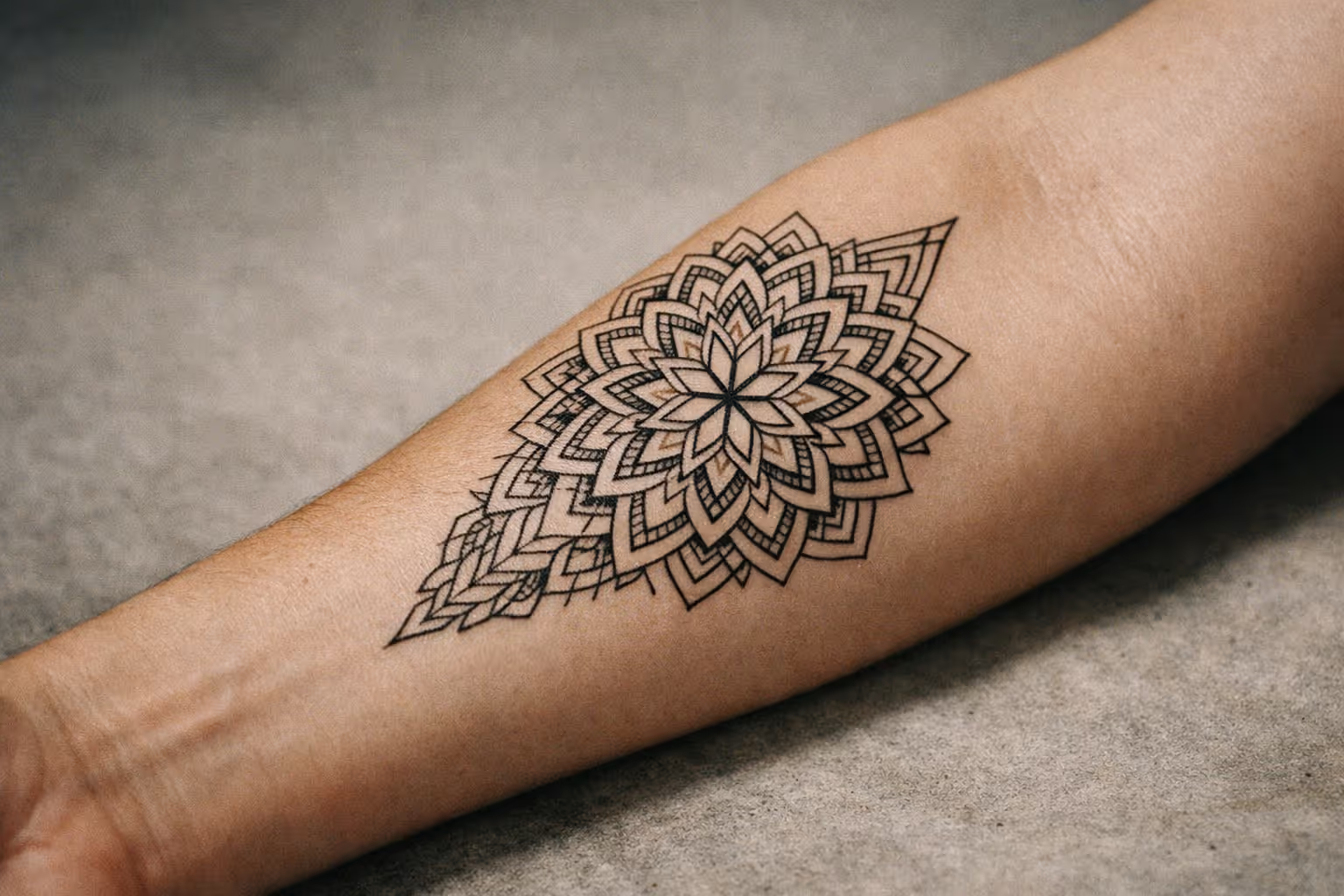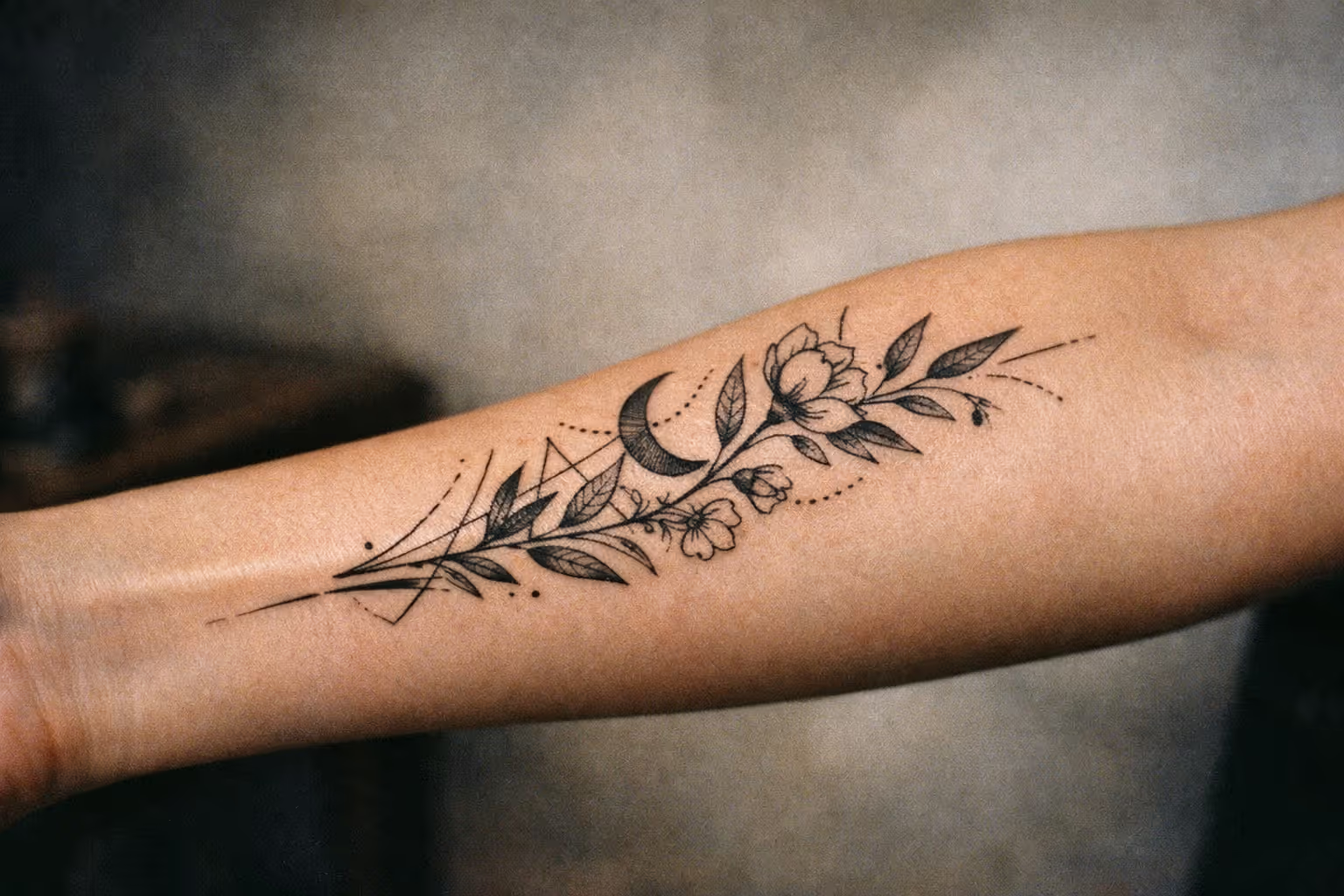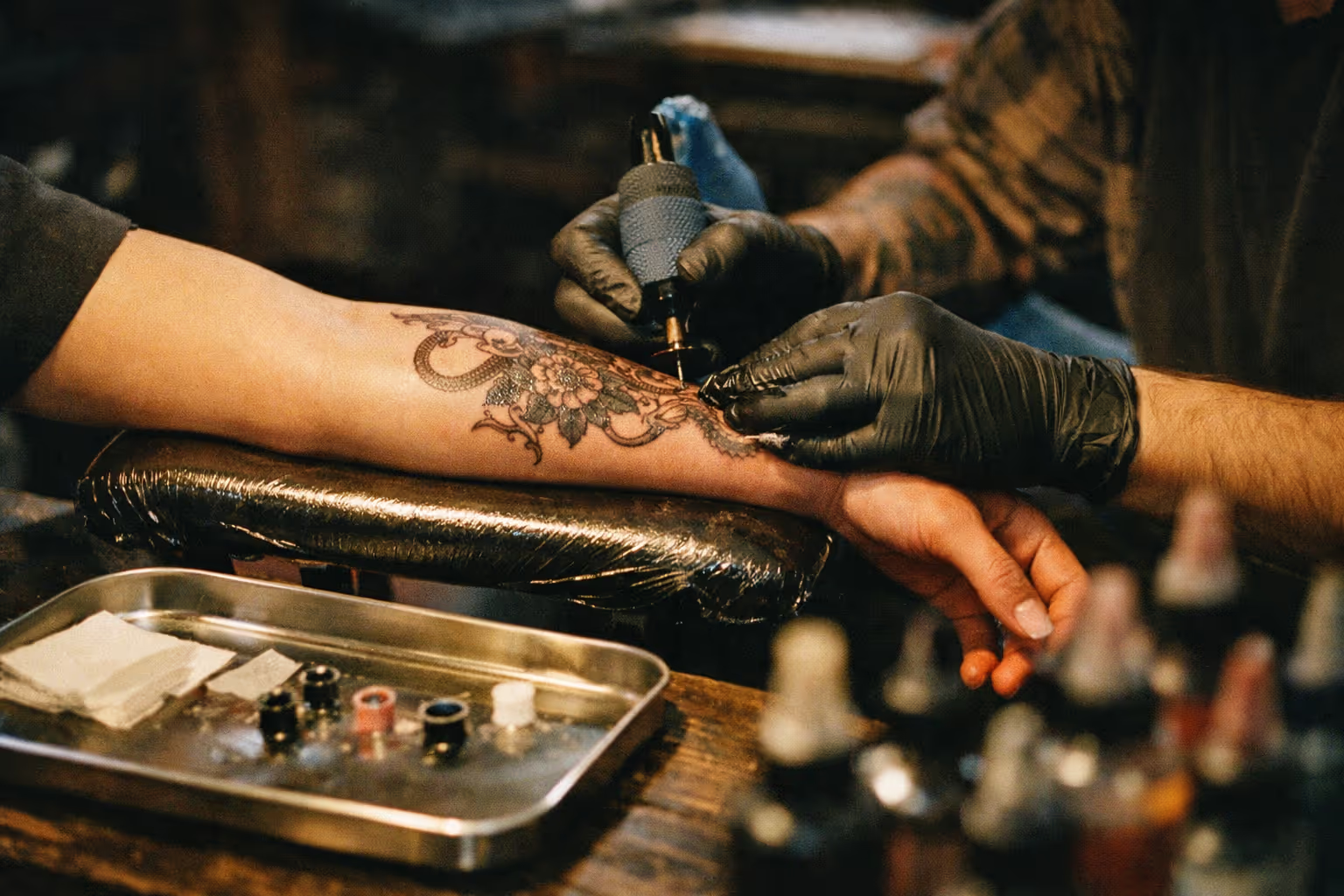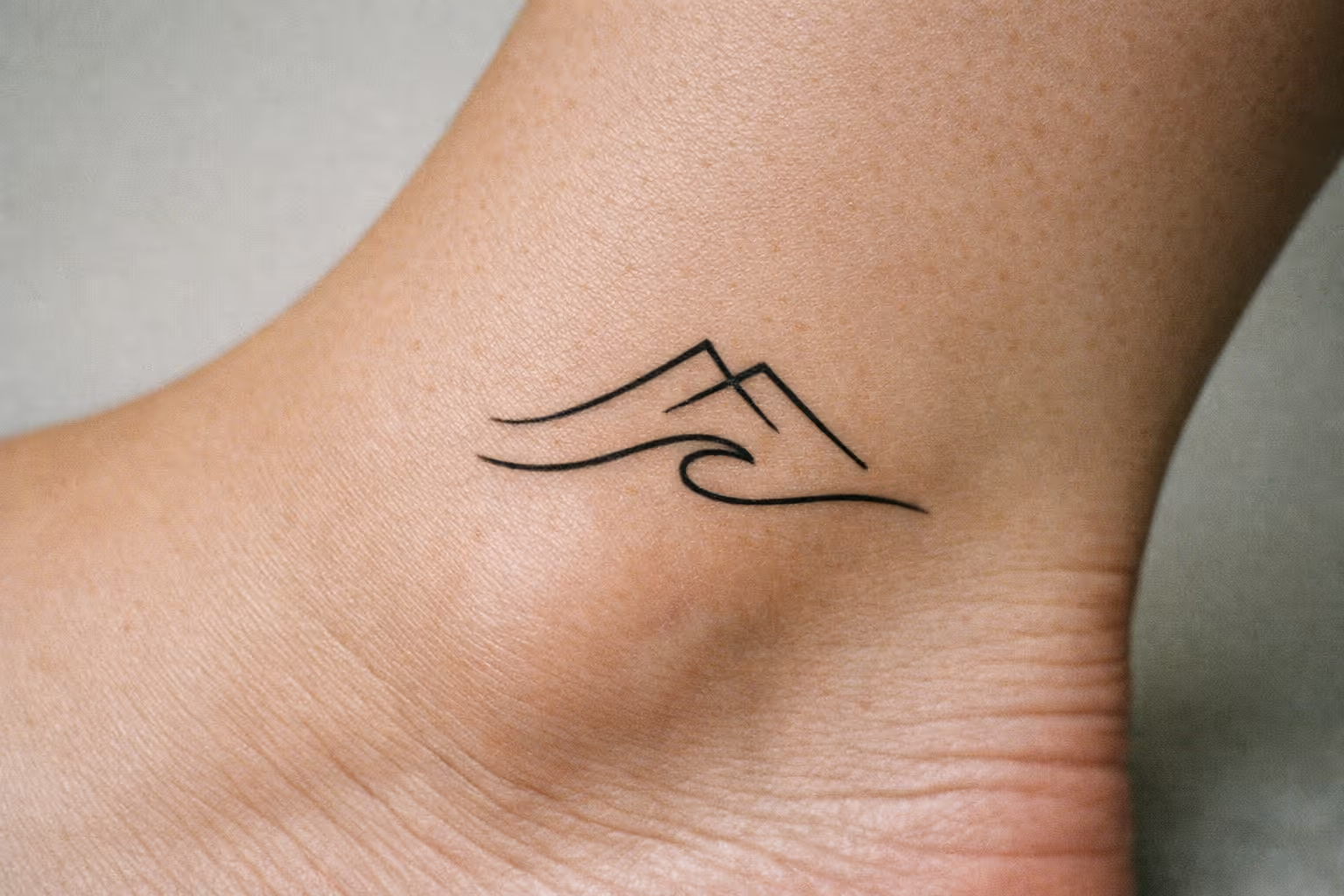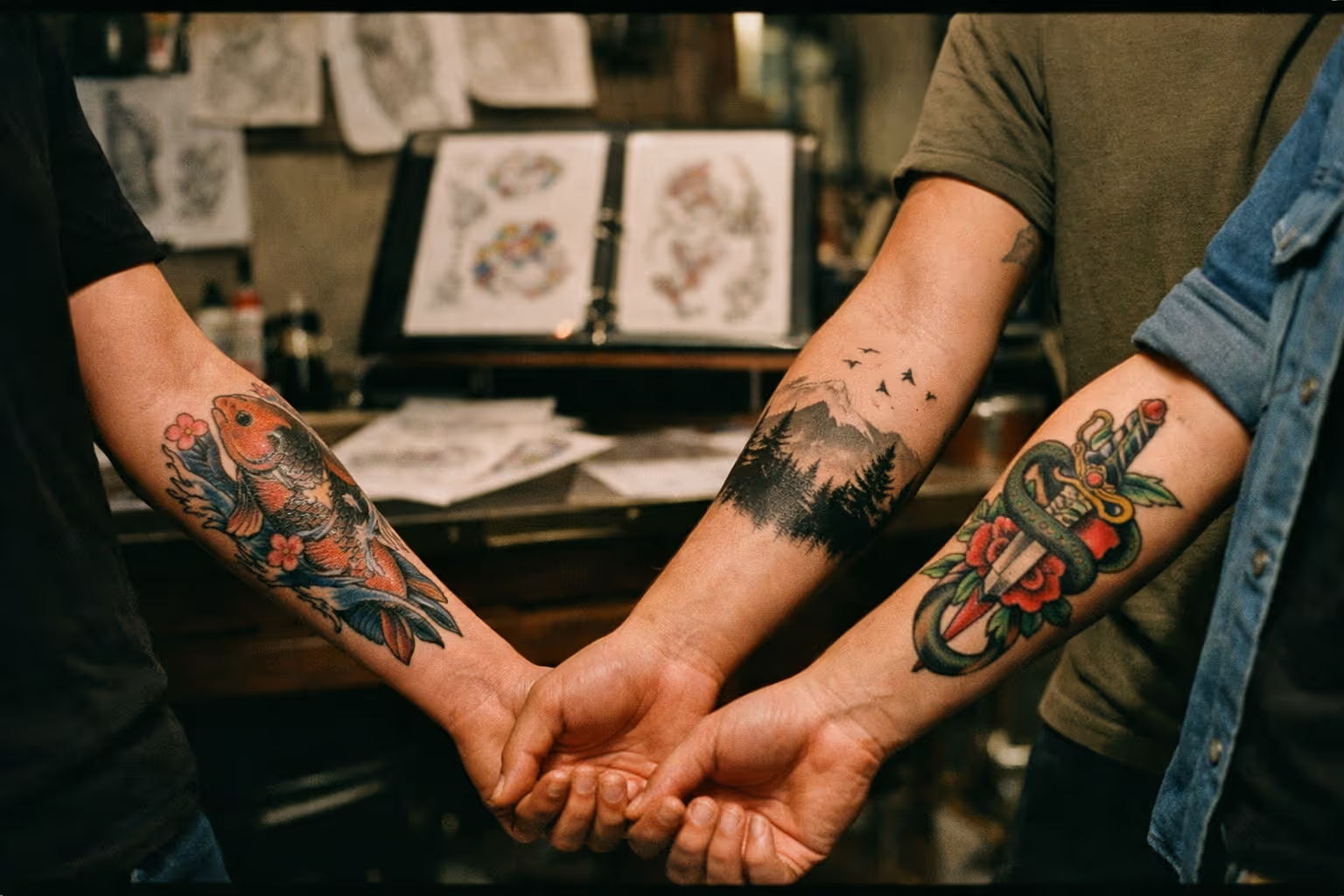
Most first-timers pick a tattoo artist off a feed of fresh, just-finished photos - the one kind of evidence that flatters everyone. How to choose a tattoo artist well means looking at the opposite: healed work, 20-30 pieces deep, where the linework has settled and the shortcuts show. That, plus a few shop-hygiene tells, separates a great artist from a good photographer. Here’s how to read the real signals before you book.
Start With the Style, Not the Artist
Learning how to choose a tattoo artist starts with understanding what style you want. Before you open Instagram, decide what you’re actually looking for. Tattoo artists specialize, and the difference between a great American traditional artist and a great realism artist is enormous. Booking the wrong specialist is the single most common mistake first-timers make, and I’ve watched it happen more times than I can count.
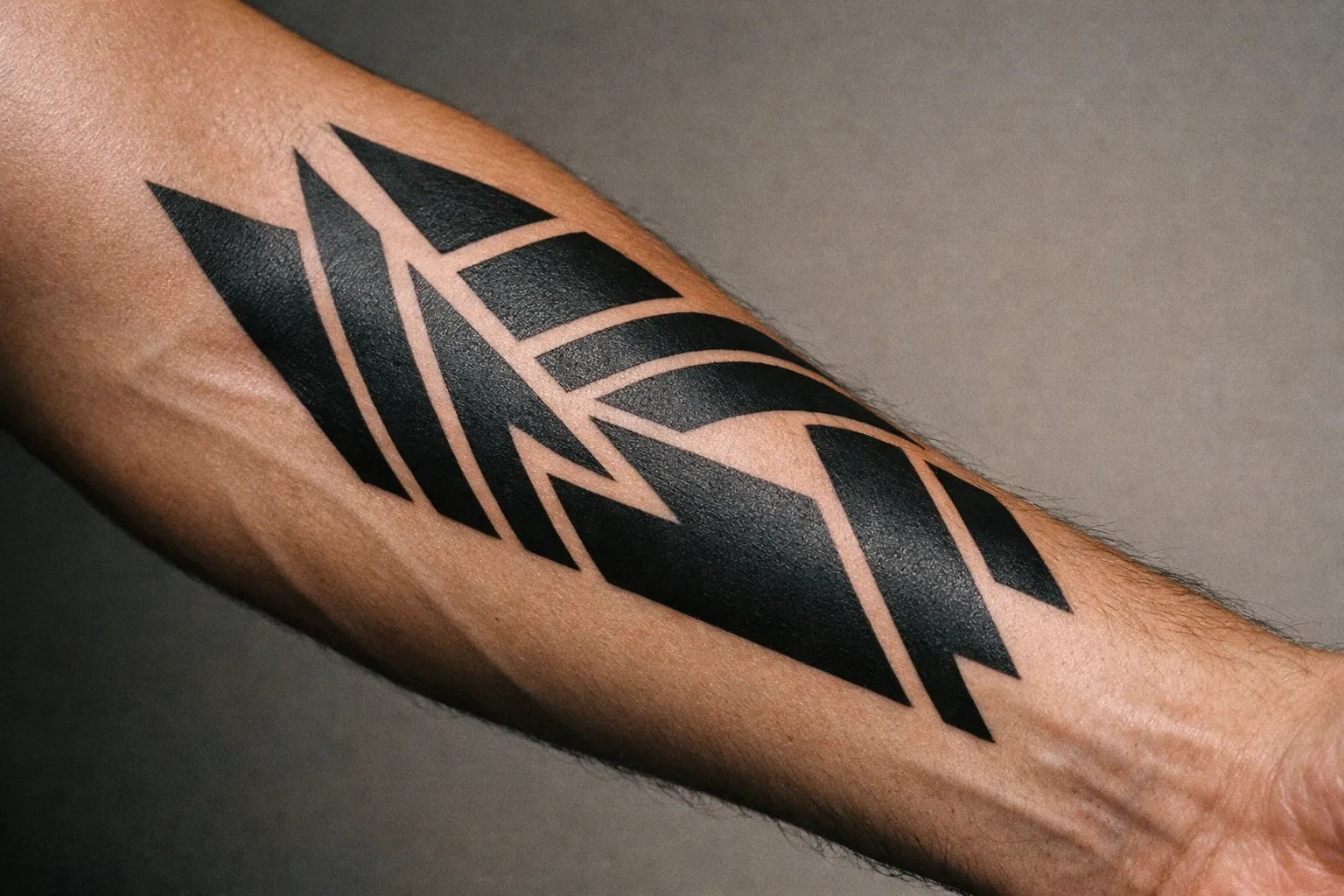
Common styles, with their technical hallmarks:
- American traditional - thick black outlines, limited palette (red, yellow, green, black), bold shapes designed to age well.
- Neo-traditional - traditional structure with a wider color range and more detailed illustration.
- Japanese (irezumi) - flowing composition, large-scale designs, wind-bars and waves as connective tissue, strong black.
- Black-and-grey realism - smooth gradients, photographic detail, soft shading; demands a specialist.
- Fine line - single-needle or small-grouping linework, often script or delicate florals. Ages faster than bold styles.
- Blackwork / geometric - heavy solid black, ornamental patterns, dotwork.
Once you have a style label, use it as a search tag. Hashtags like #traditionaltattoo, #finelinetattoo, or #japanesetattoo plus your city (“tattoo brooklyn”) on Instagram surface specialists faster than generic Google searches (1)(4). Save 20-50 tattoos you genuinely like in one folder - patterns will emerge, and those patterns are your brief.
You should also know roughly what size and where. A 3-inch design on the outer forearm and a 10-inch piece across the ribs are different jobs, with different artists and different price tags.
How to Choose a Tattoo Artist by Reading Their Portfolio
Reading a portfolio is the most important skill in finding the right tattoo artist, and most people do it wrong. They scroll, they like the vibe, they book. Here’s how to actually evaluate what you’re looking at.
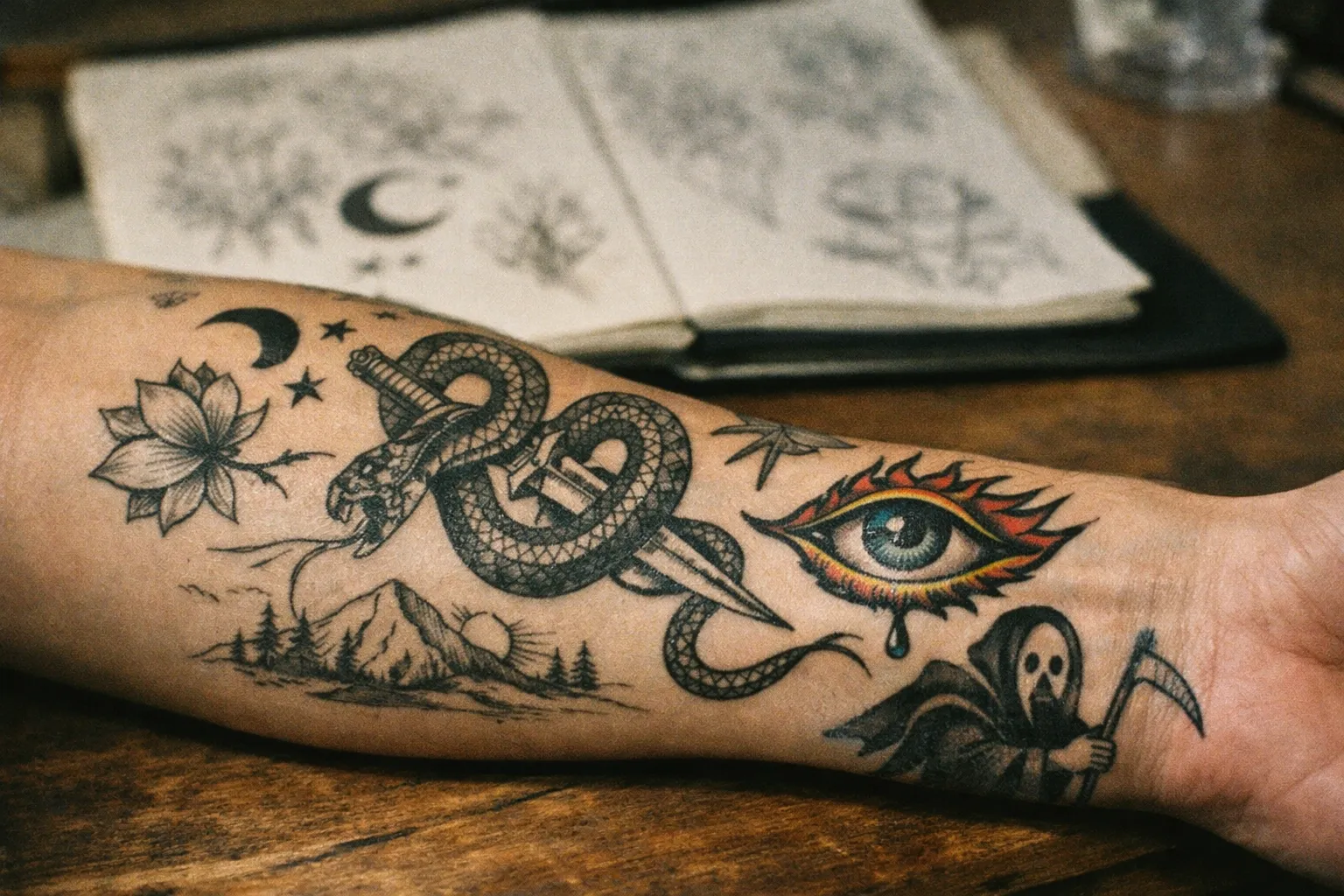
Zoom in on the lines. Healthy linework has consistent thickness. Wobbles, double-tracks where the artist had to go over a line twice, or fuzzy edges where ink bled into the skin (a “blowout”) are red flags. Look at straight lines and tight curves especially - those are where weak technique shows.
Check the black saturation. In a healed photo, blacks should look like black, not grey-blue. Patchy fills or washed-out solid areas mean the artist didn’t pack the ink properly.
Demand healed photos. Fresh tattoos look incredible - wet, glossy, every line crisp. That’s not what your tattoo will look like in three weeks. A serious portfolio includes healed shots taken at least 3+ weeks after the session (1). If an artist only posts day-of work, you’re seeing a marketing reel, not evidence of skill. I’ve seen artists with stunning fresh-photo grids whose healed work was genuinely rough - lines spread, blacks greyed out, shading turned muddy.
Count examples in your style. Aim for at least 20-30 recent pieces in the specific style you want, all at similar quality (1)(7). A portfolio with three knockout realism portraits and forty mediocre everything-else tattoos tells you realism isn’t actually their lane - those three were lucky days.
Look for healed work in similar placements. Skin behaves differently on the ribs, the inner bicep, and the hand. If you want a skull tattoo, you want to see healed skull tattoos from this artist, not just shoulders.
Finding a Good Tattoo Artist Online
The bulk of vetting happens before you ever walk into a shop. Plan to spend 5-15 hours of cumulative research before shortlisting two to five artists. That sounds like a lot until you remember this is permanent.
Where to look:
- Instagram - still the dominant tattoo portfolio platform. Use geotags (“tattoo + your city”) combined with style tags.
- Artist websites - older, established artists often have cleaner portfolios here, with healed work and pricing.
- Google Maps and Yelp - filter by reviews. Aim for shops with 4.5+ stars and 30+ reviews. Read the 3-star reviews specifically - they’re usually the most honest.
- TikTok and Instagram Reels - increasingly useful because artists film the whole process, including hygiene setup and healed check-ins.
- Word of mouth - if you see a tattoo you like on a stranger, ask who did it. Tattoo people are usually happy to share.
When you’ve narrowed it down, cross-check the artist’s tagged photos (work clients posted themselves) against the artist’s own posts. Curated grids look great; tagged photos show what actually happens on average.
What is the 1/3 Rule in Tattooing?
The “1/3 rule” is a composition principle some artists use, especially on larger pieces: roughly one-third dark (solid black), one-third mid-tone (grey wash or color), and one-third skin or negative space. The point is readability and aging. Tattoos that are 90% black look like a blob from across the room and get worse as they age and blur. Tattoos with too much empty space can look unfinished. The 1/3 split keeps the image legible at conversational distance and gives the design room to breathe over decades.
You don’t need to enforce this on every small piece - a finger script tattoo doesn’t have thirds. But for sleeves, back pieces, and anything larger than a postcard, ask your artist how they’re balancing dark, mid-tone, and skin. If they look at you blankly, that tells you something.
Tattoo Studio Hygiene: What to Check
You’re getting an open wound. Hygiene is not negotiable, and the visual cues are easy to spot once you know what to look for.
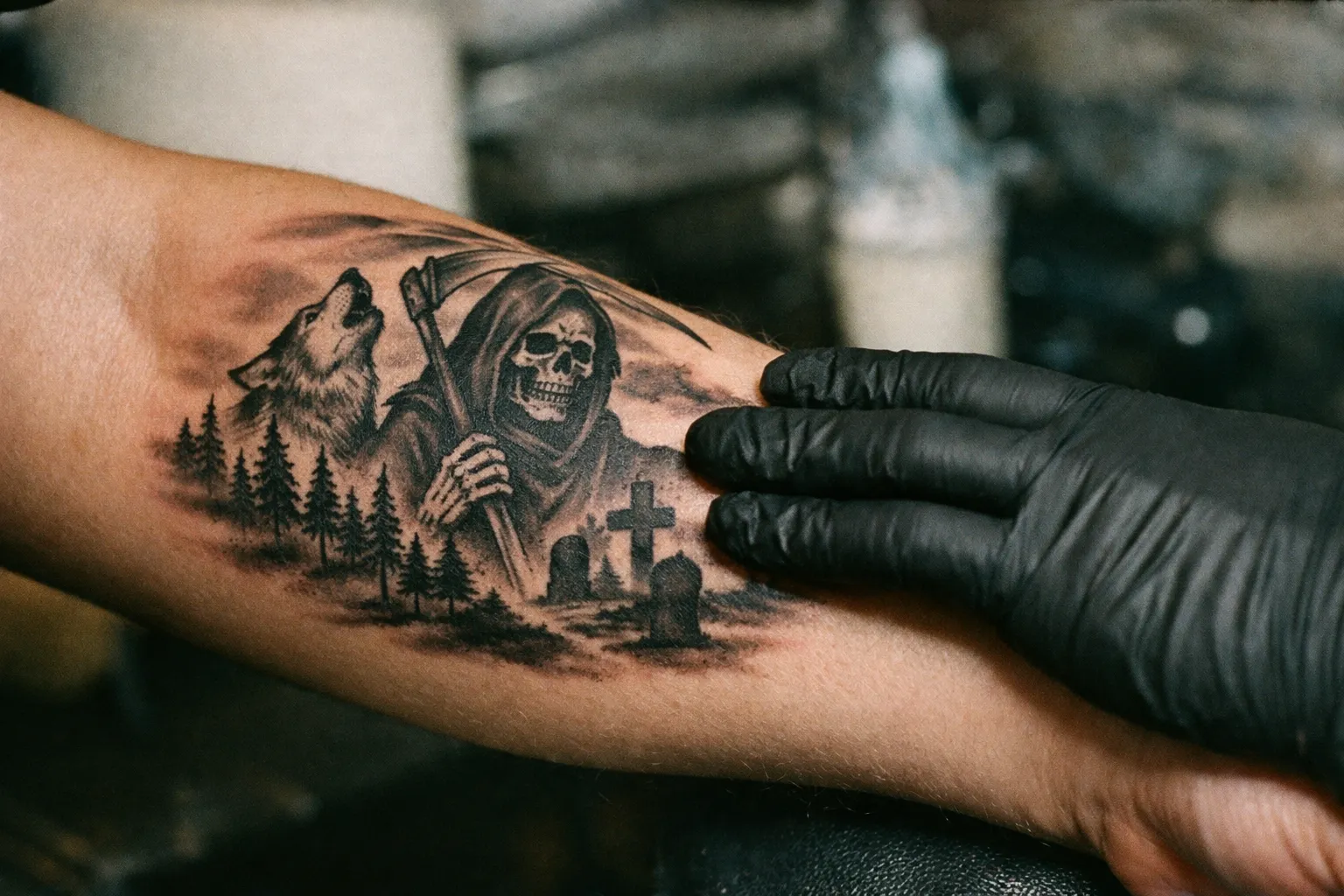
Walk into the studio before you commit. A 15-30 minute drop-in is enough to assess(4). I’d never book without doing this first.
Green flags:
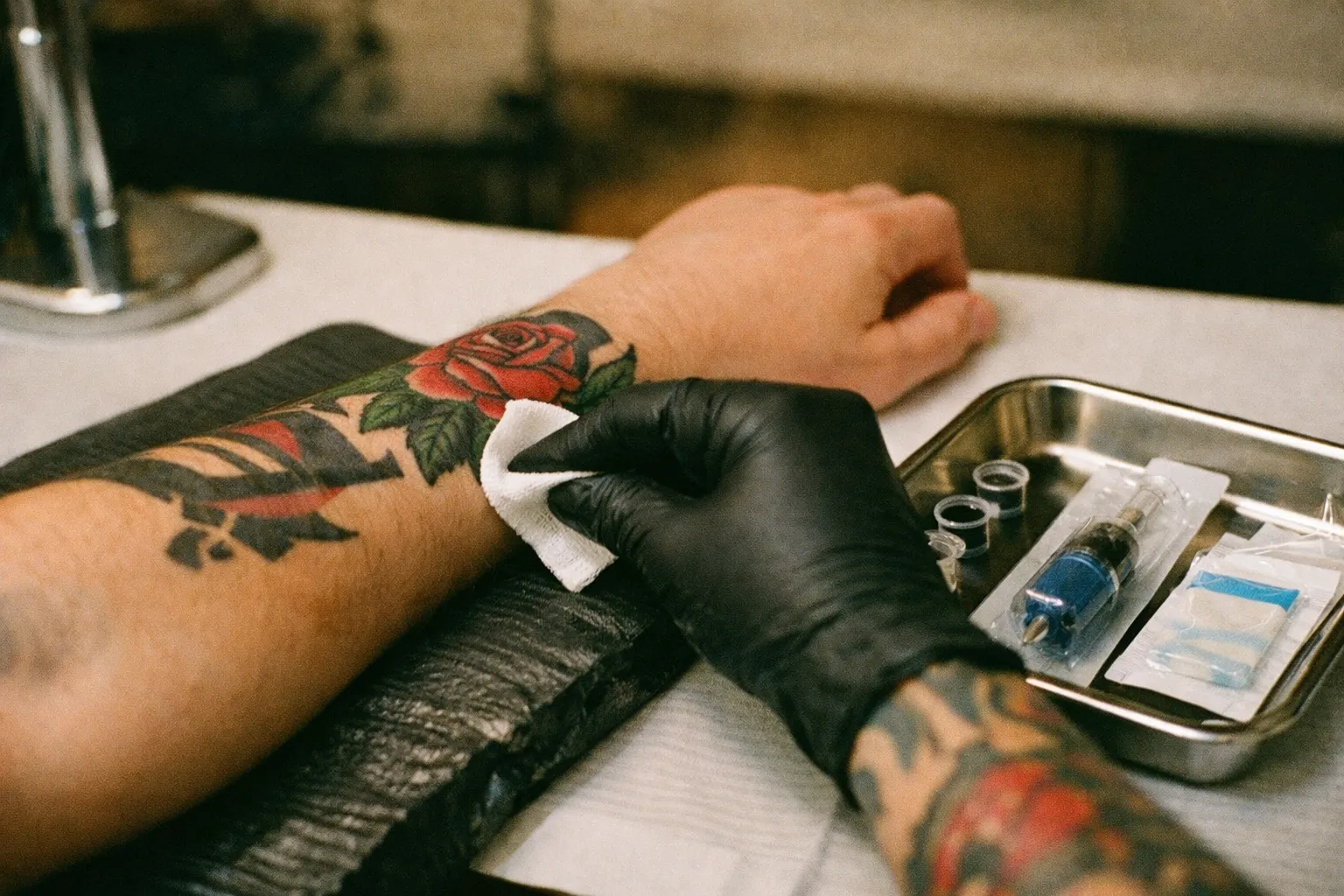
- The artist opens single-use needles and tubes from sealed packaging in front of you (6).
- Fresh nitrile or latex gloves put on after handwashing, changed any time the artist touches a non-sterile surface.
- Workstation wrapped in barrier film (the cling-wrap-looking plastic) on the machine, clip cord, and squeeze bottles.
- A visible sharps container for used needles.
- Hard, non-porous floors in the tattoo area - no carpet.
- A current business license and health permit posted, often near the front desk.
- Autoclave (steam sterilizer) for any reusable equipment, with spore test logs available on request.
Red flags:
- Reusing ungloved equipment between clients.
- Ink caps poured before you arrive, sitting out.
- Smoke smell, dust on surfaces, clutter around stations.
- Pets or kids wandering through the tattoo area.
- Refusal to show licensing or sterilization documentation.
Infection rates from tattoos are estimated at roughly 1-5%, and most cases trace back to either poor shop hygiene or poor aftercare. A clean shop is the first line of defense.
Questions to Ask a Tattoo Artist Before Booking
Whether you ask these by email, DM, or in a consultation, these are the high-value questions to ask a tattoo artist - they reveal both competence and professionalism (1)(2)(4)(6)(7). The answers also tell you how the artist thinks about their work, which matters more than most people realize.
- How long have you been tattooing, and what styles do you specialize in? You want a clear, confident answer. “I do everything” is not a good answer.
- Can I see healed photos of work in this style? Not fresh ones. Healed.
- What’s your rate - flat or hourly? What does that include? Get clarity on whether design time, stencil prep, and a touch-up are bundled in.
- What’s your touch-up policy? Reasonable artists offer one free touch-up within 3-6 months if the issue is on their end (not your aftercare).
- Are needles single-use? How do you sterilize reusable equipment?
- What aftercare do you recommend? Listen for specifics: a fragrance-free moisturizer, sun-protective clothing, no soaking. Vague answers (“just keep it clean”) are a flag.
- What’s your deposit and cancellation policy in writing? A professional will have one. Refusal to provide written terms is a red flag.
- Do you have any concerns about the size, placement, or design I’m proposing? A good artist will push back on a fine-line design destined for a high-friction area. That pushback is a feature, not a flaw.
If you’re on any medication that affects bleeding or healing - blood thinners, immunosuppressants, anything else - mention it now, not on the day of.
Concrete Signs an Artist Is Actually Good
Cutting through the vague advice, here’s what actually correlates with skill:
- Portfolio shows 20-30+ recent pieces in your specific style, all at consistent quality (1)(7).
- They post both fresh and healed work openly.
- They ask clarifying questions about size, placement, medical history, and budget before quoting (4).
- They decline projects outside their style instead of saying yes to everything for the money.
- Their shop scores 4.5+ stars with 30+ reviews, and the negative reviews are about scheduling, not quality or hygiene.
- They have clear written policies for deposits, cancellations, and touch-ups.
- Wait time matches the experience level: very in-demand specialists are typically booked 6-12+ months out. Instant availability with a premium price tag is suspicious.
You don’t need every box checked, but if four or five are missing, keep looking.
Is $200 an Hour a Lot for a Tattoo Artist?
Short answer: no, $200/hour is mid-to-upper-mid range in 2026, not premium.
Here’s how the pricing actually breaks down in the U.S.:
- Shop minimum: $60-$120 for very small pieces. This covers setup and the artist’s minimum time regardless of how tiny the design is.
- Newer artists / smaller markets: $100-$150/hour.
- Mid-career, mid-sized cities: $120-$200/hour.
- Established artists in major metros (NYC, LA, Chicago, SF, Seattle): $200-$300/hour is standard.
- Top specialists, named artists, guest spots at famous shops: $300-$500+/hour.
- Celebrity-tier artists: $500/hour and up, often booked via lottery.
Hourly rates have risen 10-30% since 2020 due to supply costs (needles, gloves, inks, rent) and inflation. So $200/hour in a major city is normal. $200/hour in a small town from an artist with a thin portfolio is overpriced.
Other pricing realities:
- Day rate: $800-$1,500 for 6-8 hours of work with an established artist.
- Tipping: 15-20% in cash is standard in the U.S., and it’s expected, not optional (5).
- Deposits: $50-$200, typically non-refundable but applied to the final cost.
- Session length: small text ~15-60 minutes; palm-sized with shading 1.5-3 hours; half-sleeve 8-15 hours spread across 2-4 sessions; large back piece 20-40+ hours over months.
If a piece is quoted dramatically below the market - $50 for a complex realism portrait - the work will reflect that, and you’ll likely pay more in a year to fix or cover it.
The Consultation: What Actually Happens
Most shops offer a free 10-30 minute consultation; some high-demand artists charge $50-$100, usually credited toward the tattoo (3)(5)(7).
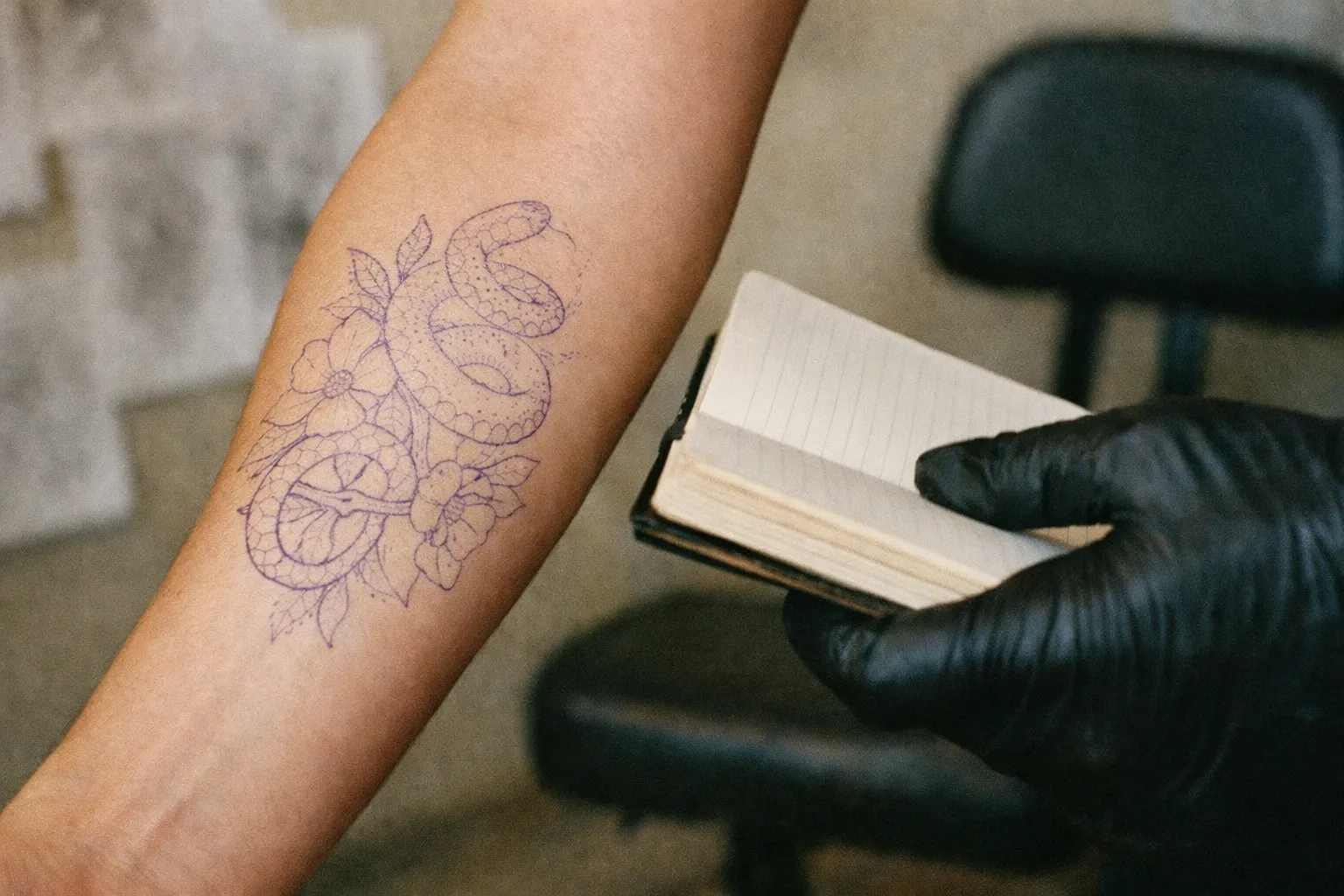
Bring:
- Your reference images (10-20 is fine; don’t dump 200 on them).
- A clear sense of size range and placement.
- Your budget ceiling.
- Any medical conditions or medications you’re on.
- Questions from the list above.
What a good consultation looks like: the artist listens, asks about your reasoning, suggests adjustments based on how the design will age in that placement, and gives you a realistic time and price estimate. They might push back on size (too small for the detail you want) or placement (fine line on the hand will blur within two years). That’s the value of working with someone experienced - they tell you what won’t work before you’re committed to it.
You should leave with a quote, a deposit amount, and a tentative appointment date. If you feel rushed, talked over, or pressured to commit on the spot, that’s information worth acting on.
Specialization, Travel, and When to Fly for an Artist
For small to medium pieces in common styles, your local market is fine. But for specific specialties - say, large-scale Japanese irezumi, hyperrealism portraits, or a particular artist’s signature style - collectors regularly travel, and it’s often worth it. If you’re still early in the process, reading up on before getting your first tattoo can help you set realistic expectations before committing to a destination booking.
- Local artist: travel cost $0-$40, easy follow-up and touch-ups.
- Day trip (within driving distance): add a tank of gas and a meal.
- Destination tattoo: add $200-$600+ for flights and a night or two of hotel (4).
A guest spot - where a specialist artist visits another city’s shop for a week or two - can be the cheapest way to get tattooed by someone otherwise out of reach. Follow the artists you love; they often announce guest spots months ahead via email lists or Instagram.
If you’re planning a sleeve or back piece over multiple sessions, factor in repeat travel. A $400 flight is fine once; six times less so.
Booking, Deposits, and Wait Times
Many in-demand artists no longer take ongoing DM requests. Instead they open books a few times per year via email lists or a Google form, and slots fill within hours.
What to expect:
- Newer artists: openings within 1-4 weeks.
- Solid mid-career artists: 1-3 months.
- High-demand specialists: 6-12+ months.
If an artist you want has a closed waitlist, get on their email list and watch their stories. When books open, respond within 24-72 hours with all the information they ask for - reference images, size, placement, budget. Vague submissions get filtered out fast.
A reasonable deposit ($50-$200) signals a professional shop. Most are non-refundable but go toward the final cost. Read the cancellation policy: typically, rescheduling more than 48-72 hours out is fine; later than that, you may lose the deposit.
Common Mistakes to Avoid
- Booking on price alone. The cheapest quote almost always correlates with the weakest portfolio.
- Trusting only fresh photos. Always ask for healed work.
- Ignoring specialization. Don’t book a traditional artist for a hyperrealistic portrait. Skill doesn’t transfer evenly across styles.
- Skipping the studio visit. Photos can lie about hygiene; the room can’t.
- Failing to disclose medications or conditions. This is on you, not the artist.
- Getting random tattoos with no long-term plan. A scattered collection of small pieces makes a future sleeve or back piece much harder to design around. If you think you might go larger later, talk to your artist now.
- Showing up intoxicated. Most shops will refuse to tattoo you, and you’ll lose your deposit. Alcohol also thins your blood and ruins ink saturation (5).
Aftercare Starts Before You Leave the Shop
A good artist sends you home with clear written instructions. Here’s the general timeline you should hear something close to - and if you don’t, ask.
Day 1-3: Keep the bandage or second-skin on as instructed (usually 2-24 hours, or up to 3-5 days for products like Saniderm). Wash gently with unscented soap, pat dry, apply a thin layer of fragrance-free moisturizer 2-3 times a day.
Week 1: The tattoo will look shiny and feel tight. Continue gentle washing and light moisturizing. No soaking - no baths, pools, or oceans. No direct sun.
Week 2-4: Peeling and flaking is normal. Do not pick. Itching is normal. Do not scratch. Keep moisturizing.
Months 1-6: Final settling. Use sun-protective clothing or high-SPF sunscreen once fully healed - UV is what fades tattoos long-term, more than anything else.
If the artist’s aftercare advice is just “put A&D on it” with no further detail, ask follow-ups. Modern aftercare is more nuanced than that, and a good artist knows it. People with sensitive skin in particular should confirm the recommended products before leaving the shop.
Final Checks Before You Commit
Before you put down the deposit, run through this:
- Their portfolio shows 20+ healed examples in your specific style.
- The shop is visibly clean and licensed.
- You’ve had a consultation where they asked questions, not just took your order.
- You have a written quote, deposit terms, and touch-up policy.
- The price matches the market for the artist’s experience and your city.
- You feel comfortable with them as a person - you’ll be in their chair for hours.
Removal costs more than the original tattoo, hurts more than getting tattooed (ribcage sessions are rough; laser sessions on the same spot are rougher), and rarely leaves clean skin behind. Spend the extra week on research. The right artist is worth the wait, and the wrong one isn’t worth the discount.
Frequently Asked Questions
- How can I verify an artist's hygiene if I can't visit the studio beforehand?
- Look for video content like TikTok or Instagram Reels where the artist shows their setup and hygiene practices. Also, check if the shop has posted health permits or licensing photos online.
- Is it okay to get a tattoo from an artist who does multiple styles?
- Be cautious. While some artists are versatile, most excel in specific styles. Check their portfolio for consistent quality in the style you want rather than a broad but uneven range.
- What should I do if I have a medical condition affecting healing?
- Disclose your condition or medications to your artist before booking. This allows them to advise on placement, timing, and aftercare. Consult your doctor if unsure.
- Are touch-ups always free, and how long do I have to get one?
- Most reputable artists offer one free touch-up within 3-6 months if the issue is due to their work, not your aftercare. Confirm this policy before booking.
- How important is the artist's social media following or popularity?
- Popularity doesn't guarantee skill. Focus on portfolio quality, healed work, and client reviews rather than follower count.
- Can I negotiate price with a high-demand artist?
- Generally no. High-demand artists set prices based on experience and demand. Trying to negotiate may hurt your chances of booking.
- What if I want a tattoo style that's rare in my city?
- Consider traveling to a specialist or booking a guest spot. Factor in travel costs and multiple sessions if planning a large piece.