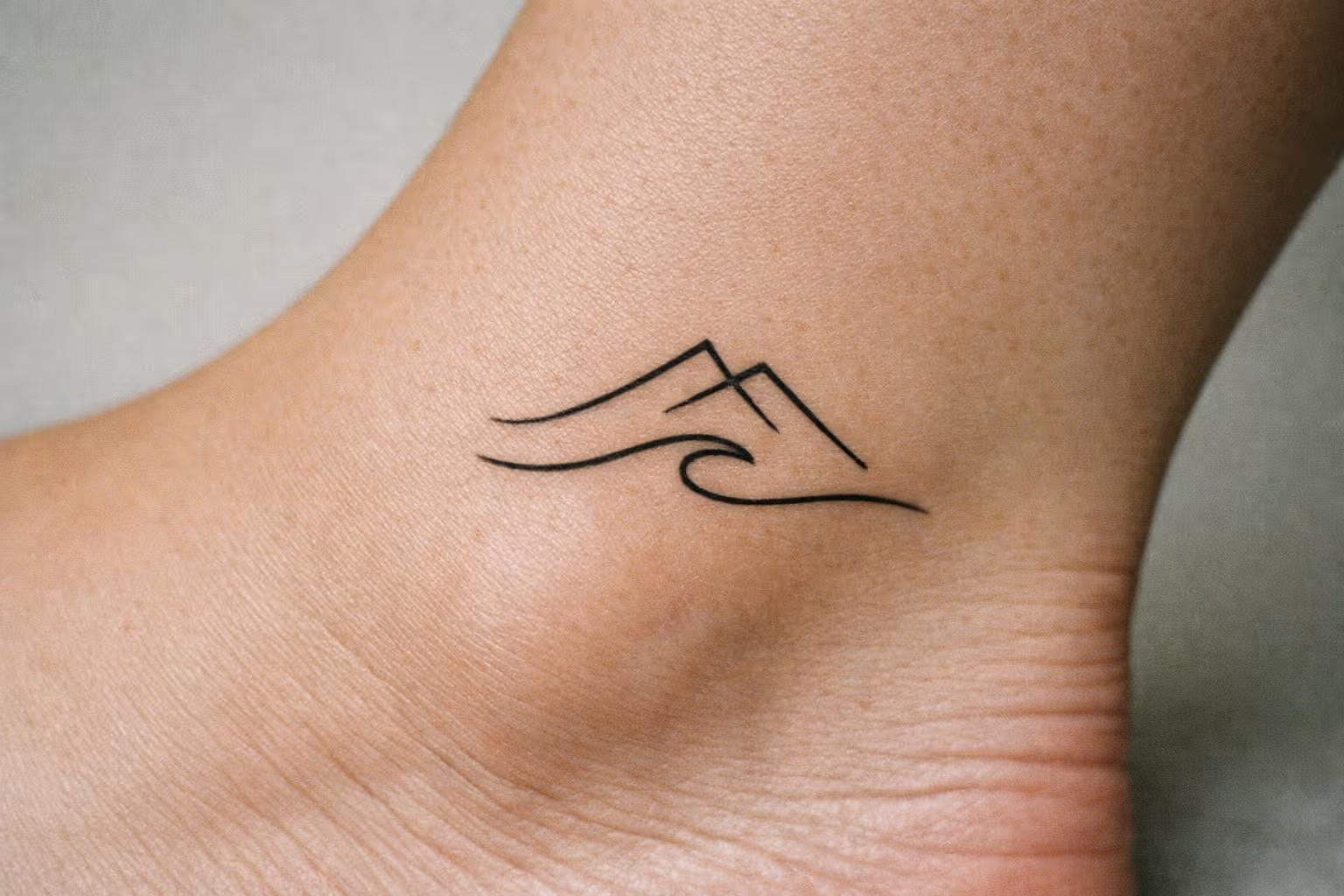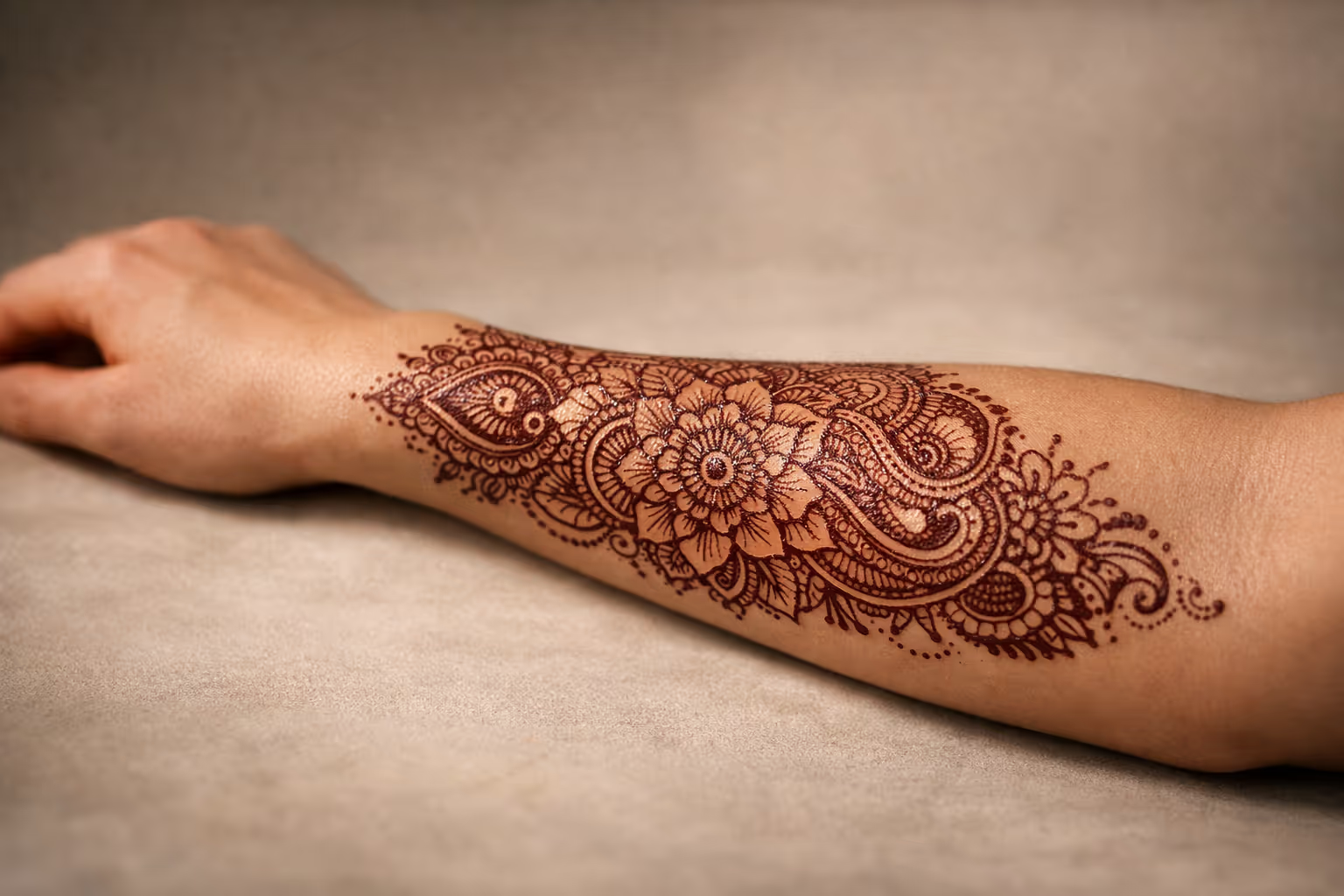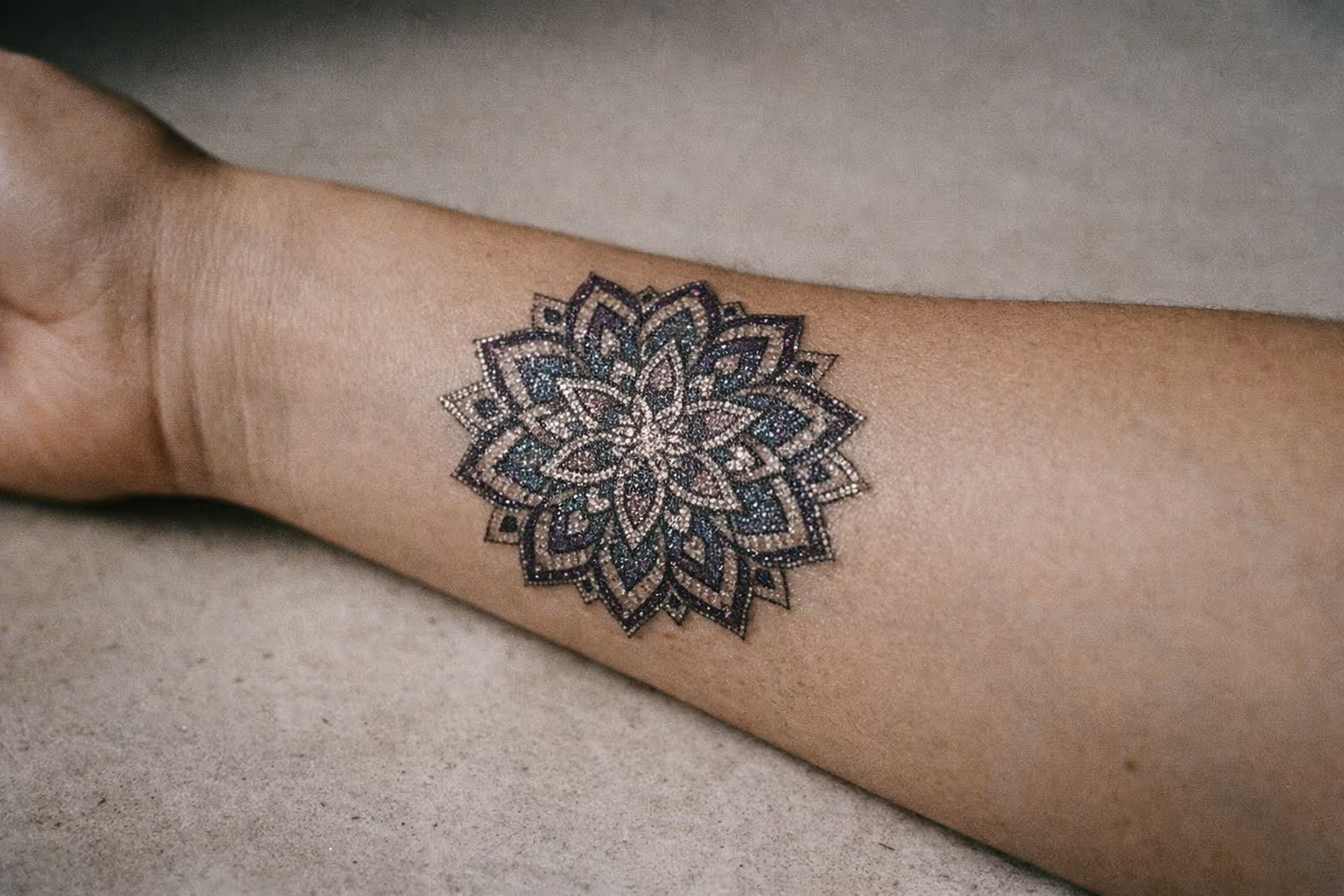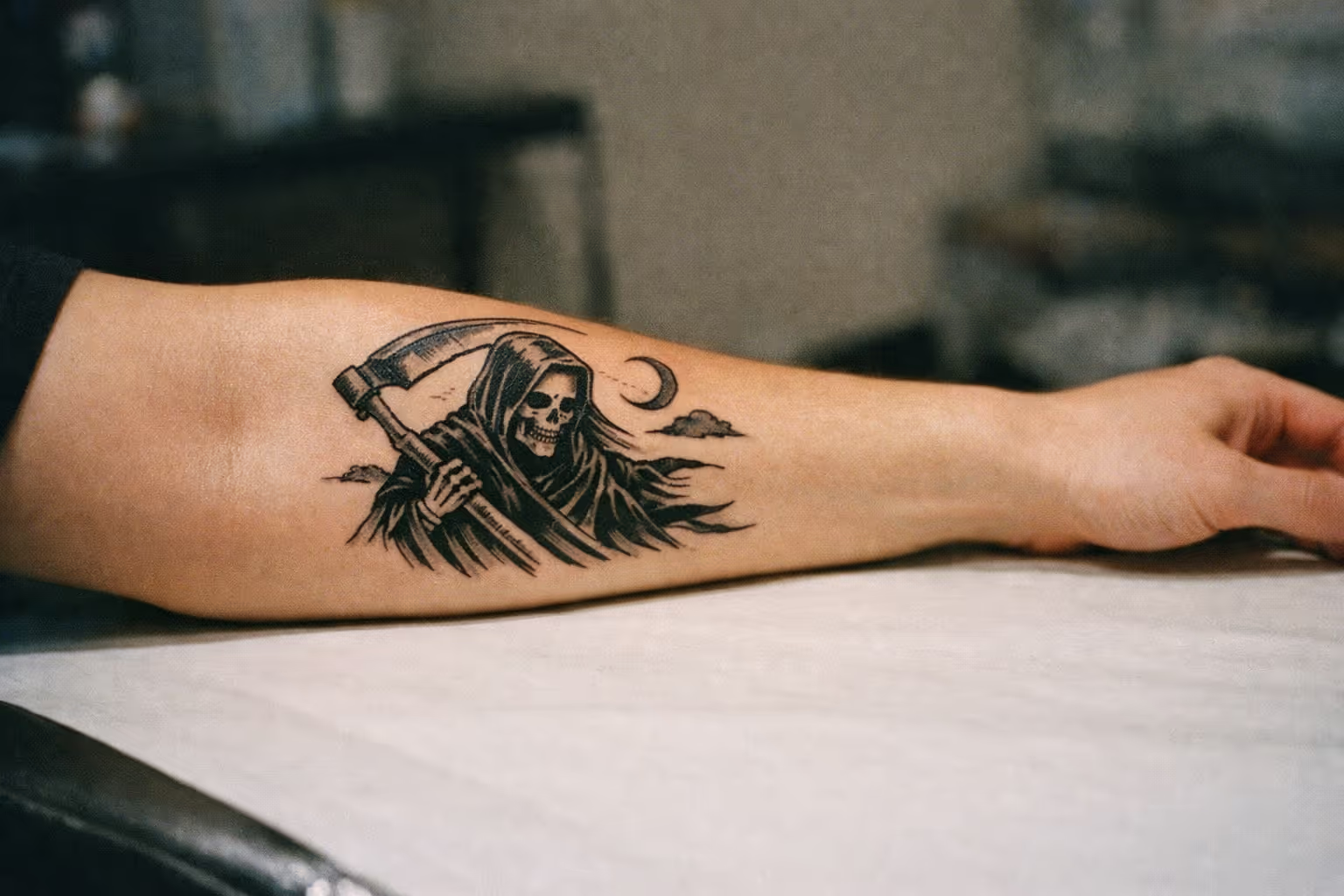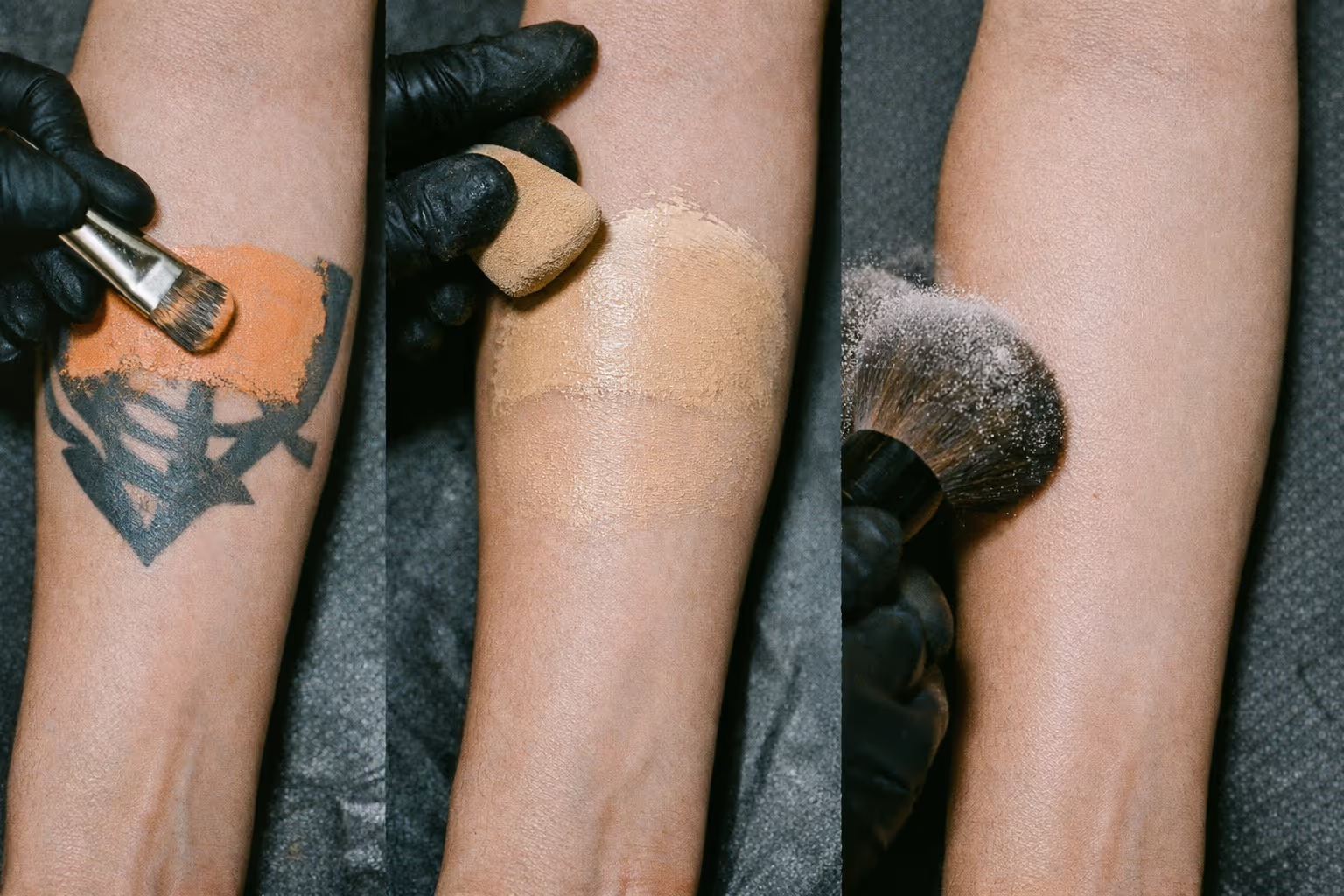
You can cover up a tattoo with makeup, but the trick isn’t piling on more concealer - it’s color theory. Dark ink has a blue-green cast, and the only thing that truly cancels it is a corrector in the opposite direction (peach or red-orange), laid down before any foundation. Skip that step and you’ll fight a grey shadow all day no matter how much you layer over it. Here’s the full four-layer system that actually holds, plus realistic timing for black ink, weddings, and waterproof wear.
Can you actually cover up a tattoo with makeup?
Yes - you can cover up a tattoo with makeup well enough that most tattoos are hidden to pass in person and on camera using a four-step system: color corrector, full-coverage body foundation, setting powder, and a setting or barrier spray. The catch is realism. A small, faded script on the forearm can disappear in five minutes. A saturated black-and-grey half sleeve will eat 30-45 minutes and three to six thin layers, and even then it reads as “smooth skin with a faint shadow” up close, not as bare arm.
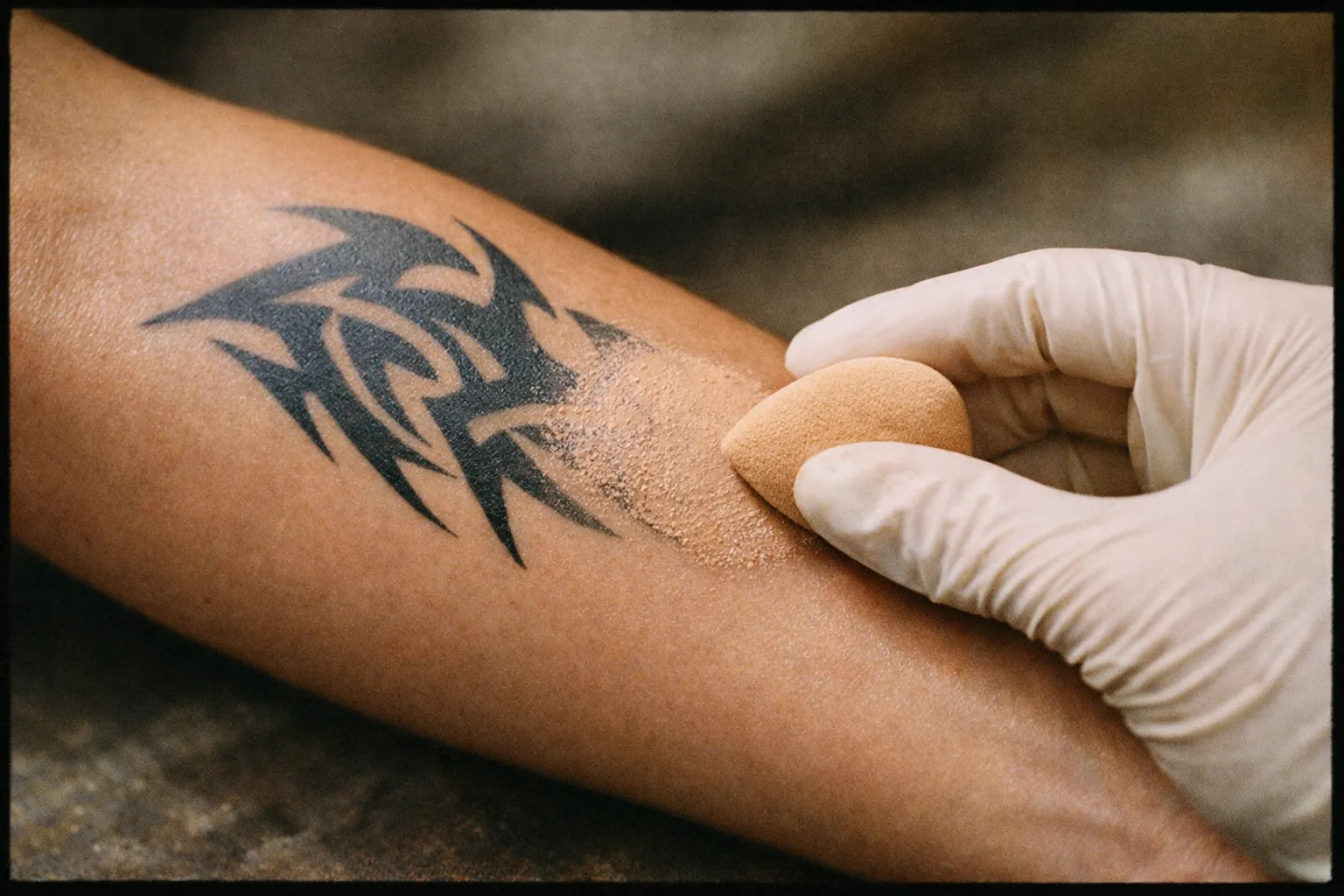
The realistic outcome scale:
- Small, light, or aged ink (2 in / 5 cm or under): 90-100% invisible, 5-10 minutes.
- Medium black linework (4-6 in / 10-15 cm): 85-95% hidden, 15-25 minutes, 3-4 layers.
- Dense black or saturated color (half sleeve, chest piece): 70-90% hidden, 30-45+ minutes, often two foundation shades to blend with surrounding skin.
Anyone telling you a single concealer makes a blackwork sleeve vanish in two minutes is selling something.
How soon can you cover up a new tattoo with makeup?
Wait until the tattoo is fully healed. That means no scabs, no flaking, no shiny “glossy” patches, and no tenderness - typically 2-4 weeks for surface healing, closer to 6-8 weeks for the deeper layers. Makeup over a healing tattoo traps bacteria against an open wound, can pull pigment out during removal, and frequently triggers contact reactions because broken skin is far more permeable than intact skin.
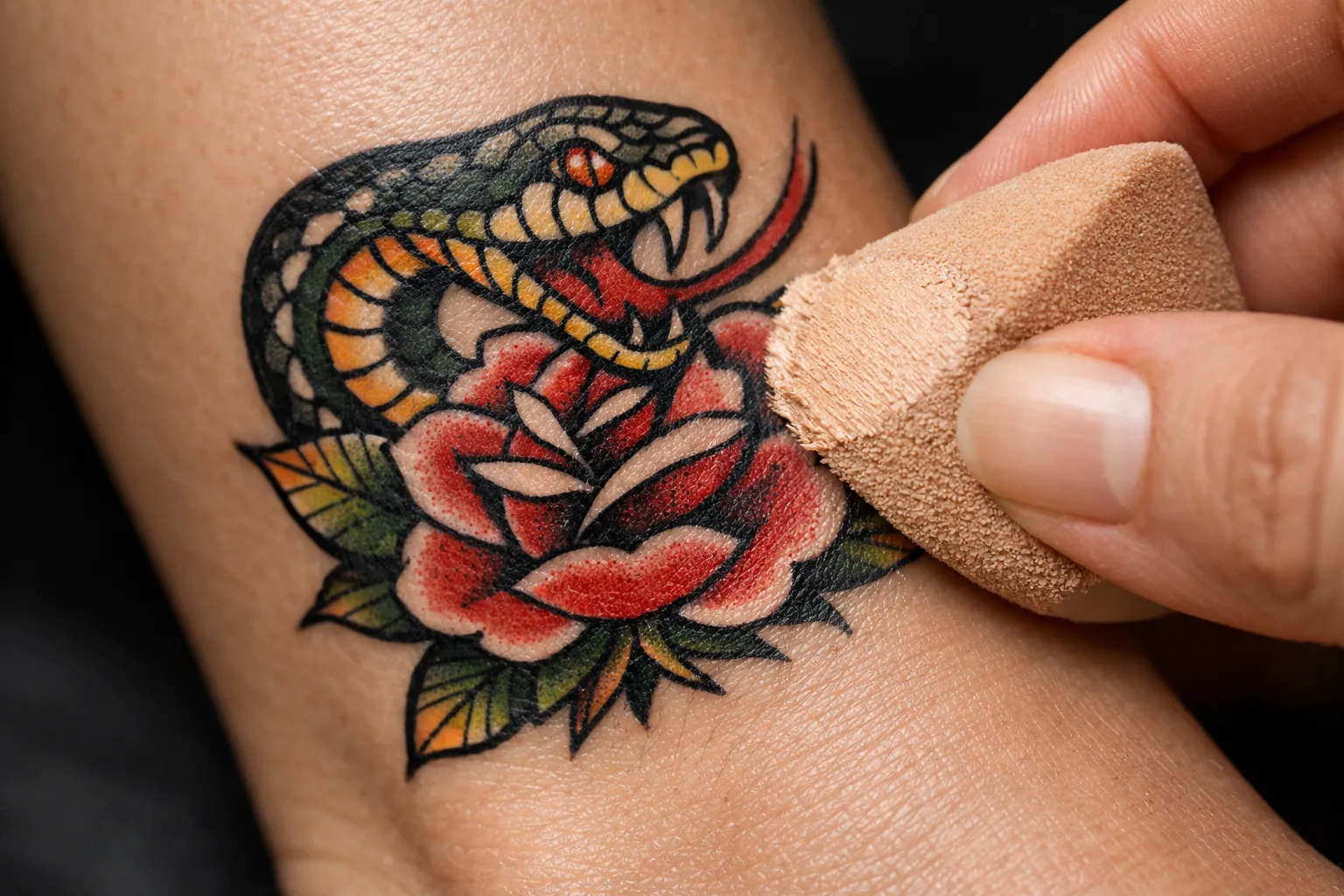
If you got tattooed two weeks before your wedding, that’s a planning failure. Cover with clothing, a watch, or a strategically draped bouquet instead. Don’t put cream pigment on a tattoo that’s still in week-one healing - the day 1-3 weep and day 4-14 peel phases are not a foundation surface. The risk isn’t worth a cleaner photo.
For reference, here’s how healing maps to makeup safety: Days 1-3 the skin weeps plasma and the wound is fully open - no product of any kind. Days 4-14 scabs and peeling are active - still off-limits, and pulling a scab with a sponge will pull pigment with it. Week 2-4 surface skin closes but the deeper layers are still consolidating - use clothing, not coverage. Once you’re past week four with no tenderness, no flaking, and no shiny patches, a fragrance-free, non-comedogenic body foundation is safe to test on a small area first. Full coverage is reasonable from week six onward for most people.
What is the best makeup product to cover tattoos?
There isn’t one product - there’s a stack. The workhorse layer, the one doing 70% of the visual work, is a high-pigment body foundation designed for tattoo and scar coverage. Face concealers are too thin for large areas and crease on joints. Body formulas carry roughly 2-3× the pigment load of standard foundation and are engineered to dry to a transfer-resistant film.
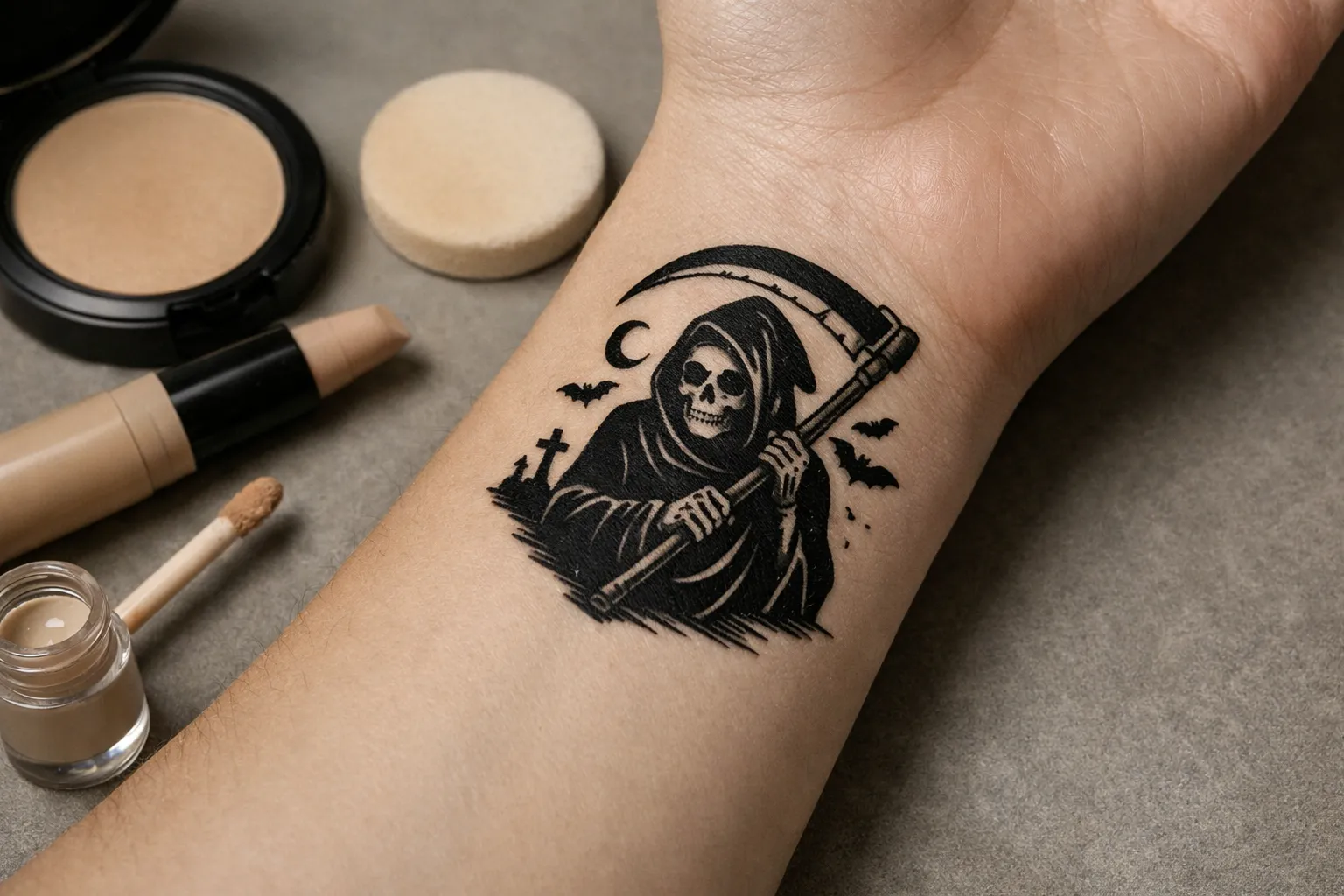
The best tattoo cover up makeup options that consistently perform:
- Dermablend Leg and Body Makeup - advertised up to 16 hours wear, water-resistant once set, fragrance-free, allergy-tested. Around $32 for 3.4 oz. In side-by-side use, it outlasts face concealers on forearm coverage by roughly two to three hours before visible fading starts.
- Westmore Body Coverage Perfector - self-setting in about 10 minutes with no powder required, which is roughly 15 minutes faster to a transfer-resistant finish than powder-dependent formulas. Around $40.
- Dermaflage Tattoo Cover Up - marketed as 100% smudge- and waterproof when properly set. Kits run $30-$45. Unlike the liquid body foundations above, Dermaflage uses a silicone-based film that bonds closer to a skin-safe adhesive than a traditional cream pigment - useful for small, high-friction placements like the wrist or inner elbow.
- Kat Von D (KVD) Good Apple Skin-Perfecting Foundation Balm - high opacity in a balm format, useful for spot coverage on small to medium pieces. Around $36.
- Mehron CHEEKS / Celebré Pro-HD palettes - pro-grade cream pigments used for film and stage; pair with Mehron Barrier Spray for sweat-proof hold (3). Palette around $35-$50.
Back all of that up with a color corrector (peach, orange, or red depending on tone), a finely milled translucent powder, and a setting spray like L’Oréal Paris Infallible 3-Second Setting Spray - which claims up to 36 hours of transfer resistance (2) - and you have a full kit for roughly $80-$120.
Does body-coverage makeup actually cover tattoos?
Yes - high-pigment body-coverage makeup is what professional makeup artists default to for tattoo work. Lines built specifically for this use case (Dermablend’s Leg and Body among them) come with before/after documentation on inked models across skin tones and styles. A body foundation paired with a loose setting powder is the standard two-product baseline.
What it does well: high opacity, fragrance-free formula, sensitive-skin tested, and it survives a normal workday including hand-washing and light sweat once set. What it doesn’t do: erase a fresh, saturated black tattoo in one pass. You’ll still need a corrector layer underneath for anything darker than a faded blue-grey, and you’ll still need to powder between coats for dense ink.
Body-coverage makeup isn’t magic. The category leaders are just the most reliable base layer you can buy.
The full cover-up system: step-by-step
The order matters more than the brand. Here’s the sequence that holds.
1. Prep the skin
Clean, dry, oil-free. Westmore is explicit about this - oils anywhere in the chain cause body makeup to transfer onto clothing (1). Wash the area with a regular cleanser, pat dry, and skip moisturizer on the actual tattoo. If the skin is hairy, shave the night before, not the day of - freshly shaved skin can react to cream pigments. Light exfoliation a day ahead smooths texture so product doesn’t catch on dry patches.
Apply a thin layer of oil-free or mattifying primer only to the surrounding skin, not directly over the tattoo. Some artists skip primer over the tattoo itself because it can interfere with corrector adhesion.
2. Color correct
This is the step most people skip, and it’s why their cover-up looks grey. Tattoo ink - especially black - reads as cool blue-grey under skin. To neutralize it, you need a warm tone on the opposite side of the color wheel:
- Black or blue-black ink: orange or red-orange corrector. Deeper skin tones need true red; lighter tones can use peach.
- Green or teal ink: red corrector.
- Red ink: green corrector (rare, but real).
- Yellow or faded ink: lavender or light peach.
Apply with a small synthetic brush or fingertip. Pat, don’t drag. One thin layer reduces visible darkness by 30-60% before you’ve even touched foundation. Let it sit for 60-90 seconds before the next step.
3. First foundation layer (slightly darker)
This is the pro trick most tutorials skip. Your first body foundation layer should be a half-shade to a full shade darker than your skin tone. Dark ink, even neutralized, leaves a faint shadow - and a too-light first layer makes that shadow look ashy. The darker base absorbs the residual darkness; the corrective shade on top brings you back to natural (3).
Pat it on with a damp dense sponge or beauty blender. Cover the tattoo plus about half an inch of surrounding skin to blur the edge. Let dry 1-2 minutes.
4. Set with powder
Press translucent setting powder into the layer with a puff or velour sponge - press, don’t sweep. Sweeping drags pigment off. This step is non-negotiable for transfer resistance and for letting you add more layers without muddying.
5. Second foundation layer (true match)
Now apply your actual skin-matching shade over the corrected area, feathering further out into surrounding skin. Pat motion again. This is the layer that has to blend seamlessly into the arm, leg, or chest around the tattoo - which is why matching body undertone, not face undertone, matters. Forearms and chests are often a half-shade different from face.
Powder again.
6. Optional third layer + setting spray
For dense black or saturated color, a third thin layer of body foundation buys you another 10-15% opacity. Finish with a setting or barrier spray. For events with sweat, dancing, or heat, this is where a barrier spray like Mehron earns its keep - it creates a water-resistant film that locks pigments down even under stage lights (3).
Let everything cure for 5-10 minutes before getting dressed.
Covering dense black ink: why it’s the hardest case
Black ink is the hardest case because it absorbs light and shows through thin coverage as a grey ghost. I’ve watched people spend 20 minutes layering foundation over a saturated blackwork piece without touching a corrector and wonder why it still looks like a bruise. The strategy:
- Red or deep orange corrector first - not peach. Peach is too light to neutralize saturated black on most skin tones. A true red color corrector (sometimes sold as “red lip primer” or in pro palettes) does the heavy lifting.
- Two color correction layers if the tattoo is fresh and saturated (under 5 years old, dense fill). Powder lightly between them.
- Darker-first foundation method as described above. Skipping this step is the single biggest reason black tattoo cover-ups look grey in photos.
- Powder between every layer. Black tattoos need 3-5 foundation passes for full opacity, and you cannot stack wet layers - they smear.
- Final barrier spray. Sweat and friction destroy black tattoo cover-ups faster than any other type because the underlying ink is unforgiving - any thinning of the layers and the shadow comes right back.
Budget 20-35 minutes for a forearm-sized black tattoo done properly. Less than that and you’re cutting layers.
Wedding-day cover-up: what’s different from a regular event
Wedding cover-ups have constraints that office cover-ups don’t: white fabric, flash photography, hugging, sweating, crying, drinking, dancing for six hours straight. Plan accordingly.
Two weeks before: Do a full trial run. Cover the tattoo, wear a white t-shirt for the day, and track what transfers. If anything ends up on the fabric, you need more powder or a barrier spray, or a more transfer-resistant base. Take flash photos at the trial - SPF in primers and foundations can cause flashback (a white cast in photos) that’s invisible in person. I’ve seen this catch people completely off guard when they get the wedding photos back.
Day before: Light exfoliation, no body oils or lotions on the area. Don’t try a brand-new product for the first time on the wedding day.
Day of: Apply 30-45 minutes before getting dressed, including dry time. Use a waterproof, transfer-resistant system - Dermablend Leg and Body + setting powder + L’Oréal Infallible 3-Second Setting Spray is a tested combination. Pat-set everything one more time after dressing.
Touch-up kit for the bridesmaid bag: small concealer in your true shade, mini puff, travel-size translucent powder, mini setting spray, cotton swabs. Skip the corrector for touch-ups - once the bottom layers are set, you’re just refreshing the top.
Friction zones to watch: under bra straps, inside elbows, anywhere the dress rubs. These need an extra powder pass and possibly a backup plan (lace overlay, a strategically placed bracelet) because no amount of setting spray fully beats six hours of mechanical friction.
What waterproof tattoo cover makeup actually holds in water
“Waterproof” is doing a lot of work in marketing copy. Here’s what the categories actually deliver:
- Water-resistant (most consumer body foundations): survives sweat and incidental splashes once fully set with powder. Will rub off if you towel-dry vigorously or swim. Examples: Dermablend Leg and Body once set, Westmore Body Coverage Perfector (1).
- Waterproof (pro-grade with barrier spray): survives swimming, heavy sweat, and stage lights for several hours. Requires the full stack - cream pigment + powder + barrier spray like Mehron (3). This is what film productions use for actors swimming on camera.
- Won’t-rub-off-on-fabric: a stricter test than waterproof. Requires powder between every layer and a final setting spray. Dermaflage and Westmore both market against this specific failure mode (1)(5).
For a beach or pool day, plan to reapply after swimming regardless of the “waterproof” claim. No tattoo cover system survives a 30-minute pool session and a towel dry without touch-up.
How to hide a tattoo without makeup
Sometimes the better answer is no makeup at all - especially for fresh tattoos, very large pieces, or all-day outdoor events where heat will defeat any cream coverage. If you’re dealing with a tattoo placed over uneven skin, the same logic applies as when you tattoo over a scar or birthmark - the surface texture affects how any product sits and performs.
Clothing options by placement:
- Forearm/wrist: long sleeves, a wide watch or cuff bracelet, opera gloves for formal events.
- Upper arm/shoulder: cap sleeves, a bolero, a shawl, structured blazers.
- Chest/sternum: high necklines, scarves, statement necklaces sized to cover the area.
- Back/shoulder blade: higher-back dresses, lace overlays, a draped wrap.
- Leg/ankle: opaque tights (40+ denier), boots, longer hemlines.
- Neck: turtlenecks for casual, chokers or wide collar necklaces for formal.
- Hand/finger: rings, gloves, or simply hand position in photos.
Adhesive solutions: flesh-toned medical bandages (Tegaderm-style) work for small pieces and survive water; tattoo cover sleeves (nylon mesh in skin tones) work for full forearms or calves and breathe better than makeup in heat. Neither looks invisible up close, but both outperform makeup for active days.
Caring for your skin after a heavy cover-up
Long-wear, high-pigment formulas are not casual to remove. Skin under a 16-hour cover-up has been sealed off from air, occluded by powder, and pressed against a barrier spray film. Treat it like a deep cleanse, not a quick wipe.
Step 1: Oil-based cleanser or balm. Massage into the area for 60 seconds - this dissolves the pigment-binding waxes that water cleansers can’t touch.
Step 2: Follow with a gentle, fragrance-free water cleanser to lift the dissolved makeup off. A soft washcloth helps; a scrub brush does not.
Step 3: Micellar water on a cotton pad for any stubborn edges, especially around joints and creases where layers built up.
Step 4: Pat dry, then apply a fragrance-free moisturizer. Skin that’s been occluded all day is often dehydrated even though it doesn’t look it.
If you’re covering tattoos regularly - theater, hospitality work, an ongoing conservative workplace - build in one bare-skin day per week to let the area decompress. Constant occlusion under cream pigments can trigger clogged pores and folliculitis in oilier skin types.
Common mistakes that ruin a cover-up
- Skipping color correction on black ink. Even six layers of foundation won’t fully kill the shadow without a warm-toned corrector underneath.
- Matching face shade to body skin. Your forearm is rarely the same shade as your face. Test on the actual placement, not your jawline.
- Thick single layers instead of thin stacked ones. Thick layers crack at joints, look obvious in flash photos, and transfer faster (3).
- No powder between layers. Wet-on-wet just smears the corrector up into the foundation, producing a peach or grey cast.
- Body lotion or sunscreen oil under the cover-up. Breaks down even waterproof formulas within an hour.
- Working on a fresh tattoo. Infection risk, pigment loss, contact dermatitis. Wait for full healing.
- Forgetting friction zones. Bra straps, waistbands, watch bands - these need extra powder, extra spray, or a non-makeup backup.
- Buying one product and expecting miracles. The system works because it’s a system. Concealer alone, no matter how expensive, will not cover a saturated black tattoo for 12 hours.
Frequently Asked Questions
- Is it possible to cover up tattoos with makeup?
- Yes. Using a color corrector, a high-coverage body foundation, translucent setting powder, and a setting or barrier spray, most tattoos can be hidden well enough to pass in person and on camera for 8-24 hours. Dense black ink and saturated color sleeves are the hardest cases and may need 3-6 thin layers.
- How soon can you cover up a tattoo with makeup?
- Wait until the tattoo is fully healed - typically 2-4 weeks for surface healing, longer for deeper layers. Covering a tattoo that's still scabbing or peeling risks infection, pigment loss, and contact reactions. If the skin isn't fully closed and non-tender, use clothing or accessories instead.
- What makeup covers tattoos the best?
- High-pigment body foundations built for tattoo and scar coverage outperform face concealers on large areas. Dermablend Leg and Body Makeup, Westmore Body Coverage Perfector, and Dermaflage's tattoo cover system are the consumer benchmarks (5). For pro-grade, sweat-proof results, Mehron and Kryolan cream palettes paired with a barrier spray are the standard.
- Does Dermablend actually cover tattoos?
- Yes - Dermablend's tattoo cover up collection is formulated specifically for this use, with documented before/after results across skin tones and tattoo styles. Used correctly (with color correction underneath and setting powder on top), it delivers up to 16 hours of water-resistant wear. It still requires the full layering system for dense black ink; a single pass of foundation isn't enough.
- Will makeup cover a tattoo for swimming?
- Only pro-grade systems with barrier spray genuinely survive sustained water contact, and even those need reapplication after a 30-minute swim plus towel dry. For pool or beach events where you're in and out of the water, plan to touch up - or use a waterproof flesh-toned bandage instead.
- Can I cover a tattoo with makeup every day for work?
- You can, but build in bare-skin days when possible and use sensitive-skin-tested, non-comedogenic formulas to reduce the risk of clogged pores and folliculitis. Long sleeves or cover sleeves are kinder to the skin for daily, long-term use than daily heavy cream pigment.