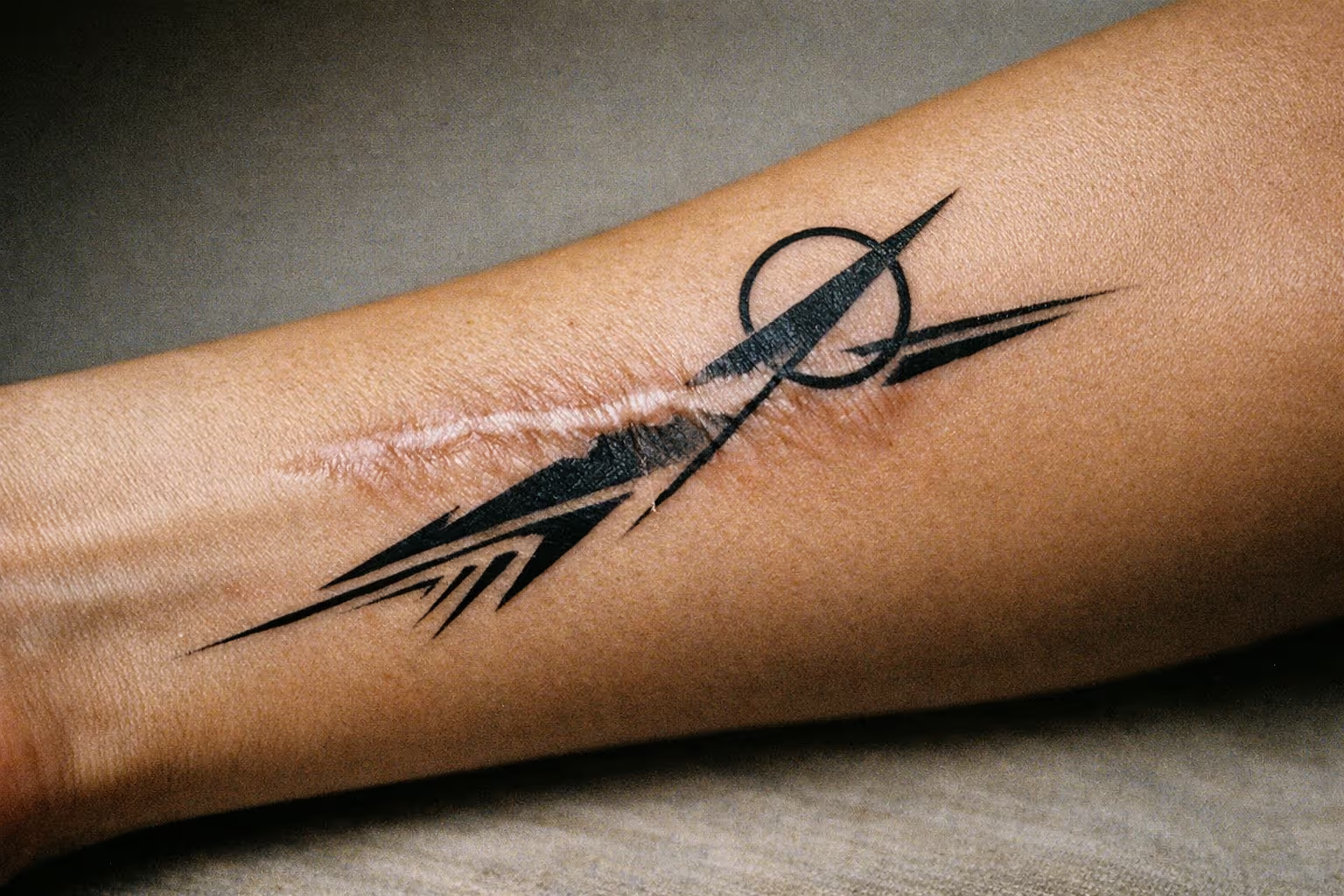
The single most important rule for a tattoo over scar tissue is patience: a scar needs 12 to 24 months to fully mature before a needle should touch it, and rushing that is how you get a piece that heals badly or reopens the scar. Active keloids are a hard no entirely. Even done right, scarred skin holds ink less evenly - expect 20 to 50% more fading than normal skin. Here’s how to time it, which scars can take a tattoo, and how to plan for the fade.
Tattoo Over Scar: The Honest Answer
Getting a tattoo over scar tissue isn’t a fringe request anymore. Scar cover-ups and paramedical camouflage have become a defined niche, and good artists in this space are booking months out. The short answer to “can you tattoo over a scar?” is yes, most of the time, with the right artist and the right timing. The longer answer depends on what kind of scar it is, how old it is, what’s on your medical chart, and what design you’re trying to land on textured skin that doesn’t behave like the rest of your body.
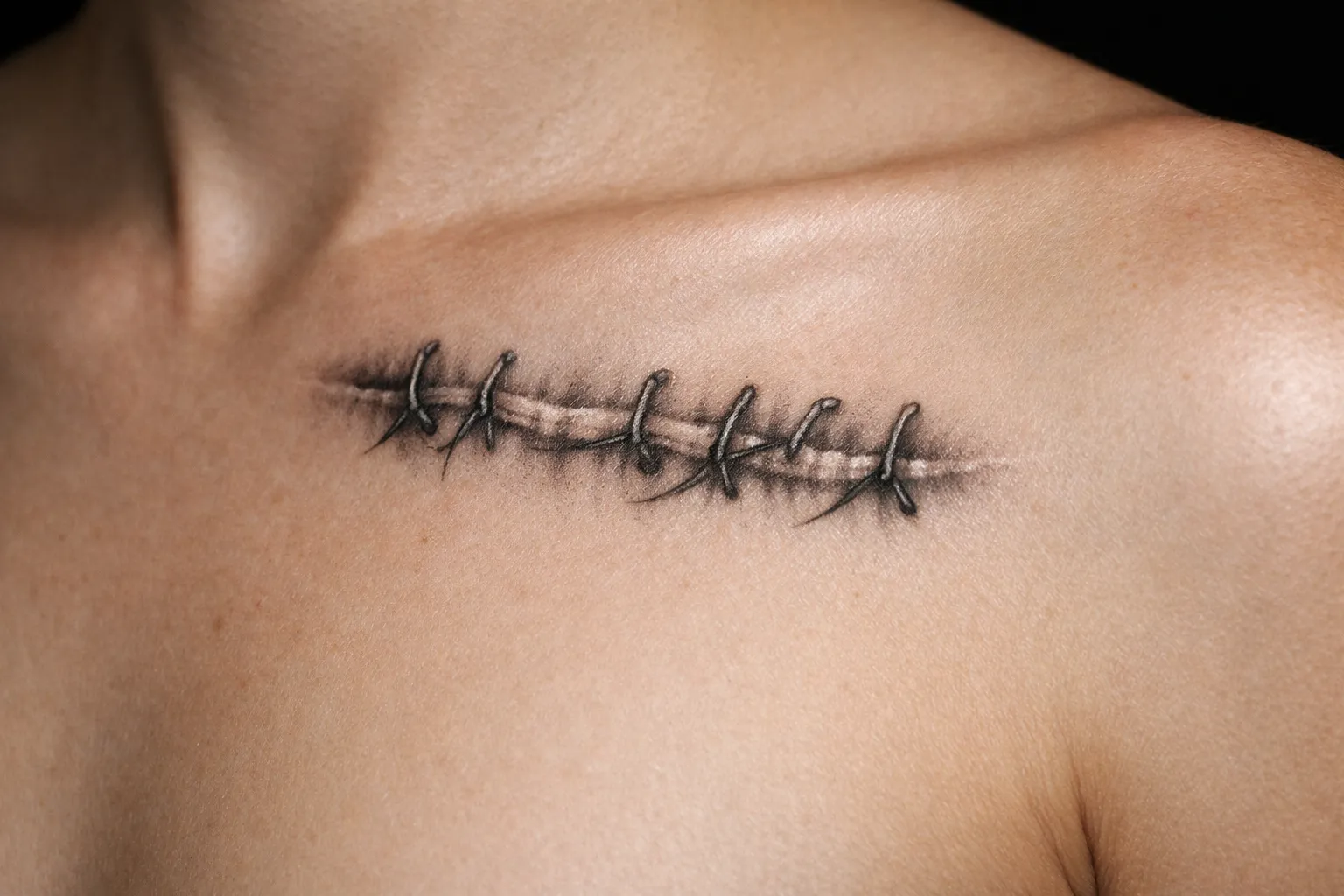
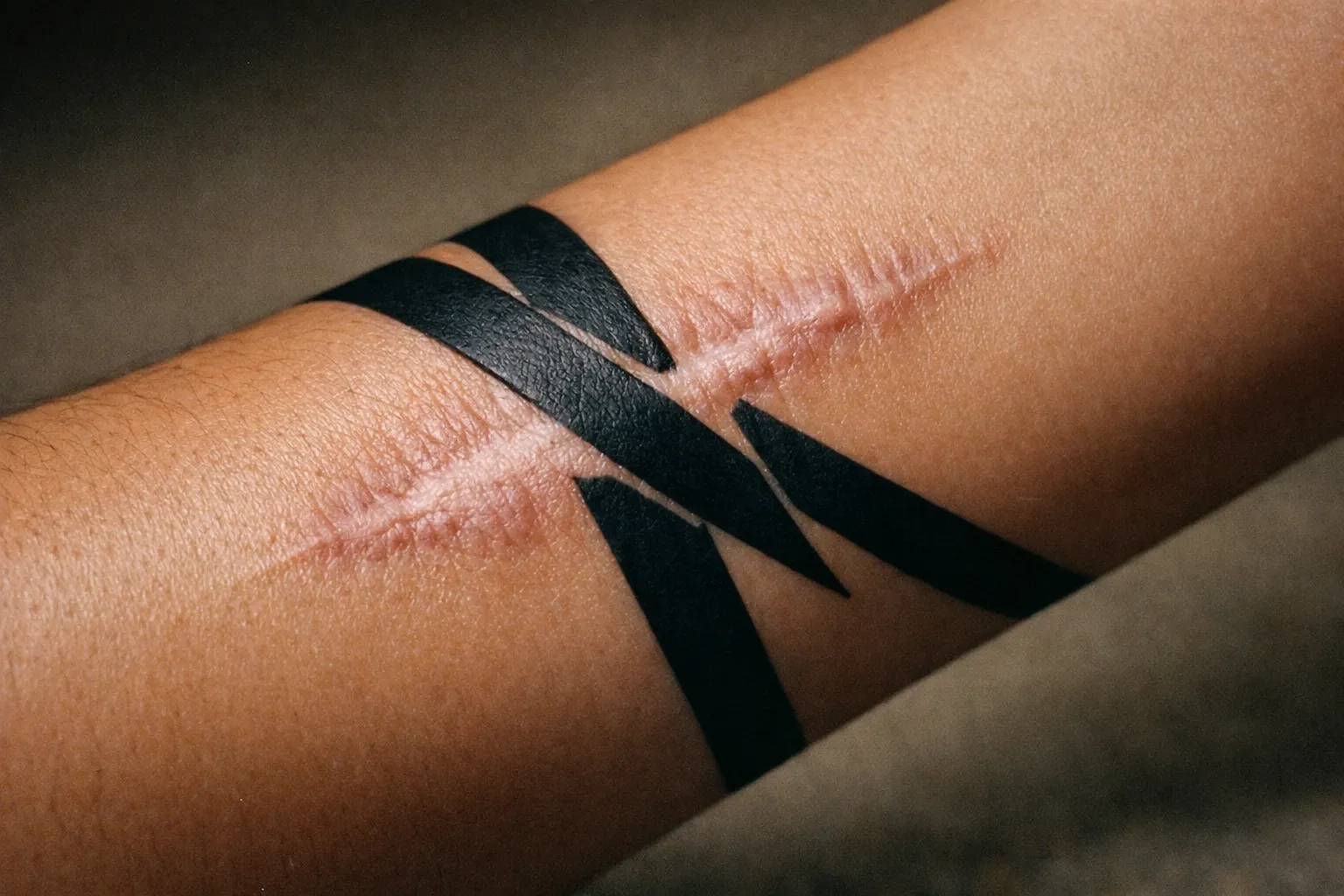
This guide covers the timing, the scar types that work (and the one that usually doesn’t), what it costs, how the pain compares to normal skin, and design strategies for tummy tuck and C-section scars.
✓ Pros
- Most mature, flat scars can be tattooed safely after 12+ months
- Design strategies can effectively disguise scars rather than erase them
- Paramedical camouflage offers a specialized option for scar blending
- Experienced artists adjust technique for scar tissue to improve results
✗ Cons
- Scar tissue ink uptake is unpredictable and fades faster
- Keloid scars generally should not be tattooed due to risk of worsening
- Tattooing over scars usually hurts more than normal skin
- Requires longer wait times and additional touch-up sessions
Can You Tattoo Over a Scar?
Yes - most mature, flat, stable scars can be tattooed safely once they’ve fully healed (1)(2). The standard industry rule is to wait at least 12 months after the injury or surgery, and many paramedical artists prefer 12 to 18 months before they’ll touch the skin (5).
“Safely” and “well” aren’t the same thing, though. Scar tissue has reduced blood flow, irregular collagen, and unpredictable ink uptake. It can:
- Hold ink patchier than surrounding skin
- Heal with 20-50% more fading than nearby normal skin
- Show texture through the design no matter how clever the artist
- Require 1-3 sessions plus a touch-up at 6-12 weeks for a clean result
If you came here hoping a tattoo will erase a scar, recalibrate. The realistic goal is disguise and redirection - your eye stops tracking the scar because the design gives it somewhere else to go.
Is It Okay to Get Ink on Scar Tissue?
For most people, yes. The conditions that make it okay:
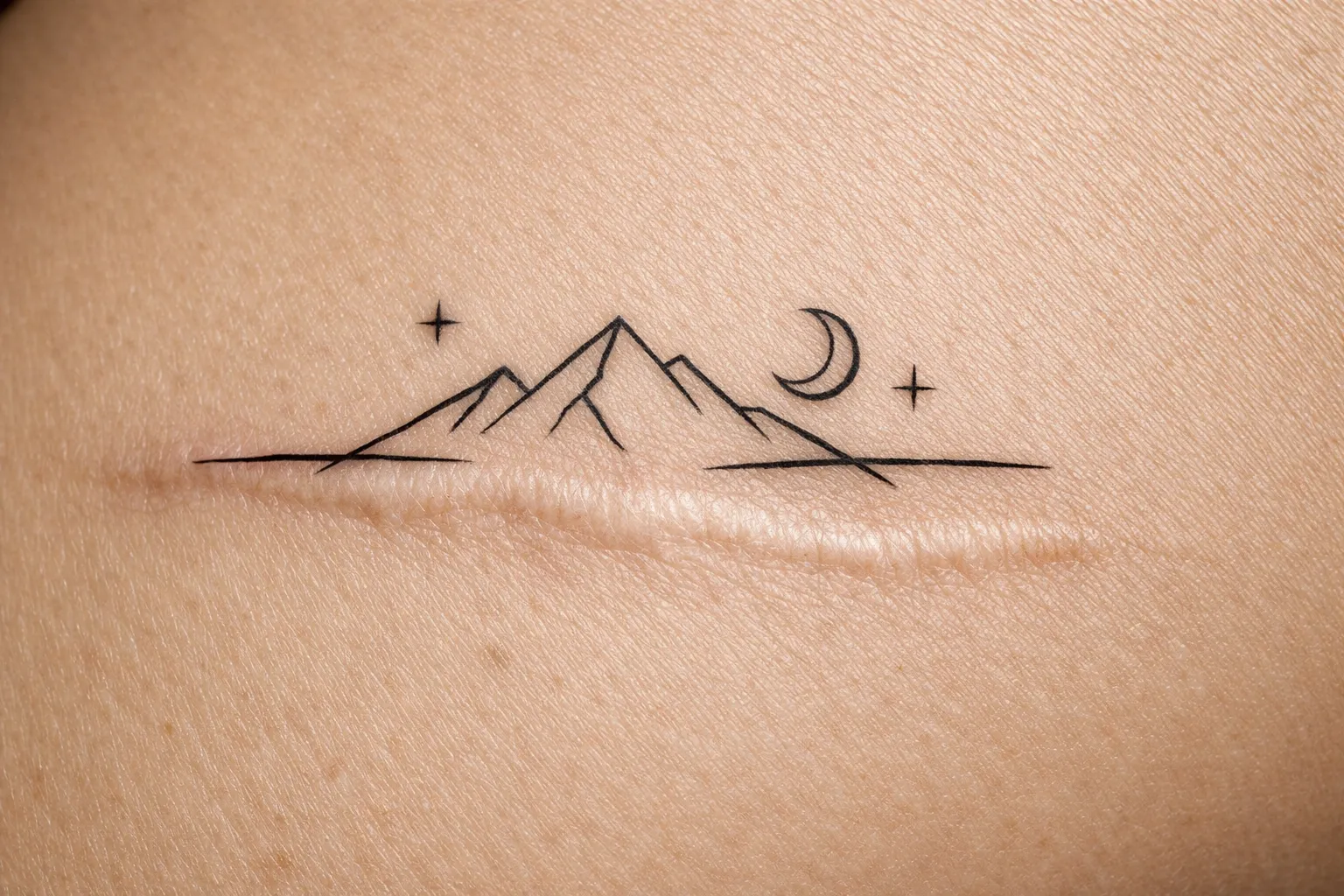
- The scar is at least 12 months old (longer for major surgery or burns) (2)
- It’s flat, pale, and stable - not red, purple, raised, itchy, or still changing
- It’s not an active keloid (more on this below)
- You don’t have a medical condition - active immunosuppression, uncontrolled diabetes, recent radiation to the area - that complicates healing
- You’ve found an artist with a portfolio of healed scar work, not just fresh photos
A useful internal check before booking - what paramedical artists informally call the “rule of three”:
- Color: the scar is lighter than or equal to the surrounding skin
- Texture: stable for 6+ months, no thickening or shrinking
- Sensation: no itching, pain, or temperature difference for 3-6 months
If all three are true, you’re likely a candidate. If any are off, wait.
How Long to Wait Before Tattooing Scar Tissue
Timing depends on scar type and depth. These are the working benchmarks artists and dermatologists use:
- Minor cuts and small surgical scars: 12 months minimum (2)
- Deeper surgical scars (tummy tuck, C-section, joint replacement): 18-24 months for stable texture and color
- Burn scars: 18-36 months, sometimes longer, because ink uptake stays unpredictable for a long time (3)
- Keloid scars: if tattooing is considered at all, only after the scar has been completely stable for 2-5 years with dermatology clearance
- Atrophic scars (acne, stretch marks): usually safe at 12 months, but thinner skin means higher blowout risk (2)
Tattooing too early - on skin that’s still pink, still itching, still firming up - increases the risk of ink spread, distorted lines, and in keloid-prone people, triggering more scarring (2)(5).
I’ve seen clients come in at eight months post-surgery with scars that looked healed on the surface. We pushed them back three months. The ones who waited came back with skin that took ink cleanly. The ones who pushed through somewhere else didn’t always get that result.
Why Most Artists Say No to Tattooing Over Keloid Scars
A tattoo Over keloid Scar is the one situation where the answer is usually “don’t.” Keloids are raised scars that grow beyond the original wound boundary because the skin overproduces collagen during healing. Puncturing a keloid with tattoo needles is a form of trauma - and trauma is exactly what triggered the keloid in the first place. The likely outcome is a larger, darker, more raised keloid, not a covered one.
If you have a keloid you want to address, the realistic options are:
- Design around it - use the surrounding skin and leave the keloid untouched
- Treat the keloid first with a dermatologist (steroid injections, silicone sheets, pressure therapy) until it’s flat and stable, then re-evaluate after 2+ years of stability
- Skip tattooing entirely in that location
Hypertrophic scars - raised but confined to the original wound - are different. Once they’ve flattened and gone pale, they can usually be tattooed, though texture may still show through. Knowing which kind of scar you have matters: keloids extend past the wound edge, hypertrophic scars don’t. If you’re not sure, ask a dermatologist before you ask a tattooer.
What Works for Tattoos Over Tummy Tuck Scars
A tattoo Over tummy tuck Scar is one of the most common scar cover-up requests, and it comes with specific considerations. The scar is long - often hip to hip, 10-20+ inches - sits low on the abdomen, and the surrounding skin has been surgically tightened.
Timing: wait 18-24 months post-surgery. The scar needs to settle, and your final abdominal contour needs to stabilize. Coming back at six months and then having the scar continue to mature will distort the tattoo.
Design strategies that actually disguise the line:
- Perpendicular elements - leaves, petals, ornamental drops, or vine work that crosses the scar rather than running along it. Designs that hug the scar line draw the eye straight to any texture difference.
- Floral bands running hip to hip - peonies, roses, wildflowers - are the workhorse design for this placement because the organic shapes break up the line.
- Ornamental or lace patterns also work well; symmetry hides irregularity.
- Avoid solid black bands or flat geometric shapes directly on the scar. Dense black highlights any raised or shiny tissue underneath.
Size and sessions: a full hip-to-hip piece is typically a 3-5 hour session, sometimes split across two appointments. Budget $800-$2,000+ for the full design, plus a touch-up session.
One thing I always tell clients planning this piece: the lower abdomen ages with weight changes, pregnancy, and shifts in skin elasticity. If you’re planning more pregnancies or are actively losing significant weight, wait until your body composition is stable before committing to this placement.
What the Tattooing Process Looks Like Over Scar Tissue
Whether you’re covering a C-section scar, a self-harm scar, a mastectomy scar, or a burn, the tattoo Over Scar Tissue process follows a similar arc.
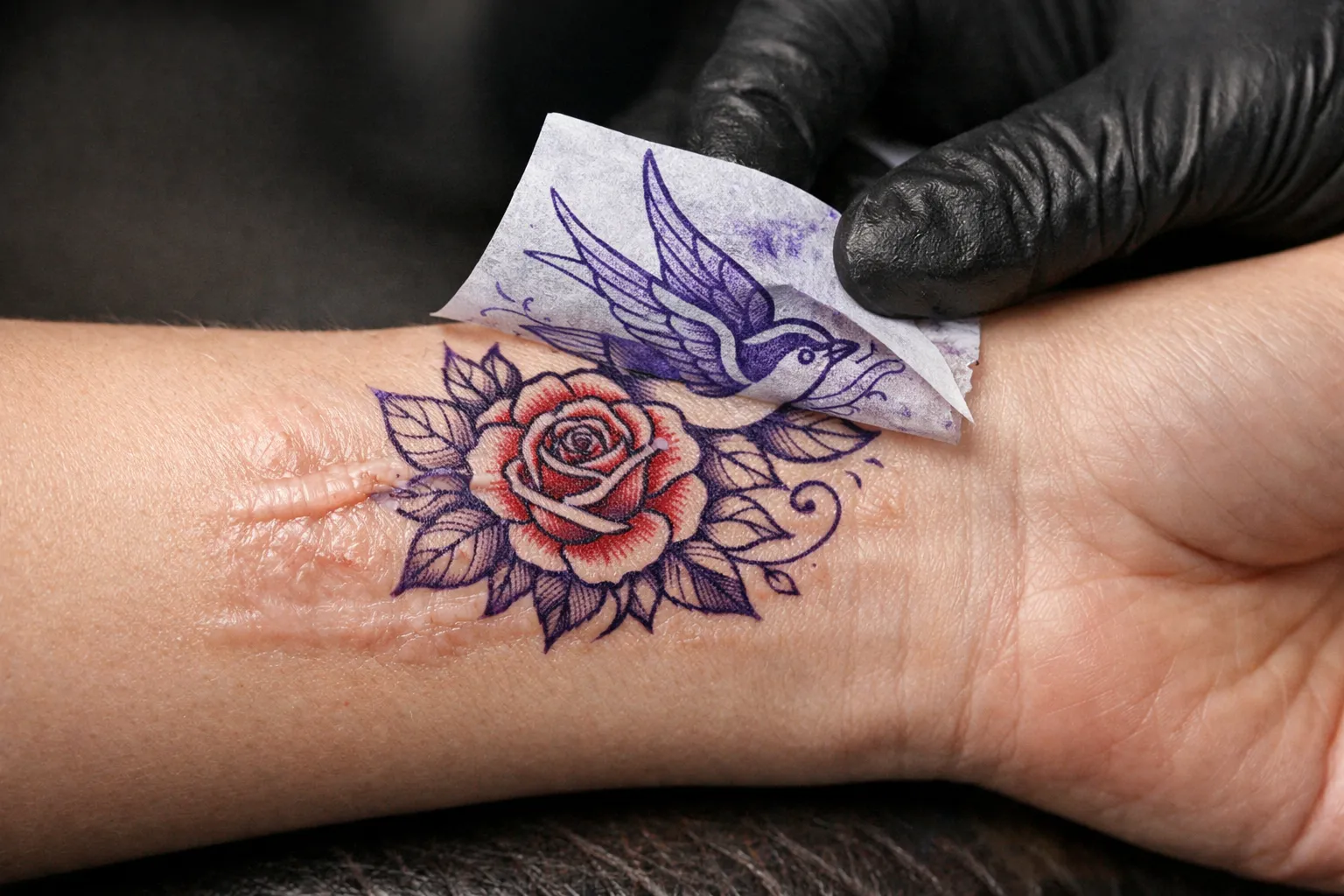
Tattooing Over Scar Tissue: Step-by-Step
2 hours (varies by scar size)The typical process from consultation to touch-up for tattooing over scar tissue.
- 1
Consultation
20-60 minutes to assess scar age, color, texture, and sensation. Artist photographs the scar, discusses readiness, sketches design ideas, and provides pricing. Bring measurements and photos if remote.
- 2
Test Spot (Sometimes)
For burn, radiation scars, or large birthmarks, a 1-2 cm test tattoo may be done. Wait 8-12 weeks to evaluate ink uptake before proceeding.
- 3
The Session
Small scars (1-2 inches) take 1-2 hours; medium pieces (6-12 inches) take 2-4 hours; large or complex burn coverage may require 2-4 sessions of 2-4 hours each. Needle depth and pressure are adjusted for scar tissue.
- 4
Healing
Top layer heals in 10-21 days; deeper settling takes 6-8 weeks; scar tissue can take up to 12 weeks to fully settle the ink.
- 5
Touch-Up
Plan a touch-up at 6-12 weeks. Most artists include one touch-up or charge a reduced rate for it.
How Much Does It Cost to Get Ink Over Scar Tissue?
US pricing in 2025, ballpark figures:
- Small decorative scar cover-up (1-2 inches): $150-$400
- Medium design over C-section or tummy tuck scar (6-12 inches): $400-$900
- Full lower-abdomen piece covering extended tummy tuck scar: $800-$2,000+
- Paramedical scar camouflage (per session): $300-$800
- Total paramedical camouflage (2-3 sessions): $600-$2,000
Budget an extra 20-30% in time and money compared to a similar tattoo on normal skin - touch-ups, longer sessions, slower ink uptake all add up.
Health insurance does not cover decorative cover-ups or paramedical camouflage in the US, with one common exception: post-mastectomy nipple-areola tattooing is sometimes reimbursed under specific plans as part of breast reconstruction.
Does Tattooing Scar Tissue Hurt More?
Yes, usually. Scar tissue has altered nerve endings - some areas are numb, others are hypersensitive. Clients commonly report pain at 7-9 out of 10 over scars compared to 4-6 out of 10 on adjacent normal skin.
Relative scale by placement:
- Ribcage / sternum scar > abdominal scar > thigh scar > upper arm scar
- Scars over bone or thin skin - sternum, collarbone, ankle - hurt more than scars over muscle like the thigh or upper arm
- C-section and tummy tuck scars sit over a sensitive area, but the abdomen itself is mid-range; the scar line is what spikes the pain
A note on topical numbing creams: many scar specialists avoid them because they constrict blood vessels and change how scar tissue accepts ink. If used at all, it’s a brief pre-treatment, not something repeated through the session.
Scar Camouflage vs. Cover-Up Tattoo: Understanding the Difference
These get confused constantly, and they’re not the same thing.
Decorative cover-up tattoo: uses standard tattoo ink and design to disguise the scar as part of a visible piece. Done in regular tattoo studios. The scar becomes part of a flower, a wave, a piece of lettering - you’re not trying to hide that you have a tattoo, you’re hiding that there’s a scar underneath it.
Scar camouflage / paramedical tattoo: uses skin-tone pigments to blend the scar into the surrounding skin. The goal is to make the scar visually disappear, not to add visible artwork. Specialists often mix 3-5 custom pigments per client to match undertones (3). It works best when the scar is lighter than surrounding skin (camouflage adds tone - it can’t lighten), skin color is stable year-round, and the texture is flat.
Camouflage is typically done by artists with paramedical training, sometimes inside medical spas or plastic surgery clinics. Pricing tends to be $300-$800 per session, and 2-3 sessions is typical.
If you want art, book a tattooer with scar experience. If you want the scar to disappear into skin tone, book a paramedical specialist. They’re different skills.
Can You Tattoo Over a Birthmark?
Sometimes. It depends on the birthmark:
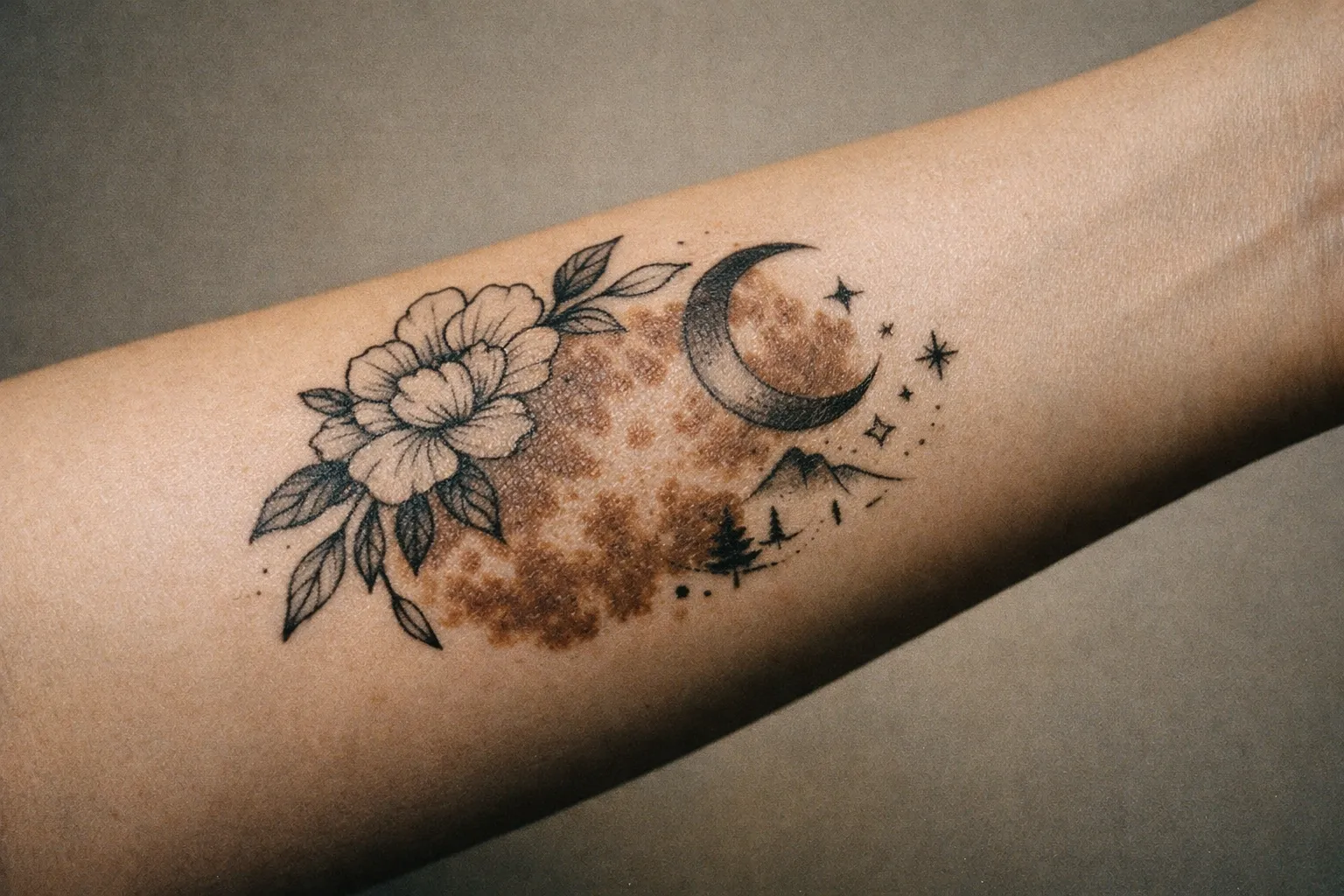
- Light café-au-lait spots: usually can be tattooed once a dermatologist confirms it’s benign and stable
- Moles and pigmented nevi: most artists won’t tattoo over these, because the ink obscures the ability to monitor for melanoma. Tattoo around, not over.
- Port-wine stains and vascular birthmarks: higher bleeding risk and unpredictable healing - requires dermatologist clearance and an experienced artist; a test patch is standard
Any birthmark that has changed in size, color, or shape recently needs a dermatology assessment before you book a tattoo, full stop.
Aftercare for Tattoos on Scar Tissue
Scar tissue heals more slowly and less predictably than normal skin. Aftercare isn’t optional here.
Day 1-3:
- Keep the bandage on as your artist instructed (often 2-24 hours, longer for Saniderm-style films)
- Wash gently with fragrance-free antibacterial soap and lukewarm water, 2-3x daily
- Pat dry - don’t rub
- Apply a thin layer of fragrance-free moisturizer or aftercare ointment
Week 1:
- Continue gentle washing and thin moisturizing
- Expect more swelling and tenderness than a normal-skin tattoo
- No soaking - no baths, pools, hot tubs, ocean
- Avoid tight waistbands directly over an abdominal piece
Week 2-4:
- Peeling and flaking starts; do not pick
- Continue moisturizing
- Itching is normal - tap, don’t scratch
- Still no sun exposure on the healing tattoo
Month 2 onward:
- Switch to daily SPF 30-50 sunscreen on the tattoo whenever it’s exposed; UV fades scar-tissue tattoos faster than normal-skin tattoos
- Schedule your 6-12 week touch-up
- Continue moisturizing daily - well-hydrated scar tissue holds ink better
Picking or sun exposure on a fragile healing scar tattoo can distort the design in ways that won’t recover without significant rework. I’ve seen it. Follow the aftercare.
How to Find a Tattoo Artist Experienced with Scar Work
Not every great tattooer is a great scar tattooer. Things to look for:
- Healed photos of scar work, not just fresh-off-the-needle shots. Fresh tattoos always look good; healed tattoos at 6-12 months tell the truth.
- A portfolio with the type of scar you have - burn cover work is different from C-section cover work is different from self-harm cover work
- Willingness to say “wait” or “no” - an artist who’ll tattoo any scar at any age is the wrong artist
- Realistic conversation about expectations: texture will likely still show, touch-ups are likely needed, the scar won’t disappear
- Current bloodborne pathogen certification and shop inspection records (many US states updated tattoo safety regulations in the last 1-3 years requiring annual inspections)
Red flags:
- Promises of “invisible” results
- No healed work in portfolio
- Won’t discuss timing or wants to tattoo a scar under a year old
- Pushes you toward solid black designs on textured scars
When evaluating artists, the same principles that apply to choosing the right tattoo artist for any piece apply here - healed portfolio, transparent pricing, and clear hygiene standards - but scar work adds an extra layer of technical scrutiny.
Common Mistakes to Avoid When Tattooing Scar Tissue
- Tattooing too early. Pink, itchy, or still-changing scars are not ready (2)(4)(5).
- Tattooing directly on a keloid. It will likely make the keloid worse (1)(2).
- Choosing flat black designs over textured scars. Dense black highlights every contour.
- Expecting total scar erasure. The realistic outcome is disguise, not invisibility.
- Booking the first available artist. Wait the extra months for someone with scar-specific experience.
- Skipping the medical conversation if you have a keloid history, are immunosuppressed, have diabetes, or are on photosensitizing or weight-loss medications.
Is Scarification Illegal in the US?
Scarification - intentionally creating scars as body art using scalpels, branding, or chemical methods - is a separate procedure from tattooing over scars, but it comes up in the same search because the words overlap.
There’s no single federal law banning scarification in the US, but it’s regulated at the state and municipal level, and treatment varies widely. Some jurisdictions ban it outright, some treat it as practicing medicine without a license, and some classify performing it without specific licensing as assault. Reported restrictions include Illinois and certain municipalities in California and New York, but enforcement and exact statutes change - verify your state’s current body art regulations before pursuing it.
For most people asking about scars and tattoos, scarification isn’t the goal. Covering or camouflaging an existing scar with a tattoo is. Tattooing is legal across all 50 states, regulated for safety, and the better-supported option for either visible art or skin-tone blending.
Frequently Asked Questions
- Will my scar still be visible after the tattoo?
- The texture usually remains visible because scar tissue is raised or indented. A tattoo disguises the scar by redirecting the eye, but it doesn't flatten the skin.
- How many sessions will I need?
- Most scar cover-ups require 1-3 sessions plus a touch-up at 6-12 weeks. Larger or burn scars and paramedical camouflage projects often need more sessions.
- Can a tattoo trigger keloid growth?
- Yes, tattoo needles cause trauma that can stimulate keloid formation in prone individuals. A dermatology assessment is essential before tattooing if you have a keloid history.
- Is it safe to tattoo over a self-harm scar?
- Yes, once the scars are mature (12+ months), flat, and stable. Many artists specialize in self-harm scar cover work and handle consultations discreetly.
- Will the tattoo fade faster on scar tissue?
- Yes, expect 20-50% more fading compared to normal skin. Sun protection and consistent moisturizing help slow fading. Touch-ups every 1-3 years are common.
- Can I tattoo over stretch marks?
- Stretch marks are atrophic scars and can be tattooed once stable, but thinner skin increases blowout risk. Paramedical camouflage is also an option specifically for stretch marks.
What Actually Matters Here
A tattoo over scar tissue is a real, achievable option for most people with mature, stable, non-keloid scars - but it asks more of you than a regular tattoo. Wait the full 12-24 months. Find an artist with healed scar work in their portfolio. Pick a design with organic, textured elements rather than flat black shapes. Budget extra time, extra money, and a touch-up session. Follow aftercare like your result depends on it, because on scar tissue it does.
If you have an active keloid, treat it medically first. If you’re actively losing weight, wait until your body composition is stable. And if you want the scar to genuinely disappear rather than become art, look at paramedical camouflage instead of a decorative cover-up - they’re different services with different specialists.
The realistic win isn’t a scar that vanishes. It’s a scar that no longer leads your eye when you look in the mirror.