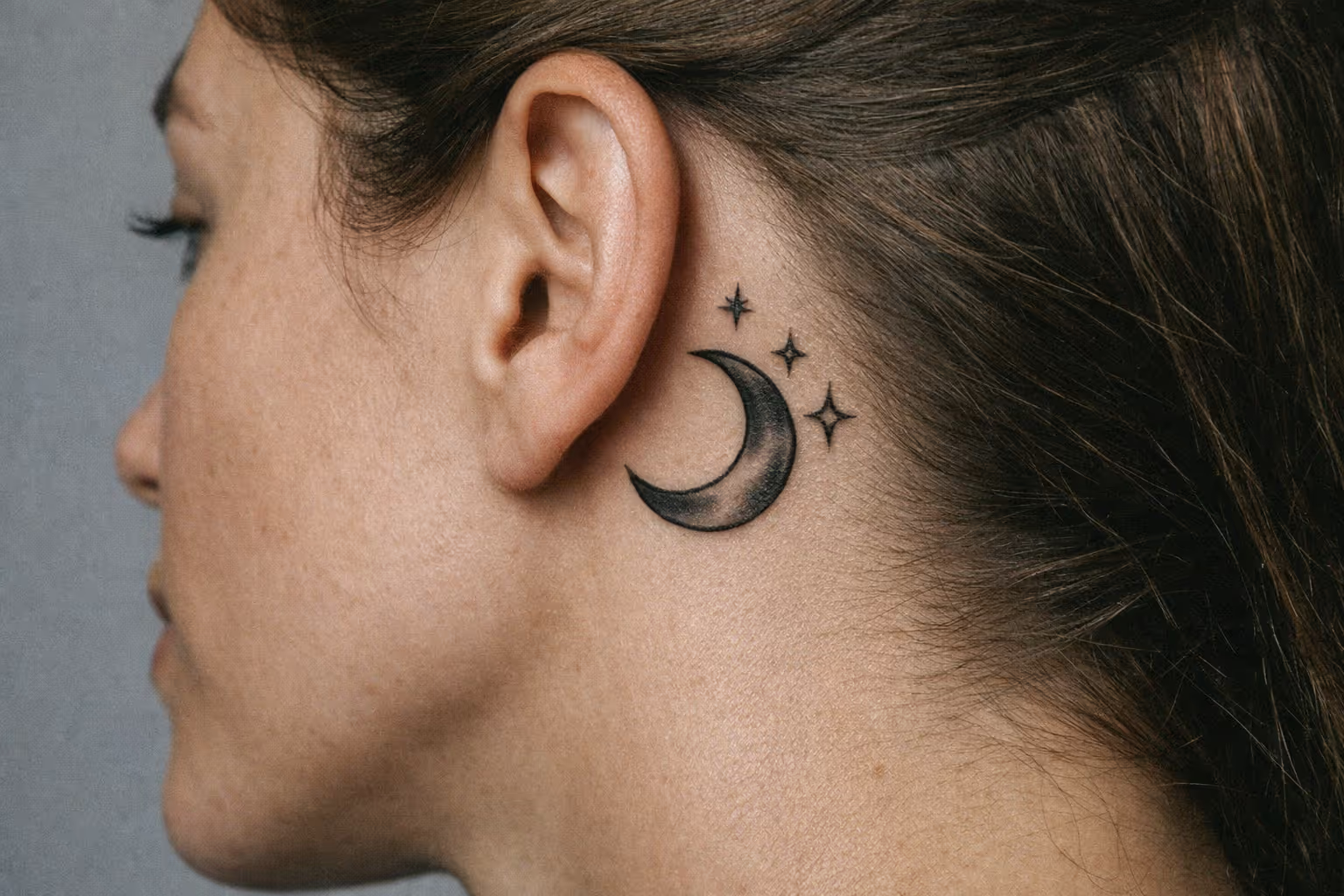
The usable canvas for a behind ear tattoo is roughly 2 to 3 cm tall and 1 to 2 cm wide, about the size of a large coin. That single measurement should reframe how you plan this one. It’s not a spot where you squeeze in a detailed sleeve element; it’s a spot where restraint is the whole strategy. It suits people who want semi-hidden ink that reads clean with hair pulled up, and the honest trade-offs are moderate-to-high pain, faster fading than most placements, and friction from hair, glasses, and headphones that most guides skip over.
Here’s what you’re actually signing up for before you book the session.
✓ Pros
- Easily concealed by medium or long hair, so visibility stays low at work or in formal settings
- Short session: simple designs done in 5 to 15 minutes, more detailed linework in 20 to 45 minutes
- Small canvas keeps cost low, usually one short appointment
- Suits a wide range of motifs: symbols, initials, minimal florals, short words
- Semi-hidden placement that becomes visible with updos or short hair, so visibility stays flexible
✗ Cons
- Pain is moderate to high (sharper than a forearm, gentler than a ribcage session), and vibration over bone is the main complaint
- The canvas is genuinely tiny: 2-3 cm of height limits design complexity
- Friction from hair, glasses arms, and headphones complicates healing
- Fine detail and shading blur faster here than on low-friction placements
- Noticeable fading possible after 5-7 years, especially with UV and hair product exposure
What a Behind Ear Tattoo Actually Is, and Where It Sits
A behind ear tattoo sits on the flat area of thin skin over the mastoid bone, the hard ridge directly behind the earlobe, not on the ear cartilage itself. That distinction matters. The cartilage is a different, more painful placement, and a design that drifts downward past the hairline crosses into neck tattoo territory, which is a more visible commitment with different professional implications.
There’s no single formal name for it. Artists and clients use “behind the ear tattoo,” “post-auricular tattoo,” and “ear-adjacent placement” interchangeably; in a consultation, most artists just say “behind the ear” and everyone knows what’s meant. Don’t overthink the terminology when you book.
The postauricular skin is only about 1.0 to 1.2 mm thick with minimal subcutaneous fat, so there’s very little padding between the needle and the bone. That anatomy drives both the pain and the sizing limits. Your working canvas is roughly 2 to 3 cm tall and 1 to 2 cm wide before you hit the hairline, earlobe, or neck.
Within that zone there are three micro-placements worth knowing:
- Flat area behind the ear: the most common spot, directly over the mastoid
- Just below the earlobe: slightly more padded tissue, which reads as lower pain
- The crease where ear meets skull: tighter and higher-vibration
Pick the micro-placement before you pick the design. It changes both how it feels in the chair and how well it heals.
Behind Ear Tattoo Pain: What the Vibration Actually Feels Like
The flat area behind the ear usually lands around 6 to 7 out of 10, with more vibration than you would feel on an arm; the skin just below the earlobe runs 5 to 6, and the cartilage crease 7 to 8 (1). Placement guides generally rank it more painful than the outer arm but less painful than the ribs or sternum (8), and the session is far shorter than either.
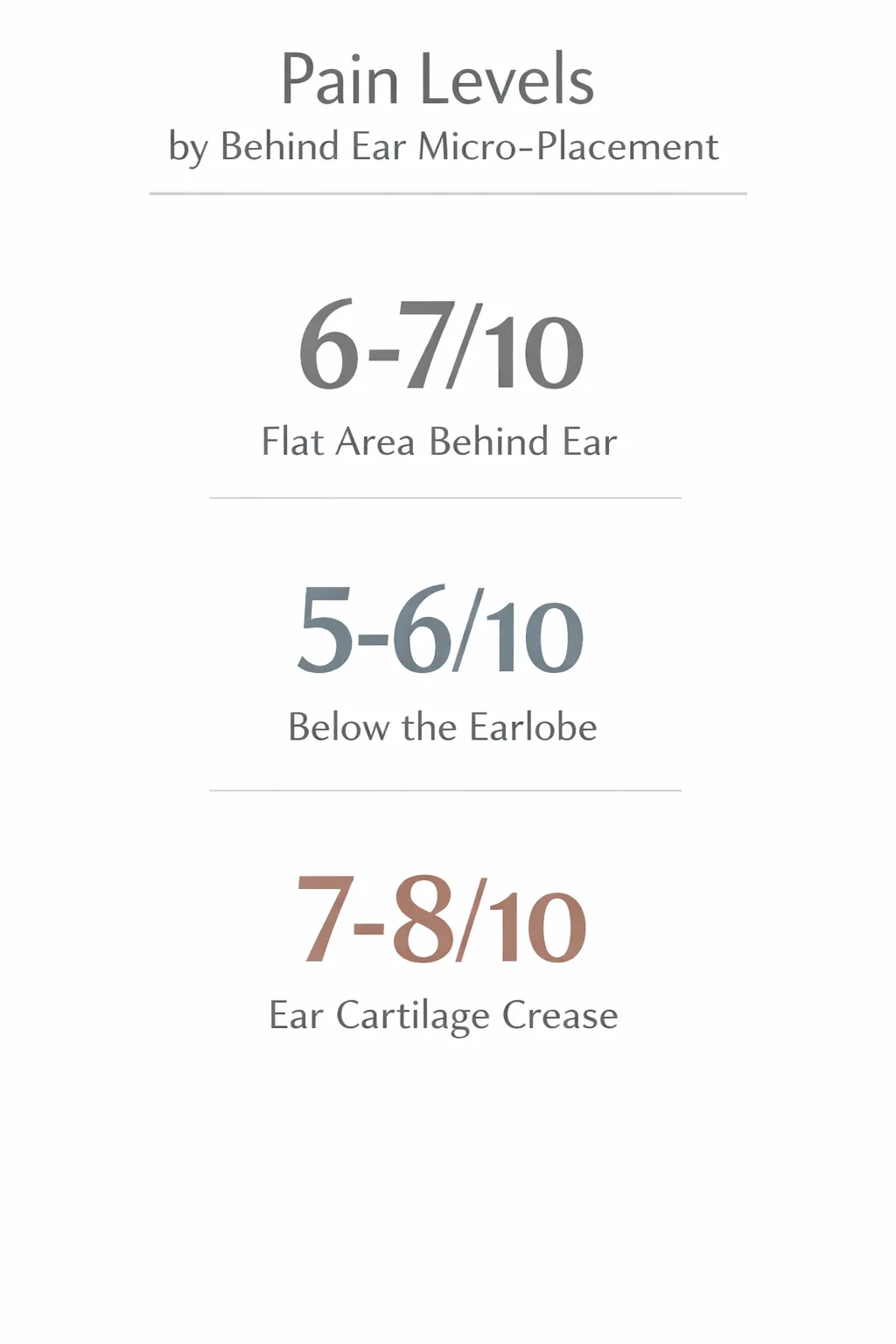 Pain by behind-ear micro-placements: flat area 6-7/10, below earlobe 5-6/10, ear cartilage crease 7-8/10
Why does it hurt the way it does? The skin is thin, there’s almost no fat, and the mastoid bone sits right underneath. The tattoo machine’s vibration conducts directly through bone, which people describe as sharp and buzzing at the same time. Healthline puts that vibrating pain down to the needles passing over the mastoid bone, with so little flesh in between that the sensation is especially noticeable (12). That buzzing quality is the number-one complaint, more than the needle itself.
The saving grace is duration. A simple symbol takes 5 to 15 minutes; more detailed linework runs 20 to 45 minutes. Most people find the brevity manageable even when the intensity is high.
On method: machine work is faster but louder and more vibratory over bone. Hand-poke can feel less intense for some clients but takes longer for the same design. Both are viable; let your artist’s experience with the placement guide the choice rather than chasing “the less painful option.”
One practical caveat. If you get migraines, carry chronic neck tension, or have sensitivity around the ear or jaw, flag it before booking. Nerve density in this area can amplify discomfort, and it’s worth a conversation with your artist about micro-placement.
Pain by Micro-Placement: Flat Area vs. Below the Earlobe vs. Cartilage
Pain Levels by Behind Ear Tattoo Micro-Placement
| Flat area behind ear (mastoid) | Below the earlobe | Ear cartilage crease | |
|---|---|---|---|
| Pain Level | 6-7/10; sharper than forearm, gentler than ribcage | 5-6/10; the gentlest of the three micro-placements | 7-8/10; the sharpest micro-placement in this zone |
| Skin/Tissue | Thin skin over bone | Slightly more padding | Thin, cartilage-adjacent |
| Best For | Most designs; standard placement | Pain-averse clients; small symbols | Avoid if pain-sensitive |
Choosing a spot slightly lower on the mastoid, toward the softer tissue below the earlobe, reduces vibration while keeping the behind-ear look. It’s the single easiest adjustment for comfort.
First-timer reality check: reports vary widely. Many clients say it hurt less than they had braced for (1); others rate it high. The genuine reassurance isn’t the pain number; it’s that the session is short and contained.
Canvas Constraints: Sizing the Design Correctly
Your hard canvas is 2 to 3 cm tall and 1 to 2 cm wide (roughly 0.5 to 1.2 inches) before the design runs into the hairline, earlobe, or neck (4). That’s anatomy, not a style preference: no amount of wanting a bigger piece changes the space available.
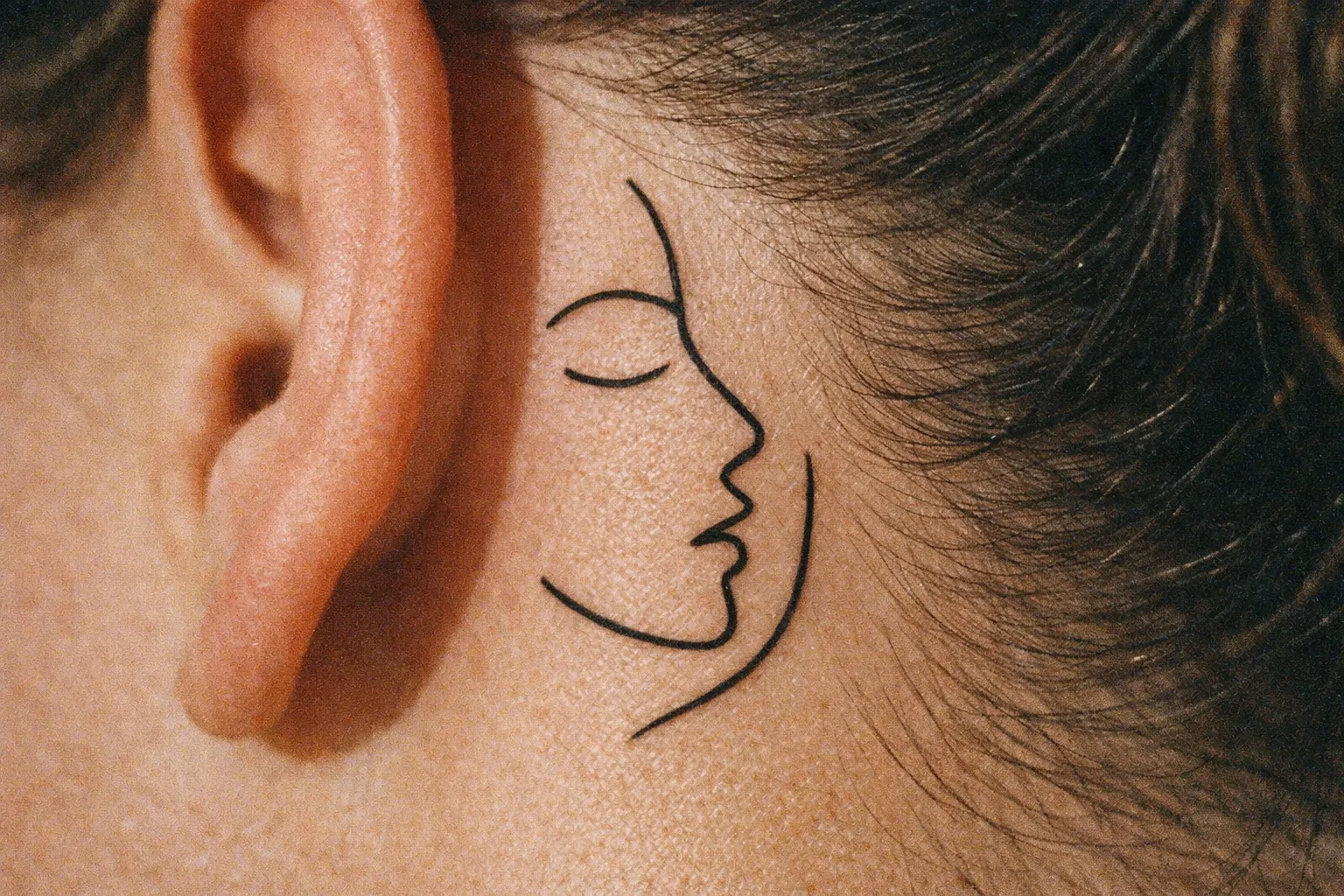
Guides put the ideal design size at 0.5 to 2 inches, about 1.3 to 5 cm (10), but the flat area caps most pieces near its 2 to 3 cm height, and only short hair or shaved sides leave room for the upper end. Anything larger starts encroaching on neck or ear territory, and that’s a different placement conversation with different visibility and pain implications.
Detail fails at this scale for a specific reason. Intricate shading and micro-detail packed into a 2 cm space will blur and merge within a few years, and friction from hair and glasses accelerates it. The longevity strategy is bold outlines and open negative space, which resist blur as the ink settles (5). That thickness is what survives, not hairline single-needle work.
I’ve seen clients come in with reference photos of beautiful fine-line botanicals they found online, wanting them shrunk down to fit behind the ear. I always ask them to look at healed photos of the same work at that scale. The conversation usually shifts pretty quickly.
Size relative to your hair matters too:
- Short hair or shaved sides: the full canvas is on display, so artists may push toward the upper end (up to 2 inches) with bolder linework
- Long hair worn down: even a 1 cm symbol reads well, because it only needs to show when your hair’s up
Before you book, cut a piece of paper to 2 cm × 1.5 cm and hold it behind your ear in the mirror. That’s your actual canvas. It stops a lot of oversized-design disappointment at the consultation.
Design Styles That Work at This Scale
- Fine-line blackwork: single motifs, minimal florals, geometric shapes. Works if the line weight is adequate; avoid single-needle on anything under 1 cm.
- Bold linework symbols: stars, moons, crosses, musical notes, initials. American traditional-adjacent thick outlines hold up best over time.
- Short words or dates: one or two words maximum. Block letters should be at least ¼ inch (6 mm) tall and script at least ½ inch (12-13 mm) to stay legible.
- Minimalist geometric shapes: triangles, circles, small mandalas. Clean negative space ages better than dense fill.
Styles to avoid: realistic portraiture, detailed shading, watercolor washes, and anything that genuinely needs more than 2 cm of vertical space. They don’t shrink cleanly, and they won’t hold up.
What These Tattoos Symbolize
There’s no fixed universal meaning for a behind ear tattoo; symbolism here is almost entirely design-driven. The location itself carries loose associations with secrecy, intimacy, and personal significance because it’s semi-hidden, but the motif does the actual talking.
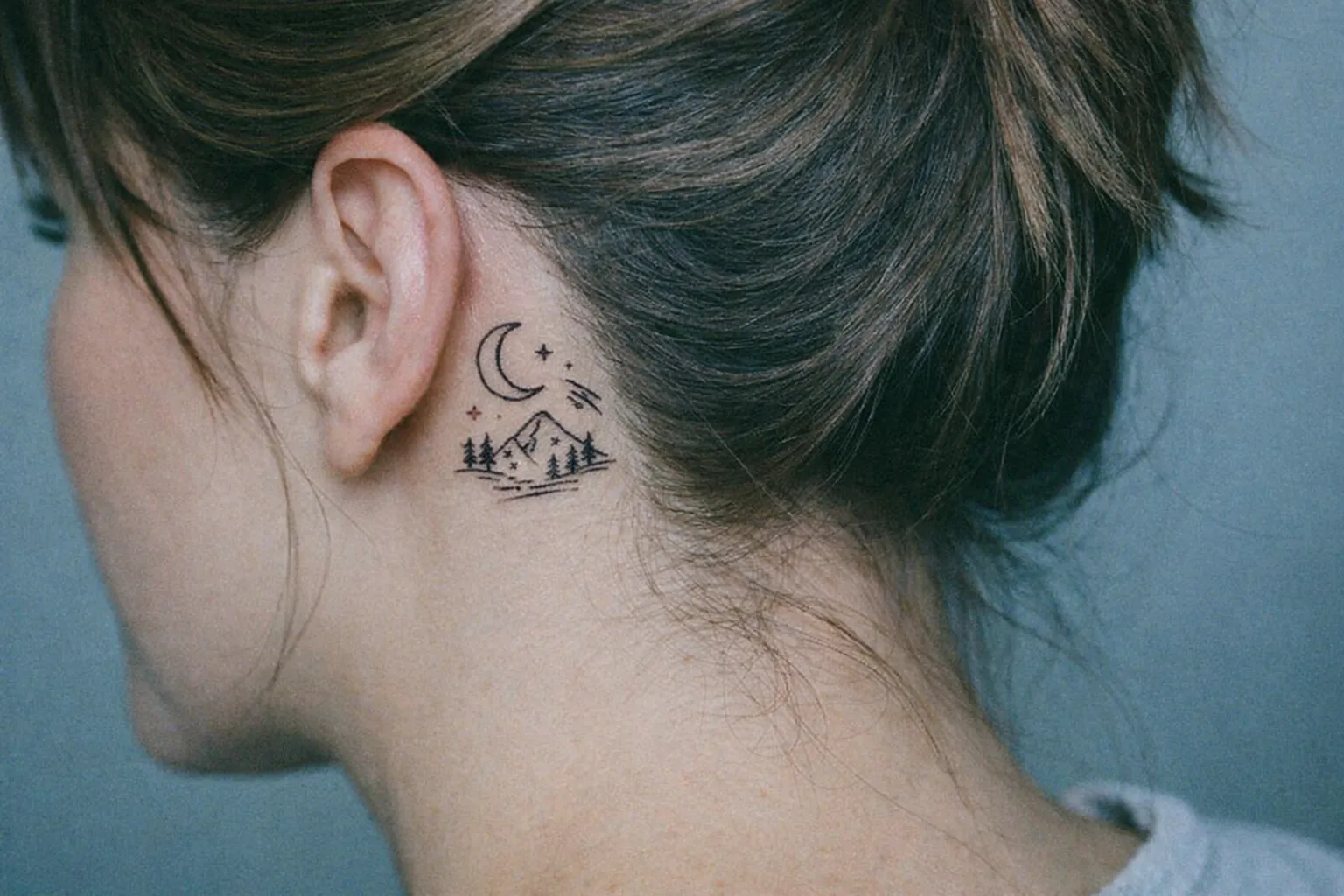
Common motifs and where they come from:
- Stars and moons: used broadly across cultures. The crescent moon has roots in Islamic and Ottoman iconography; the five-pointed star is broadly Western. Both tend to read as guidance or cyclical change.
- Crosses: Christian symbolism. A small Latin cross behind the ear is common in Catholic-influenced tattoo traditions, often chosen for a balance of faith expression and professional discretion. A Celtic cross adds knotwork but usually needs more space than this canvas allows.
- Musical notes: no fixed cultural tradition; a personal identifier, popular with musicians and music-oriented clients.
- Feathers: appear in Native American and Egyptian traditions among others, and the meaning varies significantly by culture. Worth researching the origin before you commit, rather than borrowing an aesthetic blind.
- Initials and dates: purely personal commemoration, no symbolic tradition attached.
- Minimalist florals: a single rose carries the Western romantic tradition; the lotus has Buddhist and Hindu roots representing purity and spiritual growth; cherry blossom (sakura) is Japanese, associated with impermanence and the transient nature of life.
Be honest with yourself about why you’re choosing this spot. Most people pick it for discretion and how it looks with their hair, then choose a motif that means something specific to them, not because the placement carries prescribed cultural weight. That’s a perfectly good reason. Just don’t invent a deep meaning for a location that’s really about aesthetics and concealment.
How Long It Takes to Heal
Surface healing, the scabbing and flaking stage, typically resolves in 2 to 3 weeks (11). The deeper dermal layers are a different story: the same Healthline guidance says the skin beneath the tattoo can take up to a year to fully heal (11). The outer skin can look done well before the deeper layers finish repairing.
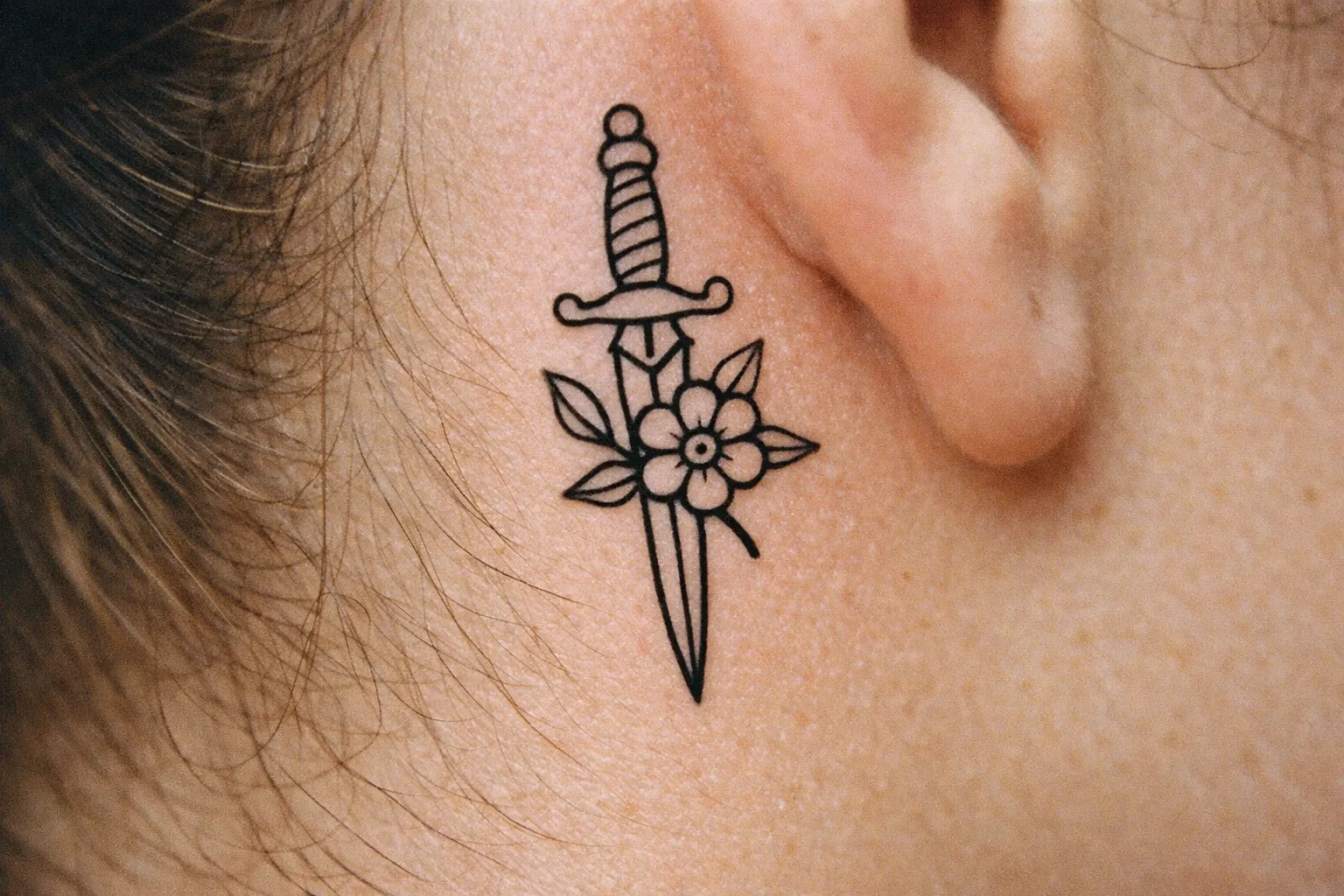
This placement heals under more stress than most. You’re constantly moving the area by talking, chewing, and turning your head, and it’s under near-constant friction from hair, glasses, and headphones. Add the thin skin over bone, and the healing window demands more discipline than, say, an outer forearm.
Healing Timeline, Week by Week
- Days 1-3: The area is tender, slightly swollen, and may weep clear fluid, all normal. Keep hair tied back. Don’t touch it with unwashed hands. Wash gently twice daily with fragrance-free soap, lukewarm water, and a gentle circular motion. Apply a pea-sized amount of tattoo-specific ointment or unscented moisturizer in a thin layer once or twice a day.
- Days 4-7: The surface tightens and forms a thin scab or flaking layer. Do not pick. Sleep on the opposite side and avoid the tattooed side for at least the first week. Glasses wearers: disinfect the glasses arms twice daily, and switch to contacts or an alternate frame if you can.
- Week 2: Flaking continues and the tattoo may look dull or patchy. That’s normal and resolves as the skin settles. Keep washing and moisturizing. Skip over-ear headphones; use in-ear buds or speakerphone.
- Weeks 2-4: The surface looks healed but deeper layers are still settling. No swimming, saunas, or direct sun on the area. Keep hair dye, strong exfoliants, and retinoids away from the ear during this window.
- Weeks 4 and beyond: The outer skin looks and feels healed, but the deeper skin layers beneath a tattoo can take up to a year to fully heal internally (11). The color and line clarity you see at the 4-week mark are close to final, but the tissue underneath is still repairing.
How to Prepare for Your Behind Ear Tattoo Appointment
30 minutesSteps to get ready for a smooth behind ear tattoo session and healing
- 1
Choose your design and size it correctly
Cut a piece of paper to 2 cm × 1.5 cm and hold it behind your ear. Bring references that fit that scale; avoid large detailed designs.
- 2
Book with an artist whose healed work you've seen
Request photos of healed behind-ear tattoos specifically, not just fresh ones, to set realistic expectations.
- 3
Sort out your glasses situation before the appointment
Plan to switch to contacts or a spare pair for two weeks post-session if you wear glasses.
- 4
Wash your hair the morning of the appointment
A clean scalp reduces bacterial risk and you'll be keeping hair tied back during healing.
- 5
Eat a proper meal 1-2 hours before
Stable blood sugar reduces dizziness and helps you sit still. Avoid alcohol for 24 hours before.
- 6
Wear your hair up and clear of the area
A tight bun or braid works best; loose hair pinned back tends to creep into the way.
- 7
Confirm aftercare supplies are ready at home
Have fragrance-free soap, unscented moisturizer or tattoo-specific ointment, a clean separate towel, and hair ties before you leave.
Aftercare Specifics for the Behind Ear Placement
Wash with gentle circular motions, lukewarm water, and fragrance-free soap, twice daily for the first two weeks. Dermatologist-recommended aftercare favors non-scented, fragrance-free cleansers on fresh tattoos, because fragrances and harsh surfactants raise irritation risk on thin healing skin. Use a separate clean towel for the tattoo (not the one you use on the rest of your face) to cut down on bacterial spread.
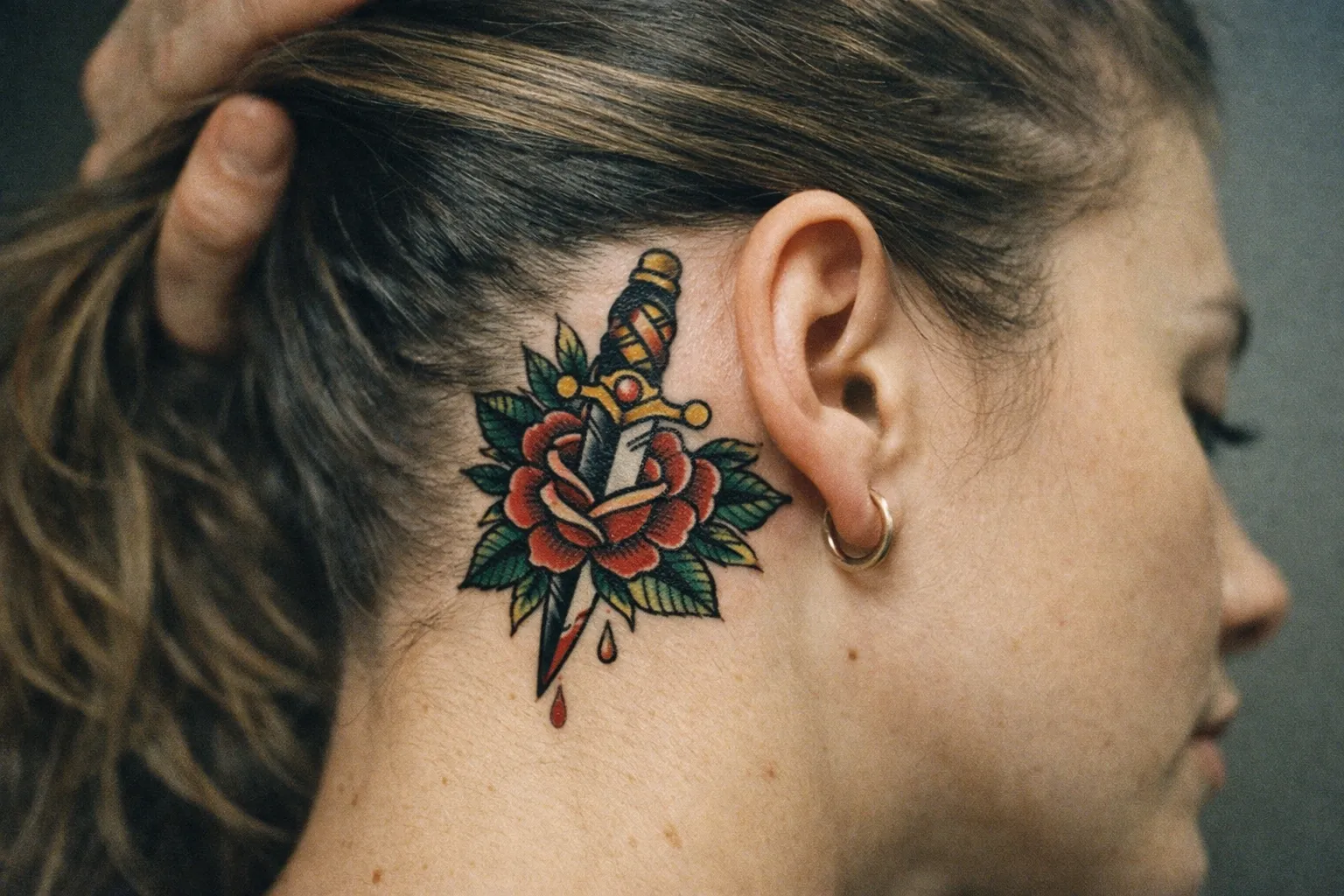
Moisturize with a thin layer of tattoo-specific ointment or unscented moisturizer. A pea-sized amount spread thin is plenty. Over-applying clogs pores and slows healing, one of the most common self-inflicted problems I see on any placement, and this spot is no exception.
The standard tattoo aftercare routine covers the basics; what makes this placement harder than most comes down to four friction sources most guides gloss over.
Managing Hair, Glasses, Headphones, and Sleep
- Hair: Tie it back or use a headband for 2 to 3 weeks so strands don’t stick to fresh ink or rub the surface. Keep hair spray, dry shampoo, and chemical treatments (dye, bleach) away from the ear for at least two weeks; product residue irritates thin healing skin.
- Glasses: The arm rests directly on the tattoo zone. Glasses-arm friction in the first two weeks can pull ink out or disturb scabs, leading to patchy healing. Disinfect the arms twice daily and, if you can, switch to contacts or a lighter frame for two weeks. Thick-armed sunglasses are the worst offender.
- Headphones: Over-ear cups press directly on the healing area. Switch to in-ear buds or speakerphone for the first week or two. Tight headbands cause the same problem.
- Sleep position: Avoid sleeping on the tattooed side for at least the first week. Pressure and pillow friction irritate the surface and can pull at forming scabs. A donut-shaped travel pillow helps if you’re a committed side sleeper.
What to Avoid During Healing
- Swimming pools, open water, and saunas for 2 to 4 weeks (chlorine and bacteria)
- Direct sun: UV fades fresh and healed ink alike; get in the habit of SPF 30+ on the healed tattoo early
- Fragranced soaps, lotions, or toners near the ear
- Picking or scratching at flaking skin, the most common self-inflicted healing problem there is
How Long They Last, and Why They Fade
Behind ear tattoos can show noticeable fading after about 5 to 7 years, the average lifespan one ear-tattoo guide gives this placement, against 3 to 5 years for the inner ear (3). They last, but plan for maintenance rather than expecting decades of untouched crispness.
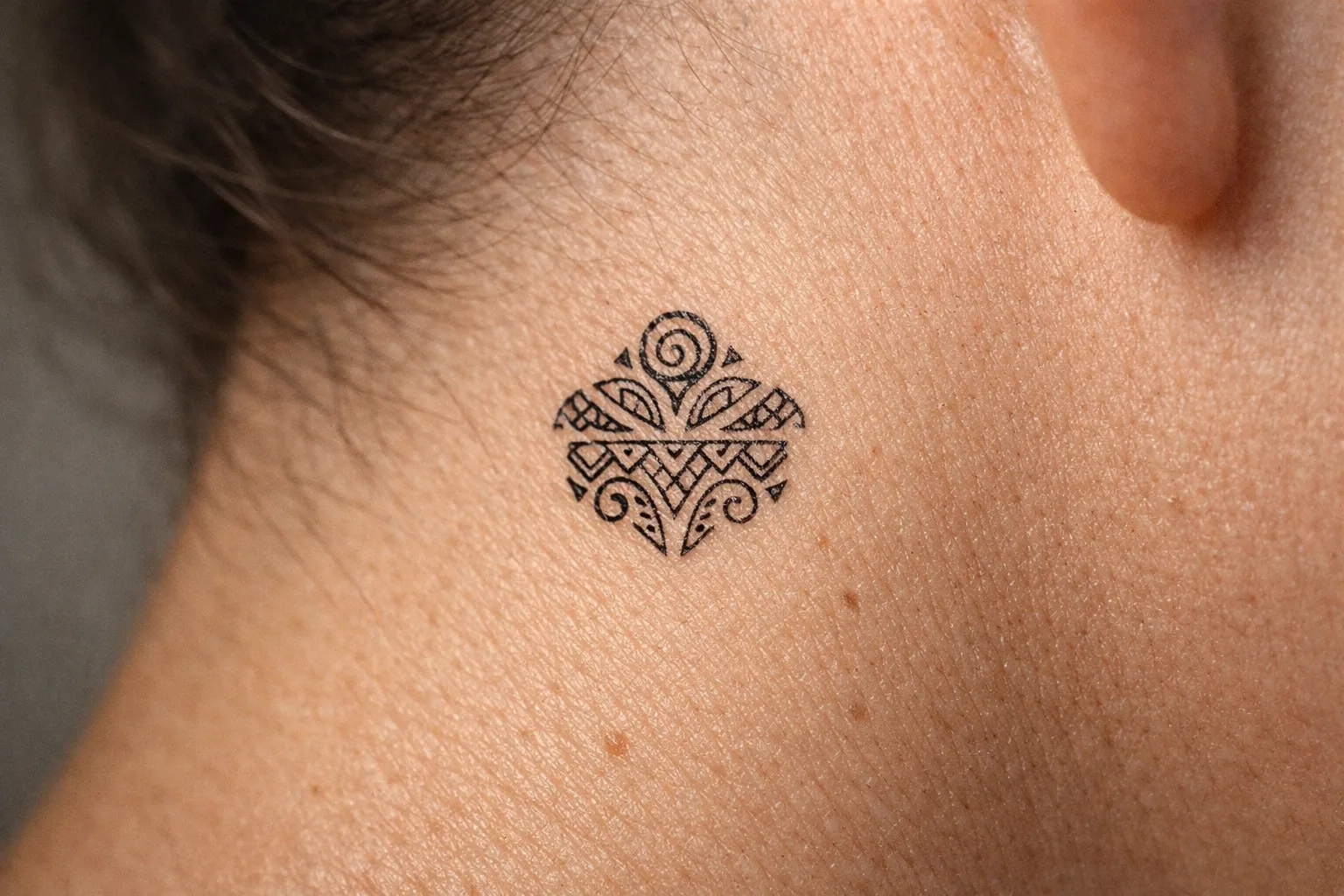
Three drivers do most of the fading:
- UV exposure: the area catches sun during outdoor activity, and unprotected skin fades ink faster, especially lighter pigments.
- Hair product contact: sprays, dry shampoo, conditioner, and dye deposit chemicals on the skin near the ear over and over, breaking pigment down gradually.
- Friction: daily contact from hair, glasses, and headphones is low-level abrasion that softens linework over time.
The design choices that slow all of this are the same ones that keep the piece readable: bold outlines, solid black fill, and open negative space. Fine-line and single-needle work in this spot softens faster than thicker linework. That’s the trade-off for delicate detail, and it’s worth being clear-eyed about before you commit to a style.
Most behind-ear tattoos benefit from one touch-up at the 5 to 10 year mark if you want the linework kept crisp. Treat that as routine maintenance for the placement, not evidence of poor work. The two habits that stretch the interval are SPF 30+ sun protection on the healed tattoo when the area’s exposed, and keeping hair products off the tattoo zone.
Design Ideas That Actually Fit the Space
Every idea here fits within roughly 2 cm × 1.5 cm or scales to the 0.5 to 2 inch range. The categories below give size guidance so you can walk into the consultation with something that’ll actually work.
Symbols and Geometric Shapes (0.5-1.5 cm)
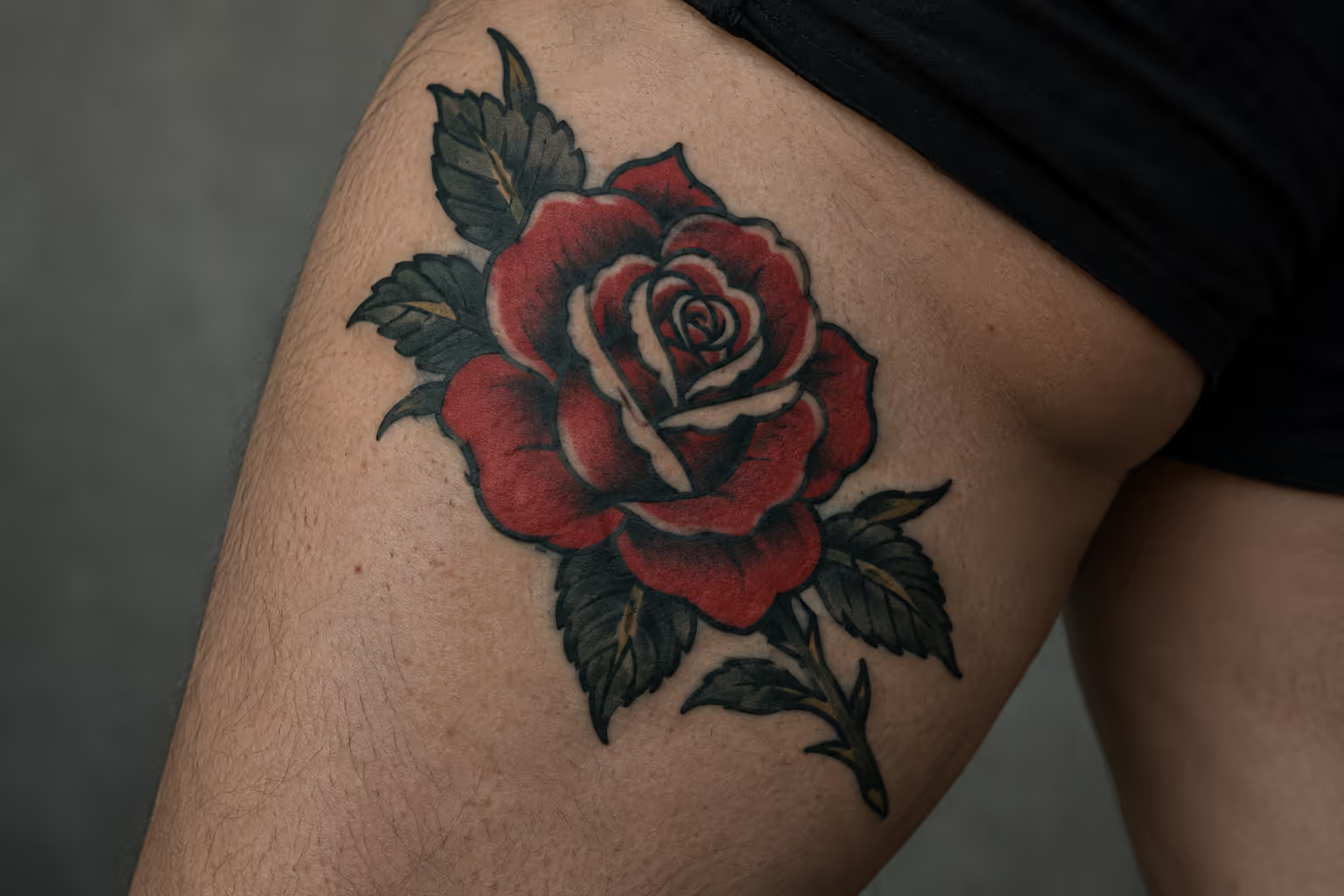
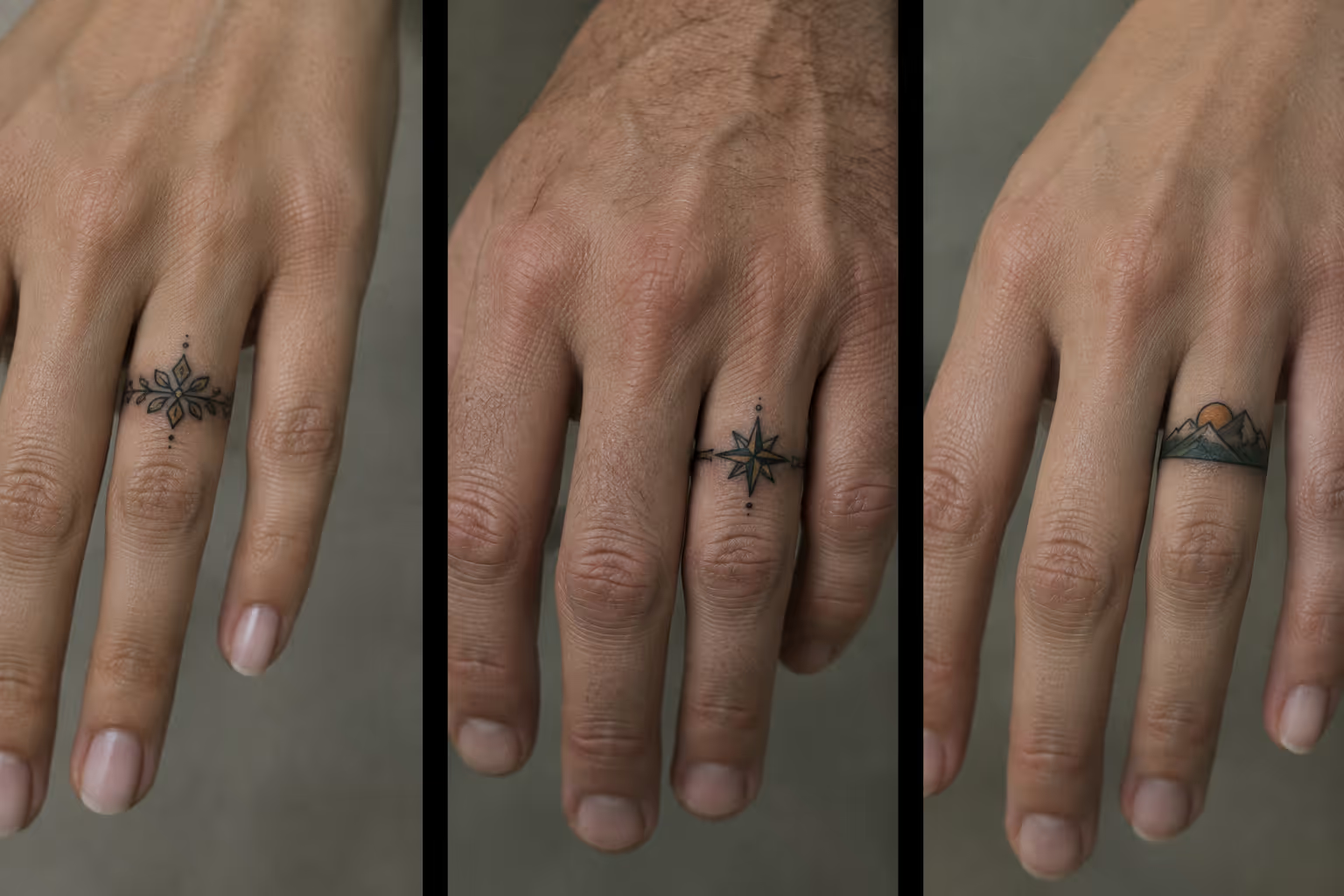
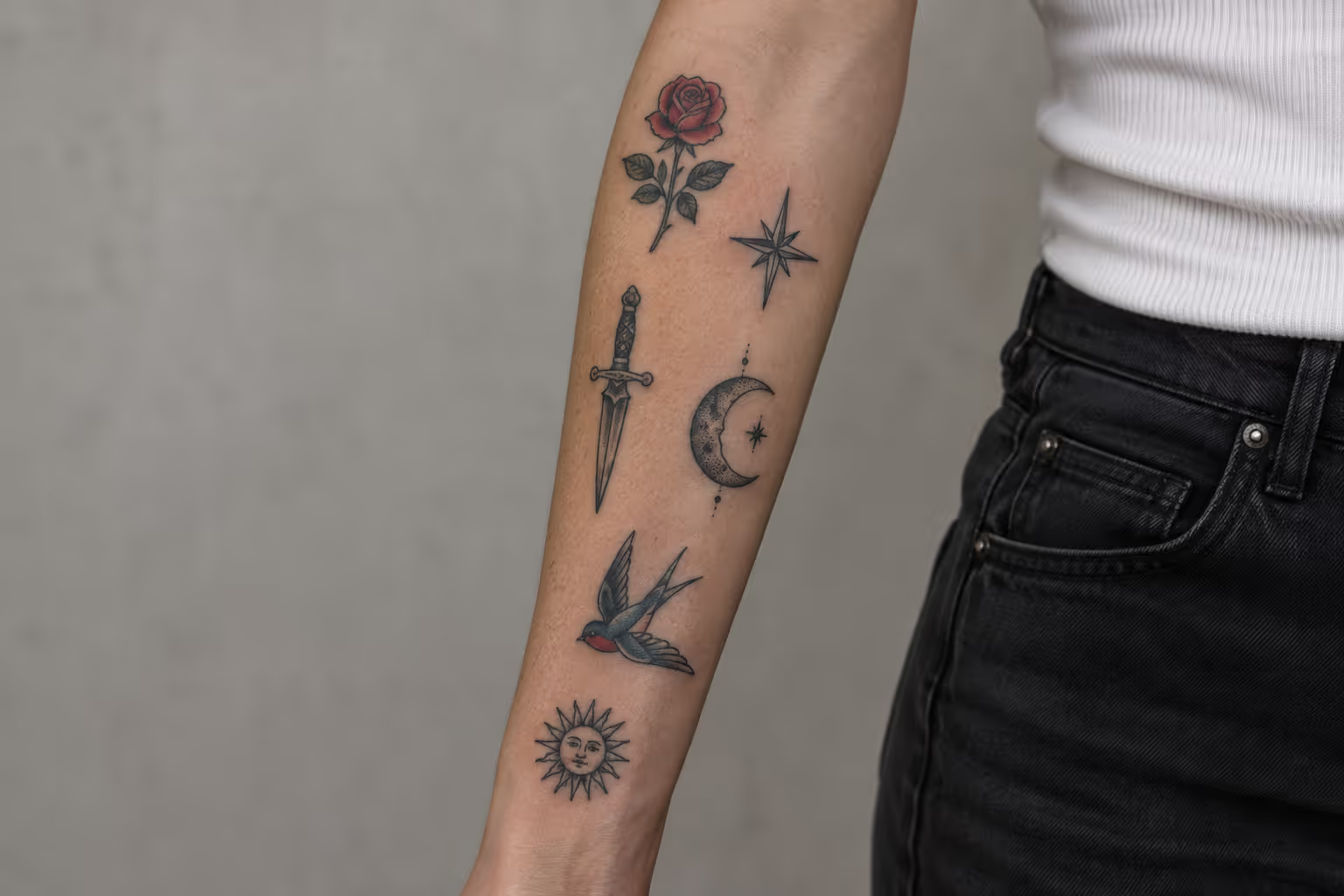
Single stars, crescent moons, small triangles, arrows, lightning bolts. These work at the smallest end of the canvas (0.5 to 1 cm) because they’re single-element and high-contrast, with no shading to blur. Bold-outline versions outlast fine-line versions every time at this scale. No gender-specific logic applies here; they’re popular across the board.
Words, Initials, and Dates (1-2 cm wide)
Single words of one to three syllables, initials, or short dates in clean block lettering or bold script. Keep block letters at ¼ inch (6 mm) or above and script at ½ inch (12-13 mm) or above, the minimums that hold for any tattoo font, so text stays legible after healing and over the years, which at this size limits script to a very short word. Avoid cursive with tight loops at this scale; the letters merge as ink settles. Roman numerals hold up well because the characters are simple and carry line weight.
Minimalist Florals and Nature Motifs (1-2 cm)
A single rose bud, a small lotus, a cherry blossom sprig, a simple leaf or fern frond. These need a confident artist who can strip the design down to essential lines; skip anything that leans on fine shading or gradients. A single-stem rose at 1.5 cm with a thick outline will outlast a detailed botanical rendering at the same size by years.
Small Animals and Abstract Shapes (1-2 cm)
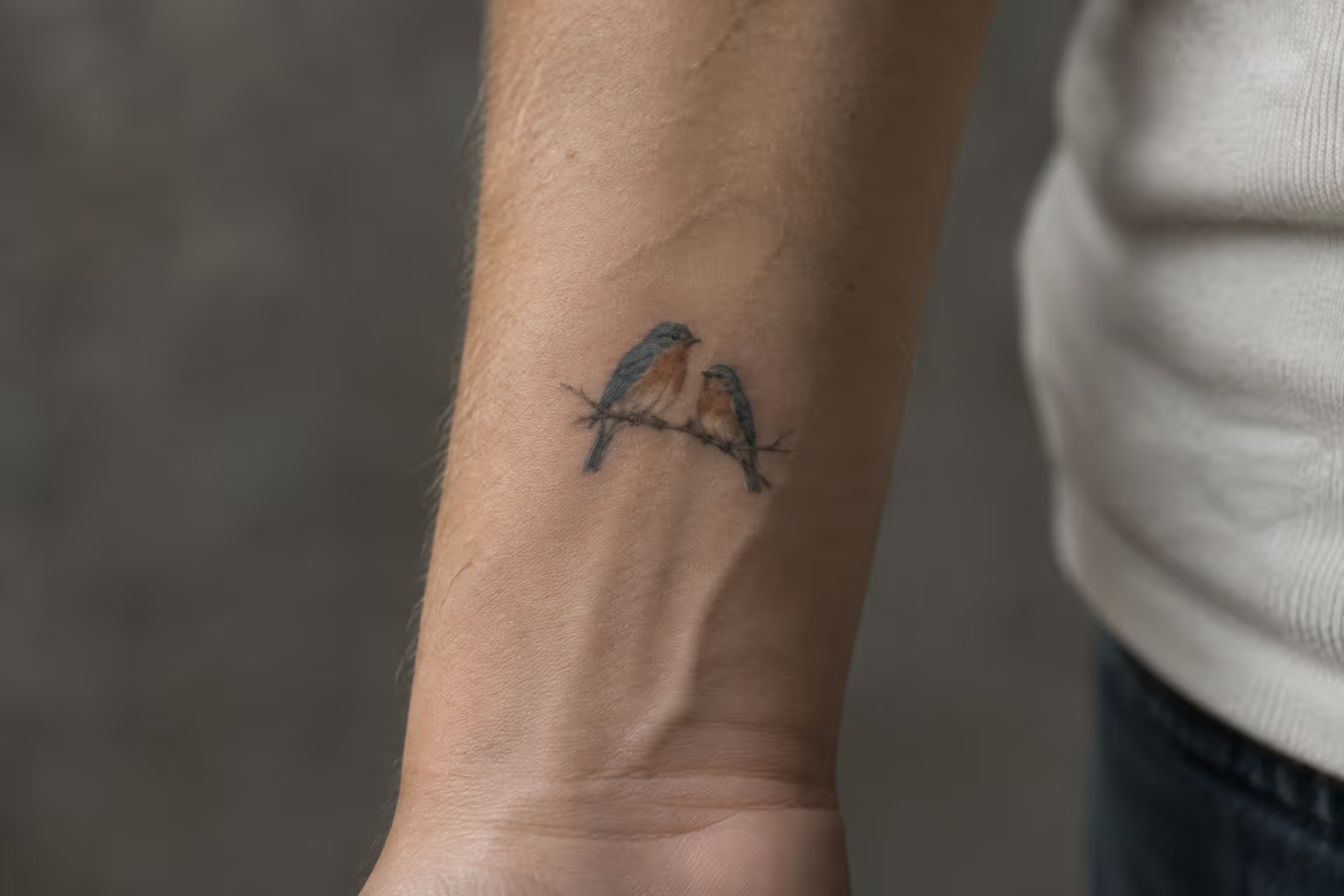
Minimalist animal silhouettes work well: a bird in flight, a small butterfly outline, a snake coil, a cat silhouette. Abstract options include a small wave, an infinity loop, or a simple mandala reduced to its core ring. The whole thing hinges on silhouette clarity: if the shape doesn’t read immediately as a solid black outline, it won’t hold up at 1 to 2 cm.
Visibility, Discretion, and the Professional Context
Visibility is low to medium and entirely hair-dependent. With medium or long hair worn down, a behind ear tattoo is fully concealed; with short hair, shaved sides, or an updo, it becomes visible. That makes it one of the more professionally flexible placements: easier to conceal than a neck tattoo and less of a commitment than a hand or wrist piece.
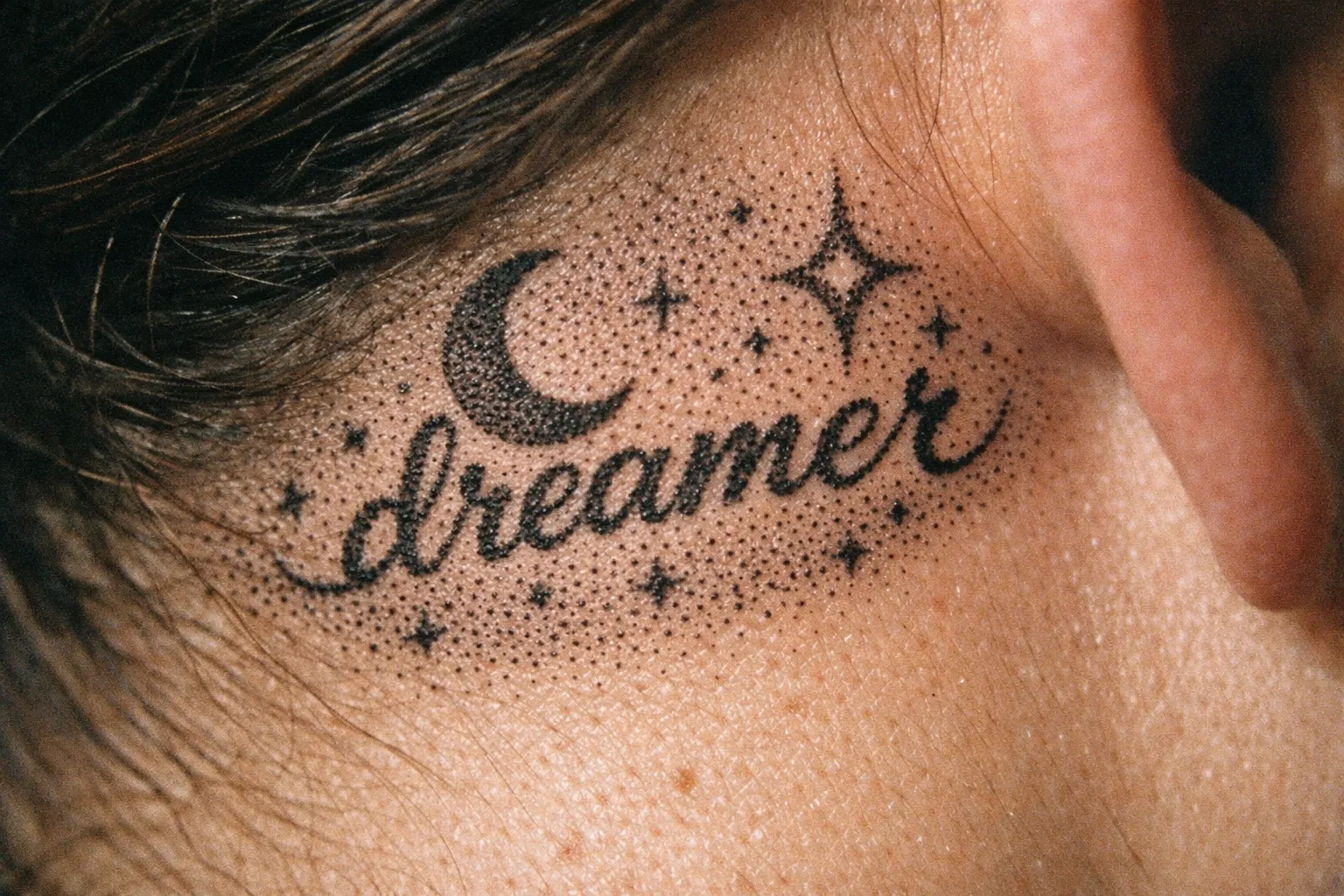
Workplace reality is genuinely mixed, so know your own environment. Some formal contexts leave room for this spot: the Connecticut State Police, for example, authorizes one neck tattoo of up to one inch by one inch on the portion of the neck behind the front of each ear, while barring tattoos on the head, the face including the ear, and the throat (13). Others ban tattoos anywhere on the head, face, or neck, which rules the placement out in those uniformed roles. If your workplace has a strict visible-tattoo policy, think it through before booking: hair down conceals it, but updos and short hair change the math.
If you have short hair or shaved sides, the tattoo becomes a focal accent rather than a hidden detail. Artists often recommend bolder linework and slightly larger designs (up to 2 inches) at that visibility level so the motif reads clearly from a few feet away.
During healing, don’t rush to conceal it. Once the surface has closed (roughly day 5 to 7, with artist approval), hair worn down gives natural coverage. Some guides mention waterproof concealer as an option, but clear it with your artist first; product on a healing tattoo carries infection risk.
Frequently Asked Questions
- Do tattoos behind the ears hurt?
- Yes. The flat area behind the ear typically rates 6-7 out of 10, noticeably sharper than a forearm but gentler than a ribcage session, though individual experience varies. The main complaint is the buzzing vibration through the skull rather than the needle itself. Sessions are brief, 5-15 minutes.
- What is a tattoo behind the ear called?
- No single formal name exists. Terms like 'behind the ear tattoo,' 'post-auricular tattoo,' and 'ear-adjacent placement' are used interchangeably.
- What do tattoos behind the ear symbolize?
- Symbolism depends on the design. The placement suggests secrecy and intimacy. Common motifs include stars, moons, crosses, lotus flowers, cherry blossoms, and personal initials.
- Do behind the ear tattoos last?
- They last but fade faster than many placements, with noticeable softening after 5-7 years due to UV, hair products, and friction. Touch-ups at 5-10 years are normal.
- Can I wash my hair after getting a behind the ear tattoo?
- Yes, carefully. For the first week, wash leaning forward so water runs away from the tattoo. Avoid shampoo or conditioner sitting on the area. Normal showering resumes after week two.
- Is a behind the ear tattoo a good first tattoo?
- It depends on pain tolerance. The session is short but pain intensity is higher than forgiving spots like the forearm. It's viable if you can handle vibration and want discreet ink.
- How small can a behind the ear tattoo be?
- Minimum legible size is about 0.5 cm for simple shapes. Designs with detail need 1-1.5 cm to avoid blurring into an unreadable smudge over time.
The Decisions That Actually Determine Whether This Works
Three choices decide whether you’re happy with this in ten years.
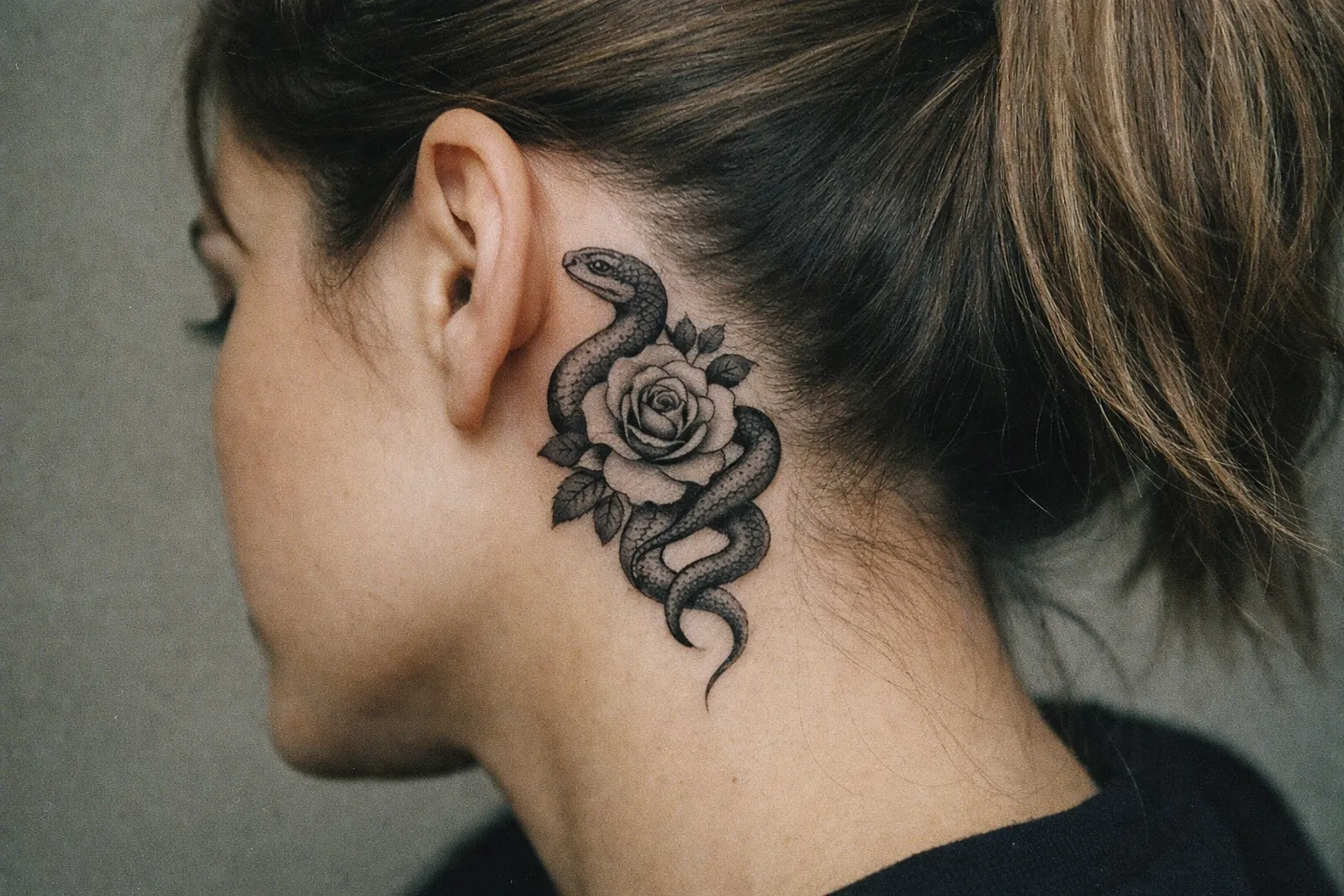
Design: Keep it simple and bold. A 1.5 cm symbol with a solid outline will still read clearly in a decade. A detailed shaded motif at the same size probably won’t: the friction and fine detail work against each other, and this placement doesn’t forgive either.
Placement micro-choice: The flat area behind the ear is the standard: sharper than a forearm, gentler than a ribcage, and typically rated 6-7 out of 10. Want slightly less vibration? Drop a few millimetres lower toward the softer tissue below the earlobe. And if you wear glasses every day, factor in two weeks of friction management before you commit to a date.
Longevity: Sun protection and keeping hair products off the tattoo zone are the two habits that extend the life of this placement. Plan on a touch-up at the 5 to 10 year mark rather than being caught off guard by it. It’s normal for the spot, not a failure.