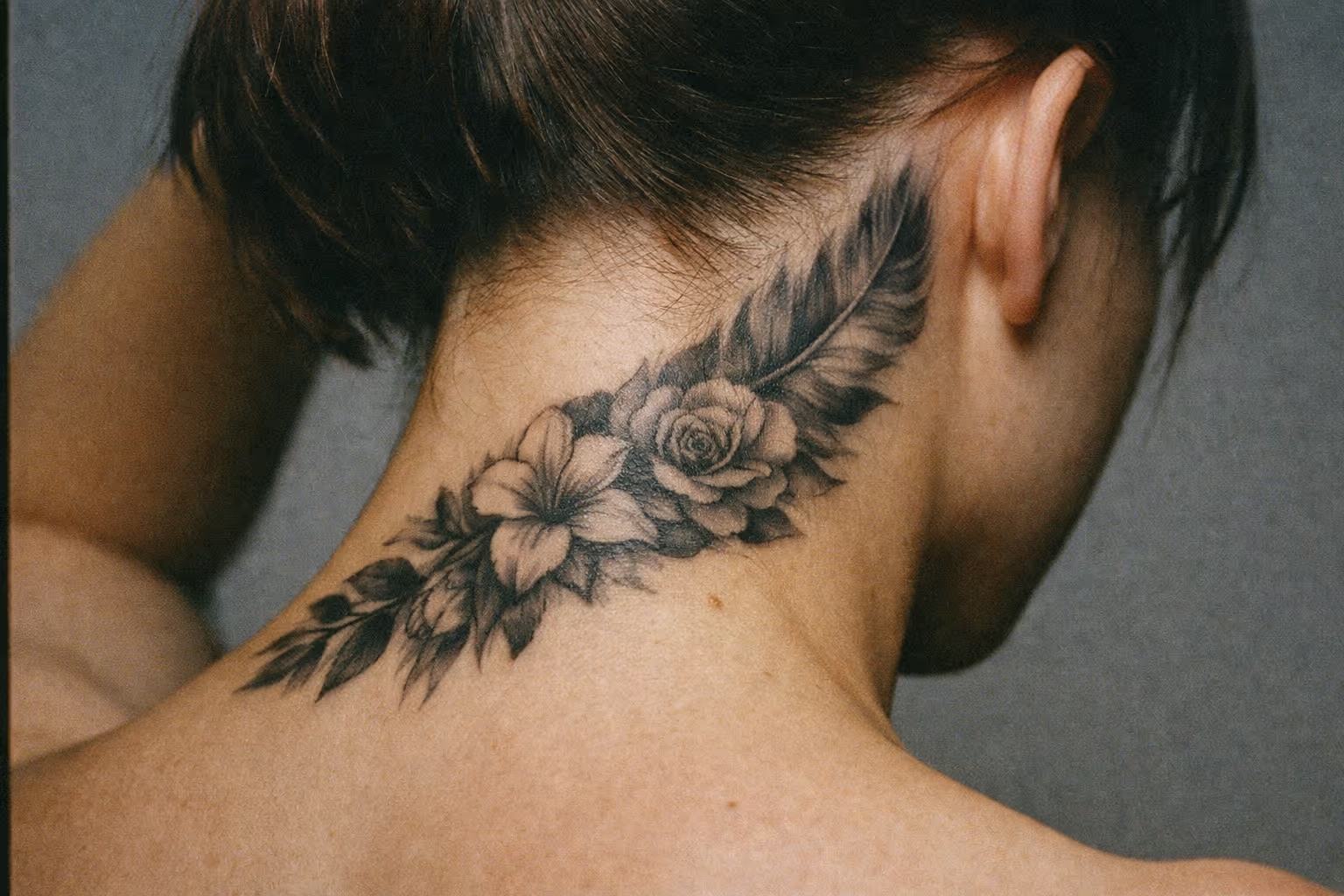
Your throat moves every time you swallow. That single fact is why a tattoo on the front of your neck heals differently from one sitting at the nape - and it’s the first thing I tell clients who come in asking about neck tattoos without having thought through which part of the neck they actually want. The neck isn’t one placement decision. It’s three, and the sides, back, and throat each have their own pain profile, visibility trade-off, and aging behavior.
I’ve tattooed all three zones across twelve years, and the clients who regret their neck work almost always made the same mistake: they picked a design before they picked a zone. This guide works through the zones first, then covers pain by placement, how the area holds up over time, and design directions from a single-word nape script to a full front panel - for men and women both. No numeric pain scores. Just what you need to make a clear decision before you sit down.
✓ Pros
- High visibility when you want it - side and throat placements read from across a room
- The back of the neck hides under a standard collar or medium-length hair
- Compact area suits both minimal scripts and bolder pieces
- Strong impact without committing to a full sleeve or back piece
✗ Cons
- Front and throat rate among the most painful placements, in the same tier as ribcage and sternum work
- Constant movement from swallowing and speaking complicates healing on the throat
- Hard to conceal in customer-facing or conservative workplaces
- Fine detail blurs faster here than on low-movement placements
- Daily sun exposure on the neck accelerates fading without SPF
The Three Zones of Neck Tattoos and What Each One Costs You
A neck tattoo lives in one of three distinct zones: the back of the neck (nape), the side neck running from below the ear down toward the jawline, and the front or throat. They are not interchangeable. Pain, visibility, healing difficulty, and how easily you can cover the piece all shift meaningfully as you move from the nape around to the throat.
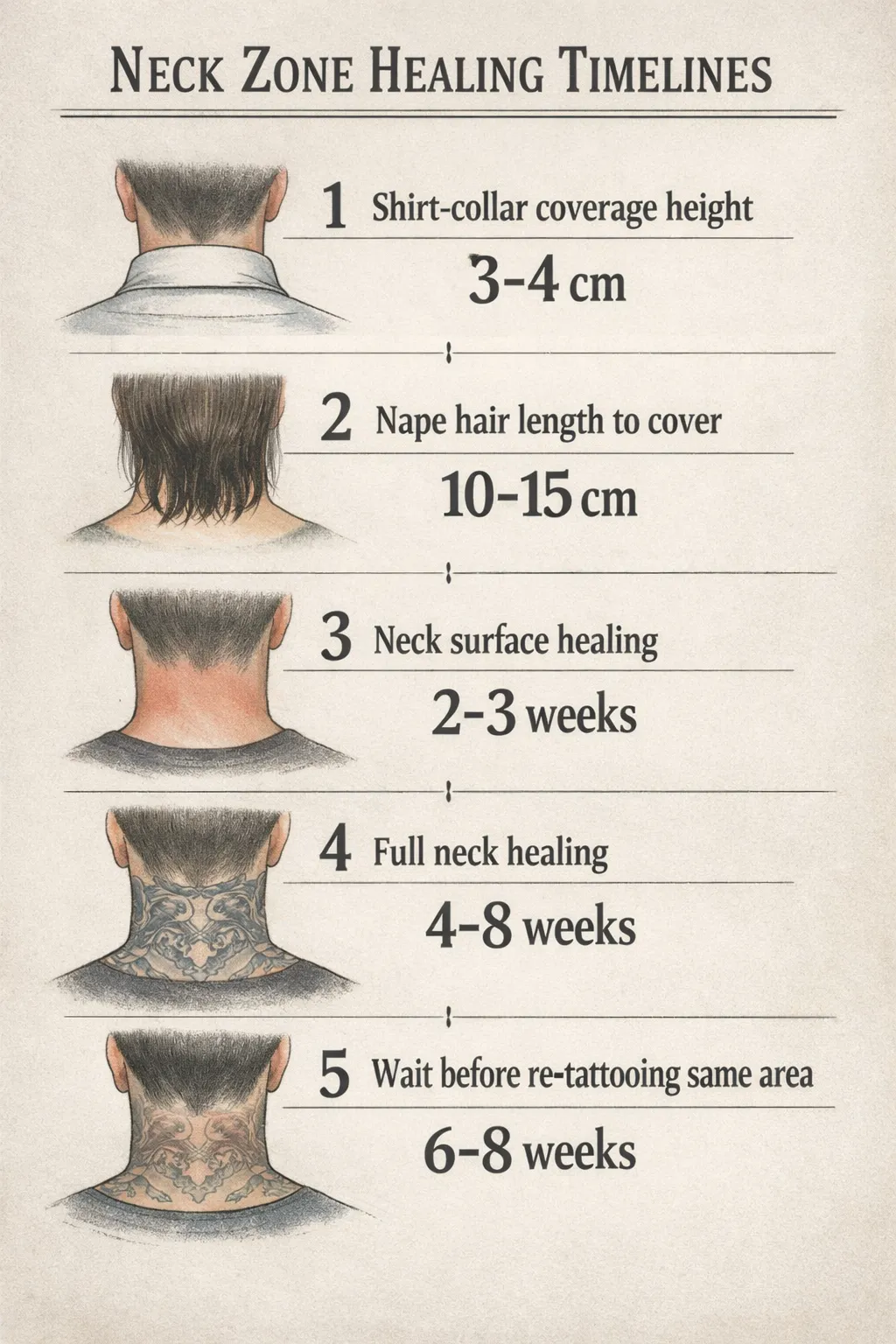 Neck zone choices show healing timelines: 3-4 cm collar coverage, 10-15 cm hair for nape concealment, surface healing 2-3 weeks, full healing 4-8 weeks, and a 6-8 week wait before re-tattooing the same area.
Pick the zone first. The design comes second - because what ages well and what your job will tolerate depends entirely on which patch of skin you choose.
If you want something that wraps across zones - jawline down to collarbone, say - plan the whole composition before anyone touches skin. Wrap-arounds usually need multi-hour sittings split by a few weeks of healing so fresh pigment in one zone isn’t disrupted while the artist works the next.
Back of neck (nape) - the entry point most artists recommend
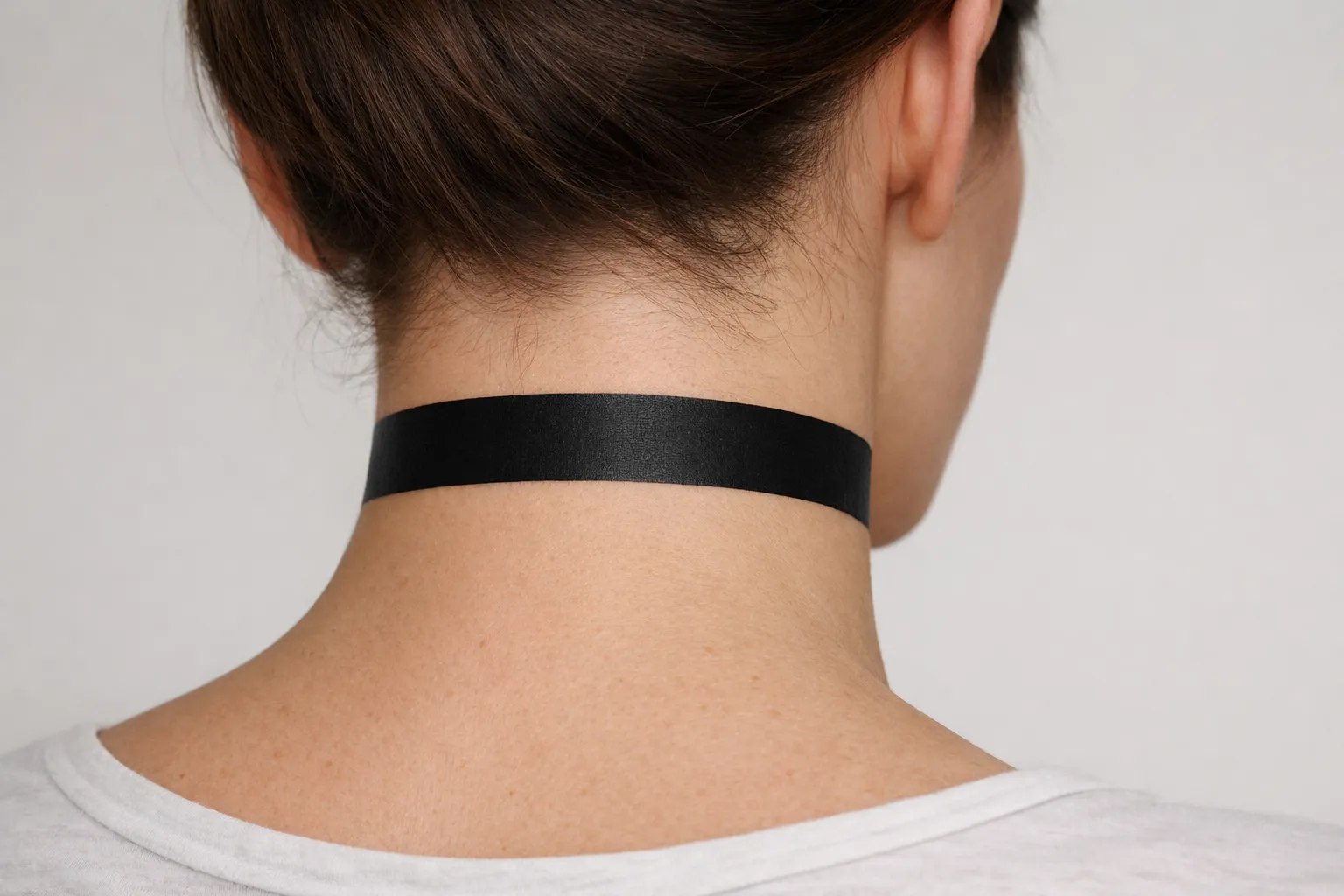
The nape is the lowest-pain, easiest-to-hide zone of the three. It’s the standard recommendation for a first neck tattoo, and I give that recommendation myself. The skin is thin but relatively stable - it doesn’t fold and stretch the way the throat does every time you talk. A standard dress-shirt collar covers roughly 3-4 cm of vertical neck, which is enough to hide a small-to-medium nape piece placed just below the hairline. Hair longer than 10-15 cm worn down covers it completely in most settings.
A simple nape script or symbol around 4-6 cm often wraps in a single session under an hour. Low pain, easy concealment, quick session. That combination is why it’s the forgiving option.
Side neck - high-impact profile placement
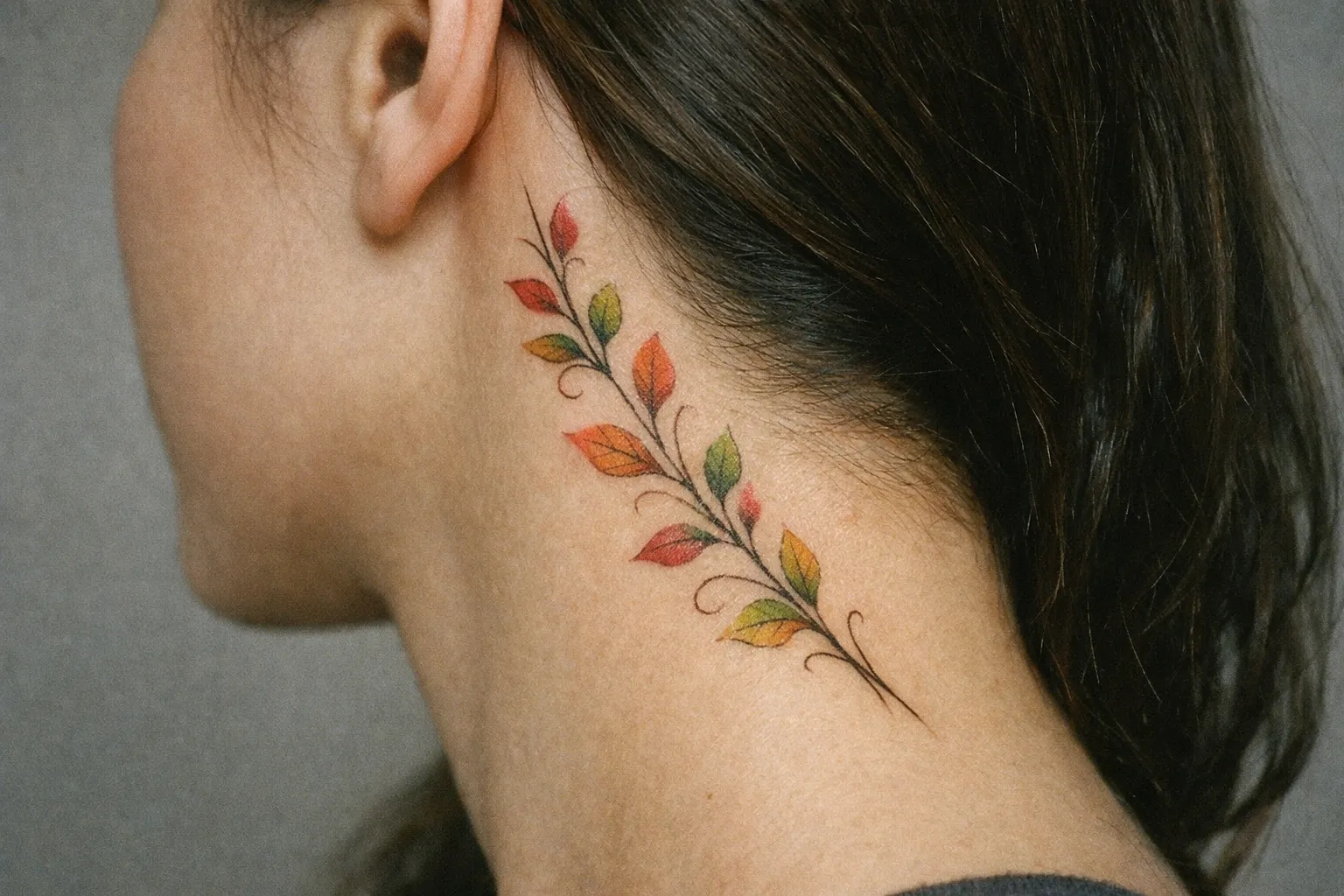
The side neck reads strongly in profile and is the popular home for bolder motifs, but it’s harder to hide than the nape and steps up in pain. No standard collar covers it. This is the zone people choose for a butterfly whose wings follow the jawline, a blackwork cross, or a spider crawling toward the collarbone. The skin here moves more than the nape and sits near nerve-dense territory around the jaw and ear, so both the sensation and the aging behavior are more demanding.
Front/throat - maximum visibility, maximum commitment
The throat delivers the most social impact and the hardest healing of the three. It moves with every swallow and every word, it’s visible even above a T-shirt collar, and it sits in the same pain tier as ribcage and sternum work. This is the zone for bold, symmetrical pieces - and the one most experienced artists will steer a first-timer away from, for reasons that are practical rather than gatekeeping.
How Painful Are They, Broken Down by Zone
Neck tattoos hurt more than a forearm or outer upper arm. They land in the same broad territory as the sternum and ribcage, but the intensity varies sharply by zone. Talking about “neck pain” as a single number is useless - I’ve had clients sail through a nape session and tap out early on a side-neck piece.
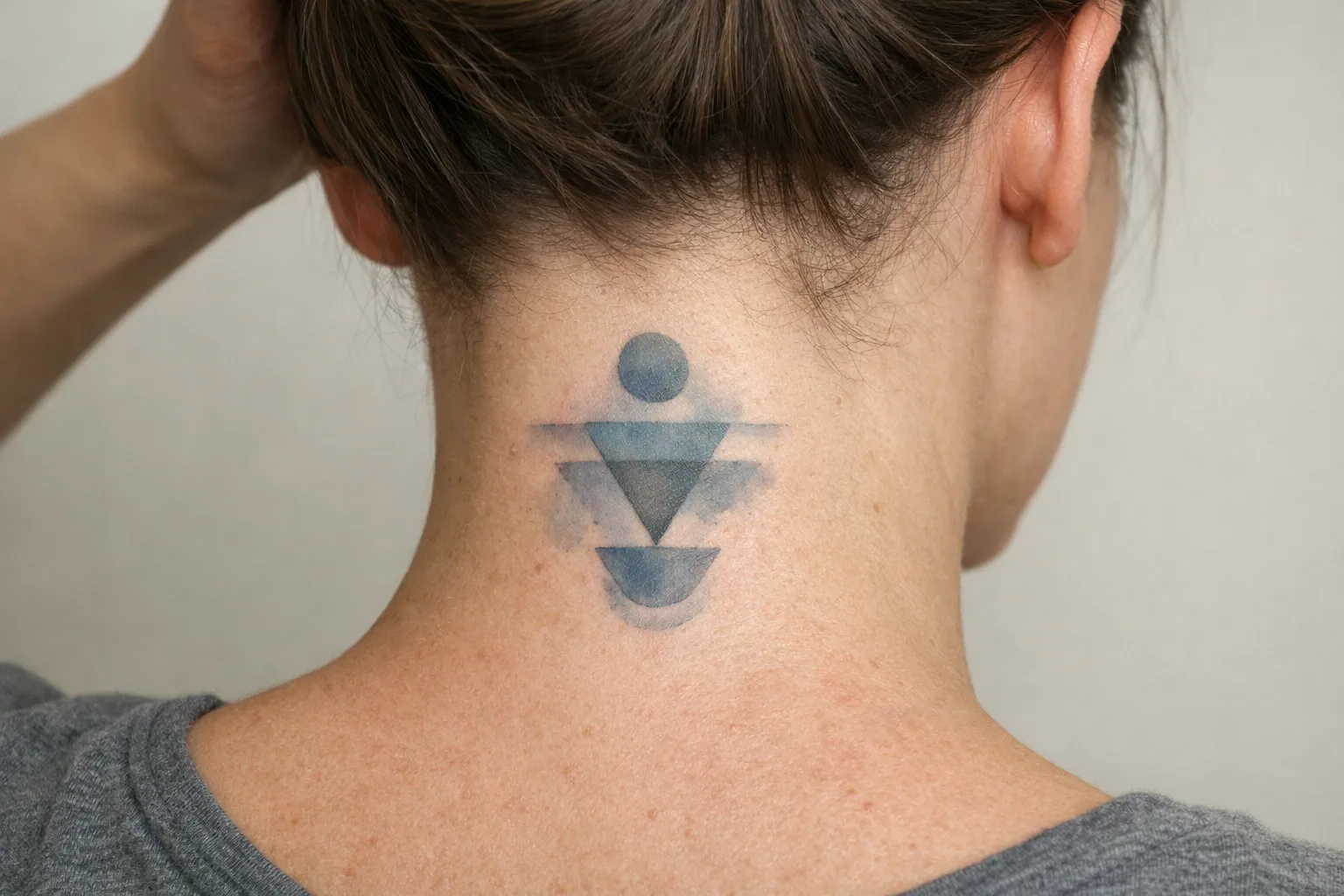
The nape sits at the lower end of the neck range, roughly comparable to the upper back. Thin skin, but stable and less nerve-dense than the throat. Most people manage it without much drama.
The side neck steps up from there into moderate-to-high. More nerve activity near the jaw and ear, and the skin shifts more under the needle than the nape does.
The front/throat is the sharpest of the three. Professional studios consistently place it in the same pain tier as ribcage and sternum work - thin skin, proximity to cartilage, constant movement. The area moves during the session itself, and swelling can start while you’re still in the chair. That’s not a scare tactic; it’s just what happens.
A note on gender: reported tolerance varies slightly - one pain chart lists the neck at a marginally higher score for men than women (9) - but the difference is small and not worth planning around. Placement matters far more.
Session length and when to split the work
Keep throat sessions short - 1-2 hours with breaks every 20-30 minutes to manage swelling and let you breathe comfortably. A small nape script or symbol can wrap in under 60 minutes. Larger front-neck panels frequently run 2-3 hours and are better split into two sittings, because a single marathon session on the throat produces more swelling, more tapping out early, and messier lines. Bony, high-movement placements also settle more slowly - expect the longer 4-8 weeks end of full healing for side and throat work.
Visibility, Workplace Trade-offs, and Who Should Start Where
Front and side neck tattoos are visible in virtually every professional and social setting. A nape tattoo is the only neck placement you can reliably hide day-to-day. That single fact should drive your zone choice more than any design preference if your job matters to you.
A standard shirt collar hides most nape pieces by covering 3-4 cm of vertical neck, but leaves side-neck and throat designs exposed above the collar line. Hair at 10-15 cm gives nape wearers a visibility switch: up, the tattoo shows; down, it’s covered in most workplaces. That flexibility is exactly why the nape suits people navigating mixed professional and social environments.
For conservative or customer-facing roles, the throat is the highest-risk choice and the nape is the lowest. Many experienced artists decline to tattoo the throat on clients with no prior tattoo experience - not to gatekeep, but because the pain is high, the healing is complicated, and the professional consequences are permanent and highly visible. I’ve turned down throat work on first-timers myself. It’s not a judgment call about the design; it’s a practical one about whether the client has any reference point for what they’re committing to. Choosing the throat as your first tattoo is flagged repeatedly across placement guides as a common misstep. If you’ve never sat for ink before and you’re eyeing the front of your neck, start smaller and lower.
How the Neck Ages - and Which Designs Hold Up
The neck is a high-movement, high-UV area - two of the biggest enemies of tattoo longevity working on the same patch of skin. That combination means design choices matter more here than they would on a covered, stable placement like the inner bicep.
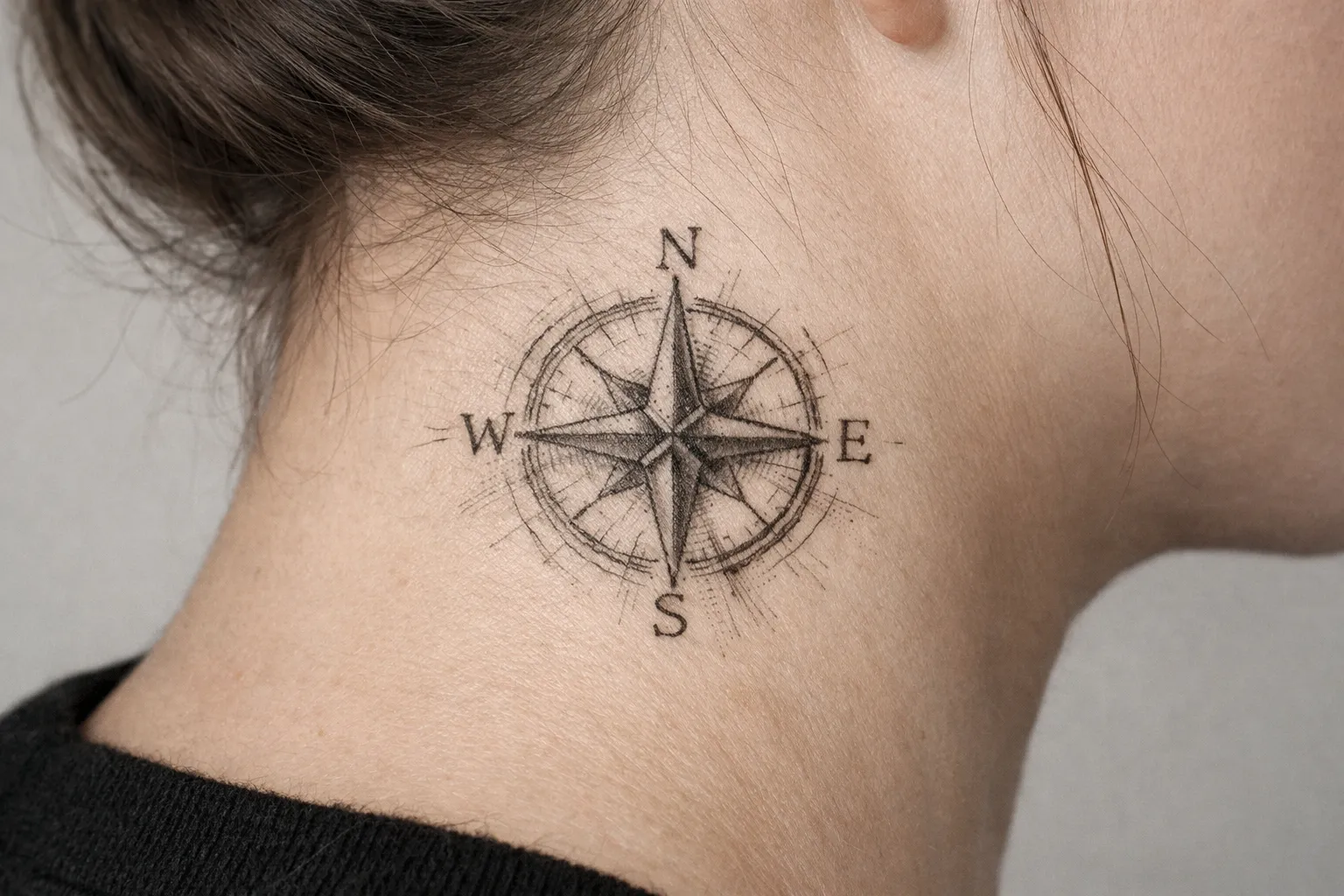
Line direction, size minimums, and the UV problem
Horizontal lines that cross the neck’s natural folding points - especially on the side and front - distort as skin loosens with age. Vertical elements that follow muscle flow resist that distortion far better. When planning a piece, orient it along the neck’s natural axis rather than against it.
Fine detail under about 0.5 cm on high-movement zones blurs and loses legibility within a few years. Minimum line weight matters more here than on the forearm. Designs placed slightly lower, closer to the collarbone, encounter less folding than pieces sitting mid-throat, so dropping a design a couple of centimeters can buy you years of clean lines.
Then there’s UV. Sun exposure on the neck is essentially daily and largely unavoidable. Color work and fine-line grey wash fade noticeably within one to two summers without consistent SPF. Bold blackwork and solid fills hold contrast as skin softens. Fine grey wash is the single riskiest style choice for long-term legibility at this placement.
Keep in mind that even after the surface looks healed in 2-3 weeks, deeper layers keep settling for weeks, and full recovery runs 4-8 weeks - so the tattoo continues responding to movement and sun well after it looks finished.
If longevity is your priority, the rule is simple: bolder shapes, thicker lines, solid fills. Save the delicate single-needle work for a spot that doesn’t move and doesn’t see the sun every day.
Neck Tattoos for Men - Designs That Work at This Placement
Neck tattoos for men in 2025-2026 lean toward black and grey, bold blackwork, heavy script fonts, and symmetrical throat pieces. The through-line across all of them is line weight matched to the placement - a bold piece survives the neck’s movement in a way thin fine-line work can’t.
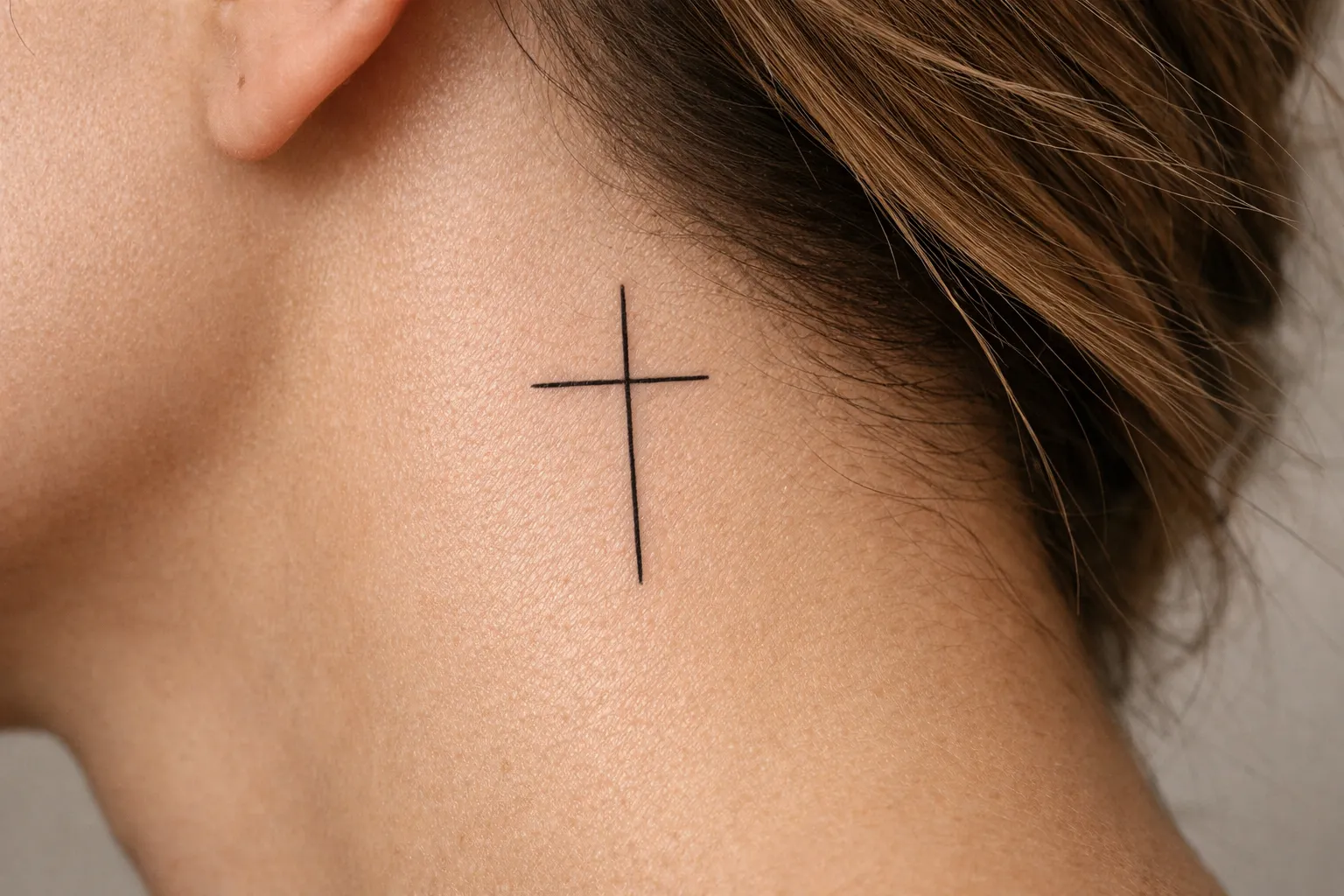
Cross neck tattoo - placement and style options
A cross neck tattoo is one of the most searched men’s neck designs, and it works best at 4-8 cm on the side or back of the neck in blackwork. Fine-line cross designs at around 0.5 cm stroke height tend to need touch-ups around the 4-5 year mark on a high-movement area, while thicker blackwork versions hold legibility considerably longer.
Celtic knotwork crosses in blackwork outlast fine-line versions reliably - knotwork reads well from about 3 inches minimum, and smaller than that the negative space closes up and the design heals as a blob. That’s not an exaggeration; I’ve seen it happen on pieces that looked beautiful in the stencil. If the cross carries religious meaning, match the style to your tradition: a crucifix for Catholic identity, a Latin cross for Protestant, a three-bar cross for Eastern Orthodox, knotwork for Celtic Christian heritage. The knotwork cross draws from pre-medieval Celtic Christian manuscript tradition and carries a distinct cultural weight separate from a standard Latin cross - worth knowing before you commit to one over the other.
Script, names, and lettering weight
Single words and short phrases work on the side or nape, but font weight is what determines whether they survive a decade. Keep letter height at a minimum of ¼ inch (6 mm) for bold block fonts and ½ inch (12-13 mm) for script, and lean toward heavier fonts - thin script on a moving area blurs. Name tattoos follow the same rule: a delicate cursive name on the side neck will smear within a few years, while a bolder weight holds. The nape, being the lowest-movement zone, is the safest home for lettering.
Bold statement pieces for the front and side
For men who want maximum impact, geometric and symmetrical throat shields use the throat’s vertical axis and read strongest with thick outlines. Spider neck tattoos are a recurring motif - they work in blackwork or neo-traditional, usually placed on the side neck or behind the ear, with the legs following the jaw or collarbone line naturally. For lower commitment, small neck tattoos for men sit behind the ear or on the nape: anchors, arrows, small animals in flight, typically under 3 cm. Small tattoos in this range generally see surface healing in about 10-14 days and complete healing in roughly 4-6 weeks, with deeper tissue continuing to settle for up to 2-3 months - figures drawn from general small-tattoo healing timelines, per Tatuagem Blog’s 2026 week-by-week healing guide, though the nape’s low movement makes it one of the more forgiving neck placements for that timeline. Easy to conceal, it’s a sensible starting point before committing to throat work.
Butterfly, Florals, and Fine-Line Designs - Women’s and Unisex Options
Women’s and unisex neck designs in 2025-2026 center on butterflies, fine-line florals, and delicate script, and the same aging rules apply across all of them. Scale and line weight decide how a motif reads in ten years, not the motif itself. Butterflies, geometric symbols, and minimalist crosses are increasingly requested by men too, so treat these as crossover options rather than gendered categories.
Butterfly neck tattoo - sizing, placement, and what ages well
The butterfly neck tattoo is the most-searched women’s neck design right now, typically placed on the side neck or nape and sized 4-8 cm, with wings that follow the jawline or collarbone naturally. It works in fine-line blackwork or with subtle color. The butterfly as a tattoo motif carries layered meaning depending on tradition: in Japanese irezumi it signals transformation and the soul in transit, while in modern Western tattoo culture it has shifted toward a broader shorthand for personal change or freedom - neither reading is wrong, but they’re not the same image.
Here’s the aging caveat: fine-line wing detail on the side neck sits in a high-movement zone, so thicker outlines on the wing edges hold the shape far longer than single-needle versions. If you love the look of a delicate butterfly, ask your artist to weight the outer wing lines a little heavier. It’s the difference between a crisp shape at five years and a soft grey smudge. I’ve touched up enough blurred butterfly wings to say that plainly.
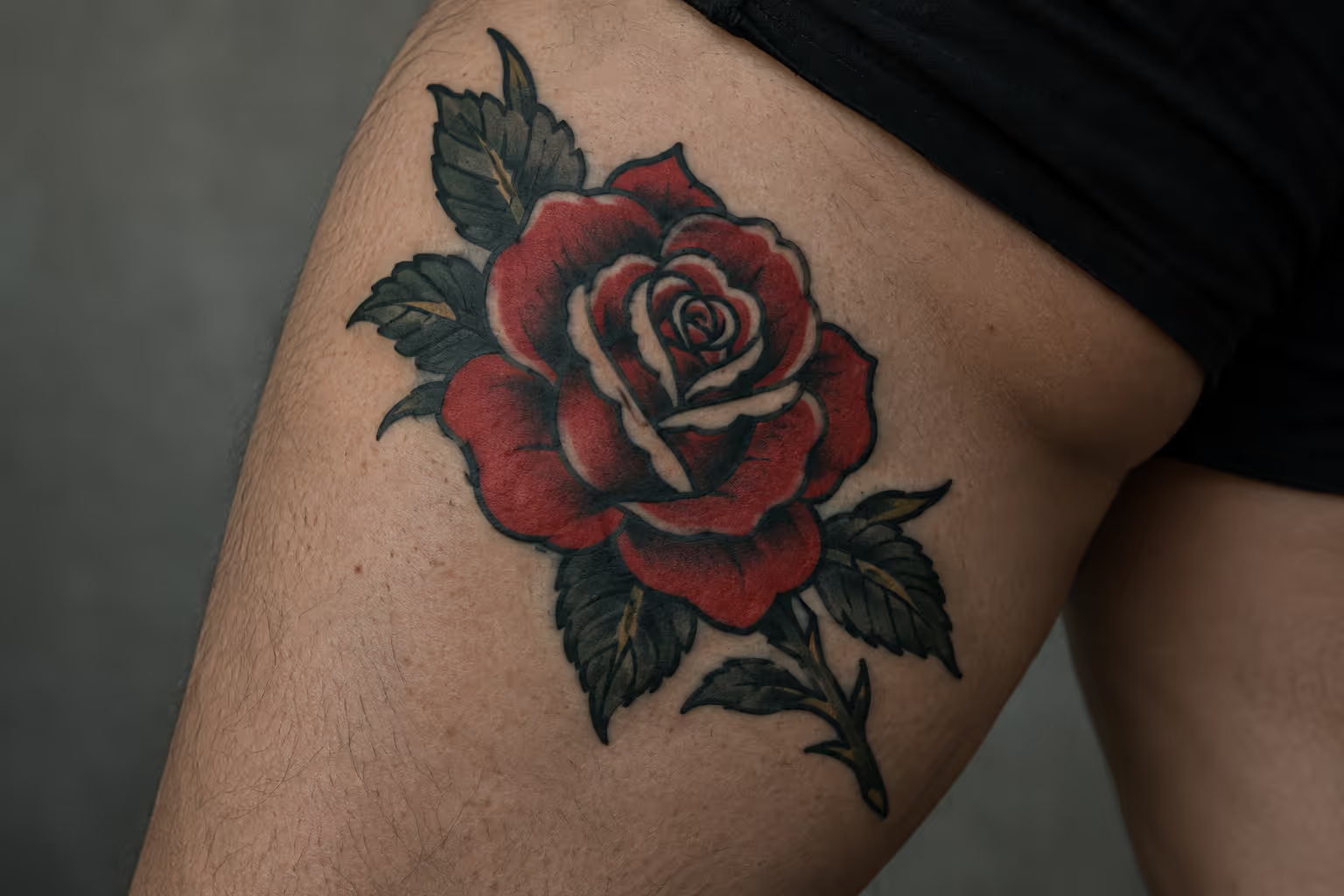
Fine-line florals - roses, peonies, botanical sprigs - work on the back or side of the neck, but 4-6 cm is a practical minimum for the detail to survive. That sizing puts them in the medium-tattoo range with roughly 2-3 weeks surface healing and 6-8 weeks for full recovery, with deeper layers continuing to settle for several months after that. Delicate script is most legible on the nape where movement is lowest; script letters below ½ inch (12-13 mm) risk blur within a few years. Ornamental and dotwork patterns centered on the nape age well because the placement is relatively stable and bold dotwork holds contrast as skin softens.
From Small Script to Bold Statement - Matching Design Scale to Placement
The most common neck tattoo is small script - a single word, name, or date - followed closely by crosses, with butterflies the fastest-rising motif in current trend data. Matching your design’s scale to the right zone is what separates a piece that reads intentionally from one that fights the body’s geometry.
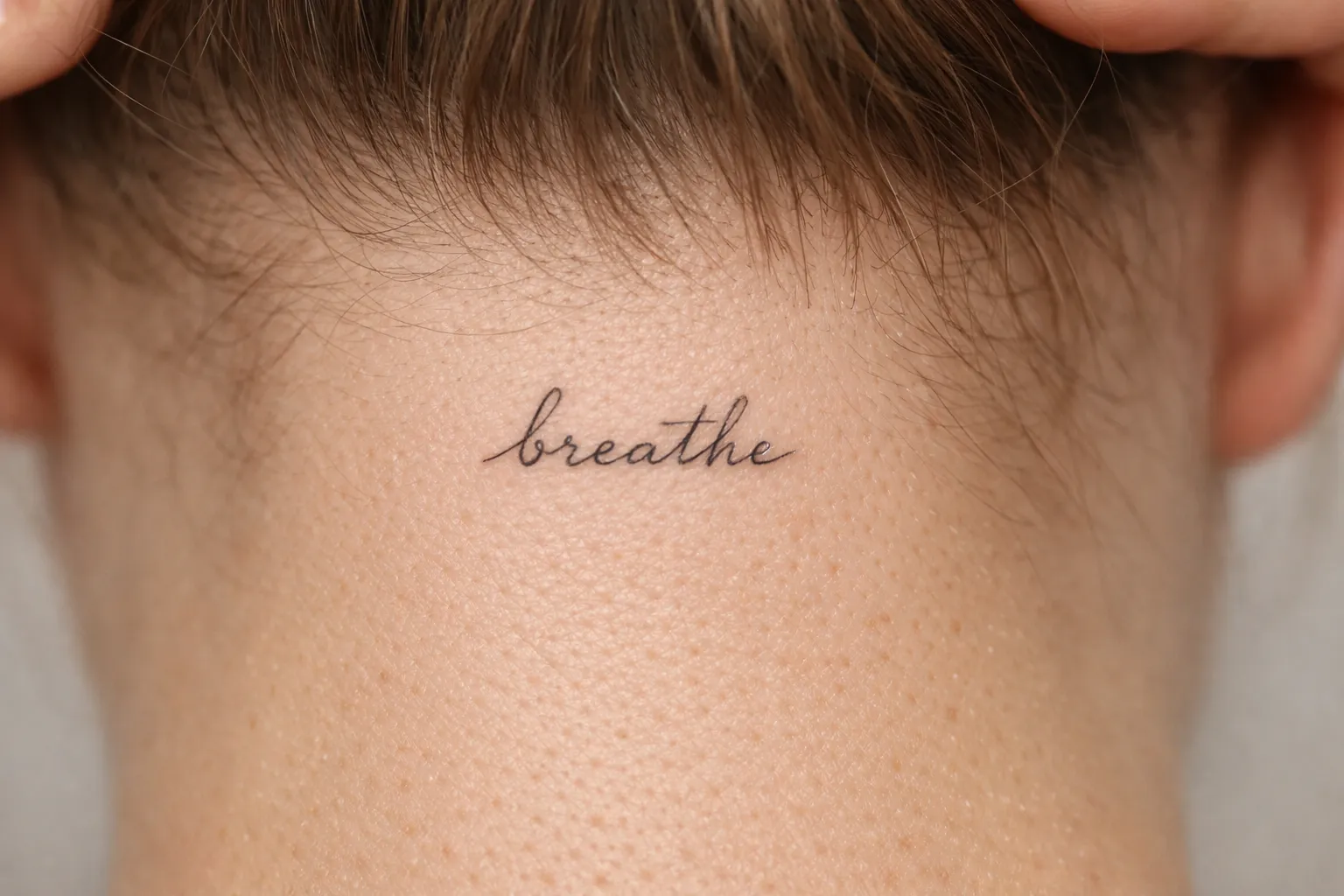
Small script (1-3 words): the most common request, best on the nape or side neck, letter height of at least ½ inch (12-13 mm) for script, often completed in under an hour. Under 3 cm, these heal fastest - roughly 10-14 days surface, 4-6 weeks complete for most people (with deeper tissue settling continuing for up to 2-3 months, per Tatuagem Blog’s 2026 healing guide) - and are the easiest scale to conceal.
Medium motifs (4-8 cm): butterflies, crosses, geometric shapes, small animals, on the side or back of the neck. This is the sweet spot for balancing impact and longevity, with approximately 14-21 days surface healing and 6-8 weeks to fully settle, in line with general medium-tattoo healing norms.
Bold statement pieces (10-15 cm vertical): full front-neck panels and wrap-arounds from jawline to collarbone. These need multi-hour sessions, often split across two sittings, and carry the highest pain and highest visibility. Large work (8-10+ cm) typically requires 4-6 weeks for surface healing, with full recovery of high-saturation pieces running around 3-4 months, according to Low Side Tattoo’s guide on healing large tattoos - studios commonly recommend waiting at least a few weeks between sessions on the same region to let fresh pigment settle before the artist works adjacent skin.
Here’s how the three scales compare across the factors that matter:
Neck Tattoo Design Scale Comparison
| Small Script | Medium Motif | Bold Statement | |
|---|---|---|---|
| Typical Size | 1-3 cm | 4-8 cm | 10-15 cm vertical |
| Best Placement Zone | Nape or side neck | Side or back of neck | Front and side |
| Session Length | Under 1 hour | 1-2 hours | Multiple sessions |
| Pain Level | Lowest (nape-level) | Moderate (side-neck) | Highest (throat/ribcage tier) |
| Concealment Ease | Easy | Moderate (nape yes, side no) | Near-impossible |
| Aging Risk | Lowest | Low-moderate with correct line weight | Highest (size on high-movement skin) |
Designs that follow the throat’s vertical axis, the jawline curve, or the collarbone’s horizontal line read more intentionally than designs that ignore the body’s shape. One practical tip: always check stencil placement while standing with your head in a natural position. Lying flat on the table shifts the skin, and a stencil that looks centered when you’re reclined can heal crooked once you stand up. I catch this constantly with new clients who’ve never had a neck piece before.
Healing - What the First Eight Weeks Look Like
A neck tattoo’s surface heals in about 2-3 weeks, but full settling of lines and color takes 4-8 weeks because of constant movement and clothing contact. The throat heals more slowly than the nape - swallowing and speaking create ongoing micro-friction the nape never experiences - so plan your aftercare around which zone you chose.
Day 1-3: the first wash and what to expect
Do a gentle first wash within the timeframe your artist specifies, using unscented soap, then pat dry and apply a thin layer of the ointment they recommend. Wash 2-3 times a day. Some swelling on the throat after a front-neck session is normal; keep it gentle and don’t over-apply product. Keep hair off the nape from day one if that’s your placement.
Week 1-2: peeling, friction, and what not to wear
Peeling starts around day 4-6. Do not pick or scratch - lifting scabs pulls pigment and leaves patchy lines. The neck is uniquely exposed to friction, and this is the window where most people cause their own problems. Avoid tight collars, hoodies with rough seams, heavy jewelry, and scarves - all of which increase scabbing, ink loss, and the risk of blown-out lines around the throat and side neck. Keep hair off a healing nape for the first 10-14 days.
Week 3-8: full settling and sun protection
By now the surface looks healed, but deeper layers are still setting, and the milky look over the tattoo fades as lines sharpen. Hold off on exfoliants or aggressive skincare over fine-line work until at least 6-8 weeks. Once fully healed, daily SPF on exposed neck skin - applied using sun-protective clothing or a fragrance-free moisturizer with SPF - is the single most important long-term maintenance step. Color work and fine-line grey wash are the most vulnerable to UV fading.
If you want to add to or touch up the piece, wait 6-8 weeks before re-tattooing the same area. And if you see excessive throat swelling beyond normal puffiness, signs of infection, or lines that look blown out right after healing, talk to your artist.
Frequently Asked Questions
- Are neck tattoos really painful?
- Yes, but it depends heavily on the zone. The nape is the most manageable, roughly comparable to the upper back. The side neck steps up from there, and the front/throat is the sharpest - in the same tier as ribcage and sternum work, with the added discomfort of swallowing during the session. Short sessions with regular breaks make it far more bearable.
- What's a good neck tattoo for men?
- Cross designs in blackwork, bold script with heavy font weight, geometric throat pieces, and spider motifs on the side neck are all strong choices. Matching line weight to placement is key for longevity.
- Are neck tattoos attractive for males?
- Design quality and placement matter more than having a neck tattoo. Well-executed work that suits the anatomy reads differently. Professional context is a bigger factor since side and throat tattoos are visible in nearly every setting.
- What is the most common neck tattoo?
- Script (single words, names, short phrases) and crosses are the most frequently requested designs. Butterflies are the fastest-rising motif in 2025-2026, especially on the side neck and nape.
- Can you hide a neck tattoo for work?
- Only if it's on the nape. A standard shirt collar covers about 3-4 cm of vertical neck, and hair longer than 10-15 cm worn down covers a nape piece completely. Side neck and throat tattoos remain visible in most professional settings.
- How long does a neck tattoo take to heal?
- Surface healing takes about 2-3 weeks, with full settling of lines and color at 4-8 weeks. The throat heals more slowly due to ongoing friction from swallowing and speaking.
- Should a neck tattoo be your first tattoo?
- The nape is manageable as a first neck tattoo with lower pain and easier healing. The front/throat is not recommended as a first tattoo by most experienced artists due to pain, healing complexity, and visibility.
- How do I keep a neck tattoo from fading?
- Daily SPF on exposed skin after healing is the most impactful step. Avoid tight collars and jewelry during healing. Choose bold lines and solid fills over ultra-fine detail for longevity.
Making the Call
A neck tattoo comes down to three practical variables: which zone fits your pain tolerance, how much concealment you actually need day-to-day, and whether the design scale you want suits how that zone ages. Work through them in that order and the decision usually makes itself.
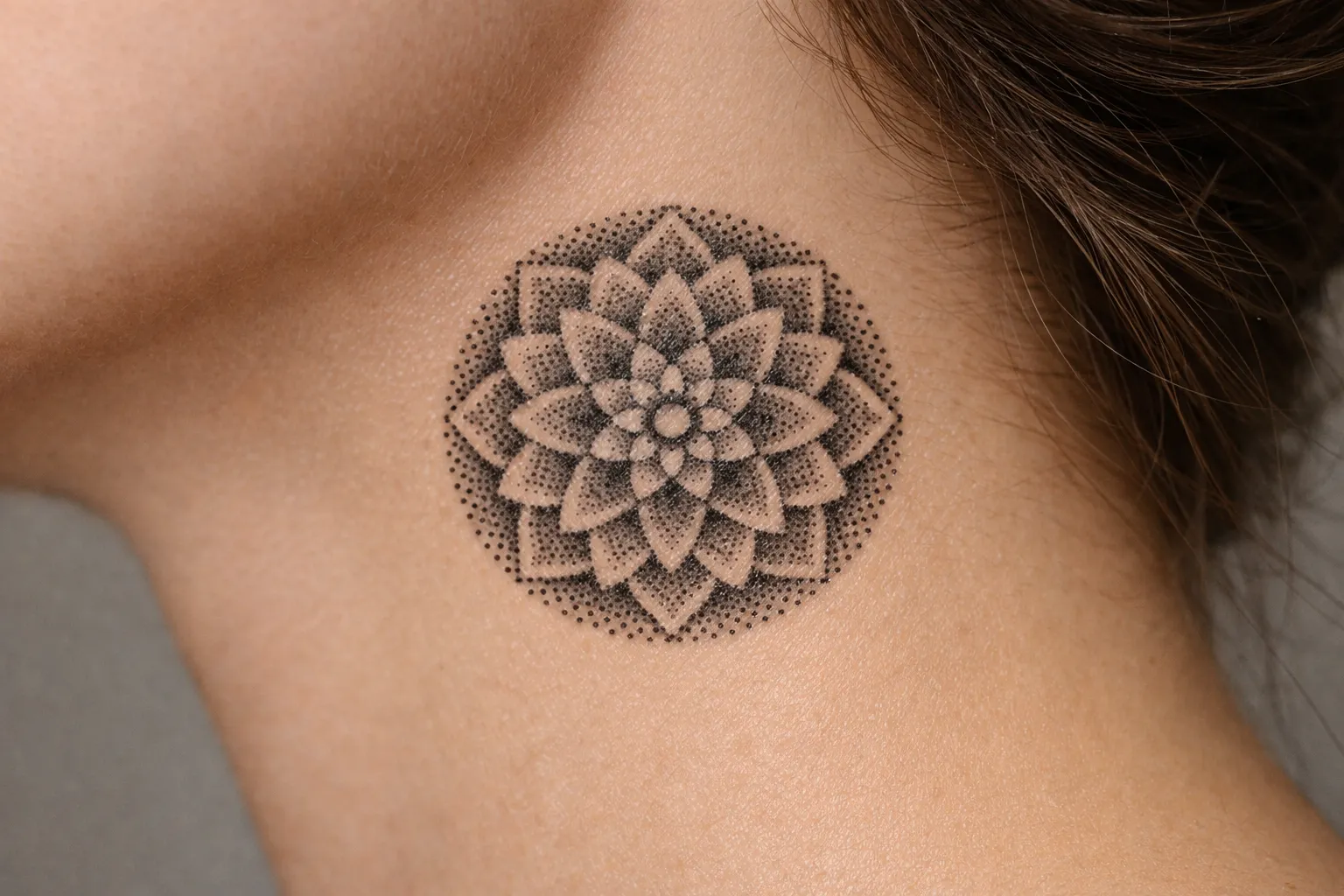
If you’re new to neck work, the nape is the forgiving starting point - lower pain, easy to hide under a collar or hair, and the simplest to heal. The throat is the opposite on every count, which is why it’s a poor choice for a first tattoo.
Whatever zone you land on, two decisions do more for how the piece looks in ten years than anything else: choose a line weight and size that will survive the movement of the placement, and commit to daily SPF once it’s healed. Bold lines over fine detail, sunscreen every day. Get those two right and your neck tattoo will still read cleanly long after a thinner, unprotected version would have blurred into a smudge.