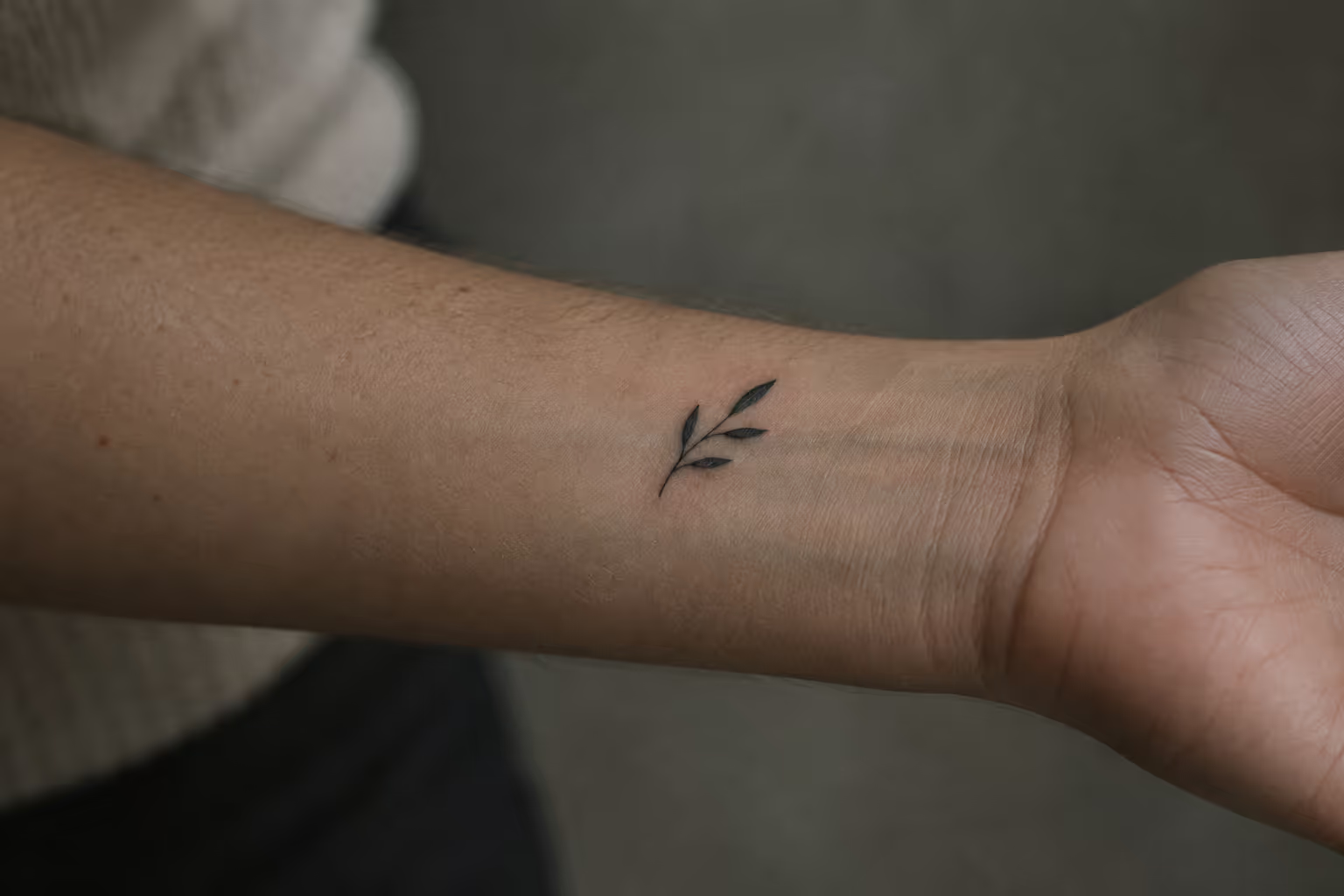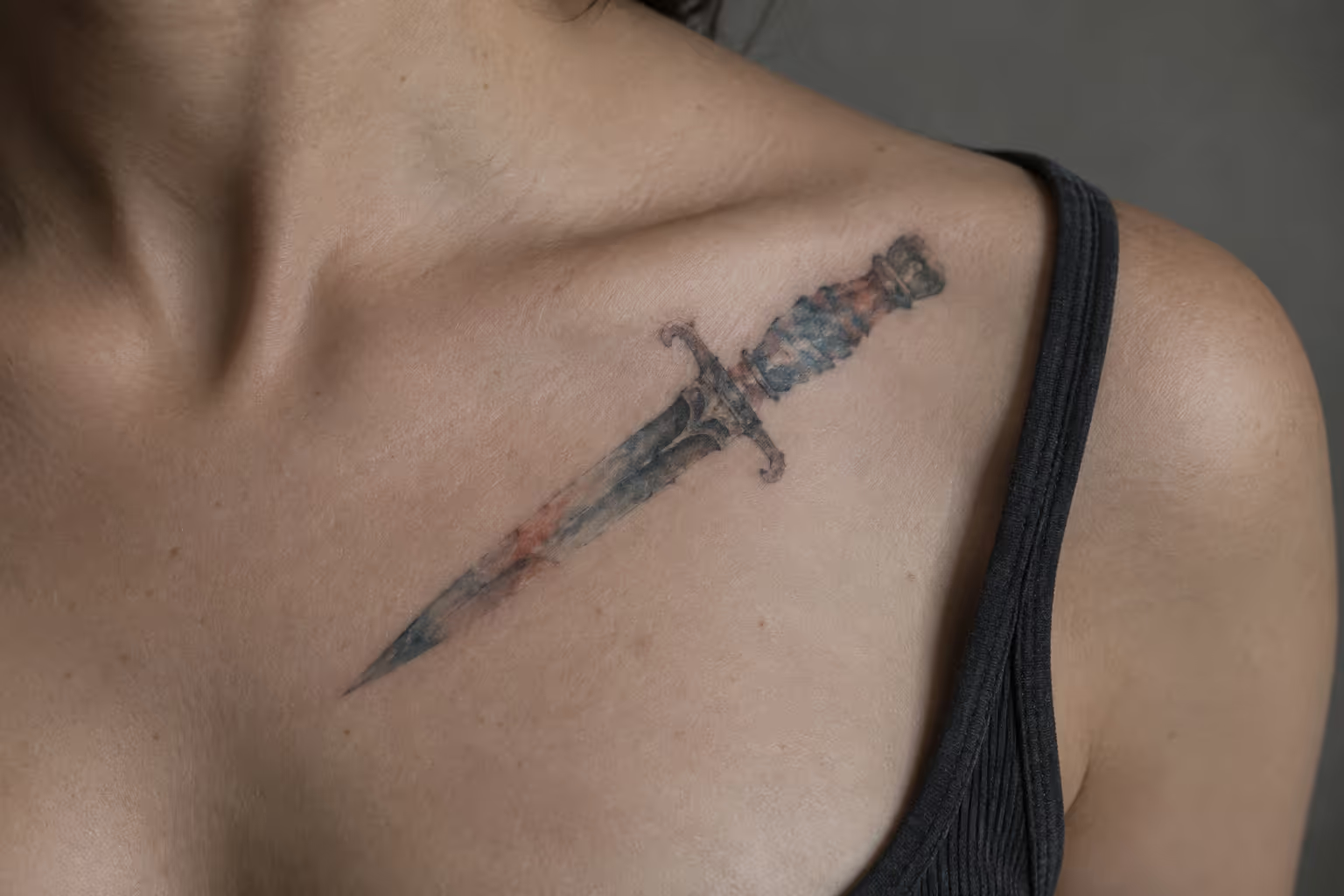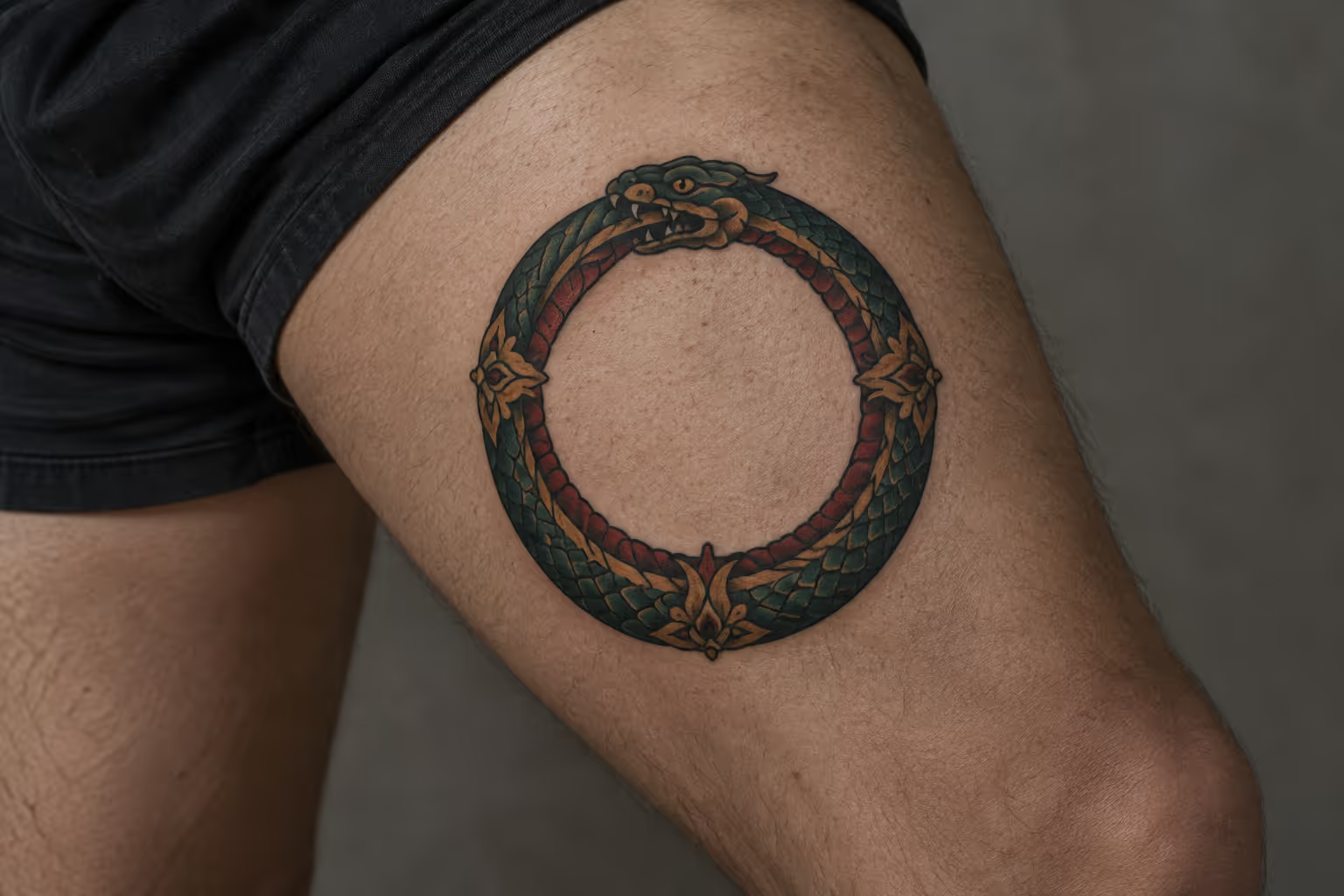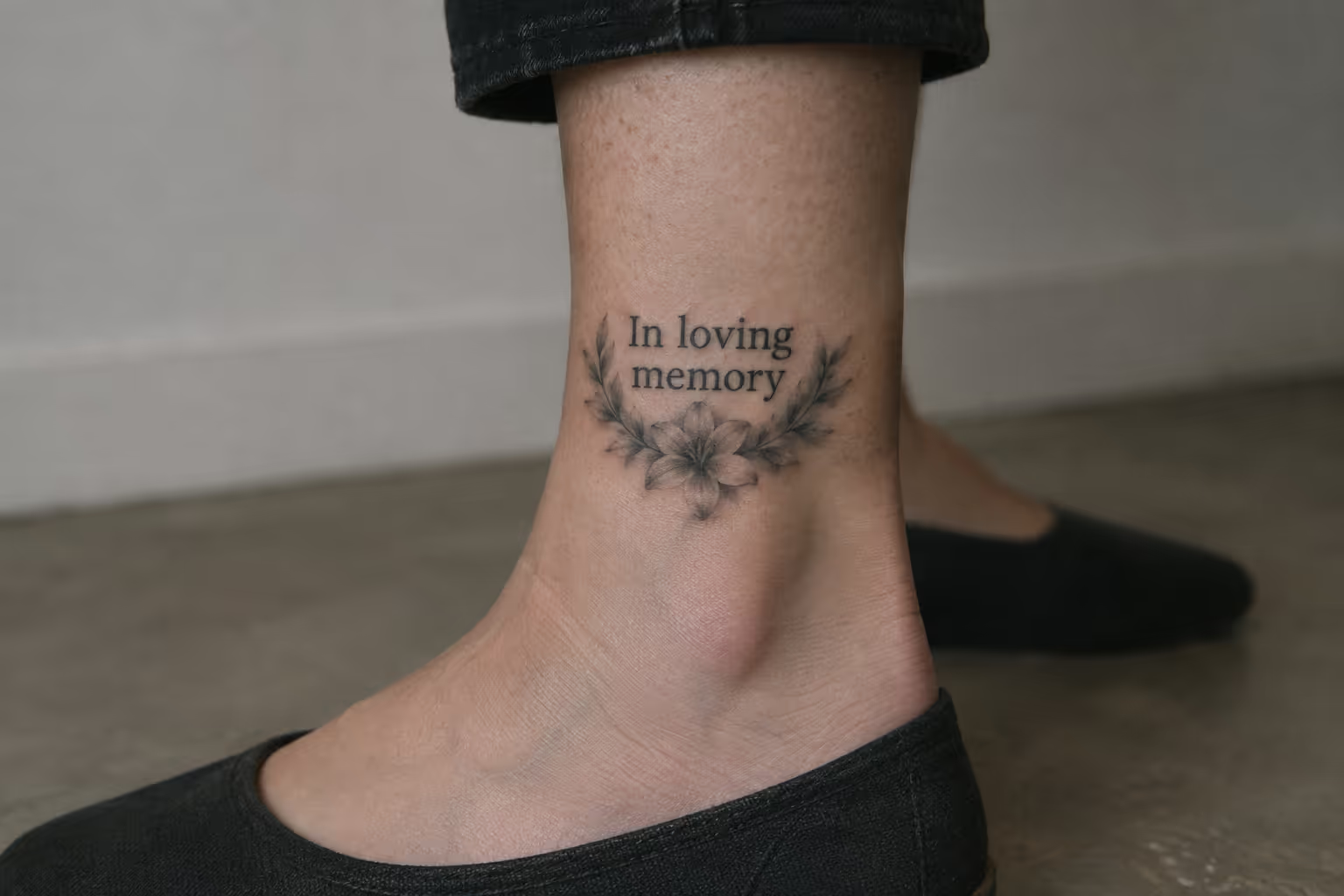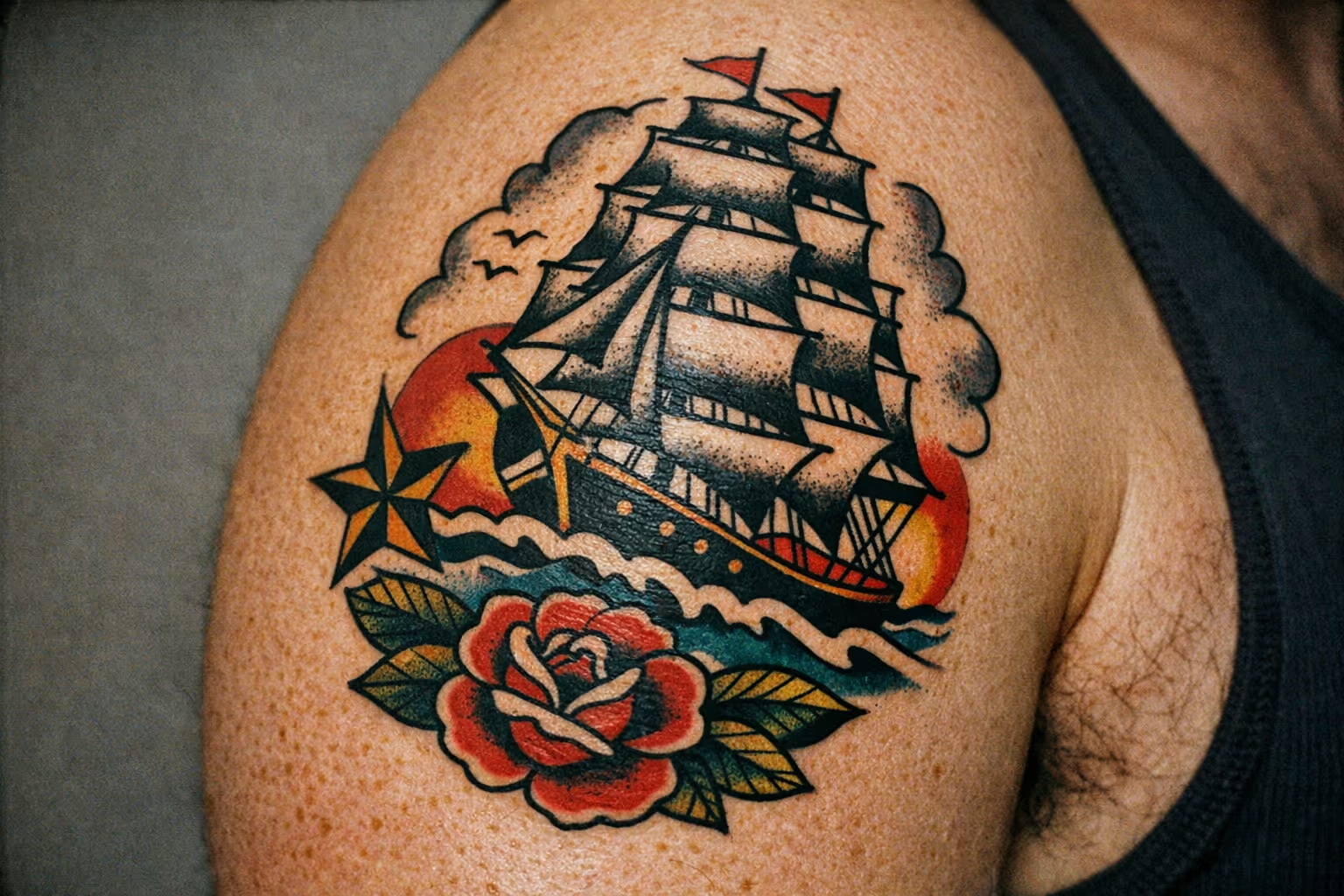
The outer deltoid is one of the few spots where a 4-6 inch piece sits cleanly, heals without much drama, and vanishes under a dress shirt. That combination is what makes shoulder tattoos one of the most practical placements you can pick - especially for a first piece. But here’s the catch most guides skip: “shoulder” isn’t one spot. It’s four distinct zones that behave completely differently under the needle, and choosing the wrong one for your design size or pain tolerance is the single most common mistake I see across the chair.
This guide breaks those four zones apart - pain, size, design fit, healing - so you book the right one instead of just the popular one.
✓ Pros
- Outer deltoid is low pain (3-4/10)
- Easy to cover with a dress shirt; easy to show in a T-shirt or tank top
- Suitable for medium to large designs (4-10 inches)
- Heals with minimal disruption to sleep and daily movement
- Strong foundation for future sleeve or back expansion
✗ Cons
- Collarbone and shoulder blade zones reach 5-8/10
- Bra straps and backpack straps can irritate healing skin
- Rounded deltoid surface can warp script or geometric patterns if placed incorrectly
- Shoulder blade pieces often require multiple sessions
- Collarbone proximity increases sensitivity significantly
The Four Shoulder Tattoos Zones - and Why the Distinction Matters
The shoulder is best treated as four separate placement zones, not one canvas: the outer deltoid cap, the outer shoulder into the upper arm, the top/front shoulder near the collarbone, and the shoulder blade on the upper back.
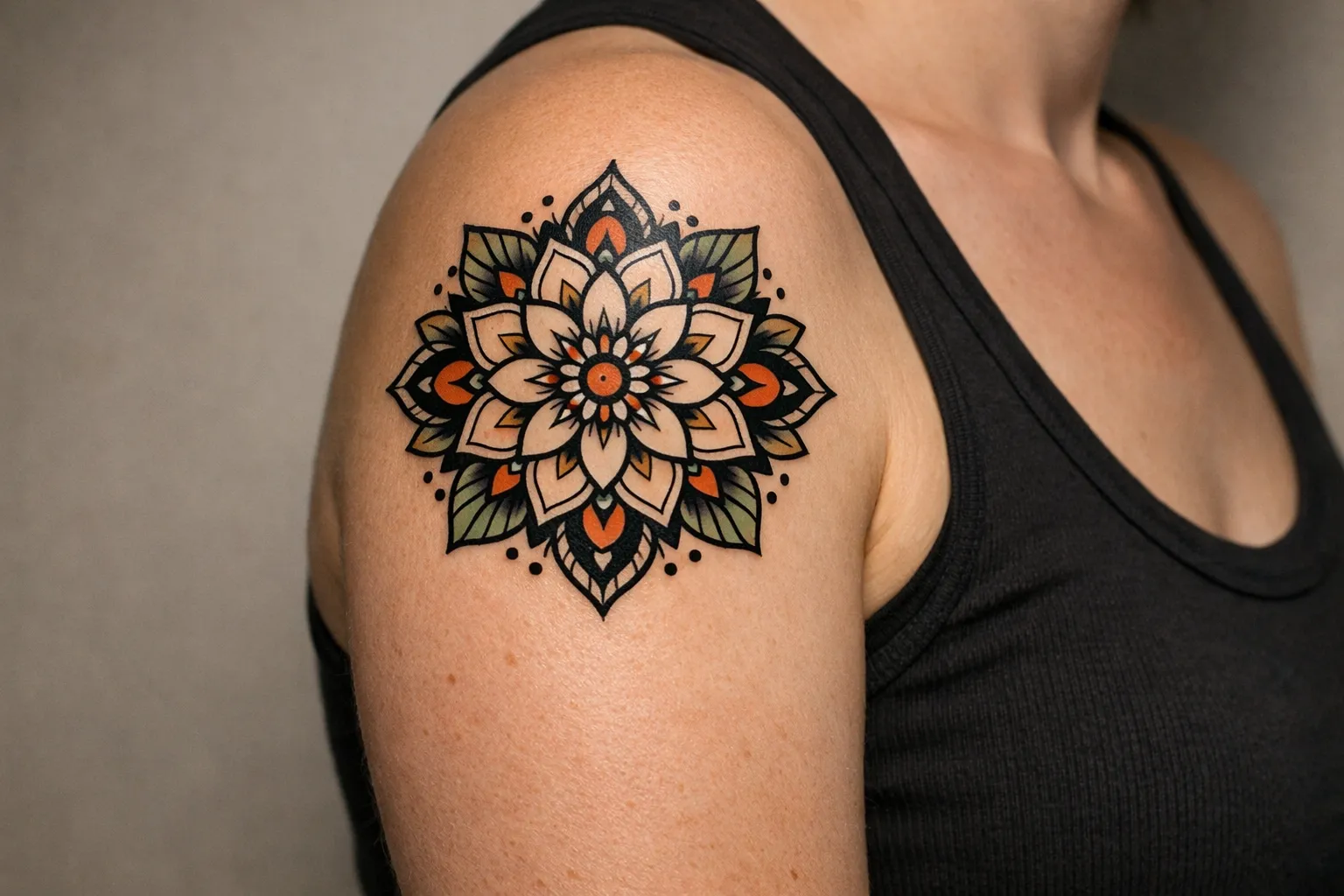
Each behaves differently because the anatomy underneath changes. The outer deltoid and upper arm sit over thick muscle with fewer surface nerves, so the needle rides on a cushion. Move toward the collarbone or over the shoulder blade ridge and the bone comes close to the surface - that’s where the sensation turns sharp. The deltoid cap is also rounded, while the shoulder blade area is relatively flat and broad, and that difference decides whether a design holds its shape or distorts.
Most pain charts and placement guides lump all of this into a single number. Saniderm’s chart rates Shoulder/Outer Arm at 4/10, which is accurate for the deltoid but tells you nothing about the collarbone. (1) That’s how people book a “shoulder tattoo,” expect a mild afternoon, and get blindsided when the needle reaches bone.
I’ve had clients come in expecting a breezy two-hour session because they read that the shoulder is low-pain - and they were right, until we moved toward the blade. The number is real, it just only applies to part of the shoulder.
Clothing coverage splits by zone too. Any shirt covers the shoulder blade; the deltoid shows in a T-shirt and at the gym but disappears under a dress shirt or blazer; the outer shoulder into the upper arm shows whenever the arm is bare. (2) Collarbone-adjacent work shows in open necklines and sleeveless tops. Each zone gets its own breakdown below.
Placement Zone by Zone Breakdown
Good shoulder tattoo placement comes down to matching your design’s size and geometry to the zone’s surface. Here’s how each of the four behaves.
Outer Deltoid Cap
The outer deltoid cap is the most forgiving zone on the shoulder - more cushioning, fewer nerve endings than bone-adjacent spots. (1) It suits designs in the 4-6 inch range, which stay centered on the rounded muscle without wrapping too far around the arm. (2) This is the classic shoulder cap tattoo spot: mandalas, floral wreaths, simple illustrative pieces, and Polynesian-inspired caps that follow the deltoid’s curve. Push a design much larger here and it wraps around toward the bicep and loses its shape from a normal viewing angle.
Outer Shoulder into Upper Arm
This is the natural extension zone - the strip where the shoulder cap flows down into the upper arm. It’s built for wrap-around bands, geometric patterns, and stylized animals, and it’s the standard starting point if you’re planning toward a half sleeve later. Pain stays in the same low range as the deltoid, around 4/10 (1), and clients usually need fewer breaks here, which makes it comfortable for longer sessions. (3) Because the surface is longer and less sharply curved than the cap alone, it handles flowing compositions well.
Top Shoulder and Collarbone Area
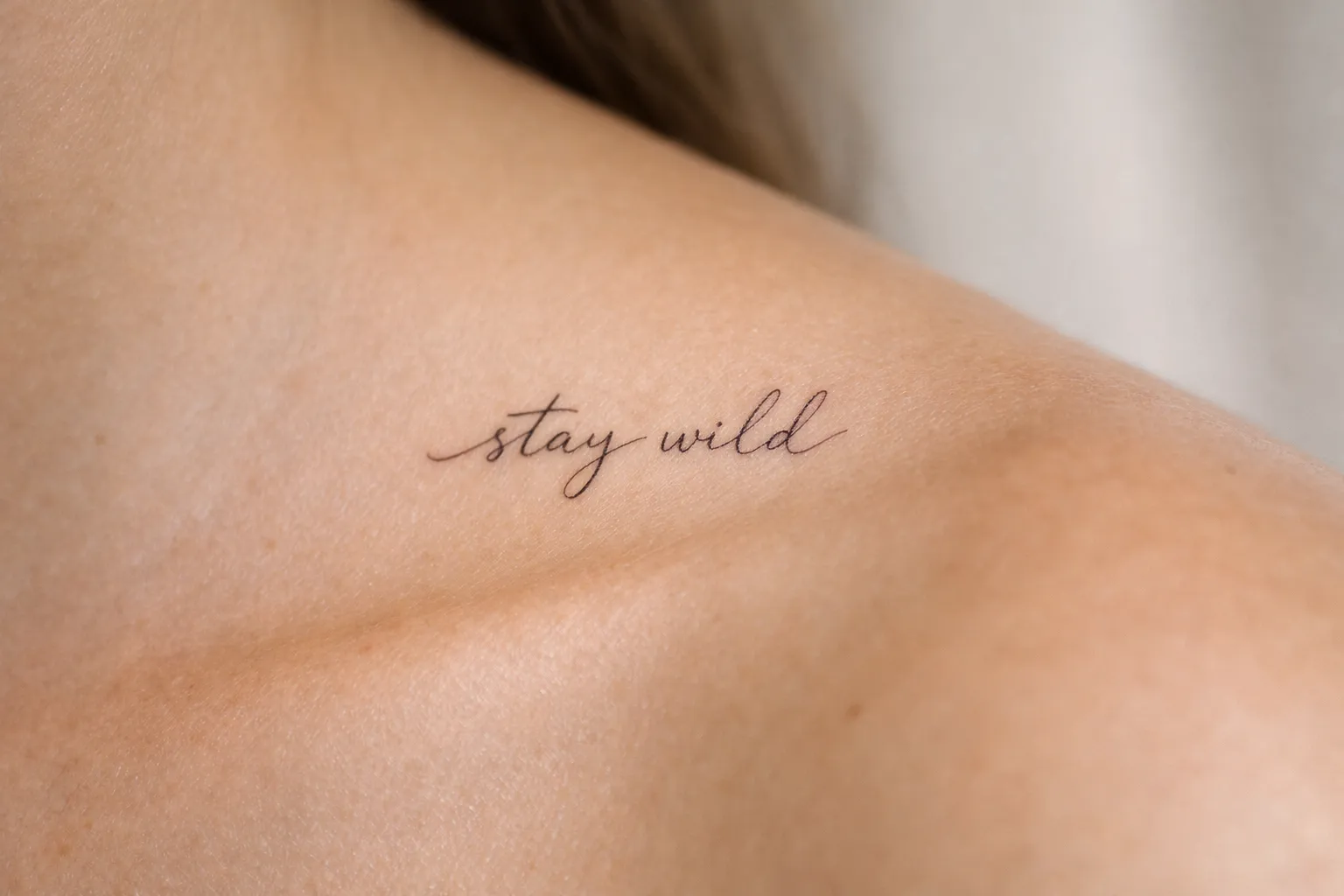
The top and front of the shoulder, near the collarbone, is where the shoulder stops being an easy placement. As the skin approaches bone, pain moves out of the low range and into moderate-to-higher territory, typically 5-7/10. (4) This zone suits delicate linework, small symbols, and short script. It reads as visually prominent in tank tops and off-shoulder clothing, which is part of the appeal - but go in knowing the sensation is a different animal than the deltoid.
Shoulder Blade
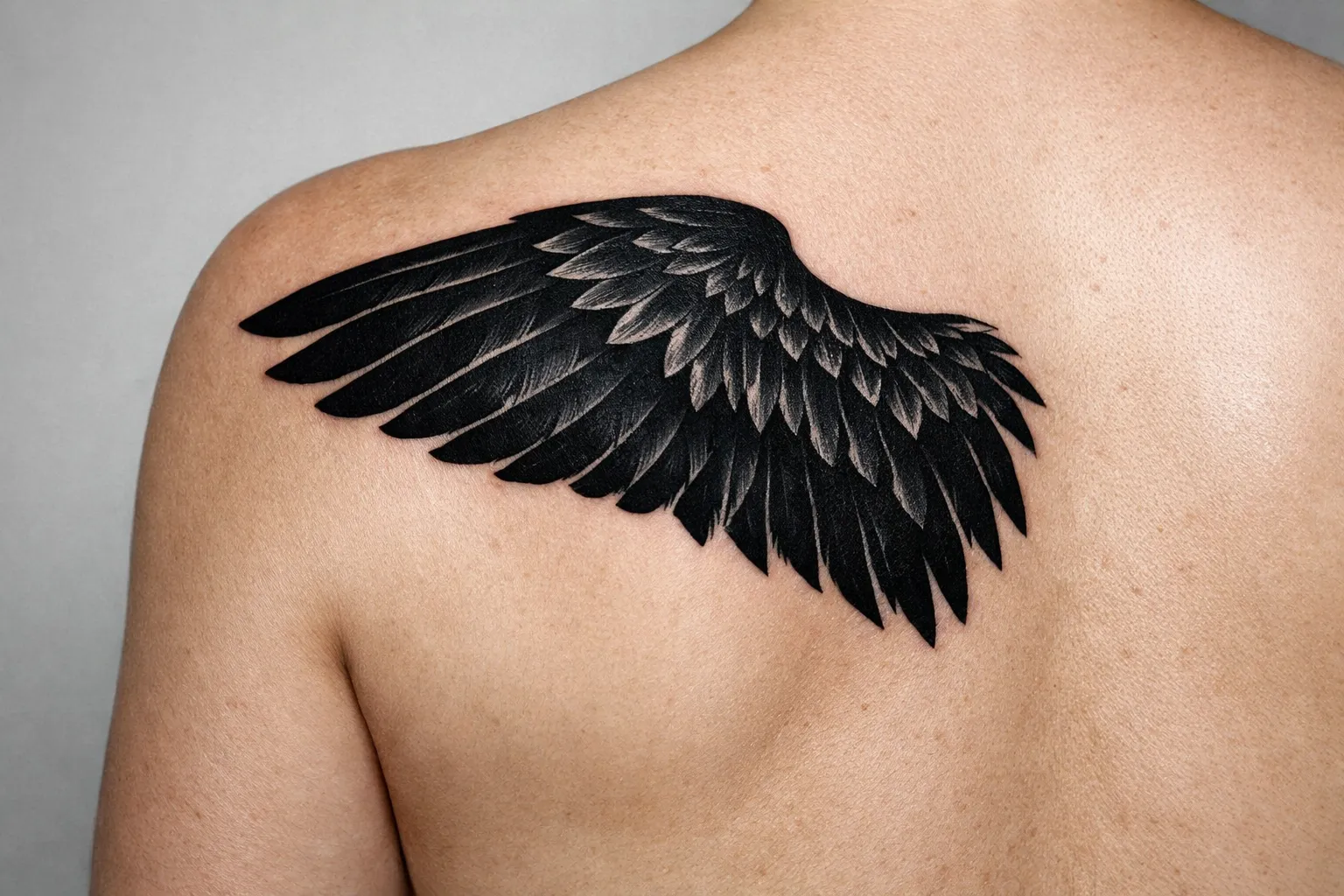
The shoulder blade is the broad, flat canvas of the shoulder region and it supports 6-10 inch compositions with real interior detail. (2) This is where the shoulder blade tattoo earns its place: wings, large florals, landscape scenes, geometric mandalas, and Japanese-style panels all use the space well. Pain runs 6-8/10, sharpest directly over the bone ridge. (4) The flat surface holds detail better than the rounded cap, but the tradeoff is discomfort and, often, more than one session.
The size-to-zone rule that prevents most regret: a too-small piece on the shoulder blade looks lost on the broad upper back, and an oversized design on the deltoid cap wraps around and distorts. Match the scale to the zone before you fall in love with a reference photo.
Pain by Zone - What Each Area Actually Feels Like
Yes, tattoos hurt on the shoulder, but the honest answer is that the outer shoulder sits at the low end of the scale. The mistake is assuming the whole shoulder matches it. Shoulder tattoo pain isn’t one number - it climbs as the needle moves toward bone.
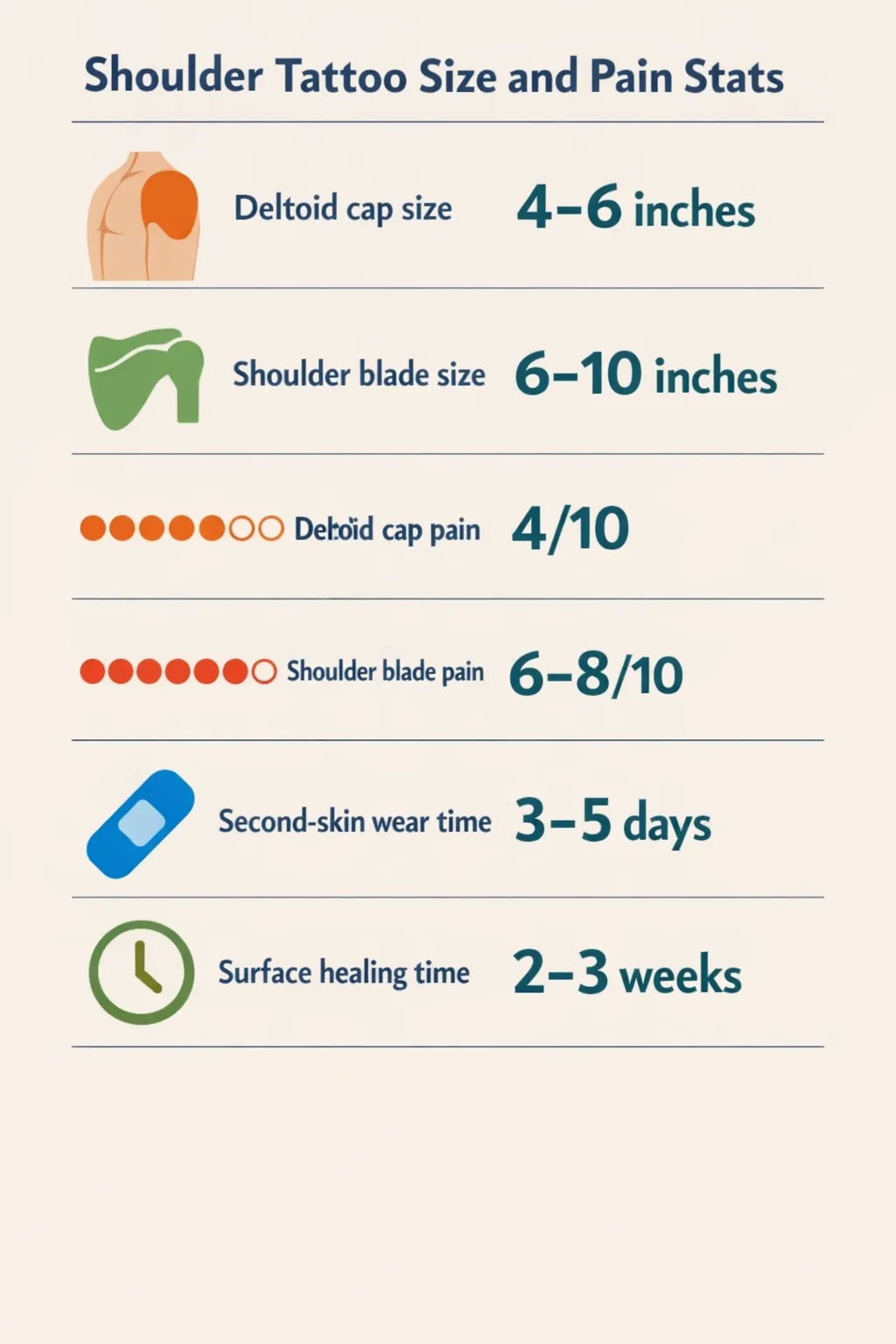 Deltoid cap size 4-6 inches; Shoulder blade size 6-10 inches; Deltoid cap pain 4/10; Shoulder blade pain 6-8/10; Second-skin wear time 3-5 days; Surface healing time 2-3 weeks.
Shoulder Tattoo Pain by Zone
| Outer deltoid cap | Outer shoulder into upper arm | Top shoulder / collarbone | Shoulder blade | Wrap-around / under-shoulder | |
|---|---|---|---|---|---|
| Pain Level | 3-4/10 | 3-4/10 | 5-7/10 | 6-8/10 | 7-8/10 |
| Sensation | Dull, tolerable | Dull, vibrating | Sharp, stinging near bone | Sharp over bone, dull on muscle | Sharp, sustained |
| Best For | First tattoos, longer sessions | Wrap-arounds, sleeve starters | Small fine-line pieces | Large detailed pieces | Advanced collectors only |
| Session Risk | Low | Low | Moderate | Higher - plan breaks | High - sequence carefully |
The outer deltoid and shoulder cap sit at the lower end of the pain range - dull, tolerable, with the muscle absorbing much of the vibration. Saniderm rates Shoulder/Outer Arm at 4/10, and Healthline groups the upper arm and shoulder among the less painful body areas, citing padding and distance from bone as the reason. (1, 5) Removery rates the shoulder overall at 5/10, noting more cushioning and fewer nerve endings than bone-heavy placements. (6) It rarely interferes with sleep, and it sits comfortably below the collarbone and shoulder blade zones - but calling it the least painful placement on the body overstates it; the inner wrist and sternum exist.
The top shoulder near the collarbone shifts to 5-7/10 as the sensation moves from dull to sharp. The shoulder blade runs 6-8/10, sharpest right over the bone ridge, and wrap-around designs that dip under the shoulder can reach 7-8/10. (4) Not every chart agrees on the blade: Hyper Inkers rates the upper back and shoulder blades among the gentlest areas, at 3/10. (9) Hush Anesthetic notes that shoulders can feel like a 6 or 7 on the scale, with the shoulder blade hurting more where bones are prominent (7) - which is the real variable: how close the bone sits to the surface on your body.
One data point worth flagging: SavedTattoo’s chart rates outer shoulder pain differently by sex, roughly 4/10 for men and 6/10 for women. (8) Studios sometimes adjust session length and break frequency around that rather than treating everyone identically.
Practical sequencing tip: start on the outer deltoid, the lowest-pain zone, and use the early-session endorphins to move toward the collarbone or blade if the design requires it. Don’t open on the hardest zone. And set expectations honestly - shoulder blade pain is manageable next to ribs or spine, but it is not the “easy” experience people expect when they casually book a “shoulder tattoo.”
Design Ideas by Zone and Style
The best shoulder tattoo ideas all share one trait: they fit the zone’s size range and curvature instead of fighting it. Skip the “anything goes” framing - a design that works on the flat shoulder blade can look cramped on the rounded cap.
Outer Deltoid Cap: Designs That Follow the Curve
The deltoid cap rewards designs built around its round shape. Floral wreaths, mandalas, bold animal heads like a lion or eagle, and American traditional motifs all sit well here at 4-6 inches. Polynesian tatau designs are a particularly strong fit because the style originated to follow body curvature and wrap naturally around the shoulder - that’s the Polynesian tradition doing exactly what it was built to do. American traditional also holds up on this zone: thick black outlines and a limited palette are two hallmarks of the style, and bold linework doesn’t lose clarity when the muscle moves. The pitfall with traditional done badly is thin, undersaturated linework that blows out or fades - insist on solid black.
Shoulder Blade: Designs That Use the Space
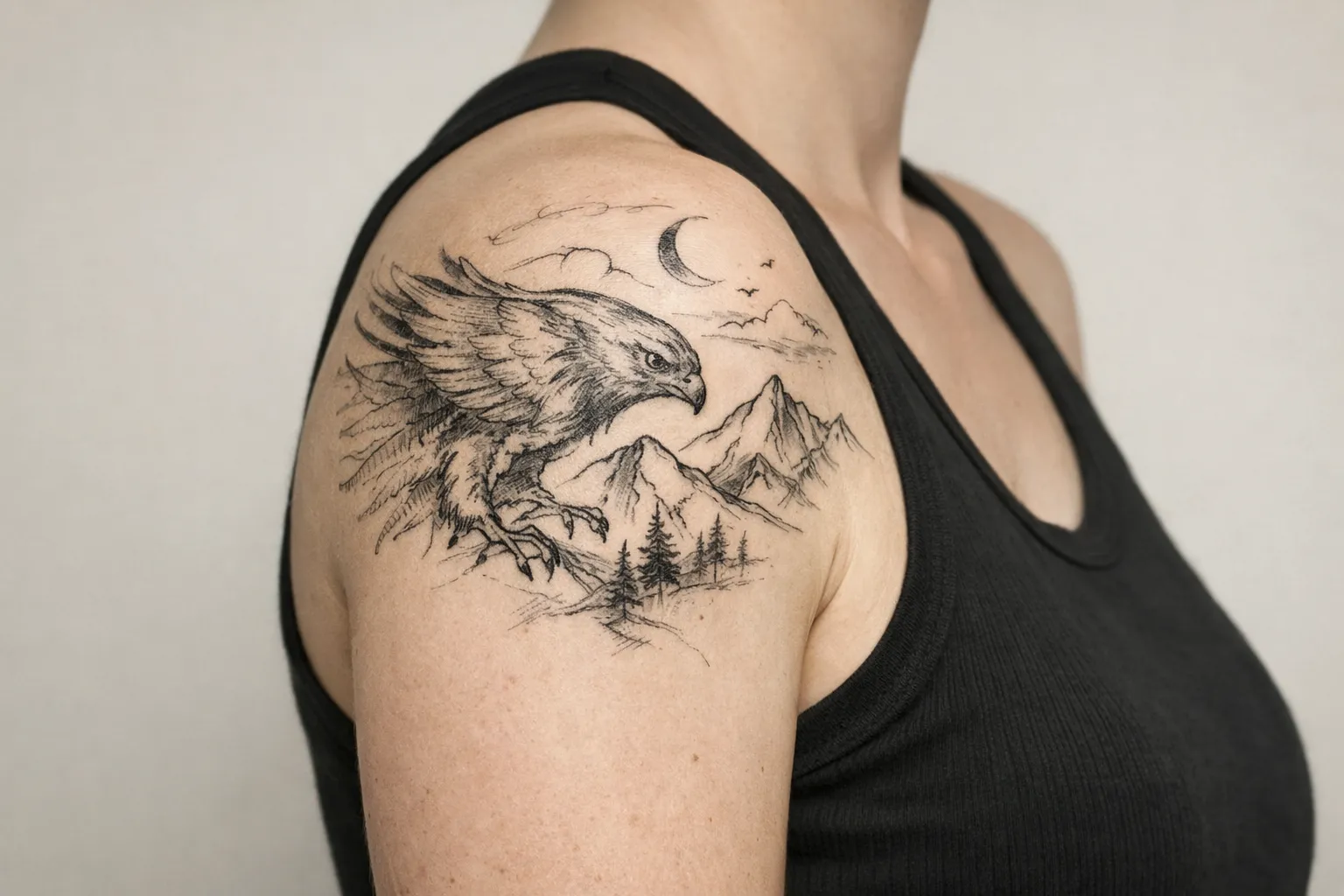
The shoulder blade’s flat, broad surface handles large compositions at 6-10 inches: symmetrical or single wings, large botanical florals, landscape scenes, geometric mandalas, and Japanese panels. This is the zone where interior detail actually survives, because the skin doesn’t curve away from the viewer the way the cap does. If you want something with fine shading and layered elements, this is where it belongs.
Small Shoulder Tattoos: Collarbone and Upper Arm Options
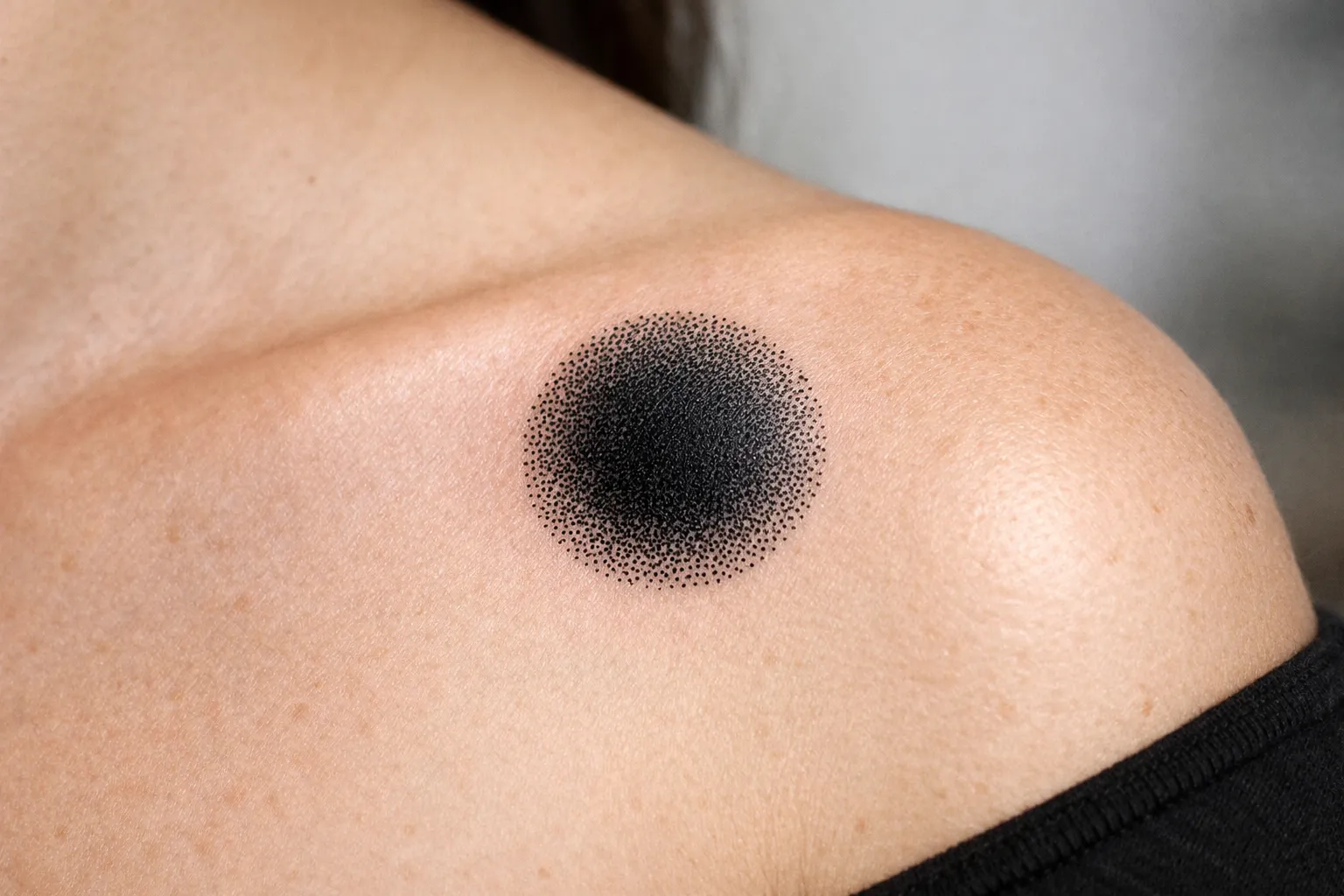
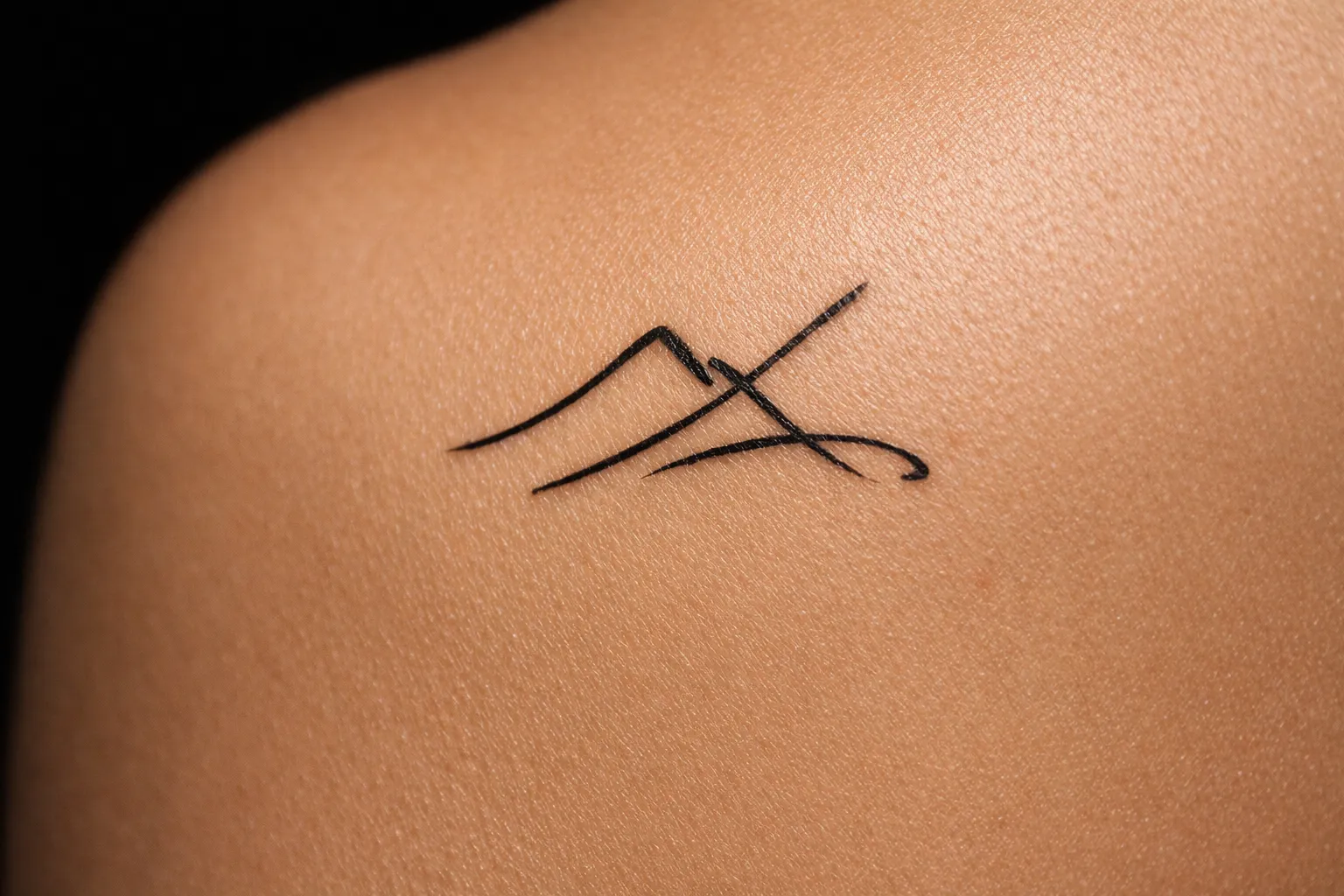
If you want something small, the collarbone zone and outer upper arm are the natural homes for fine line botanicals, single symbols, minimal script, and small geometric shapes. This covers what people search as small shoulder tattoos - compact, discreet, easy to cover. One caveat: fine line work near the collarbone needs a skilled hand because the skin is less forgiving over bone, and thin lines placed carelessly there can blur as they settle. Ask to see healed examples, not just fresh work.
Wrap-Around and Sleeve-Starter Designs
Geometric bands, Japanese wrap compositions, and blackwork patterns that extend from the shoulder cap into the upper arm all position the shoulder piece as the anchor for a future half sleeve. Japanese irezumi is built around body flow - dragons, koi, and chrysanthemums are designed to wrap - which makes the shoulder-to-upper-arm run a genuine match rather than a forced one. If a sleeve is even a possibility, this is the smart way to start it.
How the Shoulder Heals - and What Can Slow It Down
The outer shoulder cap is among the easiest placements to heal: no joint flexion, no shoe contact, no waistband pressure rubbing the fresh linework. The friction problems live elsewhere.
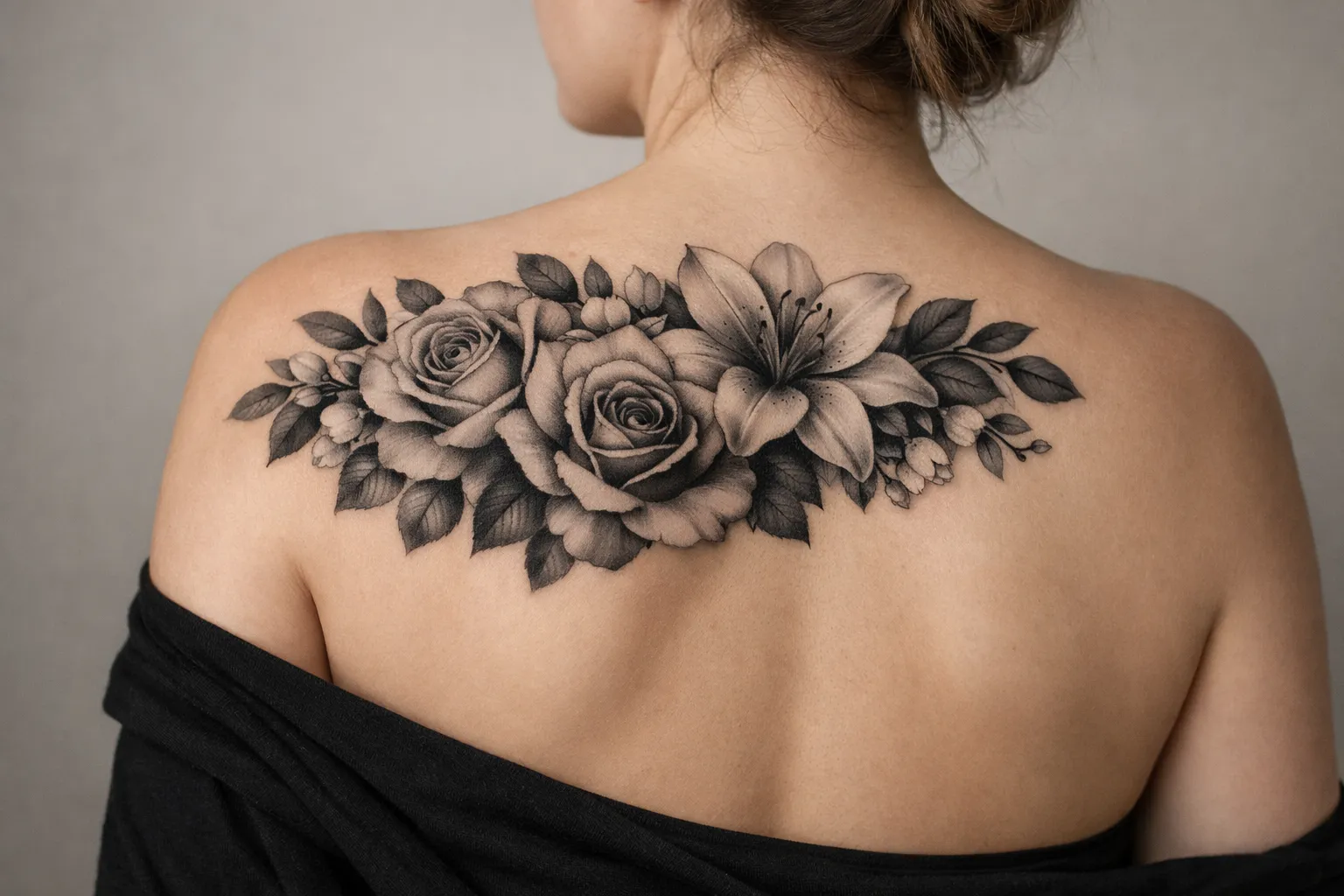
The shoulder blade zone’s main enemies are bra straps and backpack straps, both of which run directly across the upper back. Plan your clothing around that for the first 2-4 weeks. Collarbone-adjacent placements catch necklines and bag straps instead - loose crew necks or off-shoulder tops solve it. For the outer shoulder, loose shirts or tank tops work well; avoid tight sleeves that cling to healing skin.
Session size matters for healing planning too. A 4-6 inch deltoid cap piece typically fits in a single session. A 6-10 inch shoulder blade piece may need a second sitting for shading and detail, so budget a healing gap - usually 3-6 weeks between sessions - before you book.
Shoulder Tattoo Healing: What to Expect Week by Week
Up to 3 monthsStep-by-step healing timeline for shoulder tattoos, highlighting zone-specific care and timing.
- 1
Day 1-3
Keep the initial wrap on as directed - a standard bandage comes off within hours, while second-skin products stay on 3-5 days. Outer shoulder: minimal swelling. Shoulder blade: skip the backpack entirely.
- 2
Days 3-7
Remove the wrap, wash gently twice daily with a fragrance-free cleanser, and apply a thin layer of fragrance-free moisturizer. Expect some redness and mild swelling. Loose T-shirts for the outer shoulder; keep straps off the shoulder blade zone.
- 3
Week 1-2
Peeling and flaking start - do not pick. Itching is normal. Shoulder blade pieces are in their highest-friction window here, so a soft strapless option or a no-strap setup helps.
- 4
Week 2-4
The surface looks healed and the color may read slightly dull as the top layer settles - that's normal. Keep the area out of prolonged sun; sun-protective clothing over it is the easy call.
- 5
Month 1-3
Surface healing wraps up around 2-3 weeks, but full internal healing takes closer to 2-3 months. If a second session is planned - common on shoulder blade pieces - wait until your artist confirms the skin has healed, typically 3-6 weeks after the first sitting.
Sizing Your Design - the Rule That Prevents the Most Regret
Sizing is where good shoulder tattoos separate from disappointing ones, and it comes down to two ranges.
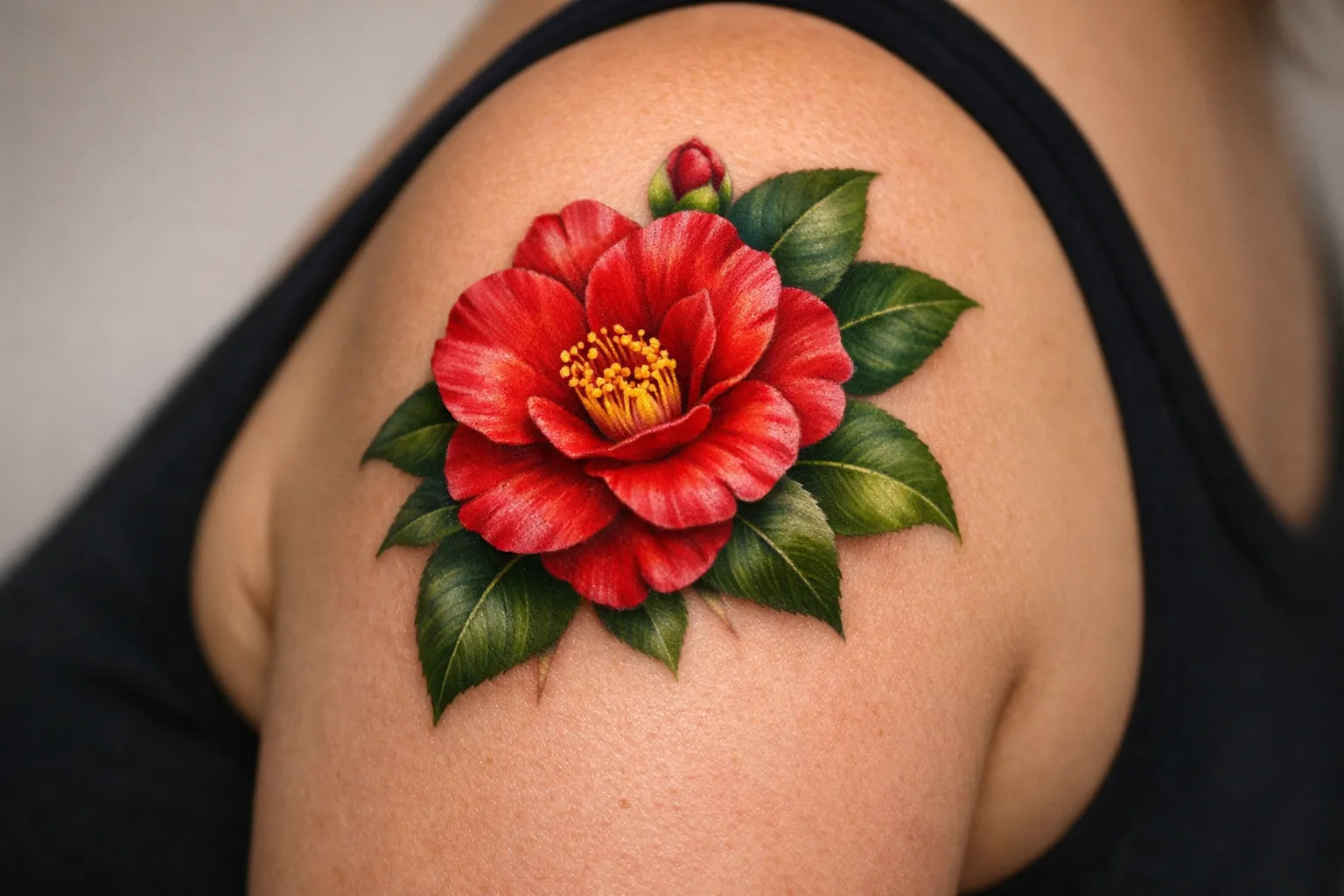
The 4-6 inch rule for the deltoid cap keeps a design centered on the rounded muscle and readable from a normal distance. Go larger and it wraps around the arm and loses its shape. The 6-10 inch range for the shoulder blade uses the flatter, broader surface to carry interior detail. Go smaller and the piece looks stranded on all that space.
Curvature matters as much as size. Script and geometric shapes across the rounded cap have to follow the muscle line - horizontal text laid straight across the deltoid will warp visibly when your arm moves. Your artist should account for that in the stencil, not after.
Two more things worth doing before the needle starts. First, think one step ahead: pick a placement and size that leaves room to connect with a future upper-arm or back piece. The shoulder works best as an anchor, and isolated designs that block a later sleeve are a common regret. Second, ask your artist to place the stencil while your arm rests in a natural position, not raised - the shoulder’s shape shifts significantly with arm position, and a stencil that looks perfect with your arm up can sit wrong at rest.
I’ve repositioned stencils on clients more times than I can count because they approved it with their arm raised. Get it checked at rest. That’s when you’ll actually be looking at it.
Is the Shoulder Right for You? Practical Considerations Before You Book
For a first tattoo, the outer deltoid is one of the strongest starter placements there is: low to moderate pain - Saniderm rates Shoulder/Outer Arm at 4/10, and Healthline lists the upper arm and shoulder among the less painful body areas - easy healing, flexible expansion, and it covers or shows depending on what you’re wearing. (1, 5)
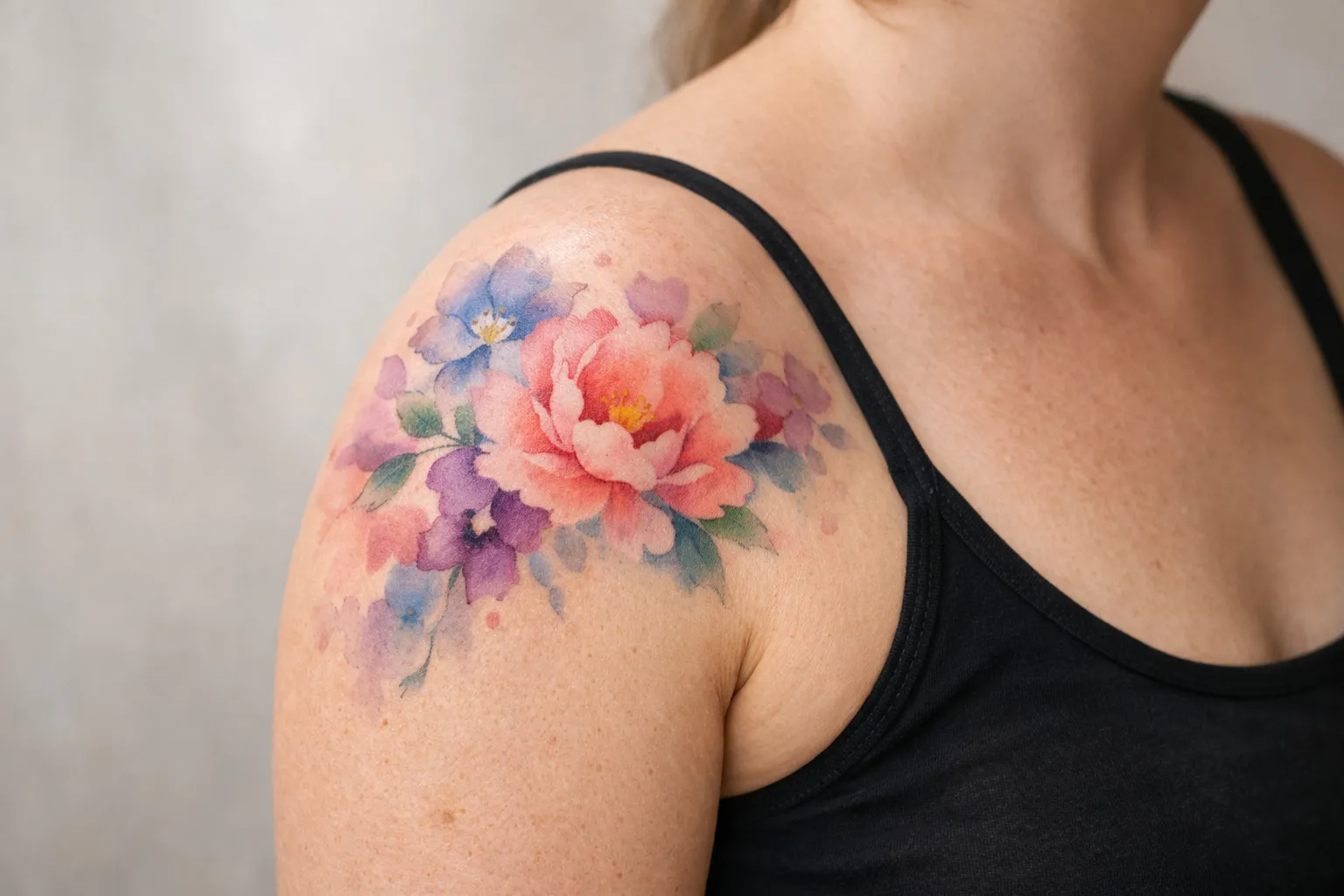
That coverage flexibility is rare. Any shirt hides the shoulder blade and a dress shirt or blazer hides the deltoid, while a T-shirt or tank top puts the deltoid on display (2) - most placements force you to choose one or the other, and the shoulder doesn’t. If your job needs discretion, this is one of the genuinely career-flexible spots.
On pain tolerance: if you’re not sure how you handle it, start with the outer deltoid before committing to a shoulder blade piece in the same session. Testing 4/10 before you sign up for 6-8/10 is just sensible. And if your design needs the shoulder blade, budget for at least two sessions with 3-6 weeks between them - don’t rush the shading sitting.
Who should reconsider? Anyone who wears a backpack daily and wants a shoulder blade piece needs a realistic plan for the healing window. Two to four weeks of managing strap friction across a fresh tattoo is not trivial, and pretending it is leads to a blown-out patch.
Frequently Asked Questions
Frequently Asked Questions
- Do tattoos hurt on the shoulder?
- Outer shoulder / deltoid: low to moderate pain, dull and tolerable - Saniderm rates Shoulder/Outer Arm at 4/10 and Healthline lists it among the less painful body areas. Collarbone area: noticeably sharper, moving into moderate territory. Shoulder blade: sharper still, especially over the bone ridge. The outer deltoid is among the lower-pain zones on the body, though not universally the easiest spot available.
- How painful is it to get a tattoo on your shoulder blade specifically?
- Shoulder-specific pain charts put the shoulder blade at 6-8/10, sharp directly over the bone and more of a dull ache on the surrounding muscle (4). General charts vary: some rate the upper back and shoulder blades among the gentlest areas (9), so how prominent your bones are matters more than the zone name. Most clients handle it fine with breaks; it's significantly easier than ribs or spine.
- What is a good shoulder tattoo?
- One that matches the zone's size range and curvature. A 4-6 inch floral, mandala, or Polynesian-inspired design suits the deltoid cap. A 6-10 inch wing, large floral, or Japanese panel suits the shoulder blade. The design should follow muscle lines, not fight them.
- How big is a $1,500 tattoo on the shoulder?
- Around $1,500 is where a large, complex shoulder piece starts: an intricate design covering the shoulder cap and blade, done over multiple sessions totaling 10 or more hours (10). For comparison, a detailed shoulder cap piece that needs a 4-6 hour session runs $600-$1,200, and a small, simple design $200-$400 (10).
- Can shoulder tattoos be covered for work?
- Yes. Any shirt covers the shoulder blade, and most business attire covers the deltoid - a dress shirt or blazer hides it completely, though it shows in a T-shirt (2). The collarbone zone may show in lower necklines. It's one of the most career-flexible placements available.
- How long does a shoulder tattoo take to heal?
- Surface healing (peeling, flaking) takes 2-3 weeks. Full internal healing takes closer to 2-3 months. Outer shoulder cap heals with minimal friction; shoulder blade pieces need careful clothing management for the first 2-4 weeks to avoid bra strap or backpack irritation.
- Can a shoulder tattoo be the start of a sleeve?
- Yes - the outer deltoid and outer shoulder into upper arm are the natural anchor points for a half or full sleeve. Place the shoulder piece first, live with it for 3-6 months, then plan the upper arm and forearm extensions around it.
Booking the Right Zone: A Quick Decision Order
Work through it in this order and you’ll avoid the mistakes that fill touch-up appointments:
- Pick your zone first. Outer deltoid if it’s your first tattoo or you want low pain; shoulder blade if you want a large, detailed piece and can handle 6-8/10 across possibly two sessions.
- Match the design size to the zone. 4-6 inches for the cap, 6-10 inches for the blade. Don’t let anyone cram a large piece onto the deltoid or strand a tiny symbol on the blade.
- Plan for the friction points. Bra straps and backpack straps are the shoulder blade’s healing enemy - sort your clothing before you book, not after.
- Think one step ahead. If there’s any chance you’ll want a sleeve, position the shoulder piece so it can connect rather than block.
One last honest note on the collarbone zone: it’s the most visible in summer clothing and the most underestimated on pain. If that’s where you’re headed, go in knowing it feels sharper and stings more than the outer deltoid. It’s a different experience, and it’s worth being ready for it.