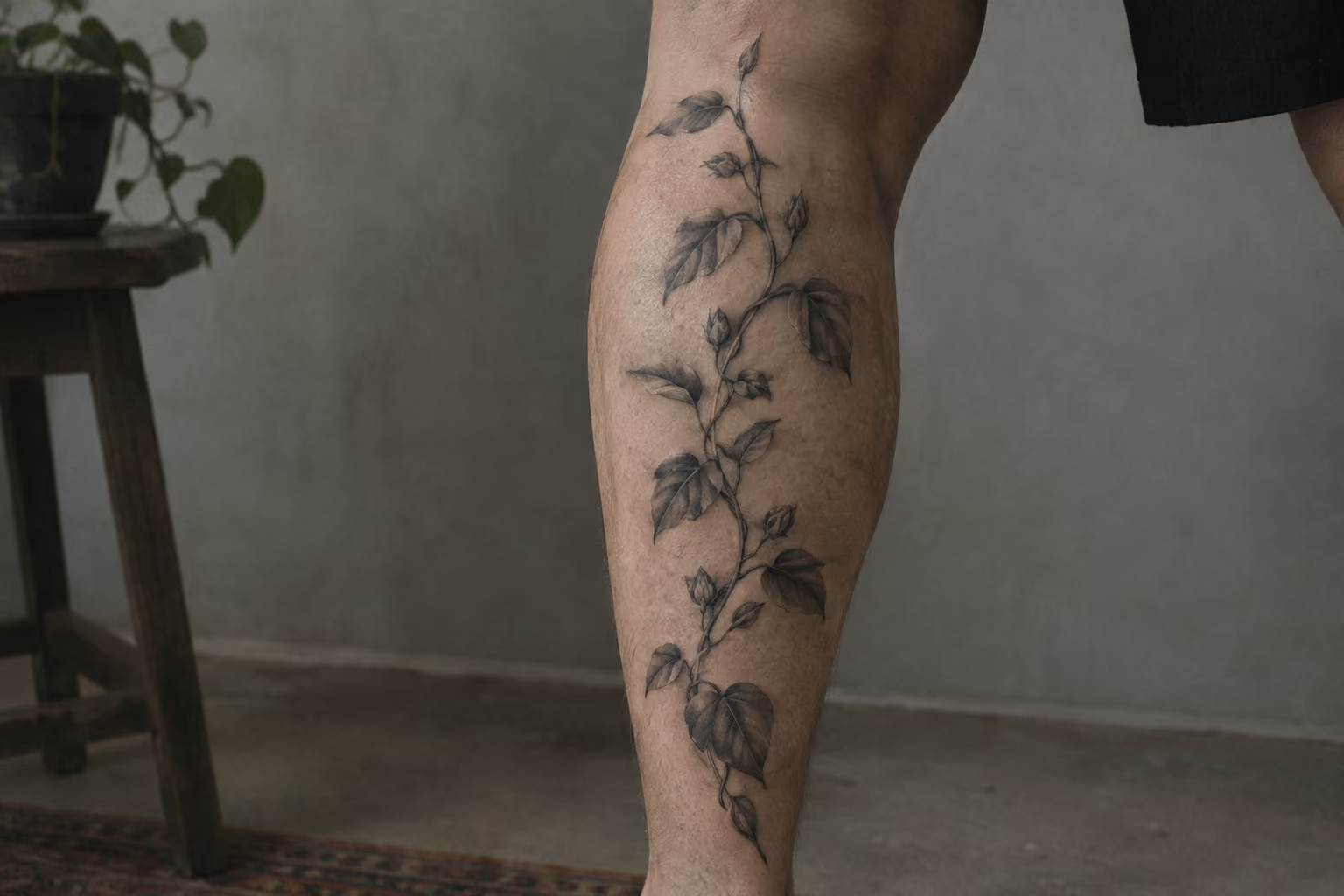
A vine tattoo isn’t defined by a fixed shape. It’s defined by movement: a trailing line of leaves and tendrils that can wrap, drape or run straight along a specific curve of the body (7), instead of sitting still like a classic emblem. Because of that, three decisions shape the result more than any reference photo you bring in: which plant you choose, the route the stem takes, and where on your body it ends up.
Here’s the short version of the trade-offs before we get into detail. A vine bends to almost any contour and scales from a single stem behind the ankle to a spiral climbing the whole arm. It also offers real symbolic choices: ivy, grapevine, or flowers worked into the stem. The downsides are just as concrete. A full wrap can never be seen in one view. Fine leaf detail softens and blurs as it ages, faster in the sun. A vine with identical, evenly spaced leaves looks flat, like wallpaper trim rather than a living plant.
✓ Pros
- A continuous stem can connect several small motifs without making them feel like separate tattoos.
- The plant's silhouette can be planned around a body contour rather than forced into a fixed emblem shape.
✗ Cons
- A complete wrap has no single view that shows every detail at once.
- Small leaf features can lose their definition as linework spreads over time.
Vine Tattoo Meaning: Growth, Connection, and Renewal
The most common vine tattoo meanings are growth, resilience, connection and renewal, but meaning in tattooing is mostly personal rather than fixed, and a vine doesn’t have to mean anything beyond liking how it looks (4). Plenty of people pick a vine because they like how a trailing stem looks on a forearm, and that is a complete reason.
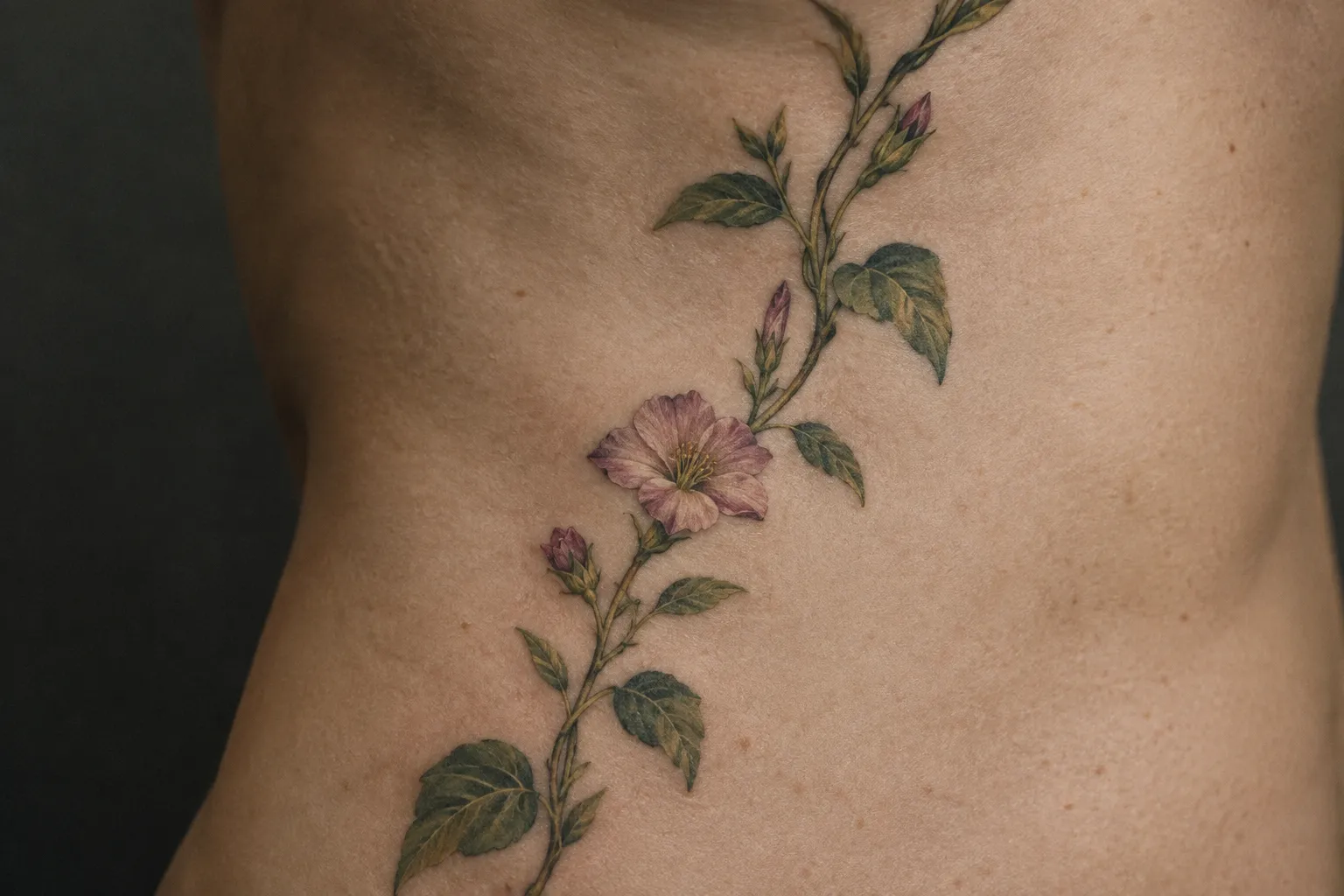
The readings do have history behind them. Vine imagery has been linked to growth, strength, life and connection in ancient Celtic and Greek symbolism, and later picked up Christian associations with unity and spiritual growth (9). The grapevine carries its own separate thread: fertility, abundance and prosperity (9). In ancient Greece and Rome, ivy and grapevine were both linked with Dionysus and stood for vitality, celebration and eternal life (1).
Here’s how each common reading maps onto the design itself:
- Growth: the stem climbs. A vine that travels upward, from wrist toward elbow or from ankle up the calf, reads as growth more clearly than one that runs sideways or loops in a closed ring.
- Resilience: vines thrive in different environments and recover from damage (1). A gnarled stem with thicker linework and a few broken-off tendrils leans into this reading.
- Connection: a single stem links points along the body. People use that literally, threading small flowers, initials or birth flowers along one continuous vine so separate references sit on one line.
- Renewal: new buds, unfurling leaves and tendrils at the tip of the stem push the design toward new beginnings.
In practice, a vine is a botanical, fine-line or floral design first and a symbol second: most people choose it for how it moves with the body and add meaning through the leaves or flowers along it (7). Clients usually ask for a route and a look, and the meaning gets attached afterward if at all. That’s fine. Just be aware that a viewer will read “plant” before “renewal.” A Celtic reading, for instance, comes through knotwork: in Celtic art, vine patterns are woven into knotwork that suggests connection and the cycles of life (1), and a delicate fine-line stem without it won’t carry that reference.
So, the practical takeaway: if the meaning matters to you, choose the specific plant and the direction of travel to carry it. A generic leafy stem going sideways says “botanical.” An ivy climbing upward, or a grapevine heavy with fruit, says something more specific.
Ivy Tattoos: Fidelity, Endurance, and Choosing the Right Plant
An ivy vine tattoo usually signals fidelity and endurance, while a grapevine signals abundance, so choose the plant for the message before you choose the style (4). This is the decision most people skip. They book “a vine,” the artist draws generic almond-shaped leaves, and the specific association is gone.
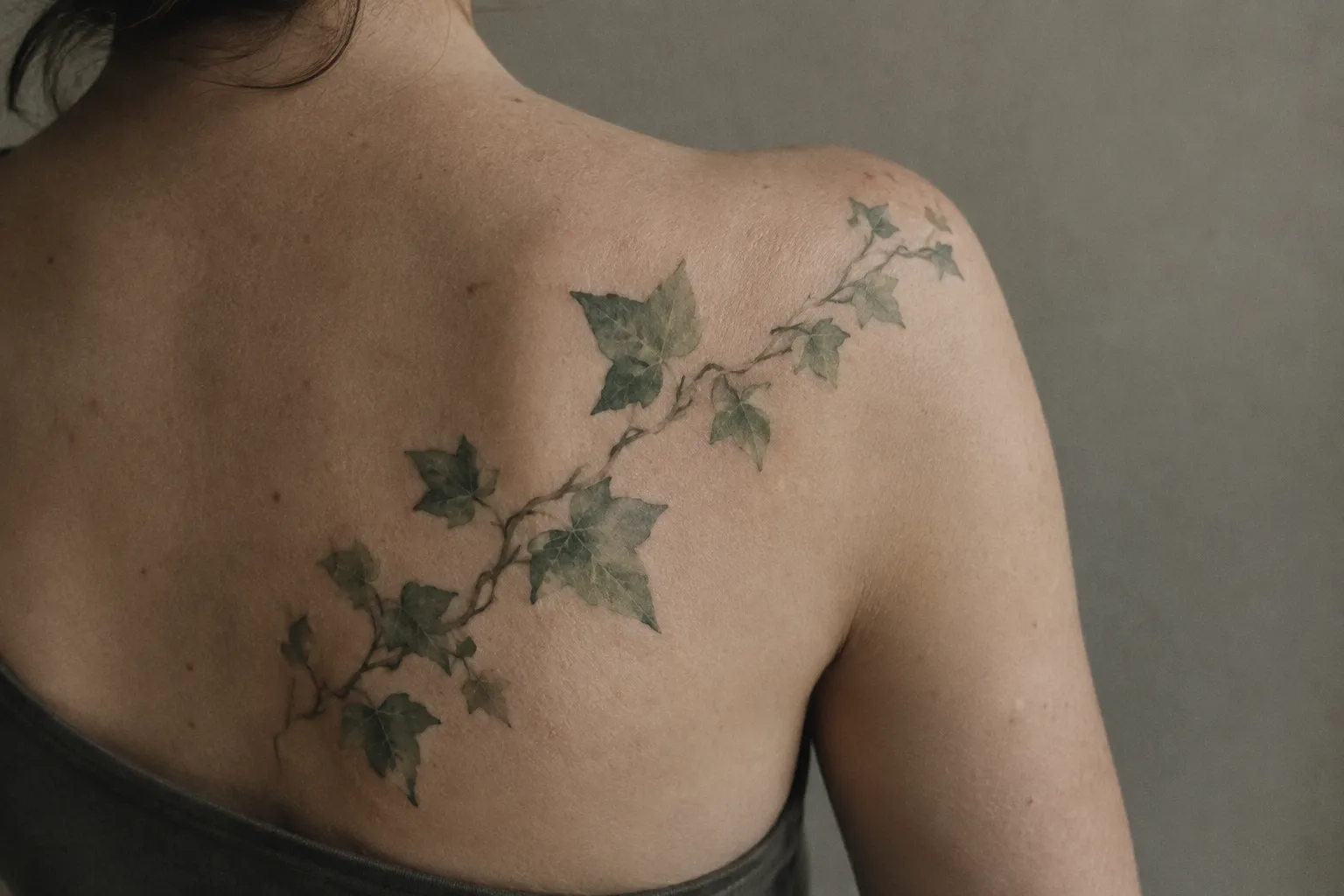
Ivy earns its reading from how it grows: it’s an evergreen climber that clings firmly to the bark or wall it climbs (11). The link to fidelity is old. Greek priests presented a wreath of ivy to newly married couples, and ivy has long been regarded as the emblem of fidelity (11); Kate Greenaway’s Victorian Language of Flowers lists it simply as “Fidelity. Marriage.” (10). Ivy vine tattoos still carry that reading of fidelity and friendship (7). If you’re getting a design to mark a long relationship, a friendship that’s lasted decades or loyalty to a family, ivy is the plant that carries that without needing a banner.
Grapevine works differently on skin. The leaves are broad and lobed, the tendrils curl hard, and you can hang bunches of grapes from the stem. That makes it a heavier, more ornamental design and gives you natural focal points. It reads as abundance and prosperity (9), which suits someone marking a good stretch of life rather than a bond.
Make the leaf recognizable
The meaning only works if someone can tell what plant it is. Ivy has a distinct leaf: angular and five-lobed on its climbing stems (11). Draw that shape and anyone who gardens will name it. Draw a smooth teardrop and it’s just “a leaf.”
This is where small fine-line ivy runs into trouble. Shrink an ivy leaf too far and the lobes close up as the lines spread over the years, so a recognizable leaf turns into a blob. If ivy specifically matters to you, either give the leaves enough room to keep their points, or accept fewer, larger leaves along the stem instead of many tiny ones.
A simple decision rule
- Want loyalty, commitment or staying power? Ivy, with clearly lobed leaves.
- Want abundance, celebration or a good year? Grapevine, with at least one fruit cluster as a focal point.
- Want growth or new starts without a specific plant? A generic leafy vine climbing upward, with buds at the tip.
- Want it for looks alone? Pick whichever leaf shape fits your placement and stop worrying about it.
Flowing Body Placement: Where Vines Travel Best
The forearm, ankle, shoulder, ribcage, thigh and wrist are the most frequently suggested spots for a vine, which can run lengthwise, curve around a limb or encircle a wrist or ankle like a bracelet (1). Where to put one comes down to two layers of planning: first the route along that body part, then, for any full wrap, which side reads as the front, because a complete wrap can’t show every angle at once (7).
Here’s how the route behaves on each spot; the comparison table below has the pain, visibility and sun-exposure specifics.
- Forearm: the most common choice and the easiest to get right. A vine can run along the inner or outer forearm or spiral from wrist to elbow, and it follows the arm’s natural taper instead of fighting it (4).
- Wrist: suits a band or a short stem running up from the wrist, though the bone and thin skin there mean watch straps and hand-washing keep the area working against the healing linework.
- Ankle: a natural place for an encircling band or a stem that climbs onto the calf.
- Shoulder: a vine drapes over the shoulder cap and can trail down toward the collarbone or the upper arm (6).
- Ribcage: long, curving, side-body routes that follow the line of the ribs or wrap toward the hip, one of the harder spots on the tattoo pain scale for most people.
- Thigh: the biggest flat run of skin on this list, with room for a long vine with flowers and leaf clusters.
Lengthwise, curving or encircling
A lengthwise vine runs along the long axis of a limb. It’s the cleanest-looking option, reads well from one angle and doesn’t need a wrap decision. A curving route bends around part of the limb, wrapping a quarter or half of the way and showing off the vine’s movement without hiding much. An encircling route goes all the way around as a band or spiral. It’s the most dramatic option and needs the most planning, which is the next section.
One more thing before you pick a spot. The wrist, ankle, shoulder and forearm get the most sun, and the ribcage, thigh and wrist take the most friction from clothing and straps. Both affect how fine leaves heal and age, so the aftercare section below is matched to these spots.
Vine Tattoo Placement at a Glance
| Forearm | Wrist | Ankle | Shoulder | Ribcage | Thigh | |
|---|---|---|---|---|---|---|
| Relative pain | Outer forearm easier than inner forearm | More than outer forearm | More than outer calf | Less than ribs | More than forearm | Outer thigh easier than inner thigh |
| Visibility and concealability | Visible in short sleeves; easy to cover | Often visible; sleeves can cover it | Usually covered by shoes or socks | Easy to hide; exposed in tank tops | Hidden under most clothing | Usually covered |
| Wrap-around suitability | Good for a wrist-to-elbow spiral | Good for a short band | Good for an encircling band | Good for a partial drape around the shoulder cap | Good for a long curve toward the hip | Good for a long, broad route |
| Sun exposure | Plenty of sun | Frequent exposure | Exposed in sandals | Exposed in sleeveless clothing | Usually covered | Usually covered |
Wrap-Around Designs: Following the Body from Wrist to Ribcage
A wrap-around design hides part of itself from any single viewing angle, so you need to decide which side reads as the front before the session, not discover it in the mirror afterward (7). This is the planning step that separates a wrap that looks composed from one that looks like a ring of leaves someone dropped on your arm.
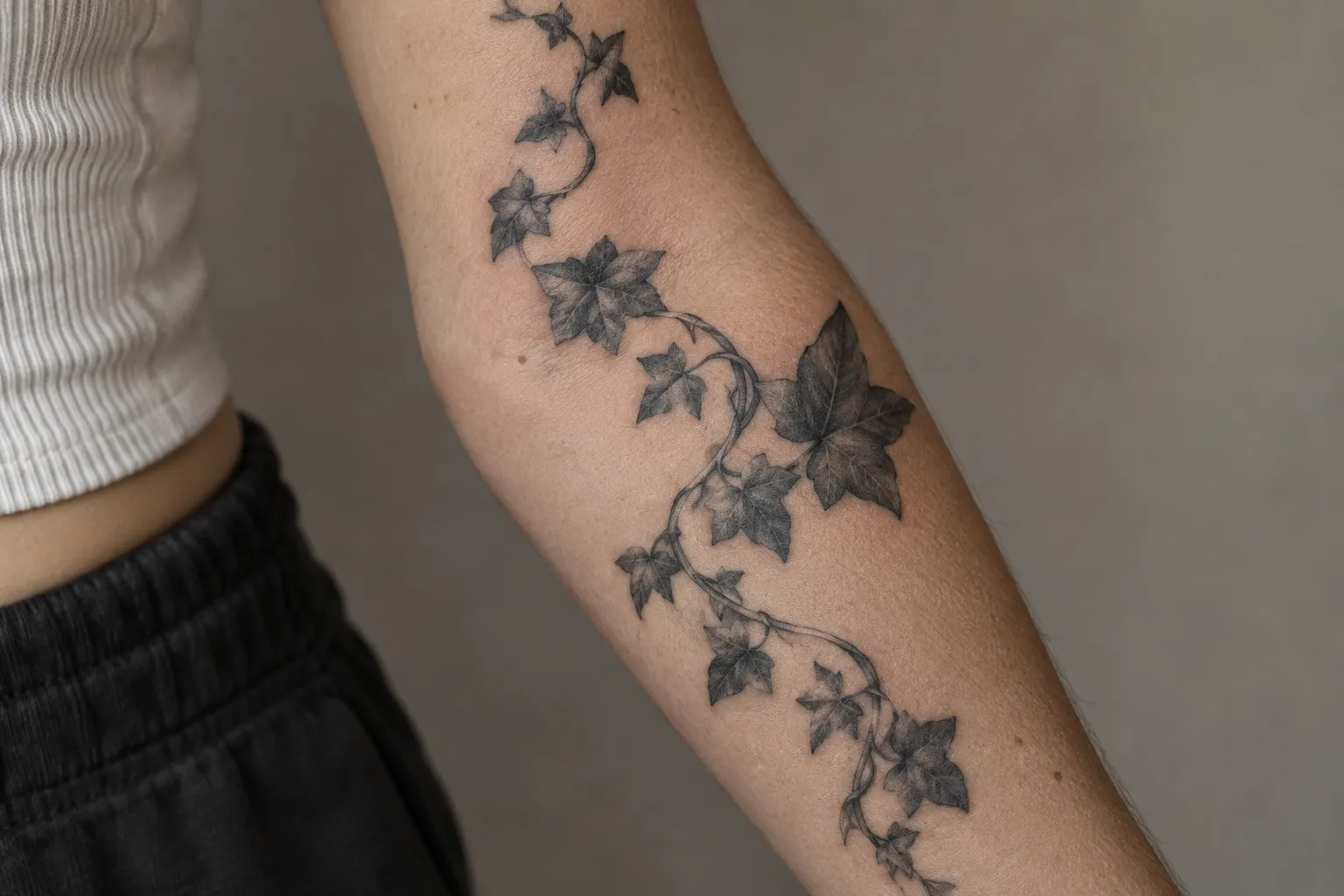
Choosing the Front-Facing Side Before You Book
Think about how people will see the piece. On a forearm wrap, most people see your outer forearm when your arm hangs or rests on a table, but you see your inner forearm. On an ankle band, the outside of the ankle faces the world when you stand. Decide which view matters to you, then put the best material there: the biggest flower, the densest leaf cluster or the grape bunch.
Detail placed on the hidden side of a complete wrap is detail few people will see. If you need a single image for a photo, choose one angle and build the composition around it. For the back side of the wrap, keep it simpler: a bare stretch of stem, a single leaf or a tendril. That keeps the design continuous without burying your best detail where nobody looks.
During the consultation, ask to see the stencil on the actual body part and test it while the limb moves, because flexing and twisting change how the design reads on skin (9). Look at it from more than one angle: front, back, arm raised, arm down. Stencils can be repositioned in minutes. Linework can’t.
Here’s the check I give clients: wherever the vine will wrap around the limb, you should be able to point to the spot that’s meant to be seen first. If you can’t, the design isn’t finished yet.
Wrist and Ankle Bands vs Forearm Spirals
Wrist and ankle wraps read as delicate bands. They’re short routes, so there’s not much room for movement, and the vine works more like jewelry. Keep the stem thin, the leaves few and simple, and let one small flower or bud mark the front.
A forearm or upper-arm spiral creates a longer path for the vine to travel. This is where the plant gets to behave like a plant. Instead of a perfectly level, uniform ring, route the stem upward on a slight diagonal so it climbs as it wraps. A flat ring looks like a bracelet even on a large arm. A rising spiral looks like it grew there. This also means a spiral can be extended later: a wrist piece can grow into a half sleeve over time by adding sections, and done well, it won’t look patched together (4).
Detailing goes in opposite directions depending on scale. Small vines read best with simple leaf outlines and no veining, because too much texture can blur at smaller scales (7). Long wraps do better with a few larger “resting points,” a leaf cluster or a bud where the eye stops, instead of the same detail spread evenly along the whole stem.
Planning a wrap, step by step
Working out a wrap in the right order keeps it from turning into a ring of leaves slapped on your arm. The sequence below is what I walk clients through before the stencil goes anywhere near skin.
Plan a Wrap-Around Vine Tattoo
Work out the plant, route, viewing angle and detail before the stencil is finalized.
- 1
Choose the plant
Select ivy, grapevine or a generic leafy stem according to the meaning or look you want.
- 2
Map the stem route
Sketch the stem along the limb's shape before adding leaves, so the route follows the body rather than cutting across it.
- 3
Choose the front-facing side
Mark the angle you most want people to see, then reserve that side for the strongest design detail.
- 4
Place resting points
Position a leaf cluster, bud or flower along the route, with the most prominent feature on the chosen front side.
- 5
Set the detail level
Keep a small band's leaves simple; use varied leaf sizes and clusters to give a longer spiral room to read.
Design Variations: Minimal Stems, Florals, and Leaf Clusters
Vine designs can be grouped into three broad families: a minimal single stem for compact spots, a floral or botanical vine with a focal flower, and a larger vine built around leaf-cluster resting points. Vine styles age, cost and read very differently once they are on skin (4).
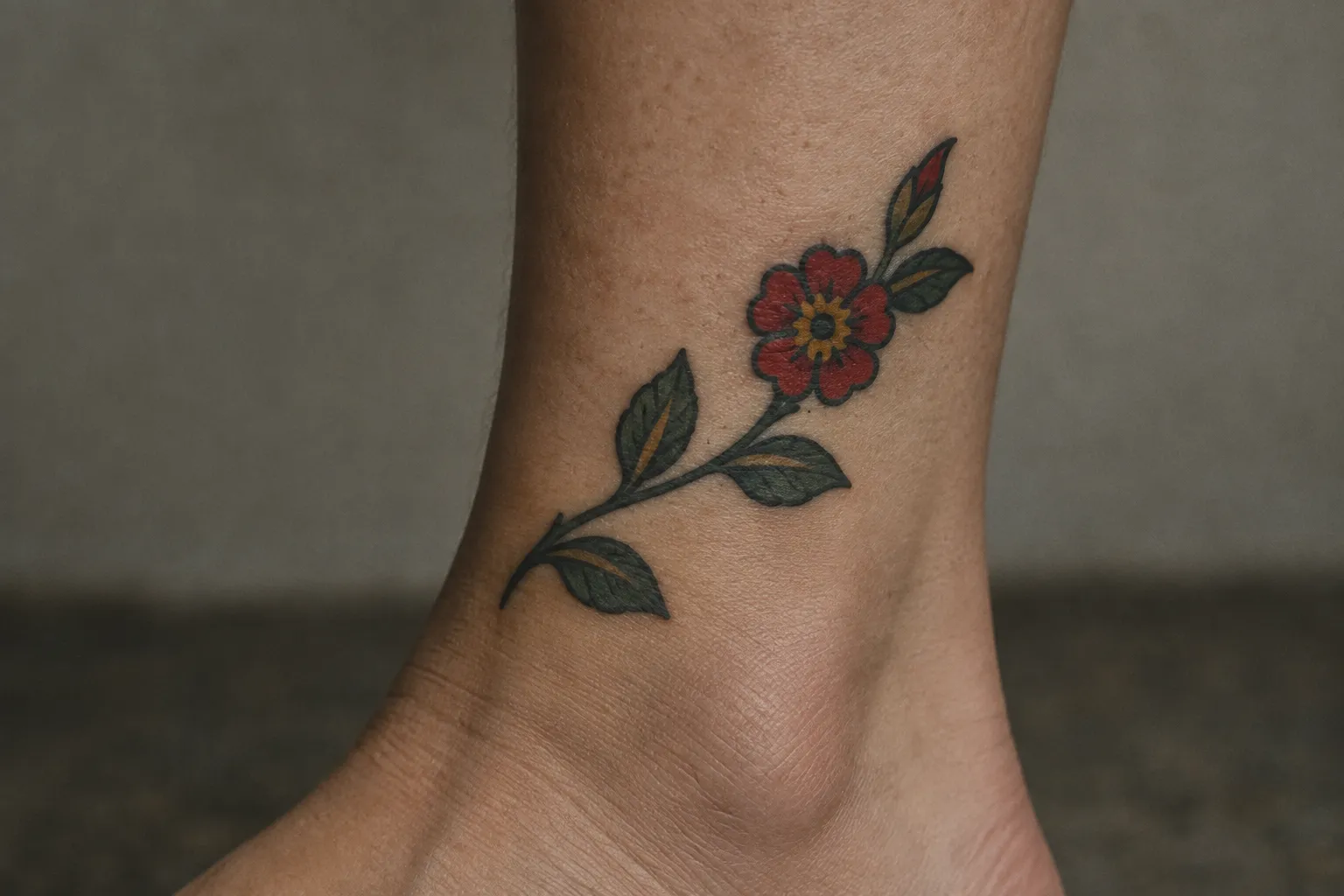
Minimal Single-Stem Designs
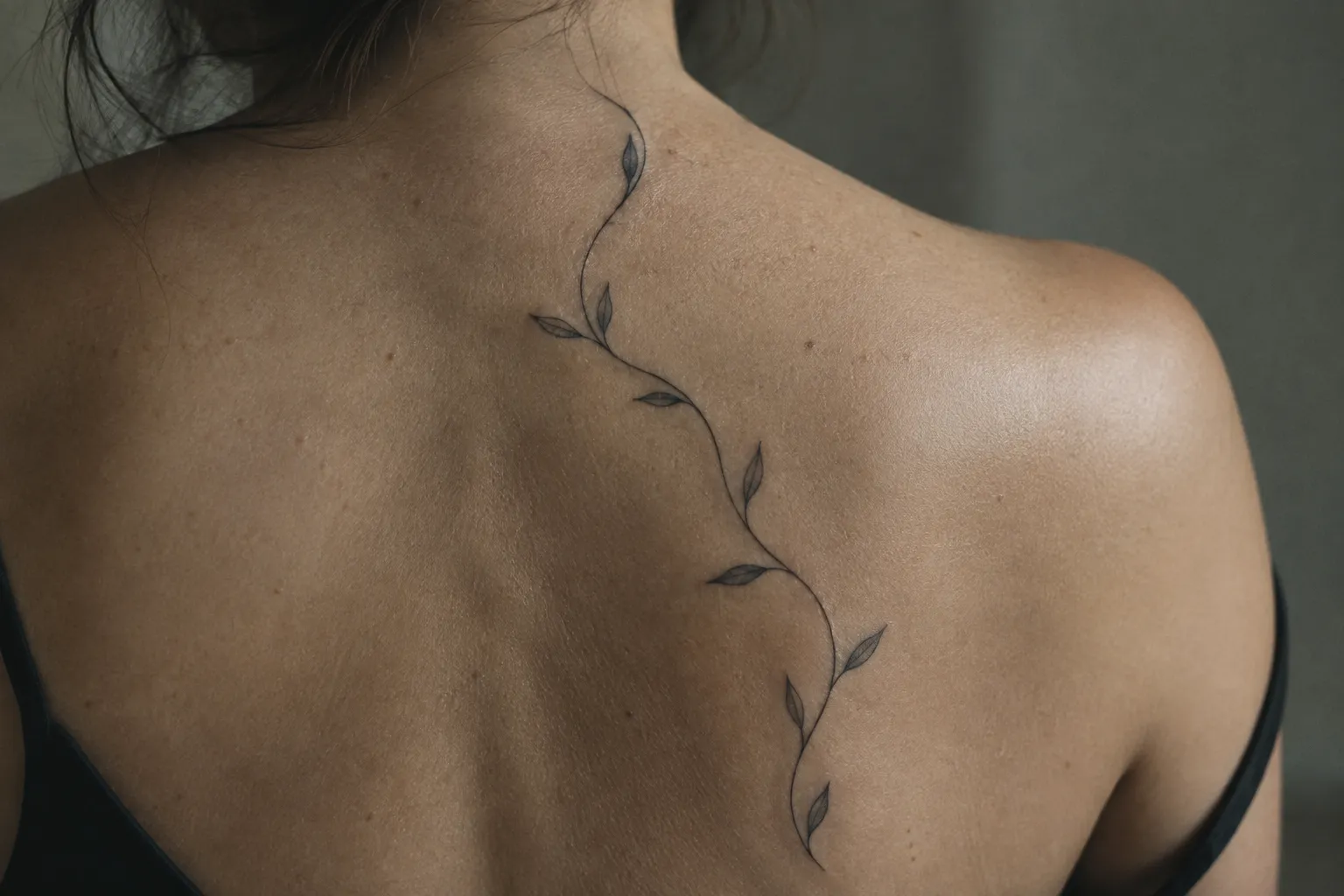
A single stem with simplified leaves suits a compact placement: inner wrist, behind the ankle, along the collarbone or running down the side of a finger toward the hand. Guidance for small vines favors a clear outline and limited leaf detail (7). In practice, that means open leaf outlines and little or no shading, and artists often advise going one needle size heavier than you think you want for the stem (4).
Be honest with yourself about aging. Fine-line work softens fastest of all the vine styles, and thin lines widen over the years (4). On the wrist and fingers, where skin moves and rubs constantly, that happens sooner. Give the leaves space between them so that when the lines spread, they don’t touch.
Floral and Botanical Accents
A focal bud, flower or leaf cluster can break up the vine, and the tattoo doesn’t have to form a complete ring: running the length of the spine, curling over the hip or draping across the collarbone are classic vine placements (7). A spine vine with a single flower at the nape, or a hip-to-ribcage stem with blooms where the curve is widest, uses the body’s lines without needing a wrap.
Floral vines age well if the blooms are drawn big enough (4). That’s the main rule, and it holds for flower tattoos in general. A tiny rose with twelve petals turns into a red dot. A larger rose with fewer, bolder petals stays a rose.
As for which flower is prettiest: there isn’t an answer, and anyone who gives you one is selling their portfolio. Pick based on the route and what the flower means to you. Broad, round blooms like roses and peonies anchor wide spots, the shoulder cap, the hip or the outer thigh. Small blossoms like forget-me-nots, jasmine or cherry blossom dot a thin stem without overwhelming it, which suits wrists and ankles. Birth flowers work well along a vine because you can thread several onto one stem for family members. Choose the flower whose shape fits the space, then check that it still reads at the size you can afford.
Leaf-Cluster Resting Points for Larger Wraps
On a long vine, the two mistakes I see most are identical leaves and tight clustering. Both make the design look flat or crowded, and fine-line guidance favors leaving a few points of visual rest and avoiding tight clustering, because crowded detail can blur as it ages (9). Real vines have big old leaves near the base, small new ones at the tip, and gaps where the stem runs bare.
Build the design around two or three resting points: a dense cluster of mixed-size leaves at the front, a bud near the end of the stem, perhaps a fruit cluster or flower in between. Keep the stretches between them sparse. Your eye travels from one resting point to the next, and that movement is what makes a vine look alive instead of printed.
Planning Your Session: Cost, Timing, and What to Decide First
A vine tattoo has no fixed price: the cost depends on size, placement and your artist’s rate, and chair time is the clearest predictor of what you’ll pay. Most shops charge by the hour or by the piece, with a shop minimum for small work, and rates vary a lot between cities and between artists in the same shop.
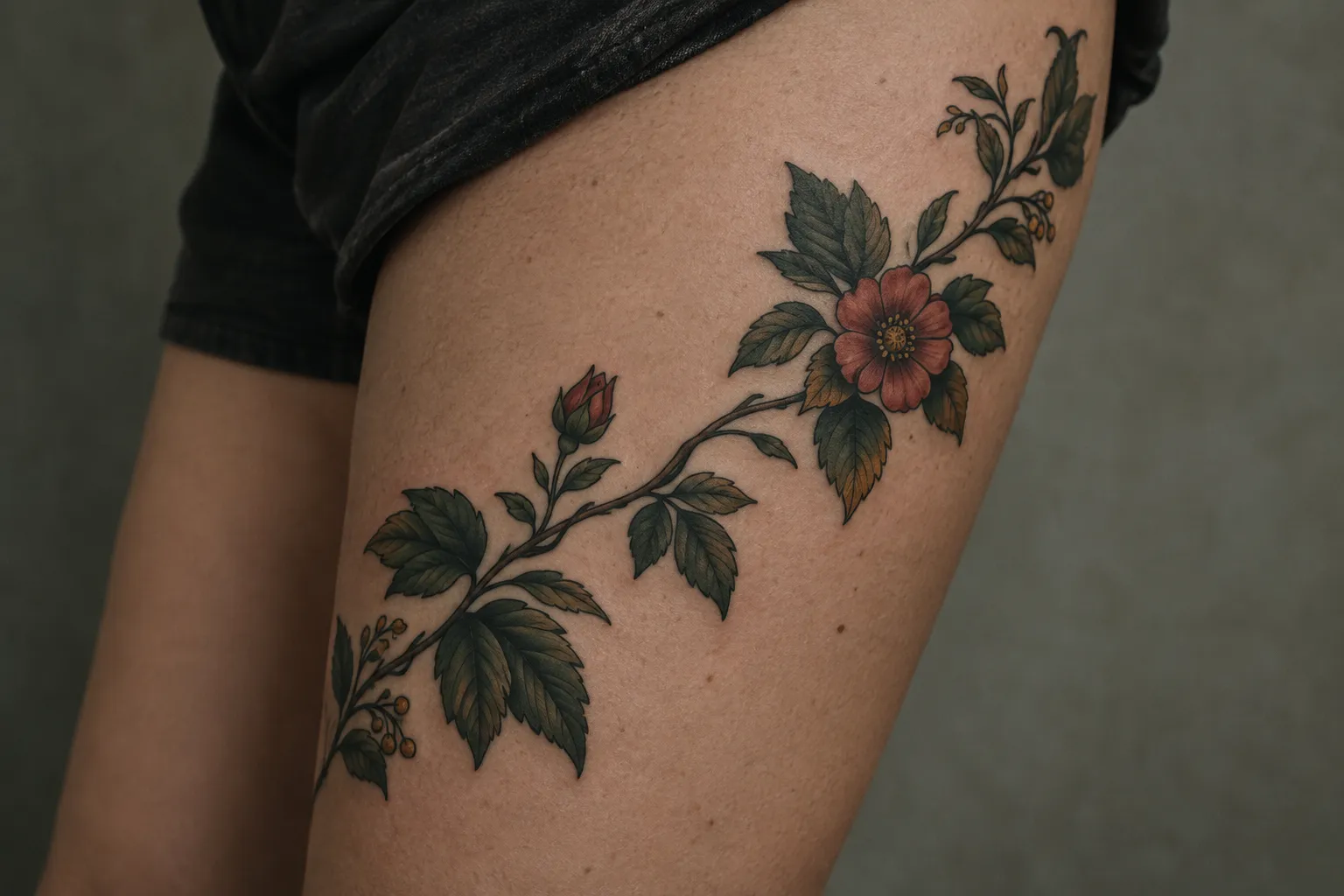
Chair time gives you a way to compare quotes. A fine-line or minimalist vine running along a forearm takes roughly 1-2 hours, while a floral vine runs about 3-6 hours and is often split over two sittings (4). A full spiral or a side-body vine from ribcage to thigh sits at the upper end of that range or beyond it. Placement adds time too. Ribs and the area around the ankle bone are slower to work than an outer forearm, because the skin stretches and moves and the client usually needs more breaks.
When you ask for a quote, ask how many hours the artist expects, not just the total. A cheap quote for a long wrap usually means simplified detail, so it’s worth knowing what’s being left out.
Before you book the session, settle these, because they decide how the design follows the body and which view it favors; a wrap cannot read front-facing from every angle at once (9):
- Plant type: ivy, grapevine, flowering vine or a generic leafy stem, chosen for the meaning or the look.
- Approximate route: lengthwise, curving or encircling, and on which body part.
- Wrap extent: a partial curve, a full band or a climbing spiral.
- Viewing side: which angle is the front, marked on the stencil.
- Future plans: whether you might extend the vine later, so the artist leaves an open end rather than a closed loop.
Bring those answers along with two or three reference images. Artists can work with a clear brief; they can’t read a vague one.
Aftercare for New Ink: Keeping Vine Linework and Leaves Crisp
Vine linework stays crisp when you moisturize lightly and protect healed skin with a broad-spectrum sunscreen of SPF 30 or higher (8). Vines are mostly line, and line is what you lose first, so aftercare matters a little more here than on a heavily shaded piece (4).
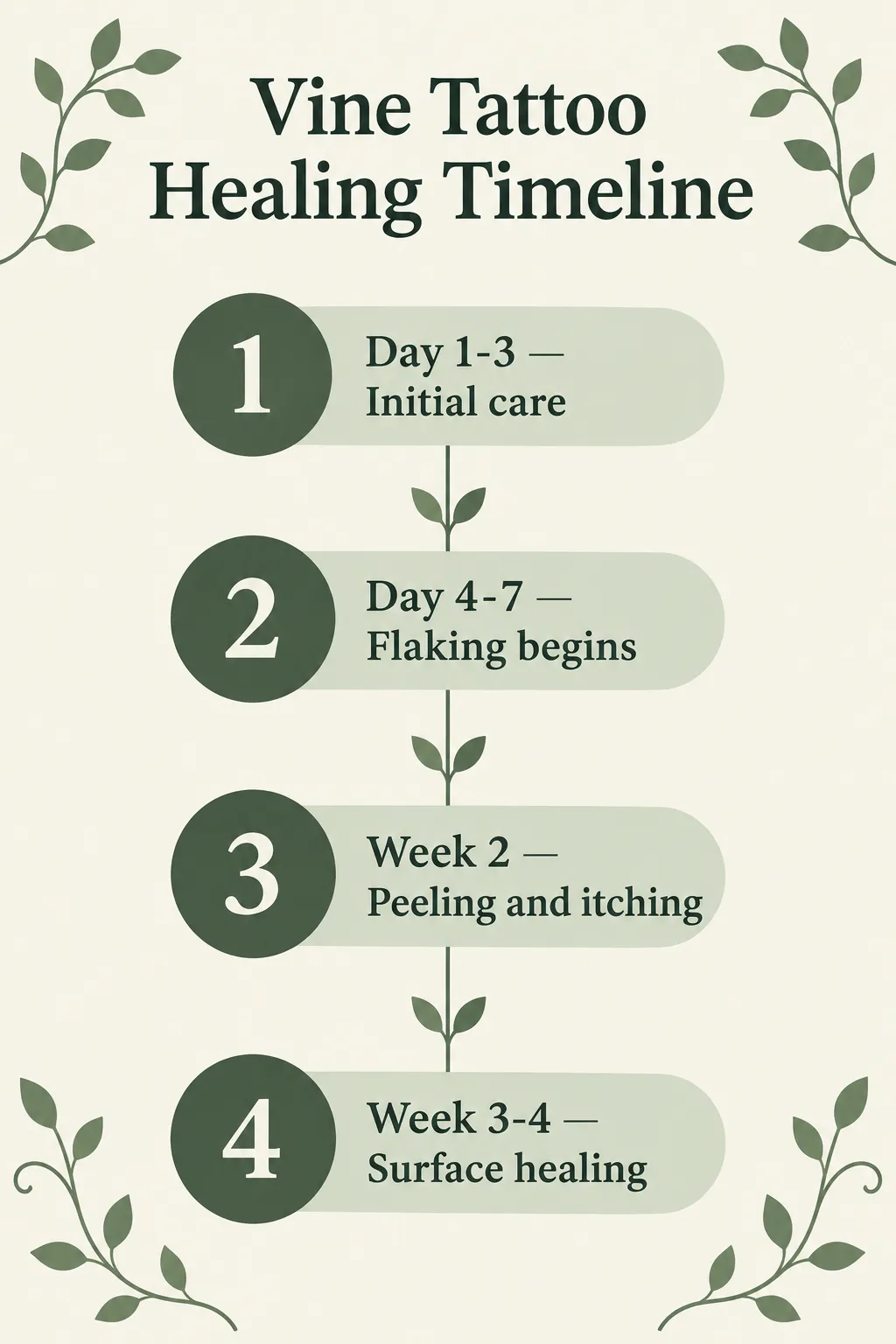 Vine tattoo healing progresses from initial care on Day 1-3 to flaking on Day 4-7, peeling in Week 2, and surface healing in Week 3-4.
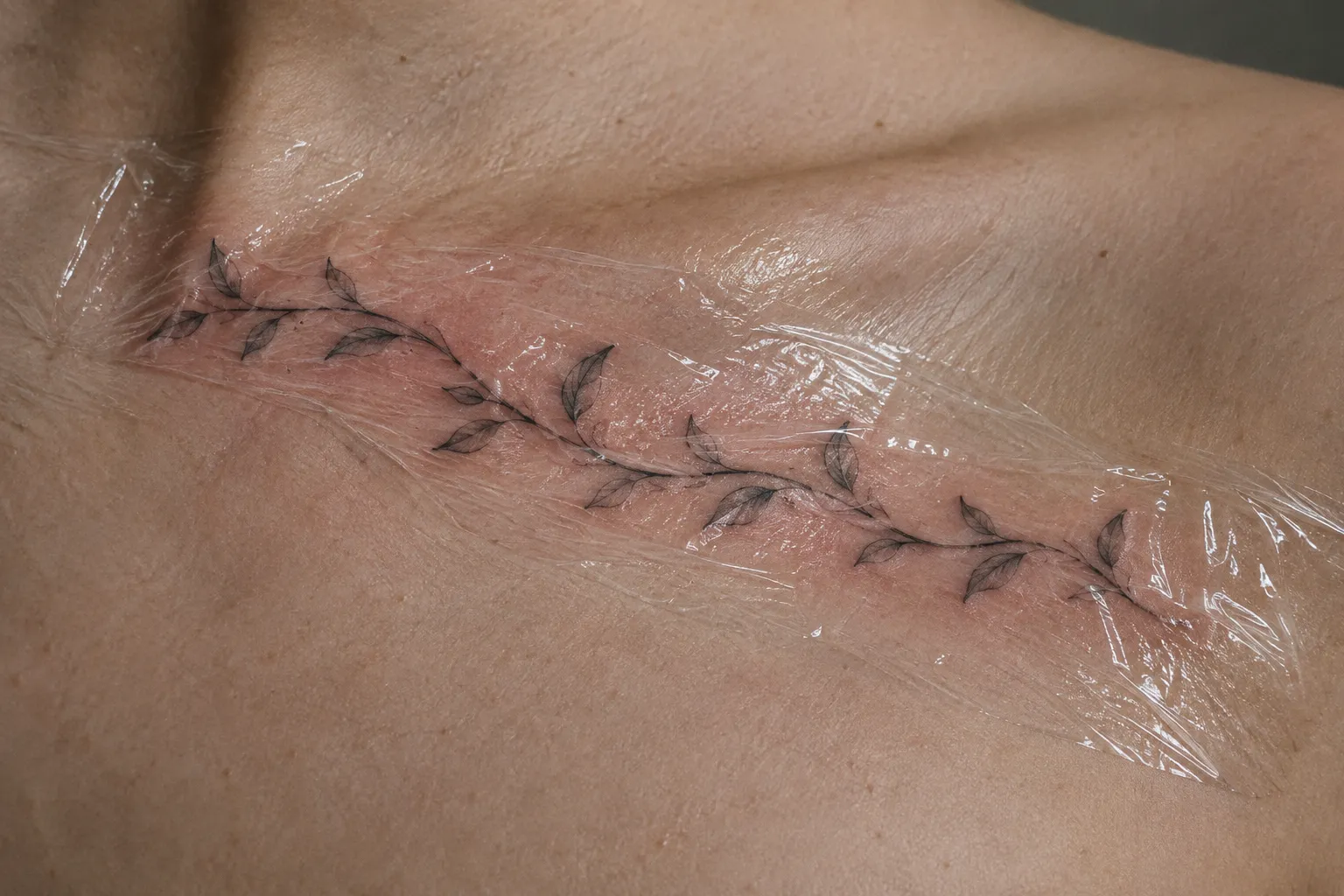
Here’s the healing timeline I give clients for a fine-line or floral vine; it follows the same week-by-week tattoo aftercare rules as any new tattoo:
- Day 1-3: follow your artist’s instructions for removing the wrap, wash gently with lukewarm water and a fragrance-free soap, pat dry with a clean paper towel. Expect some redness, swelling and a bit of oozing ink and plasma.
- Day 4-7: the skin tightens, looks shiny and starts to flake. Apply a thin layer of water-based lotion when it feels dry (8).
- Week 2: peeling and itching. Don’t pick or scratch; pulling a flake off a thin stem can pull ink with it. No baths, pools or the sea yet.
- Week 3-4: the surface looks healed while the deeper skin is still settling. Keep the piece out of direct sun for the first 4-6 weeks, with sun-protective clothing rather than sunscreen on skin that’s still peeling. From week 6, check the linework for gaps and ask your artist about a touch-up if a leaf healed patchy.
Moisturizing Without Fading the Ink
For the first 2-3 days a thin film of ointment is enough; after that, switch to a fragrance-free lotion when the tattoo feels dry. Apply a thin layer you can barely see on the skin and stop there. A heavy layer suffocates the skin: you want a sheen, not a coating (4).
The common vine spots need specific attention. On the ribcage, a bra band or tight waistband rubs right across the stem, so wear loose tops for the first couple of weeks. On the thigh, skin-on-skin friction when you walk can scuff a healing vine; loose shorts or a long skirt help. On the wrist, take off watches and bracelets until it’s healed, and dry the area properly after every hand wash.
Sun Protection Once It’s Healed
UV light can fade some tattoo inks (8). Once the skin has healed, use a broad-spectrum, water-resistant sunscreen with SPF 30 or higher, apply it 15 minutes before going outside, and reapply at least every 2 hours (8). Stay out of tanning beds and away from sunlamps, which can also fade tattoo ink (8).
This matters most for vines on the forearm, wrist, ankle and shoulder, the spots that see summer sun all season. A vine on the forearm gets more UV than almost any other placement (4), so it will soften sooner than the same design on the thigh. Covering it with clothing on long days outdoors is the simplest way to protect it.
Who Should Think Twice About This Design: Skin and Mole Considerations
Anyone whose planned vine route crosses moles should rethink the path or get the skin checked first, because tattooing over a mole makes early signs of skin cancer harder to see, and the AAD recommends choosing skin free of moles (8). A vine handles this better than most designs. The stem can bend around a mole, or the mole can sit in a gap between leaves, so you don’t have to give up the placement. Tell your artist about every mole along the route at the consultation so the stencil works around them.
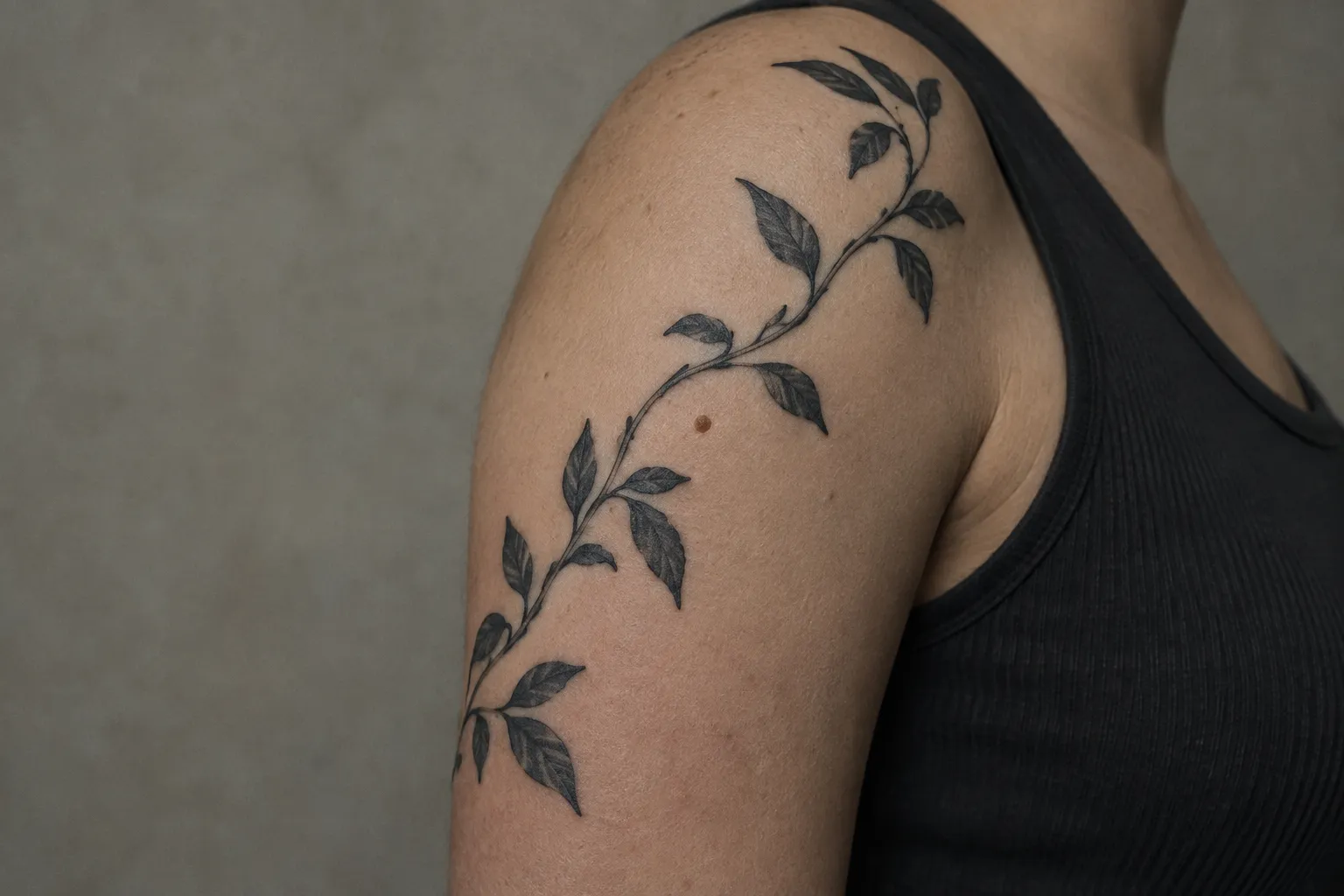
If a mole on the planned area looks different from your others, itches, bleeds or is changing in any way, the AAD says a dermatologist should examine it (12). Do that before you book, not after.
Reactions are the other thing to plan for. Tattooed skin can react right away or years later, and the AAD advises seeing a board-certified dermatologist if a reaction occurs or the tattooed skin changes (8). A raised, itchy, bumpy patch in one ink color long after healing isn’t something to treat yourself.
The rest is general: don’t get tattooed over sunburned, broken or irritated skin, and if you’ve reacted to a tattoo before, tell your artist at the consultation.
Frequently Asked Questions
- What do vine tattoos mean?
- A vine tattoo can represent growth, resilience, connection or renewal, but its meaning is personal rather than fixed; plant choice can add a more specific association.
- How much does a vine tattoo cost?
- Ask for an estimate based on the planned design and your artist's rate; compare what each quote includes, such as drawing time, detail and any later sitting.
- What flower looks best with a vine tattoo?
- Choose a flower whose silhouette suits the route and remains legible at the planned size; there is no universally prettiest flower for a vine.
- Who should avoid getting a vine tattoo?
- Anyone with a changing mole or active skin irritation on the planned route should pause and get medical advice before booking.
- What is the difference between ivy and grapevine tattoo meanings?
- Ivy is commonly linked with fidelity and endurance, while grapevine is linked with abundance; those associations draw on different histories and are not universal.
- How can I keep a wrap-around vine from looking like a flat ring?
- Plan an upward or diagonal stem path, vary the leaf groupings and make one viewing angle the composition's focal side.
- Does a vine tattoo hurt more on the ribcage than the forearm?
- For most people, ribcage placement hurts more than the outer forearm; the ribs have less cushioning and are more sensitive to the needle.
Three Decisions to Bring to Your Consultation
A vine works because it moves, so the three decisions that shape it are all about direction and placement. First, pick the plant for the message: ivy for fidelity and endurance, grapevine for abundance, a generic climbing stem for growth, or anything at all if you want it for the look. Second, lock in the route and, for any wrap, the front-facing side, with your best leaf cluster or flower placed where it will be seen. Third, match aftercare to where the vine sits: water-based lotion while it heals, extra care where straps and waistbands rub, and SPF 30 sunscreen reapplied at least every 2 hours once it’s healed and out in the sun.
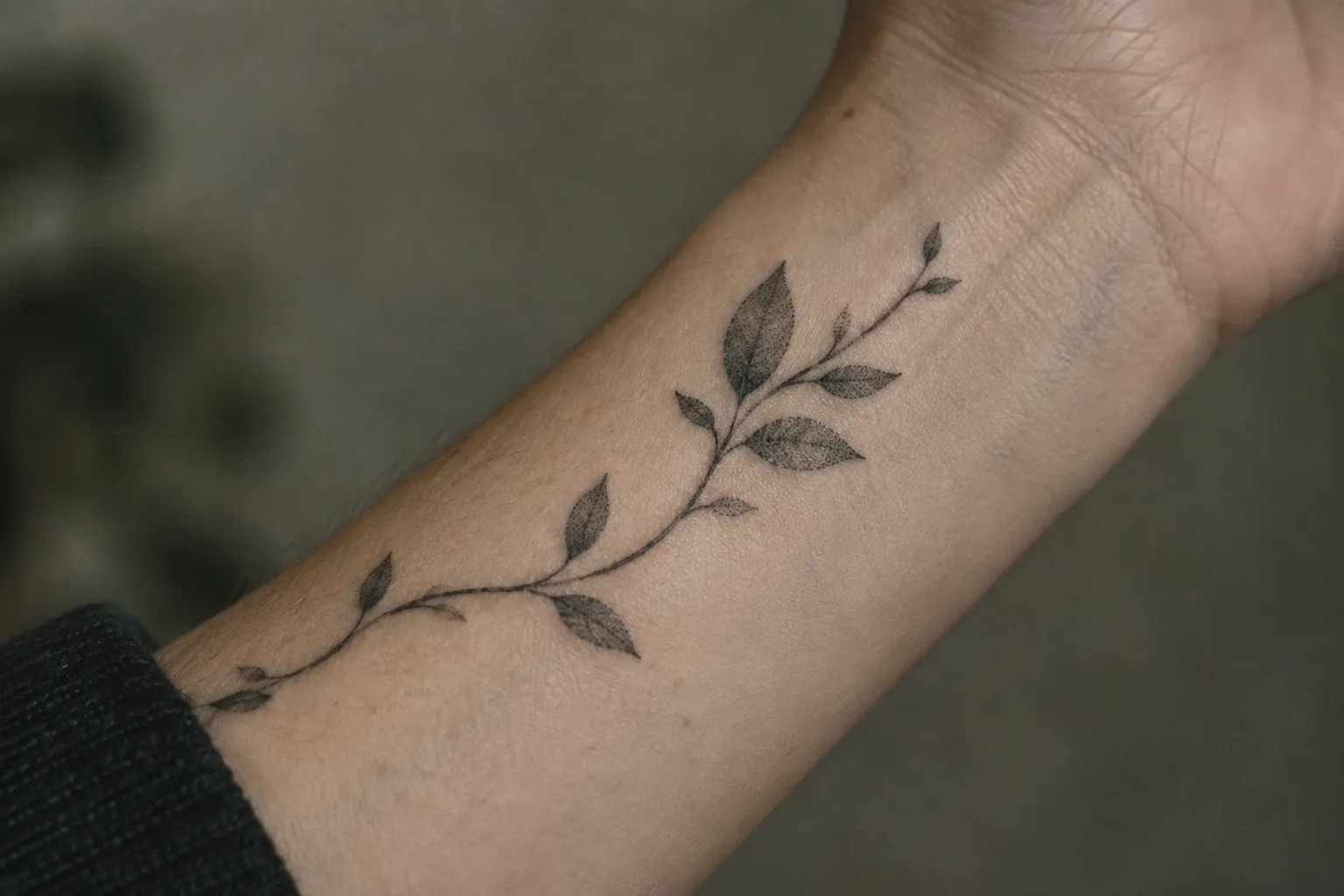
Walk into the consultation with those answers and the photo becomes a style reference, not the whole brief. Ask to see the stencil on your body from more than one angle, and don’t book until the side you care about faces the way you want it to.