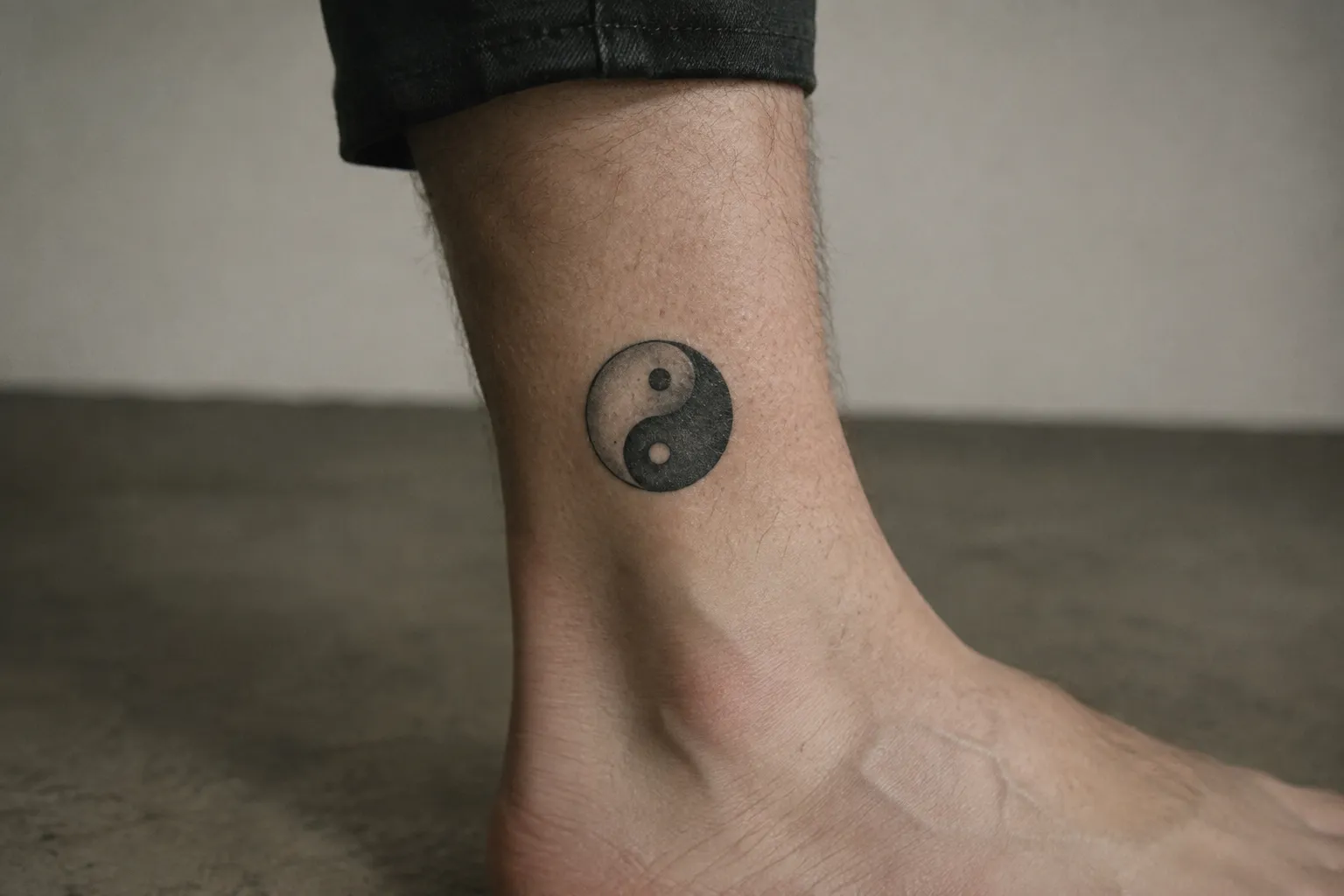
The black-and-white circle on a yin yang tattoo looks ancient and fixed, but its exact form has a traceable history. The Internet Encyclopedia of Philosophy credits the first version of the familiar symbol to Zhao Huiqian, who lived from 1351 to 1395 CE (1). Those dates give you a firmer anchor than the vague “ancient Chinese philosophy” line on most design pages. The design itself is about interaction and change between two forces. It is not a fight between good and evil, and that difference should guide how you design, size, and place yours.
✓ Pros
- A simple circle stays recognizable across a wide range of sizes.
- The motif can be personalized without requiring one fixed personal interpretation.
- It can work as a standalone design or as part of a paired tattoo.
✗ Cons
- The familiar emblem may feel less individual without a deliberate design choice.
- Dense additions can lose separation and clarity as they heal.
- Some viewers may read it through a good-versus-evil lens despite the intended meaning.
Yin Yang Tattoo Meaning: Balance, Not Good Versus Evil
The yin yang tattoo meaning comes from Chinese philosophy, where yin and yang are interdependent, constantly interacting forces that keep a dynamic balance, not opposing moral camps (1)(4). The Internet Encyclopedia of Philosophy describes three recurring themes: yinyang as the fabric of nature and mind, as interaction between waxing and waning, and as a process of harmonization that keeps all things in constant, dynamic balance (1).
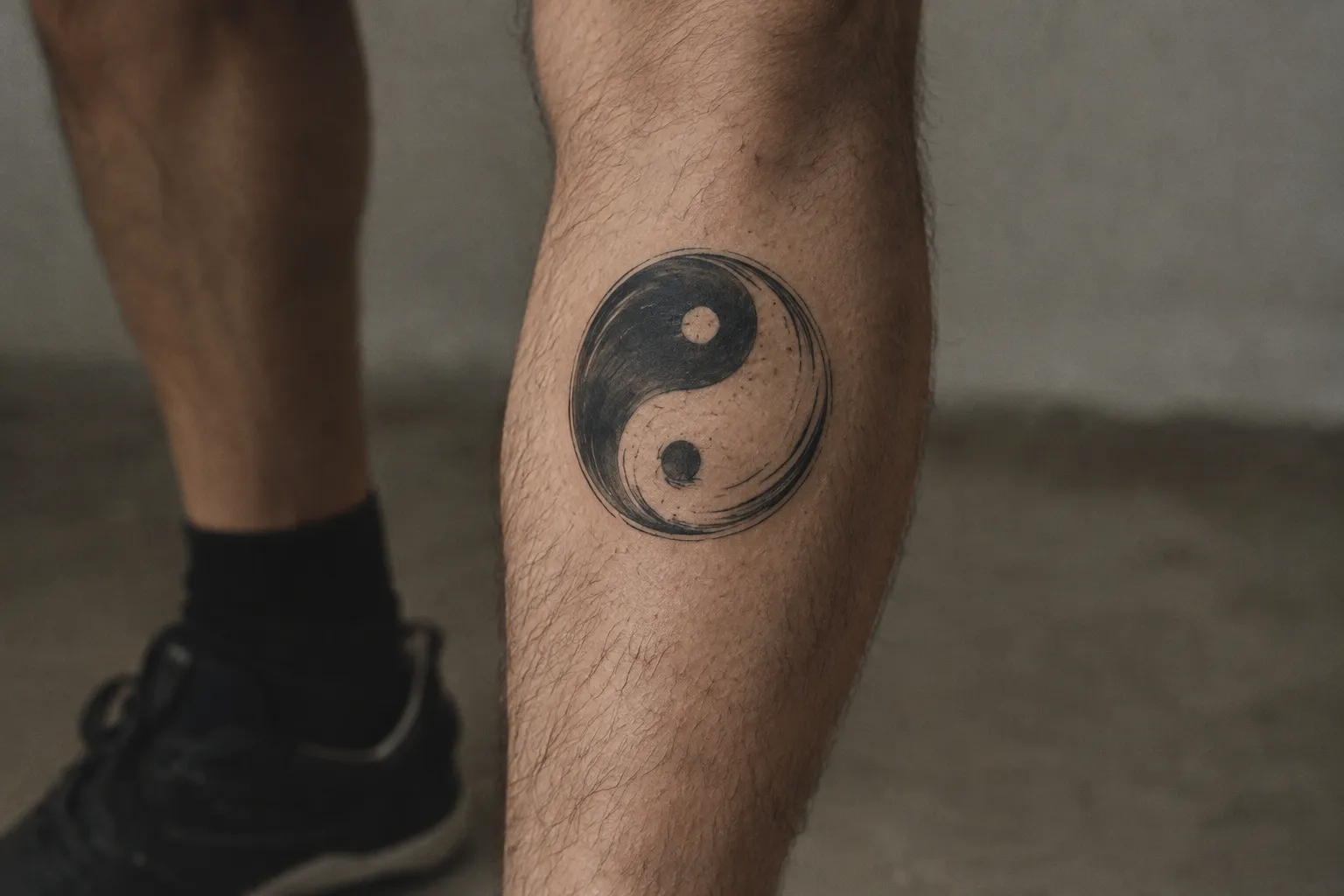
The emblem is the best-known symbol of Daoism, whose core idea, the Dao, describes the rhythmic balance and natural flowing patterns of the universe (2). The concept itself belongs to no single school: it is shared by different schools throughout the history of Chinese philosophy (1). Each half holds a small dot of the other color (2), a sign that the two opposites are intertwined and bound together within one circle (4).
Why yin and yang aren’t ranked good or bad
Western tattoo culture shifted the meaning. Many tattoo pages still cast the yin yang as good versus evil; one describes it as the conflict within a person between good values and evil addictions (11). The Internet Encyclopedia of Philosophy rejects that ranking: in none of the conceptions of yinyang it surveys is there a hierarchy of value between the two (1). The BBC makes the same point: the concept is not Western dualism, because the two opposites are not at war but in harmony (4).
Yin and yang are not static: the balance ebbs and flows between them, which is what the flowing curve where they meet shows (4). Reading it as “I’ve been through bad and good” is a personal choice you are free to make, but it is a modern Western layer, not the source idea.
The sunny-side, shaded-side origin of black and white
The black and white halves have a concrete origin. The original terms described the sunny side and the shaded side of a hill (1)(4). The first written record of the two characters together is a line from the Shijing (Book of Songs) about viewing the scenery at a hill: yang is the sunny side, yin the shady side, and both exist at the same time over the same hill (1). That is why light-and-darkness imagery fits the symbol without any invented duality.
Where the Yin Yang Symbol Comes From
The yin yang concept is ancient, but there is no clear way to date the familiar circular emblem or name its creator with certainty (1). The Internet Encyclopedia of Philosophy credits the first version to Zhao Huiqian (1351-1395 CE), after earlier diagrams such as the Taijitu (Diagram of the Great Ultimate) attributed to Zhou Dunyi (1017-1073 CE) (1). One tattooer’s guide notes that the diagram most people call a yin yang is properly the taijitu (14).
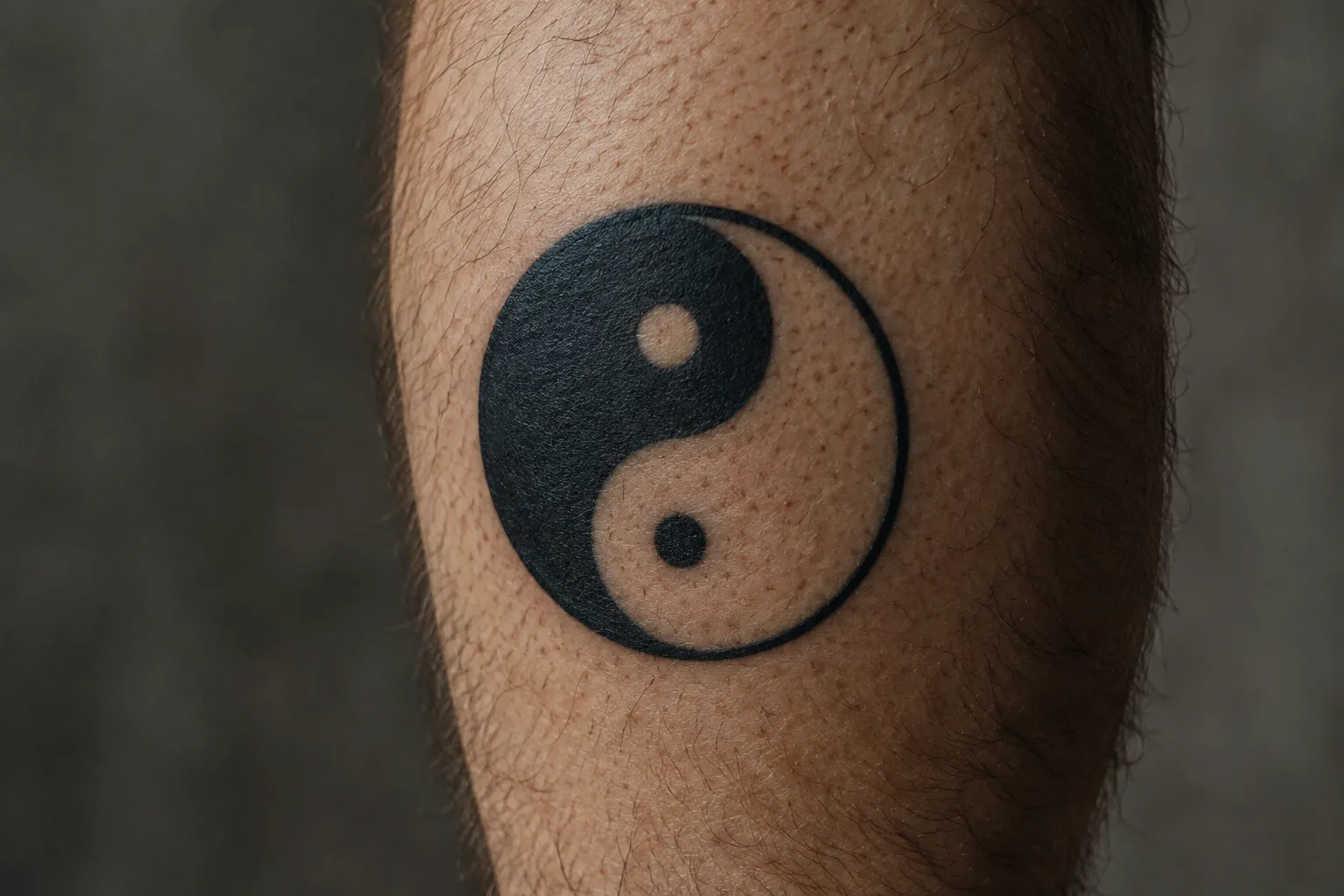
The philosophy runs far deeper than the drawing. The earliest characters for yin and yang appear on oracle bones used in divination at least as early as the 14th century BCE, where they describe natural phenomena such as sunlight by day and its absence at night (1). Daoism may have developed in China as early as the sixth century BCE (2). The two interlocking teardrops with opposite-color dots are a later visual shorthand for a much older idea.
If someone tells you the exact emblem on your forearm is thousands of years old, that’s a loose claim: the idea is ancient, the circle as we draw it has a traceable later history.
Design Variations: Koi, Dragons, Sun and Moon, and Other Motifs
Whatever you add, leave the circle, the two halves and the two dots intact and let what fills the halves do the personal work (14). Size the piece for the fill, not for the circle: a bare outline works small, while animals, a landscape or a mandala border need more room (14), and a smaller version needs fewer elements (10).
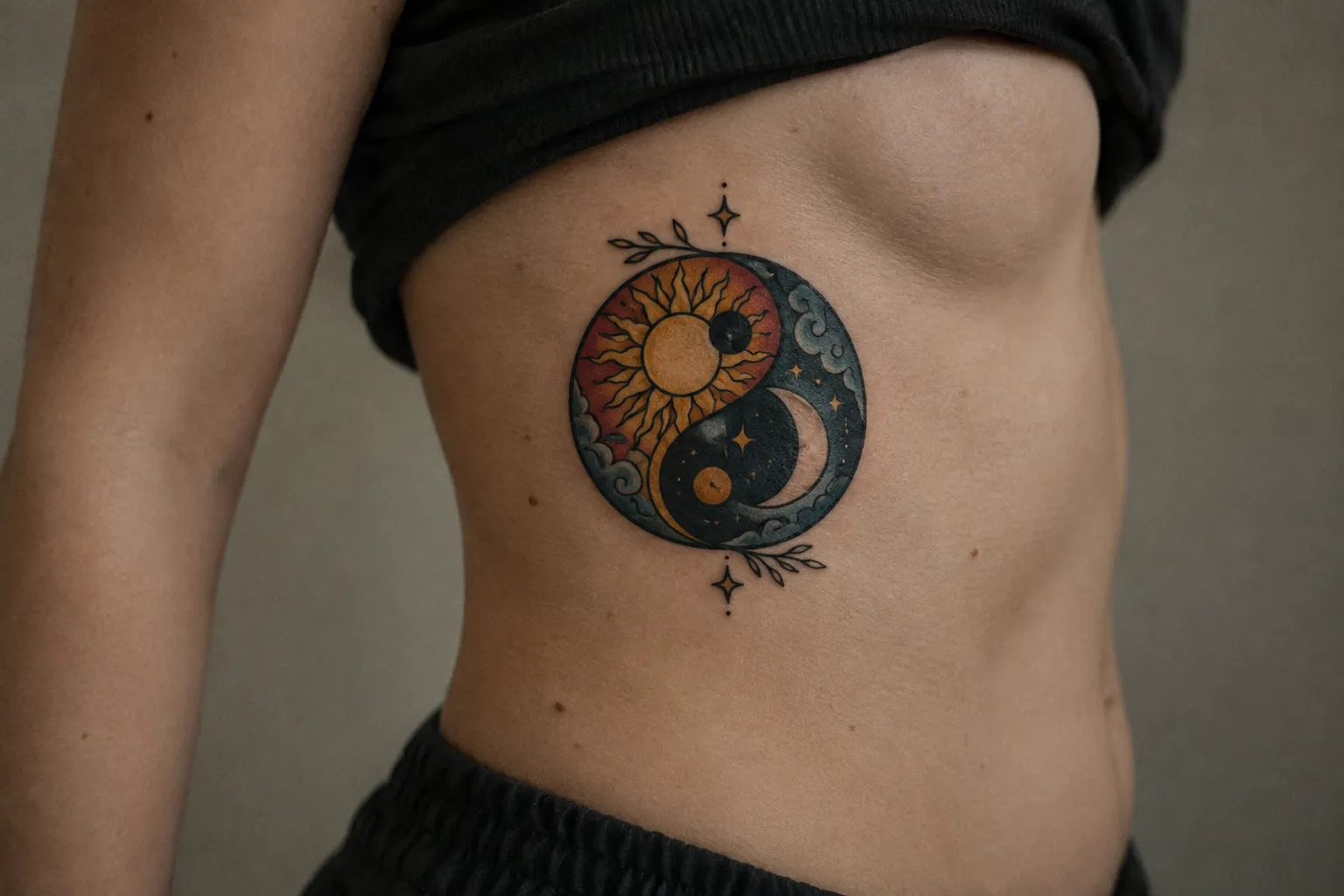
Tattoo idea pages give these combinations confident meanings; one reads the dragon version as the peaceful balance of a creature with immense destructive power (9). Treat such readings as design choices layered on the symbol, not as part of the philosophy.
Koi pairs swimming in opposite directions
Two koi, one dark and one pale, swimming in opposite directions so their bodies form the curve, are probably the most requested variation (14). The koi already carries perseverance in Japanese tattoo tradition (14), and the legend behind it is covered in our koi fish tattoo guide. That perseverance reading is the koi’s meaning, not the yin yang’s, so you’re stacking two ideas.
The pitfall: fins and scales need room. Ask for the scale work to be kept open rather than packed, because dense scales are the first thing to blur (14).
Dragon and tiger duos
The tiger and the dragon are described as the oldest animal pairing associated with the symbol in East Asian art: the tiger of the earth against the dragon of the sky (14). Both creatures need detail to look like themselves, so this is not a small tattoo: it suits the back, a chest panel or the full outer arm (14).
Sun and moon pairings
Sun and moon versions have a textual basis: in the Yijing (Book of Changes), yang is identified with the sun and yin with the moon (1). The light half carries the sun and the dark half the moon (14). One idea page recommends this version at medium to large sizes, the larger the more detailed (9).
Mandala and tree variations
A mandala border extends the circle outward in ornamental rings; the pairing holds together because both forms are about order radiating from a centre (14). The mandala brings its own religious history, so read up on it first. A tree version puts branches in one half and a mirrored root system in the other, read as growth and foundation (14). Neither combination has a fixed meaning in the philosophy. Ask for ring and lattice lines to be spaced generously, because tight repeating geometry tends to grey out into a solid tone as it ages (14).
Small Yin Yang Designs and Placement That Keeps Them Legible
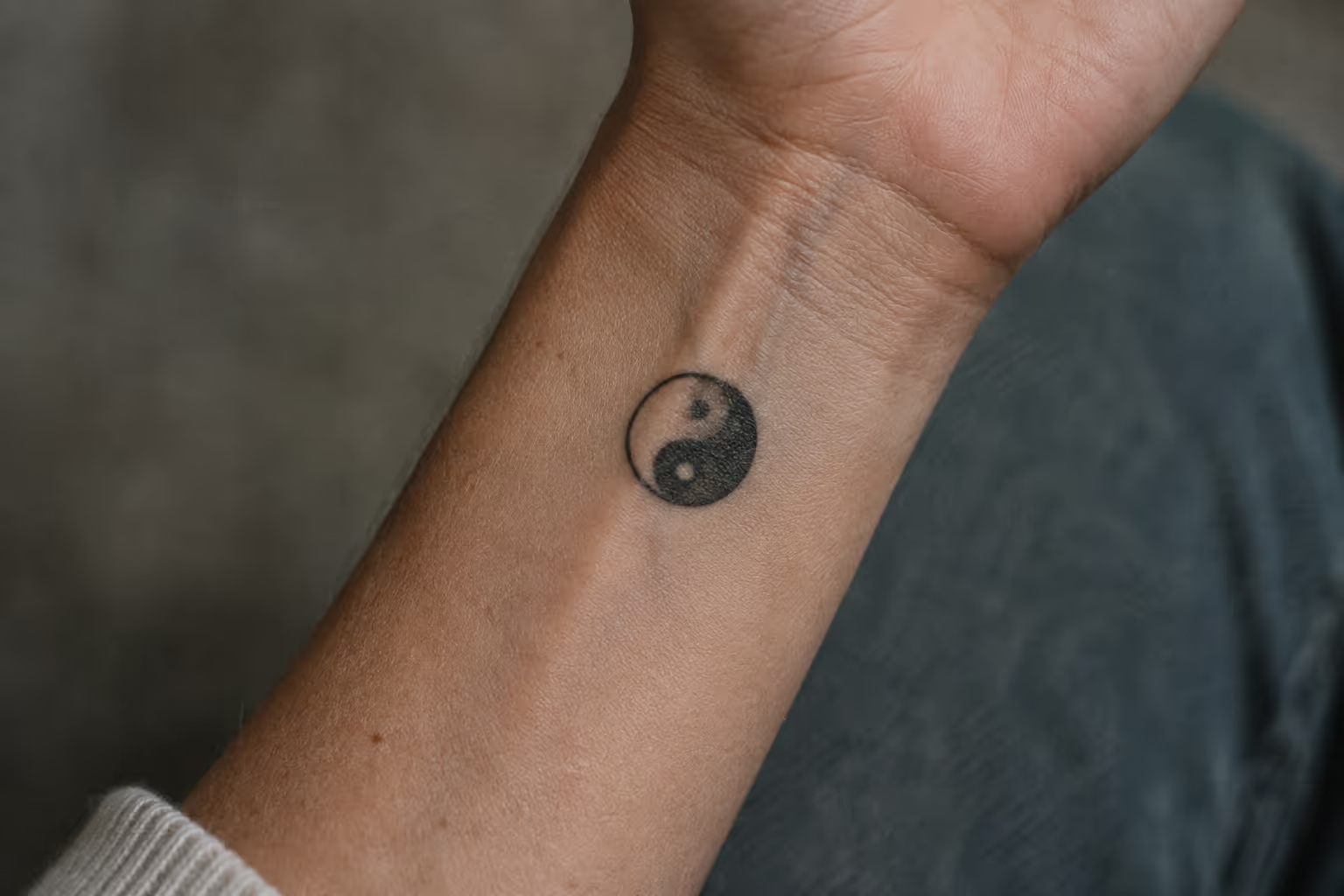
A small yin yang tattoo works best as a simple, high-contrast circle, because scale, spacing, placement and contrast decide whether a design stays readable over time (10). Every customization uses space you may not have.
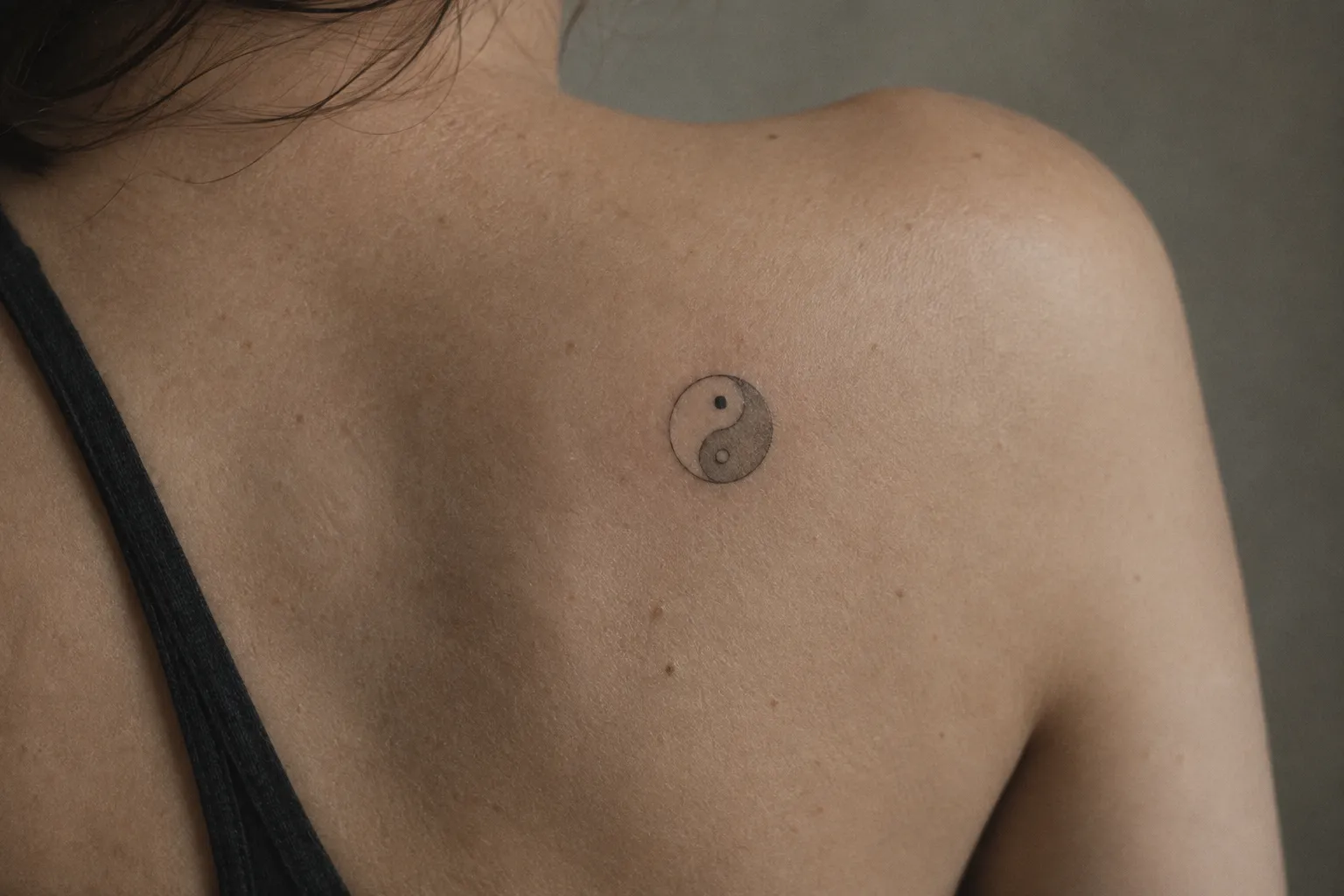
Best placements for a small design
- Forearm: the most forgiving spot. Flat space, low to moderate pain, easy to cover with a sleeve. One tattooer’s guide lists the inner forearm and the ankle as the best placements for a fine-line yin yang (14).
- Inner wrist: visible and good for a plain circle, but keep it away from the crease, which moves constantly (8). Expect it to hurt more than the outer forearm.
- Behind the ear: discreet and hair-covered, with room for little more than the bare symbol. The needle works over bone, so it feels sharper than the forearm.
- Hand and fingers: highly visible, but they fade fastest; fine-line guidance expects touch-ups there within two to three years (8).
Flat areas such as the inner forearm, shoulder blade and upper back keep the circle’s geometry honest, while a circle wrapped over the ankle bone or the outer bicep distorts when the limb moves (14). On pain, as a rough order: behind the ear and inner wrist > outer forearm. The ribs, if you were weighing them, sit above all of these.
Small tattoos on the hands, wrists or arms are likely to heal faster than large ones on the chest or back (6). The catch is the touch-up cycle that follows (8). If you want low upkeep, the forearm beats the hand: an outer forearm piece can hold up for a decade with basic sun protection (8).
Keeping detailed motifs legible at small scale
The structure is fixed: two interlocking teardrops, two opposing dots, one unbroken circle (14). At small sizes, protect those three elements first. The same guide recommends about 2 in (5 cm) as the smallest fine-line yin yang that still reads clearly after a few years (14).
Lines placed too close together may merge visually once the skin settles, even if they look separate fresh (10). So if your koi version has to shrink, simplify the scales before you touch the dots: without them you have drawn a divided circle, not a taijitu (14). Illustrative fills such as koi or animals need about 3.5 in (9 cm) (14). For the halves themselves, solid black is the most durable fill (14).
Matching and Split Designs for Couples
A yin yang couple tattoo usually takes one of two forms: each partner wears one half that joins into a full symbol (14), or each wears a complete symbol linked by a shared detail. That choice matters more than the art style.
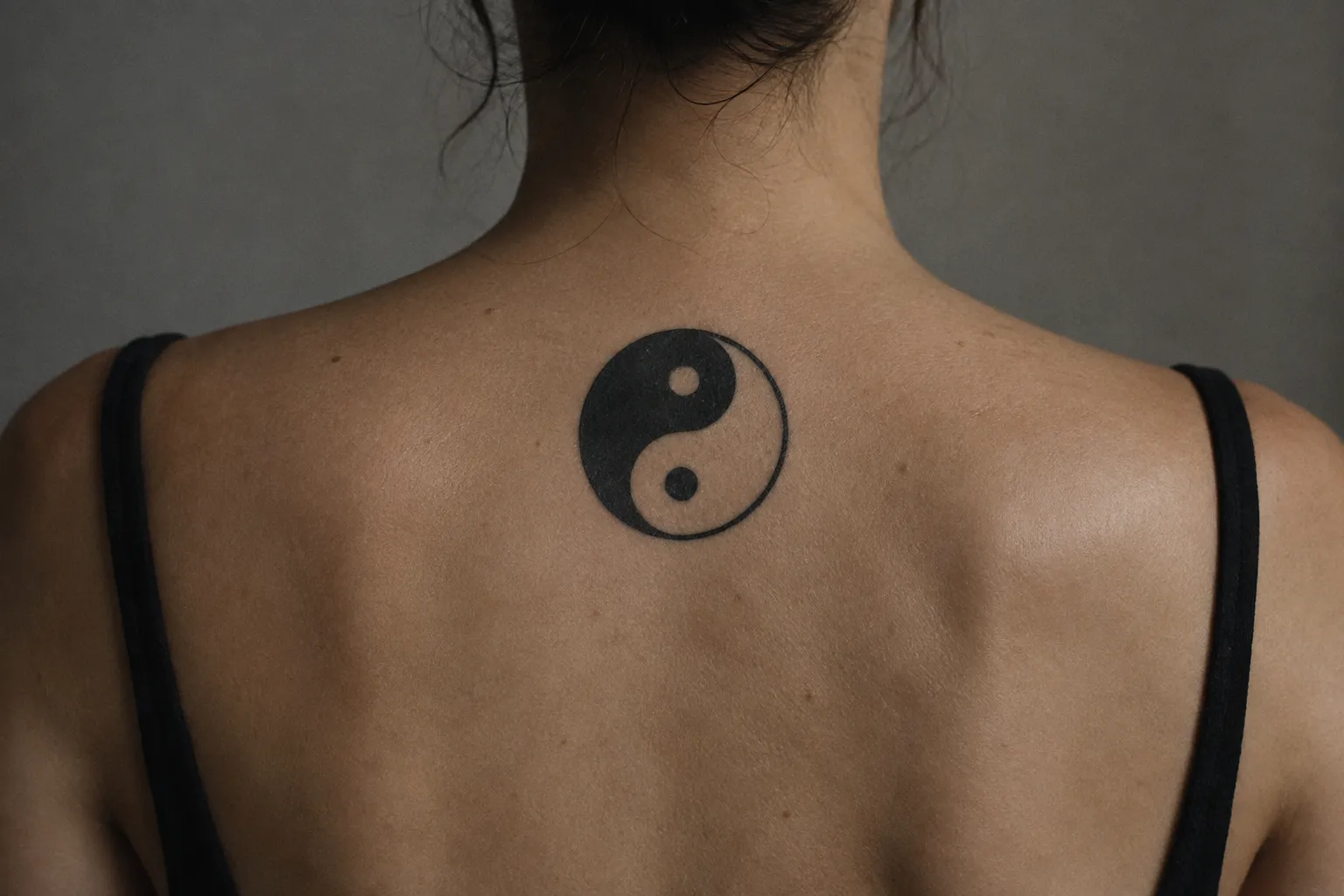
Split-symbol vs two complete symbols
A split design reads as complete only when you stand side by side: apart, each half is visibly incomplete, and together they close the circle (14). If you want each half to read on its own as well, ask for each half to be a finished composition rather than a torn edge (14). Ask to see each half separately on the stencil, not just the joined mockup.
Two complete symbols avoid that problem. You can still link them with mirrored details, such as a black koi leading on one and a white koi on the other. Each tattoo stands alone, and the pair still reads as a set.
Ask yourselves whether you’d still want your half if the relationship changed; our couple tattoos guide calls this the standalone test. A complete symbol carries its meaning with or without the other person. A lone half carries a gap.
Agreeing on orientation and who gets which half
Settle orientation and who gets which half before the session. There is no orientation rule an artist will enforce, so bring a reference image you are happy with so the stencil is not mirrored by accident (14). Hold forearms or wrists together during stencil placement and photograph the join. Decide the color question too: in Daoist symbolism yin is the softer, feminine, dark aspect and yang the male, light one (2), but you can just as well pick halves by personality or by who stands on which side.
Booking, Healing, and Long-Term Aftercare
Booking a yin yang tattoo starts with clear references and a stencil checked at true size; healing then follows a simple routine.
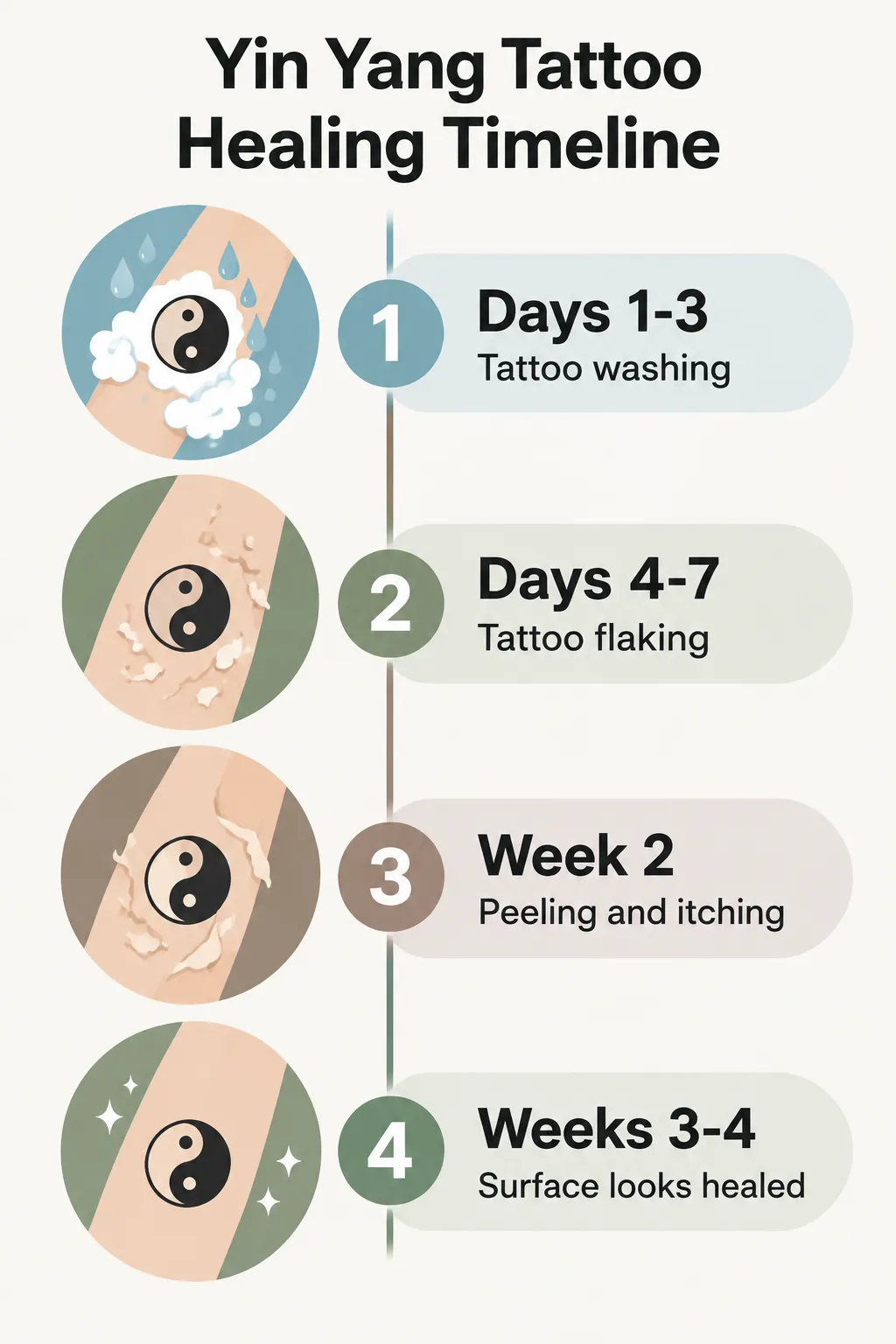 Yin yang tattoo aftercare moves from washing and moisturizing on days 1-3 to a healed-looking surface in weeks 3-4.
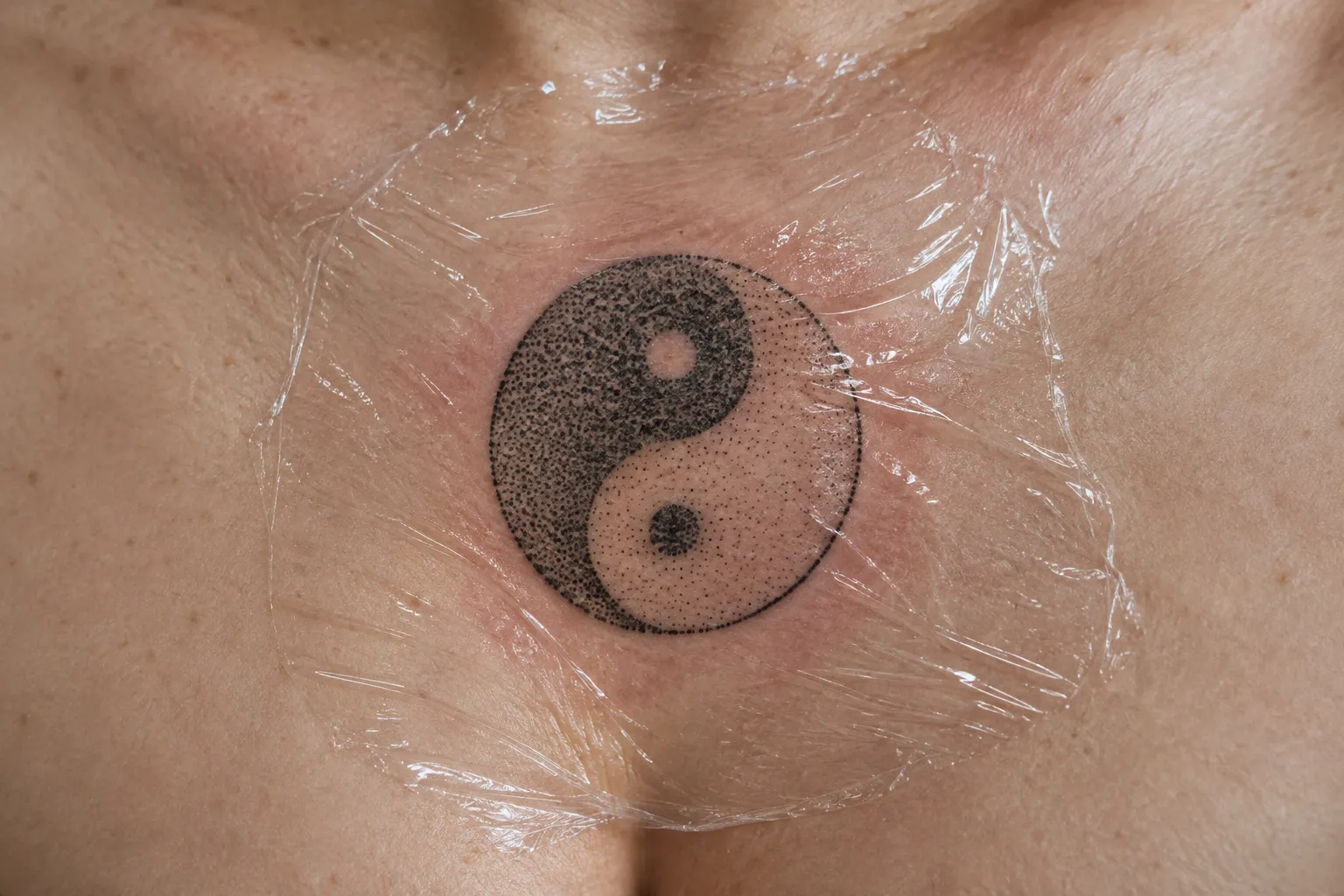
A request for “small” doesn’t tell an artist anything. Bring reference images, approximate dimensions in centimetres and a natural-light photo of the placement (10). Ask to see the stencil on your body while standing, not just seated (14), and look at it from a normal viewing distance. If the dots blur together at that distance, the design is too small or too busy.
Immediate aftercare: dressing and washing
Tattoos are a controlled form of skin trauma, and poor aftercare can leave infection, scarring, or smudged ink (6).
- Days 1-3: follow your artist’s dressing instructions, then wash gently with a mild, fragrance-free soap and apply a simple moisturizer twice a day (6).
- Days 4-7: the skin feels tight and starts to flake.
- Week 2: peeling and itching. Don’t pick or scratch; scabs fall off on their own (6).
- Weeks 3-4: the surface looks healed while the deeper skin is still settling. Keep it out of pools, baths and hot tubs until it is fully healed (6), and expect larger pieces to keep healing underneath for a few months (6). Our tattoo aftercare calendar puts full integration at about six weeks.
Don’t judge the result while it’s peeling. Wait until the skin settles and check it in natural light (10).
Plan and Care for a Yin Yang Tattoo
About 6 weeks to full integrationChoose a legible design, check its size and placement with a stencil, then follow the healing instructions and protect the settled tattoo.
- 1
Choose the design and approximate size
Decide whether the tattoo will be a plain symbol or include a motif, and bring reference images and approximate dimensions to your artist.
- 2
Approve placement and scale
Hold the stencil against the skin at the chosen spot and step back to a normal viewing distance before giving the go-ahead.
- 3
Confirm the final details before tattooing
Check the orientation and placement against your reference, and follow your artist's instructions for preparing for the session.
- 4
Get through the first weeks
Keep the area clean and moisturized as it flakes, and resist the urge to pick at it until the surface settles on its own.
- 5
Protect the settled tattoo long-term
Once the surface has settled, keep an eye on sun exposure and plan touch-ups if the placement sees heavy wear, like the hands.
Long-term care: sun protection and touch-ups
UV exposure fades ink, so use sunscreen once the tattoo has healed (12). While it heals, avoid direct sunlight and don’t put sunscreen on the area (6); the aftercare calendar puts that window at 4 to 6 weeks. Fine-line work is delicate and can lose sharpness over time, partly from sun exposure (12). Hand and finger pieces will need touch-ups within two to three years regardless (8).
Frequently Asked Questions
- What does a yin yang tattoo mean?
- A yin yang tattoo represents interdependent forces that change in relation to one another, drawing on Chinese philosophical traditions rather than a fixed personal story.
- Is a yin yang tattoo good or bad?
- Neither side is inherently good or bad in the philosophical tradition; treating the symbol as a moral battle is a modern Western interpretation.
- What do the black and white sides represent?
- The terms refer to the shaded and sunny sides of a hill, an image rooted in Chinese-language etymology rather than a division between virtue and vice.
- What is the 1/3 rule in tattoo design?
- The 1/3 rule treats roughly one-third of a limb segment as a natural unit for a standalone piece, and it also means balancing dark areas with open skin. It is a general placement guideline, not a rule specific to yin yang tattoos.
- What is an ambigram yin yang tattoo?
- An ambigram yin yang tattoo combines lettering designed to read differently when rotated with the symbol, and usually needs more room than a plain circle.
- What do matching yin yang tattoos symbolize?
- Matching yin yang tattoos often represent a complementary bond, but two complete symbols can preserve each person's design as a standalone tattoo.
Choosing Your Design Before You Book
Before you book, settle two things. First, how small the design can go while the two dots and both halves stay readable, which is easiest to judge with a true-scale stencil checked on your body. Second, for a yin yang couple tattoo, whether each half has to stand alone or only completes itself next to your partner’s. Get those right, put the piece on a placement that matches how much upkeep you’ll tolerate (forearm for low maintenance, hands for touch-ups within two to three years), and protect it from the sun once healed.