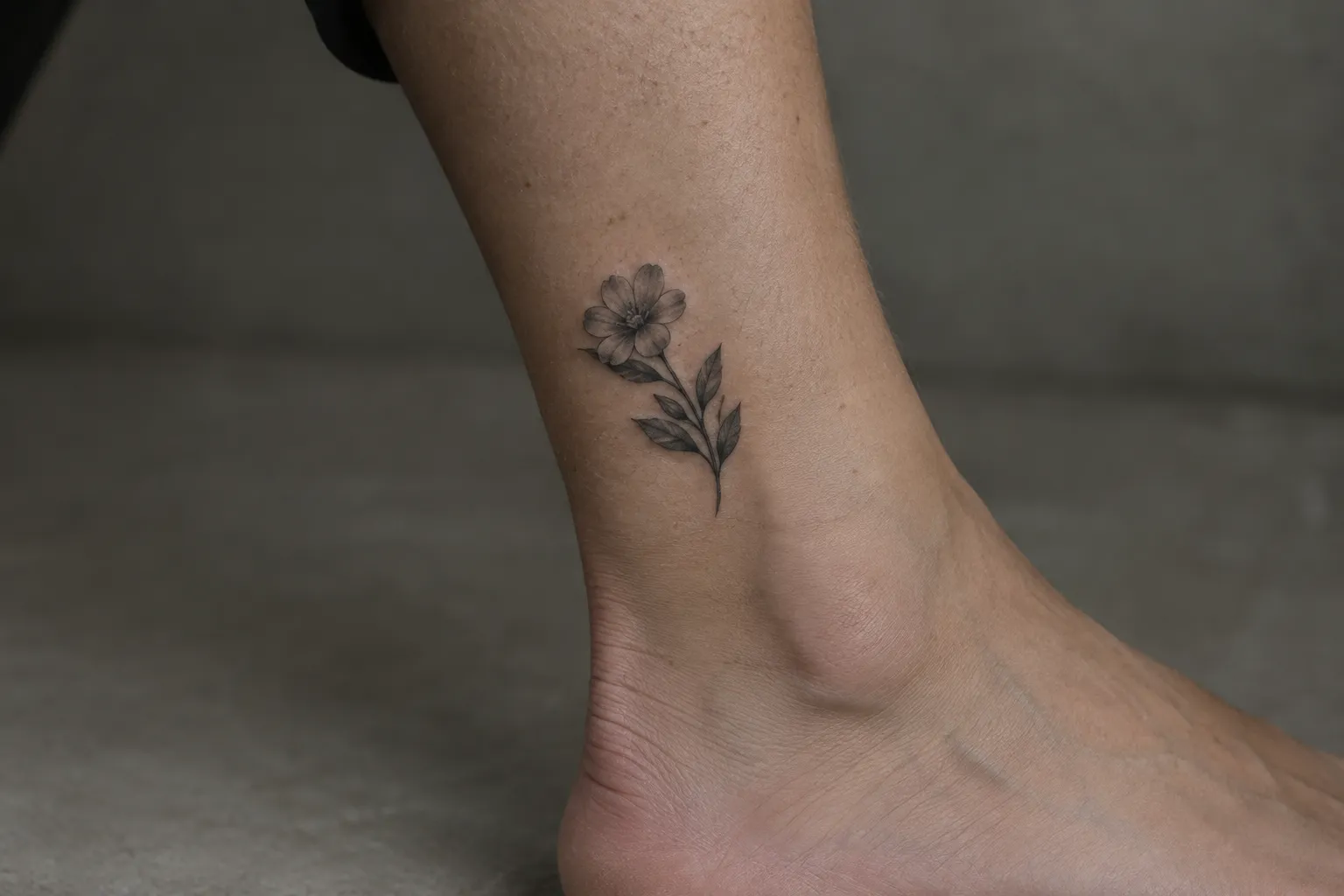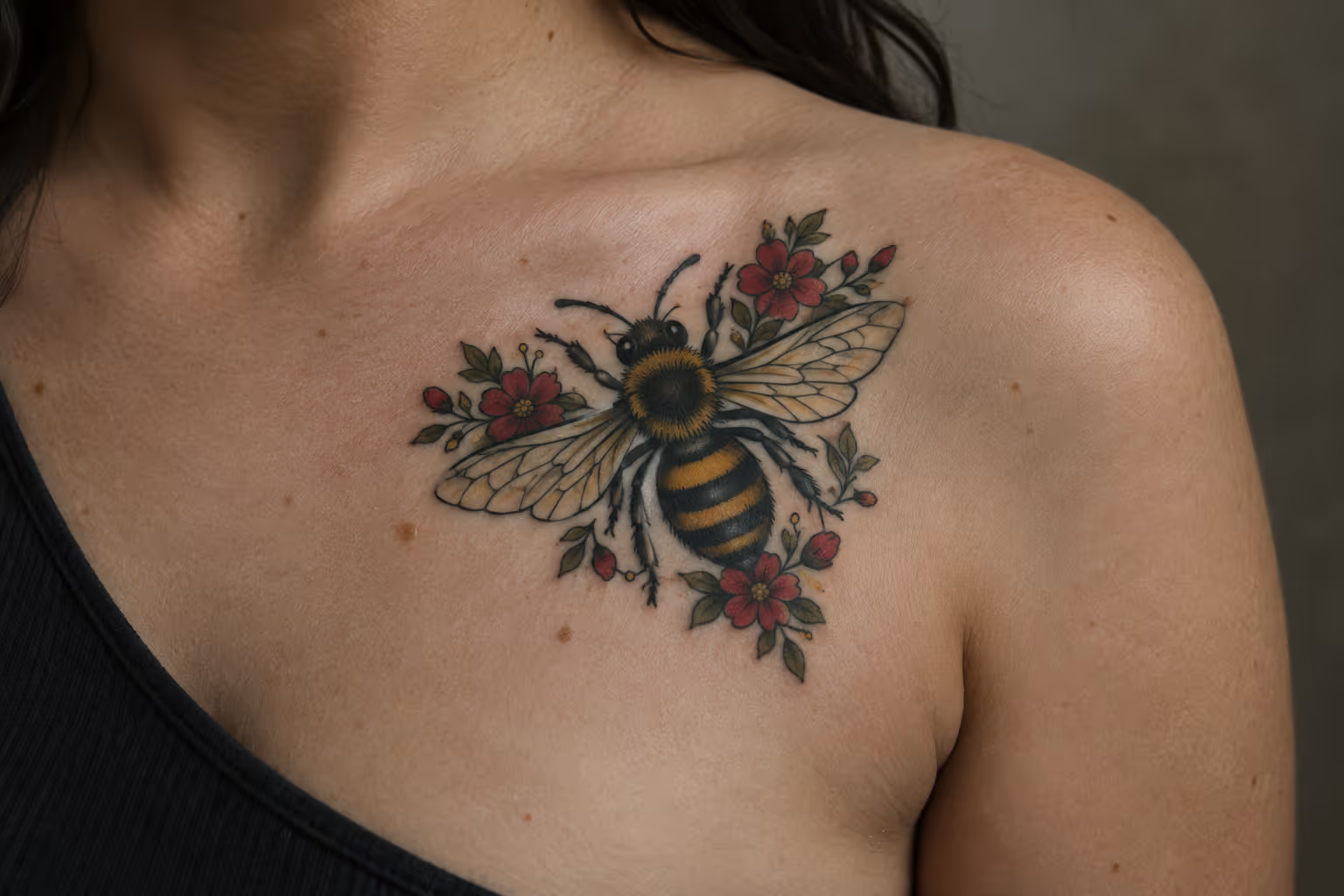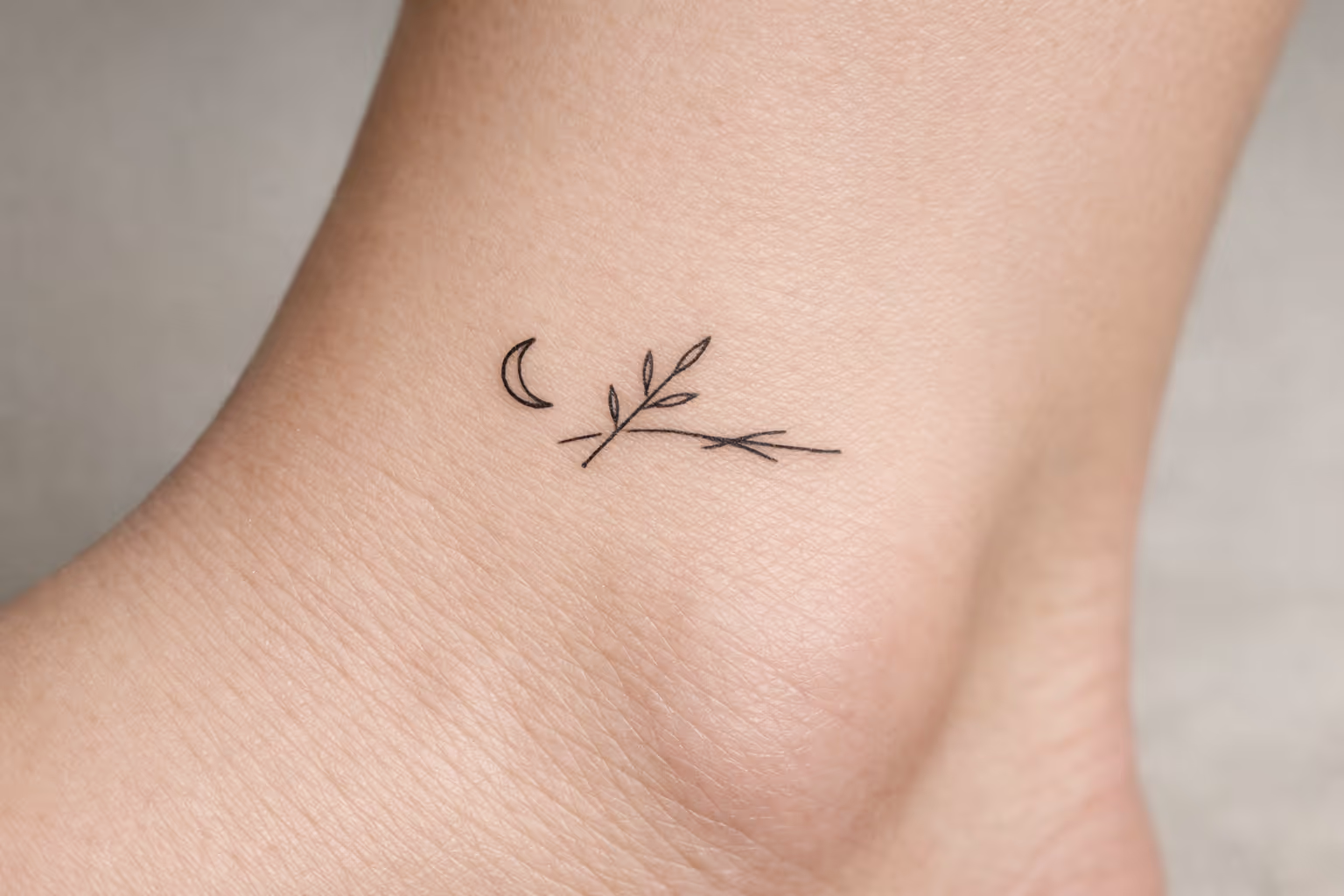
An ankle tattoo sits on some of the thinnest skin you can get tattooed, stretched over bone and tendon with little padding underneath, and it moves with every step (7). That is why placement, more than the design, decides how much the session hurts, how often shoes rub the fresh work, and how crisp the lines look years later. Pick the zone first, then fit a small, open design to it.
The upside is flexibility: socks and trousers hide an ankle piece, sandals show it, and four distinct placements give you real choice. Small designs also mean short sessions. The trade-offs are sharper pain over the ankle bone, a joint that flexes constantly while it heals, daily friction from shoes and socks, and a spot that is awkward to keep covered.
✓ Pros
- Placement options let you choose how much of the tattoo shows with ordinary clothing.
- Compact motifs can suit the ankle without requiring a large design footprint.
- A small piece is easier to position around the ankle's curves than a design that needs a broad flat area.
✗ Cons
- The ankle bone leaves little padding, so a design crossing it can be a tougher session.
- Movement and footwear make it harder to keep a healing ankle undisturbed.
- Small, crowded details have little room to remain distinct as the ink settles.
Ankle tattoo placement: inner, outer, back, and wraparound
Ankle tattoo placement comes down to four zones (inner, outer, back, and wraparound), and your choice depends on whether you want the piece hidden, visible, or continuous (3)(4). StyleCraze splits the area into front, back, side, and wraparound bands, while Cuded uses inner, outer, back, and anklet-style (3)(4).
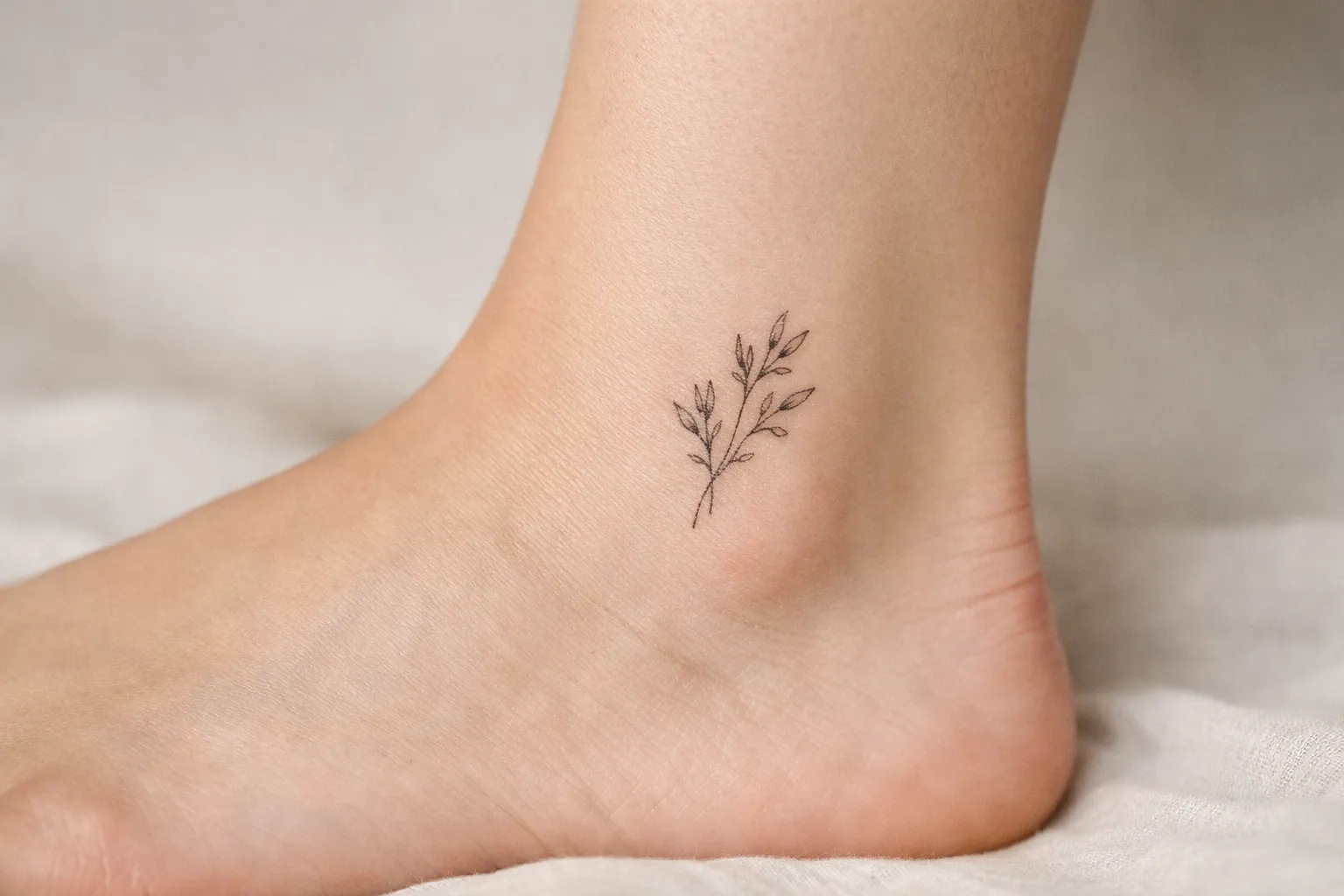
Inner ankle
The inner ankle is the more discreet option (4). It faces the other leg, so it disappears when you stand with your feet together and stays hidden under most socks. It suits small, delicate botanicals and single symbols. Keep lines slightly bolder than you think you need, because this side takes contact from the opposite foot and the edges of shoe collars.
Outer ankle
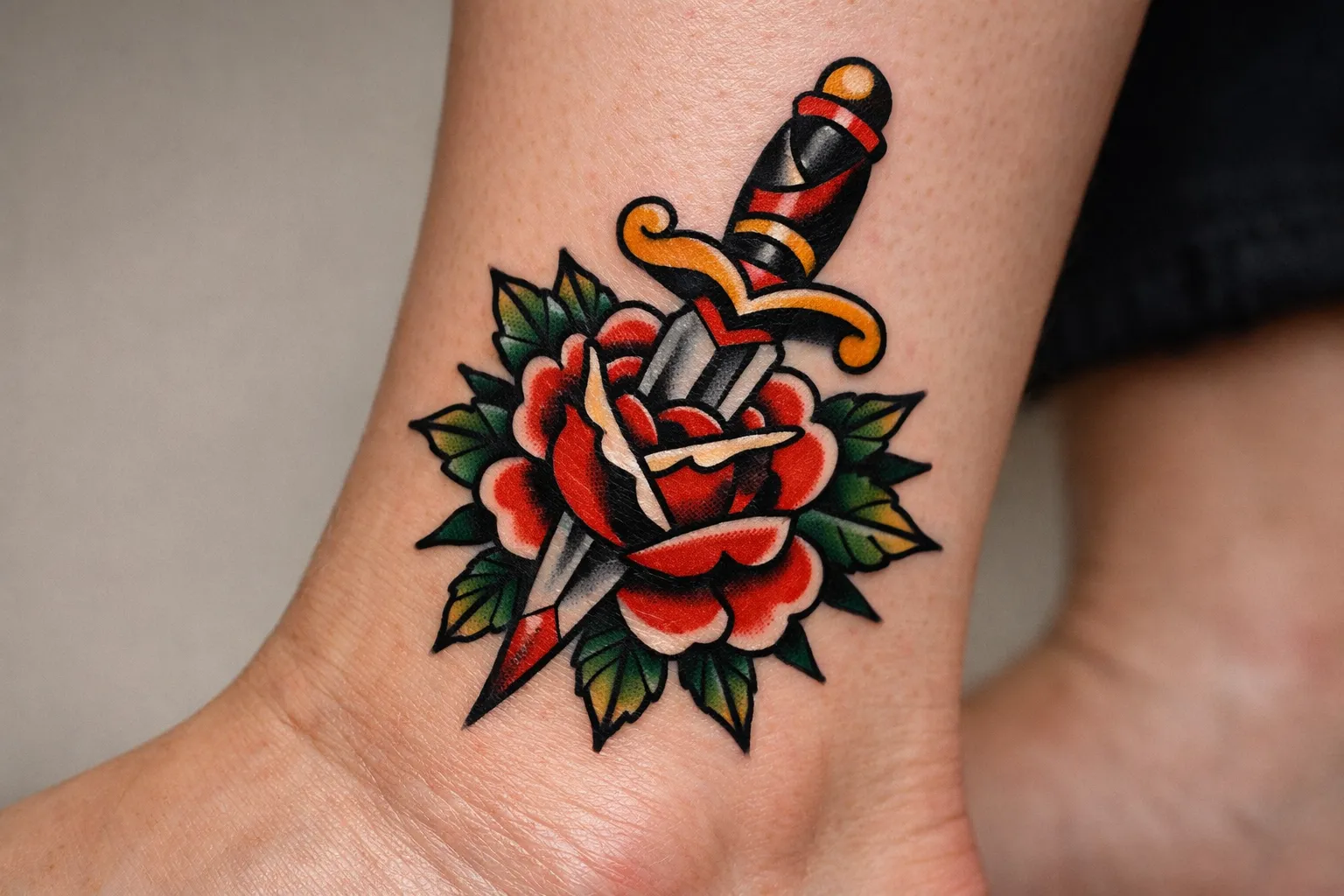
The outer ankle is the visible choice (4). It is what people see when you walk past them in low shoes, so a design here reads from a distance if it has contrast.
This is where American traditional earns its place. Its two hallmarks, a thick black outline and a limited palette of reds, yellows, and greens, hold their shape on a small, curved surface. A small swallow, rose, or dagger fits the flatter patch just above or in front of the ankle bone without wrapping awkwardly over it.
Back of the ankle
The back of the ankle, running up along the Achilles tendon, is a fourth distinct placement (3)(4). It shows from behind and stays out of your own line of sight, and StyleCraze notes it can be quite painful (3). Vertical designs work best: a short word, a stem, or a line of small symbols running up toward the calf. Expect the heel counter of your shoes to hit it directly.
Wraparound (anklet-style)
A wraparound design circles the ankle like a bracelet (4), so it reads as one continuous piece from every angle. Solid bands, vines, and beaded chains are the usual choices. A clean black band heals more evenly than an intricate chain, because packed black hides small inconsistencies that a fine repeating pattern exposes.
The table below breaks down each zone by visibility, concealability, friction, and relative pain, so you can weigh them against each other in one glance.
Ankle tattoo placements compared
| Inner ankle | Outer ankle | Back of ankle | Wraparound / anklet | |
|---|---|---|---|---|
| Visibility | Low | High | Visible from behind | Visible from every angle |
| Concealability | High | Low | Moderate | Low |
| Shoe or sock rubbing | Opposite foot and shoe collar contact | Shoe collar contact | Direct heel-counter contact | Contact across multiple zones |
| Relative pain | More manageable away from the bone | More manageable away from the bone | More sensitive if it crosses the bone | Higher where it crosses the bone |
Small ankle designs that hold up over time
Flowers, moons, hearts, names or initials, butterflies, and waves all recur in the ankle design roundups from StyleCraze and Cuded (3)(4).
They share traits: a clear silhouette, open negative space, and few overlapping elements. A mountain-and-moon combo, a single peony, or a small wave all read at arm’s length. On meaning, keep it personal and don’t assume a fixed symbolism: StyleCraze reads a wave as emotion and the ups and downs of life (3), while in Japanese irezumi waves usually belong to large, bold compositions.
For sizing, keep the design in proportion to this small area (3) and leave space between elements: the tighter the detail, the sooner it closes up as the ink settles.
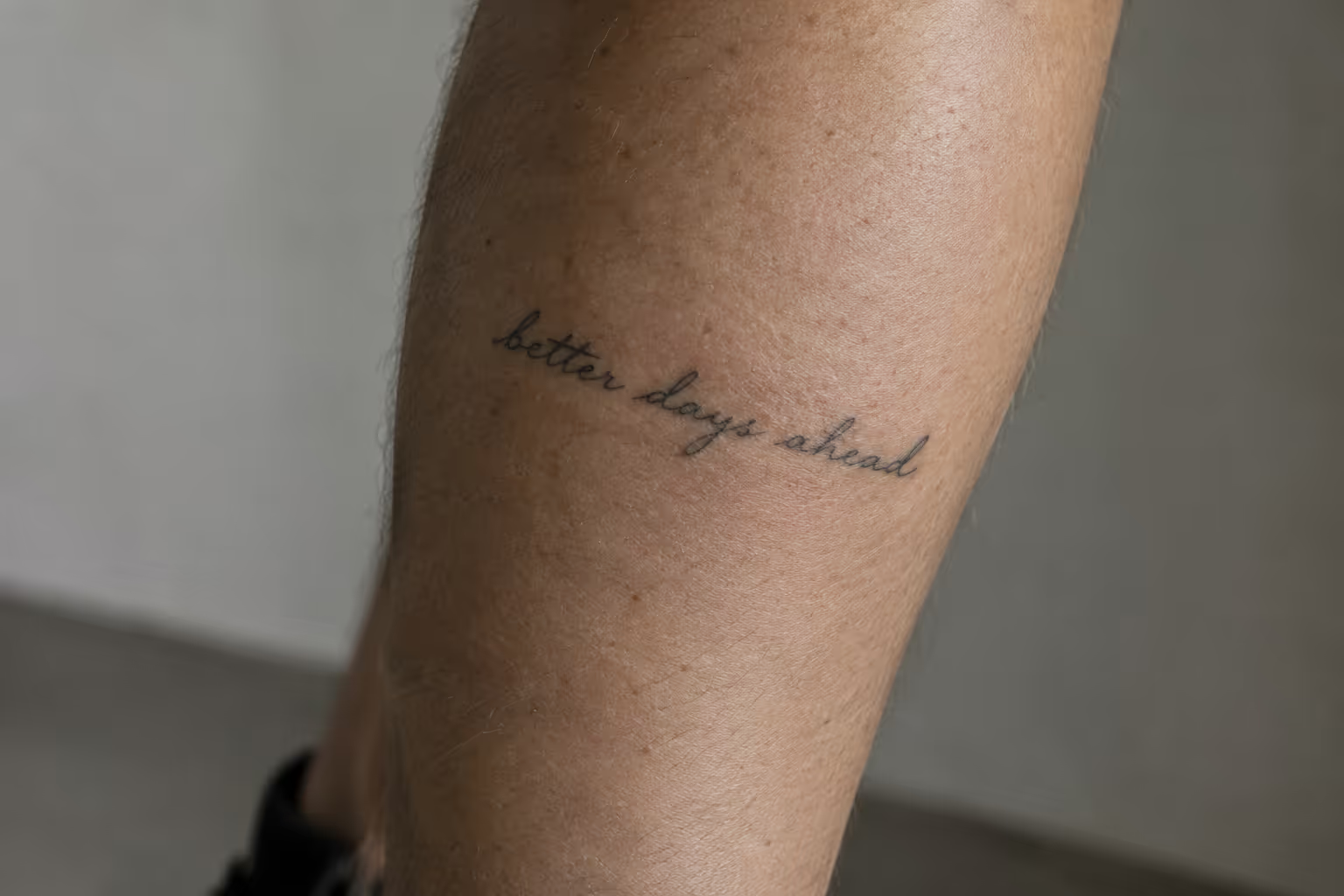
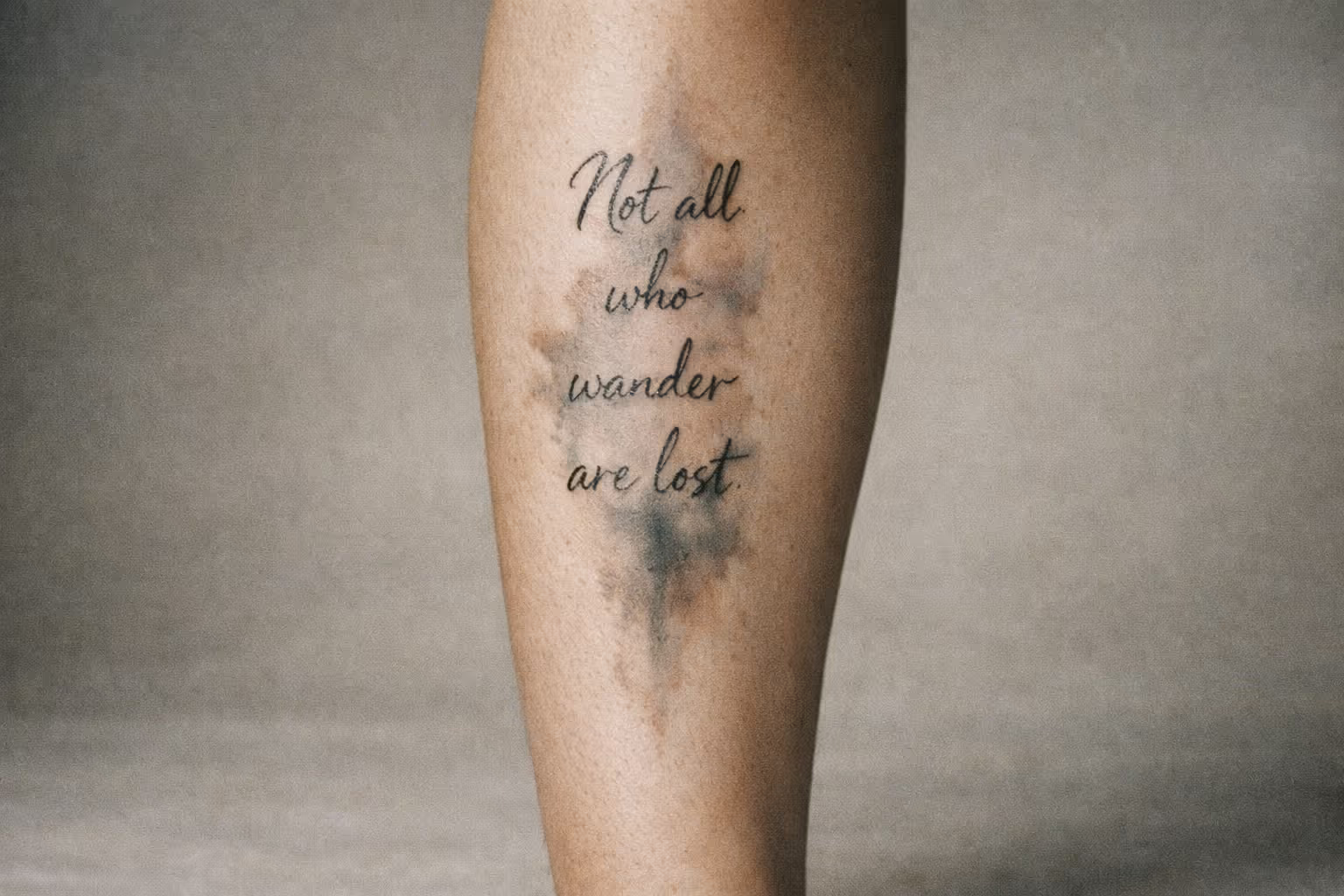
Lettering follows letter-height floors. Standard script needs at least 1/2 inch (12 mm), fancy or ornate script at least 1 inch (25 mm), and block or serif lettering about 1/4 inch (6 mm) (6). Initials in block type can be small; a flowing script word needs room. Bold script or block holds best on constantly rubbed areas, and the ankle behaves much like the wrist in that respect.
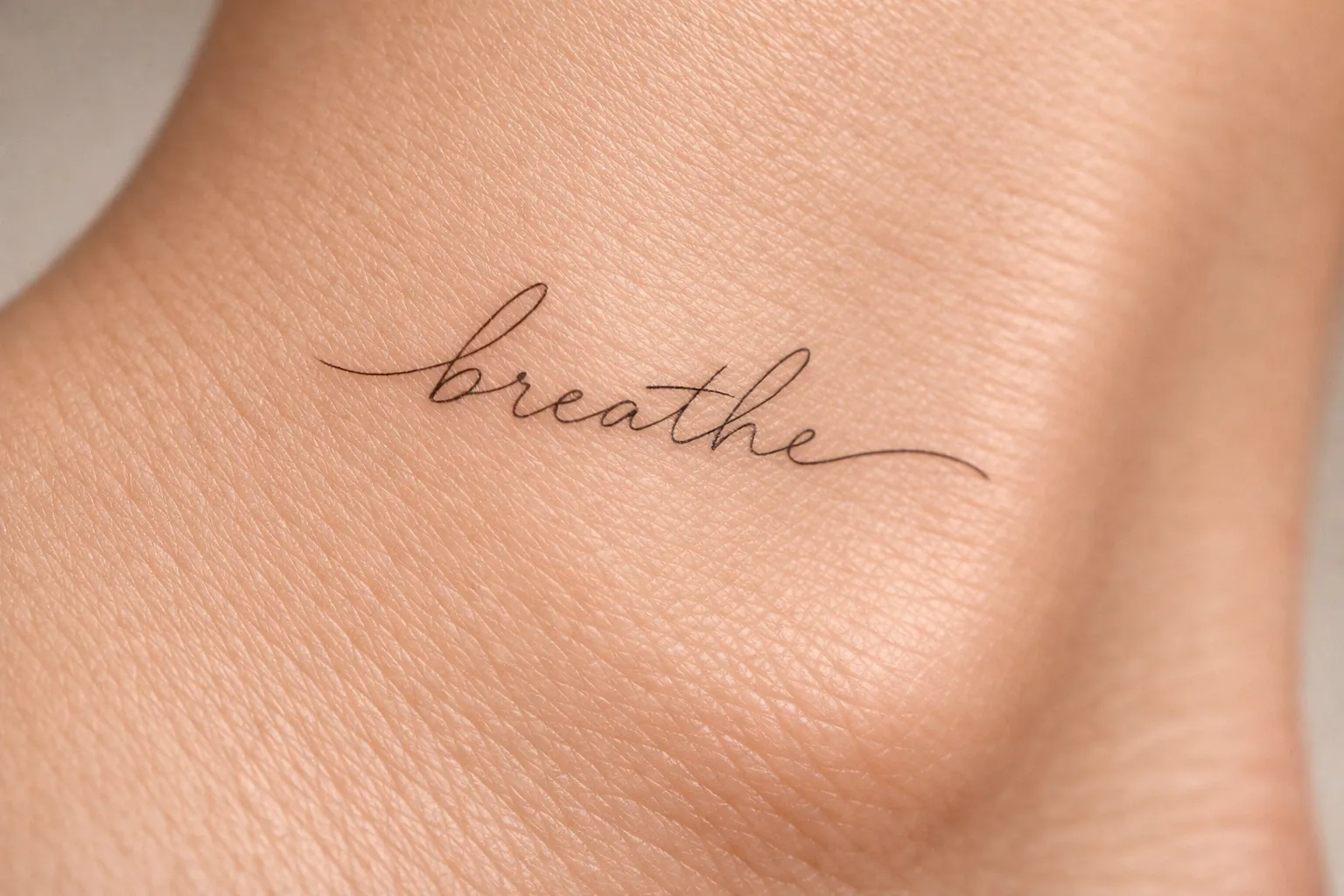
Designs that don’t hold up small
Generic “tattoos to avoid” lists usually cover exes’ names and trendy symbols. At the ankle, the real problems are technical. Skip hairline single-needle detail, dense gray shading packed into a tiny area, micro-text below the floors above, and busy patterns that land directly on the bone.
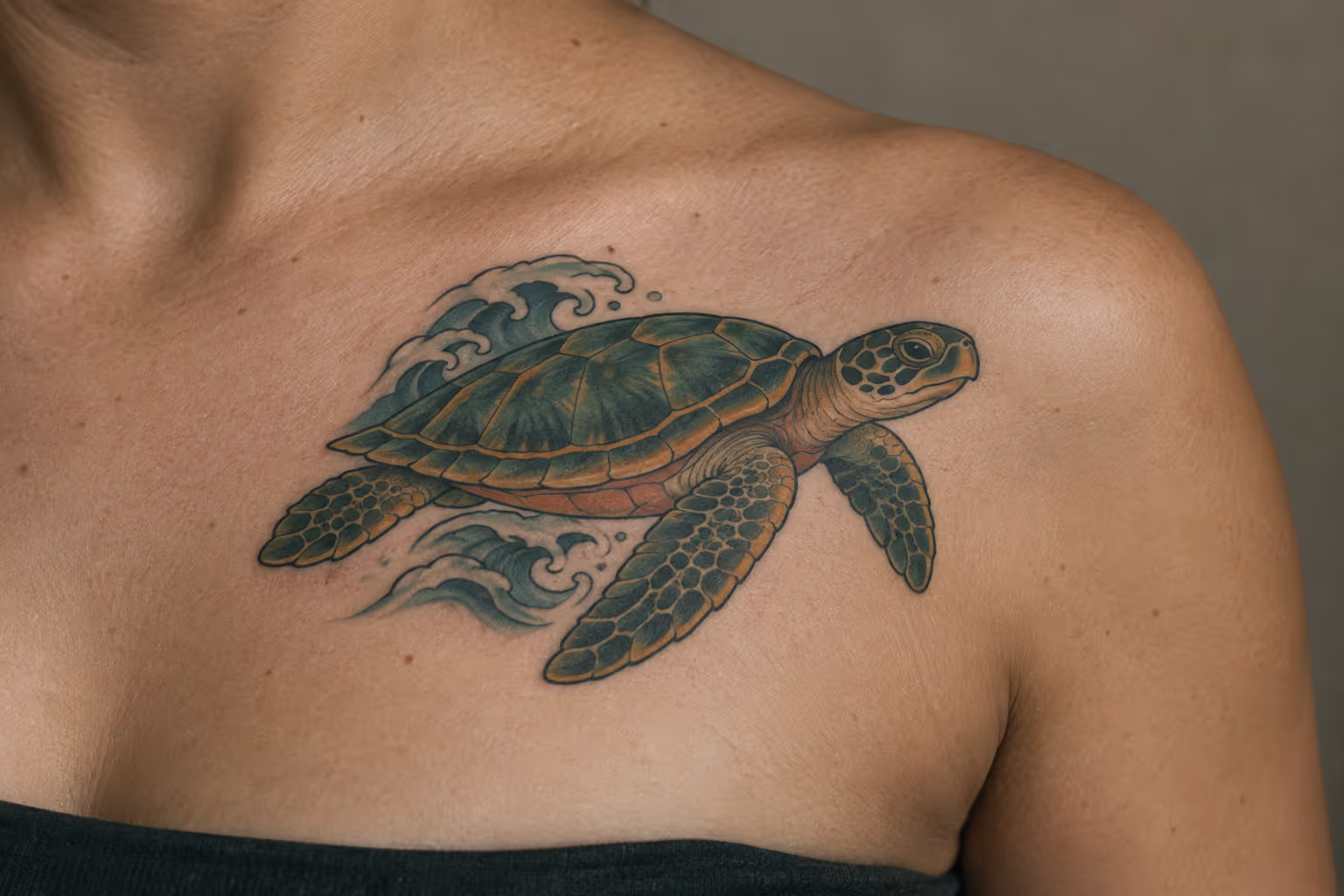
Neo-traditional can work here, but only when the artist keeps its bold outline. The common pitfall is cramming rich color gradients and ornamental filigree into a small space, which blurs as the ink settles; bold designs with clean lines hold their clarity better than fine detail (3).
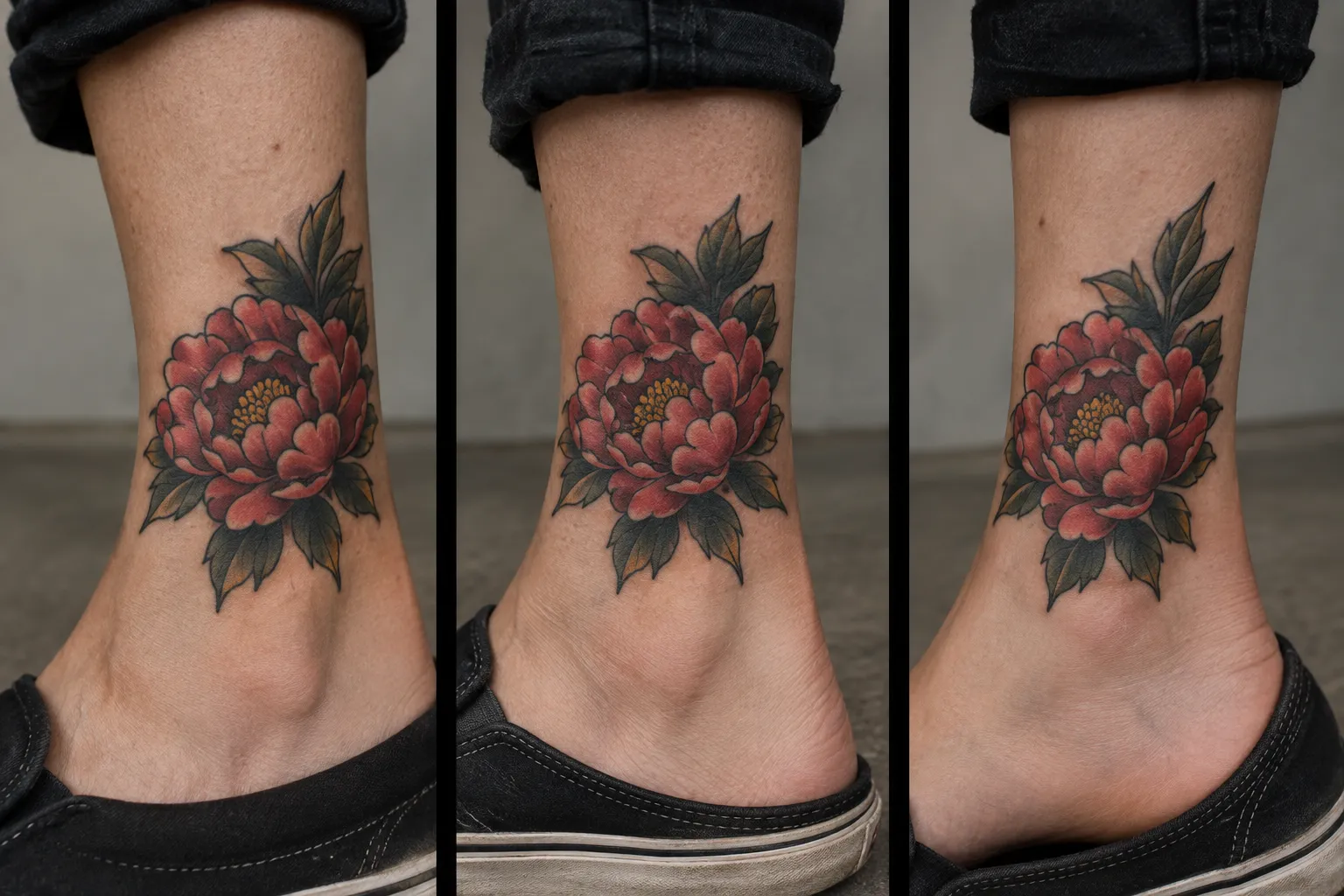
If you love a detailed piece, scale it up and move it to the calf, where there is enough flat space for the detail.
What to check before you book
Before you book an ankle tattoo, check that the artist is licensed where you live and ask how the studio sterilizes its equipment. An Ohio State Wexner Medical Center dermatologist advises asking whether they use an autoclave, new sterile needles and fresh gloves, and how the ink is stored; if they won’t answer, walk out (5).
Run through this before the appointment:
- Licensing: check your state or local licensing rules for the artist and the studio (5).
- Sterile needles: new, sterile needles only (5); ask to see them opened in front of you.
- Gloves and ink: gloves worn and changed during the session, and ink that is never shared between clients (5).
- Autoclave: ask how reusable equipment is sterilized; “autoclave” is the answer you want (5).
- Concealability: decide in advance whether the piece must hide under socks for work.
- Fit mockup: ask the artist to show how the stencil sits on your chosen zone, standing and seated; the design should follow the ankle’s natural curves (3).
Tell your artist about any medications you take. Studios ask clients to avoid sunburn, alcohol and blood thinners before the appointment (7); if a blood thinner is prescribed, ask your doctor rather than stopping it on your own.
Pain by ankle zone: what to expect
An ankle tattoo is one of the more painful placements: the skin is thin, there is little fat or muscle, and bone sits right under the needle (3)(4)(7). Pain peaks directly over the ankle bone and eases slightly on the softer skin just off it, while the calf above is a noticeably easier spot.
Ankle bone vs softer spots
Your tolerance, session length, and how rested you are all shift the experience, so a small design kept off the bone is the gentlest first ankle tattoo.
The soreness doesn’t stop when the machine does. Socks, shoes and trousers all rub this area (7), and a shoe collar pressing on healing skin hurts. Plan your footwear for the two weeks after the session before you sit down: loose laces, open-back shoes or sandals.
Healing timeline and daily aftercare
Healing time depends on the size of the tattoo and where it sits (2). For a small ankle piece, keep it clean and wrapped as your artist says on days 1 to 3, expect the surface to look healed around weeks 3 to 4, and expect the tattoo to settle fully by about week 6. Keep it out of direct sun for the first 4 to 6 weeks. Treat week two as a checkpoint, not the finish line.
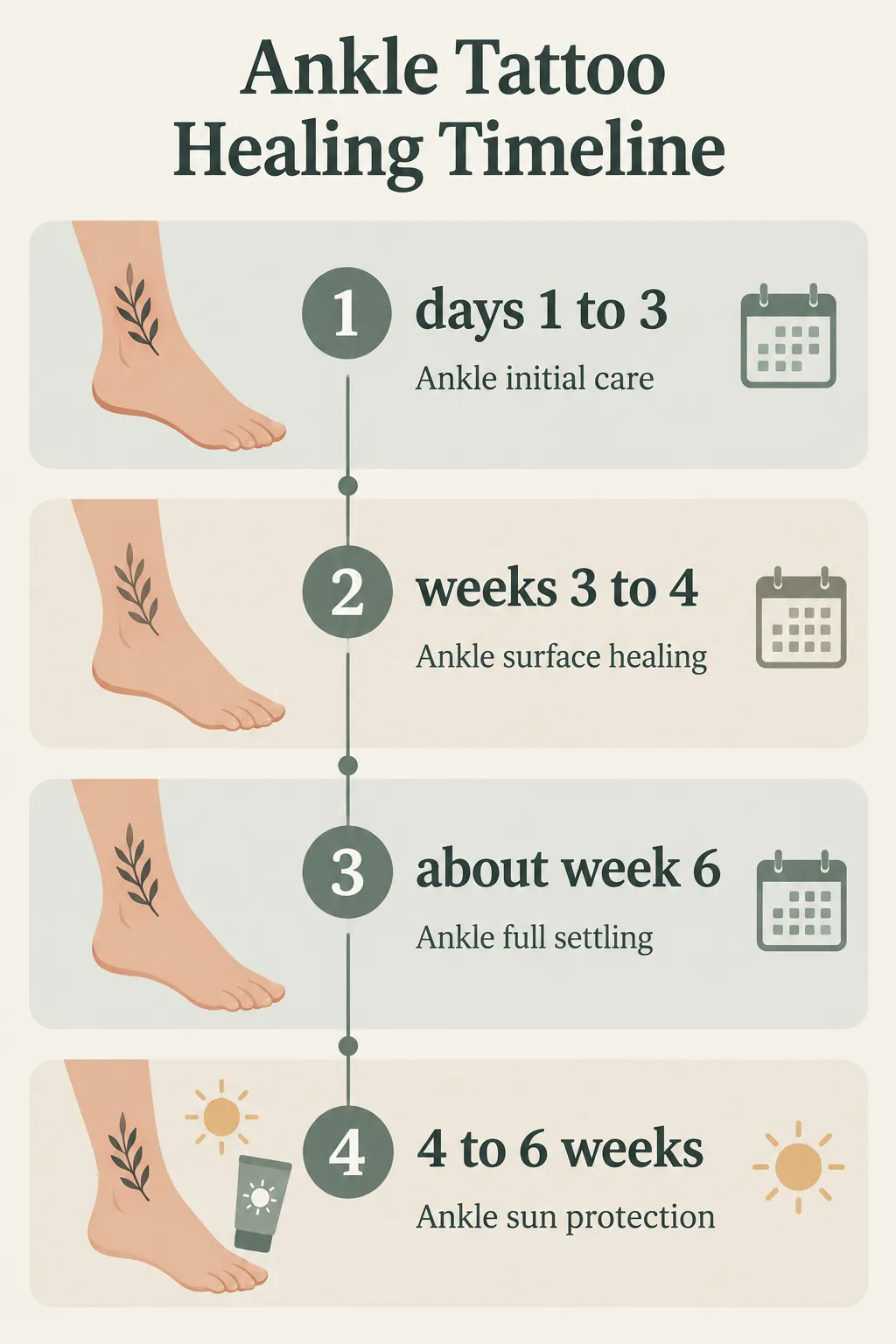 For a small ankle tattoo, follow initial care on days 1 to 3, expect the surface to look healed around weeks 3 to 4 and full settling by about week 6, and avoid direct sun for 4 to 6 weeks.
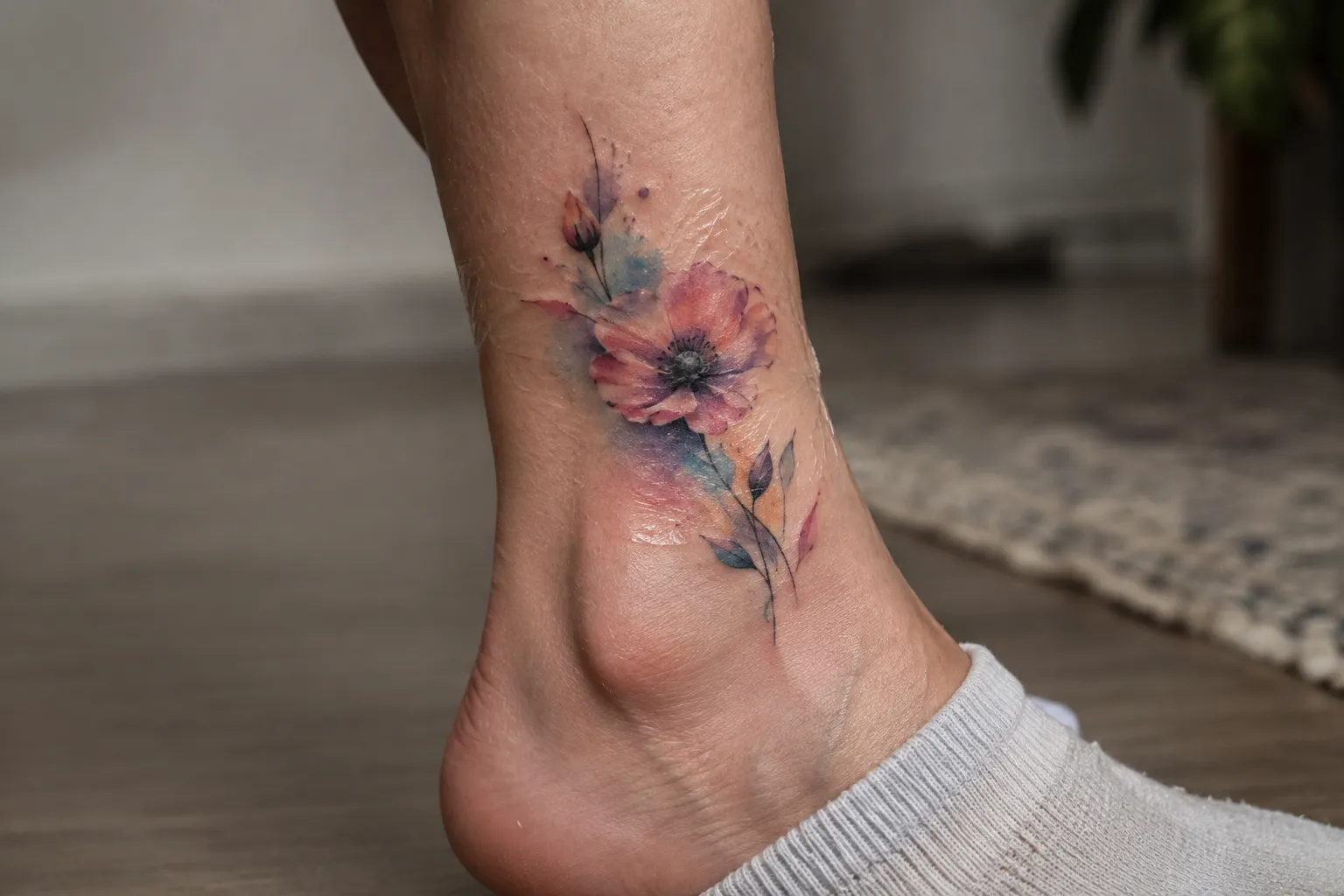
Days 1-3
Keep the first covering on as long as your artist says, then move into the wash-and-dry routine below. Wear open-back or loose footwear from day one so nothing presses on the fresh work while it’s most vulnerable. Mild redness is expected for the first two to three days; if redness and swelling get worse three to five days after the session, treat it as a likely infection and act (5).
Days 4-14
Itching, flaking and a few small scabs are normal in the first two weeks (2): the surface usually dries and flakes around days 4 to 7, then peels and itches through week 2. Don’t pick scabs or scratch flaky skin; Cleveland Clinic warns this can irritate the area or cause infection (2). Stay out of pools, hot tubs, rivers, and lakes, and avoid socks or clothing that stick to the tattoo. Between weeks 2 and 4, the skin often looks shiny or slightly cloudy. That’s normal.
Weeks 3-6
After about three weeks the scabs are healing and the flaking eases (2). The surface usually looks healed by weeks 3 to 4, while the deeper skin keeps remodeling until about week 6, so keep up the moisturizing step below and keep the tattoo out of direct sun for the first 4 to 6 weeks. If pain increases instead of easing, or redness spreads farther from the tattoo, see a doctor (2).
Daily ankle tattoo aftercare routine
About 6 weeks to full healingClean and protect the tattoo while avoiding friction and water exposure during surface healing.
- 1
Wash gently
Wash with mild soap and water morning and evening, then pat dry with a clean paper towel without rubbing.
- 2
Moisturize lightly
Apply a thin layer of fragrance-free moisturizer after washing; avoid picking scabs or scratching flaky skin.
- 3
Reduce friction
Choose loose footwear that does not touch the tattoo, and avoid socks or clothing that stick to the healing skin.
- 4
Avoid soaking and sun
Skip pools, hot tubs, rivers, and lakes until the surface has healed, and keep the tattoo out of direct sun for the first 4 to 6 weeks.
How ankle tattoos age over time
Ankle tattoos age well when the design is bold and open: fine-line work blurs more easily with age, while bold designs with clean lines hold their clarity (3). On the ankle, years of sock and shoe friction add to that wear (7).
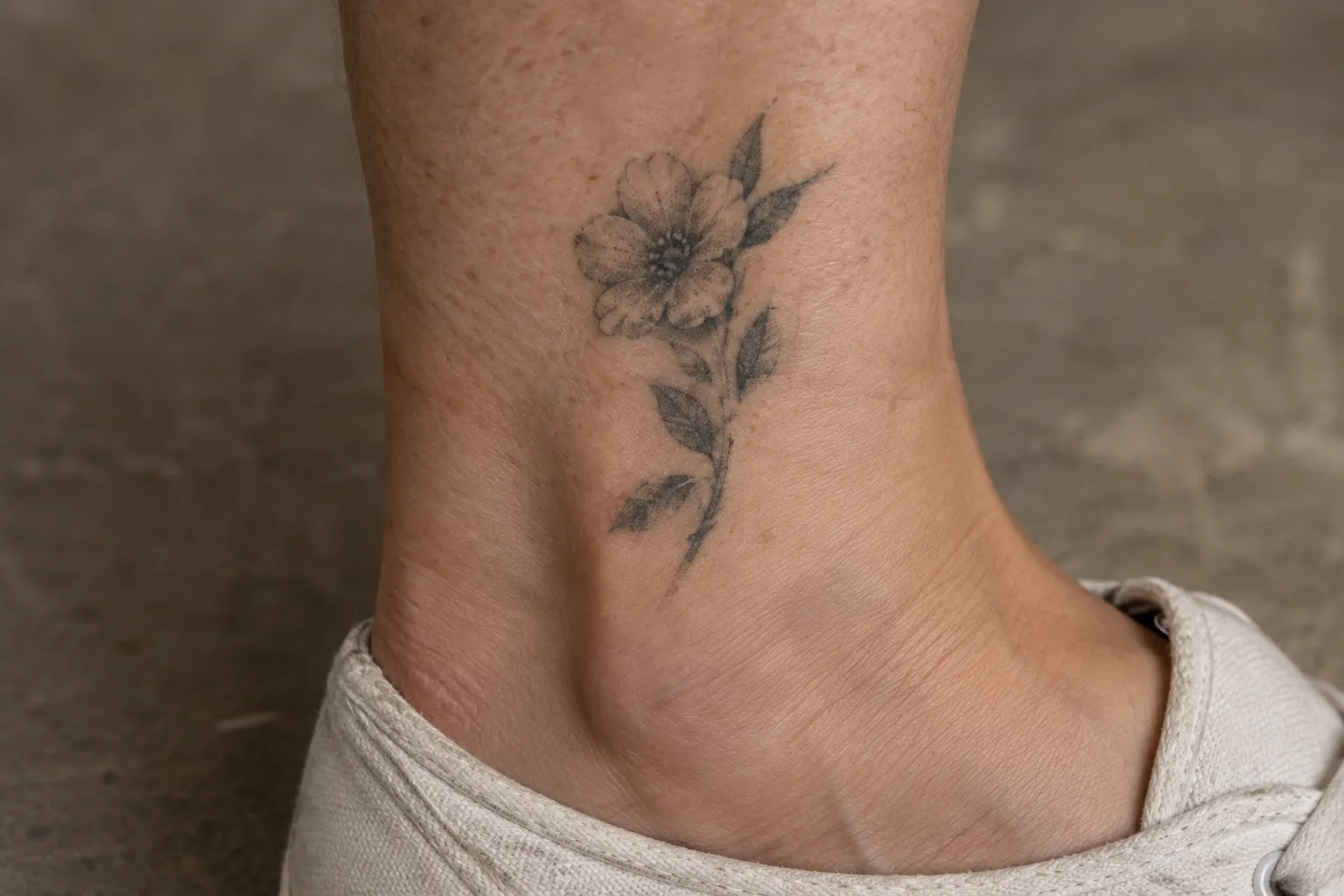
Weight changes can affect how a tattoo looks, though the ankle shifts less than the stomach or thighs. Fine-line and dotwork pieces may need a touch-up down the line, so factor that in if you choose them.
Frequently Asked Questions
- Is an ankle tattoo painful?
- An ankle-bone tattoo is usually more uncomfortable than work on the fleshier patches; keep the design off the bone if you want a more manageable session.
- What is a good ankle tattoo for a first design?
- Choose a simple motif with open space and a clear silhouette; ask your artist to stencil it while standing and seated to check how it bends.
- Do ankle tattoos age well?
- Bold, open shapes tend to stay more legible than crowded fine detail; discuss how the design's line spacing will look after the ink settles.
- What tattoo mistakes should I avoid at the ankle?
- Avoid choosing a design from a flat reference alone; check its fit on your ankle and whether shoe edges will cross the tattoo.
- Can I wear shoes right after an ankle tattoo?
- Wear footwear only if it leaves the fresh tattoo untouched; if every shoe presses the area, arrange a low-friction alternative before your appointment.
- Can an ankle tattoo cover a scar?
- A scar should be fully healed before tattooing; an artist can assess whether its texture and color are suitable for the design you want.
Choose the spot and studio first
Placement decides how visible your ankle tattoo is and how much shoe rubbing it takes, so settle that first: inner for hiding, outer for showing, back or wraparound if you want something different. Keep the design to one of the proven small motifs at a size the lines can survive, vet the studio’s hygiene, and plan for healing that runs past the two-week checkpoint: a healed-looking surface around weeks 3 to 4, fully settled by about week 6.