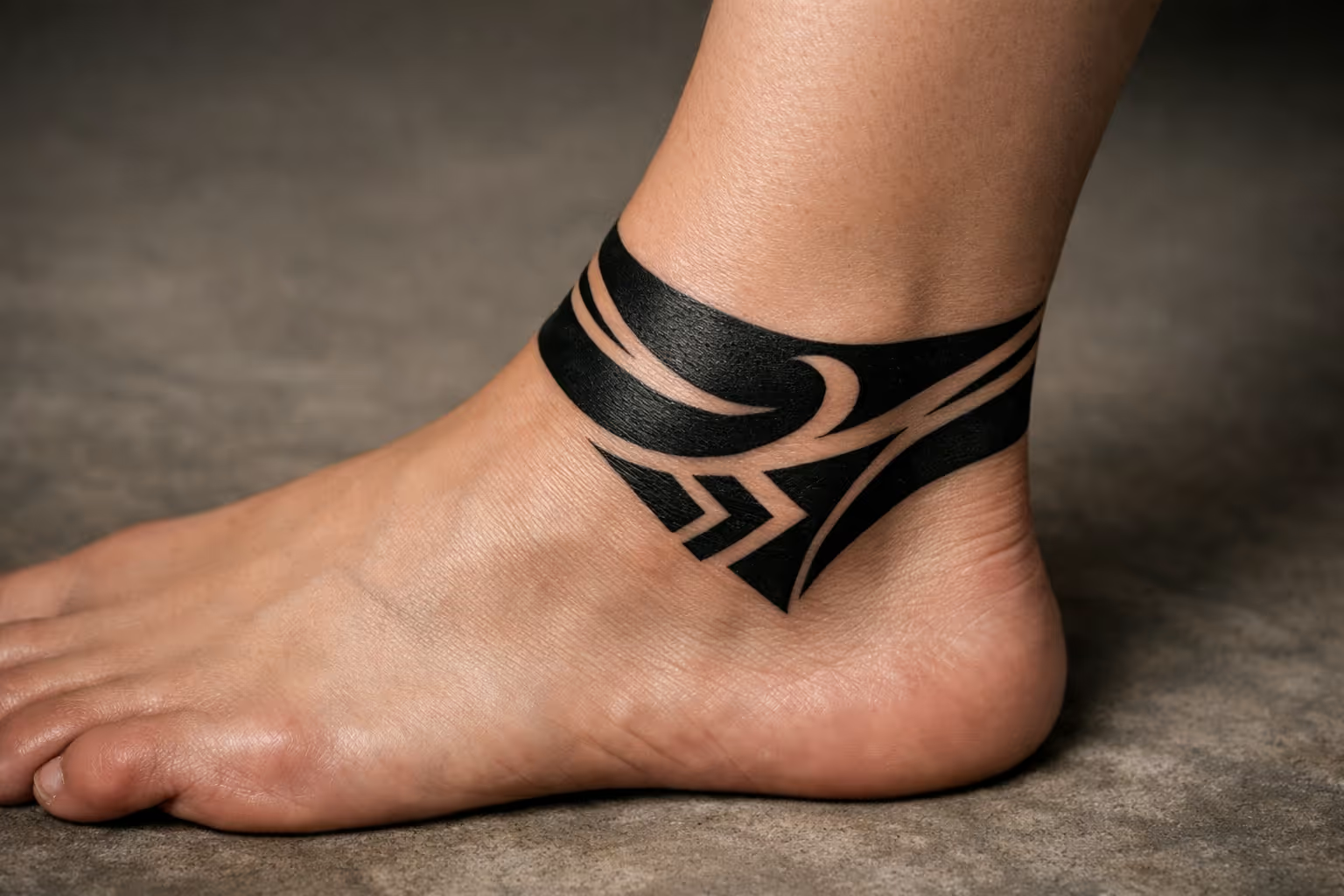
The bold black shoulder cap that dominated every gym locker room in 2001 is back, and I’m seeing it booked more often than at any point in the last decade. But the conversation around it has shifted considerably. A tribal tattoo in most Western studios today means abstract blackwork: bold curves, spikes, chevrons, and solid fill designed to flow with the body’s muscle lines. That is a completely different thing from the living Indigenous traditions the word gets borrowed from, and this guide keeps those two things deliberately separate. What follows covers the generic Western neo-tribal style: its look, its history, its design logic, and its honest limitations, with clear signposts to where the cultural lines actually sit.
✓ Pros
- Reads clearly from a distance; bold silhouette holds over decades
- Black ink outlasts color; no fading palette to manage
- Highly scalable: 2-inch wrist band to full sleeve
- Purely aesthetic or symbolically mapped: client controls meaning
- Modular design allows phased build-out over time
✗ Cons
- "Tribal" label is culturally loaded: requires informed design choices
- Large solid-black areas require multi-session planning
- Poor body-flow planning produces awkward, imbalanced results
- Thin lines in large pieces blur within years
- Finding a blackwork specialist (not just any artist) takes research
What “Tribal Tattoo” Actually Means Today
A tribal tattoo in a Western studio almost always means neo-tribal blackwork: abstract bold black patterning (curves, spikes, chevrons, bands, and solid fill) designed to flow with your body, not a specific cultural symbol system. That is the version this guide covers.
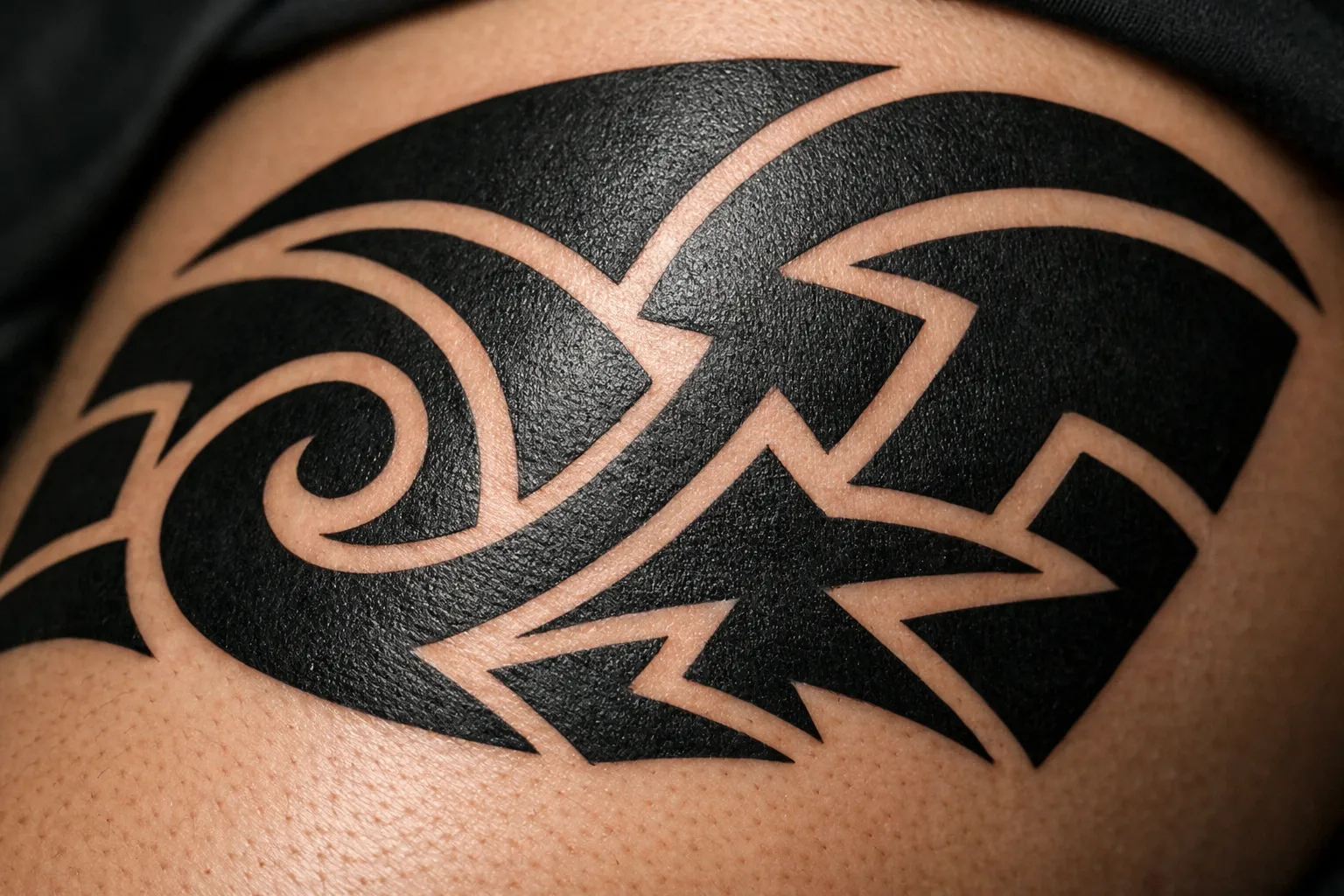
The word “tribal” gets stretched across two completely different things. The first is the Western neo-tribal style: a studio aesthetic built from abstract forms, born in the early 1980s, with its own 40-year history. The second is a set of specific, living Indigenous traditions: Polynesian, Māori, Bornean, Celtic. Those are separate systems with their own rules, their own encoded meanings, and their own dedicated guides on this site. They are not interchangeable with generic blackwork, and treating them as one bucket is where a lot of the confusion, and the harm, starts.
In practice, when you walk into most shops and say “tribal,” you’ll get neo-tribal blackwork: bold patternwork, solid black ink, strong line weight, and deliberate negative space. Blackwork and tribal sit among the top-requested styles right now, and most shops list blackwork as one of their core categories. Tattoo historians and blackwork specialists prefer the term “neo-tribal blackwork” precisely because it’s more accurate: “tribal” is marketing shorthand that has caused real confusion.
The symbolic associations people attach to the style (strength, protection, movement, journey) are loosely applied in modern Western usage. They are studio conventions, not culturally encoded meanings. That distinction matters, and I’ll come back to it.
The visual hallmarks of neo-tribal blackwork
Two technical hallmarks define the style: solid black fill with thick primary outlines, and a deliberate skin-as-negative-space strategy. The pattern is built from repeated geometric motifs (chevrons, spikes, wave forms) with clear “windows” of bare skin left between the black shapes. Color is essentially absent as a rule. The whole point is that the design reads at several meters; the same high-contrast logic that makes blackwork “read across a room” governs every neo-tribal design decision. The common pitfall when it’s done badly: crowding every gap with black, which kills the contrast and turns the piece muddy as it ages.
From Borneo to the Gym: The 1990s Boom and What Came After
The Western neo-tribal movement is conventionally dated to 1982, anchored to Leo Zulueta’s work and Don Ed Hardy’s publication of Tattoo Time No. 1: “New Tribalism” that same year (13). Zulueta, a Filipino-American artist working alongside Hardy, drew on Bornean tattoo vocabularies and stripped them of cultural specificity to build large-scale abstract blackwork. That’s the actual origin point for the entire style: not an ancient tradition, but a deliberate 20th-century adaptation.
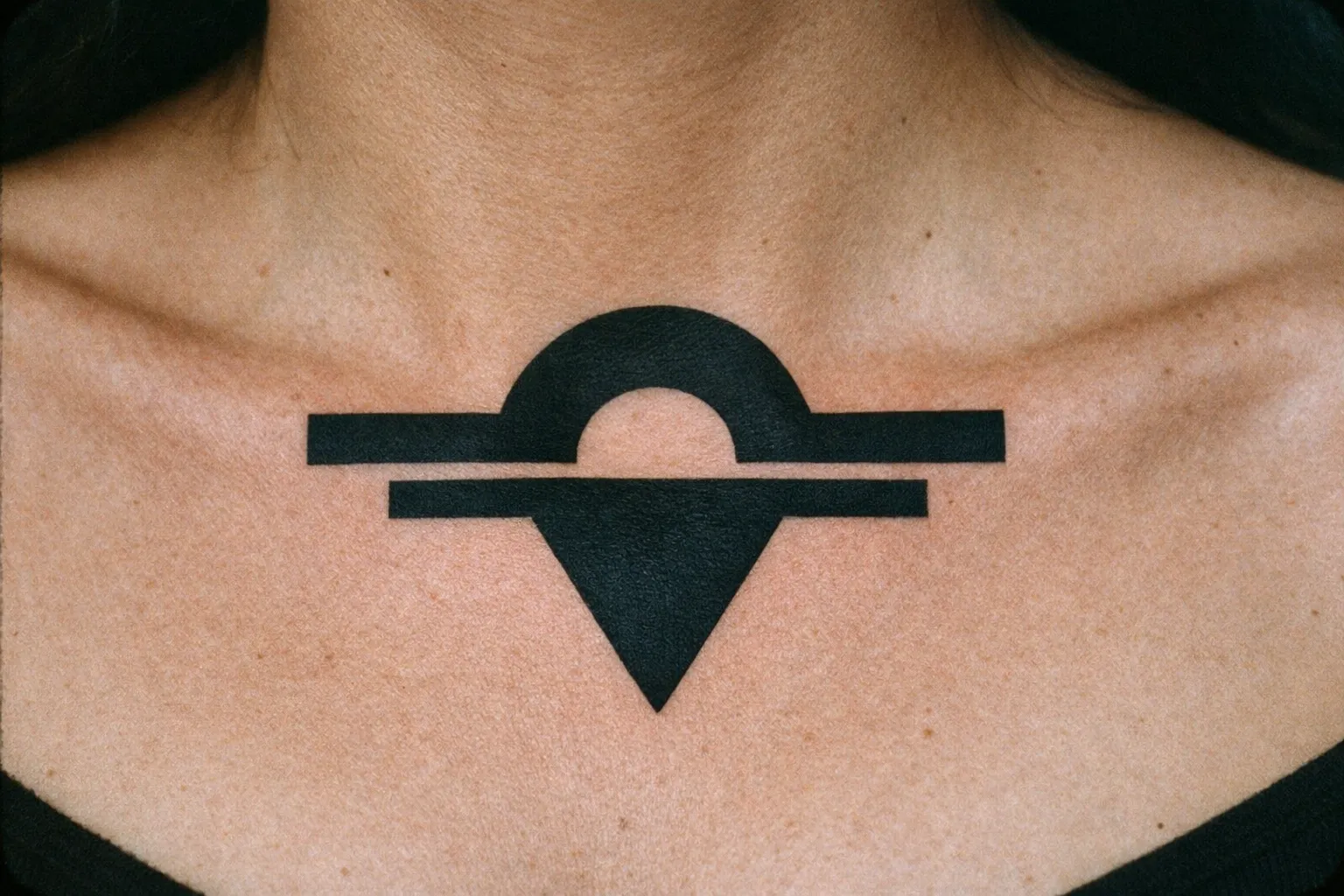
Two currents grew out of that early work. The first was large-scale abstract neo-tribal, later pushed further in London by artists like Xed Lehead, which fed into the contemporary geometric and dotwork scenes. The second was a set of smaller, ornamental thorn-like motifs that eventually evolved into what we now call cybersigilism.
Then came the mainstream explosion. Through the 1990s and 2000s, arm sleeves, shoulder caps, and chest pieces became the dominant male body-art look, heavily tied to athletes, action-film culture, and gym culture. Those 90s pieces were relatively simple by today’s standards. Dense blackwork coverage is genuinely demanding: a full ornamental or dense blackwork sleeve can require about 40-60 hours depending on complexity, well above a standard custom sleeve.
The backlash followed. Through the 2000s, cultural appropriation critiques gained visibility and the style became shorthand for “dated” in certain circles. Plenty of those shoulder caps got covered up or lasered.
The current revival, in 2025-2026, is framed differently. It’s marketed as “neo-tribal blackwork” or “modern tribal,” and it’s often hybridized with geometric grids, dotwork gradients, and negative-space cutouts, a long way from raw 90s flash. The economic scale is real: full-day large-scale sessions generally run $850-$2,000, with published flat-day rates ranging from around $1,000 for a 6-hour sitting to $2,000+ for 8-10 hours, which tells you these are serious projects, not walk-in impulse pieces.
Tribal Tattoo Meaning: What the Symbolism Actually Covers
In a Western studio, tribal tattoo meaning is largely what you and your artist decide it is. There is no universal fixed code. That’s not a cop-out; it’s how the style actually works.
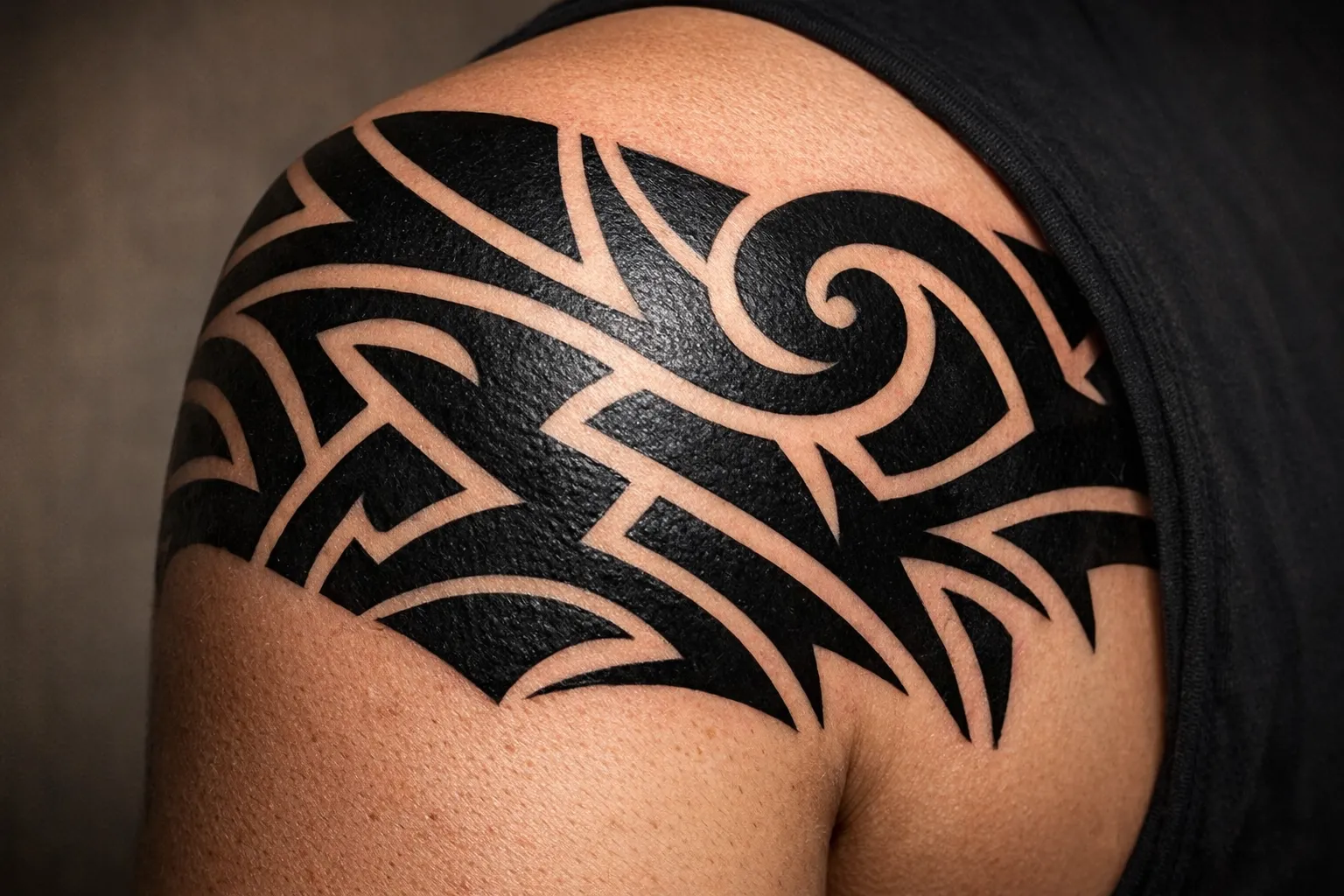
There are two honest modes. The first is purely aesthetic: you want bold blackwork with no assigned meaning. This is a completely valid brief, and it’s common: many clients choose blackwork for graphic impact rather than symbolism. The second is symbolically mapped, where meanings get assigned to specific motifs or body zones.
If you go the symbolic route, the associations you’ll see in modern guides break down roughly by placement: strength on the shoulder and upper arm, protection across the chest and back, movement and journey on the forearm and calf, inner depth and calm resolution on the wrist and ankle. Some artists use a “symbolic map” of the arm divided into four to six sections when designing a sleeve: shoulder for beginnings and identity, upper arm for strength, elbow for transition, forearm for daily action and craft, wrist for resolution and anchor. You assign the personal meaning; the artist builds the abstract pattern around it, without copying any culture-specific motif.
Wave motifs are a good example of how this works. In a neo-tribal blackwork context, stripped of any specific cultural framework, a cresting wave gets read as new beginnings, a deep swell as inner strength. Those are Western studio conventions, distinct from the culturally anchored wave symbolism found in Polynesian and Samoan traditions. Nobody’s ancestors encoded the neo-tribal version; it’s a shared design language that studios and clients have settled into over time.
When meaning matters vs. when it doesn’t
If personal symbolism matters to you, map it before the consult, and write down what each zone should represent so your artist can plan the flow around it. If you just want bold blackwork that looks good, say that plainly. Both are legitimate briefs, and a good artist works with either. What causes problems is going in undecided and expecting the meaning to appear on its own.
It won’t.
The Main Styles Within Neo-Tribal Blackwork
The neo-tribal family isn’t one look. Here are the four registers you’ll actually encounter, with placement and sizing notes for each.
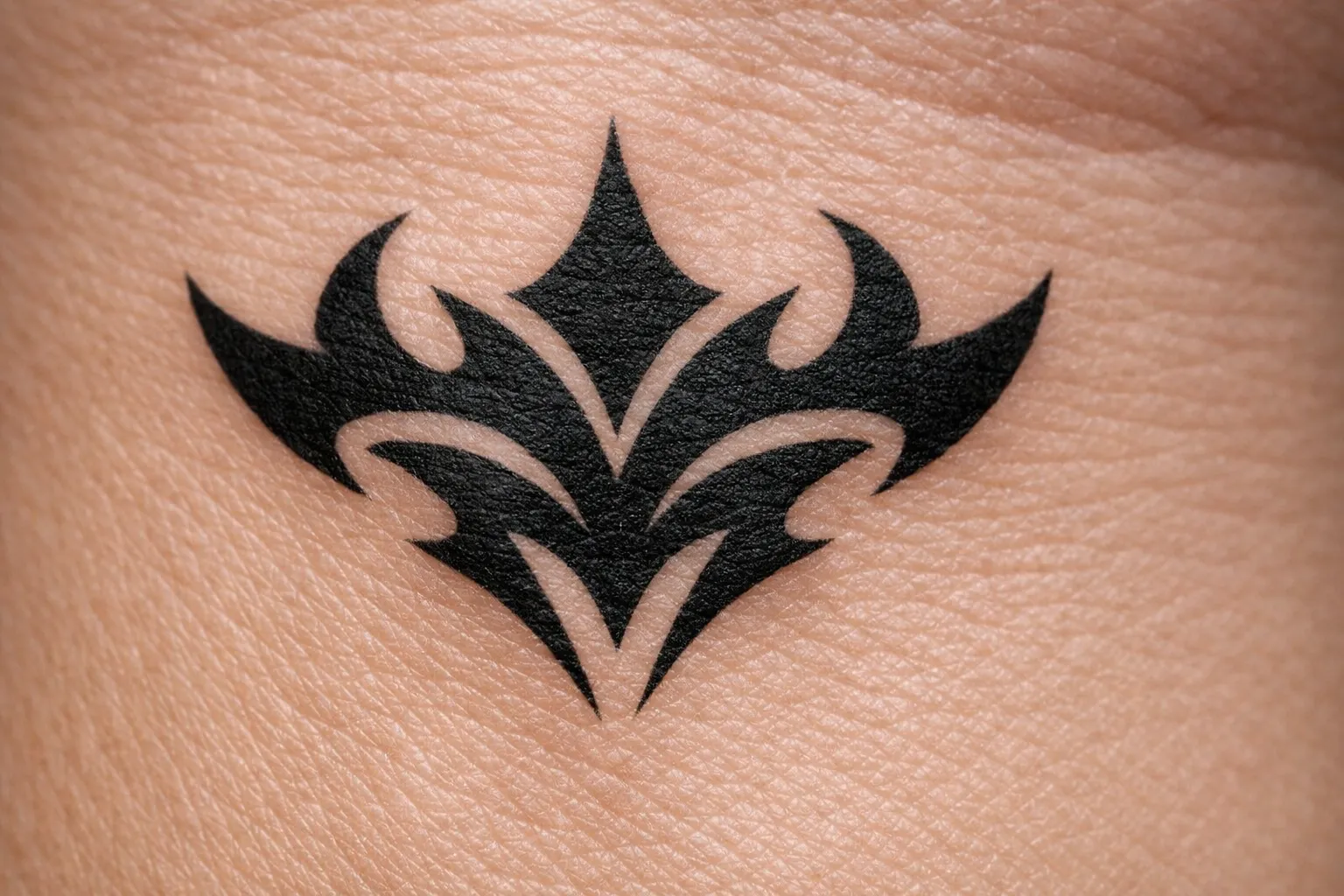
Classic neo-tribal blackwork
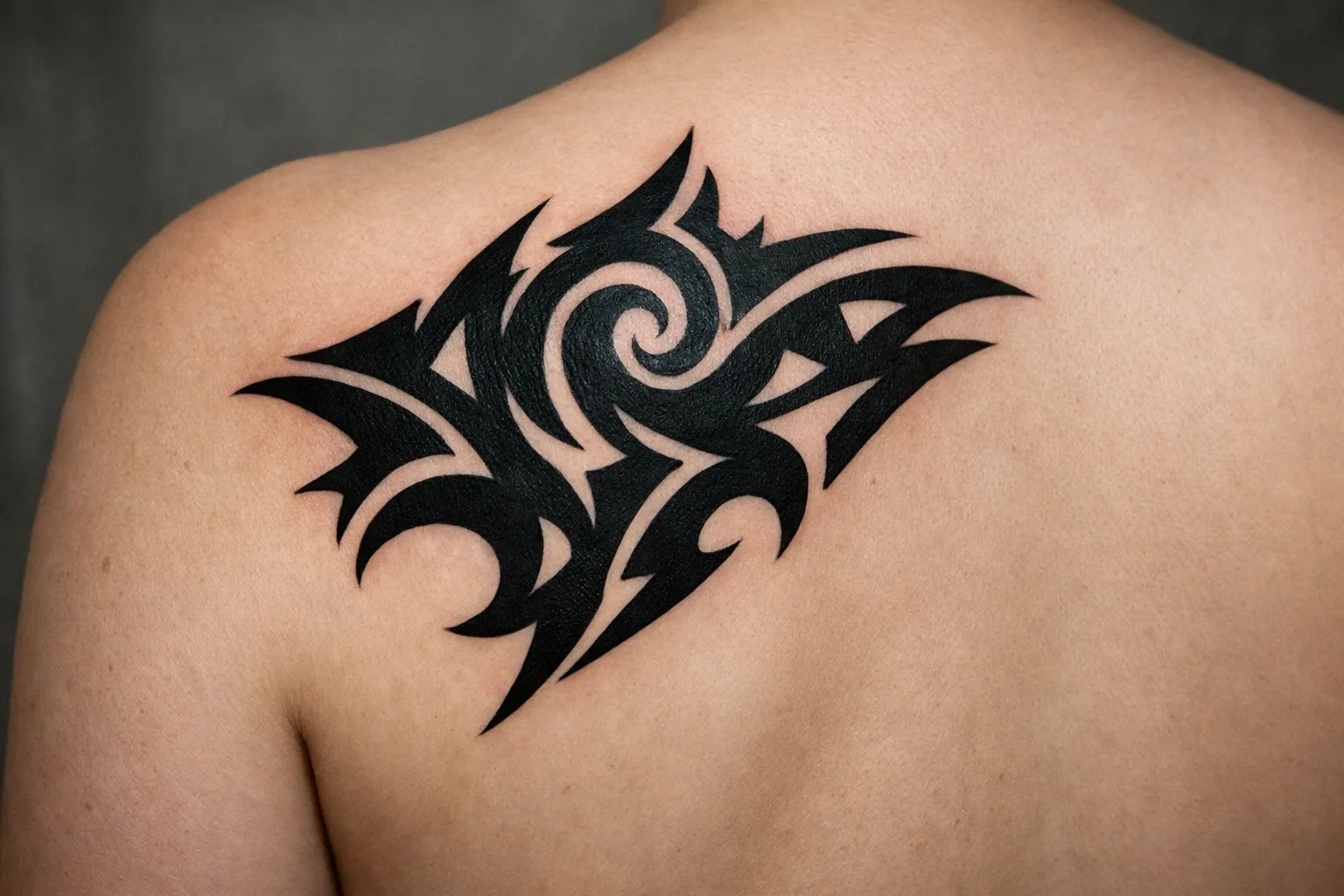
This is the direct descendant of Zulueta’s 1980s work: bold spikes, chevrons, and banding, thick primary outlines around medium internal shapes, solid fill with deliberate skin windows. It wants a placement with clear muscle definition to follow: shoulder cap, upper arm, or calf. For a standalone piece, plan on 4-8 inches (10-20 cm); for full coverage, you’re into sleeve territory. Time-wise, a design at that scale typically lands in the low single-digit hours, depending on density and how much solid black fill it carries.
I’ve seen this variant done brilliantly and done terribly, often by artists with similar portfolios at first glance. The difference is almost always body-flow planning: whether the spikes follow the deltoid curve or just sit on top of it like a sticker.
Modern geometric tribal
This combines bold black forms with geometric grids, polygonal facets, or sacred-geometry overlays. It reads as contemporary and precise, and it’s less culture-adjacent than classic neo-tribal, which makes it a straightforward ethical choice. Forearm and thigh are ideal placements. A standalone piece runs 5-8 inches (13-20 cm). Because the geometry demands clean line control, this variant sits at the higher end of the market, where experienced artists charge $150-$300 per hour for large-scale custom blackwork, with top specialists at $300-$500 per hour.
Negative-space tribal
This inverts the formula: the skin becomes the pattern and the black fill becomes the background. It takes careful planning so the “white” shapes read clearly, but it ages well because the contrast is built into the design. Chest and back panels work best here, at scale. Get this wrong and it reads as a blob; get it right and it’s the most striking version of the style.
Dotwork-hybrid tribal
This transitions from solid black into stippled gradients at the edges, softening the hard-cut look of classic neo-tribal. It’s popular with clients who want tribal scale without the full graphic weight. Upper arm and thigh suit it well. The trade-off is time: stippled gradients add hours over flat fill, and that adds up fast on a large piece.
Tribal Designs for Men: Placements and What Works Where
Demand for this style still skews heavily male, and shoulder caps, arm sleeves, chest panels, and back pieces dominate the inspiration collections. That’s a real pattern, not a rule. None of these placements are gender-locked; they just reflect where the requests come from. Here’s what works where.
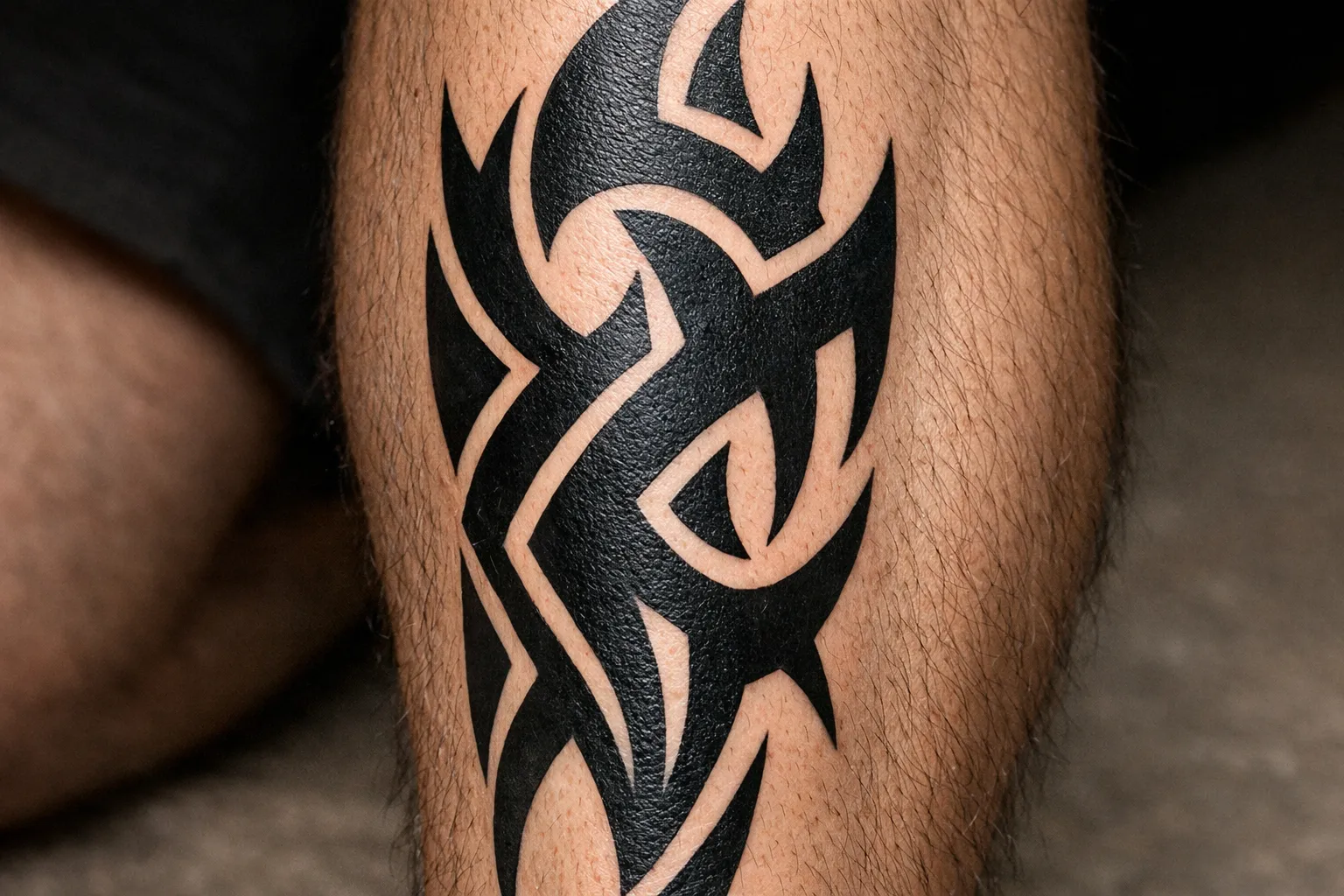
Shoulder cap. The most requested standalone piece, usually 4-6 inches (10-15 cm) across, following the deltoid curve. It’s the natural starting point for a sleeve build-out. A medium piece at this scale typically needs 2-4 hours with an experienced artist.
Chest panel. Run it 6-10 inches (15-25 cm) across to emphasize upper-body width. It pairs well with a sleeve or stands alone. A chest panel in that range often takes 4-8 hours of tattooing, split across one or two sessions depending on how much solid fill is involved. Sternum placement hurts noticeably more than outer chest, worth knowing before you commit.
Upper arm band. The classic banding motif, 3-5 inches (8-13 cm) tall. Extend it down the forearm and you’ve turned it into a half sleeve.
Calf and leg. Underused and well-suited. The calf muscle gives you the same body-flow opportunity as the upper arm. Plan 5-8 inches (13-20 cm) for a standalone piece.
Back piece. The largest canvas: a full back is roughly 2 × 3 feet (60 × 90 cm) of skin. Tribal back pieces work best as continuous-flow compositions rather than stacked segmented bands. Budget 20-40+ hours across multiple sessions for dense coverage. Most studios cap single sittings at 3-6 hours, with the longer end reserved for large areas like backs and legs.
Pain by placement: what to expect
Relative to each other, here’s how the placements rank:
- Outer upper arm and calf: the most manageable, and good starting points for a first piece
- Shoulder cap and forearm: moderate, though the forearm has bony sections near the wrist that sharpen up
- Chest (sternum) and ribcage: noticeably sharper than the arm
- Inner arm, spine, back of knee: the hardest sections you’ll hit in a sleeve or back-piece build
If it’s your first tattoo, start on the outer upper arm or calf and work up from there.
Planning a Tribal Sleeve: Structure, Sessions, and Cost
A tribal tattoo sleeve is a project, not an appointment. Get the structure right before the first line goes down.
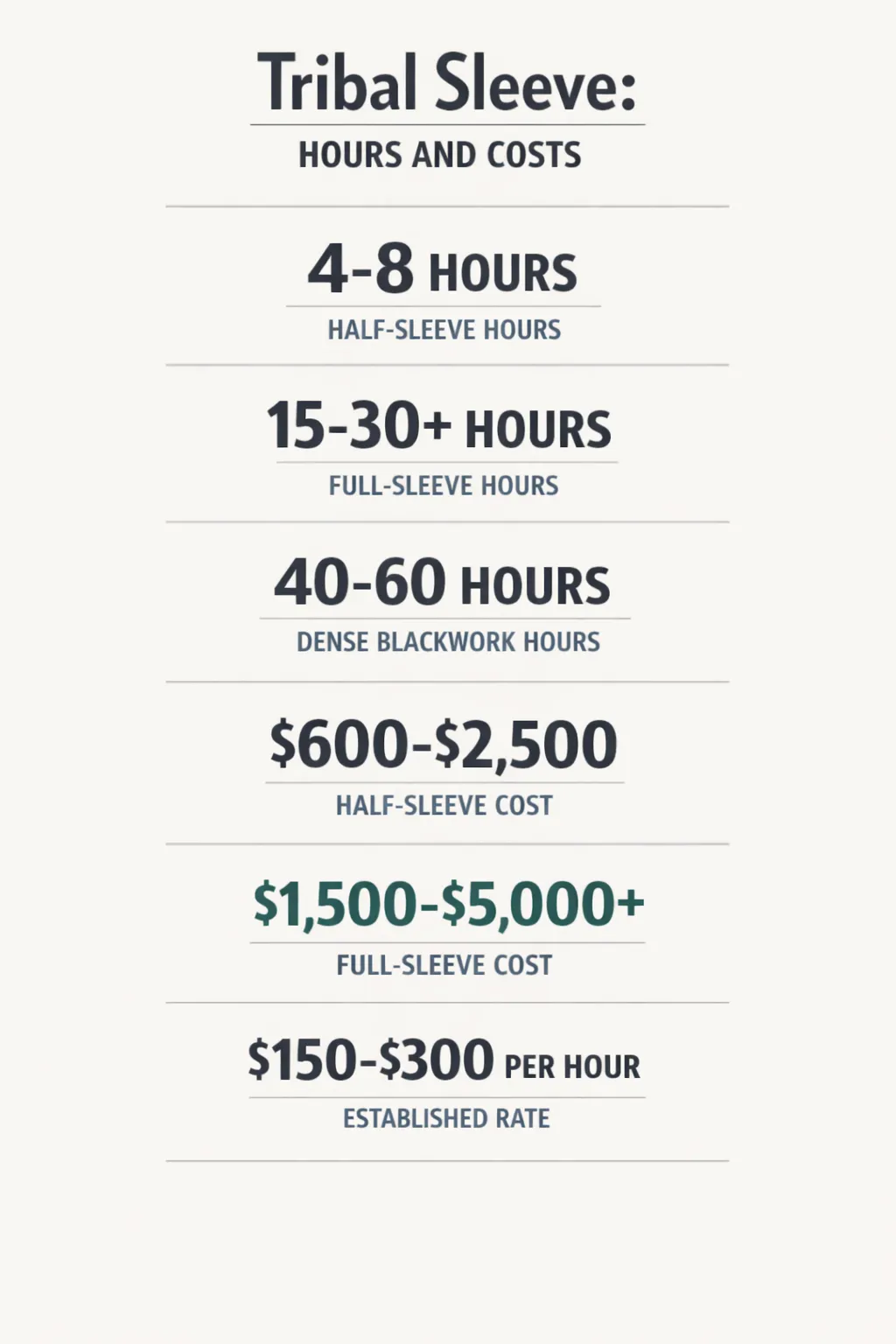 Half-sleeve 4-8 hours; Full-sleeve 15-30+ hours; Dense blackwork 40-60 hours; Half-sleeve cost $600-$2,500; Full-sleeve cost $1,500-$5,000+; Established rate $150-$300 per hour.
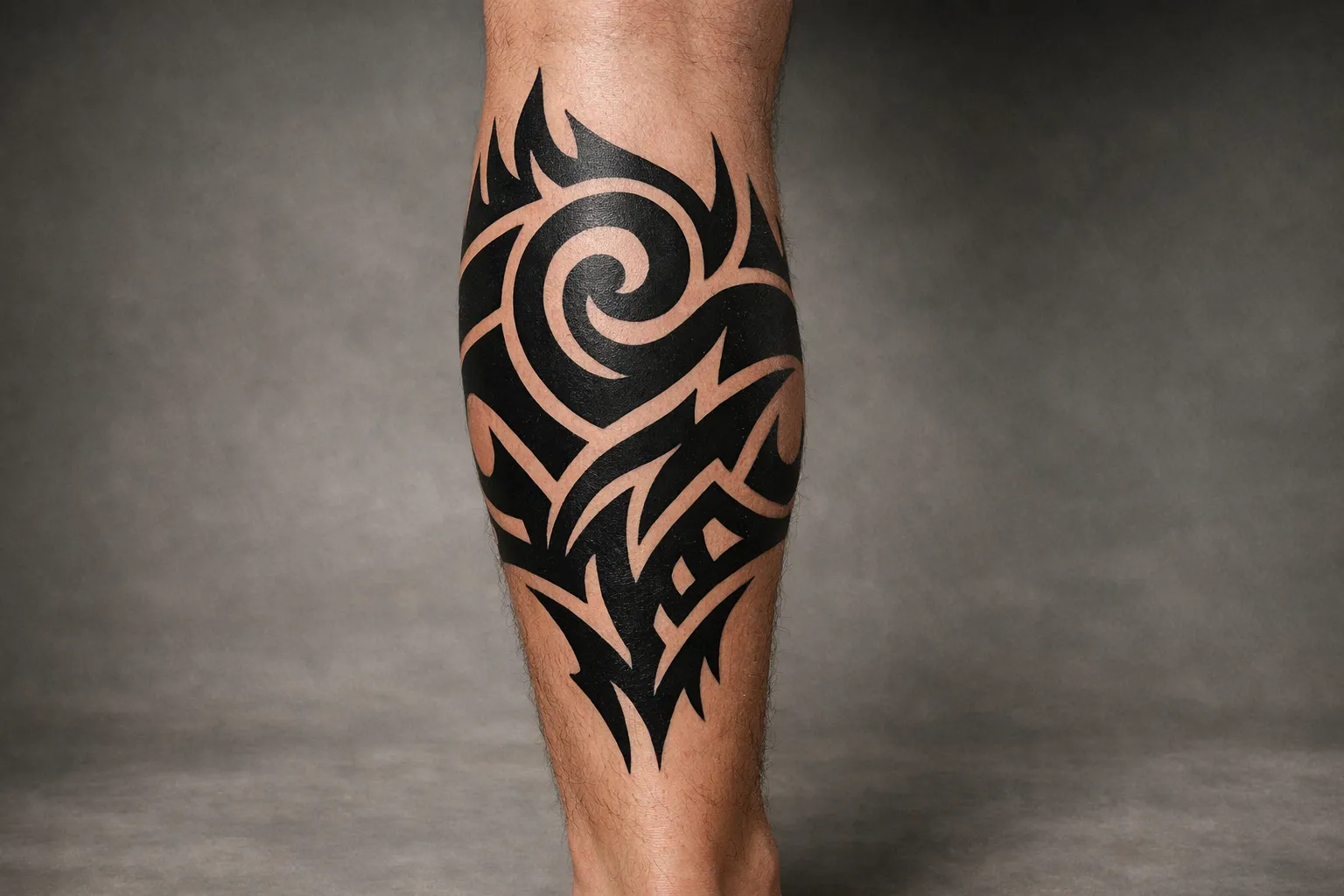
There are two structural approaches. Continuous flow runs one large pattern from shoulder to wrist, designed as a single composition, the most cohesive look, but you’re committing to the whole arm upfront. Segmented bands stack three to five distinct but harmonized motifs along the arm, which lets you build out in phases.
Think of the arm in four to six sections: shoulder cap, upper arm banding, elbow transition, forearm, wrist and hand. Each section should follow its muscle group. The elbow transition is the hardest to design well: it’s where flow breaks down if the artist hasn’t planned it, and it shows immediately on a healed piece.
The modular build strategy is the lowest-risk way in. Start with the shoulder cap and upper arm, roughly 4-6 inches (10-15 cm) each. Live with them for three to six months to gauge how they heal and whether you actually want more. Then add the forearm and wrist in later sessions. This reduces the initial commitment and lets you assess satisfaction before you’re locked into full coverage.
On timing: a half sleeve (shoulder to elbow) runs roughly 4-8 hours across one or two sessions. A full sleeve (shoulder to wrist) typically runs 15-30+ hours of tattooing, broken into 3-6 hour sessions, with total calendar time stretching 3-12 months once you factor in healing breaks. Dense blackwork sits at the top of that range: the most complex solid-black coverage can reach 40-60 hours, well beyond a standard custom sleeve.
On cost, U.S. rates break down by artist tier. Newer artists building their book typically charge 40-60% of established rates. Established, experienced artists run $150-$300 per hour. High-demand specialists doing signature custom work charge $300-$500 per hour (7). One thing to plan for: the hourly rate covers tattooing time only. A 4-hour session occupies 5-6 hours in the studio once you add setup, breaks, and consultation.
When you’re choosing an artist, prioritize a blackwork specialist over a generalist for large tribal work. Look for consistent solid fill, clean bold lines, and portfolio evidence of body-flow planning: patterns that actually wrap the muscle, not stock designs placed flat.
What to bring to the consult
- A reference board of 20-30 designs: patterns you like, not individual images to copy exactly
- Photos of your arm or body so the artist can build a digital mockup overlay
- A clear brief: continuous flow or segmented, symbolic or purely aesthetic, and how far you eventually plan to extend
Half Sleeve vs. Full Sleeve: What You're Committing To
| Half Sleeve | Full Sleeve | |
|---|---|---|
| Coverage | Shoulder to elbow | Shoulder to wrist |
| Tattooing hours | 4-8 hours | 15-30+ hours |
| Sessions needed | 1-2 | 3-10 |
| Cost range (established artist) | $600-$2,500 | $1,500-$5,000+ |
| Pain zones | Shoulder cap, upper arm, elbow | All of the above + forearm, wrist |
| Build flexibility | Can extend to full sleeve later | Final form; plan the whole arm upfront |
| Healing complexity | Moderate | High; multi-area management |
Modern Tribal: How the Style Has Evolved Since the 90s
A modern tribal tattoo in 2025-2026 studios means a hybrid: it keeps the bold black shapes but integrates geometric grids, dotwork gradients, or negative-space cutouts. The result is less raw than 90s flash and more architectural: deliberate, structured, planned.
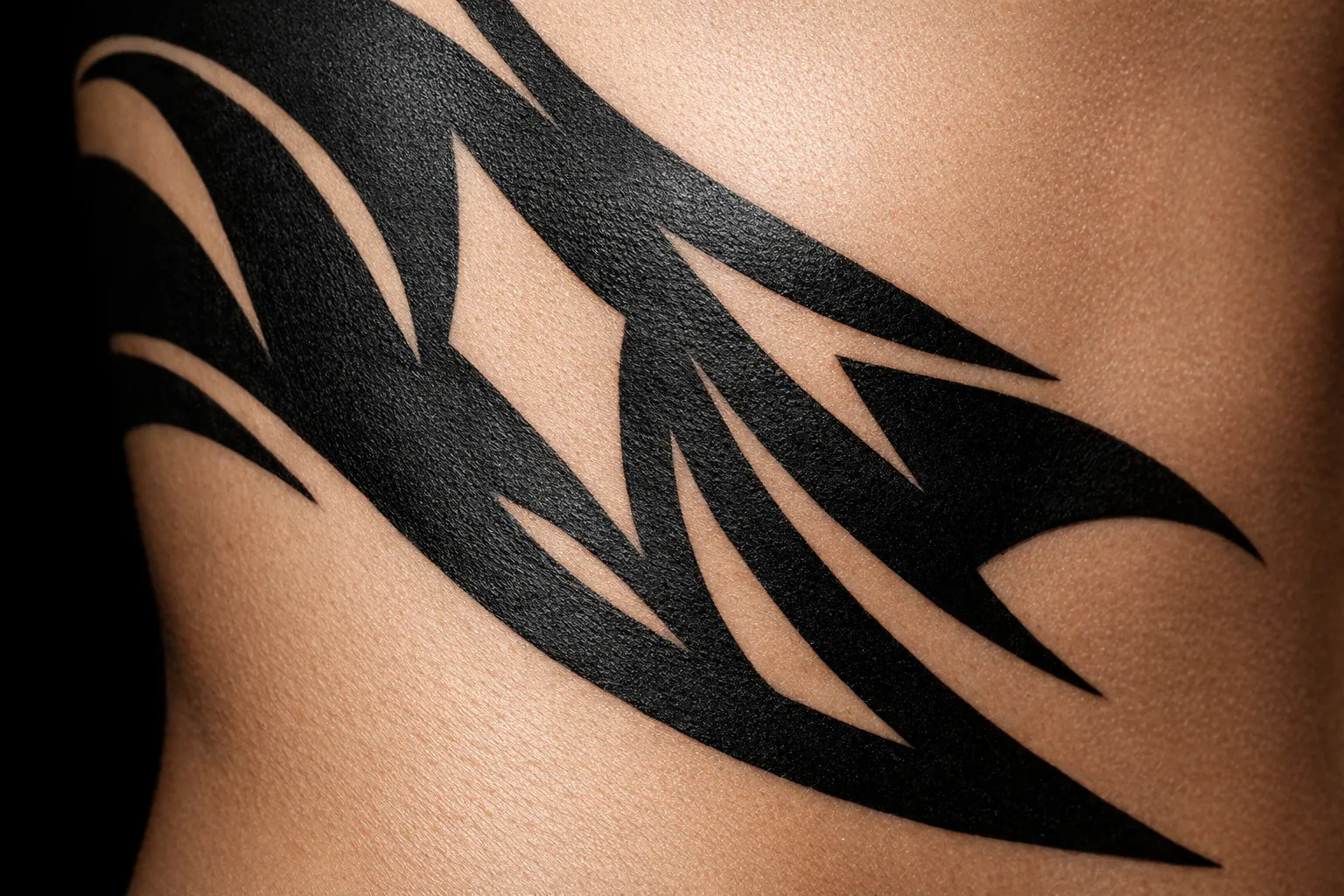
Cybersigilism is the furthest evolution of the style. It’s built from thorn-like interlocking structures with a tech-meets-mysticism aesthetic, descended from the ornamental branch of neo-tribal. It’s increasingly requested by clients who want tribal scale and graphic weight without the cultural adjacency, and it’s one of the fastest-growing looks in current studio demand.
There’s also a genuine Y2K nostalgia factor. In 2025-2026, some clients are booking straight 90s-style tribal as a deliberate aesthetic callback, not because it’s the default anymore, but because they want it knowingly. That’s a real shift from 15 years ago, when the same design would have been a cover-up candidate.
What separates modern versions from classic neo-tribal comes down to three things: more deliberate negative space, finer secondary line weights working inside the bold framework, and the occasional single motif (a geometric shape or an abstract animal silhouette) used as a focal anchor. As dense custom work, these pieces sit toward the top of the pricing spectrum, with established custom artists in the $150-$300 per hour band and sought-after names higher.
What hasn’t changed: it’s still almost entirely solid black. Color additions remain rare and generally minimal, and the graphic-impact-at-distance principle still drives every design decision. If it doesn’t read at three meters, the detail won’t save it.
Cultural Appropriation and the “Is It Okay?” Question
Getting a neo-tribal blackwork tattoo (abstract curves, spikes, and geometry with no specific cultural motifs) is not appropriation. It’s a Western studio style with its own 40-year history, and it’s treated as a distinct category from Japanese, Polynesian, and other culturally anchored styles in professional practice.
Where it gets complicated is copying specific motifs from living Indigenous systems (5): Polynesian shark teeth in their traditional arrangement, Māori tā moko facial patterns, Haida formline. Lifting those without belonging to the culture or having guided permission is the line. That’s not a vibe; it’s the actual distinction.
The practical test is simple. If your artist is drawing abstract blackwork patterns that follow your body’s muscle lines, you’re in neo-tribal territory and you’re fine. If they’re pulling from a Polynesian flash sheet or copying a specific cultural symbol system, stop and ask questions. Studio FAQs routinely advise clients to research cultural traditions before requesting specific motifs, and they flag that abstract geometric blackwork is the more straightforward ethical choice for clients without cultural ties.
Academic commentary on this debate makes a sharper argument worth knowing: that seeking inspiration from the art of the Other recreates colonial dynamics of demand, desire, and oppression (10). You don’t have to fully accept that framing to take it seriously. It’s part of why the word “tribal” itself is a problem: as a marketing label, it flattens dozens of distinct traditions into one aesthetic category, and that flattening is exactly what critics object to.
The honest recommendation: if you don’t have a connection to a specific tradition, choose generic neo-tribal blackwork. If you want Polynesian, Samoan, or Marquesan work, read the dedicated guides on those systems and find an artist with real cultural knowledge of them. Both paths are open, just don’t blur them.
Design Mistakes That Age Badly, and How to Avoid Them
Neo-tribal blackwork lives or dies on a handful of technical decisions. These are the ones that wreck a piece over time.
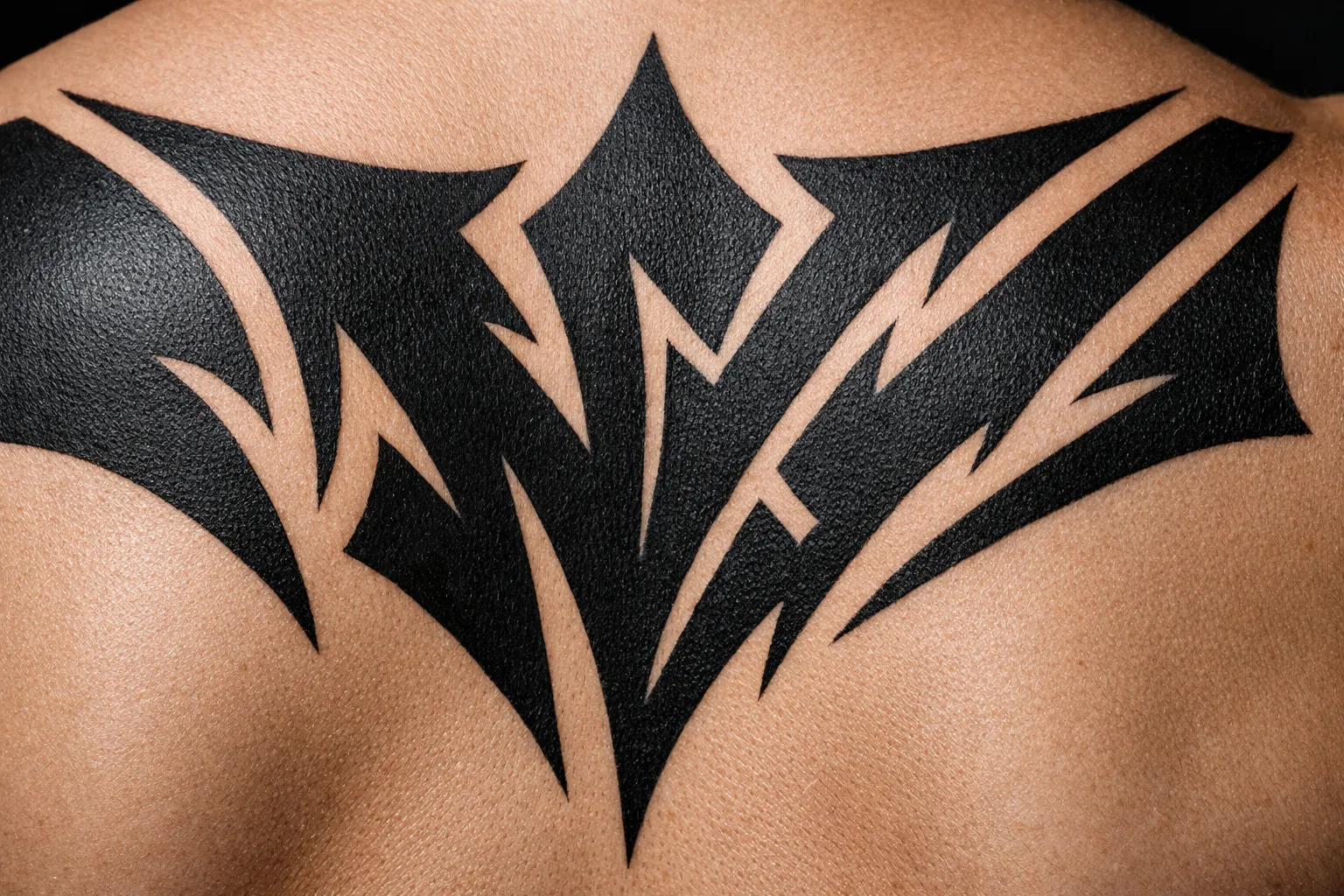
Thin lines in large tribal work. The whole style depends on bold line weight for readability. Lines under a certain threshold blur over years to decades, while bold lines and solid fields of black retain legibility at 3-10+ year horizons. Bold primary outlines are non-negotiable for a piece this size.
Ignoring body flow. Wrapping stock tribal flames around an arm without mapping to muscle groups produces awkward breaks and visual imbalance. The pattern should follow the deltoid curve, the forearm taper, the calf swell. This is the single most common failure in cheap tribal work, and it’s obvious the moment the piece heals.
Crowding the negative space. Filling every gap kills the contrast and makes the piece look muddy as skin and lines age. Clear skin windows between the black forms are a design feature, not laziness. Blackwork depends on that contrast; lose it and you lose the whole effect.
Packing too much solid black in one session. Large contiguous black areas are more taxing on skin than fine-line work. Packing them into one long sitting risks overworked skin and uneven saturation. The fix is multiple 3-6 hour sessions rather than one marathon. For a sleeve, multi-session planning isn’t optional.
Not checking at distance. A tribal design should read at arm’s length and across a room. Check the silhouette from several meters during the consult. If it doesn’t work at three meters, the fine detail won’t rescue it.
Choosing the wrong artist. Neo-tribal blackwork demands strong line control, consistent fill, and body-flow experience. A generalist who “can do tribal” is not the same as a blackwork specialist, and wrapping patterns around muscle groups is a specific skill that separates the two.
Frequently Asked Questions
- What does the tribal tattoo mean?
- In a Western studio context, it depends on the design approach. Neo-tribal blackwork can be purely aesthetic (bold black patterns with no assigned meaning) or symbolically mapped, with motifs or body zones tied to personal themes like strength (shoulder), protection (chest), or journey (forearm). There's no universal fixed code. The meaning is what you and your artist decide before the first line goes down.
- What are tribal tattoos called now?
- The more precise term used by tattoo historians and blackwork specialists is neo-tribal blackwork, or just blackwork when the tribal reference is minimal. "Tribal" persists as a studio shorthand, but it's increasingly flagged as imprecise because it collapses dozens of distinct Indigenous traditions into one aesthetic label. If you're booking a large abstract blackwork piece, "neo-tribal" or "blackwork sleeve" will get you to the right artists faster.
- Is it okay to get a tribal tattoo?
- Getting abstract neo-tribal blackwork (bold geometric patterns designed by your artist without pulling from a specific cultural system) is fine. The line is copying specific motifs from living Indigenous traditions (Polynesian, Māori, Haida) without cultural connection or guided permission. If you want work rooted in a specific tradition, find an artist with genuine knowledge of that system and read up on the cultural context first.
- How long does a tribal sleeve take?
- A half sleeve (shoulder to elbow) takes roughly 4-8 hours of tattooing time across one or two sessions. A full sleeve (shoulder to wrist) runs 15-30+ hours across multiple sessions spaced weeks apart for healing. Large solid-black areas need recovery time between sessions, and rushing it risks overworked skin and patchy saturation.
- How much does a tribal sleeve cost?
- In the U.S., established artists charge 150-300 USD/hour; high-demand custom artists in major cities run 300-500 USD/hour. A half sleeve typically costs 600-2,500 USD; a full sleeve 1,500-5,000+ USD depending on artist tier, city, and design complexity. Hourly rates cover tattooing time only, so budget for a longer studio visit than the tattooing hours alone.
- Is $50 a good tip for a $350 tattoo?
- Yes. $50 on a $350 tattoo is roughly 14%, which is on the lower end of the standard 15-20% range but entirely reasonable. For a single-session piece under $500, $50-$70 is common. If the artist did custom design work, nailed a complex placement, or squeezed you in on short notice, lean toward 20%. Cash tips are always preferred.
- Can you add color to a tribal tattoo?
- Technically yes, but almost no one does, and for good reason. The graphic impact of neo-tribal blackwork comes from high contrast between solid black and bare skin. Adding color dilutes that contrast and typically looks out of place. The rare exceptions are minimal accent colors (a single red or deep blue element) used deliberately. If you want color, a different style will serve you better.
Three decisions actually matter here. First, style: abstract neo-tribal blackwork, or something with cultural specificity, and if it’s the latter, go to the dedicated Polynesian, Samoan, or Marquesan guides and find an artist with real knowledge of that system. Second, structure: continuous flow or segmented bands, and how far you realistically plan to extend. Third, artist: a blackwork specialist with proven body-flow planning, not a generalist who lists tribal among ten other styles.
If you’re not sure how deep you want to go, start with a shoulder cap and upper arm piece at 4-6 inches each. It’s the lowest-commitment entry point that still leaves the door wide open for a full sleeve later, and it lets you see how the black heals on your skin before you commit to the whole arm.
Aftercare: what the healing actually looks like
The first three days are the most demanding, and the week-by-week aftercare guide covers the full timeline. Keep the area clean with fragrance-free soap, apply a thin layer of fragrance-free moisturizer two to three times daily, and do not submerge it. Days 1-3, the skin will weep plasma and ink. That’s normal; blot it, don’t rub. Week 1, the surface starts to peel. Do not pick it. The peeling layer carries ink with it if you pull it early, and that means patchy saturation in your solid black areas, the worst outcome for a blackwork piece. Week 2-4, the outer skin looks healed but the deeper layers are still settling. Keep using fragrance-free moisturizer and cover the piece with sun-protective clothing any time you’re outside, since UV is the fastest way to fade black ink before it’s fully locked in. Large solid-black areas, like a shoulder cap or chest panel, can take the full four weeks to stop feeling tight. Plan your sessions accordingly and don’t book the next one until the previous area is fully healed.