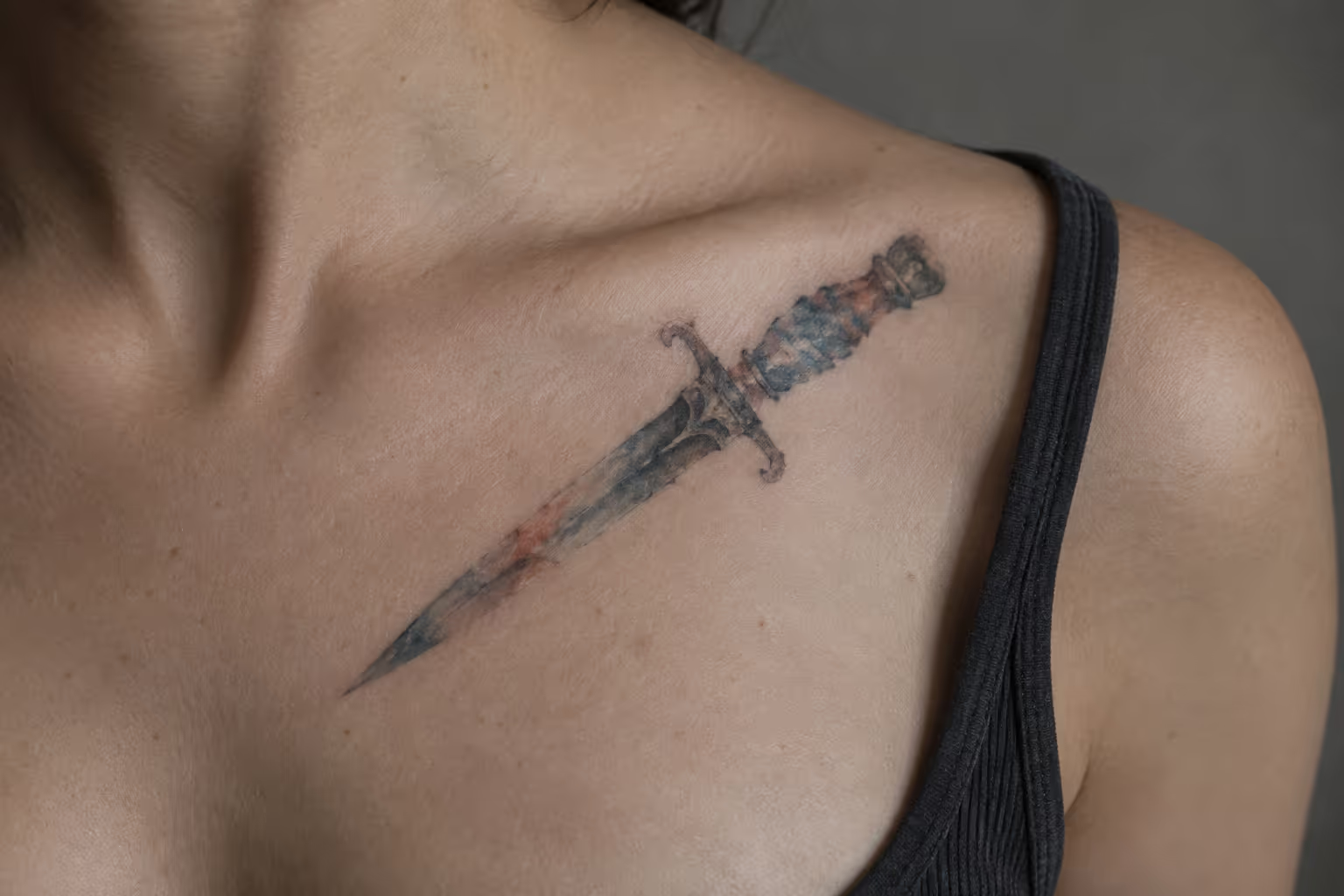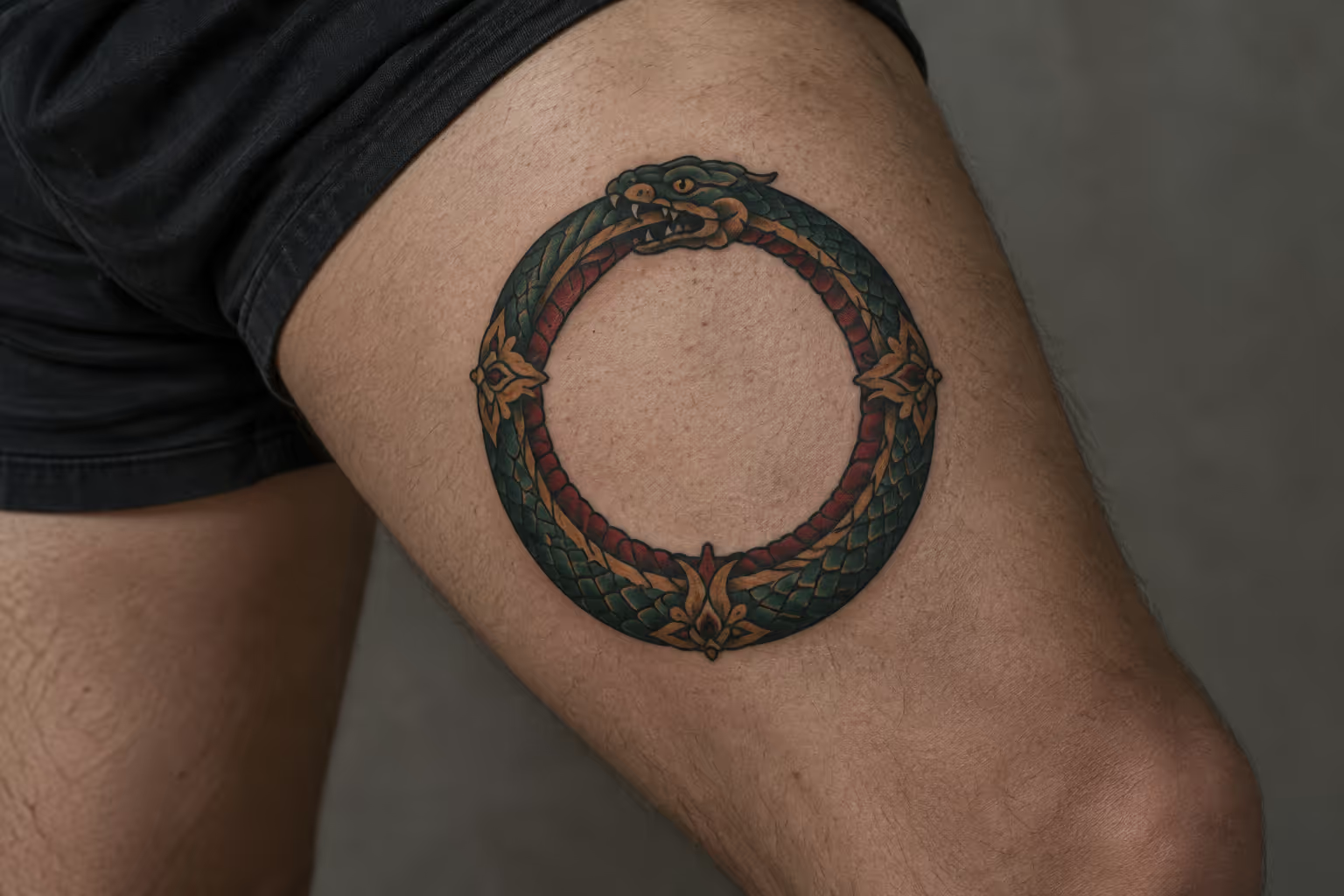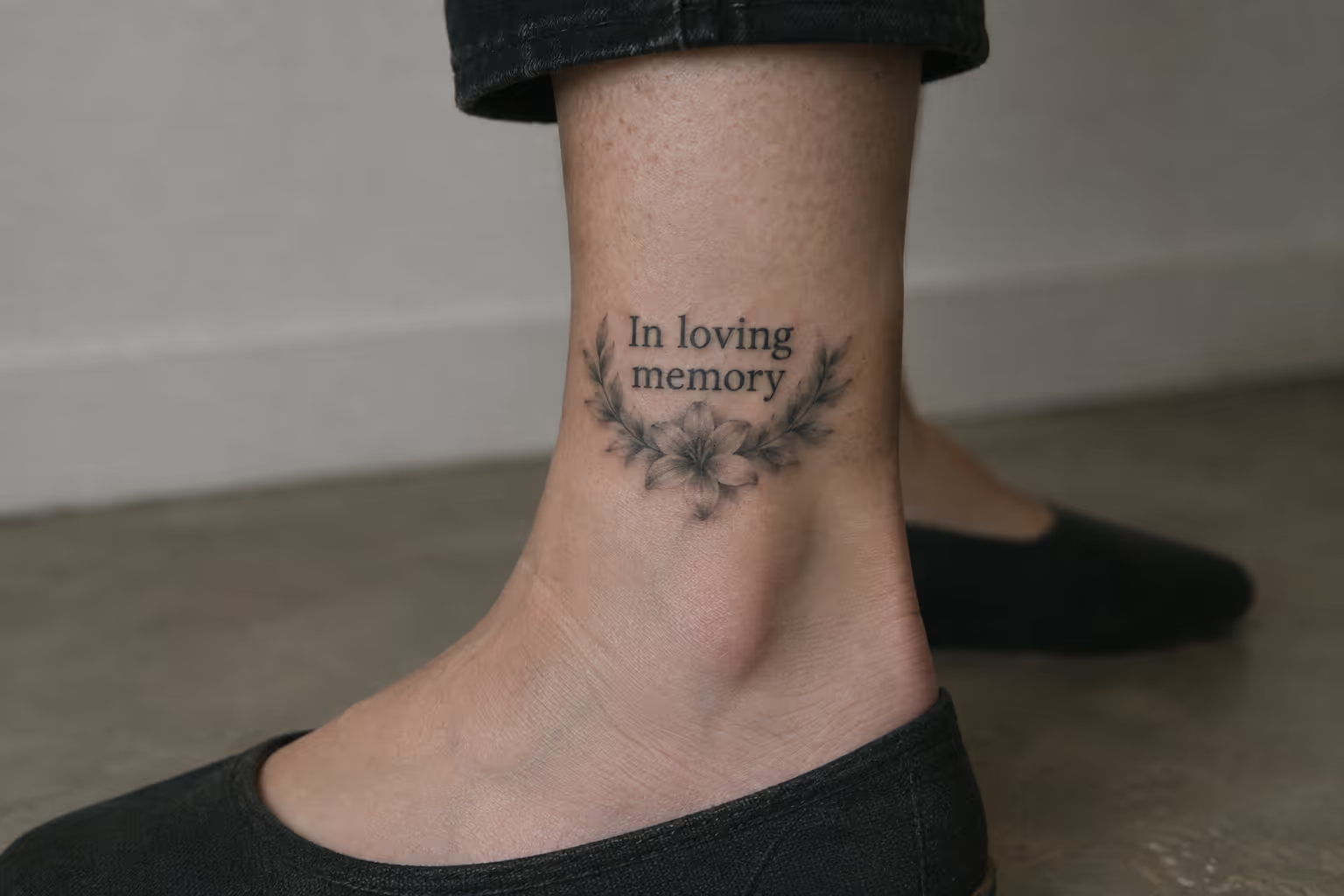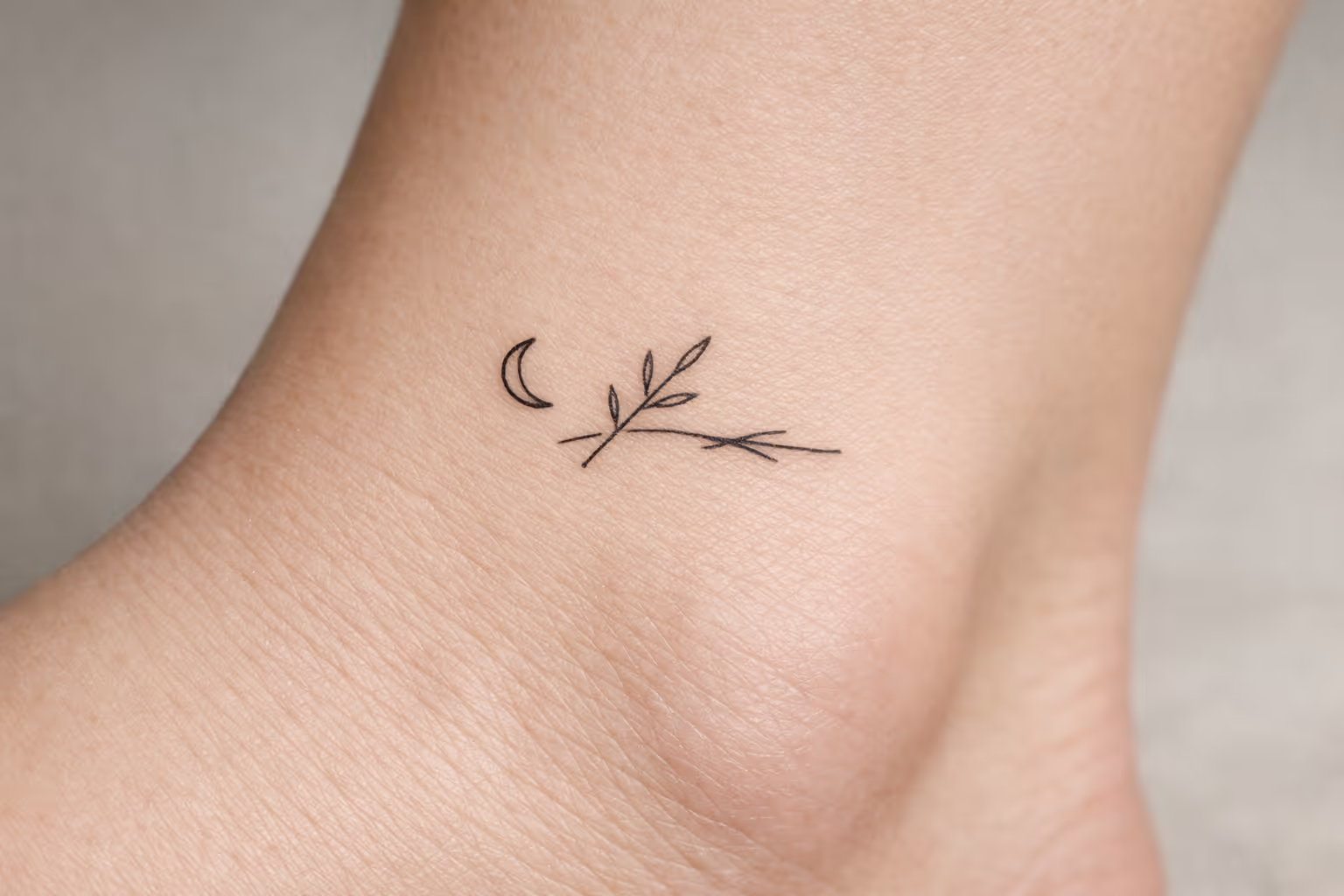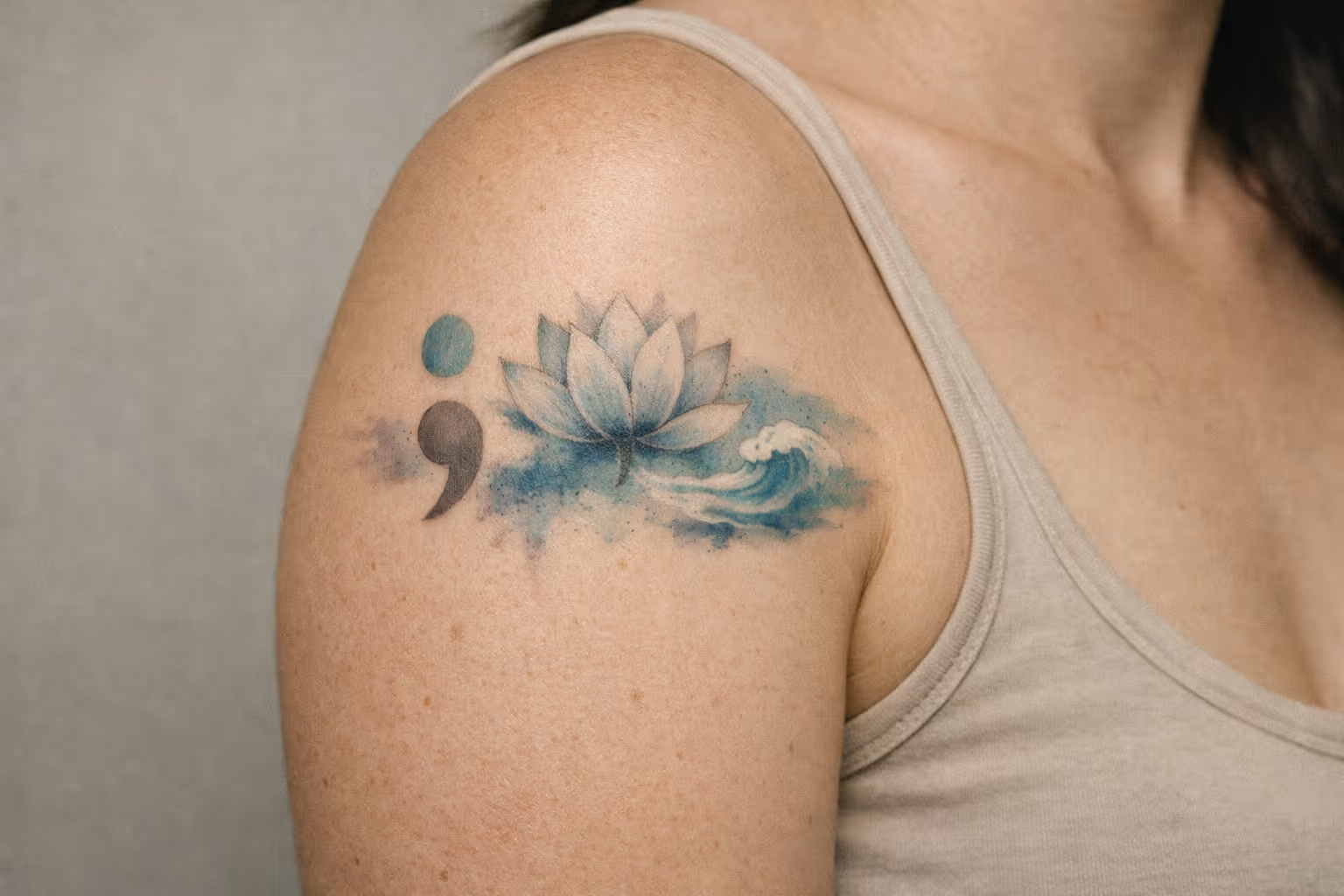
A 5 mm semicolon on the inner wrist, placed a few weeks after a hospital discharge, is one of the most common mental health tattoos a first-timer will ask for. It’s small, it’s specific, and it carries more weight than its size suggests. Many people who get tattooed choose at least one design connected to a mental health experience, whether their own or someone else’s. This guide covers what those symbols actually mean, what people genuinely choose, and what to think through before you book: no motivational pitch, no clinical warning, just the design logic and the practical realities.
One thing stated plainly up front: a tattoo is a symbolic gesture. It is not a treatment, not a replacement for therapy, medication, or crisis support, and nothing in this article frames it as one.
✓ Pros
- Visible daily reminder of survival or a coping value
- Can reduce stigma by opening honest conversations
- Solidarity signal within mental health communities
- Reclaims a body area associated with self-harm (for some wearers)
- Supports identity and sense of agency
✗ Cons
- Permanent: meaning may feel different as your story evolves
- High-visibility placements (wrist, hand) prompt questions you may not always want to answer
- Semicolon specifically implies suicide survival: may misrepresent other experiences
- Tattooing over scars requires extra planning and a minimum 12-month wait
- Not a treatment: cannot replace therapy, medication, or crisis support
What Mental Health Tattoos Actually Represent
Mental health tattoos are designs people choose to represent lived experience with conditions like depression, anxiety, addiction, or trauma, or to signal solidarity with someone else who has faced those things. That’s the whole category. Some are widely recognized, like the semicolon. Others are entirely private: a single word only the wearer understands. Both are valid.
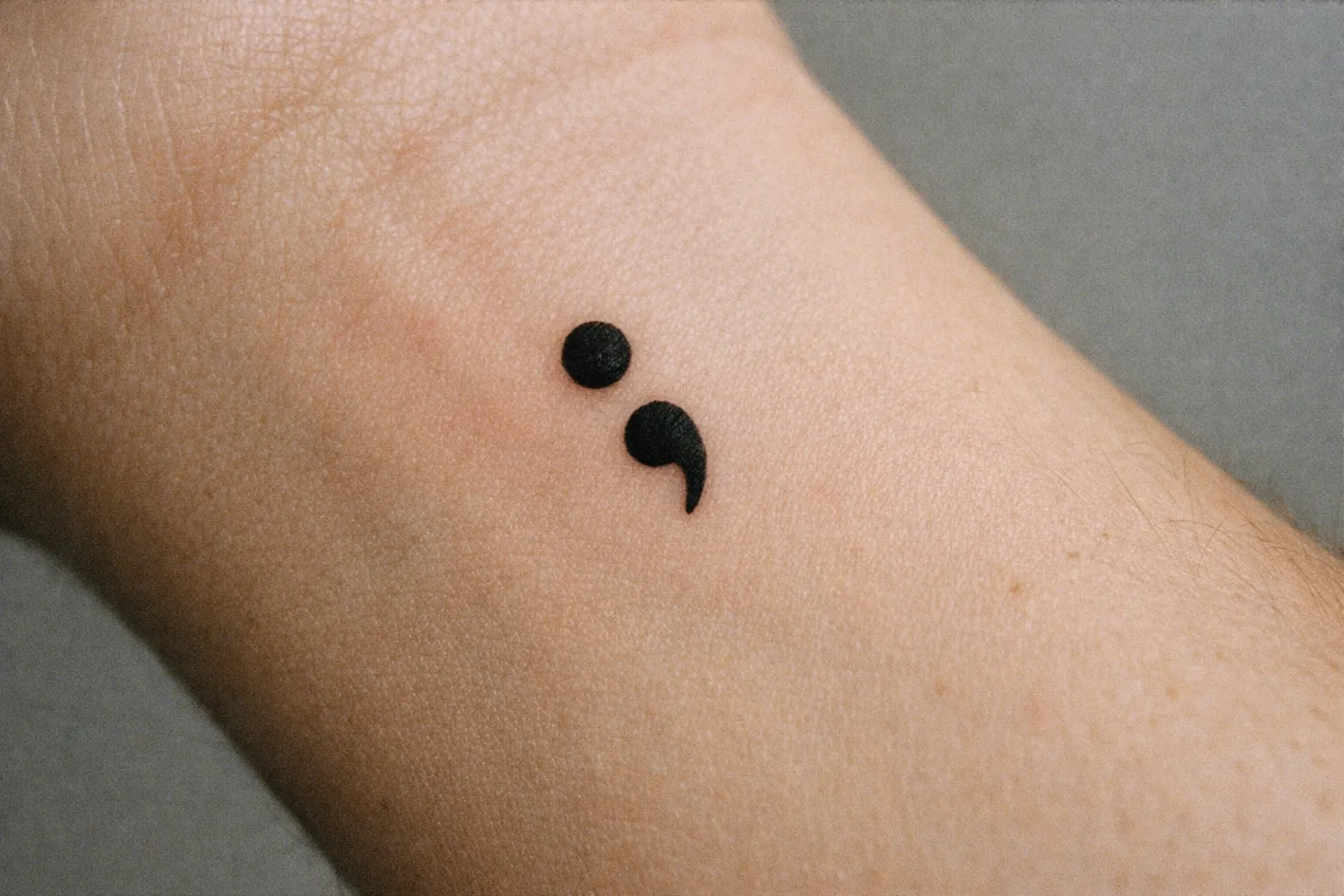
Mental health is a mainstream reason people walk into a shop. I’ve had clients come in with a printed reference photo, a specific date in mind, and a clear idea of what they want the piece to mean, and I’ve had others who just know they want “something” that represents surviving a hard year. Both end up at the same counter.
The motivations split into two broad camps. The first is personal narrative: marking survival, a recovery milestone, or a diagnosis you’ve come to terms with. The second is advocacy or solidarity: wearing a symbol for someone you lost, supporting a friend, or raising awareness more broadly. Neither is more legitimate than the other, but they read differently to observers, and that gap matters when you choose a placement.
The most recognized symbol in the category is the semicolon, which came out of Project Semicolon, founded in 2013 by Amy Bleuel (3), ten years after her father died by suicide in 2003. But the vocabulary is much wider than one punctuation mark: lotus flowers, phoenixes, waves, sun-and-cloud motifs, affirmation scripts, and green ribbons all show up regularly.
Here’s the caveat, once and clearly: whichever symbol you choose, the tattoo doesn’t do the work. It can sit on your skin as a reminder of work you’re doing or have done. That’s the honest frame, and it’s the one this article holds throughout.
The Semicolon Tattoo and What It Actually Means
The semicolon tattoo represents choosing to continue a life that could have ended. A writer uses a semicolon when a sentence could stop but the thought carries on: the wearer is the author. That’s the whole logic, and it’s why the symbol reads as specifically as it does.
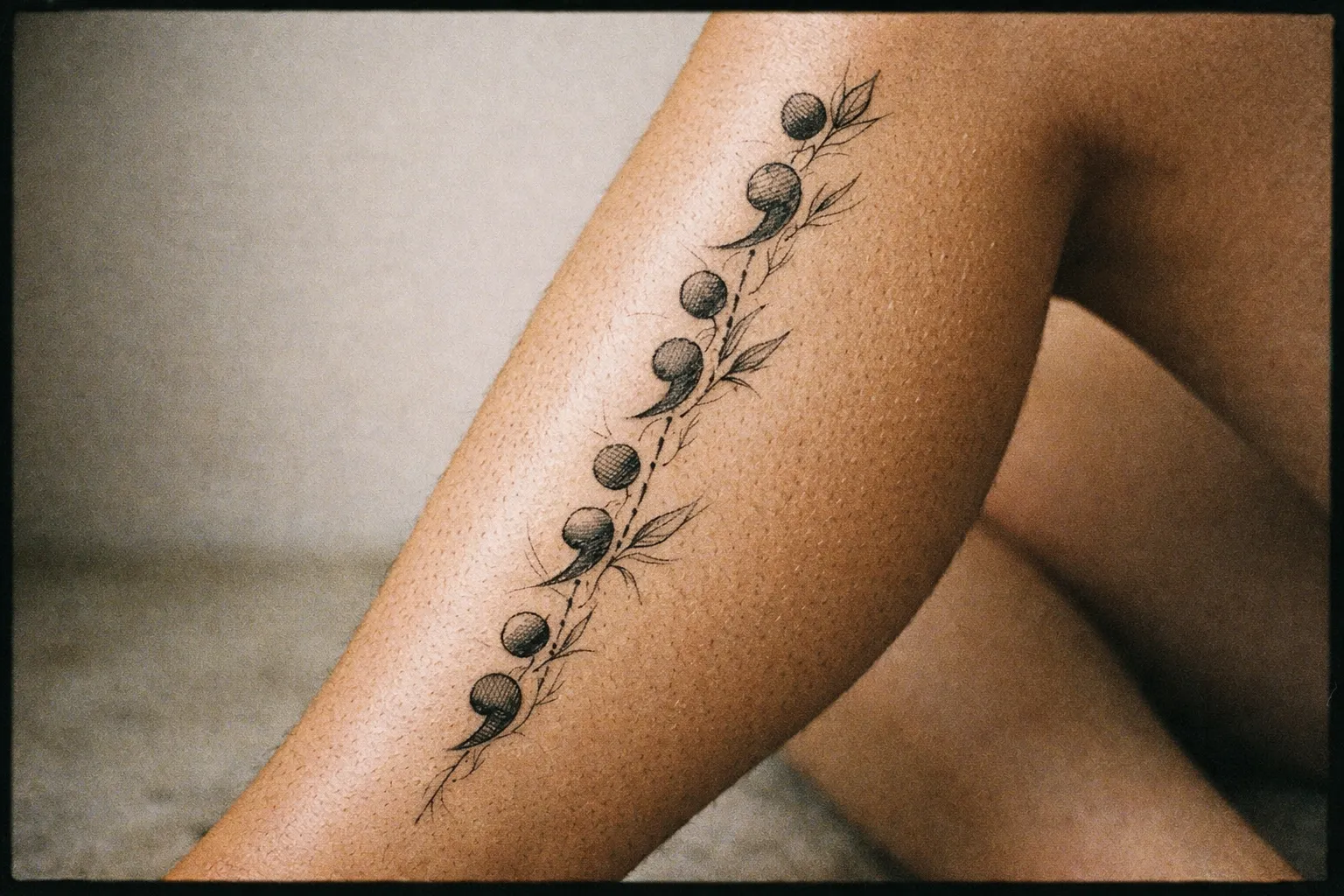
The movement started with Project Semicolon in 2013. In April of that year, Amy Bleuel invited people struggling with mental illness or suicidal thoughts to draw a semicolon on their wrist and post the photo online (7). That grassroots gesture spread through social media and evolved into permanent tattoos as it caught on globally.
A 2019 commentary in the American Journal of Psychiatry Residents’ Journal, “The Semicolon Tattoo,” describes the semicolon as a marker of hope and self-authorship: the wearer is the author of a sentence they chose not to end, rather than a generic decorative mark. More recently, a 2024 paper in the Journal of Public Health called the phenomenon “a marriage between art and mental health,” noting it was amplified worldwide through social media rather than traditional advocacy channels (3). Worth knowing: a 2025 commentary in the same journal openly debates whether the symbol risks becoming “a simplistic trend” detached from its original weight (10). Both readings are live in public health circles right now.
The practical takeaway: in most public readings, the semicolon implies suicide survival or a near-attempt. If your experience centers on anxiety, burnout, or general recovery, a different symbol may represent your story more accurately, and spare you conversations you didn’t choose.
See our full guide to semicolon tattoo meaning, designs, and placement for a deeper breakdown.
Design variations that extend the symbol
- Standalone minimalist semicolon: 5-10 mm, inner wrist, side of finger, or behind the ear. The most recognized form. Keep line weight consistent and the dot round.
- Semicolon butterfly: 1.5-3 inches on the forearm or shoulder blade. Wings frame the semicolon and add a transformation reading. Wing detail smudges under about 2 inches, so don’t shrink it.
- Integrated semicolon: replacing a letter in a word (“war;or” for “warrior”) blends awareness with a personal aesthetic.
- Semicolon with a heartbeat/EKG line: a “still alive” reading. Works well at 2-3 inches on the forearm.
Recovery Tattoos: Marking a Before and After
A recovery tattoo marks a before-and-after: addiction sobriety, depression recovery, eating disorder recovery, trauma survival. It usually ties to a specific milestone (one year sober, a discharge date), which is what makes the imagery and the timing so personal.
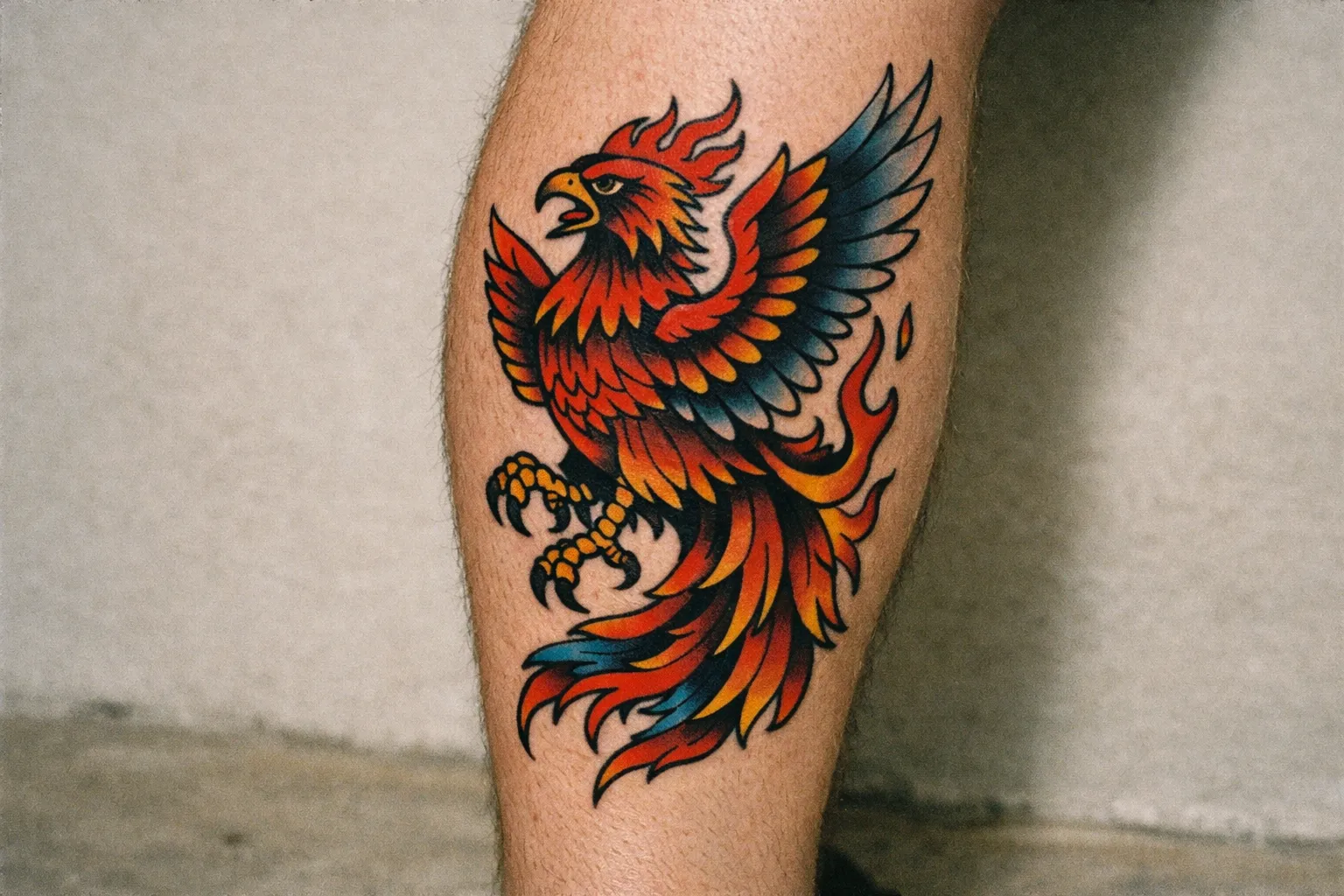
The phoenix is the most common recovery motif: rising after collapse. Fine feather and wing detail blurs at small sizes, so I’d always push clients toward 4+ inches on this one, typically on the forearm or upper back. Below that threshold, the wings lose clarity as the tattoo ages, and a muddy phoenix is a bad outcome for a piece that’s supposed to mean something specific.
The lotus flower is the other workhorse. It grows from mud and surfaces clean, which maps directly onto coming through a period of severe depression or addiction. Lotus recovery tattoos sit comfortably in the 1.5-3 inch range on the forearm or ribcage: enough petal detail to read clearly, small enough to cover for work.
Sobriety dates are usually done in clean sans-serif numerals on the inner forearm. Skip fine cursive here: script under about ½ inch (12-13 mm) blurs within a few years, while clean numerals hold down to ¼ inch (6 mm), and a smudged sobriety date is a bad outcome for a tattoo that’s meant to be exact. A broken chain (freedom from a destructive pattern) reads clearly even at small sizes and is a good option if you want something legible and compact.
One caution that comes up repeatedly in clinical commentary: recovery tattoos often mark a milestone, which makes the timing emotionally loaded. Booking a commemorative piece immediately after a crisis or hospitalization is a common mistake. The recommendation is to reflect on the permanence and, if you’re unsure, talk it through with a clinician before you sit down. The tattoo can support ongoing work; it isn’t a crisis intervention.
Anxiety Tattoos: Symbols That Work as Daily Reminders
Anxiety tattoos tend toward the subtle (a wave, a single word, a minimal mountain range) because their job is to remind the wearer of a coping strategy, not to declare a diagnosis to a room. That’s the design brief that separates them from most other mental health tattoos.
“Breathe,” or “inhale/exhale,” is the most common. Place it on the inner wrist or forearm at around 1-2 inches, where you’ll actually see it during a difficult moment. Use a simple sans-serif for longevity and keep the letters legible: fine script this small softens fast.
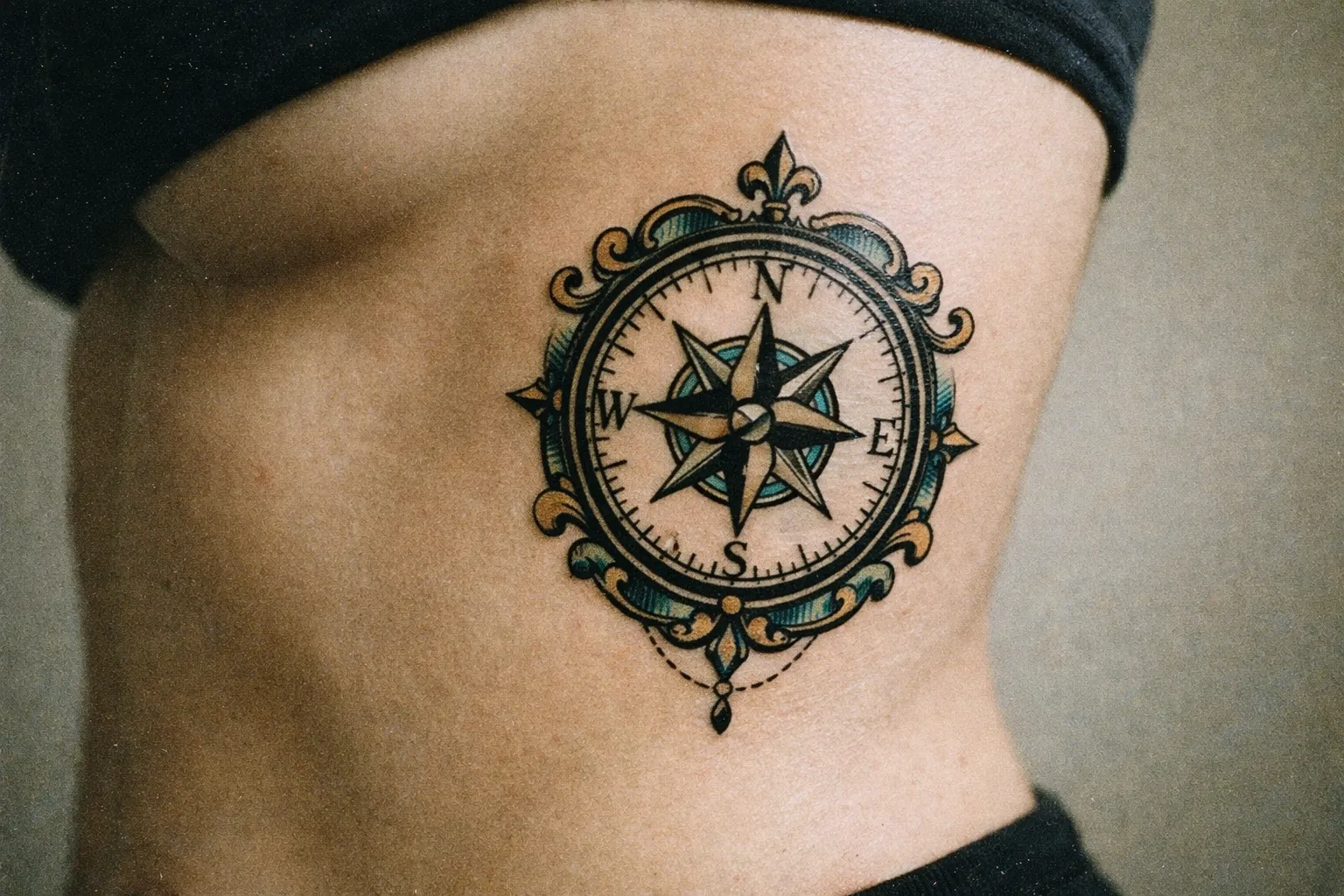
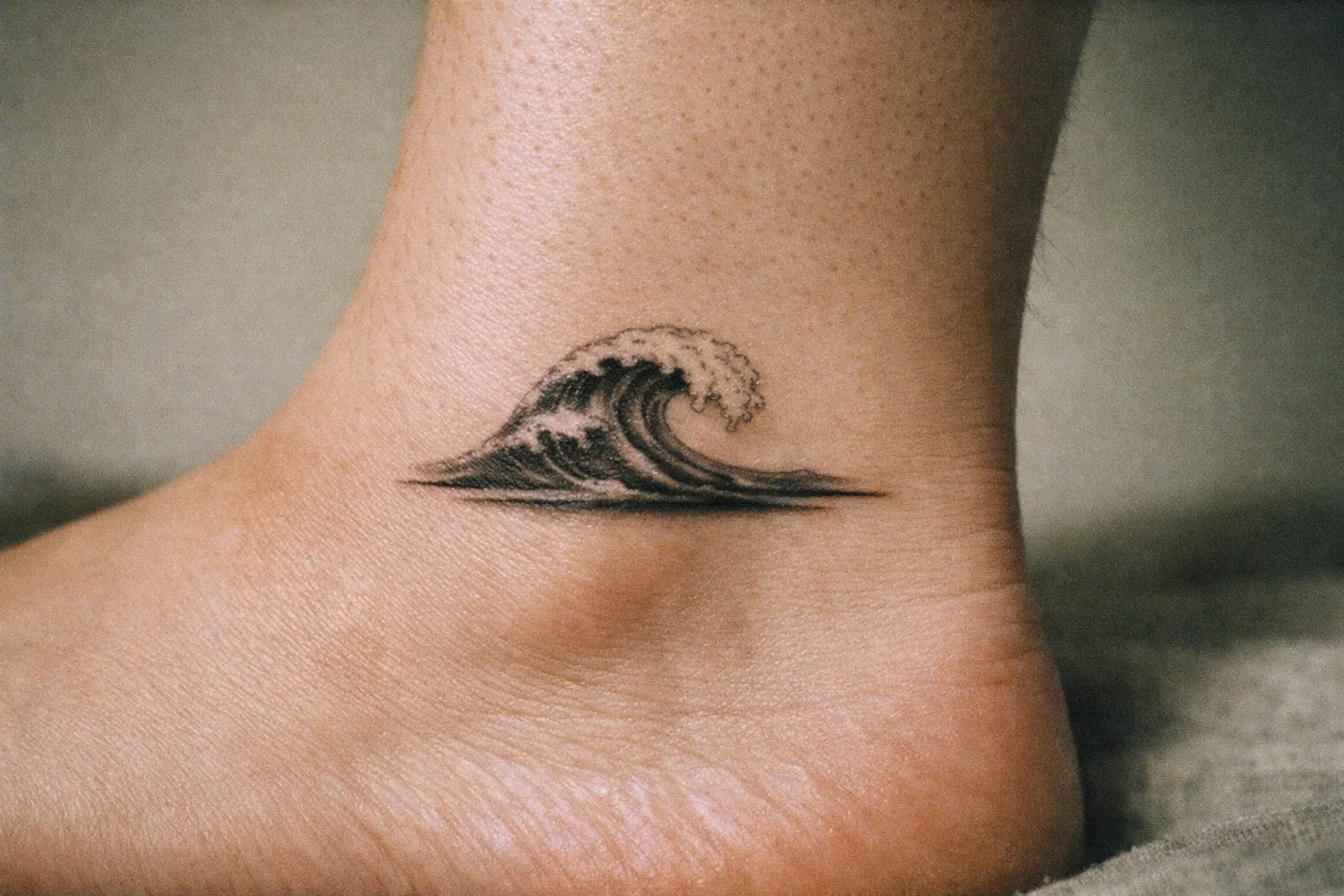
Wave motifs read as endurance through turbulence and work well in fine-line blackwork at 2-3 inches on the forearm or ankle. They’re subtle enough that most people won’t clock them as mental health symbols. Grounding symbols (a compass or an anchor) signal stability and finding your way back; an anchor reads clearly at around 1.5-2 inches on the wrist or inner forearm without looking heavy.
The privacy is the point. Many anxiety tattoos aren’t immediately legible as mental health markers, which suits people who want the personal meaning without fielding questions at work.
One practical note that gets overlooked: if certain sounds, smells like disinfectant, or topics are triggering for you, tell your artist before the session starts. A good artist can adjust the music, offer breaks, or steer the conversation. It’s a small ask that materially improves the sit for an anxious client. I’ve had clients mention this at the start of a session and it changes everything about how the appointment runs.
Depression Tattoos: What People Actually Get
A depression tattoo usually leans on metaphors of darkness, persistence, or emergence rather than a literal diagnosis: imagery that reads as resilience without spelling out a clinical label. Here’s what people actually choose.
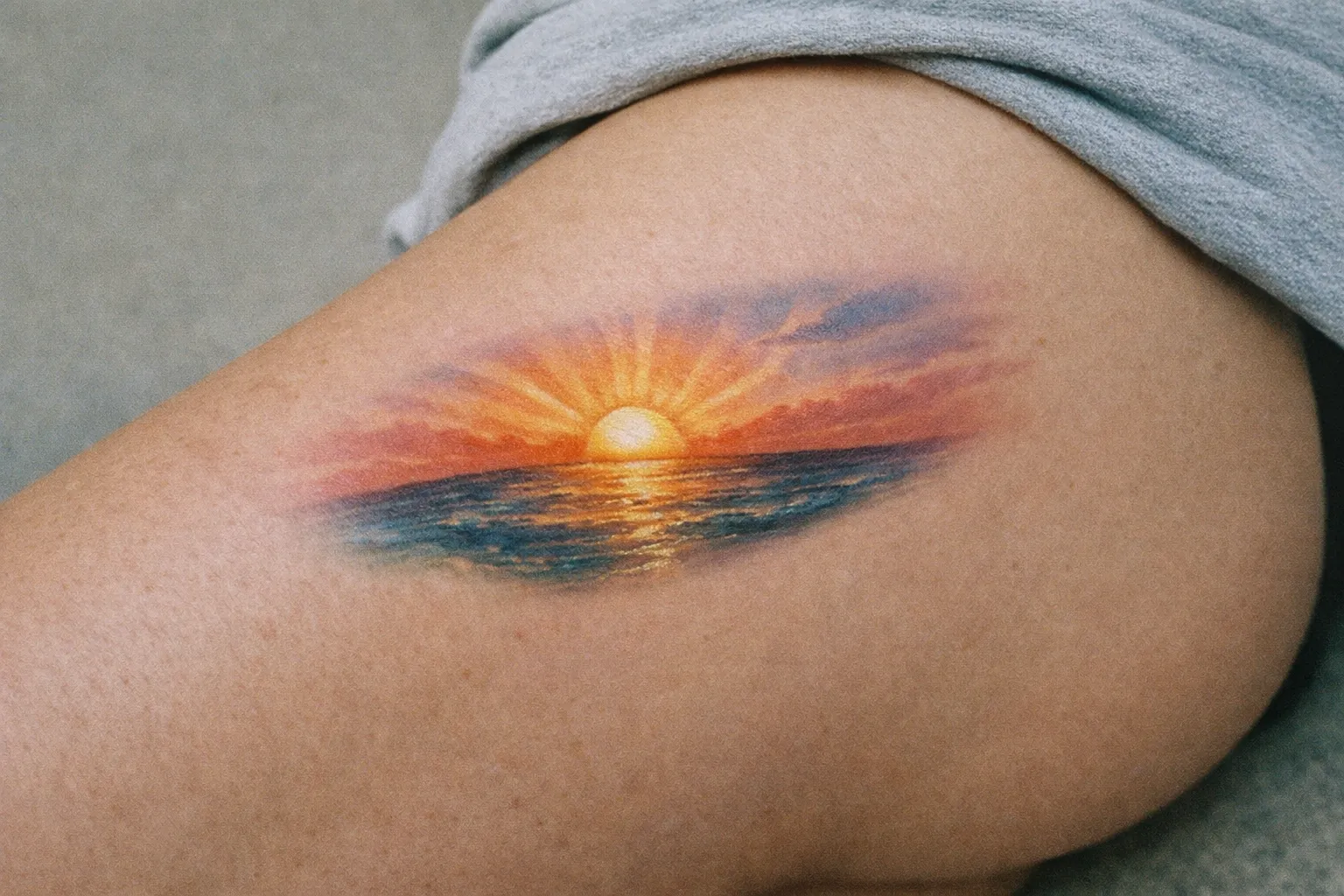
Sun-and-cloud motifs work on the idea that the sun exists even when hidden. Designed at 2-3 inches on the upper arm or shoulder blade, there’s enough room for the rays and cloud outline to stay distinct as the lines soften with age. The lotus shows up here too (growing from mud maps neatly onto depression’s “stuck in the dark” experience) and sits well on the inner forearm or ribcage.
“This too shall pass” is one of the most searched phrases for this category. Keep it to one clean line on the inner forearm, minimum ½ inch (12-13 mm) letter height, so the cursive doesn’t blur into illegibility over the first five years and beyond. A brain with flowers growing from it is a more illustrative choice; it needs 4+ inches on the forearm or upper arm to hold both the anatomical detail and the floral elements, and it signals mental health and growth without naming a diagnosis.
The moth is worth a mention as an alternative to the butterfly. Moths navigate darkness and are drawn to light, which reads differently from the butterfly’s rebirth narrative: it suits people whose experience is about endurance rather than transformation. Artists usually place moths in the 3-4 inch range on the forearm for enough wing-pattern detail.
One thing to weigh: depression diagnoses can shift over time, to bipolar disorder, for instance. Abstract resilience imagery ages better than a narrow diagnostic label that may not describe you in ten years.
Self-Love Tattoos: Affirmations People Wear Every Day
A self love tattoo is usually an affirmation placed where the wearer sees it daily (“I am enough,” “still here,” “you are enough”), most often on the inner forearm, wrist, or ribcage. The placement logic is about your own sightline, not public display.
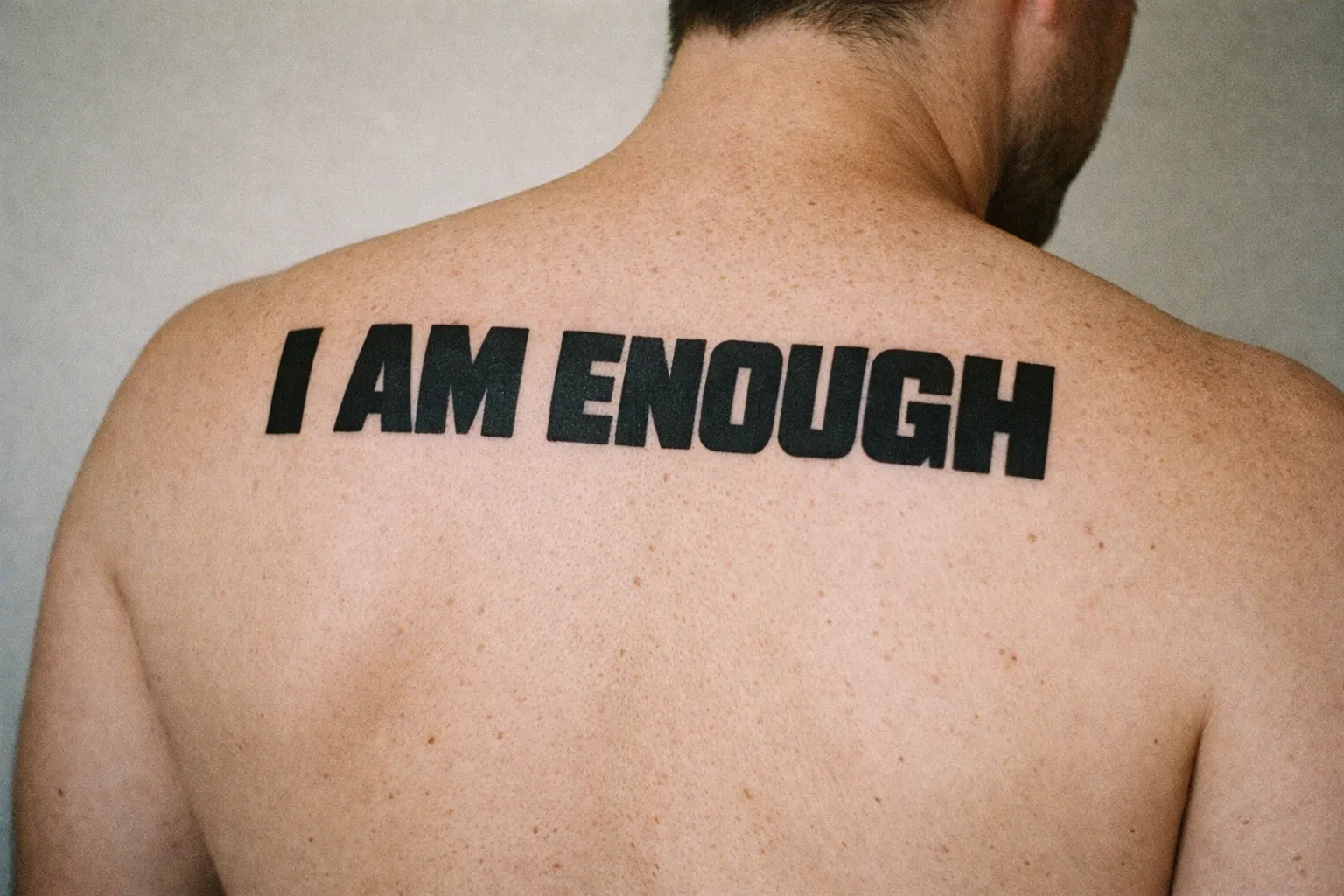
The inner forearm is the most functional spot: visible to you during ordinary tasks, easy to cover with long sleeves for work. That’s why so many affirmation pieces land there.
Size and font decide whether the piece survives. Keep script at a minimum ½ inch (12-13 mm) letter height for legibility past year five. Ultra-fine cursive below that threshold softens into illegible lines as the ink spreads. A clean sans-serif or a simple serif ages better than elaborate calligraphy every time. I’ve seen beautiful fine-script pieces from five years ago that are now a soft grey blur. It’s a predictable outcome, not bad luck.
If a word isn’t for you, there are non-script options that carry the same self-regard: a small heart or a crown at around 1-1.5 inches, delicate but still clearly recognizable on the wrist or forearm. A small mirror works too.
The “visible to yourself” principle is a legitimate design logic, not vanity. Plenty of these tattoos are placed specifically for the wearer’s own eyes. One honest note: “self love” as a phrase has become extremely common. If originality matters to you, work with your artist on a more personal phrase or symbol during the consultation rather than defaulting to the most-searched option.
Placement, Visibility, and the Questions You’ll Get
Placement sits on a visibility spectrum, and where you land on it decides how many conversations the tattoo starts. Wrist and inner forearm are high-visibility but cover easily with long sleeves. Behind the ear, sternum, ribcage, and upper thigh are hidden by default. Hands and neck are always visible, with real workplace implications.
The inner wrist carries extra weight for a reason. The wrist is a common self-harm site, so a semicolon there is widely read as self-harm recovery or reclaiming that area rather than general awareness. If that reading doesn’t match your story, choose a different placement.
On the workplace front: hands, neck, and finger tattoos are still flagged as unacceptable in many sectors. Forearm tattoos and upper arm pieces are the practical middle ground: visible in short sleeves, easy to cover when you need to. For most people that’s the sensible default.
Then there’s the conversation. BBC and USA Today coverage of the semicolon movement noted that some wearers felt unprepared for repeated questions about their history (1)(7). Before the tattoo is permanent, decide on a one- or two-sentence answer you’re comfortable giving, to strangers and to coworkers. You don’t owe anyone your full history, but having a line ready takes the sting out of being asked.
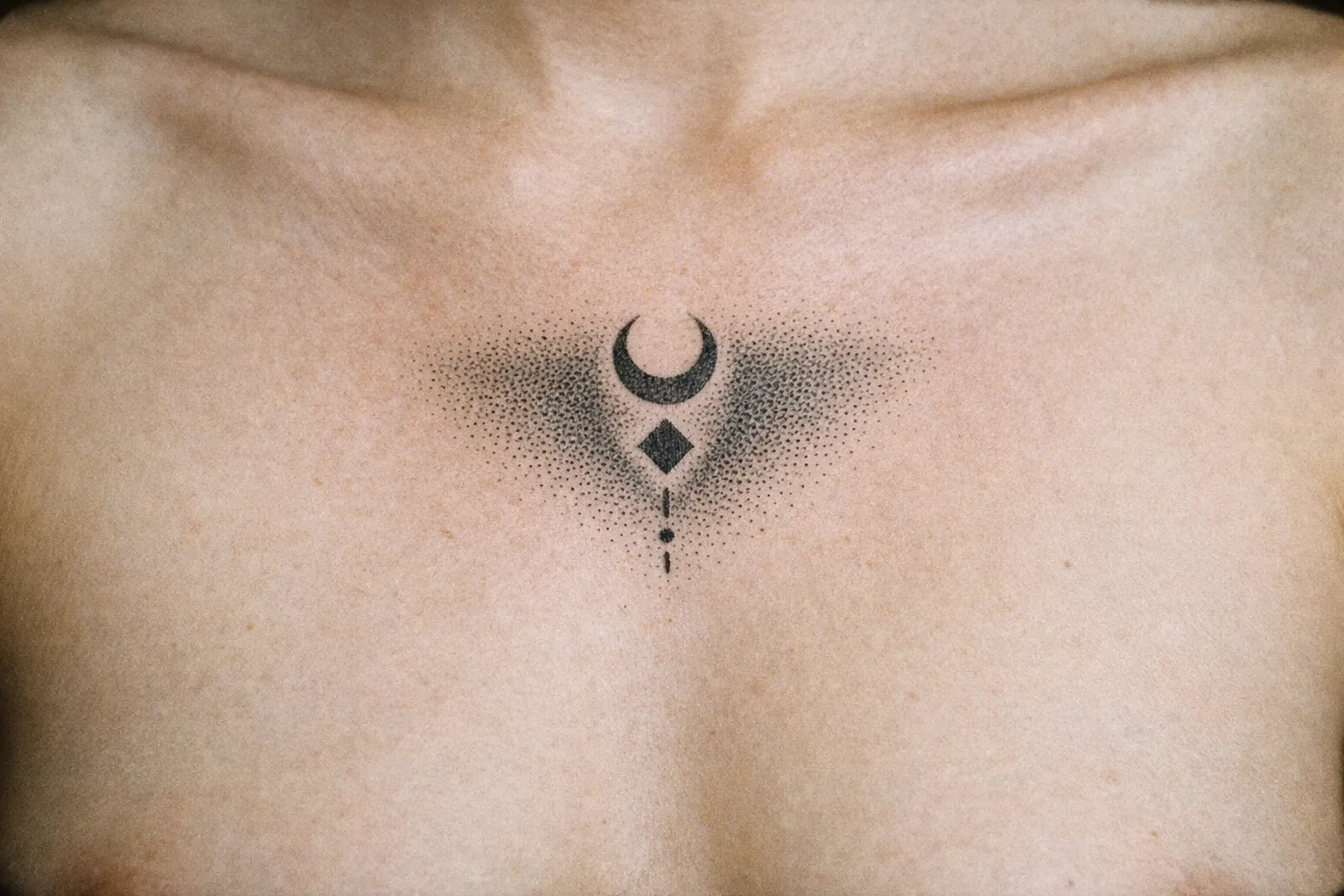
If you want the meaning private, the discreet options are the ribcage, upper thigh, back of the upper arm, and the sternum. A sternum tattoo is hidden by default, visible only when you choose.
Pain, in relative terms: outer upper arm < forearm < ankle < behind the ear < wrist < ribcage < sternum. That’s relevant because so many mental health tattoo placements (wrist, ribcage, sternum) cluster in the moderate-to-higher range. If it’s your first tattoo, the outer forearm is the gentlest place to start.
Matching the Symbol to Your Actual Story
The single most useful thing you can do before booking is match the symbol’s public meaning to your actual experience, because the wrong fit invites conversations you didn’t want and a tattoo that misrepresents you.
Start with the semicolon, because it’s the most misapplied. In most public readings it implies suicide survival or a near-attempt. If your history centers on anxiety, burnout, or general recovery, a lotus, phoenix, or wave will represent you more accurately and spare you a lot of assumptions.
Think abstract versus literal. Abstract resilience imagery (lotus, phoenix, waves) accommodates a story that changes over time. Narrow diagnostic labels or explicitly graphic imagery lock you into a specific reading. Psychiatric commentary also warns that literal designs referencing self-harm can be triggering for the wearer or for others, which is worth weighing before you commit. More abstract imagery is usually the safer long-term choice.
Solidarity is its own case. Wearing a semicolon in memory of someone lost to suicide, or in support of a friend, is entirely valid; just be ready for people to assume it’s about your own history, and have that brief answer prepared.
There’s also the trend question. The 2025 Journal of Public Health debate asks whether the semicolon risks becoming a fashion statement detached from its original weight (10). If the symbol’s specific connotations don’t match your story, a more personal design serves you better over the long run.
The practical step ties it together: write down, in one sentence, what you want the tattoo to mean in ten years. If that sentence still fits the symbol you’ve chosen, you’re ready. If it doesn’t, keep looking.
Working With Your Artist: Practical Logistics
Good preparation comes down to disclosure, timing, and a few logistics you can control on the day. Here’s how to prepare for a mental health tattoo appointment.
How to Prepare for a Mental Health Tattoo Appointment
Up to 3 hoursSteps to get ready for your tattoo session
- 1
Clarify your tattoo's meaning
Write down in one sentence what you want the tattoo to mean in ten years, and confirm the symbol still fits.
- 2
Research artists
Find tattoo artists experienced with fine-line work or scar-covering, depending on your needs.
- 3
Book a consultation
Schedule a 15 to 30-minute consultation, in person or virtual, to discuss design, placement, and any scarring.
- 4
Prepare your explanation
Have a brief answer ready for what the tattoo means; you'll be asked by the artist and others.
- 5
Day of appointment prep
Eat a real meal within two hours, hydrate, avoid alcohol for 24 hours, and wear clothing that exposes the placement area.
- 6
Communicate triggers
Tell your artist before starting if any sounds, smells, or topics are triggering; they can adjust accordingly.
Scarring needs its own conversation. Tattooing over raised or recent self-harm scars affects ink retention and healing, and most studios require scars to be at least 12 months old and stable before working over them. One scar-specialist practice extends that to 18-24 months for more severe or surgical scars, and may recommend waiting up to three years where keloid or hyperpigmentation is present. Some artists specialize in scar-covering or scar-integrating work and will need extra planning sessions, so factor that into your timeline.
On timing more broadly: clinical commentary recommends reflecting carefully on permanence and your emotional state before booking. Getting a tattoo immediately after a crisis is a common mistake. The alcohol rule matters more than people think: it thins the blood, increases bleeding, and dilutes the ink.
Size and duration, so you know what to expect: a small line-work symbol (a 1-2 cm semicolon or a single word) takes about 15-45 minutes of tattooing. A more elaborate recovery piece, like a full forearm script plus imagery, runs 1-3 hours. And the minimum-size warning worth repeating: a 2 mm semicolon looks delicate fresh but blurs within about five years. Aim for at least 5-8 mm to age cleanly.
Healing Timeline for Small Mental Health Tattoos
Small blackwork symbols (a semicolon, a single word, a minimal line motif) heal faster than large illustrative pieces, but the aftercare rules are the same regardless of what the design means. Surface healing takes about 2-4 weeks; deeper layers and full stabilization take 4-6 weeks even for a tiny piece.
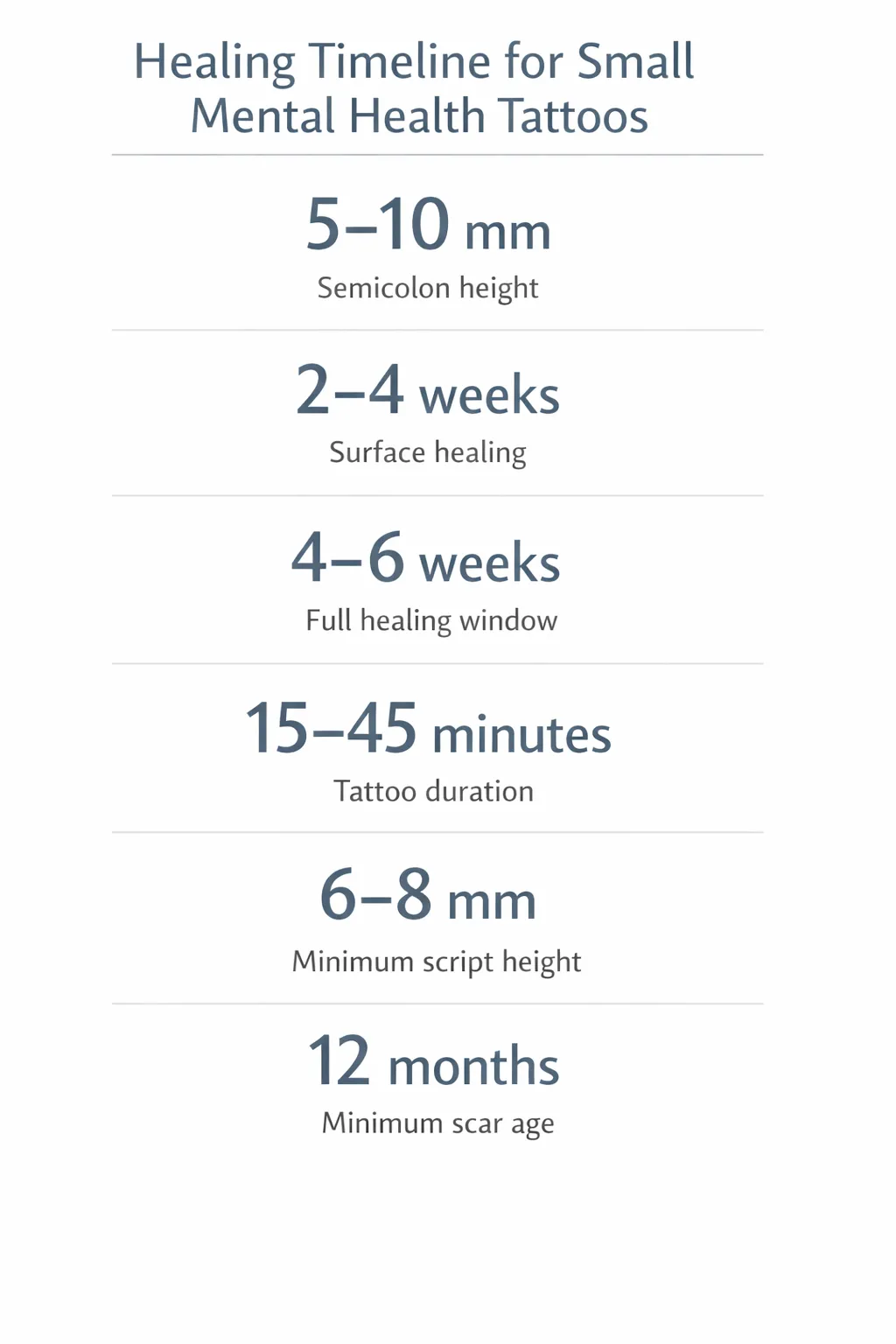 Healing milestones for small mental health tattoos, including semicolon height 5-10 mm and healing timelines 2-4 weeks and 4-6 weeks.
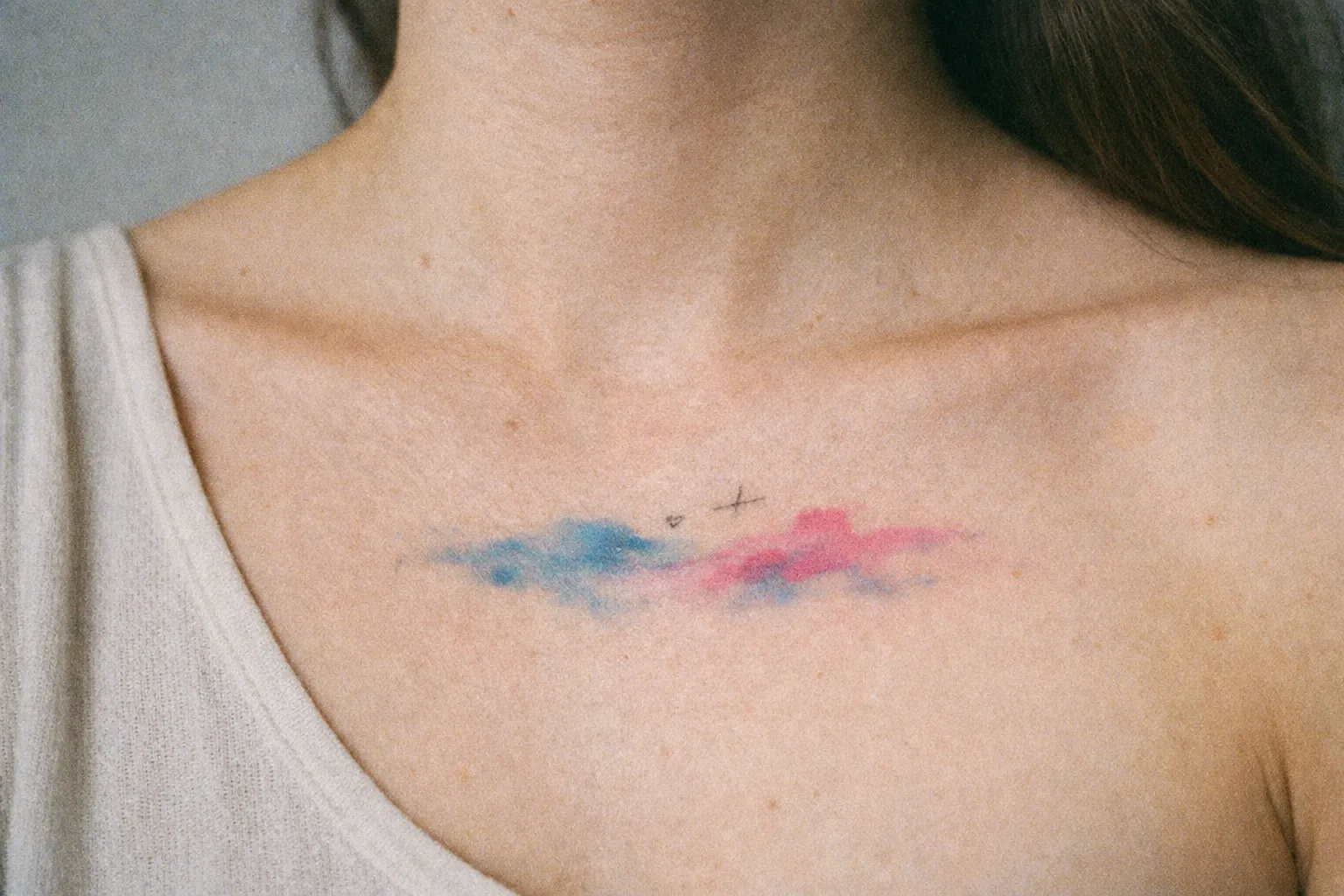
Day-by-day and week-by-week healing
- Day 1-3: Keep the bandage or second-skin film on as directed, roughly 2-24 hours for a standard bandage, 3-5 days for second-skin film. Wash gently with lukewarm water and unscented soap, pat dry, and apply a thin layer of fragrance-free moisturizer or tattoo ointment. Expect redness, mild swelling, and clear plasma weeping. All normal.
- Week 1: Itching and flaking begin. Do not scratch or pick. Moisturize 2-3 times daily. Skip gym sessions where clothing rubs the area.
- Week 2-4: Surface healing finishes around day 10-14. The ink may look dull or “milky” as the top skin layer settles. Also normal. Switch to a regular fragrance-free lotion. Full healing of the deeper layers takes 4-6 weeks.
- Always: No swimming pools, hot tubs, ocean, or baths until fully healed. Showers are fine. Keep the fresh tattoo out of direct sun for at least 4 weeks; after that, use SPF 30+ or sun-protective clothing long-term. Sun is the main enemy of fine-line work.
- If spreading redness, thick yellow or green pus, worsening pain after an initial improvement, fever, or red streaks running from the site appear: seek medical attention.
Number Tattoos People Ask About: 224, 444, 777, and Others
Number tattoos surface in mental health tattoo searches regularly, but almost all of them are personal codes with no shared mental health meaning: their significance is assigned by the wearer, not by a cultural vocabulary.
444 is usually read as an “angel number” representing protection, stability, or being watched over. It has no inherent link to mental health symbolism. Some people pair a 444 tattoo with a semicolon, but the two meanings stay separate.
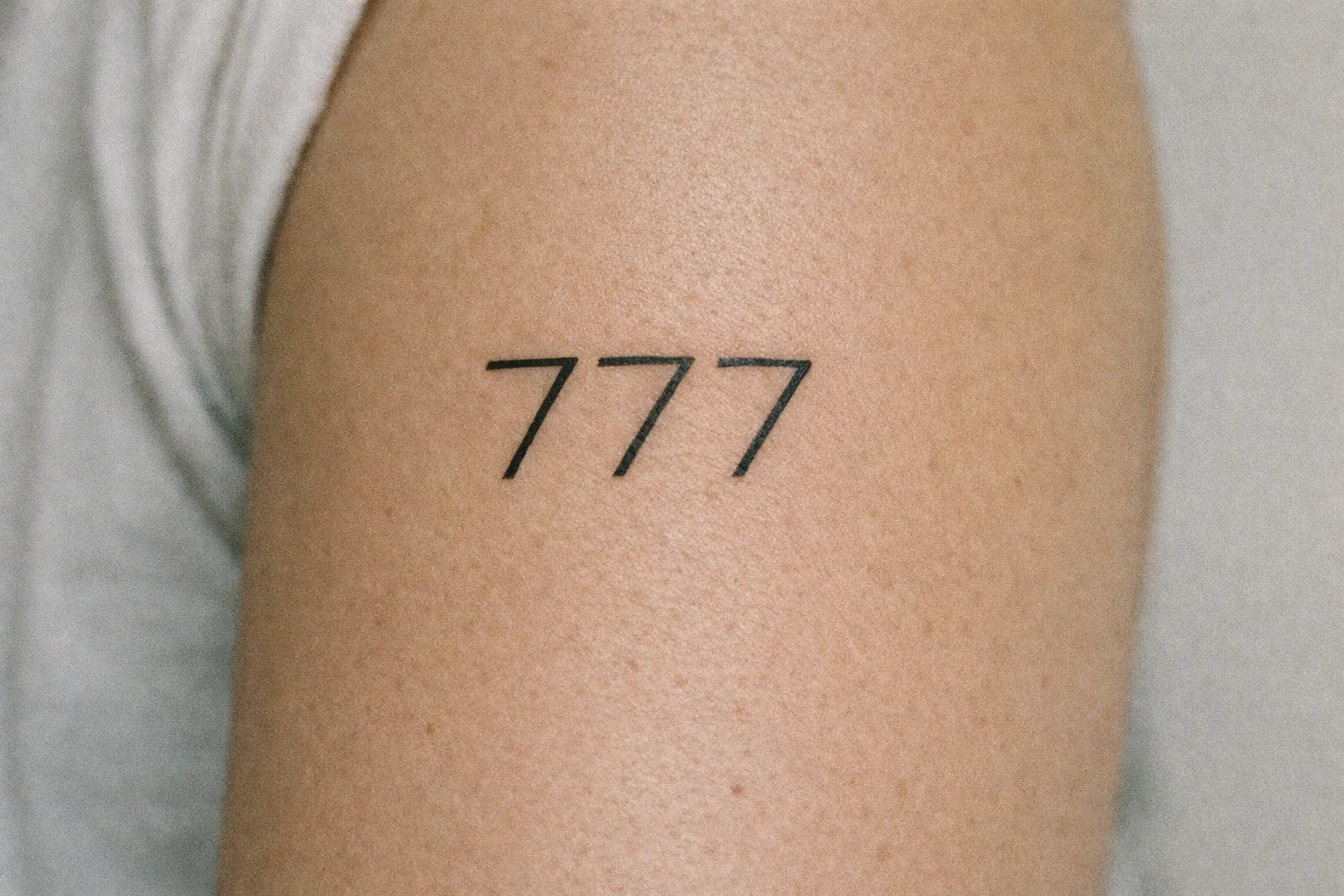
777 commonly carries religious or numerological significance: perfection, divine completion, or spiritual awakening in some traditions. It has no established mental health meaning. When it appears alongside mental health imagery, the connection is personal to the wearer.
224 isn’t standardized. It’s often a private code: sometimes a grounding math reference (“2 + 2 = 4,” used in some anxiety-management exercises), sometimes a date. Don’t assume its meaning without asking the person wearing it.
The 3 teardrop tattoo is the one to be careful with. In prison tattoo culture, three teardrops historically signify time served or loss, sometimes a claim of having killed someone. It carries strong criminal justice associations and is not a mental health symbol in mainstream usage, worth knowing before you choose it for a different personal meaning.
The broader point holds: in mental health contexts, number tattoos are nearly always personal (sobriety days, a significant date, a grounding number). The meaning is yours to assign, which also means no observer can reliably read it.
Frequently Asked Questions
- What tattoo symbolizes mental health?
- The semicolon is the most widely recognized mental health symbol globally, tied to Project Semicolon (founded 2013). Other common symbols include the lotus, butterfly, phoenix, and green ribbon.
- What does the semicolon tattoo mean?
- A semicolon tattoo represents choosing to keep living after suicidal thoughts or crisis. It originated with Project Semicolon and is specifically linked to suicide prevention.
- What does a 444 tattoo mean?
- 444 is read as an 'angel number' symbolizing protection and stability. It has no inherent mental health meaning but may be paired with recovery symbols.
- What does a 777 tattoo mean?
- 777 carries religious or numerological significance like perfection or spiritual awakening. It has no established mental health symbolism.
- What does a 3 teardrop tattoo mean?
- In prison culture, three teardrops signify time served or loss. It is not a mental health symbol and carries strong criminal justice associations.
- Can I get a mental health tattoo if I haven't personally struggled?
- Yes. Many wear mental health tattoos in solidarity or memory of others. Be prepared for others to assume it relates to your own history.
- Should I wait before getting a mental health tattoo after a crisis?
- Yes. Clinical advice recommends waiting for emotional stability before tattooing. Immediate post-crisis tattoos risk decisions made under distress.
- Do mental health tattoos need to be visible to work?
- No. Many choose hidden placements like ribcage or sternum for privacy. The tattoo's meaning works for the wearer regardless of visibility.
The symbol should match your story, not someone else’s. The semicolon is powerful precisely because it’s specific: use it if it fits, and choose something else if it doesn’t. A lotus, a phoenix, a wave, or a single word may carry your experience more honestly and save you a decade of assumptions.
Placement and size determine how the tattoo ages and how many conversations it starts. Decide on both before you book, not in the chair, half-committed, talking yourself into a 2 mm design that’ll blur in five years. Aim for at least 5-8 mm on small work, keep script at ½ inch (12-13 mm) letter height or more, and pick a placement whose visibility matches how public you want the meaning to be.
These tattoos sit on your skin as daily markers of work you’ve already done or are still doing. They don’t do the work. Keeping that distinction clear is what makes the tattoo mean something.